• About

Sacred Cow Chips

Sacred Cow Chips

Tag Archives: discrimination

Ubiquitous Guilt: EEOC Disparate Impact Liability

22 Thursday Sep 2022

Posted by Nuetzel in Discrimination, Regulation

≈ 3 Comments

Tags

Antonin Scalia, Automation, Bias, Business Necessity, Chevron Deference, Christopher Rufo, Civil Rights Act, Credit Checks, Criminal Background Checks, DEI, discrimination, Disparate impact, Due Process, EEOC, Employment Practices, Equal Protection, Four-Fifths Rule, Gail Heriot, Griggs v. Duke Power Co., Major Questions Doctrine, Non-Delegation Doctrine, Protected Groups, Separation of Powers, Stakeholder Capitalism, Strength Tests, Title VII, Warren Burger, Written Job Tests

A key part of the Civil Rights Act of 1964 was Title VII, which dealt with employment discrimination. Title VII applied only to intentional discrimination, but it didn’t take long for the Equal Employment Opportunity Commission (EEOC), the agency charged with administering Title VII, to find ways to expand the scope of its enforcement mandate under the law. The EEOC eventually managed to convince virtually all parties, including employers, employees, job applicants, attorneys, and even the courts, that the law prohibited employment practices having disparate impacts on groups protected from actual discrimination under the law. Predictably, this warped reinterpretation created severe distortions to the efficiency and fairness of labor market outcomes .

Another Rogue Agency

On the EEOC’s complete and erroneous reimagining of Title VII, Gail Heriot’s “Title VII Disparate Impact Liability Makes Almost Everything Presumptively Illegal” is a must read. Heriot is a Professor at the University of San Diego School of Law and is a member of the U.S. Commission on Civil Rights. This post attempts to summarize most of the important points in Heriot’s paper, so if you don’t have time for Heriot’s paper, read on. All errors are mine, of course!

Heriot provides an incredible case study on the dangers of regulatory overreach. She first discusses the EEOC’s blatant usurpation of Congressional power:

“It is hardly surprising that EEOC officials would undertake to publish answers to the questions they were hearing repeatedly…. But publishing such ‘guidances’ also had the potential to spin out of control. The temptation would always be to use them to establish what the EEOC staff wanted the law to be rather than what it was. Instead of interpreting Title VII in good faith, guidances would soon become quasi-legislation—disguised as interpretation, but in reality imposing new duties on employers not found in Title VII itself.

None of this should be surprising. It is in the nature of bureaucracy. It naturally seeks to expand its powers, often beginning by occupying niches that are otherwise unoccupied. Over time, a little power often becomes a lot of power. What is surprising is how upfront EEOC officials were about their tactics in accumulating that power.”

Having gone this far, one might be tempted to ask the EEOC what limiting principle they actually apply to determine whether various employment and hiring practices are permissible. Are level of education, industry experience, and tests of physical and cognitive faculties verboten? The answer that is there is no consistent, limiting principle. Instead, Heriot says the EEOC “picks its battles” (see below). She also describes the EEOC’s adoption of a so-called “four-fifths rule”, which is about as arbitrary as it gets. It means the EEOC will challenge an employment practice only if it leads to a selection of any protected group at a rate less than 80% of the most-selected group. That is, the “disparate impact” must be less than 20% to rule out a challenge. This rule appears nowhere in Title VII.

Job Qualifications? You’re Guilty!

Unfortunately, as Heriot takes pains to demonstrate, it’s virtually impossible to identify a hiring guideline or method of employee assessment that does not have a disparate impact. The examples she provides on pp. 34 – 37 of her paper, and on p. 40, are convincing. Furthermore, the EEOC’s “four-fifths” rule hardly narrows the potential for challenge at all.

“Selection rates of less than four-fifths relative to the group with the highest rate are extremely common. Just as everything or nearly everything has a disparate impact, everything or nearly everything has a selection rate that fails the ‘four fifths rule’ for some race, color, religion, sex, or national origin group.”

So the EEOC is allowed to operate with tremendous discretion. Again, Heriot says the agency “picks its battles”, focusing on challenges to screening tools like “written tests, physical strength and endurance tests, criminal background tests [sic], high school diploma requirements, personal credit histories, residency requirements, and a few others.”

This regulatory environment encourages employers to keep job requirements vague, sometimes to the point at which potential applicants might not be sure what the job qualifications really are, or exactly what the job function entails. One upshot is that this makes it harder to detect and prove actual discrimination, and it often leads to more arbitrary decisions by hiring managers, which may, in fact, involve real discrimination, including nepotism and/or cronyism.

Unbiased Intent Doesn’t Matter

Heriot points to a disastrous decision by the Supreme Court that, perhaps unintentionally, helped legitimize the concept of disparate impact as legal doctrine, and as a valid cause of action by plaintiffs against employers. In Griggs v. Duke Power Co. (1971), the Court rejected the premise that an employer’s innocence with respect to their intent to discriminate was an inadequate defense of an employment practice that had adverse consequences to a protected group. Heriot quotes the opinion of Chief Justice Warren Burger:

“… good intent or absence of discriminatory intent does not redeem…. Congress directed the thrust of the Act to the consequences of employment practices, not simply the motivation.”

It’s as if the Court convinced itself that adverse consequences prove actual discrimination, even when there is no intent to discriminate. The Court also emphasized that it’s decision was based on “general deference” to the EEOC! And this was years before the unfortunate Chevron Doctrine (judicial deference to administrative agencies on interpretation of law) was formally established by the Court. Heriot and others assert that the decision in Griggs would have astonished the authors of Title VII.

Heriot also discusses changes in the treatment of “business necessity” as a defense against complaints of disparate impact. It is generally the employer’s burden to show the “necessity” of a challenged hiring practice. “Necessity” was the subject of several Supreme Court decisions in the 1970s and 1980s, but the Court stopped short of requiring an employer to show that a practice was “essential”. In one case, the court shifted some of the burden back onto the plaintiff to show that a practiced lacked necessity. In 1990, there was concern in the Bush Administration and Congress that the difficulty of proving business necessity would eventually lead to the adoption of racial quotas by employers in order to prevent EEOC challenges, though the authors of Title VII had staunchly opposed quotas. While the original hope was that the Civil Rights Act of 1991 would resolve questions about “business necessity” and the burden of proof, it did not. Instead, it can be said that it legitimized disparate impact liability, with conditions. The standard for proving necessity, based on Court decisions, evolved to become more strict with time. There are cases in which courts seem to have left the EEOC to define “business necessity”, as if the EEOC would be in a better position to do that than the business itself!

Inviting Discrimination

Heriot devotes part of her paper to the perverse effects of disparate impact. When employers are faced with prohibitions or the threat of action against a certain practice, whether it be tests of aptitude, strength, or screening on criminal or credit records, they may abandon those devices and opt instead for “informal” proxies. The use of proxies, however, often leads to instances of actual discrimination, whether born of conscious or unconscious bias on the part of hiring managers.

Heriot provides a number of examples of the proxy phenomenon, some of which have been confirmed by empirical research. For example, an employer interviewing candidates for a job that requires math proficiency might reasonably use a test of math skill as a key criterion. If such a test is prohibited, the hiring manager might be tempted to hire an Asian candidate, since Asians have a reputation for good math skills. Similarly, an applicant of West European ancestry might be favored for a position requiring excellent grammar skills, absent the ability to explicitly test grammatical skill. Candidates for a job requiring a certain level of physical strength could be evaluated by various tests of strength, but barring that, a hiring manager might be inclined to hire based on gender.

When criminal background checks are prohibited, employers might be tempted to use proxies such as gender and race as a substitute. Likewise, if it’s forbidden to check a candidate’s credit record to gauge reliability, other proxies might lead to discrimination against members of protected classes. Needless to say, these kinds of outcomes are precisely the opposite of what the EEOC hopes to achieve.

As Heriot further notes, the outcomes can be much systematic and destructive than a bit of one-off discrimination in hiring, promotion, pay raises, or task assignment. These may inflict damage reaching well beyond having the wrong people gaining favorable labor market outcomes. For example, an employer might choose to relocate operations to a “safer” or more affluent community, barring an ability to perform criminal background or credit checks. Or businesses might decide to substitute capital for labor, given the interference in their attempts to identify the best job candidates. The difficulty in screening also creates an incentive to automate, just as premature automation is becoming more common with rising wage floors imposed by government.

Killing Jobs and Competition

Like many forms of regulation, however, large firms in less competitive industries are usually better positioned to survive EEOC scrutiny than smaller firms in competitive markets. Indeed, we often see large market players embrace regulation because it gives them a competitive advantage over smaller rivals. In this case, we see large firms adopting their own diversity, equity, and inclusion (DEI) goals. This is not solely related to the threat of EEOC challenges, however. Private lawsuits alleging discrimination or disparate impact are also a concern, as is pleasing activists inside and outside the company. Nevertheless, as Christopher Rufo reveals, there is growing push-back against the corporate DEI regime. Let’s hope it continues to gain traction.

Unconstitutional Executive Discretion

Heriot also dedicates part of her paper to constitutional issues related to the EEOC’s broad discretion in the application of disparate impact to employment practices. For one thing, disparate impact is a direct source of discrimination: when members of “protected groups” are awarded opportunities based on the possibility of disparate statistical outcomes, it means the majority candidates are denied those opportunities, no matter their qualifications. This is outright discrimination, and it’s instigation by a federal agency constitutes an explicit denial of equal protection under the law.

It should be no surprise that many consider disparate impact actions against employers to be denials of due process. Furthermore, when a federal agency like the EEOC exercises broad discretion, the so-called non-delegation doctrine should come into play. That is, the EEOC makes judgements on matters that are not necessarily authorized Congress. Thus, there are legitimate questions as to whether the EEOC’s discretion is a violation of the separation of powers. Granted, the courts have long deferred to administrative agencies in the interpretation of enabling statutes, but the Supreme Court has taken a new tack under Chief Justice Roberts. In some recent decisions, the Court has relied on a new “major questions” doctrine to place certain limits on executive discretion.

Conclusion

Hiring? Creating jobs? Better not get picky about checking your applicants’ skills and backgrounds or you risk liability for contributing to the statistical malaise of one, or of many, protected groups. That’s how it is under “disparate impact” rules imposed by the EEOC. The success of your business be damned!

Gail Heriot’s excellent paper details the way in which the EEOC transformed the meaning of its enabling legislation, expanding its reign over employment practices across the nation. She demonstrates the breadth of disparate impact rules with examples showing that virtually any attempt at systematic screening of job applicants can be held to be illegal. Your intent to hire the most qualified candidate without bias doesn’t matter, under an insane Supreme Court decision that buttressed the EEOC’s authority. As Heriot says, “… everything is presumptively illegal”. She also describes how disparate impact liability leads to employment decisions based on proxy criteria, which often lead to actual (even if unintended) discrimination. Further unintended consequences are the possibility of larger job losses in minority communities and less competition in product and labor markets. Finally, Heriot delineates several constitutional violations inherent in broad EEOC discretion and the enforcement of disparate impact.

One day a court challenge to the EEOC and disparate impact liability might rise to the level of the Supreme Court. Justice Antonin Scalia expected it, but it still hasn’t come before the Court. It should! Another way to do battle against the EEOC’s scourge is to challenge corporations who cow-tow to activists and to the EEOC with their own DEI initiatives. This manifestation of stakeholder capitalism is a cancer on the wealth and productivity of the U.S. economy, resting side-by-side with disparate impact liability.

Defang the Administrative State

14 Wednesday Apr 2021

Posted by Nuetzel in Administrative State, Discrimination, Free Speech

≈ Leave a comment

Tags

Administrative Law, Administrative State, discrimination, Human Subjects, Institutional Review Boards, Internal Revenue Code, Ku Klux Klan, Philip Hamburger, Religious Speech, rent seeking, Section (501)(c)(3), Tuskegee, Woodrow Wilson

The American administrative state (AS) was borne out of frustration by statist reformers with expanded voting rights. It continues to be an effective force of exclusion and discrimination today, according to Philip Hamburger of Columbia Law School. I’ve discussed Hamburger’s commentary in the past on the extra-legal power often wielded by administrative agencies, and I will quote him liberally in what follows. At the first link above, he provides some historical context on the origins of the AS and discusses the inherently discriminatory nature of administrative law and jurisprudence.

An Abrogation of Voting Rights

Hamburger quotes Woodrow Wilson from 1887 on the difficulty of appealing to a broad electorate, a view that was nothing short of elitist and bigoted:

“‘… the reformer is bewildered’ by the need to persuade ‘a voting majority of several million heads.’ He worried about the diversity of the nation, which meant that the reformer needed to influence ‘the mind, not of Americans of the older stocks only, but also of Irishmen, of Germans, of Negroes.’ Put another way, ‘the bulk of mankind is rigidly unphilosophical, and nowadays the bulk of mankind votes.’”

Wow! Far better, thought Wilson, to leave the administration of public policy to a class of educated technocrats and thinkers whose actions would be largely independent of the voting public. But Wilson spoke out of both sides of his mouth: On one hand, he said that administration “lies outside the proper sphere of politics“, but he also insisted in the same publication (“The Study of Administration“) that public administration “must be at all points sensitive to public opinion“! Unfortunately, the views of largely independent public administrators seldom align with the views of the broader public.

Administration and Prejudice

Wilson was elected President 25 years later, and his administration did much to expand the administrative powers of the federal executive. Over the years, the scope of these powers would expand to include far more than mere administrative duties. Administrative rule-making would come to form a deep body of administrative law. And while traditional legislation would nominally serve to “enable” this activity, it has expanded in ways that are not straightforwardly connected to statute, and its impact on the lives of ordinary Americans has been massive. Furthermore, a separate legal system exists for adjudicating disputes between the public and administrative agencies, with entirely separate rules and guarantees than our traditional legal system:

“It is bad enough that administrative proceedings deny defendants many of the Constitution’s guaranteed civil procedures. … In addition, all administrative proceedings that penalize or correct are criminal in nature, and they deny defendants their procedural rights, such as their right to a jury and their right to be presumed innocent until proven guilty beyond a reasonable doubt. Of course, these administrative proceedings deny procedural rights to all Americans, but they are especially burdensome on some, such as the poor.“

The AS has truly become a fourth, and in many ways dominant, branch of government. Checks and balances on its actions are woefully inadequate, and indeed, Wilson considered that a feature! It represents a usurpation of voting rights, but one that is routinely overlooked by defenders of universal suffrage. It is also highly prejudiced and discriminatory in its impact, which is routinely overlooked by those purporting to fight discrimination.

Bio-Medical Discrimination

Hamburger devotes some of his discussion to Institutional Review Boards (IRBs), which are mandated by federal law to conduct prior reviews of research in various disciplines. These boards are generally under the authority of the Department of Health and Human Services. One major objective of IRBs is to prevent research involving human subjects, but this prohibition can be very misguided, and the reviews impose costly burdens and delays of studies, often stopping them altogether on trivial grounds:

“This prior review inevitably delays and prevents a vast array of much entirely innocent bio-medical research. And because the review candidly focuses on speech in both the research and its publication, it also delays and prevents much bio-medical publication.

The consequences, particularly for minorities, are devastating. Although supposedly imposed by the federal government in response to scientific mistreatment of black individuals, such as at Tuskegee, the very solicitousness of IRBs for minorities stymies research on their distinctive medical problems. …

When government interferes with medical research and its publication—especially when it places administrative burdens on research and publication concerning minorities—the vast costs in human life are entirely predictable and, of course, discriminatory.”

Stifling Political Speach

Hamburger tells the story of Hiram Evans, a 1930s crusader against religious influence on voters and legislators. Evans also happened to be the Imperial Wizard of the Ku Klux Klan. Hamburger classifies Evans’ agitation as an important force behind nativist demands to outlaw religious speech in politics. Ultimately, Congress acquiesced, imposing limits on certain speech by non-profits. Individuals are effectively prohibited from fully participating in the political process through religious and other non-profit organizations by Section (501)(c)(3) of the Internal Revenue Code. Of course, tax-exempt status is critical to the survival and growth of many of these institutions. More traditionally religious individuals are often heavily reliant upon their faith-based organizations not just for practicing their faith, but as centers of intellectual and social life. Needless to say, politics intersects with these spheres, and to prohibit political speech by these organizations has an out-sized discriminatory impact on their members.

The insulation of the AS from the democratic process, and the effective limits on religious speech, often mean there is little leeway or tolerance within the AS for individuals whose religious beliefs run counter to policy:

“The difference between representative and administrative policymaking is painfully clear. When a legislature makes laws, the policies that bear down on religion are made by persons who feel responsive to religious constituents and who are therefore usually open to considering exemptions or generally less severe laws.”

But there are other fundamental biases against religious faith and practices within the AS:

“… when policies come from administrative agencies, they are made by persons who are chosen or fired by the executive, not the public, and so are less responsive than legislators to the distinctive needs of a diverse people. They are expected, moreover, to maintain an ethos of scientism and rationality, which—however valuable for some purposes—is indifferent and sometimes even antagonistic to relatively orthodox or traditional religion, let alone the particular needs of local religious communities.“

Sucking Life From the Republic

The administrative state imposes a variety of economic burdens on the private sector. This is not just costly to economic growth. It also creates innumerable opportunities for rent-seeking by interest groups of all kinds, including private corporations whose competitive interests often lead them to seek advantage outside of traditional participation in markets.

Hamburger’s arguments are even more fundamental to the proper functioning of a republic, but they are probably difficult for many journalists and politicians to fully grasp. He identifies some core structural defects of the administrative state, and he does so with great passion. He sums things up well in his closing:

“… was founded on racial and class prejudice, it is still supported by class prejudice. Moreover, by displacing laws made by elected lawmakers, it continues to discriminate against minorities of all sorts. Along the way, it stifles much scientific inquiry and publication with devastating costs, particularly for minorities. It is especially discriminatory against many religious Americans. And it eviscerates the Constitution’s procedural rights, not least in cases criminal in nature.

So, if you are inclined to defund oppression, defund the administrative state. If you want to tear down disgraceful monuments, demolish the prejudiced and discriminatory power that is Woodrow Wilson’s most abysmal legacy. If you are worried about stolen votes, do not merely protest retail impediments to voting, but broadly reject the wholesale removal of legislative power out of the hands of elected legislators. And if you are concerned about the injustice of the criminal justice system, speak up against the loss of juries, due process, and other rights when criminal proceedings get transmuted into administrative proceedings.

Little in America is as historically prejudiced or systematically discriminatory as administrative power. It is a disgrace, and it is time to take it down.“

School Discipline, Disparate Impact, and Disparate Justice

05 Friday Oct 2018

Posted by Nuetzel in Discrimination, Education, Uncategorized

≈ 2 Comments

Tags

Alison Somin, Civil Rights Act, Department of Education, discrimination, Disparate impact, Disparate Justice, Disparate Treatment, Education Week, Gail Herriot, Office of Civil Rights, Title VI, Walter Williams

Sad to say, there are racial disparities in victimization by misbehavior in schools, and African American children are the most victimized in terms of their safety and academic environment. Yet since 2014, the Department of Education (DOE) has been enforcing rules against “disparate impact” in school disciplinary policies, often aggravating that victimization. In a paper entitled “The Department of Education’s Obama-Era Initiative on Racial Disparities in School Discipline: Wrong For Students and Teachers, Wrong on the Law“, authors Gail Heriot and Alison Somin expose these unfortunate policies and the distortion of actual law they represent. These policies and actions are presumed by the DOE and the Office of Civil Rights (OCR) to be authorized under Title VI of the Civil Rights Act of 1964, but Heriot and Somin show that Title VI is not a disparate impact law and that enforcement of strictures against disparate impacts exceed the authority of the OCR.

When are disciplinary policies discriminatory? Disparate treatment occurs when a student from a “protected class” is punished more severely than other students for an identical misdeed. That is obviously discriminatory and unfair. A disparate impact, however, is a statistical difference in the punishments meted out to a protected class relative to others, which is not prima facie evidence of discrimination. Given consistent application of disciplinary policies — identical treatment for all classes under those policies — disparate impact is possible only when there are differences in the actual behavior of students across classes. Of course, such a difference does not mean that the protected class is “less worthy” in any absolute sense; instead, it probably indicates that those students face disadvantages that manifest in misbehavior in greater proportion within a school environment. The consequences of refusing to punish that behavior are bad for everyone, including and perhaps especially the miscreants themselves.

Disparate impact enforcement rules are fundamentally flawed, as Heriot and Somin explain. Almost any decision rule applied in business or other social interaction has a disparate impact on some parties. Defining qualifications for many jobs will almost always involve a disparate impact when protected classes lack those skills in greater proportion than unprotected classes. In schools, such rules lead to more lenient disciplinary policies or a lack of enforcement, either of which are likely to bring even greater disciplinary problems.

In schools with large minority populations, these perverse effects penalize the very minority students that the DOE hopes to protect. And they often have harsh consequences for minority teachers as well. Walter Williams bemoans the difficulties faced by many teachers:

“For example, after the public school district in Oklahoma City was investigated by the OCR, there was a 42.5 percent decrease in the number of suspensions. According to an article in The Oklahoman, one teacher said, ‘Students are yelling, cursing, hitting and screaming at teachers, and nothing is being done, but teachers are being told to teach and ignore the behaviors.’ According to Chalkbeat, new high school teachers left one school because they didn’t feel safe. There have been cases in which students have assaulted teachers and returned to school the next day. …

An article in Education Week earlier this year, titled ‘When Students Assault Teachers, Effects Can Be Lasting,’ discusses the widespread assaults of teachers across the country: ‘In the 2015-16 school year, 5.8 percent of the nation’s 3.8 million teachers were physically attacked by a student. Almost 10 percent were threatened with injury, according to federal education data.'”

To state the obvious, this undermines the ability of teachers do their jobs, let alone enjoy teaching. For many, quitting is an increasingly tempting option. And Williams, an African American, goes on to say “… when black students are not held accountable for misbehaving, they are set up for failure in life.”

When it comes to misbehavior, equalizing discipline by subgroup is almost certain to be unjust. And disparate impacts are almost certain to be a byproduct of a just disciplinary system when other social forces lead to differences in preparation for schooling. When the focus is placed on a by-product of Justice, rather than justice itself, as when disparate impacts are penalized or prohibited, everyone loses. It obviously harms unprotected classes, but ultimately it harms protected classes even more harshly by subjecting them to degraded school environments, less educational opportunity, and fewer rewards in life.

Coerced Fairness: Wronging Every Right

14 Thursday Apr 2016

Posted by Nuetzel in Discrimination, Liberty, Tyranny

≈ 1 Comment

Tags

Andrew Bernstein, Constitutional rights, Dan Sanchez, discrimination, Economics of Discrimination, Freedom of Association, Freedom of Expression, Jeffrey Tucker, Jim Crow Laws, Ludwig von Mises, Property Rights, Public Accomodations, Right to Privacy, Unintended Consequences


image

A nurse says, “If I can bring myself to treat a patient tattooed with a swastika, then a baker can bake a cake for a gay wedding.” Of course, the statement ignores any differences in the values held by these individuals, their right to hold different values, or at least their right to act peacefully on those values. It makes an arbitrary presumption about what is “fair” and what is “unfair”, which is seldom well-defined when two parties hold sincere but conflicting beliefs. Yes, the baker can bake the cake, but should he be forced to do so under state compulsion? Coerced behavior is the product of aggression, but declining business for personal reasons is not an act of aggression, though the “safe-space” crowd would do its best to convince us otherwise. Sorry, hurt feelings don’t count!

Imposing the machinery of the state on private decisions about how and for whom one’s art must be practiced invites even more coercive action by the state going forward. Jeffrey Tucker addresses this in “Must a Jewish Baker Make a Nazi Cake?“, using the teachings of Ludwig von Mises on the implications of voluntary and coerced behavior.

Discrimination occurs in markets in many forms. Consumers discriminate between sellers and products based on quality, price, convenience and trust. In turn,  producers or sellers discriminate between workers based on skill, effort, wages and trust. They discriminate between local markets or areas of specialization based on profitability. They discriminate between buyers based upon ability and willingness to pay. All of these forms of discrimination are rational because they result in better value for the discriminating consumer or better profitability for the discriminating producer. In other words, these forms of discrimination align with economic self-interest.

Other forms of discrimination do not align strictly with economic self-interest, but they may be preferred by the individual based on other criteria. It’s probably not possible to justify these forms of discrimination from all perspectives. Some may be abhorrent to most observers, including me. Certainly more consensus exists on some than on others. Nevertheless, these non-economically motivated forms of discrimination are always costly to the discriminator. For example, a consumer who refuses to frequent certain establishments owned by members of an out-group will forego opportunities for more varied experiences. Also, she will tend to pay higher prices due to her lack of interest in the competitive effort made by the out-group. An employer who refuses to hire certain minorities faces a more limited labor pool. He is likely to face a higher wage bill and will get a less efficient mix of skills in his workers. A seller who discriminates against certain groups by turning them away foregoes revenue, and the action may have negative reputational consequences. Obviously, other competitors can profit from another seller’s discriminatory behavior. Almost by definition, markets impose penalties on discrimination not borne out of economic self-interest.

Anyone with doubts about the effectiveness of markets and capitalism to overcome this latter type of discrimination should look no further than the broadly integrated activity that occurs within markets every day, and at the extent to which markets have become more diverse over time. Here is a choice quote of Tucker:

“Commerce has a tendency to break down barriers, not create them. In fact, this is why Jim Crow laws came into existence, to interrupt the integrationist tendencies of the marketplace. Here is the hidden history of a range of government interventions, from zoning to labor laws to even the welfare state itself. The ruling class has always resented and resisted the market’s tendency to break down entrenched status and gradually erode tribal bias.

Indeed, commerce is the greatest fighter against bigotry and hate that humankind has ever seen. And it is precisely for this reason that a movement rooted in hate must necessarily turn to politics to get its way.“

The hypertext within the quote links to an excellent piece by Andrew Berstein on “Black Innovators and Entrepreneurs Under Capitalism”, which covers the sad history of efforts to use government to undermine black commercial success.

Social justice activists argue that the state has a compelling interest in ending all discrimination, but the courts have followed a circuitous path in thrashing out whether (and what parts of) the U.S. Constitution might protect individuals or groups against private discrimination. But my interest is in what happens when the state endeavors to end discrimination in markets that are otherwise self-regulating: the state infringes on other rights that are clearly and definitively enshrined in the Constitution, and it arrigates power to itself that far exceeds the limits defined there. It may compromise the freedom of association, the freedom of religion, the right to private property, and the right to privacy. I believe the government has a compelling interest in protecting those rights, which apply to all individuals. It is also worth noting the absence of a limiting principle in defining what counts as fairness or discrimination. The Left finds it easy to denigrate and dismiss these as selfish concerns, proving how little regard they have for individual liberty. Establishing government control over the extent of those rights represents the end of our Constitutional Republic and is a prescription for tyranny.

Consider the ways in which government often attempts or is asked to create accommodations for marginalized groups, through laws on hate speech, compulsory service, hiring quotas, admission quotas, lending fairness, pricing equity, wage laws, work rules, mandatory facilities and the forced transfer of income. Tucker argues that this complex web of resource manipulation and mandatory and proscribed behaviors has several “unintended” consequences. I already mentioned the obvious abridgment of freedoms. Another negative consequence is that this approach does not promote unity; it breeds resentment and is likely to end in greater disunity. Furthermore, self-sufficiency is undermined by policies that hamper economic growth, and all of the general measures just mentioned redound to the detriment of that objective. Finally, many of these “fairness” policies run directly counter to the interests of the marginalized, such as wage floors that eliminate employment opportunities for the least-skilled, and means testing that discourages labor market effort through income “cliff” incentives.

The most menacing aspect of the effort to stamp out all forms of discrimination is a state with power to impose its own rules of legal “fair” treatment. Tucker appeals to Mises’ views on this point:

“[Mises] said that a policy that forces people against their will creates the very conditions that lead to legal discrimination. In his view, even speaking as someone victimized by invidious discrimination, it is better to retain freedom than build a bureaucracy that overrides human choice. …

Sacrificing principle for the sake of marginalized groups is short-sighted. If you accept the infringement of human rights as an acceptable political weapon, that weapon will eventually be turned on the very people you want to help. As Dan Sanchez has written, ‘Authoritarian restriction is a game much better suited for the mighty than for the marginalized.’“

Proponents of legal, compensatory  handicapping by the state in favor of those pressing any and all grievances ask us to compromise basic constitutional rights, including the rights of association, free expression, privacy and private property. A corresponding effect is to grant the state more complete coercive power in almost every aspect of life. The unavoidable focus of such policies is not unity, but group identity, a divisive result that should give us pause. The power granted to the state in this context is as arbitrary as the currently fashionable definition of “fairness”, and it cannot be rolled back easily. Furthermore, economic vitality is not easy to restore once basic institutions and freedoms have been destroyed. This is evident from the sad history of socialism throughout the world. Ultimately, the coercive power granted to the state can be used in ways that should horrify today’s proponents of social and economic redress for every real or imagined inequity.

~~~~~~~~~~~~~~~~~~~~~~~~~~~~~~

Addendum: Just over a year ago, I made a qualified defense of the right of a business to refuse service based on religious principles in my post “Suit Me, Or Face a Lawsuit: Adventures In Litigationland“. There, I made a distinction between “public accommodations” versus work for which a business-person must use her art, which is a form of expression, to provide customized service to a potential customer. I had the baker in mind, or the photographer asked to work a gay wedding. As I have in this post, I maintained that if a business-person finds some aspect of a request objectionable for any reason, she has the right to discriminate by refusing the business as a matter of freedom of expression.

I left a huge loose end in the argument I made in the earlier post. It had to do with the presumed requirement to serve all potential customers through the “public accommodations” of a private business. However, if the baker creates a beautiful “love cake” for sale to the general public, why can’t he refuse to sell it to a gay couple for their wedding as a matter of freedom of expression? After all, it involves the baker’s art. If a stationer has created an artful collection of cards for sale to the public, why can’t she refuse to sell them to a gay couple for their wedding invitations on account of her religious convictions? And what about the nurse? If he is in private practice, can’t he refuse to practice his art of healing on the “swastikaner” as a matter of free expression? I believe that’s a constitutional absolute, though professional oaths may dictate that care be delivered. An emergency room nurse would not have any choice but to deliver care under federal law, but it is not clear whether the law would withstand a constitutional challenge by a private hospital on these grounds. As things stand, the nurse can only refuse employment or resign if the rules are not to his liking.


Leftist Ad Hominid Species Screams “White Racists!”

03 Wednesday Feb 2016

Posted by Nuetzel in Discrimination, Equality, racism

≈ Leave a comment

Tags

A Taste For Discrimination, Assimilation, Celebrating Diversity, Cultural Sorting, Davis Bacon Act, discrimination, Economics of Discrimination, Jim Crow Laws, Minimum Wage, Racial Quotas, racism, Rent Controls, Social Mobility, Systemic Racism, Unintended Consequences, Virtue Signaling, Voluntary Sorting, War on Drugs


Lately I hear that all white people are racists, and I feel compelled to examine the intellectual grounding of such an inflamatory claim. Consciousness of race is not racism, as some would suggest. Indeed, solutions to racial division offered by activists usually require that we bear race in mind as a primary differentiator. Insofar as one must consider the worth of another person in any context, people of good faith simply do not care about a person’s race. Rather, they care about traits that count, such as honesty, skills, work ethic and perhaps affability. Should they somehow care more? What would vindicate them?

Inflammatory Claims

There are probably several motives for the charge of universal white racism. On one level, it represents political agitation. Posts carrying the charge on social media always involve a measure of “virtue signaling” to like-minded friends, or perhaps before the Gods. (I’m sure the posters will be forgiven.) Such posts might represent acts of social contrition to allay deep-seated feelings of guilt. The posters might fancy that they are raising the consciousness of others, proudly imagining the important lesson they are teaching. The bad news for them is that most people of good faith are rightly skeptical of proselytization like this. In fact, the agitation probably does more to breed skepticism than anything else.

Voluntary Sorting Behavior

What some view as racial division is often an innocent consequence of voluntary sorting based upon the shared subcultures most compelling to individuals at a given time. There are many subcultures into which a person might fit: work, school, profession, sports, music, religion, politics, hobbies, geography, ancestry, ethnicity and race. And there are micro-cultures within all of these categories. These cultural segments differ in many respects, and they may overlap in many cases. The extent of sub-cultural overlap may be viewed as a gauge of assimilation.

In any given context, people tend to voluntarily sort themselves into the sub-culture they find most compelling. This voluntary sorting does not yield a fixed social distribution of individuals across groups. Individuals can choose to associate with different sub-cultures to which they belong on a day-to-day basis.

There is a pronounced tendency for sorting to occur within larger “populations”, such as cafeteria-goers in a large office or in a large school. People from particular work groups might sit together: there is some sorting by age, by gender, and by race. African-Americans often sit together. There is mixing of members of these subgroups as well. People are brought together by work or school, but the shared work or school culture is frequently less compelling to individuals in their choice of a lunch table than other sub-cultures to which they belong.

Isolation or Assimilation

Assimilation does not mean that cultural differences must disappear, but it does mean that subcultures must at least be tolerant of others. A key question is whether one subgroup would welcome a member of another subgroup to join them. There might be reasons to refuse in some circumstances, such as a group of accountants who wish to avoid economists. Lol. However, a group of Caucasians who prefer to remain exclusive, making African Americans feel unwelcome, are guilty of racism, and vice-versa. As for the converse, an African American individual who prefers not to join a group of Caucasians, and vice versa, there is usually a good rationale for presuming the individual to be innocent of racism: they are simply choosing a more compelling sub-culture.

Certain sub-cultures may be especially amenable to selection from across sub-groups. For example, team sports often foster racial mixing, as do music and various professions. Religion and economic stratum can be powerful shared sub-cultures, drawing members across racial groups. In other words, mixing of sub-cultures will occur when a compelling sub-culture is shared. That is a form of successful assimilation.

When voluntary sorting takes place, the parties seek commonalities. That’s a form of discrimination that may be quite healthy and not racist in any way. On the other hand, accepting diversity implies respect for other cultures and subcultures. Voluntary sorting allows those cultures to function, but it does not necessarily imply exclusion of others who might be curious and wish to learn and take part in a culture’s traditions, or who might even wish to become a part of a different community.

Counterproductive Compulsion

The insistence that racism is widespread is often an expression of support for compelled remedies or paying reparations of some kind to alleged victims. In a free society, the kind of voluntary sorting discussed above will always be a reality; any attempt to prevent it would require extreme coercion. Reparations for historical injustices, legal or economic, raise ethical questions about the treatment of those who must bear the costs. They also carry high administrative costs and tend to breed resentment and division. There are well-known downsides to quotas in hiring and in school admissions. Not only do quotas lead to reverse discrimination, they also can place the intended beneficiaries into situations of vulnerability to failure.

Markets Are Not Racist

Then there is the allegation that private markets are a source of “systemic racism”, having “disparate impacts” on certain minorities. However, it should be noted that the market mechanism tends to penalize racism. A consumer who chooses to avoid sellers of a different race will tend to pay a higher price for the privilege. An employer with a “taste for discrimination” must choose from a smaller labor pool and may lose the opportunity to hire the best talent. In other words, racists must pay for their preference. They also forego the creative benefits that diverse organizations tend to enjoy.

Certain minorities have struggled to achieve success in the private economy, but there are much better explanations for that difficulty than market forces, which provide the best opportunity for growth and assimilation. There is no question that institutional obstacles have had extremely harsh effects on groups starting from lower rungs of the socioeconomic ladder. A few examples: the failed public education has been especially burdensome for urban and rural minorities; various public policies have effectively excluded minorities from markets, including Jim Crow laws, the minimum wage and the Davis-Bacon Act; the so-called social safety net is rife with features that penalize work and reward fragmentation of families, making it as much a trap as a net; the drug war creates illicit market opportunities which present catastrophic but unappreciated risks for both the participants and their families; rent controls, zoning laws and restrictions on new construction limit the stock of affordable housing; heavy regulation makes starting a business difficult for those without the financial and legal resources to deal with it; and the ugly tradition of cronyism tends to reduce social mobility by entrenching privilege rather than rewarding economic value. The deck is stacked in many ways against economic mobility by public policy, and racial minirities have borne much of the burden.

Immigration Hotspot

Another controversy is whether racism is manifest in the negative views of many Americans toward immigrants. These claims allege ethnic and religious discrimination, including the hatred of Muslims. No doubt there are Americans who harbor racist attitudes toward immigrants. Some of this is grounded in unreasonable economic fears. There are also fears that terrorists may be among new immigrant populations, especially refugees, but that fear is hardly unreasonable given the recent experience of Europe and the difficulty of establishing reliable background information on some of these individuals.

Sharing Freedom

Racism still exists and it will never go away entirely. However, our dedication to freedom compels us to protect speech as long as it is not threatening. Racial discrimination by participants in markets can be difficult to detect, but racists must pay an economic price imposed by the market mechanism, and there are often legal remedies if racial discrimination in markets can be proven. Fortunately, racism today is not as widespread as the agitators would have you believe. The best policy for assimilation and acceptance is to promote a shared culture of freedom and economic opportunity.

Immigration and Reverse Discrimination

09 Thursday Apr 2015

Posted by Nuetzel in Immigration

≈ Leave a comment

Tags

Affirmative Action, Alex Tabarrok, Civil Rights Act of 1964, discrimination, Don Boudreaux, Immigration and employment, Immigration and Equality, New York Times Magazine, Nicholas Rosenkranz, Obama immigration order, Protected status

Affirmative Action

Conflicts between anti-discrimination law and presumptive constitutional rights were discussed Monday’s SCC post. Another avenue for such conflicts is when anti-discrimination efforts interact with other policies to foster a perverse spiral of encroachments upon presumed rights. In a post entitled “Immigration and Equality“, Nicholas Rosenkranz asserts that affirmative action programs not only discriminate unfairly against “unprotected classes”, but that their interplay with an open-borders immigration policy makes these reverse discriminatory effects far more pernicious.

I favor a liberalized immigration policy, provided that it is accompanied by security at entry to ensure health and public safety, and without subsidizing either potential employers or the immigrants themselves (except perhaps for short-term settlement assistance). Most critics of liberalized immigration focus on negative employment and wage impacts for established residents, but this piece in The New York Times Magazine debunks that notion. Alex Tabarroc adds some great points on the subject here. In essence, the evidence suggests that the short-run economic impact of immigration is not negative, and the long-run impact is unambiguously positive. The always passionate Don Boudreaux makes a case for liberalized immigration, and he is skeptical of the assertion that immigrants, once endowed with voting rights, will always support statist policies.

Yet as Rosencranz argues, affirmative action policies may attract flows of immigrants to the U.S. that are not supported by the labor market and general economic conditions. In this view, the contention that immigration is an always beneficial flow of productive resources is erroneous. Instead, the policy may attract an excess supply of immigrant labor that truly would undermine wages and employment for established workers. It could also give rise to other negative consequences such as skewed college admission decisions.

Federal anti-discrimination law has roots of varying depth in a few different parts of the Constitution, but the “protected status” conferred to specific classes or minorities is statutory, based on several federal laws, beginning with the Civil Rights Act of 1964. Government and private affirmative action programs favor hiring or advancement of members of protected classes to eliminate discrimination against them, or as a form of reparation for past discrimination. Rosenkranz has this to say about these programs:

“American law and policy will discriminate in favor of most immigrants — those of favored races such as blacks and Hispanics — and their children, and their children’s children. Correspondingly, American law and policy will discriminate against Americans of disfavored races — Asian Americans, Indian Americans, Caucasian Americans — and their children, and their children’s children.”

Rosenkranz believes this creates a “natural bargain”, a political compromise involving immigration reform in exchange for an end to government affirmative action programs, which have institutionalized “discrimination on the basis of race“:

“Democrats believe that immigration is a winning political issue for them; they believe that it makes them look compassionate while it makes Republicans look churlish. Affirmative action, on the other hand, is a political winner for Republicans; polls overwhelmingly oppose it, and it allows Republicans to argue for the ringing principle of equality under law, while Democrats are left to defend the status quo of institutional discrimination and racial spoils.”

I seriously doubt that such a compromise can be reached, but it’s a nice idea.

On a related note, the federal judge who placed a hold on President Obama’s immigration order has denied the administration’s request to lift the hold, and in rather dramatic fashion.

Privileged White Males May Not Comment

10 Monday Nov 2014

Posted by Nuetzel in Uncategorized

≈ 1 Comment

Tags

Affirmative Consent, Cathy Young, Check Your Privilege, discrimination, Feminism, Gender pay gap, Helen Smith, privileged white male, Victimhood, Virginia Postrel

Patriarchal Society

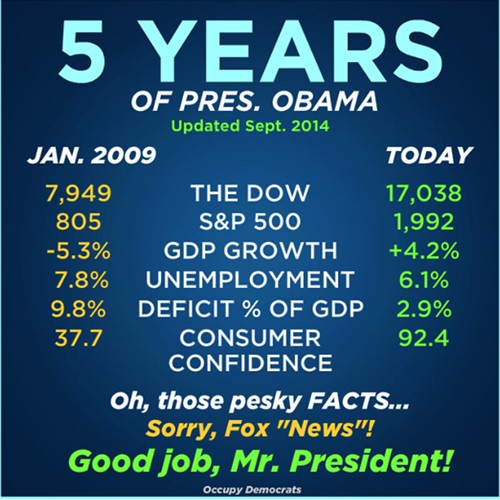
On Friday, I was called a privileged white male who couldn’t possibly understand issues of race and gender discrimination. This from a “friend,” who was getting a bit off-topic after I rebutted a meme praising President Obama’s economic record. The meme is another topic (heh…), but I have written about the blanket “check your privilege” dismissal before. In this case, I responded to my critic, a woman, that Libertarians like me give women full credit for their strength and ability to compete. And they do compete: the gender pay gap in the U.S. is largely a fiction, though propaganda to the contrary still circulates.

On the issue of gender politics, what bothers me about today’s radical feminists is that they all but encourage a mentality of victimhood: women have been put-upon by privileged white males, made to submit socially, economically, and yes … sexually; forced to accept employment at below-market wages, locked out of many occupations like IT, firefighting or demolition work.

No doubt there has been discrimination against women in the past, before and during their integration into the labor force. Today, there may be vestiges of discrimination, but in a liberal, market economy, men and women are both empowered to seek the kind of education and career they wish to pursue. There is no guarantee that they’ll find employment in a particular field, however. Free individuals, men and women who want to work, participate voluntarily in a labor market with the objective of entering into mutually beneficial employment contracts at market-clearing wages. Yet liberal feminists often advocate for aggressive government intervention on behalf of women — see here and here, for example. From the latter:

“[Anne] Alstott and others argue that the state must ensure that the socially essential work of providing care to dependents does not unreasonably interfere with the personal autonomy of caregivers. Policies proposed to ensure sufficient personal autonomy for caregivers include parental leave, state subsidized, high quality day care, and flexible work schedules. Some recommend financial support for caregivers, others suggest guaranteeing a non-wage-earning spouse one half of her wage-earning spouse’s paycheck.”

Those proposals qualify as a set of highly aggressive state interventions. They would require redistribution of resources on a massive scale and would lead to dislocations and market failures. At a minimum, to accept such a costly platform, one must buy into the narrative of ongoing victimhood promoted by radical feminists, as well state control of economic life rather than individual initiative. Not all women agree, for example, the brilliant Virginia Postrel and Cathy Young.

The victimhood narrative, and the strong preference for relying on state action rather than individual decisions, extends to the recent push for an “affirmative consent” law in California. I leave it to Dr. Helen Smith to destroy this idiotic legal doctrine.

But back to my new designation as a “privileged white male.” As I tried to explain to this mudslinging individual, I find the accusation insulting on (at least) two counts: first, it implies that any success I’ve earned in life is less than fully deserved, but more importantly, it is a transparent attempt to disqualify me from debate. This “friend” hurled more insults, both petty and elitist, in an attempt to denigrate my career (as if she had any clue about what I do for a living, or what I earn). She also called my opinions “scary,” another weak effort to disqualify me. This is what weasels are made of. I told her she needed a good night’s sleep, and I really think she did! She repeated a refrain several times: “Sad,” without elaboration. She also “unfriended” me, which is fairly typical of leftists who engage in on-line debate. And I am sad for her, but I must move on!

Follow Sacred Cow Chips on WordPress.com

Recent Posts

  • The Case Against Interest On Reserves
  • Immigration and Merit As Fiscal Propositions
  • Tariff “Dividend” From An Indigent State
  • Almost Looks Like the Fed Has a 3% Inflation Target
  • Government Malpractice Breeds Health Care Havoc

Archives

  • January 2026
  • December 2025
  • November 2025
  • October 2025
  • September 2025
  • August 2025
  • July 2025
  • June 2025
  • May 2025
  • April 2025
  • March 2025
  • February 2025
  • January 2025
  • December 2024
  • November 2024
  • October 2024
  • September 2024
  • August 2024
  • July 2024
  • June 2024
  • May 2024
  • April 2024
  • March 2024
  • February 2024
  • January 2024
  • December 2023
  • November 2023
  • August 2023
  • July 2023
  • June 2023
  • May 2023
  • April 2023
  • March 2023
  • February 2023
  • January 2023
  • December 2022
  • November 2022
  • October 2022
  • September 2022
  • August 2022
  • July 2022
  • June 2022
  • May 2022
  • April 2022
  • March 2022
  • February 2022
  • January 2022
  • December 2021
  • November 2021
  • October 2021
  • September 2021
  • August 2021
  • July 2021
  • June 2021
  • May 2021
  • April 2021
  • March 2021
  • February 2021
  • January 2021
  • December 2020
  • November 2020
  • October 2020
  • September 2020
  • August 2020
  • July 2020
  • June 2020
  • May 2020
  • April 2020
  • March 2020
  • February 2020
  • January 2020
  • December 2019
  • November 2019
  • October 2019
  • September 2019
  • August 2019
  • July 2019
  • June 2019
  • May 2019
  • April 2019
  • March 2019
  • February 2019
  • January 2019
  • December 2018
  • November 2018
  • October 2018
  • September 2018
  • August 2018
  • July 2018
  • June 2018
  • May 2018
  • April 2018
  • March 2018
  • February 2018
  • January 2018
  • December 2017
  • November 2017
  • October 2017
  • September 2017
  • August 2017
  • July 2017
  • June 2017
  • May 2017
  • April 2017
  • March 2017
  • February 2017
  • January 2017
  • December 2016
  • November 2016
  • October 2016
  • September 2016
  • August 2016
  • July 2016
  • June 2016
  • May 2016
  • April 2016
  • March 2016
  • February 2016
  • January 2016
  • December 2015
  • November 2015
  • October 2015
  • September 2015
  • August 2015
  • July 2015
  • June 2015
  • May 2015
  • April 2015
  • March 2015
  • February 2015
  • January 2015
  • December 2014
  • November 2014
  • October 2014
  • September 2014
  • August 2014
  • July 2014
  • June 2014
  • May 2014
  • April 2014
  • March 2014

Blogs I Follow

  • Passive Income Kickstart
  • OnlyFinance.net
  • TLC Cholesterol
  • Nintil
  • kendunning.net
  • DCWhispers.com
  • Hoong-Wai in the UK
  • Marginal REVOLUTION
  • Stlouis
  • Watts Up With That?
  • Aussie Nationalist Blog
  • American Elephants
  • The View from Alexandria
  • The Gymnasium
  • A Force for Good
  • Notes On Liberty
  • troymo
  • SUNDAY BLOG Stephanie Sievers
  • Miss Lou Acquiring Lore
  • Your Well Wisher Program
  • Objectivism In Depth
  • RobotEnomics
  • Orderstatistic
  • Paradigm Library
  • Scattered Showers and Quicksand

Blog at WordPress.com.

Passive Income Kickstart

OnlyFinance.net

TLC Cholesterol

Nintil

To estimate, compare, distinguish, discuss, and trace to its principal sources everything

kendunning.net

The Future is Ours to Create

DCWhispers.com

Hoong-Wai in the UK

A Commonwealth immigrant's perspective on the UK's public arena.

Marginal REVOLUTION

Small Steps Toward A Much Better World

Stlouis

Watts Up With That?

The world's most viewed site on global warming and climate change

Aussie Nationalist Blog

Commentary from a Paleoconservative and Nationalist perspective

American Elephants

Defending Life, Liberty and the Pursuit of Happiness

The View from Alexandria

In advanced civilizations the period loosely called Alexandrian is usually associated with flexible morals, perfunctory religion, populist standards and cosmopolitan tastes, feminism, exotic cults, and the rapid turnover of high and low fads---in short, a falling away (which is all that decadence means) from the strictness of traditional rules, embodied in character and inforced from within. -- Jacques Barzun

The Gymnasium

A place for reason, politics, economics, and faith steeped in the classical liberal tradition

A Force for Good

How economics, morality, and markets combine

Notes On Liberty

Spontaneous thoughts on a humble creed

troymo

SUNDAY BLOG Stephanie Sievers

Escaping the everyday life with photographs from my travels

Miss Lou Acquiring Lore

Gallery of Life...

Your Well Wisher Program

Attempt to solve commonly known problems…

Objectivism In Depth

Exploring Ayn Rand's revolutionary philosophy.

RobotEnomics

(A)n (I)ntelligent Future

Orderstatistic

Economics, chess and anything else on my mind.

Paradigm Library

OODA Looping

Scattered Showers and Quicksand

Musings on science, investing, finance, economics, politics, and probably fly fishing.

  • Subscribe Subscribed
    • Sacred Cow Chips
    • Join 128 other subscribers
    • Already have a WordPress.com account? Log in now.
    • Sacred Cow Chips
    • Subscribe Subscribed
    • Sign up
    • Log in
    • Report this content
    • View site in Reader
    • Manage subscriptions
    • Collapse this bar
 

Loading Comments...