• About

Sacred Cow Chips

Sacred Cow Chips

Tag Archives: Inclusion

Riding the DEI Weimar Curve: What’s Next on the Pogrom?

24 Friday Nov 2023

Posted by Nuetzel in anti-Semitism, DEI, fascism, Liberty

≈ Leave a comment

Tags

Adolf Hitler, anti-Semitism, Banality of Evil, Bari Weiss, C.S. Lewis, Class Struggle, Critical Theory, David Foster, DEI, Diversity, Equity, Federalist Society, Gaza, Great Depression, Hamas, Inclusion, Inner Ring, Institutionalized Racism, Jamie Kirchick, Marxism, Naziism, Oppressors, Philip Carl Salzman, Protected Groups, Reverse Discrimination, Ricochet, Social Justice, Tablet, Weimar Republic, Zero-Sum Game
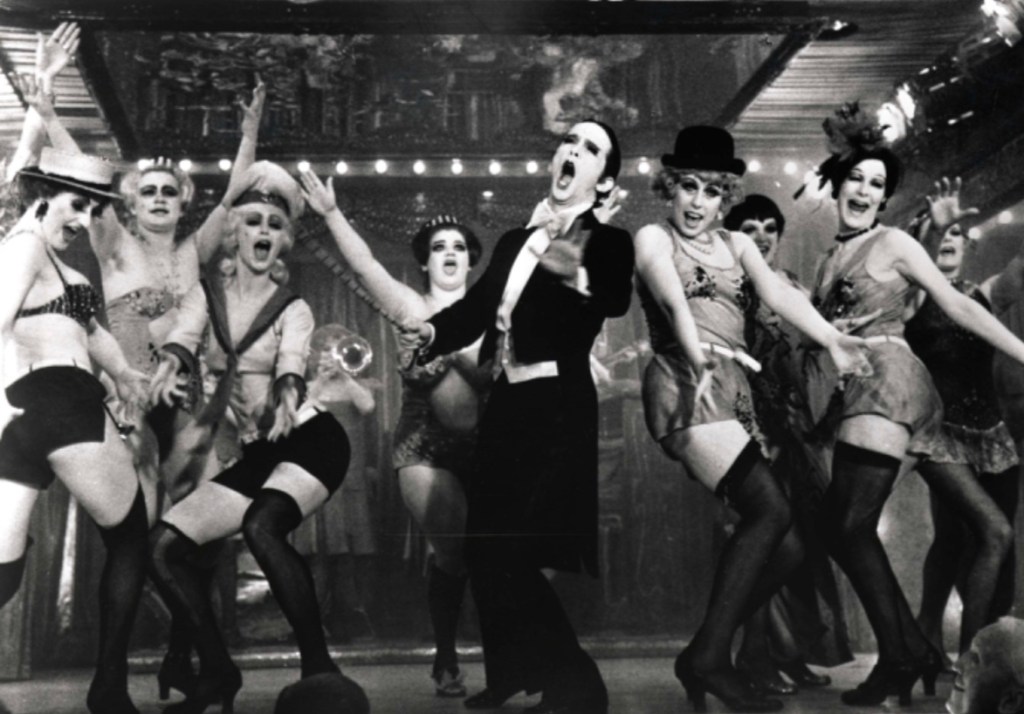
Germany’s inter-war descent into genocidal barbarism is perhaps the most horrifying episode of modern times. Seemingly normal, “nice people” in Germany were persuaded to go along with the murderous pogroms of the anti-Semitic National Socialists, giving truth to the “banality of evil”, as the famous expression goes. Of course, there were plenty of true believers, and multitudes bowed to the Nazis under fierce coercion, but many others went along just to “fit in”.

What could life have felt like in Weimar Germany in the late 1920s and early 1930s as the fascists accumulated power? Were normal people afraid? Well before Adolf Hitler’s rise to power he was known for his hatred of Jews, but German political leaders who enabled his ascent did not take his extreme prejudice as seriously as they should have, or they thought they could at least keep him and his followers in check. Surely there were people who foresaw the approaching cataclysm for what it would be.

Current expressions of anti-Semitism might give us a sense of what life was like during the decline and fall of the Weimar Republic. Just ask Jewish students at NYU and Cornell if they’ve sensed a whiff of it in the wake of Hamas’ slaughter of civilians in southern Israel on October 7th. The harassment these students have endured was motivated in part by claims that Israeli retaliation is morally inferior to the barbarities committed by Hamas, which is preposterous.

Of course, unlike late Weimar Germany, when Jews were blamed for economic (and other) problems, the Jew hatred we’re witnessing in the U.S. today has little to do with the immediate state of the economy. Conditions now are nothing like what prevailed in Germany as the Great Depression took hold, despite current inflationary stresses on real household incomes.

And yet some hold Jews in contempt for their relative economic success, a fact that is bound up with the frequency with which Jews are placed at the center of economic conspiracy theories. One would think Jews to be the ultimate “white oppressors”. But it seems that much of the current wave of anti-Semitism comes from fairly elite quarters, ensconced within major institutions where its sympathizers are insulated from day-to-day economic pressures.

And that brings us to a frightening aspect of the current malaise: how heavily institutionalized the hatred for certain groups or “classes” has already become. This owes to the blame directed toward whites, men, Jews, and Asians presumed to have been endowed with an inside track on success at the expense of others. Success of any kind, in the narrative of “critical” social justice, is “oppressive”, as if success is a zero-sum game.

Here is Philip Carl Salzman on this point:

“The ‘social justice’ political analysis is founded on the Marxist conviction that society is divided into two classes: oppressors and victims. The corresponding ‘social justice’ ethic is that victims must be raised up and celebrated and that oppressors must be suppressed and eliminated.”

This thinking has been integrated into the policies, practices and rhetoric taught in schools at all levels, corporations and nonprofits, social and traditional media, and government (including intelligence agencies and the military). This level of integration gives diversity, equity, and inclusivity (DEI) policies coercive force on behalf of so-called “protected groups”, in the parlance of anti-discrimination law. When those practices are enforced by government in various ways, the private gains extracted from “unprotected” groups amount to fascism.

Bari Weiss wrote an article in Tablet last week entitled “End DEI” in which she describes her bemused reaction as a student in the early 2000s to nascent DEI rhetoric. (Also see her recent speech to the Federalist Society here.) It’s more obvious today, but even then she recognized the hate inherent in DEI doctrine. She crystallizes the dangers she saw in DEI ideology:

“What I saw was a worldview that replaced basic ideas of good and evil with a new rubric: the powerless (good) and the powerful (bad). It replaced lots of things. Colorblindness with race-obsession. Ideas with identity. Debate with denunciation. Persuasion with public shaming. The rule of law with the fury of the mob.

“People were to be given authority in this new order not in recognition of their gifts, hard work, accomplishments, or contributions to society, but in inverse proportion to the disadvantages their group had suffered, as defined by radical ideologues. According to them, as Jamie Kirchick concisely put it in these pages: ‘Muslim > gay, Black > female, and everybody > the Jews.’”

Weiss says Jewish leaders told her, at that time, not to be hysterical, that these perverse ideas would ultimately pass like any fad. That sounds so eerily familiar. Instead, we’ve witnessed a widespread ideological takeover.

“If underrepresentation is the inevitable outcome of systemic bias, then overrepresentation—and Jews are 2% of the American population—suggests not talent or hard work, but unearned privilege. This conspiratorial conclusion is not that far removed from the hateful portrait of a small group of Jews divvying up the ill-gotten spoils of an exploited world.

“It isn’t only Jews who suffer from the suggestion that merit and excellence are dirty words. It is strivers of every race, ethnicity, and class. That is why Asian American success, for example, is suspicious. The percentages are off. The scores are too high. From whom did you steal all that success?”

The whole DEI enterprise is corrupt and unethical. It denies the meritorious in favor of those having certain superficial characteristics like the “right” skin color. That is evil and economically demented besides. It also breeds hatred that often flows both ways between classes of people, creating an incendiary environment. That we’re talking about systemic, legalized discrimination against any group is disturbing enough, but when small minorities are “othered” in this way, the potential for violent action against them is magnified. But this is just where the DEI mindset leads its proponents and beneficiaries.

Our slide into this monstrous “social justice” regime mirrors the insanity and anger that was fomented against certain “out groups” when the Nazi’s accumulated power in the latter years of the Weimar Republic. Too many today have succumbed to this zero-sum psychology, young and old alike. Fortunately, they are beginning to face some fierce resistance, but those who extol the supposed righteousness of the class struggle via DEI won’t easily give up. Our institutions are infested with their kind.

As long as influential people preach the virtues of DEI and social justice, the danger of a headlong plunge into genocidal madness is possible. And the sad truth is that normal human beings are subject to social manipulation of the most evil kind. David Foster at Ricochet: quotes an address given by C.S. Lewis in which he emphasizes this point. His words are haunting:

“Of all the passions, the passion for the Inner Ring is most skillful in making a man who is not yet a very bad man do very bad things.”

Elsewhere in Lewis’ address, he says:

“And the prophecy I make is this. To nine out of ten of you the choice which could lead to scoundrelism will come, when it does come, in no very dramatic colours. Obviously bad men, obviously threatening or bribing, will almost certainly not appear. Over a drink, or a cup of coffee, disguised as triviality and sandwiched between two jokes, from the lips of a man, or woman, whom you have recently been getting to know rather better and whom you hope to know better still—just at the moment when you are most anxious not to appear crude, or naïf or a prig—the hint will come. It will be the hint of something which the public, the ignorant, romantic public, would never understand: something which even the outsiders in your own profession are apt to make a fuss about: but something, says your new friend, which ‘we’ — and at the word ‘we’ you try not to blush for mere pleasure—something ‘we’ always do.

“And you will be drawn in, if you are drawn in, not by desire for gain or ease, but simply because at that moment, when the cup was so near your lips, you cannot bear to be thrust back again into the cold outer world. It would be so terrible to see the other man’s face—that genial, confidential, delightfully sophisticated face—turn suddenly cold and contemptuous, to know that you had been tried for the Inner Ring and rejected. And then, if you are drawn in, next week it will be something a little further from the rules, and next year something further still, but all in the jolliest, friendliest spirit. It may end in a crash, a scandal, and penal servitude; it may end in millions, a peerage and giving the prizes at your old school. But you will be a scoundrel.”

White Racialism, Identity Politics, and Crippling DEI

09 Thursday Nov 2023

Posted by Nuetzel in DEI, Identity Politics

≈ 1 Comment

Tags

Anti-discrimination law, Christopher Rufo, Colorblind Society, Comparative advantage, DEI, Diversity, Equity, George Floyd, Hobbesian, Identity Politics, Inclusion, Jim Crow Laws, Protected Classes, Racial Preferences, Racialism, racism, rent seeking, Segregation, Slavery, Social Constructs, Structural Racism, Tribalism, Tyler Cowen, Victimhood, Victor Davis Hanson, White Racialism, Zero-Sum Thinking

I’ve taken an extended hiatus from blogging while moving to a different part of the country. I haven’t posted here in over 10 weeks, but a new post appears below. I’m still tying-up loose ends from the move, but I’ll be trying to get back to posting more regularly … trying!

~~~~~~~~~~~~~~~~~~~~~~~~~~~~~~~~~~~~~~~

Absurd ideas about race and identity politics come from extreme elements on both the Left and the Right. Some leftists insist that race has no natural basis — that it’s simply a “social construct”. On the Right, a “racialist” contingent is promoting the “celebration of whiteness” and embracing racial preferences for whites. Treated as alternative pathways, I’d take “social construct”. It’s nonsense, of course, but the beautiful irony is that it provides a basis for stripping away from our institutions the entire diversity, equity, and inclusion (DEI) straightjacket. It’s almost as if those promoting race as a social construct wish to build a “colorblind” society. On the other hand, I suppose some think they can have their DEI cake along with a side of free choice to identify as anything they want: black, white, or furry.

Who Are the Racists?

People of good faith don’t harbor or act on racist tendencies. The mere recognition of racial/ethnic/cultural differences is not evidence of racism and does not preclude the treatment of all with fairness and due respect. It’s possible to respect, value, or fall in love with someone outside one’s own racial, ethnic, or cultural group of origin, even while holding a general affinity for one’s own group, as nearly everyone does.

But a few real racists are sprinkled across all races, ethnicities, cultures, and the full political spectrum. The “popular” racist stereotype as white male has been kept alive by the lingering echos of slavery in America, which ended nearly 16 decades ago, and the long hangover that included Jim Crow laws and segregation. Today, however, “white society” or “whiteness” is hardly the sole domain of prejudice.

Is Racialism Different?

Now, a few whites are promoting the celebration of “white identity” as a counterbalance to identity politics among non-whites. Ostensibly, this “white racialism” might be similar to celebrations of identity often practiced by minorities, which are also forms of racialism. Should white racialism be viewed as less savory than racialism practiced by racial minorities?

For most Caucasians, “being white” does not have much salience relative to other affiliations defining identity. That’s why white racialism seems odd to me. Sure, when forced to check a box, whites will check “Caucasian”, but “white identity” seems overly broad. There are too many distinct cultures and subcultures that dominate self-identity, such as national ancestry, religion, and cultural membership.

The same could be said for many other racial categories, but minority status and historical events (e.g., American slavery) help explain why broad categories often form cohesive identity groups. And, as Christopher Rufo notes in his great discussion of the racialist viewpoint, broad categories tend to be the most closely associated with racialism:

“Yes, left-wing racialism is indeed now deeply embedded in America’s institutions, and the demographic balance of the country has shifted in recent decades. And yes, the basic racial classification system in the United States broadly delineates continental origin—Europe, Africa, Latin America, Asia—in a way that is not arbitrary or meaningless. Terms such as ‘white,’ ‘black,’ ‘Latino,’ and ‘Asian,’ while often obscuring important variations within such groupings, have become the lingua franca and are useful shorthand descriptors for many purposes.”

There are individuals from all groups or “classes”, including whites, who react critically to aggressive expressions of identity by members of other classes. Perhaps that’s excusable, depending on the degree of zealotry on either part. The line between pride in race/ancestry/culture and fractious racialism might be hard to discern in some cases, but the chief distinction is rooted in explicit, demeaning and/or envious comparisons to “out-groups”. This might be damaging enough, but from there it can be a very short step into outright racism.

A preoccupation with the historic disadvantages of one’s race can be disempowering to an individual and destructive in a social sense. I believe the white racialist phenomenon belongs in that category. The presumed “disadvantages” of whiteness are very contemporary, however, rooted in policies dating back only to the widespread adoption of racial preferences for non-white “protected classes” and DEI.

Preferences For All

Imagine the racialist policies now practiced widely in government, industry, and academia — particularly racial preferences on behalf of protected classes — but now applied on behalf of heretofore unprotected classes as well. For example, what if some proportion of jobs, admissions, or other coveted placements were set aside for whites? If whites represent 50% of the population, then 50% of hires or admissions would be reserved for whites.

Some might assume that this treatment is already implied by existing racial preferences, but that’s not the case. In the wake of George Floyd’s death, just 6% of new hires among S&P companies were white, according to Bloomberg News.

Nevertheless, such a white racialist turnabout would be a colossal mistake. Adding strict limits to the application of existing preferences might be a good thing, but white racial preferences would buttress the entire system of racial preferences as an institution and add more rigidity to the operation of labor markets. From an economic viewpoint, it would be just as pernicious as racial preferences generally.

Racial preferences of any kind freeze labor markets and impair the allocation of human resources to their most-valued uses. In fact, placing one individual into a position on any basis other than their qualifications implies that two individuals must be placed into positions in which they lack comparative advantage relative to each other. Little by little, that means lost output and upward price pressure. It is a mechanism that short circuits gains from trade, shriveling the benefits that the most and least talented confer on society at large. Extending preferences to whites would only serve to further institutionalize this damaging practice.

Adherence to numerical preferences is to pretend that people can be treated less as individuals and more like interchangeable parts… except with respect to their value as “class members”. Racial preferences are presumed to be a remedy for so-called structural racism, as opposed to racism by individuals. But they involve classification and favor the so-called “oppressed” at the expense of designated “oppressors”. The latter, almost without exception, had no role oppressive regimes of the past. Favoritism of this kind necessarily means reverse discrimination and fails to match individuals to roles in an optimal fashion.

Whether publicly or privately imposed, racial preferences often undermine those they are purported to help by placing individuals into positions for which they may not be competitive. This can sabotage an individual’s long-term success. It goes without saying that preferences build resentment among the “unprotected”, which goes to the impetus for “white racialism”. Indeed, preferences are not always popular with protected classes either. That’s because they interfere with merit-based decision-making and are perceived to stigmatize those presumed to benefit.

The Fixed Pie Is a Lie

Racialism reflects zero-sum thinking, a hallmark of DEI initiatives. Tyler Cowen quoted the abstract of a recent NBER working paper that found:

“… a more zero-sum mindset is strongly associated with more support for government redistribution, race- and gender-based affirmative action, and more restrictive immigration policies.”

Zero-sum thinking is fundamental to rent-seeking behavior, which is motivated by either malevolent greed or perceptions of victimhood. Victimhood and rent seeking is at the heart of calls for DEI, to say nothing of more radical proposals like reparation payments. White racialism attempts to get in on the action by positing that whites are oppressed under the current institutional dominance of DEI. But the misguided presumption that every identity group should have their own preferences or quotas broadens the emphasis on redressing perceived harms and redistributing rewards — zero-sum activities.

These zero-sum efforts waste energy and resources, harming our ability to produce things that enhance well being. Ultimately, they are actually negative-sum activities, and they also breed hatred.

Race is obviously determined by genetics, but I’d be happy to pretend it’s a mere social construct if that would help get us to a “colorblind” society.

Conclusion

There’s a huge irony in the racialism exercised by both traditional and “white racialist” DEI advocates: it neglects the most fundamental and just application of diversity: equality of opportunity. This principle incorporates the concept of diversity without sacrificing economic efficiency. We’ve largely abandoned it in favor of equality of outcomes via racial preferences, even at a time when society has become enlightened with respect to racial differences. In doing so, we’ve unintentionally chosen another form of explicit racial victimization.

To close, here’s a good summary of the dangers of racialism and identity politics offered by Victor Davis Hanson:

“Anytime one ethnic, racial, or religious group refuses to surrender its prime identity in exchange for a shared sense of self, other tribes for their own survival will do the same.

All then rebrand their superficial appearance as essential not incidental to whom they are.

And like nuclear proliferation that sees other nations go nuclear once a neighboring power gains the bomb, so too the tribalism of one group inevitably leads only to more tribalism of others. The result is endless Hobbesian strife.”

And that’s how white racialism fits right in with the pernicious politics of identity. When you can, vote for the elimination, or at least reform, of DEI policies and practices, not for a reinforcement of identity politics.

ESG Scoring: Political Tool Disguised as Investment Guide

30 Wednesday Mar 2022

Posted by Nuetzel in Capital Markets, Corporatism, Environmental Fascism, Social Justice

≈ 3 Comments

Tags

Access to Capital, Antitrust, Blackrock, Climate Action 100+, Corporatism, Diversity, Equity, ESG Fees, ESG Scores, Great Reset, Green Energy, Inclusion, John Cochrane, Mark Brnovich, Principal-Agent Problem, Renewable energy, Renewables, rent seeking, Shareholder Value, Social Justice, Stakeholder Capitalism, Sustainability, Too big to fail, Ukraine Invasion, Vladimir Putin, Woke Investors, Zero-Carbon

ESG scores are used to rate companies on “Environmental, Social, and Governance” criteria. The truth, however, is that ESGs are wholly subjective measures of company performance. There are many different ESG scores available, with no uniform standards for methodology, specific inputs, or weighting schemes. If you think quarterly earnings reports are manipulated, ESGs are an even more pliable tool for misleading investors. It is a market fad, and fund managers are using it as an excuse to charge higher fees to investors. But like any trending phenomenon, for a time, the focus on ESGs might feed-back positively to returns on favored companies. That won’t be sustainable, however, without legislative and regulatory cover, plus a little manipulative help from the ESG engineers and “Great Reset” propagandists.

It’s 100% Political, 0% Economic

ESGs are founded on prioritizing objectives that have little to do with shareholder value or any well-understood yardsticks of financial or operating performance. The demands on company resources for scoring highly on ESG are often nakedly political. This includes adoption of environmental goals such as fraudulent “zero carbon” impacts, the nebulous “sustainability” objective promoted by “green” activists, diversity, inclusion and equity initiatives, and support for activist groups such as Black Lives Matter and Antifa.

Concepts like “stakeholder value” are critical to the rationale for ESGs. “Stakeholders” can include employees, suppliers, and customers, as well as potential employees. suppliers, and customers. In other words, they can be just about anyone in the broader community, or more likely activists for “social change” whose interests have but the thinnest connection to the business’s productive activities. In essence, so-called stakeholder capitalism amounts to a ceding of control over corporate resources, and ultimately confiscation of wealth from equity owners.

Corporations have long engaged in various kinds of defensive actions, amounting to a modern-day trade in indulgences. No one will be upset about your gas-powered fleet if you buy enough carbon offsets, which just might neutralize the impact of the fleet on your ESG! On a more sinister level, ESG’s provide opportunities for cover against information that might be damaging to firms, such as the use of slave labor overseas. Flatter the right people, give to their causes, “partner” with them on pet initiatives, and your sins will be ignored and your ESG will climb! And ESGs are used in attempts to pacify leftist investors who see the corporation as a vessel for their own social objectives, quite apart from any mission it might have had as a productive enterprise.

Your ESG will shine if you do business that’s politically-favored, like renewable energy, despite its inefficiencies and significant environmental blemishes. But ESGs are not merely used to reward those anointed as virtuous by the Left. They are more forcefully used to punish firms in industries that are out of favor, or firms refusing to participate in buying off authoritarian crusaders. For example, you might be so berserk as to think fossil fuels and climate change represent imminent threats of catastrophe. Naturally, you’ll want to punish oil and gas producers. In fact, if you are in charge of ESG modeling, you might want to penalize almost any extraction industry, with certain exceptions: the massive extraction and disposal costs of renewables will pass without notice.

All these machinations occur despite the huge uncertainty surrounding flimsy, model-based predictions of warming and global catastrophe. Never mind that fossil fuels are still relied upon to provide for most of our energy needs and will be for some time to come, including base-load power generation when intermittency prevents renewables from meeting demand. The stability of the power grid depends upon the availability of carbon-based energy, which in fact is marvelously efficient. Yet the ESG crowd (not to mention the Biden Administration) seeks to drive up its cost, including the cost of capital, and these added costs fall most heavily on the poor.

ESG-guided efforts by activists to deny capital to certain segments of the energy sector may constitute antitrust violations. Some big players in the financial industry, who together manage trillions of dollars in investment funds, belong to an advocacy organization called Climate Action 100+. They coordinate on a mission to completely transform the energy industry via “green” investments and divestments of presumptively “dirty” concerns. These players and their clients have huge investments in green energy, and it is in their interest to provide cheap capital to those firms while denying capital to fossil fuel industries. As Arizona Attorney General Mark Brnovich writes at the link above, this is restraint of trade “hiding in plain sight”.

Manipulation

ESGs could be the mother of all principal-agent problems. Corporate CEOs, hired by ownership as stewards and managers of productive assets, are promoting these metrics and activities, which may not align with the interests of ownership. ESG’s are not standardized, and most users will have little insight into exactly how these “stakeholder” sausages are stuffed. In fact, much of the information used for ESGs is extremely ad hoc, not universally disclosed, and is often qualitative. The applicability of these scores to the universe of stocks, and their reliability in guiding investment decisions, is extremely questionable no matter what the investor’s objectives. And of course the models can be manipulated to produce scores that suit the preferences of money managers who have a stake in certain firms or industry segments, and who inflate their fees in exchange for ESG investment advice. And firms can certainly engage in deceptions that boost ESGs, as already discussed.

Like many cultural or consumer trends, investment trends can feed off themselves for a time. If there are enough “woke” investors, ESGs might well feed an unvirtuous cycle of stock purchases in which returns become positively correlated with wokeness. Such a divorce from business fundamentals will eventually take its toll on returns, especially when economic or other conditions present challenges, but that’s not the answer you’ll get from many stock pickers and investment pundits.

At the same time, there are ways in which the preoccupation with ESGs dovetails with the rents often sought in the political arena. Subsidies, for example, will be awarded to firms producing renewables. Politically favored firms are also likely to receive better regulatory treatment.

There are other ways in which firms engaging in wasteful activities can survive profitably, at least for a time. Monopoly power is one, and companies often develop a symbiosis with regulators that hampers smaller competitors. This is traditional rent-seeking corporatism in action, along with the “too-big-to-fail” regime. Sometimes sheer growth in demand for new technologies or networking potential helps to conceal waste. Hot opportunities can leave growing companies awash in cash, some of which will be burned in wasteful endeavors. ESG scoring offers them additional cover.

Cracks In the Edifice

John Cochrane notes a fundamental, long-term contradiction for those who invest based on ESGs: an influx of capital will tend to drive down returns in those firms and industries, while the returns on firms having low ESGs will be driven upward. Yet advocates claim you can invest for virtue and superior returns. That can’t outlast real market forces, especially as ESG efforts dilute any mission a firm might have as a productive enterprise.

Vladimir Putin’s brutal invasion of Ukraine has revealed other cracks in the ESG edifice. We now have parties arguing that defense stocks should be awarded ESG points! Also, that oil production by specific nations should be scored highly. There is also an awakening to the viability of nuclear power as an energy source. Then we have the problem of delivering on Biden’s promise to Europe of more liquified natural gas exports. That will be difficult given the way Biden has bludgeoned the industry, as well as the ESG conspiracy to deny it access to capital. Just watch the ESG hacks backpedal. Now, even the evangelists at Blackrock are wavering. To see the thread of supposed ESG consistency unravel would be enough to make you laugh if the entire conspiracy weren’t so grotesque.

Closing

The pretensions underlying “green” initiatives undertaken by large corporations are good mainly for virtue signaling, to collect public subsidies, and to earn better ESG scores. They are usually wasteful in a pure economic sense. The same is true of social justice and diversity initiatives, which can be perversely racist in their effects and undermine the rule of law.

Ultimately, we must recognize that the best contribution any producer can make to society is to create value for shareholders and customers by doing what it does well. The business world, however, has gone far astray in the direction of rank corporatism, and keep this in mind: any company supporting a sprawling HR department, pervasive diversity efforts, “sustainability” initiatives, and preoccupations with “stakeholder” outreach is distracted from its raison d’etre, its purpose as a business enterprise to produce something of value. It is probably captive to outside interests who have essentially commandeered management’s attention and shareholders’ resources.

When it comes to investing, I prefer absolute neutrality with respect to out-of-mission social goals. Sure, do no harm, but the focus should remain squarely on goals inherent in the creation of value for customers and shareholders.

Parents and Taxpayers Confront Rogue Educrats

14 Thursday Oct 2021

Posted by Nuetzel in Critical Race Theory, Education, Propaganda, Uncategorized

≈ Leave a comment

Tags

Critical Race Theory, Department of Education, Diversity, Equity, Freedom of Speech, Home Schooling, Ibram X. Kendi, Inclusion, Indoctrination, Merrick Garland, National School Boards Association, Nicole Solas, Norman Rockwell, Panorama Education, Propaganda, Psrental Sovereignty, School Choice, School Taxes, School Vouchers, Selina Zito, Social Infrastructure, Social Justice, STOP CRT Amendment

This Norman Rockwell painting is called “Freedom of Speech”. It depicts a Vermont dairy farmer speaking his mind at a school board meeting, and no, he is not a “domestic terrorist”! (A recent piece by Selina Zito reminded me of this painting.) Today, parents of schoolchildren have a very special reason to be upset: the teaching of critical race theory (CRT) as part of the regular curriculum. A better name for this vapid “theory” might be “critical race theology”, because it is no “theory” at all: it is a set of “woke” accusations leveled against “out groups” designated by leftists: whites, straights, men, and sometimes groups like Jews and Asians. Many people of color are just as dismayed as those among CRT’s targets because its wrongheaded and corrosive nature is so plain. CRT is itself straightforwardly racist.

Taxpayers have a place in this debate as well, at both the K-12 and public university levels. However, their role in funding the indoctrination taking place in public schools has been neglected in the story of the revolt against CRT.

The Parent Trap

Many parents have taken strong action in response to the CRT onslaught. Some have quietly removed their children from public schools, while others have chosen to register their objections with school officials, often at school board meetings. Also, there has been some success at the ballot box by dissident school board candidates. This is grass roots participatory democracy in action, local and vocal. Certainly parents have a greater stake in their childrens’ education than anyone (except the kids themselves). They have a right to know what’s being taught and to provide critical feedback to schools.

School officials, teachers unions, and CRT teacher-enthusiasts are not likely to be straightforward about whether CRT is actually taught, however. This link might help you see through the gaslighting to which we’ve all been subjected. This article discusses various political avenues for fighting CRT in the schools. And here’s a “tool kit” that might be helpful.

Garland’s Effrontery

To top it all off, recently we’ve witnessed an act of fascist authoritarianism by the U.S. Attorney General that, by all appearances, involves a conspiracy between the Biden Administration, top officials at the Department of Justice, and the National School Boards Association (NSBA). AG Merrick Garland’s memorandum of October 4 announced a “partnership among federal, state, local, tribal, and territorial law enforcement to address threats against school administrators, board members, teachers, and staff.“ He did not provide actual evidence of threats against school boards or personnel, however. Yet Garland is willing to treat interested parents as if they are domestic terrorists! His memorandum is a thinly veiled warning to anyone having the temerity to confront school authorities on issues like CRT, as well as school mask mandates (which are ineffective, unnecessary, and detrimental to learning, socialization, and the psychological well being of children). Furthermore, we now know of an obvious conflict of interest: Garland’s daughter is married to the cofounder of Panorama Education, which sells training materials for teachers of CRT.

While Garland’s attempt to undercut free speech might chill the willingness of some parents to speak out against CRT in the schools, many refuse to back down. The following is an excerpt from a letter to the NSBA written on behalf of 427,000 parent-members of 21 organizations:

“Our organizations unequivocally oppose violence and find it deeply troubling that you imply otherwise about concerned citizens who care deeply about their community’s children – and who are concerned by the direction that America’s schools have taken.

  • Citizens are angry that school boards and school officials around the country are restricting access to public meetings, limiting public comment, and in some cases conducting business via text messages in violation of state open meetings laws.
  • They are angry that schools are charging them thousands of dollars in public records requests to view curriculum and training materials that impact their children and that should be open to the public by default.
  • They are angry that pandemic-related learning losses have compounded the already-low reading, writing, and math proficiency rates in America’s schools.
  • They are angry that rather than focusing on declining student achievement, large numbers of districts have chosen to fund, often with hundreds of thousands of dollars in taxpayer money, “social justice” and “diversity, equity, and inclusion” programs with finite resources.”

Insularity At the Board

I’ll be surprised if Garland’s memorandum doesn’t inspire many parents to push harder against CRT in their local schools. However, getting in front of school boards is not always easy, thanks to restricted access for public comment. Here’s an example of the draconian reaction by school authorities in their effort to silence parents, from Orange County, CA. In my own local school district in Missouri, making a short comment at a board meeting first requires submission of a request detailing the subject or question you wish to address to the board. Not only can they simply ignore your request, but it also gives them an opportunity to “circle the wagons” in advance, as it were, even calling upon various “friends of the board” to attend en masse.

The leftists who support CRT fight dirty, as this article notes:

“Nicole Solas, a mother who has complained about her school board, has been harassed and even sued by the authorities. Go ahead, ‘arrest me,’ she said on Twitter. ‘They wanted to publicly humiliate me,’ she said. ‘They paid a PR firm to call me a racist in the national media. So they really wanted to ostracize me from my community.’”

The anger of parents toward this bankrupt philosophy in our schools, and its belligerent proponents, is well justified. Parents obviously have the biggest stake in this controversy. My kids are grown, but I’m angry too, in part because the once-fine education offered by our school district has digressed to brutish proselytization about victimhood, its supposed perpetrators, and the emphasis on the Left’s version of “social justice”. I’m also angry as a taxpayer. While the student population might shrink as decent families abandon the brainwashing camps in favor of private schools or home schooling, does anyone expect the tax bill to decline commensurately? At all? School taxes should be a ripe area for activism, because lots of people don’t want to pay for this shit!

Our Taxes, Our Schools?

Opponents of CRT won a victory of sorts this summer when the U.S. Department of Education amended a proposal that would have prioritized CRT initiatives in awarding grant money.

“The Department of Education withdrew ‘the requirement that grantees incorporate curriculum and instruction based on or similar to the 1619 Project or the works of Ibram X. Kendi.’”

Hooray for that. And in August, the U.S. Senate passed a “STOP CRT” amendment to the otherwise misbegotten $3.5 trillion “social infrastructure” bill. The amendment would ban the use of federal funds for teaching CRT in schools. Of course, that the federal government has any role in funding local schools, and in shaping their curricula, is itself regrettable.

At the state level, many Republican office-holders seem unaware of the use of state resources for CRT in schools, as this piece about Indiana demonstrates. Perhaps they’ve been cowed, and are reluctant to comment for fear of being called racists by CRT proponents. Registering strong displeasure with state legislators regarding the onslaught of CRT is something all within our opposition should be doing.

Local taxes still account for most school funding. There’s obviously no way to get around school district bond servicing. Most ballot initiatives on school taxes appear at the behest of the school districts themselves, and generally those go in only one direction: up! General funding may be subject to reduction via ballot initiative, but petitions are usually necessary, and apparently those have been few and far between. A more promising avenue for wresting control over school funding are school voucher programs, whereby school funds (either state or local dollars) follow the student rather than remaining under the control of monopoly school districts. School choice is expanding across a number of states, having been given a boost by the pandemic. CRT might prove to be an additional impetus in some states. But parents should be careful: some private schools are just as brazen as public schools when it comes to peddling CRT. And there is the danger that vouchers, one day, will bring unwelcome government curriculum mandates.

Joining Arms

The widespread adoption of critical theology in public schools (and universities) is not only a corruption of education: it is institutional roguery and a misappropriation of taxpayer funds for political indoctrination. This is aggravated by the unresponsiveness of many school boards, administrators, and teachers. Parents have good cause to be infuriated, and so do taxpayers. They are natural allies in this struggle to win back our educational institutions.

Diversity and Despotism

14 Friday Feb 2020

Posted by Nuetzel in Affirmative Action, Diversity, Identity Politics

≈ Comments Off on Diversity and Despotism

Tags

Bias, Disparate impact, Diversity, Diversity Administrators, Emory University, Impartiality, Inclusion, Jerry Coyne, John Cochrane, Mark Bauerlein, Overt Discrimination, Political Test, Superficiality, University of California, University of Montana, Walter Williams, Wokeademia

Diversity is a fine thing, but who can define it precisely, and along what dimensions? It is essentially an amorphous concept, defined in ways that vary with context and often by political fiat. In my view, the best diversity outcome is always that which results from impartial decisions. That goes for hiring, firing, admission, and the like; in distributing rewards; in making loans; and in price or non-price rationing decisions. And by “impartiality” I mean those decisions should be made without respect to superficial qualities such as skin color, country of origin, sexual preference, religious faith, and political philosophy.

“Superficiality”, however, depends on the context of the decision at hand, or it might describe an outcome that is superficial to the decision criteria: an impartial selection of candidates for jobs that require great physical strength is likely to be skewed toward males. Likewise, an impartial selection of candidates for jobs that require strong English language skills is likely to favor those whose first language is English. And an impartial selection of a new physics professor should be the candidate having the strongest expertise in physics. The point is that impartiality can seldom guarantee outcomes that are consistent with the demands of diversity activists. In fact, to the extent that diversity objectives may emphasize qualities that are superficial to the decision at hand, they undermine impartiality.

Should research physicists devote their energies to dreaming up ways to promote diversity within their field? Electrical engineers? Will that help them advance the state of knowledge in their disciplines? As a member of an alumni board, I have personally witnessed the department of economics at a state university grapple with diversity reviews and/or mandates in hiring, class enrollment, and curriculum. Economics is actually a field that has strong things to say about the negative consequences of bias and discrimination, and the department should not have to jump through hoops proving it to “diversity administrators” who may well lack the qualifications necessary to assess that part of the curriculum. There is no question that devoting energy and resources to these bureaucratic pursuits is wasteful of faculty time as well as resources furnished by taxpayers. But that isn’t even the worst of it.

The amorphous nature of diversity confers power on its enforcers in business, government, and academia. We know that rank-ordering alternatives in pursuit of an objective may conflict with the selection that best satisfies the diversity fashion du jour. But today our society has devolved to the point at which corporate HR departments insist that individuals be browbeaten into “recognizing their bias” and evaluated on “promoting diversity”. Hiring and promotions at universities in fields as “diverse” as physics and language arts are dependent on a candidate’s ability to convince diversity administrators of their sincere and inventive strategies to promote diversity.

In a post titled “Wokeademia“, John Cochrane comments on these “diversity political tests”:

“It’s not about whether you are ‘diverse,’ meaning belonging to a racial, gender, or sexual-preference group the University wishes to hire. It is a statement, as it says, of your active participation in a political movement.”

He quotes Jerry Coyne on the “diversity equity and inclusion statement” required by the University of California:

“Why is it a political test? Politics are a reflection of how you believe society should be organized. Classical liberals aspire to treat every person as a unique individual, not as a representative of their gender or their ethnic group. The sample rubric dictates that in order to get a high diversity score, a candidate must have actively engaged in promoting different identity groups as part of their professional life…. Requiring candidates to believe that people should be treated differently according to their identity is indeed a political test…The idea of using a political test as a screen for job applicants should send a shiver down our collective spine….”

Cochrane sheds additional light on this phenomenon in a follow-up post:

“I started this series impressed by the obvious political and free speech ramifications. There is a much simpler economic explanation however. As the quotes from the UC system make clear, the central requirement of the diversity statements is to document past active participation in, and require future approval and participation in all the programs produced by the diversity staff.

Jerry Coyne may have nailed it: ‘By hiring large numbers of deans and administrators whose job is to promote initiatives like the above, colleges like Berkeley have guaranteed that this kind of process will only get more onerous and more invidious. After all, those people have to keep ratcheting up the process to keep their jobs going.'”

Here is one more follow-up from Cochrane on the spread of Wokeadamia in which he offers a sampling of academic job descriptions from schools around the country. The heavy emphasis on one’s track record in promoting diversity, and on one’s future plans to do so, may well eclipse a candidate’s actual qualifications for the job!

It’s fair to say the misplaced emphasis on diversity has reached crazy proportions. Mark Bauerlein, a professor of English at Emory University, reports on a recent episode at the University of Montana in which the school held an essay contest for Martin Luther King Day as part of its effort to respond to complaints of a lack of racial diversity on campus. The population of the state of Montana is just 0.4% African American, so it should come as no surprise that there are relatively few blacks on the campus of the state university. The nine-member prize selection committee had a non-white majority, but only six students entered the contest, all of whom were white. All four winners were white females. Not only were the selections condemned by activists, but the winners were threatened and the university effectively negated the whole contest.

Until such time as thought, feelings, personal preferences, and technical expertise are officially outlawed, people will make decisions that seem arbitrary to others. That’s often because others don’t understand the decision parameters and are in no position to judge its impartiality. But sometimes personal preferences will reflect bias against superficial characteristics. Economists have noted that such bias nearly always comes at a cost to the decision maker. For example, if the best job candidate is black, then the decision to hire a white is economically inferior and will harm the firm’s competitiveness. And of course there are laws prohibiting overt discrimination in many aspects of economic life. Beyond that, we can condemn such bias as might exist, but it is often impossible to discern except as an often errant appeal to statistical genera or “disparate impact”, and it cannot be prevented while maintaining a free society. Political tests, in particular, are not consistent with a free society and should themselves be prohibited.

Follow Sacred Cow Chips on WordPress.com

Recent Posts

  • Immigration and Merit As Fiscal Propositions
  • Tariff “Dividend” From An Indigent State
  • Almost Looks Like the Fed Has a 3% Inflation Target
  • Government Malpractice Breeds Health Care Havoc
  • A Tax On Imports Takes a Toll on Exports

Archives

  • December 2025
  • November 2025
  • October 2025
  • September 2025
  • August 2025
  • July 2025
  • June 2025
  • May 2025
  • April 2025
  • March 2025
  • February 2025
  • January 2025
  • December 2024
  • November 2024
  • October 2024
  • September 2024
  • August 2024
  • July 2024
  • June 2024
  • May 2024
  • April 2024
  • March 2024
  • February 2024
  • January 2024
  • December 2023
  • November 2023
  • August 2023
  • July 2023
  • June 2023
  • May 2023
  • April 2023
  • March 2023
  • February 2023
  • January 2023
  • December 2022
  • November 2022
  • October 2022
  • September 2022
  • August 2022
  • July 2022
  • June 2022
  • May 2022
  • April 2022
  • March 2022
  • February 2022
  • January 2022
  • December 2021
  • November 2021
  • October 2021
  • September 2021
  • August 2021
  • July 2021
  • June 2021
  • May 2021
  • April 2021
  • March 2021
  • February 2021
  • January 2021
  • December 2020
  • November 2020
  • October 2020
  • September 2020
  • August 2020
  • July 2020
  • June 2020
  • May 2020
  • April 2020
  • March 2020
  • February 2020
  • January 2020
  • December 2019
  • November 2019
  • October 2019
  • September 2019
  • August 2019
  • July 2019
  • June 2019
  • May 2019
  • April 2019
  • March 2019
  • February 2019
  • January 2019
  • December 2018
  • November 2018
  • October 2018
  • September 2018
  • August 2018
  • July 2018
  • June 2018
  • May 2018
  • April 2018
  • March 2018
  • February 2018
  • January 2018
  • December 2017
  • November 2017
  • October 2017
  • September 2017
  • August 2017
  • July 2017
  • June 2017
  • May 2017
  • April 2017
  • March 2017
  • February 2017
  • January 2017
  • December 2016
  • November 2016
  • October 2016
  • September 2016
  • August 2016
  • July 2016
  • June 2016
  • May 2016
  • April 2016
  • March 2016
  • February 2016
  • January 2016
  • December 2015
  • November 2015
  • October 2015
  • September 2015
  • August 2015
  • July 2015
  • June 2015
  • May 2015
  • April 2015
  • March 2015
  • February 2015
  • January 2015
  • December 2014
  • November 2014
  • October 2014
  • September 2014
  • August 2014
  • July 2014
  • June 2014
  • May 2014
  • April 2014
  • March 2014

Blogs I Follow

  • Passive Income Kickstart
  • OnlyFinance.net
  • TLC Cholesterol
  • Nintil
  • kendunning.net
  • DCWhispers.com
  • Hoong-Wai in the UK
  • Marginal REVOLUTION
  • Stlouis
  • Watts Up With That?
  • Aussie Nationalist Blog
  • American Elephants
  • The View from Alexandria
  • The Gymnasium
  • A Force for Good
  • Notes On Liberty
  • troymo
  • SUNDAY BLOG Stephanie Sievers
  • Miss Lou Acquiring Lore
  • Your Well Wisher Program
  • Objectivism In Depth
  • RobotEnomics
  • Orderstatistic
  • Paradigm Library
  • Scattered Showers and Quicksand

Blog at WordPress.com.

Passive Income Kickstart

OnlyFinance.net

TLC Cholesterol

Nintil

To estimate, compare, distinguish, discuss, and trace to its principal sources everything

kendunning.net

The Future is Ours to Create

DCWhispers.com

Hoong-Wai in the UK

A Commonwealth immigrant's perspective on the UK's public arena.

Marginal REVOLUTION

Small Steps Toward A Much Better World

Stlouis

Watts Up With That?

The world's most viewed site on global warming and climate change

Aussie Nationalist Blog

Commentary from a Paleoconservative and Nationalist perspective

American Elephants

Defending Life, Liberty and the Pursuit of Happiness

The View from Alexandria

In advanced civilizations the period loosely called Alexandrian is usually associated with flexible morals, perfunctory religion, populist standards and cosmopolitan tastes, feminism, exotic cults, and the rapid turnover of high and low fads---in short, a falling away (which is all that decadence means) from the strictness of traditional rules, embodied in character and inforced from within. -- Jacques Barzun

The Gymnasium

A place for reason, politics, economics, and faith steeped in the classical liberal tradition

A Force for Good

How economics, morality, and markets combine

Notes On Liberty

Spontaneous thoughts on a humble creed

troymo

SUNDAY BLOG Stephanie Sievers

Escaping the everyday life with photographs from my travels

Miss Lou Acquiring Lore

Gallery of Life...

Your Well Wisher Program

Attempt to solve commonly known problems…

Objectivism In Depth

Exploring Ayn Rand's revolutionary philosophy.

RobotEnomics

(A)n (I)ntelligent Future

Orderstatistic

Economics, chess and anything else on my mind.

Paradigm Library

OODA Looping

Scattered Showers and Quicksand

Musings on science, investing, finance, economics, politics, and probably fly fishing.

  • Subscribe Subscribed
    • Sacred Cow Chips
    • Join 128 other subscribers
    • Already have a WordPress.com account? Log in now.
    • Sacred Cow Chips
    • Subscribe Subscribed
    • Sign up
    • Log in
    • Report this content
    • View site in Reader
    • Manage subscriptions
    • Collapse this bar
 

Loading Comments...