• About

Sacred Cow Chips

Sacred Cow Chips

Category Archives: Labor Markets

Embracing the Robots

03 Friday Mar 2017

Posted by Nuetzel in Automation, Labor Markets, Technology

≈ 1 Comment

Tags

3-D Printing, Artificial Intelligence, Automation, David Henderson, Don Boudreaux, Great Stagnation, Herbert Simon, Human Augmentation, Industrial Revolution, Marginal Revolution, Mass Unemployment, Matt Ridley, Russ Roberts, Scarcity, Skills Gap, Transition Costs, Tyler Cowan, Wireless Internet

automation84s

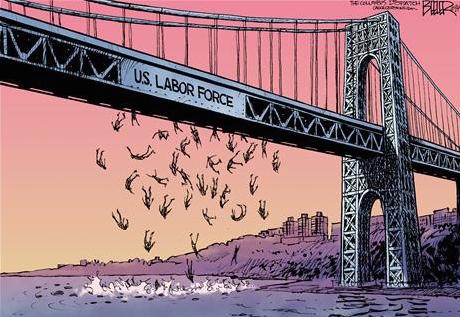
Machines have always been regarded with suspicion as a potential threat to the livelihood of workers. That is still the case, despite the demonstrated power of machines make life easier and goods cheaper. Today, the automation of jobs in manufacturing and even service jobs has raised new alarm about the future of human labor, and the prospect of a broad deployment of artificial intelligence (AI) has made the situation seem much scarier. Even the technologists of Silicon Valley have taken a keen interest in promoting policies like the Universal Basic Income (UBI) to cushion the loss of jobs they expect their inventions to precipitate. The UBI is an idea discussed in last Sunday’s post on Sacred Cow Chips. In addition to the reasons for rejecting that policy cited in that post, however, we should question the premise that automation and AI are unambiguously job killing.

The same stories of future joblessness have been told for over two centuries, and they have been wrong every time. The vulnerability in our popular psyche with respect to automation is four-fold: 1) the belief that we compete with machines, rather than collaborate with them; 2) our perpetual inability to anticipate the new and unforeseeable opportunities that arise as technology is deployed; 3) our tendency to undervalue new technologies for the freedoms they create for higher-order pursuits; and 4) the heavy discount we apply to the ability of workers and markets to anticipate and adjust to changes in market conditions.

Despite the technological upheavals of the past, employment has not only risen over time, but real wages have as well. Matt Ridley writes of just how wrong the dire predictions of machine-for-human substitution have been. He also disputes the notion that “this time it’s different”:

“The argument that artificial intelligence will cause mass unemployment is as unpersuasive as the argument that threshing machines, machine tools, dishwashers or computers would cause mass unemployment. These technologies simply free people to do other things and fulfill other needs. And they make people more productive, which increases their ability to buy other forms of labour. ‘The bogeyman of automation consumes worrying capacity that should be saved for real problems,’ scoffed the economist Herbert Simon in the 1960s.“

As Ridley notes, the process of substituting capital for labor has been more or less continuous over the past 250 years, and there are now more jobs, and at far higher wages, than ever. Automation has generally involved replacement of strictly manual labor, but it has always required collaboration with human labor to one degree or another.

The tools and machines we use in performing all kinds of manual tasks become ever-more sophisticated, and while they change the human role in performing those tasks, the tasks themselves largely remain or are replaced by new, higher-order tasks. Will the combination of automation and AI change that? Will it make human labor obsolete? Call me an AI skeptic, but I do not believe it will have broad enough applicability to obviate a human role in the production of goods and services. We will perform tasks much better and faster, and AI will create new and more rewarding forms of human-machine collaboration.

Tyler Cowen believes that AI and  automation will bring powerful benefits in the long run, but he raises the specter of a transition to widespread automation involving a lengthy period of high unemployment and depressed wages. Cowen points to a 70-year period for England, beginning in 1760, covering the start of the industrial revolution. He reports one estimate that real wages rose just 22% during this transition, and that gains in real wages were not sustained until the 1830s. Evidently, Cowen views more recent automation of factories as another stage of the “great stagnation” phenomenon he has emphasized. Some commenters on Cowen’s blog, Marginal Revolution, insist that estimates of real wages from the early stages of the industrial revolution are basically junk. Others note that the population of England doubled during that period, which likely depressed wages.

David Henderson does not buy into Cowans’ pessimism about transition costs. For one thing, a longer perspective on the industrial revolution would undoubtedly show that average growth in the income of workers was dismal or nonexistent prior to 1760. Henderson also notes that Cowen hedges his description of the evidence of wage stagnation during that era. It should also be mentioned the share of the U.S. work force engaged in agricultural production was 40% in 1900, but is only 2% today, and the rapid transition away from farm jobs in the first half of the 20th century did not itself lead to mass unemployment nor declining wages (HT: Russ Roberts). Cowen cites more recent data on stagnant median income, but Henderson warns that even recent inflation adjustments are fraught with difficulties, that average household size has changed, and that immigration, by adding households and bringing labor market competition, has had at least some depressing effect on the U.S. median wage.

Even positive long-run effects and a smooth transition in the aggregate won’t matter much to any individual whose job is easily automated. There is no doubt that some individuals will fall on hard times, and finding new work might require a lengthy search, accepting lower pay, or retraining. Can something be done to ease the transition? This point is addressed by Don Boudreaux in another context in “Transition Problems and Costs“. Specifically, Boudreaux’s post is about transitions made necessary by changing patterns of international trade, but his points are relevant to this discussion. Most fundamentally, we should not assume that the state must have a role in easing those transitions. We don’t reflexively call for aid when workers of a particular firm lose their jobs because a competitor captures a greater share of the market, nor when consumers decide they don’t like their product. In the end, these are private problems that can and should be solved privately. However, the state certainly should take a role in improving the function of markets such that unemployed resources are absorbed more readily:

“Getting rid of, or at least reducing, occupational licensing will certainly help laid-off workers transition to new jobs. Ditto for reducing taxes, regulations, and zoning restrictions – many of which discourage entrepreneurs from starting new firms and from expanding existing ones. While much ‘worker transitioning’ involves workers moving to where jobs are, much of it also involves – and could involve even more – businesses and jobs moving to where available workers are.“

Boudreaux also notes that workers should never be treated as passive victims. They are quite capable of acting on their own behalf. They often act out of risk avoidance to save their funds against the advent of a job loss, invest in retraining, and seek out new opportunities. There is no question, however, that many workers will need new skills in an economy shaped by increasing automation and AI. This article discusses some private initiatives that can help close the so-called “skills gap”.

Crucially, government should not accelerate the process of automation beyond its natural pace. That means markets and prices must be allowed to play their natural role in directing resources to their highest-valued uses. Unfortunately, government often interferes with that process by imposing employment regulations and wage controls — i.e., the minimum wage. Increasingly, we are seeing that many jobs performed by low-skilled workers can be automated, and the expense of automation becomes more worthwhile as the cost of labor is inflated to artificial levels by government mandate. That point was emphasized in a 2015 post on Sacred Cow Chips entitled “Automate No Job Before Its Time“.

Another past post on Sacred Cow Chips called “Robots and Tradeoffs” covered several ways in which we will adjust to a more automated economy, none of which will require the intrusive hand of government. One certainty is that humans will always value human service, even when a robot is more efficient, so there will be always be opportunities for work. There will also be ways in which humans can compete with machines (or collaborate more effectively) via human augmentation. Moreover, we should not discount the potential for the ownership of machines to become more widely dispersed over time, mitigating the feared impact of automation on the distribution of income. The diffusion of specific technologies become more widespread as their costs decline. That phenomenon has unfolded rapidly with wireless technology, particularly the hardware and software necessary to make productive use of the wireless internet. The same is likely to occur with 3-D printing and other advances. For example, robots are increasingly entering consumer markets, and there is no reason to believe that the same downward cost pressures won’t allow them to be used in home production or small-scale business applications. The ability to leverage technology will require learning, but web-enabled instruction is becoming increasingly accessible as well.

Can the ownership of productive technologies become sufficiently widespread to assure a broad distribution of rewards? It’s possible that cost reductions will allow that to happen, but broadening the ownership of capital might require new saving constructs as well. That might involve cooperative ownership of capital by associations of private parties engaged in diverse lines of business. Stable family structures can also play a role in promoting saving.

It is often said that automation and AI will mean an end to scarcity. If that were the case, the implications for labor would be beside the point. Why would anyone care about jobs in a world without want? Of course, work might be done purely for pleasure, but that would make “labor” economically indistinguishable from leisure. Reaching that point would mean a prolonged process of falling prices, lifting real wages on a pace matching increases in productivity. But in a world without scarcity, prices must be zero, and that will never happen. Human wants are unlimited and resources are finite. We’ll use resources more productively, but we will always find new wants. And if prices are positive, including the cost of capital, it is certain that demands for labor will remain.

How We Hinder Mobility

06 Monday Feb 2017

Posted by Nuetzel in Labor Markets, Mobility

≈ Leave a comment

Tags

CityLab, David Schleicher, Defined Benefit Vesting, Fannie Mae, Freddie Mac, Geographic entry barriers, Geographic exit barriers, Immigration policy, Joel Kotkin, Medicaid, Mobility, Mortgage Interest Deduction, Occupational Licencing, Rent Controls, Richard Florida, Ronald Bailey, SNAP, Structural Unemployment, TANF, Tax Revaluation, Transfer Taxes, Zoning laws

moving


A plethora of regulations and subsidies established by governments at all levels is making it more difficult for Americans to move, especially from one state to another. Yale Law Professor David Schleicher identifies these barriers to mobility and writes that they compromise the nation’s ability to match jobs with workers. Thus, these laws beget economic immobility as well. His paper, “Stuck in Place: Law and the Economic Consequences of Residential Stability“, describes a number of the barriers:

“Land-use laws and occupational licensing regimes limit entry into local and state labor markets; differing eligibility standards for public benefits, public employee pension policies, homeownership subsidies, state and local tax regimes, and even basic property law rules reduce exit from states and cities with less opportunity; and building codes, mobile home bans, federal location-based subsidies, legal constraints on knocking down houses and the problematic structure of Chapter 9 municipal bankruptcy all limit the capacity of failing cities to ‘shrink’ gracefully, directly reducing exit among some populations and increasing the economic and social costs of entry limits elsewhere.“

To get a sense of the magnitude of declines in mobility over the past three decades, see Figure 3 in this discussion about mobility by Richard Florida at CityLab. The percentage of homeowners who move declined from almost 10% annually in the late 1980s to about 5% in 2016. The biggest declines occurred during the periods of economic weakness in 2001 and 2008. For renters, the percentage of movers declined from just above 35% in 1988 to less than 24% in 2016.

Workers who might otherwise migrate to jurisdictions with better economic opportunities often cannot do so. Schleicher notes that low-income workers suffer the most from these obstacles, which he divides into entry and exit barriers. Most of the obstacles he cites are compelling, though at times his emphasis veers toward enabling more effective government management of the macroeconomy, which is very unappealing to my libertarian instincts.

Entry Barriers

Schleicher emphasizes two major ways in which entry barriers are created. One is the spread and severity of land use restrictions such as zoning and construction laws, which have become so severe in some areas of the country that they have led to drastic inflation in housing prices. In a review of Schliecher’s paper, Ronald Bailey at Reason.com illustrates the disparities created by this process:

“According to the Trulia real estate market analysis, the median house price in San Francisco is $1.2 million, with a median rent of $4,100 a month; in Youngstown it’s $93,000, with a median rent of $650. In other words, a Youngstown worker who sold his home for full price would receive enough money to rent a place in San Francisco for 22 months.“

The contrast in the economies of these two cities is stark. The San Francisco Bay Area has experienced vibrant job growth over the past several years, while Youngstown has been struggling for decades. Given the difference in housing prices and rents, it would be almost impossible for a worker from Youngstown to pursue an opportunity in the Bay Area without a accepting a severe decline in their standard of living. Joel Kotkin makes a similar point in discussing the high cost of housing in some areas, but his focus is on the difficult prospects for economic mobility and homeownership among Millennials.

The second major entry barrier discussed by Schleicher takes the form of occupational licensing laws. They differ across states but have multiplied since the 1950s. According to Richard Florida (linked above), the share of American workers subject to some form of licensing requirement rose from just 5% in the 1950s to 25% by 2008. Schleicher cites low rates of interstate mobility among professions that typically require a license to practice. Veterans of those occupations tend to have an established book of business, however, so it’s reasonable to expect fewer distant moves. Nevertheless, the cost of obtaining a license in a new state and differing licensure requirements are likely to inhibit the mobility of licensed professionals.

Exit Barriers

One of the most interesting sections in Schleicher’s paper is on exit barriers. Locations are always “sticky” to the extent that local ties exist or develop over time, both between people and between people and local institutions. But some institutions create ties that are severely binding. For example, state and local government employees are often enrolled in defined benefit plans with lengthy vesting periods. Remaining in one system throughout a career can be a huge advantage. Other exit barriers involve differences in eligibility and levels of aid under federal programs managed by states such as Medicaid, Temporary Assistance to Needy Families (TANF), and the Supplemental Nutrition Assistance Program (SNAP — food stamps). Beyond the actual benefits at stake, administrative costs and delays in re-enrollment might hinder a needy family’s attempt to make an interstate move.

Local and state law on property transfers can also impinge on mobility. Real estate transfer taxes in some states certainly create an incentive to stay put. Also, while tax reassessments occur with regularity in most jurisdictions, some impose limits on the amount of the annual change in valuation, requiring a full tax revaluation on resale, so a seller must forego such a tax discount. Rent controls reward renters who stay in place, creating another exit barrier. And rent controls prevent entry as well, as they invariably reduce the supply of quality housing, thereby inflating the rents of vacated apartments available to new residents.

Finally, federal policies designed to encourage homeownership create exit barriers across the country. Ownership of a residence increases the “stickiness” of any locale, but the loss of a mortgage interest income-tax deduction adds to the sacrifice of a move to a rental unit in a more expensive location. So does the interest rate subsidy inherent in the implicit federal guarantee against default on mortgages securitized by Fannie Mae and Freddie Mac. Finally, when local economies are in a state of decline, home prices usually follow. Consequently, owners are likely to suffer reduced or negative equity in their homes and may be “locked in”, unable to pay off their mortgage on a sale, and therefore unable to leave their current residence.

Rent Seeking and Good Intentions

Some of the policies discussed above are the handiwork of those powerful enough to enlist government power in their own self-interest. That includes zoning laws, by which property owners can prevent land uses they deem undesirable. It also includes occupational licensing, a political avenue through which established business interests limit competition by new entrants. Of course, licensure is typically sold to voters as consumer protection, a claim that is often dubious.

Other policies that hinder mobility can be characterized as well-intentioned, like the old-style, defined benefit plans still in use by many state and local governments, or federal subsidies for homeownership. Many such policies are, or have been, promoted on the basis of the obvious gains they create for individuals, with little thought given to the “unseen” but damaging economic consequences. Rent controls fall into this category as well, but are very damaging in the long-term.

The Labor Market Ossified

All of the mobility-limiting policies discussed by Schleicher have a detrimental effect on the performance of labor markets. Workers tend to get stuck in depressed areas, where their value as human resources is diminished even while employers in other markets face limited supplies of qualified labor. This leads to higher structural unemployment, lower growth in output, and more difficulty for the private sector in meeting the needs of consumers than otherwise be possible.

I haven’t dealt with one other national policy dealing explicitly with geographic mobility: immigration. Restrictions on legal immigration and the issuance of green cards are often sought by interests hoping to protect Americans from competition for jobs. Suspending competition is never a good idea, however, as it leads to higher prices and undermines consumer interests. To the extent that businesses face a shortage of qualified talent to fill particular jobs, as is often the case, such restrictive policies are unequivocally damaging to the economy for the same reasons as barriers to interstate migration. Liberalized immigration allows more foreigners with peaceful, productive and often entrepreneurial intent to contribute to the country’s ability to create wealth.

Prescriptions

What can be done to promote interstate mobility? Here is a list that is undoubtedly incomplete: encourage state and local governments to end rent controls; liberalize zoning laws; reevaluate construction restrictions; liberalize occupational licensing; reduce real estate transfer taxes and smooth the timing of tax revaluations. Governments should also transition from defined benefit to defined contribution benefit plans, a step that would also allow them to avoid persistent overoptimism about their ability to meet future pension obligations. As long as states manage federal aid programs and have leeway in setting eligibility requirements and their share of benefits, there will be exit barriers to low-income recipients. Perhaps states should be required to coordinate benefits, with strict time limits, when recipients move interstate to pursue employment opportunities. Finally, subsidies encouraging homeownership should be phased out, including the federal tax deduction for mortgage interest and full privatization of Fannie Mae and Freddie Mac. A neutral stance with respect to homeownership would allow the market to seek an optimal balance in residential property ownership without creating excessive locational anchors.

Schleicher devotes a large part of his paper to the implications of reduced mobility for macroeconomic stabilization policy. In particular, he contends that measures intended to stimulate the economy cannot be as effective when labor supplies are inflexible. That might be true, but I’m loath to endorse Keynesian activism. Still, there is no doubt that geographic stasis of the kind described by Schleicher contributes to immobility in incomes as well. The main conclusion I draw from his paper is that governments ought to be very cautious about interfering in market transactions, even when convinced that their cause is noble. The law of unintended consequences has a way of foiling the best laid plans of social engineers.

Give Workers Choice to Rule Unions

02 Wednesday Nov 2016

Posted by Nuetzel in Labor Markets

≈ Leave a comment

Tags

Collective Bargaining, James B. Jacobs, James Sherk, Labor Racketeering, NLRB, NPR, Principle-Agent Problem, Service Employees International Union, Union Corruption

img_3725

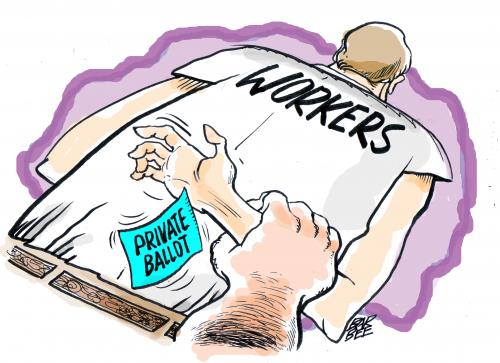
Collective bargaining via union representation is a right that deserves protection, but the value of that right is often undermined by union officials because the law empowers them to do so. In a case decided in September, however, a court confirmed that a union cannot force itself on an employer without worker support (and workers must file a request with the National Labor Relations Board (NLRB)).

Almost ten years ago, the Service Employees International Union (SEIU) insinuated itself as representing the employees of Professional Janitorial Service (PJS). The business insisted on a vote of its employees by secret ballot. Fair enough, right? That much is consistent with law and the administrative rules of the NLRB (see the link above). Had I worked for the business, its demand for a secret-ballot vote would have earned my respect. At that point, however, SEIU turned to questionable tactics:

“Unions win such elections more often than not, but the SEIU did not want to leave it to chance. So it retaliated against the company by libeling it with false accusations about illegal labor practices and overtime violations.

The SEIU claimed that Professional fired staff for trying to unionize, and had forced others to work off the books. Both allegations were dismissed as unfounded — lies, in other words — by the Labor Department.

The union’s libel was part of a broader campaign to drive Professional out of business unless it surrendered to union demands. Behind the scenes, the SEIU used its political connections to steer contracts away from the company. Emails showed SEIU officials electronically high-fiving each other every time Professional lost a contract.“

It took almost a decade, but PJS recently emerged victorious in its legal battle with SEIU. A jury in Houston ruled that SEIU defamed PJS, awarding the business a judgement of $5.3 million for damages. This article reports that SEIU kept a “campaign manual” that it relied upon in it’s effort to “kill PJS”, as they so delicately put it. PJS isn’t done yet:

“In a statement, PJS added that they ‘will now ask local prosecutors to investigate apparent perjury by union officials and an attorney who testified in the trial, and will increase its efforts with state legislators to remove the SEIU from eligibility in state-provided union dues collection programs.’“

SEIU has a long history of corruption, so it’s great to see the union’s tactics exposed before a jury. Apparently, too many employers have settled out of court, allowing SEIU to force its way into their businesses without a fair process, and those businesses have taken undeserved hits to their reputations along the way.

What incentives motivate such aggressive tactics? They undoubtedly reflect the value a union organization can capture through exclusive representation of workers and mandatory payment of dues. That is the general theme of “Unelected Unions: Why Workers Should Be Allowed to Choose Their Representatives“, by James Sherk. Once a workplace is successfully unionized, the union not only holds a monopoly on the supply of labor to the business; the government also grants to the union a monopoly over the services it provides to workers via exclusive representation. The workers are a captive market, short of a difficult and risky (for individual workers) decertification process.

That latter form of monopoly power, enforced by legal rules and court precedent, creates a severe principal-agent problem in union representation of workers. Union officials (the agents) have the incentives and power to capture excessive value from the workers they represent (the principles). This value, and historically questionable union financial reporting, has often made union activity a magnet for organized crime elements. This NPR story demonstrates the widespread nature of union corruption. An article about labor corruption by James B. Jacobs describes several common forms of labor racketeering:

“Organized crime bosses exploit unions and union members through alliances with corrupted or intimidated union officials…. In return, union officials provide mobsters access to the union treasury, pension and welfare funds, no-show jobs with the union, and support in establishing and enforcing employer cartels…. Some organized crime members have held formal union office…. In addition, of course, corrupt union officials, whether or not connected to organized crime figures, engage in ‘ordinary’ organizational corruption, such as misappropriation of funds. The most distinctive form of corruption by union officials is taking employers’ bribes to ignore violations of the collective bargaining contract, or even to allow employer to operate nonunion shops….“

Sterk and Jacobs both emphasize the potential that worker choice over their representation has for cleaning up union corruption. Here is an excerpt from Sterk’s conclusion:

“Congress and state legislatures should require unions to run for re-election, or allow workers to designate their own bargaining representative. Workers should not be forced to accept a union’s services.“

The right of workers to control their representation was at the heart of PJS’s original insistence on a worker vote, by secret ballot, over whether they desired representation by SEIU. And SEIU’s underhanded tactics illustrate the importance of giving workers strong control over their unions from the start. While mechanisms creating greater worker choice and control might not be foolproof, it is more likely to minimize union corruption and to maximize the incentives of union officials to truly promote the interests of their workers.

Are The Native-Born Idle By Choice?

21 Wednesday Sep 2016

Posted by Nuetzel in Immigration, Labor Markets, Minimum Wage

≈ Leave a comment

Tags

Cash Compensation, Donald Trump, Erik Hurst, High-School Dropouts, Idle Time, Illegal Employment, Immigration, James Pethokoukis, Low-skilled labor, Minimum Wage, Native-born Americans, Reservation Wage, Robert Verbruggen, Underground Economy, Undocumented Workers, Video Games and Young Men, work incentives, Work-Leisure Tradeoff

idle-hands

Native-born Americans don’t seem to want low-skilled work, even when they have no skills. Immigrants, on the other hand, seem more than happy to take those jobs. The fact is that hours worked by native high-school dropouts have declined relative to the hours of immigrant dropouts, as noted by Robert Verbruggen in “When Young Men Don’t Work“.

Of course, American men in general are working less, with fewer jobs in occupations and sectors traditionally dominated by men, such as manufacturing. The total demand for manual labor may be decreasing due to automation. Among the youngest cohort, hours spent in educational activities have increased. However, another contributing factor may be that the supply of labor is held down by negative work incentives created by government policy. In any case, the changing composition of the low-skilled work force is a curiosity. Many of the native-born appear to be opting out of work, but not the foreign-born:

“Native high-school dropouts of ‘prime age’ (25–54) work only about 35 weeks per year, on average; comparable immigrant dropouts work 49 weeks. Native dropouts are the outliers. Immigrant dropouts work roughly as much as both native and immigrant men with higher levels of education—and they do 60 percent of the work performed by dropouts in America, despite being less than half of the dropout population.“

Clearly low-skilled work exists , and immigrants are doing a disproportionate share of it. Are some of these low-wage jobs simply inaccessible to the native-born? I doubt it. The argument that immigrants are taking low-wage jobs from Americans implies that immigrants have lower reservation wages. But if that’s so, it confirms the hypothesis that natives are less willing to take low-skilled jobs.

In fact, the native-born might have better leisure alternatives than many of the foreign-born. Verbruggen reviews the work of Erik Hurst of the University of Chicago, who argues that technology such as video games and the internet have increased the value of leisure relative to work. Perhaps natives are better situated than immigrants to draw on other resources to finance an idle, gaming existence. Whatever they do to occupy their time, those resources might include relationships with family having the means to support them, and even a familial tolerance for idleness.

It’s also possible that natives have better access to the bounty of the welfare state. Undocumented foreign workers are at a disadvantage in this regard, but that handicap is eroding. Whatever the reason, it appears that native-born Americans are spared the need to bid aggressively on work they consider undesirable. That decision will often be costly in the longer-run, given the lost opportunity to develop skills on the job.

Another possible explanation for the disparity in average working hours is that more immigrants are willing to work (illegally) in sub-minimum wage jobs. That might well be true for undocumented foreign workers, even in occupations that would otherwise be legal. One could argue that this is unlikely to reduce opportunities for work at or above the minimum wage because wage offers tend to align with skill level. However, sub-minimum wage offers to illegals are probably driven by the risk faced by the employer in making such hires. Just the same, illegal opportunities to work below minimum wage are not the exclusive domain of immigrants. Cash compensation can allow an employer to pay sub-minimum wages to anyone willing to work. Moreover, many natives work in the underground economy in areas such as illicit drug distribution, which might or might not involve sub-minimum wages.

Of course, an individual working at a lower wage must work more hours to earn the same income as one earning a higher wage. Subsistence for the immigrants might require the extra hours. That would explain the disparity in average hours if natives and immigrants truly can be sorted by wage rate, but if that is the case, then the natives must have less interest in low-wage jobs, as postulated, and the natives are content to live at the same subsistence level as the low-wage immigrants by working fewer hours.

Thus, it is difficult to escape the conclusion that native-born Americans are less willing to work in low-wage jobs than the foreign-born. Further increases in the minimum wage would have a tendency to create more idle time among the low-skilled, both native and immigrant. The total legal demand for low-skilled labor would decline. More natives might be willing to supply labor at the higher minimum, but incumbents have an advantage in holding onto jobs that remain after the increase. A higher minimum would certainly convert some formerly legal opportunities into illegal opportunities (at wages below the new minimum), attenuating the total increase in idleness.

Growth in the labor force is a fundamental driver of economic growth, and immigration has always been an important source of labor for the U.S. economy. Low-skilled, native-born Americans seem less willing to offer their services at wages matching their skill levels, but immigrants help to fill that gap and are usually happy for the opportunity. A higher minimum wage will not make their lives easier in the U.S. It should also be noted that greater tolerance for immigration at the low-end of the socioeconomic spectrum need not imply a sacrifice in border security or careful vetting, but it would provide a supply of able and willing workers eager to improve their standard of living.

On a related note, I add the following: James Pethokoukis points to an interesting irony with respect to Donald Trump’s policy positions: “Trump wants 4% (or higher) US growth. Easy. Just massively increase immigration“.

What Does Government Give Your Gig?

28 Saturday May 2016

Posted by Nuetzel in Labor Markets, Obamacare

≈ Leave a comment

Tags

ACA, Affordable Care Act, Bending the Cost Curve, Contractor or Employee, Employee Status, Employer Mandate, Federal Health Care Exchange, Health Care Tax Credit, High Deductible, Individual Mandate, Labor Market Distortions, Obamacare, Obamacare Subsidies, United Health Care

image

An “employee” is different than a “contractor”, but those designations are often not very different in terms of job function. Are they different enough that large government subsidies and penalties  should depend on the distinction? Economist John C. Goodman explains why that question deserves a resounding “NO”!

Here’s an example: consider two individuals who perform the same job function and earn an identical wage of $13 per hour. One is an employee and the other is an independent worker under contract to the same company. The employee faces a high premium on the minimum health insurance policy mandated by Obamacare, which can carry a deductible of over $13,000 for a young, healthy family. The employee can pay the premium using pre-tax dollars, which provides some savings. The taxes saved are a subsidy, but an employee refusing coverage must pay a tax penalty under Obamacare. The contractor, on the other hand, might well qualify for subsidies on the Obamacare exchange, saving about 95% of the cost of the policy. Both individuals are subsidized, but the contractor gets considerably more in this case.

Now consider two individuals who earn $40 per hour, again an employee and a contractor. They are in a relatively high tax bracket. The contractor earns too much to qualify for Obamacare subsidies on the exchange but faces a tax penalty without coverage. The employee gets health coverage, albeit with a high deductible, paying pre-tax dollars at a significant discount. This time, the employee gets a big subsidy.

So essentially identical individuals are treated much differently. As Goodman says, that is terrible policy. Today, the distinction between employees and contractors is increasingly flimsy in terms of the services performed, and it is often a matter of convenience for employers and employees alike. Moreover:

“… even though the main purpose of the health reform was to insure the uninsured, the law in many ways encourages a great many people to be uninsured – the fine is often much less than the cost of very unattractive insurance. …  current policy encourages everyone to game the system: Stay uninsured when healthy and then rearrange your work relationships if you get sick.“

As Goodman notes, health coverage isn’t the only area in which this antiquated definition of the work relationship matters. His solution is to do away with the distinction between employees and non-employee workers altogether, eliminate the deductibility of health premiums for employees, end the Obamacare exchange subsidies, and instead provide a straight tax credit to every individual for the purchase of private health coverage. Loath as I am to admit any role for government in providing subsidies to other than the destitute, Goodman’s idea would at least level the subsidies without arbitrary distinctions and gaming of the system.

Similar considerations apply to arbitrary rules governing the distinction between full-time and part-time workers. The Obamacare employer mandate includes requirements on both the number of “employees” at a firm and an employee’s hours worked. Incentives are such that a change in the number of hour per week can dramatically alter the obligations of an employer and the government benefits available to workers (not to mention penalties to both), distorting economic outcomes in the productive sector of the economy. Limit the number of employees on your payroll and limit their hours if you want to avoid obligations. The negative impact on growth is particularly damaging to the self-sufficiency of low-income individuals. Again, government should remain neutral and stay out of regulating private labor transactions.

Obamacare is a mess on its own terms. Recall that it was to allow Americans with health insurance coverage to “keep their plans” if they chose to; it was to “bend the cost curve” in health care and insurance costs; and it was to provide coverage for the uninsured. Instead, Obamacare has disrupted insurance coverage for millions of Americans; created incentives for employers to reduce hours and employees; led to higher health care and insurance costs, created an adverse selection problem on the health care exchanges that threatens their sustainability; and more than 30 million Americans remain uninsured. The crucial role assigned by Obamacare to the formal relationship of workers to their hiring organizations has created perverse results.

Government should remain neutral in defining economic relationships. Allowing private actors to make their own informal arrangements or formal contracts is preferable both in terms of efficiency and fairness. Only they know the true economic realities “on the ground”. The distortions imposed by detached external rulemakers governing the  assignment of benefits are damaging and make adjustment to those realities more costly for everyone.


Obama’s On-The-Clock Undertime Rule

23 Monday May 2016

Posted by Nuetzel in Labor Markets, Regulation, Uncategorized

≈ Leave a comment

Tags

AEIdeas, American Enterprise Institute, Andy Puzder, Business Formation, Compliance Costs, DOL Overtime Exemption, Flexible Work Arrangements, Hourly workers vs. Management, James Pethokoukis, John Cochrane, Nick Gillespie, Obama administration, Overtime Costs, Overtime rules, Private Compensation, Reason, Salaried Status, Warren Meyer

obama-unemployment-2

Hurting the ones you love: one of the Obama Administration’s calling cards is a penchant for misguided economic policy; the change in an overtime rule announced Wednesday by the Department of Labor (DOL) is a classic example. The DOL has amended the rule, which requires payments of time-and-a-half to workers who exceed 40 hours per week, by doubling the threshold at which salaried employees are exempt from overtime to $47,500 annually. This affects almost 5 million workers earning between the old threshold of $23,660 and the new threshold. While the media heralds Obama for “lifting the wages of millions of workers”, those with a grasp of economic reality know that it is a destructive policy.

The rule change is unambiguously bad for employers, many of which are small businesses. That should not be too difficult to understand. Most private employers operate in competitive markets and do not earn lavish profits at the expense of their employees. They need good employees, especially those in positions of responsibility, and they must pay them competitively. By imposing higher costs on these businesses, the rule puts them in a position of greater vulnerability in the marketplace. The higher costs also include extra record keeping to stay in compliance with the rule. The impact on new business formation is likely to be particularly damaging:

“We might be told that the answer for a startup is simply to ‘go and raise more money.’ But — aside from diluting the founders who are paying for the company with their sweat in exchange for the hope of a payoff that comes in years, if ever — raising capital is the single most difficult thing I do as a startup entrepreneur. I would invite anyone not in our field to give it a shot before he endorses a regulation that will impose greater capital costs on us.

Regulators often act as though they cannot imagine a world where a few hundred or a few thousand dollars can make the difference between success and failure. If you raise our costs even modestly, you will put some of us out of business.“

Shutting down, or not starting up, is a bad outcome, but that will be a consequence in some cases. However, there are other margins along which employers might respond. First, a lucky few well-placed managers might be rewarded with a small salary bump to lift them above the new exemption threshold. More likely, employers will reduce the base salaries of employees to accommodate the added overtime costs, leaving total compensation roughly unchanged.

Many other salaried employees with pay falling between the old and new thresholds are likely to lose their salaried status. Their new hourly wage might be discounted to allow them to work the hours to which they’re accustomed, as demotivating as that sounds. If their employers limit their hours, it is possible that a few extra workers could be hired to fill the gap. Perhaps that is what the administration hopes when it claims that an objective of the new rule is to create jobs. Unfortunately, those few lucky hires will owe their jobs to the forced sacrifice of hours by existing employees.

A change from a salary to hourly pay will have other repercussions for employees. Their relationships to their employers will be fundamentally transformed. Ambitious “hourly” managers might not have the opportunity to work extra hours in order to demonstrate their commitment to the business and a job well done. When the rule change was first proposed last June, I paraphrased a businessman who is one of my favorite bloggers, Warren Meyer (also see Meyer’s follow-ups here and here):

“As [Meyer] tells it, the change will convert ambitious young managers into clock-punchers. In case that sounds too much like a negative personality change, a more sympathetic view is that many workers do not mind putting in extra hours, even as it reduces their effective wage. They have their reasons, ranging from the non-pecuniary, such as simple work ethic, enjoyment and pride in their contribution to reward-driven competitiveness and ambition.“

As hourly employees, these workers might have to kiss goodbye to bonus payments, certain benefits, and flexible work arrangements, not to mention prestige. The following quotes are from a gated Wall Street Journal article but are quoted by James Pethokoukis in his piece at the AEIdeas blog of the American Enterprise Institute:

“Jason Parker, co-founder of K-9 Resorts, a franchiser of luxury dog hotels based in Fanwood, N.J., said the chain will reduce starting pay for newly hired assistant managers to about $35,000 from the $40,000 it pays now. That will absorb the overtime pay he expects he would have to give them, he said. …

Terry Shea, co-owner of two Wrapsody gift shops in Alabama, would prefer to keep her store managers exempt from the overtime-pay requirement as they are now. But raising their salaries above the new threshold to ensure that would be too big of a jump for those jobs in her region, she said. Instead, she’ll convert the managers to hourly employees and try to limit their weekly hours to as close to 40 as possible. She’ll also have to stop giving them a comp day when their weekly hours exceed 46, a benefit she said they like as working moms.

‘I will be demoted,’ said one of her store managers Bridget Veazey, who views the hourly classification as a step backward. ‘Being salaried means I have the flexibility to work the way I want,’ including staying an extra 30 minutes to perfect a window display or taking work home, she said. She is particularly concerned Ms. Shea might stop taking the managers on out-of-town trips to buy goods from retail markets, an experience she said would help her résumé but includes long days.“

Here is some other reading on the rule change: Nick Gillespie in Reason  agrees that it’s a bad idea. Andy Puzder in Forbes weighs in on the negative consequences for workers.  John Cochrane explores the simple economic implications of mandated wage increases, of which the overtime rule is an example. As he shows, only when the demand for labor hours is perfectly insensitive to wages can a mandated wage avoid reducing labor input.

This is another classic example of progressive good intentions gone awry. Government is singularly incapable of managing the private economy to good effect via rules and regulations. Private businesses hire employees to meet their needs in serving customers. The private compensation arrangements they make are mutually beneficial to businesses and their employees and are able to accommodate a variety of unique employee life-circumstances. Good employees are rewarded with additional compensation and more responsibility. By and large, salaried workers like being salaried! Hard work pays off, but the Obama Administration seems to view that simple, market truism as a defect. Please, don’t try to help too much!

Unequal Pay For Unequal Work

25 Thursday Feb 2016

Posted by Nuetzel in Labor Markets

≈ Leave a comment

Tags

BLS, Claudia Golden, DOL, FiveThirtyEight, Gender Discrimination, Gender Gap, High-Risk Occupations, Job Flexibility, Mark Perry, Millennial Pay Gap, Mutually Beneficial Trade, Non-Wage Compensation, Obama Discrimination Data Mandate, Occupational Choice, Pay Differentials, Risk Aversion, STEM, The Economist, Tyler Cowen

equal-pay-cartoon

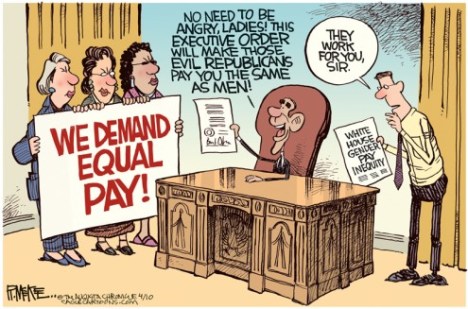
Debates on social issues are often plagued by facile comparisons that distort the underlying facts. The alleged gender pay gap involves such comparisons. The Obama Administration proposed new rules last month intended to address a difference in median earnings between men and women, demanding data reports on various demographics from firms with 100+ employees. Mark Perry points out that the pay gap in the Obama White House is about the same as the national difference. Can there be any reasonable explanation for these disparities?

One key to understanding the debate is that the difference in aggregate pay between men and women (17% in 2014, according to the Bureau of Labor Statistics) is not a divergence in pay for equal work! However, that is the gist of the fraudulent narrative so often heard from the White House and elsewhere. The truth: 17% is the difference in the medians of two large distributions of working adults, one for men, one for women, covering all occupational categories. The discrepancy, which has declined sharply over the past 35 years, is explained today by fewer hours worked among women and “differences in educational attainment, work experience, and occupational choice.” These differences are well known, but gender-gap warriors conveniently overlook the following facts, as established by the Department of Labor:

  • There is more part-time work among women;
  • Women lose more experience to childbirth, child care and elder care;
  • Women demand more job flexibility and non-wage benefits (and that costs);
  • Women are disproportionately under-represented in dangerous occupations;
  • Women are disproportionately under-represented in STEM fields (Science, Technology, Engineering, Math);

Interestingly, the last point may have more to do with a broader range of talents possessed by females who are skilled at math, relative to men, which leads to a greater variety of career options. An implication: non-STEM occupational choices by women are often voluntary and not the result of discrimination. And those choices are often driven by considerations other than cash remuneration.

As to the risk of physical danger, in 2010, men were almost 12 times as likely as women to suffer fatal injuries on the job. There is no question that high-risk occupations have higher wages. Apparently, women choose not to pursue opportunities in these occupations. An earlier study found that single parents, male and female, were the most risk averse in their choice of occupation, and that married women with children are more risk averse than married men with children. Of course, it is possible that some employers have requirements in terms of physical strength that favor men. Either way, the job-risk gap almost certainly contributes to the measured-wage gender gap, but it has little to do with gender discrimination per se.

Earnings are sensitive to factors such as full-time / part-time status, continuous job tenure, and the likelihood of extended leaves of absence. This is supported by a research finding cited in The Economist, that partners in lesbian relationships tend to out-earn married straight females. The division of responsibilities in the home is surely part of the story: lesbian couples tend to split chores more equally than straight couples. Millennial couples (ages 25-34) are also more likely to split household chores equally; the gender pay gap for millennials is much narrower than for older age cohorts, and it is nonexistent for childless millennials. Millennial women have more than closed the education gap as well.

When gender differences in hours, tenure, absences, education, and job hazards are considered, as well as the full menu of compensating non-wage benefits available, the wage gap is essentially nonexistent. Yet President Obama’s proposed data mandate would carry high compliance costs and likely cost jobs as well. The purpose of the regulation is to make it easier for various groups to sue employers on the basis of wage discrimination. But observation of such a gap, wherever it might exist, is not prime facie evidence of discrimination; it is more than likely to be the result of private, voluntary agreement.

Is it possible that certain attitudes or behavioral characteristics of women generalize to poorer outcomes, relative to men, in negotiations? Tyler Cowan reports on research that suggests as much, based on “laboratory” experiments in which participants played repeated games involving actual rewards. In one experiment, the rewards depended on the acceptance of an offer to share a pot, and both men and women made lower offers to female partners than to males. However, when the partner was a woman, females were markedly stingier in their offers than males. Those women are tough! But seldom are real-world “deals” so one-dimensional, and controlling for all considerations of value is often impossible. In any case, trades rarely take place when the parties don’t find them to be mutually beneficial.

Fortunately, in labor markets, when differentials in skills and experience matter, discrimination is practiced only under a self-inflicted penalty on the discriminator. In the case of wage-based gender discrimination, the employer will tend to overpay for equivalently-skilled male help. Discrimination of this sort impairs a firm’s ability to attract the best employees and harms its competitive position. Nevertheless, the extent to which the market’s self-regulation confers benefits on individual participants depends upon their vigilance: buyer beware (caveat emptor) and seller beware (caveat venditor) are keys to real economic freedom. Most importantly, in all things, beware government edicts. Markets are the best regulator.

Sidebar: I was referred to an article on FiveThirtyEight by my friend John Crawford. The main subject matter of the article is off-topic and its conclusions are incorrect (I might post on it soon), but many of the charts are interesting; the third chart is really fascinating! It shows that women, by age 30, tend to belong to households that are higher in the income distribution than men who come from the same point in the distribution of household-income in childhood. This is true at every point in the childhood household-income distribution! Are there advantage(s) for women that can account for this? A few guesses: a lower rate of incarceration of women by age 30; women have higher marriage rates by age 30; women “marry up” more than men, both in terms of the ages and incomes of their spouses; women who don’t marry live with their parents more than men do (?). There could be other explanations, and the relationship may not hold at later ages. Still, it’s noteworthy that such a reverse “gender gap” exists in the data.

I close with a quote from Harvard’s Claudia Golden, from “A Grand Gender Convergence: Its Last Chapter” (HT: Marginal Revolution):

“The gap is much lower than it had once been and the decline has been largely due to an increase in the productive human capital of women relative to men. Education at all levels increased for women relative to men and the fields that women pursue in college and beyond shifted to the more remunerative and career-oriented ones. Job experience of women also expanded with increased labor force participation. The portion of the difference in earnings by gender that was once due to differences in productive characteristics has largely been eliminated. 

What, then, is the cause of the remaining pay gap? Quite simply the gap exists because hours of work in many occupations are worth more when given at particular moments and when the hours are more continuous. That is, in many occupations earnings have a nonlinear relationship with respect to hours. A flexible schedule comes at a high price, particularly in the corporate, finance and legal worlds.“

Newer posts →
Follow Sacred Cow Chips on WordPress.com

Recent Posts

  • The Case Against Interest On Reserves
  • Immigration and Merit As Fiscal Propositions
  • Tariff “Dividend” From An Indigent State
  • Almost Looks Like the Fed Has a 3% Inflation Target
  • Government Malpractice Breeds Health Care Havoc

Archives

  • January 2026
  • December 2025
  • November 2025
  • October 2025
  • September 2025
  • August 2025
  • July 2025
  • June 2025
  • May 2025
  • April 2025
  • March 2025
  • February 2025
  • January 2025
  • December 2024
  • November 2024
  • October 2024
  • September 2024
  • August 2024
  • July 2024
  • June 2024
  • May 2024
  • April 2024
  • March 2024
  • February 2024
  • January 2024
  • December 2023
  • November 2023
  • August 2023
  • July 2023
  • June 2023
  • May 2023
  • April 2023
  • March 2023
  • February 2023
  • January 2023
  • December 2022
  • November 2022
  • October 2022
  • September 2022
  • August 2022
  • July 2022
  • June 2022
  • May 2022
  • April 2022
  • March 2022
  • February 2022
  • January 2022
  • December 2021
  • November 2021
  • October 2021
  • September 2021
  • August 2021
  • July 2021
  • June 2021
  • May 2021
  • April 2021
  • March 2021
  • February 2021
  • January 2021
  • December 2020
  • November 2020
  • October 2020
  • September 2020
  • August 2020
  • July 2020
  • June 2020
  • May 2020
  • April 2020
  • March 2020
  • February 2020
  • January 2020
  • December 2019
  • November 2019
  • October 2019
  • September 2019
  • August 2019
  • July 2019
  • June 2019
  • May 2019
  • April 2019
  • March 2019
  • February 2019
  • January 2019
  • December 2018
  • November 2018
  • October 2018
  • September 2018
  • August 2018
  • July 2018
  • June 2018
  • May 2018
  • April 2018
  • March 2018
  • February 2018
  • January 2018
  • December 2017
  • November 2017
  • October 2017
  • September 2017
  • August 2017
  • July 2017
  • June 2017
  • May 2017
  • April 2017
  • March 2017
  • February 2017
  • January 2017
  • December 2016
  • November 2016
  • October 2016
  • September 2016
  • August 2016
  • July 2016
  • June 2016
  • May 2016
  • April 2016
  • March 2016
  • February 2016
  • January 2016
  • December 2015
  • November 2015
  • October 2015
  • September 2015
  • August 2015
  • July 2015
  • June 2015
  • May 2015
  • April 2015
  • March 2015
  • February 2015
  • January 2015
  • December 2014
  • November 2014
  • October 2014
  • September 2014
  • August 2014
  • July 2014
  • June 2014
  • May 2014
  • April 2014
  • March 2014

Blogs I Follow

  • Passive Income Kickstart
  • OnlyFinance.net
  • TLC Cholesterol
  • Nintil
  • kendunning.net
  • DCWhispers.com
  • Hoong-Wai in the UK
  • Marginal REVOLUTION
  • Stlouis
  • Watts Up With That?
  • Aussie Nationalist Blog
  • American Elephants
  • The View from Alexandria
  • The Gymnasium
  • A Force for Good
  • Notes On Liberty
  • troymo
  • SUNDAY BLOG Stephanie Sievers
  • Miss Lou Acquiring Lore
  • Your Well Wisher Program
  • Objectivism In Depth
  • RobotEnomics
  • Orderstatistic
  • Paradigm Library
  • Scattered Showers and Quicksand

Blog at WordPress.com.

Passive Income Kickstart

OnlyFinance.net

TLC Cholesterol

Nintil

To estimate, compare, distinguish, discuss, and trace to its principal sources everything

kendunning.net

The Future is Ours to Create

DCWhispers.com

Hoong-Wai in the UK

A Commonwealth immigrant's perspective on the UK's public arena.

Marginal REVOLUTION

Small Steps Toward A Much Better World

Stlouis

Watts Up With That?

The world's most viewed site on global warming and climate change

Aussie Nationalist Blog

Commentary from a Paleoconservative and Nationalist perspective

American Elephants

Defending Life, Liberty and the Pursuit of Happiness

The View from Alexandria

In advanced civilizations the period loosely called Alexandrian is usually associated with flexible morals, perfunctory religion, populist standards and cosmopolitan tastes, feminism, exotic cults, and the rapid turnover of high and low fads---in short, a falling away (which is all that decadence means) from the strictness of traditional rules, embodied in character and inforced from within. -- Jacques Barzun

The Gymnasium

A place for reason, politics, economics, and faith steeped in the classical liberal tradition

A Force for Good

How economics, morality, and markets combine

Notes On Liberty

Spontaneous thoughts on a humble creed

troymo

SUNDAY BLOG Stephanie Sievers

Escaping the everyday life with photographs from my travels

Miss Lou Acquiring Lore

Gallery of Life...

Your Well Wisher Program

Attempt to solve commonly known problems…

Objectivism In Depth

Exploring Ayn Rand's revolutionary philosophy.

RobotEnomics

(A)n (I)ntelligent Future

Orderstatistic

Economics, chess and anything else on my mind.

Paradigm Library

OODA Looping

Scattered Showers and Quicksand

Musings on science, investing, finance, economics, politics, and probably fly fishing.

  • Subscribe Subscribed
    • Sacred Cow Chips
    • Join 128 other subscribers
    • Already have a WordPress.com account? Log in now.
    • Sacred Cow Chips
    • Subscribe Subscribed
    • Sign up
    • Log in
    • Report this content
    • View site in Reader
    • Manage subscriptions
    • Collapse this bar
 

Loading Comments...