• About

Sacred Cow Chips

Sacred Cow Chips

Category Archives: Welfare State

Work vs. Alms: Sympathy For the Faustian Bargain-Takers

26 Wednesday May 2021

Posted by Nuetzel in Minimum Wage, Welfare State

≈ Leave a comment

Tags

#WeAreClosed, Brett Kavanaugh, Christine Blasey Ford, Coronavirus Relief, Faustian Bargain, Henry Ford, Mark Judge, Minimum Wage, Rental Assistance, Senate Judiciary Committee, Unemployment Compensation, Universal Basic Income

Mark Judge says he understands the real importance of #WeAreClosed, a hashtag that’s attained some popularity on Twitter in support of those having to choose between a return to low-paying jobs or continued unemployment benefits. Judge is a conservative author and an old high school friend of Supreme Court Justice Brett Kavanaugh. His notoriety soared in 2018 during Kavanaugh’s confirmation hearings. Christine Blasey Ford, who alleged that Kavanaugh sexually assaulted her more than 30 years before, said Judge had been in the room at the time. Judge offered to cooperate with investigators but denied any memory of the incident, and he was never compelled to testify before the Senate Judiciary Committee.

The Temptation of Joe Lunchpail

I often agree with Judge’s points of view, but not so much in the case of “We Are Closed”. I don’t think he’s identified the right problem or the right villain. He expresses sympathy for those who toil at jobs like dishwashing — and apparently he worked as a dishwasher in the not too distant past. I sympathize as well. It’s tough to make ends meet working a low-wage job. Judge views health insurance as indispensable, and that can take a big chunk out of a low earner’s paycheck. Child care can take another big chunk.

Of course, it’s easy to understand the dilemma faced by these potential re-entrants to the labor force. Under normal circumstances, a worker who is laid off or furloughed can expect to have 30% to 50% of their lost wages replaced by unemployment compensation, depending on the state. That’s somewhere between $500 to $850 a month for a worker earning $10 an hour. COVID assistance now adds another $300 a month, though a number of states will soon end those extended benefits. Still, for now, the extra $300 means the $10/hour worker can replace 50% to 70% of their income if they remain out of work. Rental assistance may also be available due to unemployment or a loss of income. Also, Obamacare premiums are subsidized at low income levels.

In addition to the incremental effect of a decision not to work, all those earning less than $75,000 a year are receiving checks for $1,400. It’s not dependent on being out of work, but it’s a cushion that might convince fence-sitters that marginal wages are not worthwhile for the time being. Any rational individual will weigh public aid against the prospect of a boring, physically demanding, low-wage position.

For the Intercession of Saintly Bosses

Judge cites Henry Ford as the kind of enlightened employer we need more of today. The story goes that Ford wanted his line workers to be able to afford the vehicles they produced, and he did pay his line workers more than the prevailing wage. After all, the technology he implemented made his workers highly productive. However, that he paid them enough to buy Model Ts is something of a myth. And paying employees on any basis other than their productivity is generally a bad business model.

Clearly Judge has large corporations in mind: “Companies that make millions in profit and have high-earning CEOs …” should pay their workers more, he says. It’s foolish to take the position that those “millions” represent some kind of fun money. While high profits surely reflect monopoly power or ill-gotten rents in some cases, my baseline assumption is that profits are necessary to attract the capital needed to maintain and grow a business. And CEO pay is a cheap target: high-level managerial talent is in very short supply. It’s an extremely competitive corner of the labor market, and one seldom gets there via shear nepotism, as Judge implies, or they won’t last long.

Large firms have traditionally paid premium wages. That might be a consequence of more rigorous screening of hires, and certainly large firms tend to have more productive capital per worker. There is some evidence that the large firm wage premium has diminished more recently. Still, if large firms made a regular practice of extracting excess profits by underpaying workers, that wage premium would be negative!

Recently we’ve seen several large corporations make waves by hiking wages in the relatively low-wage retail and food service industries. This includes Amazon, Costco (which has notoriously high labor productivity), Target, WalMart, and Chipotle. This is not so much a matter of enlightenment as it is a reaction to tight labor market conditions exacerbated by the #WeAreClosed” attitude.

Lucifer’s Leviathan

I’d like to cut Judge plenty of slack. He seems to understand work incentives, and he clearly believes work is more fulfilling and socially beneficial than life on the dole. He doesn’t advocate for a higher legal minimum or so-called “living wage”, at least not that I’m aware. Nevertheless, it’s important to note in this context that while a higher wage floor would help certain workers, it would harm the least productive and most needy, who are likely to lose hours or even their jobs if the pay rate threatens to exceed their contribution to output. Then there is the inevitable substitution of capital for labor, as automation becomes a more favorable alternative to higher wage payments. Those workers who keep their jobs may find deteriorated working conditions, as there are many margins along which employers are able to compensate for a higher wage. That includes the most obvious: higher customer prices. However, many small firms facing stiff competition might not be able to manage that. In the end, wage floors really don’t help the working poor, who pay higher prices and might well lose hours or their jobs.

Democrats have been unsuccessful in attaching a higher minimum wage to the Biden infrastructure bill, but they are using the post-pandemic labor shortage as a talking point in favor of putting it back in. It’s also being used in state-level negotiations over minimum wage legislation. Beefed-up COVID relief for workers, as well as the scare tactics regarding continuing COVID risks to workers, have helped to engineer tight labor market conditions and a higher reservation wage among potential workers. Firms are being forced to pay up or go without staff. The largest players with financial reserves may be only too willing to go along with it — we’ve already seen some evidence of that, which puts their smaller competitors in a real bind.

The conundrum faced by low-wage workers in the post-pandemic labor market just might offer a clue as to the impact of a universal basic income on labor force participation. That would bring us full circle to the point at which some will simply choose not to work. Unfortunately, politicians need only hear “Do Something!” to inspire incredibly crackpot policy initiatives. And that way lays the Beast!

The Final Judgement

I’m not sure Judge thought much about the market consequences of ongoing COVID relief or public aid in general. He’d like to see a higher equilibrium wage rate, but he’d surely have mixed feelings about the advantage it confers to large firms at the expense of small ones, given the strong sympathies and antipathies he expresses in his post.

Manual labor is hard! But in the end, low-wage earners who apply themselves and gain job experience can look forward to better things. It’s up to them to seek out the best employment relationship they can. Insisting that firms pay workers more than their productive value is not helpful. If anything, it may buttress political support for governments to impose wage mandates. Public efforts to “help” workers are at best uneven in their effects, helping some workers and harming others. That goes for minimum wages and many forms of public aid, especially the unconditional variety. Judge’s sympathies for those having to choose between returning to work and collecting aid are understandable, but they reflect the sad consequences of the knee-jerk temptation to offer public alms to those presently living and working below their aspirations.
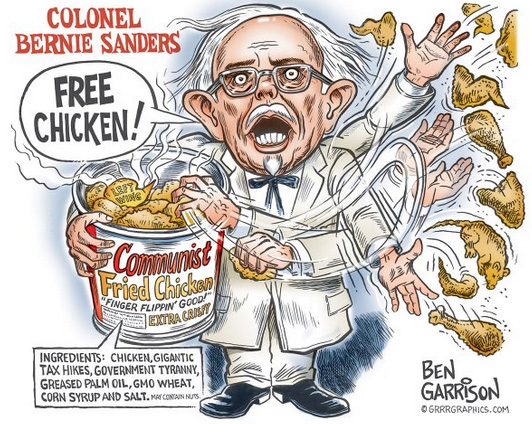
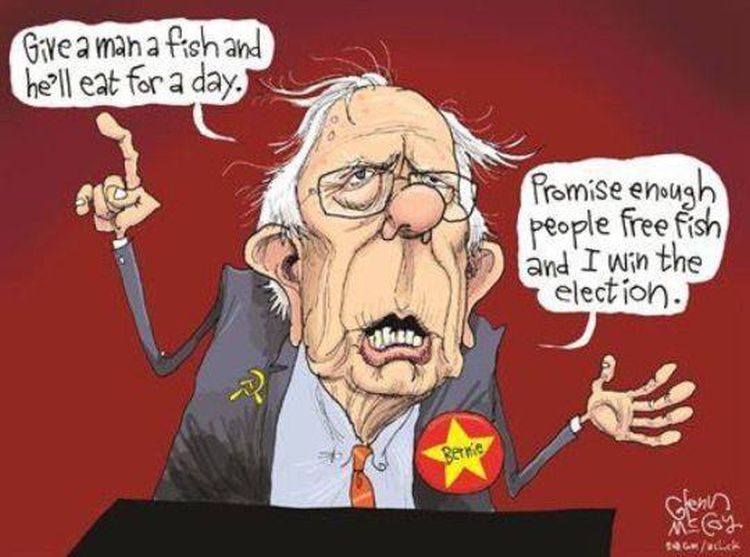
BS Bernie Blames Bezos

12 Wednesday Sep 2018

Posted by Nuetzel in Labor Markets, Living Wage, Price Mechanism, Welfare State

≈ Leave a comment

Tags

Amazon, Bernie Sanders, Freedom of Contract, Jeff Bezos, Living Wage, Ro Khanna, Social Safety Net, Stop BEZOS Act, Welfare State

Bernie Sanders keeps probing for ways to create a backdoor minimum income, and he’s eager to loot successful job creators and their customers in the process. Last month I wrote about the folly of his proposed legislation that would offer federal job guarantees to all. A new Sanders bill, introduced jointly with Rep. Ro Khanna (D – CA), is an equally bad idea called the Stop BEZOS Act, or the “Stop Bad Employers by Zeroing Out Subsidies Act”. It’s pretty obvious that the selection of the acronym preceded the naming of the bill. Imagine the fun his Senate staffers had with that! The logical flaws embedded in the title of the act are bad enough. The effort to garner attention by using the title to smear the name of a famous technology entrepreneur is sickening.

Jeff Bezos, of course, is the founder and CEO of Amazon, the online retailer, as well as the owner of the Washington Post. Amazon has been rewarded by consumers for its excellent service and aggressive pricing, and it is now valued at about $1 trillion. That makes Bezos a very wealthy man, and it is no coincidence that Sanders has chosen to make an example of him in an effort to inflame envy and classist passions.

While some details of the bill remain sketchy, firms with more than 500 workers would face a 100% tax on every dollar of federal benefits received by those employees. But the tax would apply only to “low-wage” employees, however that is defined, and not simply any employee receiving federal benefits. If the bill became law (and it won’t any time soon), it would require a costly federal administrative apparatus to coordinate between several agencies, including the IRS. Beyond the tax itself, the compliance costs for firms won’t be cheap, and it will create terrible incentives: if you own a business, you would have a strong incentive to avoid hiring workers with little experience or weak skills, or anyone you might deem likely to be a recipient of federal aid. If you have 499 employees, you’ll probably think hard about how to execute future growth plans. Nothing could do more to improve the return to investment in automation.

Is Amazon really a “bad” employer? That’s what the title of the Sanders bill says. In fact, the company has been accused of harsh labor practices in its fulfillment centers. Life for corporate managers is said to be no picnic, and labor turnover at Amazon is high. Nonetheless, the wages it pays attract plenty of applicants. Unskilled labor does not command a high wage, and that is no fault of an employer willing to provide them with work and experience. Yet the bill would punish those employers, as well as employers having part-time workers drawing federal aid.

An absence of punishment can hardly be described as a “subsidy”, as the bill’s title suggests. But that is exactly how leftists think, at least when they do the punishing. In this respect, the bill’s title is an assault on logic and a misuse of language. It would also represent a violation of constitutional principles like property rights and freedom of contract.

The idea of taxing employers to recoup any public aid received by their workers is intended to affect a de facto “living wage”. However, one benefit of an independent social safety net, as opposed to a living wage tied to that net, is that the former largely preserves the operation of labor markets, despite creating some nasty labor-supply incentives. Wage rates that approximate the value of worker productivity allow efficient matching of jobs with workers having the requisite skills, even if the skills are relatively low-grade. Those wages also minimize distortions in the economics of production within firms and across different industries. Furthermore, prices faced by buyers should reflect the real resource costs associated with demands for various goods. They should not be inflated by political decisions about the level of federal welfare benefits. Quite simply, preserving labor market efficiency enhances the ability of the economy to allocate resources to the uses for which they are most highly-valued.

There are independent questions about whether the structure and level of benefits provided by the welfare state are appropriate. Those are matters of legitimate policy debate, and those benefits must be funded by taxpayers, but they should be funded in the least distortionary way possible. Bernie Sanders imagines that the burden of those taxes can simply be imposed on large employers with no further consequences, but he is badly mistaken. Consumers will shoulder a significant part of that burden under his latest scheme. And, of course, Sanders’ beef with Bezos is a cynical political ploy. It amounts to cheap scapegoating intended to promote another one of Sanders’ bad policy ideas.

Bernie’s Backdoor Minimum Wage Hike

30 Monday Apr 2018

Posted by Nuetzel in Labor Markets, Minimum Wage, Welfare State

≈ Leave a comment

Tags

Apprentice Wages, Bard College, Bernie Sanders, Bob Bryan, Cyclical Unemployement, David Byrge, Frictional Unemployment, Iowahawk, Levy Economics Institute, Matt Welch, Minimum Wage, On-The-Job Training, Scott Shackford, Structural Unemployment, The Business Insider, Works Progress Administration

Bernie Sanders’ latest jobs plan is a political fantasy, but also a fantasy insofar as he imagines such a program could improve job market outcomes and the U.S. economy. Sanders wants the government to guarantee a job to anyone who is unemployed and pay them a wage of $15 an hour. But what job roles will be identified and by whom? Will the unemployed be required to accept these jobs or else lose other benefits? Which unemployed workers will come forward voluntarily for “workfare”? What will qualify them for particular roles? How many public-sector workers will be diverted from their existing responsibilities to administer the program and manage these new workers? How much will the program cost? How will the above-market wages and administration of the program be funded? These questions deal only with the first-order mechanics of the Sanders proposal. What will be the second-order effects on the private economy?

Scott Shackford delves into these and other gory consequences that are likely under the Sanders plan, most of which should be obvious to anyone with a modicum of economic literacy. Apparently, that does not include the so-called economists at the Levy Economics Institute at Bard College, who produced a “study” on guarantees of public sector jobs that manages to prove their ignorance of basic economic principles.

The headline for this proposal is about jobs, but the real motive is to impose wage controls through the backdoor. The plan is announced at a time of full employment (now 4.1%), traditionally defined as an unemployment rate of roughly 4%. That level accounts for “frictional unemployment”, which recognizes that job transitions and the normal market process of matching worker skills with jobs are not instantaneous. It’s true that certain segments of the labor force typically experience higher than average unemployment. So Perhaps i should give Bernie the benefit of the doubt by stipulating that the program is geared toward addressing cyclical and structural unemployment, or that it’s intended to benefit minorities. But if the goal is to keep everyone working all the time, it is impossible in view of the informational frictions, skill mismatches, and mobility issues that characterize the labor market. Workers would have difficulty conducting a job search were they employed in Sanders workfare program, and that sacrifice would be particularly costly for skilled workers seeking employment at wages greater than $15/hour.

Again, all “guaranteed” jobs under the Sanders plan are to pay a wage of at least $15/hour. Low-skilled workers whose productivity is not consistent with such a wage can thumb their noses at private employers. Either pay your low-skilled workers $15 or lose them. This is Sanders’ way of implementing a de facto federal minimum wage without actually requiring employers to pay that rate by diktat. Of course, under the plan, the taxpayer is on the hook for the excess of wage payments over and above the value of these workers’ productive contributions. The bulk of those workers lack the skills and job experience to contribute value commensurate with that wage rate, and sometimes they lack even the temperament and comportment necessary to make a sufficient contribution to output, or to keep steady work absent the gift of a wage from government.

But that’s not the worst of it: Sanders’ program is cloaked in terms suggesting that it would have countercyclical effects: government hiring would increase in association with increases in the unemployment rate, and vice versa, or so we are told. But “vice versa” is a stretch: government programs have a tendency to be self-perpetuating. And this program creates instability by allowing government to compete for workers on a distorted basis. The private sector will lose workers as the government gains workers. The tax bill and its burden on the private sector will lead to business failures, still fewer private workers, and still more public-sector workfare. And as the government displaces private activity, good luck to consumers finding the plentiful goods and services to which they are accustomed. The Sanders program is a prescription for economic and social decline.

Public sector competition for workers under Sander’s plan would be distorted because work would be assigned by special interests, not by market demand. Bob Bryan of The Business Insider has the following details:

“Sanders’ plan would create 12 districts within the US that would approve jobs plans from municipalities, states, and American Indian tribal governments and then pass those plans along to the Labor Department for final approval.”

Thus, a new administrative layer of government, 12 districts, would be created wielding the authority to winnow the pool of projects for a new category of spending. In the parlance of public budgeting, this spending would be called an “entitlement” because the spending would be programmatic rather than discretionary. State and local governments would create wish lists, and their wishes would then be constrained by the decisions of district authorities and the Labor Department. Those decisions, however, would very likely be responsive to special interests. Like most administrative decisions, the spending allocations would be guided by politics, not economics.

Shackford quotes the Levy Institute:

“A local artist collective employs painters, actors, musicians, and stage hands to run year-round productions for the community. They organize school outreach programs, run summer camps, and offer free art, music, and literacy classes for disadvantaged/special needs youths. They collaborate with local schools in offering art enrichment programs.”

Those aren’t Sanders words, but he might well entertain such notions. Should we all just agree that the government ought to tax us more heavily and spend the proceeds on supporting local, “unemployed” artists (I use quotes because many artists are not fully employed at their art for lack of demand, and they often work at other jobs from which they would quickly separate given a flow of government funds for their art). Usually those who insist on such things belong to the very interests who would benefit from the programs. One can argue that the “external benefits” of the arts justify public expenditure, but there is no objective measure of those benefits, and those who benefit directly will always want more. Therefore, the Sanders program, like so many other public initiatives, would violate standards of governmental fiduciary duty to taxpayers.

What about construction and repair of public infrastructure? Those projects should be chosen and initiated on their merits and on taxpayers’ willingness to fund them, not because there are people unemployed at the moment. What’s more, construction and maintenance of infrastructure requires various levels of skills that might not be readily available in a pool of unemployed workers.

Regardless of the specifics, the jobs program promoted by Sanders substitutes a wholly unrelated goal, jobs, for the underlying rationale of particular projects. As such, Sanders’ proposal would provide opportunities for special interests to collect rents without a programatic justification for the expense to taxpayers. Shackford says:

“… the examples in the Levy study seem like descriptions of programs that certain types of local government-connected people with very particular ideas would like to see the government doing. Their plan leans heavily on the assumption that all these unemployed or underemployed people would happily do the grunt work that aligns with left-leaning environmental and public policy project goals. The report openly uses the Works Progress Administration of the New Deal as a model to support it. …

But how does one determine what a community needs while ignoring market responses? Why should taxpayers fund community plays if they have no interest in actually sitting through them? This report makes it very clear that the task falls to local public institutions and job centers, not market demands. That necessarily means it will be driven, much like this report is, by the interests of the people who are in charge of the programs or have the most influence over the programs. That these programs could end up as a corrupt breeding ground for government cronyism and nepotism in who gets assigned for which jobs is utterly absent from the study.“

Here is more from Bryan:

“The plan would also utilize job training centers to train and connect workers with jobs on the new projects.”

This is either another new agency or a demand on private job training organizations. Presumably the training would be free to the trainee, in addition to the $15/hour paid during the training period. I would have fewer objections to an explicit job training program than to the sprawling job-making and wage-paying authority called for in Sanders’ plan. Unfortunately, the absence of apprentice wage levels in the U.S. often eliminates the best training of all: on-the-job training.

Shackford wonders whether workers hired under the program could ever be fired for cause:

“I mean, given how hard it is to fire bad teachers or dangerous cops, it’s worth wondering whether people who get these jobs will continue to get paid if they fail to show up for their job trimming the hedges of their community skate park or surveying people about their food insecurities. (According to the Post, Sanders’ plan calls for something sinisterly called the Division of Progress Investigation to handle discipline.)“

The program could employ as many as 15 million people if the Levy Institute study can be taken as a guide. That would represent a huge increase in government employment. Presumably, the burden would be spread across federal, state and local governments, all of which are facing degrees of fiscal crisis.

Bernie Sanders’ jobs program is ill-defined, but we know enough about it to safely conclude that it is economically preposterous. It will compete with job search activity that is necessary to the function of the labor market; lure low-skill workers away from their current employers, or indeed from their highest valued uses; require massive public borrowing and ultimately higher taxes; compromise other functions of government by diluting fundamental program goals and diverting human and other resources; place further strain on government budgets at all levels; lead to business failures; and lead to a permanently larger role for government in the economy. Governments, of course, do not operate under market discipline, so the program would degrade the overall productive potential of the U.S. economy. 

As David Byrge, aka Iowahawk, says about Sanders:

“Who better to get America back to work than a guy who was actually fired from a Vermont hippie commune for being too lazy.”

For a fairly thorough compendium of Sanders’ policy proposals over the years, here is Matt Welch on “Bernie’s Bad Ideas“.

Francis, Papal Perónista, Courts Redistributional Mirage

15 Thursday Mar 2018

Posted by Nuetzel in Markets, Marxism, Redistribution, statism, Welfare State

≈ Leave a comment

Tags

Argentina, Che Guevara, Daniel J. Mitchell, Economic Freedom, Eva Peron, Juan Peron, Judialismo, Maureen Mullarkey, Pope Francis, Property Rights, Robert P. Murphy, Vatican, World Bank, World Poverty

Is world poverty really increasing? Actually, no, quite the opposite, and you can blame economic liberalism, capitalism, and free markets for that. Yet we hear exactly the contrary from Pope Francis who, despite his evident compassion, has an amazingly poor understanding of economics. He misstates basic facts, offers dimly reasoned analyses of human rights, and promotes ill-considered policies. Now that the Vatican is set to release the Pope’s first feature film, no doubt a stirring piece of social justice propaganda, it seems as good a time as any to review the confounded state of Francis’ economic reasoning. This is not the first time I’ve discussed the Pope’s policy views: this link contains three previous posts from SacredCowChips on which Francis was tagged.

The False Narrative

My inspiration for this post comes from Robert P. Murphy, whose recent commentary on Francis’ pronouncements is trenchant. Murphy covers this speech written by Francis for the World Economic Forum, but delivered by a Vatican proxy, in which the Pope asserts the following:

“… governments must confront … the growth of unemployment, the increase in various forms of poverty, the widening of the socio-economic gap and new forms of slavery, often rooted in situations of conflict, migration and various social problems.“

Francis refers to increasing unemployment and poverty, and I could let that phrase pass if he was referring to certain nations or locales that have experienced chronically depressed economic growth. But Francis’ description is rather general, as evidenced by his diagnosis of causes. More on that below. Regarding his statement about trends in poverty, he is flatly incorrect. Here is Murphy:

“As the World Bank reports, the global “extreme poverty” rate in 1990 was cut in half by 2010. Back in 1990, 1.85 billion people lived on less than $1.90 per day, but by 2013, the figure had dropped to 767 million such people—meaning that more than a billion people had been lifted out of crushing poverty.“

After the Great Recession, world unemployment decreased from 2009-2015, according to the World Bank, though it is estimated to have crept up slightly in 2016-17. Again, the Pope’s woeful tale of growing unemployment and increasing poverty is nonsense.

But the world is a difficult place. In the underdeveloped world, the range and quality of goods available is extremely limited, and $1.90 represents bare subsistence, yet it’s a condition that exceeds the historical norm in many places. Movement above that threshold can represent a meaningful improvement in economic well-being.

Francis may lack an appreciation for the general enrichment in material conditions that has been taking place over the last two centuries, which is ongoing, or perhaps he believes that even greater achievements are easily within reach but for certain injustices, though he offers no qualifications. Perhaps he is mistakenly generalizing specific instances of exploitation in the underdeveloped world, which often occur with the explicit blessing of the state apparatus in exchange for kickbacks.

Rights and Markets

Even more egregious is the Pope’s presumption that private markets are at fault for any stagnation that he has identified. A notable difference between countries with successful, growing economies and those mired in stagnation is the degree to which their citizens enjoy freedoms, especially economic freedom. That is a well-established empirical fact, as Murphy explains. But the Pontiff goes further with preposterous dogma on the meaning of human rights. Again, from Murphy:

“Although inspired by concern for the poor and the marginalized, the Vatican’s message is seriously flawed…. On a conceptual level, Pope Francis posits a false dichotomy between economic freedom and human rights. … ‘Economic freedom must not prevail over the practical freedom of man and over his rights, and the market must not be absolute, but honour the exigencies of justice.’ 

What does the concept of “economic freedom” entail? It means freedom to work in any occupation of one’s choice, without permission from the government, and certainly without being conscripted into service against one’s will. It means the freedom to start a business. It means the freedom to keep what you have produced, without having your assets seized by a rapacious regime. It means the freedom to trade with people who live in another country. It means the rule of law, where contracts are interpreted fairly and government officials can’t exercise arbitrary power.“

Economic freedom, more than anything else, means that individuals are endowed with property rights. To deny such rights is to banish any reward for work and differential rewards for work well done. If free individuals are rewarded, it is a matter of their own discretion as to whether they immediately consume the reward or save it in order to accumulate wealth. Yet Francis takes the misanthropic and childish view that economic freedom, private property and markets imply exploitation. He lacks a basic understanding of the revolutionary power of markets as a form of social organization.

Within just a few hundred years, a small fraction of the many millennia during which mankind was mired in poverty and pestilence, markets have dramatically transformed the existence of most human populations. Peaceful, arms length transactions made in mutual self-interest exploit only one thing: gains from trade that would otherwise be wasted. And only a form of social organization that enables those gains can dovetail with the human rights and justice that Francis so strongly desires. The denial of economic freedom, property rights, and self-interest prohibits those gains, however, denying humanity of the wealth necessary to achieve anything like justice.

Pope Francis is a redistributionist, and that goes well beyond the charitable giving, good works and service performed voluntarily by individuals. In fact, he is a statist, advocating an economic system in which property rights are abrogated, wholly or in part, and wages above a politically determined threshold are confiscated.

The Pope and Perón

Francis is often described as a “Perónist”, after Juan Perón of Argentina, the so-called “right-wing socialist” (and sometime associate of the murderous Che Guevara). Anyone familiar with the economic history of Argentina should know that’s not praise. Here is Maureen Mullarkey from the last link:

“Both Juan and Eva understood the enchantments of populism. A charismatic pair, they ruled more by dint of personality—personalismo—than democratic procedure. Ushers of an ‘option for the poor,’ they glorified the lower classes and denigrated the wealthy. (This, while they amassed a huge personal fortune from the Eva Perón Welfare Foundation.) …

When Francis speaks of ‘the people’ as a revolutionary vanguard that ‘overflows the logical procedures of formal democracy,’ he is lapsing toward that ecstatic Peronist vision of a Third Way—justicialismo. That the disposition and design of it ended in economic collapse and misery is nothing against the splendor of the mystique.

In his youth, Francis absorbed the myth but not its lessons. Chief among them is how much Argentina’s fiscal catastrophe owed to an extravagant welfare system that favored enforced wealth redistribution over development. Among the many factors of Argentina’s historic economic crisis, one cries for attention: Perón’s increasing reliance on redistributing income, not only between industries and occupations but between skilled and unskilled workers.“

For further perspective on Francis, Perónism, and the disastrous Argentine “experiment”, see this piece by Daniel J. Mitchell.

For many years, naive Marxists have accepted the myth that central economic planners could and would direct productive and distributional activities with foresight, efficiency, and integrity. None of those is possible. The only form of social organization capable of registering and processing the myriad and dynamic signals on preferences and scarcity is free market capitalism. It is the only system capable of spontaneously harnessing appropriate responses based on the complex incentives faced by consumers and producers, and all at a minimal administrative cost for society, free of the government intervention that typifies the Peronist welfare state and corporatism.

Conclusion

Pope Francis should know better than to make claims having no empirical support. He should also have the wisdom to understand and advocate for the empowering nature of private property rights and markets. Elevating the human condition is possible only by allowing people to be free — economically free — and endowed with opportunities to earn private rewards and build wealth. Francis should realize that the massive private gains afforded by the market mechanism enable rewards which spill over, inuring to the benefit of parties external to a given exchange. On the other hand, state domination and control of economic activity gives over decision-making to selfish and ill-informed public commandants, who are all too pleased to grant special advantages to those in a position to return private favors. Such graft and mismanagement of resources comes at the expense of others. That way lies decay and a return to the much more brutal conditions of the past, unlike the mutually beneficial promise of market exchange.

The Insidious Guaranteed Income

26 Sunday Feb 2017

Posted by Nuetzel in Welfare State

≈ 3 Comments

Tags

Artificial Intelligence, Automation, Bryan Caplan, Cash vs. In-Kind Aid, Don Boudreaux, Earned Income Tax Credit, Forced Charity, Guaranteed Income, Incentive Effects, Mises Wire, Nathan Keeble, Permanent Income Hypothesis, Subsidies, Tax Cliff, UBI, Universal Basic Income

free-money-gif

Praise for the concept of a “universal basic income” (UBI) is increasingly common among people who should know better. The UBI’s appeal is based on: 1) improvement in work incentives for those currently on public aid; 2) the permanent and universal cushion it promises against loss of livelihood; 3) the presumed benefits to those whose work requires a lengthy period of development to attain economic viability; and 4) the fact that everyone gets a prize, so it is “fair”. There are advocates who believe #2 is the primary reason a UBI is needed because they fear a mass loss of employment in the age of artificial intelligence and automation. I’ll offer some skepticism regarding that prospect in a forthcoming post.

And what are the drawbacks of a UBI? As an economic matter, it is outrageously expensive in both budgetary terms and, more subtly but no less importantly, in terms of its perverse effects on the allocation of resources. However, there are more fundamental reasons to oppose the UBI on libertarian grounds.

Advocates of a UBI often use $10,000 per adult per year as a working baseline. That yields a cost of a guaranteed income for every adult in the U.S. on the order of $2.1 trillion. We now spend about $0.7 trillion a year on public aid programs, excluding administrative costs (the cost is $1.1 trillion all-in). The incremental cost of a UBI as a wholesale replacement for all other aid programs would therefore be about $1.4 trillion. That’s roughly a 40% increase in federal outlays…. Good luck funding that! And there’s a strong chance that some of the existing aid programs would be retained. The impact could be blunted by excluding individuals above certain income thresholds, or via taxes applied to the UBI in higher tax brackets. However, a significant dent in the cost would require denying the full benefit to a large segment of the middle class, making the program into something other than a UBI.

Nathan Keeble at Mises Wire discusses some of the implications of a UBI for incentives and resource allocation. A traditional criticism of means-tested welfare programs is that benefits decline as market income increases, so market income is effectively taxed at a high marginal rate. (This is not a feature of the Earned Income Tax Credit (EITC).) Thus, low-income individuals face negative incentives to earn market income. This is the so-called “welfare cliff”. A UBI doesn’t have this shortcoming, but it would create serious incentive problems in other ways. A $1.4 trillion hit on taxpayers will distort work, saving and investment incentives in ways that would make the welfare cliff look minor by comparison. The incidence of these taxes would fall heavily on the most productive segments of society. It would also have very negative implications for the employment prospects of individuals in the lowest economic strata.

Keeble describes another way in which a UBI is destructive. It is a subsidy granted irrespective of the value created by work effort. Should an individual have a strong preference for leisure as opposed to work, a UBI subsidy exerts a strong income effect in accommodating that choice. Or, should an individual have a strong preference for performing varieties of work for which they are not well-suited, and despite having a relatively low market value for them, the income effect of a UBI subsidy will tend to accommodate that choice as well. In other words, a UBI will subsidize non-economic activity:

“The struggling entrepreneurs and artists mentioned earlier are struggling for a reason. For whatever reason, the market has deemed the goods they are providing to be insufficiently valuable. Their work simply isn’t productive according to those who would potentially consume the goods or services in question. In a functioning marketplace, producers of goods the consumers don’t want would quickly have to abandon such endeavors and focus their efforts into productive areas of the economy. The universal basic income, however, allows them to continue their less-valued endeavors with the money of those who have actually produced value, which gets to the ultimate problem of all government welfare programs.“

I concede, however, that unconditional cash transfers can be beneficial as a way of delivering aid to impoverished communities. This application, however, involves a subsidy that is less than universal, as it targets cash at the poor, or poor segments of society. The UBI experiments described in this article involve private charity in delivering aid to poor communities in underdeveloped countries, not government sponsored foreign aid or redistribution. Yes, cash is more effective than in-kind aid such as food or subsidized housing, a proposition that economists have always tended to support as a rule. The cash certainly provides relief, and it may well be used as seed money for productive enterprises, especially if the aid is viewed as temporary rather than permanent. But that is not in the spirit of a true UBI.

More fundamentally, a UBI is objectionable from a libertarian perspective because it involves a confiscation of resources. In “Why Libertarians Should Oppose the Universal Basic Income“, Bryan Caplan makes the point succinctly:

“Forced charity is unjust. Individuals have a moral right to decide if and when they want to help others….

Forcing people to help others who can’t help themselves… is at least defensible. Forcing people to help everyone is not. And for all its faults, at least the status quo makes some effort to target people who can’t help themselves. The whole idea of the Universal Basic Income, in contrast, is to give money to everyone whether they need it or not.”

Later, Caplan says:

…libertarianism isn’t about the freedom to be coercively supported by strangers. It’s about the freedom to be left alone by strangers.“

Both Keeble and Caplan would argue that the status quo, with its hodge-podge of welfare programs offering tempting but rotten incentives to recipients, is preferable to the massive distortions that would be created by a UBI. The mechanics of such an intrusion are costly enough, but as Don Boudreaux has warned, the UBI would put government in a fairly dominant position as a provider:

“… such an income-guarantee by government will further fuel the argument that government is a uniquely important and foundational source of our rights and our prosperity – and, therefore, government is uniquely entitled to regulate our behavior.“

The Progressive Underclass

09 Friday Sep 2016

Posted by Nuetzel in Poverty, Welfare State

≈ 2 Comments

Tags

Andrew Lundeen, Ban the Box, Bernie Sanders, Brian Doherty, CATO Institute, Climate Change Policy, Daniel Mitchell, Donald Trump, Earned Income Tax Credit, Kurt Williamsen, Land-Use Regulation, Leigh Franke, Protectionism, Redistribution, San Francisco, Scott Beyer, TANF, The Federalist Papers, The Tax Foundation, The Urban Institute, Vanessa Brown Colder, Watt's Up With That?

filling-out-forms

The underclass has not fared well under government policies enacted in explicit efforts to improve its members’ well being. If there is any one point on which I agree with Donald Trump, it is his recent assertion that “progressive” policies have been disastrous for minorities. Indeed, there is evidence that many public programs have been abject failures, even in terms of achieving basic goals. Some programs have managed to improve the immediate lot of the impoverished, but they have done so without freeing the beneficiaries of long-term dependency,  and perhaps have encouraged it. An underlying question is whether there is something endemic to these public initiatives that guarantees failure.

Arguments that public programs have such weaknesses are often based on the negative incentives they create, either for the intended beneficiaries (certain anti-poverty programs) or for employers who might otherwise work with them (absent minimum or “living” wages or regulatory obstacles). Then, of course, there are public services that are effectively monopolized (public schools) because they are “too important” to leave in the hands of private enterprise, with little recognition of the shoddy performance that is typical of institutions operating free of competitive pressure. And government action such as environmental policy often has a regressive impact, costing the poor a far greater share of income than the rich, and causing direct job losses in certain targeted industries.

A post from The Federalist Papers on “The Top 5 Ways Liberal Policies Hurt The Poor” is instructive. In addition to the welfare incentive trap, it highlights the failure of public schools to serve the educational needs of the poor, the minimum wage as a system of marginalization, urban gun control as a sacrifice of defenseless victims, and the extension of rights to illegal immigrants at the expense of U.S. citizens, especially low-skilled workers.

A fine essay by Kurt Williamsen entitled “Do Progressive Policies Hurt Black Americans?” focuses on three general areas of failure: public education, the workplace and welfare. He notes that certain educational innovations have met with success, yet are ridiculed by the progressive left because they promote competition.  He cites the dismal consequences for blacks of various labor and employment laws: “prevailing wage rates, the minimum wage, union bargaining power, occupational and business licensing laws, and affirmative action laws to comply with federal and state contracting requirements“. Even more astonishing is that the original motive for some of these policies, such as minimum wages and prevailing wage laws, was to keep unskilled blacks from competing with white union labor. They still work that way. Williamsen also discusses the fact that the welfare state has essentially left low-income blacks running in place, rather than lifting them out of dependency. Unfortunately, those programs have also inflicted large social costs, such as the disintegration of family in the black community:

“Welfare programs had an insidious effect on black culture — more so than white culture — because of the way they were designed. With dramatically more blacks than whites being in poverty and with less future prospects when the War on Poverty got started, young black women often had children out of wedlock, beginning a cycle of enduring poverty and welfare wherein they relied on welfare as a main source of income, as did their children. Welfare provided more money for young women with fatherless children, on average, than the same young women could have made if they were employed. If a woman became married, she would lose benefits, making it beneficial for her to either just hook up with men or cohabitate, rather than marry.“

Redistributionist policies have long been criticized for creating incentive problems among recipients of aid. Some of those problems have been corrected with the Earned Income Tax Credit, which operates as something of a negative income tax, and Temporary Assistance for Needy Families (TANF), which incorporates work requirements. However, as Vanessa Brown Colder at the CATO Institute points out, there is a need for further reforms to the many underperforming programs.

Like any large government program, redistribution also damages incentives for those who must pay the tab, generally those at higher income levels. High taxes ultimately discourage investment in capital and in new businesses that could improve the employment and income prospects of low-income segments. Here is Andrew Lundeen at The Tax Foundation:

“When fewer people are willing to invest, two things happen. First, the capital stock (i.e. the amount of computers, factories, equipment) shrinks over time, which makes workers less productive and decreases future wages.“

Redistributionists do their intended beneficiaries no favor by advocating for steeply progressive tax structures, which simply discourage investment in productive risk capital, impairing growth in labor income. This chart from Dan Mitchell shows a cross-country comparison of capital per worker and labor compensation. Not surprisingly, the relationship is quite strong. The lesson is that we should do everything we can to improve investment incentives. Punitive taxes on those who earn capital income is counterproductive.

Mitchell emphasizes a few other statist obstacles to empowering the disadvantaged here, including a brief discussion of how land-use regulations harm the poor. He quotes Leigh Franke of The Urban Institute:

“Restrictive land-use regulations, including zoning laws, are partially to blame for the stagnant growth… Land-use regulations may be intended to protect the environment or people’s health and safety, and even to enhance the supply of affordable housing, but in excess, they restrict housing supply, drive up home prices, and limit mobility. …More and more zoning restrictions meant less construction, fewer permits, and a restricted housing supply that drove up prices even further. …cities often have stringent zoning laws, a restricted housing supply, and high prices, making it nearly impossible for lower-income residents and newcomers, who would likely benefit most from the opportunities available, to find affordable housing.“

On the topics of local housing, labor laws, services, and regulatory burdens, Scott Beyer covers the maladies of that most progressive of cities, San Francisco. The city’s policies have helped create one of the nation’s most expensive housing markets  and have made the city’s distribution of income highly unequal. It is no coincidence that the politics of most of our declining cities are dominated by the progressive left.

Here is another fascinating example of negative unintended consequences arising from intervention on behalf of a disadvantaged group: so-called “Ban the Box” (BTB) initiatives. These laws prevent employers from inquiring about a job applicant’s  crime record, at least until late in the hiring process. Mitchell recently cited a study finding that BTB laws are associated with a reduction in employment opportunities for minorities. This disparate impact might be the result of more subtle screening by employers, demonstrating a reluctance to interview individuals belonging to groups with high crime rates. Apparently, employers are willing to give minorities a better chance when information on crime history is disclosed up-front.

Deleterious forms of intervention may vary from one disadvantaged group to another. For example, Native Americans have long been handicapped by federal control of their lands and their natural resources. Regulation of activity taking place on reservations is particularly burdensome, including a rule under which title to land must:

“… be passed in equal shares to multiple heirs. After several generations, these lands have become so fractionated that there are often hundreds of owners per parcel. Managing these fractionated lands is nearly impossible, and much of the land remains idle.“

Progressives often vouch for interventionism on the belief that thpse policies are ethically beyond question, such as climate change regulation. Of course, the science of whether anthropomorphic climate change is serious enough to warrant drastic and costly action is far from settled. The existence of high costs is deemed virtually irrelevant by proponents of activist environmental laws. Those costs fall heavily on the poor by raising the cost of energy-intensive necessities and by raising business costs, in turn diminishing employment opportunities. This is more pronounced from a global perspective than it is for the U.S., as emphasized in “Protect the poor – from climate change policies“, at the Watts Up With That? blog.

The world’s poor secure massive benefits from trade, but progressive policies often seek to inhibit trade based on misguided notions of “fairness” to workers in low-wage countries. And trade restrictions tend to benefit relatively high-wage workers by shielding them from competitive pressure. Brian Doherty in Reason talks about the nationalism of the Bernie Sanders brand, and how it undermines the poor. Donald Trump’s trade agenda has roughly the same implications. Protectionism should be rejected by the under-privileged, as it increases the prices they pay and ultimately reduces employment opportunities.

Certainly progressives always hope to assist the disadvantaged, but their policies have created a permanent dependent class. The simple lessons are these: working, producing and hiring must be rewarded at the margin, not penalized; interfering with wages and prices is counterproductive; all forms of regulation are costly; programs must be neutral in their impact on personal decisions; and property rights must be secure. Historically, economic freedom has lifted humanity from the grips of poverty. In virtually every instance, government micro-management has done the opposite. Unfortunately, it is difficult for progressives to overcome their reflexive tendency to “do something” about the poor by invoking the ever-klutzy power of the state.

Mobility, Safety Nets & Sticky Webs

23 Thursday Jun 2016

Posted by Nuetzel in Big Government, Welfare State

≈ Leave a comment

Tags

Affordable Care Act, Andrei Schleifer, Basic Income Guarantee, Christopher Jencks, Curley Effect, David Henderson, Dependent Class, Don Boudreaux, Earned Income Tax Credit, Edward Glaeser, Employment Incentives, Extreme Poverty, Henry Hazlitt, Kathryn Edin, Labor Force Participation, Luke Shaefer, Marginal Revolution, Medicaid expansion, Michael Tanner, Milton Friedman, Mises Wire, Obamacare, Social Safety Net, Tyler Cowan, Universal Basic Income, Veronique de Rugy, War on Poverty, Welfare State, work incentives

image

We’re unlikely to reduce the share of the U.S. population living in economic dependency under the current policy regime. So many aspects of tax law, regulation and aid programs are designed as if to perpetuate or perhaps even worsen the situation. I’ve discussed this topic before on Sacred Cow Chips in “Degrees of Poverty and the Social Safety Trap“, and “Minority Politics and the Redistributionist Honey Trap“.

Many supporters of aggressive anti-poverty efforts take umbrage at any suggestion that government aid might discourage the poor from engaging in productive activities. They imagine an implication that the poor are “lazy”, perfidious or otherwise undeserving of assistance. Whether that is a misunderstanding or merely rhetorical bite-back, the fact is that it is rational to respond to incentives and there is no shame in doing so. Unfortunately, many assistance programs contain incentive traps or income “cliffs” that discourage work effort. This applies to food stamps, rent subsidies, Obamacare subsidies, and many more of the 120+ federal aid programs and other state and local programs.

Here’s a new example from a research abstract posted at Marginal Revolution: The Medicaid expansion had very negative effects on labor force participation. The funding for Medicaid expansion at the state level was authorized by the Affordable Care Act (ACA) — aka Obamacare, but only about half the states went along with it. From the abstract:

“I find a significant negative relationship between Medicaid expansion and labor force participation, in which expanding Medicaid is associated with 1.5 to 3 percentage point drop in labor force participation.“

The direction of impact is hardly unique, and as Tyler Cowen notes at the link:

“Work is good for most people, and it is even better for their future selves, and their future children too.“

The negative impact of Obamacare is more massive than the estimate above might suggest. Veronique de Rugy at Reason.com discusses how “Federal Programs Keep People Poor“. While most of her article is about the negative impact of high marginal tax rates on the employment prospects of the poor, she also recalls an ugly CBO estimate of the ACA’s impact:

“In 2014, the Congressional Budget Office—Congress’ official fiscal scorekeeper—revised its original estimate to report that because of the law, by 2024 the equivalent of 2.5 million Americans who were otherwise willing and able to work will have exited the labor force.“

There are several different channels through which the negative effects of the ACA operate: Small employers are incented to limit their hiring and the hours of employees, and federal subsidies (and sometimes state benefits) are available to individuals only so long as they remain below certain income thresholds. Again, this is typical of many government aid programs (the Earned Income Tax Credit (EITC) being an exception). More from de Rugy:

“When the government takes away a person’s benefits as his income goes up, it has the same effect as a direct tax. And remember, when you tax something, you usually get less of it. That means these programs can actually hinder income mobility: In order to continue receiving their government cash, individuals are forced to limit the amount they earn. Thus, they have an incentive not to try to climb the income ladder by putting in extra hours or signing up for job training and educational programs.“

Mises Wire recently carried a reprint of an essay by the great Henry Hazlitt, “How To Cure Poverty“. The gist of Hazlitt’s argument is that government largess simply cannot create wealth for society, but only diminish it. The mere process of redistributing the current “pie” consumes resources, but that is minor compared to the future reduction in the size of the pie brought on by the terrible incentives inherent in income taxation and many government benefit programs:

“The problem of curing poverty is difficult and two-sided. It is to mitigate the penalties of misfortune and failure without undermining the incentives to effort and success. … The way to cure poverty is … through … the adoption of a system of private property, freer trade, free markets, and free enterprise. It was largely because we adopted this system more fully than any other country that we became the most productive and hence the richest nation on the face of the globe. Through this system more has been done to wipe out poverty in the last two centuries than in all previous history.“

Harvard professors Edward Glaeser and Andrei Schleifer have written about “The Curley Effect: The Economics of Shaping the Electorate“, which posits that redistributive policies that are harmful to constituents can be rewarding to politicians. The paper deals with policies that encourage emigration of affluent voters away from cities, but which nevertheless reward politicians by increasing the proportion of their political base in the remaining constituency. It seems to apply very well to many major cities in the U.S. However, it certainly applies more broadly, across states and nations, when affluent people and their capital are mobile while the less affluent are not, especially when benefits are at stake. It’s no secret that promises of benefits are often attractive to voters in the short run, even if they are harmful and unsustainable in the long run.

The welfare state appears to have helped to sustain many of the poor at an improved standard of living after accounting for benefits, or it has prevented them from falling into “deep poverty”. However, it hasn’t succeeded in lifting the poor out of dependency on the state. Pre-benefit poverty rates are about the same as they were the late 1960s. In addition, Christopher Jencks observes that the “Very Poor” have in fact become poorer. That’s discussed in his review of “$2.00 a Day: Living on Almost Nothing in America” by Kathryn Edin and Luke Shaefer. Jencks presents statistics showing that those in the lowest two percentiles of the income distribution have suffered a fairly sharp decline in income since 1999. Many of these extremely poor individuals do not avail themselves of benefits for which they could qualify. In addition, the EITC requires earned income. A job loss is a wage loss and, if it goes on, a loss of EITC benefits. Unfortunately, work requirements are more difficult to meet in the presence of wage floors and other distortions imposed by heavy-handed regulation.

A guaranteed national income has become a hot topic recently. Michael Tanner weighs in on “The Pros and Cons…” of such a program. There are many things to like about the idea inasmuch as it could sweep away many of the wasteful programs piled upon each other over the years. It is possible to construct a sliding-scale guarantee that would retain positive incentives for all, as Milton Friedman demonstrated years ago with his negative income tax concept. However, as Tanner points out, there are many details to work out, and the benefits of the switch would depend upon the incentive structure built into the guarantee. As a political plaything, it could still be dangerous to the health of the economy and an impediment to income mobility. Don Boudreaux has registered objections to a guaranteed income, one of which is based on strengthening the wrongheaded argument that we derive all rights from government. Even more interesting is David Henderson’s take on a basic income guarantee. He finds that the budgetary impact of a $10,000 guarantee would equate to a 30% increase in government spending, and that assumes that it replaces all other assistance programs! Henderson also discusses the public choice aspects of income guarantees, as well as moral objections, and he concludes that there are strong reasons to reject the idea on libertarian grounds.

The economy is riddled with too many subsidies, penalties and bad incentives that distort the behavior of various groups. The well-to-do often benefit from subsidies that are every bit as distortionary as those inherent in many public assistance programs. They should all be swept away to restore a dynamic economy with the potential to lift even more out of poverty. There could be a role for a guaranteed income on the grounds that it is better than what we’ve got. But we should recall the words of Hazlitt, who reminded us that we’ve come so far on the strength of property rights, private initiative, and free trade. Left unfettered, those things can take us much farther than the ugly pairing of beneficence and coercion of the government behemoth.


Universal Pre-K Dumb-Down

30 Friday Oct 2015

Posted by Nuetzel in Education, Welfare State

≈ 1 Comment

Tags

Bernie Sanders, Child Development, Cradle to Grave Socialism, Ezra Klein, Federal funding, Fertility Decisions, Head Start, Hillary Clinton, Negative Incentives, Pre-Kindergarten Education, Pre-School For All, Socialization, Subsidies, Tennessee Pre-K Study, Universal Pre-K, Vox, Welfare State

big_government-school

Can the middle class be sold on federal pre-kindergarten dependency? Is pre-K always beneficial to children? All children? One of many issues agitating the “government-must-do-something” crowd is universal pre-kindergarten. It’s a favorite topic of the Socialist-Democrat Bernie Sanders and, more recently, it became a campaign promise from the Democrat-Socialist Hillary Clinton. It’s typical of the freebies these two presidential candidates are compelled to promise their base. While federal funding of universal pre-K is often billed as way to assist low-income working families, the subsidies proposed are not well-targeted: Clinton’s proposal calls for pre-K subsidies for middle-class families as well. A “Pre-School For All” proposal by President Obama in 2013 required $75 billion in funding. These kinds of broad-based transfer payments aren’t cheap.

In addition to the expense, it’s not clear that pre-K schooling is beneficial to all children. In Vox, Ezra Klein describes a recent study on the efficacy of a pre-K program in Tennessee (hat tip: John Crawford). The selection of children for the pre-K and control groups was randomized by virtue of a “lottery” for admission in regions experiencing excess demand. Here is Klein’s description of the results:

“At the end of pre-K, the results look pretty much as you would expect: Teachers rates [sic] the children who went through pre-K as ‘being better prepared for kindergarten work, as having better behaviors related to learning in the classroom and as having more positive peer relations.’

The problem is those results dissipate by the end of kindergarten — by then, the group that attended pre-K is no better off than the group that didn’t — and then begin to reverse by the end of first grade. By the end of second grade, the children who attended the pre-K program are scoring lower on both behavioral and academic measures than the children who didn’t.“

Klein cites two other “high-quality” studies (one by Head Start) that are consistent with the findings in Tennessee. He also notes some weaknesses of earlier studies suggesting that pre-K provides developmental benefits.

Some prominent advocates of pre-K insist that there are long-term benefits that the recent studies fail to capture. If so, it is hard to square that belief with such negative results after three years. I suspect that there are significant developmental rewards for children who spend their days with family members or even family friends, and I am skeptical that improved socialization can be gained from full-time attendance at a public facility. Perhaps some children benefit, but clearly not all.

None of this is to suggest that low-income parents would not benefit economically from additional subsidies for early education. To the extent that the parents are able to earn more income, the entire household will benefit and perhaps even society will benefit. But this is a social safety net issue at its base, not a broad-based social need. Ideally, one’s prospects for income should have a strong bearing on fertility decisions. Individual families should not expect others to bear the costs. And as for the safety net, let’s face it, great parts of it would be unnecessary in the absence of the negative work and family incentives inherent in many transfer programs. Neutralizing the costs of raising children compounds the bad incentives.

Like so many other statist misadventures, the populist appeal of universal pre-K is a desire for a freebie at the expense of others. The politicians Sanders, Clinton and Obama understand that, and they recognize it as another pillar of support for the great federal highway of cradle-to-grave serfdom.

Government Supplies a Cliff; Would you Jump?

14 Friday Aug 2015

Posted by Nuetzel in Big Government, Welfare State

≈ Leave a comment

Tags

Benefits Cliff, Dan Mitchell, dependency, Earned Income Tax Credit, EITC, Federalism, Fight Club, Illinois Policy Institute, Labor Force Participation, LiberalForum, Marginal tax rate, National Bureau of Economic Research, NBER, Obamacare incentives, Pennsylvania welfare cliff, Tyler Durden, War on Drugs, Welfare Cliff, Welfare State, Work Disincentives, Work Effort, Zero Hedge

welfare cliff

People respond to incentives. That does not, in and of itself, make some people “energetic” and others “lazy”. To the contrary, it really means they are responsive and capable of calculating rewards. Critics of the welfare state are sometimes accused of labeling welfare recipients as “lazy”, which is absurd and a cop-out response to serious questions about the size, effectiveness, and even the fairness of means-tested benefits. The structure of welfare benefits in the U.S. often penalizes work effort and market earnings. That being the case, who can blame a recipient for minimizing work effort? From their perspective, that is what society wants them to do. Note that this has nothing to do with the provision of a social safety net for those who are unable to help themselves.

The welfare incentive phenomenon is explored by Zero Hedge under the Fight Club nom de guerre Tyler Durden in “When Work Is Punished: The Ongoing Tragedy Of America’s Welfare State“:

“At issue is the so-called “welfare cliff” beyond which families will literally become poorer the higher their wages, as the drop off in entitlements more than offsets the increase in earnings.“

The cliff looks different in different states and even differs by county. The chart at the top of this post is for Pennsylvania, from the state’s Secretary of Public Welfare, though I saw it on this post from LiberalForum. (Go to the link if the image is not clear). The Zero Hedge post linked above includes a dramatic illustration for Cook County in Illinois. Not many welfare recipients participate in all of the programs shown in the charts, but the point is that many of the programs create nasty incentives that tend to “trap” families at low income levels. Often, these workers and their families would be better off in the long-run if they were to suffer the consequences of the cliff in order to gain more work experience. Unfortunately, few have the resources to ride out a period of lower total income precipitated by the cliff. Another obvious implication is that increases in the minimum wage would actually harm some families by pushing them over the cliff.

Welfare cliffs differ by the recipients’ family structure (one- versus two-parent households, number of children) and do not apply to every welfare program. For example, the Earned Income Tax Credit (EITC) is very well-behaved in the sense that additional work and/or wage income flows through as a net gain the household. While most welfare programs involve a benefits cliff, incentives are undermined even before that point. A flattening in the level of total income as earned income rises indicates that the recipient faces an increasing marginal tax rate. The chart above shows that total income is relatively flat over a range of earned income below the income at which they’d encounter the cliff. This flat range starts at an earned income of $15,000 to $20,000 and extends up to the severe cliff at almost $30,000.

Zero Hedge quotes a report from the Illinois Policy Institute:

“We realize that this is a painful topic in a country in which the issue of welfare benefits and cutting (or not) the spending side of the fiscal cliff have become the two most sensitive social topics. Alas, none of that changes the matrix of incentives for Americans who find themselves facing a comparable dilemma: either remain on the left side of minimum US wage and rely on benefits, or move to the right side at far greater personal investment of work, and energy, and… have the same (or much lower) disposable income at the end of the day.“

Another interesting take on this issue is offered by Dan Mitchell, who cites a recent National Bureau of Economic Research (NBER) paper, which finds:

“…the decline in desire to work since the mid-90s lowered the unemployment rate by about 0.5 ppt and the participation rate by 1.75 ppt. This is a large effect…“

The findings suggest that the welfare reforms of the 1990s actually had positive effects on work effort, though even the EITC creates some incentive problems for second earners. Worst of all is the incentive impact of expanded disability benefits, which have undone some of the gains from reform. Newer programs like Mortgage Assistance and now, Obamacare, have added to the work disincentives. Mitchell cites other research that reinforce these conclusions.

The welfare cliff harms economic efficiency by distorting the offer price of labor, by increasing costs to taxpayers, and by reducing the availability of productive resources. It is grossly unfair because it consigns its intended beneficiaries to a life of dependency. What a waste! Here is Mitchell’s prescription:

“Regarding the broader issue of redistribution and dependency, I argue that federalism is the best approach, both because states will face competitive pressure to avoid excessively generous benefits and because states will learn from each other about the best ways to help the truly needy while minimizing the negative impact of handouts on incentives for productive behavior.“

A side effect of negative welfare incentives is that they increase the relative benefits of participating in illegal income-earning activity. The “War on Drugs” exacerbates this effect by driving up drug prices. Of course, this activity is untaxed, and because it is unreported, it does not push the recipient toward the benefits cliff. This is another example of different government policies working at cross purposes, which is all too common.

Lucky Barack: Let Me “Invest” Your Winnings

22 Friday May 2015

Posted by Nuetzel in Big Government, Taxes, Welfare State

≈ Leave a comment

Tags

Barack Obama, Curtis Dubay, Investment, Redistribution, Society's lottery winners, Thomas Sowell

lucky obama

Ask a group of teenagers how to get rich and a significant share will say to win the lottery. The truth is that NOT buying lottery tickets and instead saving the ticket money is a far better approach. That, and hard work, are much more likely to get you there. Of course, that’s how many of the rich got that way, but President Obama now refers to them as “society’s lottery winners”. No doubt this description serves his redistributionist policy agenda by appealing to the ignorance of his base. I am tempted to say that his use of the phrase is a testament to his own ignorance, as his only real experience is in the political realm, as opposed to the world of actual production and wealth creation.

Thomas Sowell offers remarks on Obama’s smug characterization of the wealthy, highlighting the President’s disingenuous assertion that redistributionists merely “‘ask from society’s lottery winners’ that they make a ‘modest investment’ in government programs to help the poor.” Sowell notes that “asking” is not what the U.S. government will do:

“Despite pious rhetoric on the left about ‘asking’ the more fortunate for more money, the government does not ‘ask’ anything. It seizes what it wants by force. If you don’t pay up, it can take not only your paycheck, it can seize your bank account, put a lien on your home and/or put you in federal prison.“

Sowell also decries Obama’s continued abuse of the term “investment”. Everything is now an “investment”, whether it pays for consumption or new physical capital. You can feel Sowell’s frustration:

“... please don’t call the government’s pouring trillions of tax dollars down a bottomless pit ‘investment.’ Remember the soaring words from Barack Obama, in his early days in the White House, about “investing in the industries of the future”? After Solyndra and other companies in which he ‘invested’ the taxpayers’ money went bankrupt, we haven’t heard those soaring words so much.“

In The World According to Barack, wealth is created by luck, the government merely requests the cooperation of those paying the vast bulk of federal taxes, and redistribution itself and the consumption it pays for is “investment”.

← Older posts
Follow Sacred Cow Chips on WordPress.com

Recent Posts

  • Immigration and Merit As Fiscal Propositions
  • Tariff “Dividend” From An Indigent State
  • Almost Looks Like the Fed Has a 3% Inflation Target
  • Government Malpractice Breeds Health Care Havoc
  • A Tax On Imports Takes a Toll on Exports

Archives

  • December 2025
  • November 2025
  • October 2025
  • September 2025
  • August 2025
  • July 2025
  • June 2025
  • May 2025
  • April 2025
  • March 2025
  • February 2025
  • January 2025
  • December 2024
  • November 2024
  • October 2024
  • September 2024
  • August 2024
  • July 2024
  • June 2024
  • May 2024
  • April 2024
  • March 2024
  • February 2024
  • January 2024
  • December 2023
  • November 2023
  • August 2023
  • July 2023
  • June 2023
  • May 2023
  • April 2023
  • March 2023
  • February 2023
  • January 2023
  • December 2022
  • November 2022
  • October 2022
  • September 2022
  • August 2022
  • July 2022
  • June 2022
  • May 2022
  • April 2022
  • March 2022
  • February 2022
  • January 2022
  • December 2021
  • November 2021
  • October 2021
  • September 2021
  • August 2021
  • July 2021
  • June 2021
  • May 2021
  • April 2021
  • March 2021
  • February 2021
  • January 2021
  • December 2020
  • November 2020
  • October 2020
  • September 2020
  • August 2020
  • July 2020
  • June 2020
  • May 2020
  • April 2020
  • March 2020
  • February 2020
  • January 2020
  • December 2019
  • November 2019
  • October 2019
  • September 2019
  • August 2019
  • July 2019
  • June 2019
  • May 2019
  • April 2019
  • March 2019
  • February 2019
  • January 2019
  • December 2018
  • November 2018
  • October 2018
  • September 2018
  • August 2018
  • July 2018
  • June 2018
  • May 2018
  • April 2018
  • March 2018
  • February 2018
  • January 2018
  • December 2017
  • November 2017
  • October 2017
  • September 2017
  • August 2017
  • July 2017
  • June 2017
  • May 2017
  • April 2017
  • March 2017
  • February 2017
  • January 2017
  • December 2016
  • November 2016
  • October 2016
  • September 2016
  • August 2016
  • July 2016
  • June 2016
  • May 2016
  • April 2016
  • March 2016
  • February 2016
  • January 2016
  • December 2015
  • November 2015
  • October 2015
  • September 2015
  • August 2015
  • July 2015
  • June 2015
  • May 2015
  • April 2015
  • March 2015
  • February 2015
  • January 2015
  • December 2014
  • November 2014
  • October 2014
  • September 2014
  • August 2014
  • July 2014
  • June 2014
  • May 2014
  • April 2014
  • March 2014

Blogs I Follow

  • Passive Income Kickstart
  • OnlyFinance.net
  • TLC Cholesterol
  • Nintil
  • kendunning.net
  • DCWhispers.com
  • Hoong-Wai in the UK
  • Marginal REVOLUTION
  • Stlouis
  • Watts Up With That?
  • Aussie Nationalist Blog
  • American Elephants
  • The View from Alexandria
  • The Gymnasium
  • A Force for Good
  • Notes On Liberty
  • troymo
  • SUNDAY BLOG Stephanie Sievers
  • Miss Lou Acquiring Lore
  • Your Well Wisher Program
  • Objectivism In Depth
  • RobotEnomics
  • Orderstatistic
  • Paradigm Library
  • Scattered Showers and Quicksand

Blog at WordPress.com.

Passive Income Kickstart

OnlyFinance.net

TLC Cholesterol

Nintil

To estimate, compare, distinguish, discuss, and trace to its principal sources everything

kendunning.net

The Future is Ours to Create

DCWhispers.com

Hoong-Wai in the UK

A Commonwealth immigrant's perspective on the UK's public arena.

Marginal REVOLUTION

Small Steps Toward A Much Better World

Stlouis

Watts Up With That?

The world's most viewed site on global warming and climate change

Aussie Nationalist Blog

Commentary from a Paleoconservative and Nationalist perspective

American Elephants

Defending Life, Liberty and the Pursuit of Happiness

The View from Alexandria

In advanced civilizations the period loosely called Alexandrian is usually associated with flexible morals, perfunctory religion, populist standards and cosmopolitan tastes, feminism, exotic cults, and the rapid turnover of high and low fads---in short, a falling away (which is all that decadence means) from the strictness of traditional rules, embodied in character and inforced from within. -- Jacques Barzun

The Gymnasium

A place for reason, politics, economics, and faith steeped in the classical liberal tradition

A Force for Good

How economics, morality, and markets combine

Notes On Liberty

Spontaneous thoughts on a humble creed

troymo

SUNDAY BLOG Stephanie Sievers

Escaping the everyday life with photographs from my travels

Miss Lou Acquiring Lore

Gallery of Life...

Your Well Wisher Program

Attempt to solve commonly known problems…

Objectivism In Depth

Exploring Ayn Rand's revolutionary philosophy.

RobotEnomics

(A)n (I)ntelligent Future

Orderstatistic

Economics, chess and anything else on my mind.

Paradigm Library

OODA Looping

Scattered Showers and Quicksand

Musings on science, investing, finance, economics, politics, and probably fly fishing.

  • Subscribe Subscribed
    • Sacred Cow Chips
    • Join 128 other subscribers
    • Already have a WordPress.com account? Log in now.
    • Sacred Cow Chips
    • Subscribe Subscribed
    • Sign up
    • Log in
    • Report this content
    • View site in Reader
    • Manage subscriptions
    • Collapse this bar
 

Loading Comments...