Horizons Lost To Coercive Intervention

Tags

, , , , , , , , , , , , ,

ceiling prices

Every action has a cost. When you’re on the hook, major decisions are obviously worth pondering. But major societal decisions are often made by agents who are not on the hook, with little if any accountability for long-term consequences. They have every incentive to discount potential downside effects, especially in the distant future. Following Frederic Bastiat, Don Boudreaux writes of three levels of “What Is Not Seen” as a consequence of human decisions, which I summarize here:

  1. Immediate foregone alternatives: Possession, use and enjoyment of X is not seen if you buy Y.
  2. Resources not directed to foregone alternatives: The reduction in X inventory is not seen, compensating production of X is not seen, and extra worker hours, capital use and flow of raw materials needed for X production are not seen.
  3. The future implied by foregone alternatives: Future impacts can take many forms. X might have been a safer or healthier alternative, but those benefits are unseen. X might have been lower quality, so the potential frustration and repairs are unseen. X might have been less expensive, but the future benefits of the money saved are unseen. All of these “unseens” have implications for the future world experienced by the decision-maker and others.

These effects take on much more significance in multiples, but (2) and (3) constitute extended unseen implications for society at large. In multiples, the lost (unseen) X production and X labor-hours, capital and raw materials are more obvious to the losers in the X industry than the winners in the Y industry, but they matter. In the future, no vibrant X industry will not be seen; the resources diverted to meet Y demand won’t be seen at new or even old X factories. X might well vanish, leaving only nontransformable detritus as a token of its existence.

Changes in private preferences or in production technologies create waves in the course of the “seen” reality and the “unseen” world foregone. Those differences are caused by voluntary, private choice, so gains are expected to outweigh losses relative to the “road not traveled”. That’s not a given, however, when decisions are imposed by external authorities with incentives unaligned with those in their thrall. For that reason, awareness of the unseen is of great importance in policy analysis, which is really Boudreaux’s point. Here is an extreme example he offers in addressing the far-reaching implications of government intrusions:

Suppose that Uncle Sam in the early 20th century had, with a hypothetical Ludd Act, effectively prohibited the electrification of American farms, businesses, and homes. That such a policy would have had a large not-seen element is evident even to fans of Bernie Sanders. But the details of this not-seen element would have been impossible today even to guess at with any reliability. Attempting to quantify it econometrically would be an exercise in utter futility. No one in a 2015 America that had never been electrified could guess with any sense what the Ludd Act had cost Americans (and non-Americans as well). The not-seen would, in such a case, loom so large and be so disconnected to any known reality that it would be completely mysterious.

Price regulation provides more familiar examples. Rent controls intended to “protect” the public from landlords have enormous “unintended” consequences. Like any price regulation, rent controls stifle exchange, reducing the supply and quality of housing. Renters are given an incentive to remain in their units, and property owners have little incentive to maintain or upgrade their properties. Deterioration is inevitable, and ultimately displacement of renters. The unseen, lost world would have included more housing, better housing, more stable neighborhoods and probably less crime.

A price floor covered by Boudreaux is the minimum wage. The fully predictable but unintended consequences include immediate losses in some combination of jobs, hours, benefits, and working conditions by the least-skilled class of workers. Higher paid workers feel the impact too, as they are asked to perform more (and less complex) tasks or are victimized by more widespread substitution of capital for labor. Consumers also feel some of the pain in higher prices. The net effect is a reduction in mutually beneficial trade that continues and may compound with time:

As the time span over which obstructions to certain economic exchanges lengthens, the exchanges that would have, but didn’t, take place accumulate. The businesses that would have been created absent a minimum wage – but which, because of the minimum wage, are never created – grow in number and variety. The instances of on-the-job worker training that would have occurred – but, because of the minimum wage, didn’t occur – stack up increasingly over time.

Regulation and taxation of all forms have such destructive consequences, but policy makers seldom place a heavy weight on the unobserved counterfactual. Boudreaux emphasizes the futility of quantifying the “unseen” effects these policies:

… those who insist that only that which can be measured and quantified with numerical data is real must deny, as a matter of their crabbed and blinding scientism, that such long-term effects … are not only not-seen but also, because they are not-seen, not real.

The trade and welfare losses of coercive interventions of all types are not hypothetical. They are as real as the losses caused by destruction of property by vandals. Never again can the owners enjoy the property as they once had. Future pleasures are lost and cannot be observed or measured objectively. Even worse, when government disrupts economic activity, the cumulative losses condemn the public to a backward world that they will find difficult to recognize as such.


Minority Politics and The Redistributionist Honey Trap

Tags

, , , , , , , , , , , , ,

obama-zombie-hope-change

Minorities are not well-served by political, big-government solutions to social and economic advancement. Joel Kotkin weighs in on this point in “What’s the Best Way Up For Minorities?” He discusses the experiences of African Americans and Hispanics with two starkly different approaches to moving up:

Throughout American history, immigrants and minorities have had two primary pathways to success. One, by using the political system, seeks to redirect resources to a particular group and also to protect it from majoritarian discrimination, something particularly necessary in the case of the formerly enslaved African Americans.

The other approach, generally less well-covered, has defined social uplift through such things as education, hard work and familial values. This path was embraced by early African American leaders such as Booker T. Washington and Marcus Garvey. Today, the most successful ethnic groups – Koreans, Middle Easterners, Jews, Greeks and Russians – demonstrate the validity of this method through high levels of both entrepreneurial and educational achievement.

Minorities have largely succeeded in achieving political stature, and minority politicians garnering the most support from minority constituencies have advocated statist solutions, as opposed to emphasizing individual initiative. A leader advocating for public provision of transfers or any form of “economic justice” is undoubtedly attractive to many disadvantaged voters. Unfortunately, those policies offer little more than support. They are incapable of lifting the disadvantaged out of poverty.

From 2007-13, African Americans have experienced a 9 percent drop in incomes, far worse than the 6 percent decline for the rest of the population. In 2013, African American unemployment remained twice that of whites, and, according to the Urban League, the black middle class has conceded many of the gains made over the past 30 years. Concentrated urban poverty – on the decline in the booming 1990s – now appears to be growing.

Kotkin notes that blacks are in worsening economic straits in cities that are considered “exemplars of black political power and redistributionist politics”, and even in more affluent but “progressive” coastal cities. And paradoxically, according to Kotkin, African Americans have achieved greater economic gains in the “old Confederacy”, and that is where they are moving. The same is true of Hispanics, though most of their population growth in the south is from immigration. African Americans are reversing an older pattern of migration to the north.

Kotkin cites statistics on minority homeownership and educational performance in the south relative to northern cities, and he compares results for Texas and California. The south wins convincingly. He emphasizes the role of education and housing policies in helping minorities overcome disadvantages, but he is rightly critical of housing subsidies and affirmative action. Bad housing policies, such as rent control and zoning ordinances, hurt minorities by limiting the stock of good housing, ultimately raising its cost. The public education system, usually shielded from competitive pressures in urban areas, has often failed minorities and the urban poor.

Unfortunately, calls to expand government support extend well beyond the optimal size and scope of the social safety net: free college education, subsidized home ownership, proportional representation in virtually any occupation, and “living wage” demands are very much a part of the economic justice narrative. Supporters of these policies among the poor, convinced that they are deserving, cannot be expected to understand the implications of Reynolds’ Law, named by The View From Alexandria blog after Instapundit‘s Glenn Reynolds:

Subsidizing the markers of status doesn’t produce the character traits that result in that status; it undermines them.

Higher education is not a birthright. It is for those who demonstrate sufficient learning skills, and it is often free to the most promising students. The value of education provides a powerful incentive to those possessing the “trait” of prescience. Homeownership is a choice that should follow from resources earned by hard work or from one’s long-term prospects. Representation in certain occupational categories, and higher pay, reflect “traits” (skills, effort and reliability) that must be developed or demonstrated. As Reynolds says, subsidies destroy incentives by creating the illusion of  success, a thin simulacrum revealed by long-term dependency. Subsidies do not create self-sustaining success. They do not create the real thing. And the resources confiscated to pay for subsidies punish those those bearing the most positive traits.

Minority voters, especially African Americans, placed great hope in the Obama Administration to improve their economic success. Unfortunately, Obama favors the political route to minority material gains, not the economic route. The results have been dismal (and see this) in terms of poverty, dependency, labor force participation, wages, income, and wealth:

On every leading economic issue, in the leading economic issues Black Americans have lost ground in every one of those leading categories. So in the last ten years it hasn’t been good for black folk. This is the president’s most loyal constituency that didn’t gain any ground in that period.

The answer to promoting economic gains for minorities lies in encouraging market opportunities, freedom and the rule of law. This includes wage and price flexibility, labor rights, choice in schools, even-handed law enforcement and criminal justice, secure property rights, low taxes, and ending prohibitions that promote black markets and crime. The political route to success undermines the vibrancy of the economy, opportunities faced by minorities, and their ability to capitalize on them.

Those Halcyon Days of Desperation

Tags

, , , , , , , , , , , ,

chickennostalgic

Nostalgia is hard to resist. Youth is fleeting, and for most of us, it seems more magical in hindsight than it might have been at the time. It’s also easy to imagine that certain historical eras were more interesting or romantic than the present. For example, my spouse tells me she’d love to have lived in the frontier days, yet she can’t tolerate the reality of a camping trip. We also tend to lionize certain leaders of the distant past, ascribing greatness based on history written by victors. Our objectivity may be obscured by narratives shaped over many years.

Today, some imagine and aggrandize the past in a different way: as a time when motives were “selfless”; when the world was inhabited by less acquisitive and more “minimalist” folk; when practices were more “sustainable”, or even “legitimate”. Despite the primitive conditions of that world, it was a better place for “free” human beings. So it is said, seriously!

Sarah Sqwire takes a look at these flights of fancy in “The Good Old Days of Poverty and Filth“. She dissects the views of one Luc Sante, a cultural historian, as an archetypical patron of primitivism. She invokes the French phrase “nostalgie de la boue, ‘longing for the mud,’ which means a romantic yearning for a primitive or degraded behavior or condition.” Here are some of Skwire’s colorful comments about the past:

We don’t need every medieval romance novel to remind us that the heroine’s breath didn’t smell like cool mint Listerine. It’s probably for the best that the historical re-enactors at Colonial Williamsburg don’t actually use authentic colonial medical remedies for their health problems…. Any lover of history will occasionally find him or herself dreaming about attending a performance in the pit at Shakespeare’s Globe, or roughing it in the saloons and shacks of a gold rush town. … But a good student of history will acknowledge that the Globe was undoubtedly loud, smelly, crowded, and occasionally even dangerous for playgoers. And the rugged romance of the gold rush town is offset by the knowledge that you were probably far more likely to die of gangrene or cholera than you were to strike it even moderately rich. And those glorious 18th-century wigs? Heavy, hot, smelly, and prone to harboring bugs.

She then quotes Sante:

In the Paris I write about, people ran businesses to make a living, not to make a profit. Cafes, bars: they’re no longer public institutions or part of a community. There’s no possibility for eccentric self-determination amongst the shopkeepers.

Skwire notes the odd distinction that Sante makes in the first sentence above, as if profit is not how proprietors ever made “a living”, or that they observed certain limits on their finances not imposed by market forces (i.e., their customers). She adds that businesses often seek to “create communities” as part of their business models, now in the era of social media more than ever, contrary to Sante’s presumption. Here’s Skwire’s verdict:

Sante, though, has so much mud in his eyes that he is blind to the tangible and important progress that has been made in human wealth and welfare. His mucky nostalgia leads him to claim that our increasing wealth — which has given us more health, more discretionary income, more food, and more free time — is a danger more pernicious than terrorism.

I am surprised that Skwire fails to mentions the environmental left in this context. It is, after all, the source of hysteria related to population and scarcity, and the source of so much criticism of modernity. As an antidote to such nonsense, I recommend the Human Progress web site. This recent entry on Julian Simon is instructive. I also recommend Matt Ridley’s Rational Optimist blog. Try this entry on “The Long Shadow of Malthus” for a start.

Skwire views Luc Sante’s infatuation with pre-modern life and lifestyles as an elitist’s prescription for “other” people. That may well be. It also fits the profile of many environmental elites. Whether or not Skwire’s characterization of Sante is accurate, he is at least ignorant of the great diffusion of prosperity taking place around the globe, fueled by markets and economic development. It seems awkward that anyone would bemoan economic progress when, in fact, world poverty is declining, yet that very misgiving is implied by many critiques of markets and modernity.

Enduring A Dead-Weight Dominion

Tags

, , , , , , , , , , , , , , , , , , , , ,

government-intervention

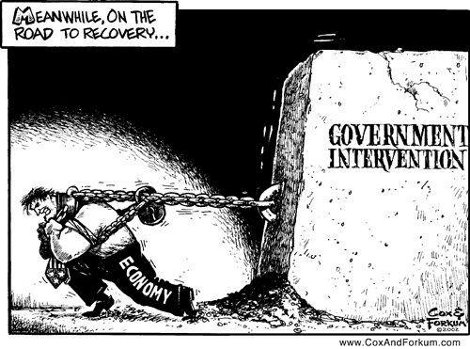
If you hope for government to solve economic problems, try to maintain some perspective: the state has unique abilities to botch it, and its power to distort and degrade the economy in the process of “helping” is vast. Government spending at all levels copped about 18% of the U.S.  economy’s final output in 2014, but the public sector’s impact is far more pervasive than that suggests. Private fixed investment in new structures and equipment accounted for only about 16% of Gross Domestic Product (GDP); the nonresidential portion of fixed investment was less than 13% of GDP. I highlight these two components of GDP because no one doubts the importance of capital investment as a determinant of the economy’s productive capacity. But government is a larger share of spending, it can divert saving away from investment, and it creates a host of other impediments to productivity and efficient resource allocation.

The private economy is remarkable in its capacity to satisfy human wants. The market is a manifestation of spontaneous order, lacking the conscious design of any supreme authority. It is able to adjust to dynamic shifts in desires and resource constraints; it provides reliable feedback in the form of changing prices to modulate and guide the responses of participants through all stages of production. Most forms of government activity, however, are not guided by these signals. Instead, the state imposes binding and sometimes immediate constraints on the decisions of market participants. The interference takes a number of forms, including price controls, but they all have the power to damage the performance and outcomes of markets.

The productive base at each stage of the market process is a consequence of the interplay of perceived business opportunities and acts of saving or deferred consumption. The available flow of saving depends on its rewards, which are heavily influenced by taxes and government intervention in financial markets. It’s worth noting here that the U.S. has the highest corporate tax rates in the developed world, as well as double taxation of corporate income paid out to owners. In addition, the tax system is used as a tool to manipulate the allocation of resources, drawing them into uses that are politically favored and punishing those in disfavor. The damaging impact is compounded by the fact that changes in taxes are often unknown ex ante. This adds a degree of political risk to any investment decision, thus discouraging capital spending and growth in the economy’s productive base.

The government is also a massive and growing regulator of economic activity. Over 100,000 new regulatory restrictions were added to the Code of Federal Regulations between 2008 and 2012. Regulation can have prohibitive compliance costs and may forbid certain efficiencies, often based on flimsy or nonexistent cost/benefit comparisons. It therefore damages the value and returns on embedded capital and discourages new investment. It is usually uneven in its effects across industries and it typically reduces the level of competition in markets because small firms are less capable of surviving the costs it imposes. Innovation is stifled and prices are higher as a result.

From a philosophical perspective, even the best cost/benefit comparisons are suspect as tools for evaluating government intervention. Don Boudreaux quotes Anthony de Jasay’s The State on this point:

What could be more innocuous, more unexceptional than to refrain from intervening unless the cost-benefit comparison is favourable? Yet it treats the balancing of benefits and costs, good and bad consequences, as if the logical status of such balancing were a settled matter, as if it were technically perhaps demanding but philosophically straightforward. Costs and benefits, however, stretch into the future (problems of predictability) and benefits do not normally or exclusively accrue to the same persons who bear the costs (problems of externality). … Treating it as a pragmatic question of factual analysis, one of information and measurement, is tacitly taking the prior and much larger questions as having been somehow, somewhere resolved. Only they have not been.

Poorly-executed and inappropriate stabilization policy is another way in which government distorts decisions at all stages of production. There are many reasons why these policies tend to be ineffective and potentially destructive, especially in the long run. Keynesian economics, based on ideas articulated by John Maynard Keynes, offers prescriptions for government action during times of instability. That means “expansionary” policy when the economy is weak and “contractionary” policy when it is strong.  At least that is the intent. This framework relies on the notion that components of aggregate demand determine the economy’s output, prices and employment.

The major components of GDP in the National Income and Product Accounts are consumer spending, private investment, government spending, and net foreign spending. In a Keynesian world, these are treated as four distinct parts of aggregate “demand”, and each is governed by particular kinds of assumed behavior. Supply effects are treated with little rigor, if at all, and earlier stages of production are considered only to the extent that their value added is included, and that the finished value of  investment (including new inventories) is one of the components of aggregate demand.

Final spending on goods and services (GDP) may be convenient because it corresponds to GDP, but that is simply an accounting identity. In fact, GDP represents less than 45% of all transactions. (See the end note below.) In other words, intermediate transactions for raw materials, business-to-business (B2B) exchange of services and goods in a partly fabricated state, and payments for distributional services are not counted, but they exceed GDP. They are also more variable than GDP over the course of the business cycle. Income is generated and value is added at each stage of production, not only in final transactions. To say that “value-added” is counted across all stages is a restatement of the accounting identity. It does not mean that those stages are treated behaviorally. Technology, capital, employees, and complex decision-making are required at each stage to meet demands in competitive markets. Aggregation at the final goods level glosses over all this detail.

The focus of the media and government policymakers in a weak economy is usually on “underconsumption”. The claim is often heard that consumer spending represents “over two-thirds of the economy”, but it is only about one-third of total transactions at all levels. It is therefore not as powerful an engine as many analysts assert. Government efforts to stimulate consumption are often thwarted by consumers themselves, who behave in ways that are difficult for models to capture accurately.

Government spending to combat weakness is another typical prescription, but such efforts are usually ill-timed and are difficult to reverse as the economy regains strength. The value of most government “output” is not tested in markets and it is not subject to competitive pressure, so as the government absorbs additional resources, the ability of the economy to grow is compromised. Programmatic ratcheting is always a risk when transfer payments are expanded. (Fixed programs that act as “automatic stabilizers”, and that are fiscally neutral over the business cycle, are less objectionable on these grounds, but only to the extent that they are not manipulated by politicians or subject to fraud.) Furthermore, any measure that adds to government deficits creates competition for the savings available for private capital investment. Thus, deficits can reduce the private economy’s productive capacity.

Government investment in infrastructure is a common refrain, but infrastructure spending should be tied to actual needs, not to the business cycle. Using public infrastructure spending for stabilization policy creates severe problems of timing. Few projects are ever “shovel-ready”, and rushing into them is a prescription for poor management, cost overruns and low quality.

Historically, economic instability has often been a consequence of poorly-timed monetary policy actions. Excessive money growth engineered by the Federal Reserve has stimulated excessive booms and inflation in the prices of goods and assets. These boom episodes were followed by market busts and recessions when the Fed attempted to course-correct by restraining money growth. Booms tend to foster misjudgments about risk that end in over-investment in certain assets. This is especially true when government encourages risk-taking via implicit “guarantees” (Fannie Mae and Freddie Mac) and “too-big-to-fail” promises, or among individuals who can least afford it, such as low-income homebuyers.

Given a boom-and-bust cycle inflicted by monetary mismanagement, attempts to stimulate demand are usually the wrong prescription for a weak economy. Unemployed resources during recessions are a direct consequence of the earlier malinvestment. It is better to let asset prices and wages adjust to bring them into line with reality, while assisting those who must transition to new employment. The best prescription for instability is a neutral stance toward market risks combined with stable policy, not more badly-timed countercyclical efforts. The best prescription for economic growth is to shrink government’s absorption of resources, restoring their availability to those with incentives to use them optimally.

The more that central authorities attempt to guide the economy, the worse it gets. The torpid recovery from the last recession, despite great efforts at stimulus, demonstrates the futility of demand-side stabilization policy. The sluggishness of the current expansion also bears witness to the counterproductive nature of government activism. It’s a great credit to the private market that it is so resilient in the face of long-standing government economic and regulatory mismanagement. A bureaucracy employing a large cadre of technocrats is a “luxury” that only a productive, dynamic economy can afford. Or can it?

~~~~~~~~~~~~~~~~~~~~~~~~~~~~~~~~~~~~~~~~~~~~~~~~~~~~~~~~~~~~~~~~~~~~

A Note On Output Measures

More complete aggregations of economic activity than GDP are gross output (GO) and gross domestic expenditures (GDE). These were developed in detail by economist Mark Skousen in his book “The Structure of Production“, published in 1990. GO includes all final transactions plus business-to-business (B2B) transactions, while GDE adds the costs of wholesale and retail distribution to GO. Or as Skousen says in this paper:

GDE is defined as the value of all transactions (sales) in the production of new goods and services, both finished and unfinished, at all stages of production inside a country during a calendar year.

GO and GDE show the dominance of business transactions in economic activity. GDE is more than twice as large as GDP, and B2B transactions plus business investment are twice the size of consumer spending. According to Skousen, GDE varies with the business cycle much more than GDP. Many economic indicators focus on statistics at earlier stages of production, yet real final spending is often assumed to be the only measure of transactions that matters.


The Gains From Traits: GMOs Bring Welfare Gains

Tags

, , , , , , , , , , , , , , , , , , ,

GMO-Right Genes
For about 30 years I have injected analog human insulin, produced by GMO E. coli bacteria, directly into my tissue. And I feel great, as do many other Type I diabetics who benefit from the advance this offers over earlier insulins made with pork and beef insulin crystals. Quite simply, I have the wrong genes. Those bad genes enabled my immune system to destroy the insulin-producing cells I needed to stay alive. At first, that necessitated the use of a faulty substitute, but later, an organism was created in a lab with the right gene to produce the powerful analog insulin I use now.

There are many other genetically-engineered pharmaceutical products on the market today, and more are coming. Julie Kelly discusses some of these developments in “The March of Genetic Food Progress” (if gated, Google “wsj Julie Kelly Genetic”). One in particular is an egg laid by a GM chicken that treats:

… a rare and potentially fatal disorder called lysosomal acid lipase deficiency. The chicken… produces eggs with an enzyme that replaces a faulty human enzyme, addressing the underlying cause of the disease.

She also writes of GM piglets that resist a viral respiratory disease. Her article mentions a few promising new GMOs foods in the pipeline. In a Sacred Cow Chips post in July 2015, “Nice Splice: New & Old GMO Varieties Blossom“, I quoted William Saletan on a large number of new GMOs, which I repeat here:

… drought-tolerant corn, virus-resistant plums, non-browning apples, potatoes with fewer natural toxins [and fewer carcinogens when fried], and soybeans that produce less saturated fat. … virus-resistant beans, heat-tolerant sugarcane, salt-tolerant wheat, disease-resistant cassava, high-iron rice, and cotton that requires less nitrogen fertilizer. … high-calcium carrots, antioxidant tomatoes, nonallergenic nuts, bacteria-resistant oranges, water-conserving wheat, corn and cassava loaded with extra nutrients, and a flaxlike plant that produces the healthy oil formerly available only in fish.

GMO foods enhance farm productivity, reduce waste, conserve land, improve the environment and provide better nutrition. They offer solutions to a variety of human problems that are otherwise out-of-reach.

Anti-GMO activists have smeared all of these GMO crops and even GM insulin as unsafe, but they base their claims on shoddy “research” or willful misinterpretation of research. To scare-monger people with diseases like diabetes is repugnant. Decades of experience have proven the safety of modern insulin products. Those negative claims about insulin arose from a paper reviewed here, which had a different research purpose and did not even mention GMO-produced insulin.

GMOs have been in the food supply to some extent for over 25 years. There is no shortage of high-quality, independent, peer-reviewed research proving the safety of GMOs in various contexts, including multi-generational studies for GMO animal feeds. Here is a review of GMO safety and environmental research funded by the EU. Another review of 10 years of safety research found that:

The scientific research conducted so far has not detected any significant hazards directly connected with the use of genetically engineered crops.

An excellent post by Marc Brazeau on the Biology Fortified blog, “About Those Industry Funded GMO Studies“, covers a variety of research demonstrating GMO safety for humans, livestock, honey bees, and invertebrates. As the title suggests, Brazeau also probes the question of financial or professional conflict of interest, industry funding and their alleged impact on GMO research. Favorable GMO research is often condemned by activists on this basis. The “industry shill” argument is often invoked by activists to dismiss positive results regardless of the experimental rigor involved. Brazeau reviews some research on these questions, and notes the following:

… where compositional studies are concerned … the company has already performed in-house studies. They are contracting independent scientists to confirm their findings. This is going to skew the results of the sample towards industry favorable study outcomes. This doesn’t mean the studies were suspect. They were just more likely to result in a favorable outcome to begin with. If the in-house study had an unfavorable outcome in compositional assessment or other tests, then that project would be stopped and it’s back to the drawing board for a new project. There is no need for follow up testing by outside independent researchers. That’s a big reason why so many studies … will produce favorable results.

I highly recommend the GMO Skepti-Forum on Facebook as a site on which informed (and usually civil) debate takes place on GMOs. Many of the discussants are scientists actively involved in GMO research. It’s a go-to location for me when investigating on-line memes that reference GMO research.

Finally, Robert Wenzel posts some thoughts regarding “Libertarianism and GMOs“. His position on GMOs mirrors my own. He asserts that individuals have a choice about whether to consume GMOs; they are capable of finding alternatives without imposing restrictions the behavior of others who wish to avail themselves of the benefits or are unconcerned about alleged risks. In fact, the benefits often include affordability and safety. Wenzel argues that this position is consistent with the non-aggression principle, the philosophical anchor of Libertarianism.

Some libertarians object to Wenzel’s defense of biotechnology based on the crony capitalism that undoubtedly benefits the biotech industry, as well as his opposition to GMO labelling. There are certainly ties between the large biotech firms and regulators, but that is no reason to condemn the technology. Labelling proponents start from the faulty premise that there is something inherently harmful about consuming GMOs. Their solution is to impose costs on others, while they are already free to purchase their food from purveyors who offer non-GMO assurances. Hence, the argument that forced labelling represents a form of aggression.


El Nino Stirs Pacific Ocean and Warmists Freak Out

173595_600

A few warm days in December precipitated a deluge of absurd remarks from climate alarmists. Paraphrasing a couple of lost intellectual sailors on Facebook, “… back when we actually used to have cold weather and snow in the wintertime…”, and “… no one can deny that the Earth is warming now!” Presidential candidate Bernie Sanders beclowned himself with similar comments. The fact that the warm temperatures were due to an El Nino pattern didn’t seem to register with these souls. Their apparent memory of weather history extends about as far as the evaporation of skin moisture on their last trip to the mailbox. Of course, there have been many wintertime warm spells in the past.

I recall a very warm December when my mother expressed amazement at the temperature as we trimmed the tree on Christmas Eve. I checked weather records for St. Louis, MO and found that it was probably 1971. The temperature hit 70 degrees on December 27th of that year. In Boston, the temperature on Christmas Day in 1889 hit 65 degrees. The early- to mid-1950s saw several warm Decembers along the eastern seaboard (see this data from 1955). And there were several other years with comparable holiday warm spells.

The point is that the over-reaction to weather is silly. The hysterics are not driven by good science or actual weather facts. As this article notes, the warm weather in December is likely to transition to a La Nina pattern later in 2016, which could bring a colder-than-normal winter next year.

Here are a few facts about climate change that should be very non-controversial:

Climate hysteria is encouraged by models that are consistently unreliable in their predictive accuracy, and by an unsupported presumption that the consequences of warming would be unambiguously negative. The first bullet above, by itself, is sufficient to show that climate science is not “settled”. There are many climatological processes, including irradiative effects and feedback mechanisms, that are not well understood. The magnitude of the warming experienced over the past 100 years is far from alarming (less than one degree Centigrade).

On any reasonable cost-benefit basis, arguments for a massive, forced reallocation of resources toward alternative energy technologies and carbon remediation are ill-founded. Absent real proof of accelerated warming AND of negative consequences, the development of alternative energy and carbon absorption technologies should proceed as the economics of the situation dictate, not by government edict.

Stock Crash At Retirement? Still Better Than Social Security

Tags

, , , , , , , , , ,

Social_Security

That’s right! Suppose you are given an option to invest your FICA taxes (and your employer’s contributions) over your working life in a stock market index fund. After 40 years or so, based on historical returns, you’ll have stashed away about 12 – 18 times your total contributions (that range is conservative — 40 years through 2014 would have yielded 19x contributions). A horrible preretirement crash might leave you with half that much. At the low-end, you might have as little as 4.5 times contributions if the crash is as bad as the market decline of 1929-32. That would be very bad.

But you don’t have that option under current law. Instead, the return you can expect from Social Security will leave you with only 1 to 4 times your contributions — without further changes in the program — based on your current age, lifetime earnings, marital status and retirement age. The latter range is based on the Social Security Administration’s (SSA’s) own calculations, as quoted in “Social Security: Saving or Tax? Proceeds or Aid” on Sacred Cow Chips.

Social Security, billed as the most reliable source of retirement income because it is not dependent on market risk — would almost certainly buy you less than a private investment even when a horrible market outcome is factored in immediately prior to retirement. Keep in mind that this is an unfair baseline for equity investments, because historical returns already factor-in historical market crashes, and we are imposing an extra, instantaneaous crash at the end-point! Note also that the calculations above do not account for ongoing, post-retirement returns in private investments. In view of this comparison, Social Security’s status as an “untouchable” third-rail of U.S. politics is a testament to the economic ignorance of the American voter.

Wharton’s Jeremy Siegel offers perspective at wsj.com based on his own experience in “My Sorry Social Security Return” (gated — Google “wsj Siegel Social Security”). Siegel’s Social Security benefits represent about a third of what he could have earned in private investments; the value of his benefits is also much less than what Siegel would have earned for retirement had those funds been invested exclusively in government bonds, as the Social Security “Trust Fund” does when there are surplus contributions over and above benefits paid. The return Siegel can expect over his retirement years on Medicare taxes paid is similarly bad. Siegel is just the kind of high earner whom many assume Social Security favors.

Even worse, Social Security benefits for future retirees are quite risky, given the long-term demographic changes underway in the U.S. The Social Security system is not solvent. Only recently, we have witnessed the revocation of “Restricted Application” filing for married filers born after 1953. This change can mean a significant reduction in benefits to any married couple, but it may be a more meaningful blow to married filers in the age cohort now approaching retirement or full-filing eligibility. This will not be the last revocation of future benefits, because the system is now “cash-flow negative” (benefit payments exceed payroll-tax contributions) and it will be for the foreseeable future. There will be hikes in payroll-taxes and reductions in benefits down the road.

This post is a follow-up to earlier discussions on Sacred Cow Chips of Social Security’s horrid returns to retirees: “Reform Not: Play Social Security Slots” in October and the link given in the second paragraph (above) from August. The Social Security “Trust Fund” is not an asset with any net value to the economy. Earlier surpluses have been used to fund the government’s general budget, so the SS Trust Fund is not “saving” your contributions in any real sense. Government debt held by the Trust Fund as an “asset” must be repaid to the SS system via future taxes. Some asset for the public!

Privatization of Social Security accounts would offer tremendous advantages over the current, unsustainable program. From the August post:

There are several advantages to privatization of Social Security accounts beyond the likelihood of higher returns mentioned above: it would avoid some of the labor market distortions that payroll taxes entail, and it would increase the pool of national savings. Perhaps most importantly, over time, it would release the assets (and future benefits) accumulated by workers from the clutches of the state and self-interested politicians.

It’s true that a shorter market horizon makes private investment returns more variable. Transitioning to a system of private accounts would involve a risk tradeoff for private accounts that is less attractive than over a lifetime. That makes it important to offer current workers within, say, 20 years of retirement an option of remaining on a defined benefit plan or converting to a private account, or perhaps some combination of the two.

The safety of Social Security benefits is greatly overrated. As a social mechanism for shielding retirees from market risk, it provides even less in exchange for one’s contributions than would a terrible down-market in equities at the end of a working career.

Automate No Job Before Its Time

Tags

, , , , , , , , ,

This interactive chart from the McKinsey Global Institute (not the one above, as good as it is…) shows occupations at risk of automation, and it should give warning to those asserting that a substantial increase in the minimum wage is in the interests of low-wage workers. It shows the extent to which various jobs can be automated under existing technology. The salient facts here are that a large number of workers earn less than $15 per hour, that most of those workers perform jobs that can be automated, and that further advances in technology will increase the potential for automation beyond what’s shown in the chart.

A simple truth that must be understood is that wage rates are strongly associated with the skills and productivity required for particular jobs. Denial of that fundamental rule cannot help anyone, and will almost certainly harm many. Low skill requirements are less highly-compensated because they add little value and are easily satisfied.

As Don Boudreaux points out, innovation is often spurred by economic forces. A mandated wage minimum, which is a price floor creating artificial surplus conditions, magnifies incentives for greater innovation. In addition to the substitution away from low-skilled labor (or domestic labor) that can be expected, there are many other margins along which employers can economize in the face of such government edicts: higher expectations for productivity, fewer benefits, fewer breaks, fewer niceties in the workplace, and less flexibility over hours and days off. These things matter greatly to employees and employers. A wage law can make for an unpleasant work environment.

Those who suffer most from minimum wage decrees are the least skilled, whose jobs are the most vulnerable. Economist David Neumark notes that “The Evidence Is Piling Up That Higher Minimum Wages Kill Jobs“, despite claims to the contrary (gated… Google “wsj NeumarK”, select the December 15, 2015 link).

Lest anyone decry the technologies that could replace these workers, recall that the substitution of capital for labor over time has led to the great gains in productivity that have elevated wages and income over time. Many jobs that are commonplace today (and were not even imagined in earlier times) would not exist if not for advances in technology. Likewise, there will be jobs that are commonplace in the future that do not exist today, and we won’t have the power (nor will the government) to anticipate those jobs until the enabling technologies come to fruition and early adoption. These kinds of changes are never without difficulty, as workers bear significant costs of adjustment in the short run, including the acquisition of new skills. However, wage floors force an even earlier and contrived adoption of technologies, which harms low-wage workers most severely. Far better to allow an unfettered and natural process of free choice, technological diffusion, price adjustment, and growth to take place.

ZIRP’s Over, But Fed Zombies Linger Over Seed Corn

Tags

, , , , , , , , , , , ,

Fed Rate Cuts

The Federal Reserve plans a few more increases in short-term interest rates in 2016, which should be welcome to savers who are not overexposed to market risk. The Fed took its first step away from the seven-year zero-interest-rate policy (ZIRP) last week, increasing its target rate on overnight loans between banks (“federal” funds) for the first time in almost ten years. ZIRP was grounded in the Fed’s desire to stimulate the economy after the last financial crisis, an objective that met with limited success. ZIRP’s most profound “success” was to distort prices, with negative consequences for conservative savers, those dependent on retirement assets, and the long-term growth of the economy.

ZIRP necessarily constitutes a price ceiling when expected inflation is positive. It implies negative real rates of return, but real rates of time preference are not and cannot be negative. Given the choice, no one intends to forego present pleasure to purposefully suffer a loss later. The imperative to earn positive real returns does not end simply because the Fed and ZIRP make it more difficult. 

Anyone with funds parked in near zero-return assets, such as money market funds and certificates of deposit, earned a negative real return during the ZIRP regime, as inflation remained positive despite misplaced fears to the contrary. Those kinds of savings vehicles earn relatively low returns and should carry little risk to savers.

What are savers and retirees to do under a ZIRP regime? If they absolutely must defer consumption, they can accept the predicament and leave funds to decay in real value. They can dis-save in response to the disincentive, consuming their accumulated wealth. Some, for whom retirement is near, might even put more aside with the full knowledge that it will erode in real terms. But many will seek out yield in other ways, investing in assets bearing greater risk than they would otherwise prefer. All of these alternatives are likely to be less-preferred by the public than rates of saving and portfolios constructed in the absence of the Fed’s rate distortions.

The Fed’s policies and zero rates have contributed to inflated equity prices over the past six years as savers sought enhanced returns, and those valuations are certainly vulnerable. Over the past week, market jitters have shown the extent to which traders and investors feel threatened by the Fed’s tightening move.

The impact of ZIRP on the well-being of savers is only part of the story, however. Such a regime compromises the fundamental process of aligning preferences with the physical transformation of present resources into future consumption. Like any price distortion, ZIRP misallocates resources, but it misallocates across time and across sectors of the economy. When discounted at ultra-low rates, the values of future financial flows are grossly inflated, diminishing the need to set additional amounts aside today. At the same time, zero or near-zero rate borrowing confuses the evaluation of alternative capital investment projects. Resources may be committed to projects that would be rejected given accurate price signals. The artificially-enabled bidding for resources prompted by ZIRP, and the distortion of the risk-return trade off, might even cause more worthy projects to be rejected. And there is every reason to expect that saving by some individuals will be channeled into immediate consumption by others.

Who would do such wasteful things, undertaking projects with low or nonexistent future returns? Those facing distorted price signals, most prominently government technocrats for whom meaningful price signals are seldom a concern. And that also goes for the subsidy-hungry private beneficiaries of the state’s tax-extracted and borrowed largess. The ultimate consequence of this behavior is a deterioration in the economy’s growth potential.

Ronald-Peter Stoferle provides a short catalogue of ZIRP’s destructive impacts in the “Unseen Consequences of ZIRP“. One of his more interesting statements is the following, with reference to “zombie” banks:

Low interest rates prevent the healthy process of creative destruction. Banks are enabled to roll over potentially non-performing loans practically indefinitely and can thus lower their write-off requirements.

Thus, ZIRP promotes economic rot in several ways. Last week’s rate move by the Fed is a step in the right direction, away from zero rates and drastic overvaluation of consumption flows now and in the future. However, the monetary excesses of the past six years will not be reversed by this one move. The Fed is still imposing an artificial ceiling on rates. Even if that restriction is eased in further steps during 2016, the Fed is committed for the long-term to the manipulation of interest rates in the execution of policy. That sort of activist market manipulation is likely to continue; like all forms of central planning, it will be based on woefully incomplete information, a poor understanding of individual and market behavior, and bad timing. It will degrade economic conditions and have the classic boom-and-bust repercussions typical of central bank intervention.

End The FDA’s War On Drug Development

Tags

, , , , , , , , , , , , , ,

FDA Secret Happiness

For the seriously ill, the phrase “regulated to death” might hit close to home when it comes to the U.S. Food and Drug Administration. The agency is a notorious bottleneck on the availability of new, potentially life-saving drugs. Its policies seem to rely on an over-reading of the precautionary principle: that the risk of harm must be weighted heavily regardless of the opportunity cost in terms of curative, life-extending or palliative potential. The facts are as economist Alex Tabarrok describes:

It costs well over a billion dollars to get the average new drug approved and much of that cost comes from FDA required clinical trials. Longer and larger clinical trials mean that the drugs that are eventually approved are safer. But longer trials also mean that good drugs are delayed. And the more expensive it is to produce new drugs the fewer new drugs will be produced. In short, longer and larger trials mean drug delay and drug loss.

One billion-plus dollars of incremental cost for the average new drug! Not only are the lengthy delays unacceptable, but the added cost seriously inflates new drug prices. Furthermore, it is difficult for small, innovative competitors to engage in development in the face of costs like these. And while large pharmaceutical companies might be forced to limit investment in new drug research and might rightfully bemoan their cost structures, they are in a much better position to handle the regulatory burden than start-ups.

Tabarrok has long advocated “reciprocity”, or U.S. approval of “drugs, devices and biologics” that have been approved by authorities (such as the European Medicines Agency, or EMA) in certain other developed countries. He has also advocated “Free To Choose Medicine” principles, which would create a dual track allowing certain patients to opt into the use of drugs at a relatively early stage in the FDA’s approval process. Research studies cited by Tabarrok suggest that expedited drug approval can provide substantial benefits in terms of patient survival years without compromising safety.

A bill introduced by Senators Ted Cruz (R-TX) and Mike Lee (R-UT) would authorize reciprocity in the U.S. In October, Cruz discussed the legislation in this article:

The FDA model is risk-averse, by its very nature obstructing promising innovations. It largely assumes that the biology of patients is the same, rather than recognizing that individuals’ genetic makeup varies widely. As a result, the only drugs the agency tends to approve are those that help a broad spectrum of patients and harm close to no one. That method may work to fight diseases that affect us all in a similar way, such as smallpox or cholera, but it does not work for diseases such as Alzheimer’s and cancer, which are highly tailored to each individual’s genetic makeup. In medicine, a one-size-fits-all approach ignores the diversity of the human person and limits the discovery of innovative cures to a small segment of those afflicted with disease.

Tabarrok anticipates a certain objection to reciprocity:

The argument for reciprocity, however, isn’t that the FDA is uniquely bad or always worse than the EMA or vice-versa. The argument is that it’s wasteful to duplicate the lengthy approval process and that both agencies sometimes make mistakes. As a result, it’s simple common sense to let Americans avail themselves of drugs and devices approved in other developed countries.

There are other reform proposals in play. The Goldwater Institute has advocated “Right to Try” laws at the state level that would allow terminally-ill patients to access unapproved medicines. Representative Fred Upton (R-MI) has introduced the 21st Century Cures Act, which includes:

“... steps to streamline clinical trials; advance personalized medicine by encouraging greater use of drug development tools, such as biomarkers; and creat[es] incentives for developing drugs for uncommon but deadly diseases.

Regulation is often an obstacle to vibrant competition and innovation, and the FDA’s antiquated drug approval process is certainly a hindrance. The process adds time and expense to drug development that carries unacceptable human costs. It is beyond comprehension that drugs can be rejected for procedural reasons when their proposed use involves circumstances that could hardly be worse, when those drugs carry little incremental downside risk. The rights of patients and the judgements of their physicians should take precedence over the sometimes picayune concerns of a regulatory bureaucracy. The reforms discussed above would be positive steps toward establishing that primacy.