All The President’s Chutzpah

Tags

, , , , , , , , ,

159394_600

So, President Obama can repeatedly arrogate the authority to write and rewrite legislation, then insist that the legislature must convene hearings on his Supreme Court nominee in an election year. David Bernstein at The Volokh Conspiracy asserts that Obama is in no position to argue the virtue of Senate hearings on his nominee. That Obama condemns the Senate GOP leadership for refusing to act, which is consistent with the so-called “Biden rule“, after his own misadventures in executive ordering is particularly hypocritical. As Glenn Reynolds says in his link to the Bernstein piece:

When they hold the whip hand, norms and traditions are stuffy and outdated. When they don’t, it’s all ‘have you no decency, sir?’

Bernstein’s post has the lengthy but descriptive title “Re: Merrick Garland, it’s a bit late for the Obama administration and its supporters to appeal to constitutional norms requiring Senate consideration“. He first discusses an earlier post by Jonathan Adler noting that the text of the Constitution includes no requirement on the Senate to act on a judicial nominee with whom they disapprove. Instead, the customary hearings and votes on all nominees are a constitutional norm, a procedure that evolved over time in acting on the text of the Constitution:

… as Adler has repeatedly documented, norms surrounding presidential appointments, especially judicial appointments, have increasingly been stressed and undermined in recent years by both parties. It’s not clear, if I were a Republican senator, why I’d use this particular opportunity to call for a cease-fire, especially one that the other side may not honor in the future.

Obama’s disrespect for the constitution and constitutional norms is well known, if not always acknowledged. Bernstein cites a number of cases in which the President has acted without legislative authority (though Bernstein and I might approve of certain policy positions underlying those actions, not the actions themselves):

More generally, President Obama has repeatedly promised to try to circumvent Congress using any arguably legal means available, on the rather extra-constitutional grounds, contrary to the norms attendant to the separation of powers, that ‘we can’t wait’ for Congress to pass legislation that the president favors.”

As I’ve long maintained, President Obama’s constitutional “scholarship” is dubious. In any case, he has no particular respect for the document. Perhaps I should not sell short his understanding of constitutional principles, since he knows all to well how to subvert them. But his real talents are political. It’s been suggested that Obama’s selection of a relatively “moderate” nominee is highly Machiavelian, intended to torture the GOP, as it were. Judge Garland might well be the best choice the GOP will have, depending on the outcome of the November elections. That might not be of much consolation. To quote Reynolds again:

I think [Garland’s] a ‘moderate’ in the sense that he approves of government invasions that come from the left and the right.

The Wind, The Sun, and a Load of Subsidies

Tags

, , , , , , , , , , , , , ,

image


Renewable energy sources are not economically viable without subsidies, and they can impose some ugly external costs. Taxpayer subsidies for renewables like solar and wind projects are rationalized on the grounds that adoption will reduce carbon emissions and bring declining costs, ultimately saving resources by virtue of “free inputs”: the sun and the wind. But the cost of carbon emissions is highly uncertain, even speculative, and subsidies usually manage to get wasteful projects off the ground that are all too often run by political cronies. Despite the free variable inputs, these projects entail substantial resource costs that are conveniently overlooked by supporters. No wonder so many renewable outputs cannot be sustained without a continuing flow of aid.

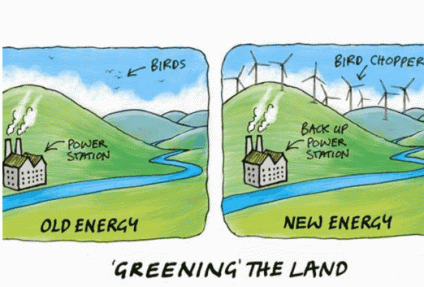
What happens when the subsidies reach their sunset? There are thousands of abandoned wind turbines littering the U.S. (and a number of abandoned solar farms, too). There are several thousand turbines at one abandoned wind farm north of Los Angeles and another east of the Bay Area. There are many more in Hawaii, Iowa, Maine, Texas and other states. Attorneys often warn landowners that lease agreements with wind developers are risky. There are a number of ways that crony wind developers impose “external costs” on landowners. Eventual disposal is a risk, as the developers might just be inclined to take the subsidies and run.

Again, wind’s big advantages, aside from the subsidies, are that wind itself is free and produces no carbon, but other resources needed to make use of wind energy are not renewable, and producing those inputs produces CO2. To build and install the windmills requires materials (including steel and scarce rare-earth materials used in the electronic components), machinery, and of course labor and land costs. There is also a substantial investment in connecting windmills to the power grid. Ultimate disposal is a certainty, and it is not cheap. Then there is a controversial cost in terms of slaughtered avian life. Increasingly, wind turbines are thought to create health issues for people living nearby.

Solar power has the same advantages as wind in terms of a free input and no direct carbon output. In addition, the cost of solar panels has declined precipitously. Rooftop solar installations have allowed consumers to sell power back to electric utilities at certain times. In fact, without those “reimbursements” on top of the subsidies, installed on-site solar power would not be economically viable for many households and businesses. Reimbursement rates are therefore a huge controversy. Solar advocates have insisted that consumers should be reimbursed at the retail price of electricity. That is difficult to square with the fact that utilities could produce that power themselves for much less. It is especially difficult to square with the fact that the excess solar generation is often mismatched with the timing of power demand.

This brings us to the achilles heel of wind and solar power: wind and sunshine are intermittent, and not just on a daily basis, but over weeks, whole seasons and even years. This risk can be diversified geographically, but only to an extent, and effective power storage options do not presently exist and will not exist for some time, even with massive subsidies. Intermittent energy production requires the availability of other reliable power sources that are costly to turn on and off as needs dictate. It requires other “peaking” capacity to fill the “valleys” in wind and solar output, and baseline capacity is needed to provide for the less variable components of demand. Baseline capacity relies on nuclear power (which many solar advocates abhor) and carbon-emitting fossil fuels. Peaking capacity is typically provided by oil and natural gas generators. Hydro-electric power can be used as baseline or dialed back as needed, but hydro capacity is generally limited.

Renewable energy activists speak of replacing traditional power sources with wind and solar power. It is difficult enough, however, for wind and solar to replace peaking capacity, let alone baseline capacity. Peak wind and solar power production is not well-aligned with peak power demand in many areas (see the second chart at this link). The extra resources required to provide redundant facilities are significant, with ratepayers picking up the tab.

Given the current state of technology, pushing renewable energy goals even further, to the replacement of baseline capacity, is misguided at best. Yet it has been tried, with unintended but easily foreseeable consequences. Germany’s Energiewende program seeks to “decarbonize” power production without nuclear power. The costs have been very high:

The report gives enough detail that you can see why Germany’s nuclear ban leads to a shocking cost of avoidance of $300 [/mt CO2]. … J.P. Morgan modeled a balanced deep decarbonization strategy, which using 35% nuclear, costs only $84/mt CO2. Note that the $300 is a bare-bones estimate – none of the cost of the additional transmission infrastructure required by high-renewables is included in the analysis. Even so the baseline Energiewende plan will double already second-highest in Europe current costs from $108 to $203/MWhr.

California officials apparently want to go in the same direction. John Peterson reinforces the difficulties of integrating renewable energy capacity into the power grid in a recent post at InvestorIntel:

The disadvantages [of intermittent power sources] include:

  • Intermittent power sources must have conventional backup for frequent periods when the wind and sun aren’t feeling particularly cooperative;
  • Cannibalization of peaking plant revenue streams results in higher electric costs for all because interest, depreciation, overhead and other fixed operating expenses must be recovered from fewer units of production;
  • When utilities pay premium prices for renewables, that indirectly increases electricity prices for all; and
  • When Federal, State and local treasuries subsidize the construction and operation of intermittent power sources, they indirectly increase everyone’s tax burden.

The U.S. Federal Energy Regulatory Commission (FERC) is currently investigating the risk of intermittent energy sources to the reliability of the power grid.

Power demand is relatively predictable and conventional power plants, like nuclear plants and natural gas, can adjust output accordingly. Solar and wind power, however, cannot easily adjust output. Peak power demand also occurs in the evenings, when solar power is going offline. Adding green power which only provide power at intermittent and unpredictable times [and stopping or even retiring other capacity], makes the power grid more fragile.

Given decreasing costs, solar energy is likely to play an increasing role in power production in the future; wind production to a lesser extent. Both will depend on advances in the technology of power storage. However, there are still tremendous diseconomies that make current, widespread adoption of both wind and solar power a “Renewable Irony“. Like other attempts to centrally plan economic activity, the intentions are well and good, but execution requires mandated behavior and artificial inducements that impose heavy costs on society. Renewables should not be forced on us prematurely. They will happen voluntarily and naturally if we let them, guided by market signals as technology matures and resource scarcities evolve.


Evil Force Multiplication

Tags

, , , , , , , , ,

big-govt compassion

Following up on “Socialism Is Concentrated Power“, check out “Because government is a force multiplier for evil, a vote for the small government candidate is a vote for good” from the Bookworm Room. I’m four days late making my 2nd anniversary post on Sacred Cow Chips, so this is it. I’ll try to keep it brief so I can get it out before bedtime on a school night.

I don’t agree with everything in Bookworm’s analysis, but I certainly agree with the general thrust:

The problem with government is that, as it grows, no matter the original good intentions behind it, it invariably becomes a force multiplier for evil. Thus, once government power passes a certain point, government becomes the equivalent of a bull in a china shop, with its every motion causing massive damage. Incidentally, the china in that shop is always you — the individual.

Bookworm discusses two major forms of force multiplication of evil by the state: money and death. Governments are incredible graft machines and resource wastrels. More tragically, the many genocidal acts over the course of history would not have been possible without government as the machine of authority and “legitimization”. Fear of the government’s police power may ultimately spur normal people to participate in “banal” acts of unspeakable evil. And here, Bookworm points out a few ironies about the “nice” people who root for state control:

A compassionate government will talk itself into euthanizing people who, because they are very old or sick, use up more than their fair share of medical care. This has already happened under England’s National Health Service, which kills off old, sick people, and whose ‘ethicists’ advocate even more killings (out of ‘compassion’ of course).

A compassionate government dedicated to efficiency will convince itself that individuals or organizations that stand in the way of efficiency must be controlled and, if they won’t be controlled, must be destroyed. After all, without mandated efficiency, people will suffer.

A compassionate government dedicated to “fairness” (usually thought of in economic terms), will quickly conclude that it’s entirely unfair that one distinct group or another is wealthier or healthier than the rest. That group must be brought to heel and, failing that, destroyed.

A compassionate government dedicated to national purity will naturally have to kill the impure within its borders and, once that’s done, it would be even more compassionate to extend that purity throughout the world.

Even the most murderous theocracies will argue that compassion guides them. Their tortures, executions, and Holy Wars are meant to bring people closer to God, which is the highest form of human existence. Isn’t that a nice, compassionate thing to do?

Bookworm offers praise to the genius of the U.S. founding fathers in crafting governing principles designed to limit government power. And Bookworm recognizes Senator Ted Cruz as the only major party candidate to consistently stand for small government and constitutional principles. I’m not all in on this endorsement, as Cruz has taken stands and aligned himself with individuals not supportive of civil liberties such as gay marriage. However, in many important ways, Cruz recognizes the danger of government power. Bookworm might have mentioned Gary Johnson, the likely Libertarian Party nominee, as the most consistent critic of big government among the names likely to appear on presidential ballots in the fall.

Some might object to Bookworm’s discussion of the many failed experiments with government domination of society by noting that he never mentions the alleged success of European social democracies, particularly the Nordic states. Sweden and Denmark are the most cited examples. However, Europe is not an economic success story, with median incomes comparable to states with the lowest incomes in the U.S. Moreover, the “Nordic Nirvana” is something of a myth. In “How Laissez-Faire Made Sweden Rich“, Johan Norberg gives a detailed history of Sweden’s political and economic evolution:

It was not socialist policies that turned Sweden into one of the world’s richest countries. When Sweden got rich, it had one of the most open and deregulated economies in the world, and taxes were lower than in the United States and most other western countries. The Social Democrats kept most of those policies intact until the 1970s, when they thought that those excellent foundations—unprecedented wealth, a strong work ethic, an educated work force, world-class exports industries, and a relatively honest bureaucracy—were so stable that the government could tax and spend and build a generous cradle-to-grave welfare state on them.

They couldn’t. At least not without costs. Because that welfare state began to erode the conditions that had made the model viable in the first place. And the fourth richest country became the 14th richest within three decades.

Fortunately, for more than 70 years, Western Europe has avoided the kind of dire, genocidal consequences that often flow from a dominant state, but Europe has stagnated economically. Hazards await them as a growing and increasingly diverse population competes for diminished economic gains; government control is a dead-weight on their prospects. I hope we can avoid that fate in the U.S., though we’re already far down the road. Like the Bookworm says, vote for small government!


Socialism Is Concentrated Power

Tags

, , , , , , , , , , , , , , , ,

Power

Nobody likes to defend concentrated power, yet socialists earnestly crave power concentrated in the state. And state power is absolute power. They must imagine that those wielding state power, now and always, will be the sort of nice, benevolent folks they imagine themselves to be. Well, if only more power can be concentrated in the state, it will be alright. Good luck with that! Once granted, watch out.

While this sort of magical thinking might seem naive, another paradox of leftist thinking is even more befuddling: the never-yielding distrust of capitalism and private initiative, a system under which power is largely dispersed. The attitude is more than a little misanthropic. It’s as if socialists expect us to believe that someone forces us to engage in transactions with private sellers, transactions that are always unfavorable in some way. But every transaction in a private economy is voluntary, dependent only on how both parties assess benefits relative to costs. Anyone can make a bad deal, of course, and you might get ripped off by an unscrupulous buyer or seller from time-to-time. But you are free to perform due diligence. You are free to assess risks.

The left goes so far as to blame capitalism for poverty, demonstrating a complete disconnect with reality. For a better perspective on the economic miracles made possible by capitalism, I  recommend a few timely pieces of reading: economist Richard Rahn makes note of the incredible bounty of products and technology brought to us by capitalism. This includes transformative breakthroughs in almost every area of life: communication, computing, transportation, refrigeration, safety, food, medicine and on and on:

Almost all of the great innovations came from those in the private sector who created them out of the desire for more wealth or just intellectual curiosity. The socialist countries have produced almost nothing — except for bread lines, coercive and destructive taxation and regulation, and gulags. Yet politicians all over the world proudly proclaim themselves to be socialists and attack the capitalist wealth creators and innovators — as if the real world had never existed.

At the Foundation for Economic Education (FEE), Chelsea German and Marian L. Tupy offer ample evidence of capitalism’s successes as they shred an absurd opinion piece in Forbes magazine claiming that  capitalism “will starve humanity“:

Throughout most of human history, almost everyone lived in extreme poverty. Only in the last two centuries has wealth dramatically increased. Early adopters of capitalism, such as the United States, have seen their average incomes skyrocket.

German and Tupy have a more detailed post here with statistics showing dramatic increases in the standard of living enjoyed by poor households in the U.S., increases for which capitalism is largely responsible.

Last month, Don Boudreaux reflected on the well being of average Americans today compared to an individual at the extreme high end of the wealth distribution 100 years ago. Boudreaux catalogues the many ways in which John D. Rockefeller’s comforts were drastically inferior to those available today. He concludes that trading places with Rockefeller would be a questionable deal:

Honestly, I wouldn’t be remotely tempted to quit the 2016 me so that I could be a one-billion-dollar-richer me in 1916. This fact means that, by 1916 standards, I am today more than a billionaire. It means, at least given my preferences, I am today materially richer than was John D. Rockefeller in 1916. And if, as I think is true, my preferences here are not unusual, then nearly every middle-class American today is richer than was America’s richest man a mere 100 years ago.

I maintain that even when power is concentrated in large private companies, the situation is far preferable to concentrated power in government. First, private companies do not have the police power necessary for absolute government authority. They cannot force you to do anything. Second, private companies do not simply shuffle resources and up-charge, as the left might have you believe; they innovate and create value as an inducement to trade, a concept that is rare in state-controlled activities. When any form of competition is present, private companies discipline each other, encouraging better quality and restraint on the prices charged for their wares. Even trading with a monopolist confers gains from trade, despite its drawbacks relative to trade in competitive markets.

Of course, government is generally not confronted with competition, unless it’s prompted by citizens who “vote with their feet”, as described by Charles Tiebout. That kind of responsiveness argues for decentralized government, however. Government services are typically monopolized, but the “terms of trade” are often worse than a monopolist would offer. It’s difficult to refuse a government service or your obligation to pay, no matter how much you abhor it, and quality usually suffers due to the extreme lack of accountability to citizen-consumers.

Capitalism gets a bad rap when private businesses engage in rent-seeking. That behavior is characterized by attempts to influence government policy for the business’ own benefit, promoting subsidies, other public spending or tax policies that go to the bottom line, and regulatory actions that disproportionally harm competitors. Those efforts put the crony in crony capitalism. But note that rent seeking is not an inherent feature of capitalism. It is enabled by the existence of activist government, its control over resources and its police power. What this means is that cronyism is fostered by power concentrated within the halls of government. In other words, private power becomes more concentrated and more impervious to competitive forces when it is favored by government. That is pure privilege.

If you dislike concentrated power, then vote for small government!


Educational Free Fail

Tags

, , , , , , , , , , , , , , , ,

image

Free college tuition would undermine the quality of higher education and increase its real cost to society. In fact, it may well cost many subsidized students more than its worth in lost work experience, wages and self-esteem. Those foregone opportunities are very real costs despite their consignment as “unseen” counterfactuals. They are mostly incremental to costs that are more obvious to the minds of statists promoting free post-secondary education.

Basic supply and demand analysis is the only requirement for understanding the tuition bubble in U.S. higher education, and the absurdity of heavy subsidies as a solution. Ariel Deschapell calls subsidies “worse than nothing, comparing the approach to “throwing gasoline on a fire“. He’s quite right.

There is no question that increased subsidies lead to higher tuition and ultimately greater student debt. A recent paper published by the National Bureau of Economic Research (NBER) found that loan subsidies “fully account” for the increase in college tuition costs from 1987 – 2010. Another 2015 study published by the Federal Reserve Bank of New York reached broadly similar conclusions:

We find that institutions more exposed to changes in the subsidized federal loan program increased their tuition disproportionately around these policy changes, with a sizable pass-through effect on tuition of about 65 percent. We also find that Pell Grant aid and the unsubsidized federal loan program have pass-through effects on tuition, although these are economically and statistically not as strong. The subsidized loan effect on tuition is most pronounced for expensive, private institutions that are somewhat, but not among the most, selective.

As Deschapell points out, most schools turn away a significant share of their applicants. How can that sort of demand exist, given the sky-high tuition charged by many colleges and universities? Subsidies. Subsidized tuition. Subsidized loans. When the cost to the end user of educational services is reduced at a given price, demand for those services increases. The papers linked above demonstrate the strength of the response.

Unfortunately, the supply of higher education is subject to relatively hard limits. Traditionally, the supply of educators, facilities and other learning resources has not been especially elastic. Technology has arguably made education more scalable, but only in terms of enrollment, and not at a zero incremental cost. Outcomes are more dependent than ever on a student’s intelligence, preparation and ability to remain engaged.

The supply of education is limited by still other factors. The long-term impact of inflation on costs is often more severe for service industries such as education, as they generally do not share in the productivity growth enjoyed by goods-producing sectors. Moreover, the increasing complexity of administrative functions, including education finance and regulatory compliance in an astonishing number of areas such as health, environmental and diversity goals (and certainly some self-inflicted administrative bloat), imposes cost escalation at many schools. Worst of all, the supply of education and acceptance of federally-subsidized student loans by certain institutions is restricted by federally-appointed accreditation agencies. This puts a lid on competitive pressures in higher education and inflates costs.

Higher demand and limited supply mean that some form of rationing is necessary. What mechanisms for rationing educational opportunities are available? Higher admission standards are sometimes a possibility, but public institutions may have little flexibility to raise standards, especially for resident students. Interestingly, diversity goals can lead to a de facto tightening of admission standards for some applicants even as standards for others are overridden or compromised. Declining quality of education is a “relief valve” to be avoided, but it is a very real possibility.

Higher tuition to the payer is an almost unavoidable consequence. That is why Deschapell likens free, givernment-paid tuition to an accelerant. Supporters of free tuition fail to recognize this relatively simple, causal chain.

When student debt is subsidized, it tends to mount faster than educational achievement and job prospects allow, leading to high rates of default. It also distorts the choices of would-be individual payers by inflating tuition costs. Passing the cost of education along to taxpayers, or “socializing the cost” as Deschapell says, completely severs the responsibility for marginal costs from the marginal benefit of education, an obvious prescription for a misallocation of resources. The decision to pursue more education, and the responsibility, should be in the hands of the same individuals: those in the best position to know whether it is viable: prospective students and their families. They know better than anyone the real opportunities foregone in terms of lost wages and the skills and experience that can be gained by staying out of school. Eliminating tuition from the decision would divert many more individuals into pursuits for which they are ill-suited.

College graduation or completion rates are disappointingly low, and correspondingly, dropout rates are very high, especially at community colleges. Moreover, profiles of the dropout population show that colleges have no business admitting a significant share of those individuals. This is damning evidence that we are already over-allocating resources to this activity. Additional subsidies won’t fix the problem.

There is no doubt that cross-sectionally, advanced education is associated with better employment prospects and higher incomes. And higher education can provide “social benefits” in excess of its direct value to students. Those facts do not imply, however, that generous inducements to questionable prospects will create positive outcomes. Quite the contrary. And in fact, the quality of education is vulnerable to dilution with increases in the number of poorly-qualified students.

A better way to improve the lifetime prospects of more people is to encourage production and employment opportunities with flexible wage policies, light taxes and less intrusive regulation. Competition at all levels of education should also be promoted; those steps would do more to improve outcomes than subsidies ever can. Throwing public money at education is generally unproductive, inflates tuition and drains the productive sector of resources. After all, the strength of that very sector must be relied upon to keep public education afloat. Individuals cannot be absolved of facing the real trade-offs inherent in their choices. Ultimately, by distorting decisions, free tuition cannot truly empower individuals and improve well being.


Hamburger Nation: An Administrative Nightmare

Tags

, , , , , , , , , , , , , , , , , , , , , , ,

nanny-state

By what authority do unelected bureaucrats in administrative agencies increasingly make laws, enforce those laws and adjudicate violations? The fact that all of these activities take place within the executive branch of government appears to be an obvious contradiction of the separation of powers required by the first three articles of the Constitution, the principle of “Rule By Consent” of the governed, and protections of individual liberty. In a strong sense, the regulatory apparatus has grown so unwieldy that the powers routinely exercised by administrative agencies today seem beyond even the reach of elected executives. The rules promulgated by this “fourth branch” of government are essentially extralegal, a point discussed at length in Philip Hamburger’s “Is Administrative Law Unlawful“. He has also explained these issues at the Volokh Conspiracy blog in “Extralegal power, delegation, and necessity“, and “The Constitution’s repudiation of extralegal power“.

Hamburger examines the assertion that rule-making must be delegated by Congress to administrative agencies because legislation cannot reasonably be expected to address the many details and complexities encountered in the implementation of new laws. Yet this is a delegation of legislative power. Once delegated, this power has a way of metastasizing at the whim of agency apparatchiks, if not at the direction of the chief executive. If you should want to protest an administrative ruling, your first stop will not be a normal court of law, but an administrative review board or a court run by the agency itself! You’ll be well advised to hire an administrative attorney to represent you. Eventually, and at greater expense, an adverse decision can be appealed to the judicial branch proper.

This adds up to a dangerous lack of accountability and power. Marginal Revolution points out that critics of Hamburger’s book overlook the potential for harm that could be done by a “vindictive” president. But we should not lose sight of the fact that bureaucrats themselves, at any level, can be vindictive, as the IRS targeting scandal has shown. But that is only one motive for abuse of power; another motive may be more pervasive: the ability to reward those in a position to promote the self-interests of those who populate the administrative state. These are dangers that are endemic to big government. In a post entitled “Are Government Regulators More Virtuous than Everyone Else” (No!), Ivan Carrino highlights the weakness of arguments like those made by George Akerlof and Robert Shiller in “Phishing For Phools“, who call for greater government regulation on the grounds that consumers are vulnerable to manipulation by businesses. Carrino says:

One can’t help but notice the central contradiction in this analysis. On the one hand, it is assumed that markets fail because of ‘normal human weakness.’ On the other hand, it is assumed that regulation, which must necessarily be implemented by human beings with equal or greater ‘weaknesses,’ will somehow solve the problem.

Akerlof and Shiller simultaneously demonize human beings who operate in the private sector while idealizing human beings who operate in the public sector.

Glenn Reynolds has been a prominent critic of the administrative state. As a consequence of the vast and growing body of regulatory rules, it’s become increasingly difficult for individuals, acting on their own or as businesspeople, to know whether they are in acting in violation of administrative law. Reynolds discusses regulatory crime and over-criminalization in “You May Be Breaking The Law Right Now“, and in his great paper “Ham Sandwich Nation: Due Process When Everything is a Crime” (free download).

Hamburger’s main position is that law should be made by elected representatives, not by bureaucrats who lack direct accountability to voters. Ilya Somin believes that with time, Hamburger will have great influence on legal theorists in this regard. He compares Hamburger’s insights on administrative law to Richard Epstein’s work on takings. Epstein insisted that “almost all regulations that restrict property rights should be considered ‘takings’ that require compensation under the Fifth Amendment.” Somin notes that Epstein’s position, despite harsh criticism from certain quarters, has influenced legal thinking in a dramatic way over the years.

What’s to be done? Can a line reasonably be drawn between constitutional legislative power and delegated rule-making authority? Somin is skeptical that absolute restrictions on lawmaking by the administrative state are practical, in the sense that there will always be details that cannot be addressed in enabling legislation. Others have suggested practical paths forward: Joseph Postell attempts to give a roadmap in “From Administrative State to Constitutional Government“. A recent Glenn Reynolds op-ed, “Blow Up The Administrative State“, gives a qualified defense of Texas Governor Greg Abbot’s proposed amendments to the Constitution. Among other things, Abbot proposes to:

–Prohibit administrative agencies … from creating federal law.
  –Prohibit administrative agencies … from preempting state law.
  –Give state officials the power to sue in federal court when … officials overstep their bounds.
  –Allow a two-thirds majority of the states to override a federal law or regulation.”

I would add that administrative review and adjudication should be independent of the agencies themselves. Also, Representative Mia Love (R-UT) has proposed legislation that would restrict Congress to bills focused on points directly related to a single issue (i.e., no omnibus bills), which would help to check the growth of the administrative state.

All of these measures seem consistent with Hamburger’s views. Reynolds is fully cognizant of the dangers of a constitutional convention. Nevertheless, he recognizes that Abbot’s proposals would impose harder limits on the size of government, and defends them in colorful fashion:

A smaller government would mean fewer phony-baloney jobs for college graduates with few marketable skills but demonstrated political loyalty. It would mean fewer opportunities for tax dollars to be directed to people and entities with close ties to people in power. It would mean less ability to engage in social engineering and ‘nudges’ aimed at what are all-too-often seen as those dumb rubes in flyover country. The smaller the government, the fewer the opportunities for graft and self-aggrandizement — and graft and self-aggrandizement are what our political class is all about.

For further reading, Michael Ramsey at The Originalism Blog posts links to several other essays by Hamburger at The Volokh Conspiracy, where he acted as a guest-blogger.


Central Banks Stumble Into Negative Rates, Damn the Savers

Tags

, , , , , , , , , , , , , , , , , , , ,

Dollar Cartoon

Should government actively manipulate asset prices in an effort to “manage ” economic growth? The world’s central bankers, otherwise at their wit’s end, are attempting just that. Hopes have been pinned on so-called quantitative easing (QE), which simply means that central banks like the U.S. Federal Reserve (the Fed) buy assets (government and private bonds) from the public to inject newly “printed” money into the economy. The Fed purchased $4.5 trillion of assets between the last financial crisis and late 2014, when it ended its QE. Other central banks are actively engaged in QE, however, and there are still calls from some quarters for the Fed to resume QE, despite modest but positive economic growth. The goals of QE are to drive asset prices up and interest rates down, ultimately stimulating demand for goods and economic growth. Short-term rates have been near zero in many countries (and in the U.S. until December), and negative short-term interest rates are a reality in the European Union, Japan and Sweden.

Does anyone really have to pay money to lend money, as indicated by a negative interest rate? Yes, if a bank “lends” to the Bank of Japan, for example, by holding reserves there. The BOJ is currently charging banks for the privilege. But does anyone really “earn” negative returns on short-term government or private debt? Not unless you buy a short-term bill and hold it till maturity. Central banks are buying those bills at a premium, usually from member banks, in order to execute QE, and that offsets a negative rate. But the notion is that when these “captive” member banks are penalized for holding reserves, they will be more eager to lend to private borrowers. That may be, but only if there are willing, credit-worthy borrowers; unfortunately, those are scarce.

Thus far, QE and zero or negative rates do not seem to be working effectively, and there are several reasons. First, QE has taken place against a backdrop of increasingly binding regulatory constraints. A private economy simply cannot flourish under such strictures, with or without QE. Moreover, government makes a habit of manipulating investment decisions, partly through regulatory mandates, but also by subsidizing politically-favored activities such as ethanol, wind energy, post-secondary education, and owner-occupied housing. This necessarily comes at the sacrifice of opportunities for physical investment that are superior on economic merits.

The most self-defeating consequence of QE and rate manipulation, be that zero interest rate policy (ZIRP) or negative interest rate policy (NIRP), is the distortion of inter-temporal tradeoffs that guide decisions to save and invest in productive assets. How, and how much, should individuals save when returns on relatively safe assets are very low? Most analysts would conclude that very low rates prompt a strong substitution effect toward consuming more today and less in the future. However, the situation may well engender a strong “income effect”, meaning that more must be saved (and less consumed in the present) in order to provide sufficient resources in the future. The paradox shouldn’t be lost on central bankers, and it may undermine the stimulative effects of ZIRP or NIRP. It might also lead to confusion in the allocation of productive capital, as low rates could create a mirage of viability for unworthy projects. Central bank intervention of this sort is disruptive to the healthy transformation of resources across time.

Savers might hoard cash to avoid a negative return, which would further undermine the efficacy of QE in creating monetary stimulus. This is at the root of central bank efforts to discourage the holding of currency outside of the banking system: the “war on cash“. (Also see here.) This policy is extremely offensive to anyone with a concern for protecting the privacy of individuals from government prying.

Another possible response for savers is to “reach for yield”, allocating more of their funds to high-risk assets than they would ordinarily prefer (e.g., growth funds, junk bonds, various “alternative” investments). So the supply of saving available for adding to the productive base in various sectors is twisted by central bank manipulation of interest rates. The availability of capital may be constrained for relatively safe sectors but available at a relative discount to risky sectors. This leads to classic malinvestment and ultimately business failures, displaced workers, and harsh adjustment costs.

With any luck, the Fed will continue to move away from this misguided path. Zero or negative interest rates imposed by central banks penalize savers by making the saving decision excessively complex and fraught with risk. Business investment is distorted by confusing signals as to risk preference and inflated asset prices. Central economic planning via industrial policy, regulation, and price controls, such as the manipulation of interest rates, always ends badly. Unfortunately, most governments are well-practiced at bungling in all of those areas.


Unequal Pay For Unequal Work

Tags

, , , , , , , , , , , , , , , , , ,

equal-pay-cartoon

Debates on social issues are often plagued by facile comparisons that distort the underlying facts. The alleged gender pay gap involves such comparisons. The Obama Administration proposed new rules last month intended to address a difference in median earnings between men and women, demanding data reports on various demographics from firms with 100+ employees. Mark Perry points out that the pay gap in the Obama White House is about the same as the national difference. Can there be any reasonable explanation for these disparities?

One key to understanding the debate is that the difference in aggregate pay between men and women (17% in 2014, according to the Bureau of Labor Statistics) is not a divergence in pay for equal work! However, that is the gist of the fraudulent narrative so often heard from the White House and elsewhere. The truth: 17% is the difference in the medians of two large distributions of working adults, one for men, one for women, covering all occupational categories. The discrepancy, which has declined sharply over the past 35 years, is explained today by fewer hours worked among women and “differences in educational attainment, work experience, and occupational choice.” These differences are well known, but gender-gap warriors conveniently overlook the following facts, as established by the Department of Labor:

  • There is more part-time work among women;
  • Women lose more experience to childbirth, child care and elder care;
  • Women demand more job flexibility and non-wage benefits (and that costs);
  • Women are disproportionately under-represented in dangerous occupations;
  • Women are disproportionately under-represented in STEM fields (Science, Technology, Engineering, Math);

Interestingly, the last point may have more to do with a broader range of talents possessed by females who are skilled at math, relative to men, which leads to a greater variety of career options. An implication: non-STEM occupational choices by women are often voluntary and not the result of discrimination. And those choices are often driven by considerations other than cash remuneration.

As to the risk of physical danger, in 2010, men were almost 12 times as likely as women to suffer fatal injuries on the job. There is no question that high-risk occupations have higher wages. Apparently, women choose not to pursue opportunities in these occupations. An earlier study found that single parents, male and female, were the most risk averse in their choice of occupation, and that married women with children are more risk averse than married men with children. Of course, it is possible that some employers have requirements in terms of physical strength that favor men. Either way, the job-risk gap almost certainly contributes to the measured-wage gender gap, but it has little to do with gender discrimination per se.

Earnings are sensitive to factors such as full-time / part-time status, continuous job tenure, and the likelihood of extended leaves of absence. This is supported by a research finding cited in The Economist, that partners in lesbian relationships tend to out-earn married straight females. The division of responsibilities in the home is surely part of the story: lesbian couples tend to split chores more equally than straight couples. Millennial couples (ages 25-34) are also more likely to split household chores equally; the gender pay gap for millennials is much narrower than for older age cohorts, and it is nonexistent for childless millennials. Millennial women have more than closed the education gap as well.

When gender differences in hours, tenure, absences, education, and job hazards are considered, as well as the full menu of compensating non-wage benefits available, the wage gap is essentially nonexistent. Yet President Obama’s proposed data mandate would carry high compliance costs and likely cost jobs as well. The purpose of the regulation is to make it easier for various groups to sue employers on the basis of wage discrimination. But observation of such a gap, wherever it might exist, is not prime facie evidence of discrimination; it is more than likely to be the result of private, voluntary agreement.

Is it possible that certain attitudes or behavioral characteristics of women generalize to poorer outcomes, relative to men, in negotiations? Tyler Cowan reports on research that suggests as much, based on “laboratory” experiments in which participants played repeated games involving actual rewards. In one experiment, the rewards depended on the acceptance of an offer to share a pot, and both men and women made lower offers to female partners than to males. However, when the partner was a woman, females were markedly stingier in their offers than males. Those women are tough! But seldom are real-world “deals” so one-dimensional, and controlling for all considerations of value is often impossible. In any case, trades rarely take place when the parties don’t find them to be mutually beneficial.

Fortunately, in labor markets, when differentials in skills and experience matter, discrimination is practiced only under a self-inflicted penalty on the discriminator. In the case of wage-based gender discrimination, the employer will tend to overpay for equivalently-skilled male help. Discrimination of this sort impairs a firm’s ability to attract the best employees and harms its competitive position. Nevertheless, the extent to which the market’s self-regulation confers benefits on individual participants depends upon their vigilance: buyer beware (caveat emptor) and seller beware (caveat venditor) are keys to real economic freedom. Most importantly, in all things, beware government edicts. Markets are the best regulator.

Sidebar: I was referred to an article on FiveThirtyEight by my friend John Crawford. The main subject matter of the article is off-topic and its conclusions are incorrect (I might post on it soon), but many of the charts are interesting; the third chart is really fascinating! It shows that women, by age 30, tend to belong to households that are higher in the income distribution than men who come from the same point in the distribution of household-income in childhood. This is true at every point in the childhood household-income distribution! Are there advantage(s) for women that can account for this? A few guesses: a lower rate of incarceration of women by age 30; women have higher marriage rates by age 30; women “marry up” more than men, both in terms of the ages and incomes of their spouses; women who don’t marry live with their parents more than men do (?). There could be other explanations, and the relationship may not hold at later ages. Still, it’s noteworthy that such a reverse “gender gap” exists in the data.

I close with a quote from Harvard’s Claudia Golden, from “A Grand Gender Convergence: Its Last Chapter” (HT: Marginal Revolution):

The gap is much lower than it had once been and the decline has been largely due to an increase in the productive human capital of women relative to men. Education at all levels increased for women relative to men and the fields that women pursue in college and beyond shifted to the more remunerative and career-oriented ones. Job experience of women also expanded with increased labor force participation. The portion of the difference in earnings by gender that was once due to differences in productive characteristics has largely been eliminated. 

What, then, is the cause of the remaining pay gap? Quite simply the gap exists because hours of work in many occupations are worth more when given at particular moments and when the hours are more continuous. That is, in many occupations earnings have a nonlinear relationship with respect to hours. A flexible schedule comes at a high price, particularly in the corporate, finance and legal worlds.

The Inhumane Minimum Wage Fantasy

Tags

, , , , , , , , , , ,

min-wage ball n chain

An analysis by the Economic Policy Institute (EPI) is the basis for breathless claims by the Left that a substantial increase in the minimum wage would have “sweeping benefits for low-income families.” The EPI study purports to show that spending on public assistance will decline significantly with the increase in the minimum wage. Author David Cooper’s analysis is purely static, dressed up with a few linear regression equations relating participation in federal welfare programs to the wage distribution. However, his conclusion is preordained by the very design of the analysis, which relies on pooled data from public assistance programs across 2012 – 2014. This was a period over which wages were generally rising, but the federal minimum wage was constant (and only a few state minimum wages were increased).

It’s no surprise that higher wages are associated with a reduced likelihood of receiving needs-based public assistance in a cross section. That’s not quite the same as measuring the dynamic impact of an increase in the minimum wage. The adjustment to a higher wage floor involves more complex shifts in the structure of the economy, including higher prices, a higher incidence of small business failure and the substitution of automated systems for labor. And celebration would not be in order if the policy change prompted a deterioration in the employment prospects of the least-skilled workers, and it would.

There are a few gaping holes in the EPI analysis. One involves a data limitation whereby the distribution of public assistance by wage decile is related to individual workers or their families. It is one thing to say that most recipients of public assistance work for a living. It is quite another to say “Most recipients of public assistance work or have a family member who works.” Obviously, the latter does not imply the former, yet the analysis asks you to accept that the wage rates of family members who perform work during a year are the determining factor in welfare program participation, rather than the employment status and hours of all members of the household.

The analysis includes cross-sectional regressions relating the receipt of public assistance (yes or no) to wages imputed at the individual level, controlling for a complex function of age (polynomial terms), other demographic factors and part-time work status during the previous year. As stated above, the data are plagued by measurement issues. Furthermore (and this is a technical critique), linear regression is not an appropriate statistical methodology with a binary dependent variable. The author should have known better, but we’ll leave that aside.

Controlling for part-time status is intended to create a more reliable estimate of the effect of wages on program participation, as part-timers are more likely to earn low wage rates. But if hours matter in that way, then the regression is all the more suspect because hours of work are otherwise ignored (except in the imputation of wage rates).

The truth is that poverty is not a wage problem as much as a jobs and hours problem. A recent post by Angela Rachidi  of the American Enterprise Institute notes that “Only 11.7% of poor working-age adults worked full-time for the entire year in 2014.” Impoverished individuals who work full or part-time are concentrated in low-skilled occupations. Those are likely to be the same kinds of jobs for which impoverished non-workers might otherwise compete. Many of those jobs are at or near the minimum wage, but increasing the wage floor will only exacerbate the problem of unemployment or underemployment.

An increase in the minimum wage might help those workers who are able to keep their jobs. Unfortunately, if they remain employed, they are likely to suffer non-wage repercussions at their jobs. Therefore, the size of the net economic gain for those lucky enough to keep their jobs is open to question, though their measured income will rise. Still, keeping your job may be a big challenge.

The EPI analysis pays no heed to the negative employment effects of changes in the minimum wage. These stem from  employers’ efforts to control costs, hiring only when the skills and expected productivity of a worker exceed the cost. Growth and job opportunities are thus quashed by the intervention, including the gain in skills that comes with experience. If a business hikes price to defray higher labor costs, the negative impact on customers will induce them to buy less, reducing the need for labor. Another possible impact may be caused by the so-called “welfare cliff“, or the tendency of many program benefits to decline as income rises, which imposes a marginal tax rate on beneficiaries’ labor income. A higher wage floor might induce a worker to reduce hours to avoid the cliff, if their employer allows it, or it might induce another employed member of the same household to reduce hours.

Here is the extent of EPI’s treatment of the negative employment effects of a higher minimum wage, quoting the Congressional Budget Office (CBO):

CBO predicts that federal expenses would initially go down, but could later increase if the higher minimum wage has a significant negative effect on employment. On net, they conclude that ‘it is unclear whether the effect for the coming decade as a whole would be a small increase or a small decrease in budget deficits.’ It is important to note that the CBO’s ambiguity on this point is driven by their atypically high estimates of the probability of significant employment loss stemming from such an increase. If employment loss is insignificant (as most research on a minimum-wage increase of this magnitude indicates), the budget savings would surely dominate.” [Emphasis added]

The parenthetical, bolded statement is offered by Cooper without any support whatsoever, and it is incorrect. First, the evidence that the wage floor has negative employment effects “has been piling up” of late. “Living wage” advocates should not be encouraged by the recent experience of six large cities that have increased their minimum wages. Here is further information on the District of Columbia and WalMart’s reaction to a recent wage hike. The long-run effects of minimum wages are the most destructive, according to a recent paper authored by David Neumark and Olena Nizalova:

The evidence indicates that even as individuals reach their late 20’s, they earn less and perhaps work less the longer they were exposed to a higher minimum wage at younger ages. The adverse longer-run effects of facing high minimum wages at young ages are stronger for blacks. From a policy perspective, these longer-run effects of minimum wages are likely more significant than the contemporaneous effects of minimum wages on youths that are the focus of most research and policy debate.

Other recent work shows that minimum wage increases during the Great Recession increased unemployment among workers age 16 – 30 with less than a high-school education. Another paper finds that minimum wage hikes are bad anti-poverty measures, poorly targeted and regressive in their effects on the poor due to higher prices. A couple of previous posts on Sacred Cow Chips include many links to other work on minimum wages: “Major Mistake: The Minimum Opportunity Wage“, and “Unintended Consequences: Living (Without a) Wage“. Today, many jobs are at risk of automation, so the responsiveness of employers might be greater than ever.

In a strong sense, EPI’s findings and conclusion are beside the point for the many low-skilled workers whose jobs would be at risk, as well as those who might never be given legitimate employment opportunities under a higher wage floor. Those erstwhile workers and job seekers are generally the least skilled and most in need of experience. But EPI, and unthinking living wage advocates, are all too eager to signal the humanity and virtue of their favored policies, foolishly ignoring the negative and inhumane employment consequences.

When Is Recycling Not Wasteful?

Tags

, , , , , , , , , , , ,

Recycle

Recycling is not wasteful when it makes economic sense to recycle, without government force brought to bear in the form of mandates, taxes or subsidies. The argument that private parties undertake recycling to a less-than-optimal extent is based on the notion that there are external benefits of recycling that go unrecognized. According to this line of thinking, government must mandate recycling and must tax or impose fees to provide recycling infrastructure. It must demand that producers of goods utilize a certain percentage of recycled materials. Children must be taught the sustainability, goodness, and sanctity of recycling. These positions are ill-founded and misdirect resources toward excessive, and yes, sometimes wasteful recycling.

In 2010, The Property and Environment Research Center (PERC) published an excellent paper by Daniel K. Benjamin entitled “Recycling Myths Revisited“. Benjamin begins by offering “a brief history of rubbish”, which recalls the great extent to which recycling efforts have always been made out of sheer self-interest. Scavenging is as old as civilization, and recycling efforts have generated inputs to production from the start of the industrial age. Some older recycling activities have become obsolete for various reasons; others have been spawned by new technology.

Benjamin’s history of rubbish recounts the history of landfill usage and development. He discusses one seminal event in the history of rubbish: the Mobro 4000 garbage barge from New York City. Rumors of hazardous waste  aboard the Mobro led to it’s rejection at various rubbish “ports of call”. However, inaccurate reports circulated that the issue was a shortage of landfill space, a narrative that certain parties were only too happy to encourage, including the EPA and certain trade groups. The episode is a fascinating example of rumor, misinformation and manipulation.

Although the physical availability of landfill space was not an issue, that was not how the situation played out in the press. The Mobro, said a reporter on a live TV feed from the barge itself, “really dramatizes the nationwide crisis we face with garbage disposal”. A strange cast of characters went on to turn Mobro’s miseries into a national cause.    

The result of this steady drumbeat of expressed concern was a growing fear that America was running out of places to put its garbage and that yesterday’s household trash could somehow become tomorrow’s toxic waste. By 1995, surveys revealed that Americans thought trash was the number one environmental problem, and 77 percent reported that increased recycling of household rubbish was the solution. Yet these claims and fears were based on errors and misinformation— myths of recycling.

From there, Benjamin proceeds with an excellent discussion of eight recycling-related myths, which I attempt to summarize below:

  1. We are running out of space for our trash: no, the capacity of landfills in the U.S. has outpaced growth in refuse for years. At 500 feet deep, a century’s worth of trash in the U.S. would fit into an area of five square miles. There is no shortage at all.
  2. Trash threatens our health and ecosystem: actually, the EPA estimates that health dangers posed by landfills are close to zero. Older landfills sited on wetlands or containing any hazardous industrial waste are the only real threat, which has nothing to do with recycling today. Benjamin describes the superior design features of modern landfills.
  3. Packaging is our problem: packaging “amounts to about 30 percent of what goes into landfills, down from 36 percent in 1970“. Thanks to innovations, the thickness and weight of almost every kind of packaging has declined significantly over the years. Moreover, packaging actually reduces waste in many instances by minimizing breakage and spoilage. For example, with packaging you deal with much less waste in your kitchen every time you buy chicken. The producer is able to recycle the useable waste more efficiently than you ever could.
  4. Trade in trash is wasteful: no, trade in trash allows it to be placed where it costs the least, including dumping fees and transportation costs. Both parties to a trash transaction are likely to benefit, including those in areas that import trash by virtue of the local fees and taxes paid by landfills.
  5. We are running out of resources: no we’re not, but it’s not that the total stock of earthbound resources is infinite (though many resources like forests are renewable). Instead, as Benjamin asserts, it’s that proven reserves of many resources keep growing, and the effective known stocks of nonrenewable resources are continually stretched by human ingenuity. Even land! Within a few decades, some resources are likely be mined on extraterrestrial bodies, but only if it makes economic sense. This is not to deny that scarcity is real, but prices in well-functioning markets always convey the degree of scarcity, the value of conservation, the cost of substitutes, the value of  new exploration, and the value of new technological efficiencies. Right now, the world is awash in many commodities, and their prices reflect a relative lack of scarcity.
  6. Recycling always protects the environment: this is nonsense. “Recycling is a manufacturing process, and therefore it too has an environmental impact. … over the past 25 years, a large body of literature devoted to life-cycle analyses of products from their birth to death has repeatedly found that recycling can increase pollution as well as decrease it (EPA 2006, 2010).” Benjamin notes that curbside recycling may well have a negative environmental impact due to the resource costs of the extra trucks, fuel, and exhaust required to collect it. The point is that tradeoffs exist and should not be ignored.
  7. Recycling saves resources: not if the recycled material is inferior to virgin material, with attendant inefficiencies and lower-valued final products; not if the process absorbs more resources than it saves. These kinds of decisions are best left to rational market participants, for whom the question of recycling is a matter of self-interest. “Commercial and industrial recycling is a vibrant, profitable market that turns discards and scraps into marketable products. But collecting from consumers is far more costly, and it results in the collection of items that are far less valuable.” When low-value recycling is mandated or subsidized, the true cost of the activity is hidden.
  8. Without recycling mandates, there wouldn’t be recycling: “Another force behind mandatory recycling is ignorance about the extent of recycling in the private sector. Private sector recycling is as old as trash itself. For as long as humans have been discarding rubbish, other humans have sifted through it for items of value. Indeed, … scavenging may well be the oldest profession.” Recycling must make economic sense. If it doesn’t, it simply should not happen.

Benjamin’s paper is loaded with great illustrations of all these points. Here’s one of my own: Some years ago, a local municipality was revealed to be sending recyclables to a landfill due to the low market value of the material. Net of the costs of sorting, selling and transporting the materials to buyers, it was apparently better to pay the fees for normal waste disposal. Residents were justifiably furious, but the reality is that recycled materials have a value that fluctuates. That value reflects the real resources the recycled materials can save, if any. However, the value may not always cover the variable cost of collecting the recyclables, let alone the fixed costs of the process. That’s to say nothing of the costs imposed on individuals by mandates.

The eight points above demonstrate that there is little in the way of external benefits from recycling. There is nothing mystical here to justify government coercion. Recycling must make economic sense and it must be voluntary. When we allow government to force the decision, the sure result is an overallocation of resources to an endeavor presumed by its adherents to save resources. There is no paradox. It’s just more waste.