• About

Sacred Cow Chips

Sacred Cow Chips

Tag Archives: First Amendment

Atheism Cannot Disqualify for Public Office

26 Saturday Sep 2020

Posted by Nuetzel in Supreme Court

≈ Leave a comment

Tags

Abortion Rights, Amy Coney Barrett, Bret Kavanaugh, Diane Feinstein, Donald Trump, First Amendment, Religious Freedom, Religious Test, Roe v. Wade, Ruth Bader Ginsburg, Supreme Court

Amy Coney Barrett makes a lousy target for personal attacks by the Left. Barrett is President Trump’s nominee for the Supreme Court vacancy following the death of Justice Ruth Bader Ginsburg. A fabricated scandal against Barrett would be much less credible than even the allegations made against Bret Kavanaugh at his confirmation hearings in 2018. So Democrats believe their best opportunity is to paint Barrett as a religious “crazy” who, if confirmed by the Senate, will allow her religious convictions to influence her opinions on the Court relative to issues such as abortion rights under Roe v. Wade.

Barrett has offered rejoinders to Senator Diane Feinstein’s comments (“The dogma lives loudly within you.“) at the hearings on Barrett’s appointment to the Federal Appeals Court in 2017. In particular, Barrett has noted that a religious test is unconstitutional as a criterion for public office, including judgeships. In fact, in another way, Barrett has demolished the claims made by leftists against the qualifications for the bench of those of deep faith. Her argument exposes the Leftist position as an absurdity.

The presumption is that someone having religious convictions has a certain set of moral principles that might be brought to bear on court decisions. We’re expected to believe that’s a danger unique to those of faith. Barrett notes that non-religious individuals, even atheists, have their own set of moral principles. By the same standard, should we not concern ourselves that an atheistic nominee might bring their moral principles to bear on court decisions? Or are we to believe those principles are somehow superior to those associated with religious convictions? That they should simply be overlooked, but not for those of religious faith? Rather, a fundamental requirement is whether a nominee understands and respects the difference between jurisprudence and legislating from the bench, a distinction that was sometimes lost on Ginsburg.

To assert that an atheist’s moral convictions are more objective than those of a religious individual is a flaw in logic and a horrific value judgement. I am not a particularly religious person, but I respect people of faith as well as the protections afforded to the free practice of religion by the First Amendment of the U.S. Constitution. It’s worth noting that those protections apply to atheists as well as religious sects. As Barrett’s position implies, to distrust the judicial judgement of a person of religious faith is as wrongheaded as to distrust the judicial judgement of a nominee devoid of religious faith.

Activists Prey On Corporate Pushovers

05 Sunday Jul 2020

Posted by Nuetzel in Corporatism, Identity Politics, Political Correctness

≈ 1 Comment

Tags

Aaron Clarey, Asshole Consulting, Black Lives Matter, Capitalism, Captain Capitalism, Corporate Donations, Corporatism, Danegeld, First Amendment, Rudyard Kipling, Virtue Signaling, Welfare State

I don’t think I’ve ever linked to anything on Captain Capitalism’s site. I know I’ve been tempted. The Captain is Aaron Clarey, a lively writer who is so politically incorrect he’s almost guaranteed to offend the faint of heart. His consulting company is known as Asshole Consulting because his gig, he says, is to be a truth-telling asshole so he can save you from yourself. I check his blog from time-to-time because he’s unabashedly pro-capitalist (not to be confused with corporatist!), he has interesting points of view, and well, he can be very entertaining.

Clarey wrote a piece a few days ago entitled “Corporate Donations to BLM vs. Government Spending on the Black Community“. Here are a few of his points:

    • Corporate gifts to Black Lives Matter and similar organizations dedicated to black causes are a mere pittance relative to the trillions of disproportionate benefits that have been paid by the government to aid blacks over the years. By “disproportionate” Clarey means the excess of those benefits above the black share of the population.
    • The disproportionate government benefits have been gloriously unproductive as a permanent solution to end black poverty. Clarey says, “… the multiple trillions of dollars [spent by government] has not closed the:

wage
health
income
savings
life expectancy

   gaps between black and white“

    • The comparatively tiny corporate donations “may enrich some black activists who sit on the boards of these non-profits, but it will not do one damn thing to tangibly improve the lives of black people in the US.”
    • Clarey then challenges “anybody of any political or racial stripe to be intellectually honest with themselves and acknowledge what this laughable joke of “corporate donations” are – Marketing. Placating. Danegeld. Virtue-signaling. These corporations do not care about black people, they care about themselves and are capitalizing off of a tragedy to profit.“

I’ve worked for some large corporations over the years and they all play these games: not only are shareholder resources dolled out to every special interest under the sun, who are now deemed “stakeholders”, but employees are constantly harangued because they just might have less than appropriate consciousness of these interests. Staff time is dedicated to training employees in “right-think”, and they are asked to bend and twist their objectives and job descriptions in order that they appear to revolve around those interests. It’s patently ridiculous. And now, some of these corporations have been cowed into withdrawing advertising dollars to sites that might offend those whom the corporations don’t wish to offend, or sites that might support the First Amendment rights of those whom their intimidators wish to silence. 

Clarey’s use of the term “Danegeld” is particularly interesting. He means that the primary interest of these corporations is in buying off potentially hostile forces. That‘s exactly what’s going on here! The cowardly upper management of these companies would be better off taking Rudyard Kipling’s advice on the matter (with apologies to my Danish friends):

“It is always a temptation to an armed and agile nation
To call upon a neighbour and to say: —
‘We invaded you last night–we are quite prepared to fight,
Unless you pay us cash to go away.‘

And that is called asking for Dane-geld,
And the people who ask it explain
That you’ve only to pay ’em the Dane-geld
And then you’ll get rid of the Dane!

It is always a temptation for a rich and lazy nation,
To puff and look important and to say: —
‘Though we know we should defeat you, we have not the time to meet you.
We will therefore pay you cash to go away.’

And that is called paying the Dane-geld;
But we’ve proved it again and again,
That if once you have paid him the Dane-geld
You never get rid of the Dane.

It is wrong to put temptation in the path of any nation,
For fear they should succumb and go astray;
So when you are requested to pay up or be molested,
You will find it better policy to say: —

‘We never pay any-one Dane-geld,
No matter how trifling the cost;
For the end of that game is oppression and shame,
And the nation that pays it is lost!'”

Hospital Price Insanity

15 Sunday Dec 2019

Posted by Nuetzel in Health Care, Health Insurance

≈ 2 Comments

Tags

Affordable Care Act, Allowable Amounts, Avik Roy, Certificate of Need, Chris Pope, Claims Repricing, Disproportionate Share Hospital Payments, Dr. Keith Smith, DSH Payments, EconTalk, First Amendment, John C. Goodman, John Cochrane, Mandated Price Transparency, Medicare, Robert Laszewski, Russ Roberts, Shoppable Sevices, Surgery Center of Oklahoma, Uncompensated care

Almost nothing is less transparent than hospital pricing. If you’re shopping for a procedure, you probably won’t hear about the negotiated prices worked out with large insurers…. you’re likely to be quoted something much higher. A high price is billed to an insurer, but the excess above their negotiated prices is “disallowed” via contractual adjustment. You and/or your small insurer might not get the same deal. As Robert Laszewski says:

“The chargemaster is complete nonsense that really doesn’t matter — unless you are an uninsured person and you’re getting these huge bills driving you toward bankruptcy. The biggest irony of the U.S. healthcare system is that only the uninsured — often people who don’t have a lot of money — are the only ones the hospital expects to pay these incredibly inflated prices!”

An uninsured patient might be billed at the higher rate, but of course few end up paying. But there is harm in this arrangement, and it extends well beyond the uninsured. You might not be surprised to learn that the government is right in the middle of it. Read on…

What a Racket!

There’s some slight of hand going on in hospital pricing that creates perverse incentives. Who has something to gain from a huge gap between the full price and the hospital’s allowable charge? The answer is both the hospital and insurers, and that’s true whether the hospital is for-profit or nonprofit. When the list price and the size of the discount increase, the insurer gets to brag to employer-plan sponsors about the great savings it negotiates. In an episode on EconTalk, Dr. Keith Smith, a partner in the ultra-competitive and cash-only Surgery Center of Oklahoma, says (only partly in jest) that the conversation between the insurer and hospital might go something like this:

“Now, what the insurers actually do is ask the hospital administrators, ‘Can you do a brother a favor and actually charge $200,000 for that, so that our percentage savings actually looks larger?‘”

This does two things for the insurer: it impresses employers as prospective plan sponsors, and it might also earn the insurer a bonus known as Claims Repricing, whereby the employer pays a commission on the discounts the insurer “negotiates”.

What about the hospitals? How do they benefit from this kind of arrangement? By inflating the “list price” of procedures, the hospital creates the appearance of a write-down or loss on a substantial share of the care it provides, despite the fact that its real costs are far below list prices and usually below the discounted “allowable amounts” negotiated with insurers as well. The appearance of loss serves to benefit the hospitals because they are compensated by the government on that basis through so-called Disproportionate Share Hospital (DSH) payments. These are, ostensibly, reimbursements for so-called uncompensated care.

This would not be such a travesty if the prices approximated real costs, but they don’t, and the arrangement creates incentives to inflate. The DSH payments to hospitals are used in a variety of ways, as Smith notes:

“Yeah; and before we get to feeling too sorry for the hospitals, all of the ones I know of claiming to go broke have a crane in front of them building onto their Emergency Room. …

So, I don’t know: again, the hospitals that are complaining about this, they are buying out physician practices, they’re buying out competitors. They seem to have a whole lot of money. They’re not suffering. Now, what they have done is used the situation you described–the legitimate non-payer–they’ve used that as a propaganda tool, I would argue, to develop a justification for cost shifting where they charge us all a whole lot more to make up for all the money that they’re losing. But they really need a lot of this red ink to maintain the fiction of their not-for-profit status.”

Non-profit hospitals are also entirely tax-exempt (income and property taxes), despite the fact that many use their “free cash flows” in ways similar to for-profit hospitals. The following describes a 2015 court ruling in New Jersey:

“The judge stated ‘If it is true that all non-profit hospitals operate like the hospital in this case… then for purposes of the property tax exemption, modern non-profit hospitals are essentially legal fictions.’ Judge Bianco found that the hospital ‘operated and used the property for a profit-making purpose’ by, in part, providing substantial loans, capital, and subsidies to for-profit entities, including physician groups.“

The bad incentives go beyond all this. Smith adds the following:

“Waste in a big hospital system is actually encouraged, many times because hospitals are paid based on what they use…. So, to the extent that the hospital uses a lot of supplies, that typically raises and increases the amount of revenue that they receive.”

Hospitals have been shielded from competition for years by the government. As Chris Pope explains, hospital pricing is designed “to accommodate rather than to constrain the growth of hospital costs“. This encourages hospitals that are inefficient in terms of costs, quality of care, and over-investment in equipment. Conversely, duplicated facilities and equipment simply add costs and don’t encourage competition given the cost-plus nature of hospital pricing and government efforts to prevent entry by more efficient operators. These restrictions include “Certificates of Need” for new entrants, and the ban on physician-owned hospitals in the Affordable Care Act (ACA). At the same time, the ACA encouraged hospital consolidation by rewarding the formation of so-called Accountable Care Organizations, which are basically exempt from anti-trust review. In the end, any reductions in administrative costs that consolidation might offer are swamped by the anti-consumer force of monopoly power.

Mandated Transparency?

The lack of price transparency really isn’t the root problem, in my view, but it is undesirable. Can government action to create transparency foster a more competitive market for the services hospitals offer? A recent Trump Administration Executive Order would require that hospitals publicly post prices for 300 “shoppable” services or procedures. The effective date of this order was recently delayed by a year, to January 2021. Hospital trade groups have challenged the order in court on the grounds that the First Amendment protects private businesses from being compelled to reveal details of privately-negotiated deals for complex services. While I try to be a faithful defender of constitutional rights, I find this defense rather cynicical. I’m not sure the First Amendment was intended to aid in concealing dishonest schemes for private benefit at the expense of taxpayers and consumers.

Avik Roy likes the price transparency rule. It would require the posting of gross charges for procedures as well as specific negotiated prices. The executive order would also require Medicare to pay no more to hospital-owned clinics than to independent clinics for the same procedure, which is laudable. Roy is sanguine about the ability of these rules to bring more competition to the market. He predicts a more level playing field for small insurers in negotiating discounts, and he thinks the order would spur development of on-line tools to assist consumers.

John C. Goodman is mildly skeptical of the benefits of a transparency mandate (also see here). Consumers with decent levels of coverage aren’t terribly motivated to make hospital price comparisons, especially if it means a delay in treatment. Also, Goodman points out a few ways in which hospitals try to “game” transparency requirements that already exist. John Cochrane worries about gaming of the rules as well. Competition and price discipline are better prescriptions for price transparency and might be better addressed by eliminating the incentives for third-party payment arrangements, like the unbalanced tax deductibility of health insurance premiums, but that kind of reform isn’t on the horizon. Goodman concedes that many procedures are “shoppable”, and he does not minimize the extent to which pricing varies within local hospital markets.

Conclusion

The most insane thing about hospital revenue generation is its reliance on fictitious losses. And hospitals, profit and non-profit, have a tendency to spend excess cash in ways that fuel additional growth in cost and prices. Sadly, beyond their opacity, hospital prices do not reflect the true value of the resources used by those institutions.

In my view, the value of price transparency does not hinge on whether the average health care consumer is sensitive to hospital prices, but on whether the marginal consumer is sensitive. That includes those willing to pay for services out-of-pocket, such as those who seek care at the Surgery Center of Oklahoma. Third-party payers lacking significant market power would undoubtedly prefer to have more information on pricing as well. Mandated price transparency won’t fix all of the dysfunctions in the delivery and payment for health care. That would require more substantial free-market reforms to the insurance and health care industries, which ideally would involve replacing price subsidies with direct payments to the uninsured. The transparency mandate itself might or might not intrude on domains over which privacy is protected by the Constitution, a question that has already been brought before the courts. Nonetheless, transparency would lead to better market information for all participants, which might help rationalize pricing and encourage competitive forces.


Bad Idea: Campaign Finance Reform

25 Friday Jan 2019

Posted by Nuetzel in Campaign Finance, Free Speech

≈ Leave a comment

Tags

501(c) Organizations, Campaign Finance Reform, Citizens United, Dark Money, David Harsanyi, Disclosure Requirements, Federal Election Commission, First Amendment, Free Speech, Glenn Reynolds, Independent Expenditure Committees, Jeffrey Milyo, Nancy Pelosi, Revolving Door Tax, Ron Paul, Social Welfare Organizations, Super PACs, Term Limits

Everyone seems to hate money in politics, and nearly everyone says campaign finance reform is needed to eliminate political corruption… nearly. Money in politics is blamed for allowing powerful interests to “buy” seats in the legislature, or in executive positions, as well as “tit-for-tat” influence over pieces of legislation. But not so fast: attempts at campaign finance regulation in the past have been largely unsuccessful in achieving their goals. Furthermore, campaign finance reforms may have perverse consequences, which I’ll discuss below. More importantly, while “taking money out of politics” sounds noble to many, it starkly implies abrogation of First Amendment rights. Far from “leveling the playing field”, there is a great danger that it would lead to suppression of minority opinions. For those reasons. it’s better to consider other means of ensuring that elected officials behave even-handedly in attending to their duties.

Protected Speech

Former Congressman Ron Paul is highly skeptical that any good can come of campaign finance legislation:

“…campaign finance reform legislation does not limit the influence of powerful special interests. Instead, it violates the First Amendment and burdens those seeking real change in government.”

Here is David Harsanyi on the same point:

“Reducing the power of ‘special interests’ in Washington is always a popular issue with voters. The problem, of course, is that every voter considers another group a special interest. … specific campaign finance reform legislation is always about inhibiting someone’s speech.”

Government attempts to curb speech are bad enough, but there is also interest in subsidizing speech arising from certain quarters. Harsanyi is rightly critical of a House bill that proposes to do just that, and Nancy Pelosi has promised to bring the bill to the floor. Among other things, it would authorize a 6-to-1 federal match of small-dollar campaign donations so as to promote “grass-roots” electoral efforts. It is quite simply a bad idea to create a mechanism whereby government bureaucrats can manipulate campaign funding, potentially favoring certain kinds of speech, via the explicit use of funds from taxpayers who might well blanche at the thought of funding certain campaigns.

The bill would also impose new disclosure requirements on large contributions to 501(c)(4) organizations, which qualify as “social welfare” groups under the tax code, and whose “primary” purpose is not campaign-related. To this he says:

“… this obsession with eliminating anonymity is also a transparent attempt to chill speech and undermine minority opinions.”

Let’s face it: to complain about the use of money in promoting speech is to complain about speech itself. We can all speak out loud, but one can’t hope to spread a message broadly without bringing resources to bear on the effort. That’s true whether you are printing, broadcasting, or spreading messages on social media. It almost always takes staff, including creative talent, equipment, media buying power, and usually office space. If you don’t have the requisite resources then you must hustle, press flesh, cajole members of the media, and join with other like-minded individuals, especially those who might agree to commit resources.

Barring a monopoly on speech, choosing a particular scale at which speech becomes unacceptable is itself a denial of the right to free speech. And that right can be exercised by individuals and by associations of individuals. As to the latter, the form of association makes no difference: the union, nonprofit, and for-profit corporate forms are all valid associations through which individuals can speak as one, just as all for-profit media corporations have always exercised their First Amendment rights. That was the Supreme Court’s ruling in Citizen’s United vs. Federal Election Commission (FEC) in 2009, which remains oddly controversial. Again, if you think the ability to speak from a large platform is too much, then you are also willing to restrict speech by for-profit newspapers and television networks, and you are a tyrant.

Money and Electoral Success

In any case, virtually all campaign contributions originating in the for-profit corporate sector come from employee political action committees (PACs), not from corporations themselves. And since Citizen’s United, there’s been little uptick in campaign contributions from for-profit corporations. In fact, according to this report on campaign finance, unions have been much more aggressive than businesses in leveraging the Citizen’s United decision. The report also demonstrates the unsurprising fact that incumbents tend to spend much more on elections than their challengers. However, the authors note that across incumbents, greater spending is associated with lower vote shares, while the reverse is true across challengers. That just means, however, that incumbents must spend a lot to defeat a serious challenger.

Jeffrey Milyo made the last point more than 15 years ago:

“Most systematic studies, however, find no effect of marginal campaign spending on the electoral success of candidates … How can this be so? The best explanation to date is that competent candidates are adept at both convincing contributors to give money and convincing voters to give their vote. Consequently, the finding that campaign spending and electoral success are highly correlated exaggerates the importance of money to a candidate’s chances of winning.”

There is also a lack of evidence that politicians trade their votes for campaign contributions:

“… donors tend to give to like-minded candidates. Of course, if candidates choose their policy positions in anticipation of a subsequent payoff in campaign contributions, there would be no real distinction between accepting bribes and accepting contributions from like-minded voters. However, studies of legislative behavior indicate that the most important determinants of an incumbent’s voting record are constituent interests, party, and personal ideology.”

A tremendous disparity exists between public perceptions of the importance of money in political campaigns and the actual magnitude of campaign spending. Again, from Milyo:

“If campaign contributions do not buy favors, then why is so much money spent on politics? In fact, scholars of American politics have long noted how little is spent on politics. Consider that large firms spend ten times as much on lobbying as their employees spend on campaign contributions through PACs, as individuals, or in the form of unregulated contributions to political parties (i.e., soft money).”

Milyo’s article was written well before the Citizen’s United decision. At the time it was still illegal for corporations to make campaign contributions, but that seems to have made little difference.

In an Appeals Court decision in 2010, Independent Expenditure Committees (Super PACs) won the right to accept contributions from corporations and individuals beyond federal limits. Super PACs, however, are technically prohibited from coordinating their activities with political candidates for federal office. In fact, Super PACs have been known at times to work at cross-purposes to the political parties whose candidates they generally favor. Furthermore, there is very little evidence that corporate contributions provide more than a small share of Super PAC funds, not even via “dark money” contributions via 501(c) organizations.

Futile Reforms 

Ron Paul (linked above) notes that powerful interests will always find ways to support policies by which they stand to profit. Those interests often benefit from regulatory policies that create burdens for smaller competitors, spending programs that bring fat government contracts, and subsidies in support of favored activities or technologies. However, restricting campaign finance is a particularly troubling and ineffective approach to combating these efforts. As Milyo says:

“The consensus among academic researchers is that money is far less important in determining either election or policy outcomes than conventional wisdom holds it to be. Consequently, the benefits of campaign finance reforms have also been exaggerated.”

Beyond the lack of evidence that reform is needed, Milyo argues that restrictions on campaign contributions may have nasty unintended consequences. First, cross-sectional studies across states have shown that limits on contributions lead to less electoral competition and lower voter turnout. Second, less campaign advertising reduces interest and awareness of candidate positions among voters, also suppressing turnout. Finally, there is a real danger that incumbents can manipulate reform legislation in order to create electoral barriers to potential challengers.

Alternatives

There may be better ways to reduce the influence of moneyed interests on policy than campaign finance reforms. Term limits obviously shorten the duration of the incumbent advantage as well as corrupt actions by any office-holder who is somehow “bought and paid-for”. Most Libertarians favor term limits to reduce corruption and encourage the kinds of “citizen legislators” idealized by the nation’s founders. Others make an opposing argument that it is our electoral duty to remove legislators from office at the ballot box, and therefore term limits were left out of the Constitution for good reason. Still others say that term limits might make corrupt politicians too keen to act quickly.

Another idea is based on the “revolving door tax” often mentioned by Glenn Reynolds. Not infrequently, government bureaucrats are offered lucrative positions with firms whom they regulate, or they take on these firms as private clients once they leave government. Needless to say, this creates perverse incentives for self-interested public servants. Reynolds suggests an additional tax on subsequent income earned after accepting such an offer. Extending the idea to politicians would mean an additional tax on income earned by any former office-holder accepting work for a firm or industry specifically targeted for benefits under legislation they sponsored during their term. There is much detail to be fleshed out, but the idea is fascinating.

Conclusion

Campaign finance reform is futile: there will always be creative ways around it, so it generally doesn’t reap rewards. Campaign funding itself is rather ineffectual at the margin in generating electoral gains. Moreover, campaign finance reform is an endeavor that is almost guaranteed to run afoul of our First Amendment protections of free speech. In addition, the result may a reversion to a less-informed and less interested electorate, lower voter turnout, as well as manipulation of the reform process itself.

Right-To-Work Prop A: Freedom of Speech, Association and Contract

30 Monday Jul 2018

Posted by Nuetzel in Labor Markets, Right to Work, Unions

≈ Leave a comment

Tags

Andrew Wilson, Daniel J. Mitchell, Fifth Amendment, First Amendment, Fourteenth Amendment, Freedom of Association, Freedom of Contract, Freedom of Speech, Missouri 2018 Proposition A, Monopsony, Political Action Committees, Right to Work, Show-Me Institute, Steve Spillman, Union Activism, Union Dues

I’d be angry if my employer forced me to contribute to the company’s Political Action Committee (PAC), and that view is shared by many of my colleagues. It would be illegal, of course, at least as a condition of employment. I love my job, but I give nothing to the PAC because I do not trust it to properly represent my political preferences. That goes for political contributions and lobbying activity that might benefit the company and, by extension, my own economic interests. I simply do not believe the company will refrain from corporatist practices, and I do not under any circumstances want my contributions lavished on politicians with whom I have policy differences.

In my home state of Missouri, unions and their political allies insist that union dues payments should be a condition of employment in unionized workplaces. Like PACs, unions are major political contributors, and I’d be surprised if there weren’t a large number of union members who object to the use of their dues for political contributions and activism. Of course, most of that activism is broadly anti-capitalist. This, quite simply, constitutes compelled speech and is a violation of employees’ First Amendment free-speech rights. Forced membership is a violation of the worker’s freedom of association under the Fourteenth Amendment.

Unions are also presumed to represent the interests of workers in negotiating with management, but not everyone wants that representation, especially given the corruption that has often plagued unions over the years and the poor economic performance of unionized industries in general. That last statement applies to public employee unions no less than private sector unions. Prohibiting non-union workers from employment at a unionized firm violates their freedom of contract under the Fifth and Fourteenth Amendments. I agree, however, that an employee refusing to join a union should not automatically be entitled to the wages and benefits negotiated by the union in collective bargaining with the employer. That should be strictly between the non-union employee and the firm.

Missouri Proposition A, which is on the state’s August 7 ballot, is a referendum on a right-to-work (RtW) law already passed by the general assembly and signed by the governor last year. I’ve discussed reasons why some libertarians have expressed disagreement with this kind of legislation—primarily because it denies an employer the right to hire workers exclusively from a unionized pool of labor. As Daniel J. Mitchell has noted, right-to-work laws are a second-best, compensatory solution to other forms of government intervention in labor markets that essentially grant unions monopsony privileges. Furthermore, giving primacy to an employer’s right to deal exclusively with a union ignores the rights of non-union workers and the rights of union members who do not wish to contribute to a union’s political activities. Trampling on the latter stands in contrast to the established protection of my rights against coerced contributions to my employer’s PAC.

The standard economic argument in favor of RtW laws hinges on the favorability of a state’s business environment and its competitiveness with other states. Andrew Wilson explains how and why Prop A will create jobs in Missouri. He notes that over the ten years ending in 2014:

“…average job growth in the 22 states with RTW laws in place for most or all of that time was more than twice as fast (at 9.1 percent) as in the 28 forced-union states. The RTW states also had considerably faster growth in personal income (at 54.7 percent compared to 43.5 percent) and a much stronger economic growth (50.7 percent compared to 38.0 percent).”

Wilson also remarks on a historical phenomenon which pro-union forces refuse to acknowledge: unions have undermined the competitive position of the industries upon which their members rely. It’s a classic principal-agent problem. Workers appoint an agent for representation, but the agent acts independently to maximize its own gains, often at the expense of the workers. RtW applies discipline to the process, reinforcing the union’s incentive to put members’ interests above of its own. After all, nearly all employers have to compete for workers, and private employers have to compete in product markets. Union workers have been exempt from competition only to the extent that their wage demands have not undermined the business’ competitive position, but they frequently have.

The real rub, according to RtW opponents, is that business interests will simply “crush” unions under RtW and impose lower wages and poor work conditions on workers. But as I alluded above, there are employers that prefer to work with a union for a variety of reasons. Second, suppose that new employees of a unionized firm refuse to join the union, or that some union members opt out. That’s a pretty strong indication that union membership is an unattractive proposition. Whose fault is that?

I favor Proposition A because workers should not be forced to accept representation by any third party, firms should not be forced to hire exclusively from those willing to do so, and because workers should not be required to contribute to union political initiatives. But as Steve Spellman writes, unions could do much to enhance their value to both workers and firms, attracting membership and gaining advantages in bargaining with employers:

“If unions focused on providing helpful, outsourced H.R. functions to companies, such as worker recruitment, drug screening and taking care of all that labor-law-compliance paperwork, it would sure change their reputation. As would standing up for its members, while also taking necessary (and fair) disciplinary actions instead of covering up for the occasional bad apple (even if that is only one worker out of 1,000). … If we can dream a little here, unions could also be best positioned to stand up for workers who are discriminated against, for whatever reason, rather than waiting on the law to catch up with our evolving society.”

Identity-Inspired Hatred and Censorial Violence

21 Monday Aug 2017

Posted by Nuetzel in Identity Politics, racism

≈ Leave a comment

Tags

ACLU, Antifa, Black Lives Matter, Brendan O'Neill, Charlottesville, First Amendment, Free Speech, Hate Speech, Jeff Goldstein, KKK, Rob Dreher, Snopes, Social Justice Warriors, Unite the Right, White Nationalism, White Supremacy

I favor small government and individual liberty because I believe it confers benefits across the socioeconomic spectrum. But some would actually say that means I share responsibility for the appearance of a mob of white supremacists, Klansmen and Nazis in Charlottesville, VA. Not only that: I share responsibility for the very existence of those groups and any atrocities performed in their name! Even as I condemn them.

Here’s another strange thing: many of my old peacenik friends on the Left now believe that violence is an acceptable response to speech. Apparently not just abhorrent speech from white supremacists. They are willing to forgive, if not endorse, violence perpetrated in the name of “social justice”, whatever that concept’s currently fashionable expanse.

It’s also strange that these former champions of nonviolence now fail to distinguish between violence and speech they find offensive. It’s not just acceptable to confront racists. Whether or not it occurred this way in Charlottesville, it’s now acceptable to start a physical altercation with racists. And it’s worse than that: the “wrong” policy position on anything from immigration to public aid to the minimum wage may be characterized as violence (and racism), and that justifies violent opposition.

Many members of the so-called “Unite the Right” (UtR) coalition came to Charlottesville prepared for a fight. They engaged in racist hate speech (protected by the U.S. Constitution) and they were ready to provoke and threaten their enemies (not protected). Physical aggression can be prosecuted as assault, but racism itself cannot unless it motivates a crime. The young Ohio racist responsible for the death of the counter-protester is certain to be charged with a hate crime.

There are claims that the UtR racists arrived with better weapons for the occasion, including guns (open-carry is legal in VA), than the large crowd of counter-protestors. It’s a noteworthy blessing that not a single shot was fired.

Yes, we should all be eager to denounce the rhetoric of white supremacy, but the role of the leftist groups in the violence that took place in Charlottesville cannot be dismissed. The counter-protest coalition, which was organized over the weeks prior to the UtR demonstration, included Black Lives Matter (BLM) and Antifa, both groups responsible for a number of violent protests in recent memory (and see here). Snopes, the leftist “fact-checking” organization, claims that Antifa is not as violent as the so-called alt-right. If one confines “alt-right” to members of KKK, Neo-Nazi, skinhead, and white supremacist organizations, that might be right. Many members of these groups are undoubtedly dangerous even as individuals. The media, of course, defines alt-right much more broadly.

One can reasonably categorize Antifa and BLM as hate groups in their own right. For example, Antifa has advocated physical violence against Trump supporters, a group constituting almost half of the voting public. BLM marches have featured eliminationist rhetoric toward police: “Pigs in a blanket, fry ’em like bacon”, and “What do we want? Dead cops!” Furthermore, BLM supporters have not been shy about expressing racist views, and a few (aberrant?) BLM supporters have been charged in a number of recent police killings. Nevertheless, if not explicitly violent or threatening imminent violence, I support their right to speak freely.

Thankfully, white racist organizations today do not represent a significant number of Americans. For example, KKK membership ranged from 3 to 6 million during the first half of the 20th century, but today its numbers are estimated at less than 10,000. The other groups certainly make up some of the difference, but while the number of those organizations has grown recently, they tend to be smaller groups than in the past. In total and as a reflection of modern sentiments among caucasians, they are truly fringe, though you might not know it from media reports.

These groups are entitled to express their hateful views as long as it is speech, not violence or an threat of imminent violence. The leadership of the racists obtained a permit for their demonstration in Charlottesville only after the city was sued on their behalf by the ACLU, much to that organization’s credit. Again, like it or not, hate speech is protected by the U.S. Constitution, and that right must be defended. Nevertheless, the ACLU has been attacked for this principled stance. I think the ACLU would also agree that acceptance of violence in opposition to speech is more dangerous to freedom than the speech rights of the fringe racist population. It will not stop with opposition to racism. Instead, it will metastasize into violence in opposition to a broad range of rhetoric, including legitimate policy positions, and it already has.

Whatever you may think of the relative “merits” and demerits of the antagonists in Charlottesville, there is one fascinating similarity between them: both sides trade in victimhood and advocate statist solutions to the problems they perceive. Jeff Goldstein riffs on this point on Facebook:

“Antifa, BLM, CAIR, the New Black Panthers, La Raza, the Pussy Hatters, the KKK — these are all identity movements and all formed and animated by the kind of identity politics championed by the left… The alt-right is only ‘right wing’ in the continental sense. The American conservative is classically liberal, while the American progressive is Fabian socialist.

Don’t listen to labels; follow the assumptions made by each movement — the alt right, the prog left — and you’ll soon recognize that they are the same. This is tribalism, no more and no less. … You should reject this archaic collectivism from whatever group espouses it, because in the end it is simply anti-individualism dressed in mob attire to bolster cowardice and bigotry in numbers.“

Similar points are made by Brendan O’Neill:

Both [sides] are obsessed with race, SJWs demanding white shame, the alt-right responding with white pride. Both view everyday life and culture through a highly racialised filter. SJWs can’t even watch a movie without counting how many lines the black actor has in comparison with the white actor so that they can rush home and tumblr about the injustice of it all. Both have a seemingly boundless capacity for self-pity. Both are convinced they’re under siege, whether by patriarchy, transphobia and the Daily Mail (SJWs) or by pinkos and blacks (white nationalists). Both have a deep censorious strain. And both crave recognition of their victimhood and flattery of their feelings. This is really what they’re fighting over — not principles or visions but who should get the coveted title of the most hard-done-by identity. They’re auditioning for social pity.“

Finally, this piece, “The Curse of Identity Politics” by Rod Dreher, attributes the dysfunctions of white supremacy and violent social-justice advocacy to a failure of religious leaders and their followers to address inconvenient realities head-on. Some of his argument is persuasive, but a more interesting aspect of his essay relates to actions he believes inspire an awakening of racism and racist action. Here are a few of Dreher’s points:

“When the Left indulges in rhetoric that demonizes whites — especially white males — it summons the demons of white nationalism.

When the Left punishes white males who violate its own delicate speech taboos, while tolerating the same kind of rhetoric on its own side, it summons the demons of white nationalism.

When the Left attributes moral status, and moral goodness, to persons based on their race, their sex, their sexual orientation, or any such thing, it summons up the demons of white nationalism.

When the Left refuses to condemn the violent antifa protesters, and treats their behavior as no big deal, it summons the demons of white nationalism.“

These things summon not just racism and white nationalism. They also inflame a broader opposition to radical intervention from people of good faith. These people believe in the righteousness of neutral public policy with respect to race, faith, sexual preference, and other dimensions along which the Left demands both ex ante and ex post equality.

What Part of “Free Speech” Did You Not Understand?

27 Thursday Apr 2017

Posted by Nuetzel in Censorship, Free Speech

≈ Leave a comment

Tags

Antifa, Censorship, Eugene Volokh, Fighting Words, First Amendment, Free Speech, Harry A. Blackmun, Hate Speech, Imminent Lawless Action, John Daniel Davidson, New York University, prior restraint doctrine, Reason.com, Robby Soave, The Federalist, Ulrich Baer

The left has adopted an absurdly expansive definition of “hate speech”, and they’d like you to believe that “hate speech” is unconstitutional. Their objective is to establish a platform from which they can ostracize and ultimately censor political opponents on a variety of policy issues, mixed with the pretense of a moral high ground. The constitutional claim is legal nonsense, of course. To be fair, the moral claim may depend on the issue.

John Daniel Davidson writes in The Federalist of the distinction between protected and unprotected speech in constitutional law. The primary exception to protected speech has to do with the use of “fighting words”. Davidson describes one Supreme Court interpretation of fighting words as “a face-to-face insult directed at a specific person for the purpose of provoking a fight.” Obviously threats would fall into the same category, but only to the extent that they imply “imminent lawless action”, according to a major precedent. As such, there is a distinction between fighting words versus speech that is critical, discriminatory, or even hateful, all of which are protected.

Hate speech, on the other hand, has no accepted legal definition. In law, it has not been specifically linked to speech offensive to protected groups under employment, fair housing, hate crime or any other legislation. If we are to accept the parlance of the left, it seems to cover almost anything over which one might take offense. However, unless it qualifies as fighting words, it is protected speech.

The amorphous character of hate speech, as a concept, makes it an ideal vehicle for censoring political opponents, and that makes it extremely dangerous to the workings of a free society. Any issue of public concern has more than one side, and any policy solution will usually create winners and losers. Sometimes the alleged winners and losers are merely ostensible winners and losers, as dynamic policy effects or “unexpected consequences” often change the outcomes. Advocacy for one solution or another seldom qualifies as hate toward those presumed to be losers by one side in a debate, let alone a threat of violence. Yet we often hear that harm is done by the mere expression of opinion. Here is Davidson:

“By hate speech, they mean ideas and opinions that run afoul of progressive pieties. Do you believe abortion is the taking of human life? That’s hate speech. Think transgenderism is a form of mental illness? Hate speech. Concerned about illegal immigration? Believe in the right to bear arms? Support President Donald Trump? All hate speech.“

Do you support the minimum wage? Do you oppose national reparation payments to African Americans? Do you support health care reform? Welfare reform? Rollbacks in certain environmental regulations? Smaller government? You just might be a hater, according to this way of thinking!

The following statement appears in a recent proposal on free speech. The proposal was recommended as policy by an ad hoc committee created by the administration of a state university:

“… Nor does freedom of expression create a privilege to engage in discrimination involving unwelcome verbal, written, or physical conduct directed at a particular individual or group of individuals on the basis of actual or perceived status, or affiliation within a protected status, and so severe or pervasive that it creates an intimidating or hostile environment that interferes with an individual’s employment, education, academic environment, or participation in the University’s programs or activities.“

This is an obvious departure from the constitutional meaning of free expression or any legal precedent.

And here is Ulrich Baer, who is New York University‘s vice provost for faculty, arts, humanities, and diversity (and professor of comparative literature), in an opinion piece this week in the New York Times:

“The recent student demonstrations [against certain visiting speakers] should be understood as an attempt to ensure the conditions of free speech for a greater group of people, rather than censorship. … Universities invite speakers not chiefly to present otherwise unavailable discoveries, but to present to the public views they have presented elsewhere. When those views invalidate the humanity of some people, they restrict speech as a public good.  …

The idea of freedom of speech does not mean a blanket permission to say anything anybody thinks. It means balancing the inherent value of a given view with the obligation to ensure that other members of a given community can participate in discourse as fully recognized members of that community.“

How’s that for logical contortion? Silencing speakers is an effort to protect free speech! As noted by Robby Soave in on Reason.com, “... free speech is not a public good. It is an individual right.” This cannot be compromised by the left’s endlessly flexible conceptualization of “hate speech”, which can mean almost any opinion with which they disagree. Likewise, to “invalidate the humanity of some people” is a dangerously subjective standard. Mr. Baer is incorrect in his assertion that speakers must balance the “inherent” value of their views with an obligation to be “inclusive”. The only obligation is not to threaten or incite “imminent lawless action”. Otherwise, freedom of speech is a natural and constitutionally unfettered right to express oneself. Nothing could be more empowering!

Note that the constitution specifically prohibits the government from interfering with free speech. That includes any public institution such as state universities. Private parties, however, are free to restrict speech on their own property or platform. For example, a private college can legally restrict speech on its property and within its facilities. The owner of a social media platform can legally restrict the speech used there as well.

Howard Dean, a prominent if somewhat hapless member of the democrat establishment, recently tweeted this bit of misinformation: “Hate speech is not protected by the first amendment.” To this, Dean later added some mischaracterizations of Supreme Court decisions, prompting legal scholar Eugene Volokh to explain the facts. Volokh cites a number of decisions upholding a liberal view of free speech rights (and I do not use the word liberal lightly). Volokh also cites the “prior restraint doctrine”:

“The government generally may not exclude speakers — even in government-owned ‘limited public forums’ — because of a concern that the speakers might violate the rules if they spoke.“

If a speaker violates the law by engaging in threats or inciting violence, it is up to law enforcement to step in, ex post, just as they should when antifa protestors show their fascist colors through violent efforts to silence speakers. Volokh quotes from an opinion written by Supreme Court Justice Harry A. Backmun:

“… a free society prefers to punish the few who abuse rights of speech after they break the law than to throttle them and all others beforehand. It is always difficult to know in advance what an individual will say, and the line between legitimate and illegitimate speech is often so finely drawn that the risks of freewheeling censorship are formidable.”

Bernie, Breadlines and Bumpkins

05 Tuesday Apr 2016

Posted by Nuetzel in Capitalism, Socialism

≈ Leave a comment

Tags

Bernie Sanders, Breadlines, Chronic Shortages, First Amendment, Food Rationing, Free College Tuition, Free Markets, Gains From Trade, Living Wage, Matt Welch, Medicare, Press Crackdown, Reason.com, Sandanistas, Scandinavia, Totalitarian Regimes, Universal Pre-K

12923208_223278574701995_2096558007828525663_n

For sheer stupidity, you can’t top the remarks made in this video by Bernie Sanders, uttered as an adult, praising the fact that consumers in socialist countries must stand in line to receive food rations! Here is his distorted logic:

“It’s funny, sometimes American journalists talk about how bad a country is, that people are lining up for food. That is a good thing! In other countries people don’t line up for food: the rich get the food and the poor starve to death.“

I try to avoid derogation of individuals in favor of demonstrating the weakness of their words or ideas. I must admit that it’s hard to maintain both ends of that policy in Mr. Sanders’ case. He’s never availed himself of the well-known laws of economics that invalidate his primitive views. For example, he doesn’t grasp that the price system in a market economy provides incentives for conservation and for extra production when supplies are short. In Sanders’ mind, that mechanism is unacceptable because it means someone will profit. Of course, the cooperative nature of markets and voluntary exchange is lost on Sanders. Part of that cooperation is the willingness of buyers to reward able sellers, giving them the incentive to meet future demands. And they do!

Sanders doesn’t understand the universal tendency of government to waste resources. The state’s command over resources derives from coercive power, and it lacks the discipline and incentives for efficiency that are always present in markets. Sanders has not reflected on the shackles the regulatory state places on the productive, private sector. He imagines that government can be trusted because good-hearted people, like him, will always be in charge under a socialist state, and they will design the way forward. Yes, with the aid of their coercive power.

As for breadlines, Sanders has never assimilated the fact that the widespread, plentiful food supplies available in capitalist societies are unprecedented historically. Or that socialist systems have always been typified by chronic shortages of food and other consumer goods. Those are simply empirical facts, on one hand, but they are not accidents. Sanders hasn’t noticed these “details”, remaining immersed in a wild fantasy that prosperity is possible under socialism. Don’t point to Scandinavia as a counterargument, as Sanders supporters are wont to do. There, democratic socialism has wrongly been credited for prosperity that owes more to wealth created under capitalism, before those countries began to feed on themselves.

Bread lines are awful, but they aren’t the worst of it. Mr. Sanders has also praised certain tyrannical regimes, as well as the crackdown on the press under the communist Sandinista regime in Nicaragua. Here is a quote in Reason from Michael Moynihan, a former Reason editor who has uncovered a treasure trove of material on Sanders’ past pronouncements:

“When challenged on the Sandinistas’ incessant censorship, Sanders had a disturbing stock answer: Nicaragua was at war with counterrevolutionary forces, funded by the United States, and wartime occasionally necessitated undemocratic measures.“

Well, the First Amendment may be passe, and the revolution is at hand, eh?

Another Reason article by Matt Welch covers ten of “Bernie’s Bad Ideas“, most of which are grounded in an understanding of economics that can only be described as child-like: the “living” wage, free college tuition, universal pre-K education, opposition to international trade, and Medicare for all are just a few of Sanders’ nitwitted plans. I’ve written about many of these topics on Sacred Cow Chips in the past (a few of those posts are linked in the last sentence). Sanders’ supporters are seduced by the falsehood that government can reward the “deserving” justly for something, in some way, by some miracle, without destroying the incredible font of (under-appreciated) prosperity that is the market economy.

To end on a high note, as it were, here’s a fun Facebook page called “Bernie Sanders Bread Line” with some interesting takes on the lunatic ravings of the socialist candidate. All of those memes ring true, including the one at the top of this post.


Pornography, Respect, and Censorship

03 Sunday Apr 2016

Posted by Nuetzel in Censorship, Equality, Liberty

≈ Leave a comment

Tags

Brendan Watts, Censorship, Eugene Volokh, First Amendment, Gail Dines, Gender Egalitariansim, Jodie L. Baera, Journal of Sex Research, Non-egalitarianism, Pornography, Prurient Interests, Radical Feminism, Sexual Aggression, Taylor Kohuta, Women-Hating Ideology

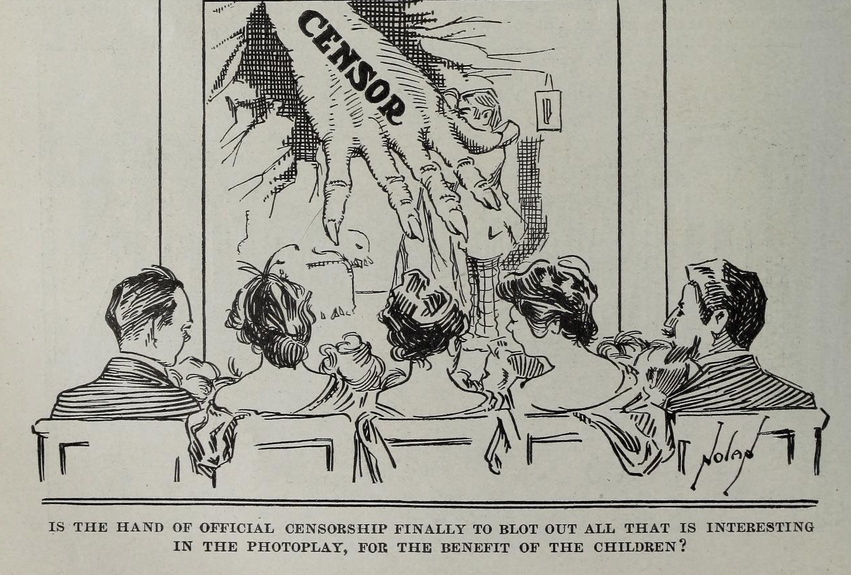
CensorCartoonMPMag14

A study in The Journal of Sex Research reinforces the libertarian view that pornography “artists”, purveyors and users should be left alone, free to engage in their private activities without censorship or harassment by the state. The study is entitled “Is Pornography Really about ‘Making Hate to Women’? Pornography Users Hold More Gender Egalitarian Attitudes Than Nonusers in a Representative American Sample“. It can be downloaded free-of-charge at the link. Here’s the abstract:

“According to radical feminist theory, pornography serves to further the subordination of women by training its users, males and females alike, to view women as little more than sex objects over whom men should have complete control. Composite variables from the General Social Survey were used to test the hypothesis that pornography users would hold attitudes that were more supportive of gender nonegalitarianism than nonusers of pornography. Results did not support hypotheses derived from radical feminist theory. Pornography users held more egalitarian attitudes—toward women in positions of power, toward women working outside the home, and toward abortion—than nonusers of pornography. Further, pornography users and pornography nonusers did not differ significantly in their attitudes toward the traditional family and in their self-identification as feminist. The results of this study suggest that pornography use may not be associated with gender nonegalitarian attitudes in a manner that is consistent with radical feminist theory.“

The study did not deal with child pornography in any way. The study focused strictly on attitudes toward women among porn users in general, attitudes that are clearly relevant to divergent opinions regarding the need for activist social policy with respect to adult pornography:

“Some clinicians, researchers, and social commentators have adopted the view that pornography can improve sexual functioning by providing frank sexual information, reducing shame and anxiety associated with sex, and invigorating libido (… citations). In contrast, others have cautioned that the use of such materials can be associated with risky sexual behavior, poor mental health and well-being, degraded relationship functioning, and, of course, sexual aggression (… citations).“

The authors, Taylor Kohuta, Jodie L. Baera and Brendan Watts, quote feminist Gail Dines as an example of the rhetoric used by porn prohibitionists:

“Porn is the most succinct and crisp deliverer of a woman-hating ideology. While we have other places that encode such an ideology, nowhere does it quite as well as porn, as this delivers messages to men’s brain via the penis—a very powerful method.“

The paper includes a lengthy review of previous research on pornography, sexual attitudes, and “non-egalitarian” attitudes toward women. Earlier research was generally based on small samples or those confined to limited demographic segments, but support for the radical feminist view was inconsistent at best.

Kohuta, et al, attempt to extend earlier work with a large sample of males and females (porn is viewed by both genders) from the General Social Survey (GSS), described in detail at the link, and a more thorough set of attitudinal measures. The five measures are listed in the abstract quoted above. In none of the five cases did the use of pornography correspond to “less egalitarian views” toward women, and in three cases it corresponded to more egalitarian views, though I’d quibble with the abortion measure, which might not be meaningful in that context.

The findings are robust to gender and run contrary to the assertions of radical feminists and other moralistic busybodies: pornography does not encourage “woman hatred” or attitudes that might lead to aggressive behavior toward women, nor is viewership of porn consistent with a predisposition toward those attitudes:

“Of the five high-powered statistical tests conducted in this study, a total of three tests indicated that individuals who had viewed a pornographic film in the past year held more egalitarian attitudes than those who had not—a pattern of results that directly contradicts the predictions generated from radical feminist theory. Of the remaining two tests, neither was statistically significant. Taken together, the results of this study fail to support the view that pornography is an efficient deliverer of ‘women-hating ideology’.

Instead of demonstrating strong associations between pornography use and support of nonegalitarianism, if anything the current findings actually suggest weak associations in the opposite direction. Compared to nonusers, participants who reported viewing a pornographic film in the previous year also reported more positive attitudes toward women in positions of power, less negative attitudes toward women in the workforce, and less negative attitudes toward abortion…. “

The authors make a strong value judgment by assuming that a favorable attitude toward abortion represents a more egalitarian attitude toward women. They rationalize this treatment by noting that radical feminists consider “reproductive autonomy” to be a critical test of gender equality. However, abortion is not always a decision made solely by the woman. Furthermore, porn viewers of either gender, and participants in recreational sex, are likely to find the idea of a pregnancy something of a buzz kill, so the attitude maybe one of convenience. More fundamentally, abortion involves the rights of a human fetus versus the right of the parent(s) to terminate the pregnancy. If one’s ethical convictions are such that the fetus’ rights are paramount, it may not reflect a non-egalitarian attitude toward women.

I find the other four attitudinal measures used in the study unobjectionable. Identification as a “feminist” might mean different things to different people, but it nearly always means a generally strong support for women’s rights. In any case, those four tests indicate no association between porn use and an attitude favoring an inferior role for women in society.

Pornography use was defined by Kohuta, et al by whether the subject admitted to viewing any X-rated film over the past year. There was no distinction between different types of porn, such as depictions of sadomasochism, violent sex, or nonconsensual sex. Therefore, the study does not address whether a taste for these forms is associated with less egalitarian attitudes toward women. Whether viewership of porn or violent forms of porn is associated with acts of aggression against women is much harder to establish. However, as a general question, the attitudes found to be associated with porn in this study suggest that users are unlikely to be inclined toward nonconsensual sex or aggression toward women.

Porn viewers obviously find the subject matter entertaining; it may appeal to their fantasies and might serve as a prelude to sex. Whether those are “prurient” interests is a subjective matter. Porn viewing is a private activity that shouldn’t matter to anyone else. Whether they admit it or not, most adults have had at least a peak at porn, perhaps unintentionally. It might have offended them, but they know how to avoid it; if they have children they should know how to utilize parental controls. I’m skeptical that it hurts anyone. Those who like it even a little bit should be able to enjoy it privately.

In 2012, Eugene Volokh wrote a practical criticism of an idea in the Republican Party platform that “current laws on all forms of pornography and obscenity need to be vigorously enforced”, as well as an earlier Bush Administration effort to crack down on porn. He concluded that such policies could have three possible outcomes:

“1) The crackdown on porn is doomed to be utterly ineffective at preventing the supposedly harmful effects of porn on its viewers, and on the viewers’ neighbors [because porn is available from many foreign and domestic sources].
2) The crackdown on porn will be made effective — by implementing a comprehensive government-mandated filtering system run by some administrative agency that constantly monitors the Net and requires private service providers to block any sites that the agency says are obscene.
3) The crackdown on porn will turn into a full-fledged War on Smut that will be made effective by prosecuting, imprisoning, and seizing the assets of porn buyers.“

Volokh’s conclusions apply to all forms of porn, not just non-violent porn. He underlines the draconian implications of attempts to censor porn:

“I’m asking: How can the government’s policy possibly achieve its stated goals, without creating an unprecedentedly intrusive censorship machinery, one that’s far, far beyond what any mainstream political figures are talking about right now?“

While Volokh does not address the question of whether porn users have a constitutional right to do so, the First Amendment should protect it as free expression. The paper discussed here implies that porn is no threat to women based on the attitudes expressed by users in the GSS. This is consistent with the libertarian principle that free people must be unencumbered by any authority in their choice of entertainment.

Rent Seeking For Social Justice At Mizzou

15 Sunday Nov 2015

Posted by Nuetzel in Education

≈ Leave a comment

Tags

Billy Donley, Columbia MO, Concerned Student 1950, Eugene Volokh, First Amendment, Forced Diversity, Free expression, Gary Pinkel, Jason Whitlock, Jonathan Butler, Legion of Black Collegians, Missouri Students Association, Mizzou, Mizzou Tigers Football, Obamacare, Payton Head, Planned Parenthood, R. Bowen Loftin, rent seeking, Tim Wolfe, University of Missouri

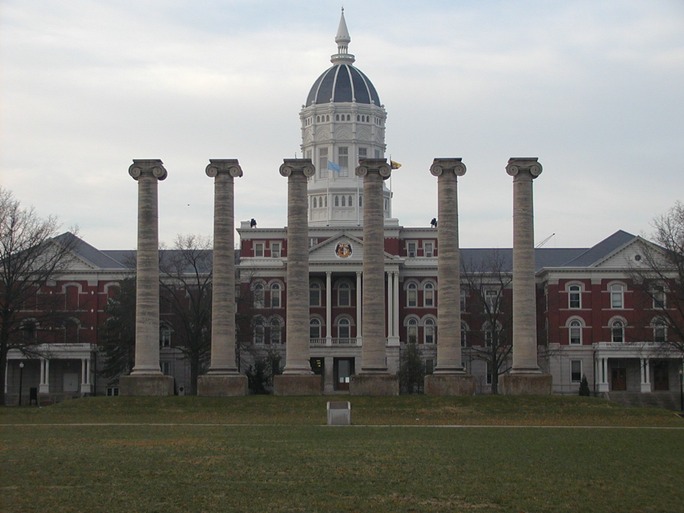
Mizzou

Pre-blog postscript: In the wake of the tumultuous week discussed below, tonight Mizzou’s football team, which has struggled on the field this year, defeated a very good squad from Brigham Young University. Despite my strong misgivings about the actions of team members last week, tonight I am very proud of Mizzou, white, black and gold. Go Tigers!

~~~~~~~~~~~~~~~~~~~~~~~~~~~~~~~~~~~~~~~~~~~~~~~~~

There is weak justification at best for the uproar over supposed racism and social injustice at Mizzou (the University of Missouri’s main campus in Columbia, MO). A protest highlighted by a hunger strike by one graduate student, a boycott by football players, and the threat of a walkout by faculty in nine academic departments led to the resignation last week of the university system’s president and the Mizzou chancellor, who were accused of inadequate sensitivity to the grievances of African-American students. The broader context for the protest is a nationwide assault on free speech, especially on college campuses, with demands for “safe spaces” and “trigger warnings” to protect students from words and acts that they might find offensive. This sensitivity is unbounded, and there is no limit to the censorship and fascism it brings forth in its proponents. From such sentiments are book-burners made.

It is a shame to see a great university like Mizzou reduced to groveling at the feet of petulant children who, ostensibly, have come to be educated, and often with financial support from the school. Full disclosure: Mizzou is my alma mater, so I am especially saddened by these developments. At the end of this post, I provide details on incidents that occurred at Mizzou over nearly three months leading up to the protest. Several of the incidents involved unproven and even false claims by the protestors.

Like it or not, speech outside the classroom by students at public universities has broad protection under the First Amendment. According to Eugene Volokh:

“Most clearly, students generally may not be expelled, suspended, or otherwise disciplined for what they say in student newspapers, at demonstrations, in out-of-class conversations, and the like… even if it’s offensive, wrongheaded, racist, contemptuous, anti-government, or anti-administration. Of course, it’s not protected from university criticism. The university is itself free to publicly speak to condemn student statements that university officials find to be unsound or improper.“

There are exceptions to this protection in the case of “fighting words” and “incitement”, but that kind of offense must be proven before an individual can be punished. It is absurd to demand that a university engage in unconstitutional restrictions on speech. Even if that were legal, it is unreasonable to expect a university to effectively police all speech on campus.

The Mizzou administration did take action this semester in the only case in which an individual engaging in racist speech was identified. The offender was intoxicated and disrupted an organization’s private rehearsal (see below). Whether he used “fighting words” is unknown, but a “conduct process” is still underway in his case. In addition, mandatory diversity training for students and faculty was announced by the chancellor in early October. It appears that the president, responsible for four campuses, may have delegated responsibility for managing the controversies in Columbia to the chancellor, but the failure of the president to respond directly was taken as dismissive. But in fact, Mizzou already had processes in place to address diversity issues, and the chancellor was active in communicating the administration’s concerns and support to minority students via social media. Still, the protestors assert that they were ignored and that no action was taken, among other falsehoods (see below).

In addition to an apology and removal of the University System president for “inaction”, the protestors demanded that the University meet a number of other conditions. These included a “racial awareness and inclusion curriculum throughout all campus departments” to be vetted by “students, staff, and faculty of color.” The protesters also demanded: “an increase the percentage of black faculty and staff campus-wide to 10%“; a 10-year strategic plan to improve retention of “marginalized students“; increased funding “for the purpose of hiring additional mental health professionals — particularly those of color“; and increased “funding and personnel for the social justice centers on campus for the purpose of hiring additional professionals, particularly those of color…”

The demands of the student protestors (and their faculty supporters) represent an exercise in rent seeking. They are attempting to commandeer resources at the cost of academic and educational efforts not explicitly dedicated to the theme of diversity and inclusion. If all of the demands are met, damage will be sustained by nearly all fields of study at Mizzou.

One of my frequent complaints about the Left is their inability to understand that rewards in a market economy are not zero-sum. Instead, they are earned by creating new value to be used in trade and enjoyed by others. The rent-seeking process disrupts that flow of benefits by using the power of government to extract resources from others for one’s private benefit, which then yields a negative-sum outcome for society. However, the resources sought by the Mizzou protestors must come from a public educational system for which funding is scarce. Funds provided to Mizzou by the state of Missouri have fallen significantly over the years, yet state law prohibits tuition increases for undergraduate residents exceeding the growth in the CPI. While the protestors might view their demands as reparation for past and ongoing injustices, many are already subsidized by an institution of higher learning that is strapped, and one that is already at their disposal for purposes of building their human capital. They should avail themselves of that opportunity so they can use that capital later in positive sum activities.

I also think the protests at Mizzou are symptomatic of misplaced priorities on the Left. I highly recommend this excellent essay by Jason Whitlock, an African-American sports journalist who notes that the protests at Mizzou have been given rapt attention by the Left, while the far more serious problem of black-on-black violence receives proportionately little play.

Much like other demands for “social justice”, the Mizzou protestors do not recognize the counterproductive nature of their activities and the measures they advocate. Merit will always be relied upon as as a standard by which people judge others. In a market system, it is a fairly objective standard at that. To a truly neutral observer, diversity is fine, but it is beside the point, and forced diversity often leads to suspicions of unfair play and resentment.

I find the attitude of the protestors appalling on several levels: the lies and the rent-seeking behavior, the damage they will inflict on Mizzou and their fellow students, and their rejection of good-faith efforts to address their concerns. To cap it all off, please read the childish posts shown in this article, in which the Mizzou protestors selfishly complain that the terrorist attacks in Paris have taken attention away from them, going so far as to characterize as “racist” the relative balance of coverage. Simply disgusting!

Sadly, there have been threats of violence on campus in the wake of recent developments. This week, a white teen in Rolla, Missouri, 100 miles from Columbia, was arrested and is being held without bond for making posts on social media that threatened black students at Mizzou. At the same time, hostility and threats toward campus greeks led to a lock-down at fraternities and sororities. As to racism, there is no doubt that it exists, but Mizzou is not exceptional in that regard. On campus, I believe that more racial tension is borne out of agitation from protestors than by any racist sentiments held by others. When the protestors acknowledge examples of apparently neutral, non-racist behavior by others, they insist that the racism they are fighting at Mizzou is systemic. Appeasing these complainants requires a ongoing series of reparations in the form of financial support, control over hiring, quotas and mandatory indoctrination. But here’s a clue: the social justice rap will never win the rewards and respect that arise naturally from hard work.

MIZ – ZOU!

~~~~~~~~~~~~~~~~~~~~~~~~~~~~~~~~~~~~~~~~~~~~~~~~~

Here are key events or claims that led up to the present brouhaha at Mizzou, along with my editorial comments:

August 14: The university announced that it would no longer offer direct subsidies to graduate assistants for the purchase of health insurance. The reason? Obamacare prohibits the kind of low-cost, “individual market” policies (per IRS interpretation) offered by many schools. Mizzou, however, promised to provide a one-time fellowship to cover the economic loss suffered by grad students in the fall semester. When students threatened a walk-out, the university reinstated the subsidies, but with the proviso that a later review would be necessary. This incident had nothing to do with racism, but it inflamed passions. An African-Americam grad student named Jonathan Butler was very upset, even though his family is quite affluent and more than capable of affording his coverage.

August – September 2015: Mizzou cancelled contracts with Planned Parenthood (PP) clinics in the wake of the release of videos showing PP officials discussing the sale of fetal “tissue”. There was pressure on the school’s administration to cut ties with PP and revoke the “refer and follow” privileges of an abortion surgeon from St. Louis. These developments were very upsetting to the campus Left, and while gender-equality activists probably thought they had a legitimate gripe, the action should not be conflated with racism. Nevertheless, Jonathan Butler listed this issue as one of his grievances, and it helped to broaden support for his cause among the student Left.

October 3: The President of the Missouri Student Association, Payton Head, claimed that several men riding in the back of a pickup truck screamed racial slurs as he walked across campus. That is awful, but unless he can identify the individuals or the truck, nothing can be done about that particular incident. It was featured in Butler’s grievance letter to the university. Presumably, the school needs to racially-sensitize anyone with access to campus.

October 6: A white student, apparently drunk, interrupts a rehearsal of the Royalty Court of the Legion of Black Collegians with racial epithets. The student was identified the next day and removed from campus by the Office of Student Conduct pending the outcome of an ongoing disciplinary procedure.

October 10: The Homecoming parade is interrupted when University System President Tim Wolfe’s car is surrounded by students from an organization called Concerned Student 1950. (1950 was the first year that black students were admitted to Mizzou.) Wolfe instructs his driver to back away from the students. With more space between the car and the protestors, the driver attempts to proceed slowly to the right around the group. In this video, Jonathan Butler can then be seen rushing toward the moving car and planting his knees into the bumper. He later accused Wolfe and his driver of running into him. As the narrator on the video states, if this were an insurance case, that sort of fraud might get Butler arrested. After a short blank segment on the video, a so-called “townie” and a few other Mizzou football fans step forward to act as a barrier between Wolfe’s car and the protesters. Ultimately, Wolfe asked police to remove the protestors from the parade route. That was characterized as evidence of neglect on Wolfe’s part. Andrew McCarthy notes the following about Jonathon Butler:

“By the way, the racism is apparently so bad at Mizzou that Mr. Butler has chosen to pursue his Master’s degree (in education) there after attending the university as an undergraduate. Now in his eighth year at Mizzou, he hopes, according to NBC News, ‘to become an advocate and ‘social entrepreneur.””

October 24, 2015: Human feces is discovered on the floor of a restroom in a university residence hall; it had been used to smear a swastika on the wall. This is now confirmed by a campus police report, though no photographs of the “poop swastika” have been produced. (Apparently, a one-year-old photo of similar graffiti was circulated by protestors). The “poopetrator” has not been identified. The act could have been inspired by anti-Semitism, white supremism, simple pranksterism (albeit viciously expressed) , or quite possibly fraudulent agitation meant to incite fears on campus. The incident really did incite fears when it was communicated on social media by Residence Halls Association President Billy Donley. The poop swastika was taken as additional evidence of a bad racial climate at Mizzou, though the affair is suspect.

November 3: Butler begins a hunger strike in an impromptu “tent city” on campus. A student boycott of classes is announced the next day. I have strong doubts about Butler’s credibility (see below) and whether the hunger strike was authentic. He did not look or act like a hungry man before he ate his first post-strike sandwich, but I could be wrong.

November 8: Black football players announce their support of Butler by refusing to practice or play until President Wolfe apologizes and resigns. The next day, Coach Gary Pinkel tweets his support for the black players, and the athletic director agrees. Many of the white players also express support for the player boycott by appearing in a group photo, but it has been reported that not all of them agreed. (I personally believe that the whole lot of the boycotters were played by Butler and his organization.) On November 13, Coach Pinkel resigns, effective December 31, but the reason is a recent diagnosis of non-Hodgkins lymphoma (non-fatal). Some things are simply more important than in-fighting at the university. Coach Pinkel’s announcement, as sad as it is, may well help to defuse the immediate tensions.

November 10: President Wolfe and Chancellor R. Bowen Loftin resign. Butler ends his hunger strike with a sandwich as his friends urge him on with the expression “Yay N—–“, an utterance that may strike some as hypocritical. The football player boycott ends the next day.

On the evening of November 10 at about 11 p.m., Payton Head, the student body president, posted the following on Facebook:

“Students please take precaution. Stay away from windows in residence halls. The KKK has been confirmed to be cited on campus. I’m working with the MUPD, the state trooper [sic], and the National Guard.“

The news spread quickly. Head deleted the post by 11:30 and later apologized and accepted blame for spreading false information. Good for his accountability. His advice at that time was to trust only the @MUalert system, which had posted: “There is no immediate threat to campus. Please do not spread rumors…” 19 minutes before Head’s KKK post.

← Older posts
Newer posts →
Follow Sacred Cow Chips on WordPress.com

Recent Posts

  • The Case Against Interest On Reserves
  • Immigration and Merit As Fiscal Propositions
  • Tariff “Dividend” From An Indigent State
  • Almost Looks Like the Fed Has a 3% Inflation Target
  • Government Malpractice Breeds Health Care Havoc

Archives

  • January 2026
  • December 2025
  • November 2025
  • October 2025
  • September 2025
  • August 2025
  • July 2025
  • June 2025
  • May 2025
  • April 2025
  • March 2025
  • February 2025
  • January 2025
  • December 2024
  • November 2024
  • October 2024
  • September 2024
  • August 2024
  • July 2024
  • June 2024
  • May 2024
  • April 2024
  • March 2024
  • February 2024
  • January 2024
  • December 2023
  • November 2023
  • August 2023
  • July 2023
  • June 2023
  • May 2023
  • April 2023
  • March 2023
  • February 2023
  • January 2023
  • December 2022
  • November 2022
  • October 2022
  • September 2022
  • August 2022
  • July 2022
  • June 2022
  • May 2022
  • April 2022
  • March 2022
  • February 2022
  • January 2022
  • December 2021
  • November 2021
  • October 2021
  • September 2021
  • August 2021
  • July 2021
  • June 2021
  • May 2021
  • April 2021
  • March 2021
  • February 2021
  • January 2021
  • December 2020
  • November 2020
  • October 2020
  • September 2020
  • August 2020
  • July 2020
  • June 2020
  • May 2020
  • April 2020
  • March 2020
  • February 2020
  • January 2020
  • December 2019
  • November 2019
  • October 2019
  • September 2019
  • August 2019
  • July 2019
  • June 2019
  • May 2019
  • April 2019
  • March 2019
  • February 2019
  • January 2019
  • December 2018
  • November 2018
  • October 2018
  • September 2018
  • August 2018
  • July 2018
  • June 2018
  • May 2018
  • April 2018
  • March 2018
  • February 2018
  • January 2018
  • December 2017
  • November 2017
  • October 2017
  • September 2017
  • August 2017
  • July 2017
  • June 2017
  • May 2017
  • April 2017
  • March 2017
  • February 2017
  • January 2017
  • December 2016
  • November 2016
  • October 2016
  • September 2016
  • August 2016
  • July 2016
  • June 2016
  • May 2016
  • April 2016
  • March 2016
  • February 2016
  • January 2016
  • December 2015
  • November 2015
  • October 2015
  • September 2015
  • August 2015
  • July 2015
  • June 2015
  • May 2015
  • April 2015
  • March 2015
  • February 2015
  • January 2015
  • December 2014
  • November 2014
  • October 2014
  • September 2014
  • August 2014
  • July 2014
  • June 2014
  • May 2014
  • April 2014
  • March 2014

Blogs I Follow

  • Passive Income Kickstart
  • OnlyFinance.net
  • TLC Cholesterol
  • Nintil
  • kendunning.net
  • DCWhispers.com
  • Hoong-Wai in the UK
  • Marginal REVOLUTION
  • Stlouis
  • Watts Up With That?
  • Aussie Nationalist Blog
  • American Elephants
  • The View from Alexandria
  • The Gymnasium
  • A Force for Good
  • Notes On Liberty
  • troymo
  • SUNDAY BLOG Stephanie Sievers
  • Miss Lou Acquiring Lore
  • Your Well Wisher Program
  • Objectivism In Depth
  • RobotEnomics
  • Orderstatistic
  • Paradigm Library
  • Scattered Showers and Quicksand

Blog at WordPress.com.

Passive Income Kickstart

OnlyFinance.net

TLC Cholesterol

Nintil

To estimate, compare, distinguish, discuss, and trace to its principal sources everything

kendunning.net

The Future is Ours to Create

DCWhispers.com

Hoong-Wai in the UK

A Commonwealth immigrant's perspective on the UK's public arena.

Marginal REVOLUTION

Small Steps Toward A Much Better World

Stlouis

Watts Up With That?

The world's most viewed site on global warming and climate change

Aussie Nationalist Blog

Commentary from a Paleoconservative and Nationalist perspective

American Elephants

Defending Life, Liberty and the Pursuit of Happiness

The View from Alexandria

In advanced civilizations the period loosely called Alexandrian is usually associated with flexible morals, perfunctory religion, populist standards and cosmopolitan tastes, feminism, exotic cults, and the rapid turnover of high and low fads---in short, a falling away (which is all that decadence means) from the strictness of traditional rules, embodied in character and inforced from within. -- Jacques Barzun

The Gymnasium

A place for reason, politics, economics, and faith steeped in the classical liberal tradition

A Force for Good

How economics, morality, and markets combine

Notes On Liberty

Spontaneous thoughts on a humble creed

troymo

SUNDAY BLOG Stephanie Sievers

Escaping the everyday life with photographs from my travels

Miss Lou Acquiring Lore

Gallery of Life...

Your Well Wisher Program

Attempt to solve commonly known problems…

Objectivism In Depth

Exploring Ayn Rand's revolutionary philosophy.

RobotEnomics

(A)n (I)ntelligent Future

Orderstatistic

Economics, chess and anything else on my mind.

Paradigm Library

OODA Looping

Scattered Showers and Quicksand

Musings on science, investing, finance, economics, politics, and probably fly fishing.

  • Subscribe Subscribed
    • Sacred Cow Chips
    • Join 128 other subscribers
    • Already have a WordPress.com account? Log in now.
    • Sacred Cow Chips
    • Subscribe Subscribed
    • Sign up
    • Log in
    • Report this content
    • View site in Reader
    • Manage subscriptions
    • Collapse this bar
 

Loading Comments...