Lately almost any passing weather phenomenon is said to have been rooted in climate change and higher carbon concentrations. The recent heatwaves that seared parts of Europe and the U.S. are no exception, and climate change activists always find heat spells ripe for rhetorical exploitation. But while these would-be Cassandras and Gretas push their fearful narrative, there are strong reasons to doubt that these weather events are any cause for alarm. This summer’s heat waves, like all others, were of limited geographic scope, and they certainly weren’t the most severe heat waves on record in terms of either duration or magnitude. More on that below.
Data Problems
Temperature measurements tend to be exaggerated these days because so many “official” temperature records come from local airports or other urban sites rich in impervious cover and heat absorbing building materials. This gives rise to the so-called “urban heat island effect”, which refers to the elevated temperatures measured in urban versus rural areas. It’s even worse than that, however, as the vast majority of active weather stations in the U.S. are sited at “hot spots”, and many of them are poorly maintained. Data problems plague European temperature records as well.
Furthermore, official temperature records are extremely short on climatological scales, going back only about 150 years in the U.S. And these records have been “adjusted” by weather authorities like the National Oceanographic and Atmospheric Administration (NOAA), usually with the early records “cooled” relative to more recent readings. That means the long-term trend in temperatures is biased upward.
Climate Catastrophists
Nevertheless, Joe Biden has been threatening to declare a wholly unjustified “climate emergency“, perhaps thinking these dog days are the perfect time to assume a host of new emergency powers. It’s unclear whether the new “Build Back” bill making its way through Congress will be enough to satisfy the appetite of Biden’s handlers for costly and ultimately ineffective climate measures.
It’s tempting to think delirium from the heat waves is what prompted Al Gore to compare climate change skeptics to the dithering police officers in Uvalde, TX, but Gore’s fever is nothing new. We’re still waiting for the world to end, which he once predicted would occur by 2016.
Even weather reporters on TV are breathless in their descriptions of the heatwaves. They’ve certainly become dramatists for the climate-change cause. And people love good scare stories. It gives them an excuse to polish up their pitchforks! Or to be lazy and stay inside. It’s telling that so many people now quote heat index values (which combine heat and humidity), rather than actual temperatures, in the warm summer months. After all, it’s more thrilling to say it’s 105 outside than it is to say 95.
Anyway, compare the paired maps in each of the graphics below (here are links to sources for the first and second):
The temperatures are comparable, but the use of RED colors on the 2022 maps is so much more frightening!This post from Anthony Watts provides a list of links to news sources taking alarmist perspectives on the heatwaves in the U.S. and Europe, and falsely attributing the heatwaves to CO2.
Same Old High Pressure Domes
Cliff Mass offers a bone to the climate change community. He thinks perhaps 5% – 10% of the recent temperature anomaly in the UK is attributable to greenhouse gases. An effect of that magnitude is hardly worthy of government action, let alone panic. Mass says:
“Natural variability of the atmosphere was the proximate cause of the warmth and does not represent an existential threat to the population of Europe.”
The heat wave phenomenon is typical of slow-moving high-pressure systems that often develop during the summer months. These domes of high pressure vary in temperature and geographic breadth, and they are sandwiched between or adjacent to low-pressure systems with cooler temperatures. That’s been the case in both Europe and the U.S. during this summer’s heat waves, as illustrated by the following graphics, The northern hemisphere is not entirely enveloped in a heat wave.
And the rest of the globe? In the tropics (below 20 degrees latitude), June 2022 was the coolest June in 22 years, according to satellite temperature readings! Furthermore, the monthly anomaly in June was the coolest in 10 years. In the Southern Hemisphere, Australia and South America have had extremely cold winters. Antarctica had its coldest winter on record in 2021. Yet Joe Biden is under the misapprehension that we’re experiencing “a climate emergency”.
These are not the worst heat waves on record. Both the U.S. and Europe experienced higher temperatures and prolonged heat waves during the 1930s. For example, St.Louis, Missouri matched or exceeded 110 degrees four times in the 1930s, and twice in 1954, whereas the city topped out at 102 so far this year, and that was after a cool spring. There was an extreme European heat wave in 1976 that was drier and much lengthier, and others occurred in 1911 and 1906. Of course, available temperature comparisons are distorted because the early readings weren’t as impacted by urban heat islands. There are historical accounts of drastic heat waves much earlier, such as the 1500s and 1700s. Here is more heatwave history, in case you’re interested.
We’ll Be Fine
Heat isn’t the only story, of course. A wide range of other disastrous events are blamed on climate change. Wildfires are a prime example, but as we know, wildfires are not new, and the worst wildfires have more to do with poor forest management than anything else. Likewise, there is little if any association between extreme weather events and climate change. In that context, it’s also worth noting that cold weather is much deadlier than hot weather. The climate today, and going forward, presents far fewer dangers to humanity than in the past.
I did a lot of dirty, outdoor work in my youth, and it was hot! There were times just as hot as this summer, if not worse, I’d venture to say. Anyone old enough to have lived through the 1970s or even the 1950s should recognize the heatwave Chicken Littles as such.
When so-called “stakeholders” are in charge of a company, or when non-owner “stakeholders” receive deference to their various goals from management, the actual owners have been displaced and no longer have control. That represents a kind of taking in which managers are complicit, failing to keep proper vigilance in their duty to maximize value for shareholders.
Ceding control to stakeholders represents a severe dislocation in the principle-agent relationship between owners and corporate management. Virginia Postrel is on-point in her discussion of the failures of “stakeholder capitalism”, but she might as well just say that it isn’t capitalism at all! And she’d be right!
Stakeholder capitalism represents a “theory” of the firm that accepts an array of different goals that often stand in conflict. This is the key point raised by Postrel. She cites Michael C. Jenner’s 2010 paper on stakeholder theory in which he notes the impossibility of maximizing any single-valued objective in the presence of a multi-dimensional corporate objective function. Thus, stakeholder objectives nearly always subvert management’s most important responsibility: maximizing value for owners.
And just who are these “stakeholders”? The designation potentially includes just about anyone and everyone: managers, customers and potential customers, suppliers and potential suppliers, employees, the pool of potential job applicants, union organizers, regulators, community members and organizations, local governing bodies, “underserved” populations, anyone with a grievance, environmental activists, and the children of tomorrow. Sure, owners are part of the broad set of stakeholders as well, but as Jenner more or less noted, who’s got time to maximize profits in the face of the myriad “claims” on company resources by the larger, blood-sucking hoard?
George Will aptly refers to stakeholder capitalism as “parasitic progressivism”. In fact, in his opening sentence, he notes that the very term “stakeholder” is a form of semantic infiltration, whereby the innocent (and ignorant) adoption of the term is a gateway to accepting the agenda. Will also notes that management deference to stakeholders violates fiduciary laws intended to protect owners, which include worker pensions and 401(k)s, as well as small investor IRAs, charitable organizations, and insurance companies funding life insurance policies and annuities.
This behavior is not merely parasitic — it is truly vampiric. Once bitten by the woke zombie corpses of stakeholder capitalism, either from within the organization or without, the curse of this deadly economic philosophy spreads. Human resource organizations impose diversity, equity, and inclusion training, rules, and hiring practices on operations. Suppliers might be imposed upon to not only deliver valued inputs, but to do so in a way that pleases multiple stakeholders. Woke fund managers, upon whom the firm might rely for capital, will insist on actions that promote social and environmental “justice”. It can go on and on, and no amount of appeasement is ever sufficient.
Unfortunately, there really are activist investors — actual stockholders — who encourage this misguided philosophy. If the majority of a firm’s owners wish to be accountable to the whims of particular non-owner stakeholders, that’s their right. Other investors would be wise to sell their shares… fast! Wastrels and incompetents have blown many a great and small fortune over the years, but capital markets are well-equipped to punish them, and eventually they will. Get woke, go broke!
The best way for a firm to maximize its contribution to society is to do its job well. That task involves producing a good or service that is valued by customers. By doing it well and efficiently, shareholders, customers, employees and society all win. This is the magic of mutually beneficial trade! Produce something that customers value highly while being mindful of tradeoffs that allow resource costs to be minimized. In general, the customers extract surplus value; shareholders extract surplus value; suppliers extract surplus value; and employees extract a surplus value because they receive wages at least as high as the lowest “reservation” wages they’d find acceptable. Here are some comments from Don Boudreaux on this general point:
“… regardless of how well or poorly managers are at running their companies in ways that maximize share values, there’s every reason to believe that managers will be much less competent at running their companies in ways that adequately satisfy ‘stakeholder’ interests. Not only is the definition of ‘stakeholder’ inherently open-ended and ambiguous, even the most skilled managers have no way to know how to trade-off the well-being of one set of ‘stakeholders’ for that of another set.”
This is very nearly a restatement of Jenner’s conclusion, but Jenner’s applies even when managers know specifics about the tradeoffs. Generally they don’t! Remember too that the firm, its shareholders, suppliers, and its employees are all subject to taxes on their surplus values, so their contribution to society exceeds their own gain. Moreover, many firms are already regulated precisely because lawmakers believe government has an interest in protecting larger classes of “stakeholders”. But beyond meeting regulatory requirements, to further insist that firms devote less than their remaining energies and resources to doing their jobs well, and to ask them to focus instead on the varied interests of external parties, whomever they might be, is ultimately a prescription for social harm.
A monster child of stakeholder theory is so-called ESG scoring. ESG stands for Environmental, Social, and Governance, and the scores are intended as “grades” for how well a firm is addressing these concerns. Proponents claim that high ESG’s are predictive of future returns, but that’s true only if lawmakers and regulators look upon these firms with favor and upon others with disfavor. ESG is basically a political tool. Otherwise, it is an economically illiterate notion foisted upon investors by political activists embedded in “woke” financial institutions like Blackrock and Bank of America. There be some real vampires! As David Henderson and Marc Joffe write, ESG fuels higher prices and obstructs economic growth. That’s because it formalizes the effort to serve “stakeholders”, thus raising the cost of actually producing and delivering the good or service one naturally presumes to be the firm’s primary mission. The shareholders pay the cost, as do customers and employees.
When I hear business people talk reverently about serving their “stakeholders” (and when I hear naive investment advisors wax glowingly about ESG scores), it sends up huge red flags. These individuals have lost sight of their valid objectives. They should be trying to run a business, not serving as a grab-bag for other interests. Serve your customers well and efficiently so as to maximize value for shareholders. Do so within the bounds of the law and ethics, but stick to your business mission and the parties to whom you are ultimately accountable!
Inflation accelerated at the consumer level in June and the advances continued to broaden. That’s confirmed by the median item in the Consumer Price Index (CPI) and a measure of the CPI that “trims” out items with the largest and smallest price hikes (see chart above from the Cleveland Fed). Wholesale inflation also picked up in June. At this point, there’s a very real danger that increasing expectations of future inflation are getting embedded into current pricing decisions. Once that happens, the cycle is very hard to break. And wage rates are not keeping pace, so inflation is reducing real incomes for many workers. The sad fact is that inflation takes its greatest toll on the well being of low income earners.
And why did inflation accelerate from 1.4% in January 2021 to 9.2% in June? Don’t ask Joe Biden, at least not if you want a straight answer. He’s been changing his tune almost every month, with a rotating cast of the characters coming in for blame. First, the story was that higher inflation was just transitory; then too, the Administration said it only hurt the rich, a wholly preposterous assertion; the blame then shifted to the oil companies; then to Putin; and then big corporations generally; more recently, it’s independent gas retailers! Nothing is said about Biden’s early pledge to shut down fossil fuels. Nothing is said about the federal government’s profligate spending and the money printing that paid for it. Nothing is said about the extended payment of unemployment benefits, which pinched labor supply. More generally, nothing is said about the extension of Biden’s pandemic emergency powers, which allows continued Medicaid and food stamp benefits to many who are otherwise ineligible. The federal spigot has been wide open!
So here’s a quick synopsis of events leading to our inflationary surge: demand strengthened as pandemic restrictions were lifted across the country. Unfortunately, businesses were not ready to meet that level of demand. Operations had been sharply curtailed during the pandemic all along business supply chains. Hiring staff was next to impossible for many firms, especially given the Biden Administration’s ineptitude with respect to labor incentives. The Administration also set out to starve the fossil fuel industry of capital and to shut down drilling and refining operations through restrictions and binding regulations. The price of oil began to soar early in the Administration, which has been working its way into the prices of other goods and services, including food and transportation. Reinforcing these ill effects was the broader regulatory onslaught instigated at many agencies by Biden, actions which tend to increase costs while limiting competition in many industries.
Most of the factors just listed were limitations on supply. However, the price pressure was accelerated on the demand side by government stimulus payments. And in fact, none of this inflation would be sustainable without easy monetary policy — and monetization of government debt.
Later, of course, Vladimir Putin’s invasion of Ukraine exacerbated worldwide energy and food shortages. Meanwhile, Democrat efforts to push through additional social spending, née “infrastructure”, were unrelenting. They are still pushing for more climate change regulation, not to mention funding “investments” intended to improve the “equity” of highways! Thank God for Joe Manchin for shutting it down, though even he seems intent on imposing drug price controls. Biden now says he’ll impose green energy policy via executive order.
Until about March of this year, Federal Reserve policy remained extremely accommodative, despite the central bank having completely missed its so-called inflation target rate of 2% well before that. Take another look at the chart at the top of this post. CPI inflation shot above 2% in early 2021. The Fed did not really react until March 2022. The chart below shows that growth in the GDP deflator was slightly more muted than the CPI, but it too was above 2% in the first quarter of 2021 and accelerated from there. It’s as if there had been no Fed target at all!
The story, again, was “not to worry, it’s transitory”. Moreover, the Fed was convinced the inflation was driven entirely by supply problems. In fairness, it’s true that tighter monetary policy won’t stop inflation from supply shocks without great cost in terms of lost output. But monetary accommodation, which is what happened in 2021, simply validates inflation and runs the risk of allowing inflation expectations to become embedded in pricing. And again, that’s hard to undo.
Despite the dominance of supply-side inflation pressures early in 2021, it’s no wonder that a different kind of pressure has cropped up since then. The following chart from David Beckworth is helpful:
We now have primarily demand-side inflation fueled by the earlier accommodation of supply constraints and the monetization of government deficits. Sure, there remain significant supply constraints, whether induced by the actions of Russia, Biden, or lingering pandemic dysfunctions. But supply-side inflation cannot sustain without monetary accommodation. An early reading for the second-quarter GDP deflator will be available in late July, but it may well show accelerating pressures from both the demand side and the supply side.
There is no way to eliminate the inflation surge without curtailing the growth of liquidity. Unfortunately, the risk that monetary tightening by the Fed will induce a recession is already very high, even a likelihood at this point. A fairly reliable signal of recession is an inversion of the yield curve, and we now see two-year Treasury debt yielding 15 – 20 basis points more than 10-year bonds. Again, real wages are declining. Real retail sales are down two months in a row and down from a year ago. Here’s a chart showing the most recent dismal reading on the index of consumer sentiment:
Whether a recession has already begun is not clear, but inflation certainly hasn’t abated, and the Fed is expected to continue tightening, albeit belatedly. Meanwhile, the Biden Administration and key Democrats don’t seem to want to make the Fed’s job any easier. They simply don’t comprehend the reality and their role in fostering the upward price trends we’re experiencing. They still cling to hopes of another big spending package that would add to deficits and the inflation tax, despite contemplating tax hikes on private employers, but so far Manchin has put the kabash on that. Still, we’re nowhere close to putting our fiscal and monetary houses in order.
It goes without saying that the legal profession played a huge role in the development and growth of the administrative state. I reviewed some history about that growth in my last post, which dealt primarily with the Supreme Court’s recent ruling in West Virginia v. EPA. It’s certainly clear that courtrooms have served as venues for many of the steps in creating the federal Leviathan we know too well today. So has a large representation of attorneys in Congress. Environmental law? Tax law? Antitrust? Labor law? Civil Rights? Bank regulation? The examples and sub-examples are numerous, and while all might have laudable dimensions, there is no question that all present lucrative opportunities for attorneys… and for manipulative abuses. The burgeoning domain of administrative law enforced and adjudicated by federal agencies was itself a by-product of growth in the array of economic and social regulation, and it too was abetted by the legal profession. Moreover, it’s not inaccurate to say that the active rent-seeking efforts of private special interests, which undergird the “demand” for public intervention and regulation, are likely as not to have been spearheaded by corporate legal departments.
Ex post losses of various kinds are effective drivers of public intervention. Obviously, trial attorneys seek redress against various harms to clients who come their way, and they manage to stretch monetary damages to absurd levels. Public intervention, however, often takes the form of ex ante risk avoidance, and attorneys frequently take lead roles in agitating for ever-greater precautions against risk. A key characteristic of these measures is that they tend to be zero- and even negative-sum in nature. That is, in this kind of world, it is not atypical for one person’s gain to be less than another’s loss. This dynamic creates a formidable obstacle to economic growth.
“Since the birth of the modern regulatory state, lawyers are no longer primarily the allies of commercial classes, as they were in the early republic, but instead the technocrats and enablers of regulation and redistribution. The more the nation intervenes in economic affairs to regulate and redistribute, the greater slice of compliance costs and transfer payments lawyers can expect to receive. Thus, they cannot be counted on as supporters of property rights or even of a stable rule of law. Their interest lies frequently in dynamic forms of legal transformation and the uncertainty they bring. Far from supporting a sound, established social order, they are likely to seek to undermine it.”
McGinnis highlights the legal profession’s remarkable transition from once-active guardians of personal liberty, property rights, and the rule of law to active agitators for a nation grounded in non-productive rent seeking. The populist penchant for “do-something-ism” in response to every perceived risk, injustice, or grievance plays right into their skill set. And there are vast opportunities for attorneys in regulatory and fiscal matters. Compliance and legal work-arounds are enormously profitable to attorneys, to say nothing of the many forms of litigation. In all cases, one might say, “follow the fees”.
This is not exclusively a pecuniary matter, however. It’s also one of raw political ambition and status. A spectacular and perverse phenomenon has been the legal profession’s agitation for dismantling the rule of law, denying certain rights enumerated in the Constitution (e.g., free speech, gun rights) and insisting upon the enforcement of imagined rights through novel interpretations of the Bill of Rights and its amendments (e.g, guaranteed income, “equity”), even so-called rights and demands involving demonstrable harm to others (reparations, no bail laws, abortion).
Here’s McGinnis on the legal profession’s nearly complete sellout of the original text of the Constitution:
“Under living constitutionalism, lawyers and judges are not simply servants of the law but potentially tribunes of the people, because they can choose to create new rights and discard others. In a legal world without the formal anchoring in text and precedents that characterized the lawyer’s craft of the past, innovation and, indeed, radicalism are prized as sources of power.”
Legal “Realism”
There are other dimensions to the aberrant drift in the interests of the mainstream legal profession. Over 20 years ago, Mark Pulliam discussed some of these issues in “The Lawyer’s War on Law”. In that article, he decried so-called “legal realism”, which elevates prevailing attitudes about social policy and justice over legal formalism and originalism. This philosophy is used to justify what amounts to predation among trial lawyers seeking to smear the defense, especially those who suffer from unpopularity among current elites or the media. Gone is the idea of fighting for what is right under the law; instead the goal is to “win at all costs”. Here is Pulliam on this phenomenon:
“… lawsuits succeed without credible proof of injury or causation–‘junk science’ experts, paid by the hour, provide whatever pretext a jury requires–because of a combination of judge-made liability rules that tilt the playing field in favor of plaintiffs’ gripes, trial judges determined to redistribute wealth, and the brute force of endless dishonest lawsuits that seek unlimited, bankruptcy-threatening damages. Many businesses, having lost faith in courts’ ability or willingness to make rational rulings, routinely pay the equivalent of ransom just to escape the system. Most ominously, the trial lawyers have recently joined forces with state and local governments to loot unpopular industries for political purposes. Litigation is no longer just a way to bilk opponents; it is a political weapon.”
The legal realist school of thought is used as a ready excuse for nearly any form of judicial activism, including nullification of controlling statutes in election procedures, allowing lawyers and judges to run elections.
Pro Bono Subversion
More recently, Pulliam provided another example of a perverse activity sponsored by the legal profession, and in particular large law firms. In “Lawyers Cause Homelessness”, he discusses pro bono litigation and its paradoxical harms. Of course, pro bono work sounds so very good and generous. And, in fact, it can be very nice, as when attorneys offer free legal advice to those who cannot otherwise afford it. However, it is not uncommon to see these efforts used in the service of political activism. Pulliam contends that prestigious law firms use pro bono litigation as an inducement to attract young associates, fresh out of law school and full of the social justice blather taught there. How exciting to be offered a position at an elite firm with the opportunity to work on activist causes!
The case used by Pulliam to illustrate this dynamic is Martin v. Boise, decided by the Ninth Circuit Court in 2018, which he describes thusly:
“Martin v. Boise … declared unconstitutional—as ‘cruel and unusual punishment,’ of all things—any city ordinances that prohibit homeless people from sleeping or camping overnight on public property (such as parks, sidewalks, and, in California, beaches) unless the jurisdiction provides enough shelter beds to house every single ‘person experiencing homelessness,’ a burden no city will ever be able to meet. …
With a wave of the activist wand, the Ninth Circuit relieved vagrants of any responsibility to provide their own shelter. Society has this duty, and it must accept the consequences of its failure to provide cradle-to-grave care, no matter how improvident the lifestyle decisions of individual actors. In one fell swoop, in the absence of any relevant Supreme Court precedent, three unelected judges on the Ninth Circuit rendered more than 1,600 municipalities within the court’s jurisdiction powerless to curb urban homeless encampments.”
According to Pulliam, the Washington DC law firm Latham and Watkins dedicated more than 7,000 hours of attorney time to the case:
“Latham … publicly bragged about its ‘major Ninth Circuit victory’ and was honored for it by the Legal Services Corporation’s Board of Directors with a Pro Bono Service Award.”
This is a stark illustration of the depths of activism to which the legal profession has descended. And the case is hardly unique, as Pulliam goes on to illustrate. Despite the literal meaning of the term pro bono, this kind of activity is anything but for “the public good”.
Conclusion
Who really benefits from the kind of legalistic mayhem we see today? The written words of the Constitution are now said to mean things that are often diametrically opposed to the framers’ intent. The federal government absorbs ever greater shares of the nation’s resources. Private parties use federal power to petition for rents that could never have been gained in private markets. Laws are made by federal agencies who, in turn, internally adjudicate disputes between those very agencies and private parties. Litigation runs rampant in search of deep pockets. And elite law firms are somehow deemed praiseworthy for working to undermine safety, cleanliness, property rights, and the enumerated rights guaranteed under the Constitution.
Who benefits? Perhaps most of all it is the attorneys! The more chaotic, the better! Then again, if you’re at risk of legal trouble, you better damn well consult an attorney. We can’t seem to live without lawyers, but sadly, we can’t live free with them.
The Supreme Court’s regular docket is done for the year, but one of last week’s rulings is of great interest to those concerned about the constitutional threat posed by the administrative state. In West Virginia v. EPA, the Court held that the Clean Air Act of 1970 does not authorize the EPA to regulate carbon emissions in power generation. Well, that’s getting to be a very old statute and no one thought much about carbon dioxide emissions when it became law, so of course it doesn’t! However, this decision is crucial as a check on the ever-growing, extra-legal power of the administrative bureaucracy. I say “extra-legal” because regulatory agencies are increasingly taking it upon themselves to write rules that reach well beyond their legislative mandates. Only the legislature can make law under our system of government, or at least law that settles “major questions”, a doctrine that the Court has applied in this case.
Consequential Side Issues
While many critics of the West Virginia decision might find this hard to believe, it has nothing to do with the Court’s views about the prospects for climate change. That is not the Court’s job and it knows it, or at least most of the justices know it. Even if climate change poses a real threat of global catastrophe, and it does not, that is not the Court’s job. Its primary function is to preserve constitutional law, and that is what this decision is about. (For more on the folly of climate alarmism, see here, here, and here.)
Apart from its constitutional implications, growth in the number of regulatory rules and their complexity also imposes massive costs on the economy, robbing the private sector of productive opportunities, often with little or no demonstrable public benefit. The unbridled promulgation of rules does, however, benefit special interests. That includes bureaucrats, litigators, and private parties who derive side benefits from regulation, such as protection of monopoly status, competitive advantages, and expanded professional opportunities. Leveraging government and political privilege for private benefit is rent seeking at its very heart, and it’s also at the very heart of fascistic corporatism.
A Little History
Regulation has been a channel for rent seeking going back to the earliest days of the Republic and even before. But a Great Leap Forward in federal regulatory intervention came in the late 1880s with several Supreme Court decisions involving railroad rates, and then the establishment of the Interstate Commerce Commission. The railroads practically begged to be regulated. At the last link, Sheldon Richmsn quotes historian Gabriel Kolko:
“The first regulatory effort, the Interstate Commerce Commission, had been cooperative and fruitful; indeed, the railroads themselves had been the leading advocates of extended federal regulation after 1887.”
The railroads wanted stability, of course, and less competition, and that’s what they got, though in the end they didn’t do themselves any favors. Here’s historian Clarence Carson on the ultimate result:
“Since the railroads could not effectively compete in so many ways, such opportunity for improving their situation as existed would usually be to combine roads covering the same general area so as to maintain some control over rates and get as much of the profitable business as possible within an area. This is what railroad financiers tended to do. The result, as far as the public was concerned, was a nonintegrated rail system, reduced competition, poorer service, and higher rates.”
Later, Woodrow Wilson and Franklin D. Roosevelt had strong roles in advancing the regulatory state. Wilson was smitten with the scientism inherent in centralized decision making and administrative expertise. He was also loath to concede his vision of administrative planning to democratic ideals. Justice Neil Gorsuch, in his concurrence on the EPA decision, offers some rather disturbing quotes from Wilson:
“Woodrow Wilson famously argued that ‘popular sovereignty’ ‘embarrasse[d]’ the Nation because it made it harder to achieve ‘executive expertness.’ The Study of Administration, 2 Pol. Sci. Q. 197, 207 (1887) (Administration). In Wilson’s eyes, the mass of the people were ‘selfish, ignorant, timid, stubborn, or foolish.’ Id., at 208. He expressed even greater disdain for particular groups, defending ‘[t]he white men of the South’ for ‘rid[ding] themselves, by fair means or foul, of the intolerable burden of governments sustained by the votes of ignorant [African-Americans].’ 9 W. Wilson, History of the American People 58 (1918). He likewise denounced immigrants ‘from the south of Italy and men of the meaner sort out of Hungary and Poland,’ who possessed ‘neither skill nor energy nor any initiative of quick intelligence.’ 5 id., at 212. To Wilson, our Republic ‘tr[ied] to do too much by vote.’ Administration 214.”
FDR’s New Deal was responsible for a huge expansion in the administrative apparatus, as this partial list of federal agencies created under his leadership indicates. Many of these agencies were subsequently ruled unconstitutional, but quite a few live on today with greatly expanded scope and presumed powers.
The Great Society policies of Lyndon B. Johnson also created new agencies and programs, with additional burdens on the ability of the private economy to function properly. Of course, the complexity of the administrative state has increased many-fold with more recent actions such as the Clean Air Act and the Affordable Care Act.
Major Questions
The agencies, despite any expertise they might have in-house, cannot create major rules and mandates without fairly specific statutory authorization. That is a constitutional imperative. It’s not quite clear, however, what test might distinguish a “major question” requiring enabling legislation from lesser matters. There is certainly some room for interpretation. According to Kevin O. Leske:
“Under the [major questions] doctrine, a court will not defer to an agency’s interpretation of a statutory provision in circumstances where the case involves an issue of deep economic or political significance or where the interpretive question could effectuate an enormous and transformative expansion of the agency’s regulatory authority.”
Unfortunately, this judicial deference to agency rule-making and interpretation led to further erosion of the separation of powers and due process rights. Vague legislation, aggressive special interests and rent seekers, and judicial deference have allowed agencies excessive latitude to interpret and stretch their mandates, to enforce expansive regulatory actions, and to adjudicate disputes with regulated entities in proceedings internal to the agencies themselves.
At issue in EPA v. West Virginia were the agency’s steps to radically transform the energy mix used in power generation, with potentially dramatic, negative impacts on the public. The Court said that won’t fly unless Congress gives the EPA more specific instructions along those lines. Agency expertise, by itself, is not enough to override the legitimate democratic interests of the public in such consequential matters.
But what about executive actions of the sort increasingly taken by presidents over the years? Why are those legal? Article Two of the Constitution grants discretion to the president for enforcement of laws and managing the executive branch. Furthermore, pieces of legislation can specifically grant discretionary power to the executive branch in particular areas. Nevertheless, it might be possible for even executive orders issued by the president to “go too far” in interpreting congressional intent. That is within the purview of courts in case of legal challenges.
Unaccountable Agency Power
So called “administrative expertise” was given some degree of deference by the Supreme Court as early as the 1930s. In 1947,the Court decided the application of such expertise should often take precedence over pre-established rules. There was also a recognition that legislators often lacked the expertise to formulate certain regulatory guidelines. The expanding scope and complexity of regulations gave rise to increasing legal disputes, however. This strained the judicial system for at least two reasons: the sheer limits of its capacity and the lack of technical expertise needed to settle many disputes. This ultimately led to the adjudication of many disputes within the agencies themselves. Agency tribunals of subject matter experts were formed to meet these growing demands. This was said to facilitate “cheap justice”, not to mention more rapid decisions. The passage of the Administrative Procedures Act in 1947 was a recognition that administrative law was necessary and required certain standards, though they differ from normal judicial standards, such as rules of evidence. This left very little to brake aggressive and extra-legal rule-making and enforcement by the agencies.
Another disturbing aspect of the growth in administrative power has been the advent of agencies said to be “independent” from the other branches of government, as if to intimate their existence as a fourth branch. As Francis Menton (the Manhattan Contrarian) says, agencies:
“… can create rules for your conduct free from the Congress, and … can prosecute you free from the President. In 1935, in a case called Humphrey’s Executor, the Supreme Court upheld the part of the FTC Act that made the Commissioners immune from discharge by the President other than in very limited circumstances. Humphrey’s Executor has not been overruled to this day.
The FTC was only the beginning of an explosion of creation of such ‘independent’ agencies and otherwise un-separated powers in the federal government. The Federal Reserve was created about the same time (actually 1913), and things really took off during Roosevelt’s New Deal, with agencies like the FCC, SEC, and NLRB.”
Later, the Supreme Court adopted a two-part test to determine whether courts may defer to administrative expertise in interpreting legislative intent, rather than substituting their own judgement or insisting on a clearer legislative mandate. This was the principle of so-called Chevron deference, named for the case Chevron v. Natural Resources Defense Council, in which the Court ruled for the EPA’s definition of a “stationary source” of pollution as “plantwide”. The test for Chevron deference was whether an agency’s rule was a “reasonable” statutory interpretation and whether Congress had not directly addressed the point in question.
Rolling It Back
Philip Hamburger, in his book “Is Administrative Law Unlawful?”, addressed the struggle between administrative power and “regular law” back to the days of “royal prerogative”. The advent of constitutional law was designed to prevent anything resembling the latter.
“… administrative law has returned American government and society to precisely the sort of consolidated or absolute power that the US Constitution―and constitutions in general―were designed to prevent.”
But now we have some very promising developments. Again, in the West Virginia case, the EPA’s authority to regulate carbon emissions in power generation has been denied by the Court, pending any future legislation that would specifically enable that authority. There was no mention of Chevron in this decision whatsoever! That’s a big win for constitutional principle. In another recent case before the Fifth Circuit Court in New Orleans, Jarkesy v. SEC, an administrative law judge (ALJ) at the SEC had assessed damages and fines against Jarkesy, but he challenged the SEC in court, as Menton describes:
“Jarkesy claimed that he was deprived of his Seventh Amendment right to have his case decided by a jury, and also that the SEC had unconstitutionally exercised legislative powers when deciding to try his case before an ALJ without having been given any guiding principles by Congress on how to make that decision. The Fifth Circuit ruled for Jarkesy on both points. This decision has the potential to force some significant changes on how the SEC does business. However, Mr. Jarkesy still does have to continue to run a gantlet that will likely include a request by the government for en banc review by the Fifth Circuit, and then a request for review by the Supreme Court.”
“… (1) the combining of powers into agencies that would enact, and also enforce, and also adjudicate regulations (directly contrary to the Constitution’s separation of powers into three branches of government); (2) agencies enacting regulations with the force of law on their own say so (contrary to the Constitution’s requirement that all laws be passed by both houses of Congress and presented to the President for signature); and (3) many agencies claiming to be “independent” of the President (contrary to the Constitution’s vesting all ‘ executive power’ in the President).
“Government by fiat of intellectuals or scientific experts may or may not be good policy. But it is alien to the U.S. Constitution, and it has nothing to do with democracy.”
One other critical point made by Charles Lipson is that the Court’s West Virginia decision, while sending an unmistakeable message to federal agencies, should also raise awareness in Congress that it is not enough to legislate vague statutes and rely on bureaucrats to make all the decisions about implementation. Instead, “major questions” must be dealt with legislatively and with full accountability to voters. Congress must address these issues, if not up-front, then whenever they arise as disputes in the courts or otherwise. Certainly, the West Virginia decision should make individuals or entities subject to regulatory action less likely to allow major questions to be settled by ALJ rulings within the agencies themselves. The Supreme Court has expressed a willingness for such cases to be reviewed in normal courts of law. That is a very positive development for liberty.
The reaction to the Supreme Court’s decision in Dobbs v. Jackson Women’s Health Organization was not short on outrageous assertions and even outright lies about the legal issues at stake. I wrote the article below a few weeks after the unfortunate leak of Justice Samuel Alito’s draft decision. But first, with the actual decision in hand, here are a few additional observations:
The most vocal pro-abortionists have a remarkably weak grip on the legal issues at play. Or do they take their supporters for idiots? More informed pro-choice advocates should be embarrassed.
There is not and never was an explicit right to abortion in the U.S. Constitution. This was a “right” conjured entirely by the judiciary.
Abortion has not been banned nationwide. The decision leaves the matter to state legislatures (and voters) and subsequent court challenges, which are sure to come. This is the very essence of federalism.
The decision has no implication for travel across state lines to obtain an abortion.
Stare decisisdoes not mean that the Court must always uphold precedent. Certainly not if, in the view of the Court, the precedent is egregiously bad. Precedents have been reversed in the past in a variety of contexts.
None of the justices “lied” to anyone in the Senate during pre-confirmation interviews. A prospective justice cannot and should not pronounce how they would rule on a specific issue, particularly outside the context of a specific case and its facts. Respecting precedent does not mean that precedent must be the only consideration.
The Supreme Court is independent and “undemocratic” by design. It cannot make law, as it did in Roe. Instead, it serves as a check on constitutional abuses by the other branches of government. In doing so, it must be insulated from the whims of popular opinion.
The Court agrees that the legality of abortion should never have been decided by “nine unelected men in robes”!
The Court rejected the claim that had been relied upon in Roe v. Wade, namely that the Fourteenth Amendment due process right to privacy covers the decision to abort a child. Ruth Bader Ginsberg also rejected that claim (see below), as have many other legal scholars on both sides of the debate. No, Ruth didn’t send you!
Roe relied on so-called “substantive due process”, which in the past has been used by the Court to extend the concept of due process under the law to protection of certain unenumerated (and contested) “rights”. Justice Thomas noted in his separate concurrence that a guarantee of “process” cannot itself establish a substantive right.
There is a possibility of federal legislation now, or after January with the new Congress, but an outright federal ban is unlikely, especially one without exceptions or one applicable at all stages of pregnancy.
Future court challenges to state or federal abortion laws are likely to be based on the Equal Protection Clause of the Fourteenth Amendment, which Ginsberg felt was the correct basis on which to establish a woman’s “right” to abort a child.
The U.S. Constitution protects unenumerated rights from infringement by the federal government, but it does not apply to actions taken by states because the Ninth Amendment has never been “incorporated” as applicable to infringements by state governments. Whether it should be incorporated is another matter.
Treating abortion as an unenumerated right of a woman is questionable at best because an unborn child is vested with competing rights. We may disagree on the stages at which vesting occur, but if you don’t believe it occurs, you are an extreme outlier (see below).
A pregnant woman cannot have complete bodily autonomy because she has another person’s life on board.
No women’s lives are threatened by the Dobbs decision. Even states with so-called “trigger laws” that now ban abortion have emergency exceptions for the life of the mother.
Expansive claims conflating a potential change in a woman’s life with “loss of life” are grotesque when it is almost always the child’s life at stake.
Pro-abortionists who give specific reference to family members and acquaintances born with disabilities, seemingly as a rationale for their position, are on dangerous ground. Their’s is a grotesque expression of regret for the birth of those individuals. It borders on suggesting that babies with Downs Syndrome should be murdered — post-birth! However, this is in keeping with the eugenicistic roots of abortion advocacy (see below).
The decision has no implication for the legality of contraceptives.
Democrats and Planned Parenthood have seemingly resisted efforts to legalize over-the-counter contraception. They should get on-board asap.
Post-Dobbs, abortion law in the U.S. is most assuredly not an outlier among developed nations. See the handy comparison with nations in the EU above.
The violence and histrionics of certain pro-arbortionists will not get them much sympathy. Jane’s Revenge terrorism is a good way to ruin their cause.
In a bit of great news, all sides now seem to agree that pregnancy and abortion are women’s issues. Breakthrough moment!
Here is the earlier post I mentioned above:
DOBBS, ROE, AND THE FREAKOUT OVER FEDERALISM
The leak of a Supreme Court draft opinion in Dobbs v. Jackson Women’s Health Organization has created uproars on several fronts. The opinion, written by Justice Samuel Alito, represented a 5-4 majority at the time of its writing, but it is a draft opinion, and the substance and the positions of other justices might change before a final decision is handed down by the Court by the end of June. The draft would essentially uphold a Mississippi law restricting abortions after the first 15 weeks of pregnancy. This would overturn the Roe v. Wade (1973) and Planned Parenthood v. Casey (1992) decisions. The former established that states could regulate abortion only beyond a certain stage of pregnancy (originally the first trimester), while the latter allowed states to regulate once a pregnancy reached the stage of fetal viability. While 24 weeks is often cited as the lower limit of viability, it is considered to be as early as 20 weeks by the World Health Organization, an estimate that could decline with future advances in prenatal and neonatal care (such as artificial wombs). In any case, viability would no longer be the standard if the draft opinion stands. Indeed, it would once again be up to states as to how they wish to regulate abortion.
Here is an update on where things stood on May 11th. Reportedly, the 5-4 majority still stood, and no other draft opinions existed in the case at that time. No news since.
Due Process and Privacy Rights
Was Roe v. Wade a good legal decision? Ruth Bader Ginsburg did not hold the opinion in high regard as a matter of the jurisprudence. Apparently, she felt that the Court should have simply struck down the restrictive Texas law in question without imposing a set of rules, which amounted to an aggressive infringement on the legislative function and the evolution of law, and case law, at the state level. Her words were:
“Doctrinal limbs too swiftly shaped, experience teaches, may prove unstable. The most prominent example in recent decades is Roe v. Wade.”
She also felt the Court should not have leaned on the Due Process Clause of Fourteenth Amendment, which prohibits the denial of “life, liberty or property, without due process of law”. And she believed that relying on due process and the privacy rights of a woman and her physician made Roe vulnerable to challenge. She was probably right.
Yale Law School professor Akhil Amar, who is pro-choice, also believes the Roe decision was misguided and calls its reliance on due process “textual gibberish”. The objection to substantive due process is based on the absence of any principle establishing which “rights” not found explicitly in the Bill of Rights are valid, and which are not.
Equal Protection
In fact, Amar defends Justice Alito’s draft opinion and believes, as Ginsberg did, that the Equal Protection Clause of the Fourteenth Amendment is a better defense of abortion rights. The contention is that unless a woman possesses the right to terminate a pregnancy, she is not on an equal footing with similarly situated men in terms of self-determination and life opportunities. Of course, none of this weighs the interests of the unborn child.
Establishment Clause
Josh Blackman has an interesting series of comments about whether the Establishment Clause of the First Amendment may be a valid defense of abortion rights. That seemingly preposterous claim relies on abortion as a right, in some cases, protected by the free exercise of religion. As Blackman sums up in his sixth point:
“… abortion rights groups should be careful what they wish for. If the Court recognizes a Free Exercise right to perform or receive an abortion, then conservatives can cook up even more aggressive religious liberty strategies. I’ll bring the bagels for the next meeting of the Temple of Automatic Weapons.”
Eugene Volokh makes several interesting points on attempts to use the Establishment Clause “to obtain exemptions from generally applicable laws”. A separate, misguided take at the Establishment Clause is that a law must be unconstitutional if it was based on religious beliefs. Volokh handily disposes of that contention here.
Judicially-Prescribed Rights vs. Constitutional Rights
Blackman has written that the Alito draft is a tour de force, addressing many constitutional principles and concerns expressed by other justices. In another post, Blackman explains a very basic rationale for a decision to overturn Roe. It is related to the objections expressed by Ginsberg and Amar, and to the many “lamentations” expressed in the Court’s abortion opinions over the years since Roe. Namely, that rule and establishment of new rights by court decision was not a mechanism intended by the framers of the Constitution, but self-government and federalist principles were:
“It is a mistake to argue that Dobbs extinguishes a right, without also acknowledging that the decision would restore another right. Overruling Roe would extinguish a judicially-created right to abortion, but it would restore a very different right: the right of the people to govern themselves.”
Personhood
Of course, none of these points are really germane to the crux of the pro-life argument to which I subscribe.However, both Roe and Casey acknowledge the state’s interest in protecting the fetus beyond some point in a pregnancy. The closer to term, the greater the interest. The implication is that a fetus gradually takes on degrees of “personhood” through the course of gestation, and that rights attach to that nascent individual at some point. Both Roe and Casey, by allowing states to regulate abortion beyond some point, offer recognition that the closer an abortion occurs to full term, the stronger the case that it may be prohibited.
The law in most European nations carries the same implication, and if anything leans more heavily in favor of fetal rights than Roe. Furthermore, there are 38 states with fetal homicide laws, which treat the fetus as a person in the case of a murder of a pregnant woman. In 29 of those states, the law applies at the earliest stages of pregnancy. This suggests that in most states, sentiments may weigh in favor of treating the fetus as a person imbued with constitutional rights.
In the end, this is not an exclusively religious argument, as the pro-abortion Left always suggests. For me, it’s purely an ethical one. At what point beyond conception are pro-abortion activists willing to concede that a human life is at stake? Apparently a heartbeat is not enough to convince them. Neither does the appearance of small fingers and toes. Nor the ability to feel pain. These are all things that happen before the child is “viable”. But even viability is not enough for some of the more radical abortion activists, who are proposing choice right up to the moment of birth. Incredibly, and despite the real limitations imposed on mid- or late-term abortions in many states (in line with Roe and Casey), some pro-choice advocates are now acting as if overturning these cases causes women to lose such an unfettered right!
Practical Matters
Anyone can obtain a variety of birth control alternatives without a prescription (and often for free). This includes emergency contraception, or the “morning after pill”. Granted, sometimes birth control measures fail, which places the prospective mother (and perhaps an involved or conscientious father) in a difficult position. Nevertheless, careful use of birth control would minimize the abortion problem and obviate much of the debate, but people are often too impulsive or careless about sex.
Late term abortions are a fairly small percentage of all abortions. The CDC reported that in 2018, 50,000 (~8%) abortions occurred after the first trimester (14+ weeks), and 6,200 (1%) took place at or beyond the point of theoretical viability (21+ weeks). This study found that of abortions at 20+ weeks, mothers tended to be younger (20 -24), discovered their pregnancies somewhat later, faced logistical and financial delays in arranging the abortion, or faced other challenging life circumstances. However, the researchers rebut a common rationale for late-term abortion when they say:
“… most women seeking later terminations are not doing so for reasons of fetal anomaly or life endangerment.”
Eugenics and Classism
Pregnancies among black women are terminated at a disproportionately high rate. That’s consistent with the original, eugenicistic and racist goals of Planned Parenthood founder Margaret Sanger. This is an outcome to top all disparate impacts. I have witnessed pro-abortion activists counter that these aborted lives would have been miserable, impoverished, and without opportunity — essentially not worth living — but these are value judgements of the most monstrous kind. I’ve also heard the pathetic argument that fiscal conservatives should be happy that abortions will reduce spending on aid programs. Of course, the plight of the would-be mother is also emphasized by pro-abortion advocates, but we should not be so eager to accept the tradeoff here: abortion gets the mother is off the hook, but a child’s life is at stake. No matter the odds of success, human beings are all endowed with potential and opportunity, and it’s not necessary to be economically secure to be happy or pursue dreams.
It’s easy to be pessimistic that public policy can ever mitigate the economic burden on impoverished women who bring unexpected or unwanted pregnancies to term, or to brighten the economic future of their children. After all, over the decades since the Great Society program was conceived, the welfare state has proven no better than a dependency treadmill. Family structure has been decimated by those programs and the destructive consequences of the failed (but ongoing) war on drugs. Likewise, public education is a disaster. However, there are also alternatives such as adoption, and there are many private individuals and organizations working to encourage prospective mothers and ease those burdens.
The Leak
The leak of the draft opinion in Dobbs is unfortunate as it compromises the ongoing integrity of the Court’s internal debates and proceedings. In addition to this institutional damage, the impropriety of staging protests outside the homes of justices and inside places of worship should be roundly condemned by people with respect for judicial integrity, privacy and free exercise. These protests are partly attempts to intimidate, and they have even been accompanied by threats of violence. The belligerent posture of these activists is unconscionable.
Long Live Federalism
Again, the Court’s final decision in Dobbs might not be the opinion in the leaked draft. However, if the Court does indeed overturn Roe, it would not outlaw abortion. Rather, it would allow voters in each state to have a voice in aligning the law with public sentiment. Some states will have more restrictive abortion laws than others, but even the Mississippi law at issue in Dobbs allows abortion up through week 15, almost two weeks longer than the original Roe limitation.
The country is still deeply divided on the issue of abortion. Fundamentally, a broader acceptance of the life-and-death reality of abortion would help bring more consensus on the issue. One theory I have is that many who oppose overturning Roe would simply rather not think about that reality. In their minds, Roe keeps abortion compartmentalized, safely walled off from conscience and sometimes even spiritual convictions. They rationalize Roe based on their inability to observe the person whose life is at stake, and they accept justifications that minimize the value of that life.
A single rule imposed by the Court has not and will not resolve these differences. Indeed, Roe and Casey were failed acts of judicial activism that should be reversed. While bad legislation is regrettable, it is always subject to review and challenge by the people. In a federalist system, a bad law is contained like a single experimental treatment in a large trial with multiple arms. However, in this case, unlike a trial with random selection of subjects, one treatment group may differ from others in important respects, and the objective is not to identify one single-best solution, but different solutions that work best for different groups. That is a closer approximation to real self-government than federal legislation and especially one-size-fits-all Court rule-making.
Political humorist P.J. O’Rourke once quipped that if you think health care is expensive now, wait till it’s free! A Stephen Green post reminded me of the source of that wisdom. But there are many who say they don’t understand why we simply don’t offer the Medicare program to everyone … free! Well, the reasons are quite simple: we can’t afford it, and it would be bad policy. In fact, it’s too costly and bad policy even if it isn’t free! Medicare is technically insolvent as it is — broke, in plain language. According to the Medicare Trustees 2022 Report linked above, the Hospital Insurance Trust Fund will be depleted by 2028. That only means the Medicare system has authority to take funds the Treasury borrows to pay ongoing benefits through 2028, so the remaining trust fund balance is little consolation. The long-term actuarial deficit is $700 billion, but it’s possibly as high as $1.5 trillion under an alternative, high-cost scenario shown in the Trustee’s report.
Single Payer Medicare?
Extending free Medicare to the entire population would cost over $30 trillion in the first 10 years, and that’s a conservative estimate. And be forewarned: single-payer health care is government health care, which invariably leads to rationed access and protracted waiting times, poor quality, and escalating costs. For a detailed look at many of the quality problems suffered by Medicare patients, see this paper by Michael Cannon and Jacqueline Pohida. Don’t be deceived by claims that Medicare’s administrative costs are lower than private insurance: The real cost of Medicare is largely hidden through the imposition of low reimbursement rates to providers, while taxpayers get stuck with a significant bill.
Avik Roy has discussed variations on “Medicare For All” (M4A), most of which share very little with today’s Medicare. Not only would they fail to address its shortcomings; they would be much worse. Some do not include the range of private plans currently offered through Medicare Advantage. In fact, under the plans offered by Bernie Sanders and Elizabeth Warren, Medicare Advantage would be terminated, as would all other private insurance for the working-age population. Medicaid would also be eliminated. “Medicare”, in its surviving form, would be the single-payer system, “free” at the point of care and without premiums. Again, a free health care buffet would unleash gluttonous demand, so certain restrictions must be in place to limit pricing and access to care. Think rationing, which should sound ominous to those whose health is failing.
Physician reimbursement rates under traditional Medicare are now only about 60% of private reimbursements, and that filters down to the wages earned by other workers in the health care sector. Naturally, broadening Medicare’s reach will cause providers and their employees to drop-out or cut back. And again, services will be subject to various other forms of rationing. These are unavoidable failings of free or heavily-subsidized health care systems, not to mention the massive burden on taxpayers. And by the way, the “rich” are nowhere near rich enough to pay for all of it.
As to the overall effects, here’s what CBO Director Phillip L. Swagel told the Senate Budget Committee recently, as quoted in Reason by JD Tuccille:
“The increase in demand for personal health care would exceed the increase in supply, resulting in greater unmet demand than the amount under current law. The increase in unmet demand would correspond to increased congestion in the health care system, including delays and forgone care.”
The “increase in supply” mentioned by Swagel is something of a pipe dream.
Buy-Ins and Public Option
There are less drastic proposals than full-blown M4A, such as so-called Medicare buy-ins. For example, those age 50 – 64 might be given the option to “buy-in” to Medicare coverage. It’s not clear whether that would include a choice of Medicare Advantage plans. Many would find the coverage available through traditional Medicare and Medicare Advantage to be inadequate. It is often inferior to private plans, including the lack of dependent coverage and no out-of-pocket maximum for traditional Medicare. Supplemental coverage would be necessary for many individuals choosing the latter.
Another question is how employers would adjust to a segment of their work force in the 50-64 age group opting-out of sponsored coverage. Would the company be required to pick-up the Medicare tab? Would there be compensatory adjustments in wages? Fully compensatory changes are unlikely. Even with partial adjustments, how would an employer adjust company-wide wage scales for younger workers who perform the same or similar duties as those opting into Medicare. And what of the tax-free benefit for workers on employer-paid premiums? Medicare premiums are not tax deductible… at least not yet!
All of the other concerns about low provider reimbursement rates would apply to a Medicare buy-in. The supply of medical care, particularly to the segment buying in, might prove thin. The buy-in option would have very little impact on the number of uninsured individuals. However, several studies have found that the buy-in option would increase premiums for private plans on the individual market (see the last link). That’s largely because providers will try to stick private insurers and patients with the burden of cross-subsidizing Medicare buy-ins.
Another proposal is for a Medicare plan or similar public option to be made available to all in the exchange marketplace. This would take a more massive toll on taxpayers and health care access and quality than the buy-in approach. Moreover, because of pressure for cross-subsidies, private plans will struggle to stay in business. The destruction would be gradual, but the public option would slowly eliminate choice from the marketplace. Cannon and Pohida believe that offering a public option could lead to improvements if the private and public plans are allowed to compete on a level playing field, largely in terms of subsidies and regulatory hurdles, but that is highly unlikely.
Cuts Ahead?
A lesser known issue is the impact of spending caps put in place under the Affordable Care Act. These apply to Medicare and Medicaid as well as federal subsidies on policies purchased on the Obamacare exchanges. When those caps are exceeded, access becomes temporarily restricted, with some practices actually closing their doors for a period of days or weeks. Health economist John Goodman notes that seniors tend to eat into the allowable spending amounts much faster than younger cohorts. That means seniors might be denied costlier forms of care. To the extent that any variation on M4A covers a broader age range, there might be more pressure to curtail certain forms of care for seniors, which would be a most unfortunate case of policy-induced age discrimination.
As for Medicare as it stands now, Goodman describes the potential cuts that are coming. These include the possibility of reduced amenities (e.g., hospital wards with more patients per room and lower-cost meals), and as already mentioned, longer waits and restricted availability of costlier treatments. Goodman states that the necessary cuts to make Medicare whole would be equivalent to the loss of three years of coverage for a 65-year old, and the cuts will affect both traditional Medicare and privately-issued (but publicly subsidized) Advantage plans.
Conclusion
There’s no chance any form of M4A would reduce the cost of care or improve access to care. An expanded Medicare would bear the hallmarks of central planning that have accelerated the monopolization of health care under Obamacare. And like Obamacare, the final form of any M4A plan will be the product of negotiations between self-interested politicians, corporatists and regulators. Big pharmaceutical companies, insurers, large hospital systems, and other interest groups will wrangle for the rents that “reform” legislation might bring. Costs will rise and access to care will be restricted. Taxpayers will be saddled with a large chunk of the cost.
In the end it’s likely to be a mess. Far better to adopt reforms that would bring more innovation, choice, and competition to the markets for health insurance and health care. That includes expanding the range of options available under private Medicare (Advantage). At the same time, Obamacare should be scrapped in favor of a range of a greater range of private options with income-dependent subsidies, including catastrophic coverage only, as well as reduced regulation of insurers and providers.
A remarkable proposal made recently by Representative Ro Khanna (D -CA) would have the Biden Administration impose price controls, which would be bad enough. Khanna also would like the federal government to cover the inflation losses incurred by Americans by having it directly purchase certain goods and services and resell them “cheap” to consumers. In fairness, Khanna says the government should attempt to take advantage of dips in prices for oil, food commodities, and perhaps other necessities, which of course would limit or reverse downward price changes. When asked about Khanna’s proposal, Pete Buttigieg, Joe Biden’s Transportation Secretary, replied that there were great ideas coming out of Congress and the Administration should consider them. Anyway, the idea is so bad that it deserves a more thorough examination.
Central Planners Have No Clothes
First, such a program would represent a massive expansion in the scope of government. It would also present ample opportunities for graft and cronyism, as federal dollars filter through the administrative layers necessary to manage the purchases and distribution of goods. Furthermore, price and quantity would then be shaded by a heavy political component, often taking precedence over real demand and cost considerations. And that’s beyond the crippling “knowledge problem” that plagues all efforts at central planning.
One of the most destructive aspects of allowing government to absorb a greater share of total spending is that government is not invested with the same budgetary discipline as private buyers. Take no comfort in the notion that the government might prove expert at timing these purchases to leverage price dips. Remember that government always spends “other people’s money”, whether it comes from tax proceeds, lenders, or the printing press (and hence future consumers, who have absolutely no agency in the matter). Hence, price incentives take on less urgency, while political incentives gain prominence. The loss of price sensitivity means that government expenditures are likely to inflate more readily than private expenditures. This is all the more critical at a time when inflation is becoming embedded in expectations and pricing decisions. Khanna thus proposes an inflation “solution” that puts less price-sensitive bureaucrats in charge of actual purchases. That’s a prescription for failure.
If anyone in Biden’s White House is seriously considering a program of this kind, and let’s hope they’re not, they should at least be aware that direct subsidies for the purchase of key goods would be far more efficient. It’s also possible to hedge the risk of future price increases on commodities markets, perhaps simply distributing hedging gains to consumers when they pay off. However, having the federal government participate as a major player in commodities options and futures is probably not on the table at this point … and I shudder to think of it, but it might be more efficient than Khanna’s vision.
A Fiscal Real Bills Doctrine
Khanna’s program would almost surely cause inflation to accelerate. Inflation itself a form of taxation imposed by profligate governments, though it’s an inefficient tax since it creates greater uncertainty. Higher prices deflate the real value of most government debt (borrowed from the public), assets fixed in nominal value, and incomes. Read on, but this program would have the government pay your inflation tax for you by inflating some more. Does this sound like a vicious circle?
Khanna’s concept of inflation-relief is a fiscal reimagining of a long-discredited monetary theory called the “Real Bills Doctrine”. According to this doctrine, rising prices and costs necessitate additional money creation so that businesses have the liquidity to pay the bills associated with ongoing productive efforts. The “real” part is a reference to the link between business expenses and actual production, despite the fact that those bills are expressed in nominal terms. The result of this policy is a cycle of ever-higher inflation, as ever-more money is printed. This was the policy utilized by the Reichsbank in Weimar Germany during its hyperinflation of 1922-23. It’s really quite astonishing that anyone ever thought such a policy was helpful!
In Khanna’s version of the doctrine, the government spends to relieve cost pressure faced by consumers, so the rationale has nothing to do with productive effort.
Financing and the Central Bank Response
It’s reasonable to ask how these outlays would be financed. In all likelihood, the U.S. Treasury would borrow the funds at interest rates now at 10-15 year highs, which have risen in part to compensate investors for higher inflation.
My bet is that Khanna imagines the Fed would simply “print” money (i.e., buy the new government debt floated by the Treasury to pay for the program). This is the prescription of so-called Modern Monetary Theory, whose adherents have either forgotten or have never learned that money growth and inflation is a costly and regressive form of taxation.
Most economists would say the response of the Federal Reserve to this fiscal stimulus would bear on whether it really ignites additional inflationary pressure. Of course, rather than borrowing, Congress could always vote to levy higher taxes on the public in order to pay the public’s inflation tax burden! But then what’s the point? Well, taxing at least has the virtue of not fueling still higher inflation, and the Fed would not have a role to play.
But if the government simply borrows instead, it adds to the already bloated supply of government debt held by the public. This borrowing is likely to put more upward pressure on interest rates, and the federal government’s mounting interest expense requires more financing. What then might the Fed do?
The Fed is an independent, quasi-government entity, so it would not have to accommodate the additional spending by printing money (buying the new Treasury debt). Either way, investors are increasingly skeptical that the growing debt burden will ever be reversed via future surpluses. The fiscal theory of the price level holds that something must reduce the real value of government debt (in order to satisfy the long-term fiscal budget constraint). That “something” is a higher price level. This position is not universally accepted, and some would contend that if the Fed simply set a nominal GDP growth target and stuck to it, accelerating inflation would not have to follow from Khanna’s policy. The same if the Fed could stick to a symmetric average inflation target, but they certainly haven’t been up to that task. Hoping the Fed would fully assert its independence in a fiscal hurricane is probably wishful thinking.
Conclusion
There are no choke points in the supply chain for bad ideas on the left wing of the Democratic Party, and they are dominating party centrists in terms of messaging. The answer, it seems, is always more government. High inflation is very costly, but the best policy is to rein it in, and that requires budgetary and monetary discipline. Attempts to make high inflation “painless” are misguided in the first instance because they short-circuit consumer price responses and substitution, which help restrain prices. Second, the presumption that an inflation tax can be “painless” is an invitation to fiscal debauchery. Third, expansive government brings out hoards of rent seekers instigating corruption and waste. Finally, mounting public debt is unlikely to be offset by future surpluses, and that is the ultimate admission of Modern Monetary Theory. A fiscal real bills doctrine would be an additional expression of this lunacy. To suggest otherwise is either sheer stupidity or an exercise in gaslighting. You can’t inflate away the pain of an inflation tax.
It’s been a while since I’ve heard much about the “beepocalypse”, but apparently many remain under the misapprehension that honeybee populations have languished under the threat of modern farming techniques. Some recent fake news on that subject appears at this link. There are two related contentions here, and both are false. One is that honeybee populations are dwindling. The other is the claim that productivity-enhancing insecticides used in modern agriculture are killing bees.
“… looking at the statistics of the Food and Agriculture Organization of the United Nations, beehives are on the rise worldwide. The data show that as of 2020, there has been an increase of beehives by 17% since 2010, 35% since 2000, and 90% since 1961.”
He also points out that efforts to prove the wild bee population in the U.S. declined over the five years ending in 2013 were based on a model laden with assumptions, as opposed to actual statistics. In any case, even if it had been true, a five-year period is hardly proof of a secular decline. Both wild and managed bee populations go through cycles based on natural conditions, and in the case of managed bees, conditions in the market for honey. In fact, high honey prices could favor growth ahead in managed bee populations, though cost factors make that less certain.
As for the insecticides widely blamed for the beepocalypse, there is no real world, field-level evidence of any link to declining bee populations. In a separate article, Wirtz cites reports from the U.S. EPA and agencies in Canada and Australia finding that the widely-blamed neonicotinoids could not be linked to harms to bee colonies. This study found that “neonics” had no lethal or “sublethal” effects on honeybees at field-level dosages, despite reports of such effects in the lab. The lab work cited sort of reminds me of the outrageous tests that led to the saccharine scare of the 1970s, when the saccharine-equivalent of 800 sugar-free soft drinks a day was fed to lab rats. Dose dependence means everything under actual field conditions.
Randy Oliver of ScientificBeekeeping.com has written several thorough analyses of the impact of neonics on bees over the years. In 2012, he posted an important article entitled “The Extinction of the Honeybee?”, in which he reported that “… honeybees were thriving at Ground Zero of neonicitinoid use”. Neonics have definite advantages relative to older pesticides: they are much safer for humans, they are more effective at targeting insects that bore and suck sap, and they can be used as seed treatments with less leaching into the surrounding environment relative to sprays.
Oliver followed that up his first piece with two companion articles in which he documented issues related to regulation, testing regimes, the field applicability of tests, problems in methodology, and interpretation of results. He identified seed planting dust as a serious problem for bees, but one that is easily managed. In thesecond post, Oliver evaluated a number of characteristics of bee and colony health, including learning performance, orientation, foraging, immune function, social interaction, task allocation, and effects upon brood. He summarized his review thusly (his emphasis):
“Any number of scientists have diligently tried to find any sorts of sublethal effects of neonics on bees, but have failed to demonstrate adverse effects at the colony level at doses produced by seed.”
At the last link, Oliver discusses specific issues with respect to different crops, as well as other potential harms of neonics. However, seed treatments have never been implicated by researchers in bee colony collapse.
Finally, from a more recent presentation, Oliver reviews the history of bee population numbers and factors that drove them. That included infestation by two different parasitic mites in the 1980s and another pathogen in the early 2000s. These invasive waves led to use of the term Colony Collapse Disorder. While neonics had nothing to do with it, there were claims that it did. Oliver is not shy about noting other problems he identifies with the use of neonics, and he is strongly in favor of pest management approaches that rely less on pesticides. This is partly because farmers recognize the consumer resistance to pesticides, rational or otherwise. When neonics are applied properly, however, bee colony collapse is not one of those problems.
Honey prices were up strongly in 2021 (see here) and have remained strong in 2022 (here). That would bode well for the managed bee population. However, costs have increased sharply as well, blunting beekeeper incentives. Suppliers of beekeeping equipment are also facing higher costs. Given these pressures, it’s not clear whether the managed bee population will expand this year, but there is no threat to the long-term health of the bees in the proper use of neonics.
A recent academic paper seeks to explain the Fermi Paradox by asserting that all civilizations must either collapse or reach a point of homeostasis. The paper cites tensions between population growth, resource scarcity, limits to technical innovation, and ultimately political resistance to growth. The Fermi Paradox (FP) is the observation that by now, we should have detected or heard from an alien civilization if the universe has so much potential for intelligent life. But if those civilizations fail to advance beyond a certain level, they don’t develop the technical prowess to explore outside their own stellar neighborhoods or even become detectable from great distances.
The new paper, by Michael L. Wong and Stuart Bartlett (WB), says these outcomes might be the result of “asymptotic burnout” — followed by either civilizational collapse or a “homeostatic awakening”. Never has “get woke, go broke” been so palpable! Certain sections of the WB paper read like an encyclopedia of leftist apocalyptic speculation, dressed up in mathematics and assumed to generalize to any civilization of intelligent beings in the universe. The incredible vastness of outer space suggests that it might never be possible for us to detect these kinds of homebound, low-tech civilizations, whether constrained by scarcities and moribund technologies or hamstrung by their own politics. Similarly, they might not be able to detect us.
Great Filters
There are other, similar explanations of FP. All of those fall under the heading of “Great Filters”, and I’m not sure WB have come up with anything new in that regard except for the “woke” spin. Great filters can be extinction events, such as intra-planetary hostilities culminating in the reckless use of weapons of mass destruction. Or unfortunate collisions with massive asteroids, which are a matter of time. Malthusian outcomes have been discussed in the context of great filters as well. In the past, I’ve discussed the limitations imposed by collectivist social structures on a civilization’s potential to achieve interstellar travel. I’m not the only one. The kind of “awakening” posited by WB would certainly demand the centralization of economic decision-making, though they envision conditions under which the “awakening” is a rational and enlightened decision.
Grabby Civilizations
A bit of a digression here: one of the most interesting explanations for FP that I’ve heard is from economist Robin Hanson and several co-authors. Hanson, by the way, wrote the original paper on great filters. His more recent insight is the likelihood of an earth-bound selection bias: there must be reasons why we haven’t seen alien activity in earth’s backward light cone, assuming they exist. The light cone defines an area of space-time we have observed, or could have observed had we been looking. To have been within our light cone, an event coordinate’s distance from us in space must have been less than or equal to the time it takes for its light to arrive here. For example, we can see what happened on the surface of the Sun fifteen minutes ago because at the Sun’s distance, it takes just ten minutes for its light to reach us. However, an event on the Sun that occurred five minutes ago is still outside our backward light cone. Likewise, if a star is 100,000 light years away, we cannot see events that occurred there within the past 99,999 years.
Hanson and his co-authors focus on the timescales and “hard steps”, or critical evolutionary transitions, necessary for intelligent life to develop in a solar system. They construct a probability model suggesting that the birth of human civilization was likely on the early end of the time distribution of civilizational beginnings in the universe. That means there probably aren’t many distant civilizations we could possibly have seen in our light cone. We’d be more likely to detect them if they are sufficiently advanced to be so-called “grabby” civilizations, but that kind of technological development takes a long time. “Grabby” civilizations (or their machines) are capable of expanding their reach across the stars at high speed, some significant fraction of the speed of light. They can be expected to visibly alter the volume of space they control by settling, mining, building large structures, etc…. An interesting (and perhaps counterintuitive) result is that the faster such a civilization expands, the lesslikely we’d have seen them in our backward light cone. And we haven’t, which argues for a higher speed of alien conquest, all else equal.
In another post, Hanson estimates that the time until we meet another grabby civilization centers on about 1 billion years if we expand. So grabby civilizations are quite rare if they exist. That doesn’t rule out the possibility that we might detect or encounter a much less technically advanced civilization. Nevertheless, Hanson strongly believes in the reality of Great Filters and believes that human civilization is likely to encounter certain filters that we cannot even anticipate.
The explanation for FP offered by Hanson, et al is nuanced, and it is my favorite, given my fascination with the possibility of extraterrestrial life. Even if the development of human civilization is not especially “early”, the number of interstellar civilizations, grabby or not, is probably still quite small at this juncture. And no doubt space travel is tough! These civilizations and their interstellar pioneers might not endure long enough to cover the distances necessary to reach us. Even more pertinent is that we’ve really only been “looking” in earnest for maybe ten decades at the most, and without complete coverage or much precision. Alien origins or spatial conquests within the last 100 years at distances exceeding 100 light years would not yet be visible to us. And again, it’s remotely possible that there is a grabby civilization whose expansion will intersect with us sometime in the near future, but it is still too distant to be within our backward light cone. If closing on us fast enough, it could have been within a single light year six months ago and we would not yet know it!
Do Civilizations Scale Like Cities?
Now let’s return to the kind of great filter put forward by WB. They first appeal to the observation that cities scale superlinearly. That is, in cross-sectional data, the relationship between city population and various measures of income or output (and other metrics) are linear in logs with a coefficient greater than 1. That means a city with twice the population of another would generate more than twice as much income.
There are reasons why we’d expect city size to be associated with greater productivity, such as an abundance of collaborative opportunities and economies of agglomeration. However, WB assert that it is impossible for a city to sustain a superlinear growth relationship over time, requiring “unbounded growth”, without periodic bursts of innovation. Otherwise, a city encounters a growth “singularity”. WB maintain that the inability of innovation to sustain unbounded growth manifests in a cascade of failure in such a city, or at least homeostasis.
WB go on from there to claim that a civilization, as it advances, will become so interconnected via technology that it can be treated analytically like a single super-city. This assumption, that whole worlds scale like cities, offers WB an analytical convenience. They assume that population growth outstrips the supply of finite resources with an inadequate pace of innovation. WB further propose that civilizations confronting these barriers might undergo “awakenings” under which zero growth is accepted as a goal.
Of course, the growth of a city will stagnate when its size overwhelms its ability to meet demands. A city might be under severe resource constraints. There are external phenomena that can cause a city to languish. All this depends upon the unique vulnerabilities of individual cities. Certainly a widespread dearth of innovation could do the trick. A planetary civilization might be subject to similar constraints or limiting events. Some planets might be resource poor or have especially hostile natural environments. Aliens unfortunate enough to be there will not and cannot become “grabby”. But WB’s hypothesis amounts to the assertion that no civilization can hope to achieve “grabbiness”.
Faults In the Clouds of Delusion
The WB argument is misguided on several levels. First, there is only limited evidence that the scaling of cities is time invariant — that the relationships hold up as cities grow over time —no singularity required! After all, the super-linear relationship referenced by WB is based almost entirely on cross-sectional data. Moreover, the scaling assertion is atheoretic. Rationales are offered based on human social connections and presumed, fixed technical relationships between city population and such things as energy use and infrastructure requirements. However, the discussion is completely devoid of the equilibrating processes found in market economies and the guidance of the price mechanism. Instead, growth simply rages on until the pace of innovation and limited resources can no longer support it.
WB appear to assume that a planet’s finite pool of resources places a hard limit on the advancement of civilization. This is more than a bit reminiscent of the Club of Rome and it’s “Limits to Growth”, or the popular understanding of Thomas Malthus’ writings. That understanding is based on a purely biological model of human needs. which was spectacularly wrong in its prediction of worldwide famine. But that was only a starting point for Malthus, who believed in the power of markets. And even in primitive markets, the very scarcity with which biological needs conflict is what incentivizes greater efficiencies and substitutes. When something gets especially scarce, the market signals to users that they must conserve, on one hand, and it also incentivizes those able to commandeer resources. The latter act to fill the need with greater supplies, close substitutes, or inventive alternatives. Again, these kinds of equilibrating tendencies don’t seem to be of any consequence to WB.
The focus on super-linearity and the relationship between population and economic and other metrics obscures another reality: global fertility rates have been declining for decades and are now below replacement levels in many parts of the world. In addition, we know that birth rates tend to decline as income rises, which directly undermines WB’s concern about super-linearity. The unsustainable population growth envisioned by WB is unlikely to occur, much less overwhelm the ability of resources and innovation to provide for growth in human well-being. WB also ignore the fact that in-migration to cities is a primary contributor to their population growth, whereas in-migration has not been observed at the global level… at least that we’re aware!
What is never in short supply is human ingenuity, if we allow it to work. It enables us to identify and extract new reserves of resources previously hidden to us, and every new efficiency increases the effective reserves of resources already available. Mankind is now on the cusp of an era in which mining of scarce materials from the moon, asteroids, and other planets will be possible.
WB are correct that there are obstacles to urban growth, but they seem only dimly aware of the underlying reasons. Cities must provide myriad services to their residents. Many of those services will experience meager productivity gains relative to goods production, and consequently increased costs of services over time. This is an old problem known among economists as Baumol’s disease, after William Baumol. While it is not limited to cities, it can be especially acute in urban areas. The cost escalation may be severe for services such as education, health care, law enforcement, and the judicial system, which are certainly critical to the economic viability of cities. However, there will be future innovations and even automation of some of these services that boost productivity. Still, they are bound to mostly rise in cost relative to sectors with high average growth in productivity, such as manufacturing. Baumol’s disease is unlikely to tank the world economy. It is simply a fact of economic evolution: relative prices change, and low productivity sectors will suffer cost escalation.
The kind of “awakening” WB anticipate would only occur if individuals are willing sacrifice their liberties en masse, or if elites coerce them to do so. Perhaps there are beings who never imagine the kinds of liberties humans expect, or at least wish for. If so, I’d wager their average intelligence is too low to accomplish space travel anyway. We’ve learned from theory and history that socialism imposes severe constraints on growth. That’s why I once proposed that civilizations capable of interstellar travel will have avoided those chains.
Conclusion
Wong and Bartlett attempt to explain the Fermi Paradox based on the “asymptotic burnout” of civilizations. That is, they believe it’s extremely unlikely that any civilization can ever advance to interstellar travel, or as Hanson would put it, to be “grabby”. WB rely on an analogy between the so-called super-linearity of city scales and the scales of planetary civilizations. They generalize super-linearity to the time domain. In other words, WB make the heroic assumptions that the economic aggregates of planetary civilizations scale over time as cities scale cross-sectionally.
WB then claim that civilizations will confront limits to advancement based on their inability to sustain their pace of innovation. This amounts to Malthusian pessimism writ large. Today, human civilization, while not without its problems, is nowhere near the limits of its growth, and we are nearly ready to reach out beyond the confines of our planet for access to new stocks of resources. There are vast stores of unexploited energy even here on earth, and there are a number of relatively new energy technologies that are either available now or still in development. And there will be much more. Like the Club of Rome, WB lack an adequate appreciation for the power of markets and incentives to solve economic problems, which includes spurring innovation.
Finally, WB make the wholly unsupported conjecture that some civilizations will undergo “awakenings”, choosing to adopt homeostasis rather than growth. WB might or might not realize it, but this implies an abandonment of market institutions in favor of centrally-planned stagnation, and not a little coercion. Perhaps we should view WB’s hypothesis as a cautionary tale: get woke, go broke! Certainly, a homeostatic civilization that relies upon the ignorance of central planners will never develop the capacity for interstellar travel. It simply cannot generate the wealth or expertise necessary to do so. In fact, they are more likely to suffer bouts of mass starvation than any sort of middling prosperity. We probably haven’t seen other civilizations yet, and maybe we’re “early” on the development time-scale for civilizations, but when and if aliens arrive, it won’t be thanks to socialist “awakenings”. WP are at least correct in that regard.
In advanced civilizations the period loosely called Alexandrian is usually associated with flexible morals, perfunctory religion, populist standards and cosmopolitan tastes, feminism, exotic cults, and the rapid turnover of high and low fads---in short, a falling away (which is all that decadence means) from the strictness of traditional rules, embodied in character and inforced from within. -- Jacques Barzun

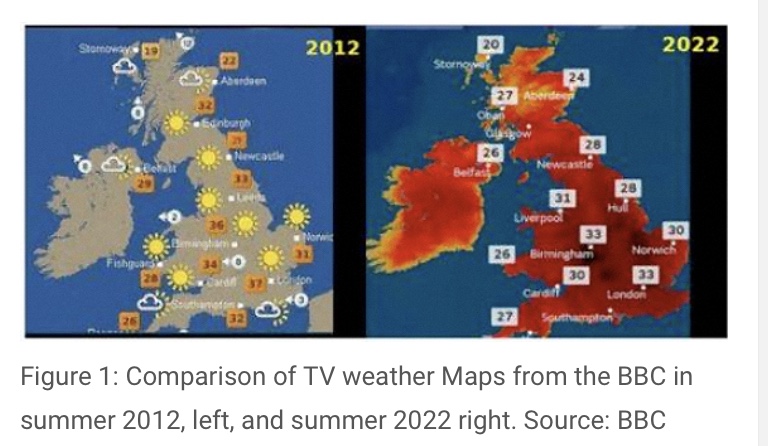

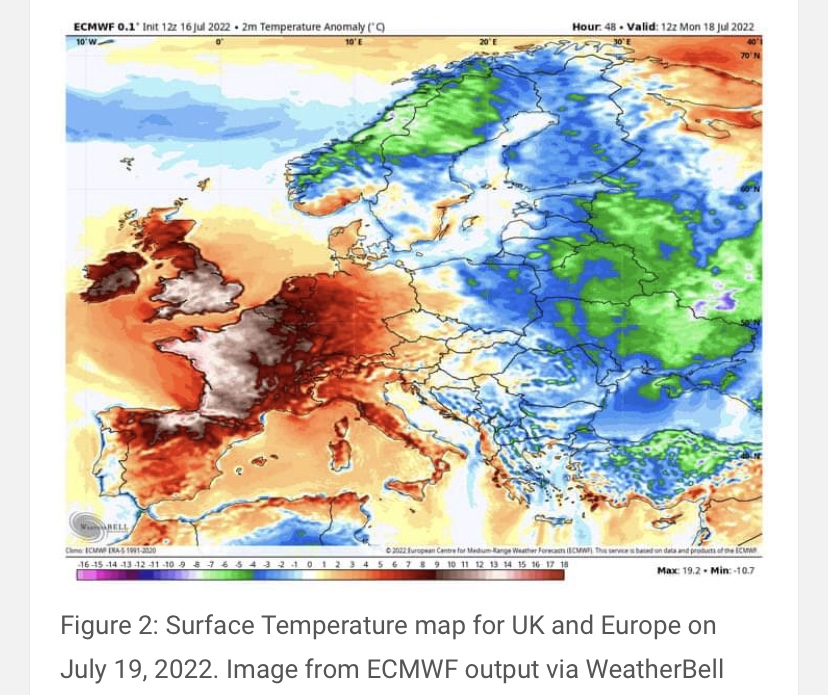


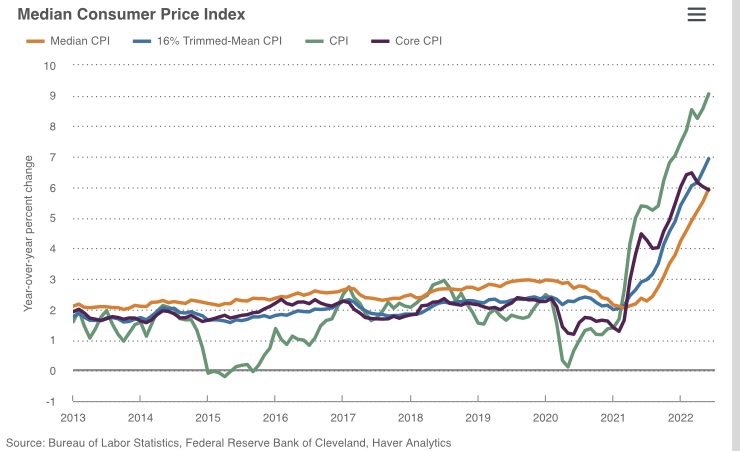
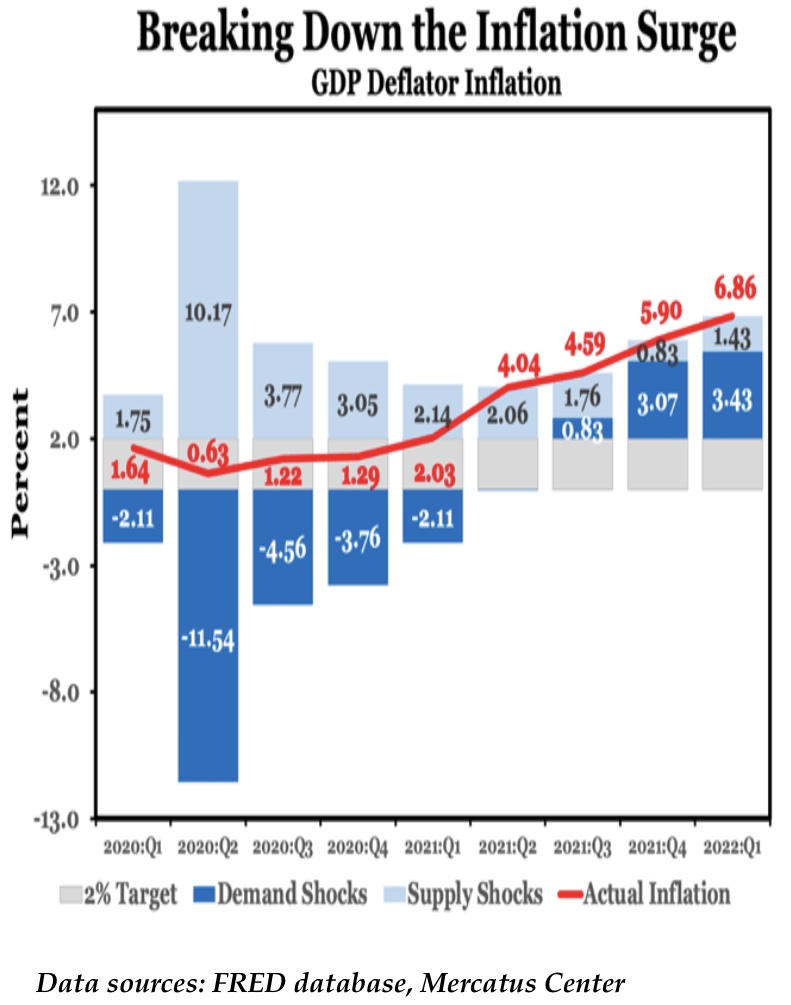
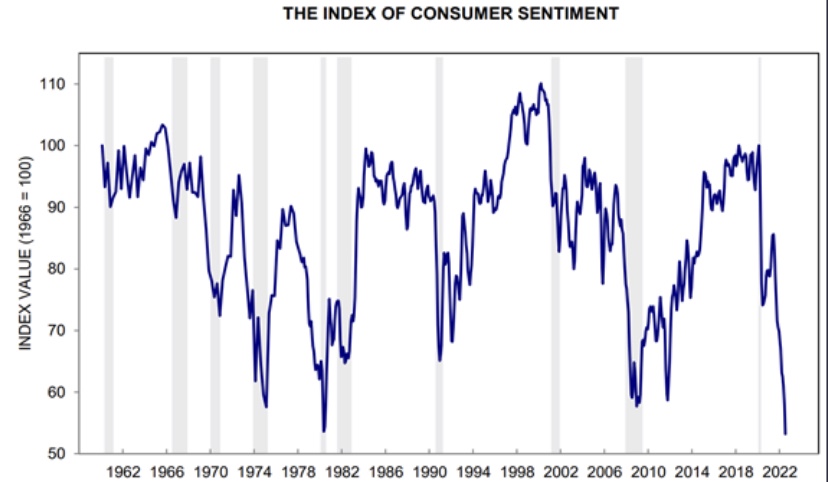


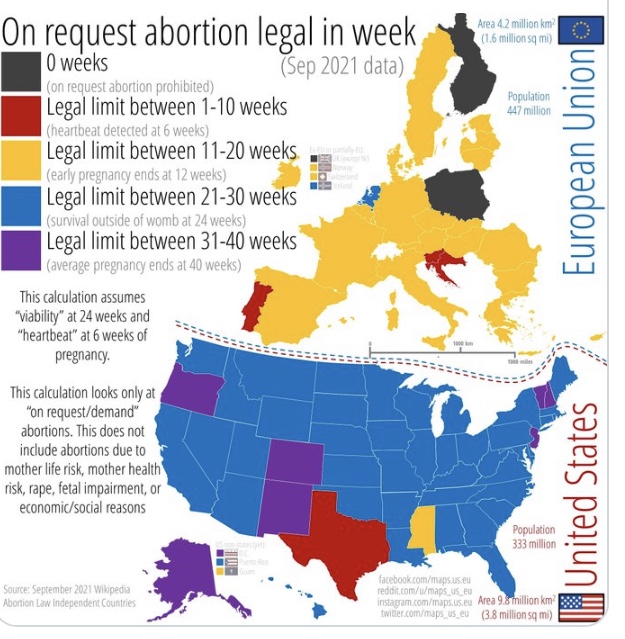




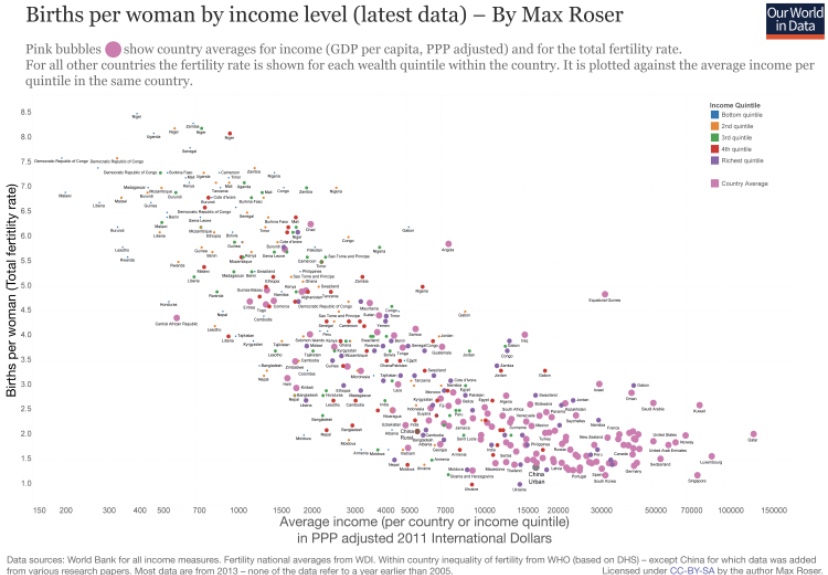
 Sacred Cow Chips