I just can’t express any sympathy for those fired from their jobs for publicly endorsing or “celebrating” the assassination of Charlie Kirk. Regardless of how you felt about Charlie Kirk’s words, he was a nonviolent public figure who did everything he could to engage peacefully with those who disagreed with his views. Praising his assassination is morally repugnant.
The fairness and even the legality of these dismissals has been called into question, however. As Eugene Volokh notes, the First Amendment offers protection “against criminal punishment, civil liability” for all speech unless it “is intended to and likely to cause imminent illegal conduct”. It does not protect the speaker from other consequences, however, such as continued employment or social ostracism. It goes without saying that this applies to both sides of any debate.
But job dismissals for expressing controversial opinions should not extend beyond issues likely to threaten the mission of the employing organization, including reputation and the well being of clients and other employees. Even more importantly, prosecution under so-called “hate speech” laws (a flawed construct) should not extend outside the bounds of the First Amendment, and should not be prosecuted selectively on political grounds.
One prominent action with which I’m not comfortable is the “indefinite” cancellation of Jimmy Kimmel, who (like others on the Left) thought it would be clever to make the absurd claim, during his late-night monologue, that Kirk’s assassin was one of the MAGA tribe. Kimmel did not “celebrate” the murder per se, but his statement was enough to get his show pulled, for now. The cancellation was lauded by the Right as a response to the market. That’s plausible: Kimmel’s pronouncement might have damaged ABC’s brand, though it didn’t have far to drop. The Trump Administration seems to have employed some strong-arm tactics in this episode, however, which is awful. In any case, I’d rather keep Kimmel out there making a fool of himself.
Of course, private employers can generally employ whom they want and can often cite agreed-upon codes of conduct as justification for dismissals, if necessary. Who wants an employee announcing to the world that he or she endorses the murder of someone with whom they happen to disagree on public policy or expressions of faith? Or who wants an employee openly stating such a monstrous opinion in the workplace? It’s simply bad business to risk offense to customers, sowing discord in the workplace, or affiliating in any way with an individual willing to demonstrate such depraved values.
Things are a little different for public employees. In his post, Volokh outlined general legal conditions under which a public employee can be disciplined. These are (the full list is a quote):
the speech is said by the employee as part of the employee’s job duties, Garcetti v. Ceballos (2006), or
the speech is not on a matter of public concern, Connick v. Myers (1983), or
the damage caused by the speech to the efficiency of the government agency’s operation outweighs the value of the speech to the employee and the public, Pickering v. Bd. of Ed. (1968).
As Volokh says, strictly speaking, these conditions do not establish categorical grounds for dismissing a public employee for praising violence. He cites case law to support that position. But the third condition listed is critical in many cases. On that point, he notes that the case in question involved a private conversation with the speaker’s co-worker/boyfriend. So that case hardly seems dispositive.
Volokh goes on to say that #3 above, or really the Pickering case, establishes a kind of heckler’s veto for public employers. That is, it:
“… often allows government to fire employees because their speech sufficiently offends coworkers or members of the public. …
“This conclusion by lower courts applying Pickering might, I think, stem from the judgment that employees are hired to do a particular job cost-effectively for the government: If their speech so offends others (especially clients or coworkers) that keeping the employees on means more cost for the government than benefit, the government needn’t continue to pay them for what has proved to be a bad bargain.“
Whether it involves someone in the public or the private sector, concerns about endorsing the murder of an ideological opponent are particularly acute when issued by those in jobs requiring a high level of trust. That covers a broad swath of workers, but especially those in health care, education, and law enforcement. Can you trust a nurse, a surgeon, or any other caregiver who would endorse murder as a proper response to political or ideological differences? Are you willing to allow your child to be instructed by such an individual at any level? For that matter, would you trust a news anchor who spouted that kind of rhetoric?
It’s certainly doesn’t present as “normal” to espouse or praise murder and other violent acts, regardless of ideological passion. In fact, most people would fairly question the stability of anyone cheerleading for murder and the risk they might present to society. Words are cheap, but it might well signal an elevated propensity for acts of violent retaliation for perceived wrongs.
The question of trust really permeates our interactions with the whole of society, so the kind of behavior we’ve witnessed from this quarter is threatening. Will my waitress, overhearing a conversation, befoul or poison the food she serves me? Will my ride share driver deliver me to a torture chamber? Will a neighborhood contact attempt to exact some kind of retribution? It’s not quite there yet, but the encroachment is real. This should be more salient to anyone with an accessible social media profile who wishes to express an honest opinion, particularly on a college campus.
A brief word about some of the Charlie Kirk quotes that have made the rounds. They are often excerpted and divorced from the full context of the argument he was attempting to make. Julie Borowsky on X provides some direct, full quotes of Kirk on several important topics. I happen to think he made valid (if not fully developed) points about the value of the Second Amendment, the divisiveness of DEI, overuse of the word “empathy”, and the downsides of Civil Rights Act. At the same time, I am certain I’d disagree with other positions Kirk held, like his support for tariffs. Still, they were all debating points on policy (or matters of faith), and they did not qualify as “hate speech”, which is a subjective notion and highly resistant to consensus. In any case, his comments could never have justified the insane reaction of Kirk’s assassin or those who cheered his murder.
Wow! We’re less than a week from Election Day! I’d hoped to write a few more detailed posts about the platforms and policies of Kamala Harris and Donald Trump, but I was waylaid by Hurricane Milton. It sent us scrambling into prep mode, then we evacuated to the Florida Panhandle. The drive there and back took much longer than expected due to the mass exodus. On our return we found the house was fine, but there was significant damage to an exterior structure and a mess in the yard. We also had to “de-prep” the house, and we’ve been dealing with contractors ever since. It was an exhausting episode, but we feel like we were very lucky.
Now, with less than a week left till the election, I’ll limit myself to a summary of the positions of the candidates in a number of areas, mostly but not all directly related to policy. I assign “grades” in each area and calculate an equally-weighted “GPA” for each candidate. My summaries (and “grades”) are pretty off-the-cuff and not adequate treatments on their own. Some of these areas are more general than others, and I readily admit that a GPA taken from my grade assignments is subject to a bit of double counting. Oh well!
Role of Government: Kamala Harris is a statist through and through. No mystery there. Trump is more selective in his statist tendencies. He’ll often favor government action if it’s politically advantageous. However, in general I think he is amenable to a smaller role for the public than the private sector. Harris: F; Trump: C
Regulation: There is no question that Trump stands for badly needed federal regulatory reform. This spans a wide range of areas, and it extends to a light approach to crypto and AI regulation. Trump plans to appoint Elon Musk as his “Secretary of Cost Cutting”. Harris, on the other hand, seems to favor a continuation of the Biden Administration’s heavy regulatory oversight. This encourages a bloated federal bureaucracy, inflicts high compliance costs on the private sector, stifles innovation, and tends to concentrate industrial power. Harris: F; Trump: A
Border Policy: Trump wants to close the borders (complete the wall) and deport illegal immigrants. Both are easier said than done. Except for criminal elements, the latter will be especially controversial. I’d feel better about Trump’s position if it were accompanied by a commitment to expanded legal immigration. We need more legal immigrants, especially the highly skilled. For her part, Harris would offer mass amnesty to illegals. She’d continue an open border policy, though she claims to want certain limits on illegal border crossings going forward. She also claims to favor more funds for border control. However, it is not clear how well this would translate into thorough vetting of illegal entrants, drug interdiction at the border, or sex trafficking. Harris: D; Trump: B-
Antitrust: Accusations of price gouging by American businesses? Harris! Forty three corporations in the S&P 500 under investigation by the DOJ? The Biden-Harris Administration. This reflects an aggressively hostile and manipulative attitude toward the business community. Trump, meanwhile, might wheedle corporations to act on behalf of certain of his agendas, but he is unlikely to take such a broadly punitive approach. Harris: F; Trump: B-
Foreign Policy: Harris is likely to continue the Biden Administration’s conciliatory approach to dealing with America’s adversaries. The other side of that coin is an often tepid commitment to longtime allies like Israel. Trump believes that dealing from a position of strength is imperative, and he’s willing to challenge enemies with an array of economic and political sticks and carrots. He had success during his first term in office promoting peace in the Middle East. A renewed version of the Abraham Accords that strengthened economic ties across the region would do just that. Ideally, he would like to restore the strength of America’s military, about which Harris has less interest. Trump has also shown a willingness to challenge our NATO partners in order to get them to “pay their fair share” toward the alliance’s shared defense. My major qualification here has to do with the candidates’ positions with respect to supporting Ukraine in its war against Putin’s mad aggression. Harris seems more likely than Trump to continue America’s support for Ukraine. Harris: D+; Trump: B-
Trade: Nations who trade with one another tend to be more prosperous and at peace. Unfortunately, neither candidate has much recognition of these facts. Harris is willing to extend the tariffs enforced during the Biden Administration. Trump, however, is under the delusion that tariffs can solve almost anything that ails the country. Of course, tariffs are a destructive tax on American consumers and businesses. Part of this owes to the direct effects of the tax. Part owes to the pricing power tariffs grant to domestic producers. Tariffs harm incentives for efficiency and the competitiveness of American industry. Retaliatory action by foreign governments is a likely response, which magnifies the harm.
To be fair, Trump believes he can use tariffs as a negotiating tool in nearly all international matters, whether economic, political, or military. This might work to achieve some objectives, but at the cost of damaging relations more broadly and undermining the U.S. economy. Trump is an advocate for not just selective, punitive tariffs, but for broad application of tariffs. Someone needs to disabuse him of the notion that tariffs have great revenue-raising potential. They don’t. And Trump is seemingly unaware of another basic fact: the trade deficit is mirrored by foreign investment in the U.S. economy, which spurs domestic economic growth. Quashing imports via tariffs will also quash that source of growth. I’ll add one other qualification below in the section on taxes, but I’m not sure it has a meaningful chance.
Harris: C-; Trump: F
Inflation: This is a tough one to grade. The President has no direct control over inflation. Harris wants to challenge “price gougers”, which has little to do with actual inflation. I expect both candidates to tolerate large deficits in order to fulfill campaign promises and other objectives. That will put pressure on credit markets and is likely to be inflationary if bond investors are surprised by the higher trajectory of permanent government indebtedness, or if the Federal Reserve monetizes increasing amounts of federal debt. Deficits are likely to be larger under Trump than Harris due in large part to differences in their tax plans, but I’m skeptical that Harris will hold spending in check. Trump’s policies are more growth oriented, and these along with his energy policies and deregulatory actions could limit the inflationary consequences of his spending and tax policies. Higher tariffs will not be of much help in funding larger deficits, and in fact they will be inflationary. Harris: C; Trump: C
Federal Reserve Independence: Harris would undoubtedly like to have the Fed partner closely with the Treasury in funding federal spending. Her appointments to the Board would almost certainly lead to a more activist Fed with a willingness to tolerate rapid monetary expansion and inflation. Trump might be even worse. He has signaled disdain for the Fed’s independence, and he would be happy to lean on the Fed to ease his efforts to fulfill promises to special interests. Harris: D; Trump: F
Entitlement Reform: Social Security and Medicare are both insolvent and benefits will be cut in 2035 without reforms. Harris would certainly be willing to tax the benefits of higher-income retirees more heavily, and she would likely be willing to impose FICA and Medicare taxes on incomes above current earning limits. These are not my favorite reform proposals. Trump has been silent on the issue except to promise no cuts in benefits. Harris: C-; Trump: F
Health Care: Harris is an Obamacare supporter and an advocate of expanded Medicaid. She favors policies that would short-circuit consumer discipline for health care spending and hasten the depletion of the already insolvent Medicare and Medicaid trust funds. These include a $2,000 cap on health care spending for Americans on Medicare, having Medicare cover in-home care, and extending tax credits for health insurance premia. She supports funding to address presumed health care disparities faced by black men. She also promises efforts to discipline or supplant pharmacy benefit managers. Trump, for his part, has said little about his plans for health care policy. He is not a fan of Obamacare and he has promised to take on Big Pharma, whatever that might mean. I fear that both candidates would happily place additional controls of the pricing of pharmaceuticals, a sure prescription for curtailed research and development and higher mortality. Harris: F; Trump: D+
Abortion: The Supreme Court’s 2022 decision in Dobbs v. Jackson essentially relegated abortion law to individual states. That’s consistent with federalist principles, leaving the controversial balancing of abortion vs. the unborn child’s rights up to state voters. Geographic differences of opinion on this question are dramatic, and Dobbs respects those differences. Trump is content with it. Meanwhile, Harris advocates for the establishment of expanded abortion rights at the federal level, including authorization of third trimester abortions by “care providers”. And Harris does not believe there should be religious exemptions for providers who do not wish to offer abortion services. No doubt she also approves of federally funded abortions. Harris: F; Trump: A
Housing: The nation faces an acute housing shortage owing to excessive regulation that limits construction of new or revitalized housing. These excessive rules are primarily imposed at the state and local level. While the federal government has little direct control over many of these decisions, it has abetted this regulatory onslaught in a variety of ways, especially in the environmental arena. Harris is offering stimulus to the demand side through a $25,000 housing tax credit for first-time home buyers. This will succeed in raising the cost of housing. She has also called for heavier subsidies for developers of low-income housing. If past is prologue, this might do more to line the pockets of developers than add meaningfully to the stock of affordable housing. Harris also favors rent controls, a sure prescription for deterioration in the housing stock, and she would prohibit software allowing landlords to determine competitive neighborhood rents. Trump has called for deregulation generally and would not favor rent controls. Harris: F; Trump B
Taxes: Harris has broached several wildly destructive tax proposals. Perhaps the worst of these is to tax unrealized capital gains, and while she promises it would apply only to extremely wealthy taxpayers, it would constitute a wealth tax. Once that line is crossed, the threat of widening the base becomes a very slippery slope. It would also be a strong detriment to domestic capital investment and economic growth. Harris would increase the top marginal personal tax rate and the corporate tax rate, which would discourage investment and undermine real wage growth. She’d also increase estate tax rates. As discussed above, she unwisely calls for a $25,000 tax credit for first-time homebuyers. She also wants to expand the child care tax credit to $6,000 for families with newborns. A proposed $50,000 small business tax credit would allow the federal government to subsidize and encourage risky entrepreneurial activity at taxpayers’ expense. I’m all for small business, but this style of industrial planning is bonkers. She would sunset the Trump (TCJA) tax cuts in 2026.
Finally, Harris has mimicked Trump in calling for no taxes on tips. Treating certain forms of income more favorably than others is a recipe for distortions in economic activity. Employers of tip-earning workers will find ways to shift employees’ income to tips that are mandatory for patrons. It will also skew labor supply decisions toward occupations that would otherwise have less economic value. But Trump managed to find an idea so politically seductive that Harris couldn’t resist.
Trump’s tax plans are a mixed bag of good and bad ideas. They include extending his earlier tax cuts (TCJA) and restoring the SALT deduction. The latter is an alluring campaign tidbit for voters in high-tax states. He would reduce the corporate tax rate, which I strongly favor. Corporate income is double-taxed, which is a detriment to growth as well as a weight on real wages. He would eliminate taxes on overtime income, another example of favoring a particular form of income over others. Wage earners would gain at the expense of salaried employees, so one could expect a transition in the form employees are paid over time. Otherwise, the classification of hours as “overtime” would have to be standardized. One could expect existing employees to work longer hours, but at the expense of new jobs. Finally, Trump says Social Security benefits should not be taxed, another kind of special treatment by form of income. This might encourage early retirement and become an additional drain on the Social Security Trust Fund.
The higher tariffs promised by Trump would collect some revenue. I’d be more supportive of this plank if the tariffs were part of a larger transition from income taxes to consumption taxes. However, Trump would still like to see large differentials between tariffs and taxes imposed on the consumption of domestically-produced goods and services.
Harris: F; Trump C+
Climate Policy: This topic has undergone a steep decline in relative importance to voters. Harris favors more drastic climate interventions than Trump, including steep renewable subsidies, EV mandates, and a panoply of other initiatives, many of which would carry over from the Biden Administration. Harris: F; Trump: B
Energy: Low-cost energy encourages economic growth. Just ask the Germans! Consistent with the climate change narrative, Harris wishes to discourage the use of fossil fuels, their domestic production, and even their export. She has been very dodgy with respect to restrictions on fracking. Her apparent stance on energy policy would be an obvious detriment to growth and price stability (or I should say a continuing detriment). Trump wishes to encourage fossil fuel production. Harris: F; Trump: A
Constitutional Integrity: Harris has supported the idea of packing the Supreme Court, which would lead to an escalating competition to appoint more and more justices with every shift in political power. She’s also disparaged the Electoral College, without which many states would never have agreed to join the Union. Under the questionable pretense of “protecting voting rights”, she has opposed steps to improve election integrity, such voter ID laws. And operatives within her party have done everything possible to register non-citizens as voters. Harris: F; Trump: A
First Amendment Rights: Harris has called for regulation and oversight of social media content and moderation. A more descriptive word for this is censorship. Trump is generally a free speech advocate. Harris: F; Trump A-
Second Amendment Rights: Harris would like to ban so-called “assault weapons” and high-capacity magazines, and she backs universal background checks for gun purchases. Trump has not called for any new restrictions on gun rights. Harris: F; Trump: A
DEI: Harris is strongly supportive of diversity and equity initiatives, which have undermined social cohesion and the economy. That necessarily makes her an enemy of merit-based rewards. Trump has no such confusion. Harris: F; Trump: A
Hysteria: The Harris campaign has embraced a strategy of demonizing Donald Trump. Of course, that’s not a new approach among Democrats, who have fabricated bizarre stories about Trump escapades in Russia, Trump as a pawn of Vladimir Putin, and Russian manipulation of the 2016 Trump campaign. Congressional democrats spent nearly all of Trump’s first term in office trying to find grounds for impeachment. Concurrently, there were a number of other crazy and false stories about Trump. The current variation on “Orange Man Bad” is that Trump is a fascist and a Nazi, and that all of his supporters are Nazis. And that Trump will use the military against his domestic political opponents, the so-called “enemy within”. And that Trump will send half the country’s populace to labor camps. The nonsense never ends, but could anything more powerfully ignite the passions of violent extremists than this sort of hateful rhetoric? Would it not be surprising if at least a few leftists weren’t interested in assassinating “Hitler” himself. This is hysteria, and one has to wonder if that is not, in fact, the intent.
Can any of these people actually define the term fascist? Most fundamentally, a fascist desires the use of government coercion for private gain (of wealth or power) for oneself and/or one’s circle of allies. By that definition, we could probably categorize a great many American politicians as fascists, including Barack Obama, Joe Biden, Donald Trump, and a majority of both houses of Congress. That only demonstrates that corporatism is fundamental to fascist politics. Less-informed definitions of fascism conflate it with everything from racism (certainly can play a part) and homophobia (certainly can play a part) to mere capitalism. But take a look at the demographics of Trump’s supporters and you can see that most of these definitions are inapt.
Is the Trump campaign suffering from any form of hysteria? It’s shown great talent at poking fun at the left. Of course, Trump’s reactions to illegal immigration, crime, and third-trimester abortions are construed by leftists to be hysterical. I mean, why would anyone get upset about those kinds of things?
Harris: F; Trump: A
“Grade Point Average”
I’m sure I forgot an area or two I should have covered. Anyway, the following are four-point “GPAs” calculated over 20 categories. I’m deducting a quarter point for a “minus” grade and adding a quarter point for a “plus” grade. Here’s what I get:
The current protests on college campuses across the nation bring into focus differing opinions on the limits of free speech and assembly. Particular questions seem to defy resolution. Nevertheless, there is some misunderstanding regarding the settled breadth of the First Amendment.
The protestors have acted as if they have constitutional carte blanche to gather anywhere to say anything in opposition to Israel and its war against Hamas terrorists; a subset thinks this encompasses “occupation” of any space for any duration; a still smaller subset believes this includes a right to condemn Jews, all Jews.
I strongly doubt, however, that many of the protestors truly believe their constitutional protections extend to intimidation and bullying of Jewish students attempting to go about their business on campus (scroll to a few of the articles here), destruction of property, or the use of “fighting words”, or physical attacks on Jews or other “oppressors”.
It’s well known that the Constitution does not protect “fighting words”, including threats.Furthermore,Eugene Volokh explains that there is no constitutional right to “occupy” a college campus, either public or private.
Of course, private schools are not legally bound to respect free speech or assembly rights. They can regulate activity on their private campuses in any way they see fit. Some explicitly abide the same rights as public universities, which seems reasonable for any institution dedicated to the free spirit of inquiry.
Volokh, however, cites Supreme Court precedents in which a majority held that government can prohibit camping in certain parks, for example, and that public colleges and universities can impose restrictions on campus activities:
“There is no First Amendment right to camp out in any university, public or private. Indeed, there is no First Amendment right to camp out even in public parks (see Clark v. CCNV (1984)), and the government’s power to limit the use of property used for a public university is even greater than its power as to parks (Widmar v. Vincent (1981)):
“‘A university differs in significant respects for public forums such as streets or parks or even municipal theaters. A university’s mission is education, and decisions of this Court have never denied a university’s authority to impose reasonable regulations compatible with that mission upon the use of its campus and facilities. We have not held, for example, that a campus must make all of its facilities equally available to students and nonstudents alike, or that a university must grant free access to all of its grounds or buildings.’
“Likewise, if UC Berkeley had held a law student party in the law school building rather than at Dean Chemerinsky’s house, it could have stopped students from using the party as an occasion to orate to the audience (especially with their own sound amplification devices, which the student brought to Chemerinsky’s house). See Spears v. Arizona Bd. of Regents (D. Ariz. 2019)(upholding public university’s right to stop people from speaking with sound amplification at an on-campus book fair).“
Volokh also notes, however, that public universities cannot restrict mere “offensive” expression, which would include certain antisemitic statements or evenswastikas (for example), as long as the expression falls short of “fighting words” or explicit threats. Do calls for the “extermination of Jews” qualify as fighting words? That deserves a resounding yes. It’s clearly hate speech, and it’s exactly the sort of expression that might be deemed so offensive to counterprotestors (for example) as to constitute an immediate threat to public order.
Does the meaning of “fighting words” include such chants as “From the river to the sea…”? Some say that depends on the speaker, but that can’t provide a sound basis of distinction. It is clearly associated with calls to eliminate the state of Israel. Some believe it also implies the genocide of Jews in Israel, and Jews can’t be blamed for finding it threatening. Okay, how about “Intifada”? I doubt all of the students involved in the current protests understand the genocidal implications of these words. The agitators understand them well enough.
This is a grey area in our understanding of the First Amendment. The “River to the Sea” chant, and Intifada, seemlike fighting words to me, but they might not qualify as direct threats to anyone on campus. By comparison, the swastika is “just” a party emblem, whatever policies it stands for, and apparently the Court did not deem it a direct threat to anyone in Skokie, Illinois. The legal distinctions here feel inadequate. Still, we say the “mere” expression of offensive ideas or symbols is protected speech, provided that it does not directly threaten harm to any party.
Many libertarians, with whom I usually agree, urge tolerance of the protests and encampments, including at least cautious tolerance of the protests. The Foundation for Individual Rights and Expression (FIRE) has strenuously objected to the actions of police in Austin, Texas in dispersing demonstrators at the University of Texas. Alex Tabarrak has reposted a tweet or two apparently critical of the government’s response to protestors in Texas and at Emory University in Atlanta, though it should be noted that the economics professor who was taken down and handcuffed on video had actually hit a police officer. Michael Munger, in a variation of his “worst enemy test” of government power, says that giving campus authorities “the power to crush us, at their discretion” is probably a bad idea. But they have that power if they choose to exercise it, for better or worse. (By “us”, I don’t think Munger intended to take sides).
I’m highly skeptical of the motives and incentives of some of the “occupiers” of campus spaces, not to mention their status as students. More importantly, there is ample evidence that “fighting words” and threats against Jews have been used by many of the protesters. This violates the codes of conduct at many schools, and should not only be censured, but any student identified as guilty of this sort of hate speech should be expelled, not merely suspended. There should be severe consequences for professors choosing to participate in these protests as well.
This behavior should have long-term consequences, and that is happening at some schools. I saw the following quote from P.J. O’Rourke on Instapundit, which seems appropriate here:
“There’s only one basic human right, the right to do as you damn well please. And with it comes the only basic human duty, the duty to take the consequences.”
The kids are wearing masks for a reason, and it ain’t Covid! Now, the protestors’ demands include “amnesty” for their participation in the protests. That shouldn’t play well if you’re provably guilty of calling for the extermination of a race of people. But here’s the thing: certain institutions like Columbia University have allowed the aberrant behavior to go on with little challenge, showing that the real limits to free speech and assembly are whatever acquiescent campus administrators are willing to put up with.
Removing these encampments is more than justified on constitutional grounds at any school, public or private. The arrest of some of the more intransigent elements among the protesters may be well justified. Insulting hate speech is one thing, but eliminationist hate speech constitutes fighting words and should not be tolerated. Of course, forcibly removing the encampments is risky in terms of public safety because some of the protestors will physically challenge the police. Comparatively innocent (though naive) students might get caught up in a conflict with law enforcement, but ignorance is no defense. They should not be there. Those risks must be taken to end the “hate encampments”, which are a direct threat to the rights of others wishing only to go about their business.
There’s justifiable controversy surrounding TikTok, the social media app. I find much to dislike about TikTok but also much to dislike about the solutions some have proposed, such as a complete ban on the app in the United States. Such proposals would grant the federal executive branch powers that most of us wouldn’t grant to our worst enemy (i.e., they fail the “Munger test”).
Congressional Activity
The proposed RESTRICT Act (Restricting the Emergence of Security Threats that Risk Information and Communications Technology) is a bipartisan effort to eliminate the perceived threats to national security posed by technologies like TikTok. That would include a ban on the app. Proponents of a ban go further than national security concerns, arguing that TikTok represents a threat to the health and productivity of users. However, an outright ban on the app would be a drastic abridgment of free speech rights, and it would limit Americans’ access to a popular platform for creativity and entertainment. In addition, the proposed legislation would authorize intrusions into the privacy of Americans and extend new executive authority into the private sphere, such as tampering with trade and commerce in ways that could facilitate protectionist actions. In fact, so intrusive is the RESTRICT Act that it’s been called a “Patriot Act for the digital age.” From Scott Lincicome and several coauthors at CATO:
“… the proposal—at least as currently written—raises troubling and far‐reaching concerns for the First Amendment, international commerce, technology, privacy, and separation of powers.”
Bad Company
TikTok is owned by a Chinese company, ByteDance, and there is understandable concern about the app’s data collection practices and the potential for the Chinese government to access user data for nefarious purposes. The Trump administration cited these concerns when it attempted to ban TikTok in 2020, and while the ban was ultimately blocked by a federal judge, the Biden administration has also expressed concerns about the app’s data security.
TikTok has also been accused of promoting harmful content, including hate speech, misinformation, and sexually explicit material. Critics argue that the app’s algorithm rewards provocative and controversial content, which can lead to the spread of harmful messages and the normalization of inappropriate behavior. Of course, those are largely value judgements, including labels like “provocative”, “inappropriate”, and many interpretations of content as “hate speech”. With narrow exceptions, such content is protected under the First Amendment.
Unlike L. Frank Baum’s Tik-Tok machine in the land of Oz, the TikTok app might not always qualify as a “faithful servant”. There are some well-founded health and performance concerns related to TikTok, however. Some experts have expressed reservations about the effects of the app on attention span. The short-form videos typical of TikTok, and endless scrolling, suggest that the app is designed to be addictive, though I’m not aware of studies that purport to prove its “addictive nature. Of course, it can easily become a time sink for users, but so can almost all social media platforms. Nevertheless, some experts contend that heavy use of TikTok may lead to a decrease in attention span and an increase in distraction, which can have negative implications for productivity, learning, and mental health.
Bad Government
The RESTRICT Act, or a ban on TikTok, would drastically violate free speech rights and limit Americans’ access to a popular platform for creativity and self-expression. TikTok has become a cultural phenomenon, with millions of users creating and sharing content on the app every day. This is particularly true of more youthful individuals, who are less likely to be persuaded by their elders’ claims that the content available on TikTok is “inappropriate”. And they’re right! At the very least, “appropriateness” depends on an individual’s age, and it is generally not an area over which government should have censorship authority, “community standards” arguments notwithstanding. Furthermore, allowing access for children is a responsibility best left in the hands of parents, not government.
Likewise, businesses should be free to operate without undue interference from government. The RESTRICT Act would violate these principles, as it would limit individual choice and potentially harm innovation within the U.S. tech industry.
A less compelling argument against banning TikTok is that it could harm U.S.-China relations and have broader economic consequences. China has already warned that a TikTok ban could prompt retaliation, and such a move could escalate tensions between the two countries. That’s all true to one degree or another, but China has already demonstrated a willingness and intention to harm U.S.-China relations. As for economic repercussions, do business with China at your own risk. According to this piece, U.S. investment in the PRC’s tech industry has fallen by almost 80% since 2018, so the private sector is already taking strong steps to reduce that risk.
Like it or not, however, many software companies are subject to at least partial Chinese jurisdiction. The means the RESTRICT Act would do far more than simply banning TikTok in the U.S. First, it would subject on-line activity to much greater scrutiny. Second, it would threaten users of a variety of information or communications products and services with severe penalties for speech deemed to be “unsafe”. According to Columbia Law Professor Philip Hamburger:
“Under the proposed statute, the commerce secretary could therefore take ‘any mitigation measure to address any risk’ arising from the use of the relevant communications products or services, if the secretary determines there is an ‘undue or unacceptable risk to the national security of the United States or the safety of United States persons.’
We live in an era in which dissenting speech is said to be violence. In recent years, the Federal Bureau of Investigation has classified concerned parents and conservative Catholics as violent extremists. So when the TikTok bill authorizes the commerce secretary to mitigate communications risks to ‘national security’ or ‘safety,’ that means she can demand censorship.”
A Lighter Touch
The RESTRICT Act is unreasonably broad and intrusive and an outright ban of TikTok is unnecessarily extreme. There are less draconian alternatives, though all may involve some degree of intrusion. For example, TikTok could be compelled to allow users to opt out of certain types of data collection, and to allow independent audits of its data handling practices. TikTok could also be required to store user data within the U.S. or in other countries that have strong data privacy laws. While this option would represent stronger regulation of TikTok, it could also be construed as strengthening the property rights of users.
To address concerns about TikTok’s ownership by a Chinese company, its U.S. operations could be required to partner with a U.S. company. Perhaps this could satisfied by allowing a U.S. company to acquire a stake in TikTok, or by having TikTok spin off its U.S. operations into a separate company that is majority-owned by a U.S. entity.
Finally, perhaps political or regulatory pressure could persuade TikTok to switch to using open-source software, as Elon Musk has done with Twitter. Then, independent developers would have the ability to audit code and identify security vulnerabilities or suspicious data handling practices. From there, it’s a matter of caveat emptor.
Restrain the Restrictive Impulse
The TikTok debate raises important questions about the role of government in regulating technology and free speech. Rather than impulsively harsh legislation like the RESTRICT Act or an outright ban on TikTok, an enlightened approach would encourage transparency and competition in the tech industry. That, in turn, could help address concerns about data security and promote innovation. Additionally, individuals should take personal responsibility for their use of technology by being mindful of the content they consume and what they reveal about themselves on social media. That includes parental responsibility and supervision of the use of social media by children. Ultimately, the TikTok debate highlights tensions between national security, technological innovation, and individual liberty. and it’s important to find a balance that protects all three.
Note: The first draft of this post was written by ChatGPT, based on an initial prompt and sequential follow-ups. It was intended as an experiment in preparation for a future post on artificial intelligence (AI). While several vestiges of the first draft remain, what appears above bears little resemblance to what ChatGPT produced. There were many deletions, rewrites, and supplements in arriving at the final draft.
My first impression of the ChatGPT output was favorable. It delineated a few of the major issues surrounding a TikTok ban, but later I was struck by its repetition of bland generalities and its lack of information on more recent developments like the RESTRICT Act. The latter shortfall was probably due to my use of ChatGPT 3.5 rather than 4.0. On the whole, the exercise was fascinating, but I will limit my use of AI tools like ChatGPT to investigation of background on certain questions.
I’ve been cheering for Elon Musk in his effort to remake Twitter into the kind of “public square” it always held the promise to be. He’s standing up for free expression, against one-party control of speech on social media, and especially against government efforts to control speech. That’s a great and significant thing, yet as Duke economist Michael Munger notes, we hear calls from the Biden Administration and congressional Democrats to “keep an eye on Twitter”, a not-so-veiled threat of future investigative actions or worse.
Your Worst Enemy Test, Public or Private
As a disclaimer, I submit that I’m not an unadulterated fan of Musk’s business ventures. His business models too often leverage wrong-headed government policy for profitability. It reeks of rent seeking behavior, whatever Musk’s ideals, and the availability of those rents, primarily subsidies, violates the test for good governance I discussed in my last post. That’s theMunger Test (the “Your Worst Enemy” Test), formally:
“You can only give the State power that you favor giving to your worst enemy.”
On the other hand, Musk’s release of the “Twitter Files” last weekend, with more to come, is certainly a refreshing development. Censorship at the behest of political organizations, foreign governments, or our own government are all controversial and possibly illegal. While we’d ordinarily hope to transact privately at arms length with free exchange being strictly an economic proposition, one might even apply the Munger Test to the perspective of a user of a social media platform: would you trust your worst enemy to exercise censorship on that platform on the basis of politics? Like Donald Trump? Or Chuck Schumer? If not, then you probably won’t be happy there! Now, add to that your worst enemy’s immunity to prosecution for any content they deem favorable!
Cloaked Government Censorship?
Censorship runs afoul of the First Amendment if government actors are involved. In an interesting twist in the case of the Twitter Files, the two independent journalists working with the files, Matt Taibbi and Bari Weiss, learned that some of the information had been redacted by one James Baker, Twitter’s Deputy General Counsel. Perhaps not coincidentally, Baker was also formerly General Counsel of the FBI and a key figure in the Trump-Russia investigation. Musk promptly fired Baker from Twitter over the weekend. We might see, very soon, just how coincidental Baker’s redactions were.
Mark Zuckerberg himself recently admitted that Facebook was pressured by the FBI to censor the Hunter Biden laptop story, which is a key part of the controversy underlying the Twitter Files. The Biden Administration had ambitious plans for working alongside social media on content moderation, but the Orwellian-sounding “Disinformation Governance Board” has been shelved, at least for now. Furthermore, activity performed for a political campaign may represent an impermissible in-kind campaign donation, and Twitter falsely denied to the FEC that it had worked with the Biden campaign.
Solutions?
What remedies exist for potential social media abuses of constitutionally-protected rights, or even politically-driven censorship? Elon Musk’s remaking of Twitter is a big win, of course, and market solutions now seem more realistic. Court challenges to social media firms are also possible, but there are statutory obstacles. Court challenges to the federal government are more likely to succeed (if its involvement can be proven).
The big social media firms have all adopted a fairly definitive political stance and have acted on it ruthlessly, contrary to their professed role in the provision of an open “public square”. For that reason, I have in the past supported eliminating social media’s immunity from prosecution for content posted on their networks. A cryptic jest by Musk might just refer to that very prospect:
“Anything anyone says will be used against me in a court of law.”
Or maybe not … even with the sort of immunity granted to social media platforms, the Twitter Files might implicate his own company in potential violations of law, and he seems to be okay with that.
Immunity was granted to social media platforms under Section 230 of the Communications Decency Act (DCA). It was something many thought “the state should do” in the 1990s in order to foster growth in the internet. And it would seem that a platform’s immunity for content shared broadly should be consistent with promoting free speech. So the issue of revoking immunity is thorny for free speech advocates.
Section 230 And Content Moderation
There have always been legal restrictions on speech related to libel and “fighting words”. In addition, the CDA, which is a part of the Telecommunications Act, restricts “obscene” or “offensive” speech and content in various ways. The problem is that social media firms seem to have used the CDA as a pretext for censoring content more generally. It’s also possible they felt as if immunity from liability made them legally impervious to objections of any sort, including aggressive political censorship and user bans on behalf of government.
The social value of granting immunity depends on the context. There are two different kinds of immunity under Section 230: subsection (c)(1) grants immunity to so-called common carriers (e.g. telephone companies) for the content of private messages or calls on their networks; subsection (c)(2) grants immunity to social media companies for content posted on their platforms as long as those companies engage in content moderation consistent with the provisions of the CDA.
Common carrier immunity is comparatively noncontroversial, but with respect to 230(c)(2), I go back to the question: would I want my worst enemy to have the power to grant this kind of immunity? Not if it meant the power to forgive political manipulation of social media content with the heavy involvement of one political party! The right to ban users is completely unlike the “must serve” legal treatment of “public accommodations” provided by most private businesses. And immunity is inconsistent with other policies. For example, if social media acts to systematically host and to amplify some viewpoints and suppress others, it suggests that they are behaving more like publishers, who are liable for material they might publish, whether produced on their own or by third-party contributors.
Still, social media firms are private companies and their user agreements generally allow them to take down content for any reason. And if content moderation decisions are colored by input from one side of the political aisle, that is within the rights of a private firm (unless its actions are held to be illegal in-kind contributions to a political campaign). Likewise, it is every consumer’s right not to join such a platform, and today there are a number of alternatives to Twitter and Facebook.
Again, political censorship exercised privately is not the worst of it. There are indications that government actors have been complicit in censorship decisions made by social media. That would be a clear violation of the First Amendment for which immunity should be out of the question. I’d probably cut a platform considerable slack, however, if they acted under threat of retaliation by government actors, if that could be proven.
Volokh’s Quid Pro Quo
Rather than simply stripping away Section 230 protection for social media firms, another solution has been suggested by Eugene Volokhin “Common Carrier Status as Quid Pro Quo for § 230(c)(1) Immunity”. He proposes the following choice for these companies:
“(1) Be common carriers like phone companies, immune from liability but also required to host all viewpoints, or
(2) be distributors like bookstores, free to pick and choose what to host but subject to liability (at least on a notice-and-takedown basis).”
Option 2 is the very solution discussed in the last section (revoke immunity). Option 1, however, would impinge on a private company’s right to moderate content in exchange for continued immunity. Said differently, the quid pro quo offers continued rents created by immunity in exchange for status as a public utility of sorts, along with limits on the private right to moderate content. Common carriers often face other regulatory rules that bear on pricing and profits, but since basic service on social media is usually free, this is probably not at issue for the time being.
Does Volokh’s quid pro quo pass the Munger Test? Well, at least it’s a choice! For social media firms to host all viewpoints isn’t nearly as draconian as the universal service obligation imposed on local phone companies and other utilities, because the marginal cost of hosting an extra social media user is negligible.
Would I give my worst enemy the power to impose this choice? The CDA would still obligate social media firms selecting Option 1 to censor obscene or offensive content. Option 2 carries greater legal risks to firms, who might respond by exercising more aggressive content moderation. The coexistence of common carriers and more content-selective hosts might create competitive pressures for restrained content moderation (within the limits of the CDA) and a better balance for users. Therefore, Volokh’s quid pro quo option seems reasonable. The only downside is whether government might interfere with social media common carriers’ future profitability or plans to price user services. Then again, if a firm could reverse its choice at some point, that might address the concern. The CDA itself might not have passed the “Worst Enemy” Munger Test, but at least within the context of established law, I think Volokh’s quid pro quo probably does.
We’ll Know More Soon
More will be revealed as new “episodes” of the Twitter Files are released. We may well hear direct evidence of government involvement in censorship decisions. If so, it will be interesting to see the fallout in terms of legal actions against government censorship, and whether support coalesces around changes in the social media regulatory environment.
The leak of a Supreme Court draft opinion in Dobbs v. Jackson Women’s Health Organization has created uproars on several fronts. The opinion, written by Justice Samuel Alito, represented a 5-4 majority at the time of its writing, but it is a draft opinion, and the substance and the positions of other justices might change before a final decision is handed down by the Court by the end of June. The draft would essentially uphold a Mississippi law restricting abortions after the first 15 weeks of pregnancy. This would overturn the Roe v. Wade (1973) and Planned Parenthood v. Casey (1992) decisions. The former established that states could regulate abortion only beyond a certain stage of pregnancy (originally the first trimester), while the latter allowed states to regulate once a pregnancy reached the stage of fetal viability. While 24 weeks is often cited as the lower limit of viability, it is considered to be as early as 20 weeks by the World Health Organization, an estimate that could decline with future advances in prenatal and neonatal care (such as artificial wombs). In any case, viability would no longer be the standard if the draft opinion stands. Indeed, it would once again be up to states as to how they wish to regulate abortion.
Here is an update on where things stood on May 11th. Reportedly, the 5-4 majority still stood, and no other draft opinions existed in the case at that time. No news since.
Due Process and Privacy Rights
Was Roe v. Wade a good legal decision? Ruth Bader Ginsburg did not hold the opinion in high regard as a matter of the jurisprudence. Apparently, she felt that the Court should have simply struck down the restrictive Texas law in question without imposing a set of rules, which amounted to an aggressive infringement on the legislative function and the evolution of law, and case law, at the state level. Her words were:
“Doctrinal limbs too swiftly shaped, experience teaches, may prove unstable. The most prominent example in recent decades is Roe v. Wade.”
She also felt the Court should not have leaned on the Due Process Clause of Fourteenth Amendment, which prohibits the denial of “life, liberty or property, without due process of law”. And she believed that relying on due process and the privacy rights of a woman and her physician made Roe vulnerable to challenge. She was probably right.
Yale Law School professor Akhil Amar, who is pro-choice, also believes the Roe decision was misguided and calls its reliance on due process “textual gibberish”. The objection to substantive due process is based on the absence of any principle establishing which “rights” not found explicitly in the Bill of Rights are valid, and which are not.
Equal Protection
In fact, Amar defends Justice Alito’s draft opinion and believes, as Ginsberg did, that the Equal Protection Clause of the Fourteenth Amendment is a better defense of abortion rights. The contention is that unless a woman possesses the right to terminate a pregnancy, she is not on an equal footing with similarly situated men in terms of self-determination and life opportunities. Of course, none of this weighs the interests of the unborn child.
Establishment Clause
Josh Blackman has an interesting series of comments about whether the Establishment Clause of the First Amendment may be a valid defense of abortion rights. That seemingly preposterous claim relies on abortion as a right, in some cases, protected by the free exercise of religion. As Blackman sums up in his sixth point:
“… abortion rights groups should be careful what they wish for. If the Court recognizes a Free Exercise right to perform or receive an abortion, then conservatives can cook up even more aggressive religious liberty strategies. I’ll bring the bagels for the next meeting of the Temple of Automatic Weapons.”
Eugene Volokh makes several interesting points on attempts to use the Establishment Clause “to obtain exemptions from generally applicable laws”. A separate, misguided take at the Establishment Clause is that a law must be unconstitutional if it was based on religious beliefs. Volokh handily disposes of that contention here.
Judicially-Prescribed Rights vs. Constitutional Rights
Blackman has written that the Alito draft is a tour de force, addressing many constitutional principles and concerns expressed by other justices. In another post, Blackman explains a very basic rationale for a decision to overturn Roe. It is related to the objections expressed by Ginsberg and Amar, and to the many “lamentations” expressed in the Court’s abortion opinions over the years since Roe. Namely, that rule and establishment of new rights by court decision was not a mechanism intended by the framers of the Constitution, but self-government and federalist principles were:
“It is a mistake to argue that Dobbs extinguishes a right, without also acknowledging that the decision would restore another right. Overruling Roe would extinguish a judicially-created right to abortion, but it would restore a very different right: the right of the people to govern themselves.”
Personhood
Of course, none of these points are really germane to the crux of the pro-life argument to which I subscribe.However, both Roe and Casey acknowledge the state’s interest in protecting the fetus beyond some point in a pregnancy. The closer to term, the greater the interest. The implication is that a fetus gradually takes on degrees of “personhood” through the course of gestation, and that rights attach to that nascent individual at some point. Both Roe and Casey, by allowing states to regulate abortion beyond some point, offer recognition that the closer an abortion occurs to full term, the stronger the case that it may be prohibited.
The law in most European nations carries the same implication, and if anything leans more heavily in favor of fetal rights than Roe. Furthermore, there are 38 states with fetal homicide laws, which treat the fetus as a person in the case of a murder of a pregnant woman. In 29 of those states, the law applies at the earliest stages of pregnancy. This suggests that in most states, sentiments may weigh in favor of treating the fetus as a person imbued with constitutional rights.
In the end, this is not an exclusively religious argument, as the pro-abortion Left always suggests. For me, it’s purely an ethical one. At what point beyond conception are pro-abortion activists willing to concede that a human life is at stake? Apparently a heartbeat is not enough to convince them. Neither does the appearance of small fingers and toes. Nor the ability to feel pain. These are all things that happen before the child is “viable”. But even viability is not enough for some of the more radical abortion activists, who are proposing choice right up to the moment of birth. Incredibly, and despite the real limitations imposed on mid- or late-term abortions in many states (in line with Roe and Casey), some pro-choice advocates are now acting as if overturning these cases causes women to lose such an unfettered right!
Practical Matters
Anyone can obtain a variety of birth control alternatives without a prescription (and often for free). This includes emergency contraception, or the “morning after pill”. Granted, sometimes birth control measures fail, which places the prospective mother (and perhaps an involved or conscientious father) in a difficult position. Nevertheless, careful use of birth control would minimize the abortion problem and obviate much of the debate, but people are often too impulsive or careless about sex.
Late term abortions are a fairly small percentage of all abortions. The CDC reported that in 2018, 50,000 (~8%) abortions occurred after the first trimester (14+ weeks), and 6,200 (1%) took place at or beyond the point of theoretical viability (21+ weeks). This study found that of abortions at 20+ weeks, mothers tended to be younger (20 -24), discovered their pregnancies somewhat later, faced logistical and financial delays in arranging the abortion, or faced other challenging life circumstances. However, the researchers rebut a common rationale for late-term abortion when they say:
“… most women seeking later terminations are not doing so for reasons of fetal anomaly or life endangerment.”
Eugenics and Classism
Pregnancies among black women are terminated at a disproportionately high rate. That’s consistent with the original, eugenicistic and racist goals of Planned Parenthood founder Margaret Sanger. This is an outcome to top all disparate impacts. I have witnessed pro-abortion activists counter that these aborted lives would have been miserable, impoverished, and without opportunity — essentially not worth living — but these are value judgements of the most monstrous kind. I’ve also heard the pathetic argument that fiscal conservatives should be happy that abortions will reduce spending on aid programs. Of course, the plight of the would-be mother is also emphasized by pro-abortion advocates, but we should not be so eager to accept the tradeoff here: abortion gets the mother is off the hook, but a child’s life is at stake. No matter the odds of success, human beings are all endowed with potential and opportunity, and it’s not necessary to be economically secure to be happy or pursue dreams.
It’s easy to be pessimistic that public policy can ever mitigate the economic burden on impoverished women who bring unexpected or unwanted pregnancies to term, or to brighten the economic future of their children. After all, over the decades since the Great Society program was conceived, the welfare state has proven no better than a dependency treadmill. Family structure has been decimated by those programs and the destructive consequences of the failed (but ongoing) war on drugs. Likewise, public education is a disaster. However, there are also alternatives such as adoption, and there are many private individuals and organizations working to encourage prospective mothers and ease those burdens.
The Leak
The leak of the draft opinion in Dobbs is unfortunate as it compromises the ongoing integrity of the Court’s internal debates and proceedings. In addition to this institutional damage, the impropriety of staging protests outside the homes of justices and inside places of worship should be roundly condemned by people with respect for judicial integrity, privacy and free exercise. These protests are partly attempts to intimidate, and they have even been accompanied by threats of violence. The belligerent posture of these activists is unconscionable.
Long Live Federalism
Again, the Court’s final decision in Dobbs might not be the opinion in the leaked draft. However, if the Court does indeed overturn Roe, it would not outlaw abortion. Rather, it would allow voters in each state to have a voice in aligning the law with public sentiment. Some states will have more restrictive abortion laws than others, but even the Mississippi law at issue in Dobbs allows abortion up through week 15, almost two weeks longer than the original Roe limitation.
The country is still deeply divided on the issue of abortion. Fundamentally, a broader acceptance of the life-and-death reality of abortion would help bring more consensus on the issue. One theory I have is that many who oppose overturning Roe would simply rather not think about that reality. In their minds, Roe keeps abortion compartmentalized, safely walled off from conscience and sometimes even spiritual convictions. They rationalize Roe based on their inability to observe the person whose life is at stake, and they accept justifications that minimize the value of that life.
A single rule imposed by the Court has not and will not resolve these differences. Indeed, Roe and Casey were failed acts of judicial activism that should be reversed. While bad legislation is regrettable, it is always subject to review and challenge by the people. In a federalist system, a bad law is contained like a single experimental treatment in a large trial with multiple arms. However, in this case, unlike a trial with random selection of subjects, one treatment group may differ from others in important respects, and the objective is not to identify one single-best solution, but different solutions that work best for different groups. That is a closer approximation to real self-government than federal legislation and especially one-size-fits-all Court rule-making.
I’m very happy to be off Facebook, or “Meta” as it now calls itself. The platform has become, effectively, a propaganda arm of governments, and one that appears to be engaging in unconstitutional censorship. More on that below.
One year ago my profile dropped off of FB entirely. I had decided to quit in January 2021 after about 15 years. I downloaded everything from my profile and wrote a blog post called “On Quitting Facebook”. It was my last entry there, so that’s really when I quit, but it took a month before they completely deactivated me.
You have to resist the temptation to go back during that interim month or it starts all over again — a new interim period, that is — when you finally decide to get out. I knew immediately that I loved being free of it, so that part was easy. My feelings haven’t changed a bit.
F-R-Double E
I no longer have to put up with the propaganda that FB prioritizes nor the “demoted post” phenomenon. None of my posts had actually been blocked outright, but I knew “Facebook jail” was happening to users with increasing frequency, as well as post blocking and “red flags” authorized by politically-motivated FB “fact checkers”.
Free of FB, I no longer have to put up with various “frenemies” I’d somehow collected. And quitting FB allowed me to reclaim precious time I’d been wasting on an obsession that one would think avoidable: scrolling through my news feed, sometimes more than once a day, to view an assortment of photos of meals, puppies, and peoples’ lovely feet propped-up in “relax mode”, plus huge dollops of left-wing political and economic BS, often delivered with snark. But of course the lefty BS is almost everywhere in media.
There was one other disturbing anomoly on FB that became more frequent for me: friend requests from exceptionally gruesome-looking characters. I think they were fake requests, but I had tight security on my profile, so the source and motive is anyone’s guess. The increasing frequency led me to wonder whether someone had information about me, which my security settings should not have allowed. That would have meant it was partly an “inside job” on FB, perhaps designed to intimidate me in one way or another. I have no idea, but I don’t miss those requests.
So there’s a lot to like about quitting FB! It certainly brought a few disappointments and challenges. Unfortunately, I did lose touch with some good people. In what follows I elaborate on certain legal ramifications of FB’s poor conduct in hosting users both privately and within what’s purported to serve as a “public square”; the social media frustrations I’ve experienced since quitting; and my impressions of a few other platforms.
Government Censorship?
FB is a private company, so the usual libertarian position is that it can run its platform any way it wants. It is therefore no business of the government’s whether FB moderates content, bans certain users, or takes editorial positions. However, FB benefits from immunity to prosecution under Section 230 of the Telecommunications Act of 1996, which was traditionally intended for common carriers like telephone companies. That means they can’t be held liable for anything a third party might say on their network. Say what you want on the phone, because liability-free carriers shouldn’t care. FB and other social media platforms receive this same protection. But should they?
While we can think of FB as a kind of modern public square, in some respects it looks more like a common carrier. By that I mean much of the communication that takes place on the platform is voluntary and between private contacts, or groups of “friends”. The voluntary nature of these connections is a key aspect of what Eugene Volokh calls the “hosting function”. No one is forced to look at what you post. Yet FB makes a habit of moderating the content of those posts and conversations and still receives immunity under Section 230.
In other respects, FB does resemble a public square. Content posted by one party can be shared by each contact with their own network of friends, and thus can “go viral”. But if FB moderates content, censors users, or takes political positions of its own via the “recommendation function” often exercised by social media platforms, then it is not acting purely as a public square. Indeed, in that case it is more like a publisher, which otherwise would not be immune from lawsuits.
The case against FB is even stronger than that, however. It has acted as a de facto agent of the government in several respects. A recent FOIA request has revealed a White House email showing:
“… Facebook, Merck, and the CDC Foundation, whose corporate partners includes Pfizer, have formed an alliance ‘to use social media and digital platforms to build confidence in and drive uptake of vaccines.’”
FB has also acted to delete user accounts at the behest of the U.S. and Israeli governments. And FB has partnered with a security firm called FireEye, which is funded by the CIA. There are other areas of “cooperation” between entities performing government-funded activities described at the last link.
The topic of social media giants censoring speech on behalf of the U.S. and other governments has been discussed by Vivek Ramiswamy, who notes the obvious breach of constitutional rights that it represents. It’s fine for a private firm to regulate speech on its own premises, but conducting censorship at the behest of government is equivalent to censorship by government and a flat out a violation of the First Amendment.
Moreover, FB has had the audacity to propose government “oversight” in its effort to moderate content. What, in the name of regulatory capture, could go wrong? I’d say the whole thing is Orwellian, but perhaps no more than what we’ve already seen. The best policy response, as Volokh suggests, might be to separate the hosting and conversation functions of social media from the recommendation function. The former can be treated as “common carrier” functions for the purpose of applying Section 230, with an obligation for non-discrimination and minimal content moderation, while the latter function would receive no immunity under Section 230.
My Post-FB Social Media Escapades
My blog lost a lot of readership when I quit FB. Last spring, however, I began a roughly five-month stint as a contributing blogger on a site that brought a jump in my readership. Unfortunately, it became clear, over time, that it was largely an audience unwilling to entertain more objective and sometimes technical considerations. I also became disillusioned after finding myself writing posts to debunk certain conspiratorial fantasies of other contributing bloggers on the site. I didn’t want to be associated with those writers, so I cut ties. My readership crashed again, but I’m not sure I lost many high-quality readers in that instance.
I joined various “free speech” social media platforms: firstParler (until it was taken down by Amazon, and I haven’t been back), and I’d been onMeWe, but thenGab, CloutHub, GETTR, and Telegram. MeWe, Gab, and CloutHub sponsor groups with shared interests, and I’ve made it a point to join Libertarian groups when I can find them. Those groups are not very active on CloutHub. GETTR feels a bit more like Twitter to me, and there are no group pages. Telegram is a secure messaging app with extra features. I just started a so-called “channel” there to which I can post my content. Users can view and subscribe to my channel if they wish, but I have to cross-post to other channels to find them. We’ll see how it goes, but there are a lot of people who LOVE Telegram!
A few friends from my FB days followed me to one or two of the “free speech” platforms, but only one of them seems to have maintained any presence there. Most of them became entirely inactive from what I can tell. I know some went back to FB, upon which so many people are dependent. Sometimes that’s for business reasons, which is both understandable and regrettable. Anyway, at least one of my former FB connections is still cross-posting some of my articles to FB, which is fine and I truly appreciate it.
Like FB, the alternative platforms I’ve tried are dominated by meme warriors. While a few trolls lurk there, MeWe, Gab, and CloutHub are very much echo chambers. But at least dissident voices have a place where they aren’t censored! In an ideal world we’d have diversity of thought and civility.
I’ve grown kind of numb to all the memes. I tend to scroll right past them in search of meatier fare. Memes tend to over-simplify complex issues and appeal to mood affiliations. They generally offer zero evidence in support of their messages. Even worse is their impact on attention span. It’s extremely difficult to get users to read anything longer than a meme blurb. In fact, there are people who notice the headlines on my posts and make immediate comments on that basis, as if I’m posting memes! But again, FB is very much a hall of memes, so I don’t mean to imply that there’s been any change for me in that respect … I just like to bitch about memes!
There are a few anti-semites on some of the “free-speech” sites, Gab in particular. In fact, Gab is thoroughly dominated by the religious right, so the anti-semitism is all the more striking. Excepting the Jew haters, whom I can block, I respect the religious right, and our interests are often aligned. However, a steady diet of posts with Christianity as an emphasis makes Gab less than ideal for me. Besides, every time I click on the Gab app it takes like 15 seconds to load on my phone!
I joined MeWe well before I quit FB. Nevertheless, I’ve had trouble getting traction there and I’m thinking of dropping out just to simplify my life. So far, CloutHub seems a little better in terms of generating visits to my blog.
It’s hard for a small-time blogger like me to get much notice on GETTR. There are some well-known conservative personalities there, so there are some decently informative posts. I have not been very active on Telegram, but that might change, as I said above.
I’ve been on LinkedIn for many years, but I’ve only recently decided to begin posting my articles there. I’ve lost a handful of connections as a result! That’s okay. As I like to say, eventually I’ll piss everyone off! I do get some views from LinkedIn, but users who might agree with my point of view are often too chickenshit to say so. That’s more understandable on a platform oriented toward career and professional contacts. However, I think the perception of social pressure is not very much different than the intimidation some people feel on FB.
I’ve considered joining the Truth Social platform, Donald Trump’s foray into social media. It’s billed as a “big tent”, but it will be another echo chamber, I’m sure. It’s also been a technical mess so far (not unique among new apps in that respect). I’m no Trump hater by any means, but any post that might be critical of him is almost certain to attract some hate on Truth Social (the link no is satire, btw). That’s not censorship per se, but TS might not be a great place for some of my posts.
No Going Back
Maybe the last section above was more self-assessment than anything else. As a personal decision, quitting FB was unequivocally positive for me. It hurt my blog readership, but I still hope to gain momentum on other platforms and to promote Sacred Cow Chips by placing links on other sites. In any case, I blog for myself as much as anyone else, just because I enjoy writing, thinking about issues, and occasionally doing a “deep dive” to research an issue.
The censorship occurring on the big social media platforms is simply unacceptable, and I wish more people would rise-up against it. I experienced some schadenfreude when I saw that Meta’s (Facebook’s) financials were a disappointment last quarter. The number of active users declined ever so slightly, but that was a first for FB. One can only hope it’s a trend in the making. And see this, though it might be a bit over-optimistic. Damn the censorship!
Here are the gender conventions we’ve adopted in Western society on the rules of debate:
“We accept gender double standards, and tolerate more aggression towards men than we do towards women. We also tolerate more hyper-emotionalism from women than men.”
So says Richard Hanania in an essay called “Women’s Tears Win In the Marketplace of Ideas“. Hanania is the president of the Center for the Study of Partisanship and Ideology, and a research fellow at Defense Priorities. He offers some cogent examples of this disparate treatment, such as the Yale Halloween costume imbroglio and the “cancelling” of Ilya Shapiro at Georgetown Law School. To those we can add Eric Landers’ forced withdrawal as Joe Biden’s chief science advisor, and there are countless others. About this, Hanania says:
“What makes these cases difficult is that male versus male argumentation just has completely different rules, norms, and expectations than male versus female. … A man can’t just yell in another man’s face for 5 or 10 minutes about how he’s hurting his feelings. If a man does behave this way, bystanders are more likely to feel disgusted than join in or play the role of white knight. The man at the receiving end of the abuse is at some point going to have to escalate towards violence, or back down and say something about how this is beneath him. Depending on the situation, observers may assume violence is a distinct possibility, and get between the two sides.
None of these options are available when getting yelled at by a woman. You certainly can’t make an implicit threat of violence. Raising your voice will turn everyone against you, and even walking away can look heartless.”
I’ve witnessed a few pathetic crying jags in the workplace myself, as well as some volleys of verbal belligerence from females on social media that were pointedly anti-social. In my experience, most women can dish out barbs good-naturedly in jest and conduct themselves with dignity in debate. On the other hand, there are too many men who become hostile in debate, which most observers will find much less sympathetic if the counter-party is a woman. And there are a few men, here and there, who have trouble holding back tears in a fraught exchange, but we all know it’s not a good look.
To state the obvious, tears are a natural reaction to grief or real hurt. Anger is well-justified in response to criminal or personal wrongs. Nevertheless, it’s necessary to distinguish between these kinds of reactions and the ignoble tears or venom sometimes brought to controversial debates by neurotic partisans. As Hanania says of our disparate gender conventions, considerable censorship is instigated by an intransigent minority of women who manage to “… indulge their passions in ways that men cannot … .” Most men, anyway… and if they do, they’ve usually lost and know it.
These passionate displays are often tied to claims of individual or group victimhood. The objector could be anyone who feels an under-appreciated beef, but acting-out in order to signal “virtuous victimhood” in this way might indicate a deeper instability.
Again, as Hanania says, females have a definite advantage in the deployment of tears, confrontational rhetoric, and screams. Coincidentally,in a post to which Hanania links, Noah Carl marshals data on the extremely skewed representation of degrees awarded to women in Grievance Studies (e.g. Gender Studies and Critical Race Theory).
Too often, claims of victimhood are invoked in attempts to rebut any number of principled policy positions. For example, your views might be construed as offensive, racist, or sexist if you oppose such things as an increase in the minimum wage, racial quotas, disparate impact actions, equal pay rules, family leave mandates, and abortion. Expressing a strong and reasoned defense of many positions can foment imagined micro-aggressions or even harassment.
The real danger here is that honest debate is suppressed, and with it, very often, the truth. I acknowledge that people must be free to express or defend their views passionately, and with tears, screams, or otherwise, which the First Amendment guarantees. Our gender conventions in this matter should be revisited, however, if men and women are truly to be on equal footing.
Whether baring fangs or shedding tears, there are self-appointed arbiters of acceptable speech represented in almost all of our public and private institutions, ready to shut down debate on account of their feelings. They have more than a few sympathetic allies, male and female, at higher levels of their organizations. In the past, Hanania has discussed the over-representation of females in Human Resource departments. In these contexts, adjudication of disputes often relies on vague notions of what constitutes “hate speech” or “harassment” under Civil Rights Law. If you manage to provoke the tears of a colleague or underling, you’re probably behind the eight ball!
Hanania considers some alternative ground rules or “options” for debate:
Expect everyone who participates in the marketplace of ideas to abide by male standards, meaning you accept some level of abrasiveness and hurt feelings as the price of entry.
Expect everyone to abide by female standards, meaning we care less about truth and prioritize the emotional and mental well-being of participants in debates.”
Either of these options is better than the double standard we have now, and Hanania point to a number of egregious manifestations of our double standard. As he notes, #2 might be what’s meant by the “feminization of intellectual life”, but it fosters the arbitrary prohibition against discussion of any number of ideas that belong on the policy menu.
Option #1 would undoubtedly be condemned as “traditional male dominance” of public debate, but it would bar no one from participation, and obstacles perceived by females, or any sensitive soul, can be viewed as a matter of socialization. Both tearful and ferocious argumentation should be marginalized regardless of the antagonist’s gender.
Imperfect as they are, we have laws and/or social strictures against harassment, bullying, and other aggressive behavior thought to be largely associated with malcontented males. But as Hanania says:
“We haven’t even begun to think carefully about equivalent pathologies stemming from traits of the other sex.”
This problem obviously pales in comparison to the fascist tactics typical of the far Left. That includes the violent behavior of Antifa and BLM, unethical attempts blame conservatives for various, often fabricated deeds, and to threaten and punish them economically, even to the point of state-sponsored thievery and threats of harm to family members. Despite the more benign nature of the disparities discussed here, restoring gender equality to the terms of civil debate, without tears and hysterics, would be a great step forward.
I’m probably as fed up with social media as anyone, given the major platforms’ penchant for censoring on the basis of politics, scientific debate, religion, and wokeism (or I should say a lack thereof). I quit Facebook back in January and haven’t regretted it. It’s frustratingly difficult to convince others to give it up, however, andI’ve tried. Ultimately, major user defections would provide the most effective means of restraining the company’s power.
Beyond my wild fantasies of a consumer revolt, I will confess to a visceral desire to see the dominant social media platforms emasculated: broken up, regulated, or even fined for proven complaints of censorial action. That feeling is reinforced by their anti-competitive behavior, which is difficult to curb.
Are There Better Ways?
While my gut says we need drastic action by government, my head tells me … not … so … fast! These are private companies, after all. I’m an adherent of free markets and private property, so I cannot abide government intrusions to force anyone to sponsor my speech using their private facilities. At the same time, however, our free speech rights must be protected in the “public square”, and the social media companies have long claimed that their platforms offer a modern form of the public square. If they can be taken at their word, should there be some remedy available to those denied a voice based upon their point-of-view by such a business? This seems especially pertinent when access to “public accommodations” is so critical to the meaning of non-discrimination under current law (not that I personally believe businesses should be forced to accommodate the specific demands of all comers).
“Under PruneYard and Rumsfeld, private property owners who open up their property to the public (or to some segment of the public, such as military recruiters) may be required by state or federal law to share their real estate with other speakers.”
The Common Carrier Solution
Volokh’s article is very detailed and informative. I highly recommend it to anyone hoping to gain an understanding of the complex legal issues associated with the rights of big tech firms, their users, and other interested parties. His article highlights the long-standing legal principle that so-called “common carriers” in telecommunications cannot discriminate on the basis of speech.
Volokh believes it would be reasonable and constitutional to treat the big social media platforms as common carriers. Then, the platforms would be prohibited from discriminating based on viewpoint, though free to recommend material to their users. He also puts forward a solution that would essentially permit social media firms to continue to receive protection from liability for user posts like that granted under Section 230 of the Communications Decency Act:
“… I think Congress could categorically treat platforms as common carriers, at least as to their hosting function. But Congress could also constitutionally give platforms two options as to any of their functions: (1) Claim common carrier status, which will let them be like phone companies, immune from liability but also required to host all viewpoints, or (2) be distributors like bookstores, free to pick and choose what to host but subject to liability (at least on a notice-and- takedown basis).”
Economist Luigi Zingales emphasizes the formidable network externalities that give the incumbent platforms like Facebook a dominance that is almost unshakable. Zingales essentially agrees with Volokh, but he refers to common carrier status for what he calls the “sharing function” with Section 230-like protections, while the so-called “editing function” can and should be competitive. Zingales calls recommendations of material by a platform part of the editing function which should not be granted protection from liability. In that last sense, his emphasis differs somewhat from Volokh’s. However, both seem to think an change in the law is necessary to allow protections only where they serve the “public interest”, as opposed to protecting the private interests of the platforms.
The most destructive aspect of Section 230 immunity is the so-called “Good Samaritan” clause aimed at various kinds of offensive material (“… obscene, lewd, lascivious, filthy, excessively violent, harassing, or otherwise objectionable, whether or not such material is constitutionally protected.”), which the social media platforms have used as “a license to censor”, as Philip Hamburger puts it. Here, Eugene Volokh and others, including Supreme Court Justice Clarence Thomas, assert that this provision should not receive a broad interpretation in determining immunity for content moderation decisions. In other words, the phrase “otherwise objectionable” in the provision must be interpreted within the context of the statute, which, after all, has to do with communications decency! (Here again, I question whether the government can legitimately authorize censorship in any form.)
Arm of Government?
Viewpoint discrimination and censorship by the platforms is bad enough, but in addition, by all appearances, there is a danger of allowing companies like Facebook to become unofficial speech control ministries in the service of various governments around the world, including the U.S. Here is Vivek Ramaswamy’s astute take on the matter:
“… Facebook likely serves increasingly as the censorship arm of the US government, just as it does for other governments around the world.
In countries like India, Israel, Thailand, and Vietnam, Facebook frequently removes posts at the behest of the government to deter regulatory reprisal. Here at home, we know that Mark Zuckerberg and Sheryl Sandberg regularly correspond with US officials, ranging from e-mail exchanges with Dr. Anthony Fauci on COVID-19 policy to discussing “problematic posts” that “spread disinformation” with the White House.
If Zuckerberg and Sandberg are also directly making decisions about which posts to censor versus permit, that makes it much more likely that they are responsive to the threats and inducements from government officials.”
Even LinkedIn has censored journalists in China who have produced stories the government finds unflattering. Money comes first, I guess! I’m all for the profit motive, but it should never take precedence over fundamental human rights like free speech.
There is no question of a First Amendment violation if Facebook or any other platform is censoring users on behalf of the U.S. government, and Section 230 immunity would be null and void under those circumstances.
Elections … Their Way
On the other hand, we also know that platforms repeatedly censored distribution of the Trump Administration’s viewpoints; like them or not, we’re talking about officials of the executive branch of the U.S. government! This raises the possibility that Section 230 immunity was (or should have been) vitiated by attempts to silence the government. And of course, there is no question that the social media platforms sought to influence the 2020 election via curation of posts, but it is not clear whether that is currently within their rights under Section 230’s Good Samaritan clause. Some would note the danger to fair elections inherent in any platform’s willingness to appease authoritarian governments around the world, or their willingness and ability to influence U.S. elections.
Pledge of Facebook Allegiance
Some of our domestic social media companies have become supra-national entities without a shred of loyalty to the U.S. This article in The Atlantic, of all places, is entitled “The Largest Autocracy on Earth“, and it has a sub-heading that says it all:
“Facebook is acting like a hostile foreign power; it’s time we treated it that way.”
The article reports that Facebook’s Mark Zuckerberg has promoted the mantra “company over country”. That should disabuse you of any notion that he cares one whit about the ideals embodied in the U.S. Constitution. He is a child consumed with dominance, control, and profit for his enterprise, and he might be a megalomaniac to boot. If he wants to host social media relationships in this country, let’s make Facebook a common carrier hosting platform.
Cartman is awesome! Haha! But really, that kind of reaction to the dominant social media platforms is well deserved, especially given their recent behavior. Listen to this: my wife’s church held a service of hymns and prayer for “healing the nation” on Tuesday. The church’s IT administrator posted an advance notice about the service on the church’s Facebook wall. There was nothing overtly political about the notice or the service itself. Nevertheless, somehow FB deemed the notice subversive and blocked it! We are not dealing with decent or reasonable people here. They are pigs, and we don’t have to do business with them.
FaceHook
A number of years ago, a woman told me FB was “the Devil!” She was very good natured and I laughed at the time. But there are many reasons for people to wean themselves from social media, or at least from certain platforms. The web abounds with testimony on lives improved by quitting FB, for example, and there are forums for those who’ve quit or would like to. There’s also plenty of practical advice on “how to leave”, so there is definitely some interest in getting out.
Ditching FB offers a certain freedom: you can eliminate the compulsion to check your news feed and escape those feelings of obligation to “like” or comment on certain posts. These are distractions that many can do without. No more efforts to “unsee” expressions of foot fetish narcissism! Free of the pathetic virtue signals that seem to dominate the space. And quitting might be especially nice if you’re keen on cutting ties with certain “frenemies”. Almost all of us have had a few. This study found that quitting FB results in less time online (surprise!) and more time with family and friends (pre-COVID lockdowns, of course). It also found that quitting leads to less political polarization! Imagine that!
There’s no question that FB helped me make new friends and reconnect with old ones. It also led to overdue severing of ties with a few toxic individuals. I know I’m likely to lose contact with people I truly like, and that’s too bad, but in most cases I must leave it up to them to stay in touch (read on). Obviously, there are many ways to stay in contact with friends you really want to keep.
FacePurge
As for politics (and seemingly every aspect of life has been politicized), now is a very good time to quit FB if you believe in free expression, the value of diverse opinion, and a free marketplace of ideas. FB doesn’t want that. As the episode at my wife’s church demonstrates, FB has been brazenly selective in suppressing opinion, like other prominent social media platforms. It was obvious well before the presidential election, and it has become intolerable since.
How To Defacebook
There are voices that counsel patience with the tech giants. They recommend a strategy of diversification across platforms, without necessarily quitting any of them. I can understand why certain people might prefer that route. It’s well nigh impossible to migrate an extended family to another platform, for example. However, juggling several accounts can be a problem of time management. And for me, this all boils down to a matter of disgust. It’s time to stick it to FB.
This rest of this post offers some practical advice on quitting FB and more thoughts on how and why I’m doing it. This will also appear on some speech-friendly platforms, so if you see it there and you haven’t quit FB, do it! You’re already halfway there.
The first decision is whether to quit outright or deactivate. Many don’t have the fortitude to stay away if they merely deactivate, and maybe they just need a break. For others, FB has earned an enmity that can only be satisfied by leaving for good. Count me among the latter.
You should reclaim all of your data before you quit: you can download it to a zip file, which will include all of your photos, chats, “About” information, your friends’ birthdays, etc… While it’s been claimed that shutting your account will cleanse Facebook of all your data, that’s not entirely the case. For example, your friends might still retain chats in which you participated. In fact, I’m not convinced all of your data isn’t permanently in FB’s possession, if not the NSA’s, but we might never know.
You should also change your login credentials on other online accounts linked to FB. You should be able to identify some or maybe all of those by looking at the password section in “Settings”. I’m not sure whether scrolling though and checking all the apps listed in Settings will help — it didn’t help me identify anything that the password section did not.
It’s a good idea to keep Messenger up for a while in case any of your friends want to inquire or find a way to stay in touch. That’s fine, but to really rid yourself of FB, you must part with Messenger eventually. Of course, you’ll lose Instagram and WhatsApp when you quit FB. I don’t use those, so it won’t be a problem for me.
Then there are the “I’m Going To Quit!” status updates, sometimes laced with sadness or anger. I haven’t found those particularly appealing in the past… I’ve often wondered if they were merely ploys to get attention. But things have changed. I will add this post to my wall and leave it there for a few days. My *noble* intent is to help others quit, and to do my small part to foster a more competitive social media environment. Another way to communicate your departure would be to use Messenger to inform selected friends, but that’s more work. And by the way, in anticipation of my stop date, I’ve been culling my friends list more aggressively than ever.
Once you pull the trigger and click “Delete”, your account will remain active for a few days. Don’t be a sucker. Delete the app on your phone. Wait it out. Forget about it!
Not OurBook
Again, there was never a better time to dump FB. Beyond any emotionally corrosive aspects of social media, the last straw should be the selective censorship of political views, shadow bans, outright bans, and deletion of groups. Lately, it’s been like witnessing the early transition from Weimar to the Third Reich. We can only hope the full transition will remain unfulfilled.
For a company protected from liability under Section 230 of the Telecommunications Act, FB’s refusal to respect First Amendment rights and to abide diversity of opinion is shocking. Don’t tell me about fact checking! Facebook fact checkers are politically motivated hacks, and the new “oversight board” is not likely to help you and me. The presumption underlying Section 230 is that these platforms are not publishers, but having abandoned all pretense of impartiality, they should not be entitled to immunity. Moreover, they have tremendous market power, and they are colluding in an effort to consolidate political power and protect their dominant market position.
Big Tech, and not just FB, has been flagrant in this hypocrisy. These firms have deplatformed individuals who’ve questioned the legitimacy of the presidential election, and there is plenty to question. But they refuse to censor Antifa and BLM rioters, antisemites, state terrorists, and genocidal tyrants from around the world, including the Chinese Communist Party. More recently, FB and other platforms have condemned supporters of President Trump, as if that support was equivalent to endorsing those who stormed the Capital on June 6th. And even if it were, would an objective arbiter not also condemn leftist violence? How about equal condemnation of the Antifa and BLM rioters who ravaged American cities throughout last summer? Or those who rioted at the time of Trump’s inauguration?
The social media platforms won’t do that. FB is bad, but Twitter is probably the worst of them all. I quit using Google years ago due to privacy concerns, but also because it became obvious to me that it’s search results are heavily biased. Amazon pulled the rug out from under Parler, and I will quit using Amazon when my Prime membership is up for renewal unless Jeff Bezos starts singing a different tune by then. These companies are anticompetitive, but there are other ways to buy online, and there is plenty of other video programming.
Let’s Book
The power of Big Tech is not absolute. Remember, there are alternatives if you choose to quit or diversify: check out MeWe, Clouthub, Rumble (video hosting), Gab, Signal, and Telegram, for example (see this interesting story on the latter two). And Parler, of course, if it manages to find a new hosting service or wins some kind of emergency relief against Amazon.
Message me for my contact information or my identity on other platforms, or you can always find my ruminations at SacredCowChips.net. You can even share them on FB (if they’ll let you), at the risk of alienating your “woke” friends! So long.
In advanced civilizations the period loosely called Alexandrian is usually associated with flexible morals, perfunctory religion, populist standards and cosmopolitan tastes, feminism, exotic cults, and the rapid turnover of high and low fads---in short, a falling away (which is all that decadence means) from the strictness of traditional rules, embodied in character and inforced from within. -- Jacques Barzun


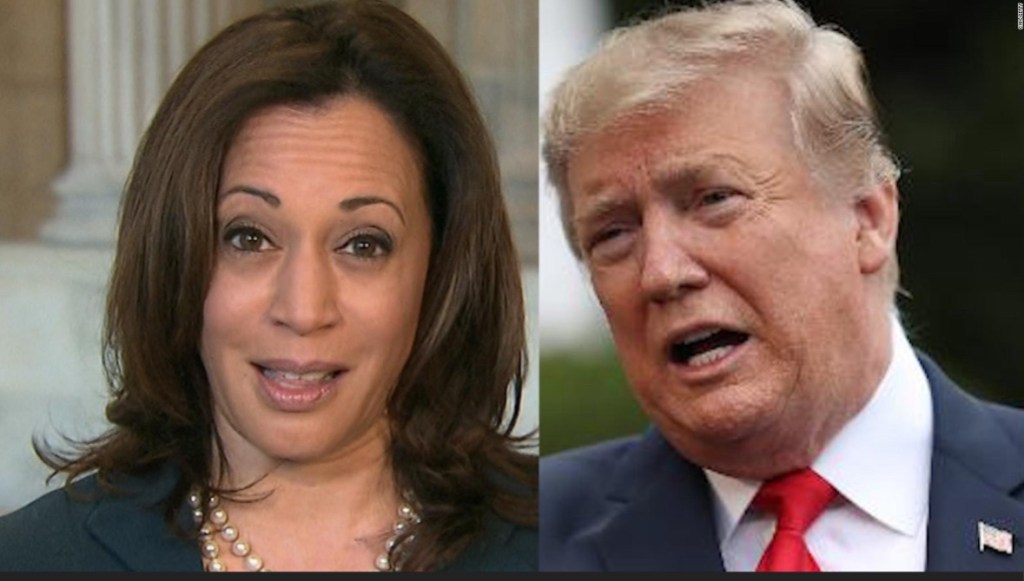



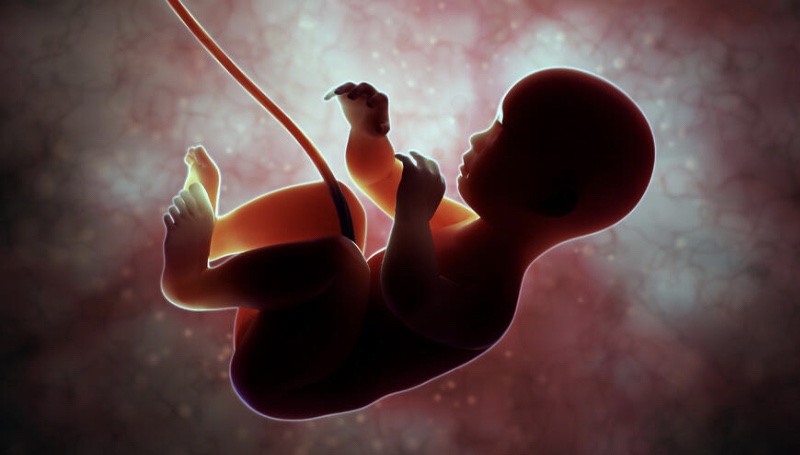
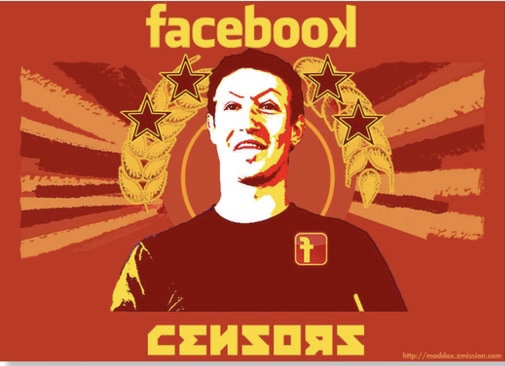



 Sacred Cow Chips