• About

Sacred Cow Chips

Sacred Cow Chips

Author Archives: Nuetzel

Woke Activist Inroads In School Books & “Charities”

05 Thursday Aug 2021

Posted by Nuetzel in Campaign Finance, Election Fraud, Leftism

≈ 1 Comment

Tags

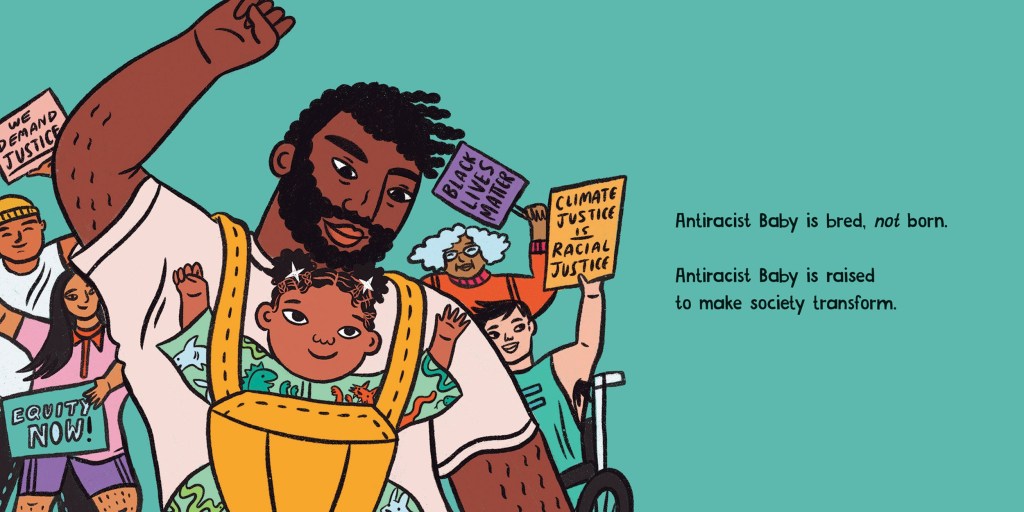
#DisruptTexts, Absentee Ballots, Accreditation, Antiracist Baby, Atticus Finch, Cairn University, Chalkboard Review, Council on Social Work Education, Critical Race Theory, Election Integrity, George Soros, Hayden Ludwig, Intersectionality, Jack Dorsey, LGBTQIA Activism, Mark Zuckerberg, Silicon Valley Community Foundation, To Kill a Mockingbird, Tom Knighton, Tom Steyer, Tony Kinnett, Woke Activism, Woke Middlemen

Not long ago I wrote about the “woke middlemen” who are corrupting our institutions, especially education. A few related and disturbing stories have come to my attention since then, upon which I’ll elaborate below.

Lefty School Books

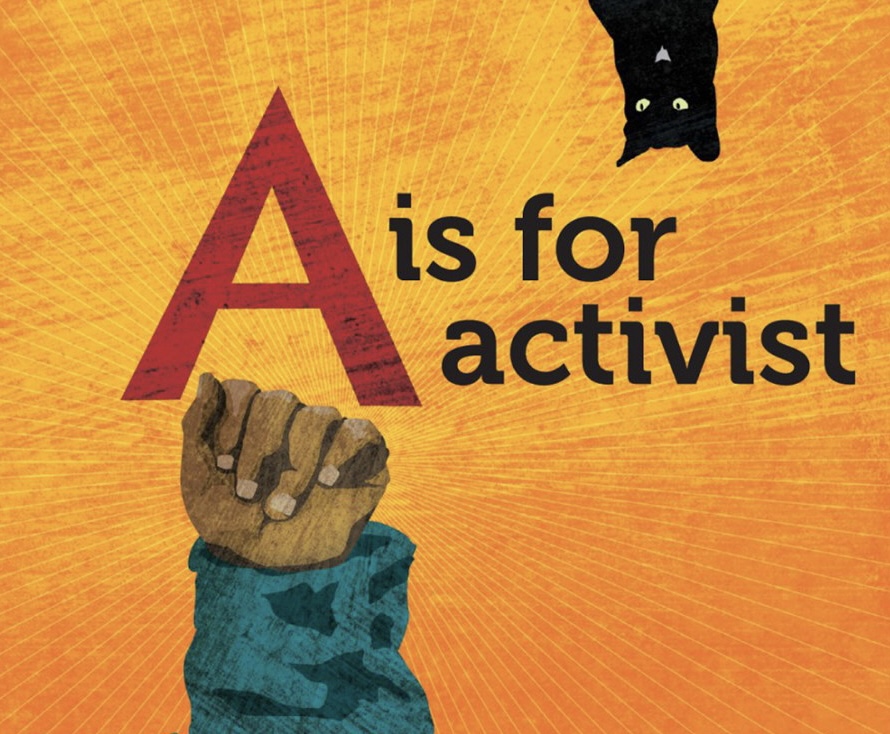
One of these stories has to do with the most obvious of educational middlemen: book publishers. Some of them have joined forces with the #DisruptTexts movement among leftist teachers, helping it to gain headway. These teachers are eliminating great literature from the curriculum on the thin pretext that those books are “too white” or involve “white saviors”, like Atticus Finch of “To Kill a Mockingbird”. The publishers are only too happy to help, offering Zoom seminars on teaching “anti-bias literacy” for a fee and selling new texts for the classroom and guidebooks for teachers that promise to help them make the transition to a curriculum focusing on “advocacy”. That includes a fat dollop of “LGBTQIA” advocacy. One example:

“… replacing ‘The Great Gatsby’ with ‘Juliet Takes a Breath’–a book about a ‘queer Latinx woman’ interning under a feminist writer in Portland.”

Tony Kinnett, co-founder of The Chalkboard Review, is quoted extensively at the link above. He says:

“Take all the racial stuff and set it aside. The Western canon is just objectively better literature. It is a higher form of language. It requires you to think. The plots aren’t spoon-fed to you. The moral of the story isn’t so black and white that it’s like watching a PBS after-school special. … In the #DisruptTexts movement, the big thing you’re going to see is ‘Culturally Relevant Pedagogy’, which is, at best, a pandering concept, and at worst, a horribly racist concept”

This is not confined to middle or high school. The idea is to inculcate “woke activism” from K-12 and beyond. To put it bluntly, the #DisruptTexts crowd promotes activist dumb-assery to our children to the exclusion of traditional lessons and the great writers of the past.

As Tom Knighton warns, the effort to get critical race theory (CRT) into schools is sometimes made with a cunning, as if designed to escape parents’ attention. It might be called by names other than CRT, but it is a danger to your child’s education and well being.

Not on Our Backs

Better news came in a recent article about a college that thumbed its nose at an accrediting association by simply eliminating a social work program, rather than complying with requirements that compromised the school’s values. Cairn University, a Christian school near Philadelphia, rejected the demands for accreditation by the Council on Social Work Education (CSWE). Accreditors like CSWE are middlemen organizations that sometimes attempt to leverage educational institutions as tools for advocacy. A statement from Cairn explained that the CSWE standards are objectionable because they embody:

“… a set of critical theory and intersectionality assumptions and values inconsistent with our biblical view of humanity, human nature, and the world.”

In May, the CSWE claimed that Cairn’s president was exaggerating the changes in the Council’s requirements, and noted that it was aware of efforts in various states to limit education in “racism, diversity, and equity”. Apparently, Cairn’s response was SO WHAT? The new standards are what they are, as noted at the link above. Good for Cairn U!

Big Charity

Finally, I previously overlooked another obvious set of “woke middlemen”: the charitable establishment, which often serves to promote and fund leftist causes, including election activism. The article at the link, by Hayden Ludwig, focuses primarily on the Silicon Valley Community Foundation (SVCF), which he describes as a 501(c)(3) “pass-through” philanthropy. It is funded by still other donor-funded vehicles and supported by such Big Tech luminaries as Mark Zuckerberg and Jack Dorsey, among others. And to whom does SVCF “pass” these tax-privileged funds? According to Ludwig, some of the recipient organizations are local universities and arts organizations. However, billions of dollars have been awarded to the likes of the following left-wing nonprofits:

Voter Turnout

  • Voter Participation Center (nationwide pre-filled absentee ballot applications)
  • Center for Voter Information (same)
  • Voter Registration Project, which in turn funds:
    • State Voices
    • New Florida Majority
    • Florida Immigrant Coalition
    • Georgia Coalition for the People’s Agenda
    • Blueprint North Carolina
    • Mi Familia Vota
  • Texas Organizing Project (BLM)
  • National Redistricting Foundation (Eric Holder)

Political Dark Money

  • New Venture Fund
  • Tides Foundation
  • Tides Center

Other Leftist Political Grants

  • Clinton Foundation
  • Barack Obama Foundation
  • Southern Poverty Law Center
  • Forward Justice
  • Color of Change Education Fund
  • Food & Water Watch
  • Vera Institute of Justice
  • Human Rights Watch
  • ACLU Foundation

Ludwig rightly warns about the potential that large donors can alter election results by providing funds to activist organizations like these, quite apart from the pernicious leftist influence of their social media, news, or other business organizations:

“Those are just the seven-figure grants from a single year, from a single organization. The left has dozens of mega-funders just like it, feeding hundreds of activist groups. Can the right boast the same? In my experience, the answer is a resounding ‘no.’ … Too few realize that the professional left in this country is the best-funded, most well-coordinated political machine in the world, thanks to its weaponization of America’s generous nonprofit sector.”

These days, leftist mega-donors like George Soros and Tom Steyer are even helping to field “fake-Rs” in Republican primaries in districts that Dems could never win. Fortunately, they haven’t prevailed … yet!

Conclusion

The kinds of “woke middlemen” I’ve discussed here and previously are too easy to overlook, often flying “under the radar” of both libertarians and conservatives. Unfortunately, they are highly effective and extremely dangerous to the education of our children and the information available to potential voters. They are a threat to our election process, and ultimately to all of our political institutions, not to mention individual freedom. Our republic’s saving grace is that the people often recognize when elites are pushing bad ideas or trying to gaslight them. But ultimately, the fight to preserve election integrity, educational balance, free speech, and individual rights is likely to require greater firepower.

Notes From the Spousal Shotgun Seat

29 Thursday Jul 2021

Posted by Nuetzel in Driving

≈ 1 Comment

Tags

Baboon Social Cohesion, Backseat Driving, Blind Spot, Blind Spots, Defensive Driving, Double Coincidence of Wants, Exit-Only Lanes, Green Light Etiquette, Marital Tranquility, Parking Etiquette, Passing Lane, Passing on Right, Rear Camera, Riding Shotgun, Right on Red, Roundabout Navigation, Three-Point Turns, Turn Signal

I’m on a road trip with my spouse and it means some time for me in the passenger seat. That’s because we are such an enlightened, sharing couple. I have mostly resisted temptations to offer driving tips to my spouse, but it can be very challenging. This time, I decided to catalogue my spouse’s driving “issues” as a simple exercise in the interest of preserving my sanity.

Much of what you’ll see below takes the form of advice, only I cannot say much of it out loud without blowing our domestic tranquility to smithereens! Bad move on a long trip! So despite frustrations, the reticent approach is probably all for the good. After all, even troops of baboons are said to move at speeds less than ergonomically optimal “in order to maintain social cohesion”. And it is just so in my marriage. Of course, this is about more than speed, but if I condense all of the issues into the single-most convenient dimension, it would come down to slower speeds. Like a long-striding baboon tolerating an angst similar to my own, I’m willing to sacrifice speed in order to keep the troop happy and together.

General Advice

Lest I be accused of favoring a certain recklessness, I’ll start by asserting that defensive driving does not mean you have to be timid. You’re not being hunted. Don’t constantly imagine a need for deference. Watch out for other vehicles, but take charge! Be deliberate. And fucking GO!

Ignore irrelevant information! If you’re trying to follow I-75, don’t freak every time you see signs for other roads or interstates, unless of course you’re trapped in an exit-only lane! You might not think this is a “thing” unless you’ve been on the road with a driver who’s unable to filter information!

Look Ahead

You wouldn’t walk down the sidewalk with your eyes fixed only on the area immediately before your feet. Don’t drive that way either! Plan and execute smooth transitions as circumstances and opportunities dictate. Look ahead!

My general mantra is, “The right lane is for losers!” Say it aloud! I actually managed to get a laugh out of my spouse with that line. Alright, when the right lane is empty, you should stay there, but…

Don’t get trapped in the right lane when you know traffic is entering the road just ahead of you.

Don’t get trapped in the right lane when you know it’s full of people planning to turn right, which is frequently the case!

Don’t get trapped in an exit-only lane! In general, if there’s a middle lane, you can improve your “optionality” by staying there.

If you’re changing to a middle lane, glance two lanes over before you move, not just one! This is exactly when drivers in different lanes don’t need a coincidence of wants. And don’t rely solely on your side mirrors.

Look Back

I can’t recount the number of times my spouse has been startled, dangerously, by drivers passing her at high speeds. “OhMyGOD!” This has happened to me too, and it can be quite dangerous. Try to glance in the rear view mirror on a regular basis to avoid nasty surprises like this, and don’t make sudden moves as other vehicles approach from behind unless you really want to confuse them!

Turns

Dual left turn lanes are especially tough for my spouse to negotiate. I think this stems from a failure to “look ahead”. Get a fix on the end point, and try to think of the whole turn… a sweeping curve. Do not search for each dashed line along the path. Just give cars turning alongside you a fair berth.

Right turns on red can be quick and painless. If, when you arrive at an intersection, the “oncoming” vehicles to your left are at a dead stop, then fucking GO! They will NOT suddenly leap across the intersection and smash into you. Of course, watch out for pedestrians near your corner!

And regarding right turns, if left-turning “blockers” are moving in the opposite direction, fucking GO!

You do not have to come to a near stop as you approach an empty roundabout! “Yield” matters only when there is someone to whom you might yield. So fucking GO!

When you have a dedicated or open lane to take after your turn, take it! Fucking GO!

Turn smoothly!! If you’re turning right, don’t get yourself out in the middle of the damn road before turning your wheels! I can’t tell you how many times I’ve had my heart in my throat over this issue.

If you want to change lanes on a busy road, use your damn turn signal to indicate your intention to other drivers!

Stop Lights

As you approach a red light, always choose the lane with the fewest cars. PLEASE!

Never brake as you approach a green light. Fucking GO!

In a long line of cars at a light, don’t stop car-lengths behind the one in front of you (making allowances when on a steep incline). You probably do want to make the next green light, as do all the poor saps behind you.

When the light turns green, if you can go, fucking GO!

Make judicious use of your horn! Don’t be afraid to give it a little tap to rouse the distracted shmuck in front of you when the light turns green.

Parking and “Unparking”

Don’t park like an idiot! Park in one space between the fucking lines!

If you have a choice, don’t ever park next to anyone parked like an idiot.

On a hot day, don’t drive past shaded parking places in favor of spots in the blazing sun!

Refine your spacial orientation. It’s amazing how many two-point turns are made into three-plus point turns by drivers lacking these bearings. Get a handle on the fucking dimensions of your vehicle!

Use your rear camera and figure out what the colored lines mean.

Passing

Don’t linger alongside large tractor trailers, or any other vehicle for that matter. Especially do not linger toward the rear of those vehicles! Fucking pass them. Shoot the gap! GO!

And never linger on anyone’s right rear side … they don’t call it a blind spot for nothing!

When you pass, don’t shake the steering wheel back and forth as if you must thread a jumping needle!

If you are forced to pass on the right, get it done! Fucking GO!

Do NOT attempt to pass on the right if there’s an even slower vehicle ahead of you! You’ll get fucking trapped!

Don’t be shaken by drivers who would very much like to get around you. Use your turn signal and get out of the way at your earliest convenience.

Silence Not Always Golden

I don’t always suffer in silence while my spouse is behind the wheel, but I try to choose my spots wisely. Not that it’s easy! I react when I perceive danger, but there are times I regret it. And to be fair, my spouse hasn’t had an accident or a traffic citation of any kind in quite some time. That’s a big plus! My own driving record has a few … ahem … blemishes, but mostly speeding tickets, and it’s been a while.

I also note that this has nothing to do with gender. I have a few pals who are awful drivers. The difference is I can get in their ear about it without getting hours of the silent treatment!

We are hitting the road for home in a few days, and I’ll do my best to keep my nose out of the spouse’s driving when I’m riding shotgun. Hey, she’s my babe!!

Banished Illusions: They Screwed the People and the Country

22 Thursday Jul 2021

Posted by Nuetzel in Constitution, Corruption, Election Fraud

≈ Leave a comment

Tags

Adam Schiff, Biden Inc. Hunter Biden, Big Tech, Brett Kavanaugh, Capitol Police, COVID, Darryl Cooper, DNC, Donald Trump, Election Fraud, Insurrection, James Comey, John Brennan, MartyrMade, Pay-For-Play, Propaganda, Tyler O’Neil, Voting Procedures

There’s no shortage of nincompoops buying into the legitimacy of the Biden presidency and the bullshit narrative about “an insurrection” at the U.S. Capitol building on January 6th. I’m sure they’re quite content in their ignorance — they refuse to even consider the evidence available regarding the lack of ballot integrity in Arizona, Georgia, Pennsylvania, Texas, and elsewhere, and they continue to pretend the January 6th debacle was a real threat to our democracy, rather than a largely peaceful group of wide-eyed goofballs who were mostly waved through the barricades by the Capitol Police.

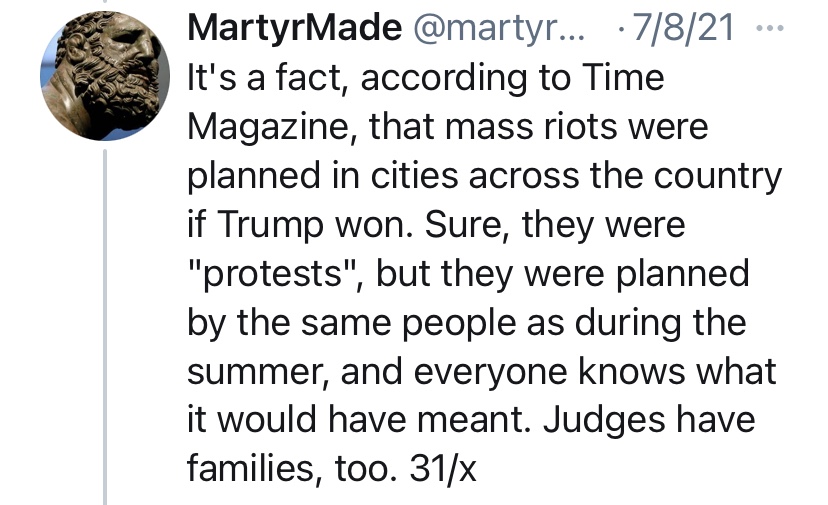
One of the best summaries I’ve read about the attitudes of those who feel disenfranchised by the 2020 election is this series of tweets by the of the MartyrMade podcast, Darryl Cooper. His tweets are also discussed here by Tyler O’Neil. It is Cooper’s “general theory” on the perspective of “Boomer tier” Trump supporters, as he calls them. Last year’s fraudulent election was only the culmination of events going back to the investigation of Donald Trump’s 2016 campaign. The whole thread is interesting, but you must get past a little “soft cover” at the start that might have been intended to distract the speech police at Twitter. I’ll try to summarize here:

  • The intelligence community spied on the Trump campaign in 2016, and that’s a major transgression! The DNC was involved too, actually paying for fabricated evidence. James Comey falsely denied any knowledge of that fact. John Brennan and Adam Schiff also lied shamelessly in this affair.
  • By the time Trump supporters realized all the noise was fake, they naively expected justice to be served. But no, and so their faith in certain institutions was shaken.
  • The gaslighting continued, and the whole thing consumed energy and had a chilling effect on participation in the Trump Administration. This was an active kind of subversion crossing “all institutional boundaries”.
  • The participation of the press was the poison icing on the cake. The press is now viewed by much of the country as a propaganda arm of “The Regime”.
  • Many aren’t sure whether the election was fixed, but if it was, they know they’d be lied to about it. 
  • Voting procedures in many jurisdictions were changed using COVID as a pretext. 
  • The press smoke-screened the Biden, Inc. scandals, including evidence of pay-for-play and incredibly lurid information on Hunter Biden’s laptop. Instead, the press played-up gossip about Trump. 
  • Trump people rightly felt betrayed by the very institutions they’ve always trusted, but they voted in record numbers, and we’re not convinced all were counted.
  • “But when the four critical swing states went dark at midnight, they knew.”
  • Conspiracy theories abounded, but media and tech shut down discussion of real anomalies. Had the election gone Trump’s way, they would have cried foul! 
  • The courts were handcuffed by fear of political violence and retribution.

I agree with substantially all of Cooper’s thread. Our experience since Donald Trump became an active politician has been disillusioning in several respects: it has shown how flimsy our constitutional rights and our republic are when the wrong actors come to dominate certain institutions. It also shows how malleable are the “facts” that we are asked to accept by these actors. We are seemingly helpless to defend the rule of law, the Constitution, and social norms when an intransigent minority decides it can simply ignore them. This is how tyranny is borne.

Election integrity is not an outlandish objective. Neither is demanding fair treatment of diverse viewpoints from social media, Big Tech, and educational institutions. And neither is it outlandish to demand safe communities and adequate police protection; that our borders be enforced; that our public health officials speak honestly about risks; and that we should never, under any circumstances, be judged, punished, or rewarded based on the color of our skin. These are just a few of the things we must demand, and never take “no” for an answer.

Will Your Local School Get a “Wokey-Dokey”?

16 Friday Jul 2021

Posted by Nuetzel in Capital Markets, Education, Wokeness

≈ 3 Comments

Tags

Academic Dilution, American Bar Association, Cobb County Georgia, Cognia, Critical Race Theory, Diversity, Environmental Social Governance Scores, Equity, ESG Scores, Fact-Checking, Forward Though Ferguson, Grant Making, Investor Activism, John O. McGinnis, Missouri Department of Education, Originalism, School Accreditation, Stacey Lennox, Woke Middlemen

“Middlemen” are often characterized as rip-off artists, or “takers” who somehow insinuate a role for themselves without adding value. They usually do perform valuable roles, however, in price discovery and in matching and routing product to willing consumers, as well as offering a feedback loop to producers. Still, it would be difficult to defend them if they routinely favored producers whose business practices had specific political objectives. Certain middlemen, whom we might broadly label “influencers”, play an indirect role in the transaction process that is sometimes formalized, but not always. They can be rating agents, personalities on social media, or funding sources. Increasingly they blend political criteria into their ratings, recommendations, and decisions. Unfortunately, a number of institutions (and consumers) are falling prey to the corrosive influence of “woke middlemen”, or have already, including education, capital markets, and even law enforcement. The list broadens considerably if we include the influencer roles often played by media more generally, and even government itself.

Grading Schools’ Wokeness

School accreditation at the K-12 levels is often in the hands of organizations that serve as “woke middlemen”. For example, those in charge of accreditation may be in a position to demand compliance with the tenets of critical race theory (CRT). If you haven’t seen it, read this post by Stacey Lennox on the impact that accreditors are having on schools in Cobb County, Georgia. It can be very painful for a school and its students to lose accreditation. Such a loss can happen as a result of legitimate academic decline, but it also can be used as a threat of political retribution, as the situation in Cobb County so aptly illustrates. The task of awarding accreditation is performed by different agents in different states, but often a state’s education department will contract out to firms like Cognia, Inc. This company’s treatment of the Cobb County schools is shocking, and Cobb County taxpayers pay more than $133,000 annually for Cognia “membership”.

The CEO of Cognia says its commitment to diversity, equity, and inclusion has prompted it to introduce a “new protocol” in its approach to education standards. Celebrating diversity is one thing, but the application of “equity” in the allocation of school or district resources is quite another. But have no fear! Cognia is happy to offer its consulting services to schools to help them meet these new standards. Lennox notes that a few interested parties in Georgia, including parents and state officials, are scrutinizing Cognia’s sinister role in the matter of the Cobb County schools. That can’t happen soon enough!

Cognia operates in a number of other states. In Missouri, for example, the company is intimately involved in the accreditation of private schools. The state Department of Education is mandated by law to handle accreditation of public schools. The DOE’s standards were recently revised, with input from a variety of “stakeholders”, especially the public education establishment. It also receives input from organizations like Forward Through Ferguson, which represents “stakeholders” affiliated with a school district that lost its accreditation several years ago. As the last link shows, that organization takes a strong position on matters of racial equity and justice. It should not come as a surprise that the latest school standards issued by the Missouri DoE in 2020, which are greatly revised and expanded, place specific emphasis on racial equity. It’s certainly not clear that promoting equity, as a distinct mission beyond assessing academic performance, is part of the DoE’s mandate under state law. 

The same dynamic is operative at higher levels of education. For example, John O. McGinnis reports on that august middleman known as the American Bar Association, which now proposes “new accrediting standards for law schools that would make them more race-conscious, more politically correct and less intellectually diverse.” This proposal reeks of a desire to downgrade law schools that treat originalist principles with respect. It’s as if we need more attorneys lacking any real understanding of the fundamental, individual rights recognized by and enshrined in our Constitution.

Back to the K-12 levels, the greater is the emphasis on equalizing outcomes, which is the ultimate goal of calls for academic “equity“, the less is the focus on academic excellence. Gifted programs are almost sure to receive fewer resources. Subjects like math and science are recalibrated toward a lower common denominator. Difficult reading assignments are put aside. Discipline suffers. And that’s all before we get to instruction in social justice and critical race theory! If they aren’t already in on it, today’s school leaders might well suffer from “Wokaphobia”, or fear of the consequences of insufficient wokeness.

Grading Corporations’ Wokeness

In the past I’ve written about “middleman” organizations assigning so-called “Environmental, Social, and Governance” (ESG) scores to public companies. These scores are marketed to activist investors, investment funds, and financial advisors as criteria for building “socially responsible” portfolios. ESGs are very much in vogue at the moment, and they have political and social objectives. A public company with a low ESG score, or a fund holding a portfolio of companies with a low average ESG score, may be penalized by the investment community. To avoid such an outcome, companies engage in all sorts of virtue signaling nonsense, not to mention misdirection of staff and assets on pursuits that have nothing to do with fundamental business objectives.

The same kind of corporate waste is motivated by attempts to gain positive media attention or even approval of so-called influencers. There is nothing new about public relations, but today, a veritable army of negative-PR activist “middlemen” hunt for corporate victims on which to prey. The slightest transgression, be it any direct or indirect association with carbon emissions, “cultural appropriation” in advertising, a gender/racial wage or hiring gap, a negative regulatory finding, or any disparate impact in pricing, can subject a company to withering condemnations on social media, in the community, and at the corporate gates. This excessive scrutiny does great social and economic damage, dominating attention and absorbing resources in a defensive posture, all at the expense of a proper focus on the value of product and the people who work honestly to produce it.

Woke Middlemen and Social Failure

Woke leftists performing reviews for school accreditation are dangerous to our children and the future of our republic, and there are other kinds of “middlemen” who are actively undermining schools, such as teachers’ unions. The ESG scores produced by middlemen from the woke investor community undermine business objectives and economic efficiency. We could add to the list of middlemen the corrupt “fact checkers” promoted by major media organizations, large political contributors who fund the campaigns of anti-police prosecutors, and climate-alarmist grant-making organizations. Conservatives and libertarians have varying levels of awareness of these influencers and middlemen, who have been broadly successful in institutionalizing their agendas. They sometimes operate behind the scenes, and they sometimes are cloaked in an ostensible legitimacy, but one must know one’s enemies. Like invasive weeds, they are difficult to root out. In a few cases they can simply be ignored, but their impact elsewhere will be hard to reverse unless they are challenged politically, in the courts, and in the marketplace.

Health Insurance Profits Are Not the Problem

08 Thursday Jul 2021

Posted by Nuetzel in Health Insurance, Profit Motive

≈ Leave a comment

Tags

Capitalization, COBRA, Community Rating, Cronyism, Death Spiral, Economies of Scale, Health Insurance, Medical Loss Ratio, Monopsony, Obamacare, Premium Subsidies, Profit, Profit Motive, Single-Payer System

My dentist said, “Oh well, these days it’s really only about whether the insurance company makes a profit….” A giant appliance was in my mouth at the time, propping it open, so I couldn’t respond. But I made a mental note because it reminded me of the hypocrisy so common in how people regard the concept of profit. That’s especially true of the Left, and I happen to know that my dentist, whom I personally like very much, stands well to my left. 

Profit Is Income

It’s worth pointing out that profit is merely compensation. My dentist collects revenue, often paid to him by insurers. If he runs an efficient practice, then he earns an income after paying staff, office rent, various suppliers, and for equipment, including interest on any debt outstanding. You wouldn’t be wrong to call that profit, and he does pretty well for himself, but somehow he thinks it’s different.

My dentist probably feels locked into an adversarial position with my insurer, and of course he is in the short run. He says his price is $750; the insurer says, “Sorry Charlie, you get $250”. So as far as he’s concerned, it’s a zero-sum game. Not so in the long run, however. He needs to partner with insurers to get and keep patients, so the exchange is mutually beneficial. And while he might do some picking and choosing among insurers, he’s essentially a price taker. His “price” of $750 is something of a fiction, as he’s clearly willing to do the work for the insurer’s reimbursement. 

I think the key qualitative difference between my dentist’s income and that of any wage earner is that his income is always at risk. After all, profit is often regarded as a return to entrepreneurial risk-taking. As it happens, he’s taking a loss on my new crown because it cracked as soon as he put it in. Then, he had to start from scratch with new impressions, after painstakingly removing the cemented, cracked pieces with what felt like a tiny circular saw.

Middling Profitability

But what about those profit-hungry health insurers? In fact, they are not known for outrageously high profits, and their earnings are typically not valued as highly by the market as those of other industries, dollar for dollar. Competition helps restrain pricing and enhance performance, of course. And since the advent of Obamacare, profits have been subject to a loose “cap” (more on that below).

The profitability of health insurers improved in 2020, however, because so many tests and elective procedures were postponed or foregone due to the coronavirus pandemic. That also prompted the government to make more generous subsidies available to consumers to pay COBRA insurance premiums.

Profits Drive Efficiency

I’ll put aside concerns about the crony capitalism inherent in the health system-insurer-regulator nexus, at least for a moment. The profit motive is the fundamental driver of efficiency in the production of insurance contracts and pooling of risks, as well as efficient servicing and administration of those contracts. Absent the possibility of profit, these tasks would become mere bureaucratic functions with little regard for cost and resource allocation. Furthermore, managing risk requires a deep pool of capital to ensure the ability of the insurer to meet future claims. Reinvestment and growth of the enterprise also requires capital. That capital is always at risk and it is costly because its owners demand a return as fair compensation. 

Poor Alternatives

Eliminating profit from the insurance function implies that resources must be put at risk without compensation. That’s one of the reasons why non-profit insurers, over the years, have tended to be thinly capitalized and unstable, or limited in their offerings to “health maintenance” benefits, like primary or preventative care, as opposed to insuring against catastrophic events. Capital grants to non-profits (private or governmental) usually come with strings attached, which can severely limit the effectiveness of the capital for meeting existing or future needs of the operation. Growth requires reinvestment, so a profit margin must be earned in order to grow with internal funds. Where non-profits are concerned, you can call the “margin” whatever you want, but it is functionally equivalent to a profit margin. 

On the other hand, insurance provided by the public sector puts the taxpayer at risk, and the potential liability to taxpayer “capital” is never rewarded nor indemnified. But it is not free. Now, you might insist that we’d all benefit from government-sponsored health insurance because of the broader risk pool. The problem with that perspective is that it turns the pricing of risk into a political exercise. We’ve already seen the destructive effects of community rating. Younger, healthier, but budget-constrained individuals tend to opt out due to excessive premiums, leading to a systemic “death spiral” of the pool.

Administrative Costs

A puzzling contention is that private insurers drive up administrative costs, presumably when compared to a single-payer system. Obamacare regulations limit the so-called Medical Loss Ratio of a health plan. To simplify a bit, this requires rebates to customers if premiums exceed claims by a certain threshold, which varies across individual, small, and large group markets. This regulation obviously places a loose cap on profits. It is also arbitrary and probably has hampered competition in the individual market. And of course there have always been suspicions that the ratio can be “gamed”. 

Nevertheless, under a single-payer system, it would be shocking if economies of scale were sufficient to reduce administrative costs to levels below those incurred by private insurers (especially if we exclude profit!). After all, scale is seldom a prescription for government efficiency, and that’s largely due to the absence of a profit motive and any semblance of competition! What administrative savings might be achieved by a monopsony public payer are likely to derive mainly from “one-size-fits-all” decision-making and product design, with little heed to consumer preferences and choice.

I’ll Take the Profit-Maker’s Coverage

There is plenty to criticize about the health insurance industry. In important ways, it has already succeeded in shifting risks to taxpayers with the help of its policy-making cronies. The insurers are further protected by a flow of government premium subsidies to the individual market; and the largest insurers have benefitted from Obamacare regulations, which encourages increased market power by large hospital networks, which are happy to negotiate charges that benefit themselves and insurers. All else equal, however, I’d rather have a few choices from profit-making health insurers than a single, community-rated choice from the government. I’d rather see risk priced correctly, with direct subsidies made available to individuals in high-risk segments unable to afford their premiums. And I’d rather see less government involvement in health care delivery and insurance. We’d all be better off, including my dentist!

Renewable Power Gains, Costs, and Fantasies

01 Thursday Jul 2021

Posted by Nuetzel in Electric Power, Renewable Energy

≈ 2 Comments

Tags

Baseload, Blackouts, California, Combined-Cycle Gas, Dispatchable Power, Disposal Costs, Dung Burning, Energy Information Administration, External Costs, Fossil fuels, Francis Menton, Germany, Green Propaganda, Interrmittency, Levelized Costs, Modern Renewables, Peak Demand, Plant Utilization, Renewable energy, Solar Power, Texas, The Manhattan Contrarian, Willis Eschenbach, Wind Power

“Modern” renewable energy sources made large gains in providing for global energy consumption over the ten years from 2009-19, according to a recent report, but that “headline” is highly misleading. So is a separate report on the costs of solar and wind power, which claims those sources are now cheaper than any fossil fuel. The underlying facts will receive little critical examination by a hopelessly naive press, nor among analysts with more technical wherewithal. Of course, “green” activists will go on using misinformation like this to have their way with policy makers.

Extinguishing Dung Fires

The “Renewables Global Status Report” was published in mid-June by an organization called REN21: Renewables Now. Francis Menton has a good discussion of the report on his blog, The Manhattan Contrarian. The big finding is a large increase in the global use of “modern” renewable energy sources, from 8.7% of total consumption in 2009 to 11.2% in 2019. The “modern” qualifier is critical: it distinguishes renewables that made gains from those that might be considered antiquated, like dung chips, the burning of which is an energy staple in many underdeveloped parts of the world. In fact, the share of those “non-modern renewables” declined from 11.0% to 8.7%, almost fully accounting for the displacement caused by “modern renewables”. The share of fossil fuels was almost unchanged, down from 80.3% in 2009 to 80.2% in 2019. Whatever the benefits of wind, solar, and other modern green power sources, they did not make much headway in displacing reliable fossil fuel energy.

I certainly can’t argue that replacing dung power with wind, solar, or hydro is a bad thing (but there are more sophisticated ways of converting dung to energy than open flame). However, I contend that replacing open dung fires with fossil-fuel or nuclear capacity would be better than renewables from both a cost and an environmental perspective. Be that as it may, the adoption of “modern renewables” over the ten-year period was not at the expense of fossil fuels, as might be expected if the latter was at a cost disadvantage, and remember that renewables were already given an edge via intense government efforts to subsidize and even require the use of wind and solar power.

The near-term limits on our ability to substitute renewables for fossil fuels should be fairly obvious. For one thing, renewable power is intermittent, so it cannot be relied upon for baseload generation. The chart at the top of this post demonstrates this reality, though the chart is “optimistic” in the sense that planners have to consider worst-case intermittency, not merely average production by time-of-day. Reliable power sources must be maintained in order to prevent the kinds of disasters like we saw in Texas last winter when demand spiked and output from renewables plunged. This is an area of considerable denialism: a search on “intermittent renewables” gets you an unending list of rosy assessments of energy storage technologies, and very little realistic commentary on today’s needs for meeting base-load or weather-induced demands.

While renewables account for about 29% of global electricity generation, there is another limit on adoption: certain jobs just can’t be done with renewables short of major advances in battery technology. As Menton says:

“Steel mills and tractor trailer trucks and airplanes powered by solar panels? Not happening. … I think these people really believe that if governments will just do the right thing and require airplanes to run on solar panels, then it will promptly happen.”

Cost and Intermittency

Again, we’d expect to see more rapid conversion to renewable energy, at least in compatible applications, as the cost of renewables drops relative to fossil fuels. And major components of their costs have indeed dropped, so much so that the U.S. Energy Information Administration (EIA) now says they are cheaper than fossil fuels in terms of the “levelized cost” of new electric generating capacity. That’s the average cost per megawatt-hour produced over the life of a new installation. The EIA’s calculations are distorted on at least two counts, however, as Willis Eschenbach ably explains here.

The EIA’s cost figures reflect a “capacity factor” that adjusts the megawatts produced to presumed “real world” conditions. It’s more like a utilization adjustment made necessary by a variety of realities (intermittency as well as other technical imperfections) that cause output to run lower than the maximum under ideal conditions. Eschenbach reports that the factors applied by the EIA for solar and wind, at 30% and 41%, respectively, are overstated drastically, which reduces their cost estimates by overstating output. For solar, he cites a more realistic value of 14%, which would more than double the levelized cost of solar. For wind, he quotes a figure of 30%, which would increase the cost of wind power by more than a third. That puts the cost of those renewables well above that of a “combined-cycle gas” plant, which uses exhaust from gas turbines to generate additional power via steam.

The true costs of renewables are likely much higher than nuclear power as well, based on earlier comparisons of nuclear to combined-cycle gas. The EIA does not report a cost for nuclear power, however, because the report is for new capacity, and no additions of nuclear capacity are expected.

The Cost of Back-Up Capacity

Eschenbach notes a second major problem with the EIA cost comparisons. As discussed above, the intermittency of solar and wind power means that their deployment cannot provide for base loads. Other “dispatchable” power technologies, on which production can be ramped up or down at discretion, must be available to meet power needs when renewables are off-line, as is frequently the case. The more we attempt to rely on renewables, the more significant the intermittency problem becomes, as Germany, Texas, and California are discovering.

How to account for the extra cost of dispatchable power required to smooth production or meet peak demand? Renewables are simply incapable of doing so reliably, and back-up capacity ain’t free! Meeting demand at all times requires equivalent dispatchable capacity in the power mix. It requires not just dispatchable baseload capacity, but surge capacity! Meeting long-term growth in demand with renewables implies that new back-up capacity is required as well, and the levelized cost should reflect it. After all, those costs won’t be saved by virtue of adding renewable capacity, unless you plan on blackouts. Thus, the EIA’s levelized cost comparisons of wind, solar and fossil fuel electricity generation are completely phony.

Conclusion

Growth in wind and solar power increased their contribution to global energy needs to more than 11% in 2019, but their gains over the previous ten years came largely at the expense of more “primitive” renewable energy sources, not fossil fuels. And despite impressive declines in the installation costs of wind and solar power, and despite low variable costs, the economics of power generation still favors fossil fuels rather substantially. In popular discussions, this point is often obscured by the heavy subsidies granted to renewables. 

In truth, the “name-plate” capacities of wind and solar installations far exceed typical output, so installation costs are spread over less output than is widely believed. Furthermore, the intermittency of production from these renewable sources means that back-up capacity is still required, almost always from plants fired by fossil fuels. Properly considered, this represents a significant incremental cost of renewable power sources, but it is one that is routinely ignored by environmentalists and even in official reports. It’s also worth noting that “modern” renewables carry significant external costs to the environment both during the useful life of plant and at disposal (and see here). It’s tempting to say all these distortions and omissions are deliberate contributions to the propaganda in favor of government mandates for renewables.

The Left Always Hurts the Ones They “Love”

28 Monday Jun 2021

Posted by Nuetzel in law enforcement, Leftism, Lockdowns

≈ Leave a comment

Tags

Defund the Police, Disparate impact, Family Instability, George Floyd, Gun Control, Leftism, Lockdown Orders, Marxism, Non-Pharmaceutical interventions, Police Bias, Police Homicides, Regressive Policy, Rent Controls, School Discipline, Shelter at Home, Unintended Consequences, Wage Floors, Welfare State, Work Disincentives

The policies foisted upon the country by the Left always hurt those constituencies they think they’ll help, and they backfire in very predictable ways. There are too many instances of that truism to recount, but just a couple of examples follow.

Economic Perils of Precaution

We can start with the interminable non-pharmaceutical interventions (NPIs) imposed in many states during the pandemic. These included shelter-at-home orders, limits on public gatherings, school closures, and the like. These lockdown measures were more severe in so-called blue states controlled by the Democrat Party. But NPIs were a policy failure and did little to stem the pandemic or excess deaths. Moreover, they resulted in the closure of many businesses and massive job losses. The economic burden fell especially hard on low wage earners, as the following chart shows:

For high earners (the red line), the employment decline at the start of the pandemic was small and relatively brief. Less fortunate were those earning under $27,000 annually (the blue line). They suffered a much larger initial decline in employment and had a continuing loss of almost 24% of jobs. While those who lost jobs ultimately received enhanced unemployment compensation and other benefits, the idleness and loss of work experience inflicted long-term damage to health, psyches, and future prospects. Thus, the party with pretensions of championing the cause of the downtrodden was pleased to intervene with policies that undercut the working poor.

But Some Precautions Are “Racist”

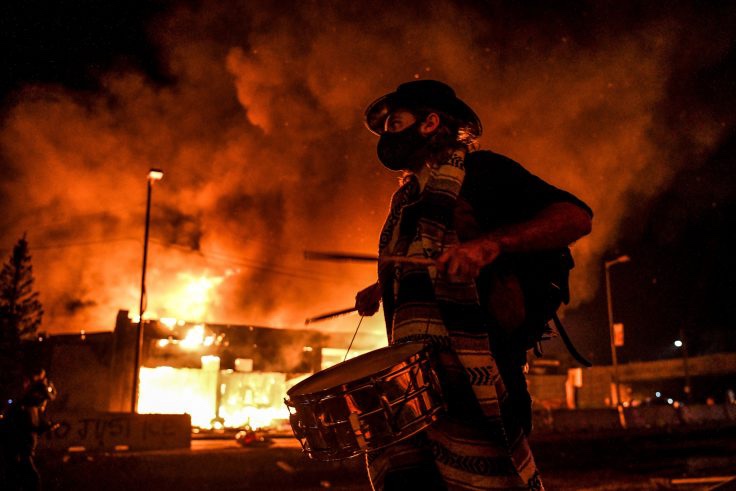
Another prominent case in which leftists have harmed those for whom they claim to advocate is the effort to “defund the police”. Low income and minority populations do not favor such a policy because they understand the value of protection against criminal elements who victimize their communities. The residents of these communities are most at risk from gangland violence and homicide. Furthermore, nearly all “victims” of police homicides are armed, and police homicides are closely associated with crime. And again, the sad fact is that crime is heavily concentrated in minority neighborhoods. The statistics do not support assertions of bias in policing. Obviously, these citizens have taken notice that the riots cheered on by the Left have been destructive to their communities.

Crime has spiked in Minneapolis and elsewhere since last summer, when George Floyd’s death sparked interest in the “defund the police” mantra promoted by the Left. And there followed a reduction in police budgets of about 5.2% in aggregate in the 50 largest cities in the country (though not all of these cities made cuts). Moreover, the effectiveness of policing has been undercut more broadly by the substantial legal risk now facing officers who earnestly attempt to enforce the law, as well as more restrictive use-of-force policies.

These changes are an unambiguous disaster for so many good people having the misfortune to live in high-crime areas. And the political disaster is starting to sink in among Democrats, who are already attempting to change the narrative (and see here). It’s pretty transparent that the “black lives matter” dialectic appeals to Democrats primarily as a selling point of convenience, and not so much when there’s actual blood in the streets.

Only the Obvious Matters

Destructive lockdowns and efforts to “defund the police” are just two examples of a perverse phenomenon. It’s well known to keen observers of the history of Marxism in action that it usually victimizes its presumed beneficiaries. That dynamic is at play under school discipline policies that seek to avoid “disparate impacts” on minority students, leaving other minority school children in disruptive learning environments; gun control initiatives making it difficult for minority residents and businesses to protect themselves; rent controls leading to a deteriorating stock of low-cost housing; wage floors causing low-skilled workers to lose hours, benefits, and jobs; energy policies with regressive impacts on household budgets; tax policies destroying incentives for job creation; and a welfare state creating disincentives to work and promoting family instability. This list goes on and on.

The difficulty leftists have in coming to grips with these unintended consequences is that they can’t see past first-order effects. Like spoiled children, they grasp only the ostensible benefits of their demands. And like bad parents, they behave as if to seek approval of the most spoiled among their presumed charges.

Inflation Doomsayers and Downplayers

25 Friday Jun 2021

Posted by Nuetzel in Inflation, Monetary Policy

≈ 2 Comments

Tags

Consumer Price Index, Core CPI, Cryptocurrencies, Deficits, Energy Policy, Federal Reserve, Financial Velocity, Fisher Effect, Helicopter Money, Housing Costs, Import Prices, Inflation, Inflation Premium, Irving Fisher, M1, Median CPI, Monetary policy, Monetization, Shrinkflation, Trading Volume, Trimmed CPI, Velocity of Money

There’s a big disconnect between recent news about escalating inflation and market expectations of inflation. In fact, there’s a big disconnect between market expectations and what we’re hearing from some conservative economists. The latter are predicting more inflation based on the recent spurt in prices and the expansionary policy of the Federal Reserve. Can these disparate views be reconciled?

Market Predictions

Market interest rates are considered pretty good predictors of inflation, at least relative to surveys and macroeconomic models. That’s because a fixed interest return is eroded by inflation, and fixed income investors will bid up interest rates to incorporate a premium to compensate for perceptions of increased inflation risk. This is known as the Fisher Effect, after the economist Irving Fisher. In fact, investors should bid rates up more than one-for-one with expected inflation, because the inflation premium will be taxed. A higher return must compensate for both higher expected inflation and taxes on the increased inflation premium.

After rising by about 1.2% from last summer through mid-March, interest rates on Treasury notes have declined slightly. The earlier run-up anticipated a strengthening economy, but if the increase was due to higher expected inflation, we could say it represented an added premium of about 1%, and that’s roughly in-line with changes in some other market-based gauges of expected inflation (ignoring pandemic lows).

Recent Inflation News

Meanwhile, measured inflation certainly has increased in 2021. I say “measured” because 1) “true” price changes are measured imperfectly, and 2) there is a difference between real inflation, which is a continuing process, and month-to-month changes in prices. Here, we’re really talking about the latter and hoping it doesn’t turn into a bad case of the former!

The green line in the chart below is the percent change in the consumer price index (CPI) from a year earlier. After declining during the pandemic, it rebounded sharply this year to almost 5% in May. The purple line is the increase in the CPI excluding food and energy prices, otherwise known as the “core” CPI. The jumps shown in the chart are well in excess of the market’s assessment of inflation trends.  

Both versions of the CPI have jumped in the past few months, but it turns out that durable goods like washing machines, TVs, and (probably) Pelotons have jumped the most sharply. Most of the weakness in prices during the pandemic was in non-durable goods, which stands to reason because so many activities away from home were curtailed. Also noteworthy about these price movements: when measured over a span of two years, prices excluding food and energy have risen at an annualized rate of only 2.6%. 

There are two other lines in the chart above that demonstrate much less alarming changes in prices: the orange line is so-called “median” inflation, which is the price change in the median component of the CPI. That is, half of all price components included in the CPI rose faster and half rose slower than the median. It has barely accelerated this year and stood at only about 2.1% higher in May than a year earlier. The blue line is the so-called “trimmed” CPI, or the average price change of the middle 84% of all CPI components. While it has accelerated in 2021, the year-over-year increase was only 2.6% in May. 

Thus, the breadth of the jump in prices was limited. The Federal Reserve and a lot of market participants insist that the uptick is narrow and temporary — a transitional phenomenon related to the sluggish recovery of supplies in the post-pandemic environment.

But again, the accuracy of price measures is always in question. For example, the housing cost component of the CPI was up only 2.2% in May from a year ago, but it is calibrated to actual survey data only twice a year, the survey is a weak data source, and we know home prices and rents have risen aggressively. Quality and quantity adjustments are always in question as well. An old approach for businesses dealing with rising costs is to reduce package size, which has been called “shrinkflation”. It seems to be back in vogue.

Inflation Drivers

It’s not yet clear how much wage pressure is occurring now. The economy-wide average hourly earnings data has been distorted over the past 15 months by the changing mix of employment, first shifting toward greater concentration in high-wage (work-at-home) occupations and now shifting back toward lower-wage jobs as the economy reopens. But we know many employers are facing a labor shortage, due in large part to extended unemployment benefits and other pandemic-related aid, so this puts upward pressure on wages. In 2021, minimum wage rates are undergoing substantial increases in 17 states, and a number of large employers such as Amazon have increased their minimum pay rates. That creates competitive pressure for smaller employers to boost pay as well.

The fundamental cause of an “honest-to-goodness” inflation is “too much money chasing too few goods”. The Federal Reserve has certainly given us enough to worry about in that regard. The basic money stock (M1) increased by four-fold in the late winter and early spring of 2020, just as the pandemic was spreading. Today, it is almost five times greater than in early 2020, so growth in the money stock remains quite fast even as the recovery proceeds. No wonder: the U.S. Treasury is issuing about $1 trillion of new debt every four-to-six weeks, and the Fed is essentially monetizing these deficits by purchasing a huge chunk of that debt.

That’s a lot of “helicopter” money… new money! But are there too few goods for it to chase? Or is it really chasing anything? Is it just sitting idle? First, GDP is likely to exceed its pre-pandemic level in the second quarter, despite the fact that private payrolls are still down by about 7 million employees. Of course, that doesn’t eliminate the ostensible imbalance between money and goods, and one might expect a veritable explosion in price inflation under these circumstances.

So far that seems unlikely. The so-called velocity of money (its rate of turnover) has plunged since the start of the pandemic, with no discernible rebound through the first quarter of 2021. That means a lot of the cash is not being used in transactions for real goods, but financial transaction volume has been quite strong in 2020-21. Daily stock trading volume was up by more than 50% in 2020 from 2019, and in the first quarter of 2021 it stood another 34% higher than the 2020 average (though volume tapered in April). This is to say nothing of the increased frenzy in cryptocurrency trading. So, while some money is turning over, the expansion of the money stock remains daunting and pressure might well spill-over into goods prices.

Caution Is a Virtue

So long as the Fed keeps printing money, and assuring investors that it will keep printing money, the equity markets are likely to remain strong. There are mixed signals coming from Fed officials, but the over-riding message is that the recent uptick in prices is largely temporary and limited in scope. That is, they assert that certain prices are being squeezed temporarily by rebounding demand for goods while suppliers play catch-up. 

Market expectations of inflation seem to agree with that view, but I have strong trepidations. There are cash reserves held in the private sector to support more aggressive spending. Large companies, consumers, and banks are still holding significant amounts of cash. The Biden Administration is doing its best to spend hand-over-fist. This administration’s energy policy is causing fuel bills to escalate. Home prices and rents are strong. The dollar is down somewhat from pre-pandemic levels, which increases import prices. Finally, the Fed is reluctant to reverse the huge increase in the money supply it engineered during the pandemic. If the recent surge in prices continues, and if higher inflation embeds itself into expectations, it will be all the more difficult for the Fed to correct. 

The market and the Fed might be correct in predicting that the spike in measured inflation is temporary. The recent data show that these worrisome price trends have not been broad. Just the same, I don’t want to hold fixed income investments right now: if higher expectations of inflation cause market interest rates to rise, the value of those assets will fall. Stock values should generally keep pace with inflation barring stronger signals of tightening by the Fed. Unfortunately, however, many would suffer in an inflationary environment as wages, fixed assets, and benefits are devalued by rising prices.

Rewarding Merit Is The Key To Growth

21 Monday Jun 2021

Posted by Nuetzel in economic growth, Meritocracy, Redistribution

≈ Leave a comment

Tags

Adrian Wooldridge, Autocracy, Clientelism, Friedrich Hayek, John Cochrane, Meritocracy, Nepotism, Pure Democracy, Racial Equity, Redistribution, Ruth Bader Ginsburg, Social Justice, Upward Mobility, W.E.B. Du Bois, Zero-Sum Games

Outward trappings of success, even at very modest levels, are seldom durable or predictive of future achievement if not backed by actual performance. That’s one reason why redistributionist policies are so unsuccessful at fostering upward mobility. They fail by focusing on outcomes rather than on addressing more fundamental causes, like skills, training, and well-functioning markets for low-skill labor. The same applies to programs that prescribe quotas on admissions, tuition aid, and hiring. The beneficiaries of these programs are often placed into situations in which they are unprepared. This makes them vulnerable to stigmatization and ultimately failure. And when poor performance is in any way ignored or forgiven, it has an impact on the psyche of the individual and their reputation, and it creates losses to the rest of society.

On the other hand, conditions and policies that lead to economic growth are likely to benefit the lower strata of society and minorities, to the extent that minorities are more concentrated in lower income quantities than non-minorities. We know incentives always matter, and incentives rely on the ability of individuals to act and succeed. Success implies gains to others who have occasion to avail themselves of the individual’s efforts. They are offering rewards for merit! Furthermore, those offers are always increasing in the value created, and thus, in levels of accomplishment. In that way, individuals always have opportunities to strive for growth.

But none of that works unless meritocracy holds sway. LittlBut none of that works unless meritocracy holds sway. Little wonder that meritocracy is so closely tied to a society’s prosperity, as documented in this article and a forthcoming book by Adrian Wooldridge. John Cochrane provides an excellent review and critique of Wooldridge’s thesis along with several lengthy quotes.

Wooldridge disputes the widely-accepted theory that democracy is a determinant of economic growth (also see here), noting that democracy can create economic pitfalls related to majoritarian excesses, whereas merit-based systems of rewards are common to almost all successful economies, including autocracies (Singapore, China) and democracies/republics (the U.S., Japan, Scandinavia), irrespective of the size of government. He offers examples of countries in which meritocratic systems are weak but nepotism or political “clientelism” are strong, with unfortunate results (Greece, Portugal, Italy). You certainly won’t get efficient outcomes when leaders prioritize family, friends, cronies, and political contributors for plum jobs and other rewards.

Of course, there is no pure meritocracy in the world. Rather, there are varying degrees of meritocracy across different societies. Traditionally, the U.S. economic system has relied on merit to a great extent; returns to merit are largely a matter of equal opportunity, though not entirely. Equally talented individuals do not always have access to the same opportunities. In fact, that is the major point of attack against the concept of meritocracy, but it does not imply that the benefits of meritocracy are a myth. There are many institutional dysfunctions that can and should be fixed to overcome the kinds of problems cited by critics, primarily public education, but the old expression “don’t throw the baby out with the bathwater” seems especially apt.

In fact, meritocracy promotes upward mobility. Here is Cochrane on the great paradox underlying the backlash against meritocracy:

“The US paternalistic/aristocratic elite is running away from meritocracy under the banner of ‘social justice’ and ‘racial equity.’ Yet meritocracy throughout history has been a great equalizer, a great leveler, the main way that excluded out-groups could get ahead.”

And on this point, Cochrane quotes Wooldridge:

“… Meritocracy is one of the great building blocks of modernity, along with democracy, capitalism and liberalism. … Is it really the case that meritocracy is a tool of White male privilege? W.E.B. Du Bois and Ruth Bader Ginsburg might have something different to say. Are lotteries or holistic assessments really better ways of distributing educational opportunities than standardized tests? Most of us would hesitate before flying with a pilot who had been chosen by lottery. Do we really want a society in which group identities trump individual abilities? “

To give the critics their due, however, a more refined version of their argument is that “meritocracy is a myth without inclusion”. Fair enough, but again, any shortfall in participation is not the fault of meritocracy per se, but of underlying conditions and policies fostering substandard education, family instability, high crime and incarceration rates, and high rates of unemployment among those with low skills.

An important strand of Wooldridge’s work is the implication that meritocracy is a redeeming feature of some autocratic regimes. Indeed, Wooldridge is not the least bit skeptical that autocratic rule is sustainable, just as long as merit drives rewards. This is a point on which Cochrane differs. An autocracy in which high echelons are populated by the meritorious will constantly grapple with temptations of the powerful to reward their pals. Lines of accountability must be all the stronger to prevent such decay. Furthermore, autocracy usually weds itself to meritocracy only in a conditional sense. For example, in China, one must support the party. These restraints undermine the benefits of meritocracy by offering less autonomy for individuals to leverage their talent.

“Pure” democracy has its own drawbacks, b“Pure” democracy has its own drawbacks, but at least leaders have autonomy while being accountable to a broader class. And as Cochrane says, the greatest dangers of democracy can be addressed under representative democracy along with other means of protecting minorities and individual rights.

The effort to banish meritocracy is madness and the product of a totalitarian mindset. To speak of the “illusion” or “myth” of meritocracy is to contend that talent, preparedness, sound decision-making, workmanship, precision, effort, and value-delivered represent trickery of some sort. Such is the viewpoint of those who take human well-being to be a zero-sum game. But it’s even worse than that. For example, placing lives in the hands of “randomly selected” pilots would invite catastrophe, and while that example is extreme, it clearly illustrates how non-meritocratic approaches are likely to produce negative sums! Putting resources into the hands of individuals with lesser qualifications is always a prescription for waste. Make no mistake: the road to serfdom is well-traveled and can be a very quick trip. Abandoning merit-based rewards would get us a fast start.

The Anti-CRT Revolt: Banning a Racist Curriculum

16 Wednesday Jun 2021

Posted by Nuetzel in Critical Race Theory, Education, racism, Uncategorized

≈ Leave a comment

Tags

1619 Project, Black Lives Matter, Critical Race Theory, Disparate impact, Food Deserts, Jim Crow, Living Wage, New York Times, racism, Systemic Racism, Unconscious Bias, Zinn Education Project

Suddenly it’s dawned on many people of good faith that our educational, business, and other institutions have been commandeered by adherents to critical race theory (CRT), which teaches that all social interactions and outcomes must be viewed through the lens of racial identity and exploitation. In fact, it teaches that racism is endemic, whether conscious or unconscious, among people deemed to have privilege. They are labeled as oppressors, especially anyone with white skin. Furthermore, CRT holds that racism is systemic, and therefore the “system”, meaning all of our institutions and social arrangements, must be radically transformed. Some or all of these tenets are taught to our children in public and private schools, and they are embedded in anti-bias and diversity training delivered to employees of government, non-profits, and private companies.

Standing Up To It

It’s easy to see why many have come to view CRT as a racist philosophy in its own right. Teaching children that they are either “oppressors” or “victims” based on the color of their skin, is a deeply flawed and dangerous practice. The revelation of CRT’s cultural inroads has prompted an angry counter-revolution by parents who hope to purge CRT from the curricula in their children’s schools… schools that they PAY FOR as taxpayers. Many other fair-minded people are offended by the sweeping racism and identity politics inherent in CRT. And yet its proponents continue in attempts to gaslight the public. More on that below.

The groundswell of opposition to CRT is evident in explosive meetings of school boards across the country, as well as recent school board elections in which slates of candidates opposed to the teaching of CRT have been victorious (see here, here, and here).

In addition, we’ve seen a number of recent legislative or administrative initiatives at the state level. There are now, or recently have been, efforts in 22 states to ban or restrict the instruction of CRT. In some cases, institutions found to be in violation of the new laws are subject to deadlines to remedy the situation. Otherwise, funding dispersed by their state’s Department of Education may be cut by ten percent, for example.

But It’s Speech

As happy as I am to witness the pushback, it’s fair to ask whether the most severe restrictions are reasonable from an educational point of view. For example, as a social philosophy, and as wrong-headed as I believe it to be, there is no reason CRT can’t be discussed alongside other social philosophies, failed and otherwise, without endorsement. For that matter, we should not insist that schools shield children from the fact that racism exists, and CRT certainly has its place along the spectrum of racism.

For my own part, I believe elective classes covering CRT as one philosophical position among others should be defended, as should instruction in the history of American slavery and Jim Crow laws, for example. However, mandatory training in CRT is unacceptable and, to the extent that students or employees are required to accept its tenets, it constitutes compelled speech. To the extent that certain groups of students are identified as inherently biased, it is a form of defamation and a personal attack. 

Legislation

Some states are attempting to ban CRT outright. Others have imposed strictures on certain messages arising from the CRT curriculum. The Florida Department of Education just passed an extremely brief rule stating: 

“Instruction on the required topics must be factual and objective, and may not suppress or distort significant historical events, such as the Holocaust, and may not define American history as something other than the creation of a new nation based largely on universal principles stated in the Declaration of Independence.”

The Florida rule prohibits teaching the 1619 Project as part of the history curriculum. This revised “history” of our nation’s founding was sponsored by the New York Times. It insists that the Revolutionary War was fought to preserve American slavery, an assertion that has been condemned as false by many historians (see here and here), though the Left still desperately clings to it. I have no problem with a prohibition on false histories, though again, it’s important for students to learn that slavery was the subject of much debate at the nation’s founding and that it persisted beyond that time. No one kept those facts from us when I was a child. And they didn’t brand white students as oppressors.

While a rulemaking by a state Department of Education is better than nothing, it’s a far cry from an actual piece of legislation. A bill signed into law in Idaho in late March contained substantially the same provisions as the rule promulgated in Florida, but it didn’t proscribe the 1619 Project. The same is true of the bill signed into law in Oklahoma in early May. 

In Texas, the state senate passed a bill in May that would ban instruction in any public school or state agency of any of the following:

“… one race or sex is inherently superior to another race or sex

an individual, by virtue of his or her race or sex, is inherently racist, sexist, or oppressive, whether consciously or unconsciously;

an individual, by virtue of his or her race or sex, bears responsibility for actions committed in the past by other members of the same race or sex;

meritocracy or traits such as a hard work ethic are racist or sexist, or were created by … members of a particular race to oppress members of another race.”

A new law in Iowa and abill signed by the governor of Tennessee in late May contained similar provisions, essentially banning instruction of some highly objectionable tenets of CRT. However, the Iowa and Tennessee laws are careful to spell out what the law should not be construed to do. For example, these laws do not:

“—Inhibit or violate the first amendment rights of students or faculty, or undermine a school district’s duty to protect to the fullest degree intellectual freedom and free expression.
—Prohibit discussing specific defined concepts as part of a larger course of academic instruction.
—Prohibit the use of curriculum that teaches the topics of sexism, slavery, racial oppression, racial segregation, or racial discrimination, including topics relating to the enactment and enforcement of laws resulting in sexism, racial oppression, segregation, and discrimination.
“

A bill in the Missouri House mentions a few such protections. However, the Missouri bill is general in the sense that it explicitly bans the instruction of CRT by name, rather than simply blocking a few unsavory messages of CRT, as detailed by Texas and a few other states. Utah’s legislation, which is awaiting the governor’s signature, is also quite brief and explicit in its prohibition of CRT. I greatly prefer the Texas approach, however, as it makes clear that discussions of CRT in the classroom are not precluded, as might be inferred from the language of the Missouri bill. 

But, But… You Just Don’t Get It!

PProtests against these legislative actions have shown a certain tone-deaf belligerence. According to an organization called Black Lives Matter at School and the Zinn Education Project, all the protesters want is a curriculum that illuminates:

“… full and accurate U.S. history and current events … rais[ing] awareness of the dangers of lying to students about systemic racism and other forms of oppression.”

One advocate says they must be free to teach the “truth” of our nation’s foundational and ongoing structural racism. The Missouri bill, they say, “fails to note ‘a single lesson’ which is ‘inaccurate’ or ‘misleads’ students.” It’s not as if it’s necessary for legislation to provide a series of examples, but be that as it may, these CRT advocates know exactly what many find objectionable. Essentially, their response is, “You don’t understand CRT! WE are the experts on systemic, institutional racism.” What they believe is somehow, every negative outcome is actuated by racism of one kind or another, past or present.

Divining the “Fault” Line

Are you below the poverty line? Earning less than a “living wage”? Are you unemployed? Is your credit score lousy? Do you live in a high crime area? In a “food desert”? Are you a single parent? Did you receive a failing grade? Is your rent going up? Did someone fail to defer to you? Did they “disrespect” you, whatever your definition? Were you scolded for being late? 

Of course, none of those “outcomes” is exclusive to people of color or minorities. But wait! Someone else is earning a decent income. They got good grades. They have a high credit score. They drive a nice car. They have skills. 

Does any of that make them guilty of oppression? Does this have something to do with YOU?

Well, you see, CRT teaches us that every unequal outcome must be the consequence of unjust, “disparate impacts” inherent to the social and economic order. To be clear, outcomes are a legitimate subject of policy debate, and we should aim for improved well-being across the board. The point that defenders of CRT miss is that unequal outcomes are seldom diabolic in and of themselves. Real indications of injustice, past or present, do not imply that any one class of individuals is inherently racist or behaves in a discriminatory manner.

Critical Theory Is a Fraud

Critical race “theory” is nothing but blame in fraudulent “search” of perpetrators. It is fraudulent because the perps are already identified in advance. It is “critical” because someone or something deserves blame. The real exercise is to spin a tale of misused privilege and biased conduct by the privileged perps against a set of oppressed victims.

CRT is not just one theory, but a whole slew of theories of blame. The very attitudes of the purveyors of CRT show they do not believe their “theories” are falsifiable. And indeed, allegations of unconscious bias are impossible to falsify. Thus, CRT is not a theory, as such. It amounts to a polemic, and it should only be discussed as such. It certainly shouldn’t be taught as “truth” to children, university students, or employees. More states should jump on-board to restrict the CRT putsch to propagandize.

← Older posts
Newer posts →
Follow Sacred Cow Chips on WordPress.com

Recent Posts

  • Warsh and Fed Confront a Crossroads On Policies
  • Isotopes Point To Natural CO2 Origins
  • Is “Global Temperature” a Fiction?
  • ESG Contortions: Virtue, Returns, and Politics
  • Grading Trump II, So Far

Archives

  • June 2026
  • May 2026
  • April 2026
  • March 2026
  • February 2026
  • January 2026
  • December 2025
  • November 2025
  • October 2025
  • September 2025
  • August 2025
  • July 2025
  • June 2025
  • May 2025
  • April 2025
  • March 2025
  • February 2025
  • January 2025
  • December 2024
  • November 2024
  • October 2024
  • September 2024
  • August 2024
  • July 2024
  • June 2024
  • May 2024
  • April 2024
  • March 2024
  • February 2024
  • January 2024
  • December 2023
  • November 2023
  • August 2023
  • July 2023
  • June 2023
  • May 2023
  • April 2023
  • March 2023
  • February 2023
  • January 2023
  • December 2022
  • November 2022
  • October 2022
  • September 2022
  • August 2022
  • July 2022
  • June 2022
  • May 2022
  • April 2022
  • March 2022
  • February 2022
  • January 2022
  • December 2021
  • November 2021
  • October 2021
  • September 2021
  • August 2021
  • July 2021
  • June 2021
  • May 2021
  • April 2021
  • March 2021
  • February 2021
  • January 2021
  • December 2020
  • November 2020
  • October 2020
  • September 2020
  • August 2020
  • July 2020
  • June 2020
  • May 2020
  • April 2020
  • March 2020
  • February 2020
  • January 2020
  • December 2019
  • November 2019
  • October 2019
  • September 2019
  • August 2019
  • July 2019
  • June 2019
  • May 2019
  • April 2019
  • March 2019
  • February 2019
  • January 2019
  • December 2018
  • November 2018
  • October 2018
  • September 2018
  • August 2018
  • July 2018
  • June 2018
  • May 2018
  • April 2018
  • March 2018
  • February 2018
  • January 2018
  • December 2017
  • November 2017
  • October 2017
  • September 2017
  • August 2017
  • July 2017
  • June 2017
  • May 2017
  • April 2017
  • March 2017
  • February 2017
  • January 2017
  • December 2016
  • November 2016
  • October 2016
  • September 2016
  • August 2016
  • July 2016
  • June 2016
  • May 2016
  • April 2016
  • March 2016
  • February 2016
  • January 2016
  • December 2015
  • November 2015
  • October 2015
  • September 2015
  • August 2015
  • July 2015
  • June 2015
  • May 2015
  • April 2015
  • March 2015
  • February 2015
  • January 2015
  • December 2014
  • November 2014
  • October 2014
  • September 2014
  • August 2014
  • July 2014
  • June 2014
  • May 2014
  • April 2014
  • March 2014

Blogs I Follow

  • Passive Income Kickstart
  • OnlyFinance.net
  • TLC Cholesterol
  • Nintil
  • kendunning.net
  • DCWhispers.com
  • Hoong-Wai in the UK
  • Marginal REVOLUTION
  • Stlouis
  • Watts Up With That?
  • American Elephants
  • The View from Alexandria
  • The Gymnasium
  • A Force for Good
  • Notes On Liberty
  • troymo
  • SUNDAY BLOG Stephanie Sievers
  • Miss Lou Acquiring Lore
  • Your Well Wisher Program
  • Objectivism In Depth
  • RobotEnomics
  • Orderstatistic
  • Paradigm Library
  • Scattered Showers and Quicksand
  • Jam Review

Blog at WordPress.com.

Passive Income Kickstart

OnlyFinance.net

TLC Cholesterol

Nintil

To estimate, compare, distinguish, discuss, and trace to its principal sources everything

kendunning.net

The Future is Ours to Create

DCWhispers.com

Hoong-Wai in the UK

A Commonwealth immigrant's perspective on the UK's public arena.

Marginal REVOLUTION

Small Steps Toward A Much Better World

Stlouis

Watts Up With That?

The world's most viewed site on global warming and climate change

American Elephants

Defending Life, Liberty and the Pursuit of Happiness

The View from Alexandria

In advanced civilizations the period loosely called Alexandrian is usually associated with flexible morals, perfunctory religion, populist standards and cosmopolitan tastes, feminism, exotic cults, and the rapid turnover of high and low fads---in short, a falling away (which is all that decadence means) from the strictness of traditional rules, embodied in character and inforced from within. -- Jacques Barzun

The Gymnasium

A place for reason, politics, economics, and faith steeped in the classical liberal tradition

A Force for Good

How economics, morality, and markets combine

Notes On Liberty

Spontaneous thoughts on a humble creed

troymo

SUNDAY BLOG Stephanie Sievers

Escaping the everyday life with photographs from my travels

Miss Lou Acquiring Lore

Gallery of Life...

Your Well Wisher Program

Attempt to solve commonly known problems…

Objectivism In Depth

Exploring Ayn Rand's revolutionary philosophy.

RobotEnomics

(A)n (I)ntelligent Future

Orderstatistic

Economics, chess and anything else on my mind.

Paradigm Library

OODA Looping

Scattered Showers and Quicksand

Musings on science, investing, finance, economics, politics, and probably fly fishing.

Jam Review

"If you get confused, listen to the music play."

  • Subscribe Subscribed
    • Sacred Cow Chips
    • Join 128 other subscribers
    • Already have a WordPress.com account? Log in now.
    • Sacred Cow Chips
    • Subscribe Subscribed
    • Sign up
    • Log in
    • Report this content
    • View site in Reader
    • Manage subscriptions
    • Collapse this bar

Loading Comments...