Proof of Concept: School Choice vs. Failing Publics

Tags

, , , , , , , , , ,

School Vouchers2

The evidence that school choice is associated with better educational outcomes has been mounting. Given the poor performance of so many public schools, it is time to reject the “sanctity” of their monopoly privilege. The link above emphasizes the promise of choice as a reform for public schools in the U.S. (as do several other links below from the Show-Me Institute and elsewhere).

It is implausible to suggest that the opportunities afforded by choice could make things worse than public-school outcomes. Poorly-served students and families have too much to gain from broadening their educational options and they know it. A recent survey of African-American parents of school children found that more than 75% of the respondents were interested “in obtaining a voucher to cover the cost of private or parochial school tuition for [their] children“. A majority agreed that:

… I should be able to enroll my child in the school I think will give my child the best educational opportunity. If my choice is a private or parochial school then I should be allowed to use the same tax dollars allotted to every child in public school to cover the cost of their tuition.

Choice should not be viewed as a threat to the public school system, although that is a familiar narrative issued by school-choice opponents. In fact, it will create new opportunities for public schools to excel, taking advantage of the benefits of specialization that are well-known in most walks of life. Choice and competition will either reform or weed-out the worst-performing schools and will encourage a rationalization of the administrative bloat so characteristic of public institutions. That’s all to the good, but by weakening schools’ market power, choice will change the relationships between public schools and families. Apparently that is threatening to vested interests, which underscores the importance of reform.

The Netherlands has had a system of school vouchers in place for almost 100 years, and research indicates that it has been highly successful:

Specifically, access to private schooling has helped Dutch students. A 2013 study reveal[ed] strong positive effects for students using the voucher program to attend private schools. The effects were anywhere between 0.2 and 0.3 standard deviations, which would move a student at the mean of the standard bell curve of student performance up 10 or so percentile points (from a 50 to a 60).

Given these large effects, it shouldn’t be surprising that in a system where two thirds of the schools are private, we see strong academic performance. What’s more, according to the National Center on Education Statistics, Dutch schools spend on average $1,500 less per student per year than American schools do.

recent study from the CATO Institute demonstrated the long-run impacts of school choice on several types of outcomes. Little wonder that choice is described as a “Moral and Financial Imperative” (video). School choice is also an option for providing better educations to students in rural areas, despite the worn-out argument that distances make it impossible. Under today’s archaic structure, course offerings at many rural schools are necessarily limited, but new technology and choice programs can allow those schools to specialize and give their local students broader access to educational resources.

Teacher’s unions have been consistent opponents of school choice. They view choice as a threat to their members’ job security and their own ability to negotiate favorable contract terms. Perhaps, but the goal of improving educational outcomes cannot be subjugated to the goals of union monopsonists. When it comes to education, the schools should focus on serving children and their parents, and parents in failing schools want the kind of solution choice can offer.

Several months ago, a post here on Sacred Cow Chips discussed an entertaining question posed by Don Boudreaux: What if supermarkets were like public schools? To quote Boudreaux directly:

In the face of calls for supermarket choice, supermarket-workers unions would use their significant resources for lobbying—in favor of public-supermarkets’ monopoly power and against any suggestion that market forces are appropriate for delivering something as essential as groceries.

Parental control is a critical change needed in our schools. Schools should never be placed in a position exceeding the authority of parents over their children, even if public funds are involved. Teachers and administrators of public schools must learn to treat parents like customers. The only way to assure that kind of responsiveness is to give parents a choice.

Child Quotas: Family as a Grant of Privilege

Tags

, , , , , , , , , , , , ,

china one child

How could any self-described liberal believe for a second that China’s “One Child Policy” was anything but repressive? By utterly failing to live up to liberalism! The policy was “reformed” last week after more than 35 years by a Beijing government trying to face up to the huge demographic and economic crisis posed by an aging population. But as Nicholas Eberstadt reports, now it is a “Two Child Policy“, which is less tyrannical only by degrees. (The link takes you to a Google search to bypass the WSJ paywall — choose the top result there.) Here are some of the awful consequences of the one-child policy noted by Eberstadt:

First came alarming reports that female infanticide, an ancient practice, had once again erupted throughout the countryside. China’s 1982 census, released some years later, showed an unnatural imbalance in the sex ratio for birth-year 1981 on the order of hundreds of thousands of missing baby girls.

Infanticide was then replaced by mass sex-selective abortion, made possible in the late 1980s by increased rural access to ultrasound machines. China’s sex ratio climbed to nearly 120 baby boys for every 100 baby girls, where it plateaued around 2000. Although a war against baby girls is evident in other countries—India and Taiwan among them—leading Chinese demographers have suggested that half or more of China’s imbalance may directly result from the one-child policy.

Bret Stephens discusses the support historically offered by the Left for the one-child policy. (This piece is also at wsj.com and it’s apparently a free link, but use Google if it doesn’t work.) Stephens rightly calls the policy “the ultimate assault on the human rights of women and girls.” He traces the Left’s penchant for central authority over family autonomy back to Paul Erlich’s “The Population Bomb” and the Club of Rome‘s discredited “Limits to Growth“, but it also descends from an earlier Leftist fascination with eugenics. The ideas live on today. Stephens notes the Malthusian connection to another great Lefist shibboleth, our purported climate change crisis:

For much of the 20th century it was faith in History, especially in its Marxist interpretation. Now it’s faith in the environment. Each is a comprehensive belief system, an instruction sheet on how to live, eat and reproduce, a story of how man fell and how he might be redeemed, a tale of impending crisis that’s also a moral crucible.

Amartya Sen asks whether the one-child policy really influenced fertility rates at all, but I question the reliability of the figures she cites. The high ratio of male to female births contributes to my suspicions. According to Eberstadt, a number of Chinese demographers have been warning against continuing the one-child policy for at least a decade. Other reports give the strong impression that it has been a binding constraint.

Economic growth provides a voluntary and effective brake on birth rates. The continuing agitation for restraints on economic growth to reduce carbon emissions short circuits this mechanism. Not only is the climate change “crisis” ill-founded, these measures hinder the development and diffusion of technologies that would be more efficient in reducing carbon discharge, instead imposing immediate remediation that is often uneconomic. The unimaginative solution offered by the progressive Left is central control over our progeny and our production of goods. Repression is always their best answer. That ain’t liberalism!

Wanna Help People? End the Drug War!

Tags

, , , , , , , , , , , ,

August 20, 2013

We’re taught that illegal drugs are a scourge on humanity, that their use is immoral and that legalization is out of the question. Yet far more of us, our friends, and our loved ones have been intimate with the destructive effects of alcohol and dependency on legal drugs than on illegal drugs. Pharmacologically, the “worst effects” of illegal drugs are no worse than the well-known effects of alcohol abuse. In fact, the “worst effects” have more to do with prohibition than with the illegal drugs themselves.

Rules are codified into law successfully when widespread agreement exists among the citizenry that a rule is sensible. This should trouble drug prohibitionists: a substantial proportion of the population has used illegal drugs as adults, indicating a strong lack of consensus that recreational drugs should be illegal. For this reason alone, drug prohibition is and always will be ineffectual.

The great economist Milton Friedman was a long-time critic of the drug war. Several of his articles on the topic are linked at this site. One of the links is this interview from 1992, which is lengthy but sticks primarily to the issue of the drug war. I’m not sure that all of the facts Friedman cites have held up over time, especially with respect to trends in alcohol consumption. Nevertheless, it is a great interview:

There are [sic] an enormous number of innocent victims now. You’ve got the people whose purses are stolen, who are bashed over the head by people trying to get enough money for their next fix. You’ve got the people killed in the random drug wars. You’ve got the corruption of the legal establishment. You’ve got the innocent victims who are taxpayers who have to pay for more and more prisons, and more and more prisoners, and more and more police. You’ve got the rest of us who don’t get decent law enforcement because all the law enforcement officials are busy trying to do the impossible.

Here is a brief list of the pernicious effects of drug prohibition:

  • Prices are driven upward by the legal risk inherent in black market trade;
  • High prices lead to more crime as heavy users seek means of payment;
  • Impure and more dangerous variants are traded in attempts to stretch quantities and increase potency;
  • Dealers advance “samples” to gain trust and cultivate dependency among users;
  • Addiction is stubbornly resistant to legal barriers;
  • Unnecessary deaths from impure and excessively potent drug varieties;
  • Black market trade leads to violent crime as underworld elements seek to control markets and enforce discipline in their organizations;
  • Unnecessary deaths from gangland violence;
  • Arrest, imprisonment and ruined lives for victimless crimes;
  • A huge burden on taxpayers;
  • A huge burden on the criminal justice system;
  • Inevitable corruption in law enforcement as officials face hefty rewards for protecting the drug trade;
  • Innocent people become casualties of violence instigated by gangs and sometimes by police actions.

A fascinating dynamic of the black market in drugs is the tendency toward monopolization at the top: Large cartels dominate the importation of supplies due to the risk and expense of such operations. As Friedman noted, the war on drugs contributes to the difficulty of entering into competition with established players. At the same time, the drug war guarantees huge rewards to the cartels by inflating drug prices:

What more could a monopolist want? He’s got a government who makes it very hard for all his competitors and who keeps the price of his products high.

The drug war creates greater danger for users. In “Prohibition Kills“, Jacob Sullum discusses four recent examples of more dangerous and even deadly drug variants that have been developed as a direct consequence of prohibition. Friedman is often quoted as saying that crack cocaine was a direct consequence of the drug war. Sullum asks whether this could be an intentional strategy by drug warriors for discouraging consumption. I’m not convinced they are quite so nefarious, but it’s something to ponder.

More dangerous varieties of drugs would not vanish overnight if drugs were legalized, though the incentive to develop them would diminish. Of course, if legalization brings prices and risks down, as we’d expect, it would encourage greater recreational use. That should not be viewed as a “bad” any more than better access to cocktails at happy hour. Abuse is unlikely to increase because problem users tend to be undeterred by prohibition. And as unsavory as an increase in recreational drug use might seem to the temperance faction, it would still represent only a small fraction of the real costs of ruined lives imposed by prohibition and the drug war.

Legalization would bring other complexities, as Colorado’s experience with marijuana shows. For example, rules with respect to driving under the influence must be updated, as well as laws prohibiting possession by minors. Colorado went so far as to regulate packaging, and tax treatment of the drug trade will stoke debate, as governments will hope for something of a tax bonanza. But the more that government attempts to regulate and tax drugs, the more that problems similar to those associated with drug prohibition will persist, albeit on a smaller scale.

Economically, legalization should eliminate a burden on taxpayers. It would free up law enforcement resources to battle real crime and should make more funds available for treatment programs. It would also help to improve lives and safety in inner cities and other areas ravaged by black market drug trade and the violence it foments. And of course, legalization would put an end to the ruin of lives caused by the arrest of individuals for victimless crimes.

Prohibition of drugs belongs to a larger class of social problems brought on by efforts to bring the police power of government to bear on private behavior. I already mentioned that alcohol prohibition had similar consequences. To lesser degrees, similar harmful consequences are associated with laws against prostitution, large soft drink containers, sugary foods, and practicing almost any commercial art without a license. The same can be said for price regulations like rent control and the minimum wage. The former has led to the destruction of vast quantities of housing; the latter harms low-skilled workers along non-wage dimensions and makes it difficult for unskilled workers to gain valuable experience in the job market. Government interference with individual liberty might well restrain certain activities deemed “undesirable” by busybodies, but it it also leads to higher prices, greater risk, black market activity, violence, unnecessary legal actions against individuals, and greater expense for society.

Universal Pre-K Dumb-Down

Tags

, , , , , , , , , , , , , , , ,

big_government-school

Can the middle class be sold on federal pre-kindergarten dependency? Is pre-K always beneficial to children? All children? One of many issues agitating the “government-must-do-something” crowd is universal pre-kindergarten. It’s a favorite topic of the Socialist-Democrat Bernie Sanders and, more recently, it became a campaign promise from the Democrat-Socialist Hillary Clinton. It’s typical of the freebies these two presidential candidates are compelled to promise their base. While federal funding of universal pre-K is often billed as way to assist low-income working families, the subsidies proposed are not well-targeted: Clinton’s proposal calls for pre-K subsidies for middle-class families as well. A “Pre-School For All” proposal by President Obama in 2013 required $75 billion in funding. These kinds of broad-based transfer payments aren’t cheap.

In addition to the expense, it’s not clear that pre-K schooling is beneficial to all children. In Vox, Ezra Klein describes a recent study on the efficacy of a pre-K program in Tennessee (hat tip: John Crawford). The selection of children for the pre-K and control groups was randomized by virtue of a “lottery” for admission in regions experiencing excess demand. Here is Klein’s description of the results:

At the end of pre-K, the results look pretty much as you would expect: Teachers rates [sic] the children who went through pre-K as ‘being better prepared for kindergarten work, as having better behaviors related to learning in the classroom and as having more positive peer relations.’

The problem is those results dissipate by the end of kindergarten — by then, the group that attended pre-K is no better off than the group that didn’t — and then begin to reverse by the end of first grade. By the end of second grade, the children who attended the pre-K program are scoring lower on both behavioral and academic measures than the children who didn’t.

Klein cites two other “high-quality” studies (one by Head Start) that are consistent with the findings in Tennessee. He also notes some weaknesses of earlier studies suggesting that pre-K provides developmental benefits.

Some prominent advocates of pre-K insist that there are long-term benefits that the recent studies fail to capture. If so, it is hard to square that belief with such negative results after three years. I suspect that there are significant developmental rewards for children who spend their days with family members or even family friends, and I am skeptical that improved socialization can be gained from full-time attendance at a public facility. Perhaps some children benefit, but clearly not all.

None of this is to suggest that low-income parents would not benefit economically from additional subsidies for early education. To the extent that the parents are able to earn more income, the entire household will benefit and perhaps even society will benefit. But this is a social safety net issue at its base, not a broad-based social need. Ideally, one’s prospects for income should have a strong bearing on fertility decisions. Individual families should not expect others to bear the costs. And as for the safety net, let’s face it, great parts of it would be unnecessary in the absence of the negative work and family incentives inherent in many transfer programs. Neutralizing the costs of raising children compounds the bad incentives.

Like so many other statist misadventures, the populist appeal of universal pre-K is a desire for a freebie at the expense of others. The politicians Sanders, Clinton and Obama understand that, and they recognize it as another pillar of support for the great federal highway of cradle-to-grave serfdom.

European Incomes Compare Favorably To Mississippi Delta

Tags

, , , , , , , ,

Europe-Romance-and-Economy

Europe is no utopia, not even Scandanavia, contrary to the fictional accounts of the American Left. Much of Europe is actually rather pinched by U.S. standards. This link from Mises Wire shows that median incomes in Sweden and Germany would place those countries among the poorest U.S. states. The comparisons at the link are based on OECD data from 2012. Here are some examples in terms of median income:

  • The U.K. is poorer than any U.S. state (Mississippi is at the bottom in the U.S.);
  • Sweden is poorer than all but 12 states;
  • Denmark is below all but 13 US states;
  • Germany is below all but 9 US states, and France is below Germany;
  • Only Luxembourg, Norway, and Switzerland would rank as high-income states, were they part of the U.S.

The results are even more striking after adjusting for purchasing power across individual states in the U.S.:

“… we find that Sweden’s median income ($27,167) is higher than only six states: Arkansas ($26,804), Louisiana ($25,643), Mississippi ($26,517), New Mexico ($26,762), New York ($26,152) and North Carolina ($26,819).

We find something similar when we look at Germany, but in Germany’s case, every single US state shows a higher median income than Germany. Germany’s median income is $25,528. Things look even worse for the United Kingdom which has a median income of $21,033, compared to $26,517 in Mississippi.

Again, Luxembourg is the standout. It would rank as the second highest state in terms of real median disposable income, were it part of the U.S.

Europe certainly has its charms, not to mention its share of old wealth, but the contention that it is more “advanced” economically than the U.S. is laughable. This is not a new development, and economic growth in Europe has been dismal (and negative in a number of countries) over the past eight years. The notion that the socialist democrats of Europe have created a prosperity that the U.S. should envy is a myth.

Government Economy; Government Science: You Wanted Growth?

Tags

, , , , , , , ,

science1

Economic growth allows us to enjoy an improving material existence and the wealth to pursue other goals as a society, such as a clean environment. Yet we often pursue other goals in ways that strangle growth, when in fact those goals and growth are fundamentally compatible.

Two articles that caught my attention today approach this issue from different but complementary perspectives. One is by John Cochrane of the University of Chicago, a lengthy piece called simply “Economic Growth“. At the outset, Cochrane asserts that the one, ultimate source of economic growth in the long-run is through advancing productivity. He notes, however, that the U.S. has been falling short in that department of late. Re-establishing growth should start with a clean-up of the many harmful public policies that have cluttered the economic landscape, especially over the last few decades. Unfortunately, politics makes this easier said than done:

The golden rule of economic policy is: Do not transfer incomes by distorting prices or slowing competition and innovation. The golden rule of political economics seems to be: Transfer incomes by distorting prices and regulating away competition. Doing so attracts a lot less attention than on-budget transfers or subsidies. It takes great political leadership to force the political process to obey the economic rule.

Cochrane’s discussion is wide ranging, covering a number of areas of public policy that require “weeding”, as he puts it: the regulatory arena (finance, health care, energy and the environment), tax policy, debt and deficits, the design of social programs and entitlements, labor law and regulation, immigration, education, agricultural policy, trade, and the process of infrastructure investment. There may be a year’s worth of blog posts to be drawn from Cochrane’s essay, but I think “weeding” understates the difficulty of the tasks outlined by Cochrane to reignite growth.

The second article that interested me today dealt with technological advance, which is a primary driver of productivity growth. Economists and pundits often prescribe policies that they believe will lead to transformational breakthroughs in technology. This usually manifests in advocacy for increased public funding for basic scientific research. This is a mistake, according to Matt Ridley’s great article, “The Myth of Basic Science“. In fact, one might say that he’s identified another government-nourished weed for Cochrane to pull. I found Ridley’s opening paragraph intriguing:

Innovation is a mysteriously difficult thing to dictate. Technology seems to change by a sort of inexorable, evolutionary progress, which we probably cannot stop—or speed up much either. And it’s not much the product of science. Most technological breakthroughs come from technologists tinkering, not from researchers chasing hypotheses. Heretical as it may sound, “basic science” isn’t nearly as productive of new inventions as we tend to think.

Ridley’s thesis (actually, he credits several others for formulating this line of thinking) is that technology growth is very much an independent process, impossible to push or steer effectively. He goes so far as to say that it can’t be stopped, but he also cites ways in which it can be inhibited.

This perspective on technology has implications for patent law, a subject that Ridley explores to some extent. It also reflects badly on government efforts to direct and stimulate advances by granting subsidies to favored technologies and more aggressive funding of  “basic science”. Government, in Ridley’s view, is largely impotent in spawning technological advance. By pushing technologies that are uneconomic, government distorts price signals, diverts resources from more productive investments, and embeds inferior technologies in the economy’s productive capital base.

But Ridley’s point has more to do with the futility of basic science as a driver of technological advance, and the strong possibility that causation often runs in the other direction:

It is no accident that astronomy blossomed in the wake of the age of exploration. The steam engine owed almost nothing to the science of thermodynamics, but the science of thermodynamics owed almost everything to the steam engine. The discovery of the structure of DNA depended heavily on X-ray crystallography of biological molecules, a technique developed in the wool industry to try to improve textiles.

Technological advances are driven by practical men who tinkered until they had better machines; abstract scientific rumination is the last thing they do. As Adam Smith, looking around the factories of 18th-century Scotland, reported in ‘The Wealth of Nations’: ‘A great part of the machines made use in manufactures…were originally the inventions of common workmen,’ and many improvements had been made ‘by the ingenuity of the makers of the machines.’

It follows that there is less need for government to fund science: Industry will do this itself. Having made innovations, it will then pay for research into the principles behind them. Having invented the steam engine, it will pay for thermodynamics. This conclusion … is so heretical as to be incomprehensible to most economists, to say nothing of scientists themselves.

It’s good to qualify that “industry will do this itself” only if it isn’t severely hamstrung by meddling politicians and regulators.

Ridley goes on to cite a few inconvenient historical facts that run counter to the narrative that public funding of science is a necessary condition for technical advance. He also cites empirical work suggesting that the return on publicly-funded R&D is paltry. In fact, he allows that government involvement in “basic science” may inhibit more economically viable advances and their adoption. There is no question that government often chooses unwisely without the discipline of market incentives. If it gets funded, then bad science, politically-driven “science” and ultimately nonproductive science might very well crowd-out better private science and innovation.

In a time of strained government budgets, public funding for basic science should be subjected to as much scrutiny as any other spending category. Like Ridley, I have much more faith in private tinkerers to choose wisely when it comes to the development of new technologies. Intimacy with actual markets and with the production process itself improve the odds that private developers and technologists will be more effective at boosting productivity.

Without Reform, Social Security Is a Game of Chance

Tags

, , , , , , , , , ,

social-security slot

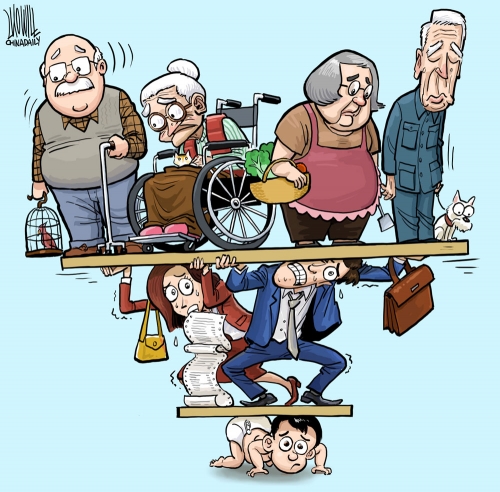
Social Security does not provide future retirees with a safe “return” on taxes paid into the system on their behalf, given the program’s funding problems. It’s not even clear that it provides a decent return to many current retirees, and it will get worse as younger age cohorts become eligible. Demographic changes worked in the system’s favor in its early years, but no more: the number of eligible retirees is growing faster than the working-age population. This has led to cash flow deficits since 2010 that will widen in the years ahead. The unfunded liabilities of the system are currently estimated to be $26 trillion. The so-called “Trust Fund” for retirement holds about about $2.8 trillion of government securities, but those can’t be “cashed out” without a raid on general tax revenue or new borrowing by the Treasury.

Michael Tanner reveals the absurdity of some of the myths surrounding SS, such as claims that there is “no crisis” (and even more absurdly, that benefits should be expanded), that the Trust Fund will “save” the system, and that SS payroll taxes are “saved” for retirees. They are not saved; it is a “pay-as-you-go” system with current payroll tax collections paid out to today’s retirees. Here is Tanner on the woeful state of the system’s finances:

According to projections by the Congressional Budget Office, for workers born in the 1980s, there are only enough funds to pay 76 percent of their schedule benefits; for today’s children born in the 2000s, this falls to 69 percent. And, taxes are already so high relative to benefits that young people will receive far less than they could receive if they invested their taxes privately.

Measuring the return on Social Security (SS) payroll taxes (otherwise known as FICA) is not without controversy. The Social Security Administration (SSA) performs its own analyses of the returns on payroll taxes periodically. They analyze individuals at different income levels for each of four circumstances: single men, single women, one-earner couples and two-earner couples. They do so under different scenarios about future payroll taxes and benefits. The benefits include cost-of-living adjustments. These calculations show that today’s younger workers, singles and high-income workers can expect to receive the lowest returns. According to the most recent report, from December 2014, annual rates of return for those not yet drawing benefits under present law varies from less than 1% to 6.5%. Of course, the promised benefits are not sustainable under present law.

Reforms are not optional, as the program cannot run a deficit under its current authority once the Trust Fund is exhausted. SSA attempts to analyze steps that might close the gap and the impact of those changes on returns to retirees. One scenario involves higher payroll taxes and another lower benefits. These changes reduce the calculated returns in all cases, though even the lowest returns remain positive, if barely. These alternative scenarios involve no changes until 2033, however.

At the time of the SSA report, the most recent Congressional Budget Office (CBO) predicted that the SS Trust Fund would be exhausted in 2033. More recently, the CBO predicted that the fund will run dry in 2029. (The Disability Trust Fund is projected to run dry in 2017.) Therefore, the returns calculated by SSA under the alternative scenarios are over-estimates, since more drastic and earlier measures are required to restore balance. It’s likely that some of those returns would turn negative using SSA’s methodology. And it’s not unreasonable to suggest that reforms, whatever shape they might take, should be implemented sooner than 2029. After all, the need for reforms is well known, and we’re talking about it now! As for the SSA’s alternative scenarios, changes much sooner than 2033 would cause even lower returns.

While the SSA’s effort to provide the estimates is laudable, there are several aspects of the methodology that are questionable. SSA claims that the returns are real (inflation-adjusted) internal rates of return (IRRs), but they do not offer a detailed explanation of the inflation adjustment that must take place after calculating the nominal IRR. Using projected cost-of-living increases to inflate future benefits does not make the calculated IRRs “real”, if that’s what they have in mind. Second, the cost-of-living adjuster is the Consumer Price Index for Urban Wage Earners, which underestimates inflation experienced by the elderly. Third, they do not attempt to account for the probability of death before retirement, which would obviously reduce the return on contributions for single earners.

The “present-law” returns are essentially irrelevant, given the unfunded projected benefits. But the calculations under the alternative scenarios fail on other grounds: they are not “dynamic” in terms of adjusting for the economic impacts of the policy changes. In particular, higher payroll taxes are likely to reduce employment and slow the economy. A slowdown might even lead to additional claims on the system from earlier-than expected retirements. Thus, the higher payroll tax rates used by SSA will not be sufficient to close the gap. Likewise, reduced benefits would have a negative impact on the economy, reducing payroll tax collections. In both cases, dynamic economic effects would cause a wider funding gap; closing it will reduce returns more than suggested by SSA’s calculations.

An analysis by the Urban Institute in 2012 made somewhat arbitrary assumptions about rates of return. They used a 2% real rate of return to compound past contributions and discount future benefits (presumably with no cost-of-living adjustment). Under their assumptions, the value of payroll tax contributions at retirement often exceeds the discounted value of SS benefits for age cohorts turning 65 in 2010 and 2030. That implies that the real IRR must be lower than 2%.

As a hypothetical exercise, if individuals could invest their own payroll contributions over their working lives, significantly better returns could be earned than the IRRs discussed above, even if workers were forced into low-risk investments as they approach retirement. Therefore, the implied value of payroll contributions at retirement inherent in the IRR calculations is far too low. And while the discounting of retirement benefits at a relatively low rate reflects an appropriate conservatism, the level of SS benefits would not be competitive with the dollar returns on safe investments funded by a larger pot at retirement. The IRR calculations show only that the SS program is about as good as stuffing money into a mattress.

Unfortunately, the mattress might burn. The risks inherent in future SS benefits are substantial, and none of the reform alternatives are very popular. Some of the opposition is rooted in unreasonable criticism: No one has suggested programatic changes that would affect the benefits of anyone over the age of 55. Still, cuts in benefits for future retirees, delayed eligibility and higher payroll taxes are not easy sells. Another solution is to phase out the pay-as-you-go system, allowing younger workers the option of a a self-directed account (subject to certain restrictions), including a discounted “cash value” credit as a buyout for previous contributions. This was discussed in a recent post on Sacred Cow Chips.

Social Security is unsustainable and is an inter-generational rip-off in its current, pay-as-you-go form, as younger, less affluent workers subsidize current retirees, who are relatively wealthy as a class. Rather than shutting-down debate over reforms with exaggerated political claims, those interested in assuring a viable public retirement program should consider proposals that would give workers more choice and control, taking advantage of the higher returns available on private investments. Only this type of program can take advantage of the economy’s ability to convert savings into productive investment and real growth. Simple transfers from young to old do not leverage this process, and can never hope to compete with it.

Artwork or Art Work? Effort or Value?

Tags

, , , , , , , ,

Theory of Coffee Value

I know a talented artist who refuses to sell his paintings for less than he values the hours spent rendering them. His work is vibrant and arresting, but he doesn’t sell many paintings, which frustrates him greatly. I know very little about marketing artwork, but I do know that his pricing rationale is foolish. For one thing, the hours expended on a particular work are a sunk cost that he should forget if he wants to sell. And he doesn’t know this, but his opinion on pricing is an implication of Karl Marx’s labor theory of value, the flawed proposition that all value derives from the labor necessary to produce it.

Of course, value is in the eye of the beholder. In any potential exchange, value is determined in the first instance by the subjective assessment of a prospective buyer. Their willingness to pay is based on the enjoyment or utility they expect to gain from the transaction. There is no deal if the seller is unwilling to trade at that price; no one benefits unless the seller is thrilled to do the work without compensation, happy to consume or enjoy their own output, or gratified to simply hold it in inventory. My artist friend isn’t happy with that outcome, but his valuation has not passed a market test. Exactly where is the economic value of his labor? This is a cruel reality to those who scrape by in pursuits that often fail market tests, but it’s a reality that allows resources to be guided into uses that are most highly-valued and that satisfy wants most effectively.

It is surprising to me that the labor theory of value is so thoroughly embedded in the public’s thinking. Ryan McMaken at Mises Wire addresses this point in “Nobody Cares How Hard You Work“. Employers and employees often mistake hours worked and even effort for economic value. Working hard is thought to be admirable, but it is not always consistent with value creation:

… too many workplaces still subtly communicate to employees the idea that intense effort, usually in the form of long hours, is the best route to a promotion. In fact, though, if you can do your job brilliantly and still leave at 3 p.m. each day, a really good boss shouldn’t object. And by the same token, you shouldn’t cite all the effort you put in when making your case for a raise. Why should a results-focused boss even care?

At Liberty.me, Michael Bunch’s “A Misunderstanding of Labor and Value” offers some excellent quotes on the distinction, including this from Carl Menger:

Value is a judgment economizing men make about the importance of the goods at their disposal for the maintenance of their lives and well-being. Hence value does not exist outside the consciousness of men.

Ignoring the contribution of existing capital to production is an obvious error made by proponents of the labor theory of value, who argue that all value creation should be returned to labor as a reward. Bunch quotes Frederic Bastiat on this topic:

Without these things [i.e., capital], the labor of man would be unproductive, and almost void; yet these very things have required much work, especially at first. This is the reason that so much value has been attached to the possession of them, and also that it is perfectly lawful to exchange and to sell them, to make a profit of them if used, to gain remuneration from them if lent.

Yes, capital is man-made wealth, and labor plays an obvious role in its creation. Once extant, however, capital is a productive asset that enhances the productivity of labor as well. As property, its owners must be rewarded at least its marginal product, just as labor must be rewarded at least its marginal product. If the total product is deemed of sufficient value by buyers, then the activity will continue to the benefit of all concerned.

Bunch’s real intent is a bit off-topic: he seeks to refute the notion that patriarchy in the U.S. is active in assigning under-compensated roles to women. I’m not convinced that it’s necessary to debunk the labor theory of value to make that point. 

Is the labor theory of value irrational? Yes! Behavioral economists agree, as the links above point out. There are certainly times when the theory drives the subjective market valuations of buyers. Some behavioral economists use this as a rationale for government intrusion, but there is every reason to believe that an external authority would produce more distorted valuations and allocate resources less efficiently than the flawed market participants. And after all, in a free society, it is not incumbent on an authority to second guess private decisions. A good outcome is whatever floats your boat.

Obamacare’s Left-Handed Monkey Wrench

Tags

, , , , , , , , , , , , , , , ,

ACA Zombies

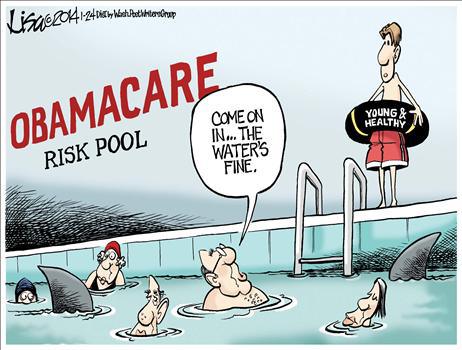
Distorted overtures celebrating the great success of Obamacare continue, but no one who cares about the facts is buying the blather. Megan McArdle reminds us that even if we stipulate that the 9.9 million now enrolled on the exchanges have gained somethingObamacare has delivered far less than promised. McArdle also notes the high-risk skew of the population within the risk pools. That’s why insurers are losing money on Obamacare coverage, though their losses have been covered via government “risk corridors” thus far. In “Obamacare Bear Market” at wsj.com (links to a Google search result to get around the paywall — or just search “wsj Obamacare Bear”), we hear about the dismal financial performance of the Obamacare coops, which sell plans on the exchanges. The WSJ also reflects on a new working paper from Wharton economists:

They conclude that, ‘even under the most optimistic assumptions,’ half of the formerly uninsured take on both a higher financial burden and lower welfare, and on net ‘average welfare for the uninsured population would be estimated to decline after the ACA [Affordable Care Act] if all members of that population obtained coverage.’

In other words, ObamaCare harms the people it is supposed to help. This is not a prescription for a healthy, durable program.

Health economist John C. Goodman gives more detail on the Wharton study in “Obamacare is bad for the middle class. Even Ezra Klein admits that the health plan is a failure. Whether Klein really gets it or not, the result is just another failure of central planning. Here’s a quote from Michael Schaus from the last link:

The same people who failed miserably at launching a website will soon be regulating the sophisticated day-to-day decisions of hospitals, insurers and doctors.

Anticipating another year of disappointing enrollments ahead, the White House now is low-balling its enrollment target for 2016. This an apparent attempt to present a better face to the public when the bad numbers roll in.

Another piece by Goodman explains that “bending the cost curve” with Obamacare was always a fool’s errand. Again, it has a lot to do with the folly of central planning:

In a normal market, the entrepreneurs wake up every morning and ask themselves: How can I make costs lower, quality higher, and access to my product better today?

But in a bureaucratic system – where revenues are determined not by customer satisfaction, but by complicated payment formulas – they tend to wake up and ask: How can I get more money out of the payment formulas today?

Goodman explains that an insurance firm providing coverage through Medicare Advantage would have nothing to gain by introducing cost-saving innovations: all of the extra profit would be turned over to Medicare. Incentives matter, but bureaucrats often fail to understand incentives and their power to improve performance. Goodman also describes the poor results of the so-called Accountable Care Organizations, the futile pilot programs and demonstration projects related to the practice of medicine, and the gaming that has taken place within the hospital “pay-for-performance” program. Ironically, the most certain outcome of any attempt to impose central planning on an industry is that there will be unintended and undesirable consequences.

Goodman has written a book proposing an Obamacare replacement, entitled “A Better Choice: Healthcare Solutions For America“. Here is David Henderson’s favorable review, in which he focuses on the negative labor market effects of Obamacare, including poor incentives for employers and work effort, among other things. To close, here’s an excerpt from Henderson’s introduction:

If you think that the Patient Protection and affordable Care act (ACA, also known as Obamacare) is bad because of its expense, the distortions it causes in the labor market, its failure to provide people what they really want, and its highly unequal treatment of people in similar situations, wait until you read John C. Goodman’s A Better Choice: Healthcare Solutions for America. You will likely conclude that the ACA is even worse than you thought.

That’s the bad news. The good news is that Goodman … proposes reforms that would do more for the uninsured than the ACA does, and at lower cost, and also would make things better for the currently insured. and it would do all this while avoiding mandates, creating more real competition among insurers, and making the health care sector more responsive to consumers….

Bernie Sanders Wants To Deal… Your Property

Tags

, , , , , , , , , , , , ,

Fall In Hole giphy

Bernie Sanders is very sincere in his beliefs, and yet he is profoundly ignorant regarding economic growth in the U.S. and the futility of socialism as form of economic organization. Chelsea German, at the HumanProgress blog, presents some simple facts that contradict a few of the Senator’s favorite assertions. In “Senator Sanders and the Fixed Pie Fallacy“, German quotes a line that Sanders has been using for at least 41 years: “The rich are getting richer and the poor are getting poorer.” Granted, his first utterance of that expression might have been in a recession, but aside from those relatively brief episodes, he’s been wrong for the duration. Apparently, Sanders cannot fathom the widespread gains made possible by capitalism and economic growth. Only a “fixed pie” (or worse) would necessarily imply that gains must come at the expense of others, as he seems to believe. (H.T. to Ken DeVaughn on the brilliant gif above.)

One chart in German’s post shows that after-tax income grew in every quintile of the U.S. income distribution from 1979 (pre-recession) to 2010 (post-recession). The chart is taken from CBO data used by Gary Burtless in a piece published by Brookings. Sanders should have a look. However, it’s also important to note that people generally don’t remain in the same strata of the distribution over time. A second chart, from Angus Deaton’s “The Great Escape“, shows that U.S. poverty rates have generally declined over time. Finally, German shows that with a few interruption, GDP has grown over time. All of these facts might be something of a surprise to Sanders. German quotes the great Deirdre McCloskey:

The rich got richer, true. But millions more have gas heating, cars, smallpox vaccinations, indoor plumbing, cheap travel, rights for women, lower child mortality, adequate nutrition, taller bodies, doubled life expectancy, schooling for their kids, newspapers, a vote, a shot at university, and respect.

Sanders showcases his lack of familiarity with economic principles almost every time he opens his mouth, or his Twitter account. He recently opined that rates of interest on student loans should be lower than rates on loans for autos and mortgages. Of course, both auto loans and mortgages are secured by valuable collateral and have much lower default rates. It’s a good thing for Sanders that he didn’t pursue a career in lending.

Recently, Hillary Clinton has been unable to restrain herself from chasing Sanders off the rhetorical cliff. Clinton is offering the public lots of “free stuff“, like Sanders, in a transparent attempt to buy votes with promises of future largess. Neither candidate has offered a credible plan for funding their promises. Higher taxes on “Wall Street” and other top earners are the supposed answer, but those measures would be woefully inadequate. Look out, middle class!

By the way, another recent Brookings study shows that increasing the top marginal income tax rate, a policy of which Sanders would approve, would do little to reduce the degree of income inequality.

Of course, Sanders seems just as unfamiliar with the great failures of socialism over the past century as he is with the successes of capitalism in eliminating poverty. He thinks the U.S. should adopt the socialist policies in Scandanavia, but the truth is that socialism has served to inhibit the continued success of capitalism in those countries (also see here). Perhaps that’s why Denmark is scaling back its redistributionist policies.

The Left, including Bernie Sanders, are burdened by a naive utopianism so powerful that they can rationalize the confiscation of private property to support their personal preferences and those of the political class. The aristocratic Left, like Hillary, differ only in the power they hold to influence policy. Perhaps a few suffer from a strong sense of guilt regarding their own circumstances. No, not Hillary. But both Bernie and Hillary are guilty of gross social and economic misdiagnosis. Politicians, heal thyselves!