I just can’t express any sympathy for those fired from their jobs for publicly endorsing or “celebrating” the assassination of Charlie Kirk. Regardless of how you felt about Charlie Kirk’s words, he was a nonviolent public figure who did everything he could to engage peacefully with those who disagreed with his views. Praising his assassination is morally repugnant.
The fairness and even the legality of these dismissals has been called into question, however. As Eugene Volokh notes, the First Amendment offers protection “against criminal punishment, civil liability” for all speech unless it “is intended to and likely to cause imminent illegal conduct”. It does not protect the speaker from other consequences, however, such as continued employment or social ostracism. It goes without saying that this applies to both sides of any debate.
But job dismissals for expressing controversial opinions should not extend beyond issues likely to threaten the mission of the employing organization, including reputation and the well being of clients and other employees. Even more importantly, prosecution under so-called “hate speech” laws (a flawed construct) should not extend outside the bounds of the First Amendment, and should not be prosecuted selectively on political grounds.
One prominent action with which I’m not comfortable is the “indefinite” cancellation of Jimmy Kimmel, who (like others on the Left) thought it would be clever to make the absurd claim, during his late-night monologue, that Kirk’s assassin was one of the MAGA tribe. Kimmel did not “celebrate” the murder per se, but his statement was enough to get his show pulled, for now. The cancellation was lauded by the Right as a response to the market. That’s plausible: Kimmel’s pronouncement might have damaged ABC’s brand, though it didn’t have far to drop. The Trump Administration seems to have employed some strong-arm tactics in this episode, however, which is awful. In any case, I’d rather keep Kimmel out there making a fool of himself.
Of course, private employers can generally employ whom they want and can often cite agreed-upon codes of conduct as justification for dismissals, if necessary. Who wants an employee announcing to the world that he or she endorses the murder of someone with whom they happen to disagree on public policy or expressions of faith? Or who wants an employee openly stating such a monstrous opinion in the workplace? It’s simply bad business to risk offense to customers, sowing discord in the workplace, or affiliating in any way with an individual willing to demonstrate such depraved values.
Things are a little different for public employees. In his post, Volokh outlined general legal conditions under which a public employee can be disciplined. These are (the full list is a quote):
the speech is said by the employee as part of the employee’s job duties, Garcetti v. Ceballos (2006), or
the speech is not on a matter of public concern, Connick v. Myers (1983), or
the damage caused by the speech to the efficiency of the government agency’s operation outweighs the value of the speech to the employee and the public, Pickering v. Bd. of Ed. (1968).
As Volokh says, strictly speaking, these conditions do not establish categorical grounds for dismissing a public employee for praising violence. He cites case law to support that position. But the third condition listed is critical in many cases. On that point, he notes that the case in question involved a private conversation with the speaker’s co-worker/boyfriend. So that case hardly seems dispositive.
Volokh goes on to say that #3 above, or really the Pickering case, establishes a kind of heckler’s veto for public employers. That is, it:
“… often allows government to fire employees because their speech sufficiently offends coworkers or members of the public. …
“This conclusion by lower courts applying Pickering might, I think, stem from the judgment that employees are hired to do a particular job cost-effectively for the government: If their speech so offends others (especially clients or coworkers) that keeping the employees on means more cost for the government than benefit, the government needn’t continue to pay them for what has proved to be a bad bargain.“
Whether it involves someone in the public or the private sector, concerns about endorsing the murder of an ideological opponent are particularly acute when issued by those in jobs requiring a high level of trust. That covers a broad swath of workers, but especially those in health care, education, and law enforcement. Can you trust a nurse, a surgeon, or any other caregiver who would endorse murder as a proper response to political or ideological differences? Are you willing to allow your child to be instructed by such an individual at any level? For that matter, would you trust a news anchor who spouted that kind of rhetoric?
It’s certainly doesn’t present as “normal” to espouse or praise murder and other violent acts, regardless of ideological passion. In fact, most people would fairly question the stability of anyone cheerleading for murder and the risk they might present to society. Words are cheap, but it might well signal an elevated propensity for acts of violent retaliation for perceived wrongs.
The question of trust really permeates our interactions with the whole of society, so the kind of behavior we’ve witnessed from this quarter is threatening. Will my waitress, overhearing a conversation, befoul or poison the food she serves me? Will my ride share driver deliver me to a torture chamber? Will a neighborhood contact attempt to exact some kind of retribution? It’s not quite there yet, but the encroachment is real. This should be more salient to anyone with an accessible social media profile who wishes to express an honest opinion, particularly on a college campus.
A brief word about some of the Charlie Kirk quotes that have made the rounds. They are often excerpted and divorced from the full context of the argument he was attempting to make. Julie Borowsky on X provides some direct, full quotes of Kirk on several important topics. I happen to think he made valid (if not fully developed) points about the value of the Second Amendment, the divisiveness of DEI, overuse of the word “empathy”, and the downsides of Civil Rights Act. At the same time, I am certain I’d disagree with other positions Kirk held, like his support for tariffs. Still, they were all debating points on policy (or matters of faith), and they did not qualify as “hate speech”, which is a subjective notion and highly resistant to consensus. In any case, his comments could never have justified the insane reaction of Kirk’s assassin or those who cheered his murder.
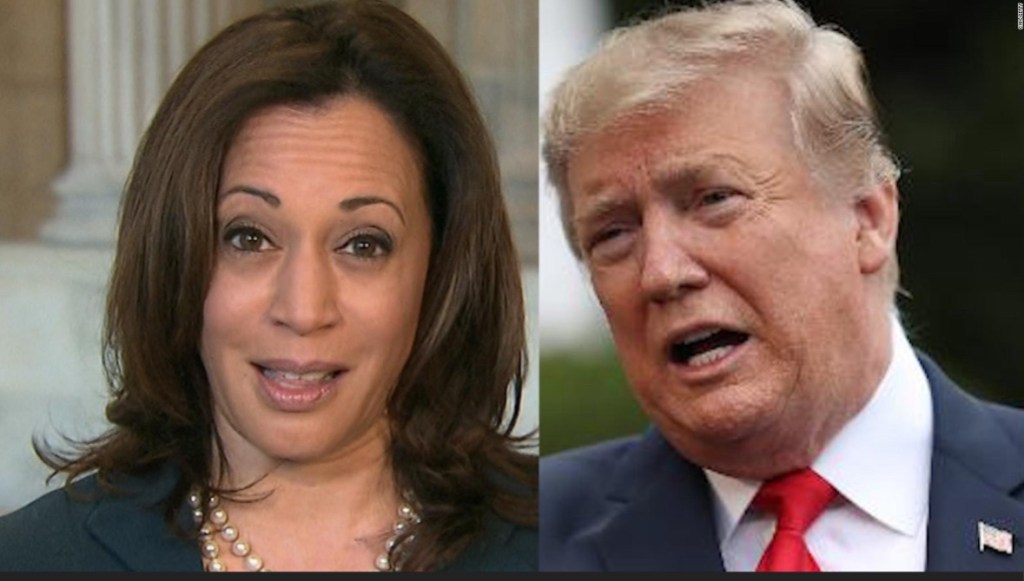
Wow! We’re less than a week from Election Day! I’d hoped to write a few more detailed posts about the platforms and policies of Kamala Harris and Donald Trump, but I was waylaid by Hurricane Milton. It sent us scrambling into prep mode, then we evacuated to the Florida Panhandle. The drive there and back took much longer than expected due to the mass exodus. On our return we found the house was fine, but there was significant damage to an exterior structure and a mess in the yard. We also had to “de-prep” the house, and we’ve been dealing with contractors ever since. It was an exhausting episode, but we feel like we were very lucky.
Now, with less than a week left till the election, I’ll limit myself to a summary of the positions of the candidates in a number of areas, mostly but not all directly related to policy. I assign “grades” in each area and calculate an equally-weighted “GPA” for each candidate. My summaries (and “grades”) are pretty off-the-cuff and not adequate treatments on their own. Some of these areas are more general than others, and I readily admit that a GPA taken from my grade assignments is subject to a bit of double counting. Oh well!
Role of Government: Kamala Harris is a statist through and through. No mystery there. Trump is more selective in his statist tendencies. He’ll often favor government action if it’s politically advantageous. However, in general I think he is amenable to a smaller role for the public than the private sector. Harris: F; Trump: C
Regulation: There is no question that Trump stands for badly needed federal regulatory reform. This spans a wide range of areas, and it extends to a light approach to crypto and AI regulation. Trump plans to appoint Elon Musk as his “Secretary of Cost Cutting”. Harris, on the other hand, seems to favor a continuation of the Biden Administration’s heavy regulatory oversight. This encourages a bloated federal bureaucracy, inflicts high compliance costs on the private sector, stifles innovation, and tends to concentrate industrial power. Harris: F; Trump: A
Border Policy: Trump wants to close the borders (complete the wall) and deport illegal immigrants. Both are easier said than done. Except for criminal elements, the latter will be especially controversial. I’d feel better about Trump’s position if it were accompanied by a commitment to expanded legal immigration. We need more legal immigrants, especially the highly skilled. For her part, Harris would offer mass amnesty to illegals. She’d continue an open border policy, though she claims to want certain limits on illegal border crossings going forward. She also claims to favor more funds for border control. However, it is not clear how well this would translate into thorough vetting of illegal entrants, drug interdiction at the border, or sex trafficking. Harris: D; Trump: B-
Antitrust: Accusations of price gouging by American businesses? Harris! Forty three corporations in the S&P 500 under investigation by the DOJ? The Biden-Harris Administration. This reflects an aggressively hostile and manipulative attitude toward the business community. Trump, meanwhile, might wheedle corporations to act on behalf of certain of his agendas, but he is unlikely to take such a broadly punitive approach. Harris: F; Trump: B-
Foreign Policy: Harris is likely to continue the Biden Administration’s conciliatory approach to dealing with America’s adversaries. The other side of that coin is an often tepid commitment to longtime allies like Israel. Trump believes that dealing from a position of strength is imperative, and he’s willing to challenge enemies with an array of economic and political sticks and carrots. He had success during his first term in office promoting peace in the Middle East. A renewed version of the Abraham Accords that strengthened economic ties across the region would do just that. Ideally, he would like to restore the strength of America’s military, about which Harris has less interest. Trump has also shown a willingness to challenge our NATO partners in order to get them to “pay their fair share” toward the alliance’s shared defense. My major qualification here has to do with the candidates’ positions with respect to supporting Ukraine in its war against Putin’s mad aggression. Harris seems more likely than Trump to continue America’s support for Ukraine. Harris: D+; Trump: B-
Trade: Nations who trade with one another tend to be more prosperous and at peace. Unfortunately, neither candidate has much recognition of these facts. Harris is willing to extend the tariffs enforced during the Biden Administration. Trump, however, is under the delusion that tariffs can solve almost anything that ails the country. Of course, tariffs are a destructive tax on American consumers and businesses. Part of this owes to the direct effects of the tax. Part owes to the pricing power tariffs grant to domestic producers. Tariffs harm incentives for efficiency and the competitiveness of American industry. Retaliatory action by foreign governments is a likely response, which magnifies the harm.
To be fair, Trump believes he can use tariffs as a negotiating tool in nearly all international matters, whether economic, political, or military. This might work to achieve some objectives, but at the cost of damaging relations more broadly and undermining the U.S. economy. Trump is an advocate for not just selective, punitive tariffs, but for broad application of tariffs. Someone needs to disabuse him of the notion that tariffs have great revenue-raising potential. They don’t. And Trump is seemingly unaware of another basic fact: the trade deficit is mirrored by foreign investment in the U.S. economy, which spurs domestic economic growth. Quashing imports via tariffs will also quash that source of growth. I’ll add one other qualification below in the section on taxes, but I’m not sure it has a meaningful chance.
Harris: C-; Trump: F
Inflation: This is a tough one to grade. The President has no direct control over inflation. Harris wants to challenge “price gougers”, which has little to do with actual inflation. I expect both candidates to tolerate large deficits in order to fulfill campaign promises and other objectives. That will put pressure on credit markets and is likely to be inflationary if bond investors are surprised by the higher trajectory of permanent government indebtedness, or if the Federal Reserve monetizes increasing amounts of federal debt. Deficits are likely to be larger under Trump than Harris due in large part to differences in their tax plans, but I’m skeptical that Harris will hold spending in check. Trump’s policies are more growth oriented, and these along with his energy policies and deregulatory actions could limit the inflationary consequences of his spending and tax policies. Higher tariffs will not be of much help in funding larger deficits, and in fact they will be inflationary. Harris: C; Trump: C
Federal Reserve Independence: Harris would undoubtedly like to have the Fed partner closely with the Treasury in funding federal spending. Her appointments to the Board would almost certainly lead to a more activist Fed with a willingness to tolerate rapid monetary expansion and inflation. Trump might be even worse. He has signaled disdain for the Fed’s independence, and he would be happy to lean on the Fed to ease his efforts to fulfill promises to special interests. Harris: D; Trump: F
Entitlement Reform: Social Security and Medicare are both insolvent and benefits will be cut in 2035 without reforms. Harris would certainly be willing to tax the benefits of higher-income retirees more heavily, and she would likely be willing to impose FICA and Medicare taxes on incomes above current earning limits. These are not my favorite reform proposals. Trump has been silent on the issue except to promise no cuts in benefits. Harris: C-; Trump: F
Health Care: Harris is an Obamacare supporter and an advocate of expanded Medicaid. She favors policies that would short-circuit consumer discipline for health care spending and hasten the depletion of the already insolvent Medicare and Medicaid trust funds. These include a $2,000 cap on health care spending for Americans on Medicare, having Medicare cover in-home care, and extending tax credits for health insurance premia. She supports funding to address presumed health care disparities faced by black men. She also promises efforts to discipline or supplant pharmacy benefit managers. Trump, for his part, has said little about his plans for health care policy. He is not a fan of Obamacare and he has promised to take on Big Pharma, whatever that might mean. I fear that both candidates would happily place additional controls of the pricing of pharmaceuticals, a sure prescription for curtailed research and development and higher mortality. Harris: F; Trump: D+
Abortion: The Supreme Court’s 2022 decision in Dobbs v. Jackson essentially relegated abortion law to individual states. That’s consistent with federalist principles, leaving the controversial balancing of abortion vs. the unborn child’s rights up to state voters. Geographic differences of opinion on this question are dramatic, and Dobbs respects those differences. Trump is content with it. Meanwhile, Harris advocates for the establishment of expanded abortion rights at the federal level, including authorization of third trimester abortions by “care providers”. And Harris does not believe there should be religious exemptions for providers who do not wish to offer abortion services. No doubt she also approves of federally funded abortions. Harris: F; Trump: A
Housing: The nation faces an acute housing shortage owing to excessive regulation that limits construction of new or revitalized housing. These excessive rules are primarily imposed at the state and local level. While the federal government has little direct control over many of these decisions, it has abetted this regulatory onslaught in a variety of ways, especially in the environmental arena. Harris is offering stimulus to the demand side through a $25,000 housing tax credit for first-time home buyers. This will succeed in raising the cost of housing. She has also called for heavier subsidies for developers of low-income housing. If past is prologue, this might do more to line the pockets of developers than add meaningfully to the stock of affordable housing. Harris also favors rent controls, a sure prescription for deterioration in the housing stock, and she would prohibit software allowing landlords to determine competitive neighborhood rents. Trump has called for deregulation generally and would not favor rent controls. Harris: F; Trump B
Taxes: Harris has broached several wildly destructive tax proposals. Perhaps the worst of these is to tax unrealized capital gains, and while she promises it would apply only to extremely wealthy taxpayers, it would constitute a wealth tax. Once that line is crossed, the threat of widening the base becomes a very slippery slope. It would also be a strong detriment to domestic capital investment and economic growth. Harris would increase the top marginal personal tax rate and the corporate tax rate, which would discourage investment and undermine real wage growth. She’d also increase estate tax rates. As discussed above, she unwisely calls for a $25,000 tax credit for first-time homebuyers. She also wants to expand the child care tax credit to $6,000 for families with newborns. A proposed $50,000 small business tax credit would allow the federal government to subsidize and encourage risky entrepreneurial activity at taxpayers’ expense. I’m all for small business, but this style of industrial planning is bonkers. She would sunset the Trump (TCJA) tax cuts in 2026.
Finally, Harris has mimicked Trump in calling for no taxes on tips. Treating certain forms of income more favorably than others is a recipe for distortions in economic activity. Employers of tip-earning workers will find ways to shift employees’ income to tips that are mandatory for patrons. It will also skew labor supply decisions toward occupations that would otherwise have less economic value. But Trump managed to find an idea so politically seductive that Harris couldn’t resist.
Trump’s tax plans are a mixed bag of good and bad ideas. They include extending his earlier tax cuts (TCJA) and restoring the SALT deduction. The latter is an alluring campaign tidbit for voters in high-tax states. He would reduce the corporate tax rate, which I strongly favor. Corporate income is double-taxed, which is a detriment to growth as well as a weight on real wages. He would eliminate taxes on overtime income, another example of favoring a particular form of income over others. Wage earners would gain at the expense of salaried employees, so one could expect a transition in the form employees are paid over time. Otherwise, the classification of hours as “overtime” would have to be standardized. One could expect existing employees to work longer hours, but at the expense of new jobs. Finally, Trump says Social Security benefits should not be taxed, another kind of special treatment by form of income. This might encourage early retirement and become an additional drain on the Social Security Trust Fund.
The higher tariffs promised by Trump would collect some revenue. I’d be more supportive of this plank if the tariffs were part of a larger transition from income taxes to consumption taxes. However, Trump would still like to see large differentials between tariffs and taxes imposed on the consumption of domestically-produced goods and services.
Harris: F; Trump C+
Climate Policy: This topic has undergone a steep decline in relative importance to voters. Harris favors more drastic climate interventions than Trump, including steep renewable subsidies, EV mandates, and a panoply of other initiatives, many of which would carry over from the Biden Administration. Harris: F; Trump: B
Energy: Low-cost energy encourages economic growth. Just ask the Germans! Consistent with the climate change narrative, Harris wishes to discourage the use of fossil fuels, their domestic production, and even their export. She has been very dodgy with respect to restrictions on fracking. Her apparent stance on energy policy would be an obvious detriment to growth and price stability (or I should say a continuing detriment). Trump wishes to encourage fossil fuel production. Harris: F; Trump: A
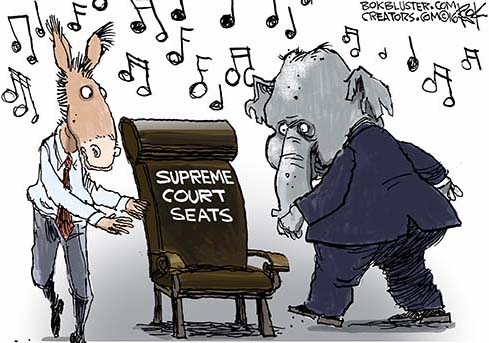
Constitutional Integrity: Harris has supported the idea of packing the Supreme Court, which would lead to an escalating competition to appoint more and more justices with every shift in political power. She’s also disparaged the Electoral College, without which many states would never have agreed to join the Union. Under the questionable pretense of “protecting voting rights”, she has opposed steps to improve election integrity, such voter ID laws. And operatives within her party have done everything possible to register non-citizens as voters. Harris: F; Trump: A
First Amendment Rights: Harris has called for regulation and oversight of social media content and moderation. A more descriptive word for this is censorship. Trump is generally a free speech advocate. Harris: F; Trump A-
Second Amendment Rights: Harris would like to ban so-called “assault weapons” and high-capacity magazines, and she backs universal background checks for gun purchases. Trump has not called for any new restrictions on gun rights. Harris: F; Trump: A
DEI: Harris is strongly supportive of diversity and equity initiatives, which have undermined social cohesion and the economy. That necessarily makes her an enemy of merit-based rewards. Trump has no such confusion. Harris: F; Trump: A
Hysteria: The Harris campaign has embraced a strategy of demonizing Donald Trump. Of course, that’s not a new approach among Democrats, who have fabricated bizarre stories about Trump escapades in Russia, Trump as a pawn of Vladimir Putin, and Russian manipulation of the 2016 Trump campaign. Congressional democrats spent nearly all of Trump’s first term in office trying to find grounds for impeachment. Concurrently, there were a number of other crazy and false stories about Trump. The current variation on “Orange Man Bad” is that Trump is a fascist and a Nazi, and that all of his supporters are Nazis. And that Trump will use the military against his domestic political opponents, the so-called “enemy within”. And that Trump will send half the country’s populace to labor camps. The nonsense never ends, but could anything more powerfully ignite the passions of violent extremists than this sort of hateful rhetoric? Would it not be surprising if at least a few leftists weren’t interested in assassinating “Hitler” himself. This is hysteria, and one has to wonder if that is not, in fact, the intent.
Can any of these people actually define the term fascist? Most fundamentally, a fascist desires the use of government coercion for private gain (of wealth or power) for oneself and/or one’s circle of allies. By that definition, we could probably categorize a great many American politicians as fascists, including Barack Obama, Joe Biden, Donald Trump, and a majority of both houses of Congress. That only demonstrates that corporatism is fundamental to fascist politics. Less-informed definitions of fascism conflate it with everything from racism (certainly can play a part) and homophobia (certainly can play a part) to mere capitalism. But take a look at the demographics of Trump’s supporters and you can see that most of these definitions are inapt.
Is the Trump campaign suffering from any form of hysteria? It’s shown great talent at poking fun at the left. Of course, Trump’s reactions to illegal immigration, crime, and third-trimester abortions are construed by leftists to be hysterical. I mean, why would anyone get upset about those kinds of things?
Harris: F; Trump: A
“Grade Point Average”
I’m sure I forgot an area or two I should have covered. Anyway, the following are four-point “GPAs” calculated over 20 categories. I’m deducting a quarter point for a “minus” grade and adding a quarter point for a “plus” grade. Here’s what I get:
The drumbeat for gun control from Leftist authoritarians never stops, and the recent mass shootings in Dayton OH, El Paso TX, and Gilroy CA, have been greeted with so much political agitation that the victims have become mere footnotes. Attempting to marshal facts in this debate can be quite confusing due to the variety of definitions of “mass shootings”. This variety contributes to certain myths about guns and gun violence that are often repeated by the media to a brow-beaten public. The confusion also motivates anti-gun policy prescriptions that are likely to be ineffective at best, and in all likelihood, counter-productive.
What constitutes a “mass shooting”? The traditional FBI definition counted an incident as a mass killling if four or more people were killed, not including the perpetrator. Broader definitions include cases in which 4 or more people are killed or injured, including the perpetrator. Gun rights opponents seem to prefer expansive definitions, including those that count gang-related killings, domestic shootings, or those occurring in the commission of another criminal act. Criminologist John Lott contends that these kinds of killings are driven by fundamentally different social forces than the mass public shootings that are at the center of this debate. For example, with respect to gang killings, Lott says:
“... the causes and solutions to drug gang violence are dramatically different than for the vast majority of mass public shootings,where attacks are designed to kill or wound as many people as possible. Padding the numbers by lumping the two together doesn’t make much sense.”
The more expansive definitions give rise to the notion that mass shootings have been trending-up dramatically in America. In fact, as Christopher J. Ferguson reports, data from The USA TODAY/AP/Northeastern University mass killings database show that the rate of mass shooting incidents per year has been flat since the early 1990s and are not much higher than the averages of the 1970s.
Another prominent distortion often accepted uncritically is that the U.S. leads the world in mass shootings. The U.S. totals are often inflated, but part of the reason for this misperception is that it’s easy to undercount foreign mass shootings. They do not always receive the same intensity of news coverage as mass shootings in the U.S., and tracking reports published in other languages is inherently more difficult for researchers. Lott says the following:
“Of the 86 countries where we have identified mass public shootings, the US ranks 56th per capita in its rate of attacks and 61st in mass public shooting murder rate. Norway, Finland, Switzerland and Russia all have at least 45 percent higher rates of murder from mass public shootings than the United States.”
The tragic nature of mass shootings should not prevent us from keeping the magnitude of these events in perspective, as Chris Buskirk explains in “Everything They’re Telling You About Mass Shootings Is Wrong“. For example, almost three-quarters of U.S. mass shootings in 2018 (four or more killed or injured) were associated with criminal activity, bar fights, and the like. And of course other social problems dwarf public mass shootings, such as the 70,000 opioid deaths that occurred in 2018, a phenomenon not coincidentally associated with the War on Drugs. And as Buskirk reminds us, the number of fatalities in public mass shootings is infinitesimal relative to the total number of defensive gun uses.
The Left’s reaction to these events is wrongheaded and their policy prescriptions are dangerous. A simple example is the widespread designation of buildings and public spaces as “gun-free zones”. However, it is highly likely that ending these designations would be an effective preventative against mass public shootings. John Lott writes in “How gun-free zones invite mass shootings” that 98% of the mass public shootings since 1950 occurred in areas where guns were prohibited. And we know that mass shootings are indeed prevented by armed citizens. Yet the Left staunchly opposes such a change and promotes the futile and foolish elimination of gun rights in general (also see this).
Leah Libresco, a statistician and former news writer at Nate Silver’s FiveThirtyEight, was highly disillusioned after devoting considerable effort to researching gun deaths. She expected to find that broad gun control measures were the answer. Instead, she says:
“… the case for the policies I’d lobbied for crumbled when I examined the evidence. The best ideas left standing were narrowly tailored interventions to protect subtypes of potential victims, not broad attempts to limit the lethality of guns.
I researched the strictly tightened gun laws in Britain and Australia and concluded that they didn’t prove much about what America’s policy should be. Neither nation experienced drops in mass shootings or other gun related-crime that could be attributed to their buybacks and bans.”
Then there are the continuing, uninformed calls to ban “assault weapons”. As Libresco explains:
“… no gunowner walks into the store to buy an ‘assault weapon.’ It’s an invented classification that includes any semi-automatic that hastwo or more features, such as a bayonet mount, arocket-propelled grenade-launcher mount, a folding stock or a pistol grip. But guns are modular, and any hobbyist can easily add these features at home, just as if they were snapping together Legos.”
Bill Clinton weighed into the debate last week by claiming that his assault weapons “ban”, which began in 1994, was so effective that we should be eager to accede to plans recently put forward by Democrats. Mark Overstreet quickly called him out as a liar, and on no less than six counts. Not only were existing “assault weapons” exempted under Clinton’s “ban”, but Americans actually added to their private stocks of weapons that met the law’s criteria during its enforcement. Existing large ammunition magazines were exempted, as well as imports of such magazines. Thus, Clinton’s so-called ban did not even approach the draconian measures now being proposed, which range from manufacturing and import prohibitions all the way up to confiscation.
Also preposterous are the Left’s routine characterizations of mass shooters as “right-wing extremists”. The truth is hardly clear cut. For example, despite expressing strong anti-immigrant sentiment, the shooters in El Paso and Christchurch, New Zealand were both environmental radicals or “eco-fascists”, in the Christchurch shooter’s words. The Dayton shooter was a self-described socialist and a supporter of Bernie Sanders, as was James T. Hodgkinson, the gunman who attacked a group of Republican legislators at a baseball practice, seriously injuring Congressman Steve Scalese. These madmen clearly weren’t crazed right-wing zealots. If anything, their profiles usually reflect severe psychological as well as ideological confusion.
Even one public mass shooting is too many, but their prevalence in the U.S. has been exaggerated in several ways. The hyperbole is often politically-motivated, intended to create negative public sentiment toward Second Amendment rights. But you can’t stop public mass shootings by foolishly disarming or criminalizing the very law-abiding citizens who are often the only force capable of providing an immediate defensive response.
There are both great and hysterically negative expectations for Brett Kavanaugh’s seating on the Supreme Court, depending on one’s perspective. The changes are likely to be much less dramatic than many think, however, according to Glenn Reynolds in his Sunday column. As he says, most cases before the Supreme Court are decided by easy majorities, and that won’t change. On split decisions, Kavanaugh will be less of a “swing vote” than Anthony Kennedy, no doubt, and he will have influence over the choice of cases to be heard by the Court because the selection of a case requires only four justices.
Reynolds thinks Kavanaugh is not as conservative as partisans hope or fear. For example, Reynolds believes he is unlikely to vote to overturn Roe vs. Wade, when and if that question comes before the Court. There may be shifts on narrower questions, such as an earlier definition of fetal viability (in recognition of improved medical technology) and greater protection against arrangements that facilitate illegal funding of abortions by federal taxpayers. Reynolds acknowledges, however, that Kavanaugh is a stronger advocate of Second Amendment rights than Kennedy, so those protections are less likely to be eroded.
Reynolds’ also notes a shift that is likely to take place in legal academia:
“Strange new respect for judicial minimalism. As Harvard Law professor Adrian Vermeule remarked, ‘Law review editors: brace for a tidal wave of legal academic theories supporting judicial minimalism, Thayerianism, and strong — very strong — theories of precedent. Above all: the Court must do nothing without bipartisan agreement, otherwise it is illegitimate.’ The past half-century’s enthusiasm for judicial activism will vanish, as legal academia turns on a dime to promote theories that will constrain the court until a left-leaning majority returns, at which point they’ll turn on a dime again.”
That is all too likely. My liberal friends insist that the four justices on the left are free of political bias. Don’t laugh! I’ll be happy if Kavanaugh, as a justice, sticks to his traditional originalist philosophy on constitutional interpretation. I’m under no illusion that the left side of the bench takes the original meaning of the Constitution seriously.
My own concerns about Kavanaugh have to do with his earlier work in the Bush White House on issues related to national security, including work on the PATRIOT Act. In fairness, that work took place at a time when the horrors of 9/11 were still fresh in our minds. However, years later he wrote a favorable judicial opinion on metadata collection by the government. It’s disturbing that Kavanaugh has ever shown a willingness to relinquish the rights to privacy and due process as a routine matter of national security. The founders’ intent was to protect individual rights from the threat of tyranny, so they expressly limited the power of government through the Constitution. Those who would claim that threats to national security are so compelling as to supersede individual rights are perhaps the very tyrants the Constitution was meant to foil. Nevertheless, my hope is that Kavanaugh, having come face-to-face with those who would prefer to deny privacy and due process rights when it suits them, has gained additional respect for these protections.
Since 1996, the Center for Disease Control (CDC) has kept under wraps its own survey data confirming so-called “high-end” estimates of annual defensive gun uses (DGUs). That’s the upshot of a paper by criminologist Gary Kleck of Florida State University, which came to my attention thanks to an article at Reason.com by Brian Doherty. DGUs occur any time a person uses a gun or threatens to use it in self-defense. DGU’s have been a controversial aspect of the gun debate, primarily because the anti-gun faction refuses to acknowledge that DGUs are significant. There is no official count of DGUs, just as there is no official count of crimes deterred by would-be criminals’ fears of armed would-be victims. The only DGUs that can conceivably be counted are those in which a crime prompting a DGU is reported, and even those incidents might not be counted.
The CDC survey data discovered by Kleck is from the agency’s nationwide surveys from 1996-1998. In those years, the survey asked a question of individuals who had reported owning a gun earlier in the survey, but excluded those whose jobs required them to carry a gun:
“During the last 12 months, have you confronted another person with a firearm, even if you did not fire it, to protect yourself, your property, or someone else?”
The survey responses imply total annual DGUs of about 2.46 million for the period in question, according to Kleck. He makes two adjustments to arrive at that figure: one upward adjustment because his own work suggests that non-owners of guns account for about 20% of all DGUs, so they would be undercounted by the survey; and one downward adjustment to discount for the absence of information from CDC’s survey on the exact circumstances of reported DGUs.
The number of DGU’s implied by CDC’s survey data is roughly in line with Kleck’s 1995 estimate if 2.5 million. It is likely that DGUs have declined since then along with declines in gun violence. But there is no reason to suspect that DGUs have declined relative to gun violence. Most importantly, these estimates of DGUs far outweigh incidents of gun violence reported by the FBI.
Kleck suspects that the DGU question on CDC’s survey was prompted by his earlier results. Whether that is true or not, it’s curious that the CDC never published the results. It’s even more curious because the CDC has issued at least one report with commentary on DGU estimates. And as Doherty reports, while the CDC was prohibited from conducting research in support of gun control (President Obama reportedly lifted that restriction), it was never restricted from objective reporting on gun safety issues and gun violence.
The Second Amendment is predicated on the right to defend oneself, among other things. The DGU estimates suggest that it is a right exercised with some frequency. In a nation that promotes gun violence through policies like drug prohibition, the right of self defense is critical. Gun rights supporters should not allow anti-gun activists to easily dismiss or ignore the CDC’s survey results on DGUs.
I’ll say one thing for the high schoolers participating in the “March For Our Lives“ political front: they are no more ignorant about guns and the Constitution than their anti-gun, adult counterparts. These naive kids are learning the charms of virtue signaling, newly imbued with so much superstition, misconception, misplaced blame, and inflated self-regard that you’d be hard-pressed to engage most of them in reasoned discussion. But I reserve my highest disdain for adults who shake their fingers and say, “How dare you speak critically of these poor kids, who survived the tragedy that took place at their very own school.” Indeed, some of the Parkland students saw the mayhem with their own eyes. but that admonition is a sham show of indignance designed to squelch legitimate debate. The debate would be unnecessary if not for the anti-gun lobby’s opportunistic exploitation of children befallen by tragedy.
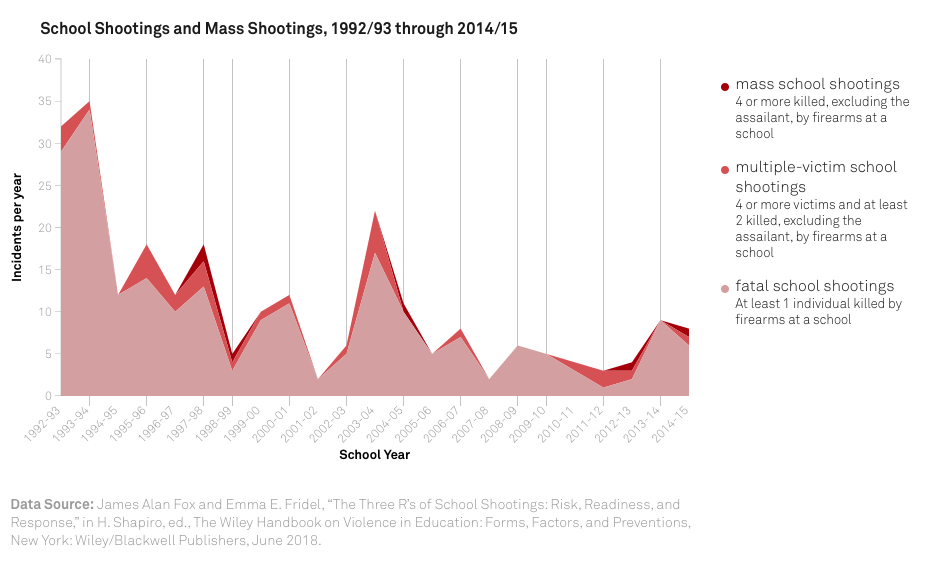
First, as I noted recently on SacredCowChips, the supposed escalation in mass shootings at schools is a myth. Northeastern University provides this summary of the research quoted in my post, including the chart on the long-term decline in school shootings shown above. In light of these statistics, the lead researcher, James Alan Fox, believes that most school security measures are counter-productive, including proposals to arm teachers. I do not fully agree, but be that as it may, it is astonishing that the media and large swaths of the public have accepted as fact the myth of a school shooting epidemic.
The ignorance of would-be gun controllers about guns themselves is legendary. Few of them can actually define an “assault weapon” yet are convinced that they must be banned. The cosmetic addition of certain features to a standard semi-automatic rifle apparently makes these guns too “scary”. And there is little understanding that standard rifles sold today, which fire one shot at a time, are semi-automatic weapons! Rifles, by the way, are involved in only a small fraction of gun homicides, so the focus on “assault weapons” is misplaced. Given this level of ignorance, it’s all too easy to dismiss the gun control crowd as unworthy of a real debate over gun regulation.
Of course, the crux of the debate revolves around constitutional rights. While many of those in favor of stricter gun regulation disavow any desire to repeal the Second Amendment or to actually confiscate guns, there is a significant contingent among them harboring that as an end-goal. Their ideal is politically laughable because it would never get a two-thirds vote of each house of Congress, let alone ratification by 3/4 of the states.
The Second Amendment is described by its foes as outdated and dangerous. I submit, however, that the right to defend oneself against predators, human or otherwise, is a natural right and not subject to obsolescence. The Second Amendment was also intended as protection against tyranny by government, and it serves as protection against a tyranny of any majority or rogue minority. Gun-rights critics argue that the founders of our country did not anticipate the powerful weapons available today, and that they would never have intended citizens to be armed with them. The claim is dubious because the founders certainly would have believed that citizens should have the freedom to arm themselves at least in proportion to the arms used by potential predators (please forgive the use of the term “assault weapons” at the link).
Frankly, I do not expect government tanks to roll down my street on a mission to confiscate guns. Instead, the first step would be a strongly-suggested voluntary sacrifice of weapons. Later, perhaps actual confiscations would be attempted via small detachments of authorities or perhaps by marauding, black-shirted proxies. But confiscations won’t happen as long as a serious threat of reprisal exists, with reasonably powerful weapons, and that is a credit to the Second Amendment.
There are serious misconceptions (not to mention plentiful media propaganda) about the likelihood that stricter gun laws can reduce gun homicides, or that they could have prevented the mass shooting tragedies that have occurred. Some of those shootings are better viewed as failures of law enforcement — examples are the lack of official follow-up on prior tips about the shooter in Parkland, FL, the failure of the school’s resource officer to engage the shooter, the failure of the FBI to detain a shooter prior to an attack at the Pulse nightclub in Orlando, and in still other cases, the failure of background checks to identify individuals as ineligible to purchase guns. There is little doubt that proper enforcement of existing law and protocol would have prevented a number of mass shootings. The focus should be on improving the existing system before expecting responsible citizens to happily consent to further erosion of their natural and constitutional rights.
Strict gun regulation would certainly infringe on liberty, leaving private citizens defenseless in exchange for tenuous assertions of social benefits. Defensive gun uses (DGUs) are thought to far outstrip gun homicides (seven posts touching on that subject are at this link). If guns could be effectively outlawed in the U.S., other instruments of homicide would replace guns because so much killing is driven by the drug war, gang activity, and other social dysfunctions. The same is true of suicides. If you recognize the futility of the war on drugs, you shouldn’t expect much success from a war on guns. Criminals will acquire guns whether they are illegal or not, so the ability to defend oneself with equal force is critical. There is a lively debate over the empirical research on the efficacy of stricter gun laws, but it’s always good to be skeptical when it comes to government prohibitions. Control advocates often cite Australia as an example of successful firearms control, but the country’s gun ban and buy-back program was ineffective in reducing gun homicides (also see here).
Finally, it’s appalling to see the depths to which certain radical enemies of gun ownership will sink in attempting to cast blame on their opponents for mass shootings. In fact, they have blamed not just the NRA, but all gun owners for the Parkland shooting and gun homicides generally. But the NRA represents responsible, law-abiding gun owners and promotes safe and responsible gun use. Roughly 47% of adults in the U.S. have guns in their homes, and they own guns for self-defense or sporting purposes. Attempts to shame them into supporting curtailments on their liberties is obnoxious and rather foolish because it is so unlikely to be fruitful approach. Successful codification always hinges on consensus, which just doesn’t exist with respect to gun law in the U.S.
The media have fawned over the students who have participated in the March For Our Lives campaign. The childrens’ ignorance of constitutional principles, and guns of course, is noteworthy, but their exploitation by powerful political and economic forces is pathetic. The significance of their numbers has been exaggerated as well: reports show the crowd size at the march in Washington, DC was about a quarter of what the organizers claimed. And the anti-gun students have failed to convince many of their peers, according to a poll conducted by USA Today/Ipsos. Perhaps as the spotlight fades, more of these student protestors will have occasion to study the U.S. Constitution and the natural rights it protects against government overreach. No matter how the kids feel now, I’m certain that many of them will be responsible gun owners someday.
Today’s news was full of speculation that a consensus is developing to ban the sale of so-called “bump stocks” of the kind used by Stephan Paddock, the perpetrator of last Sunday’s Las Vegas massacre. These are accessories that allow a semi-automatic rifle or pistol to be fired in a way that mimics a fully-automatic weapon, albeit less than perfectly. Today, even the National Rifle Association (NRA) stated its support for a regulatory review of bump stocks by the Bureau of Alcohol, Tobacco and Firearms. The idea was also endorsed, more or less, by conservative writer Jonah Goldberg earlier this week in an article called “Slow Down and Think“, which was otherwise focused on the unfortunate tendency of the Left to politicize the tragedy in Las Vegas. As I’ll explain below, a bump-stock ban would be a largely symbolic concession. It would represent something of an inconvenience to gun enthusiasts; like most gun control proposals, it would have approximately zero impact on the likelihood and severity of gun violence and even mass killings in the future.
One could argue that a prohibition on the sale of bump stocks represents an erosion of Second Amendment rights. Goldberg, however, rests his position on the fact that machine guns have been banned already (not quite true), so why not? Goldberg’s not really a “gun guy”, and neither am I, but here’s how he puts it:
“I am actually open to the idea that we might need tougher or better gun-control regulations. That’s an easy concession for me to make. The hard part is figuring out what those reforms would look like. One place we might start is making it harder to convert semiautomatic weapons into fully automatic ones. If it’s okay to ban machine guns, it doesn’t seem unreasonable to make it harder to turn guns into machine guns.“
It should be noted that the trade of certain (pre-1986) fully-automatic weapons is not outlawed, though it is heavily regulated and very costly.
In addition to bump stocks, Goldberg is favorably disposed to changes in gun laws that would prohibit the sale of kits enabling the actual conversion of semi-automatic to fully-automatic firearms. Currently it is legal to do so. It’s not really that easy for an individual without expertise to make such a conversion, however. A poorly done job is unlikely to be durable, if it works at all. A semi-automatic equipped with a bump stock might not be very durable either, since a semi-automatic itself is not really built to fire continuously or near-continuously.
Another issue addressed at the last link is that fully-automatic weapons, when hand-held, are not terribly accurate when engaged in firing more than a few rounds at a time. Bump firing a semi-automatic, with or without a bump stock, is even less accurate. But this might have suited Stephan Paddock just fine. If he planned to target the jet fuel tanks near the outdoor venue, then the accurate targeting of a small area on a tank with repeat-fire might have helped him achieve an even more horrific objective. But if he simply planned to spray bullets into the large crowd, the degree of accuracy was less important than the number of rounds he could fire.
Nevertheless, banning the sale of bump stocks won’t stop anyone determined to rapid-fire a gun, innocently or otherwise. First, apparently a bump stock can be 3D-printed with relative ease. Beyond that, “bump firing” is a rapid-fire technique that can be performed without a bump stock, though a bump stock makes it easier. Gun enthusiasts and hobbyists sometimes desire the thrill of firing something that feels like a fully-automatic weapon. Try it sometime, they say, under appropriate supervision! Some gun owners might like to have rapid-fire capability as extra protection against violent intruders on their property, human or animal, the advent of tyranny, or a violent breakdown of civil order. That gun-control advocates would scoff at these notions surely belies their shallow knowledge of history, or perhaps it really underscores the legitimacy of concerns that go to the very heart of the Second Amendment.
I cannot endorse the proposal to ban bump stocks. I understand the rationale offered by Goldberg and the NRA’s apparent flexibility on bump-stock regulation, but my view is that steps to outlaw conversions, like gun laws in general, will be ineffective in stopping determined killers. In the end, it amounts to an additional intrusion on private behavior without any real benefit, and the symbolism of such a concession does not help the cause of defending the Second Amendment.
Passion for various forms of gun control was inflamed by the tragic murder of 49 patrons (with 53 injured) at the Pulse nightclub in Orlando, Florida in the early hours of last Sunday morning. A man with ties to radical Islam was the perpetrator, but that’s not convenient to the left’s narrative, so scapegoats for the massacre run the gamut from guns to transgender bathroom laws to Christian “intolerance”, as opposed to the intolerance of a bat-shit crazy Islamic extremist. The Soopermexican notes the following:
“It’s really amazing how liberals [sic] are finding a way to blame Christians for the actions of the Orlando terrorist, who was, 1) gay, 2) Muslim, 3) Democrat, and 4) racist. … But then that’s what they did that time when a crazed liberal gay activist tried to shoot up the Family Research Council. Remember that? He literally said he wanted to kill everyone and then ‘smear Chick-Fil-A in the victim’s faces.’“
In case there’s any misunderstanding, I include that quote NOT to denigrate gays, Muslims, or Democrats, but to emphasize the absurdity of blaming Christians for the Orlando shootings. To get a sense of the infectious silliness going around in leftist circles over the slaughter, read this account of a vigil for the Pulse victims held in Columbia, MO by several student organizations near the main campus of the University of Missouri, at which Latino activists scolded the gay activist crowd for being “too white” and for paying insufficient attention to racial issues. Of course, it’s true that many of the Orlando victims were Latino, but after all, the vigil was for them, too, not just the white victims.
The left despises private gun ownership, or perhaps private anything except for their own privileges. Gun-blame feels so compassionate to them, and in this case, it conveniently avoids any mention of the killer’s ethnicity and radical ideology. Agitators say that “assault weapons” must be banned, but they are generally unable to articulate a precise definition. More thorough background checks are another favorite “solution”, but that’s based on an article of faith that such checks would be effective. Without proof that background checks actually work, and there is none, it still seems like a good idea to the “do something” crowd. Then, there are those whose real agenda is to ban guns outright, despite the fact that gun bans are counterproductive and infringe on the rights of law-abiding citizens.
Most of those who wish to ban assault weapons think they are referring to guns that fire repeatedly when the trigger is pulled. In other words, they believe that assault weapons are fully automatic weapons. But fully automatic weapons have been banned in the U.S. since 1934! Semi-automatic weapons require the trigger to be pulled to fire each bullet but load the next bullet automatically. James B. Jacobs of the NYU School of Law gives a fairly detailed description of the distinction between so-called assault weapons and other firearms, which essentially comes down to appearance:
“‘Assault weapons’ are semiautomatic firearms designed to look like military rifles. They are not military rifles—sometimes called assault rifles24—such as the U.S. Army’s M-16 … that can be fired in automatic or semiautomatic mode, or Russia’s AK-47, Germany’s HK G36 assault rifle, and Belgium’s FN Fal assault rifle. In contrast to assault rifles, these semiautomatic look-alikes do not fire automatically. Functionally, they are identical to most other semiautomatics. … Practically all modern rifles, pistols, and shotguns are semiautomatics; non-semiautomatic long guns include bolt action, slide action, and breach loaders; non-semiautomatic pistols are called revolvers.“
Jacobs discusses the futility of a ban on assault weapons and offers accounts of some historical assault weapon bans that were ineffective. Those outcomes were due in part to the flimsy distinction between assault weapons and other guns, as well as the fact that assault weapons are used in a relatively small percentage of gun crimes and in few mass shootings (also see here). This is corroborated by a recent paper appearing in the journal Applied Economics in which the authors report:
“… common state and federal gun laws that outlaw assault weapons are unrelated to the likelihood of an assault weapon being used during a public shooting event. Moreover, results show that the use of assault weapons is not related to more victims or fatalities than other types of guns. However, the use of hand guns, shot guns and high-capacity magazines is directly related to the number of victims and fatalities in a public shooting event. Finally, the gunman’s reported mental illness is often associated with an increase in the number of victims and fatalities.“
Another contention made by ill-informed opponents of gun rights is that mass shootings are never stopped by citizens with guns. That is simply not true, but it is good propaganda because foiled shooting attempts tend to receive much less notice than actual mass shootings. This article by Eugene Volokh provides a list of confirmed incidents in which a mass shooting was averted by a citizen carrying a gun. This situation has its counterpart in the left’s denial that defensive gun uses (DGUs) occur more frequently than gun crimes. DGUs are difficult to count because they often go unreported and may not even require the firing of a shot.
More stringent background checks are another favorite solution of gun-rights opponents. However, actual background checks have done nothing to stop the most vicious mass shootings that have occurred over the past few years. This is another testament to the naiveté of relying on government to protect you, in this case, a government information system. Sheldon Richman has explained the futility of background checks thusly:
“… people with criminal intent will find ways to buy guns that do not require a check. Proponents of background checks seem to think that a government decree will dry up the black market. But why would it? Sales will go on beyond the government’s ability to monitor them. Out of sight, out of government control. … Thus the case against mandating ‘universal’ background checks withstands scrutiny. This measure would not keep criminally minded people from acquiring guns, but it would give a false sense of security to the public by promising something they cannot deliver.“
Advocates of assault weapon bans and wider background checks are inclined to characterize gun rights supporters as paranoid. As Volokh explained last year, however, there is strong reason to believe that the pro-gun lobby has correctly assessed the motives among the opposition as more extreme. Volokh notes that an ineffectual ban, like the 1994-2004 assault weapon ban and many other gun bans internationally, cannot outweigh the interests of society in protecting a basic liberty.
And as to basic liberties, Rolling Stone offers a wonderful illustration of the left’s disregard for individual rights and constitutional protections in an angry missive to gun rights supporters: “4 Pro-Gun Arguments We’re Sick of Hearing“. The author not only holds the Second Amendment in distain: vogue left-think has it that the entire Constitution is tainted because the framers were unable to agree on abolition 230 years ago (at a time when slave ownership was commonplace among the aristocracy). The fact that many of the founders were sympathetic to abolition makes little difference to these critics. They say the Constitution is not a legitimate framework for governance, despite its extremely liberal point of view on issues of individual rights. Apparently, Rolling Stone would be just fine with abrogating the free speech rights of gun advocates.
Over the past 20 years or so, case law has increasingly viewed the Second Amendment as “ordinary constitutional law“, meaning that it protects individuals’ right to bear arms. The “well-regulated militia” limitation written into the Second Amendment is no longer accepted by the courts and most legal scholars as a limitation on individual rights. The militias it references were state militias raised from the civilian population, and the armaments they used were generally owned by the same civilians. In any case, there is no time limitation imposed on gun ownership by the Second via that clause. An earlier discussion of these issues was provided by Eugene Volokh in “The Commonplace Second Amendment“.
All this is quite apart from the Ninth Amendment, which states that nothing in the Constitution should be interpreted as limiting rights that are unenumerated. That would include self-defense, and ownership of a gun for that purpose is well advised. The Wikipedia entry on the Ninth Amendment says:
“One of the arguments the Federalists gave against the addition of a Bill of Rights, during the debates about ratification of the Constitution, was that a listing of rights could problematically enlarge the powers specified in Article One, Section 8 of the new Constitution by implication. For example, in Federalist 84, Alexander Hamilton asked, ‘Why declare that things shall not be done which there is no power to do?’“
In other words, we do not derive our rights from government or the majoritarian passions of the moment.
Finally, the debate in Congress this week has centered on whether individuals on the FBI’s Terrorist Watch List should be denied the right to purchase a gun. That might seem like a no-brainier, but it raises legitimate concerns about civil liberties. There are about 700,000 people on that list (some reports put the number much higher), many of them U.S. citizens; some of them are there by mistake. Individuals on the list have not been convicted of a crime and are therefore entitled to due process under the Fifth and Fourteenth Amendments. Watch Rep. Trey Gowdy’s passionate defense of due process to a DHS official this past week. When the ACLU and congressional republicans agree on the tyrannical nature of a restriction like this, you just can’t dismiss it out-of-hand. Such a change in the law cannot be justified without a fast and effective process giving citizens on the list a right of challenge.
The left is bereft of competence on the matter of guns, gun rights and the Constitution generally. They consistently demonstrate a dismissive view of individual liberties, whether that involves guns, religion, property, speech or due process. The tragedy in Orlando deserves more than ill-informed, knee-jerk conclusions. The most productive approach to terror risks involves individuals able to protect themselves and help watch out for others. That’s consistent with the position of the gay gun-rights group Pink Pistols. More power to them!
The terrorist attack this week in San Bernadino is not a rational argument for gun control. The anti-gun left has fixated on the tragedy for the wrong reason: to push their agenda to compromise gun rights. This topic was not prominent in the commentary after the recent massacre in Paris. That might be because France has strict gun laws that did not stop the terrorists. Similarly, the guns used in the San Bernardino attack were acquired legally despite the fact that California law requires background checks and bans so-called “assault weapons”.
President Obama’s ridiculous claim that mass shootings are an experience known only in the U.S. is obviously false (and see here). In fact, the barrage of misinformation regarding growth in mass shootings in the U.S. is based on severely distorted definitions.
A compelling reason to reject the anti-gun narrative is that gun violence has been declining for years, despite continuing increases in gun ownership. That makes sense given the value of gun ownership as a crime deterrent. Even relatively conservative estimates of defensive gun uses (DGUs) put their number above, even far above, statistics on gun crime, and deterrence is an additional benefit over and above actual DGUs. Gun prohibition is often counterproductive because it forecloses the opportunity for deterrence and DGUs, much as signs announcing “gun-free zones” offer effective advertising for soft targets.
Australia has been adopted as something of a poster child on social media for the purported success of their gun “ban” (which was not really a ban at all). The results have been greatly exaggerated. In fact, “success” is a poor choice of words. Here are a few notes on Australian homicide rates after the gun “ban”. The video here is also illuminating, and the following link has more information on the “Australian Gun Ban Conceit“.
Finally, as the New York Times and other outlets have inadvertently demonstrated, the anti-gun argument rests on a poor understanding of constitutional principles. The Times states that “No right is unlimited and immune from reasonable regulation.” That is a testament in support of tyranny, and it is false under any conception of natural rights. The statement is either a complete misunderstanding of the intent of the U.S. Constitution or an open call to rip it to shreds. The Constitution is clear in establishing limits on government power and in leaving nearly all individual rights presumed and unenumerated. However, it clearly establishes the right to bear arms because the nation’s founders considered the right of self-defense against aggression so fundamental, including defense against aggression by a tyrannical state.
Note: the title of this post includes a post from Glenn Reynolds.
How would “common-sense gun laws” reduce the incidence of mass shootings, total homicides or gun violence in general? Many believe it to be true, but convincing explanations are hard to come by. That’s because reasoned thinking does not produce those explanations. Nevertheless, words are cheap, and the sheer flow of weak memes and bad journalism appears to wash the brains of those with a vulnerability to gun hysteria. Sheldon Richman addresses the feeble logic of gun control proposals in the wake of last week’s tragic shootings in Oregon. He states flatly that the claims of gun control advocates rely on “magical thinking”, and that “common sense” supports other policies. (Richman is quite a guy, having been featured in two consecutive posts on this blog).
As a preface, the recent FBI Uniform Crime Report for 2014 shows another in a long series of reductions in homicides and gun violence. This has occurred despite a trend of rising gun ownership. Previous posts on Sacred Cow Chips have dealt with the evidence on gun violence and the efficacy of gun control measures, including “A Farewell To Firearms Control“, “Causal Confusion In The Gun Debate“, and “When Government Prohibits Self Defense“. Among other issues, these posts note the overwhelming evidence that defensive gun uses far outweigh gun homicides.
Advocates of stricter gun control measures assert that they would somehow reduce the frequency of mass shootings. Richman picks apart the claim that universal background checks would help. In fact, it’s clear from the circumstances that additional restrictions on the sale of guns would not have prevented any of the high-profile mass shootings in recent memory, including New Town, Charleston and Roseburg. Some of those killers passed background checks. Furthermore, more restrictions on gun sales would do nothing to prevent illegal trade in guns.
“We can have no reasonable expectation that people who intend to commit violent offenses against others will be deterred by mere restrictions on gun purchases and possession. Stubbornly ignoring that self-evident truth is the sign of a magical disposition.“
Hillary Clinton proposes universal background checks, confiscation of weapons from domestic abusers and holding gun manufacturers and dealers liable for crimes perpetrated with weapons they made or sold. Those last two proposals are an affront to liberty, and the last is likely to be counterproductive by pricing low-income buyers out of the market, who are arguably most in need of guns for self-defense.
Richman ridicules the notion that gun violence can be reduced by devoting more resources to mental health care. I don’t agree with him 100% on this — improved mental health care might have a small effect — but he argues the point effectively. It is difficult to see how any reasonable initiative in this area could have more than a minor impact on gun violence, and by that I mean an initiative that respects individual liberty. Proponents might imagine lovely rest homes and caring personal psychiatric consultations for those identified as psychotic, along with lots of nice drugs. Perhaps they’ll get the drugs, but as often articulated, the concept smacks too much of a “lock ’em up” mentality. The accuracy with which murderers can be properly diagnosed will be close to zero, and it may cost some of the eccentric among us dearly. Richman asks facetiously whether the police should form “pre-crime” units.
As an aside, I must make note of the gun control “meme-of-the-day”: for me, it was one from “Moms Demand Action for Gun Sense in America“. It suggested that guns should be regulated just as motor vehicles are regulated, including a requirement for liability insurance coverage. The comparison is laughable. The creation of public thoroughfares allows the state to assert that driving is a privilege, not a constitutional right. However, the individual right to bear arms is firmly protected by the Second Amendment and has been upheld by the Supreme Court as recently as 2008. It is not a privilege granted by the state. Moreover, how would one define an “insurable” gun death? Those would be accidents, which are quite small in number relative to motor vehicle deaths. It would not include suicides. Most gun incidents involve criminals who will not bother to arrange insurance coverage. Only the law-abiding will do so, and their insurers will have to grapple with the difficulty of handling claims against defensive gun users. Guns are much easier to hide than cars, so effective enforcement doesn’t stand a chance; nor do annual inspections. The expense and abridgment of personal liberty inherent in this proposal would be massive, with little if any effect on gun violence.
I’d be remiss if I failed to mention Damon Root’s excellent article on the Second Amendment. As noted above, it protects the individual right to bear arms, not merely our right as a collective. As Glenn Reynolds has written, the Second Amendment should be viewed as “ordinary constitutional law“. Root emphasizes the extent to which prominent legal minds on the Left have concluded the same. He quotes Sanford Levinson (among others such as Lawrence Tribe):
“The embarrassment, Levinson argued, came from the legal left’s refusal to take the Second Amendment seriously. ‘I cannot help but suspect that the best explanation for the absence of the Second Amendment from the legal consciousness of the elite bar,’ he wrote, ‘is derived from a mixture of sheer opposition to the idea of private ownership of guns and the perhaps subconscious fear that altogether plausible, and perhaps even ‘winning’ interpretations would present real hurdles to those of us supporting prohibitory regulation.’“
If the usual gun control proposals won’t work, what can be done to reduce mass shootings and gun victimhood in general? Richman discusses the elimination of “gun-free zones” and rebuts the typical objections to doing so. (He is critical of police, who surely deserve blame for certain gun deaths, but Richman may have an inadequate appreciation for the difficulty of police work.) Richman also promotes ending restrictions on concealed and open-carry of handguns. Here is part of his closing, but read the whole thing:
“Believers in gun-control magic refuse to acknowledge that one cannot effectively delegate one’s right to or responsibility for self-defense. With enough money, one might arrange for assistance in self-defense, but few will be able to afford protection 24/7. … The only defender guaranteed to be present at any attack against you is: you.
Those who believe in the right to bear arms have common sense on their side in the matter of ending mass shootings. Magic won’t do it.“
In advanced civilizations the period loosely called Alexandrian is usually associated with flexible morals, perfunctory religion, populist standards and cosmopolitan tastes, feminism, exotic cults, and the rapid turnover of high and low fads---in short, a falling away (which is all that decadence means) from the strictness of traditional rules, embodied in character and inforced from within. -- Jacques Barzun






 Sacred Cow Chips