• About

Sacred Cow Chips

Sacred Cow Chips

Category Archives: Regulation

Pruitt Out At EPA; So Is Eco-Absolutism

13 Friday Jul 2018

Posted by Nuetzel in Environment, Regulation

≈ Leave a comment

Tags

Andrew Wheeler, Clean Air Act, Clean Power Plan, Clean Water Act, Compliance Costs, Endangerment Finding, Environmental Justice, Environmental Protection Agency, EPA, Ledyard King, Navigable Waters, Paris Climate Accord, Scott Pruitt, Social Cost of Carbon, Sue and Settle, Superfund, Transparent Science

Green munchkins celebrated the fall of a house of cronyism earlier this month when it crashed right on top of EPA chief Scott Pruitt. Not that the Environmental Protection Agency has ever been free of cronyism and wicked warlocks, but Pruitt stumbled into an awkward appearance of coziness with industry representatives and was seemingly too fond of his expense account. The munchkins, however, will be sorely disappointed to learn that Andrew Wheeler, Pruitt’s replacement on at least an interim basis, will press forward with the same deregulatory agenda. They might imagine Wheeler as the surviving Warlock of the West, but the munchkins are incapable of understanding the deeper nature of wickedness at the EPA.

The agency took an expansive role during the Obama Administration (see this note on “environmental justice”, and this on the use of the “social cost of carbon” in rulemaking, and this on water regulation). Aggressive action was directed at emissions of carbon, a trace greenhouse gas (four parts per 10,000), but one that is necessary for life. In 2009, the EPA reached its “endangerment finding” that greenhouse gases, including carbon, pose a threat to humanity that must be addressed under the powers conferred upon the agency by the Clean Air Act. The Obama Administration viewed this finding as a regulatory carte blanche, ushering in a series of draconian, high-cost measures to reduce U.S. carbon emissions. Unfortunately, the environmental lobby is notorious for its inability to see beyond first-order effects. It cannot come to grips with the fact that green policies often waste more resources than they save, undermine the economy, infringe on liberty, and have their greatest negative impact on the poor.

President Obama also pushed for American participation in the Paris Climate Accord, which would have required transfers of billions of dollars of wealth to the often-corrupt governments of less developed countries for alternative energy projects. Beyond green energy objectives, this was presumably restitution for our past carbon sins. Whatever shortcomings Pruitt might have had, I valued his leadership in opposition to the Paris Accord and his role in dismantling the EPA’s overzealous regulatory model.

Pruitt might have earned praise from the green lobby in at least one area. He placed particular emphasis on streamlining Superfund site remediation, including a radioactive waste site in the St. Louis area. It is one of the so-called “top-10” sites that have been given high priority by the EPA. But there are 1,300 Superfund sites across the country, so Andrew Wheeler will have to be creative to succeed with more than just a few of these cleanups.

Ledyard King discusses the likely course of Scott Pruitt’s legacy under Wheeler, including continued opposition to the Paris Accord, reversing or deemphasizing renewable power mandates, reduced staffing and fewer enforcement actions. The Clean Power Plan is slated for replacement with rules that are not prohibitive to coal-fired power. Emissions from coal-burning are already heavily regulated, and CO2 and its unproven harms do not offer a valid pretext for a wholesale shutdown of the coal industry. Actions under the endangerment finding, if there are any, are likely to be more circumspect going forward. However, there are disconcerting reports that the Trump Administration may seek to subsidize or protect coal interests from more cost-effective alternatives, like natural gas.

According to King, Wheeler will continue Pruitt’s effort to balance representation on EPA advisory boards between academicians and business and state interests, include more geographic diversity on these boards, and end grant awards to members. Wheeler will continue to push for EPA rule-making based on fully-transparent science, rather than studies relying on private data. There are also likely to be efforts to stop “sue-and-settle” actions used by partisans to gain court-ordered consent decrees, which subvert public participation in the regulatory process.

The endangerment finding combined with the dubious and notoriously uncertain “social cost of carbon” gave EPA regulators almost unbridled power to control private activity. This ranged from questionable efficiency standards, uneconomic mandates on energy sources, and prohibitive emissions standards. The EPA also promulgated an expansive definition of “navigable waters” as an excuse to regulate virtually any puddle, or sometimes puddle, as wetland under the Clean Water Act. This overzealousness is a consequence of over-application of the precautionary principle, under which any prospective risk to humanity or the environment provides a rationale for regulation, taxation, or prohibition of an activity. It is also a consequence of refusing to recognize that government regulation, when it offers any benefit, has diminishing returns. The compliance costs of EPA regulations have been estimated to exceed $350 billion annually, a substantial impediment to economic growth that imposes cruel penalties on business, workers, and consumers. It is all the worse that these effects are strongly regressive in their impacts across income levels. Scott Pruitt may have been his own worst enemy, but his departure at this point might well advance the much-needed deregulatory agenda, as it is now that it is in the competent hands of Andrew Wheeler.

Inferior Schools, Venom For Reformers

28 Monday May 2018

Posted by Nuetzel in Regulation, School Choice, Socialism, Uncategorized

≈ Leave a comment

Tags

Betsy DeVos, charter schools, Common Core, Corey A. DeAngelis, Disparate impact, Don Boudreaux, Education Week, Educational Equity, Every Student Succeeds Act, Henry Brown, Horace Mann, John Stossel, Kevin Currie-Knight, monopoly, Nancy Thorner, No Child Left Behind Act, Public Schools, Robert P. Murphy, School Choice

We all want better K-12 education in the U.S., which has an extremely uneven — even dismal — record of student outcomes. The U.S. ranks below the OECD average in both math and science scores, despite spending 35% more per student than the OECD average. Yet there is a faction that leaps to the defense of the status quo with such viciousness that its members deride sensible reform proposals as classist and racist. Then, of course, they call for additional spending! These antics reveal their self-interest in doubling down on the status quo.

An obvious starting point for reform, and one that would save taxpayers roughly $40 billion (K-12), is to dismantle a federal education bureaucracy that adds little value to educational outcomes. Another element is expanding the set of alternatives available to parents over the way their children are educated. Betsy DeVos, President Trump’s Secretary of Education, favors both of these steps as general principles, though she lacks direct control over either, especially school choice.

Both of these steps are fiercely resisted by the public educational establishment and teachers unions. And no wonder! Who wants to lose their privileged monopoly power over a local market? The public school establishment does not wish to be troubled by demands that schools respond to competitive forces, that teachers be rewarded based on performance, or that schools should be answerable to parents and taxpayers. As for the federal role, the public school cartel seems to welcome federal money, even if it means that the feds impose control in the process.

Choice

For those skeptical of reforming public schools by allowing choice, Don Boudreaux proposed a useful thought experiment that I discussed in my earlier post “Public Monopolists Say Don’t Be Choosy“. It examines a hypothetical world in which supermarkets are structured like public schools. Consumers pay for their food via local taxes and must shop at one local public supermarket, and only one, at which food products are available at no additional marginal cost. However, parents are free to pay their taxes and pay for food elsewhere, at a private supermarket. Most thinking people would probably agree that this is a spectacularly bad idea. Public supermarkets would deteriorate relative to private supermarkets. Rural and inner city supermarkets would likely suffer the most. Public supermarket worker unions would lobby for higher food taxes. And of course proposals for supermarket choice would be met with hysteria. Read the earlier post for more discussion of the likely consequences.

One of the arguments often made in favor of today’s public school monopoly is that K-12 education should be regarded as a necessity, but few would take that as a compelling reason to grant government a monopoly in the retail food business. A better argument for government schools, were it strictly true, would be that education is a public good, yielding significant non-exclusive benefits to the community. And in truth there are some external benefits to society from an educated citizenry. The primary benefits of an education, however, are exclusive to the student. Kevin Currie-Knight offers an excellent treatment of the education-as-public-good question, and he concludes otherwise. And the public-good argument does not imply that parents should be denied choice in their selection of a school for their children. Ultimately, the policy question hinges on whether government schools, as currently structured, do a good job in educating students, and as Corey A. DeAngelis points out, they do not.

There is no shortage of evidence that school choice is beneficial for students and society in several respects, including academic outcomes for students and schools, racial integration, fiscal impacts, and parental satisfaction. This paper by MIT researchers found that school choice improved educational outcomes for special education students and those who were not proficient in English. This essay in Education Week, signed by nine educational researchers, emphasized the preponderance of positive findings on school choice and some additional dimensions of improvement on which they hope the education research community will focus.

The promise of choice is seldom greeted objectively by the public education establishment and its reflexive allies. To their dishonor, distortions of fact and ad hominem attacks on choice advocates are almost the rule. For example, John Stossel writes the following in “Why the Left Hates Betsy DeVos“:

“When she spoke at the Kennedy School of Government, students held up signs calling her a ‘white supremacist.’ … When she tried to visit a school, activists physically blocked her way. … The haters claim DeVos knows little about education, only got her job because she gave money to Republican politicians, and hates free public education.“

Of course, public education is not free! But it is a disgrace that someone so dedicated to the cause of improved education should be treated this way. The DeVos family has given over a billion dollars to various causes over the years, much of it to educational initiatives, and even those gifts, somehow, are seen by critics as a pretext for vilifying Betsy DeVos. But she knows much more about the poor performance of public schools than her critics care to discuss, as well as the dynamism and improvement that choice and competition can bring to education. Her critics disparage the performance of charter schools in DeVos’s home state of Michigan even while the facts show that they have performed well.

The idea that charter schools “hurt” public schools by creating educational choice is the very weakest protest a monopolist can put forward. These critics conveniently overlook the fact that most charter schools are in fact public schools! More importantly, an erstwhile monopolist must respond by adding value for consumers! If it fails to do so, it must be closed or reorganized. THAT is a good idea!

Monopoly public schools do not earn a profit in the way of monopolistic business enterprises, but remember that perhaps the greatest social costs imposed by monopolies are languid effort and a poor product. This is not to dismiss the great efforts of many teachers who toil under trying circumstances, though the current system also tends to protect bad teachers. And much of the waste in government schools is caused by bloated bureaucracy and costs imposed on teachers and schools of complying with regulation. 

The Federal Bureaucracy

Another priority of Secretary DeVos is to reduce the federal role in education. Hurry, please! The unpopular Common Core standards, implemented in 2009, proved a failure. Test scores declined for student cohorts expected to benefit the most (those in the lowest percentiles). At the last link, Nancy Thorner discusses more recent legislation:

“It was in December of 2015 that Congress passed the Every Student Succeeds Act (ESSA), that replaced the often criticized No Child Left Behind Act (NCLB). ESSA, in contrast to NCLB, signified a clear move away from federally prescribed standards. In fact, ESSA expressly forbid federal regulators from attempting to ‘influence, incentivize, or coerce’ states to adopt the Common Core.”

That’s progress, but 36 states plus DC still use those standards. Curriculum mandates are only one area of federal school regulation that must be addressed. “Educational equity” is also mandated along several dimensions, requiring schools to devote a disproportionate share of resources to various subsets of students who might not benefit from the extra instructional intensity. Then there are the administrative costs of demonstrating compliance with these mandates, not to mention the virtual prohibition under these mandates of developing innovative, local solutions to the problem of educating their charges.

There is well-deserved pushback against federal control over school discipline, which requires schools to implement policies that avoid disparate impacts on certain minorities (African Americans, Latino, and special-ed children) such that they are no more likely to receive detention, suspension, or expulsion than the general student population. This is an absurdity, potentially requiring schools to go light on offenders should they happen to belong to a minority. Even worse, if the enforcement of discipline results in an observable bias in favor of any minority, it is likely to be noticed by the minority students themselves, creating a negative behavioral incentive and potentially stoking resentment among non-minority students.

In April, President Trump signed an executive order authorizing a review of federal education rules imposed on states and local school districts. Again, central regulation is costly: it involves rule-making at the federal level to interpret enabling legislation, then review by state departments of education where specific policies are designed, which are then passed down to school districts and individual schools, who must review and attempt to implement the policies, and who then must report back on their success or failure in meeting the mandates. Resources are consumed at every level. In the end, the process creates increased complexity, and the policies have proven to be of questionable value to the goal of good education. While spending on education has soared over the past 30 years, student achievement has remained static, and the same disparities of outcome remain.

Secular Statism

Robert P. Murphy provides a brief history of U.S. public schooling. It is a fascinating take on the history of secularization of education in America. It is the story of the substitution of state for private institutions, including family and church, in the development and socialization of children. Murphy offers a telling quote:

“Thus Henry Brown, second only to Horace Mann in championing state education, commented, ‘No one at all familiar with the deficient household arrangements and deranged machinery of domestic life, of the extreme poor, and ignorant, to say nothing of the intemperate—of the examples of rude manners, impure and profane language, and all the vicious habits of low bred idleness—can doubt, that it is better for children to be removed as early and as long as possible from such scenes and examples.'”

Whoa! The K – 12 public education system, as it now stands, is striking in its failure to benefit the children and families it is intended to serve. Critics of meaningful reform do not acknowledge the abysmal condition and performance of many government schools in America today, except to insist that they need more money. These critics, including the educational bureaucracy, teachers unions, and misguided statists generally, behave as if they accept the attitudes expressed by Henry Brown. They have no respect for private decision makers — families, churches, private schools of any stripe, and private markets in general. They do not understand the power of incentives and competition to allocate resources efficiently and maximize well-being. But they know how to disparage, defame, and propagate hateful rhetoric for those with a true interest in creating a better educational system for all.

Secession and Other Remedies for Intrastate Revolt

14 Monday May 2018

Posted by Nuetzel in Federalism, Regulation, Tyranny, Uncategorized

≈ Leave a comment

Tags

Federal Supremacy, Federalism, Glenn Reynolds, Guarantee Clause, Representative Democracy, Republican Government, State Secession, Supremacy Clause

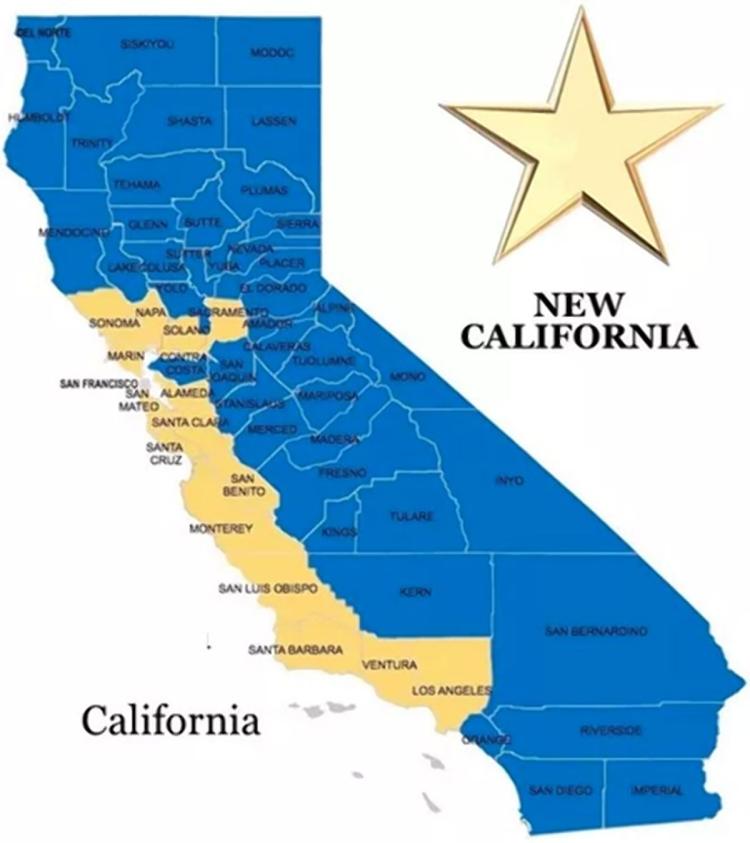
How many states will we have in the Union in twenty years? Probably 50, but there’s an outside chance that the number will be 55 plus. That could include a split of upstate New York from New York City, downstate Illinois from Chicagoland, eastern from western Washington State, eastern from western Oregon (or eastern Oregon combining with Idaho), and a division of California into as many as six states, as one proposal has it. There are secessionist movements alive in all of those states and it has happened before, as Glenn Reynolds notes in his recent paper “Splitsylvania: State Secession and What to Do About It“.

The origins of state boundaries and state governments were probably based on combinations of natural geographic features and confluent economic and political interests existing at the time. It would be surprising if those factors remained in static alignment over time, however. For various reasons, West Virginia seceded from Virginia many years ago, and Tennessee was once part of North Carolina. But to the extent that interests diverge within states, would a series of secessions promote better representative government? Reynolds’ approach to this question is fairly even-handed, though he apparently leans toward less disruptive solutions to the kinds of grievances voiced by secessionists.

Secession is a complex process; it obviously involves a major task in establishing a new state governmental apparatus. Also, legislative roadblocks to secession movements exist at both the state and federal levels. Nevertheless, there is great disaffection among rural interests in the states mentioned above for the policies they say are forced upon them by “urban elites”, as Reynolds calls them. At present, the secession of rural areas would tend to benefit republicans at the federal level, as two new Senate seats would be created to offset the seats held by democrats elected in more urban areas. Conceivably, however, the same process could work in reverse in other states, such as Texas. Even the proposal for six Californias seems designed to at least neutralize any possible negative impact on democrats in national politics.

Reynolds’ paper outline a few ways in which interests represented by legislative minorities, such as rural populations, could be better served without a step so drastic as secession. State regulation is often what rankles secessionists. To add fuel to the fire, states are free to adopt rules that are more strict than rules established under federal legislation, if they so choose, but never rules that are less strict. Today this applies to wages, working conditions, gun regulation, and environmental law. Reynolds suggests turning this on its head:

“The federal government’s legislative role has traditionally been the opposite: To use (as in the case of the 1964 Civil Rights Act) a national majority to ensure that local majorities can’t oppress local minorities. I thus suggest that federal laws regulating these key subject-matter areas be recast to pre-empt more restrictive state laws, meaning that urban regions would be unable to impose stricter laws on less- powerful rural areas. If this seems too inflexible, perhaps that pre-emption should in some cases be defeasible at the county level; if the government of a county affirmatively wants to accept stricter state regulations, then it may do so, but if not, then the federal regulations are a ceiling, as well as a floor.”

Reynolds contends that this approach would be relatively easy to defend against state challenges. The idea that federal rules provide minimum standards of regulation is only one interpretation of the Supremacy Clause of Article VI of the Constitution. There is no reason why federal legislation cannot be written in the way Reynolds describes. Moreover, Reynolds asserts that the Guarantee Clause of Article IV, which assures that mandates are to be established according to republican principles, could be used to buttress this argument. But he offers another remedy to curb secessionism among rural voters that states could exercise:

“There is nothing to stop a state from being mindful of the differences between urban and rural areas when crafting legislation or regulations, after all. States could adopt a local-option regulatory scheme relating to key subject areas on their own, and by doing so would lighten their footprint in rural areas and lessen the likelihood of festering resentments.”

Perhaps that’s hoping for too much. State majorities are unlikely to cede power to rural minorities, but it’s nice to imagine that sort of cooperation. There is no question that this sort of state regulatory approach would protect local interests from the tyranny of one-size-fits-all state regulation, but it wouldn’t eliminate the burdens created by the standard interpretation of federal supremacy.

In general, federal preemption of stricter state laws is no less consistent with the principles of federalism than federal pre-emption of more lenient state laws. One could even argue that the best way to apply federal supremacy depends on the issue, so there is some symmetry in Reynolds’ proposal. In terms of representative democracy, it is less an evil than federal preemption of less restrictive laws. It does what a democratic republic is supposed to do: protect minorities from the tyranny of a majority.

Secession from states is an intriguing possibility. Perhaps it is even the best approach in some cases. Nevertheless, Reynolds’ suggestions for revising federal and state regulatory approaches would be less costly and would avoid a nationwide race to subdivide states in order to gain a federal political advantage.

Social Media and the Antitrust Reflex

10 Tuesday Apr 2018

Posted by Nuetzel in Antitrust, Regulation, Social Media

≈ Leave a comment

Tags

Anticompetitive Behavior, Antitrust, Brendan KIrby, Cambridge Analytica, Data Privacy, EconTalk, Facebook, Fact-Checking, Geoffrey A. Fowler, Information Fiduciary, John O. McGinnis, Jonathan Zittrain, Judicial Restraint, Mark Zuckerberg, Matt Stoller, MeWe, Navneet Alang, Predatory Pricing, Social Media, Trust- Busting

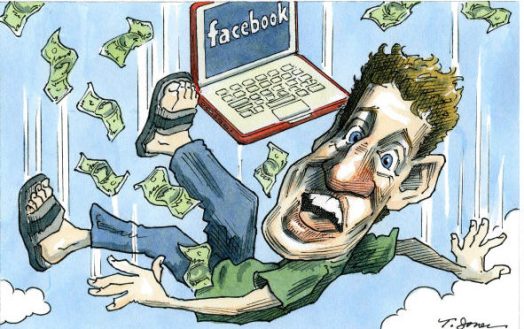
Falling Zuckerberg

Facebook is under fire for weak privacy protections, its exploitation of users’ data, and the dangers it is said to pose to Americans’ free speech rights. Last week, Mark Zuckerberg, who controls all of the voting stock in Facebook, attempted to address those issues before a joint hearing of the Senate Judiciary and Commerce Committees. It represented a major event in the history of the social media company, and it happened at a time when discussion of antitrust action against social media conglomerates like Facebook, Google, and Amazon is gaining support in some quarters. I hope this intervention does not come to pass.

The Threat

At the heart of the current uproar are Facebook’s data privacy policy and a significant data breach. The recent scandal involving Cambridge Analytica arose because Facebook, at one time, allowed application developers to access user data, and the practice continued for a few developers. Unfortunately, at least one didn’t keep the data to himself. There have been accusations that the company has violated privacy laws in the European Union (EU) and privacy laws in some states. Facebook has also raised ire among privacy advocates by lobbying against stronger privacy laws in some states, but it is within its legal rights to do so. Violations of privacy laws must be adjudicated, but antitrust laws were not intended to address such a threat. Rather, they were intended to prevent dominant producers from monopolizing or restraining trade in a market and harming consumers in the process.

Matt Stoller, in an interview with Russ Roberts on EconTalk, says antitrust action against social media companies may be necessary because they are so pervasive in our lives, have built such dominant market positions, and have made a practice of buying nascent competitors over the years. Steps must be taken to “oxygenate” the market, according to Stoller, promoting competition and protecting new entrants.

Tim Wu, the attorney who coined the misleading term “network neutrality”, is a critic of Facebook, though Wu is more skeptical of the promise of antitrust or regulatory action:

“In Facebook’s case, we are not speaking of a few missteps here and there, the misbehavior of a few aberrant employees. The problems are central and structural, the predicted consequences of its business model. From the day it first sought revenue, Facebook prioritized growth over any other possible goal, maximizing the harvest of data and human attention. Its promises to investors have demanded an ever-improving ability to spy on and manipulate large populations of people. Facebook, at its core, is a surveillance machine, and to expect that to change is misplaced optimism.”

Google has already been subject to antitrust action in the EU due to the alleged anti-competitive nature of its search algorithm, and Facebook’s data privacy policy is under fire there. But the prospect of traditional antitrust action against a social media company like Facebook seems rather odd, as acknowledged by the author at the first link above, Navneet Alang:

“… Facebook specifically doesn’t appear to be doing anything that actively violates traditional antitrust rules. Instead, it’s relying on network effects, that tendency of digital networks to have their own kind of inertia where the more people get on them the more incentive there is to stay. It’s also hard to suggest that Facebook has a monopoly on advertising dollars when Google is also raking in billions of dollars.“

Competition

The size of Facebook’s user base gives it a massive advantage over most of the other platforms in terms of network effects. I offer myself as an example of the inertia described by Alang: I’ve been on Facebook for a number of years. I use it to keep in touch with friends and as a vehicle for attracting readers to my blog. As I contemplated this post, I experimented by opening a MeWe account, where I joined a few user groups. It has a different “feel” than Facebook and is more oriented toward group chats. I like it and I have probably spent as much time on MeWe in the last week as Facebook. I sent MeWe invitations to about 20 of my friends, nearly all of whom have Facebook accounts, and a few days later I posted a link to MeWe on my Facebook wall. Thus far, however, only three of my friends have joined MeWe. Of course, none of us has deactivated our Facebook account, and I speculate that none of us will any time soon. This behavior is consistent with “platform inertia” described by Alang. Facebook users are largely a captive market.

But Facebook is not a monopoly and it is not a necessity. Neither is Google. Neither is Amazon. All of these firms have direct competitors for both users and advertising dollars. It’s been falsely claimed that Google and Facebook together control 90% of online ad revenue, but the correct figure for 2017 is estimated at less than 57%. That’s down a bit from 2016, and another decline is expected in 2018. There are many social media platforms. Zuckerberg claims that the average American already uses eight different platforms, which may include Facebook, Google+, Instagram, LinkedIn, MeWe, Reddit, Spotify, Tinder, Tumblr, Twitter, and many others (also see here). Some of these serve specialized interests such as professional networking, older adults, hook-ups, and shopping. Significant alternatives for users exist, some offering privacy protections that might have more appeal now than ever.

Antitrust vs. Popular, Low-Priced Service Providers

Facebook’s business model does not fit comfortably into the domain of traditional antitrust policy. The company’s users pay a price, but one that is not easily calculated or even perceived: the value of the personal data they give away on a daily basis. Facebook is monetizing that data by allowing advertisers to target individuals who meet specific criteria. Needless to say, many observers are uncomfortable with the arrangement. The company must maintain a position of trust among its users befitting such a sensitive role. No doubt many have given Facebook access to their data out of ignorance of the full consequences of their sacrifice. Many others have done so voluntarily and with full awareness. Perhaps they view participation in social media to be worth such a price. It is also plausible that users benefit from the kind of targeted advertising that Facebook facilitates.

Does Facebook’s business model allow it to engage in an ongoing practice of predatory pricing? It is far from clear that its pricing qualifies as “anti-competitive behavior”, and courts have been difficult to persuade that low prices run afoul of U.S. antitrust law:

“Predatory pricing occurs when companies price their products or services below cost with the purpose of removing competitors from the market. … the courts use a two part test to determine whether they have occurred: (1) the violating company’s production costs must be higher than the market price of the good or service and (2) there must be a ‘dangerous probability’ that the violating company will recover the loss …”

Applying this test to Facebook is troublesome because as we have seen, users exchange something of value for their use of the platform, which Facebook then exploits to cover costs quite easily. Fee-based competitors who might complain that Facebook’s pricing is “unfair” would be better-advised to preach the benefits of privacy and data control, and some of them do just that as part of their value proposition.

More Antitrust Skepticism

John O. McGinnis praises the judicial restraint that has characterized antitrust law over the past 30 years. This practice recognizes that it is not always a good thing for consumers when the government denies a merger, for example, or busts up a firm deemed by authorities to possess “too much power”. An innovative firm might well bring new value to its products by integrating them with features possessed by another firm’s products. Or a growing firm may be able to create economies of scale and scope that are passed along to consumers. Antitrust action, however, too often presumes that a larger market share, however defined, is unequivocally bad beyond some point. Intervention on those grounds can have a chilling effect on innovation and on the value such firms bring to the market and to society.

There are more fundamental reasons to view antitrust enforcement skeptically. For one thing, a product market can be defined in various ways. The more specific the definition, the greater the appearance of market dominance by larger firms. Or worse, the availability of real alternatives is ignored. For example, would an airline be a monopolist if it were the only carrier serving a particular airport or market? In a narrow sense, yes, but that airline would not hold a monopoly over intercity transportation, for which many alternatives exist. Is an internet service provider (ISP) a monopoly if it is the only ISP offering a 400+ Mbs download speed in a certain vicinity? In a very narrow sense, yes, but there may be other ISPs offering slower speeds that most consumers view as adequate. And in all cases, consumers always have one very basic alternative: not buying. Even so-called natural monopolies, such as certain public utilities, offer services for which there are broad alternatives. In those cases, however, a grant of a monopoly franchise is typically seen as a good solution if exchanged for public oversight and regulation, so antitrust is generally not at issue.

One other basic objection that can be made to antitrust is that it violates private property rights. A business that enjoys market dominance usually gets that way by pleasing customers. It’s rewards for excellent performance are the rightful property of its owners, or should be. Antitrust action then becomes a form of confiscation by punishing such a firm and its owners for success.

Political Bias

Another major complaint against Facebook is political bias. It is accused of selectively censoring users and their content and manipulating user news feeds to favor particular points of view. Promises to employ fact-check mechanisms are of little comfort, since the concern involves matters of opinion. Any person or organization held to be in possession of the unadulterated truth on issues of public debate should be regarded with suspicion.

Last Tuesday at the joint session, Zuckerberg acted as if such a bias was quite natural, given that Facebook’s employee base is concentrated in the San Francisco Bay area. But his nonchalance over the matter partly reflects the fact that Facebook is, after all, a private company. It is free to host whatever views it chooses, and that freedom is for the better. Facebook is not like a public square. Instead, the scope of a user’s speech is largely discretionary: users select their own network of friends; they can choose to limit access to their posts to that group or to a broader group of “friends of friends”; they can limit posts to subgroups of friends; or they can allow the entire population of users to see their posts, if interested. No matter how many users it has, Facebook is still a private community. If its “community standards” or their enforcement are objectionable, then users can and should find alternative outlets. And again, as a private company, Facebook can choose to feature particular news sources and censor others without running afoul of the First Amendment.

Revisiting Facebook’s Business Model

The greatest immediate challenge for Facebook is data privacy. Trust among users has been eroded by the improprieties in Facebook’s exploitation of data. It’s as if everyone in the U.S. has suddenly awoken to the simple facts of its business model and the leveraging of user data it requires. But it is not of great concern to some users, who will be happy to continue to use the platform as they have in the past. Zuckerberg did not indicate a willingness to yield on the question of Facebook’s business model in his congressional testimony, but there is a threat that regulation will require steps to protect data that might be inconsistent with the business model. If users opt-out of data sharing in droves, then Facebook’s ability to collect revenue from advertisers will be diminished.

As Jonathan Zittrain points out, Facebook might find new opportunity as an information fiduciary for users. That would require a choice between paying a monthly fee or allowing Facebook to continue targeted advertising on one’s news feed. Geoffrey A. Fowler writes that the idea of paying for Facebook is not an outrageous proposition:

“Facebook collected $82 in advertising for each member in North America last year. Across the world, it’s about $20 per member. … Netflix costs $11 and Amazon Prime is $13 per month. Facebook would need $7 per month from everyone in North America to maintain its current revenue from targeted advertising.”

Given a choice, not everyone would choose to pay, and I doubt that a fee of $7 per month would cost Facebook much in terms of membership anyway. It could probably charge slightly more for regular memberships and price discriminate to attract students and seniors. Fowler contends that a user-paid Facebook would be a better product. It might sharpen the focus on user-provided and user-linked content, rather than content provided by advertisers. As Tim Wu says, “… payment better aligns the incentives of the platform with those of its users.” Fowler also asserts that regulatory headaches would be less likely for the social network because it would not be reliant on exploiting user data.

A noteworthy aspect of Zuckerberg’s testimony at the congressional hearing was his stated willingness to consider regulatory solutions: the “right regulations“, as he put it. That might cover any number of issues, including privacy and political advertising. But as Brendan Kirby warns, regulating Facebook might not be a great idea. Established incumbents are often capable of bending regulatory bodies to their will, ultimately using them to gain a stronger market position. A partnership between the data-rich Facebook and an agency of the government is not one that I’d particularly like to see. Tim Wu believes that what we really need are competitive alternatives to Facebook: he floats a few ideas about how a Facebook competitor might be structured, most prominently the fee-based alternative.

Let It Evolve 

Like many others, I’m possessed by an anxiety about the security of my data on social media, an irritation with the political bias that pervades social media firms, and a suspicion that certain points of view are favored over others on their platforms. But I do not favor government intervention against these firms. Neither antitrust action nor regulation is likely to improve the available platforms or their services, and instead might do quite a bit of damage. “Trust-busting” of social media platforms would present technological challenges, but even worse, it would disrupt millions of complex relationships between firms and users and attempt to replace them with even more numerous and complex relationships, all dictated by central authorities rather than market forces. Significant mergers and acquisitions will continue to be reviewed by the DOJ and the FTC, preferably tempered by judicial restraint. I also oppose the regulatory option. Compliance is costly, of course, but even worse, the social media giants can afford it and will manipulate it. Those costs would inevitably present barriers to market entry by upstart competitors. The best regulation is imposed by customers, who should assert their sovereignty and exercise caution in the relationships they establish with social media platforms … and remember that nothing comes for free.

Slam the Damn Brakes on the Regulatory Potentate

28 Saturday Oct 2017

Posted by Nuetzel in Regulation

≈ Leave a comment

Tags

Administrative State, Barry Brownstein, Corn Ethanol, crony capitalism, DARPA, Deregulation, Donald Trump, Drug Review, EPA, FCC, FDA, Greg Ip, Industrial Policy, Mercatus Center, NASA, Net Neutrality, Paris Climate Accord, Patrick McLaughlin, Puerto Rico, Renewable Fuel Standards, Steve Bannon, The Brookings Institution, Two-For-One Regulatory Order

The stock market’s recent gains have at least three plausible explanations: corporate earnings growth, the prospect of tax reform, and deregulation. Tax reform and deregulation are stated priorities of the Trump Administration and have the potential to lift the economy and generate additional earnings. Investors obviously like that prospect, though regulation itself is a tool used subversively by crony capitalists to stifle competition in their markets. Conceivably, some of the large firms that dominate major stock indices could suffer from deregulation. And I have to wonder whether the economic threat of Trumpian trade protectionism is not taken seriously by the equity markets. Let’s hope they’re right.

It’s no mystery that high taxes and tax complexity can inhibit economic growth. Let’s face it: when it comes to productive effort, we can all think of better things to do than tax planning, crony capitalist or not. The same is true of regulation: the massive diversion of resources into non-productive compliance activities stifles innovation, growth, and even the stability of the status quo. Regulation creates obstacles to activities like new construction and the diffusion of telecommunications services. And it discourages the creation of new products and services like potentially life-saving drugs and slows their introduction to market. The sheer number of federal regulations is so spectacular that one wonders how anything productive ever gets done! Patrick McLaughlin of The Mercatus Center and several coauthors tell of “The Impossibility of Comprehending, or Even Reading, All Federal Regulations“.

Regulation is more than a mere economic burden. It is the product of an administrative apparatus that is not subject to the checks and balances that are at the very heart of our system of constitutional government. That is a threat to basic liberties. Barry Brownstein offers an instructive case study of “The Tyranny of Administrative Power” involving violations of property rights in New Hampshire. The case involves the administrative machinations surrounding an installation of high-power lines.

Governmental efforts to spur innovation ordinarily take the form of spending on research, subsidies for certain technologies or favored industries (e.g., alternative energy), and large government programs dedicated to the achievement of various technological goals (e.g., NASA, DARPA). Together with regulatory rules that influence the allocation of resources, these governmental efforts are called industrial policy. An unfortunate recent example is Trump’s decision to retain the renewable fuel standard (RFS), but on the whole, industrial policy does not seem central to Trump’s effort to stimulate innovation.

It’s clear that a deregulatory effort is well underway: the so-called “deconstruction of the administrative state” hailed by Steve Bannon not long after Trump took office. First came Trump’s 2-for 1 executive order (also see here) requiring the elimination (or modification) of two rules for every new rule. In the Wall Street Journal, Greg Ip writes about changes at the FDA and the FCC that could dramatically alter the pace of innovation in the pharmaceutical and telecom industries. (If the link is gated, you access the article on the WSJ’s Facebook page.) Speedier and less burdensome reviews of new drugs will greatly benefit consumers. An end to net neutrality rules will support greater investment in broadband infrastructure and access to innovative services. There is a new emphasis at the FCC on enabling innovative solutions to communications problems, such as Google’s effort to provide cell phone service in Puerto Rico by flying balloons over the island. The Trump Administration is also reining-in an aggressive EPA, the source of many questionable rules that weaken property rights and inhibit growth. (Again, the RFS is a disappointing exception.) Health care reform could offer much needed relief from overzealous insurance regulation and high compliance costs for physicians and other providers.

But deconstructing the administrative state is hard. Regulations just seem to metastasize, so deregulatory gains are offset by continued rule-making. This is partly from new legislation, but it is also a consequence of the incentives facing self-interested regulators. With that in mind, it’s impressive that regulation has not grown, on balance, thus far into Trump’s first year in office. According to Patrick McLaughlin, zero regulatory growth has been unusual going back at least to the Carter Administration. In quoting McLaughlin, The Weekly Standard says that Trump might well earn the mantle of “King of Deregulation“, but he has a long way to go. Brookings has this interactive tool to keep track of his deregulatory progress. One item on the Brookings list is the President’s intention to withdraw from the Paris Climate Accord. That represents a big save in terms of avoiding future regulatory burdens.

I can’t help but be wary of other avenues through which the Trump Administration might regulate activity and undermine economic growth. Chief among these is Trump’s negative attitude toward foreign trade. Government interference with our freedom to freely engage in transactions with the rest of the world is costly in terms of both foreign and domestic prices. With something of a history as a crony capitalist himself, Trump is not immune to pressure from private economic interests, as illustrated by his recent cow-tow to the ethanol lobby. Nevertheless, I’m mostly encouraged by the administration’s deregulatory efforts, and I hope they continue. The equity market apparently expects that to be the case.

Net Neutrality: Degradation For All

20 Tuesday Jun 2017

Posted by Nuetzel in Net neutrality, Regulation

≈ 1 Comment

Tags

Ajit Pai, Bronwyn Howell, Common Carriers, Consumer Surplus, Content Providers, Coyote Blog, FCC, Internet Backbone, ISPs, Net Neutrality, Netflix, Network Capacity, Network Congestion, Oligopoly, Price Discrimination, Tiered Rates, Tim Wu, Usage-Based Pricing, Warren Meyer

The FCC recently voted to reverse its earlier actions on so-called net neutrality, which would have treated internet service providers (ISPs) as “common carriers” and subjected them to detailed federal regulation of their services, pricing, and profits. Many believe net neutrality would ensure a sort of fairness and nondiscrimination on the internet, but it is actually a destructive regulatory regime under which certain firms are allowed to extract economic rents from the efforts of others. Warren Meyer has a nice take on this at Coyote Blog:

“Net Neutrality is one of those Orwellian words that mean exactly the opposite of what they sound like…. What [it] actually means is that certain people … want to tip the balance in this negotiation towards the content creators ….  Netflix, for example, takes a huge amount of bandwidth that costs ISP’s a lot of money to provide. But Netflix doesn’t want the ISP’s to be be able to charge for this extra bandwidth Netflix uses – Netflix wants to get all the benefit of taking up the lion’s share of ISP bandwidth investments without having to pay for it. Net Neutrality is corporate welfare for content creators.“

I made the same point almost three years ago in “The Non-Neutrality of Network Hogs“. Meyer emphasizes that in the net-neutrality fight, the primary tension is between content creators and ISPs (and transport providers), but it is like any other battle to capture the gains from a vertical supply chain. Think of suppliers of goods versus shippers, for example, or traditional publishers versus delivery services, or oil extraction versus refining. Ultimately, all of the various parties must cover their costs in order to survive, and obviously each would like to capture a larger share of the value from its stage of the production process. In a series of arms-length transactions, one might assume that their shares would correspond roughly to the value they add to the final product, but things are more complicated than that. Much depends on the competitive state of the market and on the cost structures faced by different parties.

While the ISPs are often said to exercise monopoly power, there are few if any local markets in which that is actually the case, even in rural areas. Almost everywhere in the U.S., local internet markets could be better described as oligopolistic: there are at least a couple of rival firms (and alternatives for consumers), even if the technologies are sometimes radically different, so some competition exists. The same is true of the internet backbone.

Obviously, content providers compete with one another in a large sense, but many popular forms of content are unique and consumers demand access to them through their ISPs. Therefore, some content providers exercise a degree of monopoly power. And they might also require a lot of bandwidth.

The nature of the costs faced by ISPs and content providers is quite different. The latter have a much lower proportion of fixed costs than ISPs, who must invest in network capacity. Ultimately, the costs of providing that capacity must be priced. At first blush, it seems natural for users of capacity to be billed proportionately, but allocating those costs over customers and over time is a complex undertaking. Like all problems in economics, however, network usage involves a scarce resource. A large increment to demand can lead to network congestion and higher costs, not only directly to the ISPs but to users experiencing a degradation in the speed and quality of their service. ISPs have traditionally had the flexibility to negotiate with large content providers, reaching mutually agreeable terms. That’s what brought us to the state of today’s internet, and most observers would say that it’s pretty damn good!

It is the network that makes all of these wonderful services possible. The ISPs provide and maintain that network, and they must provide for expansion of that network as traffic grows. It is important that ISPs have adequate incentives to do so. However, the form of regulation to which so-called common carriers are subjected is known historically for its failure to provide good incentives. That history goes back as far as 130 years in transportation and about 80 years in telecommunications. This is why many analysts, and FCC Chairman Ajit Pai, contend that common carrier status for ISPs, and “net neutrality”, would lead to shortfalls in network capacity and a deterioration in the quality of service. It would also reward large content providers (think Netflix) in the short term at the expense of ISPs, essentially giving the former access to the existing network at less than cost. That’s the whole idea for industry advocates of net netrality, of course. But in the end, net neutrality is a shortsighted goal, even for the content providers.

The content providers have made every effort to propagandize the public, stoking fears that the ISPs are treating certain kinds of traffic unfairly. Without net neutrality, would ISPs unfairly discriminate against certain kinds of content? Or against certain types of users? Price discrimination is one of the primary criticisms of the presumed behavior of ISPs in the absence of net neutrality. Economist Bronwyn Howell points out that price discrimination is not unusual, however, and is not necessarily undesirable. Indeed, consumers of internet, telephone, mobile, and cable TV services seem to prefer certain forms of price discrimination! Consumers with heavy usage who purchase flat rate monthly internet access pay a lower charge per Gb than light users. Consumers who purchase “bundles” of internet and voice service may benefit from price discrimination relative to those who choose not to bundle their services. Strictly usage-based pricing would prevent price discrimination on this basis, but few would advocate the abolition of bundled offers, which provide benefits in terms of flexibility of use and predictability of cost, yielding net welfare gains for many consumers at no incremental cost to others. Like all voluntary trade, these are positive sum transactions: consumers capture more  “surplus” value while ISPs earn a greater contribution to the fixed costs of the network.

When ISPs charge a data rate based on usage, consumers face a positive marginal cost on incremental data. As usage increases, its marginal value to the consumer declines; the consumer will not use data beyond the point at which its value equals the data rate they pay. That places a cap on consumer surplus (the area above the price and below the consumer’s demand curve). When the consumer faces a zero marginal cost (an unlimited data plan), their usage rises to the point at which its marginal value is zero. The total amount of “surplus” in that scenario is larger, and it is possible for an ISP to split the gain with the consumer by offering a price for unlimited usage. Thus, as long as the network capacity is in place, both parties are made better off! If not, the practice can lead to congestion, but competition for users often dictates that such packages be offered.

Especially in the presence of positive network externalities, it makes no sense for the ISPs, as a group, to price users or traffic out of the market, unless they are punished for doing otherwise at below cost. As always, pricing is an exercise in balancing costs with the benefits to potential buyers. It should remain a private and unfettered exercise ending only in trades that are mutually beneficial.

And what of network capacity and the big content providers? At the “price discrimination” link above, Howell says:

“… available bandwidth allowed Netflix to happen, not the other way around. But now, as Netflix comes to dominate existing bandwidth, leading to higher costs, it is causing externalities (delays) and higher costs (ISP fees are now rising in real terms in some markets) to pay for new capacity.“

Should the ISPs charge all customers higher rates in order to manage growth in traffic and fund new capacity? How can they allocate costs to the cost-causers? Usage-based data rates are one simple alternative. Tiered rates would act to minimize the extent to which light users are penalized. ISPs have also negotiated with individual content providers directly, reaching agreements to compensate ISPs for access to their customers. Tim Wu, the Columbia Law professor credited with coining the term “net neutrality”, was quoted at the last link bemoaning these types of deals:

“‘I think it is going to be bad for consumers,’ he added, because such costs are often passed through to the customer.“

Well, yes! Netflix charges its customers, and it will attempt to recover these payments for network capacity. Streaming is an integral component of the service they offer, and they cannot do it without the ISPs. Would Wu propose that the pipes be provided at less than cost?

Some have said that it is more economically efficient for ISPs to charge users directly for incremental short-run network “externalities” caused by large data demands. (Conceptually, it is better to think of these costs as long-run marginal costs of network expansion.) It may be that a tiered rate structure can approximate the optimal solution, and packages are often tiered by download speed. Nevertheless, passing costs along to large content providers is a viable approach to allocating costs as well.

Another argument is that small content providers cannot afford these payments. However, if they don’t generate a significant amount of traffic, they probably won’t have to negotiate special deals. If they grow to require a large share of the “pipe”, it would indicate that they have passed a market test. Ultimately, their customers should pay the costs of providing the capacity in one way or another.

Net neutrality and regulation of ISPs is the wrong approach to encouraging the growth and value delivered by the internet. It would stifle incentives to provide the needed capacity and to develop new network technologies. We certainly didn’t get here by treating the ISPs like public utilities. Rather, the process was facilitated by the freedom to experiment technologically and contractually. ISPs are well aware that the value of their networks are enhanced by ubiquity. Affordable access to a broad share of the population is in their best interest. In the end, consumers are sovereign and should be the sole arbiters of the value offered by ISPs and content providers. Regulators will promise to protect us, but the inevitable result will be a market hampered by rules that degrade the network, leading to substandard service and a less vibrant internet.

Administrative Supremacy, Lost Checks and Balances

16 Friday Jun 2017

Posted by Nuetzel in Regulation

≈ 1 Comment

Tags

Administrative State, Chevron Deference, Cost of Regulation, Due Process, Eric Boehm, Evan D. Bernick, Executive Power, Fourth Branch, George Mason University, Glenn Reynolds, Inez Stepman, Jarrett Stepman, Judicial Deference, Mercatus Center, Philip Hamburger, Reason.com, Regulatory Dark Matter, Separation of Powers, Townhall, Two-For-One Regulatory Order

The two-for-one regulatory order issued by the Trump White House in January raises some practical difficulties in implementation. It requires that federal agencies eliminate two regulatory rules for every new rule promulgated, both in terms of the number of rules and any incremental regulatory costs imposed. Two out for every one in. Questions surrounding the meaning of “a regulation”, how to define incremental costs, and whether a particular rule is actually mandated by legislation are not trivial. Nevertheless, the spirit of this order is admirable and it serves as the leading edge of the Administration’s attempt to roll back the scope and impact of excessive government authority.

The cost of regulation is vast. Economists at the Mercatus Center at George Mason University have estimated the total cumulative cost of regulation in the U.S., finding that regulation has reduced economic growth by 0.8 percent per year since 1980. Without the additional regulatory growth since 1980, the U.S. economy would have been about 25 percent larger than it was in 2012. That’s a $4 trillion shortfall, or roughly $13,000 per person.

While regulation and administrative control over the private economy takes an increasing toll on economic growth and human welfare, the problem goes beyond economic considerations: administrative agencies have “progressively” usurped not just legislative but also judicial power. The concentration of executive, legislative and judicial power constitutes a “fourth branch of government“, a development inimical to the principles enshrined in our Constitution and a prescription for slow-boil tyranny. It facilitates rent seeking and corporatism just as surely as it creates a ruling class of individuals who act on their personal and arbitrary inclinations. We are ruled by men backed by police power, not impartial laws.

Glenn Reynolds writes that unelected rule makers and central planners are able to manipulate decisions across a broad swath of the economy and society. He quotes a new book by Philip Hamburger of Columbia Law School called “The Administrative Threat“:

“Government agencies regulate Americans in the full range of their lives, including their political participation, their economic endeavors, and their personal conduct. Administrative power has thus become pervasively intrusive. But is this power constitutional?

A similar sort of power was once used by English kings, and this book shows that the similarity is not a coincidence. In fact, administrative power revives absolutism. On this foundation, the book explains how administrative power denies Americans their basic constitutional freedoms, such as jury rights and due process. No other feature of American government violates as many constitutional provisions or is more profoundly threatening. As a result, administrative power is the key civil liberties issue of our era.“

Two previous posts on Sacred Cow Chips have dealt with Hamburger’s work. The first, “Hamburger Nation: An Administrative Nightmare“(1) provides the following explanation of his position:

“Hamburger examines the assertion that rule-making must be delegated by Congress to administrative agencies because legislation cannot reasonably be expected to address the many details and complexities encountered in the implementation of new laws. Yet this is a delegation of legislative power. Once delegated, this power has a way of metastasizing at the whim of agency apparatchiks, if not at the direction of the chief executive. If you should want to protest an administrative ruling, your first stop will not be a normal court of law, but an administrative review board or a court run by the agency itself! You’ll be well advised to hire an administrative attorney to represent you. Eventually, and at greater expense, an adverse decision can be appealed to the judicial branch proper.“

The exercise of rule-making authority, and even extra-legal legislative action by the administrative state, has economic costs that are bad enough. Hamburger also emphasizes the breakdown of the separation of executive and judicial powers inherent in the enforcement and adjudication of disputes under administrative law. This was the subject of the second Sacred Cow Chips post referenced above: “Courts and Their Administrative Masters“. It reviewed an unfortunate standard established by court precedent involving judicial (“Chevron”) deference to administrative agency fact-finding and even interpretation of law. While the decisions of administrative courts, which are run by the agencies themselves, can be appealed to the judicial branch, such appeals often amount to exercises in futility.

“…courts apply a test of judgement as to whether the administrative agency’s interpretation of the law is “reasonable”, even if other “reasonable” interpretations are possible. This gets particularly thorny when the original legislation is ambiguous with respect to a certain point.

…the courts should not abdicate their role in reviewing an agency’s developmental evidence for any action, and the reasonability of an agency’s applications of evidence relative to alternative courses of action. Nor should the courts abdicate their role in ruling on the law itself.“

This paper on Judicial Deference to Agencies by Evan D. Bernick of Georgetown Law makes the case that judicial deference is a violation of the constitutional separation of powers, concluding that:

“… in cases involving administrative deprivations of core private rights to ‘life, liberty, or property,’ fact deference violates Article III’s vesting of ‘[t]he judicial power’ in the federal courts; constitutes an abdication of the duty of independent judgment that Article III imposes upon federal judges; and violates the Fifth Amendment by denying litigants ‘due process of law,’ which requires (1) judicial proceedings in an Article III court prior to any individualized deprivation of ‘life, liberty, or property’; and (2) fact-finding by independent, impartial fact-finders.“

Inez and Jarrett Stepman in Townhall note that there are almost three million well-paid federal employees with job security that would make most private sector workers envious.

“Though the abolishment of the spoils system [which allowed civil service hiring and firing based on political party] was meant to mitigate corruption and incompetence, it has resulted in a toxic combination of enhanced agency power and an entrenched civil servant class with its own institutional—and frequently political—interests, virtually unaccountable to the president or any other elected official.“

The Stepmans discuss legislation that might stem the usurpation of lawmaking power by the administrative state. They are convinced that the administrative state must be reigned-in. Ironically, expanded executive authority means that the process of reversal is not that difficult in many cases. By way of example, here’s a piece on the ease of undoing certain Obama era regulations. Executive orders, or “the pen and the phone” in Obama’s charming parlance, lack legitimate legislative authority and can be reversed by new executive orders. I firmly believe that reversing the earlier orders is the right thing to do at the moment, but the unchecked authority that makes it possible (and the supremacy of the administrative state) is a source of economic instability, and it must end. Eric Boehm makes this point eloquently in Reason at the last link above:

“New policies that affect wide swaths of the economy and reshape entire business models should go through Congress, or at the very least should be subject to the public rulemaking process. Guidance documents and other ‘dark matter’ regulations that by-pass those processes can be un-made as quickly as they were made, leaving businesses to deal with an ever-changing and unpredictable regulatory state that does not really help anyone, no matter which side you’re on in any individual policy fight.“

~~~~~~~~~~~~~~~~~~~~~~~~~~~~~~~~~~~~~~~~~~~~~~~~~

(1) The principle title “Hamburger Nation” was intended as a play on Glenn Reynolds’ paper “Ham Sandwich Nation: Due Process When Everything Is a Crime“, in which he discussed the judicial implications of over-criminalization and regulatory overreach.


Courts and Their Administrative Masters

04 Tuesday Apr 2017

Posted by Nuetzel in Big Government, Regulation

≈ 1 Comment

Tags

Administrative Law, Administrative State, Chevron Deference, Chevron USA, Clyde Wayne Crews, Competitive Enterprise Institute, Ilya Somin, Jonathan Adler, Kent Jordan, Natural Resources Defense Council, Neil Gorsuch, Philip Hamburger, Regulatory Dark Matter, Separation of Powers

IMG_4007

Supreme Court nominee Neil Gorsuch says the judicial branch should not be obliged to defer to government agencies within the executive branch in interpreting law. Gorsuch’s  opinion, however, is contrary to an established principle guiding courts since the 1984 Supreme Court ruling in Chevron USA vs. The Natural Resources Defense Council. In what is known as Chevron deference, courts apply a test of judgement as to whether the administrative agency’s interpretation of the law is “reasonable”, even if other “reasonable” interpretations are possible. This gets particularly thorny when the original legislation is ambiguous with respect to a certain point. Gorsuch believes the Chevron standard subverts the intent of Constitutional separation of powers and judicial authority, a point of great importance in an age of explosive growth in administrative rule-making at the federal level.

Ilya Somin offers a defense of Gorsuch’s position on Chevron deference, stating that it violates the text of the Constitution authorizing the judiciary to decide matters of legal dispute without ceding power to the executive branch. The agencies, for their part, seem to be adopting increasingly expansive views of their authority:

“Some scholars argue that in many situations, agencies are not so much interpreting law, but actually making it by issuing regulations that often have only a tenuous basis in congressional enactments. When that happens, Chevron deference allows the executive to usurp the power of Congress as well as that of the judiciary.”

Jonathan Adler quotes a recent decision by U.S. Appeals Court Judge Kent Jordan in which he expresses skepticism regarding the wisdom of Chevron deference:

Deference to agencies strengthens the executive branch not only in a particular dispute under judicial review; it tends to the permanent expansion of the administrative state. Even if some in Congress want to rein an agency in, doing so is very difficult because of judicial deference to agency action. Moreover, the Constitutional requirements of bicameralism and presentment (along with the President’s veto power), which were intended as a brake on the federal government, being ‘designed to protect the liberties of the people,’ are instead, because of Chevron, ‘veto gates’ that make any legislative effort to curtail agency overreach a daunting task.

In short, Chevron ‘permit[s] executive bureaucracies to swallow huge amounts of core judicial and legislative power and concentrate federal power in a way that seems more than a little difficult to square with the Constitution of the [F]ramers’ design.’

The unchecked expansion of administrative control is a real threat to the stability of our system of government, our liberty, and the health of our economic system. It imposes tremendous compliance costs on society and often violates individual property rights. Regulatory actions are often taken without performing a proper cost-benefit analysis, and the decisions of regulators may be challenged initially only within a separate judicial system in which courts are run by the agencies themselves! I covered this point in more detail one year ago in “Hamburger Nation: An Administrative Nightmare“, based on Philip Hamburger’s book “Is Administrative Law Unlawful?“.

Clyde Wayne Crews of the Competitive Enterprise Institute gives further perspective on the regulatory-state-gone-wild in “Mapping Washington’s Lawlessness: An Inventory of Regulatory Dark Matter“. He mentions some disturbing tendencies that may go beyond the implementation of legislative intent: agencies sometimes choose to wholly ignore some aspects of legislation; agencies tend to apply pressure on regulated entities on the basis of interpretations that stretch the meaning of such enabling legislation as may exist; and as if the exercise of extra-legislative power were not enough, administrative actions have a frequent tendency to subvert the price mechanism in private markets, disrupting the flow of accurate information about resource-scarcity and the operation of incentives that give markets their great advantages. All of these behaviors fit Crews’ description of “regulatory dark matter.”

Chevron deference represents an unforced surrender by the judicial branch to the exercise of power by the executive. As Judge Jordan notes in additional quotes provided by Adler at a link above, this does not deny the usefulness or importance of an agency’s specialized expertise. Nevertheless, the courts should not abdicate their role in reviewing an agency’s developmental evidence for any action, and the reasonability of an agency’s applications of evidence relative to alternative courses of action. Nor should the courts abdicate their role in ruling on the law itself. Judge Gorsuch is right: Chevron deference should be re-evaluated by the courts.

Big-Time Regulatory Rewards

26 Tuesday Jul 2016

Posted by Nuetzel in Big Government, Central Planning, Regulation

≈ Leave a comment

Tags

Cronyism, Daniel Mitchell, Glenn Reynolds, Guy Rolnik, Harvard Business Review, Industrial Policy, James Bessen, Matt Ridley, Mercatus Center, Regdata, regressivity

Government Control

Why does regulation of private industry so often inure to the benefit of the regulated at the expense of consumers? In the popular mind, at least, regulating powerful market players restrains “excessive” profits or ensures that their practices meet certain standards. More often than not, however, regulation empowers the strongest market players at the expense of the very competition that would otherwise restrain prices and provide innovative alternatives. The more complex the regulation, the more likely that will be the result. Smaller firms seldom have the wherewithal to deal with complicated regulatory compliance. Moreover, regulatory standards are promulgated by politicians, bureaucrats, and often the most powerful market players themselves. If ever a system was “rigged”, to quote a couple of well-known presidential candidates, it is the regulatory apparatus. Pro-regulation candidates might well have the voters’ best interests at heart, or maybe not, but the losers are usually consumers and the winners are usually the dominant firms in any regulated industry.

The extent to which our wanderings into the regulatory maze have rewarded crony capitalists — rent seekers — is bemoaned by Daniel Mitchell in “A Very Depressing Chart on Creeping Cronyism in the American Economy“. The chart shows that about 40% of the increase in U.S. corporate profits since 1970 was generated by rent-seeking efforts — not by activities that enhance productivity and output. The chart is taken from an article in the Harvard Business Review by James Bessen of Boston University called “Lobbyists Are Behind the Rise in Corporate Profits“. Here are a couple of choice quotes from the article:

“Lobbying and political campaign spending can result in favorable regulatory changes, and several studies find the returns to these investments can be quite large. For example, one study finds that for each dollar spent lobbying for a tax break, firms received returns in excess of $220. …regulations that impose costs might raise profits indirectly, since costs to incumbents are also entry barriers for prospective entrants. For example, one study found that pollution regulations served to reduce entry of new firms into some manufacturing industries.”

“This research supports the view that political rent seeking is responsible for a significant portion of the rise in profits [since 1970]. Firms influence the legislative and regulatory process and they engage in a wide range of activity to profit from regulatory changes, with significant success. …while political rent seeking is nothing new, the outsize effect of political rent seeking on profits and firm values is a recent development, largely occurring since 2000. Over the last 15 years, political campaign spending by firm PACs has increased more than thirtyfold and the Regdata index of regulation has increased by nearly 50% for public firms.“

A good explanation of Bessen’s findings is provided by Guy Rolnik, including an interview with Bessen. Law Professor Glenn Reynolds of the University of Tennessee put his finger on the same issue in an earlier article entitled “Why we still don’t have flying cars“. One can bicker about the relative merits of various regulations, but as Reynolds points out, the expansion of the administrative and regulatory state has led to a massive diversion of resources that is very much a detriment to the intended beneficiaries of regulation:

“… 1970 marks what scholars of administrative law (like me) call the ‘regulatory explosion.’ Although government expanded a lot during the New Deal under FDR, it wasn’t until 1970, under Richard Nixon, that we saw an explosion of new-type regulations that directly burdened people and progress: The Clean Air Act, the Clean Water Act, National Environmental Policy Act, the founding of Occupation Safety and Health Administration, the creation of the Environmental Protection Agency, etc. — all things that would have made the most hard-boiled New Dealer blanch.

Within a decade or so, Washington was transformed from a sleepy backwater (mocked by John F. Kennedy for its ‘Southern efficiency and Northern charm’) to a city full of fancy restaurants and expensive houses, a trend that has only continued in the decades since. The explosion of regulations led to an explosion of people to lobby the regulators, and lobbyists need nice restaurants and fancy houses.“

Matt Ridley hits on a related point in “Industrial Strategy Can Be Regressive“, meaning that government planning and industrial regulation have perverse effects on prices and economic growth that hit the poor the hardest. Ridley, who is British, discusses regressivity in the context of his country’s policy environment, but the lessons are general:

“The history of industrial strategies is littered with attempts to pick winners that ended up picking losers. Worse, it is government intervention, not laissez faire, that has done most to increase inequality and to entrench wealth and privilege. For example, the planning system restricts the supply of land for housebuilding, raising property prices to the enormous benefit of the haves (yes, that includes me) at the expense of the have-nots. … 

Why are salaries so high in financial services? Because there are huge barriers to entry erected by government, which hands incumbent firms enormous quasi-monopoly advantages and thereby shelters them from upstart competition. Why are cancer treatments so expensive? Because governments give monopolies called patents to the big firms that invent them. Why are lawyers so rich? Because there is a government-licensed cartel restricting the supply of them.“

Ridley’s spirited article gives emphasis to the fact that the government cannot plan the economy any more than it can plan the way our tastes and preferences will evolve and respond to price incentives; it cannot plan production any more than it can anticipate changes in resource availability; it cannot dictate technologies wisely any more than it can predict the innumerable innovations brought forth by private initiative and market needs; it almost never can regulate any better than the market can regulate itself! But government is quite capable of distorting prices, imposing artificial rules, picking suboptimal technologies, consuming resources, and rewarding cronies. One should never underestimate the potential for regulation, and government generally, to screw things up!

Obama’s On-The-Clock Undertime Rule

23 Monday May 2016

Posted by Nuetzel in Labor Markets, Regulation, Uncategorized

≈ Leave a comment

Tags

AEIdeas, American Enterprise Institute, Andy Puzder, Business Formation, Compliance Costs, DOL Overtime Exemption, Flexible Work Arrangements, Hourly workers vs. Management, James Pethokoukis, John Cochrane, Nick Gillespie, Obama administration, Overtime Costs, Overtime rules, Private Compensation, Reason, Salaried Status, Warren Meyer

obama-unemployment-2

Hurting the ones you love: one of the Obama Administration’s calling cards is a penchant for misguided economic policy; the change in an overtime rule announced Wednesday by the Department of Labor (DOL) is a classic example. The DOL has amended the rule, which requires payments of time-and-a-half to workers who exceed 40 hours per week, by doubling the threshold at which salaried employees are exempt from overtime to $47,500 annually. This affects almost 5 million workers earning between the old threshold of $23,660 and the new threshold. While the media heralds Obama for “lifting the wages of millions of workers”, those with a grasp of economic reality know that it is a destructive policy.

The rule change is unambiguously bad for employers, many of which are small businesses. That should not be too difficult to understand. Most private employers operate in competitive markets and do not earn lavish profits at the expense of their employees. They need good employees, especially those in positions of responsibility, and they must pay them competitively. By imposing higher costs on these businesses, the rule puts them in a position of greater vulnerability in the marketplace. The higher costs also include extra record keeping to stay in compliance with the rule. The impact on new business formation is likely to be particularly damaging:

“We might be told that the answer for a startup is simply to ‘go and raise more money.’ But — aside from diluting the founders who are paying for the company with their sweat in exchange for the hope of a payoff that comes in years, if ever — raising capital is the single most difficult thing I do as a startup entrepreneur. I would invite anyone not in our field to give it a shot before he endorses a regulation that will impose greater capital costs on us.

Regulators often act as though they cannot imagine a world where a few hundred or a few thousand dollars can make the difference between success and failure. If you raise our costs even modestly, you will put some of us out of business.“

Shutting down, or not starting up, is a bad outcome, but that will be a consequence in some cases. However, there are other margins along which employers might respond. First, a lucky few well-placed managers might be rewarded with a small salary bump to lift them above the new exemption threshold. More likely, employers will reduce the base salaries of employees to accommodate the added overtime costs, leaving total compensation roughly unchanged.

Many other salaried employees with pay falling between the old and new thresholds are likely to lose their salaried status. Their new hourly wage might be discounted to allow them to work the hours to which they’re accustomed, as demotivating as that sounds. If their employers limit their hours, it is possible that a few extra workers could be hired to fill the gap. Perhaps that is what the administration hopes when it claims that an objective of the new rule is to create jobs. Unfortunately, those few lucky hires will owe their jobs to the forced sacrifice of hours by existing employees.

A change from a salary to hourly pay will have other repercussions for employees. Their relationships to their employers will be fundamentally transformed. Ambitious “hourly” managers might not have the opportunity to work extra hours in order to demonstrate their commitment to the business and a job well done. When the rule change was first proposed last June, I paraphrased a businessman who is one of my favorite bloggers, Warren Meyer (also see Meyer’s follow-ups here and here):

“As [Meyer] tells it, the change will convert ambitious young managers into clock-punchers. In case that sounds too much like a negative personality change, a more sympathetic view is that many workers do not mind putting in extra hours, even as it reduces their effective wage. They have their reasons, ranging from the non-pecuniary, such as simple work ethic, enjoyment and pride in their contribution to reward-driven competitiveness and ambition.“

As hourly employees, these workers might have to kiss goodbye to bonus payments, certain benefits, and flexible work arrangements, not to mention prestige. The following quotes are from a gated Wall Street Journal article but are quoted by James Pethokoukis in his piece at the AEIdeas blog of the American Enterprise Institute:

“Jason Parker, co-founder of K-9 Resorts, a franchiser of luxury dog hotels based in Fanwood, N.J., said the chain will reduce starting pay for newly hired assistant managers to about $35,000 from the $40,000 it pays now. That will absorb the overtime pay he expects he would have to give them, he said. …

Terry Shea, co-owner of two Wrapsody gift shops in Alabama, would prefer to keep her store managers exempt from the overtime-pay requirement as they are now. But raising their salaries above the new threshold to ensure that would be too big of a jump for those jobs in her region, she said. Instead, she’ll convert the managers to hourly employees and try to limit their weekly hours to as close to 40 as possible. She’ll also have to stop giving them a comp day when their weekly hours exceed 46, a benefit she said they like as working moms.

‘I will be demoted,’ said one of her store managers Bridget Veazey, who views the hourly classification as a step backward. ‘Being salaried means I have the flexibility to work the way I want,’ including staying an extra 30 minutes to perfect a window display or taking work home, she said. She is particularly concerned Ms. Shea might stop taking the managers on out-of-town trips to buy goods from retail markets, an experience she said would help her résumé but includes long days.“

Here is some other reading on the rule change: Nick Gillespie in Reason  agrees that it’s a bad idea. Andy Puzder in Forbes weighs in on the negative consequences for workers.  John Cochrane explores the simple economic implications of mandated wage increases, of which the overtime rule is an example. As he shows, only when the demand for labor hours is perfectly insensitive to wages can a mandated wage avoid reducing labor input.

This is another classic example of progressive good intentions gone awry. Government is singularly incapable of managing the private economy to good effect via rules and regulations. Private businesses hire employees to meet their needs in serving customers. The private compensation arrangements they make are mutually beneficial to businesses and their employees and are able to accommodate a variety of unique employee life-circumstances. Good employees are rewarded with additional compensation and more responsibility. By and large, salaried workers like being salaried! Hard work pays off, but the Obama Administration seems to view that simple, market truism as a defect. Please, don’t try to help too much!

← Older posts
Newer posts →
Follow Sacred Cow Chips on WordPress.com

Recent Posts

  • The Case Against Interest On Reserves
  • Immigration and Merit As Fiscal Propositions
  • Tariff “Dividend” From An Indigent State
  • Almost Looks Like the Fed Has a 3% Inflation Target
  • Government Malpractice Breeds Health Care Havoc

Archives

  • January 2026
  • December 2025
  • November 2025
  • October 2025
  • September 2025
  • August 2025
  • July 2025
  • June 2025
  • May 2025
  • April 2025
  • March 2025
  • February 2025
  • January 2025
  • December 2024
  • November 2024
  • October 2024
  • September 2024
  • August 2024
  • July 2024
  • June 2024
  • May 2024
  • April 2024
  • March 2024
  • February 2024
  • January 2024
  • December 2023
  • November 2023
  • August 2023
  • July 2023
  • June 2023
  • May 2023
  • April 2023
  • March 2023
  • February 2023
  • January 2023
  • December 2022
  • November 2022
  • October 2022
  • September 2022
  • August 2022
  • July 2022
  • June 2022
  • May 2022
  • April 2022
  • March 2022
  • February 2022
  • January 2022
  • December 2021
  • November 2021
  • October 2021
  • September 2021
  • August 2021
  • July 2021
  • June 2021
  • May 2021
  • April 2021
  • March 2021
  • February 2021
  • January 2021
  • December 2020
  • November 2020
  • October 2020
  • September 2020
  • August 2020
  • July 2020
  • June 2020
  • May 2020
  • April 2020
  • March 2020
  • February 2020
  • January 2020
  • December 2019
  • November 2019
  • October 2019
  • September 2019
  • August 2019
  • July 2019
  • June 2019
  • May 2019
  • April 2019
  • March 2019
  • February 2019
  • January 2019
  • December 2018
  • November 2018
  • October 2018
  • September 2018
  • August 2018
  • July 2018
  • June 2018
  • May 2018
  • April 2018
  • March 2018
  • February 2018
  • January 2018
  • December 2017
  • November 2017
  • October 2017
  • September 2017
  • August 2017
  • July 2017
  • June 2017
  • May 2017
  • April 2017
  • March 2017
  • February 2017
  • January 2017
  • December 2016
  • November 2016
  • October 2016
  • September 2016
  • August 2016
  • July 2016
  • June 2016
  • May 2016
  • April 2016
  • March 2016
  • February 2016
  • January 2016
  • December 2015
  • November 2015
  • October 2015
  • September 2015
  • August 2015
  • July 2015
  • June 2015
  • May 2015
  • April 2015
  • March 2015
  • February 2015
  • January 2015
  • December 2014
  • November 2014
  • October 2014
  • September 2014
  • August 2014
  • July 2014
  • June 2014
  • May 2014
  • April 2014
  • March 2014

Blogs I Follow

  • Passive Income Kickstart
  • OnlyFinance.net
  • TLC Cholesterol
  • Nintil
  • kendunning.net
  • DCWhispers.com
  • Hoong-Wai in the UK
  • Marginal REVOLUTION
  • Stlouis
  • Watts Up With That?
  • Aussie Nationalist Blog
  • American Elephants
  • The View from Alexandria
  • The Gymnasium
  • A Force for Good
  • Notes On Liberty
  • troymo
  • SUNDAY BLOG Stephanie Sievers
  • Miss Lou Acquiring Lore
  • Your Well Wisher Program
  • Objectivism In Depth
  • RobotEnomics
  • Orderstatistic
  • Paradigm Library
  • Scattered Showers and Quicksand

Blog at WordPress.com.

Passive Income Kickstart

OnlyFinance.net

TLC Cholesterol

Nintil

To estimate, compare, distinguish, discuss, and trace to its principal sources everything

kendunning.net

The Future is Ours to Create

DCWhispers.com

Hoong-Wai in the UK

A Commonwealth immigrant's perspective on the UK's public arena.

Marginal REVOLUTION

Small Steps Toward A Much Better World

Stlouis

Watts Up With That?

The world's most viewed site on global warming and climate change

Aussie Nationalist Blog

Commentary from a Paleoconservative and Nationalist perspective

American Elephants

Defending Life, Liberty and the Pursuit of Happiness

The View from Alexandria

In advanced civilizations the period loosely called Alexandrian is usually associated with flexible morals, perfunctory religion, populist standards and cosmopolitan tastes, feminism, exotic cults, and the rapid turnover of high and low fads---in short, a falling away (which is all that decadence means) from the strictness of traditional rules, embodied in character and inforced from within. -- Jacques Barzun

The Gymnasium

A place for reason, politics, economics, and faith steeped in the classical liberal tradition

A Force for Good

How economics, morality, and markets combine

Notes On Liberty

Spontaneous thoughts on a humble creed

troymo

SUNDAY BLOG Stephanie Sievers

Escaping the everyday life with photographs from my travels

Miss Lou Acquiring Lore

Gallery of Life...

Your Well Wisher Program

Attempt to solve commonly known problems…

Objectivism In Depth

Exploring Ayn Rand's revolutionary philosophy.

RobotEnomics

(A)n (I)ntelligent Future

Orderstatistic

Economics, chess and anything else on my mind.

Paradigm Library

OODA Looping

Scattered Showers and Quicksand

Musings on science, investing, finance, economics, politics, and probably fly fishing.

  • Subscribe Subscribed
    • Sacred Cow Chips
    • Join 128 other subscribers
    • Already have a WordPress.com account? Log in now.
    • Sacred Cow Chips
    • Subscribe Subscribed
    • Sign up
    • Log in
    • Report this content
    • View site in Reader
    • Manage subscriptions
    • Collapse this bar
 

Loading Comments...