The CBO’s Obamacare Fantasy Forecast

Today the Congressional Budget Office (CBO) released its report, or ‘score’, on the version of the American Health Care Act (AHCA) that recently passed in the House of Representatives. It is similar in most respects to the CBO’s score of the earlier version of the bill that never came to a vote. This time, the CBO reduced by one million its estimate of the number of Americans that it projects would lose insurance coverage relative to the status quo (Obamacare). The new estimate is just as unrealistic as the first, for the reasons discussed in an earlier post on this blog:

Nuetzel's avatarSacred Cow Chips

The Congressional Budget Office (CBO) is still predicting strong future growth in the number of insured individuals under Obamacare, despite their past, drastic over-predictions for the exchange market and slim chances that the Affordable Care Act’s expansion of Medicaid will be adopted by additional states. Now that Republican leaders have backed away from an unpopular health care plan they’d hoped would pass the House and meet the Senate’s budget reconciliation rules, it will be interesting to see how the CBO’s predictions pan out. The “decremental” forecasts it made for the erstwhile American Health Care Act (AHCA) were based on its current Obamacare “baseline”. A figure cited often by critics of the GOP plan was that 24 million fewer individuals would be insured by 2026 than under the baseline.

It was fascinating to see many supporters of the AHCA accept this “forecast” uncritically. With the AHCA’s failure, however, we’ve been given an opportunity to witness the distortion in what would have been a CBO counterfactual…

View original post 404 more words

Ex Ante Agreements, Ex Post Gripes

Tags

, , , , , , , ,

Anyone signing a contract better know the terms to which it binds them. They sign voluntarily and do so because they believe it has value. They are presumed to understand what they are obligated to pay and when; what they are entitled to receive, when, and under what circumstances; what actions (and non-actions) are required of them to “perform” under the contract; and what recourse they have should the counter-party fail to perform. The value they perceive upon signing is always based on an expectation. Sometimes, that expectation summarizes risks they are paying to avoid, even as a counter-party is more than willing to carry the risk. The contract is signed and everyone is happy… enough.

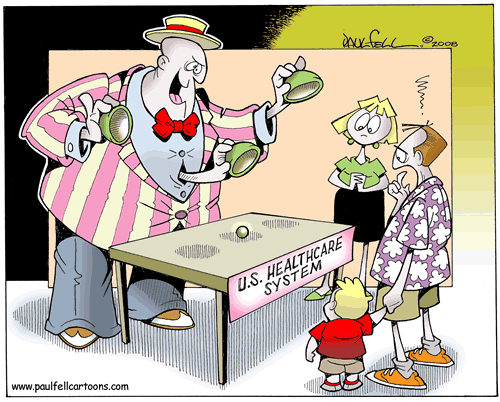
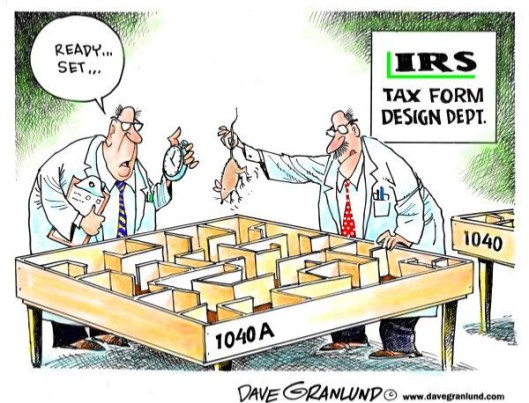
Health insurance is an example to which I’ve dedicated ample space over the past couple of weeks (see the links in the left margin). Obviously, one buys health insurance before knowing an entire series of outcomes. The contract specifies what kinds of expenses the insurer is obligated to pay. Insurance is a highly complex product, and so an insurance policy or contract must be relatively complex, as the cartoon above suggests. In a well-functioning market, however, the insured pays a premium no higher than they consider worthwhile. Everyone would like to pay less, but absent a government mandate (heh!), no one is obligated to buy.

The ink is dry and life goes on. The premium is paid, health needs arise, costs are incurred, and sometimes those costs exceed a limit (the deductible) above which the insurer is obligated to pay at least a portion.

A calamitous health event typically brings heavy costs, and this possibility is exactly why people buy coverage, and it is exactly why insurers demand sufficiently stiff premia. These things happen to a fairly predictable percentage of an insurer’s  customers, but with enough variance to make the cash flows risky. As a backstop, insurance contracts sometimes include limitations on total lifetime benefits or on payments for certain kinds of treatments. Pre-existing conditions are a prominent example of limiting the risks that enter the risk pool, but there are other possible limitations on treatments and other aspects of care. While these are known upfront, disastrous health outcomes and their financial consequences are not.

An increasingly common refrain is that no one should profit from an individual’s acute health care needs, and that health insurers do just that. For logical consistency, this same complaint should be leveled against doctors, nurses, paramedics, hospitals, medical equipment manufacturers, and pharmaceutical companies. They all earn income by providing for health care needs, whether medical or financial, and income is income, after all. Whether that income is a wage or a profit is irrelevant. They are both forms of compensation for the use of resources. The major difference between insurers and the other income-earners is that insurers handle the financial risk of potential health care needs and pay when those needs arise, within and up to policy limits.

The crux of the complaint, however, is that insurers can deny claims, thus protecting their profits. Certainly there are claims denied for which the rationale can be disputed. Just as certainly, a financially prudent insurance company must impose some limits on the benefits offered by their policies. These limitations might preserve profitability, but they also protect the contingent benefits of other insureds as well as the solvency of the carrier. Those objectives are not independent.

The insurance buyer reveals the value of the contract ex ante, but sour grapes are easily conjured ex post if a claim is denied, no matter the agreed-to provisions of the insurance contract. The insurer is under no greater obligation to pay costs in excess of policy limits than the doctor, the nurse, or the man in the street. Yet insurers take special blame when inadequate coverage is an issue, whatever the reason.

Hospitals and physician practices sometimes provide uncompensated care. There are also a number of support organizations for severely-ill but inadequately insured patients. So, private charity is one answer to the dilemma of extreme health-cost outcomes. Public aid is another, and the appropriate breadth of the state’s role in cases of pre-existing conditions and extreme individual health care costs is a legitimate question.

In the end, private health insurers provide a valuable service by pooling and carrying the financial risk of health care events faced by individuals. Health insurance profits as a share of owner’s equity have fallen well short of market-wide averages in recent years (see my last post), though I regularly hear outrageous claims about excessive profits in the industry.

It’s not unusual for a buyer to feel remorse after signing a deal, but in cases of health coverage shortfalls, one could say that the insured bet too little or qualified for too little, or one could say that society doesn’t set aside enough resources to adequately care for the sick. However, one cannot say that the resources dedicated to arranging private coverage deserve no reward, or that the business should be pillaged on account of certain policy limitations, or that the future claims of other policyholders should be hijacked. Those who proclaim such nonsense are guilty of severe ethical misjudgment.

Good Profits and Bad Profits

Tags

, , , , , , , , , , , , ,

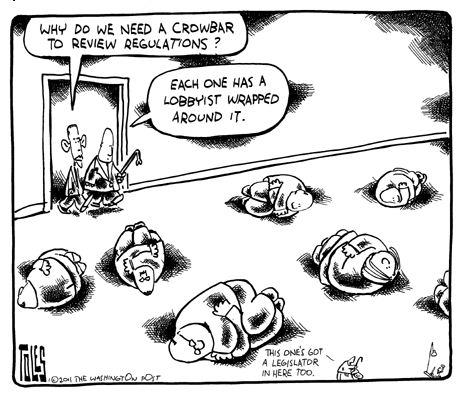
Toles-on-Regulatory-Capture

There are two faces of profit. It’s always the fashion on the left to denigrate profits and the profit motive generally, as if it serves no positive social function. This stems partly from a failure to examine the circumstances under which profits are earned: is it through competitive performance, innovation, hard-won customer loyalty, and the skill or even luck to spot an underpriced asset? Such a “good” profit might even exceed what economists call a “normal profit”, or one that just covers the opportunity cost of the owners’ capital. On the other hand, profit can be derived from what economists call “rent seeking”. That’s the dark side, but the unrecognized spirit of rent seeking seems to lurk within many discussions, as if the word profit was exclusively descriptive of evil. The “rent” in rent seeking derives from “economic rent”, which traditionally meant profit in excess of opportunity cost, or a “supra-normal” profit. But it’s impossible to know exactly how much of any given profit is extracted by rent seeking; a high profit in and of itself is not prima facie evidence of rent seeking, even though we might argue the social merits of a firm’s dominant market position.

Rent seeking takes many forms. Collusion between ostensible competitors is one, as is any predatory attempt to monopolize a market, but the term is most often associated with cronyism in government. For example, lobbying efforts might involve favors to individuals in hopes of swaying votes on regulatory matters or lucrative government contracts. Sometimes, a rent seeker wants lighter regulation. At others, a rent seeker might work the political system for more regulation in the knowledge that smaller competitors will be incapable of surviving the heavy compliance costs. Government administrators also have the authority to change fortunes with their rulings, and they are subject to the same temptations as elected officials. In fact, in the aggregate, administrative rule-making and even enforcement might outweigh prospective legislation as attractors of intense rent-seeking.

Rent seeking is big-time and it is small-time. It takes place at all levels of government, from attempts to influence zoning decisions, traffic patterns, contract awards, and even protection from law enforcement. When it’s big time, rent seeking is the very essence of what some call corporatism and more generally fascism: the enlistment of coercive government power for private gain. A pretty reliable rule is that where there’s government, there is rent-seeking behavior.

Otherwise, the profit motive serves a valuable and massive social function: resources are attracted to profitable uses because they signal the desires of potential buyers. In this way, profits assure that resources are drawn into the most-valued uses. The market interactions between new competitors, drawn by the prospect of profits, and willing buyers leads to a self-correction: supra-normal profits get competed away over time. In this way, the spontaneous actions of voluntary market participants lead to a great achievement: all mutually beneficial trades are exhausted. Profit makes this possible in the short-run and it assures that trades evolve optimally with changes in tastes, technology and resource availability. By comparison, government fares poorly when it attempts to plan outcomes in the short- or the long-run. Rent seeking is an attempt to influence and even encourage such planning, and the profits it enables impose costs on society.

Good and Bad Profits In Health Insurance

I’ve written a few posts about health insurance reform recently (see the left margin). Health care is scarce. If relying on government is the preferred alternative to private insurance, don’t count on better access to care: you won’t get it unless you’re connected. Profits earned by health insurance carriers are roundly condemned by the left. It is as if private capital utilized in arranging coverage and carrying the risk on pools of customers deserves zero compensation, that only public capital raised by coercive taxation is morally acceptable for this purpose. But aside from this obvious hogwash, is there a reason to question the insurers’ route to profitability based upon rent seeking?

The health insurers played a role in shaping the Affordable Care Act (ACA, i.e., Obamacare) and certainly had hoped to benefit from several of its provisions, even while sacrificing autonomy over product, price, coverage decisions, and payout ratios. The individual and employer mandates would force low-risk individuals to purchase extensive coverage, and essential benefits requirements would earn incremental margins. Sounds like a nice deal, but those policies were regarded by the ACA’s proponents as necessary for universal coverage, stabilizing risk, and promoting adequate coverage levels. There were other provisions, however, designed to safeguard the profitability of insurers. These included an industry risk adjustment mechanism, temporary reinsurance to help defray the cost of  covering high-risk patients, and so-called risk corridors (also temporary).

As it turned out, the ACA was not a great bet for insurers, as their risk pools deteriorated more than many expected. With the expiration of the temporary protections in Obamacare, it became evident that offering policies on the exchanges would not be profitable without large premium hikes. A number of carriers have stopped offering policies on the exchanges.

It should be no surprise that health insurance profitability has been anything but impressive over the past three years. The average industry return on equity was just 5.6% during that time frame, and it was a slightly better 6.2% in 2016, about 60% of the market-wide average. It’s difficult to conclude that insurers benefitted greatly from rent seeking activity with regard to the ACA’s passage, but perhaps that activity had a sufficient influence on policy to stabilize what otherwise might have been disastrous performance.

The critics of insurance profits are primarily interested in scapegoating as a means to promote a single-payer health care system. While some are aware of the favors granted to the industry in the design of the ACA, most are oblivious to the actual results. Even worse, they wish to throw-out the good with the bad.

The left is almost universally ignorant of the social function served by the profit motive. Profits stimulate supply, competition and innovation in virtually every area of economic life. To complain about profits in general is to wish for a primitive existence. Unfortunately, the potential for government to change the rules of the market makes it a ripe target for rent-seeking, and it creates a fog through which few discern the good from the bad.

Insurance Subsidies: Taxes vs. High Premiums

Tags

, , , , , , , , , , ,

Here’s a question a friend posed: Why do we care whether health care coverage for high-risk individuals is subsidized by taxpayers versus premium payers via common (community) rating in a combined risk pool? For convenience, let’s call those two scenarios T and C. Under C there is no segmentation whatsoever, while T involves a division of individuals into two groups: standard and high risk. Both scenarios involve guaranteed issue, though T assumes that high-risk individuals must purchase their coverage in the appropriate market. I’ll tackle T first because separate treatment of the distinct risk archetypes yields results that are useful as a baseline.

Taxpayers Subsidize Pre-Existing Conditions

Under scenario T, suppose that all standard risks face the same expected outcome in each period. Everyone in that group pays based on their expected health care costs. In the end, some will have greater health care needs than others, but only a few will be truly unlucky, incurring extremely high health care expenses. On balance, the pooling of risk makes the arrangement sustainable. People enter into these contracts voluntarily because they are risk averse. No one forces them; they are capturing value from protection against financial ruin. The paid-in cash can be invested by the plan in the interim between premium and claims payments. The combination of premium payments and investment income must be enough to cover claims and allow the managers of the plan to defray their administrative costs and make a tidy profit. The profit matters because it attracts voluntary resources to bear on the problem of health-expense risk. Therefore, these insurance transactions are mutually beneficial to the insured and the owners of the insurer.

Conceivably, the smaller high-risk group could be handled the same way, as long as their aggregate health care expenses are predictable. Those expenses will be high, however, so the cost of coverage for individuals in such a pool might be prohibitive. One solution is to force taxpayers to subsidize coverage for this group. The transactions in this market are also mutually beneficial to the insureds and the insurers, just as in the market for standard risks. In both cases, the value to purchasers of coverage is no less than the cost of providing it, including compensation for any capital employed in the process.

In the simplified world of scenario T, we have an optimal insurance outcome for both standard and high-risk individuals. The downside is the cost of the subsidies to taxpayers, which distort a variety of incentives, including labor supply, saving and investment. These lead to misallocations, but they are spread across the economy rather than concentrated on the outcomes in a single market. Is this better than simply pooling all risks, as in Scenario C (common rating)?

Common (Community) Rating

Common rating means that all risks are combined into one pool and everyone is charged the same premium. High-risk individuals get to participate just as if they are standard risks. However, because the combined risk pool has greater expected health care costs on average than the standard risk population, the premium must be greater than the one charged to standard risks in Scenario T. Otherwise, the plan could not cover all expenses nor earn a profit. Worse yet, the standard risks now have an incentive to exit the market while high-risk individuals have every reason to leap in. This is called adverse selection, and it leads to the sort of insurance death spiral we’ve witnessed under Obamacare. And not only does the risk pool deteriorate: the incentive to offer coverage is diminished as well. Thus, an entire industry is rendered dysfunctional. Those who wish to pool together voluntarily in order to efficiently hedge their risks are, by law, prohibited from doing so. The next step might well be for government to mandate participation in an attempt to keep the plan afloat.

Those who favor forced redistribution (not my set) might have other reasons to prefer Scenario T, as it creates greater latitude for progressive tax funding of the subsidies. However, the subsidies themselves could be sensitive to income such that the risky but well-heeled pay more.

From a libertarian perspective, Scenario C has obvious drawbacks, starting with the coercion of insurers to provide coverage to the high-risk population at rates that do not compensate for risk. Then, too, the mis-pricing of risk places a burden on individuals of standard risk. With the pooling of all risks, community rating and coverage mandates result in individual and aggregate over-insurance against most types of risk, tying up scarce resources in insurance assets that could be invested more productively in other uses. In addition, resources are absorbed by compliance costs as authorities find it necessary to enforce the many rules made in hopes of proping-up an otherwise unsustainable arrangement.

Then There’s Single-Payer

It’s often argued that going beyond this point in Scenario C to a single-payer system will yield better outcomes at lower costs. Megan McArdle shreds this idea in a recent column: well over 40% of health care spending in the U.S. is paid by government already; the average growth of that share is even higher than private health care spending; the quality of care is often lower in the government health sector, and in any case, single payer systems around the world do not enjoy slower growth in costs. Rather, they started from lower levels of health care costs. Our relatively high level of costs in the U.S. evolved many years ago, before single-payer systems were adopted abroad. We have many more private and semi-private hospital rooms in the U.S., we often have greater availability of advanced technology, and waiting times for care tend to be significantly shorter.

The high standard of living in the U.S., i.e., our level of consumption, explains a lot of the gap in health care spending. Overall, our health care outcomes are good relative to other developed countries. Unfortunately, we’ve also pushed-up costs from the demand side by offering tax subsidies on employer-provided care, and government in the U.S. has had a role in “managing” health care since the time of the Woodrow Wilson Administration, largely to the detriment of cost control. Government control stultifies competition, creating monopoly-like conditions in both insurance and the provision of care. That manifests in higher profits, safer profits, or slovenly performance by organizations and agents that lack accountability to customers and market forces. Costs rise.

Liberty or Coercion

Libertarians will object to the tax in Scenario T, which like all taxation is coerced, but the taxes necessary to pay for adequate coverage for pre-existing conditions is minor relative to the potential costs of distorting the entire health insurance industry, repleat with the costs of government regulation and compliance that entails, and the potential for still more encroachment of government in health care.

Finally, the question posed by my friend about tax subsidies versus common insurance rating was prompted by a presumed “right to health care”. One must ask whether that right is legitimate. Kevin Williamson argues that scarcity interferes with any such claim. More to the point, in a free society, one cannot simply demand health care from another free individual. Our choices for distributing scarce health care fall into one of only two categories: voluntary and coerced. We should always prefer the former, which may take the form of charity or a mechanism under which care is provided via free exchange. The latter works very well when incentives are clear and pricing is efficient. For those who cannot participate in exchange for any reason, including pre-existing conditions that make coverage prohibitive, private charity is an alternative to government subsidies. At a minimum, charity should serve as an important relief valve for the burden on taxpayers. The Left, however, is always quick to condemn private charity as if it is somehow an illegitimate mechanism for solving social problems, but it is often superior to government action.

Musings II: Avik Roy on Health Insurance Reform

Tags

, , , , , , , , , , , , , ,

IMG_4209

Vox carried an excellent Dylan Scott interview with Avik Roy this week. Roy is a health care policy expert for whom I have great respect. Among other health care issues, I have quoted him in the recent past on the faulty Congressional Budget Office (CBO) projections for Obamacare enrollment, which have consistently overshot actual enrollment. In this interview, Roy explains his current views on the health care insurance reform process and, in particular, the American Health Care Act (AHCA), the bill passed by the House of Representatives last month. The interview provides a good follow-up to my “musings” post on Sacred Cow Chips earlier this week.

Roy provides good explanations of some of the AHCA’s regulatory changes that have merit. These include:

  1. relaxation of Obamacare’s community rating standards, meaning that insurers have more flexibility to charge premia based on age and other risk factors, thus mitigating the pricing distortions caused by cross-subsidies on the individual market;
  2. a rollback in the required minimum actuarial value (AV) of an insurance plan (the ratio of plan-paid medical expenses to total medical expenses);
  3. elimination of federal essential benefits requirements.

Roy provides context for these proposed changes relative to Obamacare. For example, regarding AV, he says:

[In] the old individual market, prior to Obamacare, the typical actuarial value of a plan was about 40 percent. Obamacare drives that up effectively to 70 percent. That has a corresponding effect on premiums; it makes premiums a lot more expensive. In the AHCA, those actuarial value mandates are repealed. Which should provide a lot more opportunity for plans to design more affordable insurance policies for individuals.

Even with Obamacare’s high AV requirements, an insurer could make money by virtue of the law’s “risk corridors”, which were intended to cover losses for insurers as they adjusted to the new regulations and as the exchange market matured, but those bailouts were temporary, and development of the exchanges did not go exactly as hoped. Insurers have been ending their participation in the exchange market, leaving even less than the limited choices available under Obamacare and little competition to restrain pricing.

On essential benefits, Roy reminds us that every state has essential benefit regulations of its own. These mandates create an unfortunate obstacle to interstate competition, as I discussed in March in “Benefit Mandates Bar Interstate Competition“. Nevertheless, the federal mandates have created additional complexities and added costs to cover risks that a) are not common to the risk pool, or b) cover benefits that are not risk-related and therefore inappropriate as insurance.

Roy also defends the AHCA’s protection of individuals with pre-existing conditions. One fact often overlooked is that burdening the individual market with coverage of pre-existing conditions made Obamacare less workable from the start, simultaneously driving up premiums and sending insurers for the hills. These risks can and should be handled separately, and the AHCA offers subsidies that should be up to the task:

… if you look at Obamacare, the mechanisms in Obamacare’s exchanges that served as a way to fund coverage for sick people, they were spending $8 billion a year on that program. If you look at it that way, if $8 billion was enough under Obamacare, then maybe $15 billion a year is enough. I really don’t think that’s the problem with this bill.

Roy contends that the big weakness in the AHCA is inadequate assistance to the poor in arranging affordable coverage. While highly critical of the CBO’s wild estimate of lost coverage (24 million), he does believe that the AHCA, as it stands, would involve a loss. He favors means-tested subsidies as a way of closing the gap, but acknowledges the incentive problems inherent in means testing. With time and a growing economy, and if the final legislation (and the purported stages 2 and 3 of reform) is successful in reducing the growth of health care costs relative to income, the subsidies would constitute a smaller drain on taxpayers.

As for Medicaid reform, Roy defends the AHCA’s approach:

You start with the fact that access to care under Medicaid and health outcomes under Medicaid are very poor, far underperforming other health insurance programs and certainly way underperforming private insurance. Why does that problem exist? It exists because states have very little flexibility in how they managed their Medicaid costs. They’re basically not able to do anything to keep Medicaid costs under control, except pay doctors and hospitals less money for the same amount of care. As a result of that, people have poor access. By moving to a system in which you put Medicaid on a clear budget and you give states more flexibility in how they manage their Medicaid costs, you actually can end up with much better access to care and much better coverage.

One point that deserves reemphasis is that a final plan, should one actually pass in both houses of Congress, will be different from the AHCA. From my perspective, the changes could be more aggressive in terms of deregulation on both the insurance side and in health care delivery. The health care sector has been overwhelmed by compliance costs and incentives for consolidation under Obamacar. Nobody bends cost curves downward by creating monopolies.

I’ve hardly done justice to the points made by Roy in this interview, but do read the whole thing!

Musings On Health Insurance Reform

Tags

, , , , , , , , , , , , , , , ,

An acquaintance of mine is a cancer patient who just made the following claim on Facebook: the only people complaining about Obamacare are hypocrites because they don’t have to purchase their health insurance on the exchanges. That might be her experience. It certainly isn’t mine. I know several individuals who purchase their coverage on the exchanges and complain bitterly about Obamacare. But her assertion reveals its own bit of hypocrisy: it’s apparently okay to defend Obamacare if you are a net beneficiary, but you may not complain if you are a net payer. Of course, I would never begrudge this woman the care she needs, but it is possible to arrange for that care without destroying the health care industry and insurance markets in the process. Forgive me for thinking that Obamacare was designed with the cynical intent to do exactly that! Well, at least insurance markets. The damage to the health care industry was brought on by simple buffoonery and rent seeking.

Depending on developments in Congress over the next few months (3? 6? 9?), Obamacare could be a thing of the past. We’ve all probably heard hyperbolic claims that the new health care bill “will kill people”, which is another absurdity given the law’s dislocations. That was the subject of “Death By Obamacare“, posted in January on Sacred Cow Chips. AHCA detractors base their accusations of murderous intent on a fictitious notion of reduced access to care under the plan, as well as a Congressional Budget Office (CBO) report that viewed the future of Obamacare through rose-colored glasses. I discussed the CBO report at greater length in “The CBO’s Obamacare Fantasy Forecast“.

Before anyone gets too excited about what they like or dislike about the health care bill passed by the House of Representatives last week, remember that a final health care bill, should one actually get through Congress, is unlikely to bear a close resemblance to the House bill. The next step will be the drafting of a Senate bill, which might be assembled from parts of the House’s American Health Care Act (AHCA) and other ideas, or it might take a different form. It could take a while. Then, the House and Senate will attempt to shape a compromise in conference committee and bring it to a vote in both houses. President Trump, looking for a “win”, is likely to sign whatever gets through, even if he has to bargain with democrats to win votes.

So relax! If your legislators are democrats, tell them to participate in the shaping of new policies, rather than throwing petulant barbs from the sidelines. First, of course,  you’ll have to face up to the fact that Obamacare is a failed policy.

Another recent post on Sacred Cow Chips, “Cleaving the Health Care Knot… Or Not“, covered some of the most important provisions of the AHCA. By the time of the vote, a few new provisions had been added to the House bill. The McArthur Amendment allows states to waive the Obamacare essential benefits requirements. Fewer mandated benefits would allow insurance companies to offer simpler policies covering truly insurable health care events, as opposed to predictable health maintenance costs. Let’s face it: if you must have insurance coverage for your annual checkup, then it is not really insurance against risk; either the premium or the deductible must rise to cover the expenses, ceteris paribus.

The other change in the AHCA is an additional $8 billion dollars allocated to state high-risk pools for pre-existing conditions, for a total of $138 billion. These risks are too high to blend with standard risks in a well-functioning insurance market. (In a perfect insurance market, there would be no cross-subsidies between groups on an ex ante basis.) As a separate risk pool, these high-risk individuals would face very high premia, so the idea is to allow states the latitude to subsidize their health care costs in ways they see fit. This is a federalist approach to the problem of subsidizing coverage for pre-existing conditions, and it has the advantage of restoring the ability of insurers to underwrite standard risks at reasonable rates, correcting one of Obamacare’s downfalls. However, some GOP senators are advocating a combination of standard risks and those with pre-existing conditions, which obviously distorts the efficient pricing of risk and exaggerates the need for broader subsidies.

And what about the uninsured poor? A major focus of health care insurance reform, now and in the past, has been to find a way for the poor to afford coverage. Obamacare fell far short of its goals in this respect, as any enthusiasm for subsidized (though high) premia was dampened by shockingly high deductibles. This week, Tyler Cowan reported on some research suggesting that low-income individuals place a low value on insurance. Their responsiveness to subsidies is so low that few are persuaded to pay anything close to the premium required. Cowan quotes the authors as saying that even 90% subsidies for these individuals would leave about 25% of this population unwilling to pay for the balance. Cowen quotes the study’s authors:

‘We conclude that the size of uncompensated care for low-income populations provides a plausible explanation for their low [willingness-to-pay].’ In other words, many of the poor do not value health insurance nearly as much as many planners feel they ought to, in large part because they are already getting some health care.

This has several implications. First, these individuals are not without health care, regardless of their coverage status. One of the great misapprehensions among Obamacare supporters is that the poor had no access to care before the law’s passage. Never mind that emergency room utilization is still quite high. Uninsured individuals can go to a public hospital and get treatment in the emergency room and get admitted if that is deemed medically necessary. If the illness causes a loss of income, the individual might qualify for Medicaid if they hadn’t before, and Medicaid has no exclusion for pre-existing conditions. In fact, I’m told the hospital staff might even help you apply right there at the hospital! So who needs insurance before a health crisis?

Many of the poor have continued to do what they did before: go without coverage. Obamacare’s complex system of subsidies is almost beside the point, as is almost any other effort to sign up everyone prior to the onset of major health care needs. Eventual enrollment in Medicaid will pay some of the hospital bills, though it’s true that not all can qualify for the program. Either way, the hospital will swallow a share of the cost — that is, the taxpayer will. Providers would rather not rely on low Medicaid reimbursement rates or perform charity work. This coalition will grapple with the failure of many low-income individuals to arrive at their emergency room doors with coverage as long as we rely on direct subsidies as an inducement to purchase insurance. Unfortunately, a policy offering a separate guarantee of financial health for providers would create another set of awful incentives.

The unfortunate truth is that Medicaid is unsustainable at current funding levels. The AHCA would convert the federal share of the program to one of block grants to states, wnich have always managed the program under federal mandates. The AHCA would free the states to manage the program more flexibly, but caps on the grants would create pressure to manage costs. It is not yet clear whether the Senate will offer a different approach to Medicaid reform, but it was the primary driver of increased health care coverage under Obamacare.

Finally, there are certain individuals with higher incomes who can afford to pay for coverage but prefer to freeload. Those who experience catastrophic health problems will be a burden to others, not necessarily through distortions in insurance pricing, but via taxes and deficits. To an extent, the situation is a classic problem of the commons. In this case, the “commons” is an invention of government and the presumed “right to health care”: there is no solution to the freeloader problem faced by taxpayers short of denying the existence of that right to those who can afford catastrophic coverage but would refuse to pay. Only then would the burdens be internalized to the cost-causes. Charity can and should go partway to relieving individuals of the consequences of their bad decisions, but EMS will still arrive if called, providers will render care, and a chunk of the costs will be on the public dime.


A Trump Tax Reform Tally

Tags

, , , , , , , , , , , , , , , , , , , , , , , , , , , ,

IMG_4199

The Trump tax plan has some very good elements and several that I dislike strongly. For reference, this link includes the contents of an “interpretation” of the proposal from Goldman Sachs, based on the one-page summary presented by the Administration last week as well as insights that the investment bank might have gleaned from its connections within the administration. At the link, click on the chart for an excellent summary of the plan relative to current law and other proposals.

At the outset, I should state that most members of the media do not understand economics, tax burdens, or the dynamic effects of taxes on economic activity. First, they seem to forget that in the first instance, taxpayers do not serve at the pleasure of the government. It is their money! Second, Don Boudreaux’s recent note on the media’s “taxing” ignorance is instructive:

In recent days I have … heard and read several media reports on Trump’s tax plan…. Nearly all of these reports are juvenile: changes in tax rates are evaluated by the media according to changes in the legal tax liabilities of various groups of people. For example, Trump’s proposal to cut the top federal personal income-tax rate from 39.6% to 35% is assessed only by its effect on high-income earners. Specifically, of course, it’s portrayed as a ‘gift’ to high-income earners.

… taxation is not simply a slicing up of an economic pie the size of which is independent of the details of the system of taxation. The core economic case for tax cuts is that they reduce the obstacles to creative and productive activities.

Boudreaux ridicules those who reject this “supply-side” rationale, despite its fundamental and well-established nature. Thomas Sowell makes the distinction between tax rates and tax revenues, and provides some history on tax rate reductions and particularly “tax cuts for the rich“:

… higher-income taxpayers paid more — repeat, MORE tax revenues into the federal treasury under the lower tax rates than they had under the previous higher tax rates. … That happened not only during the Reagan administration, but also during the Coolidge administration and the Kennedy administration before Reagan, and under the G.W. Bush administration after Reagan. All these administrations cut tax rates and received higher tax revenues than before.

More than that, ‘the rich’ not only paid higher total tax revenues after the so-called ‘tax cuts for the rich,’ they also paid a higher percentage of all tax revenues afterwards. Data on this can be found in a number of places …

In some cases, a proportion of the increased revenue may have been due to short-term incentives for asset sales in the wake of tax rate reductions. In general, however, Sowell’s point stands.

Kevin Williamson offers thoughts that could be construed as exactly the sort of thing about which Boudreaux is critical:

It is nearly impossible to cut federal income taxes in a way that primarily benefits low-income Americans, because high-income Americans pay most of the federal income taxes. … The 2.4 percent of households with incomes in excess of $250,000 a year pay about half of all federal income taxes; the bottom half pays about 3 percent.”

The first sentence of that quote highlights the obvious storyline pounced upon by simple-minded journalists, and it also emphasizes the failing political appeal of tax cuts when a decreasing share of the population actually pays taxes. After all, there is some participatory value in spreading the tax burden in a democracy. I believe Williamson is well aware of the second-order, dynamic consequences of tax cuts that spread benefits more broadly, but he is also troubled by the fact that significant spending cuts are not on the immediate agenda: the real resource cost of government will continue unabated. We cannot count on that from Trump, and that should not be a big surprise. Greater accumulation of debt is a certainty without meaningful future reductions in the growth rate of spending.

Here are my thoughts on the specific elements contained in the proposal, as non-specific as they might be:

What I like about the proposal:

  • Lower tax rate on corporate income (less double-taxation): The U.S. has the highest corporate tax rates in the developed world, and the corporate income tax represents double-taxation of income: it is taxed at the corporate level and again at the individual level, perhaps not all at once, but when it is actually received by owners.
  • Adoption of a territorial tax system on corporate income: The U.S. has a punishing system of taxing corporate income wherever it is earned, unlike most of our trading parters. It’s high time we shifted to taxing only the corporate income that is earned in the U.S., which should discourage the practice of tax inversion, whereby firms transfer their legal domicile overseas.
  • No Border Adjustment Tax (BAT): What a relief! This was essentially the application of taxes on imports but tax-free exports. Whatever populist/nationalist appeal this might have had would have quickly evaporated with higher import prices and the crushing blow to import-dependent businesses. Let’s hope it doesn’t come back in congressional negotiations.
  • Lower individual tax rates: I like it.
  • Fewer tax brackets: Simplification, and somewhat lower compliance costs.
  • Fewer deductions from personal income, a broader tax base, and lower compliance costs. Scrapping deductions for state and local taxes in exchange for lower rates will end federal tax subsidies from low-tax to high-tax states.
  • Elimination of the Alternative Minimum Tax: This tax can be rather punitive and it is a nasty compliance cost-causer.

What I dislike about the proposal:

  • The corporate tax rate should be zero (with no double taxation).
  • Taxation of cash held abroad, an effort to encourage repatriation of the cash for reinvestment in the U.S. Taxes on capital of any kind are an act of repeated taxation, as the income used to accumulate capital is taxed to begin with. And such taxes are destructive of capital, which represents a fundamental engine for productivity and economic growth.
  • Retains the mortgage interest and charitable deductions: Both are based on special interest politics. The former leads to an overallocation of resources to owner-occupied housing. Certainly the latter has redeeming virtues, but it subsidizes activities conferring unique benefits to large donors.
  • Increase in the standard deduction: This means fewer “interested” taxpayers. See the  discussion of the Kevin Williamson article above.
  • We should have just one personal income tax bracket, not three: A flat tax would be simpler and would reduce distortions to productive incentives.
  • Tax relief for child-care costs: More special interest politics. Subsidizing market income relative to home activity, hired child care relative to parental care, and fertility is not an appropriate role for government. To the extent that public aid payments are made, they should not be contingent on how the money is spent.
  • Many details are missing: Almost anything could happen with this tax “plan” when the real negotiations begin, but that’s politics, I suppose.

Mixed Feelings:

  • Descriptions of the changes to treatment of pass-through” income seem confused. There is only one kind of tax applied to the income of pass-through entities like S-corporations, and it is the owner’s individual tax rate. Income from C-corporations, on the other hand, is taxed twice: once at a 15% corporate tax rate under the Trump plan, and a second time when it is paid to investors at an individual tax rate, which now range from 15% to almost 24% for “qualified dividends” (most dividend payments), but are likely to range up to 35% for “ordinary” dividends under the plan. So effectively, double-taxed C-corporate income would be taxed at total rates ranging from 30% to 50% after tallying both the C-corp tax and the individual tax. (This is a simplification: C-corp income paid as dividends would be taxed to the corporation and then immediately to the shareholder at their individual rate, while retained corporate income would be taxed later).

Presumably, the Trump tax plan is to reduce the rate on “pass-through” income to just 15% at the individual level, regardless of other income. (It is not clear how that would effect brackets or the rate of taxation on other components of individual income.) Is that good? Yes, to the extent that lower tax rates allow individuals to keep more of their hard-earned income, and to the extent that such a change would help small businesses. S-corps have always had an advantage in avoiding double taxation, however, and this would not end the differential taxation of S and C income, which is distortionary. It might incent business owners to shift income away from salary payments to profit, however, which would increase the negative impact on tax revenue.

  • Interest deductibility and expensing of capital expenditures are in question. Interest deductibility puts debt funding on an equal footing with equity funding only if the double tax on C-corp income is fully repealed. Immediate expensing of “capex” would certainly provide an investment incentive (as long as “excess” expenses can be carried forward), and for C-corporations, it would certainly bring us closer to elimination of the double-tax on income (the accounting matching principle be damned!).
  • There is no commitment to shrink government, but that’s partly (only partly) a function of having abandoned revenue neutrality. It’s also something that has been promised for the next budget year.
  • The tax reform proposal represents a departure from insistence on revenue neutrality: On the whole, I find this appealing, not because I like deficits better than taxes, but because there may be margins along which tax policy can be improved if unconstrained by neutrality, assuming that the incremental deficits are less damaging to the economy than the gains. The political landscape may dictate that desirable changes in tax policy can be made more easily in this way.

Shikha Dalmia wonders whether a real antidote for “Trumpism” might be embedded within the tax reform proposal. If the reforms are successful in stimulating non-inflationary economic growth, a “big if” on the first count, the popular preoccupations inspired by Trump with immigration policy, the “wall” and protectionism might just fade away. But don’t count on it. On the whole, I think the tax reform proposal has promise, though some of the good parts could vanish before a bill hits Trump’s desk, and some of the bad parts could get worse!

What Part of “Free Speech” Did You Not Understand?

Tags

, , , , , , , , , , , , , , ,

The left has adopted an absurdly expansive definition of “hate speech”, and they’d like you to believe that “hate speech” is unconstitutional. Their objective is to establish a platform from which they can ostracize and ultimately censor political opponents on a variety of policy issues, mixed with the pretense of a moral high ground. The constitutional claim is legal nonsense, of course. To be fair, the moral claim may depend on the issue.

John Daniel Davidson writes in The Federalist of the distinction between protected and unprotected speech in constitutional law. The primary exception to protected speech has to do with the use of “fighting words”. Davidson describes one Supreme Court interpretation of fighting words as “a face-to-face insult directed at a specific person for the purpose of provoking a fight.” Obviously threats would fall into the same category, but only to the extent that they imply “imminent lawless action”, according to a major precedent. As such, there is a distinction between fighting words versus speech that is critical, discriminatory, or even hateful, all of which are protected.

Hate speech, on the other hand, has no accepted legal definition. In law, it has not been specifically linked to speech offensive to protected groups under employment, fair housing, hate crime or any other legislation. If we are to accept the parlance of the left, it seems to cover almost anything over which one might take offense. However, unless it qualifies as fighting words, it is protected speech.

The amorphous character of hate speech, as a concept, makes it an ideal vehicle for censoring political opponents, and that makes it extremely dangerous to the workings of a free society. Any issue of public concern has more than one side, and any policy solution will usually create winners and losers. Sometimes the alleged winners and losers are merely ostensible winners and losers, as dynamic policy effects or “unexpected consequences” often change the outcomes. Advocacy for one solution or another seldom qualifies as hate toward those presumed to be losers by one side in a debate, let alone a threat of violence. Yet we often hear that harm is done by the mere expression of opinion. Here is Davidson:

By hate speech, they mean ideas and opinions that run afoul of progressive pieties. Do you believe abortion is the taking of human life? That’s hate speech. Think transgenderism is a form of mental illness? Hate speech. Concerned about illegal immigration? Believe in the right to bear arms? Support President Donald Trump? All hate speech.

Do you support the minimum wage? Do you oppose national reparation payments to African Americans? Do you support health care reform? Welfare reform? Rollbacks in certain environmental regulations? Smaller government? You just might be a hater, according to this way of thinking!

The following statement appears in a recent proposal on free speech. The proposal was recommended as policy by an ad hoc committee created by the administration of a state university:

… Nor does freedom of expression create a privilege to engage in discrimination involving unwelcome verbal, written, or physical conduct directed at a particular individual or group of individuals on the basis of actual or perceived status, or affiliation within a protected status, and so severe or pervasive that it creates an intimidating or hostile environment that interferes with an individual’s employment, education, academic environment, or participation in the University’s programs or activities.

This is an obvious departure from the constitutional meaning of free expression or any legal precedent.

And here is Ulrich Baer, who is New York University‘s vice provost for faculty, arts, humanities, and diversity (and professor of comparative literature), in an opinion piece this week in the New York Times:

The recent student demonstrations [against certain visiting speakers] should be understood as an attempt to ensure the conditions of free speech for a greater group of people, rather than censorship. … Universities invite speakers not chiefly to present otherwise unavailable discoveries, but to present to the public views they have presented elsewhere. When those views invalidate the humanity of some people, they restrict speech as a public good.  …

The idea of freedom of speech does not mean a blanket permission to say anything anybody thinks. It means balancing the inherent value of a given view with the obligation to ensure that other members of a given community can participate in discourse as fully recognized members of that community.

How’s that for logical contortion? Silencing speakers is an effort to protect free speech! As noted by Robby Soave in on Reason.com, “... free speech is not a public good. It is an individual right.” This cannot be compromised by the left’s endlessly flexible conceptualization of “hate speech”, which can mean almost any opinion with which they disagree. Likewise, to “invalidate the humanity of some people” is a dangerously subjective standard. Mr. Baer is incorrect in his assertion that speakers must balance the “inherent” value of their views with an obligation to be “inclusive”. The only obligation is not to threaten or incite “imminent lawless action”. Otherwise, freedom of speech is a natural and constitutionally unfettered right to express oneself. Nothing could be more empowering!

Note that the constitution specifically prohibits the government from interfering with free speech. That includes any public institution such as state universities. Private parties, however, are free to restrict speech on their own property or platform. For example, a private college can legally restrict speech on its property and within its facilities. The owner of a social media platform can legally restrict the speech used there as well.

Howard Dean, a prominent if somewhat hapless member of the democrat establishment, recently tweeted this bit of misinformation: “Hate speech is not protected by the first amendment.” To this, Dean later added some mischaracterizations of Supreme Court decisions, prompting legal scholar Eugene Volokh to explain the facts. Volokh cites a number of decisions upholding a liberal view of free speech rights (and I do not use the word liberal lightly). Volokh also cites the “prior restraint doctrine”:

The government generally may not exclude speakers — even in government-owned ‘limited public forums’ — because of a concern that the speakers might violate the rules if they spoke.

If a speaker violates the law by engaging in threats or inciting violence, it is up to law enforcement to step in, ex post, just as they should when antifa protestors show their fascist colors through violent efforts to silence speakers. Volokh quotes from an opinion written by Supreme Court Justice Harry A. Backmun:

… a free society prefers to punish the few who abuse rights of speech after they break the law than to throttle them and all others beforehand. It is always difficult to know in advance what an individual will say, and the line between legitimate and illegitimate speech is often so finely drawn that the risks of freewheeling censorship are formidable.”

Imprecision and Unsettled Science

Tags

, , , , , , , , , , , , , , , ,

Last week I mentioned some of the inherent upward biases in the earth’s more recent surface temperature record. Measuring a “global” air temperature at the surface is an enormously complex task, requiring the aggregation of measurements taken using different methods and instruments (land stations, buoys, water buckets, ship water intakes, different kinds of thermometers) at points that are unevenly distributed across latitudes, longitudes, altitudes, and environments (sea, forest, mountain, and urban). Those measurements must be extrapolated to surrounding areas that are usually large and environmentally diverse. The task is made all the more difficult by the changing representation of measurements taken at these points, and changes in the environments at those points over time (e.g., urbanization). The spatial distribution of reports may change systematically and unsystematically with the time of day (especially onboard ships at sea).

The precision with which anything can be measured depends on the instrument used. Beyond that, there is often natural variation in the thing being measured. Some thermometers are better than others, and the quality of these instruments has varied tremendously over the roughly 165-year history of recorded land temperatures. The temperature itself at any location is subject to variation as the air shifts, but temperature readings are like snapshots taken at points in time, and may not be representative of areas nearby. In fact, the number of land weather stations used in constructing global temperatures has declined drastically since the 1970s, which implies an increasing error in approximating temperatures within each expanding area of coverage.

The point is that a statistical range of variation exists around each temperature measurement, and there is additional error introduced by vagaries of the aggregation process. David Henderson and Charles Hooper discuss the handling of temperature measurement errors in aggregation and in discussions of climate change. The upward trend in the “global” surface temperature between 1856 and 2004 was about 0.8° C, but a 95% confidence interval around that change is ±0.98° C. (I believe that is probably small given the sketchiness of the early records.) In other words, from a statistical perspective, one cannot reject the hypothesis that the global surface temperature was unchanged for the full period.

Henderson and Hooper make some other salient points related to the negligible energy impulse from carbon forcings relative to the massive impact of variations in solar energy and the uncertainty around the behavior of cloud formation. It’s little wonder that climate models relying on a carbon-forcing impact have erred so widely and consistently.

In addition to reinforcing the difficulty of measuring surface temperatures and modeling the climate, the implication of the Henderson and Hooper article is that policy should not be guided by measurements and models subject to so much uncertainty and such minor impulses or “signals”. The sheer cost of abating carbon emissions is huge, though some alternative means of doing so are better than others. Costs increase as the degree of abatement increases (or replacement of low-carbon alternatives), and I suspect that the incremental benefit decreases. Strict limits on carbon emissions reduce economic output. On a broad scale, that would impose a sacrifice of economic development and incomes in the non-industrialized world, not to mention low-income minorities in the developed world. One well-known estimate by William Nordhaus involved a 90% reduction in world carbon emissions by 2050. He calculated a total long-run cost of between $17 trillion and $22 trillion. Annually, the cost was about 3.5% of world GDP. The climate model Nordhaus used suggested that the reduction in global temperatures would be between 1.3º and 1.6º C, but in view of the foregoing, that range is highly speculative and likely to be an extreme exaggeration. And note the small width of the “confidence interval”. That range is not at all a confidence interval in the usual sense; it is a “stab” at the uncertainty in a forecast of something many years hence.  Nordhaus could not possibly have considered all sources of uncertainty in arriving at that range of temperature change, least of all the errors in measuring global temperature to begin with.

Climate change activists would do well to spend their Earth Day educating themselves about the facts of surface temperature measurement. Their usual prescription is to extract resources and coercively deny future economic gains in exchange for steps that might or might not solve a problem they insist is severe. The realities are that the “global temperature” is itself subject to great uncertainty, and its long-term trend over the historical record cannot be distinguished statistically from zero. In terms of impacting the climate, natural forces are much more powerful than carbon forcings. And the models on which activists depend are so rudimentary, and so error prone and biased historically, that taking your money to solve the problem implied by their forecasts is utter foolishness.

Better Bids and No Bumpkins

Tags

, , , , , , , , , ,

United Airlines‘ mistreatment of a passenger last week in Chicago had nothing to do with overbooking, but commentary on the issue of overbooking is suddenly all the rage. The fiasco in Chicago began when four United employees arrived at the gate after a flight to Louisville had boarded. The flight was not overbooked, just full, but the employees needed to get to Louisville. United decided to “bump” four passengers to clear seats for the employees. They used an algorithm to select four passengers to be bumped based on factors like lowest-fare-paid and latest purchase. The four passengers were offered vouchers for a later flight and a free hotel night in Chicago. Three of the four agreed, but the fourth refused to budge. United enlisted the help of Chicago airport security officers, who dragged the unwilling victim off the flight, bloodying him in the process. It was a terrible day for United‘s public relations, and the airline will probably end up paying an expensive out-of-court settlement to the mistreated passenger.

Putting the unfortunate Chicago affair aside, is over-booking a big problem? Airlines always have cancellations, so they overbook in order to keep the seats filled. That means higher revenue and reduced costs on a per passenger basis. Passengers are rarely bumped from flights involuntarily: about 0.005% in the fourth quarter of 2016, according to the U.S. Department of Transportation. “Voluntarily denied boardings” are much higher: about 0.06%. Both of these figures seem remarkably low as “error rates”, in a manner of speaking.

Issues like the one in Chicago do not arise under normal circumstances because “bumps” are usually resolved before boarding takes place, albeit not always to everyone’s satisfaction. Still, if airlines were permitted (and willing) to bid sufficiently high rates of compensation to bumped ticket-holders, there would be no controversy at all. All denied boardings would be voluntary. There are a few other complexities surrounding the rules for compensation, which depend on estimates of the extra time necessary for a bumped traveler to reach their final destination. If less than an extra hour, for example, then no compensation is required. In other circumstances, the maximum compensation level allowed by the government is $1,300. These limits can create an impasse if a passenger is unwilling to accept the offer (or non-offer when only an hour is at stake). The only way out for the airline, in that case, is an outright taking of the passenger’s boarding rights. Of course, this possibility is undoubtedly in the airline’s “fine print” at the time of the original purchase.

No cap on a bumped traveler’s compensation was anticipated when economist Julian Simon first proposed such a scheme in 1968:

The solution is simple. All that need happen when there is overbooking is that an airline agent distributes among the ticket-holders an envelope and a bid form, instructing each person to write down the lowest sum of money he is willing to accept in return for waiting for the next flight. The lowest bidder is paid in cash and given a ticket for the next flight. All other passengers board the plane and complete the flight to their destination.

Today’s system is a simplified version of Simon’s suggestion, and somewhat bastardized, given the federal caps on compensation. If the caps were eliminated without other offsetting rule changes, would the airlines raise their bids sufficiently to eliminate most involuntary bumps? There would certainly be pressure to do so. Of course, the airlines already get to keep the fares paid on no-shows if they are non-refundable tickets.

John Cochrane makes another suggestion: limit ticket sales to the number of seats on the plane and allow a secondary market in tickets to exist, just as resale markets exist for concert and sports tickets. Bumps would be a thing of the past, or at least they would all be voluntary and arranged for mutual gain by the buyers and sellers. Some say that peculiarities of the airline industry argue that the airlines themselves would have to manage any resale market in their own tickets (see the comments on Cochrane’s post). That includes security issues, tickets with special accommodations for disabilities, meals, or children, handling transfers of frequent flier miles along with the tickets, and senior discounts.

Conceivably, trades on such a market could take place right up to the moment before the doors are closed on the plane. Buyers would still have to go through security, however, and you need a valid boarding pass to get through security. That might limit the ability of the market to clear in the final moments before departure: potential buyers would simply not be on hand.  Only those already through security, on layovers, or attempting to rebook on the concourse  could participate without changes in the security rules. Perhaps this gap could be minimized if last-minute buyers qualified for TSA pre-check. Also, with the airline’s cooperation, electronic boarding passes must be made changeable so that the new passenger’s name would match his or her identification. Clearly, the airlines would have to be active participants in arranging these trades, but a third-party platform for conducting trades is not out-of the question.

Could other concerns about secondary trading be resolved ion a third-party platform? Probably, but again, solutions would require participation by the airlines. Trading miles along with the ticket could be made optional (after all, the miles would have a market value), but the trade of miles would have to be recorded by the airline. The tickets themselves could trade just as they were sold originally by the airline, whether the accommodations are still necessary or not. The transfer of a discounted ticket might obligate the buyer to pay the airline a sum equal to the discount unless they qualified under the same discount program. All of these problems could be resolved.

Would the airlines want a secondary market in their tickets? Probably not. If there are gains to be made on resale, they would rather capture as much of it as they possibly can. The federal caps on compensation to bumped fliers give the airlines a break in that regard, and they should be eliminated in the interests of consumer welfare. Let’s face it, the airlines know the that a seat on an over-booked flight is a scarce resource; the owner (the original ticker buyer) should be paid fair market value if the airline wants to take their ticket for someone else. Airlines must increase their bids until the market clears, which means that fliers would never be bumped involuntarily. A secondary market in tickets, however, would obviate the practice of over-booking and allow fliers to capture the gain in exchange for surrendering their ticket. Once purchased, it belongs to them.