The world doesn’t ordinarily revolve around tariffs, but so much has happened to make tariffs into an economic and political linchpin of the moment. Donald Trump put them in the spotlight, of course, and while he’s still seeing roses, things won’t turn out entirely the way he hopes. At the tariff levels he’s instituted, this shouldn’t be too surprising.
While tariff revenue is helping to shave the federal budget deficit, the tax falls largely on the backs of American consumers and businesses with all the attending distortions that entails. Sadly, the extra revenue also seems to have offered a handy excuse to put spending cuts on the back burner. Tariffs and tariff uncertainty have businesses attempting to compromise between reduced margins and price hikes. Thinning margins due to tariffs have played a role in the weak employment numbers we’ve seen over the past few months. And tariffs, at least until now, have quite rightly reinforced the Federal Reserve’s cautious stance toward easing policy. However, the weak labor market has likely convinced the Fed to cut its short-term interest rate target, despite inflation stubbornly remaining well above the Fed’s 2% objective. That upward price pressure will remain.
Now, the legal battle over Trump’s tariff authority is about to reach a climax. That’s what I’ll focus on here. The Supreme Court has agreed to fast track the challenge to the President’s discretion to impose retaliatory tariffs unilaterally. There are two cases at hand: V.O.S. Selections, Inc. v. Trump, and Learning Resources, Inc., et al. v. Donald Trump et al. In both cases, small business plaintiffs contend that Trump’s invocation of the International Emergency Economic Powers Act (IEEPA) is unwarranted, and that “most” of the tariff actions taken by Trump have usurped Congress’ power of the purse under Article I of the Constitution. Here’s Ilya Somin, who is a Volokh Conspiracy regular and one of the attorneys representing the plaintiffs:
“… IEEPA doesn’t even mention tariffs and has never previously been used to impose them, that there is no ‘unusual and extraordinary threat’ of the kind required to invoke IEEPA, the major questions doctrine, the constitutional nondelegation doctrine, and more.“
This isn’t the first time a U.S. president has imposed tariffs unilaterally, but it is easily the most drastic such action. Historically, nearly all tariffs were levied by acts of Congress. Prior to Trump II, perhaps the broadest tariff imposed by a President was Richard Nixon’s brief 10% surcharge on all imports, but that was lifted quickly. Presidents Johnson and Obama imposed some selective tariffs. All of these episodes seem piddling compared to Trump’s tariffs, which are both sweeping and in many cases painfully selective.
Eric Boehm notes that when it comes to major constitutional questions, the Court has taken the position that
“… executive power should be construed narrowly, not broadly …. Rather than tying itself into knots to affirm nearly unlimited executive powers over commerce, the Supreme Court should tell the Trump administration to get permission from Congress before imposing new tariffs.“
I believe that will be the general shape of the outcome here. Maybe there’s a way for the Court to allow the tariffs to stand until Congress decides to “man up”, acting one way or the other. SCOTUS would probably like to do just that! Or maybe the Court could stay the lower court’s injunction until the case is heard by the Court in full on the regular docket, or until Congress acts.
There’s a decent chance, however, that Trump’s tariffs will be struck down, leaving it up to tariff supporters in Congress to lay down statutory rules rather than put up with the impulsive craziness we’ve witnessed thus far. If the Court lets the tariffs stand, it leaves the door open for new tests on the limits of executive discretion. Here is Greg Ip at the link:
“There would also be no end to uncertainty. ‘Unlike most other tariff authorities, these tariffs are not enshrined in statute, there’s no process to change them, and they can change very rapidly, in a day, without much notice, as we’ve seen,’ said Greta Peisch, a trade attorney at Wiley Rein and former general counsel for the U.S. trade representative.“
We’ve already seen strong hints that the Administration would like to force businesses to eat the cost of the tariffs rather than pass them along to consumers in higher prices. There hasn’t been any formal action of this kind by the Administration, at least not yet. Still, one can hardly blame businesses who might perceive an implicit threat if they fail to comply. That kind of bullying represents an a massive abuse of power. The Court could do everyone a big favor by clarifying that the authority to impose tariffs rests with Congress.
Wow! We’re less than a week from Election Day! I’d hoped to write a few more detailed posts about the platforms and policies of Kamala Harris and Donald Trump, but I was waylaid by Hurricane Milton. It sent us scrambling into prep mode, then we evacuated to the Florida Panhandle. The drive there and back took much longer than expected due to the mass exodus. On our return we found the house was fine, but there was significant damage to an exterior structure and a mess in the yard. We also had to “de-prep” the house, and we’ve been dealing with contractors ever since. It was an exhausting episode, but we feel like we were very lucky.
Now, with less than a week left till the election, I’ll limit myself to a summary of the positions of the candidates in a number of areas, mostly but not all directly related to policy. I assign “grades” in each area and calculate an equally-weighted “GPA” for each candidate. My summaries (and “grades”) are pretty off-the-cuff and not adequate treatments on their own. Some of these areas are more general than others, and I readily admit that a GPA taken from my grade assignments is subject to a bit of double counting. Oh well!
Role of Government: Kamala Harris is a statist through and through. No mystery there. Trump is more selective in his statist tendencies. He’ll often favor government action if it’s politically advantageous. However, in general I think he is amenable to a smaller role for the public than the private sector. Harris: F; Trump: C
Regulation: There is no question that Trump stands for badly needed federal regulatory reform. This spans a wide range of areas, and it extends to a light approach to crypto and AI regulation. Trump plans to appoint Elon Musk as his “Secretary of Cost Cutting”. Harris, on the other hand, seems to favor a continuation of the Biden Administration’s heavy regulatory oversight. This encourages a bloated federal bureaucracy, inflicts high compliance costs on the private sector, stifles innovation, and tends to concentrate industrial power. Harris: F; Trump: A
Border Policy: Trump wants to close the borders (complete the wall) and deport illegal immigrants. Both are easier said than done. Except for criminal elements, the latter will be especially controversial. I’d feel better about Trump’s position if it were accompanied by a commitment to expanded legal immigration. We need more legal immigrants, especially the highly skilled. For her part, Harris would offer mass amnesty to illegals. She’d continue an open border policy, though she claims to want certain limits on illegal border crossings going forward. She also claims to favor more funds for border control. However, it is not clear how well this would translate into thorough vetting of illegal entrants, drug interdiction at the border, or sex trafficking. Harris: D; Trump: B-
Antitrust: Accusations of price gouging by American businesses? Harris! Forty three corporations in the S&P 500 under investigation by the DOJ? The Biden-Harris Administration. This reflects an aggressively hostile and manipulative attitude toward the business community. Trump, meanwhile, might wheedle corporations to act on behalf of certain of his agendas, but he is unlikely to take such a broadly punitive approach. Harris: F; Trump: B-
Foreign Policy: Harris is likely to continue the Biden Administration’s conciliatory approach to dealing with America’s adversaries. The other side of that coin is an often tepid commitment to longtime allies like Israel. Trump believes that dealing from a position of strength is imperative, and he’s willing to challenge enemies with an array of economic and political sticks and carrots. He had success during his first term in office promoting peace in the Middle East. A renewed version of the Abraham Accords that strengthened economic ties across the region would do just that. Ideally, he would like to restore the strength of America’s military, about which Harris has less interest. Trump has also shown a willingness to challenge our NATO partners in order to get them to “pay their fair share” toward the alliance’s shared defense. My major qualification here has to do with the candidates’ positions with respect to supporting Ukraine in its war against Putin’s mad aggression. Harris seems more likely than Trump to continue America’s support for Ukraine. Harris: D+; Trump: B-
Trade: Nations who trade with one another tend to be more prosperous and at peace. Unfortunately, neither candidate has much recognition of these facts. Harris is willing to extend the tariffs enforced during the Biden Administration. Trump, however, is under the delusion that tariffs can solve almost anything that ails the country. Of course, tariffs are a destructive tax on American consumers and businesses. Part of this owes to the direct effects of the tax. Part owes to the pricing power tariffs grant to domestic producers. Tariffs harm incentives for efficiency and the competitiveness of American industry. Retaliatory action by foreign governments is a likely response, which magnifies the harm.
To be fair, Trump believes he can use tariffs as a negotiating tool in nearly all international matters, whether economic, political, or military. This might work to achieve some objectives, but at the cost of damaging relations more broadly and undermining the U.S. economy. Trump is an advocate for not just selective, punitive tariffs, but for broad application of tariffs. Someone needs to disabuse him of the notion that tariffs have great revenue-raising potential. They don’t. And Trump is seemingly unaware of another basic fact: the trade deficit is mirrored by foreign investment in the U.S. economy, which spurs domestic economic growth. Quashing imports via tariffs will also quash that source of growth. I’ll add one other qualification below in the section on taxes, but I’m not sure it has a meaningful chance.
Harris: C-; Trump: F
Inflation: This is a tough one to grade. The President has no direct control over inflation. Harris wants to challenge “price gougers”, which has little to do with actual inflation. I expect both candidates to tolerate large deficits in order to fulfill campaign promises and other objectives. That will put pressure on credit markets and is likely to be inflationary if bond investors are surprised by the higher trajectory of permanent government indebtedness, or if the Federal Reserve monetizes increasing amounts of federal debt. Deficits are likely to be larger under Trump than Harris due in large part to differences in their tax plans, but I’m skeptical that Harris will hold spending in check. Trump’s policies are more growth oriented, and these along with his energy policies and deregulatory actions could limit the inflationary consequences of his spending and tax policies. Higher tariffs will not be of much help in funding larger deficits, and in fact they will be inflationary. Harris: C; Trump: C
Federal Reserve Independence: Harris would undoubtedly like to have the Fed partner closely with the Treasury in funding federal spending. Her appointments to the Board would almost certainly lead to a more activist Fed with a willingness to tolerate rapid monetary expansion and inflation. Trump might be even worse. He has signaled disdain for the Fed’s independence, and he would be happy to lean on the Fed to ease his efforts to fulfill promises to special interests. Harris: D; Trump: F
Entitlement Reform: Social Security and Medicare are both insolvent and benefits will be cut in 2035 without reforms. Harris would certainly be willing to tax the benefits of higher-income retirees more heavily, and she would likely be willing to impose FICA and Medicare taxes on incomes above current earning limits. These are not my favorite reform proposals. Trump has been silent on the issue except to promise no cuts in benefits. Harris: C-; Trump: F
Health Care: Harris is an Obamacare supporter and an advocate of expanded Medicaid. She favors policies that would short-circuit consumer discipline for health care spending and hasten the depletion of the already insolvent Medicare and Medicaid trust funds. These include a $2,000 cap on health care spending for Americans on Medicare, having Medicare cover in-home care, and extending tax credits for health insurance premia. She supports funding to address presumed health care disparities faced by black men. She also promises efforts to discipline or supplant pharmacy benefit managers. Trump, for his part, has said little about his plans for health care policy. He is not a fan of Obamacare and he has promised to take on Big Pharma, whatever that might mean. I fear that both candidates would happily place additional controls of the pricing of pharmaceuticals, a sure prescription for curtailed research and development and higher mortality. Harris: F; Trump: D+
Abortion: The Supreme Court’s 2022 decision in Dobbs v. Jackson essentially relegated abortion law to individual states. That’s consistent with federalist principles, leaving the controversial balancing of abortion vs. the unborn child’s rights up to state voters. Geographic differences of opinion on this question are dramatic, and Dobbs respects those differences. Trump is content with it. Meanwhile, Harris advocates for the establishment of expanded abortion rights at the federal level, including authorization of third trimester abortions by “care providers”. And Harris does not believe there should be religious exemptions for providers who do not wish to offer abortion services. No doubt she also approves of federally funded abortions. Harris: F; Trump: A
Housing: The nation faces an acute housing shortage owing to excessive regulation that limits construction of new or revitalized housing. These excessive rules are primarily imposed at the state and local level. While the federal government has little direct control over many of these decisions, it has abetted this regulatory onslaught in a variety of ways, especially in the environmental arena. Harris is offering stimulus to the demand side through a $25,000 housing tax credit for first-time home buyers. This will succeed in raising the cost of housing. She has also called for heavier subsidies for developers of low-income housing. If past is prologue, this might do more to line the pockets of developers than add meaningfully to the stock of affordable housing. Harris also favors rent controls, a sure prescription for deterioration in the housing stock, and she would prohibit software allowing landlords to determine competitive neighborhood rents. Trump has called for deregulation generally and would not favor rent controls. Harris: F; Trump B
Taxes: Harris has broached several wildly destructive tax proposals. Perhaps the worst of these is to tax unrealized capital gains, and while she promises it would apply only to extremely wealthy taxpayers, it would constitute a wealth tax. Once that line is crossed, the threat of widening the base becomes a very slippery slope. It would also be a strong detriment to domestic capital investment and economic growth. Harris would increase the top marginal personal tax rate and the corporate tax rate, which would discourage investment and undermine real wage growth. She’d also increase estate tax rates. As discussed above, she unwisely calls for a $25,000 tax credit for first-time homebuyers. She also wants to expand the child care tax credit to $6,000 for families with newborns. A proposed $50,000 small business tax credit would allow the federal government to subsidize and encourage risky entrepreneurial activity at taxpayers’ expense. I’m all for small business, but this style of industrial planning is bonkers. She would sunset the Trump (TCJA) tax cuts in 2026.
Finally, Harris has mimicked Trump in calling for no taxes on tips. Treating certain forms of income more favorably than others is a recipe for distortions in economic activity. Employers of tip-earning workers will find ways to shift employees’ income to tips that are mandatory for patrons. It will also skew labor supply decisions toward occupations that would otherwise have less economic value. But Trump managed to find an idea so politically seductive that Harris couldn’t resist.
Trump’s tax plans are a mixed bag of good and bad ideas. They include extending his earlier tax cuts (TCJA) and restoring the SALT deduction. The latter is an alluring campaign tidbit for voters in high-tax states. He would reduce the corporate tax rate, which I strongly favor. Corporate income is double-taxed, which is a detriment to growth as well as a weight on real wages. He would eliminate taxes on overtime income, another example of favoring a particular form of income over others. Wage earners would gain at the expense of salaried employees, so one could expect a transition in the form employees are paid over time. Otherwise, the classification of hours as “overtime” would have to be standardized. One could expect existing employees to work longer hours, but at the expense of new jobs. Finally, Trump says Social Security benefits should not be taxed, another kind of special treatment by form of income. This might encourage early retirement and become an additional drain on the Social Security Trust Fund.
The higher tariffs promised by Trump would collect some revenue. I’d be more supportive of this plank if the tariffs were part of a larger transition from income taxes to consumption taxes. However, Trump would still like to see large differentials between tariffs and taxes imposed on the consumption of domestically-produced goods and services.
Harris: F; Trump C+
Climate Policy: This topic has undergone a steep decline in relative importance to voters. Harris favors more drastic climate interventions than Trump, including steep renewable subsidies, EV mandates, and a panoply of other initiatives, many of which would carry over from the Biden Administration. Harris: F; Trump: B
Energy: Low-cost energy encourages economic growth. Just ask the Germans! Consistent with the climate change narrative, Harris wishes to discourage the use of fossil fuels, their domestic production, and even their export. She has been very dodgy with respect to restrictions on fracking. Her apparent stance on energy policy would be an obvious detriment to growth and price stability (or I should say a continuing detriment). Trump wishes to encourage fossil fuel production. Harris: F; Trump: A
Constitutional Integrity: Harris has supported the idea of packing the Supreme Court, which would lead to an escalating competition to appoint more and more justices with every shift in political power. She’s also disparaged the Electoral College, without which many states would never have agreed to join the Union. Under the questionable pretense of “protecting voting rights”, she has opposed steps to improve election integrity, such voter ID laws. And operatives within her party have done everything possible to register non-citizens as voters. Harris: F; Trump: A
First Amendment Rights: Harris has called for regulation and oversight of social media content and moderation. A more descriptive word for this is censorship. Trump is generally a free speech advocate. Harris: F; Trump A-
Second Amendment Rights: Harris would like to ban so-called “assault weapons” and high-capacity magazines, and she backs universal background checks for gun purchases. Trump has not called for any new restrictions on gun rights. Harris: F; Trump: A
DEI: Harris is strongly supportive of diversity and equity initiatives, which have undermined social cohesion and the economy. That necessarily makes her an enemy of merit-based rewards. Trump has no such confusion. Harris: F; Trump: A
Hysteria: The Harris campaign has embraced a strategy of demonizing Donald Trump. Of course, that’s not a new approach among Democrats, who have fabricated bizarre stories about Trump escapades in Russia, Trump as a pawn of Vladimir Putin, and Russian manipulation of the 2016 Trump campaign. Congressional democrats spent nearly all of Trump’s first term in office trying to find grounds for impeachment. Concurrently, there were a number of other crazy and false stories about Trump. The current variation on “Orange Man Bad” is that Trump is a fascist and a Nazi, and that all of his supporters are Nazis. And that Trump will use the military against his domestic political opponents, the so-called “enemy within”. And that Trump will send half the country’s populace to labor camps. The nonsense never ends, but could anything more powerfully ignite the passions of violent extremists than this sort of hateful rhetoric? Would it not be surprising if at least a few leftists weren’t interested in assassinating “Hitler” himself. This is hysteria, and one has to wonder if that is not, in fact, the intent.
Can any of these people actually define the term fascist? Most fundamentally, a fascist desires the use of government coercion for private gain (of wealth or power) for oneself and/or one’s circle of allies. By that definition, we could probably categorize a great many American politicians as fascists, including Barack Obama, Joe Biden, Donald Trump, and a majority of both houses of Congress. That only demonstrates that corporatism is fundamental to fascist politics. Less-informed definitions of fascism conflate it with everything from racism (certainly can play a part) and homophobia (certainly can play a part) to mere capitalism. But take a look at the demographics of Trump’s supporters and you can see that most of these definitions are inapt.
Is the Trump campaign suffering from any form of hysteria? It’s shown great talent at poking fun at the left. Of course, Trump’s reactions to illegal immigration, crime, and third-trimester abortions are construed by leftists to be hysterical. I mean, why would anyone get upset about those kinds of things?
Harris: F; Trump: A
“Grade Point Average”
I’m sure I forgot an area or two I should have covered. Anyway, the following are four-point “GPAs” calculated over 20 categories. I’m deducting a quarter point for a “minus” grade and adding a quarter point for a “plus” grade. Here’s what I get:
The chart above makes a convincing case that we have a spending problem at the federal level. Really, we’ve had a spending problem for a long time. But at least tax revenue today remains reasonably well-aligned with its 50-year historical average as a share of GDP. Not spending. Even larger deficits opened up during the pandemic and they haven’t returned to pre-pandemic levels.
We’ve seen Joe Biden break spending records. His initiatives, often with questionable merit, have included the $1.8 trillion American Rescue Plan and the nearly $0.8 trillion Infrastructure Investment and Jobs Act, along with several other significant spending initiatives such as the Promise to Address Comprehensive Toxics Act and the subsidy-laden CHIPS Act. Meanwhile, emergency spending has become a regular occurrence on Biden’s watch. More recently, he’s made repeated efforts to forgive massive amounts of student loans despite the Supreme Court’s clear ruling that such gifts are unconstitutional.
Indeed, while Biden keeps pretty busy spinning tales of his days driving an 18-wheeler, cannibals devouring his Uncle Bosie Finnegan, his upbringing in black churches, synagogues, or in the Puerto Rican community, he still finds time to dream up ways for the government to spend money it doesn’t have. Or his kindly puppeteers do.
Biden’s New Budget
Eric Boehm expressed wonderment at Biden’s fiscal 2025 budget not long after its release in March. He was also mystified by the gall it took to produce a “fact sheet” in which the White House congratulated itself on fiscal responsibility. That’s how this Administration characterizes deficits projected at $16 trillion over the next ten years. No joke!
Furthermore, the Administration says the record spending will be “paid for”. Well, yes, with tax increases and lots of borrowing! There are a great many fabulist claims made by the White House about the budget. This link from the Office of Management and Budget includes a handy list of propaganda sheets they’ve managed to produce on the virtues of their proposal.
The Congressional Budget Office (CBO) projects ten-year deficits under current law that are $3 trillion higher than Biden’s proposed budget. That’s the basis of the White House’s boast of fiscal restraint. But the difference is basically paid for with a couple of accounting tricks (see below). More charitably, one could say it’s paid for with higher taxes, aided by the assumption of slightly faster economic growth. The latter will be a good trick while undercutting incentives and wages with a big boost to the corporate tax rate.
The revenue projected by the While House from those taxes does not come anywhere close to eliminating the gap shown in the CBO’s chart above. Federal spending under Biden’s budget grows at about 4% annually, just a bit slower than nominal GDP. Thus, the federal share of GDP remains roughly constant and only slightly higher than the CBO’s current projection for 2034. Nevertheless, spending relative to GDP would continue at an historically high rate. Over the next decade, it would average more than 3% higher than its 50-year average. That would be about $1.3 trillion in 2034!
Meanwhile, the ratio of tax revenue to GDP under Biden’s proposal, as they project it, would average slightly higher than its 50-year average, reaching a full percentage point above by 2034 (and higher than the CBO baseline). That’s probably optimistic.
There is little real effort in this budget to reduce federal deficits, with Treasury borrowing rates now near 15-year highs. Interest expense has grown to an alarming share of spending. In fact, it’s expected to exceed spending on defense in 2024! Perhaps not coincidentally, the White House assumes a greater decline in interest rates than CBO over the next 10 years.
Treats or Tricks?
The situation is likely worse than the White House depicts, given that its budget incorporates assumptions that look generous to their claim of fiscal restraint. First, they frontload nondefense discretionary spending, allowing Biden to make extravagant promises for the near-term while pushing off steep declines in budget commitments to the out-years. The sharp reductions in this category of spending pares more than $2 trillion from the 10-year deficit. From the link above:
Biden also proposes to restore the expanded the child tax credit — for one year! How handy from a budget perspective: heroically call for an expanded credit (for a year) while avoiding, for the time being, the addition of a couple of trillion to the 10-year deficit.
Code Red
So where does this end? The ratio of federal debt to GDP will resume its ascent after a slight decline from the pandemic high. Here is the CBO’s projection:
The Biden budget shows a relatively stable debt to GDP ratio through 2034 due to the assumptions of slightly faster GDP growth, lower Treasury borrowing rates, and the aforementioned “fiscal restraint”. But don’t count on it!
The government’s growing dominance over real resources will have negative consequences for growth in the long-term. Purely as a fiscal matter, however, it must be paid for in one of three ways: revenue from explicit taxes, federal borrowing, or an implicit tax on the public more commonly known as the inflation tax. The last two are intimately related.
Bond investors always face at least a small measure of default risk even when lending to the U.S. Treasury. There is almost no chance the government would ever default outright by failing to pay interest or principal when due. However, investors hold an expectation that the value of their bonds will erode in real terms due to inflation. To compensate, they demand an “inflation premium” in the interest rate they earn on Treasury bonds. But an upside surprise to inflation would constitute a “soft default” on the real value of their bonds. This occurred during and after the pandemic, and it was triggered by a burgeoning federal deficit.
Brief Mechanics
John Cochrane has explained the mechanism by which acts of fiscal profligacy can be transmitted to the price of goods. The real value of outstanding federal debt cannot exceed the expected real value of future surpluses (a present value summed across positive and negative surpluses). If expected surpluses are reduced via some emergency or shock such that repayment in real terms is less likely, then the real value of government debt must fall. That means either interest rates or the price level must rise, or some combination of the two.
The Federal Reserve can prevent interest rates from rising (by purchasing bonds and increasing the money supply), but that leaves a higher price level as the only way the real value of debt can come into line. In other words, an unexpected increase in the path of federal deficits would be financed by money printing and an inflation tax. The incidence of this unexpected “implicit” tax falls not only to bondholders, but also on the public at large, who suffer an unexpected decline in the purchasing power of their nominal assets and incomes. This in turn tends to free-up real resources for government absorption.
Government Debt Is Risky
It appears that investors expect the future deficits now projected by the CBO (and the White House) to be paid down someday, to some extent, by future surpluses. That might seem preposterous, but markets apparently aren’t surprised by the projected deficits. After all, fiscal policy decisions can change tremendously over the course of a few years. But it still feels like excessive optimism. Whatever the case, Cochrane cautions that the next fiscal emergency, be it a new pandemic, a war, a recession, or some other crisis, is likely to create another huge expansion in debt and a substantial increase price level. Joe Biden doesn’t seem inclined to put us in a position to deal with that risk very effectively. Unfortunately, it’s not clear that Donald Trump will either. And neither seems inclined to seriously address the insolvencies of Social Security and Medicare. If unaddressed, those mandatory obligations will become real crises over the next decade.
I hate to contribute to the deluge of ink spilled over Joe Biden’s latest executive action, which forgives massive amounts of federal student loan debt, but there’s an angle that hasn’t received adequate treatment. Of course, Biden’s action is an abridgment of taxpayer rights, a violation of the separation of powers, and an affront to borrowers who already paid off their student loans, but it will be nearly impossible for any challenger(s) to show that they have standing in court. Writing in the Virginia Law Review earlier this year, Jack V. Hoover says this kind of action lies within what he calls a “standing dead zone” created by the courts.
I’ll start with a few preliminaries. Note that student loan forgiveness was NOT legislated, unlike the Paycheck Protection Program, which the Administration keeps referencing in defense of the action. And I’d be remiss if I failed to mention that Biden’s action looks like a pathetic attempt to salvage votes ahead of what some democrats fear could be a disastrous midterm election. In addition, the action is regressive, with benefits weighted heavily toward high-income debtors with graduate degrees. The cost (write down, loss) to the federal government was originally said to be near $300 billion, depending on uptake, but independent estimates now put the full cost at $600 billion. This wipes out the hoped-for deficit reduction in the ridiculous but much ballyhooed “Inflation Reduction Act”, and yes, student loan forgiveness may well be inflationary. At a minimum, it makes the Fed’s job of restraining inflation by tamping down demand that much harder. Loan forgiveness will not solve the underlying problem of runaway cost escalation in higher education. In fact, it will exacerbate the problem by encouraging non-payment and additional borrowing, while tuition to colleges and universities will escalate all the more. So this is really bad policy all the way around!
Biden’s action is clearly a huge stretch on statutory grounds. In particular, the Administration invoked the HEROES Act, which authorizes the Secretary of Education to waive loan requirements during periods of national emergency. In this case, the Administration appeals to hardships caused by the pandemic for individuals with student debt. Of course, just two weeks ago, the CDC rolled back their emergency pandemic guidelines on social distancing and quarantines, so the “emergency” seems to be over, officially. Also, the Administration recently ended the “return to Mexico” policy at the border on the pretext that it had only been necessary because of the pandemic! Pardon my incredulity, but playing the “pandemic card” at this point is both dishonest and hypocritical.
“Standing” in the legal sense can’t be found in the text of the Constitution. It was itself created by the courts. Even so, why do taxpayers, Congress, or past borrowers lack standing to challenge the action on student loans through the judicial system? How can that be when the harms are so obvious? Well, courts tend to avoid interfering with the executive branch, and they’d rather leave such disputes up to the political system to hash out. That doesn’t seem like a terribly effective way to practice the game of “checks and balances”. Nevertheless, for many years the courts have relied on a strict test for establishing plaintiff standing promulgated in the Supreme Court decision in Lujan v. Defenders of Wildlife. In that majority opinion, Justice Antonin Scalia laid out a three-part test, whichHoover describes thusly:
“… (1) injury in fact that is actual, concrete, and particularized; (2) a causal connection between the injury and the conduct complained of; and (3) a likelihood that exercise of judicial power will redress the injury.28 The Court furthermore differentiated between cases in which government regulation targets the plaintiff and cases where the plaintiff complains about ‘unlawful regulation (or lack of regulation) of someone else,’ in which case “much more is needed” for standing to exist.29 The Court has regularly reaffirmed this formulation of its standing requirements.3”
Hoover discusses the executive’s authority to cancel debt under the Higher Education Act (HEA) of 1965. In terms of the impregnability of Biden’s action to legal challenge, Hoover implies that the president might just as well have fallen back on HEA as HEROES. However, the Department of Education (DOE) opined last year that it lacked the power to forgive debt. Here’s what the DOE said in 2021:
“… the Secretary does not have statutory authority to provide blanket or mass cancellation, compromise, discharge, or forgiveness of student loan principal balances, and/or materially modify the repayment amounts or terms thereof, whether due to the COVID-19 pandemic or for any other reason.”
Hoover seems to be saying that it is all but impossible to challenge Biden’s bald assertion of extra-legal power in forgiving student loans. Hoover goes on to discuss all classes of potential litigants who might challenge student loan forgiveness: taxpayers, former borrowers, Congress, state governments, and loan servicers. He is skeptical of all those, citing various reasons for their lack of standing, but I’ll focus on only the first three classes.
Taxpayers: The logic of denying taxpayers standing is at least two-fold. First, taxpayers cannot show direct harm from the action, though they are likely to pay a higher inflation tax over time as a consequence. Second, Congress appropriated funds for student loans, but it did so as an entitlement, and it did not restrict loan amounts nor the executive’s ability to waive “the government’s claim that borrowers must return the funds to the Treasury”. Hoover believes that the courts would defer to the political branches of government in settling such issues. The whole thing sounds rather thin to my ears, but precedent will probably hold sway unless the Supreme Court revisits its position on standing.
Congress: The standing of Congress is another matter. If, in the view of the legislature, an executive agency has exceeded its statutory authority, the matter might reflect as much on Congress as elsewhere, in failing to provide adequate limitations, guideposts, or oversight. However, in this case:,
“Congress duly appropriated funds for student loans,83 and the Executive is responsible for the funding’s disbursement. This means that any claim of standing due to institutional injury from compromising Congress’s control of the federal purse would fail.”
Here again, it will be left to settle by the political branches of government. To avoid such conflicts, it is up to the legislature to write laws that bind the discretion of the executive to varying degrees. Unrestrained entitlements are a damn good way to cede control of the “keys to the Treasury”.
Other borrowers who’ve managed their student loan debt responsibly will also lack standing, according to Hoover. Like taxpayers, they cannot show any direct harm or injury. In addition, standing is difficult to establish when an action or inaction by an executive agency pertains to someone else.
It’s my hope that a court challenge will be brought all the way to the Supreme Court, and at some level a court will define a new standard or test under which plaintiffs can attempt to establish standing against executive or agency actions. This is sorely needed as a check on the explosive growth of the administrative state. Furthermore, the “standing dead zone” allows all sorts of politically-motivated mischief by the executive branch, and the Biden Administration seems more than willing to push executive authority to extremes. However, I’m not too optimistic about the possibility of a new test for standing. Before all is said and done, Biden is likely to expand student loan forgiveness well beyond $20,000 per borrower. Federal finance is looking more precarious with Biden’s every step, and many of those steps cannot be walked back by Congress, no matter who holds the majority.
It goes without saying that the legal profession played a huge role in the development and growth of the administrative state. I reviewed some history about that growth in my last post, which dealt primarily with the Supreme Court’s recent ruling in West Virginia v. EPA. It’s certainly clear that courtrooms have served as venues for many of the steps in creating the federal Leviathan we know too well today. So has a large representation of attorneys in Congress. Environmental law? Tax law? Antitrust? Labor law? Civil Rights? Bank regulation? The examples and sub-examples are numerous, and while all might have laudable dimensions, there is no question that all present lucrative opportunities for attorneys… and for manipulative abuses. The burgeoning domain of administrative law enforced and adjudicated by federal agencies was itself a by-product of growth in the array of economic and social regulation, and it too was abetted by the legal profession. Moreover, it’s not inaccurate to say that the active rent-seeking efforts of private special interests, which undergird the “demand” for public intervention and regulation, are likely as not to have been spearheaded by corporate legal departments.
Ex post losses of various kinds are effective drivers of public intervention. Obviously, trial attorneys seek redress against various harms to clients who come their way, and they manage to stretch monetary damages to absurd levels. Public intervention, however, often takes the form of ex ante risk avoidance, and attorneys frequently take lead roles in agitating for ever-greater precautions against risk. A key characteristic of these measures is that they tend to be zero- and even negative-sum in nature. That is, in this kind of world, it is not atypical for one person’s gain to be less than another’s loss. This dynamic creates a formidable obstacle to economic growth.
“Since the birth of the modern regulatory state, lawyers are no longer primarily the allies of commercial classes, as they were in the early republic, but instead the technocrats and enablers of regulation and redistribution. The more the nation intervenes in economic affairs to regulate and redistribute, the greater slice of compliance costs and transfer payments lawyers can expect to receive. Thus, they cannot be counted on as supporters of property rights or even of a stable rule of law. Their interest lies frequently in dynamic forms of legal transformation and the uncertainty they bring. Far from supporting a sound, established social order, they are likely to seek to undermine it.”
McGinnis highlights the legal profession’s remarkable transition from once-active guardians of personal liberty, property rights, and the rule of law to active agitators for a nation grounded in non-productive rent seeking. The populist penchant for “do-something-ism” in response to every perceived risk, injustice, or grievance plays right into their skill set. And there are vast opportunities for attorneys in regulatory and fiscal matters. Compliance and legal work-arounds are enormously profitable to attorneys, to say nothing of the many forms of litigation. In all cases, one might say, “follow the fees”.
This is not exclusively a pecuniary matter, however. It’s also one of raw political ambition and status. A spectacular and perverse phenomenon has been the legal profession’s agitation for dismantling the rule of law, denying certain rights enumerated in the Constitution (e.g., free speech, gun rights) and insisting upon the enforcement of imagined rights through novel interpretations of the Bill of Rights and its amendments (e.g, guaranteed income, “equity”), even so-called rights and demands involving demonstrable harm to others (reparations, no bail laws, abortion).
Here’s McGinnis on the legal profession’s nearly complete sellout of the original text of the Constitution:
“Under living constitutionalism, lawyers and judges are not simply servants of the law but potentially tribunes of the people, because they can choose to create new rights and discard others. In a legal world without the formal anchoring in text and precedents that characterized the lawyer’s craft of the past, innovation and, indeed, radicalism are prized as sources of power.”
Legal “Realism”
There are other dimensions to the aberrant drift in the interests of the mainstream legal profession. Over 20 years ago, Mark Pulliam discussed some of these issues in “The Lawyer’s War on Law”. In that article, he decried so-called “legal realism”, which elevates prevailing attitudes about social policy and justice over legal formalism and originalism. This philosophy is used to justify what amounts to predation among trial lawyers seeking to smear the defense, especially those who suffer from unpopularity among current elites or the media. Gone is the idea of fighting for what is right under the law; instead the goal is to “win at all costs”. Here is Pulliam on this phenomenon:
“… lawsuits succeed without credible proof of injury or causation–‘junk science’ experts, paid by the hour, provide whatever pretext a jury requires–because of a combination of judge-made liability rules that tilt the playing field in favor of plaintiffs’ gripes, trial judges determined to redistribute wealth, and the brute force of endless dishonest lawsuits that seek unlimited, bankruptcy-threatening damages. Many businesses, having lost faith in courts’ ability or willingness to make rational rulings, routinely pay the equivalent of ransom just to escape the system. Most ominously, the trial lawyers have recently joined forces with state and local governments to loot unpopular industries for political purposes. Litigation is no longer just a way to bilk opponents; it is a political weapon.”
The legal realist school of thought is used as a ready excuse for nearly any form of judicial activism, including nullification of controlling statutes in election procedures, allowing lawyers and judges to run elections.
Pro Bono Subversion
More recently, Pulliam provided another example of a perverse activity sponsored by the legal profession, and in particular large law firms. In “Lawyers Cause Homelessness”, he discusses pro bono litigation and its paradoxical harms. Of course, pro bono work sounds so very good and generous. And, in fact, it can be very nice, as when attorneys offer free legal advice to those who cannot otherwise afford it. However, it is not uncommon to see these efforts used in the service of political activism. Pulliam contends that prestigious law firms use pro bono litigation as an inducement to attract young associates, fresh out of law school and full of the social justice blather taught there. How exciting to be offered a position at an elite firm with the opportunity to work on activist causes!
The case used by Pulliam to illustrate this dynamic is Martin v. Boise, decided by the Ninth Circuit Court in 2018, which he describes thusly:
“Martin v. Boise … declared unconstitutional—as ‘cruel and unusual punishment,’ of all things—any city ordinances that prohibit homeless people from sleeping or camping overnight on public property (such as parks, sidewalks, and, in California, beaches) unless the jurisdiction provides enough shelter beds to house every single ‘person experiencing homelessness,’ a burden no city will ever be able to meet. …
With a wave of the activist wand, the Ninth Circuit relieved vagrants of any responsibility to provide their own shelter. Society has this duty, and it must accept the consequences of its failure to provide cradle-to-grave care, no matter how improvident the lifestyle decisions of individual actors. In one fell swoop, in the absence of any relevant Supreme Court precedent, three unelected judges on the Ninth Circuit rendered more than 1,600 municipalities within the court’s jurisdiction powerless to curb urban homeless encampments.”
According to Pulliam, the Washington DC law firm Latham and Watkins dedicated more than 7,000 hours of attorney time to the case:
“Latham … publicly bragged about its ‘major Ninth Circuit victory’ and was honored for it by the Legal Services Corporation’s Board of Directors with a Pro Bono Service Award.”
This is a stark illustration of the depths of activism to which the legal profession has descended. And the case is hardly unique, as Pulliam goes on to illustrate. Despite the literal meaning of the term pro bono, this kind of activity is anything but for “the public good”.
Conclusion
Who really benefits from the kind of legalistic mayhem we see today? The written words of the Constitution are now said to mean things that are often diametrically opposed to the framers’ intent. The federal government absorbs ever greater shares of the nation’s resources. Private parties use federal power to petition for rents that could never have been gained in private markets. Laws are made by federal agencies who, in turn, internally adjudicate disputes between those very agencies and private parties. Litigation runs rampant in search of deep pockets. And elite law firms are somehow deemed praiseworthy for working to undermine safety, cleanliness, property rights, and the enumerated rights guaranteed under the Constitution.
Who benefits? Perhaps most of all it is the attorneys! The more chaotic, the better! Then again, if you’re at risk of legal trouble, you better damn well consult an attorney. We can’t seem to live without lawyers, but sadly, we can’t live free with them.
The Supreme Court’s regular docket is done for the year, but one of last week’s rulings is of great interest to those concerned about the constitutional threat posed by the administrative state. In West Virginia v. EPA, the Court held that the Clean Air Act of 1970 does not authorize the EPA to regulate carbon emissions in power generation. Well, that’s getting to be a very old statute and no one thought much about carbon dioxide emissions when it became law, so of course it doesn’t! However, this decision is crucial as a check on the ever-growing, extra-legal power of the administrative bureaucracy. I say “extra-legal” because regulatory agencies are increasingly taking it upon themselves to write rules that reach well beyond their legislative mandates. Only the legislature can make law under our system of government, or at least law that settles “major questions”, a doctrine that the Court has applied in this case.
Consequential Side Issues
While many critics of the West Virginia decision might find this hard to believe, it has nothing to do with the Court’s views about the prospects for climate change. That is not the Court’s job and it knows it, or at least most of the justices know it. Even if climate change poses a real threat of global catastrophe, and it does not, that is not the Court’s job. Its primary function is to preserve constitutional law, and that is what this decision is about. (For more on the folly of climate alarmism, see here, here, and here.)
Apart from its constitutional implications, growth in the number of regulatory rules and their complexity also imposes massive costs on the economy, robbing the private sector of productive opportunities, often with little or no demonstrable public benefit. The unbridled promulgation of rules does, however, benefit special interests. That includes bureaucrats, litigators, and private parties who derive side benefits from regulation, such as protection of monopoly status, competitive advantages, and expanded professional opportunities. Leveraging government and political privilege for private benefit is rent seeking at its very heart, and it’s also at the very heart of fascistic corporatism.
A Little History
Regulation has been a channel for rent seeking going back to the earliest days of the Republic and even before. But a Great Leap Forward in federal regulatory intervention came in the late 1880s with several Supreme Court decisions involving railroad rates, and then the establishment of the Interstate Commerce Commission. The railroads practically begged to be regulated. At the last link, Sheldon Richmsn quotes historian Gabriel Kolko:
“The first regulatory effort, the Interstate Commerce Commission, had been cooperative and fruitful; indeed, the railroads themselves had been the leading advocates of extended federal regulation after 1887.”
The railroads wanted stability, of course, and less competition, and that’s what they got, though in the end they didn’t do themselves any favors. Here’s historian Clarence Carson on the ultimate result:
“Since the railroads could not effectively compete in so many ways, such opportunity for improving their situation as existed would usually be to combine roads covering the same general area so as to maintain some control over rates and get as much of the profitable business as possible within an area. This is what railroad financiers tended to do. The result, as far as the public was concerned, was a nonintegrated rail system, reduced competition, poorer service, and higher rates.”
Later, Woodrow Wilson and Franklin D. Roosevelt had strong roles in advancing the regulatory state. Wilson was smitten with the scientism inherent in centralized decision making and administrative expertise. He was also loath to concede his vision of administrative planning to democratic ideals. Justice Neil Gorsuch, in his concurrence on the EPA decision, offers some rather disturbing quotes from Wilson:
“Woodrow Wilson famously argued that ‘popular sovereignty’ ‘embarrasse[d]’ the Nation because it made it harder to achieve ‘executive expertness.’ The Study of Administration, 2 Pol. Sci. Q. 197, 207 (1887) (Administration). In Wilson’s eyes, the mass of the people were ‘selfish, ignorant, timid, stubborn, or foolish.’ Id., at 208. He expressed even greater disdain for particular groups, defending ‘[t]he white men of the South’ for ‘rid[ding] themselves, by fair means or foul, of the intolerable burden of governments sustained by the votes of ignorant [African-Americans].’ 9 W. Wilson, History of the American People 58 (1918). He likewise denounced immigrants ‘from the south of Italy and men of the meaner sort out of Hungary and Poland,’ who possessed ‘neither skill nor energy nor any initiative of quick intelligence.’ 5 id., at 212. To Wilson, our Republic ‘tr[ied] to do too much by vote.’ Administration 214.”
FDR’s New Deal was responsible for a huge expansion in the administrative apparatus, as this partial list of federal agencies created under his leadership indicates. Many of these agencies were subsequently ruled unconstitutional, but quite a few live on today with greatly expanded scope and presumed powers.
The Great Society policies of Lyndon B. Johnson also created new agencies and programs, with additional burdens on the ability of the private economy to function properly. Of course, the complexity of the administrative state has increased many-fold with more recent actions such as the Clean Air Act and the Affordable Care Act.
Major Questions
The agencies, despite any expertise they might have in-house, cannot create major rules and mandates without fairly specific statutory authorization. That is a constitutional imperative. It’s not quite clear, however, what test might distinguish a “major question” requiring enabling legislation from lesser matters. There is certainly some room for interpretation. According to Kevin O. Leske:
“Under the [major questions] doctrine, a court will not defer to an agency’s interpretation of a statutory provision in circumstances where the case involves an issue of deep economic or political significance or where the interpretive question could effectuate an enormous and transformative expansion of the agency’s regulatory authority.”
Unfortunately, this judicial deference to agency rule-making and interpretation led to further erosion of the separation of powers and due process rights. Vague legislation, aggressive special interests and rent seekers, and judicial deference have allowed agencies excessive latitude to interpret and stretch their mandates, to enforce expansive regulatory actions, and to adjudicate disputes with regulated entities in proceedings internal to the agencies themselves.
At issue in EPA v. West Virginia were the agency’s steps to radically transform the energy mix used in power generation, with potentially dramatic, negative impacts on the public. The Court said that won’t fly unless Congress gives the EPA more specific instructions along those lines. Agency expertise, by itself, is not enough to override the legitimate democratic interests of the public in such consequential matters.
But what about executive actions of the sort increasingly taken by presidents over the years? Why are those legal? Article Two of the Constitution grants discretion to the president for enforcement of laws and managing the executive branch. Furthermore, pieces of legislation can specifically grant discretionary power to the executive branch in particular areas. Nevertheless, it might be possible for even executive orders issued by the president to “go too far” in interpreting congressional intent. That is within the purview of courts in case of legal challenges.
Unaccountable Agency Power
So called “administrative expertise” was given some degree of deference by the Supreme Court as early as the 1930s. In 1947,the Court decided the application of such expertise should often take precedence over pre-established rules. There was also a recognition that legislators often lacked the expertise to formulate certain regulatory guidelines. The expanding scope and complexity of regulations gave rise to increasing legal disputes, however. This strained the judicial system for at least two reasons: the sheer limits of its capacity and the lack of technical expertise needed to settle many disputes. This ultimately led to the adjudication of many disputes within the agencies themselves. Agency tribunals of subject matter experts were formed to meet these growing demands. This was said to facilitate “cheap justice”, not to mention more rapid decisions. The passage of the Administrative Procedures Act in 1947 was a recognition that administrative law was necessary and required certain standards, though they differ from normal judicial standards, such as rules of evidence. This left very little to brake aggressive and extra-legal rule-making and enforcement by the agencies.
Another disturbing aspect of the growth in administrative power has been the advent of agencies said to be “independent” from the other branches of government, as if to intimate their existence as a fourth branch. As Francis Menton (the Manhattan Contrarian) says, agencies:
“… can create rules for your conduct free from the Congress, and … can prosecute you free from the President. In 1935, in a case called Humphrey’s Executor, the Supreme Court upheld the part of the FTC Act that made the Commissioners immune from discharge by the President other than in very limited circumstances. Humphrey’s Executor has not been overruled to this day.
The FTC was only the beginning of an explosion of creation of such ‘independent’ agencies and otherwise un-separated powers in the federal government. The Federal Reserve was created about the same time (actually 1913), and things really took off during Roosevelt’s New Deal, with agencies like the FCC, SEC, and NLRB.”
Later, the Supreme Court adopted a two-part test to determine whether courts may defer to administrative expertise in interpreting legislative intent, rather than substituting their own judgement or insisting on a clearer legislative mandate. This was the principle of so-called Chevron deference, named for the case Chevron v. Natural Resources Defense Council, in which the Court ruled for the EPA’s definition of a “stationary source” of pollution as “plantwide”. The test for Chevron deference was whether an agency’s rule was a “reasonable” statutory interpretation and whether Congress had not directly addressed the point in question.
Rolling It Back
Philip Hamburger, in his book “Is Administrative Law Unlawful?”, addressed the struggle between administrative power and “regular law” back to the days of “royal prerogative”. The advent of constitutional law was designed to prevent anything resembling the latter.
“… administrative law has returned American government and society to precisely the sort of consolidated or absolute power that the US Constitution―and constitutions in general―were designed to prevent.”
But now we have some very promising developments. Again, in the West Virginia case, the EPA’s authority to regulate carbon emissions in power generation has been denied by the Court, pending any future legislation that would specifically enable that authority. There was no mention of Chevron in this decision whatsoever! That’s a big win for constitutional principle. In another recent case before the Fifth Circuit Court in New Orleans, Jarkesy v. SEC, an administrative law judge (ALJ) at the SEC had assessed damages and fines against Jarkesy, but he challenged the SEC in court, as Menton describes:
“Jarkesy claimed that he was deprived of his Seventh Amendment right to have his case decided by a jury, and also that the SEC had unconstitutionally exercised legislative powers when deciding to try his case before an ALJ without having been given any guiding principles by Congress on how to make that decision. The Fifth Circuit ruled for Jarkesy on both points. This decision has the potential to force some significant changes on how the SEC does business. However, Mr. Jarkesy still does have to continue to run a gantlet that will likely include a request by the government for en banc review by the Fifth Circuit, and then a request for review by the Supreme Court.”
“… (1) the combining of powers into agencies that would enact, and also enforce, and also adjudicate regulations (directly contrary to the Constitution’s separation of powers into three branches of government); (2) agencies enacting regulations with the force of law on their own say so (contrary to the Constitution’s requirement that all laws be passed by both houses of Congress and presented to the President for signature); and (3) many agencies claiming to be “independent” of the President (contrary to the Constitution’s vesting all ‘ executive power’ in the President).
“Government by fiat of intellectuals or scientific experts may or may not be good policy. But it is alien to the U.S. Constitution, and it has nothing to do with democracy.”
One other critical point made by Charles Lipson is that the Court’s West Virginia decision, while sending an unmistakeable message to federal agencies, should also raise awareness in Congress that it is not enough to legislate vague statutes and rely on bureaucrats to make all the decisions about implementation. Instead, “major questions” must be dealt with legislatively and with full accountability to voters. Congress must address these issues, if not up-front, then whenever they arise as disputes in the courts or otherwise. Certainly, the West Virginia decision should make individuals or entities subject to regulatory action less likely to allow major questions to be settled by ALJ rulings within the agencies themselves. The Supreme Court has expressed a willingness for such cases to be reviewed in normal courts of law. That is a very positive development for liberty.
The reaction to the Supreme Court’s decision in Dobbs v. Jackson Women’s Health Organization was not short on outrageous assertions and even outright lies about the legal issues at stake. I wrote the article below a few weeks after the unfortunate leak of Justice Samuel Alito’s draft decision. But first, with the actual decision in hand, here are a few additional observations:
The most vocal pro-abortionists have a remarkably weak grip on the legal issues at play. Or do they take their supporters for idiots? More informed pro-choice advocates should be embarrassed.
There is not and never was an explicit right to abortion in the U.S. Constitution. This was a “right” conjured entirely by the judiciary.
Abortion has not been banned nationwide. The decision leaves the matter to state legislatures (and voters) and subsequent court challenges, which are sure to come. This is the very essence of federalism.
The decision has no implication for travel across state lines to obtain an abortion.
Stare decisisdoes not mean that the Court must always uphold precedent. Certainly not if, in the view of the Court, the precedent is egregiously bad. Precedents have been reversed in the past in a variety of contexts.
None of the justices “lied” to anyone in the Senate during pre-confirmation interviews. A prospective justice cannot and should not pronounce how they would rule on a specific issue, particularly outside the context of a specific case and its facts. Respecting precedent does not mean that precedent must be the only consideration.
The Supreme Court is independent and “undemocratic” by design. It cannot make law, as it did in Roe. Instead, it serves as a check on constitutional abuses by the other branches of government. In doing so, it must be insulated from the whims of popular opinion.
The Court agrees that the legality of abortion should never have been decided by “nine unelected men in robes”!
The Court rejected the claim that had been relied upon in Roe v. Wade, namely that the Fourteenth Amendment due process right to privacy covers the decision to abort a child. Ruth Bader Ginsberg also rejected that claim (see below), as have many other legal scholars on both sides of the debate. No, Ruth didn’t send you!
Roe relied on so-called “substantive due process”, which in the past has been used by the Court to extend the concept of due process under the law to protection of certain unenumerated (and contested) “rights”. Justice Thomas noted in his separate concurrence that a guarantee of “process” cannot itself establish a substantive right.
There is a possibility of federal legislation now, or after January with the new Congress, but an outright federal ban is unlikely, especially one without exceptions or one applicable at all stages of pregnancy.
Future court challenges to state or federal abortion laws are likely to be based on the Equal Protection Clause of the Fourteenth Amendment, which Ginsberg felt was the correct basis on which to establish a woman’s “right” to abort a child.
The U.S. Constitution protects unenumerated rights from infringement by the federal government, but it does not apply to actions taken by states because the Ninth Amendment has never been “incorporated” as applicable to infringements by state governments. Whether it should be incorporated is another matter.
Treating abortion as an unenumerated right of a woman is questionable at best because an unborn child is vested with competing rights. We may disagree on the stages at which vesting occur, but if you don’t believe it occurs, you are an extreme outlier (see below).
A pregnant woman cannot have complete bodily autonomy because she has another person’s life on board.
No women’s lives are threatened by the Dobbs decision. Even states with so-called “trigger laws” that now ban abortion have emergency exceptions for the life of the mother.
Expansive claims conflating a potential change in a woman’s life with “loss of life” are grotesque when it is almost always the child’s life at stake.
Pro-abortionists who give specific reference to family members and acquaintances born with disabilities, seemingly as a rationale for their position, are on dangerous ground. Their’s is a grotesque expression of regret for the birth of those individuals. It borders on suggesting that babies with Downs Syndrome should be murdered — post-birth! However, this is in keeping with the eugenicistic roots of abortion advocacy (see below).
The decision has no implication for the legality of contraceptives.
Democrats and Planned Parenthood have seemingly resisted efforts to legalize over-the-counter contraception. They should get on-board asap.
Post-Dobbs, abortion law in the U.S. is most assuredly not an outlier among developed nations. See the handy comparison with nations in the EU above.
The violence and histrionics of certain pro-arbortionists will not get them much sympathy. Jane’s Revenge terrorism is a good way to ruin their cause.
In a bit of great news, all sides now seem to agree that pregnancy and abortion are women’s issues. Breakthrough moment!
Here is the earlier post I mentioned above:
DOBBS, ROE, AND THE FREAKOUT OVER FEDERALISM
The leak of a Supreme Court draft opinion in Dobbs v. Jackson Women’s Health Organization has created uproars on several fronts. The opinion, written by Justice Samuel Alito, represented a 5-4 majority at the time of its writing, but it is a draft opinion, and the substance and the positions of other justices might change before a final decision is handed down by the Court by the end of June. The draft would essentially uphold a Mississippi law restricting abortions after the first 15 weeks of pregnancy. This would overturn the Roe v. Wade (1973) and Planned Parenthood v. Casey (1992) decisions. The former established that states could regulate abortion only beyond a certain stage of pregnancy (originally the first trimester), while the latter allowed states to regulate once a pregnancy reached the stage of fetal viability. While 24 weeks is often cited as the lower limit of viability, it is considered to be as early as 20 weeks by the World Health Organization, an estimate that could decline with future advances in prenatal and neonatal care (such as artificial wombs). In any case, viability would no longer be the standard if the draft opinion stands. Indeed, it would once again be up to states as to how they wish to regulate abortion.
Here is an update on where things stood on May 11th. Reportedly, the 5-4 majority still stood, and no other draft opinions existed in the case at that time. No news since.
Due Process and Privacy Rights
Was Roe v. Wade a good legal decision? Ruth Bader Ginsburg did not hold the opinion in high regard as a matter of the jurisprudence. Apparently, she felt that the Court should have simply struck down the restrictive Texas law in question without imposing a set of rules, which amounted to an aggressive infringement on the legislative function and the evolution of law, and case law, at the state level. Her words were:
“Doctrinal limbs too swiftly shaped, experience teaches, may prove unstable. The most prominent example in recent decades is Roe v. Wade.”
She also felt the Court should not have leaned on the Due Process Clause of Fourteenth Amendment, which prohibits the denial of “life, liberty or property, without due process of law”. And she believed that relying on due process and the privacy rights of a woman and her physician made Roe vulnerable to challenge. She was probably right.
Yale Law School professor Akhil Amar, who is pro-choice, also believes the Roe decision was misguided and calls its reliance on due process “textual gibberish”. The objection to substantive due process is based on the absence of any principle establishing which “rights” not found explicitly in the Bill of Rights are valid, and which are not.
Equal Protection
In fact, Amar defends Justice Alito’s draft opinion and believes, as Ginsberg did, that the Equal Protection Clause of the Fourteenth Amendment is a better defense of abortion rights. The contention is that unless a woman possesses the right to terminate a pregnancy, she is not on an equal footing with similarly situated men in terms of self-determination and life opportunities. Of course, none of this weighs the interests of the unborn child.
Establishment Clause
Josh Blackman has an interesting series of comments about whether the Establishment Clause of the First Amendment may be a valid defense of abortion rights. That seemingly preposterous claim relies on abortion as a right, in some cases, protected by the free exercise of religion. As Blackman sums up in his sixth point:
“… abortion rights groups should be careful what they wish for. If the Court recognizes a Free Exercise right to perform or receive an abortion, then conservatives can cook up even more aggressive religious liberty strategies. I’ll bring the bagels for the next meeting of the Temple of Automatic Weapons.”
Eugene Volokh makes several interesting points on attempts to use the Establishment Clause “to obtain exemptions from generally applicable laws”. A separate, misguided take at the Establishment Clause is that a law must be unconstitutional if it was based on religious beliefs. Volokh handily disposes of that contention here.
Judicially-Prescribed Rights vs. Constitutional Rights
Blackman has written that the Alito draft is a tour de force, addressing many constitutional principles and concerns expressed by other justices. In another post, Blackman explains a very basic rationale for a decision to overturn Roe. It is related to the objections expressed by Ginsberg and Amar, and to the many “lamentations” expressed in the Court’s abortion opinions over the years since Roe. Namely, that rule and establishment of new rights by court decision was not a mechanism intended by the framers of the Constitution, but self-government and federalist principles were:
“It is a mistake to argue that Dobbs extinguishes a right, without also acknowledging that the decision would restore another right. Overruling Roe would extinguish a judicially-created right to abortion, but it would restore a very different right: the right of the people to govern themselves.”
Personhood
Of course, none of these points are really germane to the crux of the pro-life argument to which I subscribe.However, both Roe and Casey acknowledge the state’s interest in protecting the fetus beyond some point in a pregnancy. The closer to term, the greater the interest. The implication is that a fetus gradually takes on degrees of “personhood” through the course of gestation, and that rights attach to that nascent individual at some point. Both Roe and Casey, by allowing states to regulate abortion beyond some point, offer recognition that the closer an abortion occurs to full term, the stronger the case that it may be prohibited.
The law in most European nations carries the same implication, and if anything leans more heavily in favor of fetal rights than Roe. Furthermore, there are 38 states with fetal homicide laws, which treat the fetus as a person in the case of a murder of a pregnant woman. In 29 of those states, the law applies at the earliest stages of pregnancy. This suggests that in most states, sentiments may weigh in favor of treating the fetus as a person imbued with constitutional rights.
In the end, this is not an exclusively religious argument, as the pro-abortion Left always suggests. For me, it’s purely an ethical one. At what point beyond conception are pro-abortion activists willing to concede that a human life is at stake? Apparently a heartbeat is not enough to convince them. Neither does the appearance of small fingers and toes. Nor the ability to feel pain. These are all things that happen before the child is “viable”. But even viability is not enough for some of the more radical abortion activists, who are proposing choice right up to the moment of birth. Incredibly, and despite the real limitations imposed on mid- or late-term abortions in many states (in line with Roe and Casey), some pro-choice advocates are now acting as if overturning these cases causes women to lose such an unfettered right!
Practical Matters
Anyone can obtain a variety of birth control alternatives without a prescription (and often for free). This includes emergency contraception, or the “morning after pill”. Granted, sometimes birth control measures fail, which places the prospective mother (and perhaps an involved or conscientious father) in a difficult position. Nevertheless, careful use of birth control would minimize the abortion problem and obviate much of the debate, but people are often too impulsive or careless about sex.
Late term abortions are a fairly small percentage of all abortions. The CDC reported that in 2018, 50,000 (~8%) abortions occurred after the first trimester (14+ weeks), and 6,200 (1%) took place at or beyond the point of theoretical viability (21+ weeks). This study found that of abortions at 20+ weeks, mothers tended to be younger (20 -24), discovered their pregnancies somewhat later, faced logistical and financial delays in arranging the abortion, or faced other challenging life circumstances. However, the researchers rebut a common rationale for late-term abortion when they say:
“… most women seeking later terminations are not doing so for reasons of fetal anomaly or life endangerment.”
Eugenics and Classism
Pregnancies among black women are terminated at a disproportionately high rate. That’s consistent with the original, eugenicistic and racist goals of Planned Parenthood founder Margaret Sanger. This is an outcome to top all disparate impacts. I have witnessed pro-abortion activists counter that these aborted lives would have been miserable, impoverished, and without opportunity — essentially not worth living — but these are value judgements of the most monstrous kind. I’ve also heard the pathetic argument that fiscal conservatives should be happy that abortions will reduce spending on aid programs. Of course, the plight of the would-be mother is also emphasized by pro-abortion advocates, but we should not be so eager to accept the tradeoff here: abortion gets the mother is off the hook, but a child’s life is at stake. No matter the odds of success, human beings are all endowed with potential and opportunity, and it’s not necessary to be economically secure to be happy or pursue dreams.
It’s easy to be pessimistic that public policy can ever mitigate the economic burden on impoverished women who bring unexpected or unwanted pregnancies to term, or to brighten the economic future of their children. After all, over the decades since the Great Society program was conceived, the welfare state has proven no better than a dependency treadmill. Family structure has been decimated by those programs and the destructive consequences of the failed (but ongoing) war on drugs. Likewise, public education is a disaster. However, there are also alternatives such as adoption, and there are many private individuals and organizations working to encourage prospective mothers and ease those burdens.
The Leak
The leak of the draft opinion in Dobbs is unfortunate as it compromises the ongoing integrity of the Court’s internal debates and proceedings. In addition to this institutional damage, the impropriety of staging protests outside the homes of justices and inside places of worship should be roundly condemned by people with respect for judicial integrity, privacy and free exercise. These protests are partly attempts to intimidate, and they have even been accompanied by threats of violence. The belligerent posture of these activists is unconscionable.
Long Live Federalism
Again, the Court’s final decision in Dobbs might not be the opinion in the leaked draft. However, if the Court does indeed overturn Roe, it would not outlaw abortion. Rather, it would allow voters in each state to have a voice in aligning the law with public sentiment. Some states will have more restrictive abortion laws than others, but even the Mississippi law at issue in Dobbs allows abortion up through week 15, almost two weeks longer than the original Roe limitation.
The country is still deeply divided on the issue of abortion. Fundamentally, a broader acceptance of the life-and-death reality of abortion would help bring more consensus on the issue. One theory I have is that many who oppose overturning Roe would simply rather not think about that reality. In their minds, Roe keeps abortion compartmentalized, safely walled off from conscience and sometimes even spiritual convictions. They rationalize Roe based on their inability to observe the person whose life is at stake, and they accept justifications that minimize the value of that life.
A single rule imposed by the Court has not and will not resolve these differences. Indeed, Roe and Casey were failed acts of judicial activism that should be reversed. While bad legislation is regrettable, it is always subject to review and challenge by the people. In a federalist system, a bad law is contained like a single experimental treatment in a large trial with multiple arms. However, in this case, unlike a trial with random selection of subjects, one treatment group may differ from others in important respects, and the objective is not to identify one single-best solution, but different solutions that work best for different groups. That is a closer approximation to real self-government than federal legislation and especially one-size-fits-all Court rule-making.
The leak of a Supreme Court draft opinion in Dobbs v. Jackson Women’s Health Organization has created uproars on several fronts. The opinion, written by Justice Samuel Alito, represented a 5-4 majority at the time of its writing, but it is a draft opinion, and the substance and the positions of other justices might change before a final decision is handed down by the Court by the end of June. The draft would essentially uphold a Mississippi law restricting abortions after the first 15 weeks of pregnancy. This would overturn the Roe v. Wade (1973) and Planned Parenthood v. Casey (1992) decisions. The former established that states could regulate abortion only beyond a certain stage of pregnancy (originally the first trimester), while the latter allowed states to regulate once a pregnancy reached the stage of fetal viability. While 24 weeks is often cited as the lower limit of viability, it is considered to be as early as 20 weeks by the World Health Organization, an estimate that could decline with future advances in prenatal and neonatal care (such as artificial wombs). In any case, viability would no longer be the standard if the draft opinion stands. Indeed, it would once again be up to states as to how they wish to regulate abortion.
Here is an update on where things stood on May 11th. Reportedly, the 5-4 majority still stood, and no other draft opinions existed in the case at that time. No news since.
Due Process and Privacy Rights
Was Roe v. Wade a good legal decision? Ruth Bader Ginsburg did not hold the opinion in high regard as a matter of the jurisprudence. Apparently, she felt that the Court should have simply struck down the restrictive Texas law in question without imposing a set of rules, which amounted to an aggressive infringement on the legislative function and the evolution of law, and case law, at the state level. Her words were:
“Doctrinal limbs too swiftly shaped, experience teaches, may prove unstable. The most prominent example in recent decades is Roe v. Wade.”
She also felt the Court should not have leaned on the Due Process Clause of Fourteenth Amendment, which prohibits the denial of “life, liberty or property, without due process of law”. And she believed that relying on due process and the privacy rights of a woman and her physician made Roe vulnerable to challenge. She was probably right.
Yale Law School professor Akhil Amar, who is pro-choice, also believes the Roe decision was misguided and calls its reliance on due process “textual gibberish”. The objection to substantive due process is based on the absence of any principle establishing which “rights” not found explicitly in the Bill of Rights are valid, and which are not.
Equal Protection
In fact, Amar defends Justice Alito’s draft opinion and believes, as Ginsberg did, that the Equal Protection Clause of the Fourteenth Amendment is a better defense of abortion rights. The contention is that unless a woman possesses the right to terminate a pregnancy, she is not on an equal footing with similarly situated men in terms of self-determination and life opportunities. Of course, none of this weighs the interests of the unborn child.
Establishment Clause
Josh Blackman has an interesting series of comments about whether the Establishment Clause of the First Amendment may be a valid defense of abortion rights. That seemingly preposterous claim relies on abortion as a right, in some cases, protected by the free exercise of religion. As Blackman sums up in his sixth point:
“… abortion rights groups should be careful what they wish for. If the Court recognizes a Free Exercise right to perform or receive an abortion, then conservatives can cook up even more aggressive religious liberty strategies. I’ll bring the bagels for the next meeting of the Temple of Automatic Weapons.”
Eugene Volokh makes several interesting points on attempts to use the Establishment Clause “to obtain exemptions from generally applicable laws”. A separate, misguided take at the Establishment Clause is that a law must be unconstitutional if it was based on religious beliefs. Volokh handily disposes of that contention here.
Judicially-Prescribed Rights vs. Constitutional Rights
Blackman has written that the Alito draft is a tour de force, addressing many constitutional principles and concerns expressed by other justices. In another post, Blackman explains a very basic rationale for a decision to overturn Roe. It is related to the objections expressed by Ginsberg and Amar, and to the many “lamentations” expressed in the Court’s abortion opinions over the years since Roe. Namely, that rule and establishment of new rights by court decision was not a mechanism intended by the framers of the Constitution, but self-government and federalist principles were:
“It is a mistake to argue that Dobbs extinguishes a right, without also acknowledging that the decision would restore another right. Overruling Roe would extinguish a judicially-created right to abortion, but it would restore a very different right: the right of the people to govern themselves.”
Personhood
Of course, none of these points are really germane to the crux of the pro-life argument to which I subscribe.However, both Roe and Casey acknowledge the state’s interest in protecting the fetus beyond some point in a pregnancy. The closer to term, the greater the interest. The implication is that a fetus gradually takes on degrees of “personhood” through the course of gestation, and that rights attach to that nascent individual at some point. Both Roe and Casey, by allowing states to regulate abortion beyond some point, offer recognition that the closer an abortion occurs to full term, the stronger the case that it may be prohibited.
The law in most European nations carries the same implication, and if anything leans more heavily in favor of fetal rights than Roe. Furthermore, there are 38 states with fetal homicide laws, which treat the fetus as a person in the case of a murder of a pregnant woman. In 29 of those states, the law applies at the earliest stages of pregnancy. This suggests that in most states, sentiments may weigh in favor of treating the fetus as a person imbued with constitutional rights.
In the end, this is not an exclusively religious argument, as the pro-abortion Left always suggests. For me, it’s purely an ethical one. At what point beyond conception are pro-abortion activists willing to concede that a human life is at stake? Apparently a heartbeat is not enough to convince them. Neither does the appearance of small fingers and toes. Nor the ability to feel pain. These are all things that happen before the child is “viable”. But even viability is not enough for some of the more radical abortion activists, who are proposing choice right up to the moment of birth. Incredibly, and despite the real limitations imposed on mid- or late-term abortions in many states (in line with Roe and Casey), some pro-choice advocates are now acting as if overturning these cases causes women to lose such an unfettered right!
Practical Matters
Anyone can obtain a variety of birth control alternatives without a prescription (and often for free). This includes emergency contraception, or the “morning after pill”. Granted, sometimes birth control measures fail, which places the prospective mother (and perhaps an involved or conscientious father) in a difficult position. Nevertheless, careful use of birth control would minimize the abortion problem and obviate much of the debate, but people are often too impulsive or careless about sex.
Late term abortions are a fairly small percentage of all abortions. The CDC reported that in 2018, 50,000 (~8%) abortions occurred after the first trimester (14+ weeks), and 6,200 (1%) took place at or beyond the point of theoretical viability (21+ weeks). This study found that of abortions at 20+ weeks, mothers tended to be younger (20 -24), discovered their pregnancies somewhat later, faced logistical and financial delays in arranging the abortion, or faced other challenging life circumstances. However, the researchers rebut a common rationale for late-term abortion when they say:
“… most women seeking later terminations are not doing so for reasons of fetal anomaly or life endangerment.”
Eugenics and Classism
Pregnancies among black women are terminated at a disproportionately high rate. That’s consistent with the original, eugenicistic and racist goals of Planned Parenthood founder Margaret Sanger. This is an outcome to top all disparate impacts. I have witnessed pro-abortion activists counter that these aborted lives would have been miserable, impoverished, and without opportunity — essentially not worth living — but these are value judgements of the most monstrous kind. I’ve also heard the pathetic argument that fiscal conservatives should be happy that abortions will reduce spending on aid programs. Of course, the plight of the would-be mother is also emphasized by pro-abortion advocates, but we should not be so eager to accept the tradeoff here: abortion gets the mother is off the hook, but a child’s life is at stake. No matter the odds of success, human beings are all endowed with potential and opportunity, and it’s not necessary to be economically secure to be happy or pursue dreams.
It’s easy to be pessimistic that public policy can ever mitigate the economic burden on impoverished women who bring unexpected or unwanted pregnancies to term, or to brighten the economic future of their children. After all, over the decades since the Great Society program was conceived, the welfare state has proven no better than a dependency treadmill. Family structure has been decimated by those programs and the destructive consequences of the failed (but ongoing) war on drugs. Likewise, public education is a disaster. However, there are also alternatives such as adoption, and there are many private individuals and organizations working to encourage prospective mothers and ease those burdens.
The Leak
The leak of the draft opinion in Dobbs is unfortunate as it compromises the ongoing integrity of the Court’s internal debates and proceedings. In addition to this institutional damage, the impropriety of staging protests outside the homes of justices and inside places of worship should be roundly condemned by people with respect for judicial integrity, privacy and free exercise. These protests are partly attempts to intimidate, and they have even been accompanied by threats of violence. The belligerent posture of these activists is unconscionable.
Long Live Federalism
Again, the Court’s final decision in Dobbs might not be the opinion in the leaked draft. However, if the Court does indeed overturn Roe, it would not outlaw abortion. Rather, it would allow voters in each state to have a voice in aligning the law with public sentiment. Some states will have more restrictive abortion laws than others, but even the Mississippi law at issue in Dobbs allows abortion up through week 15, almost two weeks longer than the original Roe limitation.
The country is still deeply divided on the issue of abortion. Fundamentally, a broader acceptance of the life-and-death reality of abortion would help bring more consensus on the issue. One theory I have is that many who oppose overturning Roe would simply rather not think about that reality. In their minds, Roe keeps abortion compartmentalized, safely walled off from conscience and sometimes even spiritual convictions. They rationalize Roe based on their inability to observe the person whose life is at stake, and they accept justifications that minimize the value of that life.
A single rule imposed by the Court has not and will not resolve these differences. Indeed, Roe and Casey were failed acts of judicial activism that should be reversed. While bad legislation is regrettable, it is always subject to review and challenge by the people. In a federalist system, a bad law is contained like a single experimental treatment in a large trial with multiple arms. However, in this case, unlike a trial with random selection of subjects, one treatment group may differ from others in important respects, and the objective is not to identify one single-best solution, but different solutions that work best for different groups. That is a closer approximation to real self-government than federal legislation and especially one-size-fits-all Court rule-making.
I’m probably as fed up with social media as anyone, given the major platforms’ penchant for censoring on the basis of politics, scientific debate, religion, and wokeism (or I should say a lack thereof). I quit Facebook back in January and haven’t regretted it. It’s frustratingly difficult to convince others to give it up, however, andI’ve tried. Ultimately, major user defections would provide the most effective means of restraining the company’s power.
Beyond my wild fantasies of a consumer revolt, I will confess to a visceral desire to see the dominant social media platforms emasculated: broken up, regulated, or even fined for proven complaints of censorial action. That feeling is reinforced by their anti-competitive behavior, which is difficult to curb.
Are There Better Ways?
While my gut says we need drastic action by government, my head tells me … not … so … fast! These are private companies, after all. I’m an adherent of free markets and private property, so I cannot abide government intrusions to force anyone to sponsor my speech using their private facilities. At the same time, however, our free speech rights must be protected in the “public square”, and the social media companies have long claimed that their platforms offer a modern form of the public square. If they can be taken at their word, should there be some remedy available to those denied a voice based upon their point-of-view by such a business? This seems especially pertinent when access to “public accommodations” is so critical to the meaning of non-discrimination under current law (not that I personally believe businesses should be forced to accommodate the specific demands of all comers).
“Under PruneYard and Rumsfeld, private property owners who open up their property to the public (or to some segment of the public, such as military recruiters) may be required by state or federal law to share their real estate with other speakers.”
The Common Carrier Solution
Volokh’s article is very detailed and informative. I highly recommend it to anyone hoping to gain an understanding of the complex legal issues associated with the rights of big tech firms, their users, and other interested parties. His article highlights the long-standing legal principle that so-called “common carriers” in telecommunications cannot discriminate on the basis of speech.
Volokh believes it would be reasonable and constitutional to treat the big social media platforms as common carriers. Then, the platforms would be prohibited from discriminating based on viewpoint, though free to recommend material to their users. He also puts forward a solution that would essentially permit social media firms to continue to receive protection from liability for user posts like that granted under Section 230 of the Communications Decency Act:
“… I think Congress could categorically treat platforms as common carriers, at least as to their hosting function. But Congress could also constitutionally give platforms two options as to any of their functions: (1) Claim common carrier status, which will let them be like phone companies, immune from liability but also required to host all viewpoints, or (2) be distributors like bookstores, free to pick and choose what to host but subject to liability (at least on a notice-and- takedown basis).”
Economist Luigi Zingales emphasizes the formidable network externalities that give the incumbent platforms like Facebook a dominance that is almost unshakable. Zingales essentially agrees with Volokh, but he refers to common carrier status for what he calls the “sharing function” with Section 230-like protections, while the so-called “editing function” can and should be competitive. Zingales calls recommendations of material by a platform part of the editing function which should not be granted protection from liability. In that last sense, his emphasis differs somewhat from Volokh’s. However, both seem to think an change in the law is necessary to allow protections only where they serve the “public interest”, as opposed to protecting the private interests of the platforms.
The most destructive aspect of Section 230 immunity is the so-called “Good Samaritan” clause aimed at various kinds of offensive material (“… obscene, lewd, lascivious, filthy, excessively violent, harassing, or otherwise objectionable, whether or not such material is constitutionally protected.”), which the social media platforms have used as “a license to censor”, as Philip Hamburger puts it. Here, Eugene Volokh and others, including Supreme Court Justice Clarence Thomas, assert that this provision should not receive a broad interpretation in determining immunity for content moderation decisions. In other words, the phrase “otherwise objectionable” in the provision must be interpreted within the context of the statute, which, after all, has to do with communications decency! (Here again, I question whether the government can legitimately authorize censorship in any form.)
Arm of Government?
Viewpoint discrimination and censorship by the platforms is bad enough, but in addition, by all appearances, there is a danger of allowing companies like Facebook to become unofficial speech control ministries in the service of various governments around the world, including the U.S. Here is Vivek Ramaswamy’s astute take on the matter:
“… Facebook likely serves increasingly as the censorship arm of the US government, just as it does for other governments around the world.
In countries like India, Israel, Thailand, and Vietnam, Facebook frequently removes posts at the behest of the government to deter regulatory reprisal. Here at home, we know that Mark Zuckerberg and Sheryl Sandberg regularly correspond with US officials, ranging from e-mail exchanges with Dr. Anthony Fauci on COVID-19 policy to discussing “problematic posts” that “spread disinformation” with the White House.
If Zuckerberg and Sandberg are also directly making decisions about which posts to censor versus permit, that makes it much more likely that they are responsive to the threats and inducements from government officials.”
Even LinkedIn has censored journalists in China who have produced stories the government finds unflattering. Money comes first, I guess! I’m all for the profit motive, but it should never take precedence over fundamental human rights like free speech.
There is no question of a First Amendment violation if Facebook or any other platform is censoring users on behalf of the U.S. government, and Section 230 immunity would be null and void under those circumstances.
Elections … Their Way
On the other hand, we also know that platforms repeatedly censored distribution of the Trump Administration’s viewpoints; like them or not, we’re talking about officials of the executive branch of the U.S. government! This raises the possibility that Section 230 immunity was (or should have been) vitiated by attempts to silence the government. And of course, there is no question that the social media platforms sought to influence the 2020 election via curation of posts, but it is not clear whether that is currently within their rights under Section 230’s Good Samaritan clause. Some would note the danger to fair elections inherent in any platform’s willingness to appease authoritarian governments around the world, or their willingness and ability to influence U.S. elections.
Pledge of Facebook Allegiance
Some of our domestic social media companies have become supra-national entities without a shred of loyalty to the U.S. This article in The Atlantic, of all places, is entitled “The Largest Autocracy on Earth“, and it has a sub-heading that says it all:
“Facebook is acting like a hostile foreign power; it’s time we treated it that way.”
The article reports that Facebook’s Mark Zuckerberg has promoted the mantra “company over country”. That should disabuse you of any notion that he cares one whit about the ideals embodied in the U.S. Constitution. He is a child consumed with dominance, control, and profit for his enterprise, and he might be a megalomaniac to boot. If he wants to host social media relationships in this country, let’s make Facebook a common carrier hosting platform.
Do a search of “suppression” on Twitter and you’ll be treated to an uninterrupted stream of lefty hallucinations and shrieks about GOP efforts to bring back Jim Crow, subvert democracy, and deny people their right to vote. Every state-level initiative to shore up election integrity is labeled suppression. Well, what we should suppress is the country’s headlong plunge into ballot debasement and jobbery. Election fraud is not new,as the Supreme Court noted in 2008. Ballot harvesting is not new. And we knew well ahead of the 2020 presidential election that the usual safeguards against election fraud were being severely compromised. These changes leveraged vulnerabilities that were of concern to the Left in the not too distant past. Now, any mention provokes indignance!
You Gotta Get Up To Participate
Voting is usually a hassle, but the right to vote does not mean voting must be made effortless; it does not relieve the right-holder of obligations to exert what effort might be necessary, including minor inconveniences to verify that their vote is legitimate. COVID-19 gave momentum to those seeking to eliminate certain obligations associated with voting. After all, exposure to a deadly virus at a polling place would have represented more than a minor inconvenience. In response, 28 state governments instituted changes to expand mail-in voting in 2020 in addition to compromises such as allowing late ballots to count, and the changes were often made without legislative authority.
Predictably, these changes enabled widespread fraud, Even now, after many lawsuits over 2020 election fraud were dismissed on procedural grounds, there remain a large number of election fraud cases in the courts. A substantial share of the voting public believes that fraud occurred on a massive scale. The perceived illegitimacy of the 2020 election represents a real threat to the stability of our Republic.
For the People?
It’s unfortunate that relieving the minor inconveniences imposed on voters creates major opportunities for fraud, but it appears to be in the interest of some factions to loosen those screws. Thus, we have a piece of federal legislation called the “For the People Act”, or H.R. 1 (the omnibus election transformation bill), which has passed the House on a strictly partisan vote and is now in the Senate. The bill would completely usurp the primary (though not exclusive) power of states to regulate elections under the Elections Clause of Article I of the Constitution. The breadth and reach of H.R. 1 would be deemed unconstitutional under any sane interpretation. Here is Hans von Spakovsky:
“H.R. 1 would mandate same-day and automatic voter registration, and encourage vote trafficking of absentee ballots. It would eviscerate state voter ID laws and limit the ability of states to verify the accuracy of their voter registration lists.”
And there is much more in the bill that would undermine the integrity of elections, including registration of the many disenfranchised 16- and 17-year-olds who have long been denied votes. A somewhat more detailed summary of H.R. 1 is provided by Conrad Black. It would:
“…compel states to accept mailed-in votes for 15 days prior to and 10 days after Election Day; set up automatic and online voter registration; prohibit review of the eligibility of voters; compel acceptance of ballots cast in the wrong precincts; bar the removal of the ineligible voters from the rolls; permit ballot harvesting; ban any voter identification laws; consign to unelected officials the redrawing of congressional districts; infringe upon free speech by the imposition of ‘onerous legal and administrative burdens on candidates, civic groups, unions, and non-profit organizations’; and establish a disturbingly named ‘Commission to Protect Democratic Institutions’ in order to end-run the courts.”
IDs Required When It Suits Them
We are told that the disenfranchised can’t be expected to produce identification. Is that so? Butidentification is required in most jurisdictions in order to receive a COVID vaccination, and there are discussions of how we’ll need to produce cards or “vaccine passports” to participate in a wide variety of activities. But an ID for voting is “suppression”?
Lacking identification, how are individuals expected to become “enfranchised” as a functioning members of society? Yes, if they are citizens then they have a right to vote. But one person, one vote requires some means of verified identity. If they know so much as to vote their pocketbooks, yet will not fulfill a simple obligation to produce identification in order to exercise that right, should they be accommodated?
Of course, there are individuals who need a “helping hand” in order to obtain proper identification, but short of inserting subcutaneous microchips, those individuals must be entrusted to keep it in their possession. That certainly doesn’t provide an excuse to cast aside rules intended to safeguard election integrity.
Is it unfair to expect everyone to vote on Election Day? There must be exceptions for those away from home or unable to appear at a polling place for health reasons. Absentee ballots have long been a feature of our voting system, but they must be mailed on time to prevent the gaming we witnessed in 2020. Having the resources to process all voters in one day might be challenging, so perhaps it’s not unreasonable to allow in-person voting over several days. I would also support a holiday for national elections.
Federalism Vs. Centralized Power
Again, it’s no secret that loosely controlled mail-in ballots are ripe for fraud. A drastic expansion of vote-by-mail facilitates efforts to harvest ballots and even manufacture votes. In 2020, deadlines for ballot delivery were extended indiscriminately. Signature verification was sidestepped. Ballots were shredded. Documented chains of custody were often lacking. Despite all that, even now there are many bills in state legislatures that would expand “voter access” in various ways. These are usually steps that would expose the public to more fraudulent elections and devaluation of legitimate votes.
“These proposals primarily seek to: (1) limit mail voting access; (2) impose stricter voter ID requirements; (3) slash voter registration opportunities; and (4) enable more aggressive voter roll purges. These bills are an unmistakable response to the unfounded and dangerous lies about fraud that followed the 2020 election.”
Conservative states can also resist federal efforts to control elections via nullification: arguably unconstitutional attempts by the federal government to regulate elections should not be recognized and enforced by states. Steve Baldwin asserts that the Tenth Amendment gives states the power to do so:
“The powers not delegated to the United States by the Constitution, nor prohibited by it to the States, are reserved to the States respectively, or to the people.”
There is, however, some ambiguity in Article I regarding the federal government‘s power to regulate elections. Despite the “secondary” nature of that federal power, it has certainly been invoked over the last 150 years, primarily in establishing voting rights previously denied on the basis of race and gender. H.R. 1 does not represent an unambiguous defense of voting rights of that kind, however. Instead, by facilitating fraud, it represents wholesale debasement of voting rights.
Let’s hope traditionally conservative states are aggressive in pressing their primary power to regulate elections on multiple fronts: legislative, nullification of federal overreach, as well as court challenges. And let’s hope H.R. 1 goes down to defeat in the Senate, but it will be tight.
In advanced civilizations the period loosely called Alexandrian is usually associated with flexible morals, perfunctory religion, populist standards and cosmopolitan tastes, feminism, exotic cults, and the rapid turnover of high and low fads---in short, a falling away (which is all that decadence means) from the strictness of traditional rules, embodied in character and inforced from within. -- Jacques Barzun

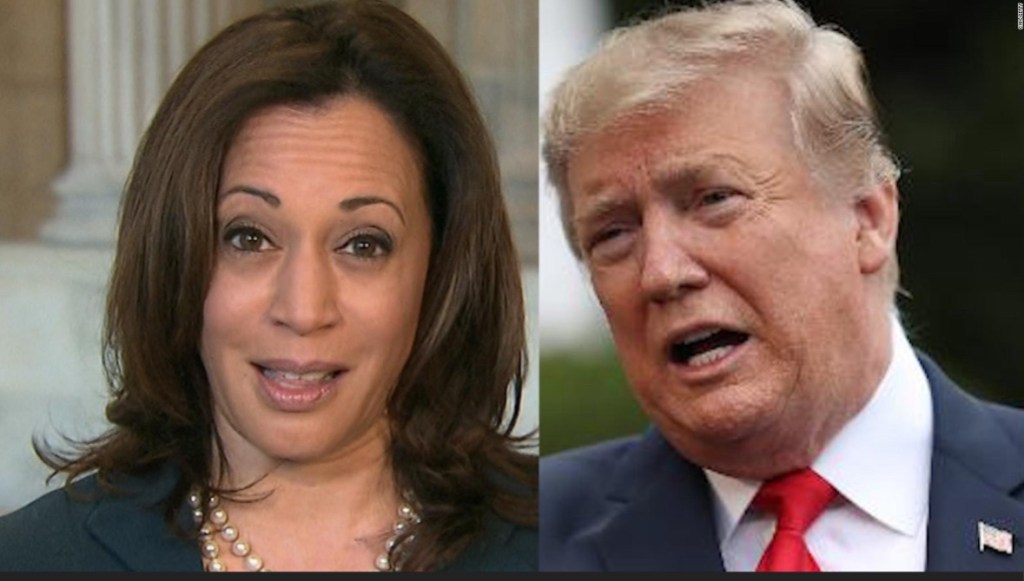
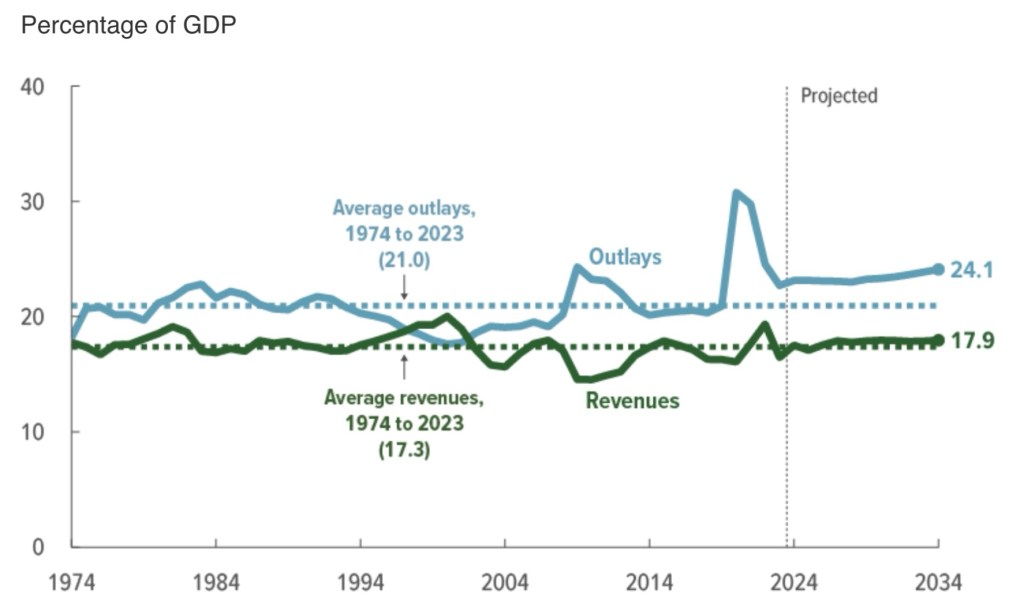
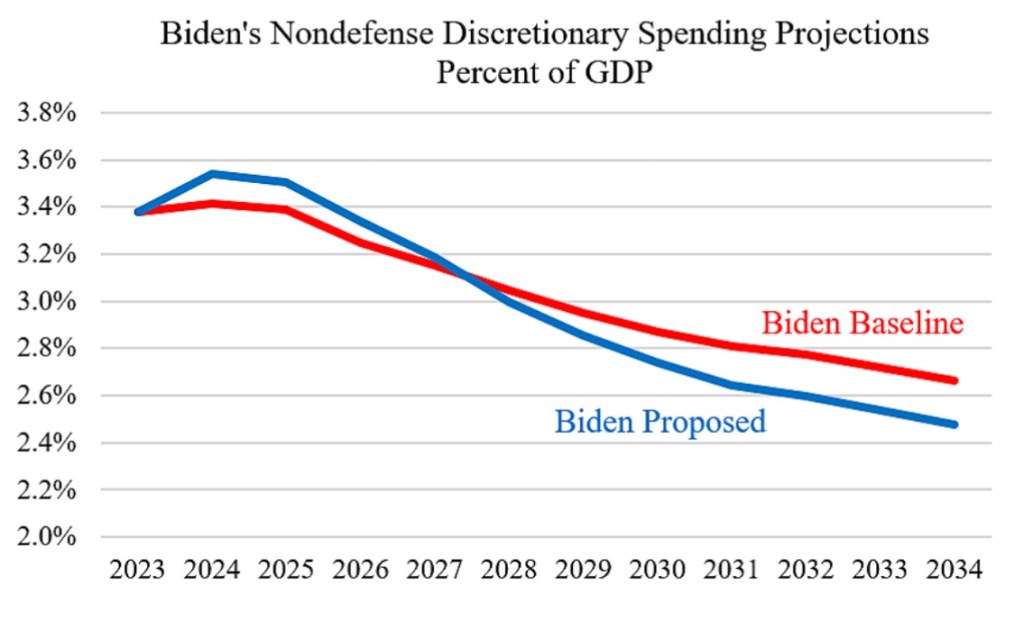
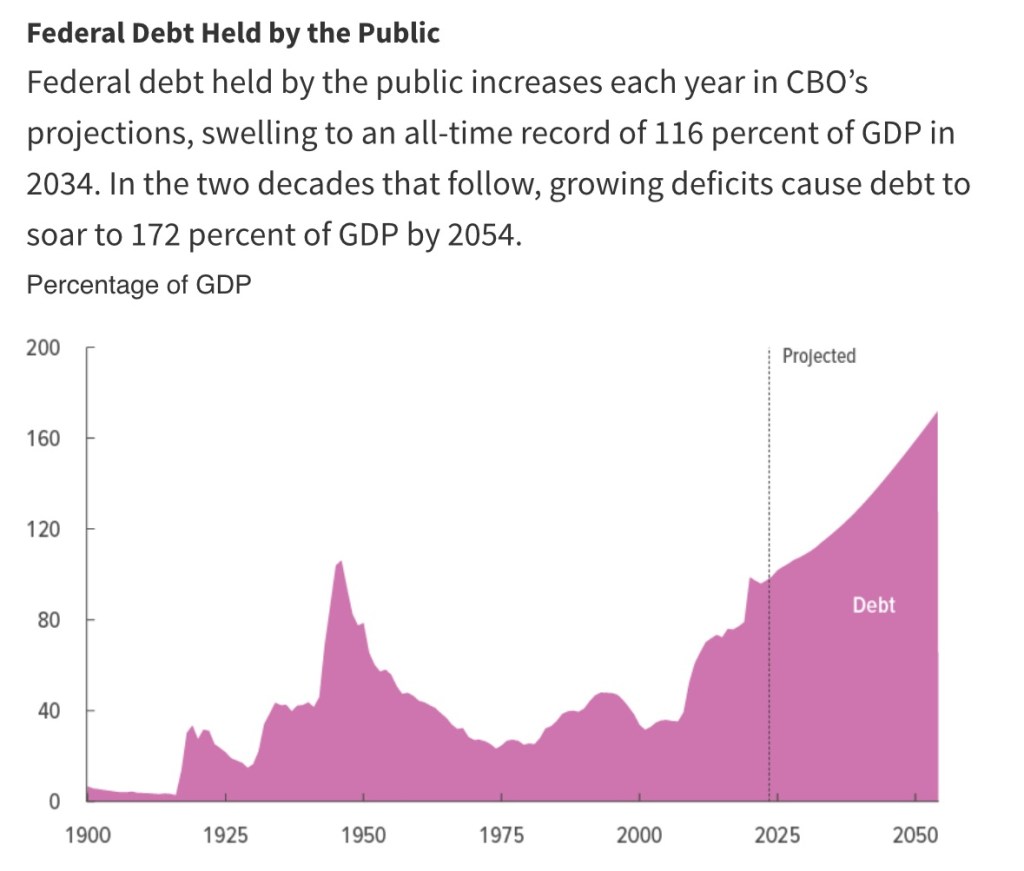



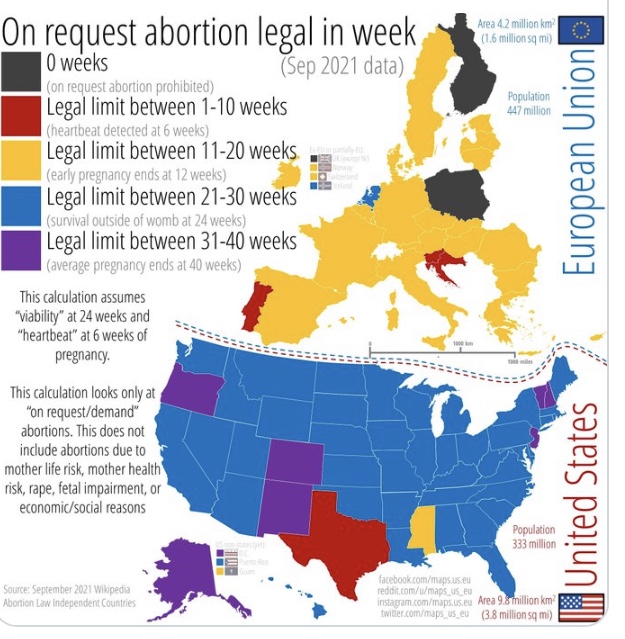
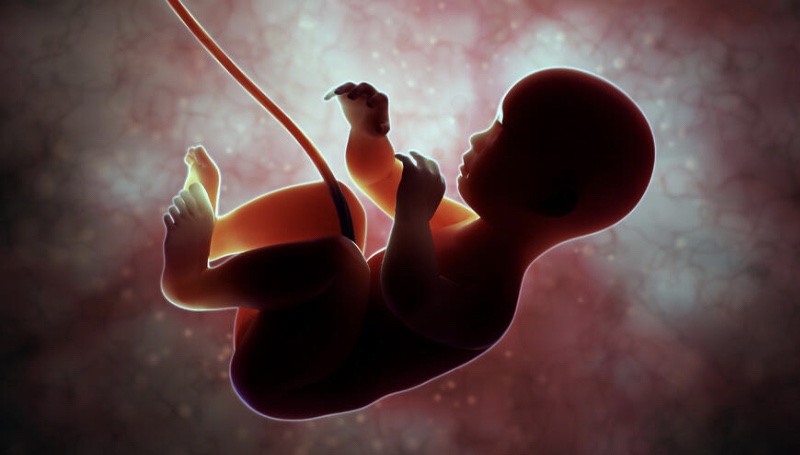

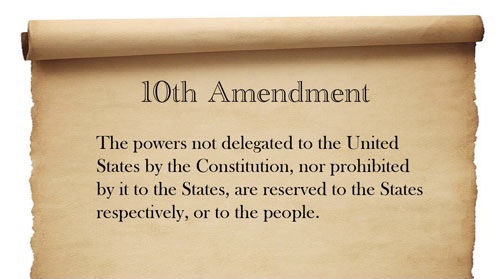
 Sacred Cow Chips