Bernie Sanders: Just a Regular Looter

Tags

, , , , , , , , , , , , , , , ,

Bernie

Economic illiteracy is getting to be a central theme in the early stages of the 2016 presidential race. The two candidates with whom the public and media are most fascinated at the moment are Bernie Sanders and Donald Trump. Both are veritable case studies in delusional economic reasoning. I have already devoted two posts to Trump, the current frontrunner for the Republican nomination (both posts appear at the link in reverse order). At the time of the second of those posts, I recall hoping desperately that someone or something would rescue my blog from him. I have managed, since then, to resist devoting more attention to his campaign. In this post, I’ll focus on Senator Bernie Sanders of Vermont, currently the top rival to Hillary Clinton for the Democrat nomination.

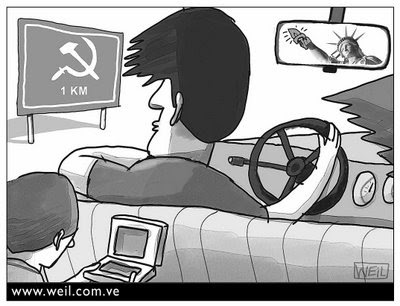
It’s ironic that Sanders, a self-proclaimed socialist, shares several areas of acute economic illiteracy with Donald Trump. There is a strong similarity between Sanders and Trump on foreign trade (and both candidates are pro-Second Amendment). Like Trump, Sanders demonstrates no understanding of the reasons for trade, as Kevin Williamson notes:

The incessant reliance on xenophobic (and largely untrue) tropes holding that the current economic woes of the United States are the result of scheming foreigners, especially the wicked Chinese, “stealing our jobs” and victimizing his class allies…. He describes the normalization of trade relations with China as “catastrophic” — Sanders and Jesse Helms both voted against the Clinton-backed China-trade legislation — and heaps scorn on every other trade-liberalization pact. That economic interactions with foreigners are inherently hurtful and exploitative is central to his view of how the world works.

Sanders lacks an understanding of trade’s real function: allowing consumers and businesses to freely engage in mutually beneficial exchanges with partners abroad, and vice versa. Trade thereby allows our total consumption and standard of living to expand. It is not based on “beating” your partners, as Sanders imagines. It is cooperative behavior.

Opposition to free trade nearly always boils down to one thing: avoiding competition. That goes for businesses seeking to protect or gain some degree of monopoly power and for unions wishing to keep wages, benefits and work rules elevated above levels that can otherwise be justified by productivity. The result is that consumers pay higher prices, have access to fewer goods and less variety, and have a lower standard of living. It is no accident that trade wars deepened the severity of the Great Depression domestically and globally. But Sanders, like Trump, has failed to learn from the historical record.

Another area of Sanders’ deep economic ignorance is his position on wage controls. He advocates a mandatory $15 federal minimum wage with no recognition of the potential damage of such a change. Kevin Williamson has this to say:

Prices [and wages] in markets are not arbitrary — they are reflections of how real people actually value certain goods and services in the real world. Arbitrarily changing the dollar numbers attached to those preferences does not change the underlying reality any more than trimming Cleveland off a map of the United States actually makes Cleveland disappear.

The minimum wage was the subject of a recent post on Sacred Cow Chips. A higher minimum is a favorite policy of well-meaning leftists and social justice warriors, but they fail to address the realities that the least-skilled suffer adverse employment effects, that a higher minimum wage hastens the substitution of capital for unskilled labor, and that the policy often benefits non-primary workers from middle and upper-income households. It’s a lousy way to help the impoverished. Moreover, minimum wages were originally conceived as a tool of racial exclusion and in all likelihood still act that way. Most of the research supporting minimum wage increases focuses on short-run effects or on sectors that are less capital-intensive. Findings about long-run effects are much more negative (see here, too). It’s a given that Sanders understands none of this.

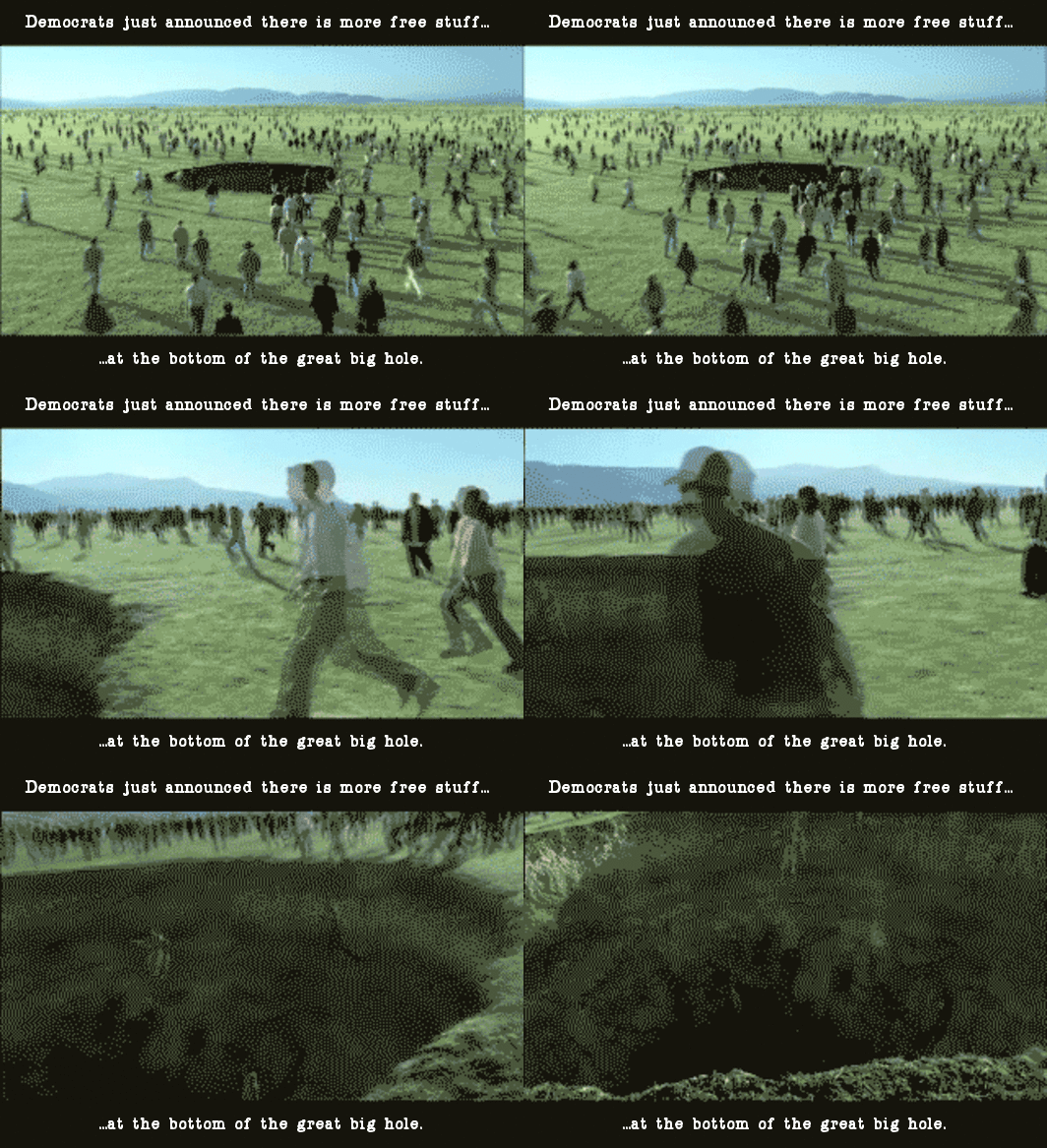
Other elements of Sanders’ platform are essentially freebies for all: universal health care (see the first link from this Bing search), free college tuition for all, and expanded social security benefits. And of course there is a promise to rebuild our crumbling infrastructure, taking full advantage of the myth that our infrastructure is so decrepit that it must be replaced now. All of these ideas are costly, to say the least, and there is nothing adequate in Sanders’ platform to pay for them. He’ll raise taxes on the 1%, he says. Just watch the capital fly away. Ed Krayewski of Reason discusses Sander’s rich promises and the lack of resources to pay for them in “Bernie Sanders, the 18 Trillion Dollar Man“:

The Wall Street Journal spoke with an economist at the liberal Center on Budget and Policy Priorities, who acknowledged taxes would have to go up for the middle class too to pay for Sanders programs.

Middle class tax hikes would undoubtedly be accompanied by a lot more public debt, and ultimately inflation. Freebies for whom? As Krayewski says, Sanders “wants taxpayers to ‘feel the Bern’“.

In fairness, Sanders suggests that some of the needed revenue can be diverted from military spending. Possibly, but the military budget has already been reduced significantly, and it is not clear that much fat remains for Sanders to cut. There will certainly be demands for greater military spending given the significant threats we are likely to face from rogue states.

Sanders’ promise to transform our energy system is another one that will come with high costs. What Sanders imagines is a widespread fallacy that green energy can be produced at little cost. However, we know that renewables carry relatively high distributed costs and their contributions to load are intermittent, requiring base load backup from more traditional sources like fossil fuels or nuclear energy. Like President Obama, Sanders would impose new costs on fossil fuels, but the poor will suffer the most without offsetting assistance. And subsidies are also required to incent greater adoption of expensive alternatives like home solar and electric vehicles. Sanders would authorize this massive diversion of resources for the purpose of mitigating a risk based on carbon-forcing climate models with consistent track records of poor accuracy.

If free speech is your hot button, then Sanders’ promise to “overturn” Citizen’s United won’t make you happy. Why should an association of individuals, like a union or a corporation, be denied the right to use pooled resources for the purpose of expressing views that are important to their mission? Sanders is proposing an outright abridgment of liberty. From the first Kevin Williamson link above:

… criminalizing things is very much on Bernie’s agenda, beginning with the criminalization of political dissent. At every event he swears to introduce a constitutional amendment reversing Supreme Court decisions that affirmed the free-speech protections of people and organizations filming documentaries, organizing Web campaigns, and airing television commercials in the hopes of influencing elections or public attitudes toward public issues.

It is hard to take issue with Sanders’ call for an end to police brutality without a clear sense of his attitude toward law enforcement. I believe all fair-minded people wish for zero police brutality, but critics often minimize the difficulty of police work. No doubt there are gray areas in the practice of law enforcement; some police officers take their powers too far, which cannot be condoned. If institutional reforms can help, so much the better. But the police must be given the latitude to do a difficult job without fear of unreasonable legal reprisal.

On a related note, Sanders advocates an end to the war on drugs, a reform that I wholeheartedly support. Go you Bernie!

Finally, here is a more general illustration of Bernie Sanders’ backward views on economics. It is a Sanders quote I repeat from the second Kevin Willamson link above:

You don’t necessarily need a choice of 23 underarm spray deodorants or of 18 different pairs of sneakers when children are hungry in this country. I don’t think the media appreciates the kind of stress that ordinary Americans are working on.

Sanders’ complaint about the plethora of choices in consumer goods fails to recognize that they reflect real differences in consumer preferences, as well as an economy dynamic enough to provide for those preferences. Far from causing hunger and poverty, that dynamism has lifted standards of living over the years across the entire income distribution, even among the lowest income groups, to levels that would astonish our forebears. And it created the wealth that enables our society to make substantial transfers of resources to low income groups. Unfortunately, those very transfer programs are rife with incentives that encourage continued dependency. Other government interventions such as the minimum wage have diminished opportunities for work for individuals with little experience and skills. Meanwhile, regulation and high business and personal taxes undermine the continued growth and dynamism of the economy that could otherwise lift more families out of dependency. Sanders would do better to study the history of socialism in practice, and to look in his own socialist mirror to identify the reasons for persistently high levels of poverty.

Such a Deal… The Obama Legal Doctrine and Iran

Tags

, , , , , , , , , , , , , , , ,

iran-nuclear-deal-cartoon

Support among the American public for the Iran nuclear deal has collapsed to just 21%, according to the latest Pew Research poll. But whether you like the deal or not, it appears that the Obama Administration will have acted illegally by failing to present all of the required documents surrounding the deal to Congress before the deadline for a vote. In fact, the deadline itself is not lawful. Those are the points behind a legislative strategy by House Republicans, based on bipartisan legislation signed into law by President Obama on May 22.

The law, The Iran Nuclear Agreement Review Act of 2015 (INARA), changed the rules under which Congress could ratify a deal negotiated with Iran to rules instead requiring a nullification. Essentially, it allowed Obama to classify the deal as an “executive agreement,” rather than a treaty. Under the Constitution, a treaty requires a 2/3 vote in the Senate for ratification. The INARA establishes a timeline for Congress to consider any deal and requires a negative vote of 2/3 to scuttle it. At the link just above, Representative Mike Pompeo (R-KS) and attorney David Rivkin call this an “exceptional bipartisan congressional accommodation.” Indeed, it was! INARA itself was an enabler of executive power. Now, Obama’s approach to Congressional review of the deal is typical: he is simply ignoring the legal provisions of INARA that he finds inconvenient.

It’s tempting to say the GOP erred badly in supporting the INARA to begin with. However, the legislative strategy explained by Pompeo addresses two key violations of the law. First, it requires the President to submit to Congress all details surrounding the deal, including any “side agreements”, such as the the two described here by Representative Justin Amash:

These side agreements cover how a primary Iranian military site will be inspected for nuclear activity and how Iran will resolve outstanding issues on possible military dimensions of its nuclear program. Remarkably, it was only through a chance meeting between two members of Congress and the IAEA [International Atomic Energy Agency] that the existence of these secret agreements came to light. The Obama administration apparently preferred to keep Congress in the dark, and even now the administration refuses to provide the side agreements to Congress. Indeed, Secretary of State John Kerry claims that even the president’s negotiating team doesn’t have access to these side agreements.

Under INARA, the deal should be dead on that basis alone. In addition, INARA states that the 60-day clock for Congressional review does not start ticking until all parts of the agreement (including side deals) have been submitted to Congress. In addition, Obama has no authority to begin lifting sanctions against Iran until the actual review of the entire agreement is complete. From Rep. Pompeo:

Indeed, since the act also provides for the transmittal of the agreement to Congress between July 10 and Sept. 7, the president’s ability to waive statutory sanctions will remain frozen in perpetuity if Congress does not receive the full agreement Monday [Sept.7].”

So again, the deal should be dead. Unfortunately, today (September 10) in the Senate, Democrats successfully filibustered a resolution against the nuclear deal, so it will not even come to a vote in that chamber. Nevertheless, House Republicans will push on with their own measures:

Late Thursday [Sept. 10] they agreed on a party-line 245-186 vote to a measure specifying that Obama had not properly submitted all documents related to the accord for Congress’ review, and therefore a 60-day review clock had not really started.

That will be followed Friday by votes on a bill to approve the accord — which is doomed to fail, but Republicans want to force Democrats to go on record in favor of the agreement — and on a measure preventing Obama from lifting congressionally mandated sanctions on Iran.

In fact, a Congressional lawsuit against the Administration is possible, but the courts move slowly, and removal of sanctions against Iran will begin as early as next week. If a lawsuit goes forward, nothing decisive is likely to happen in the courts until after the 2016 election.

The deal itself has a lot to dislike, starting with the other party to the negotiation. Iran is often described as the largest state sponsor of terrorism in the world. (see here as well.) Yesterday (Sept. 9), in connection with the nuclear deal, Iranian Supreme Leader Ayatollah Ali Khamenei said that Israel would no longer exist in 25 years. Would you negotiate with such a malignant counter-party?

Some details of the deal are still a mystery, since provisions of the side deals regarding verification are unknown. If they can be believed, even the Administration does not know all of the details. However, we do know that the deal relies upon the veracity of Iranian self-inspections, which is preposterous. Iran may deny access to “undeclared” nuclear sites by international inspectors. A review process taking up to 24 days may or may not reverse such a denial. Again, the inspections have no teeth. The deal ends embargoes on shipments of conventional arms, which will open the door to more sophisticated weaponry, including certain kinds of ballistic missiles. And the deal also makes over $100 million of frozen assets from oil sales available to Iran, which could be used to fund clients like Hezbollah. What the deal does not include is the release of four Americans currently imprisoned in Iran.

The deal is defended on several grounds, primarily that it is said to be the only way to slow Iran’s development of nuclear weapons. That, of course, is debatable. Verification is iffy, to say the least. The sanctions certainly must slow progress on nuclear development, and tougher sanctions could conceivably do more. And war is not the exclusive alternative, as some supporters have tried to suggest. Will appeasement help to change Iran into a friendly trading partner? Will it make the Iranian theocracy into a real ally? Fat chance! Still, the sanctions carry a humanitarian cost, which is another defense of the deal. Unfortunately, the stakes may be too high to weigh those benefits heavily against the humanitarian disaster that a nuclear Iran and/or a nuclear arms race in the middle east could bring.

Another point of tension in the U.S. is the hard position a number of states are taking on divesting of ownership in companies who do business in Iran. According to The Blaze:

There’s now a plan to put a defund-Iran measure on the November 2016 ballot in 30 states, all of which already have either laws or policies preventing state tax dollars from going to companies that do business with state sponsors of terrorism.

However, the Iran agreement contains the following provision:

If a law at the state or local level in the United States is preventing the implementation of the sanctions lifting as specified in this JCPOA, the United States will take appropriate steps, taking into account all available authorities, with a view to achieving such implementation.

And what would “all available authorities” entail? Federal lawsuits? Withholding federal funds?

Good or bad, the Iran deal is very likely to be implemented in violation of a law just signed a few months ago by the President. This is yet another example of the cavalier approach to law and to Constitutional authority taken by the Obama Administration. The deal may not survive too long beyond Obama’s term, however.

Central Bank Bubbles Pop On Our Heads

Tags

, , , , , , , , , , , , , ,

boom_and_bust

Printing money is a temptation that central banks can’t resist. And they distort prices when they do it. The new “liquidity” finds its way into higher asset values: stocks, bonds, real estate, even art. But as Jim Grant points out (as quoted by Ryan McMaken), the inflated prices are artificial, decoupled from the actual value those assets are capable of generating. The high asset prices are unsustainable:

The idea is that you put the cart of asset values before the horse of enterprise. By raising up asset values, you mobilize spending by people who have assets… It was otherwise known as trickle-down economics before the enlightenment, then it became something much fancier in economic lingo. But that’s essentially the idea. So what you have seen is an artificial structure of prices worldwide.”

This comports with the general drift one gets from chatting with financial market professionals about the Federal Reserve and other central banks. These advisors usually add a reflexive assurance that corporate earnings are adequate to support stock prices. So which is it? Those very earnings might reflect trading gains on assets held by financial institutions and others, so the “supportive earnings” argument is circular to some degree. That aside, it’s suggestive that the recent market selloff has been centered on tighter monetary conditions:

‘The risk of global liquidity conditions swinging is real for the markets, justifying a significant reduction in exposure for all asset classes,’ said Didier Saint-Georges, managing director at Carmignac, in a note to clients.

Likewise, significant rebounds have been attributed, at least in part, to softening expectations that the Fed will move to increase short-term interest rates next week. If asset values are so heavily dependent on a continuation of a zero-interest rate, easy-money policy at this stage of an economic expansion, then it looks like a bubble is waiting to pop. More liquidity might delay the inevitable.

How did we get here? Martin Feldstein describes the policy of “quantitative easing” (QE) in “The Fed’s Stock Price Correction“:

When the Obama administration’s poorly designed 2009 stimulus legislation failed to produce a strong economic turnaround, then-Fed Chairman Ben Bernanke announced that the central bank would pursue an ‘unconventional monetary policy’ by purchasing immense amounts of long-term bonds and promising to hold short-term interest rates near zero for an extended period.

Mr. Bernanke explained that the Fed’s policy was designed to drive down long-term interest rates, inducing portfolio investors to shift from bonds to stocks. This ‘portfolio substitution’ strategy, as he labeled it, would increase share prices, raising household wealth and therefore consumer spending.

Feldstein does not buy the contention that “earnings are supportive”. Despite his conventional demand-side approach to macroeconomics, he too emphasizes that loose monetary policy has distorted asset prices.

The process is exacerbated by the bloated federal government’s appetite for funds. The Treasury is able to float debt at very low interest rates, thanks to the Fed’s willingness to provide liquidity to the banking system. By that, I mean the Fed’s willingness to buy Treasury bonds and monetize federal deficit spending.

Jim Grant’s argument regarding price distortion goes further. Increases in the prices of financial assets artificially deflate the cost of raising new capital, translating into over-investment in physical assets such as office buildings and machinery. Here’s Grant:

The prices themselves are the cosmetic evidence of underlying difficulty. So if you misprice something, it’s not just the price that’s wrong. It’s the thing itself that has been financed by the price. So you have perhaps too many oil derricks, too many semi-conductor fabs. We have too much of something, which is financed by an excess of credit or debt.

Thus, the boom feeds the inevitable bust. That is certainly a danger. I’m sympathetic to Grant’s reasoning, but we have not experienced much of a boom in physical capital investment in the U.S., except perhaps for commercial real estate and in capital-intensive oil and gas extraction, and the latter is now on the skids. China, however, has been aggressively over-investing, and that is coming to an end.

While asset values have likely been inflated, it is fair to ask why the Fed’s accommodative policy has not led to a more general inflation in the prices of goods and services. For one thing, the strong dollar has held import prices down. (The international value of the dollar has been buttressed by the view that dollar-denominated assets are relatively safe, despite the risks created by the Fed.) More importantly, aging baby boomers have contributed to relatively strong saving activity (and less spending). Paradoxically, it’s possible that saving has been reinforced by the zero-rate policy of the Fed, as noted before on Sacred Cow Chips. Buying extra comfort in retirement requires greater set-asides if rates are low.

I am not optimistic about the direction of asset values, but I am not adjusting my own investment profile. Market timing is generally a bad strategy, and I will do my best to ride out the market’s ups and downs, even if they are manipulated by the Fed. However, we should all demand more discipline from the federal government and more restraint from the Fed. Better yet, limit the Fed’s discretion in the conduct of monetary policy by relying on a monetary standard that is less prone to manipulation and seigniorage.

Capitalism Is The Bounce In Nature’s Rebound

Tags

, , , , , , , , , , , , , , , ,

image

What forces account for the great shift toward “rewilding” now taking place in our world? Is it green activism and government action? Not from the looks of the photo above, which shows a giant field of solar panels powering an airport in India. Hailed as a great accomplishment by greens, the view from above provides a clue to the absurdity of absorbing vast resources to replace cheap, traditional power sources with politically-favored solar for just a few buildings. Fry the birds, burn the taxpayers! That’s certainly not rewilding, nor will it get us there. Neither will a cluttered landscape of giant, noisy windmills that slice up avian life, provide only intermittent power, and are left to decay once taxpayer subsidies go away.

Rather, the world is returning to nature via many forms of technology, resource productivity and capitalism. How is that possible? Here is a monograph by Jesse H. Ausubel on “rewilding”, the rebound of nature taking place around the globe. It might make you feel more optimistic about prospects for human prosperity and the joint survival of mankind and planet Earth. There is no question that the changes he describes are primarily driven by powerful private incentives. However, Ausubel’s positions are largely technical, not oriented toward a particular social or economic philosophy. He presents compelling graphical evidence and references to support his technical claims. In what follows, I’ll try to summarize some of the most salient points he makes in the report. Some [bracketed comments] in the bullet points are my own thoughts:

  • Land once used in agriculture is being returned to nature as “acreage and yield [have] decoupled. Since about 1940 American farmers have quintupled corn while using the same or even less land.” The same is true in other parts of the world. “The great reversal of land use that I am describing is not only a forecast, it is a present reality in Russia and Poland as well as Pennsylvania and Michigan.” Moreover, there is no cap in sight for farm yields. He credits “precision agriculture, in which we use more bits, not more kilowatts or gallons.
  • Even more impressive is the fact that “rising yields have not required more tons of fertilizer or other inputs. The inputs to agriculture have plateaued and then fallen, not just cropland but nitrogen, phosphates, potash, and even water.
  • A tremendous quantity of food is wasted, but Ausubel cites new web-enabled initiatives such as Food Cowboy and CropMobster that hold great promise in rerouting wasted surplus to areas of need. “The 800 million or so hungry humans worldwide are not hungry because of inadequate production.” [Well, production might be inadequate in their vicinity. And “waste” is relative, so to speak. It is typically uneconomic to avoid all wastage, and social pockets of hunger exist for many reasons unrelated to the operation of markets in food. But improvements in technology can make it feasible to reduce wastage at little cost.]
  • If we keep lifting average yields toward the demonstrated levels …, stop feeding corn to cars [corn ethanol – another activity subsidized by government], restrain our diets lightly, and reduce waste, then an area the size of India or the USA east of the Mississippi could be released globally from agriculture over the next 50 years or so.
  • Land released from agriculture contributes to reforestation, a process that is underway in a number of countries. “In the USA, the forest transition began around 1900, when states such as Connecticut had almost no forest, and now encompasses dozens of states. The thick green cover of New England, Pennsylvania, and New York today would be unrecognizable to Teddy Roosevelt, who knew them as wheat fields, pastures mown by sheep, and hillsides denuded by logging.
  • Our demand for forest products is in decline, which also contributes to reforestation. Forest plantations (accounting for about 1/3 of wood production) are much more productive than harvesting wood from natural forests. Land devoted to wood plantations can displace the harvesting of a much larger area of natural forest. 
  • Carbon dioxide (as well as nitrogen) is adding to “global greening“, which according to Ausubel is “the most important ecological trend on Earth today. The biosphere on land is getting bigger, year by year, by 2 billion tons or even more.” [Importantly, this greening provides an important offset to any tendency for human greenhouse gas emissions to warm the environment.]
  • “Dematerialization”: After the 1970s “…a surprising thing happened, even as our population kept growing. The intensity of use of the resources began to fall. For each new dollar in the economy, we used less copper and steel than we had used before.” Ausubel and some colleagues studied the use of 100 commodities in the U.S. over time. “ we found that 36 have peaked in absolute use; … Good riddance to asbestos and cadmium. … 53 commodities we consider poised to fall. These include not only cropland and nitrogen, … but even electricity and water…. Only 11 of the 100 commodities are still growing in both relative and absolute use in America.
  • Ausubel shows that certain emissions in the U.S. have decreased in relative terms, and sometimes in absolute terms. [The latter were mostly induced by public demands for pollution control regulation, but relative declines also reflect the ability of the private economy to generate growth. However, the value of certain regulations is questionable from both a public finance and a public health perspective.]
  • He is very high on maglev technology and especially the “hyperloop”, Elon Musk’s proposed tube for high-speed maglev travel between LA and San Francisco. [I do not share his enthusiasm for some of the reasons discussed in “High-Speed Third Rail For Taxpayers“. Large-scale, publicly-subsidized infrastructure projects often fail in terms of costs vs. benefits. However, the economics of the hyperloop might prove more compelling.]
  • Fertility has been in decline throughout the world for decades. Slower population growth obviously complements technological advance in providing for material human welfare.
  • Oceans and aquatic life are an area of real concern, in Ausubel’s view. “Fish biomass in intensively exploited fisheries appears to be about one-tenth the level of the fish in those seas a few decades or hundred [of] years ago.” [This is a classic tragedy of the commons in which no property rights are defined until the catch is in.] Fish farming is a promising alternative that can reduce the strain on wild fish populations. 
  • A final section on potential changes in the human diet is provocative. Ausubel discusses the promise of hydrogen supplies in creating proteins for our diet. A single spherical fermenter of 100 yards diameter could produce the primary food for the 30 million inhabitants of Mexico City. The foods would, of course, be formatted before arriving at the consumer. Grimacing gourmets should observe that our most sophisticated foods, such as cheese and wine, are the product of sophisticated elaboration by microorganisms of simple feedstocks such as milk and grape juice. … Globally, such a food system would allow humanity to release 90 percent of the land and sea now exploited for food.

In concluding his monograph, Ausubel addresses whether his optimism is misplaced, having focused so much on positive trends in the developed world and relatively little on less developed countries. Here is his response:

My view is that the patterns described are not exceptional to the US and that within a few decades, the same patterns, already evident in Europe and Japan, will be evident in many more places.

None of this is to deny the existence of external costs and benefits to the natural environment, which private parties might ignore in cases of ill-defined property rights or difficulties in litigating damages. Regulation may be a reasonable alternative for internalizing obvious external costs and benefits, but even then, markets can play a valuable role in fashioning the most efficient regulatory approach. In fact, with advances in environmental consciousness, private parties often find it in their best interest to internalize obvious external costs.

Having achieved a sufficient level of prosperity, a society may decide to convert some of the gains into public benefits through various forms of regulation or other public initiatives. In essence, these may be characterized as “luxury public goods”. The danger lies in the mistakes government often makes in the imposition of costly measures, and in allowing excessive taxes and regulation to subvert the very market processes giving rise to prosperity. This is particularly dangerous to welfare and growth in the underdeveloped world, as illustrated by opposition from environmentalists to efficient fossil fuels. That leaves the poor no alternative but to continue to burn wood indoors for heating and cooking.

It’s worth emphasizing that the nature rebound already taking place in the developed world is largely a product of free market capitalism and the growth in wealth and technology they have made possible. A great benefit of secure property rights for society, and for the environment, is that owners have powerful incentives to husband their resources. Likewise, the profit motive gives producers strong incentives to reduce waste and improve productivity. As economic development becomes more widespread, these incentives are promoting a healthier balance between man and nature. Greenies: capitalism can be your friend!

Prospective Professionals Don’t Snub Minimum Wage Waivers

Tags

, , , , , , , , , , , , ,

image

Are unpaid internships of any benefit to the student/intern? If not, then why do you suppose several hundred thousand smart students accept them each year? And there are many more internships for which the pay is nominal. Clearly these students have something to gain, though some would still argue that interns are exploited. They would like to be paid, of course, but they are sufficiently forward-thinking to recognize opportunities, even if they are unpaid gigs.

What’s really silly is the Department of Labor’s “tests” for whether an unpaid internship can be offered. In truth, it would be impossible to meet the DOL’s requirements, but that doesn’t seem to matter. Bryan Caplan is on very safe ground in arguing that “Every Unpaid Internship Is Illegal“. Apparently the rules are just for show, though again, some would like to see the practice ended. But here is the truth from Caplan:

Internships are vocational education. If schools can educate students in exchange for their tuition, why can’t businesses educate students in exchange for their labor? No reason, just anti-market bigotry.

Caplan’s description of the transaction is apt. From the firm’s point of view, bringing an intern into the office has disadvantages. With some introduction, the intern can perform various low-level tasks, but they absorb the time of paid staff because some degree of oversight is required. And there is some risk: an intern might prove capable of performing fairly complex tasks, but some don’t work out at all. The hope is that they can make a minor contribution to the work effort, add to the firm’s recruiting pipeline, and perhaps strengthen the firm’s ties to the student’s learning institution. In exchange, the intern gains valuable experience in an actual business environment and walks away with a stronger resume and some contacts. A mutually beneficial trade.

For the sake of intellectual consistency, proponents of the minimum wage should oppose unpaid or low-paying internships. The situations differ only in terms of the typical job description and its educational requirements. In both instances, opposition to the voluntary exchange of labor for training and experience would foreclose opportunities of which many are happy to avail themselves. The worst of it is that the minimum wage itself inflicts its damage on the least skilled, who need opportunities the most. This is harmful and foolish intervention, however well-intentioned.

The harm is vividly illustrated by responses to President Obama’s proposal to raise the minimum wage to $10.10 an hour from $7.25, and to various moves on the part of state and local governments to raise the minimum wage within their jurisdictions. The end-game will be higher prices, more automation, lower employment and reduced hours among low-skilled workers (and those with less work experience). This article about Wendy’s is pertinent. It also notes that McDonald’s is planning to automate. Apparently Walmart is cutting hours after responding to pressure to increase wages.

The jury is out on the damage from changes in the minimum wage in cities like Seattle, San Francisco and Los Angeles. Initial signs have indicated some negative employment effects, but the data is noisy and reported at a higher level of aggregation. Regardless, the least skilled will suffer negative consequences. Interestingly, unions backed the increases but have found ways to gain exemptions for their own contracts.

One of the most absurd assertions about wage floors comes from the DOL itself:

…the DOL cites numerous studies to support its claim that higher wages are associated with higher levels of worker productivity, but the agency gets the causality reversed, among other errors of interpretation.

The correct rationale for the DOL’s claim is with reference to the productivity of remaining workers near the margin, since less productive workers will have been canned. Too bad! The last link, from Antony Davies of the Mercatus Center, shows the positive relationship between unemployment and the minimum wage for less educated workers. Of course, this does not capture the negative effect on hours worked for those who remain employed following an increase in the wage floor.

Prohibition of unpaid internships would undoubtedly reduce the total number of internships offered to motivated students and others seeking vocational experience and training. The losers are prospective entrants to the knowledge work force who gain valuable experience and credibility as future job candidates by virtue of unpaid or low-paid gigs. But the consequences to would-be interns might not compare to the impact of lost training and experience already suffered by society’s least skilled as a consequence of the minimum wage. They are rendered unemployable by the state, and their alternatives are often limited to dependency or illegal activity.

A Farewell To Firearms Control

Tags

, , , , , , , , , , ,

guns

Whatever you might think of gun rights, one should expect at least honest treatment of the issue from public officials like the President of the United States, not outright lies about the facts:

“... at some point, we as a country have to reckon with the fact that this type of mass violence does not happen in other advanced countries.

Oh, yes it does! Mass shootings occur in many countries, though they remain statistically rare here and abroad. (Also see here and here.)

Mr. Obama wants to “... reduce the broader epidemic of gun violence in this country.

But there is no gun violence epidemic! The rate of gun deaths in the U.S. is about half its rate of 20 years ago.

In the wake of the shooting of two TV journalists in Roanoke, VA this past week, a new spate of anti-gun memes has appeared. Some have used a collection of illustrations in Vox as a source, most of which suffer from conceptual problems discussed in this report by the Crime Prevention Research Center (CPRC): “Comparing Murder Rates and Gun Ownership Across Countries“. These issues are summarized below:

  • Homicides are not measured consistently across countries: For example, England counts only homicides for which there is a conviction, artificially deflating the number of homicides. In the U.S., homicides are counted even if there is no arrest. Counting only arrests would cut the reported U.S. murder rate by more than half. Counting only convictions would cut the rate still more.
  • A related issue is the number of defensive gun uses (DGUs — two posts that deal with DGUs and other topics related to gun violence appear at the link). DGUs are often non-fatal, but they undoubtedly increase the count of homicides in the U.S. That won’t hold in countries where official reporting of homicides differs. Here is John Stossel on the topic of DGUs:

Often those guns are used to prevent crime. The homeowner pulls out the gun and the attacker flees. No one knows how often this happens because these prevented crimes don’t become news and don’t get reported to the government, but an estimate from the Violence Policy Center suggests crimes may be prevented by guns tens of thousands of times per year.”

  • Cross-country differences in gun homicides may not be reflected in total homicides because a percentage of the gun incidents would occur whether or not the perpetrator had access to a gun. Moreover, a number of countries with high total homicide rates do not report gun homicides.
  • “Mass shootings” can be defined in a variety of ways. Should they include acts of terrorism? Should they include only incidents involving a single shooter? Should they include gang shootouts? Should they include only incidents that occur “in public”? Should they include only incidents involving a death? Some implications of these definitional differences can be found here.
  • Comparing “civilian gun ownership” across countries can distort conclusions. Countries like Switzerland and Israel allow citizens to keep guns issued by the military in their homes, which reduces their official tallies. Both countries, like a number of others, have high rates of gun possession but very low firearm homicide rates.
  • The number of guns per capital is misleading because a relatively small number of individuals or households own multiple guns. Gun ownership rates are probably better for addressing the question of access to guns.
  • Comparing gun ownership across “civilized” countries introduces an arbitrary element, because there is no widely-accepted definition of “civilized”. Developed countries, as defined by the OECD, represents a better standard. Among developed countries, more gun ownership is associated with lower homicide rates.
  • Cross-sectional data may be confounded by endogenous influences. For example,  high crime leads to more homicides and to more DGUs, which inflates homicides based on the U.S. definition. Or, high crime and homicides might lead local governments to impose strict gun control laws. But do those laws lead to even more homicides? Controlling for confounding influences is difficult, but it is possible to address causality based on responses to significant events, such as changes in gun control laws.

Gun control advocates maintain that guns lead to violence, and that limiting access to firearms would reduce the number of violent homicides and deaths. There is much evidence to the contrary. For example, homicide rates have tended to increase after gun bans go into effect. That is true in both the U.S. and internationally. The experiences of Chicago and DC, mentioned at the last link, are instructive. The CPRC recently reported that murder rates have declined even as the number of concealed carry permits has soared over the past 15 years. And it is unlikely that stronger background checks would have made any difference in several high-profile mass shootings, including Sandy Hook and the one last week in Roanoke.

I maintain that gun control measures are more likely to give the appearance of effectiveness in the context of a history and culture of limited gun ownership. However, where gun ownership is historically extensive and deeply embedded in the culture, gun control measures may be counter-productive. Criminals can acquire guns on the black market, but bans prevent law-abiding citizens from using guns to defend themselves and undermine the prevention of gun violence.

Better to reform unproductive laws that criminalize harmless behavior, such as the drug trade and prostitution. Prohibitions create profit opportunities in underground activity and often lead to gangland violence. And it is better to reform laws and social policies that discourage or eliminate opportunities for legal work, such as many welfare programs and the minimum wage.

Fortunately, gun control is going nowhere politically. Gun ownership among the law abiding continues to grow, and most voters support Second Amendment rights, especially when security is tenuous. Smart Democrats know that gun control is a losing proposition for them, even if their left flank remains enamored with the idea. That’s a very good thing.

Statists and Stasis: The Dismal Solutions of Anti-Capitalists

Tags

, , , , , , , , , , , , , , , , , , , , ,

Thought Hanging

The anti-capitalist Left is quick to condemn private businesses of unfair practices and even unethical behavior. In their estimation, certain prices are not just and profits are somehow undeserved rewards to private property, risk-taking and entrepreneurial sweat. They somehow imagine that meeting market demands is an easy matter, or worse, that market demands are not “socially useful”. Few have ever attempted to run a business, or if they have, they were unsuccessful and resent it. They also cannot grasp the social function served by private markets, to which we owe our standard of living and much of our culture.

What alternatives do these deep thinkers suggest? A socialist utopia? Jonathan Newman discusses the many practical problems presented by socialism and why it always fails to achieve success comparable to societies that rely on free markets. Newman’s treatment covers the inability of administered pricing to convey accurate information and effective incentives, the waste induced by queuing, neglect of comparative advantage, waste induced by production quotas, retarded innovation and technological development, and a deeply embedded stasis in the face of changing conditions. Little wonder that poverty is a consequence.

Warren Meyer at Coyote Blog has written of the stasis seemingly promoted by the progressives. They are quite protective of the status quo. Ironically, and quite rightly, Meyer calls them “deeply conservative”, too conservative to accept the dynamism of a capitalistic society. From Meyer:

Progressives want comfort and certainty. They want to lock things down the way they are. They want to know that such and such job will be there tomorrow and next decade, and will always pay at least X amount. Which is why, in the end, progressives are all statists, because only a government with totalitarian powers can bring the order and certainty and control of individual decision-making that they crave..

Progressive elements in this country have always tried to freeze commerce, to lock this country’s economy down in its then-current patterns. Progressives in the late 19th century were terrified the American economy was shifting from agriculture to industry. They wanted to stop this, to cement in place patterns where 80-90% of Americans worked on farms.

Freezing the diffusion of technology and often the state of technology itself is a consequence of socialist policy. And technology may well be the enemy of the Left in another sense: An interesting twist is provided by Fred Foldvary of the Mercatus Center in “Government Intervention Is Becoming Obsolete“. He writes that technology is undermining all of the usual economic rationales for intervention: asymmetric information, external effects, public goods, and monopoly. The article is brief, but he refers the reader to more extensive treatments.

A good example of socialism’s perverse appeal is the rhetoric of Senator Bernie Sanders, now a candidate for the Democrat Presidential nomination. Sanders has criticized the “the dizzying (and socially useless) number of products in the deodorant category….” At Reason.com, A. Barton Hinkle wondered what Sanders might consider the appropriate number of deodorant choices in our society. Would he wish to dictate a limited number as a matter of policy? And what other “socially useless” choices might he choose to limit in his failure to grasp that these choices reflect the incredible health and vibrancy of a market economy. Here’s Hinkle:

… central planners think they can allocate economic resources better than the unguided hand of individual free choice. Like any good scientific experiment, this one is easily replicated, and has been time and again. See, for example, Venezuela, which has now run out of toilet paper, tampons, and other basic necessities because some people there think they should make all the choices for other people. And yet for many, the repeated lesson still has not sunk in. In an unintentionally hilarious essay about Cuba not so long ago, one writer noted that “the people are hungry here. There are severe food shortages. I do not understand why a tropical island would lack fruits and vegetables . . . and my only assumption is that maybe they have to export it all.

Never forget that government can only pursue policy objectives via coercive power. I don’t think socialists have forgotten at all. Without the power to coerce, nothing proposed or done by the state can be accomplished and enforced. This is the course that progressive, anti-capitalists must follow to achieve their collectivist vision. But Chris Edwards reminds us that “Coercion Is Bad Economics” with the following points about government:

  • When it “uses coercion, its actions are based on guesswork.
  • Its “actions often destroy value because they [arbitrarily] create winners and losers.
  • Its “activities fail to create value because the funding comes from a compulsory source: taxes.”
  • Its “programs often fail to generate value because the taxes to support them create “deadweight losses” or economic damage.

By arranging voluntary, mutually beneficial trades, market forces avoid all of these problems. As Robert P Murphy explains in The Freeman, “Capitalists Have a Better Plan“.

The anti-capitalists do not hesitate to saddle private businesses with confiscatory tax and regulatory burdens in the name of their own vision of society. Want to live in a bleak world of decline? Then here’s your prescription, courtesy of the anti-capitalist Left: regulate heavily, monitor transactions, impose wage and price controls, dismantle markets, tax at punitive levels, confiscate property, censor “offensive” speech, extend dependence on the state, absorb private savings and crowd out private investment with government borrowing, and inflate the money stock. Smells like a crappy “utopia”.

White House Spins Weak Obamacare Enrollments

Tags

, , , , , , , , , , , , , , , , , , ,

obamacare-humor-Screw

The Obama Administration is trying desperately to burnish the record of the President’s signature “achievement”, the Affordable Care Act (ACA), a.k.a. Obamacare.  That’s a tall order, unless the subject is the ACA’s remarkable triumph for excellence in high cronyism. Otherwise, little wonder that they tell only part of the Obamacare story. Robert Laszewski recently examined ACA’s enrollment in more detail and found the record rather dismal. He notes the following:

… the Obama administration is just reporting the good news and a good share of the press appears to be happy to pass these numbers along–albeit in a technically correct but hardly complete way.

Here are two examples provided by Laszewski:

  • The Rand Corporation reported that a net total of 16.9 million people were newly enrolled through February 2015. This was picked up by the press, which attributed the increase to Obamacare. But only 4.1 million of those newly insured came from the individual marketplaces (as noted by Rand). Most of those eligible for coverage through the marketplaces have not enrolled. Most of those who have enrolled were qualified for subsidies. Another 6.5 million came from Medicaid, which is free to those who qualify for that program. 9.6 million came from employer-provided plans, which has much to do with improved hiring over the past two years, as opposed to the ACA.
  • There were almost 950,000 new enrollees during the “special enrollment period” (after open enrollments ended) this year. This was heralded by the media, but little was said about the 1.3 million who dropped off the Obamacare rolls by the end of March. That number will grow once the administration comes clean on the number who have dropped coverage since then.

From Laszewski:

The Obamacare insurance exchanges aren’t enrolling anywhere near the number of people they were supposed to. And, there is no proof Obamacare has grown since the close of open enrollment. In fact the anecdotal and historical evidence would suggest it is now shrinking.

Going forward, the prospects for ACA enrollment are not good. As Slate belatedly reported last month, substantial premium increases are expected for 2016. The Heartland Institute‘s “Somewhat Reasonable” blog reports that “Millions of Americans Refuse to Buy Obamacare, Prefer to Pay Penalty“. The total who have refused is 7.5 million, much more than expected, while another 12 million people have claimed that they are exempt from the ACA’s requirements. Obamacare pricing and subsidies contain perverse incentives. It remains to be seen whether the insurers dominating the exchanges will have a sufficient number of young, healthy individuals enrolled and paying inflated premiums to offset the claims of more heavily-subsidized, high-risk enrollees.

There are many other problems plaguing Obamacare, including limited access to health care providers for many enrollees. Reason.com recently asked whether Obamacare is simply too complex to work, a question based largely on the findings of an HHS Inspector General’s report. There are massive issues related to verification of eligibility for subsidies and back-end payment systems for compensating insurers:

Think of it this way: Before Obamacare, the U.S. health system was like a giant tangled knot. If you’ve ever tried to untangle a big knot, you know that it can take a while, and that the trick is to patiently loosen one bit at a time.

Obamacare’s designers, in contrast, saw that they couldn’t undo the knot, so they added more string, and tied it into the knot that was already there. Now it’s an even bigger mess.

The so-called Obamacare success story is wishful thinking and shameless propaganda. It has failed to accomplish its goals in terms of coverage and especially cost, it has resulted in lost coverage to millions in the individual market who “liked their plans”, and it has caused millions of others who “liked their doctors” to lose their doctors. Things are not looking any rosier as we approach the implementation of the employer mandate (which was delayed twice) in 2016.

There are many ideas in play for improving health care coverage and access post-Obamacare. Here are summaries of the plans floated so far by Republican Presidential candidates Scott Walker and Marco Rubio. Though neither plan is a detailed as I’d like, some of the proposed high-level features are promising, at least relative to the ACA. There will be more proposals from other candidates before long. I’m hopeful that they will all remember to let markets work.

Carbon Farce Meets Negative Forcings

Tags

, , , , , , , , , , , ,

NanoMan copy

A new technology is being refined that could reverse years of carbon forcings, given sufficiently wide application, and do so at a profit. That profit should not require the kind of costly subsidies that are now routinely paid to green crony capitalists. Instead, the profit should derive from real market demand for a valuable material. The MIT Technology Review covers the technology under “How To Suck Carbon From The Air, Make Stuff From It“. It makes possible a form of carbon capture that produces carbon nanotubes, a promising material already in use but having much wider potential. From the second link above:

Carbon nanotubes are a great example of how useful materials are being developed. This material is said to be one hundred times stronger than steel because of its ‘molecular perfection’ as explained in the paper ‘Year 2050: Cities in the Age of Nanotechnology’ by Peter Yeadon. In addition, because carbon atoms can bond with other matter; such material can be an ‘insulator, semi-conductor or conductor of electricity’”.

Carbon nanotubes have remarkable properties that will revolutionize fabrics and allow buildings to have incredible strength, “transient features” such as variable transparency, and shape shifting. The new technology is said to be more efficient than existing methods of producing carbon nanotubes, and probably much cheaper.

The first link above quotes the developers on the technology’s massive potential for carbon capture:

They calculate that given an area less than 10 percent of the size of the Sahara Desert, the method could remove enough carbon dioxide to make global atmospheric levels return to preindustrial levels within 10 years, even if we keep emitting the greenhouse gas at a high rate during that period.

That area is twice the size of California, but a much more modest deployment would certainly reduce the political pressure to decrease carbon emissions. The extent would depend upon the demand for nanotubes, which is expected to grow dramatically in the presence of declining costs. Perhaps we’ll want more carbon emissions if nanotube materials come into widespread use. That would be a welcome development in the developing world, where fossil fuels hold the potential to lift millions out of poverty, as they have for advanced countries in the past. However, such a change would require elites to acknowledge and yield to the supremacy of markets over politics.

A technology capable of such significant carbon capture obviously constitutes a negative carbon “forcer”. Therefore, another implication is that climate models with a heavy emphasis on carbon forcings may be rendered moot. Those models have persistently generated over-predictions of global temperatures, so a deemphasis is already long overdue.

Another hat tip to my buddy John Crawford, who recently has fed me some great information. John should accept my invitation to guest-blog on SCC sometime soon, or start his own blog!

Manipulating Temperatures, People & Policy

Tags

, , , , , , , , , , , , ,

image

The heavily-manipulated global surface temperatures quoted by NOAA and NASA point to another “hottest month on record” in July, but the satellite temperature measurements do not agree. Nor do several other widely-followed global temperature series maintained elsewhere, such as the UK Meteorological Office (UK Met Office). I wrote about the manipulation of surface temperatures by NOAA and NASA in January in “Record Hot Baloney“, and in “Fitting Data To Models At NOAA” in June:

If the facts don’t suit your agenda, change them! The 18-year “hiatus” in global warming, which has made a shambles of climate model predictions, is now said to have been based on “incorrect data”, according to researchers at National Oceanic and Atmospheric Administration (NOAA). Translation: they have created new data “adjustments” that tell a story more consistent with their preferred narrative, namely, that man-made carbon emissions are forcing global temperatures upward, more or less steadily.

The last link provides detail on the nature of the manipulations. Perhaps surprisingly, rather large downward adjustments have been made to historical temperature data, reinforcing any upward trend in the late 20th century and hiding the current 18-year pause in that trend. Suffice it to say that the “adjustments” made by these agencies are at fairly detailed levels; some of the before-and-after comparisons shown by gifs at this link are rather astonishing. Some climate researchers have started to refer to the temperature series as “reconstructions” instead of “data”, out of respect for the legitimacy of actual data.

In the meantime, the “warmist” propaganda keeps flowing from NOAA and NASA, and it is hungrily swallowed and then regurgitated by media alarmists. The media love a good scare story. They are so complicit in reinforcing the warmist narrative they will ignore the revelation of a faulty temperature sensor at National Airport in Washington, D.C. (another hat tip to John Crawford). It has been recording temperatures averaging 1.7 degrees Fahrenheit too warm for the past 19 months. Now that the sensor has been changed, NOAA states that it will not make any adjustments to the past 19 months of recorded temperatures from the National weather station, despite the fact that they have routinely made many other changes, often without any real explanation.

Here is a recent opinion from Duke University Professor Robert Brown on the divergence of satellite and NASA/NOAA surface temperatures and the adjustments to the latter:

The two data sets should not be diverging, period, unless everything we understand about atmospheric thermal dynamics is wrong. That is, I will add my “opinion” to Werner’s and point out that it is based on simple atmospheric physics taught in any relevant textbook. …

This does not mean that they cannot and are not systematically differing; it just means that the growing difference is strong evidence of bias in the computation of the surface record.

Every new report issued by NOAA/NASA on record warm temperatures should be severely discounted. They are toiling in the service of a policy agenda; it will cost you dearly, and it will severely punish the less fortunate here and especially in less developed parts of the world; and it will reward the statist elite, bureaucrats and Green crony capitalists. Ronald Bailey in Reason recently weighed in on the consequences of this “apocalyptic anti-progress ideology“. Or read the wise words of Matt Ridley on “The recurrent problem of green scares that don’t live up to the hype“. Hey greens, relax! And don’t waste our resources and our well being on precautions against exaggerated risks.