• About

Sacred Cow Chips

Sacred Cow Chips

Tag Archives: Affordable Care Act

Government Malpractice Breeds Health Care Havoc

02 Sunday Nov 2025

Posted by Nuetzel in Health Care, Subsidies

≈ Leave a comment

Tags

000 Mules, 340B Program, Affordable Care Act, Community Pricing, Continuing Resolution, Cross Subsidies, Federal Medical Assistance Percentages, Gender-Affirming Care, Government Shutdown, Guaranteed Renewability, Health Status Insurance, Jane Menton, John Cochrane, Medicaid, Medicare, Michael Cannon, Nationalized Health Care, Obamacare, Obamacare Expanded Subsidies, Obamacare Tax Credits, One Big Beautiful Bill Act, Peter G. Peterson Foundation, Portability, Pre-Existing Conditions, Right To Health Care, Tax Cuts and Jobs Act, Third-Party Payers
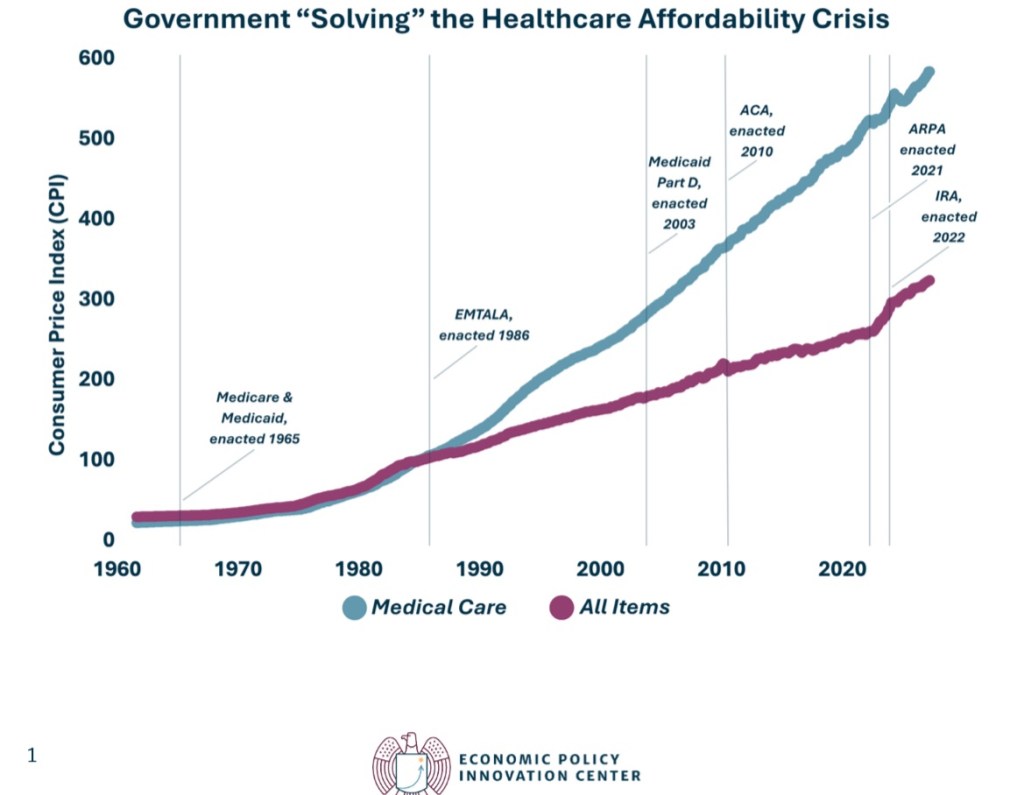
The impasse at the heart of the seemingly unending government shutdown revolves around health care subsidies.

First, there is disagreement about whether to extend the expanded Obamacare subsidies promulgated during the COVID pandemic. That expansion allowed individuals earning more than four times the federal poverty level (the original limit under the Affordable Care Act (ACA)) to receive tax credits for the purchase of health coverage on the exchange “marketplace”. Republicans find this highly objectionable. Many of them also object that the subsidies help pay for “essential health benefits” under the ACA that include so-called gender-affirming care.

Democrats and the insurance lobby would very much like to reinstate or retain the tax credits. The ten-year cost of extending them is more than $400 billion. Incredibly, it turns out that roughly 40% of individuals taking those tax credits did not file a medical claim in 2024. It was pure cash for insurers at the expense of taxpayers.

Second, the One Big Beautiful Bill Act (OBBB), among other things, restricts access to Medicaid by imposing work or job search requirements for overall eligibility. It also formally denies coverage to illegal aliens. This, of course, is opposed by Democrats, who insist that those requirements be rescinded.

Health Care Central Planning

These issues are part of a much larger debate over government dominance of the health care system. Almost every institutional arrangement in health care coverage and delivery is dictated by rules and practices imposed by government, and it would seem they are intentionally designed to escalate costs and compromise the delivery of care. The chart at the top of this post illustrates, in a high-level way, the futility of these efforts.

Medicare and Medicaid dominate government health care spending, as this report from the Peter G. Peterson Foundation shows. However, that strict budgetary view greatly understates the control government now exerts on the health care sector.

Medical Free Market Myth

Michael Cannon recently emphasized the irony of the persistent myth of a U.S. free market in health care:

“… government controls a larger share of health spending in the United States than in 27 out of 38 OECD-member nations, including the United Kingdom (83%) and Canada (73%), each of which has an explicitly socialized health-care system. When it comes to government control of health spending, the United States is closer to communist Cuba (89%) than the average OECD nation (75%).

“Nor does the United States have market prices for health care. Direct government price-setting, price floors, and price ceilings determine prices for more than half of U.S. health spending, including virtually all health-insurance premiums.“

ObamaSnare

Government “control” takes a variety of forms, including regulatory intrusions under the aegis of Obamacare. The Affordable Care Act (ACA), as its name implies, was sold as a way to keep health care and health insurance costs affordable. And it was billed as a way to extend individual health care coverage to the previously uninsured population. It failed badly on the first count and met with only limited success on the second.

One leg upon which the ACA stood was kicked away in 2017: the penalty for violating the Act’s individual mandate for health coverage was eliminated by the Tax Cuts and Jobs Act (TCJA). The penalty was arguably unconstitutional as a tax on non-commerce, or the non-purchase of insurance on the exchange. However, the Supreme Court had ruled narrowly in favor of the penalty in 2012, claiming that it was within the scope of Congress’ taxing power. Following passage of the TCJA, however, the toothlessness of the mandate caused the risk pool to deteriorate. This was aggravated by the ACA’s insistence on comprehensive coverage, which applies not just to policies sold on the Obamacare exchange, but to almost all private health insurance sold in the U.S.

A well-functioning marketplace would instead have promoted the availability of more moderately-priced coverage options. Ultimately, subsidies were all that prevented a broad exit from the marketplace. But they did nothing to slow the escalation in coverage costs and deteriorating quality of coverage and care:

“The result has been a race to the bottom in terms of the quality of insurance coverage for the sick. …individual-market provider networks [have] narrow[ed] significantly… They have eroded coverage through ‘poor coverage for the medications demanded by [the sick]’ … higher deductibles and copayments; mandatory drug substitutions and coverage exclusions for certain drugs; more frequent and tighter preauthorization requirements; highly variable coinsurance requirements; inaccurate provider directories; and exclusions of top specialists, high-quality hospitals, and leading cancer centers from their networks. ….

“The healthy suffer, too. … ‘currently healthy consumers cannot be adequately insured against the negative shock of transitioning to one of the poorly covered chronic disease states.’ A coalition of dozens of patient groups has complained that this dynamic ‘completely undermines the goal of the [Affordable Care Act].’”

Price Distortions

Cannon emphasizes another persistent myth: that government sets prices at levels that would prevail in a free market. Here is one baffling aspect of the many prices set by government for individual services under the Medicare and Medicaid programs.

“One of the more striking indications of widespread mispricing is that Medicare routinely sets different prices for identical items depending solely on who owns the facility.“

For example, ambulatory surgical centers are compensated much less for the same services as hospitals. The same is true of compensation for skilled nursing facilities vs. long-term care hospitals, and there appears to be no economic rationale for the differences. Furthermore, it’s an open secret that Medicare sets higher prices for lower-cost providers (and treatment of lower-cost patients). As Cannon notes, this explains the rapid growth of specialty hospitals owned by physicians.

Cannon provides much more detail on Medicare and Medicaid mis-pricing, including the blunting of patients’ price-sensitivity and the shifting of costs to private payers.

Divorcing Risk and Insurance

The price of insurance and insurer reimbursements are also prescribed by government. Cannon’s discussion includes the ACA’s abolition of risk-based insurance pricing, which is an astonishing case of economic malpractice. Depending on one’s health status, “community pricing” acts as either a price ceiling or a price floor. This creates perverse incentives for both the healthy and the unhealthy. Premiums fall short of the cost of caring for the sick.

The federal government attempts to compensate by subsidizing insurers based on the health status of individuals in their risk pool, but that falls short in terms of the quality of coverage for unhealthy individuals. Thus, both the healthy and taxpayers must shoulder an ever-increasing cost burden of insuring the unhealthy.

Circular Scam

As for Medicaid, certain arrangements drive up the cost of the program to taxpayers. For example, last March I wrote about this apparent scam allowing state governments to inflate their Medicaid costs, qualifying for hundreds of billions of federal matching funds:

“Here’s the gist of it: increases in state Medicaid reimbursements qualify for a federal match at a rate known as the Federal Medical Assistance Percentage (FMAPs). First, increases in Medicaid reimbursements must be funded at the state level. To do this, states tax Medicaid providers, but then the revenue is kicked back to providers in higher reimbursements. The deluge of matching federal dollars follows, and states are free to use those dollars in their general budgets.“

Unfortunately, FMAP reform is not directly addressed in the “clean” Continuing Resolution before Congress, though reduced funding levels might lead to reductions in FMAP percentages.

And Another Circular Scam

John Cochrane is largely in agreement with Cannon’s piece, but he focuses first on cross subsidies flowing to “eligible” hospitals dispensing prescription drugs to low-income patients. These hospitals get the drugs from pharmaceutical companies at a steep discount mandated by the so-called 340B program, but the hospitals then bill insurers (or Medicare and Medicaid), a significant markup over their acquisition cost. The Medicaid expansion under the ACA led to an increase in the number of hospitals eligible for the drug discounts.

But that’s not the end of the story. This arrangement creates an obvious incentive for the drug companies to raise their pre-discounted prices. Another unintended outcome cited by Cochrane is that eligible hospitals do not use the proceeds of their mark-ups to offer better care (or care at a lower cost) to low-income consumers. Instead, the funds tend to be directed to investment accounts. The program also creates another incentive for hospital consolidation.

Someone Else’s Money

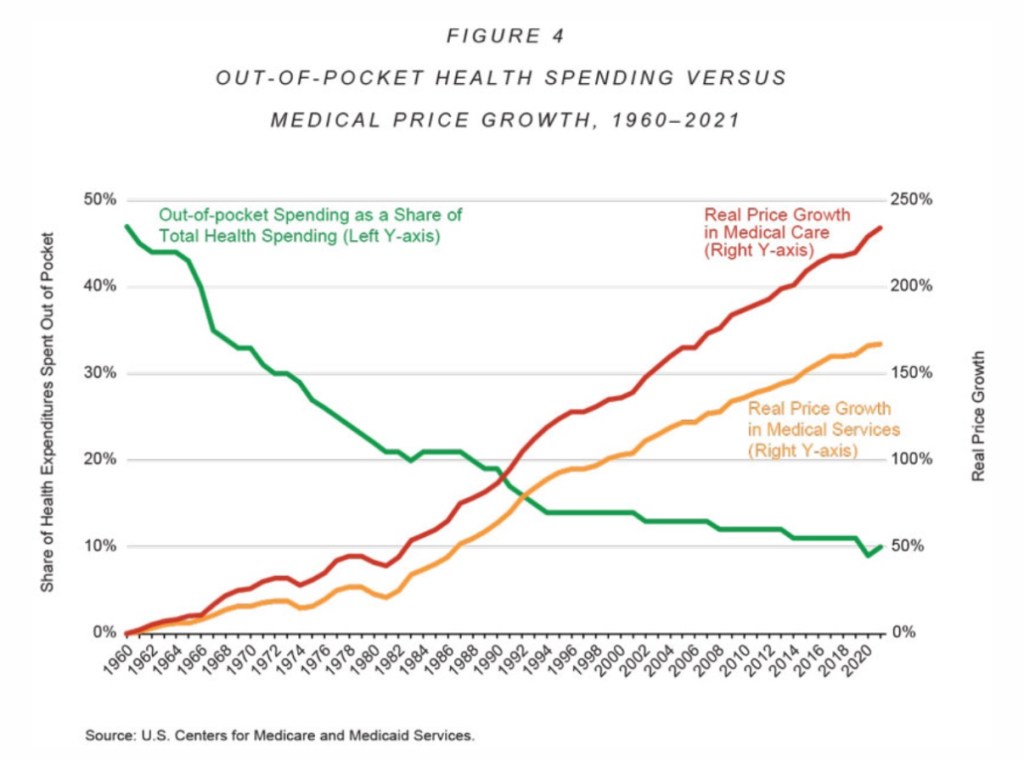
Unfortunately, the dysfunction in health care goes deeper than Obamacare, Medicare, and Medicaid. The third-party payment system itself has been at the root of cost escalation. It largely relieves consumers of their sovereignty over purchasing decisions, rendering them much less sensitive to variations in price. This can be seen clearly in one of Cannon’s charts, reproduced below:
In addition, the disparate income tax treatment of employer-provided health coverage exacerbates cost escalation. Obviously, employees receiving this deduction can afford higher-quality and more comprehensive coverage. This exemption has acted to drive up the cost of all health care and insurance coverage over the almost nine decades of its existence..

What To Do?

The claim that the U.S. health care system operates within a free market ecosystem is obviously absurd. Together, the Cochrane and Cannon pieces represent something of a gripe session, but it is well deserved. Both authors devote sections to reforms, however. They don’t break new ground in the debate, but the overarching theme of the suggested reforms is to give consumers authority over their health care spending. That means keeping government out of health care in all the myriad ways it now intrudes. It also means that insurers should not have authority to dictate how health care is priced. The key is to allow competition to flourish among health care providers and insurers.

Ending FMAPs and the tax exemption for employer-provided coverage is one thing, but it’s another to contemplate dismantling Medicare, Medicaid, and the many rules and pricing arrangements enforced under Obamacare.

Cochrane takes an accommodating approach to the health care needs of seniors and those in need of a safety net. He calls for Medicare and Medicaid to be replaced with the issuance of vouchers (rather than cash) toward the purchase of affordable private health care plans. Then, health coverage can be provided in a lightly regulated, competitive market without all the distortions and sneaky opportunities for graft embedded in our current entitlements.

Conflicting Rights and Reality

And what of the argument that health care is a human right? That notion is, of course, very popular on the left. The idea subtly shifts a meaningful portion of the responsibility for one’s health onto others, including providers and taxpayers. But smokers, heavy drinkers, reckless drivers, hard drug users, and the avoidably obese should not be led to expect a free ride for risky behaviors.

Of course, it’s not a basic human right to demand, by force of government, involuntary service of health care workers, or that taxpayers give alms, but Cochrane answers with this:

“Yes! It is a basic human right that I should be free to offer my money to a willing physician or hospital, in a brutally competitive and innovative market.”

“Willing” is a key word, and to that we should add “able”, but those are qualifying conditions that markets help facilitate.

Jane Menton has discussed the notion of a human right to health care, wisely explaining that conditions are not always compatible with fulfilling such a right. Her primary concern is the future supply of medical personnel, and an acute shortage of nurses.

“In our current political environment, young people seem to think that claiming something as an entitlement means someone will inevitably show up to do the work.“

To codify a right to health care would be an ill-fared call for a nationalized solution. It would be a prescription for still higher costs and lower quality care. As in any other sector, centralized decision-making leads to misallocated resources, higher costs, and inferior outcomes for patients. Our current mess gives a strong hint of the kind of over-regulated dysfunction that nationalization would bring.

Insurance On Insurability

Pre-existing conditions motivate much of the discussion surrounding a presumed right to health care. Individual portability of group health coverage goes partway in addressing coverage for pre-existing conditions. Portability is mandated by the Health Insurance Portability and Accountability Act of 1996, but like community rating, it shifts costs to others. That is, the cost of covering pre-existing conditions becomes the responsibility of employers in general, group insurers, and ultimately healthy (and younger) workers.

Given time, the debate over a right to health care can be rendered moot via market processes. Cochrane has long supported the concept of health status insurance. Such policies would allow healthy consumers to guarantee their insurability against the risk of future health contingencies. Guaranteed renewability is a limited form of this type of coverage. General availability of health status insurance contracts, offered regardless of current coverage, could allow for a range of future insurability options at affordable prices. Then, pre-existing conditions would cease to be such a huge driver of cross subsidies.
Medicaid Funding Scam Tolerated For Years

18 Tuesday Mar 2025

Posted by Nuetzel in Medicaid, rent seeking

≈ 1 Comment

Tags

Affordable Care Act, Block Grants, DOGE, Federal Matching Funds, Federal Medical Assistance Percentages, FMAP, Government Accountability Office, Issues & Insights, Joe Biden, Medicaid, National Library of Medicine, Obamacare, Provider Reimbursements, Provider Taxes, Supplemental Reimbursements

It’s been underway in various forms for a long time, at least since the early 1980s. It’s a basic variant of what the National Library of Medicine once called “creative financing” by some states “to get more federal dollars than they otherwise would qualify for” under Medicaid. It was even recognized as a scam by Joe Biden during Barack Obama’s presidency, and more recently by a number of legislators. Perhaps DOGE can do something to bring it under scrutiny, but ending it would probably take legislation.

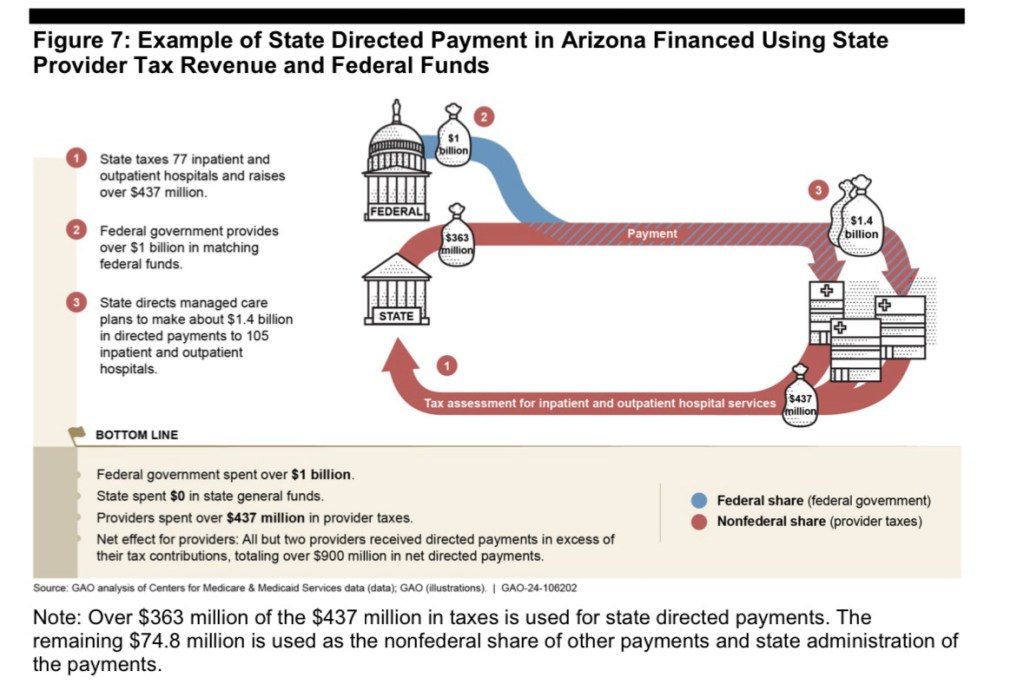
Here’s the gist of it: increases in state Medicaid reimbursements qualify for a federal match at a rate known as the Federal Medical Assistance Percentage (FMAPs). First, increases in Medicaid reimbursements must be funded at the state level. To do this, states tax Medicaid providers, but then the revenue is kicked back to providers in higher reimbursements. The deluge of matching federal dollars follows, and states are free to use those dollars in their general budgets.

FMAPs vary based on state income level, so states with poorer residents have higher matching rates. The minimum FMAP is 50%, and it ranges up to 90% for marginal reimbursements falling under expanded Medicaid under Obamacare. The dollar value of the federal match is not capped.

The graphic at the top of this post highlights the circularity of this funding scheme. The graphic is taken from the Government Accountability Office’s “Medicaid Managed Care: Rapid Spending Growth In State Directed Payments Needs Enhanced Oversight and Transparency”. Here’s how Issues & Insights puts it:

“Let’s say, for example, a state imposes a provider tax on hospitals that raises $100 million. And then it returns that $100 million to the hospitals in the form of higher Medicaid reimbursement rates. There’s been no increase in benefits. Providers aren’t better off. But the state gets an extra $50 million from the federal government’s matching fund, money that it can use for anything it wants.“

However, whatever the increment to state coffers, and no matter what state programs are funded as a result, the increment is always expressed as a federal contribution to state Medicaid spending. That bit of shading helps cover for the convoluted and pernicious nature of the scheme. The lack of transparency is obvious, cloaking the circular nature of the flow of funds from providers to states and then back to providers. It’s possible that the arrangement inflates total annual Medicaid costs by as $50 – $65 billion a year, or by 6% – 8%.

Of course, this is also a blatant example of bureaucratic waste, and the allocation of “supplemental reimbursements” are a potential seedbed for cronyism and graft.

It would be better for the federal government to simply give states the money under block grants without the rigmarole. But of course that would change the character of the rent seeking already taking place, and the political daylight might not serve beneficiary states and providers well.

Putting aside the deception inherent in the funding mechanism, states vary tremendously in their reliance on federal matching revenue. States with large populations and high average incomes rely more heavily on the circular inflating of Medicaid reimbursements. California and New York lead the way in both Medicaid provider taxes and federal matching funds. Alaska, however, imposes no Medicaid provider taxes, and smaller states like Wyoming collect little in provider taxes.

High income states receive lower FMAPs, which seemingly encourages both higher Medicaid provider taxes and more “generous” provider reimbursements in order to harvest more federal matching funds. In addition, states have an incentive to participate in expanded Medicaid under the Affordable Care Act in order to receive higher matching rates.

The reciprocal nature of state-level Medicaid provider taxes and provider reimbursements implies a substantial but fictitious component of state Medicaid costs. The purpose is to qualify for federal matching dollars under Medicaid. The governments of 49 states have carried on with this escapade for years. Their misguided defenders insist that the federal contribution is necessary to protect benefits that states might otherwise have to cut. But even that stipulation would not justify the pairing of taxes on and reimbursements to Medicaid providers, which inflates the spending base upon which federal reimbursements are calculated. You have to wonder whether federal taxpayers should forgive the overstatement of costs and misallocation of funds.

Beware of Government Health Care Yet To Come

02 Sunday Feb 2025

Posted by Nuetzel in Health Care

≈ Leave a comment

Tags

adverse selection, Affordable Care Act, Arnold Kling, Bryan Caplan, Claim Denials, David Chavous, Donald Trump, Employer-Provided Coverage, Essential Benefits, Hospital Readmissions, Joel Zinberg, Liam Sigaud, Make America Healthy Again, Matt Margolis, Michael F. Cannon, Moral Hazard, Noah Smith, Obamacare, Peter Earle, Pharmacy Benefit Managers, Portability, Pre-Authorization Rules, Pre-Existing Conditions, Premium Subsidies, Robert F. Kennedy Jr, Sebastian Caliri, Steven Hayward, Tax-Deductible Premiums, third-party payments, Universal Health Accounts

Ongoing increases in the resources dedicated to health care in the U.S., and their prices, are driven primarily by the abandonment of market forces. We have largely eliminated the incentives that markets create for all buyers and sellers of health care services as well as insurers. Consumers bear little responsibility for the cost of health care decisions when third parties like insurers and government are the payers. A range of government interventions have pushed health care spending upward, including regulation of insurers, consumer subsidies, perverse incentives for consolidation among health care providers, and a mechanism by which pharmaceutical companies negotiate side payments to insurers willing to cover their drugs.

It’s not yet clear whether the Trump Administration and its “Make America Healthy Again” agenda will serve to liberate market forces in any way. Skeptics can be forgiven for worrying that MAHA will be no more than a cover for even more centrally-planned health care, price controls, and regulation of the pharmaceutical and food industries, not to mention consumer choices. Robert F. Kennedy Jr., who is likely to be confirmed by the Senate as Donald Trump’s Secretary of Health and Human Services, has strong and sometimes defensible opinions about nutrition and public health policies. He is, however, an inveterate left-winger and is not an advocate for market solutions. Trump himself has offered only vague assurances on the order of “You won’t lose your coverage”.

Government Control

The updraft in health care inflation coincided with government dominance of the sector. Steven Hayward points out that the cost pressure began at about the same time as Medicare came into existence in 1965. This significantly pre-dates the trend toward aging of the population, which will surely exacerbate cost pressures as greater concentrations of baby boomers approach or exceed life expectancy over the next decade.

Government now controls or impinges on about 84% of health care spending in the U.S., as noted by Michael F. Cannon. The tax deductibility of employer-provided health insurance is a massive example of federal manipulation and one that is highly distortionary. It reinforces the prevalence of third-party payments, which takes decision-making out of consumers’ hands. Equalizing the tax treatment of employer-provided health coverage would obviously promote tax equity. Just as importantly, however, tax-subsidized premiums create demand for inflated coverage levels, which raise prices and quantities. And today, the federal government requires coverages for routine care, going beyond the basic function of insurance and driving the cost of care and insurance upward.

The traditional non-portability of employer-provided coverage causes workers with uninsurable pre-existing conditions to lose coverage when they leave a job. Thus, Cannon states that the tax exclusion for employer coverage penalizes workers who instead might have chosen portable individual coverage in a market setting without tax distortions. Cannon proposes a reform whereby employer coverage would be replaced with deposits into tax-free Universal Health Accounts owned by workers, who could then purchase their own insurance.

In 2024, federal subsidies for health insurance coverage were about $2 trillion, according to the Congressional Budget Office (CBO). Those subsidies are projected to grow to $3.5 trillion by 2034 (8.5% of GDP). Joel Zinberg and Liam Sigaud emphasize the wasteful nature of premium subsidies for exchange plans mandated by the Affordable Care Act (ACA), better known as Obamacare. Subsidies were temporarily expanded in 2021, but only until 2026. They should be allowed to expire. These subsidies increase the demand for health care, but they are costly to taxpayers and are offered to individuals far above the poverty line. Furthermore, as Zinberg and Sigaud discuss, subsidized coverage for the previously uninsured does very little to improve health outcomes. That’s because almost all of the health care needs of the formerly uninsured were met via uncompensated care at emergency rooms, clinics, medical schools, and physician offices.

Proportionate Consumption

Perhaps surprisingly, and contrary to popular narratives, health care spending in the U.S. is not really out-of-line with other developed countries relative to personal income and consumption expenditures (as opposed to GDP). We spend more on health care because we earn and consume more of everything. This shouldn’t allay concern over health care spending because our economic success has not been matched by health outcomes, which have lagged or deteriorated relative to peer nations. Better health might well have allowed us to spend proportionately less on health care, but this has not been the case. There are explanations based on obesity levels and diet, but important parts of the explanation can be found elsewhere.

It should also be noted that a significant share of our decades-long increases in health care spending can be attributed to quantities, not just prices, as explained at the last link above.

Health Consequences

The ACA did nothing to slow the rise in the cost of health care coverage. In fact, if anything, the ACA cemented government dominance in a variety of ways, reinforcing tendencies for cost escalation. Even worse, the ACA had negative consequences for patient care. David Chavous posted a good X thread in December on some of the health consequences of Obamacare:

1) The ACA imposed penalties on certain hospital readmissions, which literally abandoned people at death’s door.

2) It encouraged consolidation among providers in an attempt to streamline care and reduce prices. This reduced competitive pressures, however, which had the “unforeseen” consequence of raising prices and discouraging second opinions. The former goes against all economic logic while the latter goes against sound medical decision-making.

3) The ACA forced insurers to offer fewer options, increasing the cost of insurance by encouraging patients to wait until they had a pre-existing condition to buy coverage. Care was almost certainly deferred as well. Ultimately, that drove up premiums for healthy people and worsened outcomes for those falling ill.

4) It forced drug companies to negotiate with Pharmacy Benefit Managers (PBMs) to get their products into formularies. The PBMs have acted as classic middlemen, accomplishing little more than driving up drug prices and too often forcing patients to skimp on their prescribed dosage, or worse yet, increasing their vulnerability to lower-priced quackery.

The Insurers

So the ACA drastically increased the insured population (including the new burden of covering pre-existing conditions). It also forced insurers to meet draconian cost-control thresholds. Little wonder that claim rejection increased, a phenomenon often at the root of public animosity toward health insurers. Peter Earle cites several reasons for the increase in denial rates while noting that claim rejection has made little difference in insurer profit margins.

Matt Margolis points out that under the ACA, we’ve managed to worsen coverage in exchange for higher premiums and deductibles. All while profits have been capped. Claim denials or delays due to pre-authorization rules (which delay care) have become routine following the implementation of Obamacare.

Perhaps the biggest mistake was forcing insurers to cover pre-existing conditions without allowing them to price for risk. Rather than forcing healthy individuals to pay for risks they don’t face, it would be more economically sensible to directly subsidize coverage for those in high-risk pools.

Noah Smith also defends the health insurers. For example, while UnitedHealth Group has the largest market share in the industry, its net profit margin of 6.1% is only about half of the average for the S&P 500. Other major insurers earn even less by this metric. Profits just don’t explain why American health care spending is so high. Ultimately, the services delivered and charges assessed by providers explain high U.S. health care spending, not insurer profits or administrative costs.

Under the ACA, insurance premiums pay the bulk of the cost of health care delivery, including the cost of services more reasonably categorized as routine health maintenance. The latter is like buying insurance for oil changes. Furthermore, there are no options to decline any of the ten so-called “essential benefits” under the ACA, thus increasing the cost of coverage.

Medical Records

Arnold Kling argues that the ACA’s emphasis on uniform, digitized medical records is not a productive avenue for achieving efficiencies in health care delivery. Moreover, it’s been a key factor driving the increasing concentration in the health care industry. Here is Kling:

“My point is that you cannot do this until you tighten up the health care delivery process, making it more rigid and uniform. And I would not try to do that. Health care does not necessarily lend itself to being commoditized. You risk making health care in America less open to innovation and less responsive to the needs of people.

“So far, all that has been accomplished by the electronic medical records drive has been to put small physician practices out of business. They have not been able to absorb the overhead involved in implementing these systems, so that they have been forced to lose their independence, primarily to hospital-owned conglomerates.”

Separating Health and State

The problem of rising health care costs in the U.S. is capsulized by Bryan Caplan in his call for the separation of health and state. The many policy-driven failures discussed above offer more than adequate rationale for reform. The alternative suggested by Caplan is to “pull the plug” on government involvement in health care, relying instead on the free market.

Caplan debunks a few popular notions regarding the appropriate role for markets in health care and health insurance. In particular, it’s often alleged that moral hazard and adverse selection would encourage unhealthy behaviors and encourage the worst risks to over-insure, causing insurance markets to fail. But these problems arise only when risk is not priced efficiently, precisely what the government has accomplished by attempting to equalizing rates.

Pulling the plug on government interference in health care would also mean deregulating both insurance offerings and pricing, encouraging the adoption of portable coverage, expediting drug approvals based on peer-country approvals, reforming pharmacy benefit management, ending deadly Medicare drug price controls, and encouraging competition among health care providers.

Value Vs. Volume

There are a host of other reforms that could bring more sanity to our health care system. Many of these are covered here by Sebastian Caliri, with some emphasis on the potential role of AI in improving health care. Some of these are at odds with Kling’s skepticism regarding digitized health records.

Perhaps the most fundamental reforms entertained by Caliri have to do with health care payments. One is to make payments dependent on outcomes rather than diagnostic codes established and priced by the American Medical Association. To paraphrase Caliri, it would be far better for Americans to pay for value rather than volume.

Another payment reform discussed by Caliri is expanding direct payments to providers such as capitation fees, whereby patients pay to subscribe to a bundle of services for a fixed fee. Finally, Caliri discusses the importance of achieving “site-neutral payments”, eliminating rules that allow health systems to charge a higher premium relative to independent providers for identical services.

For what it’s worth, Arnold Kling disagrees that changing payment metrics would be of much help because participants will learn to game a new system. Instead, he emphasizes the importance of reducing consumer incentives for costly treatments having little benefit. No dispute there!

Avoid the Single-Payer Calamity

I’ll close this jeremiad with a quote from Caliri’s piece in which he contrasts the knee-jerk, leftist solution to our nation’s health care dilemma with a more rational, market-oriented approach:

“Single payer solutions and government control favored by the left are no solutions at all. Moving to a monopsonist system like Canada is a recipe for strangling innovation and rationing access. Just ask our neighbors to the north who have to wait a year for orthopedic surgery. The UK’s National Health Service (NHS) is teetering on the brink of collapse. We need to sort out some other way forward.

“Other parts of the economy provide inspiration for what may actually work. In the realm of information technology, for example, fifty years has taken us from expensive four operation calculators to ubiquitous, free, artificial intelligence capable of passing the Turing Test. We can argue about the precise details but most of this miracle came from profit-seeking enterprises competing in a free market to deliver the best value for the buyer’s dollar.“

The EPA’s Trip To the Constitutional Woodshed

07 Thursday Jul 2022

Posted by Nuetzel in Administrative State, Constitution, Supreme Court, Uncategorized

≈ 1 Comment

Tags

Administrative Law, Administrative Procedures Act, Administrative State, Affordable Care Act, Charles Lipson, Chevron Deference, Clarence Carson, Clean Air Act, Climate Alarmism, Constitutional Law, Environmental Protection Agency, EPA, Francis Menton, Franklin D. Roosevelt, FTC, Gabriel Kolko, Great Society, Humphrey’s Executor, ICC, Jarkesy v. SEC, Jonathan Tobin, Kevin O. Leske, Lyndon B. Johnson, Major Questiins Doctrine, National Labor Relations Board, Neil Gorsuch, New Deal, Philip Hamburger, rent seeking, SEC, Sheldon Richman, Supreme Court, The Manhattan Contrarian, West Virginia v. EPA, Woodrow Wilson

The Supreme Court’s regular docket is done for the year, but one of last week’s rulings is of great interest to those concerned about the constitutional threat posed by the administrative state. In West Virginia v. EPA, the Court held that the Clean Air Act of 1970 does not authorize the EPA to regulate carbon emissions in power generation. Well, that’s getting to be a very old statute and no one thought much about carbon dioxide emissions when it became law, so of course it doesn’t! However, this decision is crucial as a check on the ever-growing, extra-legal power of the administrative bureaucracy. I say “extra-legal” because regulatory agencies are increasingly taking it upon themselves to write rules that reach well beyond their legislative mandates. Only the legislature can make law under our system of government, or at least law that settles “major questions”, a doctrine that the Court has applied in this case.

Consequential Side Issues

While many critics of the West Virginia decision might find this hard to believe, it has nothing to do with the Court’s views about the prospects for climate change. That is not the Court’s job and it knows it, or at least most of the justices know it. Even if climate change poses a real threat of global catastrophe, and it does not, that is not the Court’s job. Its primary function is to preserve constitutional law, and that is what this decision is about. (For more on the folly of climate alarmism, see here, here, and here.)

Apart from its constitutional implications, growth in the number of regulatory rules and their complexity also imposes massive costs on the economy, robbing the private sector of productive opportunities, often with little or no demonstrable public benefit. The unbridled promulgation of rules does, however, benefit special interests. That includes bureaucrats, litigators, and private parties who derive side benefits from regulation, such as protection of monopoly status, competitive advantages, and expanded professional opportunities. Leveraging government and political privilege for private benefit is rent seeking at its very heart, and it’s also at the very heart of fascistic corporatism.

A Little History

Regulation has been a channel for rent seeking going back to the earliest days of the Republic and even before. But a Great Leap Forward in federal regulatory intervention came in the late 1880s with several Supreme Court decisions involving railroad rates, and then the establishment of the Interstate Commerce Commission. The railroads practically begged to be regulated. At the last link, Sheldon Richmsn quotes historian Gabriel Kolko:

“The first regulatory effort, the Interstate Commerce Commission, had been cooperative and fruitful; indeed, the railroads themselves had been the leading advocates of extended federal regulation after 1887.”

The railroads wanted stability, of course, and less competition, and that’s what they got, though in the end they didn’t do themselves any favors. Here’s historian Clarence Carson on the ultimate result:

“Since the railroads could not effectively compete in so many ways, such opportunity for improving their situation as existed would usually be to combine roads cover­ing the same general area so as to maintain some control over rates and get as much of the profitable business as possible within an area. This is what rail­road financiers tended to do. The result, as far as the public was concerned, was a nonintegrated rail system, reduced competition, poorer service, and higher rates.”

Later, Woodrow Wilson and Franklin D. Roosevelt had strong roles in advancing the regulatory state. Wilson was smitten with the scientism inherent in centralized decision making and administrative expertise. He was also loath to concede his vision of administrative planning to democratic ideals. Justice Neil Gorsuch, in his concurrence on the EPA decision, offers some rather disturbing quotes from Wilson:

“Woodrow Wilson famously argued that ‘popular sovereignty’ ‘embarrasse[d]’ the Nation because it made it harder to achieve ‘executive expertness.’ The Study of Administration, 2 Pol. Sci. Q. 197, 207 (1887) (Administration). In Wilson’s eyes, the mass of the people were ‘selfish, ignorant, timid, stubborn, or foolish.’ Id., at 208. He expressed even greater disdain for particular groups, defending ‘[t]he white men of the South’ for ‘rid[ding] themselves, by fair means or foul, of the intolerable burden of governments sustained by the votes of ignorant [African-Americans].’ 9 W. Wilson, History of the American People 58 (1918). He likewise denounced immigrants ‘from the south of Italy and men of the meaner sort out of Hungary and Poland,’ who possessed ‘neither skill nor energy nor any initiative of quick intelligence.’ 5 id., at 212. To Wilson, our Republic ‘tr[ied] to do too much by vote.’ Administration 214.”

FDR’s New Deal was responsible for a huge expansion in the administrative apparatus, as this partial list of federal agencies created under his leadership indicates. Many of these agencies were subsequently ruled unconstitutional, but quite a few live on today with greatly expanded scope and presumed powers.

The Great Society policies of Lyndon B. Johnson also created new agencies and programs, with additional burdens on the ability of the private economy to function properly. Of course, the complexity of the administrative state has increased many-fold with more recent actions such as the Clean Air Act and the Affordable Care Act.

Major Questions

The agencies, despite any expertise they might have in-house, cannot create major rules and mandates without fairly specific statutory authorization. That is a constitutional imperative. It’s not quite clear, however, what test might distinguish a “major question” requiring enabling legislation from lesser matters. There is certainly some room for interpretation. According to Kevin O. Leske:

“Under the [major questions] doctrine, a court will not defer to an agency’s interpretation of a statutory provision in circumstances where the case involves an issue of deep economic or political significance or where the interpretive question could effectuate an enormous and transformative expansion of the agency’s regulatory authority.”

Unfortunately, this judicial deference to agency rule-making and interpretation led to further erosion of the separation of powers and due process rights. Vague legislation, aggressive special interests and rent seekers, and judicial deference have allowed agencies excessive latitude to interpret and stretch their mandates, to enforce expansive regulatory actions, and to adjudicate disputes with regulated entities in proceedings internal to the agencies themselves.

At issue in EPA v. West Virginia were the agency’s steps to radically transform the energy mix used in power generation, with potentially dramatic, negative impacts on the public. The Court said that won’t fly unless Congress gives the EPA more specific instructions along those lines. Agency expertise, by itself, is not enough to override the legitimate democratic interests of the public in such consequential matters.

But what about executive actions of the sort increasingly taken by presidents over the years? Why are those legal? Article Two of the Constitution grants discretion to the president for enforcement of laws and managing the executive branch. Furthermore, pieces of legislation can specifically grant discretionary power to the executive branch in particular areas. Nevertheless, it might be possible for even executive orders issued by the president to “go too far” in interpreting congressional intent. That is within the purview of courts in case of legal challenges.

Unaccountable Agency Power

So called “administrative expertise” was given some degree of deference by the Supreme Court as early as the 1930s. In 1947, the Court decided the application of such expertise should often take precedence over pre-established rules. There was also a recognition that legislators often lacked the expertise to formulate certain regulatory guidelines. The expanding scope and complexity of regulations gave rise to increasing legal disputes, however. This strained the judicial system for at least two reasons: the sheer limits of its capacity and the lack of technical expertise needed to settle many disputes. This ultimately led to the adjudication of many disputes within the agencies themselves. Agency tribunals of subject matter experts were formed to meet these growing demands. This was said to facilitate “cheap justice”, not to mention more rapid decisions. The passage of the Administrative Procedures Act in 1947 was a recognition that administrative law was necessary and required certain standards, though they differ from normal judicial standards, such as rules of evidence. This left very little to brake aggressive and extra-legal rule-making and enforcement by the agencies.

Another disturbing aspect of the growth in administrative power has been the advent of agencies said to be “independent” from the other branches of government, as if to intimate their existence as a fourth branch. As Francis Menton (the Manhattan Contrarian) says, agencies:

“… can create rules for your conduct free from the Congress, and … can prosecute you free from the President. In 1935, in a case called Humphrey’s Executor, the Supreme Court upheld the part of the FTC Act that made the Commissioners immune from discharge by the President other than in very limited circumstances. Humphrey’s Executor has not been overruled to this day.

The FTC was only the beginning of an explosion of creation of such ‘independent’ agencies and otherwise un-separated powers in the federal government. The Federal Reserve was created about the same time (actually 1913), and things really took off during Roosevelt’s New Deal, with agencies like the FCC, SEC, and NLRB.”

Later, the Supreme Court adopted a two-part test to determine whether courts may defer to administrative expertise in interpreting legislative intent, rather than substituting their own judgement or insisting on a clearer legislative mandate. This was the principle of so-called Chevron deference, named for the case Chevron v. Natural Resources Defense Council, in which the Court ruled for the EPA’s definition of a “stationary source” of pollution as “plantwide”. The test for Chevron deference was whether an agency’s rule was a “reasonable” statutory interpretation and whether Congress had not directly addressed the point in question.

Rolling It Back

Philip Hamburger, in his book “Is Administrative Law Unlawful?”, addressed the struggle between administrative power and “regular law” back to the days of “royal prerogative”. The advent of constitutional law was designed to prevent anything resembling the latter.

“… administrative law has returned American government and society to precisely the sort of consolidated or absolute power that the US Constitution―and constitutions in general―were designed to prevent.”

But now we have some very promising developments. Again, in the West Virginia case, the EPA’s authority to regulate carbon emissions in power generation has been denied by the Court, pending any future legislation that would specifically enable that authority. There was no mention of Chevron in this decision whatsoever! That’s a big win for constitutional principle. In another recent case before the Fifth Circuit Court in New Orleans, Jarkesy v. SEC, an administrative law judge (ALJ) at the SEC had assessed damages and fines against Jarkesy, but he challenged the SEC in court, as Menton describes:

“Jarkesy claimed that he was deprived of his Seventh Amendment right to have his case decided by a jury, and also that the SEC had unconstitutionally exercised legislative powers when deciding to try his case before an ALJ without having been given any guiding principles by Congress on how to make that decision. The Fifth Circuit ruled for Jarkesy on both points. This decision has the potential to force some significant changes on how the SEC does business. However, Mr. Jarkesy still does have to continue to run a gantlet that will likely include a request by the government for en banc review by the Fifth Circuit, and then a request for review by the Supreme Court.”

Conclusion

Here is a nice summary of the constitutional issues from an earlier post by Menton:

“… (1) the combining of powers into agencies that would enact, and also enforce, and also adjudicate regulations (directly contrary to the Constitution’s separation of powers into three branches of government); (2) agencies enacting regulations with the force of law on their own say so (contrary to the Constitution’s requirement that all laws be passed by both houses of Congress and presented to the President for signature); and (3) many agencies claiming to be “independent” of the President (contrary to the Constitution’s vesting all ‘ executive power’ in the President).

This is echoed by Jonathan Tobin, who says:

“Government by fiat of intellectuals or scientific experts may or may not be good policy. But it is alien to the U.S. Constitution, and it has nothing to do with democracy.”

One other critical point made by Charles Lipson is that the Court’s West Virginia decision, while sending an unmistakeable message to federal agencies, should also raise awareness in Congress that it is not enough to legislate vague statutes and rely on bureaucrats to make all the decisions about implementation. Instead, “major questions” must be dealt with legislatively and with full accountability to voters. Congress must address these issues, if not up-front, then whenever they arise as disputes in the courts or otherwise. Certainly, the West Virginia decision should make individuals or entities subject to regulatory action less likely to allow major questions to be settled by ALJ rulings within the agencies themselves. The Supreme Court has expressed a willingness for such cases to be reviewed in normal courts of law. That is a very positive development for liberty.

Four More Years to MAGAA

28 Wednesday Oct 2020

Posted by Nuetzel in Big Government, Liberty, Politics

≈ Leave a comment

Tags

Abraham Accords, Affordable Care Act, Amy Coney Barrett, Brett Kavanaugh, corporate taxes, Covid-19, Critical Race Theorist, David E. Bernstein, Deregulation, Donald Trump, Dreamers, Election Politics, Federalism, Free trade, Gun Rights, Immigration, Impeachment, Individual Mandate, Joe Biden, Joel Kotkin, Living Constitution, Medicare, Middle East Peace, Nancy Pelosi, National Defense, Nationalism, NATO, Neil Gorsuch, Originalism, Paris Climate Accord, Pass Through Business, Penalty Tax, Social Security, United Nations

As a “practical” libertarian, my primary test for any candidate for public office is whether he or she supports less government dominance over private decisions than the status quo. When it comes to Joe Biden and his pack of ventriloquists, the answer is a resounding NO! That should clinch it, right? Probably, but Donald Trump is more complicated….

I’ve always viewed Trump as a corporatist at heart, one who, as a private businessman, didn’t give a thought to free market integrity when he saw rent-seeking opportunities. Now, as a public servant, his laudable desire to “get things done” can also manifest to the advantage of cronyists, which he probably thinks is no big deal. Unfortunately, that is often the way of government, as the Biden family knows all too well. On balance, however, Trump generally stands against big government, as some of the points below will demonstrate.

Trump’s spoken “stream of consciousness” can be maddening. He tends to be inarticulate in discussing policy issues, but at times I enjoy hearing him wonder aloud about policy; at other times, it sounds like an exercise in self-rationalization. He seldom prevaricates when his mind is made up, however.

Not that Biden is such a great orator. He needs cheat sheets, and his cadence and pitch often sound like a weak, repeating loop. In fairness, however, he manages to break it up a bit with an occasional “C’mon, man!”, or “Here’s the deal.”

I have mixed feelings about Trump’s bumptiousness. For example, his verbal treatment of leftists is usually well-deserved and entertaining. Then there are his jokes and sarcasm, for which one apparently must have an ear. He can amuse me, but then he can grate on me. There are times when he’s far too defensive. He tweets just a bit too much. But he talks like a tough, New York working man, which is basically in his DNA. He keeps an insane schedule, and I believe this is true: nobody works harder.

With that mixed bag, I’ll now get on to policy:

Deregulation: Trump has sought to reduce federal regulation and has succeeded to an impressive extent, eliminating about five old regulations for every new federal rule-making. This ranges from rolling back the EPA’s authority to regulate certain “waters” under the Clean Water Act, to liberalized future mileage standards on car manufacturers, to ending destructive efforts to enforce so-called net neutrality. By minimizing opportunities for over-reach by federal regulators, resources can be conserved and managed more efficiently, paving the way for greater productivity and lower costs.

And now, look! Trump has signed a new executive order making federal workers employees-at-will! Yes, let’s “deconstruct the administrative state”. And another new executive order prohibits critical race theory training both in the federal bureaucracy and by federal contractors. End the ridiculous struggle sessions!

Judicial Appointments: Bravo! Neil Gorsuch, Brett Kavanaugh, Amy Coney Barrett, and over 200 federal judges have been placed on the bench by Trump in a single term. I like constitutional originalism and I believe a “living constitution” is a corrupt judicial philosophy. The founding document is as relevant today as it was at its original drafting and at the time of every amendment. I think Trump understands this.

Corporate Taxes: Trump’s reductions in corporate tax rates have promoted economic growth and higher labor income. In 2017, I noted that labor shares the burden of the corporate income tax, so a reversal of those cuts would be counterproductive for labor and capital.

At the same time, the 2017 tax package was a mixed blessing for many so-called “pass-through” businesses (proprietors, partnerships, and S corporations). It wasn’t exactly a simplification, nor was it uniformly a tax cut.

Individual Income Taxes: Rates were reduced for many taxpayers, but not for all, and taxes were certainly not simplified in a meaningful way. The link in the last paragraph provides a few more details.

I am not a big fan of Trump’s proposed payroll tax cut. Such a temporary move will not be of any direct help to those who are unemployed, and it’s unlikely to stimulate much spending from those who are employed. Moreover, without significant reform, payroll tax cuts will directly accelerate the coming insolvency of the Social Security and Medicare Trust Funds.

Nonetheless, I believe permanent tax cuts are stimulative to the economy in ways that increased government spending is not: they improve incentives for effort, capital investment, and innovation, thus increasing the nation’s productive capacity. Trump seems to agree.

Upward Mobility: Here’s Joel Kotkin on the gains enjoyed by minorities under the Trump Administration. The credit goes to strong private economic growth, pre-pandemic, as opposed to government aid programs.

Foreign Policy: Peace in the Middle East is shaping up as a real possibility under the Abraham Accords. While the issue of coexisting, sovereign Palestinian and Zionist homelands remains unsettled, it now seems achievable. Progress like this has eluded diplomatic efforts for well over five decades, and Trump deserves a peace prize for getting this far with it.

Iran is a thorn, and the regime is a terrorist actor. I support a tough approach with respect to the ayatollahs, which a Trump has delivered. He’s also pushed for troop withdrawals in various parts of the world. He has moved U.S. troops out of Germany and into Poland, where they represent a greater deterrent to Russian expansionism. Trump has pushed our NATO allies to take responsibility for more of their own defense needs, all to the better. Trump has successfully managed North Korean intransigence, though it is an ongoing problem. We are at odds with the leadership in mainland China, but the regime is adversarial, expansionist, and genocidal, so I believe it’s best to take a tough approach with them. At the UN, some of our international “partners” have successfully manipulated the organization in ways that make continued participation by the U.S. of questionable value. Like me, Trump is no fan of UN governance as it is currently practiced.

Gun Rights: Trump is far more likely to stand for Second Amendment rights than Joe Biden. Especially now, given the riots in many cities and calls to “defund police”, it is vitally important that people have a means of self-defense. See this excellent piece by David E. Bernstein on that point.

National Defense: a pure public good; I’m sympathetic to the argument that much of our “defense capital” has deteriorated. Therefore, Trump’s effort to rebuild was overdue. The improved deterrent value of these assets reduces the chance they will ever have to be used against adversaries. Of course, this investment makes budget balance a much more difficult proposition, but a strong national defense is a priority, as long as we avoid the role of the world’s policeman.

Energy Policy: The Trump Administration has made efforts to encourage U.S. energy independence with a series of deregulatory moves. This has succeeded to the extent the U.S. is now a net energy exporter. At the same time, Trump has sought to eliminate subsidies for wasteful renewable energy projects. Unfortunately, ethanol is still favored by energy policy, which might reflect Trump’s desire to assuage the farm lobby.

Climate Policy: Trump kept us out of the costly Paris Climate Accord, which would have cost the U.S. trillions of dollars in lost GDP and subsidies to other nations. Trump saw through the accord as a scam under which leading carbon-emitting nations (such as China) face few real obligations. Meanwhile, the U.S. has led the world in reductions in carbon emissions during Trump’s term, even pre-pandemic. That’s partly a consequence of increased reliance on natural gas relative to other fossil fuels. Trump has also supported efforts to develop more nuclear energy capacity, which is the ultimate green fuel.

COVID-19 Response: As I’ve written several times, in the midst of a distracting and fraudulent impeachment attempt, Trump took swift action to halt inbound flights from China. He marshaled resources to obtain PPE, equipment, and extra hospital space in hot spots, and he kick-started the rapid development of vaccines. He followed the advice of his sometimes fickle medical experts early in the pandemic, which was not always a good thing. In general, his policy stance honored federalist principles by allowing lower levels of government to address local pandemic conditions on appropriate terms. If the pandemic has you in economic straits, you probably have your governor or local officials to thank. As for the most recent efforts to pass federal COVID relief, Nancy Pelosi and House Democrats have insisted on loading up the legislation with non-COVID spending provisions. They have otherwise refused to negotiate pre-election, as if to blame the delay on Trump.

Immigration: My libertarian leanings often put me at odds with nationalists, but I do believe in national sovereignty and the obligation of the federal government to control our borders. Trump is obviously on board with that. My qualms with the border wall are its cost and the availability of cheaper alternatives leveraging technological surveillance. I might differ with Trump in my belief in liberalizing legal immigration. I more strongly differ with his opposition to granting permanent legal residency to so-called Dreamers, individuals who arrived in the U.S. as minors with parents who entered illegally. However, Trump did offer a legal path to citizenship for Dreamers in exchange for funding of the border wall, a deal refused by congressional Democrats.

Health Care: No more penalty (tax?) to enforce the individual mandate, and the mandate itself is likely to be struck down by the Supreme Court as beyond legislative intent. Trump also oversaw a liberalization of insurance offerings and competition by authorizing short-term coverage of up to a year and enabling small businesses to pool their employees with others in order to obtain better rates, among other reforms. Trump seems to have deferred work on a full-fledged plan to replace the Affordable Care Act because there’s been little chance of an acceptable deal with congressional Democrats. That’s unfortunate, but I count it as a concession to political reality.

Foreign Trade: I’m generally a free-trader, so I’m not wholeheartedly behind Trump’s approach to trade. However, our trade deals of the past have hardly constituted “free trade” in action, so tough negotiation has its place. It’s also true that foreign governments regularly apply tariffs and subsidize their home industries to place them at a competitive advantage vis-a-vis the U.S. As the COVID pandemic has shown, there are valid national security arguments to be made for protecting domestic industries. But make no mistake: ultimately consumers pay the price of tariffs and quotas on foreign goods. I cut Trump some slack here, but this is an area about which I have concerns.

Executive Action: Barack Obama boasted that he had a pen and a phone, his euphemism for exercising authority over the executive branch within the scope of existing law. Trump is taking full advantage of his authority when he deems it necessary. It’s unfortunate that legislation must be so general as to allow significant leeway for executive-branch interpretation and rule-making. But there are times when the proper boundaries for these executive actions are debatable.

Presidents have increasingly pressed their authority to extremes over the years, and sometimes Trump seems eager to push the limits. Part of this is born out of his frustration with the legislative process, but I’m uncomfortable with the notion of unchecked executive authority.

•••••••••••••••••••••••••••••••••••••••••••••••••

Of course I’ll vote for Trump! I had greater misgivings about voting for him in 2016, when I couldn’t be sure what we’d get once he took office. After all, his politics had been all over the map over preceding decades. But in many ways I’ve been pleasantly surprised. I’m much more confident now that he is our best presidential bet for peace, prosperity, and liberty.

Barrett v. Obamacare

04 Sunday Oct 2020

Posted by Nuetzel in Health Insurance, Obamacare

≈ Leave a comment

Tags

ACA, Affordable Care Act, Amy Coney Barrett, California v. Texas, Chief Justice John Roberts, Donald Trump, Essential Benefits, Individual Mandate, Inseverability Claude, Jonathon Adler, Josh Blackman, National Federation of Independent Businesses, NFIB v. Sebelius, Obamacare, Recusal, Ruth Bader Ginsburg, Severability

Obamacare’s survival has emerged as the democrats’ big talking point against Amy Coney Barrett’s nomination to the Supreme Court, especially since a case challenging the health care law is scheduled be heard by the Court on November 10th. I’m certainly no a fan of the Affordable Care Act (ACA, or Obamacare). It is anticompetitive and it is a regulatory and pricing nightmare. However, the chances it will be struck down in its entirety are slim to none, whether Barrett is confirmed or not.

The Case Before the Court

The case at hand is California v. Texas, in which 21 democrat state attorneys general appealed a decision by a lower court that the ACA’s individual mandate is unconstitutional. The case against the ACA was originally brought by 20 republican state attorneys general based on Congress’ earlier repeal of the “tax” levied on violations of the law’s individual mandate. With that repeal, the mandate itself became unenforceable because it effectively disqualified the mandate as a matter of congressional intent. More background on the case can be found here.

The reinterpretation of the ACA penalty as a tax was the key turning point in an earlier case, National Federation of Independent Business v. Sebelius, in which Chief Justice John Roberts’ deciding vote upheld the ACA’s individual mandate under Congress’ taxing power. Now, in California v. Texas, a District Court ruled for the plaintiffs that the entire ACA is unconstitutional, not just the individual mandate. Subsequently, however, an Appeals Court ruled only against the mandate. Thus, the case before the Supreme Court is primarily about the standing of the states that originally brought the suit and the status of the individual mandate. The case is unlikely to involve other components of the law, such as the list of minimum essential benefits and protections on pre-existing conditions.

Severability

The Appeals Court decision can be upheld by the Supreme Court without striking down the whole of the ACA. This rests on the doctrine of severability, which holds that a law’s unconstitutional provision(s) do not invalidate other provisions within the same law. The Court has often applied this doctrine in deference to the intent of legislation, to the extent that other parts of a law can stand on their own. Jonathan Adler, who has filed a brief with the Court in California v. Texas, writes that the individual mandate is clearly severable from the rest of the ACA:

“When part of a statute becomes unenforceable, a court usually must ask whether Congress would have preferred what remains of the statute to no statute at all. Typically, it is a court that renders a provision unenforceable, and the court must hypothesize what Congress would have intended in that scenario. Courts also will sometimes assess whether the statute functions without the provision— a proxy for legislative intent.

But this case is unusual. It presents no need for any of these difficult inquiries because Congress itself—not a court—eliminated enforcement of the provision in question and left the rest of the statute standing. So congressional intent is clear; it is embodied in the text and substance of the statutory amendment itself.”

Furthermore, contrary to the claims of the republican plaintiffs in the case, the ACA does not contain an inseverability clause. The Court is likely to invoke the severability doctrine, so Amy Coney Barrett’s (ACB’s) confirmation prior to the hearing would not lead to a ruling against the whole of Obamacare. The Court seems to like small steps.

What She Said

ACB has written that the Court’s original interpretation of the penalty for violating the mandate as a tax was flawed. Again, the argument was attributable to the opinion written by Chief Justice Roberts in NFIB v. Sebelius. The ACA never used the term “tax” in the context of an individual’s failure to comply with the mandate. Instead, it referred to the “penalty” multiple times. In the law’s original form, the clear legislative intent was to penalize certain behavior: failing to buy a product. ACB wrote the following of Roberts’ opinion in 2017:

“He construed the penalty imposed on those without health insurance as a tax, which permitted him to sustain the statute as a valid exercise of the taxing power. Had he treated the payment as the statute did—as a penalty—he would have had to invalidate the statute as lying beyond Congress’s commerce power. … One would be hard-pressed to find many originalists who think that a court should find a way to uphold a statute when determinate text points in the opposite direction.”

Recusal

Josh Blackman says ACB need not recuse herself from hearing California v. Texas. First, the case is not a reconsideration of NFIB because the “tax” no longer exists; second, the current challenge to the mandate does not hinge on the plausibility of Roberts’ opinion in that case; and finally, recusals at the Supreme Court typically require a higher bar than lower courts in order to avoid a short-handed Court. Jonathon Adler discusses a recent moot court on California v. Texas in which ACB participated, and he seems to agree that recusal is unnecessary.

So ACB said the penalty was a penalty, not a tax, but the penalty no longer exists in any case. Congress left the individual mandate with no enforcement mechanism, a clear signal of its intent to set the mandate aside. The severability of the mandate from the ACA, and the “tax vs. penalty” focus of ACB’s remarks on the NFIB decision, offer little rationale for the view that ACB would argue to overturn the entirety of the ACA in California vs. Texas.

Essential Benefits

ACB has had another beef with the ACA, however, which has to do with certain items on the list of minimum essential benefits mandated by the law. The purpose of the list was much like that of the individual mandate: to force payment by all parties to cross-subsidize those who desired certain benefits. The list included contraceptives, abortifacients, and sterilization, and the requirements applied to individual policies as well as plans offered by private organizations, including those having moral and religious objections to the use of these products or services. Those individuals would be forced to offer and pay for the objectionable benefits just the same. In 2012, ACB signed a statement that called the requirement an “assault on religious liberty and the rights of conscience“. That argument seems even more compelling with today’s availability of cheap contraceptives over-the-counter. But the point raised by ACB is now irrelevant: this summer, the Court ruled against the requirement on contraceptives, but the Court didn’t say the whole list is unconstitutional. That aside, the list of essential benefits impedes the objective of offering low-cost coverage to the broadest swath of the population, and it is one of the reasons for the astonishingly high deductibles on Obamacare health policies.

Conclusion

The ACA has many flaws and has prompted a large number of legal challenges. It will continue to do so. Seven of those cases have already risen to the level of the Supreme Court, and there could be more. The ACA is a terrible law: it has driven up the cost of health insurance coverage through community rating and benefits mandates. It has driven up the cost of care through excessive regulatory measures and incentives for providers to consolidate. But while I am no fan of the law, the appointment of Amy Coney Barrett to the Court does not presage its complete overturn. That will almost certainly have to wait for legislation on a complete replacement for Obamacare, which doesn’t seem imminent.

Hospital Price Insanity

15 Sunday Dec 2019

Posted by Nuetzel in Health Care, Health Insurance

≈ 2 Comments

Tags

Affordable Care Act, Allowable Amounts, Avik Roy, Certificate of Need, Chris Pope, Claims Repricing, Disproportionate Share Hospital Payments, Dr. Keith Smith, DSH Payments, EconTalk, First Amendment, John C. Goodman, John Cochrane, Mandated Price Transparency, Medicare, Robert Laszewski, Russ Roberts, Shoppable Sevices, Surgery Center of Oklahoma, Uncompensated care

Almost nothing is less transparent than hospital pricing. If you’re shopping for a procedure, you probably won’t hear about the negotiated prices worked out with large insurers…. you’re likely to be quoted something much higher. A high price is billed to an insurer, but the excess above their negotiated prices is “disallowed” via contractual adjustment. You and/or your small insurer might not get the same deal. As Robert Laszewski says:

“The chargemaster is complete nonsense that really doesn’t matter — unless you are an uninsured person and you’re getting these huge bills driving you toward bankruptcy. The biggest irony of the U.S. healthcare system is that only the uninsured — often people who don’t have a lot of money — are the only ones the hospital expects to pay these incredibly inflated prices!”

An uninsured patient might be billed at the higher rate, but of course few end up paying. But there is harm in this arrangement, and it extends well beyond the uninsured. You might not be surprised to learn that the government is right in the middle of it. Read on…

What a Racket!

There’s some slight of hand going on in hospital pricing that creates perverse incentives. Who has something to gain from a huge gap between the full price and the hospital’s allowable charge? The answer is both the hospital and insurers, and that’s true whether the hospital is for-profit or nonprofit. When the list price and the size of the discount increase, the insurer gets to brag to employer-plan sponsors about the great savings it negotiates. In an episode on EconTalk, Dr. Keith Smith, a partner in the ultra-competitive and cash-only Surgery Center of Oklahoma, says (only partly in jest) that the conversation between the insurer and hospital might go something like this:

“Now, what the insurers actually do is ask the hospital administrators, ‘Can you do a brother a favor and actually charge $200,000 for that, so that our percentage savings actually looks larger?‘”

This does two things for the insurer: it impresses employers as prospective plan sponsors, and it might also earn the insurer a bonus known as Claims Repricing, whereby the employer pays a commission on the discounts the insurer “negotiates”.

What about the hospitals? How do they benefit from this kind of arrangement? By inflating the “list price” of procedures, the hospital creates the appearance of a write-down or loss on a substantial share of the care it provides, despite the fact that its real costs are far below list prices and usually below the discounted “allowable amounts” negotiated with insurers as well. The appearance of loss serves to benefit the hospitals because they are compensated by the government on that basis through so-called Disproportionate Share Hospital (DSH) payments. These are, ostensibly, reimbursements for so-called uncompensated care.

This would not be such a travesty if the prices approximated real costs, but they don’t, and the arrangement creates incentives to inflate. The DSH payments to hospitals are used in a variety of ways, as Smith notes:

“Yeah; and before we get to feeling too sorry for the hospitals, all of the ones I know of claiming to go broke have a crane in front of them building onto their Emergency Room. …

So, I don’t know: again, the hospitals that are complaining about this, they are buying out physician practices, they’re buying out competitors. They seem to have a whole lot of money. They’re not suffering. Now, what they have done is used the situation you described–the legitimate non-payer–they’ve used that as a propaganda tool, I would argue, to develop a justification for cost shifting where they charge us all a whole lot more to make up for all the money that they’re losing. But they really need a lot of this red ink to maintain the fiction of their not-for-profit status.”

Non-profit hospitals are also entirely tax-exempt (income and property taxes), despite the fact that many use their “free cash flows” in ways similar to for-profit hospitals. The following describes a 2015 court ruling in New Jersey:

“The judge stated ‘If it is true that all non-profit hospitals operate like the hospital in this case… then for purposes of the property tax exemption, modern non-profit hospitals are essentially legal fictions.’ Judge Bianco found that the hospital ‘operated and used the property for a profit-making purpose’ by, in part, providing substantial loans, capital, and subsidies to for-profit entities, including physician groups.“

The bad incentives go beyond all this. Smith adds the following:

“Waste in a big hospital system is actually encouraged, many times because hospitals are paid based on what they use…. So, to the extent that the hospital uses a lot of supplies, that typically raises and increases the amount of revenue that they receive.”

Hospitals have been shielded from competition for years by the government. As Chris Pope explains, hospital pricing is designed “to accommodate rather than to constrain the growth of hospital costs“. This encourages hospitals that are inefficient in terms of costs, quality of care, and over-investment in equipment. Conversely, duplicated facilities and equipment simply add costs and don’t encourage competition given the cost-plus nature of hospital pricing and government efforts to prevent entry by more efficient operators. These restrictions include “Certificates of Need” for new entrants, and the ban on physician-owned hospitals in the Affordable Care Act (ACA). At the same time, the ACA encouraged hospital consolidation by rewarding the formation of so-called Accountable Care Organizations, which are basically exempt from anti-trust review. In the end, any reductions in administrative costs that consolidation might offer are swamped by the anti-consumer force of monopoly power.

Mandated Transparency?

The lack of price transparency really isn’t the root problem, in my view, but it is undesirable. Can government action to create transparency foster a more competitive market for the services hospitals offer? A recent Trump Administration Executive Order would require that hospitals publicly post prices for 300 “shoppable” services or procedures. The effective date of this order was recently delayed by a year, to January 2021. Hospital trade groups have challenged the order in court on the grounds that the First Amendment protects private businesses from being compelled to reveal details of privately-negotiated deals for complex services. While I try to be a faithful defender of constitutional rights, I find this defense rather cynicical. I’m not sure the First Amendment was intended to aid in concealing dishonest schemes for private benefit at the expense of taxpayers and consumers.

Avik Roy likes the price transparency rule. It would require the posting of gross charges for procedures as well as specific negotiated prices. The executive order would also require Medicare to pay no more to hospital-owned clinics than to independent clinics for the same procedure, which is laudable. Roy is sanguine about the ability of these rules to bring more competition to the market. He predicts a more level playing field for small insurers in negotiating discounts, and he thinks the order would spur development of on-line tools to assist consumers.

John C. Goodman is mildly skeptical of the benefits of a transparency mandate (also see here). Consumers with decent levels of coverage aren’t terribly motivated to make hospital price comparisons, especially if it means a delay in treatment. Also, Goodman points out a few ways in which hospitals try to “game” transparency requirements that already exist. John Cochrane worries about gaming of the rules as well. Competition and price discipline are better prescriptions for price transparency and might be better addressed by eliminating the incentives for third-party payment arrangements, like the unbalanced tax deductibility of health insurance premiums, but that kind of reform isn’t on the horizon. Goodman concedes that many procedures are “shoppable”, and he does not minimize the extent to which pricing varies within local hospital markets.

Conclusion

The most insane thing about hospital revenue generation is its reliance on fictitious losses. And hospitals, profit and non-profit, have a tendency to spend excess cash in ways that fuel additional growth in cost and prices. Sadly, beyond their opacity, hospital prices do not reflect the true value of the resources used by those institutions.

In my view, the value of price transparency does not hinge on whether the average health care consumer is sensitive to hospital prices, but on whether the marginal consumer is sensitive. That includes those willing to pay for services out-of-pocket, such as those who seek care at the Surgery Center of Oklahoma. Third-party payers lacking significant market power would undoubtedly prefer to have more information on pricing as well. Mandated price transparency won’t fix all of the dysfunctions in the delivery and payment for health care. That would require more substantial free-market reforms to the insurance and health care industries, which ideally would involve replacing price subsidies with direct payments to the uninsured. The transparency mandate itself might or might not intrude on domains over which privacy is protected by the Constitution, a question that has already been brought before the courts. Nonetheless, transparency would lead to better market information for all participants, which might help rationalize pricing and encourage competitive forces.


Deconstructing the Health Care Administrative State

14 Monday Aug 2017

Posted by Nuetzel in Health Care, Obamacare

≈ Leave a comment

Tags

ACA, Accountable Care Organizations, Affordable Care Act, Community Rating, Coverage Mandate, Donald Trump, Guaranteed Issue, Heartland Institute, Michael Tanner, Obamacare, Repeal and Replace, Robert Laszewski, Tim Huelskamp, Tom Price

A leftist friend chided me early this year for my foolish optimism about repeal and replacement of Obamacare. I have to give her credit. She said the GOP did not have a viable plan — I’m sure she meant that both as a matter of policy and politics. I pointed to the several “plans” that were extant at the time, and even some that I thought might soon be formalized as legislation. I wrote off her skepticism as a failure on her part to understand an approach to health care policy less statist than the Affordable Care Act (ACA). Like so many on the left, she probably has trouble conceiving of any plan not relying on centralized control. Apparently, quite a few Republicans share that blind spot. Nevertheless, I was certainly naive about the prospects of getting anything through Congress quickly.

But the battle is not lost, even now. It should be obvious to everyone, as Michael Tanner notes, that the health care debate is far from over. The individual insurance market is in bad shape, reeling from the unfavorable balance of risks created by community rating, mandated coverage and guaranteed issue. As Robert Laszewski notes, the attrition in the individual market is dominated by individuals not eligible for Obamacare subsidies. While legislation is a much longer shot than I imagined back in January, there remain a variety of ways in which Obamacare’s most deleterious provisions can be neutralized and replaced to create a more market-oriented environment. And though it’s too bad that it might come to this, as the situation continues to devolve, new legislation might gain viability.

Tanner mentions a variety of administrative decisions sitting squarely in the hands of the Trump Administration: insurance company subsidies? congressional exemption from Obamacare? promotion of open enrollment? enforcing the individual mandate? And there are many others. Tim Huelskamp provides a link to The Heartland Institute‘s “complete healthcare reform toolbox“. He says:

“During congressional testimony in March, my former House colleague and HHS Secretary Tom Price pointed out that the law offers him multiple opportunities to do just that: ‘Fourteen hundred and forty-two times … the secretary ‘shall’ or the secretary ‘may” make changes to the Affordable Care Act. The Price is right! Under Obamacare, he has tremendous power and latitude not only to dismantle the ACA but to replace it with health care options that enhance individual freedom.

Let Americans pick their doctors, choose a ‘skinny’ health insurance plan, or even purchase a plan from a company based in another state. The Trump administration can waive penalties on individuals and businesses who simply can’t afford Obama’s mandates.  HHS can give a green light to any state that wants to begin restoring choice and freedom for their citizens without federal bureaucrat interference.“

Another productive avenue is deregulation of health care providers themselves. One of the worst aspects of the ACA is its reliance on so-called Accountable Care Organizations (ACOs), which were intended to encourage greater cooperation and efficiency among providers. The reality is that the ACO rules imposed by HHS are leading to higher costs, greater financial risk and increased concentration in the provision of medical care. Patients, also, are often penalized by the monopolizing effects, and because they might not be able to continue seeing the doctor of their choice under the limits of the health plans available. Moreover, the ACA infringes upon the doctor-patient relationship by restricting the doctor’s authority and the patient’s choices about tests and treatments that can be provided. Many of these rules and restrictions can be undone by administrative action.

Finally, before we completely dismiss the possibility of a legislative solution, there is a new Republican health care bill to consider in the Senate. However, it is just as limited in its reforms, or more, than the bill that passed in the House and the one that failed in the Senate. It’s unlikely to go anywhere soon. There could be later opportunities to consider various pieces of reform legislation, especially if the Trump Administration makes good on its promises to roll back administrative rules put in place to implement the ACA. Sadly, for now we wait in vain for legislators and President Trump to overcome the intellectual failure at the root of the inaction on ending Obamacare. The lesson is that in human affairs, central planning doesn’t work!

Good Profits and Bad Profits

18 Thursday May 2017

Posted by Nuetzel in Health Care, Profit Motive

≈ Leave a comment

Tags

ACA, Affordable Care Act, Big government, Corporatism, Cronyism, Economic Rents, Health Insurance, Opportunity cost, Profit Motive, Regulatory Capture, Reinsurance, rent seeking, Risk corridors, Supra-Normal Profit

Toles-on-Regulatory-Capture

There are two faces of profit. It’s always the fashion on the left to denigrate profits and the profit motive generally, as if it serves no positive social function. This stems partly from a failure to examine the circumstances under which profits are earned: is it through competitive performance, innovation, hard-won customer loyalty, and the skill or even luck to spot an underpriced asset? Such a “good” profit might even exceed what economists call a “normal profit”, or one that just covers the opportunity cost of the owners’ capital. On the other hand, profit can be derived from what economists call “rent seeking”. That’s the dark side, but the unrecognized spirit of rent seeking seems to lurk within many discussions, as if the word profit was exclusively descriptive of evil. The “rent” in rent seeking derives from “economic rent”, which traditionally meant profit in excess of opportunity cost, or a “supra-normal” profit. But it’s impossible to know exactly how much of any given profit is extracted by rent seeking; a high profit in and of itself is not prima facie evidence of rent seeking, even though we might argue the social merits of a firm’s dominant market position.

Rent seeking takes many forms. Collusion between ostensible competitors is one, as is any predatory attempt to monopolize a market, but the term is most often associated with cronyism in government. For example, lobbying efforts might involve favors to individuals in hopes of swaying votes on regulatory matters or lucrative government contracts. Sometimes, a rent seeker wants lighter regulation. At others, a rent seeker might work the political system for more regulation in the knowledge that smaller competitors will be incapable of surviving the heavy compliance costs. Government administrators also have the authority to change fortunes with their rulings, and they are subject to the same temptations as elected officials. In fact, in the aggregate, administrative rule-making and even enforcement might outweigh prospective legislation as attractors of intense rent-seeking.

Rent seeking is big-time and it is small-time. It takes place at all levels of government, from attempts to influence zoning decisions, traffic patterns, contract awards, and even protection from law enforcement. When it’s big time, rent seeking is the very essence of what some call corporatism and more generally fascism: the enlistment of coercive government power for private gain. A pretty reliable rule is that where there’s government, there is rent-seeking behavior.

Otherwise, the profit motive serves a valuable and massive social function: resources are attracted to profitable uses because they signal the desires of potential buyers. In this way, profits assure that resources are drawn into the most-valued uses. The market interactions between new competitors, drawn by the prospect of profits, and willing buyers leads to a self-correction: supra-normal profits get competed away over time. In this way, the spontaneous actions of voluntary market participants lead to a great achievement: all mutually beneficial trades are exhausted. Profit makes this possible in the short-run and it assures that trades evolve optimally with changes in tastes, technology and resource availability. By comparison, government fares poorly when it attempts to plan outcomes in the short- or the long-run. Rent seeking is an attempt to influence and even encourage such planning, and the profits it enables impose costs on society.

Good and Bad Profits In Health Insurance

I’ve written a few posts about health insurance reform recently (see the left margin). Health care is scarce. If relying on government is the preferred alternative to private insurance, don’t count on better access to care: you won’t get it unless you’re connected. Profits earned by health insurance carriers are roundly condemned by the left. It is as if private capital utilized in arranging coverage and carrying the risk on pools of customers deserves zero compensation, that only public capital raised by coercive taxation is morally acceptable for this purpose. But aside from this obvious hogwash, is there a reason to question the insurers’ route to profitability based upon rent seeking?

The health insurers played a role in shaping the Affordable Care Act (ACA, i.e., Obamacare) and certainly had hoped to benefit from several of its provisions, even while sacrificing autonomy over product, price, coverage decisions, and payout ratios. The individual and employer mandates would force low-risk individuals to purchase extensive coverage, and essential benefits requirements would earn incremental margins. Sounds like a nice deal, but those policies were regarded by the ACA’s proponents as necessary for universal coverage, stabilizing risk, and promoting adequate coverage levels. There were other provisions, however, designed to safeguard the profitability of insurers. These included an industry risk adjustment mechanism, temporary reinsurance to help defray the cost of  covering high-risk patients, and so-called risk corridors (also temporary).

As it turned out, the ACA was not a great bet for insurers, as their risk pools deteriorated more than many expected. With the expiration of the temporary protections in Obamacare, it became evident that offering policies on the exchanges would not be profitable without large premium hikes. A number of carriers have stopped offering policies on the exchanges.

It should be no surprise that health insurance profitability has been anything but impressive over the past three years. The average industry return on equity was just 5.6% during that time frame, and it was a slightly better 6.2% in 2016, about 60% of the market-wide average. It’s difficult to conclude that insurers benefitted greatly from rent seeking activity with regard to the ACA’s passage, but perhaps that activity had a sufficient influence on policy to stabilize what otherwise might have been disastrous performance.

The critics of insurance profits are primarily interested in scapegoating as a means to promote a single-payer health care system. While some are aware of the favors granted to the industry in the design of the ACA, most are oblivious to the actual results. Even worse, they wish to throw-out the good with the bad.

The left is almost universally ignorant of the social function served by the profit motive. Profits stimulate supply, competition and innovation in virtually every area of economic life. To complain about profits in general is to wish for a primitive existence. Unfortunately, the potential for government to change the rules of the market makes it a ripe target for rent-seeking, and it creates a fog through which few discern the good from the bad.

Death By Obamacare

18 Wednesday Jan 2017

Posted by Nuetzel in Health Care

≈ 3 Comments

Tags

A. Barton Hinkle, ACA, Affordable Care Act, Avik Roy, Ben Shapiro, Cadillac Tax, Catastrophic Coverage, David Brooks, Harry Reid, Health Savings Accounts, HSAs, John C. Goodman, Medicaid Block Grants, Minimum Essential Coverage, Obamacare, Obamacare Repeal, Paul Ryan, Private Medicare, Refundable Tax Credit, Rep. Pete Sessions, Rep. Phil Roe, Rep. Tom Price, Repeal and Replace, Sen. Orin Hatch, Sen. Richard Burr, Universal Access

goverment_kills

People will die if we don’t repeal and replace Obamacare! That right, and I’ll tell you why: First, the “Affordable” Care Act (ACA) creates terrible incentives for physicians. Among other provisions, it has chopped reimbursement rates on Medicare and Medicaid. As a result, physicians are declining patients under those plans, exposing the “access” myth under Obamacare as one of several cruel deceptions. Second, “physician feedback” reports and hospital “performance scores” reward providers who avoid the sickest and neediest patients. Third, provisions of the ACA encourage the monopolization of health care delivery and consequently inflate costs. That makes it less likely that needy individuals will insure or seek care, especially given the high deductibles they face. And greater market concentration in health care delivery often means patients have nowhere to go when they are denied care. Fourth, Obamacare has increased the regulatory burden on providers, which invariably reduces the quality of care. Other ACA regulatory burdens placed on employers have forced them to reduce employees’ hours and new hiring in order to control costs. This has limited the number insured under employer plans, leaving them to grapple with the exchanges, or on government plans from which physicians feel stiffed, or to be uninsured. All of these developments lead to undesirable health care outcomes. And there is more.

The ACA Disaster

Obamacare was a complete sham and destined to fail from the start, but the law’s now certain demise is greeted with indignance by the economic illiterati of the left. There are many counts upon which the law has failed: almost 29 million remain uninsured; millions of others in the individual market lost the coverage and doctors they preferred; only a single insurance option is available on many exchanges; the individual mandate is widely-ignored; the exchanges are serving a sickly risk pool; insurance premia are skyrocketing; health care delivery has trended toward monopoly; low Medicaid reimbursement rates have reduced actual access to providers; negative employment effects have arisen as firms adjusted to the employer mandates; and the law has imposed stiff regulatory compliance costs on providers of health care. Obamacare is also a significant budget item, despite early claims to the contrary (also see here): according to the Congressional Budget Office (CBO), the law’s contribution to the federal budget deficit is expected to be almost $2 trillion over the next ten years. What a law! It’s many invasive tendrils are destroying the vitality of the health care and insurance sectors, and it must be eliminated.

There are better ways to achieve the goals originally put forward under the aegis of the ACA. Those who fear repeal either believe that the law will not be replaced, which is unlikely, or that the replacement plan will lead to the loss of health care coverage for a large number of individuals. My contention is that the ACA can be replaced with a plan that would correct its massive deficiencies without creating other death traps.

The single truthful claim that supporters of Obamacare can make is a reduction in the number of uninsured since its implementation, but the numbers reported are exaggerated. A typical quote is that 20 million have gained coverage, an estimate, but we’ll go with that. The link gives a rough but meaningful accounting. Most of the increase in the number of insured, about 13 million, came from expanded Medicaid enrollment. That could have been accomplished without the ACA, and most of those enrollees were already eligible for Medicaid before the ACA’s expansion in eligibility. Perhaps the law had some beneficial effects on the awareness of individuals who were previously eligible but unenrolled.

The quoted gains in the insured population also include several million who were forced off their previous coverage in the individual market by the ACA. These do not represent net increases in the insured population. There have also been gains among young adults who remained on their parents policies. And yes, there have been gains in coverage among those with pre-existing conditions, but this totals less than half a million even counting those already covered under state “high-risk pools”. Needless to say, outright repeal of the ACA without replacement would not lead to a 20 million increase in the uninsured population, as many have argued. With replacement, it is conceivable that losses in coverage could be zero or negative.

Replacement Bills

What are the likely features of an ACA replacement bill? There are as many as nine different proposals or bills introduced by republicans, including one from Rep. Tom Price, who has been nominated to serve as President-Elect Trump’s Secretary of Health and Human Services (HHS). Rep. Pete Sessions and Sen. Bill Cassidy have introduced a bill endorsed by economist John C. Goodman. Rep. Phil Roe introduced a bill just last week. Sen. Orin Hatch and Sen. Richard Burr have proposed health care legislation. House Speaker Paul Ryan has also proposed a plan that received muted praise from noted health-care expert Avik Roy. These plans have some commonalities. In broad strokes, the proposed legislative actions call for less regulation, greater choice in the design of health insurance policies, more patient-centered care, a shift to market orientation, efforts to equalize the tax treatment of insurance premia for employer and individually-sponsored plans, retention of the ACA’s continuance of family coverage for young adults, and tax credits to support universal availability of insurance coverage.

There are several ways in which an ACA replacement plan can reduce the cost of health care delivery and the cost of health care insurance. The low-hanging fruit, as it were, involves steps to reduce the regulatory burden on health care providers, eliminating the ACA’s Minimum Essential Coverage and Essential Heath Benefits requirements (and allowing wider choice of coverage types and levels), and allowing competition among insurers across state lines.

The reduction in costs and subsidies that can achieved by allowing simple catastrophic-only policies in both the individual and employer markets is obvious. These policies would have low premia and correspondingly high deductibles. Regular checkups and routine health maintenance would not be covered under such basic policies. Those benefits would be optional, along with others like mental health coverage, maternity and reproductive health. The basic policies would represent real insurance, not paid-in-advance services. It’s more difficult, however, to anticipate the magnitude of cost savings and efficiency gains from eliminating regulatory requirements, encouraging competition among providers, and legalizing interstate insurance competition. That means the total gain from “low-hanging fruit” is hard to quantify, but it is real. Here are comments by David Brooks in The New York Times on the promise of market-oriented reforms.

Several of the GOP plans seek to provide universal availability of health insurance coverage by allowing refundable tax credits on insurance costs combined with expanded availability of Health Savings Accounts (HSAs). These steps would help to equalize the tax benefits of health insurance across the employer and individual markets. This is a crucial step due to the historically damaging effects of employer-provided coverage, as noted by A. Barton Hinkle here. Several of the GOP plans would allow non-employers like church groups, fraternal and professional associations to offer coverage.

Here is Avik Roy on the handling of high-risk individuals under the Ryan plan:

“Obamacare-style guaranteed issue and community rating would be gone and replaced by high risk pools, guaranteed issue for continuously held coverage, and a default requirement that insurers had to price their plans for older enrollees no higher than 5 times how they price them for younger enrollees (a significant improvement from Obamacare’s stricter 3:1 ratio).“

Other proposals in some of the GOP plans involve reform of the FDA, more support for private Medicare plans, and a change in the federal portion of Medicaid funding to block grants to states (who actually manage the program). The latter will be the subject of a future post.

Opportunities and Minefields

The kinds of steps described above can lead to greater reductions in the number of uninsured, and at a lower cost, than Obamacare. However, many partisans are agitating to convince republicans that this is impossible. Here is Roy’s opinion (he refers to his 2014 book, Transcending Obamacare):

“… many would-be reformers have convinced themselves that no Republican replacement for Obamacare can cover as many Americans as Obamacare will. Put simply, this is flat-out wrong. As Transcending Obamacare showed, you absolutely can achieve universal coverage with less spending and less government intervention, because we spend way too much subsidizing health coverage for the wealthy, and because our government-driven employer-based health care system inflates wasteful spending across the board.“

John C. Goodman discusses four “minefields” that republicans should avoid, the first of which seems obvious:

  1. Don’t repeal and delay: All indications are that congressional republicans have avoided this minefield, and Trump has stated that he won’t accept anything short of “simultaneous” repeal and replace.
  2. ACA revenue should not be “given away”: Goodman lists negotiated fee reductions from the AMA under the ACA, AARP’s agreement to Medicare cuts, and taxes on pharmaceutical companies, insurers, big labor and big business. Eliminating these sources of savings and tax revenue can be afforded only by reducing other costs. I’m dubious that the fee reductions and taxes haven’t had counterproductive effects, but point taken.
  3. Don’t impose a Cadillac tax: The Cadillac tax applies to expensive plans offered by employers. This point is an exception to #2 above, but Goodman says several GOP plans impose forms of Cadillac taxes despite widespread opposition.
  4. Don’t ignore employers: Here is Goodman on employers:

“Virtually all of the new government spending for private health insurance under Obamacare is going to what has become the most dysfunctional part of the healthcare system – the individual market. This is where premiums are spiraling and there is a race to the bottom on quality and access to care. Almost every Republican plan to replace Obamacare makes the same mistake. But why throw good money after bad?

Almost 30 million Americans are still uninsured (largely because the products in the Obamacare exchanges are so expensive and unattractive) and 85% of these live in a household with someone in the labor market. A tax credit that could be used by employers to help employees enroll in a group plan would give them access to lower premiums and better coverage.“

Goodman strongly endorses the replacement plan put forward by Rep. Pete Sessions and Sen. Bill Cassidy. It is the only GOP plan advanced thus far that avoids the four pitfalls identified by Goodman.

Markets Can Save Lives

My statement at the top of this piece might strike some as outrageous, but it is less outrageous than statements by Sen. Harry Reid and others that “people will die” if Obamacare is repealed. Of course, my assertion would be hard to defend unless conditioned on a replacement plan to improve access to quality care. But it is wrong to say that repeal will lead to incremental deaths without reference to a replacement plan. The claim that there is unlikely to be a replacement is disingenuous.

The usual defense of the ACA is grounded in the increased number of insureds it has achieved, combined with appeals to the expense of catastrophic health events. A weaker defense is the presumption that Obamacare codifies a “right” to health care. Even if we stipulate that such a right exists, there are better ways to accomplish the ends desired by the ACA’s proponents. The alternatives now under consideration are encouraging, as they are largely geared toward leveraging the efficiency of the market with less reliance on information-deficient government planners and rule-makers.


← Older posts
Follow Sacred Cow Chips on WordPress.com

Recent Posts

  • Immigration and Merit As Fiscal Propositions
  • Tariff “Dividend” From An Indigent State
  • Almost Looks Like the Fed Has a 3% Inflation Target
  • Government Malpractice Breeds Health Care Havoc
  • A Tax On Imports Takes a Toll on Exports

Archives

  • December 2025
  • November 2025
  • October 2025
  • September 2025
  • August 2025
  • July 2025
  • June 2025
  • May 2025
  • April 2025
  • March 2025
  • February 2025
  • January 2025
  • December 2024
  • November 2024
  • October 2024
  • September 2024
  • August 2024
  • July 2024
  • June 2024
  • May 2024
  • April 2024
  • March 2024
  • February 2024
  • January 2024
  • December 2023
  • November 2023
  • August 2023
  • July 2023
  • June 2023
  • May 2023
  • April 2023
  • March 2023
  • February 2023
  • January 2023
  • December 2022
  • November 2022
  • October 2022
  • September 2022
  • August 2022
  • July 2022
  • June 2022
  • May 2022
  • April 2022
  • March 2022
  • February 2022
  • January 2022
  • December 2021
  • November 2021
  • October 2021
  • September 2021
  • August 2021
  • July 2021
  • June 2021
  • May 2021
  • April 2021
  • March 2021
  • February 2021
  • January 2021
  • December 2020
  • November 2020
  • October 2020
  • September 2020
  • August 2020
  • July 2020
  • June 2020
  • May 2020
  • April 2020
  • March 2020
  • February 2020
  • January 2020
  • December 2019
  • November 2019
  • October 2019
  • September 2019
  • August 2019
  • July 2019
  • June 2019
  • May 2019
  • April 2019
  • March 2019
  • February 2019
  • January 2019
  • December 2018
  • November 2018
  • October 2018
  • September 2018
  • August 2018
  • July 2018
  • June 2018
  • May 2018
  • April 2018
  • March 2018
  • February 2018
  • January 2018
  • December 2017
  • November 2017
  • October 2017
  • September 2017
  • August 2017
  • July 2017
  • June 2017
  • May 2017
  • April 2017
  • March 2017
  • February 2017
  • January 2017
  • December 2016
  • November 2016
  • October 2016
  • September 2016
  • August 2016
  • July 2016
  • June 2016
  • May 2016
  • April 2016
  • March 2016
  • February 2016
  • January 2016
  • December 2015
  • November 2015
  • October 2015
  • September 2015
  • August 2015
  • July 2015
  • June 2015
  • May 2015
  • April 2015
  • March 2015
  • February 2015
  • January 2015
  • December 2014
  • November 2014
  • October 2014
  • September 2014
  • August 2014
  • July 2014
  • June 2014
  • May 2014
  • April 2014
  • March 2014

Blogs I Follow

  • Passive Income Kickstart
  • OnlyFinance.net
  • TLC Cholesterol
  • Nintil
  • kendunning.net
  • DCWhispers.com
  • Hoong-Wai in the UK
  • Marginal REVOLUTION
  • Stlouis
  • Watts Up With That?
  • Aussie Nationalist Blog
  • American Elephants
  • The View from Alexandria
  • The Gymnasium
  • A Force for Good
  • Notes On Liberty
  • troymo
  • SUNDAY BLOG Stephanie Sievers
  • Miss Lou Acquiring Lore
  • Your Well Wisher Program
  • Objectivism In Depth
  • RobotEnomics
  • Orderstatistic
  • Paradigm Library
  • Scattered Showers and Quicksand

Blog at WordPress.com.

Passive Income Kickstart

OnlyFinance.net

TLC Cholesterol

Nintil

To estimate, compare, distinguish, discuss, and trace to its principal sources everything

kendunning.net

The Future is Ours to Create

DCWhispers.com

Hoong-Wai in the UK

A Commonwealth immigrant's perspective on the UK's public arena.

Marginal REVOLUTION

Small Steps Toward A Much Better World

Stlouis

Watts Up With That?

The world's most viewed site on global warming and climate change

Aussie Nationalist Blog

Commentary from a Paleoconservative and Nationalist perspective

American Elephants

Defending Life, Liberty and the Pursuit of Happiness

The View from Alexandria

In advanced civilizations the period loosely called Alexandrian is usually associated with flexible morals, perfunctory religion, populist standards and cosmopolitan tastes, feminism, exotic cults, and the rapid turnover of high and low fads---in short, a falling away (which is all that decadence means) from the strictness of traditional rules, embodied in character and inforced from within. -- Jacques Barzun

The Gymnasium

A place for reason, politics, economics, and faith steeped in the classical liberal tradition

A Force for Good

How economics, morality, and markets combine

Notes On Liberty

Spontaneous thoughts on a humble creed

troymo

SUNDAY BLOG Stephanie Sievers

Escaping the everyday life with photographs from my travels

Miss Lou Acquiring Lore

Gallery of Life...

Your Well Wisher Program

Attempt to solve commonly known problems…

Objectivism In Depth

Exploring Ayn Rand's revolutionary philosophy.

RobotEnomics

(A)n (I)ntelligent Future

Orderstatistic

Economics, chess and anything else on my mind.

Paradigm Library

OODA Looping

Scattered Showers and Quicksand

Musings on science, investing, finance, economics, politics, and probably fly fishing.

  • Subscribe Subscribed
    • Sacred Cow Chips
    • Join 128 other subscribers
    • Already have a WordPress.com account? Log in now.
    • Sacred Cow Chips
    • Subscribe Subscribed
    • Sign up
    • Log in
    • Report this content
    • View site in Reader
    • Manage subscriptions
    • Collapse this bar
 

Loading Comments...