• About

Sacred Cow Chips

Sacred Cow Chips

Tag Archives: DEI

Employee Speech and Its Consequences

18 Thursday Sep 2025

Posted by Nuetzel in Censorship, Free Speech

≈ Leave a comment

Tags

ABC, Charlie Kirk, DEI, Eugene Volokh, First Amendment, Free Speech, Hate Speech, Jimmy Kimmel, Julie Borowsky, MAGA, Pickering v. Bd. of Education, Second Amendment, Trust

I just can’t express any sympathy for those fired from their jobs for publicly endorsing or “celebrating” the assassination of Charlie Kirk. Regardless of how you felt about Charlie Kirk’s words, he was a nonviolent public figure who did everything he could to engage peacefully with those who disagreed with his views. Praising his assassination is morally repugnant.

The fairness and even the legality of these dismissals has been called into question, however. As Eugene Volokh notes, the First Amendment offers protection “against criminal punishment, civil liability” for all speech unless it “is intended to and likely to cause imminent illegal conduct”. It does not protect the speaker from other consequences, however, such as continued employment or social ostracism. It goes without saying that this applies to both sides of any debate.

But job dismissals for expressing controversial opinions should not extend beyond issues likely to threaten the mission of the employing organization, including reputation and the well being of clients and other employees. Even more importantly, prosecution under so-called “hate speech” laws (a flawed construct) should not extend outside the bounds of the First Amendment, and should not be prosecuted selectively on political grounds.

One prominent action with which I’m not comfortable is the “indefinite” cancellation of Jimmy Kimmel, who (like others on the Left) thought it would be clever to make the absurd claim, during his late-night monologue, that Kirk’s assassin was one of the MAGA tribe. Kimmel did not “celebrate” the murder per se, but his statement was enough to get his show pulled, for now. The cancellation was lauded by the Right as a response to the market. That’s plausible: Kimmel’s pronouncement might have damaged ABC’s brand, though it didn’t have far to drop. The Trump Administration seems to have employed some strong-arm tactics in this episode, however, which is awful. In any case, I’d rather keep Kimmel out there making a fool of himself.

Of course, private employers can generally employ whom they want and can often cite agreed-upon codes of conduct as justification for dismissals, if necessary. Who wants an employee announcing to the world that he or she endorses the murder of someone with whom they happen to disagree on public policy or expressions of faith? Or who wants an employee openly stating such a monstrous opinion in the workplace? It’s simply bad business to risk offense to customers, sowing discord in the workplace, or affiliating in any way with an individual willing to demonstrate such depraved values.

Things are a little different for public employees. In his post, Volokh outlined general legal conditions under which a public employee can be disciplined. These are (the full list is a quote):

  1. the speech is said by the employee as part of the employee’s job duties, Garcetti v. Ceballos (2006), or
  2. the speech is not on a matter of public concern, Connick v. Myers (1983), or
  3. the damage caused by the speech to the efficiency of the government agency’s operation outweighs the value of the speech to the employee and the public, Pickering v. Bd. of Ed. (1968).

As Volokh says, strictly speaking, these conditions do not establish categorical grounds for dismissing a public employee for praising violence. He cites case law to support that position. But the third condition listed is critical in many cases. On that point, he notes that the case in question involved a private conversation with the speaker’s co-worker/boyfriend. So that case hardly seems dispositive.

Volokh goes on to say that #3 above, or really the Pickering case, establishes a kind of heckler’s veto for public employers. That is, it:

“… often allows government to fire employees because their speech sufficiently offends coworkers or members of the public. …

“This conclusion by lower courts applying Pickering might, I think, stem from the judgment that employees are hired to do a particular job cost-effectively for the government: If their speech so offends others (especially clients or coworkers) that keeping the employees on means more cost for the government than benefit, the government needn’t continue to pay them for what has proved to be a bad bargain.“

Whether it involves someone in the public or the private sector, concerns about endorsing the murder of an ideological opponent are particularly acute when issued by those in jobs requiring a high level of trust. That covers a broad swath of workers, but especially those in health care, education, and law enforcement. Can you trust a nurse, a surgeon, or any other caregiver who would endorse murder as a proper response to political or ideological differences? Are you willing to allow your child to be instructed by such an individual at any level? For that matter, would you trust a news anchor who spouted that kind of rhetoric?

It’s certainly doesn’t present as “normal” to espouse or praise murder and other violent acts, regardless of ideological passion. In fact, most people would fairly question the stability of anyone cheerleading for murder and the risk they might present to society. Words are cheap, but it might well signal an elevated propensity for acts of violent retaliation for perceived wrongs.

The question of trust really permeates our interactions with the whole of society, so the kind of behavior we’ve witnessed from this quarter is threatening. Will my waitress, overhearing a conversation, befoul or poison the food she serves me? Will my ride share driver deliver me to a torture chamber? Will a neighborhood contact attempt to exact some kind of retribution? It’s not quite there yet, but the encroachment is real. This should be more salient to anyone with an accessible social media profile who wishes to express an honest opinion, particularly on a college campus.

A brief word about some of the Charlie Kirk quotes that have made the rounds. They are often excerpted and divorced from the full context of the argument he was attempting to make. Julie Borowsky on X provides some direct, full quotes of Kirk on several important topics. I happen to think he made valid (if not fully developed) points about the value of the Second Amendment, the divisiveness of DEI, overuse of the word “empathy”, and the downsides of Civil Rights Act. At the same time, I am certain I’d disagree with other positions Kirk held, like his support for tariffs. Still, they were all debating points on policy (or matters of faith), and they did not qualify as “hate speech”, which is a subjective notion and highly resistant to consensus. In any case, his comments could never have justified the insane reaction of Kirk’s assassin or those who cheered his murder.

Choosing DOGE Over a Prodigal State Apparatus

03 Thursday Apr 2025

Posted by Nuetzel in Big Government, DOGE

≈ Leave a comment

Tags

Al Gore, Barack Obama, Bernie Sanders, Bill Clinton, Border Security, Chuck Schumer, DEI, Department of Education, Department of Government Efficiency, Department of Interior, Discretionary Budget, DOGE, Donald Trump, Elon Musk, entitlements, FDA, Force Reductions, Fourth Branch, Fraud, Graft, HHS, Indirect Costs, Jimmy Carter, Joe Biden, Mandatory Budget, Medicaid, Medicare, Nancy Pelosi, NIH Grants, Obamacare, Provisional Employees, Public debt, Severance Packages, Social Security, U.S. Digital Service, U.S. Postal Service, USAID, Voluntary Separations, Waste

I prefer a government that is limited in size and scope, sticking closely to the provision of public goods without interfering in private markets. Therefore, I’m delighted with the mission of the Department of Government Efficiency (DOGE), a rebranded version of the U.S. Digital Service created by Barack Obama in 2014 to clean up technical issues then plaguing the Obamacare web site. The “new” DOGE is fanning out across federal agencies to upgrade systems and eliminate waste and fraud.

A Strawman

For years, democrats such as Barack Obama and Joe Biden have advocated for eliminating waste in government. So did Bill Clinton, Al Gore, Bernie Sanders, Chuck Schumer, and Nancy Pelosi. Here’s Mark Cuban on the same point. Were these exhortations made in earnest? Or were they just lip service? Now that a real effort is underway to get it done, we’re told that only fascists would do such a thing.

I’m seeing scary posts about DOGE even on LinkedIn, such as the plight of Americans unable to get federal public health communications due to layoffs at HHS, while failing to mention the thousands of new HHS employees hired by Biden in recent years. As if HHS was particularly effective in dispensing good public health advice during the pandemic!

Those kinds of assertions are hard to take seriously. For reasons like these and still others, I tend to dismiss nearly all of the horror stories I hear about DOGE’s activities as nitwitted virtue signals or propaganda.

Many on the left claim that DOGE’s work is careless, and especially the force reductions they’ve spearheaded. For example, they claim that DOGE has failed to identify key employees critical to the functioning of the bureaucracy. The tone of this argument is that “this would not pass muster at a well-managed business”. A “sober” effort to achieve efficiencies within the federal bureaucracy, the argument goes, would involve much more consideration. In other words, given political realities, it would not get done, and they really don’t want it to get done.

The best rationale for the ostensible position of these critics might be situations like the dismissal of several thousand provisional employees at the FDA, a few of whom were later rehired to help manage the work load of reviewing and approving drugs. However, thus far, only a tiny percentage of the federal force reductions under consideration have involved immediate layoffs.

Of course, DOGE is not being tasked to review the practices of a well-managed business or a well-managed governmental organization. What we have here is a dysfunctional government. It is a bloated, low productivity Leviathan run by management and staff who, all too frequently, seem oblivious to the predicament. Large force reductions at all levels are probably necessary to make headway against entrenched interests that have operated as a fourth branch of government.

Thus, I see the leftist critique of Trump’s force reductions as something of a strawman, and it falls flat for several other reasons. First, the vast bulk of the prospective reduction in headcount will be voluntary, as the separating employees have been offered attractive severance packages. Second, force reductions in the private sector always feel chaotic, and they often are. And they are sometimes executed without regard to the qualifications of specific employees. Tough luck!

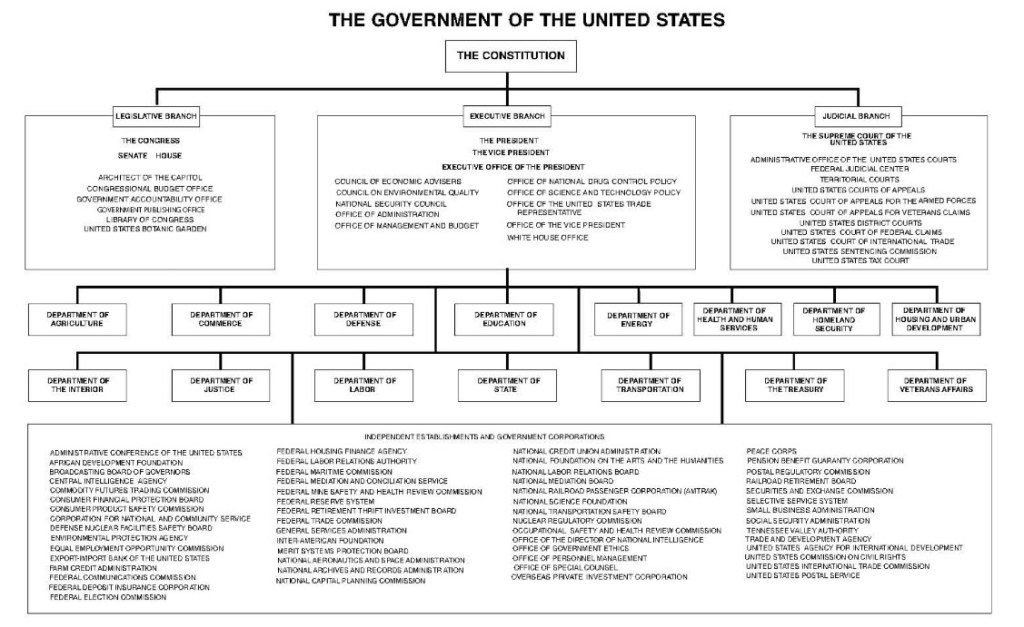
Duplicative functions, poor data systems, and a lack of control have led to massive misappropriations of funds. The dysfunction has been enabled by a metastasization of nests of administrative authority inside agencies with “incomprehensible” org charts, often having multiple departments with identical functions that do not communicate. These departments frequently use redundant but unconnected systems. A related problem is the inadequacy of documentation for outgoing payments. Needless to say, this is a hostile environment for effective spending controls.

It’s worth emphasizing, by the way, DOGE’s “open book” transparency. It’s not as if Elon Musk and DOGE are attempting to sabotage the deep state in the dark of night. Indeed, they are shouting from the rooftops!

Doing It Fast

Every day we have a new revelation from DOGE of incredible waste in the federal bureaucracy. Check out this story about a VA contact for web site maintenance. All too ironically, what we call government waste tends to have powerful, self-interested, and deeply corrupt constituencies. This makes speed an imperative for DOGE. In a highly politicized and litigious environment, the extent to which the Leviathan can be brought to heel is partly a function of how quickly the deconstruction takes place. One must pardon a few temporary dislocations that otherwise might be avoided in a world free of rent seeking behavior. Otherwise, the graft (no, NOT “grift”) will continue unabated.

The foregoing offers sufficient rationale not only for speedy force reductions, but also for system upgrades, dissolution of certain offices, and consolidation of core functions under single-agency umbrellas.

The Bloody Budget

It’s difficult to know when budget legislation will begin to reflect DOGE’s successes. The actual budget deficit might be affected in fiscal year 2025, but so far the savings touted by DOGE are chump change compared to the expected $2 trillion deficit, and only a fraction of those savings contribute to ongoing deficit reduction.

Uncontrolled spending is the root cause of the deficit, as opposed to insufficient tax revenue, as evidenced by a relatively stable ratio of taxes to GDP. The spending problem was exacerbated by the pandemic, but Congress and the Biden Administration never managed to scale outlays back to their previous trend once the economy recovered. Balancing the budget is made impossible when the prevailing psychology among legislators and the media is that reductions in the growth of spending represent spending cuts.

Federal spending is excessive on both the discretionary and mandatory sides of the budget. Ultimately, eliminating the budget deficit without allowing the 2017 Trump tax cuts to expire will require reform to mandatory entitlements like Social Security, Medicare, and Medicaid, as well as reductions across an array of discretionary programs.

DOGE’s focus on fraud and waste extends to entitlements. At a minimum, the data and tracking systems in place at HHS and SSA are antiquated, sometimes inaccurate, and are highly susceptible to manipulation and fraud. Systems upgrades are likely to pay for themselves many times over.

But all indications are that it’s much worse than that. Social security numbers were issued to millions of illegal immigrants during the Biden Administration, and those enrollees were cleared for maximum benefits. There were a significant number of illegals enrolled in Medicaid and registered to vote. While some of these immigrants might be employed and contributing to the entitlement system, they should not be employed without legal status. Of course, one can defend these entitlement benefits on purely compassionate grounds, but the availability of benefits has served to attract a massive flow of illegal border crossings. This illustrates both the extent to which the entitlement system has been compromised as well as the breakdown of border security.

On the discretionary side of the budget, DOGE has identified an impressive array programs that were not just wasteful, but by turns ridiculous or politically motivated (for example, the bulk of USAID’s budget). Many of these funding initiatives belong on the chopping block, and components that might be worthwhile have been moved to agencies with related missions. In addition, authorized but unspent allocations have been identified that seem to have been held in reserve, and which now can be used to reduce the public debt.

Research Grants?

Of course, like the initial scale of the FDA layoffs, a few mistakes have and will be made by DOGE and agencies under DOGE’s guidance. Many believe another powerful argument against DOGE is the Trump Administration’s 15% limit on indirect costs as an add-on to NIH grants. Critics assert that this limit will hamstring U.S. scientific advancement. However, it won’t “kill” publicly funded research. As this article in Reason points out, historically public funding has not been critical to scientific advancement in the U.S. In fact, private funding accounts for the vast bulk of U.S. R&D, according to the Congressional Research Service. Moreover, it’s broadly acknowledged that indirect costs are subject to distortion, and that generous funding of those costs creates bad incentives and raises thorny questions about cross-subsidies across funders (15% is the rate at which charities typically fund indirect costs).

No doubt some elite research universities will suffer declines in grants, but their case is weakened politically by a combination of lax control over anti-Semitic protests on campus, the growing unpopularity of DEI initiatives in education, and public awareness of the huge endowments over which these universities preside. Nevertheless, I won’t be surprised to see the 15% limit on indirect research costs revised upward somewhat.

More DOGE Please

I’ve criticized the numbers posted on DOGE’s website elsewhere. They could do a much better job of categorizing and reporting the savings they’ve achieved, and they have far to go before meeting the goals stated by Elon Musk. Be that as it may, DOGE is making progress. Here is a report on a few of the latest cuts.

As I’ve emphasized on numerous occasions, the federal government is a strangling mass of tentacles, squeezing excessive resources out of the private sector and suffocating producers with an endless catalogue of burdensome rules. There are many examples of systemic waste taking place within the federal bureaucracy. For example, since its creation by Jimmy Carter, the Department of Education has managed to piss away trillions of dollars while student performance has declined. The Small Business Administration has doled out millions of dollars in subsidized loans to super-centenarians as well as children. The U.S. Postal Service keeps losing money and mail while deliveries slow to a crawl. Big projects become mired in endless iterations of reviews and revisions, such as Obama’s infrastructure plan and Joe Biden’s infrastructure and rural broadband initiative.

And again, regulatory agencies are often our worst enemies, imposing burdensome requirements with which only the largest industry players can afford to comply. Indeed, the savings achieved through the DOGE process might pale in comparison to the resources that could be liberated by rationalizing the tangle of regulations now choking private business.

A significant narrowing of the budget deficit would be a major accomplishment for DOGE. Even one-time savings to help pay down the public debt are worthwhile. In this latter regard, I hope DOGE’s work with the Department of Interior helps facilitate the sale of dormant federal assets. This includes land (not parks) and buildings worth literally trillions of dollars, and sometimes costing billions annually to maintain.

Promises and Policies: Grading the Candidates

29 Tuesday Oct 2024

Posted by Nuetzel in Election

≈ Leave a comment

Tags

2024 Election, Abortion, Abraham Accords, Barack Obama, Capitalism, Climate Change, Corporatism, DEI, Dobbs, Donald Trump, Elon Musk, fascism, Federal Reserve, First Amendment, Fossil fuels, Housing, Hysteria, Immigration, Inflation, Israel, Joe Biden, Kamala Harris, Medicaid, Medicare, Obamacare, Renewable energy, Second Amendment, Social Security, Supreme Court, Tariffs, Tax Policy, Ukraine, Vladimir Putin

Wow! We’re less than a week from Election Day! I’d hoped to write a few more detailed posts about the platforms and policies of Kamala Harris and Donald Trump, but I was waylaid by Hurricane Milton. It sent us scrambling into prep mode, then we evacuated to the Florida Panhandle. The drive there and back took much longer than expected due to the mass exodus. On our return we found the house was fine, but there was significant damage to an exterior structure and a mess in the yard. We also had to “de-prep” the house, and we’ve been dealing with contractors ever since. It was an exhausting episode, but we feel like we were very lucky.

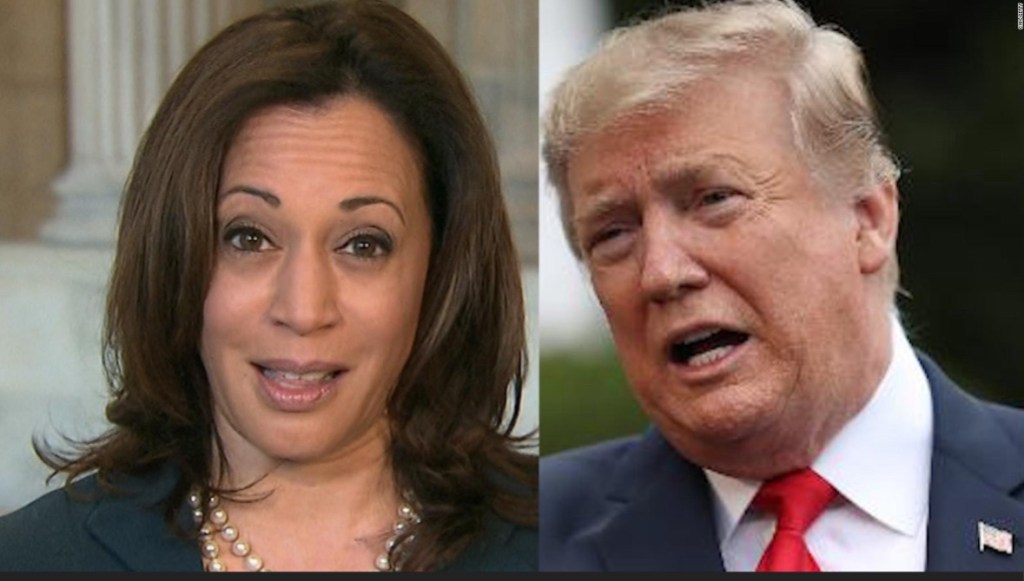
Now, with less than a week left till the election, I’ll limit myself to a summary of the positions of the candidates in a number of areas, mostly but not all directly related to policy. I assign “grades” in each area and calculate an equally-weighted “GPA” for each candidate. My summaries (and “grades”) are pretty off-the-cuff and not adequate treatments on their own. Some of these areas are more general than others, and I readily admit that a GPA taken from my grade assignments is subject to a bit of double counting. Oh well!

Role of Government: Kamala Harris is a statist through and through. No mystery there. Trump is more selective in his statist tendencies. He’ll often favor government action if it’s politically advantageous. However, in general I think he is amenable to a smaller role for the public than the private sector. Harris: F; Trump: C

Regulation: There is no question that Trump stands for badly needed federal regulatory reform. This spans a wide range of areas, and it extends to a light approach to crypto and AI regulation. Trump plans to appoint Elon Musk as his “Secretary of Cost Cutting”. Harris, on the other hand, seems to favor a continuation of the Biden Administration’s heavy regulatory oversight. This encourages a bloated federal bureaucracy, inflicts high compliance costs on the private sector, stifles innovation, and tends to concentrate industrial power. Harris: F; Trump: A

Border Policy: Trump wants to close the borders (complete the wall) and deport illegal immigrants. Both are easier said than done. Except for criminal elements, the latter will be especially controversial. I’d feel better about Trump’s position if it were accompanied by a commitment to expanded legal immigration. We need more legal immigrants, especially the highly skilled. For her part, Harris would offer mass amnesty to illegals. She’d continue an open border policy, though she claims to want certain limits on illegal border crossings going forward. She also claims to favor more funds for border control. However, it is not clear how well this would translate into thorough vetting of illegal entrants, drug interdiction at the border, or sex trafficking. Harris: D; Trump: B-

Antitrust: Accusations of price gouging by American businesses? Harris! Forty three corporations in the S&P 500 under investigation by the DOJ? The Biden-Harris Administration. This reflects an aggressively hostile and manipulative attitude toward the business community. Trump, meanwhile, might wheedle corporations to act on behalf of certain of his agendas, but he is unlikely to take such a broadly punitive approach. Harris: F; Trump: B-

Foreign Policy: Harris is likely to continue the Biden Administration’s conciliatory approach to dealing with America’s adversaries. The other side of that coin is an often tepid commitment to longtime allies like Israel. Trump believes that dealing from a position of strength is imperative, and he’s willing to challenge enemies with an array of economic and political sticks and carrots. He had success during his first term in office promoting peace in the Middle East. A renewed version of the Abraham Accords that strengthened economic ties across the region would do just that. Ideally, he would like to restore the strength of America’s military, about which Harris has less interest. Trump has also shown a willingness to challenge our NATO partners in order to get them to “pay their fair share” toward the alliance’s shared defense. My major qualification here has to do with the candidates’ positions with respect to supporting Ukraine in its war against Putin’s mad aggression. Harris seems more likely than Trump to continue America’s support for Ukraine. Harris: D+; Trump: B-

Trade: Nations who trade with one another tend to be more prosperous and at peace. Unfortunately, neither candidate has much recognition of these facts. Harris is willing to extend the tariffs enforced during the Biden Administration. Trump, however, is under the delusion that tariffs can solve almost anything that ails the country. Of course, tariffs are a destructive tax on American consumers and businesses. Part of this owes to the direct effects of the tax. Part owes to the pricing power tariffs grant to domestic producers. Tariffs harm incentives for efficiency and the competitiveness of American industry. Retaliatory action by foreign governments is a likely response, which magnifies the harm.

To be fair, Trump believes he can use tariffs as a negotiating tool in nearly all international matters, whether economic, political, or military. This might work to achieve some objectives, but at the cost of damaging relations more broadly and undermining the U.S. economy. Trump is an advocate for not just selective, punitive tariffs, but for broad application of tariffs. Someone needs to disabuse him of the notion that tariffs have great revenue-raising potential. They don’t. And Trump is seemingly unaware of another basic fact: the trade deficit is mirrored by foreign investment in the U.S. economy, which spurs domestic economic growth. Quashing imports via tariffs will also quash that source of growth. I’ll add one other qualification below in the section on taxes, but I’m not sure it has a meaningful chance.

Harris: C-; Trump: F

Inflation: This is a tough one to grade. The President has no direct control over inflation. Harris wants to challenge “price gougers”, which has little to do with actual inflation. I expect both candidates to tolerate large deficits in order to fulfill campaign promises and other objectives. That will put pressure on credit markets and is likely to be inflationary if bond investors are surprised by the higher trajectory of permanent government indebtedness, or if the Federal Reserve monetizes increasing amounts of federal debt. Deficits are likely to be larger under Trump than Harris due in large part to differences in their tax plans, but I’m skeptical that Harris will hold spending in check. Trump’s policies are more growth oriented, and these along with his energy policies and deregulatory actions could limit the inflationary consequences of his spending and tax policies. Higher tariffs will not be of much help in funding larger deficits, and in fact they will be inflationary. Harris: C; Trump: C

Federal Reserve Independence: Harris would undoubtedly like to have the Fed partner closely with the Treasury in funding federal spending. Her appointments to the Board would almost certainly lead to a more activist Fed with a willingness to tolerate rapid monetary expansion and inflation. Trump might be even worse. He has signaled disdain for the Fed’s independence, and he would be happy to lean on the Fed to ease his efforts to fulfill promises to special interests. Harris: D; Trump: F

Entitlement Reform: Social Security and Medicare are both insolvent and benefits will be cut in 2035 without reforms. Harris would certainly be willing to tax the benefits of higher-income retirees more heavily, and she would likely be willing to impose FICA and Medicare taxes on incomes above current earning limits. These are not my favorite reform proposals. Trump has been silent on the issue except to promise no cuts in benefits. Harris: C-; Trump: F

Health Care: Harris is an Obamacare supporter and an advocate of expanded Medicaid. She favors policies that would short-circuit consumer discipline for health care spending and hasten the depletion of the already insolvent Medicare and Medicaid trust funds. These include a $2,000 cap on health care spending for Americans on Medicare, having Medicare cover in-home care, and extending tax credits for health insurance premia. She supports funding to address presumed health care disparities faced by black men. She also promises efforts to discipline or supplant pharmacy benefit managers. Trump, for his part, has said little about his plans for health care policy. He is not a fan of Obamacare and he has promised to take on Big Pharma, whatever that might mean. I fear that both candidates would happily place additional controls of the pricing of pharmaceuticals, a sure prescription for curtailed research and development and higher mortality. Harris: F; Trump: D+

Abortion: The Supreme Court’s 2022 decision in Dobbs v. Jackson essentially relegated abortion law to individual states. That’s consistent with federalist principles, leaving the controversial balancing of abortion vs. the unborn child’s rights up to state voters. Geographic differences of opinion on this question are dramatic, and Dobbs respects those differences. Trump is content with it. Meanwhile, Harris advocates for the establishment of expanded abortion rights at the federal level, including authorization of third trimester abortions by “care providers”. And Harris does not believe there should be religious exemptions for providers who do not wish to offer abortion services. No doubt she also approves of federally funded abortions. Harris: F; Trump: A

Housing: The nation faces an acute housing shortage owing to excessive regulation that limits construction of new or revitalized housing. These excessive rules are primarily imposed at the state and local level. While the federal government has little direct control over many of these decisions, it has abetted this regulatory onslaught in a variety of ways, especially in the environmental arena. Harris is offering stimulus to the demand side through a $25,000 housing tax credit for first-time home buyers. This will succeed in raising the cost of housing. She has also called for heavier subsidies for developers of low-income housing. If past is prologue, this might do more to line the pockets of developers than add meaningfully to the stock of affordable housing. Harris also favors rent controls, a sure prescription for deterioration in the housing stock, and she would prohibit software allowing landlords to determine competitive neighborhood rents. Trump has called for deregulation generally and would not favor rent controls. Harris: F; Trump B

Taxes: Harris has broached several wildly destructive tax proposals. Perhaps the worst of these is to tax unrealized capital gains, and while she promises it would apply only to extremely wealthy taxpayers, it would constitute a wealth tax. Once that line is crossed, the threat of widening the base becomes a very slippery slope. It would also be a strong detriment to domestic capital investment and economic growth. Harris would increase the top marginal personal tax rate and the corporate tax rate, which would discourage investment and undermine real wage growth. She’d also increase estate tax rates. As discussed above, she unwisely calls for a $25,000 tax credit for first-time homebuyers. She also wants to expand the child care tax credit to $6,000 for families with newborns. A proposed $50,000 small business tax credit would allow the federal government to subsidize and encourage risky entrepreneurial activity at taxpayers’ expense. I’m all for small business, but this style of industrial planning is bonkers. She would sunset the Trump (TCJA) tax cuts in 2026.

Finally, Harris has mimicked Trump in calling for no taxes on tips. Treating certain forms of income more favorably than others is a recipe for distortions in economic activity. Employers of tip-earning workers will find ways to shift employees’ income to tips that are mandatory for patrons. It will also skew labor supply decisions toward occupations that would otherwise have less economic value. But Trump managed to find an idea so politically seductive that Harris couldn’t resist.

Trump’s tax plans are a mixed bag of good and bad ideas. They include extending his earlier tax cuts (TCJA) and restoring the SALT deduction. The latter is an alluring campaign tidbit for voters in high-tax states. He would reduce the corporate tax rate, which I strongly favor. Corporate income is double-taxed, which is a detriment to growth as well as a weight on real wages. He would eliminate taxes on overtime income, another example of favoring a particular form of income over others. Wage earners would gain at the expense of salaried employees, so one could expect a transition in the form employees are paid over time. Otherwise, the classification of hours as “overtime” would have to be standardized. One could expect existing employees to work longer hours, but at the expense of new jobs. Finally, Trump says Social Security benefits should not be taxed, another kind of special treatment by form of income. This might encourage early retirement and become an additional drain on the Social Security Trust Fund.

The higher tariffs promised by Trump would collect some revenue. I’d be more supportive of this plank if the tariffs were part of a larger transition from income taxes to consumption taxes. However, Trump would still like to see large differentials between tariffs and taxes imposed on the consumption of domestically-produced goods and services.

Harris: F; Trump C+

Climate Policy: This topic has undergone a steep decline in relative importance to voters. Harris favors more drastic climate interventions than Trump, including steep renewable subsidies, EV mandates, and a panoply of other initiatives, many of which would carry over from the Biden Administration. Harris: F; Trump: B

Energy: Low-cost energy encourages economic growth. Just ask the Germans! Consistent with the climate change narrative, Harris wishes to discourage the use of fossil fuels, their domestic production, and even their export. She has been very dodgy with respect to restrictions on fracking. Her apparent stance on energy policy would be an obvious detriment to growth and price stability (or I should say a continuing detriment). Trump wishes to encourage fossil fuel production. Harris: F; Trump: A

Constitutional Integrity: Harris has supported the idea of packing the Supreme Court, which would lead to an escalating competition to appoint more and more justices with every shift in political power. She’s also disparaged the Electoral College, without which many states would never have agreed to join the Union. Under the questionable pretense of “protecting voting rights”, she has opposed steps to improve election integrity, such voter ID laws. And operatives within her party have done everything possible to register non-citizens as voters. Harris: F; Trump: A

First Amendment Rights: Harris has called for regulation and oversight of social media content and moderation. A more descriptive word for this is censorship. Trump is generally a free speech advocate. Harris: F; Trump A-

Second Amendment Rights: Harris would like to ban so-called “assault weapons” and high-capacity magazines, and she backs universal background checks for gun purchases. Trump has not called for any new restrictions on gun rights. Harris: F; Trump: A

DEI: Harris is strongly supportive of diversity and equity initiatives, which have undermined social cohesion and the economy. That necessarily makes her an enemy of merit-based rewards. Trump has no such confusion. Harris: F; Trump: A

Hysteria: The Harris campaign has embraced a strategy of demonizing Donald Trump. Of course, that’s not a new approach among Democrats, who have fabricated bizarre stories about Trump escapades in Russia, Trump as a pawn of Vladimir Putin, and Russian manipulation of the 2016 Trump campaign. Congressional democrats spent nearly all of Trump’s first term in office trying to find grounds for impeachment. Concurrently, there were a number of other crazy and false stories about Trump. The current variation on “Orange Man Bad” is that Trump is a fascist and a Nazi, and that all of his supporters are Nazis. And that Trump will use the military against his domestic political opponents, the so-called “enemy within”. And that Trump will send half the country’s populace to labor camps. The nonsense never ends, but could anything more powerfully ignite the passions of violent extremists than this sort of hateful rhetoric? Would it not be surprising if at least a few leftists weren’t interested in assassinating “Hitler” himself. This is hysteria, and one has to wonder if that is not, in fact, the intent.

Can any of these people actually define the term fascist? Most fundamentally, a fascist desires the use of government coercion for private gain (of wealth or power) for oneself and/or one’s circle of allies. By that definition, we could probably categorize a great many American politicians as fascists, including Barack Obama, Joe Biden, Donald Trump, and a majority of both houses of Congress. That only demonstrates that corporatism is fundamental to fascist politics. Less-informed definitions of fascism conflate it with everything from racism (certainly can play a part) and homophobia (certainly can play a part) to mere capitalism. But take a look at the demographics of Trump’s supporters and you can see that most of these definitions are inapt.

Is the Trump campaign suffering from any form of hysteria? It’s shown great talent at poking fun at the left. Of course, Trump’s reactions to illegal immigration, crime, and third-trimester abortions are construed by leftists to be hysterical. I mean, why would anyone get upset about those kinds of things?

Harris: F; Trump: A

“Grade Point Average”

I’m sure I forgot an area or two I should have covered. Anyway, the following are four-point “GPAs” calculated over 20 categories. I’m deducting a quarter point for a “minus” grade and adding a quarter point for a “plus” grade. Here’s what I get:

Harris: 0.44; Trump: 2.68

Hmmm

Riding the DEI Weimar Curve: What’s Next on the Pogrom?

24 Friday Nov 2023

Posted by Nuetzel in anti-Semitism, DEI, fascism, Liberty

≈ Leave a comment

Tags

Adolf Hitler, anti-Semitism, Banality of Evil, Bari Weiss, C.S. Lewis, Class Struggle, Critical Theory, David Foster, DEI, Diversity, Equity, Federalist Society, Gaza, Great Depression, Hamas, Inclusion, Inner Ring, Institutionalized Racism, Jamie Kirchick, Marxism, Naziism, Oppressors, Philip Carl Salzman, Protected Groups, Reverse Discrimination, Ricochet, Social Justice, Tablet, Weimar Republic, Zero-Sum Game

Germany’s inter-war descent into genocidal barbarism is perhaps the most horrifying episode of modern times. Seemingly normal, “nice people” in Germany were persuaded to go along with the murderous pogroms of the anti-Semitic National Socialists, giving truth to the “banality of evil”, as the famous expression goes. Of course, there were plenty of true believers, and multitudes bowed to the Nazis under fierce coercion, but many others went along just to “fit in”.

What could life have felt like in Weimar Germany in the late 1920s and early 1930s as the fascists accumulated power? Were normal people afraid? Well before Adolf Hitler’s rise to power he was known for his hatred of Jews, but German political leaders who enabled his ascent did not take his extreme prejudice as seriously as they should have, or they thought they could at least keep him and his followers in check. Surely there were people who foresaw the approaching cataclysm for what it would be.

Current expressions of anti-Semitism might give us a sense of what life was like during the decline and fall of the Weimar Republic. Just ask Jewish students at NYU and Cornell if they’ve sensed a whiff of it in the wake of Hamas’ slaughter of civilians in southern Israel on October 7th. The harassment these students have endured was motivated in part by claims that Israeli retaliation is morally inferior to the barbarities committed by Hamas, which is preposterous.

Of course, unlike late Weimar Germany, when Jews were blamed for economic (and other) problems, the Jew hatred we’re witnessing in the U.S. today has little to do with the immediate state of the economy. Conditions now are nothing like what prevailed in Germany as the Great Depression took hold, despite current inflationary stresses on real household incomes.

And yet some hold Jews in contempt for their relative economic success, a fact that is bound up with the frequency with which Jews are placed at the center of economic conspiracy theories. One would think Jews to be the ultimate “white oppressors”. But it seems that much of the current wave of anti-Semitism comes from fairly elite quarters, ensconced within major institutions where its sympathizers are insulated from day-to-day economic pressures.

And that brings us to a frightening aspect of the current malaise: how heavily institutionalized the hatred for certain groups or “classes” has already become. This owes to the blame directed toward whites, men, Jews, and Asians presumed to have been endowed with an inside track on success at the expense of others. Success of any kind, in the narrative of “critical” social justice, is “oppressive”, as if success is a zero-sum game.

Here is Philip Carl Salzman on this point:

“The ‘social justice’ political analysis is founded on the Marxist conviction that society is divided into two classes: oppressors and victims. The corresponding ‘social justice’ ethic is that victims must be raised up and celebrated and that oppressors must be suppressed and eliminated.”

This thinking has been integrated into the policies, practices and rhetoric taught in schools at all levels, corporations and nonprofits, social and traditional media, and government (including intelligence agencies and the military). This level of integration gives diversity, equity, and inclusivity (DEI) policies coercive force on behalf of so-called “protected groups”, in the parlance of anti-discrimination law. When those practices are enforced by government in various ways, the private gains extracted from “unprotected” groups amount to fascism.

Bari Weiss wrote an article in Tablet last week entitled “End DEI” in which she describes her bemused reaction as a student in the early 2000s to nascent DEI rhetoric. (Also see her recent speech to the Federalist Society here.) It’s more obvious today, but even then she recognized the hate inherent in DEI doctrine. She crystallizes the dangers she saw in DEI ideology:

“What I saw was a worldview that replaced basic ideas of good and evil with a new rubric: the powerless (good) and the powerful (bad). It replaced lots of things. Colorblindness with race-obsession. Ideas with identity. Debate with denunciation. Persuasion with public shaming. The rule of law with the fury of the mob.

“People were to be given authority in this new order not in recognition of their gifts, hard work, accomplishments, or contributions to society, but in inverse proportion to the disadvantages their group had suffered, as defined by radical ideologues. According to them, as Jamie Kirchick concisely put it in these pages: ‘Muslim > gay, Black > female, and everybody > the Jews.’”

Weiss says Jewish leaders told her, at that time, not to be hysterical, that these perverse ideas would ultimately pass like any fad. That sounds so eerily familiar. Instead, we’ve witnessed a widespread ideological takeover.

“If underrepresentation is the inevitable outcome of systemic bias, then overrepresentation—and Jews are 2% of the American population—suggests not talent or hard work, but unearned privilege. This conspiratorial conclusion is not that far removed from the hateful portrait of a small group of Jews divvying up the ill-gotten spoils of an exploited world.

“It isn’t only Jews who suffer from the suggestion that merit and excellence are dirty words. It is strivers of every race, ethnicity, and class. That is why Asian American success, for example, is suspicious. The percentages are off. The scores are too high. From whom did you steal all that success?”

The whole DEI enterprise is corrupt and unethical. It denies the meritorious in favor of those having certain superficial characteristics like the “right” skin color. That is evil and economically demented besides. It also breeds hatred that often flows both ways between classes of people, creating an incendiary environment. That we’re talking about systemic, legalized discrimination against any group is disturbing enough, but when small minorities are “othered” in this way, the potential for violent action against them is magnified. But this is just where the DEI mindset leads its proponents and beneficiaries.

Our slide into this monstrous “social justice” regime mirrors the insanity and anger that was fomented against certain “out groups” when the Nazi’s accumulated power in the latter years of the Weimar Republic. Too many today have succumbed to this zero-sum psychology, young and old alike. Fortunately, they are beginning to face some fierce resistance, but those who extol the supposed righteousness of the class struggle via DEI won’t easily give up. Our institutions are infested with their kind.

As long as influential people preach the virtues of DEI and social justice, the danger of a headlong plunge into genocidal madness is possible. And the sad truth is that normal human beings are subject to social manipulation of the most evil kind. David Foster at Ricochet: quotes an address given by C.S. Lewis in which he emphasizes this point. His words are haunting:

“Of all the passions, the passion for the Inner Ring is most skillful in making a man who is not yet a very bad man do very bad things.”

Elsewhere in Lewis’ address, he says:

“And the prophecy I make is this. To nine out of ten of you the choice which could lead to scoundrelism will come, when it does come, in no very dramatic colours. Obviously bad men, obviously threatening or bribing, will almost certainly not appear. Over a drink, or a cup of coffee, disguised as triviality and sandwiched between two jokes, from the lips of a man, or woman, whom you have recently been getting to know rather better and whom you hope to know better still—just at the moment when you are most anxious not to appear crude, or naïf or a prig—the hint will come. It will be the hint of something which the public, the ignorant, romantic public, would never understand: something which even the outsiders in your own profession are apt to make a fuss about: but something, says your new friend, which ‘we’ — and at the word ‘we’ you try not to blush for mere pleasure—something ‘we’ always do.

“And you will be drawn in, if you are drawn in, not by desire for gain or ease, but simply because at that moment, when the cup was so near your lips, you cannot bear to be thrust back again into the cold outer world. It would be so terrible to see the other man’s face—that genial, confidential, delightfully sophisticated face—turn suddenly cold and contemptuous, to know that you had been tried for the Inner Ring and rejected. And then, if you are drawn in, next week it will be something a little further from the rules, and next year something further still, but all in the jolliest, friendliest spirit. It may end in a crash, a scandal, and penal servitude; it may end in millions, a peerage and giving the prizes at your old school. But you will be a scoundrel.”

White Racialism, Identity Politics, and Crippling DEI

09 Thursday Nov 2023

Posted by Nuetzel in DEI, Identity Politics

≈ 1 Comment

Tags

Anti-discrimination law, Christopher Rufo, Colorblind Society, Comparative advantage, DEI, Diversity, Equity, George Floyd, Hobbesian, Identity Politics, Inclusion, Jim Crow Laws, Protected Classes, Racial Preferences, Racialism, racism, rent seeking, Segregation, Slavery, Social Constructs, Structural Racism, Tribalism, Tyler Cowen, Victimhood, Victor Davis Hanson, White Racialism, Zero-Sum Thinking

I’ve taken an extended hiatus from blogging while moving to a different part of the country. I haven’t posted here in over 10 weeks, but a new post appears below. I’m still tying-up loose ends from the move, but I’ll be trying to get back to posting more regularly … trying!

~~~~~~~~~~~~~~~~~~~~~~~~~~~~~~~~~~~~~~~

Absurd ideas about race and identity politics come from extreme elements on both the Left and the Right. Some leftists insist that race has no natural basis — that it’s simply a “social construct”. On the Right, a “racialist” contingent is promoting the “celebration of whiteness” and embracing racial preferences for whites. Treated as alternative pathways, I’d take “social construct”. It’s nonsense, of course, but the beautiful irony is that it provides a basis for stripping away from our institutions the entire diversity, equity, and inclusion (DEI) straightjacket. It’s almost as if those promoting race as a social construct wish to build a “colorblind” society. On the other hand, I suppose some think they can have their DEI cake along with a side of free choice to identify as anything they want: black, white, or furry.

Who Are the Racists?

People of good faith don’t harbor or act on racist tendencies. The mere recognition of racial/ethnic/cultural differences is not evidence of racism and does not preclude the treatment of all with fairness and due respect. It’s possible to respect, value, or fall in love with someone outside one’s own racial, ethnic, or cultural group of origin, even while holding a general affinity for one’s own group, as nearly everyone does.

But a few real racists are sprinkled across all races, ethnicities, cultures, and the full political spectrum. The “popular” racist stereotype as white male has been kept alive by the lingering echos of slavery in America, which ended nearly 16 decades ago, and the long hangover that included Jim Crow laws and segregation. Today, however, “white society” or “whiteness” is hardly the sole domain of prejudice.

Is Racialism Different?

Now, a few whites are promoting the celebration of “white identity” as a counterbalance to identity politics among non-whites. Ostensibly, this “white racialism” might be similar to celebrations of identity often practiced by minorities, which are also forms of racialism. Should white racialism be viewed as less savory than racialism practiced by racial minorities?

For most Caucasians, “being white” does not have much salience relative to other affiliations defining identity. That’s why white racialism seems odd to me. Sure, when forced to check a box, whites will check “Caucasian”, but “white identity” seems overly broad. There are too many distinct cultures and subcultures that dominate self-identity, such as national ancestry, religion, and cultural membership.

The same could be said for many other racial categories, but minority status and historical events (e.g., American slavery) help explain why broad categories often form cohesive identity groups. And, as Christopher Rufo notes in his great discussion of the racialist viewpoint, broad categories tend to be the most closely associated with racialism:

“Yes, left-wing racialism is indeed now deeply embedded in America’s institutions, and the demographic balance of the country has shifted in recent decades. And yes, the basic racial classification system in the United States broadly delineates continental origin—Europe, Africa, Latin America, Asia—in a way that is not arbitrary or meaningless. Terms such as ‘white,’ ‘black,’ ‘Latino,’ and ‘Asian,’ while often obscuring important variations within such groupings, have become the lingua franca and are useful shorthand descriptors for many purposes.”

There are individuals from all groups or “classes”, including whites, who react critically to aggressive expressions of identity by members of other classes. Perhaps that’s excusable, depending on the degree of zealotry on either part. The line between pride in race/ancestry/culture and fractious racialism might be hard to discern in some cases, but the chief distinction is rooted in explicit, demeaning and/or envious comparisons to “out-groups”. This might be damaging enough, but from there it can be a very short step into outright racism.

A preoccupation with the historic disadvantages of one’s race can be disempowering to an individual and destructive in a social sense. I believe the white racialist phenomenon belongs in that category. The presumed “disadvantages” of whiteness are very contemporary, however, rooted in policies dating back only to the widespread adoption of racial preferences for non-white “protected classes” and DEI.

Preferences For All

Imagine the racialist policies now practiced widely in government, industry, and academia — particularly racial preferences on behalf of protected classes — but now applied on behalf of heretofore unprotected classes as well. For example, what if some proportion of jobs, admissions, or other coveted placements were set aside for whites? If whites represent 50% of the population, then 50% of hires or admissions would be reserved for whites.

Some might assume that this treatment is already implied by existing racial preferences, but that’s not the case. In the wake of George Floyd’s death, just 6% of new hires among S&P companies were white, according to Bloomberg News.

Nevertheless, such a white racialist turnabout would be a colossal mistake. Adding strict limits to the application of existing preferences might be a good thing, but white racial preferences would buttress the entire system of racial preferences as an institution and add more rigidity to the operation of labor markets. From an economic viewpoint, it would be just as pernicious as racial preferences generally.

Racial preferences of any kind freeze labor markets and impair the allocation of human resources to their most-valued uses. In fact, placing one individual into a position on any basis other than their qualifications implies that two individuals must be placed into positions in which they lack comparative advantage relative to each other. Little by little, that means lost output and upward price pressure. It is a mechanism that short circuits gains from trade, shriveling the benefits that the most and least talented confer on society at large. Extending preferences to whites would only serve to further institutionalize this damaging practice.

Adherence to numerical preferences is to pretend that people can be treated less as individuals and more like interchangeable parts… except with respect to their value as “class members”. Racial preferences are presumed to be a remedy for so-called structural racism, as opposed to racism by individuals. But they involve classification and favor the so-called “oppressed” at the expense of designated “oppressors”. The latter, almost without exception, had no role oppressive regimes of the past. Favoritism of this kind necessarily means reverse discrimination and fails to match individuals to roles in an optimal fashion.

Whether publicly or privately imposed, racial preferences often undermine those they are purported to help by placing individuals into positions for which they may not be competitive. This can sabotage an individual’s long-term success. It goes without saying that preferences build resentment among the “unprotected”, which goes to the impetus for “white racialism”. Indeed, preferences are not always popular with protected classes either. That’s because they interfere with merit-based decision-making and are perceived to stigmatize those presumed to benefit.

The Fixed Pie Is a Lie

Racialism reflects zero-sum thinking, a hallmark of DEI initiatives. Tyler Cowen quoted the abstract of a recent NBER working paper that found:

“… a more zero-sum mindset is strongly associated with more support for government redistribution, race- and gender-based affirmative action, and more restrictive immigration policies.”

Zero-sum thinking is fundamental to rent-seeking behavior, which is motivated by either malevolent greed or perceptions of victimhood. Victimhood and rent seeking is at the heart of calls for DEI, to say nothing of more radical proposals like reparation payments. White racialism attempts to get in on the action by positing that whites are oppressed under the current institutional dominance of DEI. But the misguided presumption that every identity group should have their own preferences or quotas broadens the emphasis on redressing perceived harms and redistributing rewards — zero-sum activities.

These zero-sum efforts waste energy and resources, harming our ability to produce things that enhance well being. Ultimately, they are actually negative-sum activities, and they also breed hatred.

Race is obviously determined by genetics, but I’d be happy to pretend it’s a mere social construct if that would help get us to a “colorblind” society.

Conclusion

There’s a huge irony in the racialism exercised by both traditional and “white racialist” DEI advocates: it neglects the most fundamental and just application of diversity: equality of opportunity. This principle incorporates the concept of diversity without sacrificing economic efficiency. We’ve largely abandoned it in favor of equality of outcomes via racial preferences, even at a time when society has become enlightened with respect to racial differences. In doing so, we’ve unintentionally chosen another form of explicit racial victimization.

To close, here’s a good summary of the dangers of racialism and identity politics offered by Victor Davis Hanson:

“Anytime one ethnic, racial, or religious group refuses to surrender its prime identity in exchange for a shared sense of self, other tribes for their own survival will do the same.

All then rebrand their superficial appearance as essential not incidental to whom they are.

And like nuclear proliferation that sees other nations go nuclear once a neighboring power gains the bomb, so too the tribalism of one group inevitably leads only to more tribalism of others. The result is endless Hobbesian strife.”

And that’s how white racialism fits right in with the pernicious politics of identity. When you can, vote for the elimination, or at least reform, of DEI policies and practices, not for a reinforcement of identity politics.

Stealth Hiring Quotas Via AI

24 Monday Oct 2022

Posted by Nuetzel in Discrimination, Diversity, Quotas, Uncategorized

≈ Leave a comment

Tags

AI, AI Bill of Rights, Algorithmic Bias, Algorithms, American Data Privacy and Protection Act, Artificial Intelligence, DEI, Disparate impact, Diversity Equity Inclusion, EEOC, Hiring Quotas, Machine Learning, Neural Networks, Protected Classes, Stealth Quotas, Stewart Baker, Volokh Conspiracy

Hiring quotas are of questionable legal status, but for several years, some large companies have been adopting quota-like “targets” under the banner of Diversity, Equity and Inclusion (DEI) initiatives. Many of these so-called targets apply to the placement of minority candidates into “leadership positions”, and some targets may apply more broadly. Explicit quotas have long been viewed negatively by the public. Quotas have also been proscribed under most circumstances by the Supreme Court, and the EEOC’s Compliance Manual still includes rigid limits on when the setting of minority hiring “goals” is permissible.

Yet large employers seem to prefer the legal risks posed by aggressive DEI policies to the risk of lawsuits by minority interests, unrest among minority employees and “woke” activists, and “disparate impact” inquiries by the EEOC. Now, as Stewart Baker writes in a post over at the Volokh Conspiracy, employers have a new way of improving — or even eliminating — the tradeoff they face between these risks: “stealth quotas” delivered via artificial intelligence (AI) decisioning tools.

Skynet Smiles

A few years ago I discussed the extensive use of algorithms to guide a range of decisions in “Behold Our Algorithmic Overlords“. There, I wrote:

“Imagine a world in which all the information you see is selected by algorithm. In addition, your success in the labor market is determined by algorithm. Your college admission and financial aid decisions are determined by algorithm. Credit applications are decisioned by algorithm. The prioritization you are assigned for various health care treatments is determined by algorithm. The list could go on and on, but many of these ‘use-cases’ are already happening to one extent or another.”

That post dealt primarily with the use of algorithms by large tech companies to suppress information and censor certain viewpoints, a danger still of great concern. However, the use of AI to impose de facto quotas in hiring is a phenomenon that will unequivocally reduce the efficiency of the labor market. But exactly how does this mechanism work to the satisfaction of employers?

Machine Learning

As Baker explains, AI algorithms are “trained” to find optimal solutions to problems via machine learning techniques, such as neural networks, applied to large data sets. These techniques are are not as straightforward as more traditional modeling approaches such as linear regression, which more readily lend themselves to intuitive interpretation of model results. Baker uses the example of lung x-rays showing varying degrees of abnormalities, which range from the appearance of obvious masses in the lungs to apparently clear lungs. Machine learning algorithms sometimes accurately predict the development of lung cancer in individuals based on clues that are completely non-obvious to expert evaluators. This, I believe, is a great application of the technology. It’s too bad that the intuition behind many such algorithmic decisions are often impossible to discern. And the application of AI decisioning to social problems is troubling, not least because it necessarily reduces the richness of individual qualities to a set of data points, and in many cases, defines individuals based on group membership.

When it comes to hiring decisions, an AI algorithm can be trained to select the “best” candidate for a position based on all encodable information available to the employer, but the selection might not align with a hiring manager’s expectations, and it might be impossible to explain the reasons for the choice to the manager. Still, giving the AI algorithm the benefit of the doubt, it would tend to make optimal candidate selections across reasonably large sets of similar, open positions.

Algorithmic Bias

A major issue with respect to these algorithms has been called “algorithmic bias”. Here, I limit the discussion to hiring decisions. Ironically, “bias” in this context is a rather slanted description, but what’s meant is that the algorithms tend to select fewer candidates from “protected classes” than their proportionate shares of the general population. This is more along the lines of so-called “disparate impact”, as opposed to “bias” in the statistical sense. Baker discusses the attacks this has provoked against algorithmic decision techniques. In fact, a privacy bill is pending before Congress containing provisions to address “AI bias” called the American Data Privacy and Protection Act (ADPPA). Baker is highly skeptical of claims regarding AI bias both because he believes they have little substance and because “bias” probably means that AIs sometimes make decisions that don’t please DEI activists. Baker elaborates on these developments:

“The ADPPA was embraced almost unanimously by Republicans as well as Democrats on the House energy and commerce committee; it has stalled a bit, but still stands the best chance of enactment of any privacy bill in a decade (its supporters hope to push it through in a lame-duck session). The second is part of the AI Bill of Rights released last week by the Biden White House.”

What the hell are the Republicans thinking? Whether or not it becomes a matter of law, misplaced concern about AI bias can be addressed in a practical sense by introducing the “right” constraints to the algorithm, such as a set of aggregate targets for hiring across pools of minority and non-minority job candidates. Then, the algorithm still optimizes, but the constraints impinge on the selections. The results are still “optimal”, but in a more restricted sense.

Stealth Quotas

As Baker says, these constrains on algorithmic tools would constitute a way of imposing quotas on hiring that employers won’t really have to explain to anyone. That’s because: 1) the decisioning rationale is so obtuse that it can’t readily be explained; and 2) the decisions are perceived as “fair” in the aggregate due to the absence of disparate impacts. As to #1, however, the vendors who create hiring algorithms, and specific details regarding algorithm development, might well be subject to regulatory scrutiny. In the end, the chief concern of these regulators is the absence of disparate impacts, which is cinched by #2.

About a month ago I posted about the EEOC’s outrageous and illegal enforcement of disparate impact liability. Should I welcome AI interventions because they’ll probably limit the number of enforcement actions against employers by the EEOC? After all, there is great benefit in avoiding as much of the rigamarole of regulatory challenges as possible. Nonetheless, as a constraint on hiring, quotas necessarily reduce productivity. By adopting quotas, either explicitly or via AI, the employer foregoes the opportunity to select the best candidate from the full population for a certain share of open positions, and instead limits the pool to narrow demographics.

Demographics are dynamic, and therefore stealth quotas must be dynamic to continue to meet the demands of zero disparate impact. But what happens as an increasing share of the population is of mixed race? Do all mixed race individuals receive protected status indefinitely, gaining preferences via algorithm? Does one’s protected status depend solely upon self-identification of racial, ethnic, or gender identity?

For that matter, do Asians receive hiring preferences? Sometimes they are excluded from so-called protected status because, as a minority, they have been “too successful”. Then, for example, there are issues such as the classification of Hispanics of European origin, who are likely to help fill quotas that are really intended for Hispanics of non-European descent.

Because self-identity has become so critical, quotas present massive opportunities for fraud. Furthermore, quotas often put minority candidates into positions at which they are less likely to be successful, with damaging long-term consequences to both the employer and the minority candidate. And of course there should remain deep concern about the way quotas violate the constitutional guarantee of equal protection to many job applicants.

The acceptance of AI hiring algorithms in the business community is likely to depend on the nature of the positions to be filled, especially when they require highly technical skills and/or the pool of candidates is limited. Of course, there can be tensions between hiring managers and human resources staff over issues like screening job candidates, but HR organizations are typically charged with spearheading DEI initiatives. They will be only too eager to adopt algorithmic selection and stealth quotas for many positions and will probably succeed, whether hiring departments like it or not.

The Death of Merit

Unfortunately, quotas are socially counter-productive, and they are not a good way around the dilemma posed by the EEOC’s aggressive enforcement of disparate impact liability. The latter can only be solved only when Congress acts to more precisely define the bounds of illegal discrimination in hiring. Meanwhile, stealth quotas cede control over important business decisions to external vendors selling algorithms that are often unfathomable. Quotas discard judgements as to relevant skills in favor of awarding jobs based on essentially superficial characteristics. This creates an unnecessary burden on producers, even if it goes unrecognized by those very firms and is self-inflicted. Even worse, once these algorithms and stealth quotas are in place, they are likely to become heavily regulated and manipulated in order to achieve political goals.

Baker sums up a most fundamental objection to quotas thusly:

“Most Americans recognize that there are large demographic disparities in our society, and they are willing to believe that discrimination has played a role in causing the differences. But addressing disparities with group remedies like quotas runs counter to a deep-seated belief that people are, and should be, judged as individuals. Put another way, given a choice between fairness to individuals and fairness on a group basis, Americans choose individual fairness. They condemn racism precisely for its refusal to treat people as individuals, and they resist remedies grounded in race or gender for the same reason.”

Quotas, and stealth quotas, substitute overt discrimination against individuals in non-protected classes, and sometimes against individuals in protected classes as well, for the imagined sin of a disparate impact that might occur when the best candidate is hired for a job. AI algorithms with protection against “algorithmic bias” don’t satisfy this objection. In fact, the lack of accountability inherent in this kind of hiring solution makes it far worse than the status quo.

Ubiquitous Guilt: EEOC Disparate Impact Liability

22 Thursday Sep 2022

Posted by Nuetzel in Discrimination, Regulation

≈ 3 Comments

Tags

Antonin Scalia, Automation, Bias, Business Necessity, Chevron Deference, Christopher Rufo, Civil Rights Act, Credit Checks, Criminal Background Checks, DEI, discrimination, Disparate impact, Due Process, EEOC, Employment Practices, Equal Protection, Four-Fifths Rule, Gail Heriot, Griggs v. Duke Power Co., Major Questions Doctrine, Non-Delegation Doctrine, Protected Groups, Separation of Powers, Stakeholder Capitalism, Strength Tests, Title VII, Warren Burger, Written Job Tests

A key part of the Civil Rights Act of 1964 was Title VII, which dealt with employment discrimination. Title VII applied only to intentional discrimination, but it didn’t take long for the Equal Employment Opportunity Commission (EEOC), the agency charged with administering Title VII, to find ways to expand the scope of its enforcement mandate under the law. The EEOC eventually managed to convince virtually all parties, including employers, employees, job applicants, attorneys, and even the courts, that the law prohibited employment practices having disparate impacts on groups protected from actual discrimination under the law. Predictably, this warped reinterpretation created severe distortions to the efficiency and fairness of labor market outcomes .

Another Rogue Agency

On the EEOC’s complete and erroneous reimagining of Title VII, Gail Heriot’s “Title VII Disparate Impact Liability Makes Almost Everything Presumptively Illegal” is a must read. Heriot is a Professor at the University of San Diego School of Law and is a member of the U.S. Commission on Civil Rights. This post attempts to summarize most of the important points in Heriot’s paper, so if you don’t have time for Heriot’s paper, read on. All errors are mine, of course!

Heriot provides an incredible case study on the dangers of regulatory overreach. She first discusses the EEOC’s blatant usurpation of Congressional power:

“It is hardly surprising that EEOC officials would undertake to publish answers to the questions they were hearing repeatedly…. But publishing such ‘guidances’ also had the potential to spin out of control. The temptation would always be to use them to establish what the EEOC staff wanted the law to be rather than what it was. Instead of interpreting Title VII in good faith, guidances would soon become quasi-legislation—disguised as interpretation, but in reality imposing new duties on employers not found in Title VII itself.

None of this should be surprising. It is in the nature of bureaucracy. It naturally seeks to expand its powers, often beginning by occupying niches that are otherwise unoccupied. Over time, a little power often becomes a lot of power. What is surprising is how upfront EEOC officials were about their tactics in accumulating that power.”

Having gone this far, one might be tempted to ask the EEOC what limiting principle they actually apply to determine whether various employment and hiring practices are permissible. Are level of education, industry experience, and tests of physical and cognitive faculties verboten? The answer that is there is no consistent, limiting principle. Instead, Heriot says the EEOC “picks its battles” (see below). She also describes the EEOC’s adoption of a so-called “four-fifths rule”, which is about as arbitrary as it gets. It means the EEOC will challenge an employment practice only if it leads to a selection of any protected group at a rate less than 80% of the most-selected group. That is, the “disparate impact” must be less than 20% to rule out a challenge. This rule appears nowhere in Title VII.

Job Qualifications? You’re Guilty!

Unfortunately, as Heriot takes pains to demonstrate, it’s virtually impossible to identify a hiring guideline or method of employee assessment that does not have a disparate impact. The examples she provides on pp. 34 – 37 of her paper, and on p. 40, are convincing. Furthermore, the EEOC’s “four-fifths” rule hardly narrows the potential for challenge at all.

“Selection rates of less than four-fifths relative to the group with the highest rate are extremely common. Just as everything or nearly everything has a disparate impact, everything or nearly everything has a selection rate that fails the ‘four fifths rule’ for some race, color, religion, sex, or national origin group.”

So the EEOC is allowed to operate with tremendous discretion. Again, Heriot says the agency “picks its battles”, focusing on challenges to screening tools like “written tests, physical strength and endurance tests, criminal background tests [sic], high school diploma requirements, personal credit histories, residency requirements, and a few others.”

This regulatory environment encourages employers to keep job requirements vague, sometimes to the point at which potential applicants might not be sure what the job qualifications really are, or exactly what the job function entails. One upshot is that this makes it harder to detect and prove actual discrimination, and it often leads to more arbitrary decisions by hiring managers, which may, in fact, involve real discrimination, including nepotism and/or cronyism.

Unbiased Intent Doesn’t Matter

Heriot points to a disastrous decision by the Supreme Court that, perhaps unintentionally, helped legitimize the concept of disparate impact as legal doctrine, and as a valid cause of action by plaintiffs against employers. In Griggs v. Duke Power Co. (1971), the Court rejected the premise that an employer’s innocence with respect to their intent to discriminate was an inadequate defense of an employment practice that had adverse consequences to a protected group. Heriot quotes the opinion of Chief Justice Warren Burger:

“… good intent or absence of discriminatory intent does not redeem…. Congress directed the thrust of the Act to the consequences of employment practices, not simply the motivation.”

It’s as if the Court convinced itself that adverse consequences prove actual discrimination, even when there is no intent to discriminate. The Court also emphasized that it’s decision was based on “general deference” to the EEOC! And this was years before the unfortunate Chevron Doctrine (judicial deference to administrative agencies on interpretation of law) was formally established by the Court. Heriot and others assert that the decision in Griggs would have astonished the authors of Title VII.

Heriot also discusses changes in the treatment of “business necessity” as a defense against complaints of disparate impact. It is generally the employer’s burden to show the “necessity” of a challenged hiring practice. “Necessity” was the subject of several Supreme Court decisions in the 1970s and 1980s, but the Court stopped short of requiring an employer to show that a practice was “essential”. In one case, the court shifted some of the burden back onto the plaintiff to show that a practiced lacked necessity. In 1990, there was concern in the Bush Administration and Congress that the difficulty of proving business necessity would eventually lead to the adoption of racial quotas by employers in order to prevent EEOC challenges, though the authors of Title VII had staunchly opposed quotas. While the original hope was that the Civil Rights Act of 1991 would resolve questions about “business necessity” and the burden of proof, it did not. Instead, it can be said that it legitimized disparate impact liability, with conditions. The standard for proving necessity, based on Court decisions, evolved to become more strict with time. There are cases in which courts seem to have left the EEOC to define “business necessity”, as if the EEOC would be in a better position to do that than the business itself!

Inviting Discrimination

Heriot devotes part of her paper to the perverse effects of disparate impact. When employers are faced with prohibitions or the threat of action against a certain practice, whether it be tests of aptitude, strength, or screening on criminal or credit records, they may abandon those devices and opt instead for “informal” proxies. The use of proxies, however, often leads to instances of actual discrimination, whether born of conscious or unconscious bias on the part of hiring managers.

Heriot provides a number of examples of the proxy phenomenon, some of which have been confirmed by empirical research. For example, an employer interviewing candidates for a job that requires math proficiency might reasonably use a test of math skill as a key criterion. If such a test is prohibited, the hiring manager might be tempted to hire an Asian candidate, since Asians have a reputation for good math skills. Similarly, an applicant of West European ancestry might be favored for a position requiring excellent grammar skills, absent the ability to explicitly test grammatical skill. Candidates for a job requiring a certain level of physical strength could be evaluated by various tests of strength, but barring that, a hiring manager might be inclined to hire based on gender.

When criminal background checks are prohibited, employers might be tempted to use proxies such as gender and race as a substitute. Likewise, if it’s forbidden to check a candidate’s credit record to gauge reliability, other proxies might lead to discrimination against members of protected classes. Needless to say, these kinds of outcomes are precisely the opposite of what the EEOC hopes to achieve.

As Heriot further notes, the outcomes can be much systematic and destructive than a bit of one-off discrimination in hiring, promotion, pay raises, or task assignment. These may inflict damage reaching well beyond having the wrong people gaining favorable labor market outcomes. For example, an employer might choose to relocate operations to a “safer” or more affluent community, barring an ability to perform criminal background or credit checks. Or businesses might decide to substitute capital for labor, given the interference in their attempts to identify the best job candidates. The difficulty in screening also creates an incentive to automate, just as premature automation is becoming more common with rising wage floors imposed by government.

Killing Jobs and Competition

Like many forms of regulation, however, large firms in less competitive industries are usually better positioned to survive EEOC scrutiny than smaller firms in competitive markets. Indeed, we often see large market players embrace regulation because it gives them a competitive advantage over smaller rivals. In this case, we see large firms adopting their own diversity, equity, and inclusion (DEI) goals. This is not solely related to the threat of EEOC challenges, however. Private lawsuits alleging discrimination or disparate impact are also a concern, as is pleasing activists inside and outside the company. Nevertheless, as Christopher Rufo reveals, there is growing push-back against the corporate DEI regime. Let’s hope it continues to gain traction.

Unconstitutional Executive Discretion

Heriot also dedicates part of her paper to constitutional issues related to the EEOC’s broad discretion in the application of disparate impact to employment practices. For one thing, disparate impact is a direct source of discrimination: when members of “protected groups” are awarded opportunities based on the possibility of disparate statistical outcomes, it means the majority candidates are denied those opportunities, no matter their qualifications. This is outright discrimination, and it’s instigation by a federal agency constitutes an explicit denial of equal protection under the law.

It should be no surprise that many consider disparate impact actions against employers to be denials of due process. Furthermore, when a federal agency like the EEOC exercises broad discretion, the so-called non-delegation doctrine should come into play. That is, the EEOC makes judgements on matters that are not necessarily authorized Congress. Thus, there are legitimate questions as to whether the EEOC’s discretion is a violation of the separation of powers. Granted, the courts have long deferred to administrative agencies in the interpretation of enabling statutes, but the Supreme Court has taken a new tack under Chief Justice Roberts. In some recent decisions, the Court has relied on a new “major questions” doctrine to place certain limits on executive discretion.

Conclusion

Hiring? Creating jobs? Better not get picky about checking your applicants’ skills and backgrounds or you risk liability for contributing to the statistical malaise of one, or of many, protected groups. That’s how it is under “disparate impact” rules imposed by the EEOC. The success of your business be damned!

Gail Heriot’s excellent paper details the way in which the EEOC transformed the meaning of its enabling legislation, expanding its reign over employment practices across the nation. She demonstrates the breadth of disparate impact rules with examples showing that virtually any attempt at systematic screening of job applicants can be held to be illegal. Your intent to hire the most qualified candidate without bias doesn’t matter, under an insane Supreme Court decision that buttressed the EEOC’s authority. As Heriot says, “… everything is presumptively illegal”. She also describes how disparate impact liability leads to employment decisions based on proxy criteria, which often lead to actual (even if unintended) discrimination. Further unintended consequences are the possibility of larger job losses in minority communities and less competition in product and labor markets. Finally, Heriot delineates several constitutional violations inherent in broad EEOC discretion and the enforcement of disparate impact.

One day a court challenge to the EEOC and disparate impact liability might rise to the level of the Supreme Court. Justice Antonin Scalia expected it, but it still hasn’t come before the Court. It should! Another way to do battle against the EEOC’s scourge is to challenge corporations who cow-tow to activists and to the EEOC with their own DEI initiatives. This manifestation of stakeholder capitalism is a cancer on the wealth and productivity of the U.S. economy, resting side-by-side with disparate impact liability.

Follow Sacred Cow Chips on WordPress.com

Recent Posts

  • Immigration and Merit As Fiscal Propositions
  • Tariff “Dividend” From An Indigent State
  • Almost Looks Like the Fed Has a 3% Inflation Target
  • Government Malpractice Breeds Health Care Havoc
  • A Tax On Imports Takes a Toll on Exports

Archives

  • December 2025
  • November 2025
  • October 2025
  • September 2025
  • August 2025
  • July 2025
  • June 2025
  • May 2025
  • April 2025
  • March 2025
  • February 2025
  • January 2025
  • December 2024
  • November 2024
  • October 2024
  • September 2024
  • August 2024
  • July 2024
  • June 2024
  • May 2024
  • April 2024
  • March 2024
  • February 2024
  • January 2024
  • December 2023
  • November 2023
  • August 2023
  • July 2023
  • June 2023
  • May 2023
  • April 2023
  • March 2023
  • February 2023
  • January 2023
  • December 2022
  • November 2022
  • October 2022
  • September 2022
  • August 2022
  • July 2022
  • June 2022
  • May 2022
  • April 2022
  • March 2022
  • February 2022
  • January 2022
  • December 2021
  • November 2021
  • October 2021
  • September 2021
  • August 2021
  • July 2021
  • June 2021
  • May 2021
  • April 2021
  • March 2021
  • February 2021
  • January 2021
  • December 2020
  • November 2020
  • October 2020
  • September 2020
  • August 2020
  • July 2020
  • June 2020
  • May 2020
  • April 2020
  • March 2020
  • February 2020
  • January 2020
  • December 2019
  • November 2019
  • October 2019
  • September 2019
  • August 2019
  • July 2019
  • June 2019
  • May 2019
  • April 2019
  • March 2019
  • February 2019
  • January 2019
  • December 2018
  • November 2018
  • October 2018
  • September 2018
  • August 2018
  • July 2018
  • June 2018
  • May 2018
  • April 2018
  • March 2018
  • February 2018
  • January 2018
  • December 2017
  • November 2017
  • October 2017
  • September 2017
  • August 2017
  • July 2017
  • June 2017
  • May 2017
  • April 2017
  • March 2017
  • February 2017
  • January 2017
  • December 2016
  • November 2016
  • October 2016
  • September 2016
  • August 2016
  • July 2016
  • June 2016
  • May 2016
  • April 2016
  • March 2016
  • February 2016
  • January 2016
  • December 2015
  • November 2015
  • October 2015
  • September 2015
  • August 2015
  • July 2015
  • June 2015
  • May 2015
  • April 2015
  • March 2015
  • February 2015
  • January 2015
  • December 2014
  • November 2014
  • October 2014
  • September 2014
  • August 2014
  • July 2014
  • June 2014
  • May 2014
  • April 2014
  • March 2014

Blogs I Follow

  • Passive Income Kickstart
  • OnlyFinance.net
  • TLC Cholesterol
  • Nintil
  • kendunning.net
  • DCWhispers.com
  • Hoong-Wai in the UK
  • Marginal REVOLUTION
  • Stlouis
  • Watts Up With That?
  • Aussie Nationalist Blog
  • American Elephants
  • The View from Alexandria
  • The Gymnasium
  • A Force for Good
  • Notes On Liberty
  • troymo
  • SUNDAY BLOG Stephanie Sievers
  • Miss Lou Acquiring Lore
  • Your Well Wisher Program
  • Objectivism In Depth
  • RobotEnomics
  • Orderstatistic
  • Paradigm Library
  • Scattered Showers and Quicksand

Blog at WordPress.com.

Passive Income Kickstart

OnlyFinance.net

TLC Cholesterol

Nintil

To estimate, compare, distinguish, discuss, and trace to its principal sources everything

kendunning.net

The Future is Ours to Create

DCWhispers.com

Hoong-Wai in the UK

A Commonwealth immigrant's perspective on the UK's public arena.

Marginal REVOLUTION

Small Steps Toward A Much Better World

Stlouis

Watts Up With That?

The world's most viewed site on global warming and climate change

Aussie Nationalist Blog

Commentary from a Paleoconservative and Nationalist perspective

American Elephants

Defending Life, Liberty and the Pursuit of Happiness

The View from Alexandria

In advanced civilizations the period loosely called Alexandrian is usually associated with flexible morals, perfunctory religion, populist standards and cosmopolitan tastes, feminism, exotic cults, and the rapid turnover of high and low fads---in short, a falling away (which is all that decadence means) from the strictness of traditional rules, embodied in character and inforced from within. -- Jacques Barzun

The Gymnasium

A place for reason, politics, economics, and faith steeped in the classical liberal tradition

A Force for Good

How economics, morality, and markets combine

Notes On Liberty

Spontaneous thoughts on a humble creed

troymo

SUNDAY BLOG Stephanie Sievers

Escaping the everyday life with photographs from my travels

Miss Lou Acquiring Lore

Gallery of Life...

Your Well Wisher Program

Attempt to solve commonly known problems…

Objectivism In Depth

Exploring Ayn Rand's revolutionary philosophy.

RobotEnomics

(A)n (I)ntelligent Future

Orderstatistic

Economics, chess and anything else on my mind.

Paradigm Library

OODA Looping

Scattered Showers and Quicksand

Musings on science, investing, finance, economics, politics, and probably fly fishing.

  • Subscribe Subscribed
    • Sacred Cow Chips
    • Join 128 other subscribers
    • Already have a WordPress.com account? Log in now.
    • Sacred Cow Chips
    • Subscribe Subscribed
    • Sign up
    • Log in
    • Report this content
    • View site in Reader
    • Manage subscriptions
    • Collapse this bar
 

Loading Comments...