• About

Sacred Cow Chips

Sacred Cow Chips

Tag Archives: Elon Musk

DOGE Hunts On, Despite Obstacles

30 Saturday Aug 2025

Posted by Nuetzel in Administrative State, DOGE, Liberty

≈ Leave a comment

Tags

Administrative State, AI Deregulation Decision Tool, Big Beautiful Bill, Dan Mitchell, Deferred Resignation, Deficit Reduction, DOGE, Elon Musk, Embedded Employees, Entitlement Reform, HHS, Medicaid, Medicare, Michael Reitz, Rescission Bill, RIF Rules, Senate DOGE Caucus, Senator Joni Ernst, Social Security, USAID, Veronique de Rugy, Veterans Administration

I’ve noted a number of policy moves by Donald Trump that I find aggravating (scroll my home page), but I still applaud his administration’s agenda to downsize government, promote operational efficiency, and deregulate the private economy. It’s just too bad that Trump demonstrates a penchant for expanding government authority in significant ways, which makes it harder to celebrate successes of the former variety. Beyond that, there have been huge obstacles to rationalizing the administrative state. We’ve seen progress in some areas, but the budgetary impact has been disappointing.

Grinding On

The Department of Government Efficiency (DOGE) was to play a large role in the effort to reduce fraud and inefficiency at the federal level. On the surface, it’s easy to surmise that DOGE has failed in its mission to root out government waste. After seven months, DOGE touts that it has saved taxpayers $205 billion thus far. That is well short of the original $2 trillion objective (subsequently talked down by Elon Musk), but it was expected to take 18 months to reach that goal. Still, the momentum has slowed considerably.

Moreover, the $205 billion figure does not represent recurring budgetary savings. Some of it is one-time proceeds from property sales or grant cancellations. Some of it ($30 billion) seems to represent savings in regulatory compliance costs to Americans, but that’s not clear as the DOGE website is lightly documented, to put it charitably. A recent analysis reached the conclusion that DOGE had exaggerated the savings it has claimed for taxpayers, which seems plausible.

But DOGE is still plugging away, reviewing federal contracts, programs, regulations, payments, grants, workforce deployment, and accounting systems. The work is desperately needed given the fraud that’s been exposed among the agency workforce, which seemed to escalate following the advent of massive Covid benefit payments during the pandemic. Some details of an investigation by the Senate DOGE Caucus, discussed at this link, are truly astonishing. Employees at multiple state and federal agencies have been collecting food stamps, survivor benefits, and even unemployment benefits while employed by government. Apparently, this was made possible by the lack of list de-duplication by the federal agencies that dole out these benefits. This might be a pretty good explanation for the lawsuits filed by federal employee unions attempting to prevent DOGE from accessing agency records. Congratulations to Senator Joni Ernst, Chairman of the Caucus, for her leadership in exposing this graft.

False Aspersions

Shortly after DOGE was constituted, most of its employees were assigned to individual agencies to identify opportunities to reduce waste and promote efficiency. This has led to confusion about the extent to which DOGE should take credit for certain savings maneuvers. However, contrary to some allegations, no DOGE employees have been “embedded” as career civil servants.

Since almost the start of Trump’s second term, DOGE has been blamed for workforce reductions that some deemed reckless and arbitrary. There were indeed some early mistakes, most notably at HHS, but a number of those key workers were rehired. Many of the force reductions were instigated by individual agencies themselves, and many of those were voluntary separations with generous severance packages.

As to the “arbitrary” nature of the force reductions, one former DOGE staffer described the difficulty of making sensible cuts at the Veterans Administration under agency rules:

“Then came a reality check about RIF rules, which turned out to be brutally deterministic:

  • Tenure matters most—new hires were cut first
  • Veterans’ preference comes next; vets are protected over non-vets
  • Length of service trumps performance—seniority beats skill
  • Performance ratings break any remaining ties

“These reduction-in-force rules–which stem from the Veterans’ Preference Act of 1944–surprised me and many others. Unlike private industry layoffs that target middle management bloat and low performers, the government cuts its newest people first, regardless of performance. Anyone promoted within the last two years was also considered probationary—first in line to go.“

It would be hard to be less arbitrary than these rules. Other agencies are subject to similar strictures on reductions in force. No wonder the Administration relied heavily on a buyout offer (“deferred resignation”) with broad eligibility in its attempt to downsize government. Furthermore, the elimination of positions was largely targeted functions that were wasteful of taxpayer resources, such as promoting DEI objectives and administering grants to NGOs driven by ideological motives.

Of course, the buyouts come with a cost to taxpayers. In fact, one report asserted that DOGE’s efforts themselves cost taxpayers $135 billion or more. Of course, buyouts carry a one-time cost. However, that figure also includes a questionable estimate of lost productivity caused by turmoil at federal agencies. I’m just a little skeptical when it comes to claims about the productivity of the federal workforce.

Obstacles

DOGE has had to grapple with other severe limitations, as Dan Mitchell has commented. These are primarily rooted in the spending authority of Congress. Only one rescission bill reflecting DOGE cuts, totaling just $9 billion, has made it to Trump’s desk. Another “untouchable” for DOGE is interest on the federal debt, which has become a huge portion of the federal budget.

Furthermore, DOGE is guilty of one self-imposed obstacle: the main driver of ongoing deficits is entitlement spending, While the Big Beautiful Bill included Medicaid reforms, the Trump Administration and Congress have shown little interest in shoring up Social Security and Medicare, both of which are technically insolvent. While DOGE would seem to have limited authority over entitlements, as opposed to the discretionary budget, some charge that DOGE made a critical error in failing to address entitlement fraud. According to Veronique de Rugy:

“It is insane not to have started there. Given DOGE’s comparative advantage in data analytics and [information technology], this is where it can have the greatest impact… Cracking down on this waste isn’t just about saving money; it’s about restoring integrity to safety-net programs and protecting taxpayers. And if fixing this problem is not quintessential ‘efficiency,’ what is?“

On the Bright Side

Michael Reitz offered a different perspective. He cited the difficulty of reforming an entrenched bureaucracy. He also noted the following, however, as a kind of hidden success of DOGE and Elon Musk:

“But others I spoke with thought Musk’s four months in government were both substantive and symbolic. He changed the conversation about waste and grift. Musk made cuts cool again, especially for Republican politicians who have forgotten fiscal restraint. He highlighted the need to follow the data and oppose bureaucrats who impede reform by controlling the flow of information.“

Of course, DOGE has been instrumental in identifying absurdly wasteful federal contracts, even if they are “small change” relative to the size of the federal budget. This includes grants to NGOs that appear to have functioned primarily as partisan slush funds. DOGE has also helped identify deregulatory actions to eliminate duplicative or contradictory agency rules on industry, reducing costly economic burdens on the private sector. The DOGE website claims (preliminarily) that it has deleted 1.9 million words of regulation, but doesn’t provide a total number of rules eliminated.

An important part of DOGE’s mission was to modernize technology, software, and accounting systems at federal agencies. This included centralization of these systems with improved tracking of payments and a written justification for each payment. These efforts were met with hostility from some quarters, including lawsuits to limit or prevent DOGE personnel from accessing agency data. Nevertheless, DOGE has pushed ahead with the initiative. This is a laudable attempt to not only modernize systems, but to encourage transparency, accountability, and efficiency.

In a related development, this week DOGE was blamed by a whistleblower for uploading a file from Social Security containing sensitive information to an unsecured cloud environment. However, a spokesperson for the Social Security Administration stated that the data was secure and that the SSA had no indication that it had been breached. We shall see.

AI Scrutiny

Now, DOGE is recommending the use of an AI tool to cut federal regulations. According to Newsweek:

“The ‘DOGE AI Deregulation Decision Tool,’ developed by engineers brought into government under Elon Musk’s DOGE initiative, is programmed to scan about 200,000 existing federal rules and flag those that are either outdated or not legally required.“

Critics are concerned about accuracy and legal complexities, but the regulations flagged by the AI tool will be reviewed by attorneys and other agency personnel, and there will be an opportunity for public comment. The process could make deregulatory progress well beyond what would be possible under purely human review. DOGE believes that up to 100,000 rules could be eliminated, saving trillions of dollars in compliance costs. If successful, this might well turn out to be DOGE’s signal accomplishment.

Conclusion

I’m disappointed at the flagging momentum of DOGE’s quest to eliminate inefficiencies in the executive branch. I’m also frustrated by the limited progress in translating DOGE’s work into ongoing deficit reduction. In addition, it was a mistake to leave aside any scrutiny of improper entitlement payments. Nevertheless, DOGE has has some significant wins and the effort continues. Also, it must be acknowledged that DOGE has faced tremendous obstacles. For too long, government itself has metastasized along with bureaucratic inefficiencies and graft. That is the rotten fruit of the symbiosis between rent seeking behavior and a bloated public sector. We should applaud the spirit motivating DOGE and encourage greater progress.


Pros and Cons of the “Big Beautiful Bill”

16 Monday Jun 2025

Posted by Nuetzel in Federal Budget, Fiscal policy

≈ Leave a comment

Tags

Big Beautiful Bill, Budget Baseline, Budget Reconciliation, Congressional Budget Office, Deficit Reduction, DOGE, Dominic Pino, Donald Trump, Elon Musk, EV Subsidies, filibuster, Homeland Security, Mandatory Spending, Medicaid, No Tax On Overtime, No Tax On Tips, Rand Paul, SALT Deduction, Senior Deduction, Social Security, Supplemental Nutritional Assistance Program, Tax Cuts and Jobs Act

The GOP’s “Big Beautiful Bill” (BBB) has generated its share of controversy, not least between President Trump and his erstwhile ally Elon Musk. It is a budget reconciliation bill that was passed by a single vote in the House of Representatives. It’s now up to the Senate, which is sure to alter some of the bill’s provisions. That will require another vote in the House before it can head to Trump’s desk for a signature.

Slim But “Reconciled” Majority

As a reconciliation bill, the BBB is not subject to filibuster in the Senate, and only a simple majority is required for approval, not a 60% supermajority. Obviously, that’s why the GOP used the reconciliation process.

I hate big bills, primarily because they tend to provide cover for all sorts of legislative mischief and pork. However, the reconciliation process imposes limits on what kinds of budgetary changes can be included in a bill. A reconciliation bill can alter only mandatory spending programs like Medicaid and other entitlements, but not discretionary or non-mandatory spending. Social Security is an entitlement, but it would be off limits in a typical reconciliation bill (owing to an arcane rule). Reconciliation bills can also address changes in revenue and the debt limit.

The BBB includes provisions to reduce Medicaid outlays such as work requirements, denial of benefits to illegal aliens, and controls on fraud. These are projected to cut spending by nearly $700 billion. Of course, this is a controversial area, but efforts to impose better controls on entitlements are laudable.

Elon Musk criticized the bill’s failure to aggressively rein-in deficit spending, prompting what was probably his first public feud with Trump. At the time, it wasn’t clear whether Musk really understood the limits of reconciliation. If he had, he might at least have been mollified by the effort to tackle Medicaid waste and fraud. Entitlement programs like Medicaid are, after all, at the very root of our fiscal imbalances.

Extending Trump’s Tax Cuts

The Congressional Budget Office (CBO) says that BBB will reduce tax revenue by $3.8 trillion over the next ten years. The Trump tariffs are not addressed in the BBB, but those won’t come close to offsetting this projected revenue loss.

The CBO’s score compares spending and tax revenue to “current law”. Thus, the baseline assumes that the 2017 tax cuts under the Tax Cuts and Jobs Act (TCJA) expire in 2026. With spending cuts under the BBB, primary federal deficits (non-interest) are projected to rise $2.4 billion over that time. With interest costs on the higher federal debt, the increase in deficits rises to about $3 trillion. I’ll briefly address some of the major provisions below, including their budget impacts.

Spending Cuts

In addition to Medicaid, other significant cuts in spending in the BBB include reductions in benefits under the Supplemental Nutritional Assistance Program (food stamps, -$267b). This includes tighter work requirements, eligibility rules, and higher matching requirements for states. Also included in BBB are more stringent student loan repayment rules and changes in other education funding programs (-$350b).

Other spending categories would increase. The bill would authorize an additional $144 billion for Armed Services and $79 billion for Homeland Security, including $50 billion for the border wall. Senator Rand Paul has called the border security provisions excessive, though many of those favoring greater fiscal discipline also believe defense is underfunded, so they probably don’t oppose these particular items.

Voting Tax Incentives

In terms of revenue, the BBB would extend the provisions of the TCJA. The deduction for state and local taxes (SALT) would be extended and increased to $40,000 at incomes less than $500,000. This would have a combined revenue impact of -$787 billion. No wonder deficit hawks are upset! A larger SALT deduction creates an even greater subsidy for states imposing high tax burdens on their residents. There’s an expectation, however, that this provision will be dialed back to some extent in the Senate version of the BBB.

There are also provisions to eliminate taxes on overtime (-$124b) and tip income (-$40b), and to increase the standard deduction for seniors (-$66b). As I’ve written before, these are all terribly distortionary policies. They would treat different kinds of income differently, create incentives to reclassify income, and impose a highly complex administrative burden on the IRS. The senior deduction creates an incremental revenue hole as a function of Social Security benefit payments. This is the wrong way to address the needs of a system that is insolvent. These policies were selected primarily with vote buying in mind.

The timing of some of these provisions differs. Some would expire after 2028, while others would be permanent. Apparently, the Senate version of the bill is likely to include immediate and permanent expensing of business investment, which would encourage economic growth.

Another notable change would eliminate subsidies and tax credits for EVs (+$191b). Some claim this was at the heart of Musk’s diatribes against the BBB. However, Musk has supported elimination of both EV subsidies and mandates for many years. He stated as much to legislators on Capital Hill last December, so this theory regarding Musk’s opposition to BBB doesn’t wash.

Defining a Baseline

Advocates of extending the TCJA say the CBO’s baseline case is inappropriate, and that the proper baseline should incorporate the continued tax provisions of the TCJA. Again, the extension increases the ten-year deficit by $3.8 trillion, but that total includes the revenue effects of other provisions. Perhaps $3 trillion might be a more accurate upward adjustment to baseline deficits. In that case, the BBB would actually reduce ten-year deficits by $0.2 trillion.

Another criticism is that the CBO does not attempt to estimate dynamic changes in revenue induced by policy. Those in support of extending the TCJA believe that this static treatment unfairly discounts the revenue potential of pro-growth policies.

I don’t have a problem with the alternative baseline, but the fact is that deficits will still be problematic. Over the 2025-2034 time frame, a baseline incorporating an extension of TCJA would yield deficits in excess of $20 trillion. That includes mounting interest costs, which might overwhelm serious efforts at fiscal discipline in the unlucky event of an updraft in interest rates. Of course, these large, ongoing deficits raise the likelihood of inflationary pressure. The recent downgrade in the credit rating assigned to U.S. Treasuries by Moody’s is an acknowledgement that bondholder wealth could well be undermined by future attempts to “inflate away” the real value of the debt.

Debt Ceiling

In addition to its direct budgetary effects, the BBB calls for a $5 trillion increase of the federal debt limit. I admit to mixed feelings about this large increase in borrowing authority. Frequent debt limit negotiations tend to create lots of political theater and chew up scarce legislative time. Moreover, it’s easy to conclude that they usually accomplish little in terms of restraining deficit spending. Dominic Pino argues otherwise, citing historical examples in which the debt limit “was paired with” reforms and spending restraint. In other words, despite its apparent impotence, Pino asserts that deficits would have been much higher without it. I’m still skeptical, however, that frequent showdowns over the debt ceiling have much value given entitlements that are seemingly beyond legislative control. In the end, elected representatives must respect the judgement of credit markets and face consequences at the ballot box.

Final Thoughts on BBB

Superficially, the Big Beautiful Bill looks like an abomination to deficit hawks. The GOP decided to structure it as a reconciliation bill to strengthen its odds of passage. That decision sharply limited its potential for spending restraint. Other legislation will be required to make the kinds of rescissions necessary to eliminate wasteful spending identified by DOGE.

As for the bill itself, the effort to extend the 2017 Trump tax cuts was widely expected. That, in and of itself, is neutral with respect to a more reasonable baseline assumption. Elimination of EV tax subsidies is a big plus, as are the permanent incentives for business investment. Unfortunately, Trump and his congressional supporters also propose to create the additional fiscal burdens of no taxes on tips and overtime pay, as well as an increased standard deduction for seniors. The ill-advised increase in the SALT deduction was a compromise to ensure the support of certain blue-state republicans, but with any luck it will be curtailed by the Senate.

On the spending side, the big item is Medicaid. Reforms are long past due for a system so riddled with waste. In addition, there are new rules in the BBB that would reduce SNAP outlays and increase student loan repayments. Outlays for defense, Homeland Security, and border security would increase, but these were known to be Trump priorities. Too bad they’ve been paired with several wasteful tax policies.

But even with those flaws, the BBB would reduce deficits marginally relative to a baseline that incorporates extension of the TCJA. Yes, excessive ongoing deficits still have to be dealt with, but spending reductions on the discretionary side of the budget were out of the question this time due to reconciliation rules. They will have to come later, but that sort of legislation will face tough political headwinds, as will Social Security and Medicare reform. arever introduced.

The Tariff Games

08 Tuesday Apr 2025

Posted by Nuetzel in Protectionism, Tariffs

≈ 3 Comments

Tags

Bilateral Trade, Bill Ackman, Dominant Trade Partner, Donald Trump, Elon Musk, Foreign Policy, Game Theory, Iowahawk, Liberation Day, Repeated Rounds, Tariffs, Trade Barriers, Xi Jinping

Donald Trump’s imposition of higher tariffs — much higher tariffs — on our trading partners carries tremendous risk. See this article for a good summary of the tariffs Trump levied (and now paused for 90 days) on imported goods from different countries. The President believes he can win major concessions from other nations in terms of trade barriers as well as foreign policy objectives. But he would also have us believe that we’ll be better off even if those concessions fall short of his hopes.

Perhaps he’s posturing, but Trump seems to thinks tariffs are some kind of elixir. That is nonsense for a variety of reasons. I’ve discussed several of those previously and I’ll add more in a subsequent post. Here, I’ll attempt to give Trump his due. I’m highly skeptical, but I’ll be happy to eat crow if he is successful in achieving a trade regime with lower tariffs and other barriers across many of our trading partners.

Markets

The tariff announcements last week on “Liberation Day” spooked markets, prompting a continuation of the classic flight to safety we’ve witnessed since Trump began to rattle his trade saber. This has driven bond prices up and long-term interest rates down, though now we’re seeing a partial reversal (if it holds). Will lower interest rates help save the day for Trump? It will bring lower borrowing costs to many borrowers, including the federal government, and it should help to buttress stock values, softening the blow to some extent.

The tariffs, should they remain in place, are likely to boost inflation temporarily (a one-time increase in the price level) and could very well tip the U.S. economy into recession. Depending on the severity, those developments would undercut the GOP’s hopes of maintaining a congressional majority in the 2026 mid-term elections. Then, he’d truly have managed to cut off his nose to spite his face. Still, Trump thinks he knows something about tariffs that markets don’t.

Dominoes

Bill Ackman has expressed a view of how markets are reacting and how they might evolve under Trump’s trade policy. He thinks markets would be fine had the President set tariffs at levels matching our trading partners (doubtful at best), but Trump went bigger in order to jolt other nations into negotiating. Ackman thinks there might be a “tipping point” when countries line up at the negotiating table. And indeed, as of April 7, the administration said “up to” 70 countries had reached out to enter new trade negotiations with the U.S. That probably helped bring investors out of their doldrums, pending actual deals.

Elon Musk states a desire to see tariffs eliminated between the U.S. and the EU, and the EU has made a limited offer along those lines. This might be indicative of similar thinking by others in the administration. But Trump insists he’ll always revisit tariffs wherever he sees a bilateral trade deficit. Contrary to all economic logic, he is convinced that trade deficits are harmful, when in fact they mainly reflect our relative prosperity.

Hard-Nosed, High Stakes

Economists have been almost uniform in their condemnation of Trump’s approach trade. To some extent, that’s a visceral reaction to Trump’s pro-tariff rhetoric and revulsion to his opening moves. But is there an economic rationale for this type of aggressive attempt to bargain for lower trade barriers? Yes, and it’s not a terribly deep insight, and it carries great risks in the real world.

From a game-theoretic perspective, it’s possible that a dominant trading partner, in repeated rounds, can ultimately achieve lower bilateral trade barriers through the threat or imposition of higher barriers to imports from a trading partner. The key is the difference in costs that barriers impose on the two nations. One is in a position to leverage its dominant position, inflicting greater costs on the other nation as an inducement to gain concessions and achieve improved conditions for mutual trade.

The U.S. is almost uniformly the dominant partner in bilateral trade relationships. That’s because U.S. GDP is so large and U.S. trade with any given country is a comparatively small fraction of GDP. But dominance can mean different things: there are countries that supply critical goods to the U.S., like oil, semiconductors, or rare earths, which may give certain countries disproportionate leverage in trade negotiation. Those products along with many others are exempted from Trump’s tariffs.

Other Cards

Nevertheless, the U.S. has economic leverage over individual trading partners in the vast majority of cases, which Trump certainly is willing to exploit. And Trump has another powerful tool with which to negotiate with some trading partners: U.S. military protection. Using it might expose the U.S. to strategic disadvantages, but don’t put it past Trump to bring this up in negotiations!

Trump is doing his best to prove a readiness to escalate. That might build his credibility except for a couple of critical facts: first, his actions have already violated at least 15 existing treaties. Why should they trust him? Second, some groups of nations are likely to present a united front, putting them on a more equal footing with the U.S. This makes a trade war between the U.S. and the rest of the world more likely. One nation in particular stands ready to capitalize on severed relations between other nations and “Donald Trump’s” America: Xi Jinping’s China. Bilateral trade with China might just be the Super Bowl of these tariff games. Unfortunately, it could be a Super Bowl where everyone loses!

An additional complication: while the U.S. has dominance in most of its trade relationships, the barriers to U.S. goods erected by other nations are often supported by powerful special interests. Trump’s ability to strike deals will be complicated where governments are captive to these interests, which might be concentrated among powerful elites or of a more diffuse, nationalist/populist nature.

Deep In the Woods

There is optimism in some quarters that a few successful trade deals will lead to a “tipping point” in the willingness of other nations to negotiate with Trump. Despite the sudden clamor among our trade partners to negotiate, we’re a long way from getting solid agreements. Investors still assess a greater risk of a world trade war than vanishing barriers to trade.

I’ll close with a take on the situation by the reliably funny Iowahawk:

Look I've been as critical of tariffs as anyone but if the long term vision is domestic Nike sweatshops filled with fired DC bureaucrats, I'm willing to listen https://t.co/CmsJ7bx5vk

— David Burge (@iowahawkblog) April 7, 2025

Choosing DOGE Over a Prodigal State Apparatus

03 Thursday Apr 2025

Posted by Nuetzel in Big Government, DOGE

≈ Leave a comment

Tags

Al Gore, Barack Obama, Bernie Sanders, Bill Clinton, Border Security, Chuck Schumer, DEI, Department of Education, Department of Government Efficiency, Department of Interior, Discretionary Budget, DOGE, Donald Trump, Elon Musk, entitlements, FDA, Force Reductions, Fourth Branch, Fraud, Graft, HHS, Indirect Costs, Jimmy Carter, Joe Biden, Mandatory Budget, Medicaid, Medicare, Nancy Pelosi, NIH Grants, Obamacare, Provisional Employees, Public debt, Severance Packages, Social Security, U.S. Digital Service, U.S. Postal Service, USAID, Voluntary Separations, Waste

I prefer a government that is limited in size and scope, sticking closely to the provision of public goods without interfering in private markets. Therefore, I’m delighted with the mission of the Department of Government Efficiency (DOGE), a rebranded version of the U.S. Digital Service created by Barack Obama in 2014 to clean up technical issues then plaguing the Obamacare web site. The “new” DOGE is fanning out across federal agencies to upgrade systems and eliminate waste and fraud.

A Strawman

For years, democrats such as Barack Obama and Joe Biden have advocated for eliminating waste in government. So did Bill Clinton, Al Gore, Bernie Sanders, Chuck Schumer, and Nancy Pelosi. Here’s Mark Cuban on the same point. Were these exhortations made in earnest? Or were they just lip service? Now that a real effort is underway to get it done, we’re told that only fascists would do such a thing.

I’m seeing scary posts about DOGE even on LinkedIn, such as the plight of Americans unable to get federal public health communications due to layoffs at HHS, while failing to mention the thousands of new HHS employees hired by Biden in recent years. As if HHS was particularly effective in dispensing good public health advice during the pandemic!

Those kinds of assertions are hard to take seriously. For reasons like these and still others, I tend to dismiss nearly all of the horror stories I hear about DOGE’s activities as nitwitted virtue signals or propaganda.

Many on the left claim that DOGE’s work is careless, and especially the force reductions they’ve spearheaded. For example, they claim that DOGE has failed to identify key employees critical to the functioning of the bureaucracy. The tone of this argument is that “this would not pass muster at a well-managed business”. A “sober” effort to achieve efficiencies within the federal bureaucracy, the argument goes, would involve much more consideration. In other words, given political realities, it would not get done, and they really don’t want it to get done.

The best rationale for the ostensible position of these critics might be situations like the dismissal of several thousand provisional employees at the FDA, a few of whom were later rehired to help manage the work load of reviewing and approving drugs. However, thus far, only a tiny percentage of the federal force reductions under consideration have involved immediate layoffs.

Of course, DOGE is not being tasked to review the practices of a well-managed business or a well-managed governmental organization. What we have here is a dysfunctional government. It is a bloated, low productivity Leviathan run by management and staff who, all too frequently, seem oblivious to the predicament. Large force reductions at all levels are probably necessary to make headway against entrenched interests that have operated as a fourth branch of government.

Thus, I see the leftist critique of Trump’s force reductions as something of a strawman, and it falls flat for several other reasons. First, the vast bulk of the prospective reduction in headcount will be voluntary, as the separating employees have been offered attractive severance packages. Second, force reductions in the private sector always feel chaotic, and they often are. And they are sometimes executed without regard to the qualifications of specific employees. Tough luck!

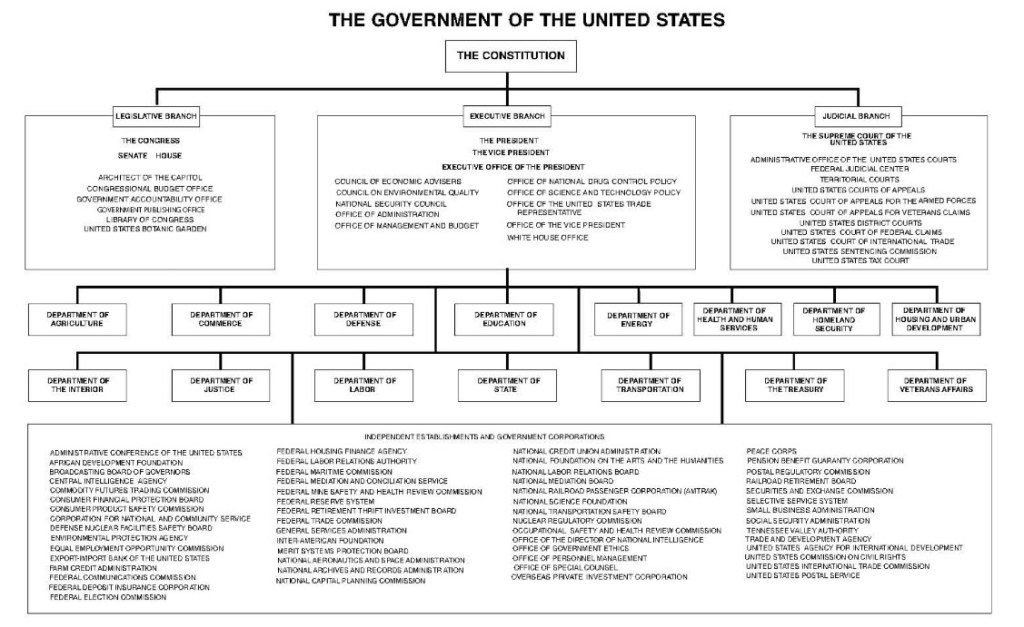
Duplicative functions, poor data systems, and a lack of control have led to massive misappropriations of funds. The dysfunction has been enabled by a metastasization of nests of administrative authority inside agencies with “incomprehensible” org charts, often having multiple departments with identical functions that do not communicate. These departments frequently use redundant but unconnected systems. A related problem is the inadequacy of documentation for outgoing payments. Needless to say, this is a hostile environment for effective spending controls.

It’s worth emphasizing, by the way, DOGE’s “open book” transparency. It’s not as if Elon Musk and DOGE are attempting to sabotage the deep state in the dark of night. Indeed, they are shouting from the rooftops!

Doing It Fast

Every day we have a new revelation from DOGE of incredible waste in the federal bureaucracy. Check out this story about a VA contact for web site maintenance. All too ironically, what we call government waste tends to have powerful, self-interested, and deeply corrupt constituencies. This makes speed an imperative for DOGE. In a highly politicized and litigious environment, the extent to which the Leviathan can be brought to heel is partly a function of how quickly the deconstruction takes place. One must pardon a few temporary dislocations that otherwise might be avoided in a world free of rent seeking behavior. Otherwise, the graft (no, NOT “grift”) will continue unabated.

The foregoing offers sufficient rationale not only for speedy force reductions, but also for system upgrades, dissolution of certain offices, and consolidation of core functions under single-agency umbrellas.

The Bloody Budget

It’s difficult to know when budget legislation will begin to reflect DOGE’s successes. The actual budget deficit might be affected in fiscal year 2025, but so far the savings touted by DOGE are chump change compared to the expected $2 trillion deficit, and only a fraction of those savings contribute to ongoing deficit reduction.

Uncontrolled spending is the root cause of the deficit, as opposed to insufficient tax revenue, as evidenced by a relatively stable ratio of taxes to GDP. The spending problem was exacerbated by the pandemic, but Congress and the Biden Administration never managed to scale outlays back to their previous trend once the economy recovered. Balancing the budget is made impossible when the prevailing psychology among legislators and the media is that reductions in the growth of spending represent spending cuts.

Federal spending is excessive on both the discretionary and mandatory sides of the budget. Ultimately, eliminating the budget deficit without allowing the 2017 Trump tax cuts to expire will require reform to mandatory entitlements like Social Security, Medicare, and Medicaid, as well as reductions across an array of discretionary programs.

DOGE’s focus on fraud and waste extends to entitlements. At a minimum, the data and tracking systems in place at HHS and SSA are antiquated, sometimes inaccurate, and are highly susceptible to manipulation and fraud. Systems upgrades are likely to pay for themselves many times over.

But all indications are that it’s much worse than that. Social security numbers were issued to millions of illegal immigrants during the Biden Administration, and those enrollees were cleared for maximum benefits. There were a significant number of illegals enrolled in Medicaid and registered to vote. While some of these immigrants might be employed and contributing to the entitlement system, they should not be employed without legal status. Of course, one can defend these entitlement benefits on purely compassionate grounds, but the availability of benefits has served to attract a massive flow of illegal border crossings. This illustrates both the extent to which the entitlement system has been compromised as well as the breakdown of border security.

On the discretionary side of the budget, DOGE has identified an impressive array programs that were not just wasteful, but by turns ridiculous or politically motivated (for example, the bulk of USAID’s budget). Many of these funding initiatives belong on the chopping block, and components that might be worthwhile have been moved to agencies with related missions. In addition, authorized but unspent allocations have been identified that seem to have been held in reserve, and which now can be used to reduce the public debt.

Research Grants?

Of course, like the initial scale of the FDA layoffs, a few mistakes have and will be made by DOGE and agencies under DOGE’s guidance. Many believe another powerful argument against DOGE is the Trump Administration’s 15% limit on indirect costs as an add-on to NIH grants. Critics assert that this limit will hamstring U.S. scientific advancement. However, it won’t “kill” publicly funded research. As this article in Reason points out, historically public funding has not been critical to scientific advancement in the U.S. In fact, private funding accounts for the vast bulk of U.S. R&D, according to the Congressional Research Service. Moreover, it’s broadly acknowledged that indirect costs are subject to distortion, and that generous funding of those costs creates bad incentives and raises thorny questions about cross-subsidies across funders (15% is the rate at which charities typically fund indirect costs).

No doubt some elite research universities will suffer declines in grants, but their case is weakened politically by a combination of lax control over anti-Semitic protests on campus, the growing unpopularity of DEI initiatives in education, and public awareness of the huge endowments over which these universities preside. Nevertheless, I won’t be surprised to see the 15% limit on indirect research costs revised upward somewhat.

More DOGE Please

I’ve criticized the numbers posted on DOGE’s website elsewhere. They could do a much better job of categorizing and reporting the savings they’ve achieved, and they have far to go before meeting the goals stated by Elon Musk. Be that as it may, DOGE is making progress. Here is a report on a few of the latest cuts.

As I’ve emphasized on numerous occasions, the federal government is a strangling mass of tentacles, squeezing excessive resources out of the private sector and suffocating producers with an endless catalogue of burdensome rules. There are many examples of systemic waste taking place within the federal bureaucracy. For example, since its creation by Jimmy Carter, the Department of Education has managed to piss away trillions of dollars while student performance has declined. The Small Business Administration has doled out millions of dollars in subsidized loans to super-centenarians as well as children. The U.S. Postal Service keeps losing money and mail while deliveries slow to a crawl. Big projects become mired in endless iterations of reviews and revisions, such as Obama’s infrastructure plan and Joe Biden’s infrastructure and rural broadband initiative.

And again, regulatory agencies are often our worst enemies, imposing burdensome requirements with which only the largest industry players can afford to comply. Indeed, the savings achieved through the DOGE process might pale in comparison to the resources that could be liberated by rationalizing the tangle of regulations now choking private business.

A significant narrowing of the budget deficit would be a major accomplishment for DOGE. Even one-time savings to help pay down the public debt are worthwhile. In this latter regard, I hope DOGE’s work with the Department of Interior helps facilitate the sale of dormant federal assets. This includes land (not parks) and buildings worth literally trillions of dollars, and sometimes costing billions annually to maintain.

Will DOGE Hunt? Bond Market Naturally Defers

21 Friday Feb 2025

Posted by Nuetzel in DOGE, Public debt

≈ 1 Comment

Tags

Bond Market, Deficit Reduction, DOGE, DOGE Dividend, Donald Trump, Elon Musk, Federal Reserve, Fiscal policy, Gaza, Greenland, Jerome Powell, Marginal Revolution, Matt Yglesias, Mineral Rights, Prodding Diplomacy, Sovereign Wealth Fund, Treasury Debt, Tyler Cowen, Ukraine

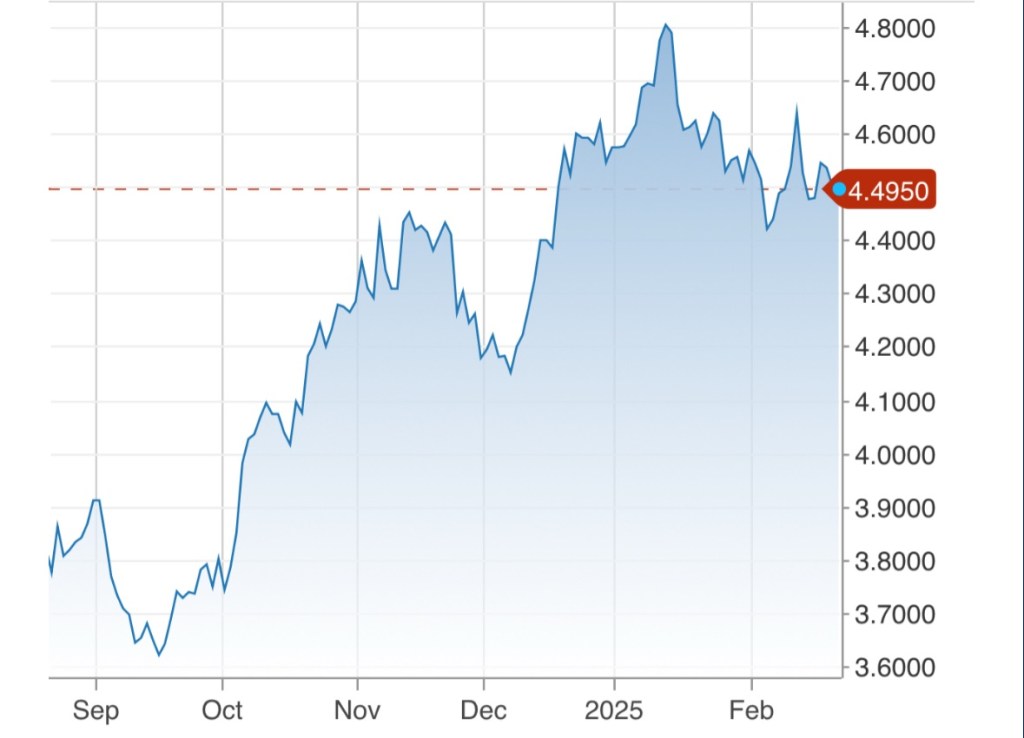
Matt Yglesias tweeted on X that “the bond market does not appear to believe in DOGE”. He included a chart much like the updated one above to “prove” his point. Tyler Cowen posted a link to the tweet on Marginal Revolution, without comment … Cowen surely must know that any such conclusion is premature, especially based on the movement of Treasury yields over the past month (or more, since the market’s evaluation of the DOGE agenda preceded Trump’s inauguration).

Of course, there is a difference between “believing” in DOGE and being convinced that its efforts should have succeeded in reducing interest rates immediately amidst waves of background noise from budget and tax legislation, court challenges, Federal Reserve missteps (this time cutting rates too soon), and the direction of the economy in general.

In this case, perhaps a better way to define success for DOGE is a meaningfully negative impact on the future supply of Treasury debt. Even that would not guarantee a decline in Treasury rates, so the premise of Yglesias’ tweet is somewhat shaky to begin with. Still, all else equal, we’d expect to see some downward pressure on yields if DOGE succeeds in this sense. But we must go further by recognizing that DOGE savings could well be reallocated to other spending initiatives. Then, the savings would not translate into lower supplies of Treasury debt after all.

Certainly, the DOGE team has made progress in identifying wasteful expenditures, inefficiencies, and poor controls on spending. But even if the $55 billion of estimated savings to date is reliable, DOGE has a long way to go to reach Musk’s stated objective of $2 trillion. There are some juicy targets, but it will be tough to get there in 17 more months, when DOGE is to stand down. Still, it’s not unreasonable to think DOGE might succeed in accomplishing meaningful deficit reduction.

But if bond traders have doubts about DOGE, it’s partly because Donald Trump and Elon Musk themselves keep giving them reasons. In my view, Musk and Trump have made a major misstep in toying with the idea of using prospective DOGE savings to fund “dividend checks” of $5,000 for all Americans. These would be paid by taking 20% of the guesstimated $2 trillion of DOGE savings. Musk’s expression of interest in the idea was followed by a bit of clusterfuckery, as Musk walked back his proposal the next day even as Trump jumped on board. PLEASE Elon, don’t give the Donald any crowd-pleasing ideas! And don’t lose sight of the underlying objective to reduce the burden of government and the public debt.

Now, Trump proposes that 60% of the savings accomplished by DOGE be put toward paying for outlays in future years. Sure, that’s deficit reduction, but it may serve to dull the sense that shrinking the federal government is an imperative. The mechanics of this are unclear, but as a first pass, I’d say the gain from investing DOGE savings for a year in low-risk instruments is unlikely to outweigh the foregone savings in interest costs from paying off debt today! Of course, that also depends on the future direction of interest rates, but it’s not a good bet to make with public funds.

Nor can the bond market be comforted by uncertainty surrounding legislation that would not only extend the Trump tax cuts, but will probably include various spending provisions, both cuts and increases. As of now, the mix of provisions that might accompany a deal among GOP factions is very much up in the air.

There is also trepidation about Trump’s aggressive stance toward the Federal Reserve. He promises to replace Jerome Powell as Fed Chairman, but with God knows whom? And Trump jawbones aggressively for lower rates. The Fed’s ill-advised rate cuts in the fall might have been motivated in part by an attempt to capitulate to the then-President Elect.

Trump’s Executive Order to create a sovereign wealth fund (SWF), which I recently discussed here, is probably not the most welcome news to bond investors. All else equal, placing tax or tariff revenue into such a fund would reduce the potential for deficit reduction, to say nothing of the idiocy of additional borrowing to purchase assets.

Finally, Trump has proposed what might later prove to be massive foreign policy trial balloons. Some of these are bound up with the creation of the SWF. They might generate revenue for the government without borrowing (mineral rights in Ukraine? Or Greenland?), but at this point there’s also a chance they’ll create massive funding needs (Gaza development?). Again, Trump seems to be prodding or testing counterparties to various negotiations… prodding diplomacy. It’s unlikely that anything too drastic will come of it from a fiscal perspective, but it probably doesn’t leave bond traders feeling easy.

At this stage, it’s pretty rash to conclude that the bond market “doesn’t believe in DOGE”. In fact, there is no doubt that DOGE is making some progress in identifying potential fraud and inefficiencies. However, bond traders must weigh a wide range of considerations, and Donald Trump has a tendency to kick up dust. Indeed, the so-called DOGE dividend will undermine confidence in debt reduction and bond prices.

Promises and Policies: Grading the Candidates

29 Tuesday Oct 2024

Posted by Nuetzel in Election

≈ Leave a comment

Tags

2024 Election, Abortion, Abraham Accords, Barack Obama, Capitalism, Climate Change, Corporatism, DEI, Dobbs, Donald Trump, Elon Musk, fascism, Federal Reserve, First Amendment, Fossil fuels, Housing, Hysteria, Immigration, Inflation, Israel, Joe Biden, Kamala Harris, Medicaid, Medicare, Obamacare, Renewable energy, Second Amendment, Social Security, Supreme Court, Tariffs, Tax Policy, Ukraine, Vladimir Putin

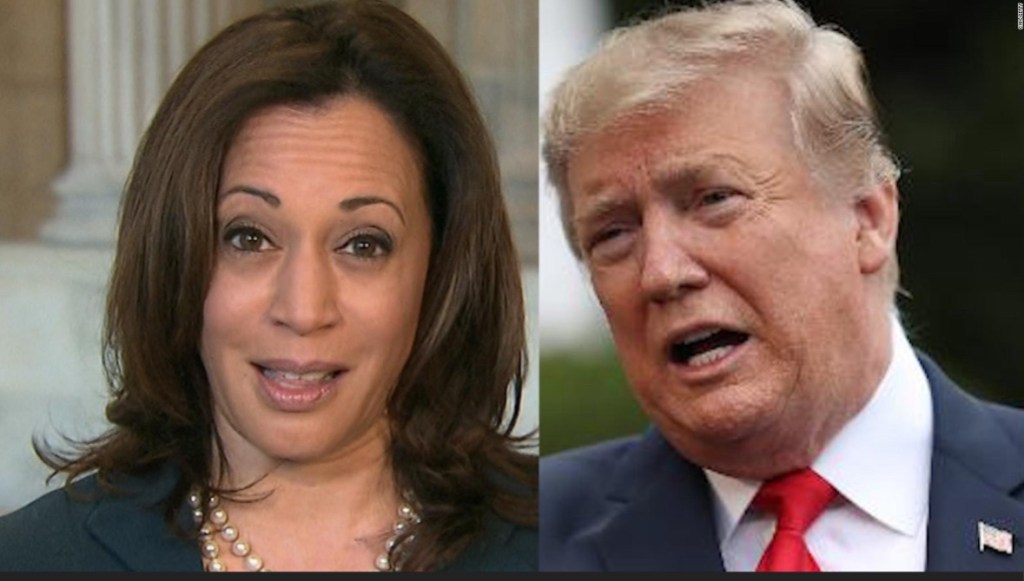
Wow! We’re less than a week from Election Day! I’d hoped to write a few more detailed posts about the platforms and policies of Kamala Harris and Donald Trump, but I was waylaid by Hurricane Milton. It sent us scrambling into prep mode, then we evacuated to the Florida Panhandle. The drive there and back took much longer than expected due to the mass exodus. On our return we found the house was fine, but there was significant damage to an exterior structure and a mess in the yard. We also had to “de-prep” the house, and we’ve been dealing with contractors ever since. It was an exhausting episode, but we feel like we were very lucky.

Now, with less than a week left till the election, I’ll limit myself to a summary of the positions of the candidates in a number of areas, mostly but not all directly related to policy. I assign “grades” in each area and calculate an equally-weighted “GPA” for each candidate. My summaries (and “grades”) are pretty off-the-cuff and not adequate treatments on their own. Some of these areas are more general than others, and I readily admit that a GPA taken from my grade assignments is subject to a bit of double counting. Oh well!

Role of Government: Kamala Harris is a statist through and through. No mystery there. Trump is more selective in his statist tendencies. He’ll often favor government action if it’s politically advantageous. However, in general I think he is amenable to a smaller role for the public than the private sector. Harris: F; Trump: C

Regulation: There is no question that Trump stands for badly needed federal regulatory reform. This spans a wide range of areas, and it extends to a light approach to crypto and AI regulation. Trump plans to appoint Elon Musk as his “Secretary of Cost Cutting”. Harris, on the other hand, seems to favor a continuation of the Biden Administration’s heavy regulatory oversight. This encourages a bloated federal bureaucracy, inflicts high compliance costs on the private sector, stifles innovation, and tends to concentrate industrial power. Harris: F; Trump: A

Border Policy: Trump wants to close the borders (complete the wall) and deport illegal immigrants. Both are easier said than done. Except for criminal elements, the latter will be especially controversial. I’d feel better about Trump’s position if it were accompanied by a commitment to expanded legal immigration. We need more legal immigrants, especially the highly skilled. For her part, Harris would offer mass amnesty to illegals. She’d continue an open border policy, though she claims to want certain limits on illegal border crossings going forward. She also claims to favor more funds for border control. However, it is not clear how well this would translate into thorough vetting of illegal entrants, drug interdiction at the border, or sex trafficking. Harris: D; Trump: B-

Antitrust: Accusations of price gouging by American businesses? Harris! Forty three corporations in the S&P 500 under investigation by the DOJ? The Biden-Harris Administration. This reflects an aggressively hostile and manipulative attitude toward the business community. Trump, meanwhile, might wheedle corporations to act on behalf of certain of his agendas, but he is unlikely to take such a broadly punitive approach. Harris: F; Trump: B-

Foreign Policy: Harris is likely to continue the Biden Administration’s conciliatory approach to dealing with America’s adversaries. The other side of that coin is an often tepid commitment to longtime allies like Israel. Trump believes that dealing from a position of strength is imperative, and he’s willing to challenge enemies with an array of economic and political sticks and carrots. He had success during his first term in office promoting peace in the Middle East. A renewed version of the Abraham Accords that strengthened economic ties across the region would do just that. Ideally, he would like to restore the strength of America’s military, about which Harris has less interest. Trump has also shown a willingness to challenge our NATO partners in order to get them to “pay their fair share” toward the alliance’s shared defense. My major qualification here has to do with the candidates’ positions with respect to supporting Ukraine in its war against Putin’s mad aggression. Harris seems more likely than Trump to continue America’s support for Ukraine. Harris: D+; Trump: B-

Trade: Nations who trade with one another tend to be more prosperous and at peace. Unfortunately, neither candidate has much recognition of these facts. Harris is willing to extend the tariffs enforced during the Biden Administration. Trump, however, is under the delusion that tariffs can solve almost anything that ails the country. Of course, tariffs are a destructive tax on American consumers and businesses. Part of this owes to the direct effects of the tax. Part owes to the pricing power tariffs grant to domestic producers. Tariffs harm incentives for efficiency and the competitiveness of American industry. Retaliatory action by foreign governments is a likely response, which magnifies the harm.

To be fair, Trump believes he can use tariffs as a negotiating tool in nearly all international matters, whether economic, political, or military. This might work to achieve some objectives, but at the cost of damaging relations more broadly and undermining the U.S. economy. Trump is an advocate for not just selective, punitive tariffs, but for broad application of tariffs. Someone needs to disabuse him of the notion that tariffs have great revenue-raising potential. They don’t. And Trump is seemingly unaware of another basic fact: the trade deficit is mirrored by foreign investment in the U.S. economy, which spurs domestic economic growth. Quashing imports via tariffs will also quash that source of growth. I’ll add one other qualification below in the section on taxes, but I’m not sure it has a meaningful chance.

Harris: C-; Trump: F

Inflation: This is a tough one to grade. The President has no direct control over inflation. Harris wants to challenge “price gougers”, which has little to do with actual inflation. I expect both candidates to tolerate large deficits in order to fulfill campaign promises and other objectives. That will put pressure on credit markets and is likely to be inflationary if bond investors are surprised by the higher trajectory of permanent government indebtedness, or if the Federal Reserve monetizes increasing amounts of federal debt. Deficits are likely to be larger under Trump than Harris due in large part to differences in their tax plans, but I’m skeptical that Harris will hold spending in check. Trump’s policies are more growth oriented, and these along with his energy policies and deregulatory actions could limit the inflationary consequences of his spending and tax policies. Higher tariffs will not be of much help in funding larger deficits, and in fact they will be inflationary. Harris: C; Trump: C

Federal Reserve Independence: Harris would undoubtedly like to have the Fed partner closely with the Treasury in funding federal spending. Her appointments to the Board would almost certainly lead to a more activist Fed with a willingness to tolerate rapid monetary expansion and inflation. Trump might be even worse. He has signaled disdain for the Fed’s independence, and he would be happy to lean on the Fed to ease his efforts to fulfill promises to special interests. Harris: D; Trump: F

Entitlement Reform: Social Security and Medicare are both insolvent and benefits will be cut in 2035 without reforms. Harris would certainly be willing to tax the benefits of higher-income retirees more heavily, and she would likely be willing to impose FICA and Medicare taxes on incomes above current earning limits. These are not my favorite reform proposals. Trump has been silent on the issue except to promise no cuts in benefits. Harris: C-; Trump: F

Health Care: Harris is an Obamacare supporter and an advocate of expanded Medicaid. She favors policies that would short-circuit consumer discipline for health care spending and hasten the depletion of the already insolvent Medicare and Medicaid trust funds. These include a $2,000 cap on health care spending for Americans on Medicare, having Medicare cover in-home care, and extending tax credits for health insurance premia. She supports funding to address presumed health care disparities faced by black men. She also promises efforts to discipline or supplant pharmacy benefit managers. Trump, for his part, has said little about his plans for health care policy. He is not a fan of Obamacare and he has promised to take on Big Pharma, whatever that might mean. I fear that both candidates would happily place additional controls of the pricing of pharmaceuticals, a sure prescription for curtailed research and development and higher mortality. Harris: F; Trump: D+

Abortion: The Supreme Court’s 2022 decision in Dobbs v. Jackson essentially relegated abortion law to individual states. That’s consistent with federalist principles, leaving the controversial balancing of abortion vs. the unborn child’s rights up to state voters. Geographic differences of opinion on this question are dramatic, and Dobbs respects those differences. Trump is content with it. Meanwhile, Harris advocates for the establishment of expanded abortion rights at the federal level, including authorization of third trimester abortions by “care providers”. And Harris does not believe there should be religious exemptions for providers who do not wish to offer abortion services. No doubt she also approves of federally funded abortions. Harris: F; Trump: A

Housing: The nation faces an acute housing shortage owing to excessive regulation that limits construction of new or revitalized housing. These excessive rules are primarily imposed at the state and local level. While the federal government has little direct control over many of these decisions, it has abetted this regulatory onslaught in a variety of ways, especially in the environmental arena. Harris is offering stimulus to the demand side through a $25,000 housing tax credit for first-time home buyers. This will succeed in raising the cost of housing. She has also called for heavier subsidies for developers of low-income housing. If past is prologue, this might do more to line the pockets of developers than add meaningfully to the stock of affordable housing. Harris also favors rent controls, a sure prescription for deterioration in the housing stock, and she would prohibit software allowing landlords to determine competitive neighborhood rents. Trump has called for deregulation generally and would not favor rent controls. Harris: F; Trump B

Taxes: Harris has broached several wildly destructive tax proposals. Perhaps the worst of these is to tax unrealized capital gains, and while she promises it would apply only to extremely wealthy taxpayers, it would constitute a wealth tax. Once that line is crossed, the threat of widening the base becomes a very slippery slope. It would also be a strong detriment to domestic capital investment and economic growth. Harris would increase the top marginal personal tax rate and the corporate tax rate, which would discourage investment and undermine real wage growth. She’d also increase estate tax rates. As discussed above, she unwisely calls for a $25,000 tax credit for first-time homebuyers. She also wants to expand the child care tax credit to $6,000 for families with newborns. A proposed $50,000 small business tax credit would allow the federal government to subsidize and encourage risky entrepreneurial activity at taxpayers’ expense. I’m all for small business, but this style of industrial planning is bonkers. She would sunset the Trump (TCJA) tax cuts in 2026.

Finally, Harris has mimicked Trump in calling for no taxes on tips. Treating certain forms of income more favorably than others is a recipe for distortions in economic activity. Employers of tip-earning workers will find ways to shift employees’ income to tips that are mandatory for patrons. It will also skew labor supply decisions toward occupations that would otherwise have less economic value. But Trump managed to find an idea so politically seductive that Harris couldn’t resist.

Trump’s tax plans are a mixed bag of good and bad ideas. They include extending his earlier tax cuts (TCJA) and restoring the SALT deduction. The latter is an alluring campaign tidbit for voters in high-tax states. He would reduce the corporate tax rate, which I strongly favor. Corporate income is double-taxed, which is a detriment to growth as well as a weight on real wages. He would eliminate taxes on overtime income, another example of favoring a particular form of income over others. Wage earners would gain at the expense of salaried employees, so one could expect a transition in the form employees are paid over time. Otherwise, the classification of hours as “overtime” would have to be standardized. One could expect existing employees to work longer hours, but at the expense of new jobs. Finally, Trump says Social Security benefits should not be taxed, another kind of special treatment by form of income. This might encourage early retirement and become an additional drain on the Social Security Trust Fund.

The higher tariffs promised by Trump would collect some revenue. I’d be more supportive of this plank if the tariffs were part of a larger transition from income taxes to consumption taxes. However, Trump would still like to see large differentials between tariffs and taxes imposed on the consumption of domestically-produced goods and services.

Harris: F; Trump C+

Climate Policy: This topic has undergone a steep decline in relative importance to voters. Harris favors more drastic climate interventions than Trump, including steep renewable subsidies, EV mandates, and a panoply of other initiatives, many of which would carry over from the Biden Administration. Harris: F; Trump: B

Energy: Low-cost energy encourages economic growth. Just ask the Germans! Consistent with the climate change narrative, Harris wishes to discourage the use of fossil fuels, their domestic production, and even their export. She has been very dodgy with respect to restrictions on fracking. Her apparent stance on energy policy would be an obvious detriment to growth and price stability (or I should say a continuing detriment). Trump wishes to encourage fossil fuel production. Harris: F; Trump: A

Constitutional Integrity: Harris has supported the idea of packing the Supreme Court, which would lead to an escalating competition to appoint more and more justices with every shift in political power. She’s also disparaged the Electoral College, without which many states would never have agreed to join the Union. Under the questionable pretense of “protecting voting rights”, she has opposed steps to improve election integrity, such voter ID laws. And operatives within her party have done everything possible to register non-citizens as voters. Harris: F; Trump: A

First Amendment Rights: Harris has called for regulation and oversight of social media content and moderation. A more descriptive word for this is censorship. Trump is generally a free speech advocate. Harris: F; Trump A-

Second Amendment Rights: Harris would like to ban so-called “assault weapons” and high-capacity magazines, and she backs universal background checks for gun purchases. Trump has not called for any new restrictions on gun rights. Harris: F; Trump: A

DEI: Harris is strongly supportive of diversity and equity initiatives, which have undermined social cohesion and the economy. That necessarily makes her an enemy of merit-based rewards. Trump has no such confusion. Harris: F; Trump: A

Hysteria: The Harris campaign has embraced a strategy of demonizing Donald Trump. Of course, that’s not a new approach among Democrats, who have fabricated bizarre stories about Trump escapades in Russia, Trump as a pawn of Vladimir Putin, and Russian manipulation of the 2016 Trump campaign. Congressional democrats spent nearly all of Trump’s first term in office trying to find grounds for impeachment. Concurrently, there were a number of other crazy and false stories about Trump. The current variation on “Orange Man Bad” is that Trump is a fascist and a Nazi, and that all of his supporters are Nazis. And that Trump will use the military against his domestic political opponents, the so-called “enemy within”. And that Trump will send half the country’s populace to labor camps. The nonsense never ends, but could anything more powerfully ignite the passions of violent extremists than this sort of hateful rhetoric? Would it not be surprising if at least a few leftists weren’t interested in assassinating “Hitler” himself. This is hysteria, and one has to wonder if that is not, in fact, the intent.

Can any of these people actually define the term fascist? Most fundamentally, a fascist desires the use of government coercion for private gain (of wealth or power) for oneself and/or one’s circle of allies. By that definition, we could probably categorize a great many American politicians as fascists, including Barack Obama, Joe Biden, Donald Trump, and a majority of both houses of Congress. That only demonstrates that corporatism is fundamental to fascist politics. Less-informed definitions of fascism conflate it with everything from racism (certainly can play a part) and homophobia (certainly can play a part) to mere capitalism. But take a look at the demographics of Trump’s supporters and you can see that most of these definitions are inapt.

Is the Trump campaign suffering from any form of hysteria? It’s shown great talent at poking fun at the left. Of course, Trump’s reactions to illegal immigration, crime, and third-trimester abortions are construed by leftists to be hysterical. I mean, why would anyone get upset about those kinds of things?

Harris: F; Trump: A

“Grade Point Average”

I’m sure I forgot an area or two I should have covered. Anyway, the following are four-point “GPAs” calculated over 20 categories. I’m deducting a quarter point for a “minus” grade and adding a quarter point for a “plus” grade. Here’s what I get:

Harris: 0.44; Trump: 2.68

Hmmm

Fix TikTok? Or Nix It? The Authoritarian RESTRICT Act

08 Saturday Apr 2023

Posted by Nuetzel in anti-Semitism, Big Government, Liberty, Technology

≈ 1 Comment

Tags

AI, Artificial Intelligence, Attention Span, ByteDance, CATO Institute, Caveat Emptor, ChatGPT, Community Standards, Data Privacy, Elon Musk, First Amendment, Free Speech, Hate Speech, L. Frank Baum, Munger Test, National Security, Open Source, PATRIOT Act, People’s Republic of China, Philip Hamburger, Protectionism, RESTRICT Act, Scott Lincicome, Separation of Powers, The Land of Oz, TikTok, Twitter

There’s justifiable controversy surrounding TikTok, the social media app. I find much to dislike about TikTok but also much to dislike about the solutions some have proposed, such as a complete ban on the app in the United States. Such proposals would grant the federal executive branch powers that most of us wouldn’t grant to our worst enemy (i.e., they fail the “Munger test”).

Congressional Activity

The proposed RESTRICT Act (Restricting the Emergence of Security Threats that Risk Information and Communications Technology) is a bipartisan effort to eliminate the perceived threats to national security posed by technologies like TikTok. That would include a ban on the app. Proponents of a ban go further than national security concerns, arguing that TikTok represents a threat to the health and productivity of users. However, an outright ban on the app would be a drastic abridgment of free speech rights, and it would limit Americans’ access to a popular platform for creativity and entertainment. In addition, the proposed legislation would authorize intrusions into the privacy of Americans and extend new executive authority into the private sphere, such as tampering with trade and commerce in ways that could facilitate protectionist actions. In fact, so intrusive is the RESTRICT Act that it’s been called a “Patriot Act for the digital age.” From Scott Lincicome and several coauthors at CATO:

“… the proposal—at least as currently written—raises troubling and far‐reaching concerns for the First Amendment, international commerce, technology, privacy, and separation of powers.”

Bad Company

TikTok is owned by a Chinese company, ByteDance, and there is understandable concern about the app’s data collection practices and the potential for the Chinese government to access user data for nefarious purposes. The Trump administration cited these concerns when it attempted to ban TikTok in 2020, and while the ban was ultimately blocked by a federal judge, the Biden administration has also expressed concerns about the app’s data security.

TikTok has also been accused of promoting harmful content, including hate speech, misinformation, and sexually explicit material. Critics argue that the app’s algorithm rewards provocative and controversial content, which can lead to the spread of harmful messages and the normalization of inappropriate behavior. Of course, those are largely value judgements, including labels like “provocative”, “inappropriate”, and many interpretations of content as “hate speech”. With narrow exceptions, such content is protected under the First Amendment.

Unlike L. Frank Baum’s Tik-Tok machine in the land of Oz, the TikTok app might not always qualify as a “faithful servant”. There are some well-founded health and performance concerns related to TikTok, however. Some experts have expressed reservations about the effects of the app on attention span. The short-form videos typical of TikTok, and endless scrolling, suggest that the app is designed to be addictive, though I’m not aware of studies that purport to prove its “addictive nature. Of course, it can easily become a time sink for users, but so can almost all social media platforms. Nevertheless, some experts contend that heavy use of TikTok may lead to a decrease in attention span and an increase in distraction, which can have negative implications for productivity, learning, and mental health.

Bad Government

The RESTRICT Act, or a ban on TikTok, would drastically violate free speech rights and limit Americans’ access to a popular platform for creativity and self-expression. TikTok has become a cultural phenomenon, with millions of users creating and sharing content on the app every day. This is particularly true of more youthful individuals, who are less likely to be persuaded by their elders’ claims that the content available on TikTok is “inappropriate”. And they’re right! At the very least, “appropriateness” depends on an individual’s age, and it is generally not an area over which government should have censorship authority, “community standards” arguments notwithstanding. Furthermore, allowing access for children is a responsibility best left in the hands of parents, not government.

Likewise, businesses should be free to operate without undue interference from government. The RESTRICT Act would violate these principles, as it would limit individual choice and potentially harm innovation within the U.S. tech industry.

A less compelling argument against banning TikTok is that it could harm U.S.-China relations and have broader economic consequences. China has already warned that a TikTok ban could prompt retaliation, and such a move could escalate tensions between the two countries. That’s all true to one degree or another, but China has already demonstrated a willingness and intention to harm U.S.-China relations. As for economic repercussions, do business with China at your own risk. According to this piece, U.S. investment in the PRC’s tech industry has fallen by almost 80% since 2018, so the private sector is already taking strong steps to reduce that risk.

Like it or not, however, many software companies are subject to at least partial Chinese jurisdiction. The means the RESTRICT Act would do far more than simply banning TikTok in the U.S. First, it would subject on-line activity to much greater scrutiny. Second, it would threaten users of a variety of information or communications products and services with severe penalties for speech deemed to be “unsafe”. According to Columbia Law Professor Philip Hamburger:

“Under the proposed statute, the commerce secretary could therefore take ‘any mitigation measure to address any risk’ arising from the use of the relevant communications products or services, if the secretary determines there is an ‘undue or unacceptable risk to the national security of the United States or the safety of United States persons.’

We live in an era in which dissenting speech is said to be violence. In recent years, the Federal Bureau of Investigation has classified concerned parents and conservative Catholics as violent extremists. So when the TikTok bill authorizes the commerce secretary to mitigate communications risks to ‘national security’ or ‘safety,’ that means she can demand censorship.”

A Lighter Touch

The RESTRICT Act is unreasonably broad and intrusive and an outright ban of TikTok is unnecessarily extreme. There are less draconian alternatives, though all may involve some degree of intrusion. For example, TikTok could be compelled to allow users to opt out of certain types of data collection, and to allow independent audits of its data handling practices. TikTok could also be required to store user data within the U.S. or in other countries that have strong data privacy laws. While this option would represent stronger regulation of TikTok, it could also be construed as strengthening the property rights of users.

To address concerns about TikTok’s ownership by a Chinese company, its U.S. operations could be required to partner with a U.S. company. Perhaps this could satisfied by allowing a U.S. company to acquire a stake in TikTok, or by having TikTok spin off its U.S. operations into a separate company that is majority-owned by a U.S. entity.

Finally, perhaps political or regulatory pressure could persuade TikTok to switch to using open-source software, as Elon Musk has done with Twitter. Then, independent developers would have the ability to audit code and identify security vulnerabilities or suspicious data handling practices. From there, it’s a matter of caveat emptor.

Restrain the Restrictive Impulse

The TikTok debate raises important questions about the role of government in regulating technology and free speech. Rather than impulsively harsh legislation like the RESTRICT Act or an outright ban on TikTok, an enlightened approach would encourage transparency and competition in the tech industry. That, in turn, could help address concerns about data security and promote innovation. Additionally, individuals should take personal responsibility for their use of technology by being mindful of the content they consume and what they reveal about themselves on social media. That includes parental responsibility and supervision of the use of social media by children. Ultimately, the TikTok debate highlights tensions between national security, technological innovation, and individual liberty. and it’s important to find a balance that protects all three.

Note: The first draft of this post was written by ChatGPT, based on an initial prompt and sequential follow-ups. It was intended as an experiment in preparation for a future post on artificial intelligence (AI). While several vestiges of the first draft remain, what appears above bears little resemblance to what ChatGPT produced. There were many deletions, rewrites, and supplements in arriving at the final draft.

My first impression of the ChatGPT output was favorable. It delineated a few of the major issues surrounding a TikTok ban, but later I was struck by its repetition of bland generalities and its lack of information on more recent developments like the RESTRICT Act. The latter shortfall was probably due to my use of ChatGPT 3.5 rather than 4.0. On the whole, the exercise was fascinating, but I will limit my use of AI tools like ChatGPT to investigation of background on certain questions.

Cassandras Feel An Urgent Need To Crush Your Lifestyle

12 Thursday Jan 2023

Posted by Nuetzel in Climate science, Environmental Fascism

≈ 1 Comment

Tags

Atmospheric Aerosols, Capacity Factors, Carbon Emissions, Carbon-Free Buildings, Chicken Little, Climate Alarmism, Coercion, Electric Vehicles, Elon Musk, Extreme Weather Events, Fossil fuels, Gas Stoves, Judith Curry, Land Use, Model Bias, Nuclear power, Paul Ehrlich, Renewable energy, rent seeking, Sea Levels, Settled Science, Solar Irradience, Solar Panels, Subsidies, Temperature Manipulation, Toyota Motors, Urban Heat Islands, Volcanic activity, Wind Turbines

Appeals to reason and logic are worthless in dealing with fanatics, so it’s too bad that matters of public policy are so often subject to fanaticism. Nothing is more vulnerable on this scale than climate policy. Why else would anyone continue to listen to prognosticators of such distinguished failure as Paul Ehrlich? Perhaps most infamously, his 1970s forecasts of catastrophe due to population growth were spectacularly off-base. He’s a man without any real understanding of human behavior and how markets deal efficiently and sustainably with scarcity. Here’s a little more detail on his many misfires. And yet people believe him! That’s blind faith.

The foolish acceptance of chicken-little assertions leads to coercive and dangerous policy prescriptions. These are both unnecessary and very costly in direct and hidden ways. But we hear a frantic chorus that we’d better hurry or… we’re all gonna die! Ironically, the fate of the human race hardly matters to the most radical of the alarmists, who are concerned only that the Earth itself be in exactly the same natural state that prevailed circa 1800. People? They don’t belong here! One just can’t take this special group of fools too seriously, except that they seem to have some influence on an even more dangerous group of idiots called policymakers.

Judith Curry, an esteemed but contrarian climate expert, writes of the “faux urgency” of climate action, and how the rush to implement supposed climate mitigations is a threat to our future:

“Rapid deployment of wind and solar power has invariably increased electricity costs and reduced reliability, particularly with increasing penetration into the grid. Allegations of human rights abuses in China’s Xinjiang region, where global solar voltaic supplies are concentrated, are generating political conflicts that threaten the solar power industry. Global supply chains of materials needed to produce solar and wind energy plus battery storage are spawning new regional conflicts, logistical problems, supply shortages and rising costs. The large amount of land use required for wind and solar farms plus transmission lines is causing local land use conflicts in many regions.”

Curry also addresses the fact that international climate authorities have “moved the goalposts” in response to the realization that the so-called “crisis” is not nearly as severe as we were told not too long ago. And she has little patience for delusions that authorities can reliably force adjustments in human behavior so as to to reduce weather disasters:

“Looking back into the past, including paleoclimatic data, there has been more extreme weather [than today] everywhere on the planet. Thinking that we can minimize severe weather through using atmospheric carbon dioxide as a control knob is a fairy tale.”

The lengths to which interventionists are willing to go should make consumer/taxpayers break out their pitchforks. It’s absurd to entertain mandates forcing vehicles powered by internal combustion engines (ICEs) off the road, and automakers know it. Recently, the head of Toyota Motors acknowledged his doubts that electric vehicles (EVs) can meet our transportation demands any time soon:

“People involved in the auto industry are largely a silent majority. That silent majority is wondering whether EVs are really OK to have as a single option. But they think it’s the trend so they can’t speak out loudly. Because the right answer is still unclear, we shouldn’t limit ourselves to just one option.”

In the same article, another Toyota executive says that neither the market nor the infrastructure is ready for a massive transition to EVs, a conclusion only a dimwit could doubt. Someone should call the Big 3 American car companies!

No one is a bigger cheerleader for EVs than Elon Musk. In the article about Toyota, he is quoted thusly:

“At this time, we actually need more oil and gas, not less. Realistically I think we need to use oil and gas in the short term, because otherwise civilization will crumble. One of the biggest challenges the world has ever faced is the transition to sustainable energy and to a sustainable economy. That will take some decades to complete.”

Of course, for the foreseeable future, EVs will be powered primarily by electricity generated from burning fossil fuels. So why the fuss? But as one wag said, that’s only until the government decides to shut down those power plants. After that, good luck with your EV!

Gas stoves are a new target of our energy overlords, but this can’t be about fuel efficiency, and it’s certainly not about the quality of food preparation. The claim by an environmental think tank called “Carbon-Free Buildings” is that gas stoves are responsible for dangerous indoor pollutants. Of course, the Left was quick to rally around this made-up problem, despite the fact that they all seem to use gas stoves and didn’t know anything about the issue until yesterday! And, they insist, racial minorities are hardest hit! Well, they might consider using exhaust fans, but the racialist rejoinder is that minorities aren’t adequately informed about the dangers and mitigants. Okay, start a safe-use info campaign, but keep government away from an embedded home technology that is arguably superior to the electric alternative in several respects.

Renewable energy mandates are a major area of assault. If we were to fully rely on today’s green energy technologies, we’d not just threaten our future, but our immediate health and welfare. Few people, including politicians, have any awareness of the low rates at which green technologies are actually utilized under real-world conditions.

“Worldwide average solar natural capacity factor (CF) reaches about ~11-13%. Best locations in California, Australia, South Africa, Sahara may have above 25%, but are rare. (see www.globalsolaratlas.info, setting direct normal solar irradiance)

Worldwide average wind natural capacity factors (CF) reach about ~21-24%. Best off-shore locations in Northern Europe may reach above 40%. Most of Asia and Africa have hardly any usable wind and the average CF would be below 15%, except for small areas on parts of the coasts of South Africa and Vietnam. (see www.globalwindatlas.info, setting mean power density)”

Those CFs are natural capacity factors (i.e., the wind doesn’t always blow or blow at “optimal” speeds, and the sun doesn’t always shine or shine at the best angle), The CFs don’t even account for “non-natural” shortfalls in actual utilization and other efficiency losses. It would be impossible for investors to make these technologies profitable without considerable assistance from taxpayers, but they couldn’t care less about whether their profits are driven by markets or government fiat. You see, they really aren’t capitalists. They are rent seekers playing a negative-sum game at the expense of the broader society.

There are severe environmental costs associated with current wind and solar technologies. Awful aesthetics and the huge inefficiencies of land use are bad enough. Then there are deadly consequences for wildlife. Producing inputs to these technologies requires resource-intensive and environmentally degrading mining activities. Finally, the costs of disposing of spent, toxic components of wind turbines and solar panels are conveniently ignored in most public discussions of renewables.

There is still more hypocritical frosting on the cake. Climate alarmists are largely opposed to nuclear power, a zero-carbon and very safe energy source. They also fight to prevent development of fossil fuel energy plant for impoverished peoples around the world, which would greatly aid in economic development efforts and in fostering better and safer living conditions. Apparently, they don’t care. Climate activists can only be counted upon to insist on wasteful and unreliable renewable energy facilities.

Before concluding, it’s good to review just a few facts about the “global climate”:

1) the warming we’ve seen in forecasts and in historical surface temperature data has been distorted by urban heat island effects, and weather instruments are too often situated in local environments rich in concrete and pavement.

2) Satellite temperatures are only available for the past 43 years, and they have to be calibrated to surface measurements, so they are not independent measures. But the trend in satellite temperatures over the past seven years has been flat or negative at a time when global carbon emissions are at all-time highs.

3) There have been a series of dramatic adjustments to historical data that have “cooled the past” relative to more recent temperatures.

4) The climate models producing catastrophic long-term forecasts of temperatures have proven to be biased to the high side, having drastically over-predicted temperature trends over the past two- to three decades.

5) Sea levels have been rising for thousands of years, and we’ve seen an additional mini-rebound since the mini-ice age of a few hundred years ago. Furthermore, the rate of increase in sea levels has not accelerated in recent decades, contrary to the claims of climate alarmists.

6) Storms and violent weather have shown no increase in frequency or severity, yet models assure us that they must!

Despite these facts, climate change fanatics will only hear of climate disaster. We should be unwilling to accept the climatological nonsense now passing for “settled science”, itself a notion at odds with the philosophy of science. I’m sad to say that climate researchers are often blinded by the incentives created by publication bias and grant money from power-hungry government bureaucracies and partisan NGOs. They are so blinded, in fact, that research within the climate establishment now almost completely ignores the role of other climatological drivers such as the solar irradiance, volcanic activity, and the role and behavior of atmospheric aerosols. Yes, only the global carbon dial seems to matter!

No one is more sympathetic to “the kids” than me, and I’m sad that so much of the “fan base” for climate action is dominated by frightened members of our most youthful generations. It’s hard to blame them, however. Their fanaticism has been inculcated by a distinctly non-scientific community of educators and journalists who are willing to accept outrageous assertions based on “toy models” concocted on weak empirical grounds. That’s not settled science. It’s settled propaganda.

The Twitter Files and Political Exploitation of Social Media

07 Wednesday Dec 2022

Posted by Nuetzel in Censorship, Regulation, Social Media

≈ 1 Comment

Tags

Bari Weiss, Censorship, Common Carrier, Communications Decency Act, Content Moderation, Disinformation Governance Board, Elon Musk, Eugene Volokh, Fighting Words, First Amendment, Hunter Biden, In-Kind Campaign Contribution, James Baker, Mark Zuckerberg, Matt Taibbi, Michael Munger, Munger Test, Public Accompdation, Public Square, Section 230 Immunity, Social Media, Telecommunications Act, Trump-Russia Investigation, Twitter Files, Your Worst Enemy Test

I’ve been cheering for Elon Musk in his effort to remake Twitter into the kind of “public square” it always held the promise to be. He’s standing up for free expression, against one-party control of speech on social media, and especially against government efforts to control speech. That’s a great and significant thing, yet as Duke economist Michael Munger notes, we hear calls from the Biden Administration and congressional Democrats to “keep an eye on Twitter”, a not-so-veiled threat of future investigative actions or worse.

Your Worst Enemy Test, Public or Private

As a disclaimer, I submit that I’m not an unadulterated fan of Musk’s business ventures. His business models too often leverage wrong-headed government policy for profitability. It reeks of rent seeking behavior, whatever Musk’s ideals, and the availability of those rents, primarily subsidies, violates the test for good governance I discussed in my last post. That’s the Munger Test (the “Your Worst Enemy” Test), formally:

“You can only give the State power that you favor giving to your worst enemy.”

On the other hand, Musk’s release of the “Twitter Files” last weekend, with more to come, is certainly a refreshing development. Censorship at the behest of political organizations, foreign governments, or our own government are all controversial and possibly illegal. While we’d ordinarily hope to transact privately at arms length with free exchange being strictly an economic proposition, one might even apply the Munger Test to the perspective of a user of a social media platform: would you trust your worst enemy to exercise censorship on that platform on the basis of politics? Like Donald Trump? Or Chuck Schumer? If not, then you probably won’t be happy there! Now, add to that your worst enemy’s immunity to prosecution for any content they deem favorable!

Cloaked Government Censorship?

Censorship runs afoul of the First Amendment if government actors are involved. In an interesting twist in the case of the Twitter Files, the two independent journalists working with the files, Matt Taibbi and Bari Weiss, learned that some of the information had been redacted by one James Baker, Twitter’s Deputy General Counsel. Perhaps not coincidentally, Baker was also formerly General Counsel of the FBI and a key figure in the Trump-Russia investigation. Musk promptly fired Baker from Twitter over the weekend. We might see, very soon, just how coincidental Baker’s redactions were.

Mark Zuckerberg himself recently admitted that Facebook was pressured by the FBI to censor the Hunter Biden laptop story, which is a key part of the controversy underlying the Twitter Files. The Biden Administration had ambitious plans for working alongside social media on content moderation, but the Orwellian-sounding “Disinformation Governance Board” has been shelved, at least for now. Furthermore, activity performed for a political campaign may represent an impermissible in-kind campaign donation, and Twitter falsely denied to the FEC that it had worked with the Biden campaign.

Solutions?

What remedies exist for potential social media abuses of constitutionally-protected rights, or even politically-driven censorship? Elon Musk’s remaking of Twitter is a big win, of course, and market solutions now seem more realistic. Court challenges to social media firms are also possible, but there are statutory obstacles. Court challenges to the federal government are more likely to succeed (if its involvement can be proven).

The big social media firms have all adopted a fairly definitive political stance and have acted on it ruthlessly, contrary to their professed role in the provision of an open “public square”. For that reason, I have in the past supported eliminating social media’s immunity from prosecution for content posted on their networks. A cryptic jest by Musk might just refer to that very prospect:

“Anything anyone says will be used against me in a court of law.”

Or maybe not … even with the sort of immunity granted to social media platforms, the Twitter Files might implicate his own company in potential violations of law, and he seems to be okay with that.

Immunity was granted to social media platforms under Section 230 of the Communications Decency Act (DCA). It was something many thought “the state should do” in the 1990s in order to foster growth in the internet. And it would seem that a platform’s immunity for content shared broadly should be consistent with promoting free speech. So the issue of revoking immunity is thorny for free speech advocates.

Section 230 And Content Moderation

There have always been legal restrictions on speech related to libel and “fighting words”. In addition, the CDA, which is a part of the Telecommunications Act, restricts “obscene” or “offensive” speech and content in various ways. The problem is that social media firms seem to have used the CDA as a pretext for censoring content more generally. It’s also possible they felt as if immunity from liability made them legally impervious to objections of any sort, including aggressive political censorship and user bans on behalf of government.

The social value of granting immunity depends on the context. There are two different kinds of immunity under Section 230: subsection (c)(1) grants immunity to so-called common carriers (e.g. telephone companies) for the content of private messages or calls on their networks; subsection (c)(2) grants immunity to social media companies for content posted on their platforms as long as those companies engage in content moderation consistent with the provisions of the CDA.

Common carrier immunity is comparatively noncontroversial, but with respect to 230(c)(2), I go back to the question: would I want my worst enemy to have the power to grant this kind of immunity? Not if it meant the power to forgive political manipulation of social media content with the heavy involvement of one political party! The right to ban users is completely unlike the “must serve” legal treatment of “public accommodations” provided by most private businesses. And immunity is inconsistent with other policies. For example, if social media acts to systematically host and to amplify some viewpoints and suppress others, it suggests that they are behaving more like publishers, who are liable for material they might publish, whether produced on their own or by third-party contributors.

Still, social media firms are private companies and their user agreements generally allow them to take down content for any reason. And if content moderation decisions are colored by input from one side of the political aisle, that is within the rights of a private firm (unless its actions are held to be illegal in-kind contributions to a political campaign). Likewise, it is every consumer’s right not to join such a platform, and today there are a number of alternatives to Twitter and Facebook.

Again, political censorship exercised privately is not the worst of it. There are indications that government actors have been complicit in censorship decisions made by social media. That would be a clear violation of the First Amendment for which immunity should be out of the question. I’d probably cut a platform considerable slack, however, if they acted under threat of retaliation by government actors, if that could be proven.

Volokh’s Quid Pro Quo

Rather than simply stripping away Section 230 protection for social media firms, another solution has been suggested by Eugene Volokh in “Common Carrier Status as Quid Pro Quo for § 230(c)(1) Immunity”. He proposes the following choice for these companies:

“(1) Be common carriers like phone companies, immune from liability but also required to host all viewpoints, or

(2) be distributors like bookstores, free to pick and choose what to host but subject to liability (at least on a notice-and-takedown basis).”

Option 2 is the very solution discussed in the last section (revoke immunity). Option 1, however, would impinge on a private company’s right to moderate content in exchange for continued immunity. Said differently, the quid pro quo offers continued rents created by immunity in exchange for status as a public utility of sorts, along with limits on the private right to moderate content. Common carriers often face other regulatory rules that bear on pricing and profits, but since basic service on social media is usually free, this is probably not at issue for the time being.

Does Volokh’s quid pro quo pass the Munger Test? Well, at least it’s a choice! For social media firms to host all viewpoints isn’t nearly as draconian as the universal service obligation imposed on local phone companies and other utilities, because the marginal cost of hosting an extra social media user is negligible.

Would I give my worst enemy the power to impose this choice? The CDA would still obligate social media firms selecting Option 1 to censor obscene or offensive content. Option 2 carries greater legal risks to firms, who might respond by exercising more aggressive content moderation. The coexistence of common carriers and more content-selective hosts might create competitive pressures for restrained content moderation (within the limits of the CDA) and a better balance for users. Therefore, Volokh’s quid pro quo option seems reasonable. The only downside is whether government might interfere with social media common carriers’ future profitability or plans to price user services. Then again, if a firm could reverse its choice at some point, that might address the concern. The CDA itself might not have passed the “Worst Enemy” Munger Test, but at least within the context of established law, I think Volokh’s quid pro quo probably does.

We’ll Know More Soon

More will be revealed as new “episodes” of the Twitter Files are released. We may well hear direct evidence of government involvement in censorship decisions. If so, it will be interesting to see the fallout in terms of legal actions against government censorship, and whether support coalesces around changes in the social media regulatory environment.

Government Action and the “Your Worst Enemy” Test

03 Saturday Dec 2022

Posted by Nuetzel in Big Government, Censorship

≈ 3 Comments

Tags

Big government, Censorship, Donald Trump, Elon Musk, Michael Munger, Munger Test, Nancy Pelosi, regulation, Social Media, Twitter, Unicorn Governance, Your Worst Enemy Test

A couple of weeks back I posted an admittedly partial list of the disadvantages, dysfunctions, and dangers of the Big Government Mess seemingly wished upon us by so many otherwise reasonable people. A wise addition to that line of thinking is the so-called Munger Test articulated by Michael Munger of Duke University. Here, he applies the test to government involvement in social media content regulation:

“If someone says “The STATE should do X” (in this case, decide what is true and what can be published in a privately-owned space), they need to make a substitution.

Instead of “The STATE” substitute “Donald Trump,” and see if you still belief it. (Or “Nancy Pelosi”, if you want).”

If approached honestly, Munger’s test is sure to make a partisan think twice about having government “do something”, or do anything! In a another tweet, Munger elaborates on the case of Twitter, which is highly topical at the moment:

“In fact, the reporters and media moguls who are calling for the state to hammer Twitter, and censor all those other ‘liars’, naively believe that they have a 1000 Year Reich.

You don’t. 𝙔𝙤𝙪 𝙘𝙖𝙣 𝙤𝙣𝙡𝙮 𝙜𝙞𝙫𝙚 𝙩𝙝𝙚 𝙎𝙩𝙖𝙩𝙚 𝙥𝙤𝙬𝙚𝙧𝙨 𝙩𝙝𝙖𝙩 𝙮𝙤𝙪 𝙛𝙖𝙫𝙤𝙧 𝙜𝙞𝙫𝙞𝙣𝙜 𝙩𝙤 𝙮𝙤𝙪𝙧 𝙬𝙤𝙧𝙨𝙩 𝙚𝙣𝙚𝙢𝙮. Deal with it.”

The second sentence in that last paragraph is an even more concise statement of the general principle behind the Munger Test, which we might dub the “Worst Enemy Test” with no disrespect to Munger. He proposed the test (immodestly named, he admits) in his 2014 article, “Unicorn Governance”, in which he offered a few other examples of its application. The article is subtitled:

“Ever argued public policy with people whose State is in fantasyland?”

The answer for me is yes, almost every time I talk to anyone about public policy! And as Munger says, that’s because:

“Everybody imagines that ‘The STATE’ is smart people who agree with them. Once MY team controls the state, order will be restored to the Force.”

So go ahead! Munger-test all your friends’ favorite policy positions the next time you talk!

But what about the case of “regulating” Twitter or somehow interfering with its approach to content moderation? More on that in my next post.

← Older posts
Follow Sacred Cow Chips on WordPress.com

Recent Posts

  • Immigration and Merit As Fiscal Propositions
  • Tariff “Dividend” From An Indigent State
  • Almost Looks Like the Fed Has a 3% Inflation Target
  • Government Malpractice Breeds Health Care Havoc
  • A Tax On Imports Takes a Toll on Exports

Archives

  • December 2025
  • November 2025
  • October 2025
  • September 2025
  • August 2025
  • July 2025
  • June 2025
  • May 2025
  • April 2025
  • March 2025
  • February 2025
  • January 2025
  • December 2024
  • November 2024
  • October 2024
  • September 2024
  • August 2024
  • July 2024
  • June 2024
  • May 2024
  • April 2024
  • March 2024
  • February 2024
  • January 2024
  • December 2023
  • November 2023
  • August 2023
  • July 2023
  • June 2023
  • May 2023
  • April 2023
  • March 2023
  • February 2023
  • January 2023
  • December 2022
  • November 2022
  • October 2022
  • September 2022
  • August 2022
  • July 2022
  • June 2022
  • May 2022
  • April 2022
  • March 2022
  • February 2022
  • January 2022
  • December 2021
  • November 2021
  • October 2021
  • September 2021
  • August 2021
  • July 2021
  • June 2021
  • May 2021
  • April 2021
  • March 2021
  • February 2021
  • January 2021
  • December 2020
  • November 2020
  • October 2020
  • September 2020
  • August 2020
  • July 2020
  • June 2020
  • May 2020
  • April 2020
  • March 2020
  • February 2020
  • January 2020
  • December 2019
  • November 2019
  • October 2019
  • September 2019
  • August 2019
  • July 2019
  • June 2019
  • May 2019
  • April 2019
  • March 2019
  • February 2019
  • January 2019
  • December 2018
  • November 2018
  • October 2018
  • September 2018
  • August 2018
  • July 2018
  • June 2018
  • May 2018
  • April 2018
  • March 2018
  • February 2018
  • January 2018
  • December 2017
  • November 2017
  • October 2017
  • September 2017
  • August 2017
  • July 2017
  • June 2017
  • May 2017
  • April 2017
  • March 2017
  • February 2017
  • January 2017
  • December 2016
  • November 2016
  • October 2016
  • September 2016
  • August 2016
  • July 2016
  • June 2016
  • May 2016
  • April 2016
  • March 2016
  • February 2016
  • January 2016
  • December 2015
  • November 2015
  • October 2015
  • September 2015
  • August 2015
  • July 2015
  • June 2015
  • May 2015
  • April 2015
  • March 2015
  • February 2015
  • January 2015
  • December 2014
  • November 2014
  • October 2014
  • September 2014
  • August 2014
  • July 2014
  • June 2014
  • May 2014
  • April 2014
  • March 2014

Blogs I Follow

  • Passive Income Kickstart
  • OnlyFinance.net
  • TLC Cholesterol
  • Nintil
  • kendunning.net
  • DCWhispers.com
  • Hoong-Wai in the UK
  • Marginal REVOLUTION
  • Stlouis
  • Watts Up With That?
  • Aussie Nationalist Blog
  • American Elephants
  • The View from Alexandria
  • The Gymnasium
  • A Force for Good
  • Notes On Liberty
  • troymo
  • SUNDAY BLOG Stephanie Sievers
  • Miss Lou Acquiring Lore
  • Your Well Wisher Program
  • Objectivism In Depth
  • RobotEnomics
  • Orderstatistic
  • Paradigm Library
  • Scattered Showers and Quicksand

Blog at WordPress.com.

Passive Income Kickstart

OnlyFinance.net

TLC Cholesterol

Nintil

To estimate, compare, distinguish, discuss, and trace to its principal sources everything

kendunning.net

The Future is Ours to Create

DCWhispers.com

Hoong-Wai in the UK

A Commonwealth immigrant's perspective on the UK's public arena.

Marginal REVOLUTION

Small Steps Toward A Much Better World

Stlouis

Watts Up With That?

The world's most viewed site on global warming and climate change

Aussie Nationalist Blog

Commentary from a Paleoconservative and Nationalist perspective

American Elephants

Defending Life, Liberty and the Pursuit of Happiness

The View from Alexandria

In advanced civilizations the period loosely called Alexandrian is usually associated with flexible morals, perfunctory religion, populist standards and cosmopolitan tastes, feminism, exotic cults, and the rapid turnover of high and low fads---in short, a falling away (which is all that decadence means) from the strictness of traditional rules, embodied in character and inforced from within. -- Jacques Barzun

The Gymnasium

A place for reason, politics, economics, and faith steeped in the classical liberal tradition

A Force for Good

How economics, morality, and markets combine

Notes On Liberty

Spontaneous thoughts on a humble creed

troymo

SUNDAY BLOG Stephanie Sievers

Escaping the everyday life with photographs from my travels

Miss Lou Acquiring Lore

Gallery of Life...

Your Well Wisher Program

Attempt to solve commonly known problems…

Objectivism In Depth

Exploring Ayn Rand's revolutionary philosophy.

RobotEnomics

(A)n (I)ntelligent Future

Orderstatistic

Economics, chess and anything else on my mind.

Paradigm Library

OODA Looping

Scattered Showers and Quicksand

Musings on science, investing, finance, economics, politics, and probably fly fishing.

  • Subscribe Subscribed
    • Sacred Cow Chips
    • Join 128 other subscribers
    • Already have a WordPress.com account? Log in now.
    • Sacred Cow Chips
    • Subscribe Subscribed
    • Sign up
    • Log in
    • Report this content
    • View site in Reader
    • Manage subscriptions
    • Collapse this bar
 

Loading Comments...