• About

Sacred Cow Chips

Sacred Cow Chips

Tag Archives: Federalism

Central Planning Fails to Scale, Unlike Spontaneous Order

05 Tuesday Jun 2018

Posted by Nuetzel in Central Planning, Markets, Price Controls

≈ Leave a comment

Tags

Bronze Age, central planning, Client-Server Network, Decentralized Decision-Making, Economies of Scale, Federalism, Francis Turner, Industrial Policy, Liberty.me, Markets, Peer-to-Peer Network, Price mechanism, Property Rights, Scalability, Spontaneous Order

The proposition that mankind is capable of creating a successful “planned” society is at least as old as the Bronze Age. Of course it’s been tried. The effort necessarily involves a realignment of the economic and political landscape and always requires a high degree of coercion. But putting that aside, such planning can never be successful relative to spontaneous order of the kind that dominates private affairs in a free society. The task of advancing human well-being given available resources has never been achieved under central planning. It always fails miserably in this regard, and it always will fail to match the success of decentralized decision-making and private markets.

There are various ways to explain this fact, but I recently came across an interesting take on the subject having to do with the notion of scalability. Francis Turner offers this note on the topic at the Liberty.me blog. To begin, he gives a lengthy quote from a software developer who relates the problems of social and economic planning to the complexity of managing a network. On the topic of scale, the developer notes that the number of relationships in a network increases with the square of the number of its “nodes”, or members:

“2 nodes have 1 potential relationship. 4 nodes (twice as many) has 6 potential relationships (6 times as many). 8 nodes (twice again) has 28 potential relationships. 100 nodes => [4,950] relationships; 1,000 nodes => 499,500 relationships—nearly half a million.“

Actually, the formula for the number of potential relationships or connections in a network is n*(n-1)/2, where n is the number of network nodes. The developer Turner  quotes discusses this in the context of two competing network management structures: client-server and peer-to-peer. Under the former, the network is managed centrally by a server, which communicates with all nodes, makes various decisions, and routes communications traffic between nodes. In a peer-to-peer network, the work of network management is distributed — each computer manages its own relationships. The developer says, at first, “the idea of hooking together thousands of computers was science fiction.” But as larger networks were built-out in the 1990s, the client-server framework was more or less rejected by the industry because it required such massive resources to manage large networks. In fact, as new nodes are added to a peer-to-peer network, its capacity to manage itself actually increases! In other words, client-server networks are not as scalable as peer-to-peer networks:

“Even if it were perfectly designed and never broke down, there was some number of nodes that would crash the server. It was mathematically unavoidable. You HAVE TO distribute the management as close as possible to the nodes, or the system fails.

… in an instant, I realized that the same is true of governments. … And suddenly my coworker’s small government rantings weren’t crazy…”

This developer’s epiphany captures a few truths about the relative efficacy of decentralized decision-making. It’s not just for computer networks! But in fact, when it comes to network management, the task is comparatively simple: meet the computing and communication needs of users. A central server faces dynamic capacity demands and the need to route changing flows of traffic between nodes. Software requirements change as well, which may necessitate discrete alterations in capacity and rules from time-to-time.

But consider the management of a network of individual economic units. Let’s start with individuals who produce something… like widgets. There are likely to be real economies achieved when a few individual widgeteers band together to produce as a team. Some specialization into different functions can take place, like purchasing materials, fabrication, and distribution. Perhaps administrative tasks can be centralized for greater efficiency. Economies of scale may dictate an even larger organization, and at some point the firm might find additional economies in producing widget-complementary products and services. But eventually, if the decision-making is centralized and hierarchical, the sheer weight of organizational complexity will begin to take a toll, driving up costs and/or diminishing the firm’s ability to deal with changes in technology or the market environment. In other words, centralized control becomes difficult to scale in an efficient way, and there may be some “optimal” size for a firm beyond which it struggles.

Now consider individual consumers, each of whom faces an income constraint and has a set of tastes spanning innumerable goods. These tastes vary across time scales like hour-of-day, day-of-week, seasons, life-stage, and technology cycles. The volume of information is even more daunting when you consider that preferences vary across possible price vectors and potential income levels as well.

Can the interactions between all of these consumer and producer “nodes” be coordinated by a central economic authority so as to optimize their well-being dynamically, subject to resource constraints? As we’ve seen, the job requires massive amounts of information and a crushing number of continually evolving decisions. It is really impossible for any central authority or computer to “know” all of the information needed. Secondly, to the software developer’s point, the number of potential relationships increases with the square of the number of consumers and producers, as does the required volume of information and number of decisions. The scalability problem should be obvious.

This kind of planning is a task with which no central authority can keep up. Will the central authority always get milk, eggs and produce to the store when people need it, at a price they are willing to pay, and with minimal spoilage? Will fuel be available such that a light always turns on whenever they flip the switch? Will adequate supplies of medicines always be available for the sick? Will the central authority be able to guarantee a range of good-quality clothing from which to choose?

There has never been a central authority that successfully performed the job just described. Yet that job gets done every day in free, capitalistic societies, and we tend to take it for granted. The massive process of information transmission and coordination takes place spontaneously with spectacularly good results via private discovery and decision-making, secure property rights, markets, and a functioning price mechanism. Individual economic units are endowed with decision-making power and the authority to manage their own relationships. And the spontaneous order that takes shape remains effective even as networks of economic units expand. In other words, markets are highly scalable at solving the eternal problem of allocating scarce resources.

But thus far I’ve set up something of a straw man by presuming that the central authority must monitor all individual economic units to know and translate their demands and supplies of goods into the ongoing, myriad decisions about production, distribution and consumption. Suppose the central authority takes a less ambitious approach. For example, it might attempt to enforce a set of prices that its experts believe to be fair to both consumers and producers. This is a much simpler task of central management. What could go wrong?

These prices will be wrong immediately, to one degree or another, without tailoring them to detailed knowledge of the individual tastes, preferences, talents, productivities, price sensitivities, and resource endowments of individual economic units. It would be sheer luck to hit on the correct prices at the start, but even then they would not be correct for long. Conditions change continuously, and the new information is simply not available to the central authority. Various shortages and surpluses will appear without the corrective mechanism usually provided by markets. Queues will form here and inventories will accumulate there without any self-correcting mechanism. Consumers will be angry, producers will quit, goods will rot, and stocks of physical capital will sit idle and go to waste.

Other forms of planning attempt to set quantities of goods produced and are subject to errors similar to those arising from price controls. Even worse is an attempt to plan both price and quantity. Perhaps more subtle is the case of industrial policy, in which planners attempt to encourage the development of certain industries and discourage activity in those deemed “undesirable”. While often borne out of good intentions, these planners do not know enough about the future of technology, resource supplies, and consumer preferences to arrogate these kinds of decisions to themselves. They will invariably commit resources to inferior technologies, misjudge future conditions, and abridge the freedoms of those whose work or consumption is out-of-favor and those who are taxed to pay for the artificial incentives. To the extent that industrial policies become more pervasive, scalability will become an obstacle to the planners because they simply lack the information required to perform their jobs of steering investment wisely.

Here is Turner’s verdict on central planning:

“No central planner, or even a board of them, can accurately set prices across any nation larger than, maybe, Liechtenstein and quite likely even at the level of Liechtenstein it won’t work well. After all how can a central planner tell that Farmer X’s vegetables taste better and are less rotten than Farmer Y’s and that people therefore are prepared to pay more for a tomato from Farmer X than they are one from Farmer Y.”

I will go further than Turner: planning can only work well in small settings and only when the affected units do the planning. For example, the determination of contract terms between two parties requires planning, as does the coordination of activities within a firm. But then these plans are not really “central” and the planners are not “public”. These activities are actually parts of a larger market process. Otherwise, the paradigm of central planning is not merely unscalable, it is unworkable without negative consequences.

Finally, the notion of scalability applies broadly to governance, not merely economic planning. The following quote from Turner, for example, is a ringing endorsement for federalism:

“It is worth noting that almost all successful nations have different levels of government. You have the local town council, the state/province/county government, possibly a regional government and then finally the national one. Moreover richer countries tend to do better when they push more down to the lower levels. This is a classic way to solve a scalability problem – instead of having a single central power you devolve powers and responsibilities with some framework such that they follow the general desires of the higher levels of government but have freedom to implement their own solutions and adapt policies to local conditions.” 
Secession and Other Remedies for Intrastate Revolt

14 Monday May 2018

Posted by Nuetzel in Federalism, Regulation, Tyranny, Uncategorized

≈ Leave a comment

Tags

Federal Supremacy, Federalism, Glenn Reynolds, Guarantee Clause, Representative Democracy, Republican Government, State Secession, Supremacy Clause

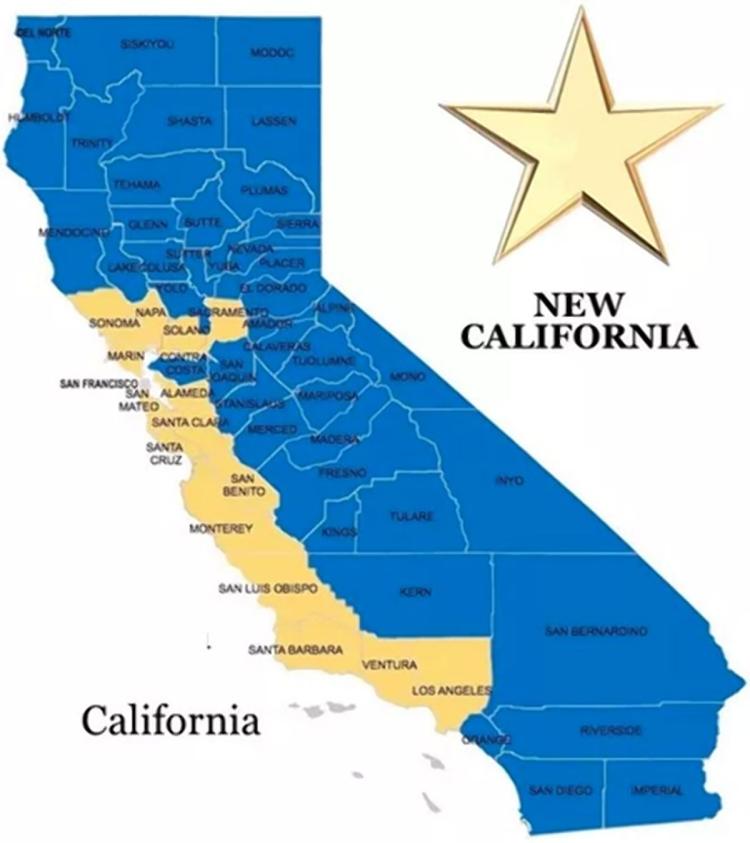
How many states will we have in the Union in twenty years? Probably 50, but there’s an outside chance that the number will be 55 plus. That could include a split of upstate New York from New York City, downstate Illinois from Chicagoland, eastern from western Washington State, eastern from western Oregon (or eastern Oregon combining with Idaho), and a division of California into as many as six states, as one proposal has it. There are secessionist movements alive in all of those states and it has happened before, as Glenn Reynolds notes in his recent paper “Splitsylvania: State Secession and What to Do About It“.

The origins of state boundaries and state governments were probably based on combinations of natural geographic features and confluent economic and political interests existing at the time. It would be surprising if those factors remained in static alignment over time, however. For various reasons, West Virginia seceded from Virginia many years ago, and Tennessee was once part of North Carolina. But to the extent that interests diverge within states, would a series of secessions promote better representative government? Reynolds’ approach to this question is fairly even-handed, though he apparently leans toward less disruptive solutions to the kinds of grievances voiced by secessionists.

Secession is a complex process; it obviously involves a major task in establishing a new state governmental apparatus. Also, legislative roadblocks to secession movements exist at both the state and federal levels. Nevertheless, there is great disaffection among rural interests in the states mentioned above for the policies they say are forced upon them by “urban elites”, as Reynolds calls them. At present, the secession of rural areas would tend to benefit republicans at the federal level, as two new Senate seats would be created to offset the seats held by democrats elected in more urban areas. Conceivably, however, the same process could work in reverse in other states, such as Texas. Even the proposal for six Californias seems designed to at least neutralize any possible negative impact on democrats in national politics.

Reynolds’ paper outline a few ways in which interests represented by legislative minorities, such as rural populations, could be better served without a step so drastic as secession. State regulation is often what rankles secessionists. To add fuel to the fire, states are free to adopt rules that are more strict than rules established under federal legislation, if they so choose, but never rules that are less strict. Today this applies to wages, working conditions, gun regulation, and environmental law. Reynolds suggests turning this on its head:

“The federal government’s legislative role has traditionally been the opposite: To use (as in the case of the 1964 Civil Rights Act) a national majority to ensure that local majorities can’t oppress local minorities. I thus suggest that federal laws regulating these key subject-matter areas be recast to pre-empt more restrictive state laws, meaning that urban regions would be unable to impose stricter laws on less- powerful rural areas. If this seems too inflexible, perhaps that pre-emption should in some cases be defeasible at the county level; if the government of a county affirmatively wants to accept stricter state regulations, then it may do so, but if not, then the federal regulations are a ceiling, as well as a floor.”

Reynolds contends that this approach would be relatively easy to defend against state challenges. The idea that federal rules provide minimum standards of regulation is only one interpretation of the Supremacy Clause of Article VI of the Constitution. There is no reason why federal legislation cannot be written in the way Reynolds describes. Moreover, Reynolds asserts that the Guarantee Clause of Article IV, which assures that mandates are to be established according to republican principles, could be used to buttress this argument. But he offers another remedy to curb secessionism among rural voters that states could exercise:

“There is nothing to stop a state from being mindful of the differences between urban and rural areas when crafting legislation or regulations, after all. States could adopt a local-option regulatory scheme relating to key subject areas on their own, and by doing so would lighten their footprint in rural areas and lessen the likelihood of festering resentments.”

Perhaps that’s hoping for too much. State majorities are unlikely to cede power to rural minorities, but it’s nice to imagine that sort of cooperation. There is no question that this sort of state regulatory approach would protect local interests from the tyranny of one-size-fits-all state regulation, but it wouldn’t eliminate the burdens created by the standard interpretation of federal supremacy.

In general, federal preemption of stricter state laws is no less consistent with the principles of federalism than federal pre-emption of more lenient state laws. One could even argue that the best way to apply federal supremacy depends on the issue, so there is some symmetry in Reynolds’ proposal. In terms of representative democracy, it is less an evil than federal preemption of less restrictive laws. It does what a democratic republic is supposed to do: protect minorities from the tyranny of a majority.

Secession from states is an intriguing possibility. Perhaps it is even the best approach in some cases. Nevertheless, Reynolds’ suggestions for revising federal and state regulatory approaches would be less costly and would avoid a nationwide race to subdivide states in order to gain a federal political advantage.

Benefit Mandates Bar Interstate Competition

30 Thursday Mar 2017

Posted by Nuetzel in competition, Health Care

≈ 1 Comment

Tags

Benefit Mandates, Cherry-Picking, Commerce Clause, Federalism, Foundation for Economic Education, Health Insurance, Interstate Competition, John Seiler, Legacy Carriers, McCarran-Ferguson Act, Restraint of Trade, Robert Laszewski, Steve Esack, Teresa Miller

The lack of interstate competition in health insurance does not benefit consumers, but promoting that kind of competition requires steps that are not widely appreciated. Most of those steps must take place at the state level. In fact, it is not well known that it is already legal for states to jointly create interstate “compacts” under Obamacare, though none have done so.

The chief problem is that states regulate insurance carriers and the policies they offer in a variety of ways. Coverage mandates vary from state to state, as do rules governing the coverage of pre-existing conditions, renewability, dependents, costs, and risk rating. John Seiler, writing at the Foundation for Economic Education, offers a great perspective on the fractured character of state regulations. Incumbent insurers within a state have natural advantages due to their existing relationships with local providers. Between the difficulty of forming a new network and the costs of customizing policies and obtaining approval in multiple states, there are significant barriers to entry at state lines.

Federalism is a principle I often support, but state benefit mandates and other regulations are perverse examples because they restrict the otherwise voluntary and victimless choices available to a state’s consumers. Well, victimless except perhaps for in-state monopolists and their cronyist protectors in state government. Many powers are reserved to states under the Constitution, while the powers of the federal government are strictly limited. That’s well and good unless state governments infringe on the rights of individuals protected by the Constitution. In particular, the Commerce Clause prohibits state governments from obstructing the flow of interstate commerce.

Here is a bit of history surrounding the evolution of state versus federal control over insurance markets, as told by Pennsylvania Insurance Commissioner Teresa Miller (as quoted by reporter Steve Esack):

“Since the 1800s, the U.S. Supreme Court held individual states, not Congress, had the power to regulate insurance companies. The high court overturned that precedent, however, in a 1944 ruling, United States v. South-Eastern Underwriters, that said insurance sales constituted interstate trade and Congress could regulate insurance under the U.S. Constitution’s Commerce Clause.

But states cried foul. In response, Congress passed and President Harry S. Truman in 1945 signed the McCarran-Ferguson Act to grant a limited anti-trust provision so states could keep regulating insurance carriers. The law does not preclude cross-border sales. It means insurance companies must abide by different sets of rules and regulations and laws in 50 states.“

Congress obviously recognized that state regulation of health insurance would create monopoly power and restrain trade, even if states place bridles on insurers and impose ostensible consumer protections. The solution was to exempt health insurers from broad federal regulation and anti-trust prosecution by the Department of Justice.

Last week, the House of Representatives passed a bill that would repeal McCarran-Ferguson for health insurers. However, that would do little to encourage cross-border competition as long as the tangle of state mandates and other regulations remain in place. The regulatory landscape would have to change under this kind of federal legislation, but how that would happen is an open question. Could court challenges be brought against state regulators and coverage mandates as anti-competitive? Would anti-trust actions be brought against incumbent carriers?

Robert Laszewski has strong objections to any new law that would allow interstate sales of health insurance as long as state benefit mandates remain in place for “local legacy” carriers. In particular, he believes it would encourage “cherry picking” of the best risks by market entrants who would be free of the mandates. Many of the healthiest individuals would jump at the chance to purchase stripped down, catastrophic coverage. That would leave the legacy carriers under the burden of mandates and deteriorating risk pools. Would states do this to their incumbent insurers without prodding by the courts? Would they simply drop the mandates? I doubt it.

No matter the end-state, there is likely to be a contentious transition. Promoting interstate competition in the health insurance market is a laudable goal, but it is not as simple as some health-care reformers would have us believe. Real competition requires action by states to eliminate or liberalize regulations on benefit mandates, risk-rating and pre-existing conditions. Ultimately, the cost of coverage for high-risk individuals might have to be subsidized, whether means-tested or not, through a combination of support from the states, the federal government, and private charities. And of course, interstate competition really does requires repeal of the health insurance provisions of McCarran-Ferguson.

Governments at any level can act against the well-being of consumers, despite the acknowledged benefits of decentralized governance over central control. Benefit mandates, whether imposed at the federal or state levels, are inimical to consumer choice, competition, efficient pricing, and often to the very concept of insurance. Those aren’t the sort of purposes federalism was intended to serve.

Government As Hazard

10 Friday Feb 2017

Posted by Nuetzel in Big Government, Markets

≈ Leave a comment

Tags

Asymmetric Hyperbole, Bryan Caplan, Coercive Power, Corporatism, Federalism, Limited government, Pareto Optimal, Public Employee Unions, Supermajority, Vilfredo Pareto

national-bird

Lots of people think government can do good things, even if its always in fashion to wink about the state’s legendary incompetence. It can do lots of things, but the only way it can do them is by exercising its power to coerce. It’s simply impossible to form an effective government without granting it that power. We must hope it will do only good things, and there is reasonable consensus that its basic functions are good, at least in kind: national defense, law enforcement and protection of basic rights, and a judicial system. The mere performance of those functions requires coercive power, and funding them requires the coercive power of taxation.

To make things simple, for now let’s stipulate that all agree on both the necessary functions of government, some minimal scale and scope of those functions, and the taxes necessary to pay for them. We may all feel that we are better off. Anything in excess of that minimal portfolio as might be desired by an individual or group would necessarily make some feel better off and some feel worse off. Additional taxes would have to be collected to pay for it, and the activities themselves might be seen in some quarters as inappropriate, wasteful, or intrusive. Now, the coercion of the state becomes more binding on some individuals and groups. We no longer have a win-win proposition, and that is what  distinguishes marginal government activity from marginal private exchange. The latter is always predicated on mutual benefits for the transacting parties. In the jargon of economics, these voluntary, private trades are Pareto-improving moves, meaning that some individuals are made better off and no one is made worse off. In general, if all mutually beneficial trades are exploited, the final result is Pareto optimal (after Vilfredo Pareto), because no further activity can make anyone better off without making someone else worse off.

The limited government described in the hypothetical sounds as if it might be Pareto optimal, but let’s add a little more realism. Are there additional government functions that would improve well being without doing harm to anyone? There is general agreement that government should provide for other “public goods”, which would otherwise be under-demanded in the market, and under-provided, due the nonexclusive nature of their benefits (think public parks). Once those are provisioned, the outcome may be Pareto optimal. There may be unanimous agreement, as well, that government should take actions to mitigate certain external costs arising from private activity. (If some of the costs of private activity are not internalized, then those market transactions fail the test of Pareto improvement). These additional government functions require coercive power, of course. Now we are into more complex issues of public choice. The provision of goods with at least some public benefits requires judgement as to degree, and judgement is necessary as to the appropriate degree of mitigation of external costs when they are an issue. In other words, Pareto-improving moves get scarce once government assumes responsibilities beyond those described in our original hypothetical.

As the scale and scope of government grow, its coercive force must advance as well. Therefore, unanimous consent for this growth, and even widespread consensus, will be impossible to achieve. Its size will reach a level at which a substantial share of the population will assume the roles of “public servants”, all having a vested interest in the state’s continued growth, if only to boost their own pay. The potential conflict of those personal interests with the public interest could not be clearer. That’s a good reason to support strict limits on the size and power of government, not to mention restrictions on the power of public employees to unionize.

Those who wish for government to play a dominant role in society might think it’s all for the good. They might support changes in the rules of governance that facilitate the dominance and coercive power it confers upon them. That might include, for example, pushing the use of executive authority to extreme levels based on interpretations of complex, but often vague, legislation. It might include changes in parliamentary rules that make it easier for thin majorities of legislators to work their will. No doubt these rule  changes will lead to Pareto-degrading actions, though the ruling faction will be quite happy with their new powers.

But what happens when a shift in the balance of public opinion brings new leaders to power? Those leaders will inherit rules that facilitate their agenda and authority to exercise coercive power. No one at any point along the ideological spectrum should dismiss this sort of risk. That’s the spirit of a recent Bryan Caplan post, “Limited Government as Insurance“. Stretching powers in the service of particular policy goals may well backfire when those powers become available to an opposing faction:

“Imagine going back in time to January 20, 2009. Obama’s Inauguration Day. You’re a cheering fan. On that day, an angel appears and makes you this offer: If you give up on Obama’s best ideas, none of Trump’s worst ideas will happen either. Obamacare will never happen – but neither will Trump’s immigration policies. Would you take that deal?

I know, it’s a galling hypothetical. You want the good stuff without the bad stuff.“

Caplan characterizes strict limits on government as a form of insurance against the risk of swings in the balance of power. He also considers plausible reasons for rejecting such a deal: “the arc of the moral universe”, or, you think your side will ultimately win, and will win for all time; and “asymmetric hyperbole”, or, the greatness of your policies outweighs any damage the other side can do with the same powers. If you really believe those things, it might seem reasonable to take your chances on an expansive state with expansive powers! A preference for limited government, however, does not require the contorted logic required to reject this insurance.

The U.S. Constitution includes many provisions originally intended to limit government and the exercise of coercive power. Those protections from the state have eroded over time, a process hastened by increasingly flexible judicial interpretations of the founding document. Caplan notes that there are a number of mechanisms by which limited government can be made durable:

“Supermajority rules require more than a majority to act. Division of powers makes it hard for government bodies to accomplish anything on their own. Judicial review allows judges to invalidate acts of government. Federalism greatly reduces the cost of “voting with your feet.” If you think these institutions aren’t working, the obvious solution is to strengthen them. Impose more supermajority requirements. Divide more powers. Overturn legislation that fails to get support from six, seven, eight, or all nine Supreme Court Justices. Make states pay for their own spending with their own taxes, not federal grants.“

Then comes the most insightful, but most disheartening, part of Caplan’s post: real steps to limit government will never be taken:

“Limited government helps everyone in the long-run, but immediately hurts the ruling party. They fought hard to win power; now that they have it, they yearn to flex their muscles.“

We might see a federal department abolished here or there, and we might see certain regulations rolled back, but those steps will be selective. The powers that put them there in the first place can be reapplied in the future. We might see more “business-friendly” actions, but those will be selective as well. In other words, corporatism will persist. And we might see tax cuts, but that won’t reduce the government’s absorption of resources, which is driven by the spending side. While this sounds discouraging, I nevertheless admire Caplan’s characterization of limited government as insurance against the other side’s bad policies. If only we could pull it off!

A Healthy Fetish For Federalism

18 Monday Apr 2016

Posted by Nuetzel in Federalism

≈ Leave a comment

Tags

Civil Rights Act, Conflicts of Law, enumerated powers, Federal Powers, Federalism, Jim Crow Laws, State's Rights, Supremacy Clause

outrage

When I say I’m a federalist, I mean that I support a system in which powers are divided between different levels of government. Federalism establishes co-sovereignty between a central government and regional governments. It does not mean that the federal government is always dominant as is sometimes suggested: the Supremacy Clause under Article VI of the U.S. Constitution covers conflicts of law between the federal government and lower levels of government. Elsewhere, however, the Constitution places strict limits on the powers of the central government by defining an enumerated set of federal powers. All other powers reside with the people or their state governments, ideally constitutional republics in their own right.

Federalism is thought to minimize conflict within a nation by allowing law to be formulated differently within sub-jurisdictions. In this way, it has a limited ability to accommodate different political and social preferences, and it creates a de facto laboratory within which experiments in governance can be assessed. Whether one approves of a particular experiment always depends upon the nature of the question, and experiments imposing limits on individual rights are unconstitutional. Individual rights established by the Constitution are thought to be inviolable and to supersede any federal or state legislation. We should all be absolutists about that. A federalist approach can also be a practical starting point in bringing about broader social recognition of new claims under the Constitution. There are many interesting cases, however, in which legitimate constitutional rights of different parties stand in conflict.

The federalist idea of a social laboratory across jurisdictions is very appealing. When a conflict over legal and social issues seems intractable, federalism makes it possible to see how well different approaches solve the problem. There may be a variety of interesting solutions or political compromises that can be brought to bear, and it can be easier to reach an accord at the state level. Diversity of circumstances and preferences may mean that a good solution in one state will be bad in another. So different states can try different arrangements under federalism. The results of these experiments can guide other states or even federal legislation, if it comes to that. Voters in each state have the power to reward or punish elected representatives, based on these experiments or their outcomes, or to “vote with their feet” by moving to a state that better matches their political preferences.

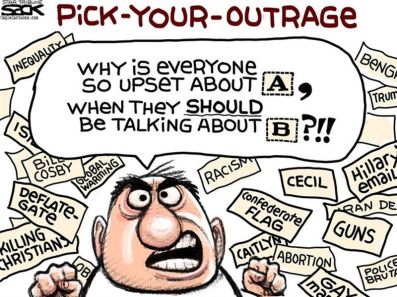
Today, the country is experiencing an epidemic of grievances on which there is little consensus. These cover issues related to gender identity, gay rights, polyandry, sexual consent, voting rights, due process claims, race and law enforcement, food labeling, drug legalization, censorship, assisted suicide, “micro-aggressions”, and any number of other causes célèbres. These issues may involve novel private or social arrangements, or they may necessitate a weighing of the asserted rights of an aggrieved individual or group against established rights of others protected by the Constitution. It may well be that the asserted rights of the aggrieved have a proper place in the Constitution, and if so, there might be a compelling case for protection relative to other claims. Federalism is one way this can be hashed out: a state legislates, pro or con; the legislation may be challenged in court; the courts rule whether the law is constitutional at the state level or even at the federal level. And the process may start in any number of states.

I have appealed to federalism on several issues in the past. When the rights of different parties stand in conflict, attempting to weigh different sides of an issue based on libertarian and constitutional principles does not always lead to clear-cut answers. However, laws work best when there is consensus among the governed. Political consensus may be more readily achieved at sub-national levels. That doesn’t necessarily protect the people of any state against big government solutions, high taxes or cronyism. However, at least dissenters within a state can register their dissatisfaction at the ballot box, agitate, attempt to persuade others, challenge in court, or move away.

Both left and right take absolutist views on many issues. They often find it difficult to tolerate variances à la federalism. For example, should a legitimate transgender individual be allowed to use the restroom compatible with their gender identity? The left regards that as an inviolable right, regardless of genitalia and potential threats to privacy. If you disagree, they may call you a bigot! Some on the right, however, regard transgenderism as perverse and not worthy of constitutional protection. Both are absolutist positions. There are, in fact, legitimate reasons for taking either side in the restroom debate, as I attempted to outline here last week. Under such circumstances, federalism respects the political balance within any jurisdiction and allows a way forward, short of resorting to federal legislation, which might well be impossible to achieve.

Federalism is usually associated with strong “states rights”, which are sometimes criticized on historical grounds because slavery was often characterized as a “states rights” issue. The horrific treatment of blacks under slavery was obviously based on an arbitrary distinction that should never have been tolerated under our Constitution; ownership of human chattel should never have been defended as a “right”, but it took a civil war and the Thirteenth Amendment to end it officially. The discrimination mandated under Jim Crow laws was based on the same arbitrary distinction, but it took another 100 years after the Civil War to end those laws through enactment of the Civil Rights Act. I grant that federal action was necessary in both cases. However, few of the challenges we face today are based on such arbitrary distinctions. Rather, they often involve constitutional ambiguity and legitimate concerns over protected rights. So let the experiments, the evolution of opinion and the court challenges play out. That is the essence of federalism. It helps us to muddle on through.

I’m a Restroom Federalist

10 Sunday Apr 2016

Posted by Nuetzel in Discrimination, Privacy

≈ 2 Comments

Tags

Expectation of Privacy, Federalism, Privacy Rights, Restroom Rights, Sexual Reassignment Surgery, Transgender, Transsexual, Transsexual Prevalence, Voyeurism, Voyeurism Prevalence, Wikipedia

image

A joke I once heard: “What two words does a guy least want to hear at the urinal? … Nice d*ck!”  The truth is that privacy matters. While most men don’t wish to be “admired” by other men, mens’ public restrooms would seem to provide adequate privacy for those having a particular sensitivity. I presume that womens’ restrooms do too.

Still, voyeurism is more common than we’d like, and strong privacy advocates believe that’s an adequate rationale for prohibiting transgender women (M to F) from using womens’ restrooms. It’s not legitimate trans-women who are of concern, whether they’ve undergone full sexual reassignment or not. Rather, it’s men who would falsely claim to be trans-women. Put another way, does the state have any compelling interest in protecting privacy by discriminating against transgender women, barring their use of womens’ restrooms?

Laws against voyeurism are grounded in the presumed right to privacy under the U.S. Constitution. The expectation of privacy is well-established as a condition under which voyeurism can be prosecuted, and bathrooms meet that test. In fact, the prevalence of voyeurism is estimated to be quite high, especially among males. The Wikipedia entry on this subject states that:

“…research found voyeurism to be the most common sexual law-breaking behavior in both clinical and general populations. … In a national study of Sweden it was found that 7.7% of the population (both men and women) had engaged in voyeurism at some point. It is also believed that voyeurism occurs up to 150 times more frequently than police reports indicate.“

The estimate from Sweden is conservative for male voyeurs. However, only a portion of that voyeurism occurs in or around public restrooms. For the sake of argument, let’s suppose that 5% of the estimate above relates to males likely to commit some form of voyeurism in or around womens’ restrooms, or 0.38% of the adult male population. Each of those males may commit voyeurism against multiple females on any given bathroom escapade, so this value may underestimate the risk to the privacy of women.

On the other hand, the prevalence of transgender, or gender identification different from that assigned at birth, is very low. Again according to Wikipedia, the most commonly cited figure is that 1 in 10,000 assigned males is transgender (and far fewer birth-assigned females). Some argue that this is too low to account for even the cases of sexual reassignment surgery (SRS) that have occurred in the U.S.  I would argue, however, that trans-women (M to F) having undergone SRS would be welcome in womens’ restrooms. After all, they’d even pass a genital check at the door! That leaves transgender men who have not yet, or will not, undergo SRS. So, for the sake of argument, I will go with the incidence rate of 0.01% implied by the figure above. That is, 0.01% of the adult male population is an assigned-male trans woman having male genitals.

Assuming that all womens’ restrooms are thrown open to any male claiming to be a trans-woman, the conservative estimate of the incidence of voyeurism would be 38 times the incidence of legitimate trans-women disallowed from entering womens’ restrooms under traditional gender restrictions. Note that neither of these estimates has a time dimension. Repeat voyeurism is a likelihood, just as legitimate trans-women, pre-SRS, would be denied their rights on every trip to a public restroom.

Now we ask again which case is more compelling: protecting the right to privacy against the potential for voyeurism, or protecting the restroom rights of trans-women who are pre- or non-SRS? One possible solution is to acknowledge restrictions on restroom use as an incentive for transsexuals to undergo SRS. However, that is not practical in important respects: full gender transition can take a number of years; SRS is not and cannot be an immediate procedure for walk-ins at the doctor’s office for various reasons; and some transsexuals are never able to make a full transition.

Another consideration is the extent to which bathroom regulation makes any difference at all. While “throwing the doors open” might create some additional incentive to male voyeurs, they are already active, and most of them would be just as easy to prosecute if the rules on restroom use for trans-women were relaxed. However, to the extent that creates additional risk, it is borne by all women availing themselves of public restrooms. At the same time, it is certain that trans-women already make use of womens’ restrooms. If non-SRS, they must do so surreptitiously and at some legal risk, Again, their total number is limited.

The balance between the threat to privacy rights and the desire for equitable treatment of transsexuals is not as clear-cut as some on either side would have us believe. However, given the need to determine that balance, the classic federalist approach seems ideal. That is, states or more limited political jurisdictions should decide how best to handle the issue. That is more or less our current approach, as the issue is otherwise beyond our ability to find a consensus. Full conversion to unisex restrooms might even be acceptable in some parts of the U.S. Fortunately, individuals can “vote with their feet”, rewarding those jurisdictions having laws they find best-protect their rights as individuals. It’s another great experiment in the determination of social preferences. That’s what federalism is all about.


Government Supplies a Cliff; Would you Jump?

14 Friday Aug 2015

Posted by Nuetzel in Big Government, Welfare State

≈ Leave a comment

Tags

Benefits Cliff, Dan Mitchell, dependency, Earned Income Tax Credit, EITC, Federalism, Fight Club, Illinois Policy Institute, Labor Force Participation, LiberalForum, Marginal tax rate, National Bureau of Economic Research, NBER, Obamacare incentives, Pennsylvania welfare cliff, Tyler Durden, War on Drugs, Welfare Cliff, Welfare State, Work Disincentives, Work Effort, Zero Hedge

welfare cliff

People respond to incentives. That does not, in and of itself, make some people “energetic” and others “lazy”. To the contrary, it really means they are responsive and capable of calculating rewards. Critics of the welfare state are sometimes accused of labeling welfare recipients as “lazy”, which is absurd and a cop-out response to serious questions about the size, effectiveness, and even the fairness of means-tested benefits. The structure of welfare benefits in the U.S. often penalizes work effort and market earnings. That being the case, who can blame a recipient for minimizing work effort? From their perspective, that is what society wants them to do. Note that this has nothing to do with the provision of a social safety net for those who are unable to help themselves.

The welfare incentive phenomenon is explored by Zero Hedge under the Fight Club nom de guerre Tyler Durden in “When Work Is Punished: The Ongoing Tragedy Of America’s Welfare State“:

“At issue is the so-called “welfare cliff” beyond which families will literally become poorer the higher their wages, as the drop off in entitlements more than offsets the increase in earnings.“

The cliff looks different in different states and even differs by county. The chart at the top of this post is for Pennsylvania, from the state’s Secretary of Public Welfare, though I saw it on this post from LiberalForum. (Go to the link if the image is not clear). The Zero Hedge post linked above includes a dramatic illustration for Cook County in Illinois. Not many welfare recipients participate in all of the programs shown in the charts, but the point is that many of the programs create nasty incentives that tend to “trap” families at low income levels. Often, these workers and their families would be better off in the long-run if they were to suffer the consequences of the cliff in order to gain more work experience. Unfortunately, few have the resources to ride out a period of lower total income precipitated by the cliff. Another obvious implication is that increases in the minimum wage would actually harm some families by pushing them over the cliff.

Welfare cliffs differ by the recipients’ family structure (one- versus two-parent households, number of children) and do not apply to every welfare program. For example, the Earned Income Tax Credit (EITC) is very well-behaved in the sense that additional work and/or wage income flows through as a net gain the household. While most welfare programs involve a benefits cliff, incentives are undermined even before that point. A flattening in the level of total income as earned income rises indicates that the recipient faces an increasing marginal tax rate. The chart above shows that total income is relatively flat over a range of earned income below the income at which they’d encounter the cliff. This flat range starts at an earned income of $15,000 to $20,000 and extends up to the severe cliff at almost $30,000.

Zero Hedge quotes a report from the Illinois Policy Institute:

“We realize that this is a painful topic in a country in which the issue of welfare benefits and cutting (or not) the spending side of the fiscal cliff have become the two most sensitive social topics. Alas, none of that changes the matrix of incentives for Americans who find themselves facing a comparable dilemma: either remain on the left side of minimum US wage and rely on benefits, or move to the right side at far greater personal investment of work, and energy, and… have the same (or much lower) disposable income at the end of the day.“

Another interesting take on this issue is offered by Dan Mitchell, who cites a recent National Bureau of Economic Research (NBER) paper, which finds:

“…the decline in desire to work since the mid-90s lowered the unemployment rate by about 0.5 ppt and the participation rate by 1.75 ppt. This is a large effect…“

The findings suggest that the welfare reforms of the 1990s actually had positive effects on work effort, though even the EITC creates some incentive problems for second earners. Worst of all is the incentive impact of expanded disability benefits, which have undone some of the gains from reform. Newer programs like Mortgage Assistance and now, Obamacare, have added to the work disincentives. Mitchell cites other research that reinforce these conclusions.

The welfare cliff harms economic efficiency by distorting the offer price of labor, by increasing costs to taxpayers, and by reducing the availability of productive resources. It is grossly unfair because it consigns its intended beneficiaries to a life of dependency. What a waste! Here is Mitchell’s prescription:

“Regarding the broader issue of redistribution and dependency, I argue that federalism is the best approach, both because states will face competitive pressure to avoid excessively generous benefits and because states will learn from each other about the best ways to help the truly needy while minimizing the negative impact of handouts on incentives for productive behavior.“

A side effect of negative welfare incentives is that they increase the relative benefits of participating in illegal income-earning activity. The “War on Drugs” exacerbates this effect by driving up drug prices. Of course, this activity is untaxed, and because it is unreported, it does not push the recipient toward the benefits cliff. This is another example of different government policies working at cross purposes, which is all too common.

Federal Strings and Executive Puppeteers

28 Thursday May 2015

Posted by Nuetzel in Big Government, Federalism, Regulation

≈ Leave a comment

Tags

Administrative State, Cooperative federalism, Executive federalism, Federalism, Michael S. Greve, Nullification, Tenth Amendment

federal bribes

We often think of government bureaucracy as a force of stasis, but it is unlikely to promote stability. At all levels, government administrative organs have a way of growing, absorbing increasing levels of resources and constricting private activity by imposing increasingly complex rules. A large administrative apparatus tends to calcify the economy, undermining growth or even a sustained level of economic activity. The negative consequences of the administrative state were treated twice on this blog last year.

Federalism, on the other hand, is usually viewed as a check on federal power relative to state governments. That was the perspective of “Nullifying the Federal Blob” last year on SCC. However, in “The Rise of Executive Federalism“, Michael S. Greve discusses forms of federalism that can serve as adjuncts or even alternatives to the exercise of federal legislative power. First, he discusses “cooperative federalism”, whereby lower levels of government receive federal funds and in turn administer federal programs:

“With very few exceptions…, virtually all federal domestic programs are administered by state and local governments, often under one of over 1,100 federal funding statutes (such as Medicaid or NCLB). Since its inception under the New Deal, this ‘cooperative’ federalism has proven stupendously successful in doing what it was supposed to do: expand government at all levels.“

Greve draws a connection between political and economic developments over recent decades, the coincident decline of cooperative federalism and the rise of a more aggressive “executive federalism”. These developments include constraints on funding at both the federal and state levels, a decline in the willingness of states to cooperate on certain programs, and a divided Congress. No funding, no federal-state cooperation and no federal legislative direction leaves a vacuum to be filled by federal executive initiative:

“Thus, to make federal programs ‘work’ under current conditions, agencies rewrite statutes, issue expansive waivers, and negotiate deals with individual states on a one-off basis. That is how the ACA is being ‘administered.’ That is how Secretary of Health and Human Services Sylvia Burwell is trying to expand Medicaid. That is how No Child Left Behind is run. And that is how Environmental Protection Agency is trying to impose its Clean Power Plan: ‘stakeholder meetings’ and assurances of regulatory forbearance for cooperating states; unveiled threats against holdout states. This brand of federalism knows neither statutory compliance nor even administrative regularity. It is executive federalism.“

It does not bode well that this perverse form of federalism “is robust to partisan politics.” Greve notes that certain aspects of executive federalism were initiated by the Reagan Administration.

Greve’s advice on combating this trend is to make federalism “less cooperative, one program at a time.” While he’s a little short on specifics, he advises that initiatives such as block grants to states are likely to be counterproductive in restoring traditional federalism. One point on which I part company with Greve is his disparaging reference to “state’s rights” as a battle of “yesterday”. I suspect his underlying objection (which I do not share) is drug legalization at the state level, or any other measure that he might find morally objectionable. Otherwise, I have no issue with what I take to be his favored approach, which seems to involve any assault on the exercise of federal administrative power and rule-making, whether that is through the courts or the exercise of nullification by the states. It is promising that so many states are resisting the imposition of additional administrative and funding burdens attendant to expansive federal sweeteners and control.

Causal Confusion In The Gun Debate

18 Wednesday Mar 2015

Posted by Nuetzel in Gun Control, Uncategorized

≈ Leave a comment

Tags

Black Market Activity, Defensive Gun Uses, Demographics of Homicide, Federalism, Gun Control, Homicide rates, Lead and Homicide, Mass Shootings, Prohibition, Spousal Homicide, Suicide rates

anarkitty_crowd_control

As a follow up to my recent post on defensive gun uses (DGUs), I think it’s appropriate to discuss international comparisons sometimes cited in support of the anti-gun rights agenda.This was prompted by correspondence from a fellow blogger, to whom I’ll refer as HH, who followed up with a post featuring some international data. I respect HH’s effort to collect the data and to present it with some eloquence, and with a little less rancor than the original correspondence. Nevertheless, the international comparisons are not as straightforward as HH would like to believe.

Let me state at the outset that I am not a big “gun guy”. I support individual liberty and a minimal state apparatus in general, along with gun rights, but I am not affiliated in any way with the NRA or any other pro-gun organization. As I told my well-armed older brother, he would not be impressed with my weaponry. I still keep a nasty, old fireplace iron under my bed. And I have a few rocks in my backyard.

HH believes that the high U.S. homicide rate relative to the handful of other developed countries he mentions (along with India) proves that “gun control works”. I differ for several reasons discussed below.

Causality and Gun Control: HH’s conclusion brings into focus two different aspects of the gun control question. The first is whether a change to more restrictive gun control leads to a reduction in homicides. That is not as obvious an outcome as HH thinks. For example, a gun ban cannot eliminate all guns, especially within limited jurisdictions. (Perhaps the federalist approach is partly why HH considers our gun laws “a mess”, but federalism is a feature of our system, not a bug, not least if it discourages local politicians from enacting ineffective rules.) Black market traffic in guns is likely to be sufficiently profitable to justify the legal risks in the presence of a ban. And the empirical evidence as to whether more stringent gun control reduces homicides is mixed at best (see here, here, here and here).

The empirical evidence presented by HH is not related to changes in gun laws (except for one or two suspect assertions about mass shootings). Instead, cross-country comparisons of homicide rates are given along with a single correlate: “gun laws”. The one data point driving the presumed direction of causality is the U.S., which has lenient gun laws and a high homicide rate relative to the four other countries (five if we include the U.K., from whence HH hails). The comparisons are made with no controls for the history of gun rights and ownership, demographics, other prohibitions, or any other confounding influences. For HH, it’s all because of guns.

Mass Shootings: HH spends some of the post discussing this phenomenon, which is rare albeit horrifying. Mass shootings account for very few of U.S. homicides, and there has been no discernible upward trend in the U.S. (see here, here and here). Moreover, multiple victim shootings are just as common in Europe as they are in the U.S. They usually prompt calls for bans on arbitrarily-defined “assault weapons”, but the bans do little to prevent such tragedies.

Historical Background: Guns owned by private individuals played an important role in the American revolution. In fact, early British attempts to confiscate weapons led to an increase in the hostilities leading up to the war. The Second Amendment of the U.S. Constitution was intended to protect individual gun rights and to protect the nation from future tyrants.

The homicide rate has declined steadily in the U.S. over the past three hundred years, from estimates of more than 30 per 100,000 people in the early 1700s to less than five today. A similar pattern occurred in other parts of the world, but after 1850, the decline in the U.S. failed to keep pace with declines in Europe.

Private guns were integral to westward expansion in the U.S. Leaving aside the tragic consequences for Native Americans, the scramble for resources and the under-developed legal system in the west undoubtedly contributed to homicides. At the same time, the need of settlers to defend life and property in an insecure environment made gun ownership (and DGUs) a necessity. This history and the generally high value placed by Americans on individual rights set the tone for today’s generally permissive attitude toward gun ownership in the U.S.

Alcohol, Drug Prohibition and Homicide: The temporary lows in the homicide rate prior to the 1910s “may have been illusory“, according to this abstract, because many homicides were reported as accidents in that time frame. More accurate reporting created the impression of a rising homicide rate during the 1910s. Alcohol prohibition began in 1920 and contributed to an increase in U.S. homicides until after repeal. Likewise, later in the twentieth century, the drug war, together with a bulge in the youth population, contributed to an even larger increase in the homicide rate. It is interesting that this increase was accompanied by an apparent decrease in the rate of spousal homicide. (A curious aside: one analyst has noted the strong correlation between homicide rates in the U.S. and fluctuations in the use of lead-based paints and leaded gasoline.)

Illegal drugs are just one area of black market activity in which the U.S. is a world leader. The connection between heavier underworld and gang activity and prevalent restrictions on victimless, individual behavior, on the one hand, and homicide rates on the other, helps explain the elevated U.S. homicide rate. The existence of this link is supported by an extremely strong concentration of homicides within specific social networks.

Demographics: The interaction of legal restrictions on behavior and weak economic circumstances is undoubtedly a factor contributing to high homicide rates. It is striking that U.S. homicides are so heavily concentrated within the African American community. The relative lack of legal economic opportunities within the African American community may be connected to greater illegal trade and homicides. Homicide rates are also somewhat elevated among U.S. Hispanics and Native Americans. Among the White and Asian segments of the U.S. population, homicide rates are comparable to those of Europe (and well under India’s rate).

Suicides: My antipathy for anti-gun arguments is probably softest with respect to gun suicides. Guns are certainly “weapons of convenience”, easily transported, fast and highly effective. Within the U.S., there is some evidence that gun ownership and total suicides are positively correlated, despite a negative correlation with non-gun suicides. However, total suicide rates in the U.S. and U.K. are similar. The rates in France and especially Japan are higher, while the rates in Denmark and India are lower. Moreover, suicide is symptomatic of larger social problems that have little to do with gun rights. Our inability as a society to deal effectively with mental health issues probably has much more to do with suicide and homicide rates than gun ownership.

Summary: There are many reasons to discount international comparisons of homicide rates and regulation of firearms. The comparisons often neglect measurement issues, but more importantly, strong conclusions about the efficacy of gun control from such top-line comparisons are often drawn without carefully addressing the question of causality between changes in gun laws and changes in homicide rates. The comparisons also fail to consider variations in the larger historical and legal context within which gun ownership occurs. For a large society like the U.S., there are vast differences in sub-groups that usually reflect other social problems, some of which are created by intrusive government itself.

I close below with some thoughts on HH’s criticism of my original post on DGUs.

DGU Denialism: HH’s objections to my post on DGUs were based on a belief that I:  1) quoted misleading statistics on gun violence in the U.S.; 2) engaged in scaremongering (apparently by quoting a wide range of estimates of DGUs); and 3) used a headline (“When Government Prohibits Self-Defense”) demonstrating a wildly paranoid view of the intent of the U.S. government.

The statistics on gun violence I cited in that post came from the U.S. Department of Justice and The Law Center To Prevent Gun Violence, which are hardly representative of the gun lobby. By providing information on gun homicides, suicides, accidents and nonfatal wounds presented in emergency rooms, I was seeking to provide a fairly comprehensive list of the “downsides” of guns in the U.S. I thought that was only fair as a way to lend perspective on estimates of DGUs. The statistics on gun violence vary from year-to-year, of course, and even the homicide numbers vary across different “official” sources for a given year (the example given at the link is total homicides). For these reasons, my initial intent was to quote ranges. However, not all of the data were available over multiple years from my original sources. Some of the figures were simply DOJ “estimates”. And apparently, my searches did not turn up the most recent data available (most of the figures I quoted were either 2010 or from 2005 – 2010). Well, mea culpa, mea culpa. My range for gun homicides of 10-12 thousand per annum was off, according to HH: it was actually 9 thousand! So, my range should have been broader in view of the continuing decline in gun homicides in the U.S., but I’m heartened to know that they were lower than I thought.

As for DGU’s, it is undeniable that they are a real phenomenon, though HH seems apoplectic that anyone would dare to discuss them. They obviously happen, though no one claims “there is always a good guy with a gun“. In fact, homicide statistics often exclude deaths from DGU’s and police shootings. (In the U.K., apparently one has to be found guilty of a murder for it to be counted as a homicide.)

Since any proposal to limit firearms would be more successful in disarming the law-abiding population than miscreants, it is reasonable to ask whether DGUs would decline more than non-justifiable homicides. Moreover, the low end of the range of DGU estimates I quoted came from DGU skeptics. In any case, I don’t think the following statements qualify me as a “scaremonger”:

“Estimates range from under 100 thousand per year to more than 2.5 million. There are reasons to doubt both of the extremes. … Given this range of estimates, it would be conservative to hedge toward the lower end. ”

Finally, the headline: Now, I like a punchy headline, and I’ll bet HH does too. I also believe that the ultimate goal of the statist anti-gun lobby is to outlaw private firearms. Again, such a policy would have the largest impact on gun possession among the law-abiding population; the headline was meant to convey the consequences of doing so.

Nullifying The Federal Blob

17 Tuesday Feb 2015

Posted by Nuetzel in Uncategorized

≈ 1 Comment

Tags

Article 5 convention, Barton Hinkle, CATO Institute, Constitutional convention, enumerated powers, Federalism, Nullification, Robert Levy, State's Rights, Tenth Amendment Center, The Hill

nullify-obamacare_big

When must a state acquiesce to the demands of the federal government? The question is not as straightforward as many believe. The U.S. Constitution is fairly explicit in “enumerating” the federal government’s powers, which at least tells us that the answer must be “sometimes,” not simply always or never. Powers not specifically granted to the federal  government are generally reserved by the states. This is the principle of federalism, but in practice it leaves plenty of room for disagreement. The federal government has grown enormously in size and in the scope of its activities. It seems inevitable that tensions will arise over specific questions about the limits of federal authority. And over time, in response to challenges, the courts have interpreted some of the enumerated powers more expansively. There is an ongoing debate over what avenues, in addition to the courts, states may follow in challenging federal power. Some have framed it as a debate over state “nullification” of specific federal laws versus a constitutional convention to establish clearer limits on the reach of federal power.

Recently, nullification has been all the rage, as this article in The Hill makes clear. So-called “mandates” often require states to enforce federal laws, which is likely to provoke some objections. And major pieces of federal legislation have become so complex that details must be sorted out by the administrative agencies in charge of implementation. This involves lots of rule-making and delegation of authority that has frequently imposed burdens on state governments. States are increasingly refusing to cooperate. From The Hill:

“The legislative onslaught, which includes bills targeting federal restrictions on firearms, experimental treatments and hemp, reflects growing discord between the states and Washington, state officials say. …

Friction between the states and the federal government dates back to the nation’s earliest days. But there has been an explosion of bills in the last year, according to the Los Angeles-based Tenth Amendment Center, which advocates for the state use of nullification to tamp down on overzealous regulation.”

Later in the same article, the author discusses an effort to organize a constitutional convention:

“… conservatives are pushing for states to invoke Article 5 of the Constitution and hold a ‘convention of states’ to restrict the power and jurisdiction of the federal government. The group Citizens for Self-Government is leading the charge, and three states — Alaska, Georgia and Florida — have already passed resolutions calling for the convention. Another 26 states are considering legislation this year, according to the group’s president, Mark Meckler. It would take 34 states to call a convention. At the convention, Meckler said the states would work to pass amendments that impose fiscal restraints, regulatory restrictions and term limits on federal officials, including members of the Supreme Court. ‘We’ll have [Article 5] applications pending in 41 states within the next few weeks,’ he said. ‘The goal is to hold a convention in 2016.’”

Libertarians are split on the issues of nullification and a constitutional convention. The latter  is addressed by A. Barton Hinkle in Reason, who questions the necessity of a convention and sees certain risks in the effort, such as new provisions that could “backfire”, the possibility of a “runaway convention”, and efforts to riddle the Constitution with “primary laws,” rather than merely improving it as a framework for governing how we are governed.

As for nullification, Robert Levy, board chairman of The CATO Institute, distinguishes between situations in which a state is asked to enforce a federal law and those involving federal enforcement of a law deemed to be unconstitutional by a state. He asserts that states cannot resolve the latter type of dispute via nullification:

“Fans of nullification count on the states to check federal tyranny. But sometimes it cuts the other way; states are also tyrannical. Indeed, if state and local governments could invalidate federal law, Virginia would have continued its ban on inter-racial marriages; Texas might still be jailing gay people for consensual sex; and constructive gun bans would remain in effect in Chicago and elsewhere.

… If a state deems a federal law to be unconstitutional, what’s the proper remedy? The answer is straightforward. Because the Supreme Court is the ultimate authority, the remedy is a lawsuit challenging the constitutionality of the suspect federal regulation or statute.”

Not surprisingly, the Tenth Amendment Center strongly disagrees with the limits on nullification described by Levy:

“Levy’s entire argument rests on the idea that the federal courts possess the sole and final authority to determine the constitutionality of an act. … Levy never addresses the fundamental question facing those who oppose nullification: how does one reconcile the undeniable fact that the state ratifying conventions adopted the Constitution with the understanding that it was creating a general government with specific, limited powers and the idea that a branch of that very same federal government has the final say on the extent of its own powers? Quite simply, you can’t.”

These recent efforts to reign in the federal government are exciting. I am watching the progress of the Article 5 convention effort with great interest. I am not sure I buy into Levy’s arguments against nullification because checks on power should cut both ways: the Constitution allows states to retain powers not specifically granted to the federal government, so the states should guard those powers jealously. It matters not whether the question involves state enforcement of a federal law or a federal law that violates states rights. Likewise, powers specifically granted to the federal government should serve as a check on “state-level tyranny”. Again, that leaves plenty of room for disagreement before the courts.

← Older posts
Newer posts →
Follow Sacred Cow Chips on WordPress.com

Recent Posts

  • The Case Against Interest On Reserves
  • Immigration and Merit As Fiscal Propositions
  • Tariff “Dividend” From An Indigent State
  • Almost Looks Like the Fed Has a 3% Inflation Target
  • Government Malpractice Breeds Health Care Havoc

Archives

  • January 2026
  • December 2025
  • November 2025
  • October 2025
  • September 2025
  • August 2025
  • July 2025
  • June 2025
  • May 2025
  • April 2025
  • March 2025
  • February 2025
  • January 2025
  • December 2024
  • November 2024
  • October 2024
  • September 2024
  • August 2024
  • July 2024
  • June 2024
  • May 2024
  • April 2024
  • March 2024
  • February 2024
  • January 2024
  • December 2023
  • November 2023
  • August 2023
  • July 2023
  • June 2023
  • May 2023
  • April 2023
  • March 2023
  • February 2023
  • January 2023
  • December 2022
  • November 2022
  • October 2022
  • September 2022
  • August 2022
  • July 2022
  • June 2022
  • May 2022
  • April 2022
  • March 2022
  • February 2022
  • January 2022
  • December 2021
  • November 2021
  • October 2021
  • September 2021
  • August 2021
  • July 2021
  • June 2021
  • May 2021
  • April 2021
  • March 2021
  • February 2021
  • January 2021
  • December 2020
  • November 2020
  • October 2020
  • September 2020
  • August 2020
  • July 2020
  • June 2020
  • May 2020
  • April 2020
  • March 2020
  • February 2020
  • January 2020
  • December 2019
  • November 2019
  • October 2019
  • September 2019
  • August 2019
  • July 2019
  • June 2019
  • May 2019
  • April 2019
  • March 2019
  • February 2019
  • January 2019
  • December 2018
  • November 2018
  • October 2018
  • September 2018
  • August 2018
  • July 2018
  • June 2018
  • May 2018
  • April 2018
  • March 2018
  • February 2018
  • January 2018
  • December 2017
  • November 2017
  • October 2017
  • September 2017
  • August 2017
  • July 2017
  • June 2017
  • May 2017
  • April 2017
  • March 2017
  • February 2017
  • January 2017
  • December 2016
  • November 2016
  • October 2016
  • September 2016
  • August 2016
  • July 2016
  • June 2016
  • May 2016
  • April 2016
  • March 2016
  • February 2016
  • January 2016
  • December 2015
  • November 2015
  • October 2015
  • September 2015
  • August 2015
  • July 2015
  • June 2015
  • May 2015
  • April 2015
  • March 2015
  • February 2015
  • January 2015
  • December 2014
  • November 2014
  • October 2014
  • September 2014
  • August 2014
  • July 2014
  • June 2014
  • May 2014
  • April 2014
  • March 2014

Blogs I Follow

  • Passive Income Kickstart
  • OnlyFinance.net
  • TLC Cholesterol
  • Nintil
  • kendunning.net
  • DCWhispers.com
  • Hoong-Wai in the UK
  • Marginal REVOLUTION
  • Stlouis
  • Watts Up With That?
  • Aussie Nationalist Blog
  • American Elephants
  • The View from Alexandria
  • The Gymnasium
  • A Force for Good
  • Notes On Liberty
  • troymo
  • SUNDAY BLOG Stephanie Sievers
  • Miss Lou Acquiring Lore
  • Your Well Wisher Program
  • Objectivism In Depth
  • RobotEnomics
  • Orderstatistic
  • Paradigm Library
  • Scattered Showers and Quicksand

Blog at WordPress.com.

Passive Income Kickstart

OnlyFinance.net

TLC Cholesterol

Nintil

To estimate, compare, distinguish, discuss, and trace to its principal sources everything

kendunning.net

The Future is Ours to Create

DCWhispers.com

Hoong-Wai in the UK

A Commonwealth immigrant's perspective on the UK's public arena.

Marginal REVOLUTION

Small Steps Toward A Much Better World

Stlouis

Watts Up With That?

The world's most viewed site on global warming and climate change

Aussie Nationalist Blog

Commentary from a Paleoconservative and Nationalist perspective

American Elephants

Defending Life, Liberty and the Pursuit of Happiness

The View from Alexandria

In advanced civilizations the period loosely called Alexandrian is usually associated with flexible morals, perfunctory religion, populist standards and cosmopolitan tastes, feminism, exotic cults, and the rapid turnover of high and low fads---in short, a falling away (which is all that decadence means) from the strictness of traditional rules, embodied in character and inforced from within. -- Jacques Barzun

The Gymnasium

A place for reason, politics, economics, and faith steeped in the classical liberal tradition

A Force for Good

How economics, morality, and markets combine

Notes On Liberty

Spontaneous thoughts on a humble creed

troymo

SUNDAY BLOG Stephanie Sievers

Escaping the everyday life with photographs from my travels

Miss Lou Acquiring Lore

Gallery of Life...

Your Well Wisher Program

Attempt to solve commonly known problems…

Objectivism In Depth

Exploring Ayn Rand's revolutionary philosophy.

RobotEnomics

(A)n (I)ntelligent Future

Orderstatistic

Economics, chess and anything else on my mind.

Paradigm Library

OODA Looping

Scattered Showers and Quicksand

Musings on science, investing, finance, economics, politics, and probably fly fishing.

  • Subscribe Subscribed
    • Sacred Cow Chips
    • Join 128 other subscribers
    • Already have a WordPress.com account? Log in now.
    • Sacred Cow Chips
    • Subscribe Subscribed
    • Sign up
    • Log in
    • Report this content
    • View site in Reader
    • Manage subscriptions
    • Collapse this bar
 

Loading Comments...