• About

Sacred Cow Chips

Sacred Cow Chips

Category Archives: Price Controls

Cap Rates and You’ll Kill Low-Income Credit Cards

19 Wednesday Feb 2025

Posted by Nuetzel in Lending, Price Controls

≈ Leave a comment

Tags

BBVA Research, Bernie Sanders, Credit Card Lending, Credit Limits, Credit Report, Dodd-Frank, Donald Trump, Federal Reserve, Interest Rate Caps, J.D. Tuccille, Josh Hawley, Late Fees, Loan Sharks, Minimum Payments, Or, PATRIOT Act, Pawn Shops, Payday Loans, Purchase Limits, Relationship Requirements, Revolving Balances, Thin Files, Title Loans, Usury Laws

If you want to induce a shortage, a price ceiling is a reliable way to do it. Usury laws are no exception to this rule. Private credit can be supplied plentifully to borrowers only when lenders are able to charge rates commensurate with other uses of their funds. Importantly, the rate charged must include a premium for the perceived risk of nonpayment. That’s critical when extending credit to financially-challenged applicants, who are often deserving but may be less stable or unproven.

No doubt certain lenders will seek to exploit vulnerable borrowers, but those borrowers are made less vulnerable when formal, mainstream sources of credit are available. A legal ceiling on the price of credit short-circuits this mechanism by restricting the supply to low-income borrowers, many of whom rely on credit cards as a source of emergency funds.

A couple of odd bedfellows, Senators Josh Hawley (R-MO) and Bernie Sanders (D-CT), are cosponsoring a bill to impose a cap of 10% on credit card interest rates. Sanders is an economic illiterate, so his involvement is no surprise. Hawley is otherwise a small government conservative, but in this effort he reveals a deep ignorance. Unfortunately, President Trump would be happy to sign their bill into law if it gets through Congress, having made a similar promise last fall during the campaign. Unfortunately, this is a typically populist stance for Trump; as a businessman he should know better.

Many consumers in the low-income segment of the market for credit have thin credit reports, a few delinquencies, or even defaults. Most of these potential borrowers struggle with expenses but generally meet their obligations. But even a few with the best intentions and work ethic will be unable to pay their debts. The segment is risky for lenders.

Card issuers might be able to compensate along a variety of margins. These include high minimum payments, stiff fees for late payments, tight credit limits (on lines, individual purchases, or revolving balances), deep relationship requirements, and limits on rewards. However, the most straightforward option for covering the risk of default is to charge a higher interest rate on revolving balances.

The total return on assets of credit-card issuing banks in 2023 was 3.33%, more than twice the 1.35% earned at non-issuing banks, as reported by the Federal Reserve. But that difference in profitability is well aligned with the incremental risk of unsecured credit card lending. According to BBVA Research:

“… studies confirm that higher interest rates on credit cards are not related to limited market competition but to greater levels of risk relative to other banking activities backed or secured by collateral. … In fact, an investigation into the risk-adjusted returns of credit cards banks versus all commercial banks suggests that over the long term, credit cards banks do not enjoy a significant advantage. … the market is characterized by participants that operate a high-risk business that requires elevated risk premiums.”

So card issuers are not monopolists. They face competition from other banks, often on the basis of non-rate product features, as well as “down-market” lenders who “specialize” in serving high-risk borrowers. These include payday lenders, pawn shop operators, vehicle title lenders, refund anticipation lenders, and informal loan sharks, all of whom tend to demand stringent terms. People turn to these alternatives and other informal sources when they lack better options. Hawley, Sanders, and Trump would unwittingly throw more credit-challenged consumers into this tough corner of the credit market if the proposed legislation becomes law.

Much of this was discussed recently by J.D. Tuccille, who writes that many consumers:

“… find banks, credit card companies, and other mainstream institutions rigid, uninterested in their business, and too closely aligned with snoopy government officials. Often, the costs and requirements imposed by government regulations make doing business with higher-risk, lower-income customers unattractive to mainstream finance.

‘The regulators are causing the opposite of the desired effect by making it so dangerous now to serve a lower-income segment,’ JoAnn Barefoot, a former federal official, including a stint as deputy controller of the currency, told the book’s author. She emphasized red tape that makes serving many potential customers a legal minefield“

Tuccille offers a revealing quote attributed to a bank official from a 2015 article in the Albuquerque Journal:

“‘Banking regulations stemming from the Dodd-Frank Wall Street Reform and Consumer Protection Act of 2010 and the Patriot Act of 2001 have created an almost adversarial credit environment for people whose finances are in cash.‘“

In other words, for some time the government has been doing its damnedest to choke off bank-supplied credit to low-income and risky borrowers, many of whom are deserving. It’s tempting to say this was well-intentioned, but the truth might be more sinister. Onerous regulation of lending practices at mainstream financial institutions, including caps on credit card interest rates, is political gold for politicians hoping to exploit populist sentiment. “Good” politics often hold sway over predictable but unintended consequences, which later can be blamed on the very same financial institutions.

JoyPolitik: Greed, Gouging, and Gullability

18 Wednesday Sep 2024

Posted by Nuetzel in Inflation, Price Controls

≈ 1 Comment

Tags

Antitrust, Greed, Ham Sandwich Nation, Hoarding, Inflation, Interventionism, Kamala Harris, Mark-Ups, Market Concentration, Markets, Michael Munger, Monetary policy, Predatory Pricing, Price Fixing, Price Gouging, Price Rationing, Shortages, Supply Shocks

Economic ignorance and campaign politics seem to go hand-in-hand, especially when it comes to the rhetoric of avowed interventionists. They love “easy” answers. If they get their way, negative but predictable consequences are always “unintended” and/or someone else’s fault. Unfortunately, too many journalists and voters like “easy” answers, and they repeatedly fall for the ploy.

This post highlights one of many bad ideas coming out of the Kamala Harris campaign. I probably won’t have time to cover all of her bad ideas before the election. There are just too many! I hope to highlight a few from the Trump campaign as well. Unfortunately, the two candidates have more than one bad idea in common.

Price Gouging

Here I’ll focus on Harris’ destructive proposal for a federal ban on “price gouging”. Unfortunately, she has yet to define precisely what she means by that term. On its face, she’d apparently support legislation authorizing the DOJ to go after grocers, gas stations, or other sellers in visible industries charging prices deemed excessive by the federal bureaucracy. This is a form of price control and well in keeping with the interventionist mindset.

As Michael Munger has said, when you charge “too much” you are “gouging”; when you charge “too little” you are “predatory”; and when you charge the same price as competitors you’ve engaged in a price fixing conspiracy. The fact that Harris’ proposal is deliberately vague is an even more dangerous invitation to arbitrary caprice by federal enforcers. It might be hard to price a ham sandwich without breaking such a law.

The great advantage of the price system is its impersonal coordination of the actions of disparate agents, creating incentives for both buyers and sellers to direct resources toward their most valued uses. Price controls of any kind short circuit that coordination, inevitably leading to shortages (or surpluses), misallocations, and diminished well being.

Inflation As Aggregate Macro Gouging

Aside from vote buying, Harris has broader objectives than the usual “anti-gouging” sentiment that accompanies negative supply shocks. She’s faced mounting pressure to address prices that have soared during the Biden Administration. The inflation during and after the COVID pandemic was induced by supply shortfalls first and then a spending/money-printing binge by the federal government. The pandemic induced shortages in some key areas, but the Treasury and the Fed together engineered a gigantic cash dump to accommodate that shock. This stimulated demand and turned temporary dislocations into permanently higher prices.

There were howls from the Left that greed in the private sector was to blame, despite plentiful evidence to the contrary. Blaming “price gouging” for inflated prices dovetails with Harris’ proclivity to inveigh against “corporate greed”. It’s typical leftist blather intended to appeal to anyone harboring suspicions of private property and the profit motive.

The profit motive is a compelling force for social good, motivating the performance of large corporations and small businesses alike. Diatribes against “greed” coming from the likes of a career politician with no private sector experience are not only unconvincing. They reveal childlike misapprehensions regarding economic phenomena.

More substantively, some have noted that mark-ups rose during and after the pandemic, but these markups are explained by normal cyclical fluctuations and the growing dominance of services in the spending mix. High margins are difficult to sustain without persistently high levels of demand. The Fed’s shift toward monetary restraint has dissipated much of that excessive demand pressure, but certainly not enough to bring prices back to pre-pandemic levels, which would require a severe economic contraction.

Claims that concentration among sellers has risen in some markets are also cited as evidence that greedy, price-gouging corporations are fueling inflation. If that is a real concern, then we might expect Harris to lean more heavily on antitrust policy. She should be circumspect in that regard: antitrust enforcement is too often used for terrible reasons (and also see here). In any case, rising market concentration does not necessarily imply a reduction in competitive pressures. Indeed, it might reflect the successful efforts of a strong competitor to please customers, delivering better value via quality and price. Moreover, mergers and acquisitions often result in stronger challenges to dominant players, energizing innovation, improved quality, and price competition.

If Harris is serious about minimizing inflation she should advocate for fiscal and monetary restraint. We’ve heard nothing of that from her campaign, however. No credible plans other than vaguely-defined price controls and promises to tax and spend our way to a joyful “opportunity economy”.

Disaster Supply Gouging

There is already a federal law against hoarding “scarce items” in times of war or national crisis and reselling at more than the (undefined) “prevailing market price”. There are also laws in 34 states with varying “anti-gouging” provisions, mostly applicable during emergencies only. These laws are counterproductive as they tend to “gouge” the flow of supplies.

In the aftermath of terrible storms or earthquakes, there are almost always shortages of critical goods like food, water, and fuel, not to mention specialized manpower, machinery, and materials needed for cleanup and restoration. As I pointed out some time ago, retailers often fail to adjust their prices under these circumstances, even as shelves are rapidly emptied. They are sometimes prohibited from repricing aggressively. If not, they are conflicted by the predictable hoarding that empties shelves, the higher costs of replenishing inventory, and the knowledge that price rationing creates undeservedly bad public relations. So retailers typically act with restraint to avoid any hint of “gouging” during crises.

Disasters often disrupt production and create physical barriers that hinder the very movement of goods. When prices are flexible and can respond to scarcity on the ground, suppliers can be very creative in finding ways to deliver badly needed supplies, despite the high costs those are likely to entail. Private sellers can do all this more nimbly and with greater efficiency than government, but they need price incentives to cover the costs and various risks. Price controls prevent that from happening, prolonging shortages at the worst possible time.

The chief complaint of those who oppose this natural corrective mechanism is that higher prices are “unfair”. And it is true that some cannot afford to pay higher prices induced by severe scarcity. The answer here is that government can write checks or even distribute cash, much as the government did nationwide during the pandemic. That’s about the only thing at which the state excels. Then people can afford to pay prices that reflect true levels of scarcity. If done selectively and confined to a regional level, the broader inflationary consequences are easily neutralized.

Instead, the knee-jerk reaction is to short-circuit the price mechanism and insist that available supplies be rationed equally. That might be a fine way for retailers to respond in the short run. Share the misery and prevent hoarding. But supplies will run low. When the shelves are empty, the price is infinite! That’s why sellers must have flexibility, not prohibitions.

Blame Game

Harris is engaged in a facile blame game at both the macro and micro level. She claims that inflation could be controlled if only corporations weren’t so greedy. Forget that they must cover their own rising costs, including the costs of compensating risk-averse investors. For that matter, she probably hasn’t gathered that a return to capital is a legitimate cost. Like many others, Harris seems ignorant of the elevated costs of bringing goods to market following either unpredictable disasters or during a general inflation. She also lacks any understanding of the benefits of relying on unfettered markets to bridge short-term gaps in supply. But none of this is surprising. She follows in a long tradition of ignorant interventionism. Let’s hope we have enough voters who aren’t that gullible.

Biden’s Rx Price Controls: Cheap Politics Over Cures

08 Tuesday Nov 2022

Posted by Nuetzel in Prescription Drugs, Price Controls, Uncategorized

≈ 1 Comment

Tags

Big Pharma, Charles Hooper, CMS, David Henderson, Drug Innovation, Drug R&D, FDA Approval Process, Inflation Reduction Act, Innovation, Insulin Costs, Joe Biden, Joe Grogan, Medicare, Medicare Part B, Medicare Part D, Opioids, Over-prescription, Patent Extensions, Prescription Drug Costs, Price Controls, Price Gouging, Pricing Transparency, Shortages, third-party payments

You can expect dysfunction when government intervenes in markets, and health care markets are no exception. The result is typically over-regulation, increased industry concentration, lower-quality care, longer waits, and higher costs to patients and taxpayers. The pharmaceutical industry is one of several tempting punching bags for ambitious politicians eager to “do something” in the health care arena. These firms, however, have produced many wonderful advances over the years, incurring huge research, development, and regulatory costs in the process. Reasonable attempts to recoup those costs often means conspicuously high prices, which puts a target on their backs for the likes of those willing to characterize return of capital and profit as ill-gotten.

Biden Flunks Econ … Again

Lately, under political pressure brought on by escalating inflation, Joe Biden has been talking up efforts to control the prices of prescription drugs for Medicare beneficiaries. Anyone with a modicum of knowledge about markets should understand that price controls are a fool’s errand. Price controls don’t make good policy unless the goal is to create shortages.

The preposterously-named Inflation Reduction Act is an example of this sad political dynamic. Reducing inflation is something the Act won’t do! Here is Wikipedia’s summary of the prescription drug provisions, which is probably adequate for now:

“Prescription drug price reform to lower prices, including Medicare negotiation of drug prices for certain drugs (starting at 10 by 2026, more than 20 by 2029) and rebates from drug makers who price gouge… .”

“The law contains provisions that cap insulin costs at $35/month and will cap out-of-pocket drug costs at $2,000 for people on Medicare, among other provisions.”

Unpacking the Blather

“Price gouging”, of course, is a well-worn term of art among anti-market propagandists. In this case it’s meaning appears to be any form of non-compliance, including those for which fees and rebates are anticipated.

The insulin provision is responsive to a long-standing and misleading allegation that insulin is unavailable at reasonable prices. In fact, insulin is already available at zero cost as durable medical equipment under Medicare Part B for diabetics who use insulin pumps. Some types and brands of insulin are available at zero cost for uninsured individuals. A simple internet search on insulin under Medicare yields several sources of cheap insulin. GoodRx also offers brands at certain pharmacies at reasonable costs.

As for the cap on out-of-pocket spending under Part D, limiting the patient’s payment responsibility is a bad way to bring price discipline to the market. Excessive third-party shares of medical payments have long been implicated in escalating health care costs. That reality has eluded advocates of government health care, or perhaps they simply prefer escalating costs in the form of health care tax burdens.

Negotiated Theft

The Act’s adoption of the term “negotiation” is a huge abuse of that word’s meaning. David R. Henderson and Charles Hooper offer the following clarification about what will really happen when the government sits down with the pharmaceutical companies to discuss prices:

“Where CMS is concerned, ‘negotiations’ is a ‘Godfather’-esque euphemism. If a drug company doesn’t accept the CMS price, it will be taxed up to 95% on its Medicare sales revenue for that drug. This penalty is so severe, Eli Lilly CEO David Ricks reports that his company treats the prospect of negotiations as a potential loss of patent protection for some products.”

The first list of drugs for which prices will be “negotiated” by CMS won’t take effect until 2026. However, in the meantime, drug companies will be prohibited from increasing the price of any drug sold to Medicare beneficiaries by more than the rate of inflation. Price control is the correct name for these policies.

Death and Cost Control

Henderson and Hooper chose a title for their article that is difficult for the White House and legislators to comprehend: “Expensive Prescription Drugs Are a Bargain“. The authors first note that 9 out of 10 prescription drugs sold in the U.S. are generics. But then it’s easy to condemn high price tags for a few newer drugs that are invaluable to those whose lives they extend, and those numbers aren’t trivial.

Despite the protestations of certain advocates of price controls and the CBO’s guesswork on the matter, the price controls will stifle the development of new drugs and ultimately cause unnecessary suffering and lost life-years for patients. This reality is made all too clear by Joe Grogan in the Wall Street Journal in “The Inflation Reduction Act Is Already Killing Potential Cures” (probably gated). Grogan cites the cancellation of drugs under development or testing by three different companies: one for an eye disease, another for certain blood cancers, and one for gastric cancer. These cancellations won’t be the last.

Big Pharma Critiques

The pharmaceutical industry certainly has other grounds for criticism. Some of it has to do with government extensions of patent protection, which prolong guaranteed monopolies beyond points that may exceed what’s necessary to compensate for the high risk inherent in original investments in R&D. It can also be argued, however, that the FDA approval process increases drug development costs unreasonably, and it sometimes prevents or delays good drugs from coming to market. See here for some findings on the FDA’s excessive conservatism, limiting choice in dire cases for which patients are more than willing to risk complications. Pricing transparency has been another area of criticism. The refusal to release detailed data on the testing of Covid vaccines represents a serious breach of transparency, given what many consider to have been inadequate testing. Big pharma has also been condemned for the opioid crisis, but restrictions on opioid prescriptions were never a logical response to opioid abuse. (Also see here, including some good news from the Supreme Court on a more narrow definition of “over-prescribing”.)

Bad policy is often borne of short-term political objectives and a neglect of foreseeable long-term consequences. It’s also frequently driven by a failure to understand the fundamental role of profit incentives in driving innovation and productivity. This is a manifestation of the short-term focus afflicting many politicians and members of the public, which is magnified by the desire to demonize a sector of the economy that has brought undeniable benefits to the public over many years. The price controls in Biden’s Inflation Reduction Act are a sure way to short-circuit those benefits. Those interventions effectively destroy other incentives for innovation created by legislation over several decades, as Joe Grogan describes in his piece. If you dislike pharma pricing, look to reform of patenting and the FDA approval process. Those are far better approaches.

Conclusion

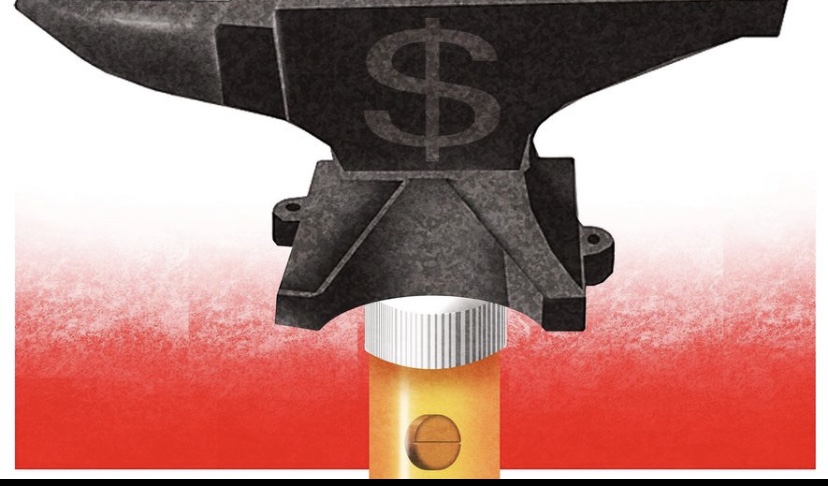
Note: The image above was created by “Alexa” for this Washington Times piece from 2019.

Price Controls: Political Gut Reaction, Gut Punch To Public

06 Thursday Jan 2022

Posted by Nuetzel in Price Controls, Shortage

≈ 1 Comment

Tags

Artificial Tradeoffs, Big Meat, Big Oil, Black Markets, central planning, Excess Demand, Federal Reserve, Inflation, Isabella Weber, Joe Biden, Money Supply, Paul Krugman, Price Controls, Relative Prices, Scientism, Shortage, Unintended Consequences

In a gross failure of education or perhaps memory, politicians, policymakers, and certain academics seem blithely ignorant of things we’ve learned repeatedly. And of all the dumb ideas floated regarding our current bout with inflation, the notion of invoking price controls is near the top. But watch out, because the Biden Administration has already shifted from “inflation is transitory” to “it only hurts the rich” to “it’s fine because people just want to buy things”, and now “greedy businessmen are the culprits”. The latter falsehood is indeed the rationale for price controls put forward by a very confused economist at the University of Massachusetts-Amherst named Isabella Weber. (See this for an excerpt and a few immediate reactions.) She makes me grieve for my profession… even the frequently ditzy Paul Krugman called her out, though he softened his words after realizing he might have offended some of his partisan allies. Of course, the idea of price controls is just bad enough to gain favor with the lefty goofballs pulling Biden’s strings.

To understand the inflation process, it’s helpful to distinguish between two different dynamics:

1. When prices change we usually look for explanations in supply and demand conditions. We have supply constraints across a range of markets at the moment. There’s also a great deal to say about the ways in which government policy is hampering supplies of labor and energy, which are key inputs for just about everything. It’s fair to note here that, rather than price controls, we just might do better to ask government to get out of the way! In addition, however, consumer demand rebounded as the pandemic waned and waxed, and the federal government has been spending hand over fist, with generous distributions of cash with no strings attached. Thus, supply shortfalls and strong demand have combined to create price pressures across many markets.

2. Economy-wide, all dollar prices cannot rise continuously without an excess supply of a monetary asset. The Federal Reserve has discussed tapering its bond purchases in 2022 and its intention to raise overnight interest rates starting in the spring. It’s about time! The U.S. money supply ballooned during 2020 and its growth remains at a gallop. This has enabled the inflation we are experiencing today, and only recently have the markets begun to react as if the Fed means business.

Weber, our would-be price controller, exhibits a marked ignorance with respect to both aspects of price pressure: how markets work in the first instance, and how monetary profligacy lies at the root of broader inflation. Instead, she insists that prices are rising today because industrialists have simply decided to extract more profit! Poof! It’s as simple as that! Well what was holding those greedy bastards back all this time?

Everyone competes for scarce resources, so prices are bid upward when supplies are short, inputs more costly, or demand is outpacing supply for other reasons. Sure, sellers may earn a greater margin on sales under these circumstances. But the higher price accomplishes two important social objectives: efficient rationing of available quantities, and greater incentives to bring additional supplies to market.

So consider the outcome when government takes the advice of a Weber: producers are prohibited from adjusting price in response to excess demand. Shortages develop. Consumers might want more, but that’s either impossible or it simply costs more. Yet producers are prohibited from pricing commensurate with that cost. Other adjustments soon follow, such as changes in discounts, seller credit arrangements, and product quality. Furthermore, absent price adjustment, transaction costs become much more significant. Other resources are consumed in the mere process of allocating available quantities: time spent in queues, administering quotas, lotteries or other schemes, costly barter, and ultimately unsatisfied needs and wants, not to mention lots of anger and frustration. Lest anyone think this process is “fair”, keep in mind that it’s natural for these allocations to take a character that is worse than arbitrary. “Important people” will always have an advantage under these circumstances.

Regulatory and financial burdens are imposed on those who play by the rules, but not everyone does. Black market mechanisms come into play, including opportunities for illegal side payments, rewards for underworld activity, along with a general degradation in the rule of law.

Price controls also impose rigidity in relative prices that can be very costly for society. “Freezing” the value of one good in terms of others distorts the signals upon which efficient resource allocation depends. Tastes, circumstances, and production technology change, and flexible relative prices enable a smoother transitions between these states. And even while demand and/or input scarcity might increase in all markets, these dynamics are never uniform. Over time, imbalances always become much larger in some markets than others. Frozen relative prices allow these imbalances to persist.

For example, the true value of good A at the imposition of price controls might be two units of good B. Over time, the true value of A might grow to four units of good B, but the government insists that A must be traded for no more than the original two units of B. Good B thus becomes overvalued on account of government intervention. The market for good A, which should attract disproportionate investment and jobs, will instead languish under a freeze of relative prices. Good B will continue to absorb resources under the artificial tradeoff imposed by price controls. Society must then sacrifice the gains otherwise afforded by market dynamism.

The history of price controls is dismal (also see here). They artificially suppress measured inflation and impose great efficiency costs on the public. Meanwhile, price controls fail to address the underlying monetary excess.

Price controls are destructive when applied economy-wide, but also when governments attempt to apply them to markets selectively. Posturing about “strategic” use of price controls reveals the naïveté of those who believe government planners can resolve market dislocations better than market participants themselves. Indeed, the planners would do better to discover, and undo, the damage caused by so many ongoing regulatory interventions.

So beware Joe Biden’s bluster about “greedy producers” in certain markets, whether they be in “Big Meat”, or “Big Oil”. Price interventions in these markets are sure to bring you less meat, less oil, and quite possibly less of everything else. The unintended consequences of such government interventions aren’t difficult to foresee unless one is blinded with the scientism of central planning.

Supply-Gouging Laws Keep Goods Off Shelf

23 Monday Mar 2020

Posted by Nuetzel in Markets, Pandemic, Price Controls

≈ 2 Comments

Tags

Arbitrage, Conservation, Coronavirus, Hoarding, incentives, J.D. Tucille, Michael Munger, Price Gouging, Scarcity, Shortage, Speculation

“Low prices say, ‘Take all you want, there’s plenty more.‘”

— Duke economist Michael Munger

See the prices marked on those shelves above? They say infinity!

Nothing drives economists crazy like anti-price “gouging” sentiment, and especially politicians who play on it. Hoarders hoard under such laws precisely because prices are too low given demand and supply conditions. Scarcity is defined by demand relative to supply, and freely adjusting prices register the degree of scarcity quite well. To what purpose? First, to ration available supplies; second, to encourage conservation; third, to incentivize producers to bring more product to market.

But when hoarders hoard, does that not create artificial scarcity? Not really, because the scarcity itself was already a condition, or else the hoarder would not have acted. And the hoarder would not have acted if developing conditions of scarcity had not been contradicted by the low price.

But what if the hoarders are mere speculators? Doesn’t that prove their actions create artificial scarcity? No, again, scarce conditions existed. Speculators don’t speculate to lose money, and they would certainly lose money if they buy when a product is not truly in short supply relative to demand. Speculators operate on the principle of arbitrage: transacting in response to profit opportunities created by gaps between prices and real value. Markets tend to eliminate such opportunities. Anti-“gouging” laws create them in times of crisis.

Should we demand that respiratory therapists not accept higher offers to practice in areas hit hard by the coronavirus? That bears a certain equivalence to laws preventing retailers from raising prices sufficiently to discourage hoarding. After all, retailers know that their dwindling inventory has gained value in a crisis situation, just as the respiratory therapist knows that her services have gained value in a world ravaged by a lung-damaging viral disease. Should we arrest her?

In a functioning market, the respiratory therapist, the retailer, and producers who supply the retailer would all earn more based on the true value of their skills, inventories, or ability to produce. These parties get to keep any premium they earn when conditions create more scarcity. Speculators however, generally don’t share their gains with the producer, which some find regrettable. (In fact, commodity speculators often provide valuable hedging opportunities for suppliers, so my last statement is not quite true.) Nevertheless, speculators serve a valuable function because they often provide the first source of information about changes in scarcity. That information, the price signal, has social value because it embeds incentives for conservation and added production.

Yes, retailers should be able to restock with some time. But it can fairly be said they did not react quickly enough to the “demand shock” caused by the range of precautions taken in response to the coronavirus pandemic. Perhaps retailers placed additional orders with suppliers in an effort to deal with the crisis, and some might have hiked certain prices marginally. I don’t know. However, it’s certain they were chastened in their price response by fears of damaging their public image, and even cowed by short-sighted laws and regulations in some cases. It doesn’t take much imagination, however, to think of ways they might have be able to deal with crisis conditions via pricing policy, such as charging quantity premiums: first package of TP at regular price, second at 2x regular price, three-plus at 10x regular price.

As J.D. Tucille says, people think of price “gouging” as a matter of degree. But at what threshold does price flexibility become inappropriate as conditions of scarcity change? No price controller can tell you exactly. That’s a good reason to eschew shortage-inducing pricing laws. Is it fair when prices rise drastically? Well, the price is infinite when the shelf is empty. Is that fair? Better let markets do their job.

Rx Drug Prices Are Falling, But You’re Aging

08 Friday Nov 2019

Posted by Nuetzel in Health Care, Prescription Drugs, Price Controls

≈ Leave a comment

Tags

Alex Tabarrok, Drug Prices, Evergreen Patents, FDA, Food and Drug Administration, Generic Drug Prices, Import Quotas, Insulin Pricing, Michael Mandell, National Bureau of Economic Research, Out-of-Pocket Costs, Prescription Drug Escalator, Progressive Policy Institute, Utilization

Ask anyone on the street about prescription drug prices, or ask anyone in the press, and you’ll probably hear they are out of control. That contention is false. The conventional wisdom is typified by this exaggerated BS about insulin pricing … actually, you can find a vial of the kind I used for many years for about $25 without much difficulty.

Individual experience differs, of course. Yes, there are new drugs on the market that are exorbitant; there are older drugs still under patent that are pricey too. Those represent a fairly small part of the total market, however, and one on which policymakers should tread lightly if they hope to foster the development of new, life-saving drugs. Newer insulin varieties are not in that class, and those varieties don’t always incorporate meaningful improvements for patients.

Getting Old Is Hell

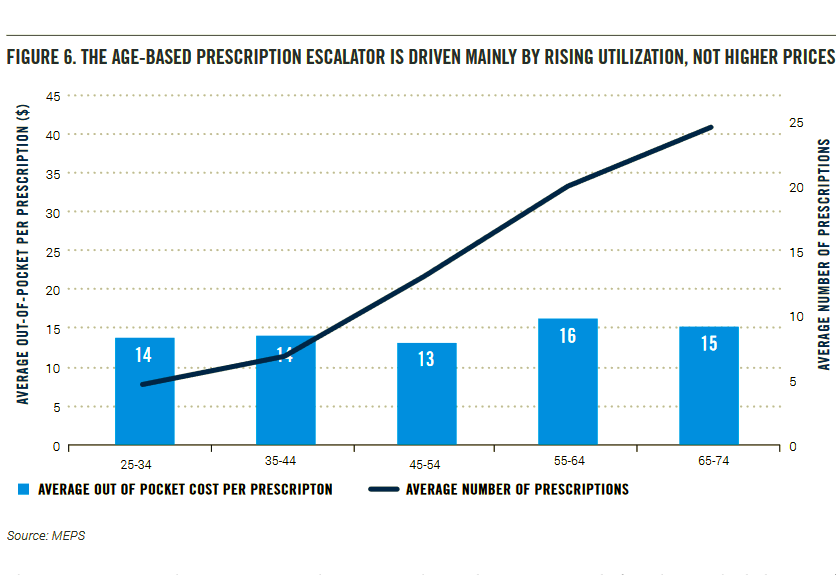
In fact, prescription drug prices have been declining for a number of years. The real problem is we’re always getting older! In a report from the Progressive Policy Institute, Michael Mandel describes what he calls the prescription drug escalator. Alex Tabarrok has a good summary of the article. The chart at the top of this post, from Mandel, shows that the number of drugs prescribed rises steadily with one’s age. The total bill rises along with age, which may create the perception that you’re paying higher prices. Unsurprisingly, more of each health-care dollar spent out-of-pocket  (OOP) goes to prescribed medications as you age, and more goes to prescription drugs as health declines. As Mandell says, the increases experienced by individuals are a matter of utilization as opposed to pricing..

Generic Dominance

Tabarrok notes that generic drugs account for somewhere between 80-90% of all prescriptions, and generic costs have been falling for some time. He links to one of his earlier posts on generics and to this study by the National Bureau of Economic Research, which states:

“… direct-out-of-pocket CPI for generic prescription drugs decline[d] by about 50% between 2007 and 2016 …”

Average OOP prescription costs peaked in 2006, according to Mandel’s data. Tabarrok quotes Mandell:

“May 2019 research report from the Agency for Healthcare Research and Quality reported that average out-of-pocket spending for prescribed medications, among persons who obtained at least one prescribed medication, declined from $327 in 2009 to $238 by 2016, a decrease of 27 percent. Data from the Bureau of Labor Statistics Consumer Expenditure Survey shows that average household spending on prescription drugs fell by 11% between 2013 and 2018.

Moreover, OECD data shows that average out-of-pocket spending on prescribed medicines in the United States ($143 per capita in 2017) is actually lower than countries such as Canada ($144), Korea ($156), Norway ($178), and Switzerland ($215).”

The declines in OOP drug costs came despite a shift in health-care payment responsibilities from insurers to consumers in recent years — OOP costs would have declined much more had the shift not occurred, according to Mandel. As he says, consumers now have more “skin in the game”, and apparently they act on it.

Another basis of the misperception about escalating drug prices has to do with the way they are reported. Mandel says:

“List prices are the published prices that manufacturers charge to wholesalers. Net prices reflect the revenues that drug manufacturers receive, net of rebates and discounts to prescription benefit managers, insurance companies, and hospitals.

Studies of list prices invariably show very strong growth. For example the IQVIA Institute for Human Data Science found that the list price of the average brand rose from $364.92 to $657.08 since 2014, an 80% increase. Similarly, a widely cited recent study based on list prices found that from 2008–16, the costs of oral and injectable brand-name drugs increased annually by 9.2 percent and 15.1 percent, respectively. … By contrast, net prices and net pharma revenue have been growing much more slowly, once rebates and discounts are accounted for.” 

The Pricey Segment

There are a variety of circumstances that bear on the pricing of individual drugs. Clearly, non-generic drugs are subject to more upward price pressure and give rise to anecdotes that feed misperceptions about the overall trajectory of drug prices. These are either new drugs or older ones sold under extended patents, which are sometimes granted for even minor changes in a drug’s chemical makeup.

Some new drugs are life-saving breakthroughs targeting rare diseases. The unfortunate truth is that drug development is a very costly enterprise, often stretching well over a decade in the U.S. under the FDA’s approval process. Moreover, U.S. consumers actually subsidize the cost of drugs for European consumers, where drugs are typically subject to price ceilings or are directly negotiated by government. By the time drugs go to market, development is treated as a fixed cost; even the low prices in Europe cover the marginal cost of production, so pharmaceutical manufacturers don’t mind selling there as long as their development overhead is paid by someone. That’s the rub.

Drug development costs are heavily influenced by public policy, often to the detriment of consumers. The FDA’s drug approval process is in dire need of reform, and patent extensions should be severely curtailed. As an advocate of free trade, I also favor a lifting of restrictions on imports of drugs to the U.S.

Conclusion

You’re likely to see more physicians as you age, they’re likely to prescribe more drugs, and you’re likely to pay more for prescriptions OOP. That’s the escalator in action. You can minimize the slope of your personal prescription escalator by taking good care of yourself and using generics when possible, but the slope is often beyond a person’s control. Nevertheless, over the past 13 years in the U.S.,  most of those experiencing higher OOP costs have this escalator, i.e., aging, to thank… it’s drug utilization, not pricing.

A relatively small but important share of the market has experienced price escalation. Newer, highly specialized drugs can carry high price tags. Patents give drug manufacturers considerably more pricing power, and drug companies have sought to maintain “evergreen” patents by manipulating their formulations. U.S. import quotas and restrictive pricing abroad have left consumers in the U.S. holding the bag for a large share of drug development costs. These shortcomings can be addressed via streamlined drug approval, patent reform, and lifting import restrictions.

A critical policy prescription is to liberate market forces and foster competition in the pharmaceuticals industry. Price controls in the U.S. would eliminate all incentives for new breakthroughs, leading progress in many areas of treatment to a stand-still. Price controls merely substitute the arbitrary decisions of politicians and bureaucrats for the market’s ability to balance dynamic consumer needs, medical expertise, and the costs faced by sellers.


Central Planning Fails to Scale, Unlike Spontaneous Order

05 Tuesday Jun 2018

Posted by Nuetzel in Central Planning, Markets, Price Controls

≈ Leave a comment

Tags

Bronze Age, central planning, Client-Server Network, Decentralized Decision-Making, Economies of Scale, Federalism, Francis Turner, Industrial Policy, Liberty.me, Markets, Peer-to-Peer Network, Price mechanism, Property Rights, Scalability, Spontaneous Order

The proposition that mankind is capable of creating a successful “planned” society is at least as old as the Bronze Age. Of course it’s been tried. The effort necessarily involves a realignment of the economic and political landscape and always requires a high degree of coercion. But putting that aside, such planning can never be successful relative to spontaneous order of the kind that dominates private affairs in a free society. The task of advancing human well-being given available resources has never been achieved under central planning. It always fails miserably in this regard, and it always will fail to match the success of decentralized decision-making and private markets.

There are various ways to explain this fact, but I recently came across an interesting take on the subject having to do with the notion of scalability. Francis Turner offers this note on the topic at the Liberty.me blog. To begin, he gives a lengthy quote from a software developer who relates the problems of social and economic planning to the complexity of managing a network. On the topic of scale, the developer notes that the number of relationships in a network increases with the square of the number of its “nodes”, or members:

“2 nodes have 1 potential relationship. 4 nodes (twice as many) has 6 potential relationships (6 times as many). 8 nodes (twice again) has 28 potential relationships. 100 nodes => [4,950] relationships; 1,000 nodes => 499,500 relationships—nearly half a million.“

Actually, the formula for the number of potential relationships or connections in a network is n*(n-1)/2, where n is the number of network nodes. The developer Turner  quotes discusses this in the context of two competing network management structures: client-server and peer-to-peer. Under the former, the network is managed centrally by a server, which communicates with all nodes, makes various decisions, and routes communications traffic between nodes. In a peer-to-peer network, the work of network management is distributed — each computer manages its own relationships. The developer says, at first, “the idea of hooking together thousands of computers was science fiction.” But as larger networks were built-out in the 1990s, the client-server framework was more or less rejected by the industry because it required such massive resources to manage large networks. In fact, as new nodes are added to a peer-to-peer network, its capacity to manage itself actually increases! In other words, client-server networks are not as scalable as peer-to-peer networks:

“Even if it were perfectly designed and never broke down, there was some number of nodes that would crash the server. It was mathematically unavoidable. You HAVE TO distribute the management as close as possible to the nodes, or the system fails.

… in an instant, I realized that the same is true of governments. … And suddenly my coworker’s small government rantings weren’t crazy…”

This developer’s epiphany captures a few truths about the relative efficacy of decentralized decision-making. It’s not just for computer networks! But in fact, when it comes to network management, the task is comparatively simple: meet the computing and communication needs of users. A central server faces dynamic capacity demands and the need to route changing flows of traffic between nodes. Software requirements change as well, which may necessitate discrete alterations in capacity and rules from time-to-time.

But consider the management of a network of individual economic units. Let’s start with individuals who produce something… like widgets. There are likely to be real economies achieved when a few individual widgeteers band together to produce as a team. Some specialization into different functions can take place, like purchasing materials, fabrication, and distribution. Perhaps administrative tasks can be centralized for greater efficiency. Economies of scale may dictate an even larger organization, and at some point the firm might find additional economies in producing widget-complementary products and services. But eventually, if the decision-making is centralized and hierarchical, the sheer weight of organizational complexity will begin to take a toll, driving up costs and/or diminishing the firm’s ability to deal with changes in technology or the market environment. In other words, centralized control becomes difficult to scale in an efficient way, and there may be some “optimal” size for a firm beyond which it struggles.

Now consider individual consumers, each of whom faces an income constraint and has a set of tastes spanning innumerable goods. These tastes vary across time scales like hour-of-day, day-of-week, seasons, life-stage, and technology cycles. The volume of information is even more daunting when you consider that preferences vary across possible price vectors and potential income levels as well.

Can the interactions between all of these consumer and producer “nodes” be coordinated by a central economic authority so as to optimize their well-being dynamically, subject to resource constraints? As we’ve seen, the job requires massive amounts of information and a crushing number of continually evolving decisions. It is really impossible for any central authority or computer to “know” all of the information needed. Secondly, to the software developer’s point, the number of potential relationships increases with the square of the number of consumers and producers, as does the required volume of information and number of decisions. The scalability problem should be obvious.

This kind of planning is a task with which no central authority can keep up. Will the central authority always get milk, eggs and produce to the store when people need it, at a price they are willing to pay, and with minimal spoilage? Will fuel be available such that a light always turns on whenever they flip the switch? Will adequate supplies of medicines always be available for the sick? Will the central authority be able to guarantee a range of good-quality clothing from which to choose?

There has never been a central authority that successfully performed the job just described. Yet that job gets done every day in free, capitalistic societies, and we tend to take it for granted. The massive process of information transmission and coordination takes place spontaneously with spectacularly good results via private discovery and decision-making, secure property rights, markets, and a functioning price mechanism. Individual economic units are endowed with decision-making power and the authority to manage their own relationships. And the spontaneous order that takes shape remains effective even as networks of economic units expand. In other words, markets are highly scalable at solving the eternal problem of allocating scarce resources.

But thus far I’ve set up something of a straw man by presuming that the central authority must monitor all individual economic units to know and translate their demands and supplies of goods into the ongoing, myriad decisions about production, distribution and consumption. Suppose the central authority takes a less ambitious approach. For example, it might attempt to enforce a set of prices that its experts believe to be fair to both consumers and producers. This is a much simpler task of central management. What could go wrong?

These prices will be wrong immediately, to one degree or another, without tailoring them to detailed knowledge of the individual tastes, preferences, talents, productivities, price sensitivities, and resource endowments of individual economic units. It would be sheer luck to hit on the correct prices at the start, but even then they would not be correct for long. Conditions change continuously, and the new information is simply not available to the central authority. Various shortages and surpluses will appear without the corrective mechanism usually provided by markets. Queues will form here and inventories will accumulate there without any self-correcting mechanism. Consumers will be angry, producers will quit, goods will rot, and stocks of physical capital will sit idle and go to waste.

Other forms of planning attempt to set quantities of goods produced and are subject to errors similar to those arising from price controls. Even worse is an attempt to plan both price and quantity. Perhaps more subtle is the case of industrial policy, in which planners attempt to encourage the development of certain industries and discourage activity in those deemed “undesirable”. While often borne out of good intentions, these planners do not know enough about the future of technology, resource supplies, and consumer preferences to arrogate these kinds of decisions to themselves. They will invariably commit resources to inferior technologies, misjudge future conditions, and abridge the freedoms of those whose work or consumption is out-of-favor and those who are taxed to pay for the artificial incentives. To the extent that industrial policies become more pervasive, scalability will become an obstacle to the planners because they simply lack the information required to perform their jobs of steering investment wisely.

Here is Turner’s verdict on central planning:

“No central planner, or even a board of them, can accurately set prices across any nation larger than, maybe, Liechtenstein and quite likely even at the level of Liechtenstein it won’t work well. After all how can a central planner tell that Farmer X’s vegetables taste better and are less rotten than Farmer Y’s and that people therefore are prepared to pay more for a tomato from Farmer X than they are one from Farmer Y.”

I will go further than Turner: planning can only work well in small settings and only when the affected units do the planning. For example, the determination of contract terms between two parties requires planning, as does the coordination of activities within a firm. But then these plans are not really “central” and the planners are not “public”. These activities are actually parts of a larger market process. Otherwise, the paradigm of central planning is not merely unscalable, it is unworkable without negative consequences.

Finally, the notion of scalability applies broadly to governance, not merely economic planning. The following quote from Turner, for example, is a ringing endorsement for federalism:

“It is worth noting that almost all successful nations have different levels of government. You have the local town council, the state/province/county government, possibly a regional government and then finally the national one. Moreover richer countries tend to do better when they push more down to the lower levels. This is a classic way to solve a scalability problem – instead of having a single central power you devolve powers and responsibilities with some framework such that they follow the general desires of the higher levels of government but have freedom to implement their own solutions and adapt policies to local conditions.” 

Horizons Lost To Coercive Intervention

27 Wednesday Jan 2016

Posted by Nuetzel in Human Welfare, Price Controls, Regulation

≈ Leave a comment

Tags

Allocation of Resources, Don Boudreaux, Foregone Alternatives, Frederic Bastiat, Luddites, Minimum Wage, Opportunity Costs, Price Ceilings, Price Controls, Price floors, Rent Control, Scientism, Unintended Consequences, What is Not Seen

ceiling prices

Every action has a cost. When you’re on the hook, major decisions are obviously worth pondering. But major societal decisions are often made by agents who are not on the hook, with little if any accountability for long-term consequences. They have every incentive to discount potential downside effects, especially in the distant future. Following Frederic Bastiat, Don Boudreaux writes of three levels of “What Is Not Seen” as a consequence of human decisions, which I summarize here:

  1. Immediate foregone alternatives: Possession, use and enjoyment of X is not seen if you buy Y.
  2. Resources not directed to foregone alternatives: The reduction in X inventory is not seen, compensating production of X is not seen, and extra worker hours, capital use and flow of raw materials needed for X production are not seen.
  3. The future implied by foregone alternatives: Future impacts can take many forms. X might have been a safer or healthier alternative, but those benefits are unseen. X might have been lower quality, so the potential frustration and repairs are unseen. X might have been less expensive, but the future benefits of the money saved are unseen. All of these “unseens” have implications for the future world experienced by the decision-maker and others.

These effects take on much more significance in multiples, but (2) and (3) constitute extended unseen implications for society at large. In multiples, the lost (unseen) X production and X labor-hours, capital and raw materials are more obvious to the losers in the X industry than the winners in the Y industry, but they matter. In the future, no vibrant X industry will not be seen; the resources diverted to meet Y demand won’t be seen at new or even old X factories. X might well vanish, leaving only nontransformable detritus as a token of its existence.

Changes in private preferences or in production technologies create waves in the course of the “seen” reality and the “unseen” world foregone. Those differences are caused by voluntary, private choice, so gains are expected to outweigh losses relative to the “road not traveled”. That’s not a given, however, when decisions are imposed by external authorities with incentives unaligned with those in their thrall. For that reason, awareness of the unseen is of great importance in policy analysis, which is really Boudreaux’s point. Here is an extreme example he offers in addressing the far-reaching implications of government intrusions:

“Suppose that Uncle Sam in the early 20th century had, with a hypothetical Ludd Act, effectively prohibited the electrification of American farms, businesses, and homes. That such a policy would have had a large not-seen element is evident even to fans of Bernie Sanders. But the details of this not-seen element would have been impossible today even to guess at with any reliability. Attempting to quantify it econometrically would be an exercise in utter futility. No one in a 2015 America that had never been electrified could guess with any sense what the Ludd Act had cost Americans (and non-Americans as well). The not-seen would, in such a case, loom so large and be so disconnected to any known reality that it would be completely mysterious.“

Price regulation provides more familiar examples. Rent controls intended to “protect” the public from landlords have enormous “unintended” consequences. Like any price regulation, rent controls stifle exchange, reducing the supply and quality of housing. Renters are given an incentive to remain in their units, and property owners have little incentive to maintain or upgrade their properties. Deterioration is inevitable, and ultimately displacement of renters. The unseen, lost world would have included more housing, better housing, more stable neighborhoods and probably less crime.

A price floor covered by Boudreaux is the minimum wage. The fully predictable but unintended consequences include immediate losses in some combination of jobs, hours, benefits, and working conditions by the least-skilled class of workers. Higher paid workers feel the impact too, as they are asked to perform more (and less complex) tasks or are victimized by more widespread substitution of capital for labor. Consumers also feel some of the pain in higher prices. The net effect is a reduction in mutually beneficial trade that continues and may compound with time:

“As the time span over which obstructions to certain economic exchanges lengthens, the exchanges that would have, but didn’t, take place accumulate. The businesses that would have been created absent a minimum wage – but which, because of the minimum wage, are never created – grow in number and variety. The instances of on-the-job worker training that would have occurred – but, because of the minimum wage, didn’t occur – stack up increasingly over time.“

Regulation and taxation of all forms have such destructive consequences, but policy makers seldom place a heavy weight on the unobserved counterfactual. Boudreaux emphasizes the futility of quantifying the “unseen” effects these policies:

“… those who insist that only that which can be measured and quantified with numerical data is real must deny, as a matter of their crabbed and blinding scientism, that such long-term effects … are not only not-seen but also, because they are not-seen, not real.“

The trade and welfare losses of coercive interventions of all types are not hypothetical. They are as real as the losses caused by destruction of property by vandals. Never again can the owners enjoy the property as they once had. Future pleasures are lost and cannot be observed or measured objectively. Even worse, when government disrupts economic activity, the cumulative losses condemn the public to a backward world that they will find difficult to recognize as such.


Automate No Job Before Its Time

28 Monday Dec 2015

Posted by Nuetzel in Price Controls, Technology

≈ 6 Comments

Tags

Automation, Capital-Labor Sucstiturion, David Neumark, Don Boudreaux, Innovation, Living Wage, McKinsey Global Institute, Minimum Wage, Risk of Automation, Technological Diffusion

This interactive chart from the McKinsey Global Institute (not the one above, as good as it is…) shows occupations at risk of automation, and it should give warning to those asserting that a substantial increase in the minimum wage is in the interests of low-wage workers. It shows the extent to which various jobs can be automated under existing technology. The salient facts here are that a large number of workers earn less than $15 per hour, that most of those workers perform jobs that can be automated, and that further advances in technology will increase the potential for automation beyond what’s shown in the chart.

A simple truth that must be understood is that wage rates are strongly associated with the skills and productivity required for particular jobs. Denial of that fundamental rule cannot help anyone, and will almost certainly harm many. Low skill requirements are less highly-compensated because they add little value and are easily satisfied.

As Don Boudreaux points out, innovation is often spurred by economic forces. A mandated wage minimum, which is a price floor creating artificial surplus conditions, magnifies incentives for greater innovation. In addition to the substitution away from low-skilled labor (or domestic labor) that can be expected, there are many other margins along which employers can economize in the face of such government edicts: higher expectations for productivity, fewer benefits, fewer breaks, fewer niceties in the workplace, and less flexibility over hours and days off. These things matter greatly to employees and employers. A wage law can make for an unpleasant work environment.

Those who suffer most from minimum wage decrees are the least skilled, whose jobs are the most vulnerable. Economist David Neumark notes that “The Evidence Is Piling Up That Higher Minimum Wages Kill Jobs“, despite claims to the contrary (gated… Google “wsj NeumarK”, select the December 15, 2015 link).

Lest anyone decry the technologies that could replace these workers, recall that the substitution of capital for labor over time has led to the great gains in productivity that have elevated wages and income over time. Many jobs that are commonplace today (and were not even imagined in earlier times) would not exist if not for advances in technology. Likewise, there will be jobs that are commonplace in the future that do not exist today, and we won’t have the power (nor will the government) to anticipate those jobs until the enabling technologies come to fruition and early adoption. These kinds of changes are never without difficulty, as workers bear significant costs of adjustment in the short run, including the acquisition of new skills. However, wage floors force an even earlier and contrived adoption of technologies, which harms low-wage workers most severely. Far better to allow an unfettered and natural process of free choice, technological diffusion, price adjustment, and growth to take place.

ZIRP’s Over, But Fed Zombies Linger Over Seed Corn

24 Thursday Dec 2015

Posted by Nuetzel in Central Planning, Monetary Policy, Price Controls

≈ Leave a comment

Tags

Capital investment, Central Bank Intervention, central planning, negative interest rates, Price Ceilings, Price Controls, Ronald-Peter Stoferle, Saving Incentives, The Federal Reserve, Time Preference, Zero Interest Rate Policy, ZIRP, Zombie Banks

Fed Rate Cuts

The Federal Reserve plans a few more increases in short-term interest rates in 2016, which should be welcome to savers who are not overexposed to market risk. The Fed took its first step away from the seven-year zero-interest-rate policy (ZIRP) last week, increasing its target rate on overnight loans between banks (“federal” funds) for the first time in almost ten years. ZIRP was grounded in the Fed’s desire to stimulate the economy after the last financial crisis, an objective that met with limited success. ZIRP’s most profound “success” was to distort prices, with negative consequences for conservative savers, those dependent on retirement assets, and the long-term growth of the economy.

ZIRP necessarily constitutes a price ceiling when expected inflation is positive. It implies negative real rates of return, but real rates of time preference are not and cannot be negative. Given the choice, no one intends to forego present pleasure to purposefully suffer a loss later. The imperative to earn positive real returns does not end simply because the Fed and ZIRP make it more difficult. 

Anyone with funds parked in near zero-return assets, such as money market funds and certificates of deposit, earned a negative real return during the ZIRP regime, as inflation remained positive despite misplaced fears to the contrary. Those kinds of savings vehicles earn relatively low returns and should carry little risk to savers.

What are savers and retirees to do under a ZIRP regime? If they absolutely must defer consumption, they can accept the predicament and leave funds to decay in real value. They can dis-save in response to the disincentive, consuming their accumulated wealth. Some, for whom retirement is near, might even put more aside with the full knowledge that it will erode in real terms. But many will seek out yield in other ways, investing in assets bearing greater risk than they would otherwise prefer. All of these alternatives are likely to be less-preferred by the public than rates of saving and portfolios constructed in the absence of the Fed’s rate distortions.

The Fed’s policies and zero rates have contributed to inflated equity prices over the past six years as savers sought enhanced returns, and those valuations are certainly vulnerable. Over the past week, market jitters have shown the extent to which traders and investors feel threatened by the Fed’s tightening move.

The impact of ZIRP on the well-being of savers is only part of the story, however. Such a regime compromises the fundamental process of aligning preferences with the physical transformation of present resources into future consumption. Like any price distortion, ZIRP misallocates resources, but it misallocates across time and across sectors of the economy. When discounted at ultra-low rates, the values of future financial flows are grossly inflated, diminishing the need to set additional amounts aside today. At the same time, zero or near-zero rate borrowing confuses the evaluation of alternative capital investment projects. Resources may be committed to projects that would be rejected given accurate price signals. The artificially-enabled bidding for resources prompted by ZIRP, and the distortion of the risk-return trade off, might even cause more worthy projects to be rejected. And there is every reason to expect that saving by some individuals will be channeled into immediate consumption by others.

Who would do such wasteful things, undertaking projects with low or nonexistent future returns? Those facing distorted price signals, most prominently government technocrats for whom meaningful price signals are seldom a concern. And that also goes for the subsidy-hungry private beneficiaries of the state’s tax-extracted and borrowed largess. The ultimate consequence of this behavior is a deterioration in the economy’s growth potential.

Ronald-Peter Stoferle provides a short catalogue of ZIRP’s destructive impacts in the “Unseen Consequences of ZIRP“. One of his more interesting statements is the following, with reference to “zombie” banks:

“Low interest rates prevent the healthy process of creative destruction. Banks are enabled to roll over potentially non-performing loans practically indefinitely and can thus lower their write-off requirements.“

Thus, ZIRP promotes economic rot in several ways. Last week’s rate move by the Fed is a step in the right direction, away from zero rates and drastic overvaluation of consumption flows now and in the future. However, the monetary excesses of the past six years will not be reversed by this one move. The Fed is still imposing an artificial ceiling on rates. Even if that restriction is eased in further steps during 2016, the Fed is committed for the long-term to the manipulation of interest rates in the execution of policy. That sort of activist market manipulation is likely to continue; like all forms of central planning, it will be based on woefully incomplete information, a poor understanding of individual and market behavior, and bad timing. It will degrade economic conditions and have the classic boom-and-bust repercussions typical of central bank intervention.

← Older posts
Follow Sacred Cow Chips on WordPress.com

Recent Posts

  • Immigration and Merit As Fiscal Propositions
  • Tariff “Dividend” From An Indigent State
  • Almost Looks Like the Fed Has a 3% Inflation Target
  • Government Malpractice Breeds Health Care Havoc
  • A Tax On Imports Takes a Toll on Exports

Archives

  • December 2025
  • November 2025
  • October 2025
  • September 2025
  • August 2025
  • July 2025
  • June 2025
  • May 2025
  • April 2025
  • March 2025
  • February 2025
  • January 2025
  • December 2024
  • November 2024
  • October 2024
  • September 2024
  • August 2024
  • July 2024
  • June 2024
  • May 2024
  • April 2024
  • March 2024
  • February 2024
  • January 2024
  • December 2023
  • November 2023
  • August 2023
  • July 2023
  • June 2023
  • May 2023
  • April 2023
  • March 2023
  • February 2023
  • January 2023
  • December 2022
  • November 2022
  • October 2022
  • September 2022
  • August 2022
  • July 2022
  • June 2022
  • May 2022
  • April 2022
  • March 2022
  • February 2022
  • January 2022
  • December 2021
  • November 2021
  • October 2021
  • September 2021
  • August 2021
  • July 2021
  • June 2021
  • May 2021
  • April 2021
  • March 2021
  • February 2021
  • January 2021
  • December 2020
  • November 2020
  • October 2020
  • September 2020
  • August 2020
  • July 2020
  • June 2020
  • May 2020
  • April 2020
  • March 2020
  • February 2020
  • January 2020
  • December 2019
  • November 2019
  • October 2019
  • September 2019
  • August 2019
  • July 2019
  • June 2019
  • May 2019
  • April 2019
  • March 2019
  • February 2019
  • January 2019
  • December 2018
  • November 2018
  • October 2018
  • September 2018
  • August 2018
  • July 2018
  • June 2018
  • May 2018
  • April 2018
  • March 2018
  • February 2018
  • January 2018
  • December 2017
  • November 2017
  • October 2017
  • September 2017
  • August 2017
  • July 2017
  • June 2017
  • May 2017
  • April 2017
  • March 2017
  • February 2017
  • January 2017
  • December 2016
  • November 2016
  • October 2016
  • September 2016
  • August 2016
  • July 2016
  • June 2016
  • May 2016
  • April 2016
  • March 2016
  • February 2016
  • January 2016
  • December 2015
  • November 2015
  • October 2015
  • September 2015
  • August 2015
  • July 2015
  • June 2015
  • May 2015
  • April 2015
  • March 2015
  • February 2015
  • January 2015
  • December 2014
  • November 2014
  • October 2014
  • September 2014
  • August 2014
  • July 2014
  • June 2014
  • May 2014
  • April 2014
  • March 2014

Blogs I Follow

  • Passive Income Kickstart
  • OnlyFinance.net
  • TLC Cholesterol
  • Nintil
  • kendunning.net
  • DCWhispers.com
  • Hoong-Wai in the UK
  • Marginal REVOLUTION
  • Stlouis
  • Watts Up With That?
  • Aussie Nationalist Blog
  • American Elephants
  • The View from Alexandria
  • The Gymnasium
  • A Force for Good
  • Notes On Liberty
  • troymo
  • SUNDAY BLOG Stephanie Sievers
  • Miss Lou Acquiring Lore
  • Your Well Wisher Program
  • Objectivism In Depth
  • RobotEnomics
  • Orderstatistic
  • Paradigm Library
  • Scattered Showers and Quicksand

Blog at WordPress.com.

Passive Income Kickstart

OnlyFinance.net

TLC Cholesterol

Nintil

To estimate, compare, distinguish, discuss, and trace to its principal sources everything

kendunning.net

The Future is Ours to Create

DCWhispers.com

Hoong-Wai in the UK

A Commonwealth immigrant's perspective on the UK's public arena.

Marginal REVOLUTION

Small Steps Toward A Much Better World

Stlouis

Watts Up With That?

The world's most viewed site on global warming and climate change

Aussie Nationalist Blog

Commentary from a Paleoconservative and Nationalist perspective

American Elephants

Defending Life, Liberty and the Pursuit of Happiness

The View from Alexandria

In advanced civilizations the period loosely called Alexandrian is usually associated with flexible morals, perfunctory religion, populist standards and cosmopolitan tastes, feminism, exotic cults, and the rapid turnover of high and low fads---in short, a falling away (which is all that decadence means) from the strictness of traditional rules, embodied in character and inforced from within. -- Jacques Barzun

The Gymnasium

A place for reason, politics, economics, and faith steeped in the classical liberal tradition

A Force for Good

How economics, morality, and markets combine

Notes On Liberty

Spontaneous thoughts on a humble creed

troymo

SUNDAY BLOG Stephanie Sievers

Escaping the everyday life with photographs from my travels

Miss Lou Acquiring Lore

Gallery of Life...

Your Well Wisher Program

Attempt to solve commonly known problems…

Objectivism In Depth

Exploring Ayn Rand's revolutionary philosophy.

RobotEnomics

(A)n (I)ntelligent Future

Orderstatistic

Economics, chess and anything else on my mind.

Paradigm Library

OODA Looping

Scattered Showers and Quicksand

Musings on science, investing, finance, economics, politics, and probably fly fishing.

  • Subscribe Subscribed
    • Sacred Cow Chips
    • Join 128 other subscribers
    • Already have a WordPress.com account? Log in now.
    • Sacred Cow Chips
    • Subscribe Subscribed
    • Sign up
    • Log in
    • Report this content
    • View site in Reader
    • Manage subscriptions
    • Collapse this bar
 

Loading Comments...