• About

Sacred Cow Chips

Sacred Cow Chips

Tag Archives: Nate Silver

That Word “Liberal” … I Don’t Think That Means What You Think It Means

03 Wednesday Jan 2024

Posted by Nuetzel in Conservatism, Liberalism, Socialism

≈ Leave a comment

Tags

Adam Smith, Capitalism, Classical Liberal, Conservatism, Consumer Sovereignty, Corporatism, Free Markets, Freedom of Speech, Friedrich Hayek, Liberalism, Libertarianism, MAGA, monopoly, Monopsony, Nate Silver, Natural Rights, Non-Aggression Principle, Perfect Competition, Progressivism, Property Rights, Public goods, Religious Freedom, Right to Life, Scott Sumner, social engineering, Socialism, State Capacity, State Religion, statism, The Wealth of Nations
Leftism has taken on new dimensions amid its preoccupation with identity politics, victimhood, and “wokeness”. Traditional socialists are still among us, of course, but “wokeists” and “identitarians” have been on the progressive vanguard of late, rooting for the deranged human butchers of Hamas and the dismantling of liberal institutions. This didn’t happen overnight, of course, and traditional socialists are mostly fine with it.

An older story is the rebranding of leftism that took place in the U.S. during the first half of the 20th century, when the word “liberal” was co-opted by leftists. Before that, a liberal orientation was understood to be antithetical to the collectivist mindset long associated with the Left. Note also that liberalism retains its original meaning even today in much of Europe. Often we hear the term “classical liberal” to denote the “original” meaning of liberalism, but the modifier should be wholly unnecessary.

Liberalism Is Not “In-Betweenism”

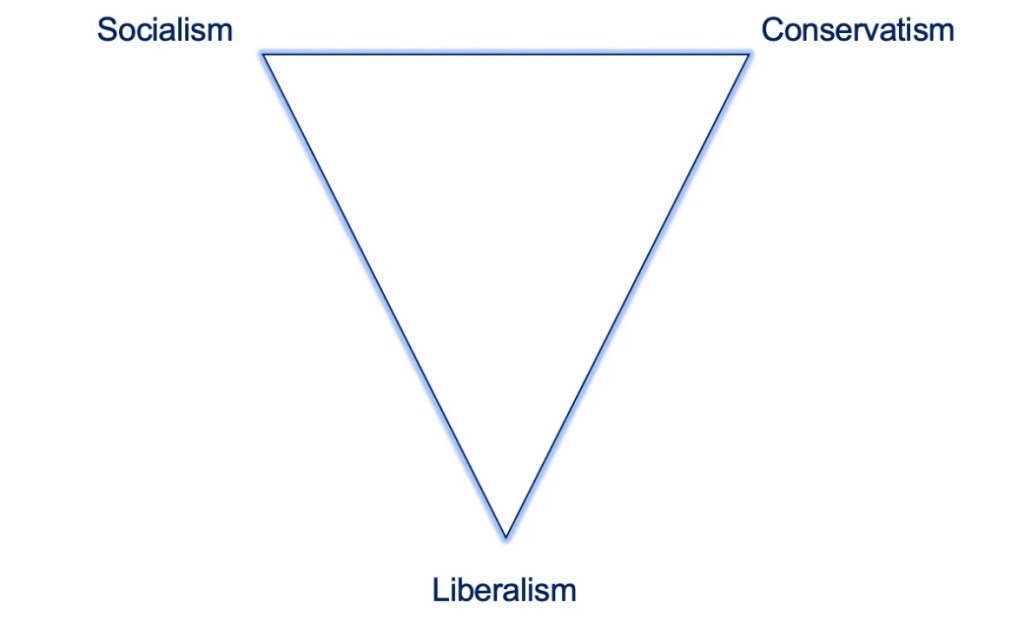
In this vein, Nate Silver presents a basic taxonomy of political orientation in a recent Substack post. It includes the diagram above, which distinguishes between socialism, conservatism, and liberalism. Silver draws on a classic essay written by Friedrich Hayek in 1945, “Why I am Not a Conservative”, in which Hayek discussed the meaning of the word “liberal” (and see here). Liberalism’s true emphasis is a tolerance for individual rights and freedoms, subject to varying articulations of the “nonaggression principle”. That is, “do as you like, but do no harm to others”.

We often see a linear representation distinguishing between so-called progressives on the left and conservatives on the right. Of course, a major hallmark of leftist thinking is extreme interventionism. Leftists or progressives are always keen to detect the slightest whiff of an externality or the slightest departure from the perfectly competitive market ideal. They seem eager to find a role for government in virtually every area of life. While it’s not a limiting case, we can substitute socialism or statism for progressivism on the far left, as Silver does, whereby the state takes primacy in economic and social affairs.

Conservatism, on the other hand, is a deep resistance to change, whether institutional, social, and sometimes economic. Conservatives too often demonstrate a willingness to use the coercive power of the state to prevent change. Hayek noted the willingness of both socialists and conservatives to invoke state power for their own ends.

Similarly, religious conservatives often demand state support beyond that afforded by the freedom to worship in the faith of one’s choice. They might strongly reject certain freedoms held to be fundamental by liberals. Meanwhile, socialists often view mere religious freedom as a threat to the power of the state, or at least they act like it (e.g. see here for an example).

Like conservatives, dedicated statists would doubtless resist change if it meant a loss of their own power. That is, they’d wish to preserve socialist institutions. On this point, witness the vitriol from the Left over what it perceives as threats to the public school monopoly. Witness also the fierce resistance among public employees to reducing the scale of the administrative state, and how advocates of entitlements fiercely resist decreases in the growth rate of those expenditures.

Silver, like Hayek, objects to the traditional, linear framework in which liberals are thought to occupy a range along a line between socialism and conservatism. He objects to that because real liberals value individual liberty as a natural human right, a viewpoint typically abhored by both socialists and conservatives. There is nothing “in between” about it! And of course, conservatives and progressives are equally guilty in their mistaken use of the word “liberal”.

Mapping Political Preferences

Liberty, statism, and conservatism are not exactly orthogonal political dimensions. Larger government almost always means less economic liberty. At a minimum, state dominance implies a social burden associated with public monopoly and monopsony power, as well as tax and welfare-state incentive problems. These features compromise or corrupt the exercise of basic rights. On the other hand, capitalism and its concomitant reliance on consumer sovereignty, individual initiative, free exchange and secure property rights is most in harmony with true liberalism.

For conservatives, resistance to change in support of a traditionally free market economy might offer something of a contradiction. In one sense, it corresponds to upholding market institutions. However, free markets allow new competitors and new technologies to undermine incumbents, who conservatives sometimes wish to defend through regulatory or protectionist measures. And conservatives are almost always too happy to join in the chorus of “price gouging” in response to the healthy operation of the free market in bringing forth supplies.

All that is to say that preferences involving liberty, statism, and traditionalism are not independent of one another. They cannot simply be mapped onto a three-dimensional space. At least the triangular representation gets liberalism out of the middle, but it’s difficult to visualize other ideological positions there. For example, “state religionism” could lie anywhere along the horizontal line at the top or even below it if certain basic liberties are preserved. Facism combines elements of socialism and a deformed version of capitalism that is properly called corporatism, but where would it fall within the triangle?

Big Government Liberalism?

Silver says he leans heavily toward a “big government” version of liberalism, but big government is hard to square with broad liberties. Granted, any well-functioning society must possess a certain level of “state capacity” to defend against private or public violations of individual rights, adjudicate disputes, and provide true public goods. It’s not clear whether Silver’s preferences lie within the bounds of those ambitions. Still, he deserves credit for his recognition that liberalism is wholly different from the progressive, socialist vision. It is the opposite.

The “New” Triangle

Silver attempts to gives the triangular framework a more contemporary spin by replacing conservatism with “MAGA Conservatism” and socialism with “Social Justice Leftism” (SJL), or “wokeism”. Here, I’m treating MAGA as a “brand”. Nothing below is intended to imply that America should not be a great nation.

The MAGA variant of conservatism emphasizes nationalism, though traditional conservatives have never been short on love of nation. For that matter, as a liberal American, it’s easier to forgive nationalist sentiments than it is the “Death to America” refrain we now hear from some SJLs.

The MAGA brand is also centered around a single individual, Donald Trump, whose rhetoric strikes many as nativistic. And Trump is a populist whose policy proposals are often nakedly political and counterproductive.

SJL shares with socialism an emphasis on various forms of redistribution and social engineering, but with a new focus on victimhood based on classes of identity. Of SJL, Silver says:

“Proponents of SJL usually dislike variations on the term ‘woke’, but the problem is that they dislike almost every other term as well. And we need some term for this ideology, because it encompasses quite a few distinctive features that differentiate it both from liberalism and from traditional, socialist-inflected leftism. In particular, SJL is much less concerned with the material condition of the working class, or with class in general. Instead, it is concerned with identity — especially identity categories involving race, gender and sexuality, but sometimes also many others as part of a sort of intersectional kaleidoscope.”
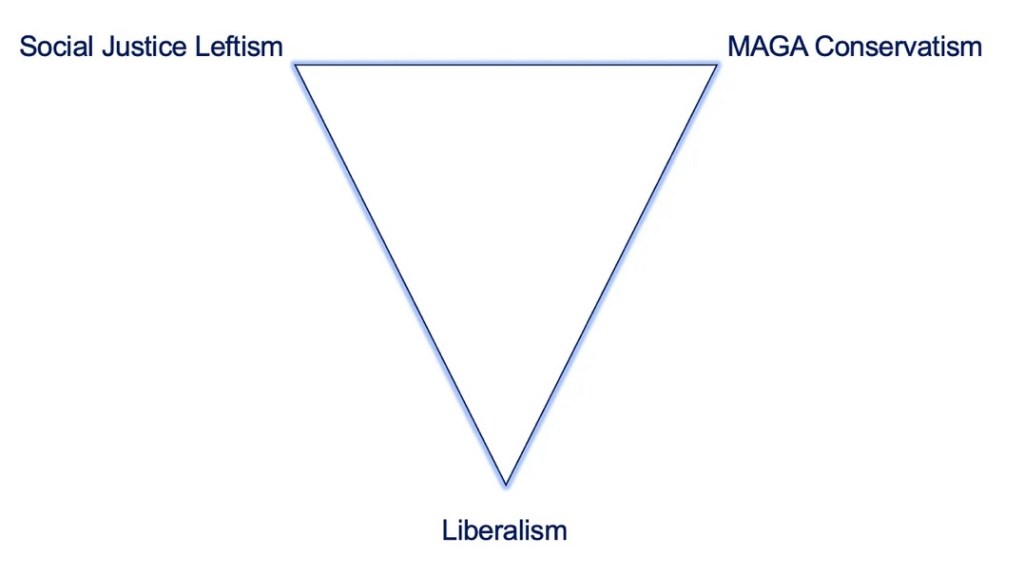
The gulf between liberals and SJLs couldn’t be wider on issues like free speech and “equity”, and equality of opportunity. MAGAns, on the other hand, have some views on individual rights and responsibility that are largely consistent with liberals, but reflexive populism often leads them to advocate policies protecting rents, corporate welfare, and protectionism.

Divided Liberalism

Liberalism emphasizes limited government, individual autonomy, and free exchange. However, there are issues upon which true liberals are of divided opinion. For example, one such area of controversy is the conflict between a woman’s right to choose and the fetal right to life. Many true liberals disagree over whether the rights of a fetus outweigh its mother’s right to choose, but most would concede that the balance shifts to the fetus at some point well short of birth (putting aside potential dangers to the mother’s life). Open borders is another area that can divide true liberals. On one side, the right to unrestricted mobility is thought to supersede any public interest in enforcing borders and limiting the flow of immigrants. On the other side, questions of national sovereignty, national security, as well as social and state capacity to absorb immigrants take primacy.

Don’t Call Lefties “Liberal”… They’re Not!

True liberalism (including most strains of libertarianism) recognizes various roles that a well-functioning state should play, but it also recognizes the primacy of the individual and individual rights as a social underpinning. As Hayek noted, true liberals are not resistant to change per se, unlike conservatives. But modern progressives demand changes of the worst kind: that the state should intervene to pursue their favored objectives, laying claim to an ever-greater share of private resources. This requires government coercion on a massive scale, the antithesis of liberalism. It’s time to recognize that “progressives” aren’t liberals in any sense of the word. For that matter, they don’t even stand for progress.

I’ll close with a quote from Adam Smith that I cribbed from Scott Sumner. Unfortunately, Sumner does not give the full reference, but I’ll take his word that Smith wrote this 20 years before the publication of The Wealth of Nations:

“Little else is requisite to carry a state to the highest degree of opulence from the lowest barbarism, but peace, easy taxes, and a tolerable administration of justice; all the rest being brought about by the natural course of things. All governments which thwart this natural course, which force things into another channel, or which endeavour to arrest the progress of society at a particular point, are unnatural, and to support themselves are obliged to be oppressive and tyrannical.”

Cases Climb, Most Patients Faring Better

30 Tuesday Jun 2020

Posted by Nuetzel in Pandemic, Public Health

≈ 1 Comment

Tags

Air Conditioning, Bloomberg, Cases vs. Deaths, Confirmed Cases, COVID Time Series, Covid-19, George Floyd, Immunity, Increased Testing, Nate Silver, Pandemic, Protest Effect, Social Distancing, Viral Transmission, Vitamin D Deficiency

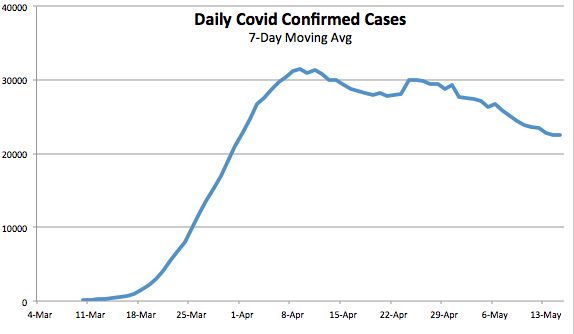
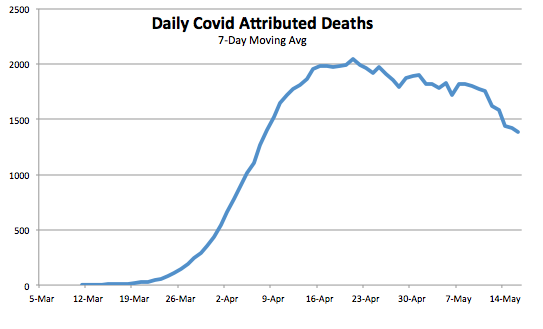
There’s been much speculation about whether recent increases in confirmed cases of COVID-19 (first chart above) will lead to a dramatic increase in fatalities (second chart). More generally, there is curiosity or perhaps hope as to whether the virus is not as dangerous to these new patients as it was early in the pandemic. I have discussed this point in several posts, most recently here. Based on the national data (above), we’re at the point at which an upturn in deaths might be expected. Based on the experience of many individual states, however, deaths should have trended upward by now, but they haven’t done so. Cases are generally less severe and are resolving more quickly.

Of course, more testing produces more cases (though there has been a mild uptick in test positivity over the past two weeks), but that doesn’t really explain the entire increase in cases over the past few weeks. In particular, why are so many new cases in the south? After all, there is evidence that the virus doesn’t survive well in warm, humid climates with more direct sunlight.

As I have mentioned several times, heavy use of air-conditioning in the south may have contributed to the increase. Nate Silver speculates that this is the case. The weather warmed up in late May and especially June, and many southerners retreated indoors where the air is cool, dry, and the virus thrives. Managers of public buildings should avoid blasting the AC, and you might do well to heed the same advice if you live with others in a busy household. In fact, nearly all transmission is likely occurring indoors, as has been the case throughout the pandemic. At the same time, however, with the early reopening of many southern states, younger people flocked to gyms, bars and other venues, largely abandoning any pretense of social distancing. So it’s possible that these effects have combined to produce the spike in new cases.

Some contend that the protests following George Floyd’s murder precipitated the jump in confirmed cases. Perhaps they played a role, but I’m somewhat skeptical. Yes, these could have become so-called super-spreader events; there are certain cities in which the jump in cases lagged the protests by a few weeks, such as Austin, Houston, and Miami, and where some cases were confirmed to be among those who protested. But if the protests contributed much to the jump, why hasn’t New York City seen a corresponding increase? Not only that, but the protests were outside, and the protests dissuaded many others from going out at all!

The trend in coronavirus fatalities remains more favorable, despite the increase in daily confirmed cases. One exception is New Jersey, which decided to reclassify 1,800 deaths as “probable” COVID deaths about six days ago. You can see the spike caused by that decision in the second chart above. Reclassifications like that arouse my suspicion, especially when federal hospital reimbursements are tied to COVID cases, and in view of this description from Bloomberg (my emphasis):

“… those whose negative test results were considered unreliable; who were linked to known outbreaks and showed symptoms; or whose death certificates strongly suggested a coronavirus link.”

Deaths necessarily lag new cases by anywhere from a few days to several weeks, depending on the stage at the time of diagnosis and delays in test results. The lag between diagnosis and death seems to center on about 12 – 14 days. Thus far, there doesn’t appear to be an upward shift in the trend of fatal cases, but the big updraft in cases nationally only started about two weeks ago. More on that below.

Importantly, a larger share of new cases is now among a younger age cohort, for whom the virus is much less threatening. The most vulnerable people are probably taking more precautions than early in the pandemic, and shocking as might seem, there is probably some buildup in immunity in the surviving nursing home population at this point. We are also better at treatment, and there is generally plenty of hospital capacity. And to the extent that the surge in new cases is concentrated in the south, fewer patients are likely to have Vitamin D deficiencies, which is increasingly mentioned as a contributor to the severity of coronavirus infections.

I decided to make some casual comparisons of new cases versus COVID deaths on a state-by-state basis, but I got a little carried away. Using the COVID Time Series web site, I started by checking some of the southern states with recent large increases in case counts. I ended up looking at 15 states in the south and west, and I added Missouri and Minnesota as well. I passed over a few others because their trends were basically flat. The 17 states all had upward trends in new cases over the past one to two months, or they had an increase in new cases more recently. However, only four of those states experienced any discernible increase in daily deaths over the corresponding time frames. These are Arizona, Arkansas, Tennessee, and Texas, and their increases are so modest they might be statistical noise.

Again, deaths tend to lag new cases by a couple of weeks, so the timing of the increase in case counts matters. Five of the states were trending upward beginning in May or even earlier, and 13 of the states saw an acceleration or a shift to an upward trend in new cases after Memorial Day, in late May or June. Of those 13, the changes in trend occurred between one and five weeks ago. Six states, including Texas, had a shift within the past two weeks. It’s probably too early to draw conclusions for those six states, but in general there is little to suggest that fatal cases will soar like they did early in the pandemic. Case fatality rates are likely to remain at much lower levels.

We’ll know much more within a week or two. It’s very encouraging that the upward trend in new cases hasn’t resulted in more deaths thus far, especially at the state level, as many states have had case counts drift upward for over a month. If it’s going to occur, it should be well underway within a week or so. Much also depends on whether new cases continue to climb in July, in which case we’ll be waiting in trepidation for whether more deaths transpire.

Covid Framing #6: The Great Over-Reaction

16 Saturday May 2020

Posted by Nuetzel in Pandemic

≈ 2 Comments

Tags

Asian Flu, California, Colorado, Confirmed Cases, Coronavirus, Covid-19, Death Toll, Florida, Georgia, Germany, Great Over-Reaction, Hong Kong Flu, Italy, Nate Silver, Neil Ferguson, New York, Pandemics, Spanish Flu, Sweden

I visited my doctor last Wednesday. He’s a specialist but also serves as my primary care physician, and we share the same condition. He’s affiliated with a prestigious medical school and practices on the campus of a large research hospital. First thing, I asked him, “So what do you think of all this?” Without hesitation, he said he believes we’re witnessing the single greatest over-reaction in all of medical history. He elaborated at length, which I very much appreciated, and I was gratified that much of what he said was familiar to me and my readers. The risks of the coronavirus are highly concentrated among the elderly and the already-sick, and the damage that the panic and lockdowns have done to the delivery of other medical care is probably a bigger tragedy, to say nothing of the economic damage. Furthermore, the Covid-19 pandemic is certainly not more threatening than others the world has experienced since WW II.

But did we know all that in March? No one with any sense believed the low numbers coming out of China; major flip-flops and mistakes by public health officials in the U.S. did much to confuse matters and delay evaluation of the outbreak. Nevertheless, there were reasons to proceed more deliberately. The explosion of cases in Italy and elsewhere consistently indicated that risk was concentrated among the elderly, so a targeted approach to protecting the vulnerable would have made sense. Still, individuals took voluntary action to social distance even before governments initiated broad lockdowns.

The lockdowns, of course, were sold as a short-term effort to “flatten the curve” so that medical resources would not be overwhelmed. There was, no doubt, great stress on front-line health care workers in March and April, and there were short-term shortages of personal protective equipment as well as ventilators for the most severe cases (but it’s possible ventilators actually harmed some patients). But whether you credit government action, private action, or the fact that so much of the population was not susceptible to begin with, mission accomplished! The strains were concentrated in certain geographic regions, especially the New York City metro area, but even there, the virus is on the wane. There is always the possibility of a major second wave, but perhaps it can be handled more intelligently by the public and especially public servants.

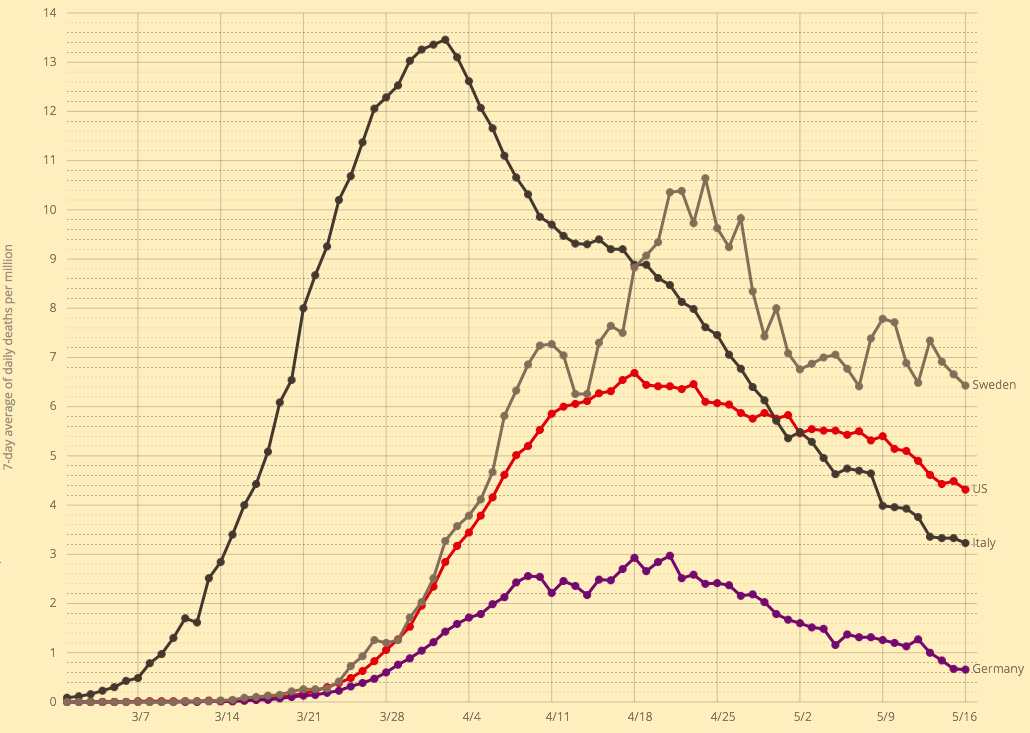
And now for some charts. Due to day-to-day volatility, and because the data on case numbers and deaths fluctuate on a weekly frequency, the charts below are on a 7-day moving average basis. It’s clear that the peak in U.S. daily confirmed cases was over five weeks ago, while the peak in Covid-attributed deaths was about three weeks ago.

Unfortunately, there is more doubt than ever about the legitimacy of the numbers. New York keeps “discovering” new deaths in nursing homes, a situation aggravated by a statewide order in March prohibiting homes from rejecting new or returning patients with active infections. There are reports from across the country of family deaths that were imminent, yet officially attributed to Covid. In one case, a death from severe alcohol poisoning was attributed to Covid. Colorado announced today that it was revising its death toll downward by about 24%.

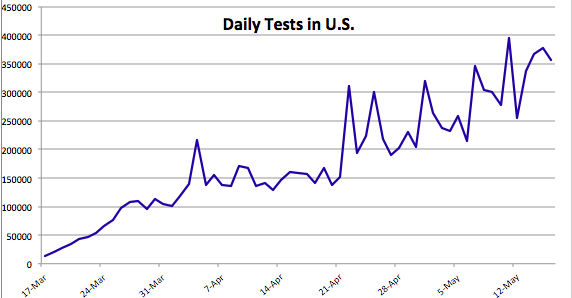
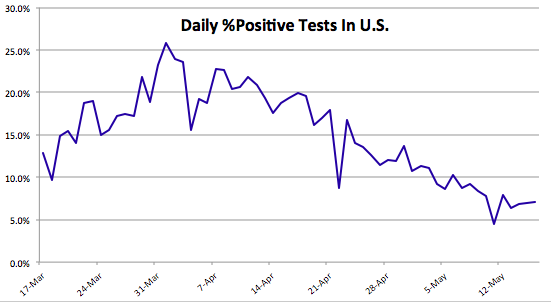
The data on confirmed cases are elevated because testing keeps expanding. The first chart below shows that the number of daily tests has more than doubled over the past 3½ weeks. At the same time, the second chart below shows that the rate of “positives” has declined steadily for over six weeks. That is likely due to a combination of expanded testing for screening purposes, as opposed to testing mainly individuals presenting symptoms, and fewer individuals presenting symptoms each day.

As Nate Silver said on Saturday:

“There are still *way* too many stories about big spikes in cases when the cause of those spikes was a big increase in tests. And remember, it’s a good thing when states start doing more tests!”

One commenter on Silver’s thread pointed out that more testing is likely to lead to more confirmed cases even if the true number of infections is declining.

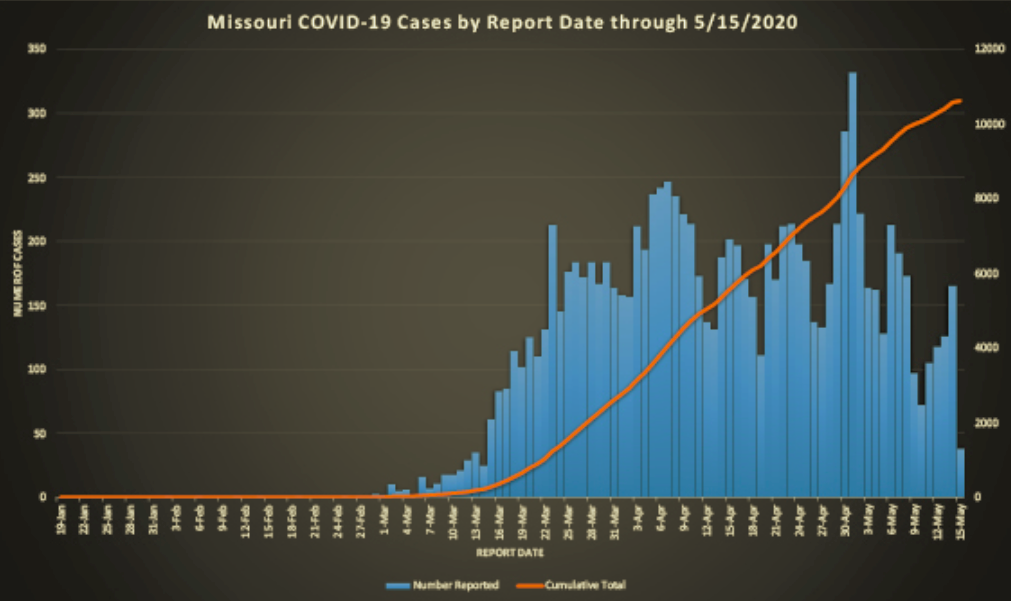
I’ll highlight just a few individual states. Missouri’s peak in cases appears to have occurred several weeks ago, though a spike at the end of April interrupted the trend. The spike was partly attributable to a flare-up at a single meat-packing plant (facilities that are particularly conducive to viral spread due to close conditions and aerosols).

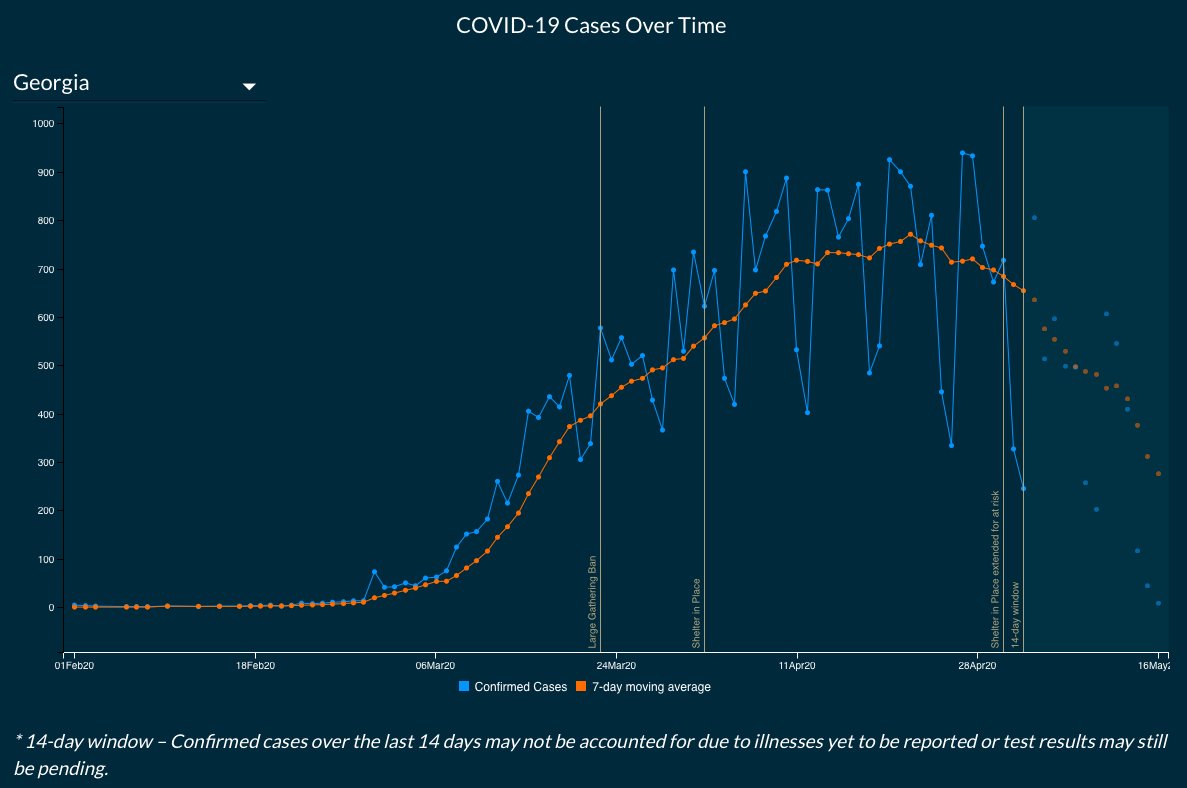
Here is Georgia, which began to reopen its economy on April 24. The pro-lockdown crowd confidently predicted the reopening would lead to a spike in cases within two weeks. Georgia is conservative in its reporting, so they don’t extend the lines in the chart beyond 14 days of the most recent reports due to potential revisions. Nevertheless, it’s clear that the trend in cases is downward.

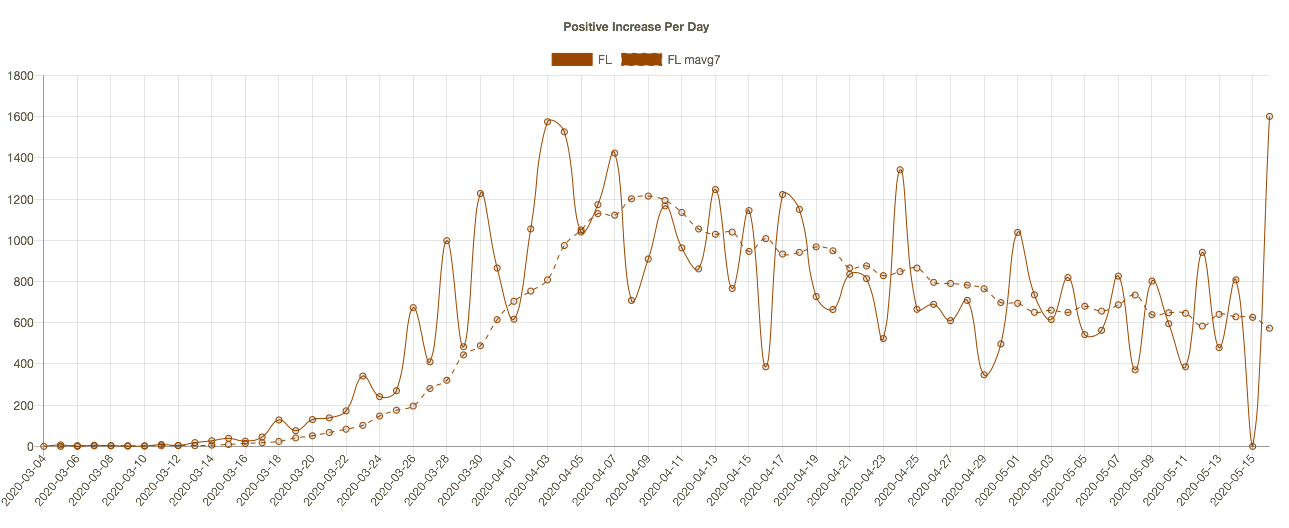
The pro-lockdown contingent predicted the same for Florida, but that has not been the case:

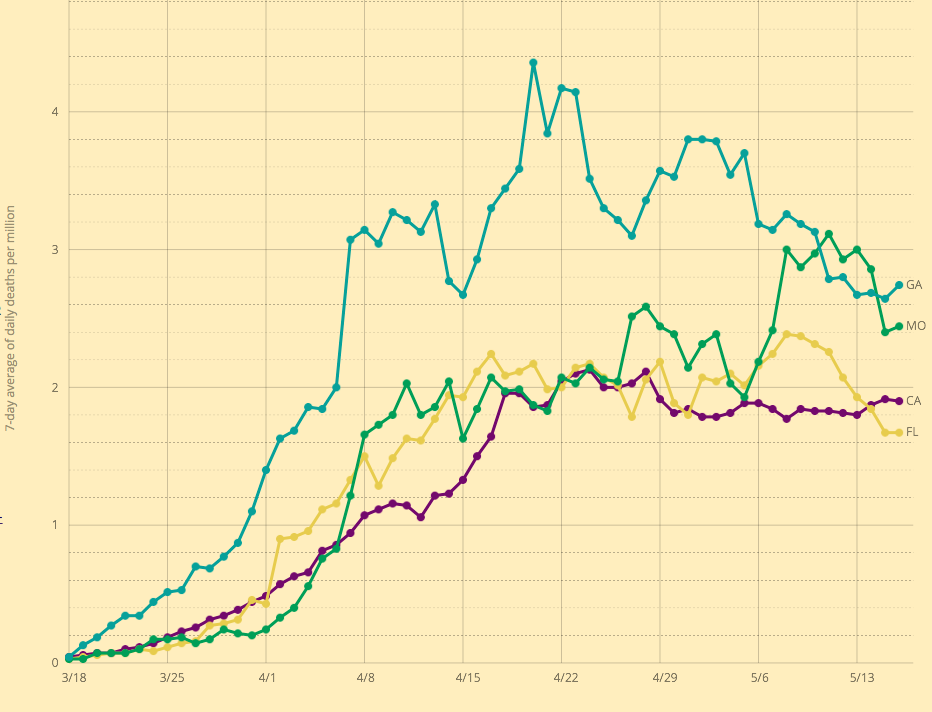
The next chart shows seven-day moving averages of deaths per million of population for four states: CA, FL, GA, and MO. The labels on the right might be hard to read, but MO is the green line. Deaths lag cases by a few weeks, and Missouri’s death rate was elevated more recently, again owing partly to the meat-packing plant. These death rates are all fairly low relative to the northeastern states around New York.

Finally, here are death rates per million of population for a few selected countries: Italy, Germany, Sweden, and the US. Italy had the large early spike, while Germany lagged and with a much lower fatality rate. The U.S. suffered more than twice the German death rate. Sweden, which has pursued a herd immunity strategy, has come in somewhat higher. The Italian and Swedish experiences both reflect high deaths in nursing homes, which might indicate a lack of preparedness at those institutions.

Here is a post from just a few days ago with a nice collection of charts for various countries.

Returning to the main gist of this “framing”, the Great Over-Reaction, the predictions setting off this panic were made by a forecaster, Neil Ferguson, who has had a rather poor track record of predicting the severity of earlier pandemics. The model he used is said to have been poorly coded and documented, and it is underdetermined such that many multiple forecast paths are possible. That means the choice of a “forecast” path is arbitrary.

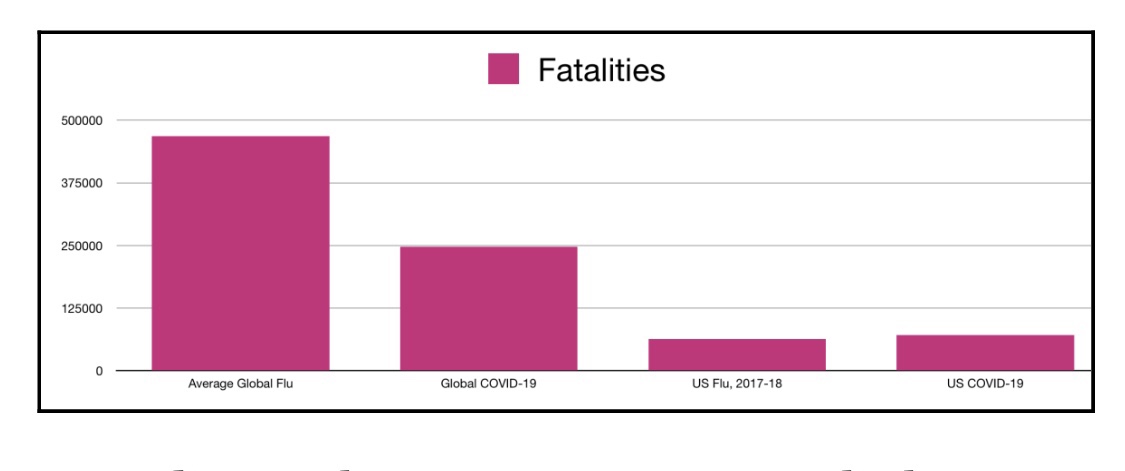
Make no mistake: Covid-19 is a serious virus. Ultimately, however, the Covid-19 pandemic might not reach the scale of a typical global flu: the current global death toll is only about two-thirds of the average flu season (global deaths from Covid-19 are now about 312,000—the chart below is a few days old). In the U.S., the death toll is modestly higher than the average flu season, but that is largely attributable to the New York City metro area. Worldwide, Covid19 deaths are now about 30% of the toll of the Hong Kong flu in 1969-70, 28% of the Asian flu in 1957-58, and far less than 1% of the Spanish flu at the end of WW I. Neither the Hong Kong flu nor the Asian flu were dealt with via widespread non-prescription health interventions like the draconian lockdowns instituted this time. The damage to the economy has been massive and unjustifiable, and the effective moratorium on medical care for other serious conditions is inflicting a large toll of its own.

Again, we can identify distinct groups that are highly vulnerable to Covid-19: the aged and individuals with co-morbidities most common among the aged. A large share of the population is not susceptible, including children and the vast bulk of the work force. The sensible approach is to target vulnerable groups for protection while minimizing interference with the liberties of those capable of taking care of themselves, especially their freedom to weigh risks. Nevertheless, those facing low risks should continue to practice extra-good manners…. er, social distancing, to avoid subjecting others to undue risk. Don’t be a close talker, don’t go out if you feel at all out of sorts, and cover your sneezes!

Mass Shootings and Mass Manipulation

21 Wednesday Aug 2019

Posted by Nuetzel in Gun Control, Second Amendment

≈ Leave a comment

Tags

Assault Weapons, Bill Clinton, Chris Buskirk, Christopher J Ferguson, Defensive Gun Uses, FiveThirtyEight, Gun-Free Zones, James T Hodgkinson, John Lott, Leah Libresco, Mark Overstreet, Mass Shootings, Nate Silver, Second Amendment, Steve Scalese, War on Drugs

The drumbeat for gun control from Leftist authoritarians never stops, and the recent mass shootings in Dayton OH, El Paso TX, and Gilroy CA, have been greeted with so much political agitation that the victims have become mere footnotes. Attempting to marshal facts in this debate can be quite confusing due to the variety of definitions of “mass shootings”. This variety contributes to certain myths about guns and gun violence that are often repeated by the media to a brow-beaten public. The confusion also motivates anti-gun policy prescriptions that are likely to be ineffective at best, and in all likelihood, counter-productive.

What constitutes a “mass shooting”? The traditional FBI definition counted an incident as a mass killling if four or more people were killed, not including the perpetrator. Broader definitions include cases in which 4 or more people are killed or injured, including the perpetrator. Gun rights opponents seem to prefer expansive definitions, including those that count gang-related killings, domestic shootings, or those occurring in the commission of another criminal act. Criminologist John Lott contends that these kinds of killings are driven by fundamentally different social forces than the mass public shootings that are at the center of this debate. For example, with respect to gang killings, Lott says:

“... the causes and solutions to drug gang violence are dramatically different than for the vast majority of mass public shootings, where attacks are designed to kill or wound as many people as possible. Padding the numbers by lumping the two together doesn’t make much sense.”

The more expansive definitions give rise to the notion that mass shootings have been trending-up dramatically in America. In fact, as Christopher J. Ferguson reports, data from The USA TODAY/AP/Northeastern University mass killings database show that the rate of mass shooting incidents per year has been flat since the early 1990s and are not much higher than the averages of the 1970s.

Another prominent distortion often accepted uncritically is that the U.S. leads the world in mass shootings. The U.S. totals are often inflated, but part of the reason for this misperception is that it’s easy to undercount foreign mass shootings. They do not always receive the same intensity of news coverage as mass shootings in the U.S., and tracking reports published in other languages is inherently more difficult for researchers. Lott says the following:

“Of the 86 countries where we have identified mass public shootings, the US ranks 56th per capita in its rate of attacks and 61st in mass public shooting murder rate. Norway, Finland, Switzerland and Russia all have at least 45 percent higher rates of murder from mass public shootings than the United States.”

The tragic nature of mass shootings should not prevent us from keeping the magnitude of these events in perspective, as Chris Buskirk explains in “Everything They’re Telling You About Mass Shootings Is Wrong“. For example, almost three-quarters of U.S. mass shootings in 2018 (four or more killed or injured) were associated with criminal activity, bar fights, and the like. And of course other social problems dwarf public mass shootings, such as the 70,000 opioid deaths that occurred in 2018, a phenomenon not coincidentally associated with the War on Drugs. And as Buskirk reminds us, the number of fatalities in public mass shootings is infinitesimal relative to the total number of defensive gun uses.

The Left’s reaction to these events is wrongheaded and their policy prescriptions are dangerous. A simple example is the widespread designation of buildings and public spaces as “gun-free zones”. However, it is highly likely that ending these designations would be an effective preventative against mass public shootings. John Lott writes in “How gun-free zones invite mass shootings” that 98% of the mass public shootings since 1950 occurred in areas where guns were prohibited. And we know that mass shootings are indeed prevented by armed citizens. Yet the Left staunchly opposes such a change and promotes the futile and foolish elimination of gun rights in general (also see this).

Leah Libresco, a statistician and former news writer at Nate Silver’s FiveThirtyEight, was highly disillusioned after devoting considerable effort to researching gun deaths. She expected to find that broad gun control measures were the answer. Instead, she says:

“… the case for the policies I’d lobbied for crumbled when I examined the evidence. The best ideas left standing were narrowly tailored interventions to protect subtypes of potential victims, not broad attempts to limit the lethality of guns. 

I researched the strictly tightened gun laws in Britain and Australia and concluded that they didn’t prove much about what America’s policy should be. Neither nation experienced drops in mass shootings or other gun related-crime that could be attributed to their buybacks and bans.”

Then there are the continuing, uninformed calls to ban “assault weapons”. As Libresco explains:

 “… no gunowner walks into the store to buy an ‘assault weapon.’ It’s an invented classification that includes any semi-automatic that has two or more features, such as a bayonet mount, arocket-propelled grenade-launcher mount, a folding stock or a pistol grip. But guns are modular, and any hobbyist can easily add these features at home, just as if they were snapping together Legos.”

Bill Clinton weighed into the debate last week by claiming that his assault weapons “ban”, which began in 1994, was so effective that we should be eager to accede to plans recently put forward by Democrats. Mark Overstreet quickly called him out as a liar, and on no less than six counts. Not only were existing “assault weapons” exempted under Clinton’s “ban”, but Americans actually added to their private stocks of weapons that met the law’s criteria during its enforcement. Existing large ammunition magazines were exempted, as well as imports of such magazines. Thus, Clinton’s so-called ban did not even approach the draconian measures now being proposed, which range from manufacturing and import prohibitions all the way up to confiscation.

Also preposterous are the Left’s routine characterizations of mass shooters as “right-wing extremists”. The truth is hardly clear cut. For example, despite expressing strong anti-immigrant sentiment, the shooters in El Paso and Christchurch, New Zealand were both environmental radicals or “eco-fascists”, in the Christchurch shooter’s words. The Dayton shooter was a self-described socialist and a supporter of Bernie Sanders, as was James T. Hodgkinson, the gunman who attacked a group of Republican legislators at a baseball practice, seriously injuring Congressman Steve Scalese. These madmen clearly weren’t crazed right-wing zealots. If anything, their profiles usually reflect severe psychological as well as ideological confusion.

Even one public mass shooting is too many, but their prevalence in the U.S. has been exaggerated in several ways. The hyperbole is often politically-motivated, intended to create negative public sentiment toward Second Amendment rights. But you can’t stop public mass shootings by foolishly disarming or criminalizing the very law-abiding citizens who are often the only force capable of providing an immediate defensive response.

Follow Sacred Cow Chips on WordPress.com

Recent Posts

  • Immigration and Merit As Fiscal Propositions
  • Tariff “Dividend” From An Indigent State
  • Almost Looks Like the Fed Has a 3% Inflation Target
  • Government Malpractice Breeds Health Care Havoc
  • A Tax On Imports Takes a Toll on Exports

Archives

  • December 2025
  • November 2025
  • October 2025
  • September 2025
  • August 2025
  • July 2025
  • June 2025
  • May 2025
  • April 2025
  • March 2025
  • February 2025
  • January 2025
  • December 2024
  • November 2024
  • October 2024
  • September 2024
  • August 2024
  • July 2024
  • June 2024
  • May 2024
  • April 2024
  • March 2024
  • February 2024
  • January 2024
  • December 2023
  • November 2023
  • August 2023
  • July 2023
  • June 2023
  • May 2023
  • April 2023
  • March 2023
  • February 2023
  • January 2023
  • December 2022
  • November 2022
  • October 2022
  • September 2022
  • August 2022
  • July 2022
  • June 2022
  • May 2022
  • April 2022
  • March 2022
  • February 2022
  • January 2022
  • December 2021
  • November 2021
  • October 2021
  • September 2021
  • August 2021
  • July 2021
  • June 2021
  • May 2021
  • April 2021
  • March 2021
  • February 2021
  • January 2021
  • December 2020
  • November 2020
  • October 2020
  • September 2020
  • August 2020
  • July 2020
  • June 2020
  • May 2020
  • April 2020
  • March 2020
  • February 2020
  • January 2020
  • December 2019
  • November 2019
  • October 2019
  • September 2019
  • August 2019
  • July 2019
  • June 2019
  • May 2019
  • April 2019
  • March 2019
  • February 2019
  • January 2019
  • December 2018
  • November 2018
  • October 2018
  • September 2018
  • August 2018
  • July 2018
  • June 2018
  • May 2018
  • April 2018
  • March 2018
  • February 2018
  • January 2018
  • December 2017
  • November 2017
  • October 2017
  • September 2017
  • August 2017
  • July 2017
  • June 2017
  • May 2017
  • April 2017
  • March 2017
  • February 2017
  • January 2017
  • December 2016
  • November 2016
  • October 2016
  • September 2016
  • August 2016
  • July 2016
  • June 2016
  • May 2016
  • April 2016
  • March 2016
  • February 2016
  • January 2016
  • December 2015
  • November 2015
  • October 2015
  • September 2015
  • August 2015
  • July 2015
  • June 2015
  • May 2015
  • April 2015
  • March 2015
  • February 2015
  • January 2015
  • December 2014
  • November 2014
  • October 2014
  • September 2014
  • August 2014
  • July 2014
  • June 2014
  • May 2014
  • April 2014
  • March 2014

Blogs I Follow

  • Passive Income Kickstart
  • OnlyFinance.net
  • TLC Cholesterol
  • Nintil
  • kendunning.net
  • DCWhispers.com
  • Hoong-Wai in the UK
  • Marginal REVOLUTION
  • Stlouis
  • Watts Up With That?
  • Aussie Nationalist Blog
  • American Elephants
  • The View from Alexandria
  • The Gymnasium
  • A Force for Good
  • Notes On Liberty
  • troymo
  • SUNDAY BLOG Stephanie Sievers
  • Miss Lou Acquiring Lore
  • Your Well Wisher Program
  • Objectivism In Depth
  • RobotEnomics
  • Orderstatistic
  • Paradigm Library
  • Scattered Showers and Quicksand

Blog at WordPress.com.

Passive Income Kickstart

OnlyFinance.net

TLC Cholesterol

Nintil

To estimate, compare, distinguish, discuss, and trace to its principal sources everything

kendunning.net

The Future is Ours to Create

DCWhispers.com

Hoong-Wai in the UK

A Commonwealth immigrant's perspective on the UK's public arena.

Marginal REVOLUTION

Small Steps Toward A Much Better World

Stlouis

Watts Up With That?

The world's most viewed site on global warming and climate change

Aussie Nationalist Blog

Commentary from a Paleoconservative and Nationalist perspective

American Elephants

Defending Life, Liberty and the Pursuit of Happiness

The View from Alexandria

In advanced civilizations the period loosely called Alexandrian is usually associated with flexible morals, perfunctory religion, populist standards and cosmopolitan tastes, feminism, exotic cults, and the rapid turnover of high and low fads---in short, a falling away (which is all that decadence means) from the strictness of traditional rules, embodied in character and inforced from within. -- Jacques Barzun

The Gymnasium

A place for reason, politics, economics, and faith steeped in the classical liberal tradition

A Force for Good

How economics, morality, and markets combine

Notes On Liberty

Spontaneous thoughts on a humble creed

troymo

SUNDAY BLOG Stephanie Sievers

Escaping the everyday life with photographs from my travels

Miss Lou Acquiring Lore

Gallery of Life...

Your Well Wisher Program

Attempt to solve commonly known problems…

Objectivism In Depth

Exploring Ayn Rand's revolutionary philosophy.

RobotEnomics

(A)n (I)ntelligent Future

Orderstatistic

Economics, chess and anything else on my mind.

Paradigm Library

OODA Looping

Scattered Showers and Quicksand

Musings on science, investing, finance, economics, politics, and probably fly fishing.

  • Subscribe Subscribed
    • Sacred Cow Chips
    • Join 128 other subscribers
    • Already have a WordPress.com account? Log in now.
    • Sacred Cow Chips
    • Subscribe Subscribed
    • Sign up
    • Log in
    • Report this content
    • View site in Reader
    • Manage subscriptions
    • Collapse this bar
 

Loading Comments...