• About

Sacred Cow Chips

Sacred Cow Chips

Tag Archives: rent seeking

Climate Alarmism and Junk Science

02 Thursday Dec 2021

Posted by Nuetzel in Climate, Research Bias, Uncategorized

≈ 8 Comments

Tags

Carbon Forcing Models, Climate Alarmism, Green Subsidies, Intergovernmental Panel on Climate Change, IPCC, Kevin Trenberth, Model Bias, Model Ensembles, National Center for Atmospheric Research, Norman Rogers, Redistribution, rent seeking

The weak methodology and accuracy of climate models is the subject of an entertaining Norman Rogers post. I want to share just a few passages along with a couple of qualifiers.

Rogers quotes Kevin Trenberth, former Head of Climate Analysis at the National Center for Atmospheric Research, with apparent approval. Oddly, Rogers does not explain that Trenberth is a strong proponent of the carbon-forcing models used by the UN’s Intergovernmental Panel on Climate Change (IPCC). He should have made that clear, but Trenberth actually did say the following:

“‘[None of the] models correspond even remotely to the current observed climate [of the Earth].’“

I’ll explain the context of this comment below, but it constitutes a telling admission of the poor foundations on which climate alarmism rests. The various models used by the IPCCc are all a little different and they are calibrated differently. I’ve noted elsewhere that their projections are consistently biased toward severe over-predictions of temperature trends. Rogers goes on from there:

“The models can’t properly model the Earth’s climate, but we are supposed to believe that, if carbon dioxide has a certain effect on the imaginary Earths of the many models it will have the same effect on the real earth.”

But how on earth can a modeler accept the poor track record of these models? It’s not as if the bias is difficult to detect! On this question, Rogers says:

“The climate models are an exemplary representation of confirmation bias, the psychological tendency to suspend one’s critical facilities in favor of welcoming what one expects or desires. Climate scientists can manipulate numerous adjustable parameters in the models that can be changed to tune a model to give a ‘good’ result.“

And why are calamitous projections desirable from the perspective of climate modelers? Follow the money and the status rewards of reinforcing the groupthink:

“Once money and status started flowing into climate science because of the disaster its denizens were predicting, there was no going back. Imagine that a climate scientist discovers gigantic flaws in the models and the associated science. Do not imagine that his discovery would be treated respectfully and evaluated on its merits. That would open the door to reversing everything that has been so wonderful for climate scientists. Who would continue to throw billions of dollars a year at climate scientists if there were no disasters to be prevented? “

Indeed, it has been a gravy train. Today, it is reinforced by green-preening politicians, the many billions of dollars committed by investors seeking a continuing flow of public subsidies for renewables, tempting opportunities for international redistribution (and graft), and a mainstream media addicted to peddling scare stories. The parties involved all rely on, and profit by, alarmist research findings.

Rogers’ use of the Trenberth quote above might suggest that Trenberth is a critic of the climate models used by the IPCC. However, the statement was in-line with Trenberth’s long-standing insistence that the IPCC models are exclusively for constructing “what-if” scenarios, not actual forecasting. Perhaps his meaning also reflected his admission that climate models are “low resolution” relative to weather forecasting models. Or maybe he was referencing longer-term outcomes that are scenario-dependent. Nevertheless, the quote is revealing to the extent that one would hope these models are well-calibrated to initial conditions. That is seldom the case, however.

As a modeler, I must comment on a point made by Rogers about the use of ensembles of models. That essentially means averaging the predictions of multiple models that differ in structure. Rogers denigrates the approach, and while it is agnostic with respect to theories of the underlying process generating the data, it certainly has its uses in forecasting. Averaging the predictions of two different models with statistically independent and unbiased predictions will generally produce more accurate forecasts than the individual models. Rogers may or may not be aware of this, but he has my sympathies in this case because the IPCC is averaging across a large number of models that are clearly biased in the same direction! Rogers adds this interesting tidbit on the IPCC’s use of model ensembles:

“There is a political reason for using ensembles. In order to receive the benefits flowing from predicting a climate catastrophe, climate science must present a unified front. Dissenters have to be canceled and suppressed. If the IPCC were to select the best model, dozens of other modeling groups would be left out. They would, no doubt, form a dissenting group questioning the authority of those that gave the crown to one particular model.”

Rogers discusses one more aspect of the underpinnings of climate models, one that I’ve covered several times on this blog. That is the extent to which historical climate data is either completely lacking, plagued by discontinuities or coverage, or distorted by imperfections in measurement. The data used to calibrate climate models has been manipulated, adjusted, infilled, and estimated over lengthy periods by various parties to produce “official” and unofficial temperature series. While these efforts might seem valiant as exercises in understanding the past, they are fraught with uncertainty. Rogers provides a link to the realclimatescience blog, which details many of the data shortcomings as well as shenanigans perpetrated by researchers and agencies who have massaged, imputed, or outright created these historical data sets out of whole cloth. Rogers aptly notes:

“The purported climate catastrophe ahead is 100% junk science. If the unlikely climate catastrophe actually happens, it will be coincidental that it was predicted by climate scientists. Most of the supporting evidence is fabricated.”

Hyperbolic Scenarios, Crude Climate Models, and Scientism

07 Sunday Nov 2021

Posted by Nuetzel in Climate science, Global Warming

≈ 6 Comments

Tags

Carbon Efficiency, Carbon forcing, carbon Sensitivity, Cloud Feedback, COP26, G20, Global Temprature, IEA, Intergovernmental Panel on Climate Change, International Energy Agency, IPCC, Joe Biden, Joe Brandon, Judith Curry, Justin Ritchie, Net Zero Emissions, Nic Lewis, Precautionary Principle, Prince Charles, RCP8.5, rent seeking, Representative Concentration Pathway, Roger Pielke Jr., Scientism, United Nations

What we hear regarding the dangers of climate change is based on predictions of future atmospheric carbon concentrations and corresponding predictions of global temperatures. Those predictions are not “data” in the normal, positive sense. They do not represent “the way things are” or “the way things have been”, though one might hope the initial model conditions align with reality. Nor can the predictions be relied upon as “the way things will be”. Climate scientists normally report a range of outcomes produced by models, yet we usually hear only one type of consequence for humanity: catastrophe!

Models Are Not Reality

The kinds of climate models quoted by activists and by the UN’s Intergovernmental Panel on Climate Change (IPCC) have been around for decades. Known as “carbon forcing” models, they are highly simplified representations of the process determining global temperatures. The primary forecast inputs are atmospheric carbon concentrations over time, which again are themselves predictions.

It’s usually asserted that climate model outputs should guide policy, but we must ask: how much confidence can we have in the predictions to allow government to take coercive actions having immediate, negative impacts on human well being? What evidence can be marshaled to show prospective outcomes under proposed policies? And how well do these models fit the actual, historical data? That is, how well do model predictions track our historical experience, given the historical paths of inputs like carbon concentrations?

Faulty Inputs

The IPCC has been defining and updating sets of carbon scenarios since 1990. The scenarios outline the future paths of greenhouse gas emissions (and carbon forcings). They were originally based on economic and demographic modeling before an apparent “decision by committee” to maintain consistency with scenarios issued in the past. Roger Pielke Jr. and Justin Ritchie describe the evolution of this decision process, and they call for change:

“Our research (and that of several colleagues) indicates that the scenarios of greenhouse gas (GHG) emissions through the end of the twenty-first century are grounded in outdated portrayals of the recent past. Because climate models depend on these scenarios to project the future behavior of the climate, the outdated scenarios provide a misleading basis both for developing a scientific evidence base and for informing climate policy discussions. The continuing misuse of scenarios in climate research has become pervasive and consequential—so much so that we view it as one of the most significant failures of scientific integrity in the twenty-first century thus far. We need a course correction.”

One would certainly expect the predicted growth of atmospheric carbon to evolve over time. However, as Pielke and Ritchie note, the IPCC’s baseline carbon scenario today, known as RCP8.5 (“Representative Concentration Pathway”), is remarkably similar to the “business as usual” (BAU) scenario it first issued in 1990:

“The emissions scenarios the climate community is now using as baselines for climate models depend on portrayals of the present that are no longer true. And once the scenarios lost touch with reality, so did the climate, impact, and economic models that depend on them for their projections of the future. Yet these projections are a central part of the scientific basis upon which climate policymakers are now developing, debating, and adopting policies.”

The authors go on to discuss a few characteristics of the BAU scenario that today seem implausible, including:

“… RCP8.5 foresees carbon dioxide emissions growing rapidly to at least the year 2300 when Earth reaches more than 2,000 ppm of atmospheric carbon dioxide concentrations. But again, according to the IEA and other groups, fossil energy emissions have likely plateaued, and it is plausible to achieve net-zero emissions before the end of the century, if not much sooner.”

Pielke and Ritchie demonstrate that the IPCC’s baseline range of carbon emissions by 2045 is centered well above (actually double) the mid-range of scenarios developed by the International Energy Agency (IEA), and there is very little overlap between the two. However, global carbon emissions have been flat over the past decade. Even if we extrapolate the growth in atmospheric CO2 parts per million over the past 20 years, it would rise to less than 600 ppm by 2100, not 1,200 ppm. It’s true that a few countries (China comes to mind) continue to exploit less “carbon efficient” energy resources like coal, but the growth trend in concentrations is likely to continue to taper over time.

It therefore appears that the IPCC’s climate scenarios, which are used broadly as model inputs by the climate research community, are suspect. As one might suspect: garbage in, garbage out. But what about the climate models themselves?

Faulty Models

The model temperature predictions have been grossly in error. They have been and continue to be “too hot”. The chart at the top of this post is typical of the comparisons of model projections and actual temperatures. Before the year 2000, most of the temperature paths projected by the particular model charted above ran higher than actual temperatures. However, the trends subsequently diverged and the gap has become more extreme over the past two decades.

The problem is not merely one of faulty inputs. The models themselves are deeply flawed, as they fail to account adequately for natural forces that strongly influence our climate. It’s been clear for many years that the sun’s radiative energy has a massive impact on temperatures, and it is affected not only by the intensity of the solar cycle but also by cloud cover on Earth. Unfortunately, carbon forcing models do not agree on the role that increased clouds might have in amplifying warming. However, a reduction in cloud cover over the past 20 years, and a corresponding increase in radiative heat, can account for every bit of the warming experienced over that time.

This finding not only offers an alternative explanation for two decades of modest warming, it also strikes at the very heart of the presumed feedback mechanism usually assumed to amplify carbon-induced warming. The overall effect is summarized by the so-called carbon sensitivity, measured as the response of global temperature to a doubling of carbon concentration. The IPCC puts that sensitivity in a range of 1.5C to 4.5C. However, findings published by Nic Lewis and Judith Curry are close to the low end of that range, as are those found by Frank Bosse reported here. The uncertainties surrounding the role of cloud cover and carbon sensitivities reveal that the outputs relied upon by climate alarmists are extreme model simulations, not the kind of reliable intelligence upon which drastic policy measures should be taken.

The constant anxiety issued from the Left on the issue of climate change, and not a little haranguing of the rest of us, is misplaced. The IPCC’s scenarios for the future paths of carbon concentration are outdated and seriously exaggerated, and they represent a breach of scientific protocol. Yet the scenarios are widely used as the basis of policy discussions at both the domestic and international levels. The climate models themselves embed questionable assumptions that create a bias toward calamitous outcomes.

Yet Drastic Action Is Urged

The UN’s 2021 climate conference, or COP26 (“Conference of the Parties …”) is taking place in Glasgow, Scotland this month. Like earlier international climate conferences, the hope is that dire forecasts will prompt broad agreement on goals and commitments, and that signatory countries will translate these into policy at the national level.

Things got off to a bad start when, before COP26 even began, the G20 nations failed to agree on a goal of “net-zero” carbon emissions by 2050. Another bad portent for the conference is that China and India, both big carbon emitters, will not attend, which must be tremendously disappointing to attendees. After all, COP26 has been billed by Prince Charles himself as “the last chance saloon, literally”, for saving the world from catastrophe. He said roughly the same thing before the Paris conference in 2014. And Joe Brandon … er, Biden, blurted some hyperbole of his own:

“Climate change is already ravaging the world. … It’s destroying people’s lives and livelihoods and doing it every single day. … It’s costing our nations trillions of dollars.”

All this is unadulterated hogwash. But it is the stuff upon which a crisis-hungry media feeds. This hucksterism is but one form of climate rent-seeking. Other forms are much more troubling: scary scenarios and model predictions serve the self-interest of regulators, grant-seeking researchers, interventionist politicians, and green investors who suckle at the public teat. It is a nightmare of scientism fed by the arrogance of self-interested social planners. The renewable energy technologies promoted by these investors, politicians, and planners are costly and land-intensive, providing only intermittent output (requiring backup fossil fuel capacity), and they have nasty environmental consequences of their own.

The precautionary principle is no excuse for the extreme policies advocated by alarmists. We already have economically viable “carbon efficient” and even zero-carbon energy alternatives, such as natural gas, modular nuclear power, and expanded opportunities for exploiting geothermal energy. This argues against premature deployment of wasteful renewables. The real crisis is the threat posed by the imposition of draconian green policies to our long-term prosperity, and especially to the world’s poor.

Defang the Administrative State

14 Wednesday Apr 2021

Posted by Nuetzel in Administrative State, Discrimination, Free Speech

≈ Leave a comment

Tags

Administrative Law, Administrative State, discrimination, Human Subjects, Institutional Review Boards, Internal Revenue Code, Ku Klux Klan, Philip Hamburger, Religious Speech, rent seeking, Section (501)(c)(3), Tuskegee, Woodrow Wilson

The American administrative state (AS) was borne out of frustration by statist reformers with expanded voting rights. It continues to be an effective force of exclusion and discrimination today, according to Philip Hamburger of Columbia Law School. I’ve discussed Hamburger’s commentary in the past on the extra-legal power often wielded by administrative agencies, and I will quote him liberally in what follows. At the first link above, he provides some historical context on the origins of the AS and discusses the inherently discriminatory nature of administrative law and jurisprudence.

An Abrogation of Voting Rights

Hamburger quotes Woodrow Wilson from 1887 on the difficulty of appealing to a broad electorate, a view that was nothing short of elitist and bigoted:

“‘… the reformer is bewildered’ by the need to persuade ‘a voting majority of several million heads.’ He worried about the diversity of the nation, which meant that the reformer needed to influence ‘the mind, not of Americans of the older stocks only, but also of Irishmen, of Germans, of Negroes.’ Put another way, ‘the bulk of mankind is rigidly unphilosophical, and nowadays the bulk of mankind votes.’”

Wow! Far better, thought Wilson, to leave the administration of public policy to a class of educated technocrats and thinkers whose actions would be largely independent of the voting public. But Wilson spoke out of both sides of his mouth: On one hand, he said that administration “lies outside the proper sphere of politics“, but he also insisted in the same publication (“The Study of Administration“) that public administration “must be at all points sensitive to public opinion“! Unfortunately, the views of largely independent public administrators seldom align with the views of the broader public.

Administration and Prejudice

Wilson was elected President 25 years later, and his administration did much to expand the administrative powers of the federal executive. Over the years, the scope of these powers would expand to include far more than mere administrative duties. Administrative rule-making would come to form a deep body of administrative law. And while traditional legislation would nominally serve to “enable” this activity, it has expanded in ways that are not straightforwardly connected to statute, and its impact on the lives of ordinary Americans has been massive. Furthermore, a separate legal system exists for adjudicating disputes between the public and administrative agencies, with entirely separate rules and guarantees than our traditional legal system:

“It is bad enough that administrative proceedings deny defendants many of the Constitution’s guaranteed civil procedures. … In addition, all administrative proceedings that penalize or correct are criminal in nature, and they deny defendants their procedural rights, such as their right to a jury and their right to be presumed innocent until proven guilty beyond a reasonable doubt. Of course, these administrative proceedings deny procedural rights to all Americans, but they are especially burdensome on some, such as the poor.“

The AS has truly become a fourth, and in many ways dominant, branch of government. Checks and balances on its actions are woefully inadequate, and indeed, Wilson considered that a feature! It represents a usurpation of voting rights, but one that is routinely overlooked by defenders of universal suffrage. It is also highly prejudiced and discriminatory in its impact, which is routinely overlooked by those purporting to fight discrimination.

Bio-Medical Discrimination

Hamburger devotes some of his discussion to Institutional Review Boards (IRBs), which are mandated by federal law to conduct prior reviews of research in various disciplines. These boards are generally under the authority of the Department of Health and Human Services. One major objective of IRBs is to prevent research involving human subjects, but this prohibition can be very misguided, and the reviews impose costly burdens and delays of studies, often stopping them altogether on trivial grounds:

“This prior review inevitably delays and prevents a vast array of much entirely innocent bio-medical research. And because the review candidly focuses on speech in both the research and its publication, it also delays and prevents much bio-medical publication.

The consequences, particularly for minorities, are devastating. Although supposedly imposed by the federal government in response to scientific mistreatment of black individuals, such as at Tuskegee, the very solicitousness of IRBs for minorities stymies research on their distinctive medical problems. …

When government interferes with medical research and its publication—especially when it places administrative burdens on research and publication concerning minorities—the vast costs in human life are entirely predictable and, of course, discriminatory.”

Stifling Political Speach

Hamburger tells the story of Hiram Evans, a 1930s crusader against religious influence on voters and legislators. Evans also happened to be the Imperial Wizard of the Ku Klux Klan. Hamburger classifies Evans’ agitation as an important force behind nativist demands to outlaw religious speech in politics. Ultimately, Congress acquiesced, imposing limits on certain speech by non-profits. Individuals are effectively prohibited from fully participating in the political process through religious and other non-profit organizations by Section (501)(c)(3) of the Internal Revenue Code. Of course, tax-exempt status is critical to the survival and growth of many of these institutions. More traditionally religious individuals are often heavily reliant upon their faith-based organizations not just for practicing their faith, but as centers of intellectual and social life. Needless to say, politics intersects with these spheres, and to prohibit political speech by these organizations has an out-sized discriminatory impact on their members.

The insulation of the AS from the democratic process, and the effective limits on religious speech, often mean there is little leeway or tolerance within the AS for individuals whose religious beliefs run counter to policy:

“The difference between representative and administrative policymaking is painfully clear. When a legislature makes laws, the policies that bear down on religion are made by persons who feel responsive to religious constituents and who are therefore usually open to considering exemptions or generally less severe laws.”

But there are other fundamental biases against religious faith and practices within the AS:

“… when policies come from administrative agencies, they are made by persons who are chosen or fired by the executive, not the public, and so are less responsive than legislators to the distinctive needs of a diverse people. They are expected, moreover, to maintain an ethos of scientism and rationality, which—however valuable for some purposes—is indifferent and sometimes even antagonistic to relatively orthodox or traditional religion, let alone the particular needs of local religious communities.“

Sucking Life From the Republic

The administrative state imposes a variety of economic burdens on the private sector. This is not just costly to economic growth. It also creates innumerable opportunities for rent-seeking by interest groups of all kinds, including private corporations whose competitive interests often lead them to seek advantage outside of traditional participation in markets.

Hamburger’s arguments are even more fundamental to the proper functioning of a republic, but they are probably difficult for many journalists and politicians to fully grasp. He identifies some core structural defects of the administrative state, and he does so with great passion. He sums things up well in his closing:

“… was founded on racial and class prejudice, it is still supported by class prejudice. Moreover, by displacing laws made by elected lawmakers, it continues to discriminate against minorities of all sorts. Along the way, it stifles much scientific inquiry and publication with devastating costs, particularly for minorities. It is especially discriminatory against many religious Americans. And it eviscerates the Constitution’s procedural rights, not least in cases criminal in nature.

So, if you are inclined to defund oppression, defund the administrative state. If you want to tear down disgraceful monuments, demolish the prejudiced and discriminatory power that is Woodrow Wilson’s most abysmal legacy. If you are worried about stolen votes, do not merely protest retail impediments to voting, but broadly reject the wholesale removal of legislative power out of the hands of elected legislators. And if you are concerned about the injustice of the criminal justice system, speak up against the loss of juries, due process, and other rights when criminal proceedings get transmuted into administrative proceedings.

Little in America is as historically prejudiced or systematically discriminatory as administrative power. It is a disgrace, and it is time to take it down.“

Statism and Self-Harm

18 Tuesday Feb 2020

Posted by Nuetzel in Free markets, Government Failure, Uncategorized

≈ Leave a comment

Tags

Andre Schleifer, Autocracy, Chinese Interment Camps, Friedrich Hayek, Kazakh Muslims, New York Times, P.J. O'Rourke, Reason.com Nick Gillespie, Reeducation, rent seeking, statism, The Road To Serfdom, Tom Friedman, Uighur Muslims


Some have a tendency to think their problems can be solved only through the intervention of some powerful, external force. That higher power might be God, but at a more temporal level, government is often presumed to be a force to fix all things that need fixing. “There oughta be a law” is a gut reaction to things we find injurious or that offend; government has the resources, or the coercive power to get the resources, to undertake big, appealing projects; and of course government has the coercive power to “rearrange the deck chairs” in ways that might satisfy anyone’s sense of justice and fairness, so long as they get their way. Whenever people perceive some need they believe to be beyond their private capacity, or mere convenience, government action is the default option, and that’s partly because many think it’s the only option.

That’s the appeal of “democratic socialism”, to use a name that unintentionally emphasizes a very real danger of democracy: the tyranny of the majority. It’s a dismal way station along the road to serfdom, to borrow a phrase from Hayek.

Government, however, repeatedly demonstrates it’s sheer incompetence and its expedience as a vehicle for graft. And it’s not as if these failures go unrecognized. Everyone knows it! This is nowhere more true than when the state interferes with private markets or attempts to steer the economy’s direction at either an aggregate or industry level. But here we have a dark irony, as told by Nick Gillespie at Reason:

“Again and again—and in countries all over the world—declines in trust of government correlate strongly with calls for more government regulation in more parts of our lives. ‘Individuals in low-trust countries want more government intervention even though they know the government is corrupt,’ explain the authors of a 2010 Quarterly Journal of Economics paper. That’s certainly the case in the United States, where the size, scope, and spending of government has vastly increased over exactly the same period in which trust and confidence in the government has cratered. In 2018, I talked with one of the paper’s authors, Andrei Shleifer, a Harvard economist who grew up in the Soviet Union before coming to America. Why do citizens ask a government they don’t believe in to bring order? ‘They want regulation,’ he said. ‘They want a dictator who will bring back order.'”

Against all historical evidence and forebodings, the wish for a benevolent dictator! As if it’ll be different this time! Are we all statists? Certainly not me, but the Left is full of them. One prominent example is columnist Tom Friedman of the New York Times, who has expressed the sometimes fashionable view that “things get done” under dictatorships:

“One-party autocracy certainly has its drawbacks. But when it is led by a reasonably enlightened group of people, as China is today, it can also have great advantages. … That one party can just impose the politically difficult but critically important policies needed to move a society forward in the 21st century.”

Tell it to the interred Kazakh and Uighur Muslims undergoing “reeducation” in China. The Right has its share of statists as well, and it is typically expressed in desires for enforced social conservatism.

People seem to have a vague idea that everyone else must either be misbehaving or in misery. And despite the well-tested fallibility and lack of trust in government, people persist in believing that the public sector can conjure magic to solve their problems. But the state gets bigger and bigger while solving few problems and exacerbating others. In fact, as government grows, it makes rent seeking a more viable alternative to productive effort. Like the giant zero-sum game that it is, the expansion of government provides the very means to pick away at the wealth of others. When faced with these incentives, people most certainly will misbehave on small and large scales!

The truth is that individuals hold the most potent regulatory force in their own hands: the voluntary nature of trade. It protects against over-pricing, under-pricing, and inferior quality along many dimensions, but it demands discipline and a willingness to walk away. It also demands a willingness to put forth productive effort, rather than coveting the property of others, and taking from others via political action. To paraphrase P.J. O’Rourke, if you think things are expensive now, wait till they’re free!

Who Are the Zero-Sum Winners?

09 Monday Sep 2019

Posted by Nuetzel in Big Government, rent seeking

≈ 2 Comments

Tags

Caveat Emptor, Compliance Costs, Consumer Sovereignty, Drug Prohibition, Economic Rents, Energy subsidies, Farm Subsidies, Monopoly Rents, Mutually Beneficial Trade, Public Aid, Public goods, Public Lottery, Public Trough, Regulatory Rents, rent seeking, Social Security, Subsidies, Tax Deductibility, Zero-Sum Economics

Productive effort seldom goes unrewarded, but all too often rewards are directed to nonproductive activities and secured in ways that are outright takings of resources and rights from others. These are zero-sum propositions at best, as the rewards come only at equivalent or greater costs to others. Gains from zero-sum activities are often purely consumptive in nature and tend to foster more destructive behavior. A clear-cut example is outright thievery, but there are many cases in which, by matters of degree, the perpetrators are not even dimly aware that their gains bring harm to others.

Sadly, our society has undergone a transition to a state in which everyone collects ongoing streams of zero-sum rewards, which are, by definition, at someone else’s (and often our own) expense. The turbulence caused by this unnecessary and avoidable mix of costs and rewards is all too real for consumers and businesses, but again, they don’t always fully grasp its dysfunctional nature.

The Way To Positive Sums

Of course, there are winners and losers in almost any area of economic life. Even when two individuals engage in mutually beneficial exchange, an otherwise win-win situation, other traders might regret missing out on the deal. Pleasing buyers more effectively than one’s competitors might force those rivals to turn to other pursuits. That’s all for the best from a social point of view, unless they can come up with an even better idea to win back customers. In this way, things can keep getting better and better for everyone, even for the one-time losers who are free to compete in trades to which they are better suited. Winners, then, are defined by their success in creating value for others. These are the productive winners. But again, material success doesn’t always come so honorably.

Bobbing For Booty?

Purely “consumptive” or zero-sum winners might be simple crooks who are able to avoid apprehension, or perhaps they are dishonest business-people who sell goods with hidden defects or inferior workmanship. There are many degrees here: a talented salesperson with shoddy merchandise might compromise on price. A clever product manager might reduce the size of a package slightly without reducing price.

A simple gamble is zero-sum in a purely monetary sense, but both gamblers do it for enjoyment, so there are psychic gains involved. A successful gambler might be a zero-sum winner in a monetary sense, but luck usually runs out on honest players. A cheater qualifies as a zero-sum winner. Conversely, it’s not correct to say that casinos are strictly zero-sum winners, though the odds are always stacked in favor of the house and everyone knows it. Casino patrons enjoy the experience, including other amusements available in casinos, so they are often happy customers despite their losses. They are engaging in mutually beneficial exchange.

Private Affairs Made Public

A short-hand description encompassing much of our zero-sum havoc is “the public trough”. Many zero-sum rewards have arisen out of legislative battles, court cases, and regulatory actions restricting private decision-making and encroaching on private property rights. The unremitting tendency is for expansion of these kinds of actions. Where there are zero-sum winners at the public trough, or an opportunity to expand the trough itself, there are always more covetous seekers of zero-sum winnings, otherwise known as rent seekers. They are reliable promoters of “do-something-ism” relative to the outrage du jour through more legislation, lawsuits, and regulatory filings. The tragic thing about rent seeking is that the process itself consumes resources and undermines private incentives, thereby transforming zero-sum outcomes into wasteful, negative-sum outcomes.

Winners At the Trough

There are many kinds of zero-sum winners at the public trough. The winning and losing often occur separately and asynchronously, connected only by an enabling authority who sets rules and funds winners from proceeds taken from losers. For this reason, it is easy for citizens to lose track of the “zero-sumness” of the many benefits they receive. After all, the government can deliver things for “free”, right? And the connection between one’s obligations, losses, and the gains reaped by others is not always obvious.

All of the following involve some degree of zero-sum activity, and all attract rent seekers:

  • Public aid in exchange for no contribution to output, funded by zero-sum losing taxpayers.
  • Subsidies for politically-favored technologies that are otherwise uneconomic, funded by zero-sum losing taxpayers.
  • Farm subsidies when too much is produced and the output is not highly valued, leading to an overallocation of resources to agricultural activity and rents for farmers funded by zero-sum losing taxpayers.
  • Complex regulatory and tax rules generate income for compliance advisors such as attorneys, accountants, and consultants. Those are rents, pure and simple, paid for by parties who must comply under penalty of law.
  • Regulatory advantage conferred upon firms sufficiently large or dominant to afford compliance. That penalizes smaller competitors and undermines their market position. The additional profit large firms may earn as a consequence is a rent, funded by zero-sum losing consumers and weaker competitors.
  • The award of government contracts is often as much political as it is economic. Such a process is not subject to the market discipline imposed on private contracts, so there is ample opportunity for rents via cost-padding and graft, again funded by zero-sum losing taxpayers.
  • More generally, government purchases of any kind are subject to weak market discipline, like any buyer spending someone else’s money. Thus, government has a tendency to pay prices not supported by economic value, offering rents to suppliers, funded by zero-sum losing taxpayers.
  • The tax deduction afforded to employer-provided health care is a targeted subsidy that leads employees to over-insure. More fundamentally, these employees and their employers are zero-sum winners. It also creates profits for health insurers and drives up health care costs. The zero-sum spoils are to the detriment of other taxpayers and participants in the individual insurance market.
  • Drug prohibition drives up black market profits, creating zero-sum winnings at the expense and safety of users.
  • Social Security creates zero-sum winnings for those who will not or cannot save. But this is a mixed bag to the extent that some people are unable to save privately: their ability to do so is largely usurped via payroll taxes, both on them and on their employer. The many zero-sum losers would otherwise have no difficulty earning better returns on private investments.

There are many other examples. And almost everyone ends up on one side or the other of many different zero-sum outcomes. Show me a government action and I’ll show you zero-sum winners and losers. This is not to say there are no welfare gains associated with government action. Public aid, for example, is intended as social insurance and surely has some value in mitigating the risks of personal economic calamity. Nonetheless, the overextension and poor incentives of aid programs create a significant zero-sum component. Likewise, government spending on public goods creates social benefits, but government is insufficiently incented to economize, creating a zero-sum win for contractors and losses for taxpayers.

Not Zero Sum

While zero-sum winners collect economic rents, the existence of economic rents does not imply a zero-sum winning. For example, members of the so-called rentier class collect passive investment income. Those investments represent a supply of current resources to other parties hoping to transform them into a greater supply of future resources. That’s productive, and so the gains enjoyed by rentiers are not zero-sum winnings, but payments for the use of transformational capital.

Economic profits are those exceeding the owner’s opportunity cost, and they too are called rents. They should not necessarily be classified as zero-sum gains, however. Only sometimes. Successful innovators and first movers often earn economic profits as a reward for their efforts, as do alert entrepreneurs deploying their resources where they are most demanded. This “positive-sumness” applies to monopolists with a hot product just as surely as it applies to a firm facing nascent competition. But economic profits gained through political connections, outright graft, and government-enabled monopoly are zero-sum, enabled by non-market, authoritarian forces. Members of the political class tend to share in these zero-sum gains, and there are many losers.

Zero-Sum Psyche

Unfortunately, zero-sum thinking is deeply ingrained in the human psyche, despite our transition to a higher plane of social cooperation via markets. Even in those markets, certain outcomes might seem zero-sum in the moment. Witness the widespread denigration of the profit motive, which produces efficient outcomes in the long-run. As noted above, over time, the biggest winners tend to be those capable of creating the most value.

If you ask school children today how to get rich, many will say “win the lottery” without hesitation. I know, I know, government-sponsored lotteries are a relatively new phenomenon, and some of the lottery proceeds may benefit schools or other public programs, but the idea that a game of chance is so indelibly ingrained in the minds of children is a manifestation of the psychology of zero-sum success.

The Tangled Mess

So we have the zero-sum winners: successful gamblers, thieves, and rent seekers. The latter root deeply for gains made possible by government intervention in private affairs, actions that always leave room for enduring rents. They always lobby fiercely for new public interventions that might confer private advantages. And then we have the hapless public, stumbling through a series of zero-sum gains and losses made possible by the Leviathan they know and obey. They should look in the mirror, because every law and every program they have allowed their political leaders to hatch, reliably sold as good and just, creates more zero-sum activity to the detriment of long-term economic welfare. Roll it back!

Corporate Lapdogs of the Left

04 Wednesday Apr 2018

Posted by Nuetzel in Central Planning, Identity Politics, Progressivism, rent seeking

≈ Leave a comment

Tags

central planning, Corporate Socialism, Corporatism, David Cay Johnston, Identity Politics, Interstate Commerce Commission, Kevin Williamson, Orbiting the Giant Hairball, Political Action Committees, Political Correctness, rent seeking, Technocratic elite, William H. Whyte

ceo

Now don’t get me wrong, I definitely prefer to see private goods and services produced privately, not publicly. Private ownership of the means of production makes the world a better place because ownership and self-interest drive performance and value, to put it all too briefly. But corporate America is now so thoroughly encumbered by ideological distractions that it compromises the mission of creating value, risking shareholder returns and invested capital as well. Having spent the past 31 years employed successively by three gigantic corporate hairballs (with a 2-year stint at the central bank), the following thesis about corporate CEOs, and corporate America by extension, strikes me as wholly accurate:

“CEOs … mostly [reject] the ethos of rugged individualism in favor of a more collectivist view of the world. The capitalists [are] not much interested in defending the culture of capitalism. … the psychological and operational mechanics of large corporations [are] much like those of other large organizations, including government agencies … American CEOs [believe] that expertise deployed through bureaucracy [can] impose rationality on such unruly social entities as free markets, culture, family, and sexuality. The supplanting of spontaneous order with political discipline is the essence of progressivism….“

I changed the tenses used above by Kevin Williamson, who attempts to explain why American corporations became such progressive activists. The beginning of the quote describes interviews conducted by William H. Whyte in the 1950s, but it’s as true now as it was then, and probably much more so. The technocratic view of organizational efficacy may be true up to a point. In fact, there is undoubtedly an optimal size for any organization that is dependent upon it’s mission, the technologies at its disposal, and the range of prices it is likely to face in input and output markets. It’s all too easy for a successful firm to expand beyond that point, however, as many now-defunct businesses have learned the hard way. However, the quote merely highlights the sympathetic view often held by corporate managements toward the notion of a planned society, guided by a class of technocrats. They share this scientistic line of thinking with the statist left, though the corporatist vision is a world in which their private organizations play a critical role, with risks mitigated by “partners” in government.

Private incentives can produce wonderful results, but they are corrupted by the scent of private advantage that can be gained via government intervention in markets. The corporate practice of seeking rents through legislative and administrative action has been going on since at least the 1880s, when railroads sought protection from competition and other shipping interests via federal regulatory action.The symbiosis between government and corporate interests, or corporatism, has been growing ever since. Whether it is lucrative contract awards, subsidies, or favorable regulation, government has lots of goodies at its disposal by virtue of its exclusive ability to exert coercive power. This quote of David Cay Johnston describes the end-product of corporate rent-seeking behavior:

“Corporate socialism is where we socialize losses and privatize gains. Companies that have failed in the marketplace stick the taxpayers with their losses, but when they make money they get to keep it, and secondly, huge amounts of capital are given to companies by taxpayers.”

Risk mitigation is at the heart of a second variety of corporate leftism, and Williamson notes the asymmetry in the political risks faced by most corporations:

“Conservatives may roll their eyes a little bit at promises to build windmills so efficient that we’ll cease needing coal and oil, but progressives (at least a fair portion of them) believe that using fossil fuels may very well end human civilization. The nation’s F-150 drivers are not going to organize a march on Chevron’s headquarters if it puts a billion bucks into biofuels, but the nation’s Subaru drivers might very well do so if it doesn’t. … The same asymmetry characterizes the so-called social issues.“

At this point, Williamson goes on to describe a few social issues on which corporate leaders are frequently harangued by the left. Those leaders may view conservative positions on those issues as aberrant, according to Williamson, because the leaders inhabit an insulated world of elitist, media-driven, politically-correct opinion. They wish to be seen as “progressive” and discount the risk of offending conservatives. While I do not take Williamson’s side on all of the social issues he mentions, I concede that there is some truth to the asymmetry he describes.

An avenue through which corporate America is strongly influenced by the left is identity politics. This is partly an unfortunate side-effect of civil rights legislation and other anti-discrimination law, but in today’s litigious environment, there are excessive legal risks against which corporations must take precautions. This is embedded in human resource policies to the point at which hiring the best individual to fill a role is subject to a series of costly, time-consuming hurdles, and is sometimes impossible. Then, there are the mandatory “Diversity and Inclusion” courses that all employees are required to complete. These overbearing attempts to “educate” the work force consume valuable staff time and are of questionable value in light of the aggravation and resentment they inspire in employees. Finally, I can’t keep count of all the corporate-sponsored activities devoted to celebrating one identity group after another. Can we please get back to work?

Today, as a consumer, it is becoming more difficult to engage in commerce without exposure to a seller’s political positioning. For example, I buy about 90% of my clothing from a particular clothier, but last weekend I learned that the company had taken an objectionable position (to me) in the debate over gun legislation. I am certain that activists badgered the company, and it succumbed, and so I will change my shopping habits. People often find that it’s easier to engage in arms-length transactions when the other party stays off the soapbox. But it goes further than that. Here is Williamson:

“Whereas the ancient corporate practice was to decline to take a public position on anything not related to their businesses, contemporary CEOs feel obliged to act as public intellectuals as well as business managers.“

Well, “ancient” might take it a bit too far, but as a customer, employee, and especially as a shareholder, I would urge any company to steer clear of political posturing. Do not dilute your mission of delivering value to customers, which dovetails with serving the interests of shareholders. You must pursue that mission in a way that you consider responsible and ethical, which just might narrow the scope of the mission. And that’s okay. Just be as neutral as possible on extraneous issues as you reach out to potential customers, and do not respond to politically-motivated threats except in the most diplomatic terms.

Should I bother to say that corporations should eschew public subsidies? That they should respond to competition by improving value, rather than lobbying for advantages and protection from lawmakers or regulators? That they should not badger their employees to give to their company’s Political Action Committee (PAC)?

I must be fantasizing! Corporations would never follow that advice, not as long as they can capture rents through the seductive expedient of big government. If that were the only reason for the hate reserved by leftists for corporate America, I’d be right with them. But in fact, leftist rhetoric condemns the profit motive generally, both in principle and as a method of scapegoating for any social ill. Williamson marvels at the incredible irony of the corporate enterprise-cum-lapdog of the Left, which is especially palpable as the Left beats the dog so unrelentingly.

Bankers, Risk and the Rents of Slippery Skin

12 Monday Mar 2018

Posted by Nuetzel in Banking, rent seeking

≈ Leave a comment

Tags

Deposit Insurance, Fannie Mae. Freddie Mac, Fat Tails, FDIC, Fractional Reserves, Frank Hollenbeck, GSEs, Guatam Mukunda, Gvernment Sponsored Enterprises, Irving Fisher, It's a Wonderful Life, John Cochrane, Laurence Kotlikoff, Milton Friedman, Nassim Taleb, Ralph Musgrave, rent seeking, Skin in the Game, Too big to fail

Risk taking is important to the economic success of a nation. Creative energy demands it, and it is critical to achieving economic growth and wealth creation. But it’s obviously possible to take too much risk or risks that are ill-considered, and that is all the more likely when risk-takers are absolved of the consequences of their actions. That is, healthy risk-taking and responsibility are inextricably linked. One can’t truly be said to take a risk if the cost of failure is borne by another party. It’s easy to understand why risk-taking becomes excessive or misdirected when that is the case.

Risk Shifting

There are various ways in which a party can parlay risky undertakings into easy gains by shifting the risks to others. For example, any piece of merchandise comes with the risk that it will not perform as advertised. Some traders might be tempted to sell unreliable merchandise and shift risk to the buyer without recourse. This is an area in which we must rely on a bulwark of private governance: caveat emptor. On the other hand, government tends to subsidize risk-taking in various ways: limited liability under the corporate form of business organization, bank deposit insurance, bankruptcy laws, the implicit government guarantee on mortgage assets, and the “too-big-to-fail” mentality of government bailouts.

Whose Skin In the Game?

These are examples of what Nassim Taleb bemoans as the failure to have “skin in the game”. The quoted expression happens to be the title of his new book. I have both praised and castigated Taleb’s work in the past. He made an interesting contribution about the nature and risk of extreme events in his book “Black Swan”, such as his application of so-called “fat tails” in probability distributions, though some have claimed the ideas were anything but original. I was highly critical of Taleb’s alarmist hyperbole on the effects of GMOs. In the present case, however, he considers “the asymmetry of risk bearing” to be a major social problem, and I’m generally in agreement with the point. The most interesting part of the brief discussion at the link is the following:

“In Taleb’s universe, the fieriest circle of hell is reserved for bankers and neoconservatives. ‘The best thing that could happen to society is the bankruptcy of Goldman Sachs,’ he tells me. ‘Banking is rent-seeking of industrial proportions.’ Taleb, who became rich as a derivatives trader, is not a foe of capitalism but of ‘cronyism’. ‘If you’re taking risks, God bless you. This is why I accept inequality. I’ve seen people go from trader to cab driver and back again.’“

Banks are a prominent example of the risk-shifting phenomenon. First of all, banking institutions are not required to hold much capital against their assets. In fact, recently banks have had average equity of less than 6% of assets. That’s much higher than during the financial crisis of ten years ago, but it is still rather thin and hardly represents much “skin in the game”.

Fractional Reserves

It should come as no surprise that a bank’s assets are funded largely by account balances held by depositors (liabilities), and not by equity capital. But your bank balance is not kept as cash in the vault. Instead, it is loaned out to the bank’s credit clients or used to purchase securities. This is facilitated by “fractional reserve banking”, whereby banks need only keep a fraction of their depositors’ money on hand as cash (or in their own reserve deposit accounts with the Federal Reserve). This generally works well on a day-to-day basis because depositors seldom ask to redeem more than a small fraction of their money on a given day.

Reserve requirements are set by the Federal Reserve and range from 0-10%, depending on the size of a banks’ deposit account balances. At the upper figure, a dollar of new cash deposits would allow a bank to extend new loans of up to $0.90. This legal practice divides many in the economics profession. Some believe it represents fraud rather than sound banking. This article by Frank Hollenbeck at the Mises Canada web site states that it is improper for a bank to lend a depositor’s money to others:

“Suppose you lived in the 18th century and had 100 ounces of gold. It’s heavy and you do not live in a safe neighborhood, so you decide to bring it to a goldsmith for safekeeping. In exchange for this gold, the goldsmith gives you ten tickets where eachis clearly marked as claims against 10 ounces. …

… Quickly the goldsmith realizes there is an easy, fraudulent, way to get rich: just lend out the gold to someone else by creating another 10 tickets. Since the tickets are rarelyredeemed, the goldsmith figures he can run this scam for a very long time. Of course, it is not his gold, but since it is in his vault, he can act as though it is his money to use. This is fractional reserve banking with a voluntary reserve requirement of 50%. Today, modern US banks have a reserve requirement of between 0% and 10%. This is also how the banking systemcan create money out of thin air, or basically counterfeit money, and steal the purchasing power from others without actually having to produce real goods and services.”

Another aspect of the argument against fractional reserves is that it creates economic instability, fueling booms and busts as the quantity of money in circulation sometimes exceeds or falls short of the needs of the public. Many authorities have taken a negative view of fractional reserve banking through the years: Irving Fisher, Milton Friedman, John Cochrane, Ralph Musgrave, and Laurence Kotlikoff, to name a few prominent economists (see this recent paper by Musgrave).

In Defense of Fractional Reserves

Others have defended fractional reserves as a practice that has and would again arise in a free market environment. According to this view, depositors would accept the logic of allowing banks to lend a portion of the funds in their accounts in order to generate income, rather than charging larger fees for “storage” and administration. If the depositing public is aware of the risk and has competing choices among banks, then the argument that banks expose depositors to excessive risk via fractional reserves is moot. Fractional reserves can exist in a private money economy in which competitive pressures reward banks (and their privately circulating notes) having sound lending practices. In fact, some would say that the very idea of a 100% reserve requirement is an unacceptable government intrusion into the private relationship between banks and their customers. All of that is true.

Some have compared fractional reserve banking to the sale of insurance. Consumers buy insurance to take advantage of pooled risk, but they have no expectation of a refund unless they incur the kind of insured loss in question. Bank depositors, on the other hand, expect a return of their funds in-full. Yes, low risk is an attribute they desire, and pooling across the withdrawal needs of many depositors is one reason why banks can invest and pass a part of the return on to depositors, both in interest and reduced fees. So, despite the differing needs and expectations of their customers, there is some validity to the comparison of insurers to fractional-reserve bankers.

Amplification of Shifted Risks

Do fractional reserves allow banks to take risks without having skin in the game? Absolutely! With as little as 6% equity at risk, banks have relatively little to lose relative to depositors. Yes, banks pay the FDIC to insure deposits, and premiums are higher for riskier banks. However, not all deposits are insured by the FDIC. More importantly, at the end of 2017, the entire FDIC deposit insurance fund was about 0.7% of commercial bank assets. One big bank failure would wipe it out, or a few hundred small ones. That’s well within the realm of possibility and historical experience. So, where does that leave depositors? Their skin is very much in the game, and the game is about the risks taken by banks in investing depositors’ funds.

We now live in the era of “too-big-to-fail” (TBTF), whereby large banks (and sometimes industrial firms) are viewed as so “systemically important” that they cannot be allowed to fail. Taxpayers must bail them out in the event they become insolvent. Thus, taxpayers have skin in the game. Banks collect rents to the extent that their returns exceed those commensurate with the risks for which they are actually “on the hook”.

Another avenue through which banks off-load risk is the extent to which Fannie Mae and Freddie Mac are still presumed to have the federal government’s implicit guarantee against default on the mortgage debt they purchase from banks. That is beyond the scope of the present discussion, however. And I have not discussed the role of large investment banks in the capital markets. That’s a whole other dimension of the story. This article by Guatam Mukunda in the Harvard Business Review provides a perspective on rent seeking in investment banking.

Conclusion

The combination of deposit insurance, TBTF and other risk-insulating subsidies, layered on top of a fractional reserve banking system, places banks into Taleb’s “fieriest circle of hell”. These factors blunt bank incentives to manage risk effectively as well as consumer incentives to conduct adequate due diligence in their banking relationships. It means that risk is not priced properly, because banks are likely to ignore risks from which they are shielded. Therefore, banks may allocate resources into excessively risky uses. The consequences for depositors and taxpayers can be dramatic.

Fractional reserves are not “fraud” in the sense that the system has unsuspecting victims. Anyone who has watched “It’s a Wonderful Life” knows that banks lend your deposits to others. But fractional reserves magnify the risk-mitigating privileges conferred upon the banking industry by government through various mechanisms. This “risk-cleansing” is converted to rents and collected by banks for their shareholders, but the risks are still borne by society. To the extent that fractional reserves create instability, deposit insurance is viewed as a necessity, but banks should pay a market premium to an insurer to cover the actual risk inherent in the system. Too-big-to-fail should end, as should the implicit subsidy collected by banks through the government-sponsored enterprises.

Jordan Peterson Is Not Complacent

23 Tuesday Jan 2018

Posted by Nuetzel in Identity Politics, Individualism

≈ Leave a comment

Tags

Dan Sanchez, Freedom of Expression, Human Action, Identity Politics, Individualism, Jordan Peterson, Noah Smith, rent seeking, Tyler Cowen, University of Toronto, White Privilege

It’s a hoot to watch Jordan Peterson‘s videos — he stands before crowds doing … crisply-articulated philosophy, seemingly on the fly. He is an outspoken psychologist at the University of Toronto who covers a lot of intellectual ground with an impactful delivery. One of Peterson’s primary messages is so simple as to seem trite: take control of yourself, because you can and you should for your own sake and those around you! But his treatment is an empowering tonic for both men and women, and many are listening. He has toiled away as a professional psychologist, a professor, an author and a philosopher for many years; his ascent to notoriety has been recent and fairly meteoric. Luminaries like Tyler Cowen and Noah Smith now call Peterson one of the top public intellectuals in the western world.

However, Peterson takes positions that are seemingly hard for the Left to swallow: he believes in the power of individual action; that freedom of expression is the basis of personal and academic freedom; that identity politics is destructive (whether on the Right or the Left); and that white privilege is a lie.

Predictably, the Left has attacked Peterson and attempted to characterize him as a spokesman for the far-right. He meets challenges of this kind with a kind of charged equanimity, exposing falsehoods with quick-footed logic, empirics, and honest reflection. Dan Sanchez has written a nice summary of the attacks on Peterson and shows them to be wholly without foundation. He has critics in both ends of the political spectrum, as Sanchez observes:

“[Far right] critics don’t understand what Peterson is saying, because they are mired in the mindsets of politics and war. The way of politics and war is to confront an enemy horde by amassing your own horde: whether it be on the battlefield, in street demonstrations, or in voting booths. It is to fight tribal barbarism by tending toward the tribal and the barbaric yourself. But the way of the heroic, civilized individual is to lead by example and to lead by appealing to the interests of those whose behavior you want to influence.”

And in Peterson’s own words, quoted by Sanchez, tribal barbarism is the way to social ruin:

“…where we’re making your group identity the most important thing about you. I think that’s reprehensible. I think it’s devastating. I think it’s genocidal in its ultimate expression. I think it will bring down our civilization if we pursue it. We shouldn’t be playing that game.“

On those assertions, Sanchez notes the following:

“… Peterson’s claim that identity politics is ‘genocidal in its ultimate expression’ is no exaggeration. Hitler’s military invasions and death camps were the ultimate expression of the racialist and nationalist identity politics that spiritually drove Nazism. And Stalin’s weaponized famines and ‘gulag archipelago’ were the ultimate expression of the class warfare identity politics that spiritually drove Soviet communism.”

So Peterson clearly condemns groupthink on both the Left and Right. He celebrates the value of people as individuals, and he urges us all to realize our value through individual responsibility and productive effort. Help yourself, help those you love, and help others. That’s a call to real human action, as distinct from the seeking of rents through the political process. Peterson is both a fascinating personality and thinker. His ideas and passion can be a powerful antidote to the complacency that plagues so many today. I hope he continues to gain prominence.

Does Google Dominance Threaten Choice, Free Speech and Privacy?

29 Tuesday Aug 2017

Posted by Nuetzel in Censorship, Free Speech, monopoly

≈ 1 Comment

Tags

Aaron M. Renn, Alan Reynolds, Alex Tabarrok, Amazon, Anti-Competitive, Antitrust, Bing DuckDuckGo, Censorship, City Journal, Cloudflare, Digital Advertising, Edge Providers, Eric Schmidt, Free Speech, Free State Foundation, Google, ISPs, Julian Assange, Michael Horney, Net Neutrality, Regulatory Capture, rent seeking, Ryan Bourne, Scott Cleland, Scott Shackford, Tyler Cowen, Whole Foods

I’ve long been suspicious of the objectivity of Google search results. If you’re looking for information on a particular issue or candidate for public office, it doesn’t take long to realize that Google searches lean left of center. To some extent, the bias reflects the leftward skew of the news media in general. If you sample material available online from major news organizations on any topic with a political dimension, you’ll get more left than right, and you’ll get very little libertarian. So it’s not just Google. Bing reflects a similar bias. Of course, one learns to craft searches to get the other side of a story,  but I use Bing much more than Google, partly because I bridle instinctively at Google’s dominance as a search engine. I’ve also had DuckDuckGo bookmarked for a long time. Lately, my desire to avoid tracking of personal information and searches has made DuckDuckGo more appealing.

Google is not just a large company offering internet services and an operating system: it has the power to control speech and who gets to speak. It is a provider of information services and a collector of information with the power to exert geopolitical influence, and it does. This is brought into sharp relief by Julian Assange in his account of an interview he granted in 2011 to Google’s chairman Eric Schmidt and two of Schmidt’s advisors, and by Assange’s subsequent observations about the global activities of these individuals and Google. Assange gives the strong impression that Google is an arm of the deep state, or perhaps that it engages in a form of unaccountable statecraft, one meant to transcend traditional boundaries of sovereignty. Frankly, I found Assange’s narrative somewhat disturbing.

Monopolization

These concerns are heightened by Google’s market dominance. There is no doubt that Google has the power to control speech, surveil individuals with increasing sophistication, and accumulate troves of personal data. Much the same can be said of Facebook. Certainly users are drawn to the compelling value propositions offered by these firms. The FCC calls them internet “edge providers”, not the traditional meaning of “edge”, as between interconnected internet service providers (ISPs) with different customers. But Google and Facebook are really content providers and, in significant ways, hosting services.

According to Scott Cleland, Google, Facebook, and Amazon collect the bulk of all advertising revenue on the internet. The business is highly concentrated by traditional measures and becoming more concentrated as it grows. In the second quarter of 2017, Google and Facebook controlled 96% of digital advertising growth. They have ownership interests in many of the largest firms that could conceivably offer competition, and they have acquired outright a large number of potential competitors. Cleland asserts that the Department of Justice (DOJ) and the FTC essentially turned a blind eye to the many acquisitions of nascent competitors by these firms.

The competitive environment has also been influenced by other government actions over the past few years. In particular, the FCC’s net neutrality order in 2015 essentially granted subsidies to “edge providers”, preventing broadband ISPs (so-called “common carriers” under the ruling) from charging differential rates for the high volume of traffic they generate. In addition, the agency ruled that ISPs would be subject to additional privacy restrictions:

“Specifically, broadband Internet providers were prohibited from collecting and using information about a consumer’s browsing history, app usage, or geolocation data without permission—all of which edge providers such as Google or Facebook are free to collect under FTC policies.

As Michael Horney noted in an earlier Free State Foundation Perspectives release, these restrictions create barriers for ISPs to compete in digital advertising markets. With access to consumer information, companies can provide more targeted advertising, ads that are more likely to be relevant to the consumer and therefore more valuable to the advertiser. The opt-in requirement means that ISPs will have access to less information about customers than Google, Facebook, and other edge providers that fall under the FTC’s purview—meaning ISPs cannot serve advertisers as effectively as the edge providers with whom they compete.”

Furthermore, there are allegations that Google played a role in convincing Facebook to drop Bing searches on its platform, and that Google in turn quietly deemphasized its social media presence. There is no definitive evidence that Google and Facebook have colluded, but the record is curious.

Regulation and Antitrust

Should firms like Google, Facebook, and other large internet platforms be regulated or subjected to more stringent review of past and proposed acquisitions? These companies already have great influence on the public sector. The regulatory solution is often comfortable for the regulated firm, which submits to complex rules with which compliance is difficult for smaller competitors. Thus, the regulated firm wins a more secure market position and a less risky flow of profit. The firm also gains more public sector influence through its frequent dealings with regulatory authorities.

Ryan Bourne argues that “There Is No Justification for Regulating Online Giants as If They Were Public Utilities“. He notes that these firms are not natural monopolies, despite their market positions and the existence of strong network externalities. It is true that they generally operate in contested markets, despite the dominance of a just few firms. Furthermore, it would be difficult to argue that these companies over-charge for their services in any way suggestive of monopoly behavior. Most of their online services are free or very cheap to users.

But anti-competitive behavior can be subtle. There are numerous ways it can manifest against consumers, developers, advertisers, and even political philosophies and those who espouse them. In fact, the edge providers do manage to extract something of value: data, intelligence and control. As mentioned earlier, their many acquisitions suggest an attempt to snuff out potential competition. More stringent review of proposed combinations and their competitive impact is a course of action that Cleland and others advocate.  While I generally support a free market in corporate control, many of Google’s acquisitions were firms enjoying growth rates one could hardly attribute to mismanagement or any failure to maximize value. Those combinations expanded Google’s offerings, certainly, but they also took out potential competition. However, there is no bright line to indicate when combinations of this kind are not in the public interest.

Antitrust action is no stranger to Google: In June, the European Union fined the company $2.7 billion for allegedly steering online shoppers toward its own shopping platform. Google faces continuing scrutiny of its search results by the EU, and the EU has other investigations of anticompetitive behavior underway against both Google and Facebook.

It’s also worth noting that antitrust has significant downsides: it is costly and disruptive, not only for the firms involved, but for their customers and taxpayers. Alan Reynolds has a cautionary take on the prospect of antitrust action against Amazon. Antitrust is a big business in and of itself, offering tremendous rent-seeking benefits to a host of attorneys, economists, accountants and variety of other technical specialists. As Reynolds says:

“Politics aside, the question ‘Is Amazon getting too Big?’ should have nothing to do with antitrust, which is supposedly about preventing monopolies from charging high prices. Surely no sane person would dare accuse Amazon of monopoly or high prices.“

Meanwhile, the proposed Amazon-Whole Foods combination was approved by the FTC and the deal closed Monday.

Speech, Again

Ordinarily, my views on “speech control” would be aligned with those of Scott Shackford, who defends the right of private companies to restrict speech that occurs on their platforms. But Alex Tabbarok offers a thoughtful qualification in asking whether Google and Apple should have banned Gab:

“I have no problem with Twitter or Facebook policing their sites for content they find objectionable, such as pornography or hate speech, even though these are permitted under the First Amendment. A free market in news doesn’t mean that every newspaper must cover every story. A free market in news means free entry. But free entry is exactly what is now at stake. Gab was created, in part, to combat what was seen as Facebook’s bias against conservative news and views. If Gab or services like cannot be accessed via the big platforms that is a significant barrier to entry.

When Facebook and Twitter regulate what can be said on their platforms and Google and Apple regulate who can provide a platform, we have a big problem. It’s as if the NYTimes and the Washington Post were the only major newspapers and the government regulated who could own a printing press.

In a pure libertarian world, I’d be inclined to say that Google and Apple can also police whom they allow on their platforms. But we live in a world in which Google and Apple are bound up with and in some ways beholden to the government. I worry when a lot of news travels through a handful of choke points.“

This point is amplified by Aaron M. Renn in City Journal:

“The mobile-Internet business is built on spectrum licenses granted by the federal government. Given the monopoly power that Apple and Google possess in the mobile sphere as corporate gatekeepers, First Amendment freedoms face serious challenges in the current environment. Perhaps it is time that spectrum licenses to mobile-phone companies be conditioned on their recipients providing freedoms for customers to use the apps of their choice.“

That sort of condition requires ongoing monitoring and enforcement, but the intervention is unlikely to stop there. Once the platforms are treated as common property there will be additional pressure to treat their owners as public stewards, answerable to regulators on a variety of issues in exchange for a de facto grant of monopoly.

Tyler Cowen’s reaction to the issue of private, “voluntary censorship” online is a resounding “meh”. While he makes certain qualifications, he does not believe it’s a significant issue. His perspective is worth considering:

“It remains the case that the most significant voluntary censorship issues occur every day in mainstream non-internet society, including what gets on TV, which books are promoted by major publishers, who can rent out the best physical venues, and what gets taught at Harvard or for that matter in high school.“

Cowen recognizes the potential for censorship to become a serious problem, particularly with respect to so-called “chokepoint” services like Cloudflare:

“They can in essence kick you off the entire internet through a single human decision not to offer the right services. …so far all they have done is kick off one Nazi group. Still, I think we should reexamine the overall architecture of the internet with this kind of censorship power in mind as a potential problem. And note this: the main problem with those choke points probably has more to do with national security and the ease of wrecking social coordination, not censorship. Still, this whole issue should receive much more attention and I certainly would consider serious changes to the status quo.“

There are no easy answers.

Conclusions

The so-called edge providers pose certain threats to individuals, both as internet users and as free citizens: the potential for anti-competitive behavior, eventually manifesting in higher prices and restricted choice; tightening reins on speech and free expression; and compromised privacy. All three have been a reality to one extent or another. As a firm like Google attains the status of an arm of the state, or multiple states, it could provide a mechanism whereby those authorities could manipulate behavior and coerce their citizens, making the internet into a tool of tyranny rather than liberty. “Don’t be evil” is not much of a guarantee.

What can be done? The FCC’s has already voted to reverse its net neutrality order, and that is a big step; dismantling the one-sided rules surrounding the ISPs handling of consumer data would also help, freeing some powerful firms that might be able to compete for “edge” business. I am skeptical that regulation of edge providers is an effective or wise solution, as it would not achieve competitive outcomes and it would rely on the competence and motives of government officials to protect users from the aforementioned threats to their personal sovereignty. Antitrust action may be appropriate when anti-competitive actions can be proven, but it is a rent-seeking enterprise of its own, and it is often a questionable remedy to the ills caused by market concentration. We have a more intractable problem if access cannot be obtained for particular content otherwise protected by the First Amendment. Essentially, Cowen’s suggestion is to rethink the internet, which might be the best advice for now.

Ultimately, active consumer sovereignty is the best solution to the dominance of firms like Google and Facebook. There are other search engines and there are other online communities. Users must take steps to protect their privacy online. If they value their privacy, they should seek out and utilize competitive services that protect it. Finally, perhaps consumers should consider a recalibration of their economic and social practices. They may find surprising benefits from reducing their dependence on internet services, instead availing themselves of the variety of shopping and social experiences that still exist in the physical world around us. That’s the ultimate competition to the content offered by edge providers.

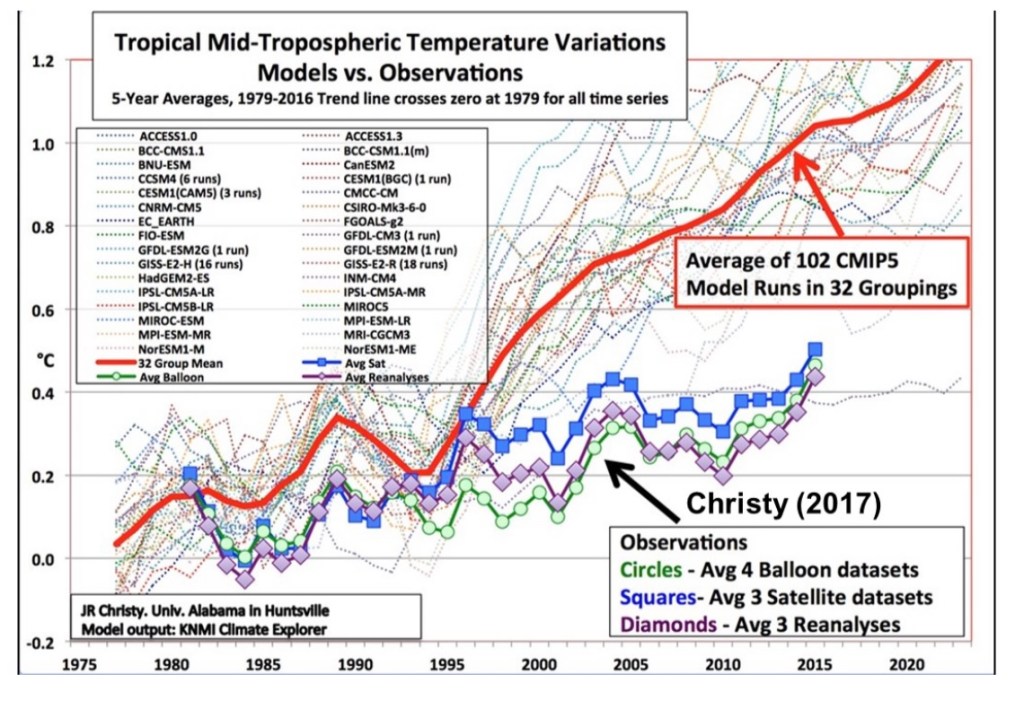
Mr. Musk Often Goes To Washington

31 Monday Jul 2017

Posted by Nuetzel in Automation, Labor Markets, Technology

≈ 1 Comment

Tags

Absolute Advantage, Comparative advantage, DeepMind, Elon Musk, Eric Schmidt, Facebook, Gigafactory, Google, Mark Zuckerberg, OpenAI, rent seeking, Ronald Bailey, SpaceX, Tesla

Elon Musk says we should be very scared of artificial intelligence (AI). He believes it poses an “existential risk” to humanity and  calls for “proactive regulation” of AI to limit its destructive potential. His argument encompasses “killer robots”: “A.I. & The Art of Machine War” is a good read and is consistent with Musk’s message. Military applications already involve autonomous machine decisions to terminate human life, but the Pentagon is weighing whether decisions to kill should be made only by humans. Musk also focuses on more subtle threats from machine intelligence: It could be used to disrupt power and communication systems, to manipulate human opinion in dangerous ways, and even to sow panic via cascades of “fake robot news”, leading to a breakdown in civil order. Musk has also expressed a fear that AI could have disastrous consequences in commercial applications with runaway competition for resources. He sounds like a businessmen who really dislikes competition! After all, market competition is self-regulating and self-limiting. The most “destructive” effects occur only when competitors come crying to the state for relief!

Several prominent tech leaders and AI experts have disputed Musk’s pessimistic view of AI, including Mark Zuckerberg of Facebook and Eric Schmidt, chairman of Google’s parent company, Alphabet, Inc. Schmidt says:

“My question to you is: don’t you think the humans would notice this, and start turning off the computers? We’d have a race between humans turning off computers, and the AI relocating itself to other computers, in this mad race to the last computer, and we can’t turn it off, and that’s a movie. It’s a movie. The state of the earth currently does not support any of these scenarios.“

Along those lines, Google’s AI lab known as “DeepMind” has developed an AI off-switch, otherwise known as the “big red button“. Obviously, this is based on human supervision of AI processes and on ensuring the interruptibility of AI processes.

Another obvious point is that AI, ideally, would operate under an explicit objective function(s). This is the machine’s “reward system”, as it were. Could that reward system always be linked to human intent? To a highly likely non-negative human assessment of outcomes? Improved well-being? That’s not straightforward in a world of uncertainty, but it is at least clear that a relatively high probability of harm to humans should impose a large negative effect on any intelligent machine’s objective function.

Those kinds of steps can be regarded as regulatory recommendations, which is what Musk has advocated. Musk has outlined a role for regulators as gatekeepers who would review and ensure the safety of any new AI application. Ronald Bailey reveals the big problem with this approach:

“This may sound reasonable. But Musk is, perhaps unknowingly, recommending that AI researchers be saddled with the precautionary principle. According to one definition, that’s ‘the precept that an action should not be taken if the consequences are uncertain and potentially dangerous.’ Or as I have summarized it: ‘Never do anything for the first time.’“

Regulation is the enemy of innovation, and there are many ways in which current and future AI applications can improve human welfare. Musk knows this. He is the consummate innovator and big thinker, but he is also skilled at leveraging the power of government to bring his ideas to fruition. All of his major initiatives, from Tesla to SpaceX, to Hyperloop, battery technology and solar roofing material, have gained viability via subsidies.

But another hallmark of crony capitalists is a willingness to use regulation to their advantage. Could proposed regulation be part of a hidden agenda for Musk? For example, what does Musk mean when he says, “There’s only one AI company that worries me” in the context of dangerous AI? His own company(ies)? Or another? One he does not own?

Musk’s startup OpenAI is a non-profit engaged in developing open-source AI technology. Musk and his partners in this venture argue that widespread, free availability of AI code and applications would prevent malicious use of AI. Musk knows that his companies can use AI to good effect as well as anyone. And he also knows that open-source AI can neutralize potential advantages for competitors like Google and Facebook. Perhaps he hopes that his first-mover advantage in many new industries will lead to entrenched market positions just in time for the AI regulatory agenda to stifle competitive innovation within his business space, providing him with ongoing rents. Well played, cronyman!

Any threat that AI will have catastrophic consequences for humanity is way down the road, if ever. In the meantime, there are multiple efforts underway within the machine learning community (which is not large) to prevent or at least mitigate potential dangers from AI. This is taking place independent of any government action, and so it should remain. That will help to maximize the potential for beneficial innovation.

Musk also asserts that robots will someday be able to do “everything better than us”, thus threatening the ability of the private sector to provide income to individuals across a broad range of society. This is not at all realistic. There are many detailed and nuanced tasks to which robots will not be able to attend without human collaboration. Creativity and the “human touch” will always have value and will always compete in input markets. Even if robots can do everything better than humans someday, an absolute advantage is not determinative. Those who use robot-intensive production process will still find it advantageous to use labor, or to trade with those utilizing more labor-intensive production processes. Such are the proven outcomes of the law of comparative advantage.

← Older posts
Newer posts →
Follow Sacred Cow Chips on WordPress.com

Recent Posts

  • Immigration and Merit As Fiscal Propositions
  • Tariff “Dividend” From An Indigent State
  • Almost Looks Like the Fed Has a 3% Inflation Target
  • Government Malpractice Breeds Health Care Havoc
  • A Tax On Imports Takes a Toll on Exports

Archives

  • December 2025
  • November 2025
  • October 2025
  • September 2025
  • August 2025
  • July 2025
  • June 2025
  • May 2025
  • April 2025
  • March 2025
  • February 2025
  • January 2025
  • December 2024
  • November 2024
  • October 2024
  • September 2024
  • August 2024
  • July 2024
  • June 2024
  • May 2024
  • April 2024
  • March 2024
  • February 2024
  • January 2024
  • December 2023
  • November 2023
  • August 2023
  • July 2023
  • June 2023
  • May 2023
  • April 2023
  • March 2023
  • February 2023
  • January 2023
  • December 2022
  • November 2022
  • October 2022
  • September 2022
  • August 2022
  • July 2022
  • June 2022
  • May 2022
  • April 2022
  • March 2022
  • February 2022
  • January 2022
  • December 2021
  • November 2021
  • October 2021
  • September 2021
  • August 2021
  • July 2021
  • June 2021
  • May 2021
  • April 2021
  • March 2021
  • February 2021
  • January 2021
  • December 2020
  • November 2020
  • October 2020
  • September 2020
  • August 2020
  • July 2020
  • June 2020
  • May 2020
  • April 2020
  • March 2020
  • February 2020
  • January 2020
  • December 2019
  • November 2019
  • October 2019
  • September 2019
  • August 2019
  • July 2019
  • June 2019
  • May 2019
  • April 2019
  • March 2019
  • February 2019
  • January 2019
  • December 2018
  • November 2018
  • October 2018
  • September 2018
  • August 2018
  • July 2018
  • June 2018
  • May 2018
  • April 2018
  • March 2018
  • February 2018
  • January 2018
  • December 2017
  • November 2017
  • October 2017
  • September 2017
  • August 2017
  • July 2017
  • June 2017
  • May 2017
  • April 2017
  • March 2017
  • February 2017
  • January 2017
  • December 2016
  • November 2016
  • October 2016
  • September 2016
  • August 2016
  • July 2016
  • June 2016
  • May 2016
  • April 2016
  • March 2016
  • February 2016
  • January 2016
  • December 2015
  • November 2015
  • October 2015
  • September 2015
  • August 2015
  • July 2015
  • June 2015
  • May 2015
  • April 2015
  • March 2015
  • February 2015
  • January 2015
  • December 2014
  • November 2014
  • October 2014
  • September 2014
  • August 2014
  • July 2014
  • June 2014
  • May 2014
  • April 2014
  • March 2014

Blogs I Follow

  • Passive Income Kickstart
  • OnlyFinance.net
  • TLC Cholesterol
  • Nintil
  • kendunning.net
  • DCWhispers.com
  • Hoong-Wai in the UK
  • Marginal REVOLUTION
  • Stlouis
  • Watts Up With That?
  • Aussie Nationalist Blog
  • American Elephants
  • The View from Alexandria
  • The Gymnasium
  • A Force for Good
  • Notes On Liberty
  • troymo
  • SUNDAY BLOG Stephanie Sievers
  • Miss Lou Acquiring Lore
  • Your Well Wisher Program
  • Objectivism In Depth
  • RobotEnomics
  • Orderstatistic
  • Paradigm Library
  • Scattered Showers and Quicksand

Blog at WordPress.com.

Passive Income Kickstart

OnlyFinance.net

TLC Cholesterol

Nintil

To estimate, compare, distinguish, discuss, and trace to its principal sources everything

kendunning.net

The Future is Ours to Create

DCWhispers.com

Hoong-Wai in the UK

A Commonwealth immigrant's perspective on the UK's public arena.

Marginal REVOLUTION

Small Steps Toward A Much Better World

Stlouis

Watts Up With That?

The world's most viewed site on global warming and climate change

Aussie Nationalist Blog

Commentary from a Paleoconservative and Nationalist perspective

American Elephants

Defending Life, Liberty and the Pursuit of Happiness

The View from Alexandria

In advanced civilizations the period loosely called Alexandrian is usually associated with flexible morals, perfunctory religion, populist standards and cosmopolitan tastes, feminism, exotic cults, and the rapid turnover of high and low fads---in short, a falling away (which is all that decadence means) from the strictness of traditional rules, embodied in character and inforced from within. -- Jacques Barzun

The Gymnasium

A place for reason, politics, economics, and faith steeped in the classical liberal tradition

A Force for Good

How economics, morality, and markets combine

Notes On Liberty

Spontaneous thoughts on a humble creed

troymo

SUNDAY BLOG Stephanie Sievers

Escaping the everyday life with photographs from my travels

Miss Lou Acquiring Lore

Gallery of Life...

Your Well Wisher Program

Attempt to solve commonly known problems…

Objectivism In Depth

Exploring Ayn Rand's revolutionary philosophy.

RobotEnomics

(A)n (I)ntelligent Future

Orderstatistic

Economics, chess and anything else on my mind.

Paradigm Library

OODA Looping

Scattered Showers and Quicksand

Musings on science, investing, finance, economics, politics, and probably fly fishing.

  • Subscribe Subscribed
    • Sacred Cow Chips
    • Join 128 other subscribers
    • Already have a WordPress.com account? Log in now.
    • Sacred Cow Chips
    • Subscribe Subscribed
    • Sign up
    • Log in
    • Report this content
    • View site in Reader
    • Manage subscriptions
    • Collapse this bar
 

Loading Comments...