• About

Sacred Cow Chips

Sacred Cow Chips

Tag Archives: The Ethical Skeptic

Excess Deaths and Avoidable Deaths

07 Monday Mar 2022

Posted by Nuetzel in Public Health

≈ Leave a comment

Tags

Adverse Events, Anti-Coagulants, Avoidable Deaths, Blood Clotting, Blood Thinners, CDC, Covid-19, Death of Expertise, Deaths of Despair, Deferred Care, Emergency Use Authorization, EUA Shadow Deaths, Excess Deaths, Incidental Infections, Lockdown Deaths, Omicron Variant, Our World In Data, Post-Mortem Testing, Prime Age Deaths, Randomized Control Trials, The Ethical Skeptic, USMortality.com, Vaccine Efficacy, Vascular Integrity

Understanding the severity of the coronavirus pandemic is more straightforward when measured in terms of excess deaths, rather than total Covid deaths. We’ve had a large number of excess deaths in the U.S., but not all of them can be attributed to Covid. It’s also worth asking whether some of the deaths were avoidable, because that reflects even more profoundly on the success or failure of public policy and the health care system in dealing with the challenge. Unfortunately, while the precise number of avoidable deaths the nation has suffered is speculative, it is nevertheless significant.

Bad Metrics

A huge problem with using total Covid deaths as a measure of pandemic severity is that no one is confident in the accuracy of official statistics. There are reasons to suspect over-counting in the U.S. due to financial incentives created for hospital systems by the CARES Act. These were exacerbated by the CDC’s absurd 2020 recommendations for the completion of death certificates. Essentially, any non-primary Covid entry on a death certificate was sufficient to count the death as from Covid. No other disease is or has ever been tallied like that.

There is an important distinction between deaths “with Covid” and deaths “from Covid” that has been acknowledged only recently by health authorities. A death “with Covid” can occur when a patient tests positive for Covid after being admitted to a hospital for another primary ailment. Thus, deaths from other causes like heart failure have been improperly coded as Covid deaths under the CDC’s guidelines. Even tragedies like auto fatalities have been coded as Covid deaths.

At the same time, some public health “elites” insist that many Covid deaths in the community have gone unreported. That might have been true in the early weeks of the pandemic. However, post-mortem testing by medical examiners began to spread by April 2020, though there was a shortage of tests, and the CDC issued guidelines to encourage it late in the year.

Counting excess deaths from all causes avoids these controversies, including differences across countries in the way they record Covid deaths. It’s also possible to break down excess death into broad categories of causes, though the task is complex.

How Many?

First some simple accounting. Let’s define all-cause mortality during a period (Mort) as Covid deaths (C) plus plus all other mortality (M), or Mort = C + M. Expected mortality in the absence of a pandemic would be Exp(Mort) = Exp(M). Usually this expected value is taken as an average of deaths over several previous years. Therefore, excess mortality during the pandemic is:

EM = C + M – Exp(M)

How many excess deaths have we actually seen during the pandemic? According to Our World In Data, the figure was 950,000 as of Jan 9th. USMortality.com puts the excess at about 965,000 through the end of 2021. So these two sources are in close agreement, which says a lot given the usual difficulty of getting pandemic numbers to tie-out across sources

Through 2021, cumulative Covid deaths (by date of death) were almost 850,000. That’s less than excess deaths, so it’s obvious that other factors have contributed to the excess. Interestingly, 2021 was worse for excess deaths than 2020 for all age groups except 85+. Some have suggested the most vulnerable in this highly vulnerable age group had already succumbed to Covid in 2020, but there may have been other reasons for the difference.

Non-Covid Excesses

As noted above, some of the Covid deaths were misattributions. If we understand C to include only deaths “from Covid”, then we must acknowledge that M includes deaths from other causes but “with Covid”, as well as all deaths without Covid diagnoses. For example, because of the confounded way in which Covid deaths have been counted, a death from heart disease could end up in the official count of C, but it should be included in M instead.

The figures above imply 100,000+ excess deaths during the pandemic not associated with Covid diagnoses. If we add to those the “with Covid”, incidental total, then perhaps 300,000 – 400,000 excess deaths during the pandemic were from non-Covid primary causes!

Lockdown effects are a prime suspect in these non-Covid deaths. For example, if health care was deferred because hospitals cancelled or delayed elective procedures, or because patients feared the hospital environment, that would certainly manifest in premature deaths. Deaths of despair or neglect were also in excess, as one should expect when populations are subjected to prolonged periods of isolation.

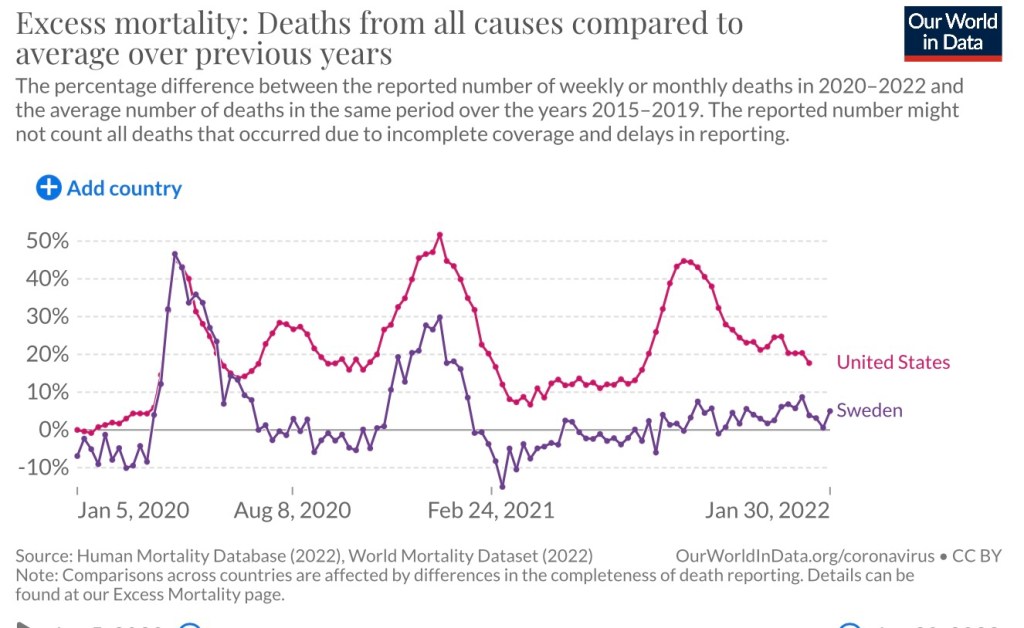
These kinds of deaths are so-called “lockdown” deaths because they could have been avoided without such stringent policy measures and the propagation of fear by public health authorities. Those who might protest this nomenclature should note that lockdowns have been unsuccessful in mitigating the pandemic (and see here). After all, in terms of excess deaths, the Swiss approach was quite successful!
Avoidable Deaths

Many of the excess pandemic deaths were avoidable. Prolonged lockdown policies were driven by politics rather than sound public health reasoning. However, within the Covid death totals there is another category of avoidable deaths, and it is every bit as controversial. This post from The Ethical Skeptic (TES) goes into great detail on the matter. He takes a strong position, and some of his assertions and his accounting are subject to challenge. I sometimes find that TES’s posts contain ambiguities, and the graphical evidence he presents is often poorly labeled. Still, he has proven correct on other controversial issues, such as the ancestry and surprisingly early “vintage” of the Omicron variant.

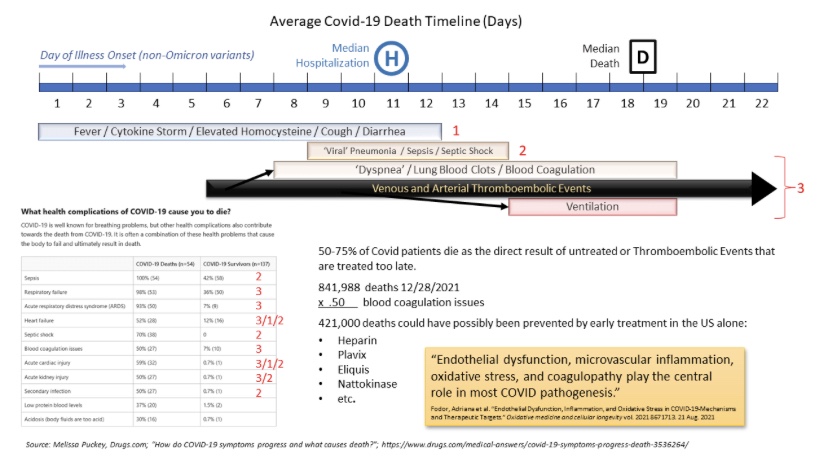
Most of the “avoidable” Covid deaths (again, as distinct from the non-Covid lockdown deaths) occurred well after the primary symptoms of the infection (fever, cough, and cytokine storm) had passed. In the end, the real killers were follow-on problems induced by Covid, primarily related to blood clotting and compromised vascular integrity from endothelial dysfunction. These deadly complications were known very early in the pandemic. The following schematic from TES shows a Covid “death timeline”. The figures listed under the schematic show the large share of clotting and vascular problems involved in these deaths.
Over the past two years, not all of these patients were placed on anticoagulants or blood thinners early in the course of their infections. Indeed, many of them were told to “go home and sleep it off”. This is what happened to TES as well as a number of commenters on his Twitter account. I know several individuals who received the same advice from medical professionals. Even among the hospitalized, many were not placed on these drugs in a timely fashion, or until it was too late. TES adds the wrinkle that his physician indicated he should have been vaccinated! Short of that, tough luck, said the healer.

TES blames this medical “malfeasance” on the CDC’s Emergency Use Authorizations (EUA) for the Covid vaccines. In fact, he calls these deaths “EUA Shadow Deaths”, citing legal requirements associated with EUAs that would appear to prohibit alternatives such as therapies and even tests or studies of alternatives. That contention seems questionable given the CDC’s issuance of other EUAs for certain treatments, and there was no shortage of published experiments conducted during 2020-21.

The vaccine EUAs were not issued until late 2020, but TES claims that forces leading up to those EUAs were responsible for the failure to put patients on anticoagulants/blood thinners even earlier in 2020. The schematic says more than half of Covid deaths through the end of 2021 involved blood coagulation issues, and I have no reason to doubt those figures, which TES sources from the CDC. But He uses a value of 50% of Covid deaths to estimate that 421,000 Covid deaths were avoidable.

I’m not sure about that total, or rather, the use of the term “avoidable” in all those cases. I am sure, however, that we’ve seen a remarkable under-emphasis on therapeutics (and see here and here) relative to the emphasis on vaccines. The news media contributed to the dysfunction by condemning certain promising therapies for political reasons.

I’m also sure that there have been a meaningful number of patients who should have received anticoagulants/thinning agents but did not. Why did they not? Plausibly, the restrictions imposed by the vaccine EUAs made a difference, but clearly the medical community was not tuned into what should have been an obvious treatment regimen.

How many Covid deaths were truly avoidable? TES’s estimate of 421,000 seems too high if only because we can’t expect the dissemination of information through the medical community to be perfect. Moreover, some of these patients were undoubtedly on blood thinners already, or there might have been contraindications preventing the use of anticoagulants/thinners.

Nevertheless, a substantial number of deaths could have been avoided by more timely use of therapeutics and less stringent lockdown measures. Here is a chart from a tweet by TES showing another accounting for excess deaths:
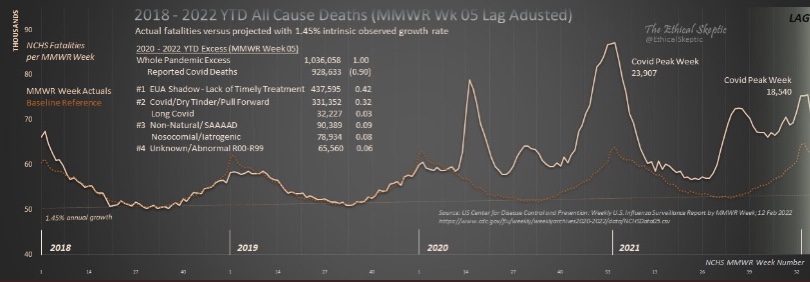
Here, TES uses a slightly longer time frame, through about February 5, 2022, so the “EUA Shadow Death” total is somewhat larger, about 437,000, than shown in the earlier schematic. He attributes about 800,000 excess deaths, or 77%, to Covid, most of which he believes were avoidable deaths.

Lockdown deaths account for some of the additional 236,000 excess deaths reported in the chart, and probably a large share of the roughly 90,000 non-natural deaths labeled #3 (SAAAAD = “Suicide Addiction Abandonment Abuse Accident & Despair”; the two other categories in #3 relate to non-Covid illnesses acquired in-hospital or adverse reactions to medications). The Unknown/Abnormal category may include some lockdown deaths, but more on that category below.

If TES is correct about shadow deaths, the “avoidable” pandemic death total might account for well over half of all excess deaths. I suspect it might account for half, but even if less, it’s clear that avoidable deaths have been a huge part of the pandemic’s toll.

Vaccine Adverse Events

There’s been much speculation about the large number of Unknown/Abnormal deaths that have been coded during the pandemic: more than 65,000 in the chart above. One caveat is that an “unknown” cause of death usually means the cause is ambiguous: there might have been several factors contributing to the death such that the medical examiner was unable to assign a definitive cause. That status can be temporary as well. Still, the surge is noteworthy.

Unfortunately, there were an unusual number of excess deaths in younger age brackets in 2021, especially in the second half of the year after vaccinations had reached a fairly large share of the population. The pace of those deaths hasn’t yet abated in 2022. The next chart, from USMortality.com, shows excess mortality in the 25 – 44 age bracket in 2020 – early 2022.
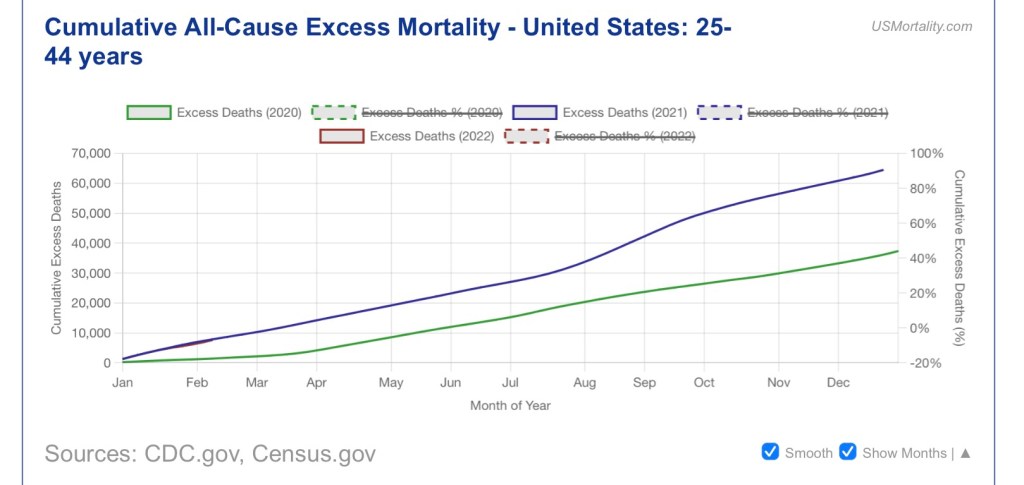
Many of these prime age deaths could be a continuing hangover from deferred medical care and depression. There are claims, however, that the vaccines themselves killed a significant number of individuals. The upsurge in excess deaths suggests to some that the vaccines have had a much greater number of “adverse events” than we’ve seen reported by the CDC and the news media.

Here is how TES presents the data on excess deaths and vaccinations. The chart title is his somewhat confusing attempt to summarize the meaning of the lines plotted. The left axis measures the pace of vaccinations by week and the right access measures weekly excess non-Covid natural-cause deaths.
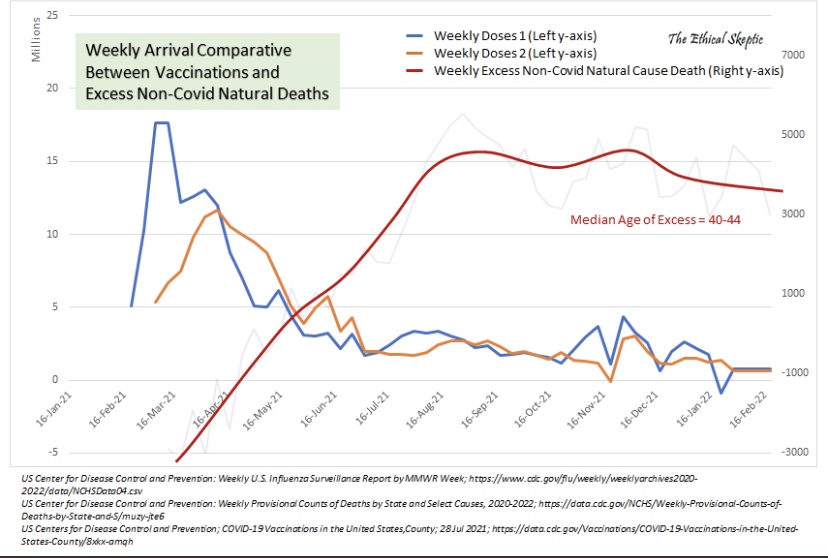
I have no doubt as to the efficacy of the vaccines against serious Covid outcomes in high-risk groups, though vaccine efficacy has been drastically overstated by the Biden Administration. The balance of risks for older individuals is clearly in favor of vaccination. Still, I’ve long felt that vaccination is less compelling for people in younger age brackets, and it’s possibly a bad idea. That’s both because Covid is a much smaller risk to them and because of possible vaccine risks, such as myocarditis.

To the extent that natural-cause, non-Covid excess deaths among younger age cohorts have been driven by unnecessary vaccinations, those deaths were avoidable. I’m not convinced of the significance, and it’s clear that among hospitalized Covid patients, outcomes have been better among the vaccinated. The following chart is from the link in the previous paragraph:
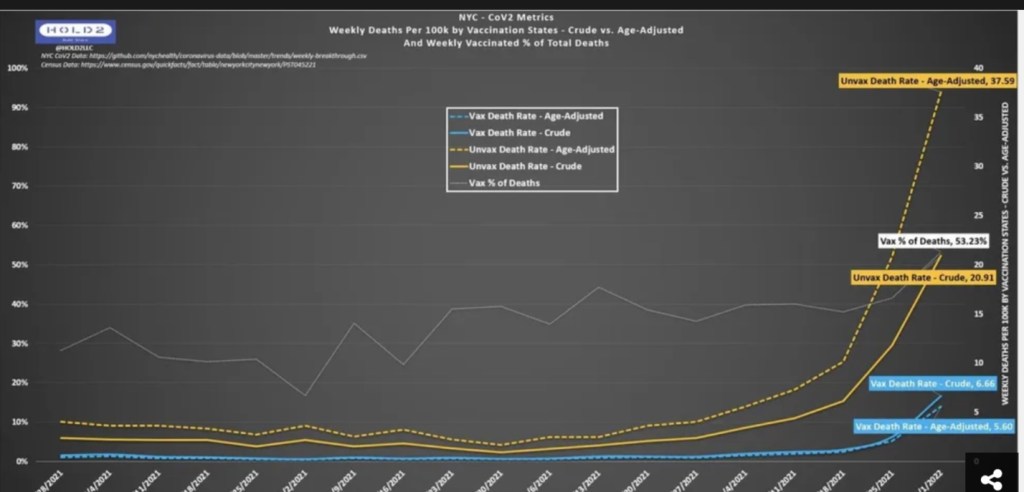
That sort of pattern might mean more deaths among the unvaccinated could have been avoided, on balance, had they opted for the jab. In almost all things, however, I believe we should eschew blanket mandates and instead offer protection to those seeking it in the high-risk population.

Conclusion

As many as 30% of Covid deaths to date are likely misattributions in which Covid was not really the primary cause of death. Nevertheless, excess Covid deaths “from Covid” as the primary cause are probably approaching 700,000 today.

The pandemic was certainly bad enough without a slew of bad calls by the public health and medical establishments. Of the 950,000+ excess deaths that occurred through the end of 2021, over 100,000 were not attributed to Covid. If we include deaths mis-attributed to Covid, the non-Covid total is likely in excess of 300,000 and could be as high as 400,000. It’s time to acknowledge that lockdowns and fear-mongering led to a large number of those deaths, and most of those deaths were avoidable. However, while I am skeptical, the number of deadly adverse effects from vaccines in the prime age population is an open question.

Another class of avoidable deaths was a product of the underemphasis on Covid therapies by the medical establishment. There were many cases of promising, repurposed drugs that were shouted down after so-called experts insisted that their use must be withheld until adequate randomized control trials (RCTs) had confirmed their efficacy. Not only did this ignore the long history of clinical evidence as a guide to medical practice. It also ignored the frequent real-world inadequacies that plague RCTs.

At the same time, obvious complications of the vascular system, primarily blood clotting, were not treated in a timely way or as a precautionary treatment’s, at least prior to hospitalization. Adding a conservative allowance for these deaths to the other avoidable deaths probably means that at least half of the excess deaths during the pandemic were avoidable. As of March 2022, that’s over half a million deaths! We can chalk it up to mismanagement and miscommunication by the public health establishment with a dash of ignorance, and perhaps some malfeasance, by health care practitioners. The death of expertise, indeed!

On COVID, NPIs, and “Human” Data Points

24 Tuesday Nov 2020

Posted by Nuetzel in Lockdowns, Pandemic, Public Health

≈ 1 Comment

Tags

Alzheimer's, Anthony Fauci, Asymptomatic Carriers, Cancer, CDC, Centers for Disease Control, Covid-19, Dementia, Domestic Abuse, Education, HIV, Human Costs, Journal of the American Medical Association, Lancet, Lockdowns, Malaria, Malignant Neoplasms, Mandates, Masks, Public Health, Robert Redfield, SAAAD, SARS-CoV-2, Starvation, Suicide, The Ethical Skeptic, Tuberculoosis, Tyler Cowen, United Nations, Vitamin D

The other day a friend told me “your data points always seem to miss the people points.” He imagines a failure on my part to appreciate the human cost of the coronavirus. Evidently, he feels that I treat data on cases, hospitalizations, and deaths as mere accounting issues, all while emphasizing the negative aspects of government interventions.

This fellow reads my posts very selectively, hampered in part by his own mood affiliation. Indeed, he seems to lack an appreciation for the nuance and zeitgeist of my body of blogging on the topic… my oeuvre! This despite his past comments on the very things he claims I haven’t mentioned. His responses usually rely on anecdotes relayed to him by nurses or doctors he knows. Anecdotes can be important, of course. But I know nurses and doctors too, and they are not of the same mind as his nurses and doctors. Anecdotes! We’re talking about the determination of optimal policy here, and you know what Dr. Fauci says about relying on anecdotes!

Incremental Costs and Benefits

My friend must first understand that my views are based on an economic argument, one emphasizing the benefits and costs of particular actions, including human costs. COVID is dangerous, but primarily to the elderly, and no approach to managing the virus is free. Here are two rather disparate choices:

  1. Mandated minimization of economic and social interactions throughout society over some time interval in the hope of reducing the spread of the virus;
  2. Laissez faire for the general population while minimizing dangers to high-risk individuals, subject to free choice for mentally competent, high-risk individuals.

To be clear, #2 entails all voluntary actions taken by individuals to mitigate risks. Therefore, #1 implies a set of incremental binding restrictions on behavior beyond those voluntary actions. However, I also include in #1 the behavioral effects of scare mongering by public officials, who regularly issue pronouncements having no empirical basis.

The first option above entails so-called non-pharmaceutical interventions (NPIs) by government. These are the elements of so-called lockdowns, such as quarantines and other restrictions on mobility, business and consumer activity, social activities, health care activities, school closures, and mask mandates. NPIs carry costs that are increasing in the severity of constraints they impose on society.

And before I proceed, remember this: tallying all fatal COVID cases is really irrelevant to the policy exercise. Nothing we do, or could have done, would save all those lives. We should compare what lives can be saved from COVID via lockdowns, if any, with the cost of those lockdowns in terms of human life and human misery, including economic costs.

Economic Losses

NPIs involve a loss of economic output that can never be recovered… it is gone forever, and a loss is likely to continue for some time to come. That sounds so very anodyne, despite the tremendous magnitude of the loss involved. But let’s stay with it for just a second. The loss of U.S. output in 2020 due to COVID has been estimated at $2.5 trillion. As Don Boudreaux and Tyler Cowen have noted, what we normally spend on safety and precautionary measures (willingness-to-pay), together with the probabilities of losses, implies that we value our lives at less than $4 million on average. Let’s say the COVID death toll reaches 300,000 by year-end (that’s incremental in this case— but it might be a bit high). That equates to a total loss of $1.2 trillion in life-value if we ignore distinctions in life-years lost. Now ask this: if our $2.5 trillion output loss could have saved every one of those 300,000 lives, would it have been worth it? Not even close, and the truth is that the sacrifice will not have saved even a small fraction of those lives. I grant, however, that the economic losses are partly attributable to voluntary decisions, but goaded to a great extent by the alarmist commentary of public health officials.

The full depth of losses is far worse than the dollars and cents comparison above might sound. Output losses are always matched by (and, in value, are exactly the same as) income losses. That involves lost jobs, lost hours, failed businesses, and destroyed careers. Ah, now we’re getting a bit more “human”, aren’t we! It’s nothing short of callous to discount these costs. Unfortunately, the burden falls disproportionately on low-income workers. Our elites can mostly stay home and do their jobs remotely, and earn handsome incomes. The working poor spend their time in line at food banks.

Yes, government checks can help those with a loss of income compete with elites for the available supply of goods, but of course that doesn’t replace the lost supply of goods! Government aid of this kind is a palliative measure; it doesn’t offset the real losses during a suspension of economic activity.

Decimated Public Health

The strain of the losses has been massive in the U.S. and nearly everywhere in the world. People are struggling financially, making do with less on the table, depleting their savings, and seeking forbearance on debts. The emotional strains are no less real. Anxiety is rampant, drug overdoses have increased, calls to suicide hotlines have exploded, and the permanence of the economic losses may add to suicide rates for some time to come. Dr. Robert Redfield of the CDC says more teenagers will commit suicide this year than will die from COVID (also see here). There’s also been a terrifying escalation in domestic abuse during the pandemic, including domestic homicide. The despair caused by economic losses is all too real and should be viewed as a multiplier on the total cost of severe NPIs.

More on human costs: a health care disaster has befallen locked-down populations, including avoidance of care on account of panic fomented by so-called public health experts, the media, and government. Some of the consequences are listed here. But to name just a few, we have huge numbers of delayed cancer diagnoses, which sharply decrease survival time; mass avoidance of emergency room visits, including undiagnosed heart attacks and strokes; and unacceptable delays in cardiac treatments. Moreover, lockdowns worldwide have severely damaged efforts to deal with scourges like HIV, tuberculosis, and malaria.

The CDC reports that excess mortality among 25-44 year-olds this year was up more than 26%, and the vast bulk of these were non-COVID deaths. A Lancet study indicates that a measles outbreak is likely in 2021 due to skipped vaccinations caused by lockdowns. The WHO estimates that 130,000,000 people are starving worldwide due to lockdowns. That is roughly the population of the U.S. east coast. Again, the callousness with which people willfully ignore these repercussions is stunning, selfish and inhumane, or just stupid.

Excess Deaths

Can we quantify all this? Yes we can, as a matter of fact. I’ve offered estimates in the past, and I already mentioned that excess deaths, COVID and non-COVID, are reported on the CDC’s web site. The Ethical Skeptic (TES) does a good job of summarizing these statistics, though the last full set of estimates was from October 31. Here is the graphic from the TES Twitter feed:

Note particularly the huge number of excess deaths attributable to SAAAD (Suicide, Addiction Abandonment, Abuse and Despair): over 50,000! The estimate of life-years lost due to non-COVID excess deaths is almost double that of COVID deaths because of the difference in the age distributions of those deaths.

Here are a few supporting charts on selected categories of excess deaths, though they are a week behind the counts from above. The first is all non-COVID, natural-cause excess deaths (the vertical gap between the two lines), followed by excess deaths from Alzheimer’s and dementia, other respiratory diseases, and malignant neoplasms (cancer):

The clearest visual gap in these charts is the excess Alzheimer’s and dementia deaths. Note the increase corresponding to the start of the pandemic, when these patients were suddenly shut off from loved ones and the company of other patients. I also believe some of these deaths were (and are) due to overwhelmed staff at care homes struck by COVID, but even discounting this category of excess deaths leaves us with a huge number of non-COVD deaths that could have been avoided without lockdowns. This represents a human cost over and above those tied to the economic losses discussed earlier.

Degraded Education and Health

Lockdowns have also been destructive to the education of children. The United Nations has estimated that 24 million children may drop out of school permanently as a result of lockdowns and school closures. This a burden that falls disproportionately on impoverished children. This article in the Journal of the American Medical Association Network notes the destructive impact of primary school closures on educational attainment. Its conclusions should make advocates of school closures reconsider their position, but it won’t:

“… missed instruction during 2020 could be associated with an estimated 5.53 million years of life lost. This loss in life expectancy was likely to be greater than would have been observed if leaving primary schools open had led to an expansion of the first wave of the pandemic.“

Lockdown Inefficacy

Lockdowns just don’t work. There was never any scientific evidence that they did. For one thing, they are difficult to enforce and compliance is not a given. Of course, Sweden offers a prime example that draconian lockdowns are unnecessary, and deaths remain low there. This Lancet study, published in July, found no association between lockdowns and country mortality, though early border closures were associated with lower COVID caseloads. A French research paper concludes that public decisions had no impact on COVID mortality across 188 countries, U.S. states, and Chinese states. A paper by a group of Irish physicians and scientists stated the following:

“Lockdown has not previously been employed as a strategy in pandemic management, in fact it was ruled out in 2019 WHO and Irish pandemic guidelines, and as expected, it has proven a poor mitigator of morbidity and mortality.”

One of the chief arguments in favor of lockdowns is the fear that asymptomatic individuals circulating in the community (and there are many) would spread the virus. However, there is no evidence that they do. In part, that’s because the window during which an individual with the virus is infectious is narrow, but tests may detect tiny fragments of the virus over a much longer span of time. And there is even some evidence that lockdown measures may increase the spread of the virus!

Lockdown decisions are invariably arbitrary in their impact as well. The crackdown on gyms is one noteworthy example, but gyms are safe. Restaurants don’t turn up in many contact traces either, and yet restaurants have been repeatedly implicated as danger zones. And think of the many small retailers shut down by government, while giant competitors like Wal-Mart continue to operate with little restriction. This is manifest corporatism!

Then there is the matter of mask mandates. As readers of this blog know, I think masks probably help reduce transmission from droplets issued by a carrier, that is, at close range. However, this recent Danish study in the Annals of Internal Medicine found that cloth masks are ineffective in protecting the wearer. They do not stop aerosols, which seem to be the primary source of transmission. They might reduce viral loads, at least if worn properly and either cleaned often or replaced. Those are big “ifs”.

To the extent that masks offer any protection, I’m happy to wear them within indoor public accommodations, at least for the time being. To the extent that people are “scared”, I’m happy to observe the courtesy of wearing a mask, but not outside in uncrowded conditions. To the extent that masks are required under private “house rules”, of course I comply. Public mask mandates outside of government buildings are over the line, however. The evidence that those mandates work is too tenuous and our liberties are too precious too allow that kind of coercion. And private facilities should be subject to private rules only.

QED

So my poor friend is quite correct that COVID is especially deadly to certain cohorts and challenging for the health care community. But he must come to grips with a few realities:

  • The virus won’t be defeated with NPIs; they don’t work!
  • NPIs inflict massive harm to human well-being.
  • Lockdowns or NPIs are little or no gain, high-pain propositions.

The rejection of NPI’s, or lockdowns, is based on compelling “human” data points. As Don Boudreaux says:

“The lockdowns and other restrictions on economic and social activities are astronomically costly – in a direct economic sense, in an emotional and spiritual sense, and in a ‘what-the-hell-do-these-arbitrary-diktats-portend-for-our-freedom?’ sense.” 

This doctor has a message for the those denizens of social media with an honest wish to dispense helpful public health advice:

“Americans have admitted that they will meet for Thanksgiving. Scolding and shaming them for wanting this is unlikely to slow the spread of SARS-CoV-2, though it may earn you likes and retweets. Starting with compassion, and thinking of ways they can meet, but as safely as possible, is the task of real public health. Now is the time to save public health from social media.”

And take some Vitamin D!

Lockdowns Subvert Public Health and Life Itself

15 Thursday Oct 2020

Posted by Nuetzel in Coronavirus, Lockdowns, Public Health, Uncategorized

≈ 1 Comment

Tags

Bill of Rights, CDC, City Journal, Coronavirus, Covid-19, David Miles, Deaths of Despair, dependency, Dr. David Nabarro, Excess Deaths, Flatten the Curve, Great Barrington Declaration, John Tierney, Lockdown Deaths, Lockdowns, Ninth Amendment, Oxfam International, Pandemic, Quality Adjusted Life Years, School Closures, Suicide, The Ethical Skeptic, The Lancet, WHO, World Health Organization

Acceptance of risk is a necessary part of a good life, and extreme efforts to avoid it are your own business. Government has no power to guarantee absolute safety, nor should we presume to have such a right. Ongoing COVID lockdowns are an implicit assertion of exactly that kind of government power, despite the impotence of those efforts, and they constitute a rejection of more fundamental rights.

Lockdowns have had destructive effects on health and economic well being while conferring little if any benefit in mitigating harm from the virus. The lockdowns were originally sold as a way to “flatten the curve”, that is, to avoid a spike in cases and an overburdened health care system. However, this arguably well-qualified rationale later expanded in scope to encompass the mitigation of smaller and much less deadly outbreaks among younger cohorts, and then to the very idea of extinguishing the virus altogether. It’s become painfully obvious that such measures are not capable of achieving those goals.

In the U.S., the ongoing lockdowns have been a cause célèbre largely on the interventionist Left, and they have been prolonged mainly by Democrats at various levels of government. In a way, this is not unlike many other policies championed by the Left, often ostensibly designed to help members of the underclasses: instead, those policies often destroy or wrongly obviate incentives and promote dependency on the state. In this case, the plunge into dependency is a reality the Left would very much like to ignore, or to blame on someone else. You know who.

The lockdowns have been largely unsuccessful in mitigating the spread of the virus. At the same time, they have been used as a pretext to deny constitutional rights such as the free practice of religion, assembly, and a broad range of unenumerated rights under the “penumbra” of the Bill of Rights and the Ninth Amendment. What’s more, the severity of the economic blow caused by lockdowns has been borne disproportionately by the working poor and the small businesses who employ so many of them.

Lockdowns are deadly. It’s not clear that they’ve saved any lives, but they have massively disrupted the operation of the health care system with major consequences for those with chronic and undiagnosed conditions. The lockdowns have also led to spikes in mental health issues, alcoholism, drug abuse, and deaths of despair. A recent study found that over 26% of the excess deaths during the pandemic were non-COVID deaths. Those deaths were avoidable or accelerated, whereas the lockdowns have failed to meaningfully curtail COVID deaths. Don’t tell me about reduced traffic fatalities: that reduction is relatively small relative to the increase in non-COVID excess deaths (see below).

What proof do we have that lockdowns cause excess deaths? See this study in The Lancet on cancer deaths due to lockdown-induced delays in diagnoses. See this study on UK school closures. See this Oxfam International report on lockdown-induced starvation. Other reports from the UK suggests that lockdown deaths are widespread, having taken nearly 2,800 per week early in the pandemic, and many other deaths yet to occur have been made inevitable by lockdowns. Doctors in the U.S. have warned that lockdowns are a “mass casualty incident”, and a German government study warned of the same.

The Ethical Skeptic (TES) on Twitter has been tracking a measure of lockdown deaths for some time now. The following graphic provides a breakdown of excess non-COVID deaths since the start of the pandemic. The total “pie” shows almost 320,000 excess deaths through September 26th (avoiding less complete counts in recent weeks), as reported by the CDC. COVID accounted for 202,000 of those deaths, based on state-level reporting. Of the remaining 117,000 excess deaths, TES uses CDC data to allocate roughly 85,000 to various causes, the largest (more than half) being “Suicide, Addiction, Abandonment, and Abuse”. Other large categories include Cardio/Diabetes, Stroke, premature Alzheimers/Dementia death, and Cancer Access. Nearly 32,000 excess deaths remain as a “backlog”, not yet reported with a cause by states.

Also of interest in the graphic are estimates of life-years lost. The vast bulk of COVID victims are elderly, of course, which means that any estimate of lost years per victim must be relatively low. On the other hand, most non-COVID, lockdown-related deaths are among younger victims, with correspondingly greater life-years lost. TES’s aggregate estimate is that lockdown-related excess deaths involve double the life-years lost of COVID deaths. Of course, that is an estimate, but even granting some latitude for error, the reality is horrifying!

John Tierney in City Journal cites several recent studies concluding that lockdowns have been largely ineffective in Europe and in the U.S. While Tierney doesn’t rule out the possibility that lockdowns have produced some benefits, they have carried excessive costs and risks to public health going forward, such as lingering issues for those having deferred important health care decisions as well as disruption in future economic prospects. Ultimately, lockdowns don’t accomplish anything:

“While the economic and social costs have been enormous, it’s not clear that the lockdowns have brought significant health benefits beyond what was achieved by people’s voluntary social distancing and other actions.”

Tierney also discusses the costs and benefits of lockdowns in terms of life years: quality-adjusted life-years (QALY), which is a widely-used measure for evaluating of the use of health care resources:

“By the QALY measure, the lockdowns must be the most costly—and cost-ineffective—medical intervention in history because most of the beneficiaries are so near the end of life. Covid-19 disproportionately affects people over 65, who have accounted for nearly 80 percent of the deaths in the United States. The vast majority suffered from other ailments, and more than 40 percent of the victims were living in nursing homes, where the median life expectancy after admission is just five months. In Britain, a study led by the Imperial College economist David Miles concluded that even if you gave the lockdown full credit for averting the most unrealistic worst-case scenario (the projection of 500,000 British deaths, more than ten times the current toll), it would still flunk even the most lenient QALY cost-benefit test.”

We can now count the World Health Organization among the detractors of lockdowns. According to WHO’s Dr. David Nabarro:

“Lockdowns just have one consequence that you must never ever belittle, and that is making poor people an awful lot poorer…. Look what’s happened to smallholder farmers all over the world. … Look what’s happening to poverty levels. It seems that we may well have a doubling of world poverty by next year. We may well have at least a doubling of child malnutrition.”

In another condemnation of the public health consequences of lockdowns, number of distinguished epidemiologists have signed off on a statement known as The Great Barrington Declaration. The declaration advocates a focused approach of protecting the most vulnerable from the virus, while allowing those at low risk to proceed with their lives in whatever way they deem acceptable. Those at low risk of severe disease can acquire immunity, which ultimately inures to the benefit of the most vulnerable. With few, brief, and local exceptions, this is how we have always dealt with pandemics in the past. That’s real life!

Virus Visuals and Non-Pharmaceutical Interventions

19 Saturday Sep 2020

Posted by Nuetzel in Government Failure, Pandemic

≈ Leave a comment

Tags

Bill Blain. Donald Luskin, Coronavirus, Covid-19, Death Laundering, False Positives, Federalism, Flatten the Curve, Jacob Sullum, Kyle Lamb, National Bureau of Economic Research, Non-Pharmaceutical interventions, NPIs, Oxford Stringency Index, The Ethical Skeptic

There are a bunch of nice graphs below summarizing the course of the coronavirus (C19) pandemic in different countries, as well as their policy responses. The charts are courtesy of Kyle Lamb, who has been an unlikely (in my mind…) but forceful voice regarding the pandemic over the past few months. I’m sorry if the resolution in some of the charts is poor, but I hope you can click on them for a better view.

The data reported in the charts goes through September 12. The first few charts below are “mirror charts”: they show newly diagnosed C19 cases by day on top, right-side up; on the bottom of each chart are C19-attributed deaths, but the vertical axis is inverted to create the “mirror effect”. The scales on the bottom are heavily stretched compared to the top (deaths are much smaller than cases), and the scales for different countries aren’t comparable. The patterns are informative nevertheless, and I’ll provide per capita deaths separately.

Let’s start with the U.S., where the early part of the pandemic in the spring was quite deadly, while the second, geographically distinct “wave” of the pandemic was less deadly. It looks bad, but the high number of deaths in the spring was partly a consequence of mismanagement by a few prominent government officials in the Northeast, most glaringly Governor Andrew Cuomo of New York. The full pattern for the U.S. combines different waves in different regions. The overall outcome to-date is 622 deaths per million of population.

Then we have charts for (deaths/mil in parens): the UK (628), Italy (591), Spain (653), France (467), Germany (114), the Netherlands (364), and Switzerland (240), which all have had second waves in cases, of but hardly any noticeable second wave in deaths, at least not yet:

And finally, we have Sweden (576), which had many deaths during the first wave, but very few now. Overall, to-date, Sweden has faired better than the U.S., Spain, the UK, and Italy — not to mention Belgium (870), for which I don’t have mirror charts.

There are several points to make about the charts:

First, the so-called second wave this summer has not been as deadly as the virus was in the spring. The U.S. is not an exception in that regard, though it did have more C19 deaths than the other countries. The count of U.S. deaths in the summer was partly due to C19 false positives under a much heavier testing regime, as well as “death laundering” by public health authorities that looks suspiciously like a politicization of the attribution process: C19 deaths over the summer have been well in excess of what would be expected from C19 hospitalizations and ICU admissions. It’s also evident that deaths are being reallocated to C19 from other natural causes, as this chart from The Ethical Skeptic shows (compare the bright line for 2020 to the (very) dim but tightly clustered baselines from prior years):

Second, most of the charts for Europe (not Sweden) show a late summer escalation in cases, though cases in Spain and Germany appear to have crested already. If an uptrend in deaths is to follow, it should become noticeable soon. Thus far, the wave certainly looks less threatening. 

Finally, it’s noteworthy that Sweden’s early experience, which was plagued by mismanagement of the virus’ threat to the nursing home population, later transitioned to a dramatic fading of cases and deaths. There has been no late summer wave in Sweden as we’ve seen elsewhere. This despite Sweden’s far less stringent non-pharmaceutical interventions (NPIs). Sweden’s deaths per million of population are now less than in the US, the UK, Italy, Spain, and Belgium, and most of those differences are growing.

All of the other countries discussed above have had far more stringent lockdown policies than Sweden, and at far greater economic cost. The following charts show some cross-country comparisons of an Oxford University index of NPI stringency over time. It combines a number of different dimensions of NPIs, such as mask mandates, restrictions on public gatherings, and school closures. The first chart below shows the U.S. and the UK contrasted with Sweden. The other countries discussed above are shown in separate charts that follow. 

In the U.S., there has been tremendous variation across states in terms of stringency due to the federalist approach required by the U.S. Constitution, but overall, the Oxford measure for the U.S. has been broadly similar to the UK over time, with the largest departures from one another at the start of the pandemic.   


The stringency of NPIs over the full pandemic depends on their day-by-day strength as well as their duration at various levels. One could measure stringency indices and deaths at various points in time and produce all kinds of conflicting results as to the efficacy of NPIs. On the whole, however, these charts suggest that stringent NPIs hold no particular advantage except perhaps as a way to temporarily avoid overwhelming the health care system. Even the original “flatten the curve” argument acknowledged that the virus could not be avoided indefinitely at a reasonable cost via NPIs, especially in an otherwise free society.

Note that most of these countries eased their NPIs after the initial wave in the spring, but several remained far more stringent than Sweden’s policies. That did not prevent the second wave of cases, though again, those were far less deadly.

As Jacob Sullum writes, and what is increasingly clear to honest observers: lockdowns tend to be ineffective and even destructive over lengthy periods.

A working paper from the National Bureau of Economic Research finds that four different “stylized facts” about the growth in C19 deaths are consistent across countries and states having different policy responses to the virus. The authors say:

“… failing to account for these four stylized facts may result in overstating the importance of policy mandated [non-pharmaceutical interventions] for shaping the progression of this deadly pandemic.“

Here’s Bill Blain’s discussion of the inefficacy of lockdowns. And here is Donald Luskin’s summary of his firm’s research that appeared in the WSJ, which likewise casts extreme doubt on the wisdom of stringent NPIs.

The virus is far from gone, but this summer’s wave has been much more docile in both Europe and the U.S. There are reasons to think that subsequent waves will be dampened in many areas via the cumulative immunity gained from exposure thus far, not to mention improvements in treatment and knowledge regarding prophylaxis such as Vitamin D supplements. Government authorities and their public health advisors should dispense with the pretense that stringent NPIs can mitigate the impact of the virus at a reasonable cost. These measures are constitutionally flawed, impinge on basic freedoms, and look increasingly like government failure. Risk mitigation should be practiced by those who are either vulnerable or fearful, but for most people, particularly children and people of working age, those risks no longer appear to be much worse than a bad year for influenza.  

Follow Sacred Cow Chips on WordPress.com

Recent Posts

  • The Case Against Interest On Reserves
  • Immigration and Merit As Fiscal Propositions
  • Tariff “Dividend” From An Indigent State
  • Almost Looks Like the Fed Has a 3% Inflation Target
  • Government Malpractice Breeds Health Care Havoc

Archives

  • January 2026
  • December 2025
  • November 2025
  • October 2025
  • September 2025
  • August 2025
  • July 2025
  • June 2025
  • May 2025
  • April 2025
  • March 2025
  • February 2025
  • January 2025
  • December 2024
  • November 2024
  • October 2024
  • September 2024
  • August 2024
  • July 2024
  • June 2024
  • May 2024
  • April 2024
  • March 2024
  • February 2024
  • January 2024
  • December 2023
  • November 2023
  • August 2023
  • July 2023
  • June 2023
  • May 2023
  • April 2023
  • March 2023
  • February 2023
  • January 2023
  • December 2022
  • November 2022
  • October 2022
  • September 2022
  • August 2022
  • July 2022
  • June 2022
  • May 2022
  • April 2022
  • March 2022
  • February 2022
  • January 2022
  • December 2021
  • November 2021
  • October 2021
  • September 2021
  • August 2021
  • July 2021
  • June 2021
  • May 2021
  • April 2021
  • March 2021
  • February 2021
  • January 2021
  • December 2020
  • November 2020
  • October 2020
  • September 2020
  • August 2020
  • July 2020
  • June 2020
  • May 2020
  • April 2020
  • March 2020
  • February 2020
  • January 2020
  • December 2019
  • November 2019
  • October 2019
  • September 2019
  • August 2019
  • July 2019
  • June 2019
  • May 2019
  • April 2019
  • March 2019
  • February 2019
  • January 2019
  • December 2018
  • November 2018
  • October 2018
  • September 2018
  • August 2018
  • July 2018
  • June 2018
  • May 2018
  • April 2018
  • March 2018
  • February 2018
  • January 2018
  • December 2017
  • November 2017
  • October 2017
  • September 2017
  • August 2017
  • July 2017
  • June 2017
  • May 2017
  • April 2017
  • March 2017
  • February 2017
  • January 2017
  • December 2016
  • November 2016
  • October 2016
  • September 2016
  • August 2016
  • July 2016
  • June 2016
  • May 2016
  • April 2016
  • March 2016
  • February 2016
  • January 2016
  • December 2015
  • November 2015
  • October 2015
  • September 2015
  • August 2015
  • July 2015
  • June 2015
  • May 2015
  • April 2015
  • March 2015
  • February 2015
  • January 2015
  • December 2014
  • November 2014
  • October 2014
  • September 2014
  • August 2014
  • July 2014
  • June 2014
  • May 2014
  • April 2014
  • March 2014

Blogs I Follow

  • Passive Income Kickstart
  • OnlyFinance.net
  • TLC Cholesterol
  • Nintil
  • kendunning.net
  • DCWhispers.com
  • Hoong-Wai in the UK
  • Marginal REVOLUTION
  • Stlouis
  • Watts Up With That?
  • Aussie Nationalist Blog
  • American Elephants
  • The View from Alexandria
  • The Gymnasium
  • A Force for Good
  • Notes On Liberty
  • troymo
  • SUNDAY BLOG Stephanie Sievers
  • Miss Lou Acquiring Lore
  • Your Well Wisher Program
  • Objectivism In Depth
  • RobotEnomics
  • Orderstatistic
  • Paradigm Library
  • Scattered Showers and Quicksand

Blog at WordPress.com.

Passive Income Kickstart

OnlyFinance.net

TLC Cholesterol

Nintil

To estimate, compare, distinguish, discuss, and trace to its principal sources everything

kendunning.net

The Future is Ours to Create

DCWhispers.com

Hoong-Wai in the UK

A Commonwealth immigrant's perspective on the UK's public arena.

Marginal REVOLUTION

Small Steps Toward A Much Better World

Stlouis

Watts Up With That?

The world's most viewed site on global warming and climate change

Aussie Nationalist Blog

Commentary from a Paleoconservative and Nationalist perspective

American Elephants

Defending Life, Liberty and the Pursuit of Happiness

The View from Alexandria

In advanced civilizations the period loosely called Alexandrian is usually associated with flexible morals, perfunctory religion, populist standards and cosmopolitan tastes, feminism, exotic cults, and the rapid turnover of high and low fads---in short, a falling away (which is all that decadence means) from the strictness of traditional rules, embodied in character and inforced from within. -- Jacques Barzun

The Gymnasium

A place for reason, politics, economics, and faith steeped in the classical liberal tradition

A Force for Good

How economics, morality, and markets combine

Notes On Liberty

Spontaneous thoughts on a humble creed

troymo

SUNDAY BLOG Stephanie Sievers

Escaping the everyday life with photographs from my travels

Miss Lou Acquiring Lore

Gallery of Life...

Your Well Wisher Program

Attempt to solve commonly known problems…

Objectivism In Depth

Exploring Ayn Rand's revolutionary philosophy.

RobotEnomics

(A)n (I)ntelligent Future

Orderstatistic

Economics, chess and anything else on my mind.

Paradigm Library

OODA Looping

Scattered Showers and Quicksand

Musings on science, investing, finance, economics, politics, and probably fly fishing.

  • Subscribe Subscribed
    • Sacred Cow Chips
    • Join 128 other subscribers
    • Already have a WordPress.com account? Log in now.
    • Sacred Cow Chips
    • Subscribe Subscribed
    • Sign up
    • Log in
    • Report this content
    • View site in Reader
    • Manage subscriptions
    • Collapse this bar
 

Loading Comments...