• About

Sacred Cow Chips

Sacred Cow Chips

Category Archives: Uncategorized

The CBO’s Obamacare Fantasy Forecast

25 Thursday May 2017

Posted by Nuetzel in Uncategorized

≈ Leave a comment

Today the Congressional Budget Office (CBO) released its report, or ‘score’, on the version of the American Health Care Act (AHCA) that recently passed in the House of Representatives. It is similar in most respects to the CBO’s score of the earlier version of the bill that never came to a vote. This time, the CBO reduced by one million its estimate of the number of Americans that it projects would lose insurance coverage relative to the status quo (Obamacare). The new estimate is just as unrealistic as the first, for the reasons discussed in an earlier post on this blog:

Nuetzel's avatarSacred Cow Chips

The Congressional Budget Office (CBO) is still predicting strong future growth in the number of insured individuals under Obamacare, despite their past, drastic over-predictions for the exchange market and slim chances that the Affordable Care Act’s expansion of Medicaid will be adopted by additional states. Now that Republican leaders have backed away from an unpopular health care plan they’d hoped would pass the House and meet the Senate’s budget reconciliation rules, it will be interesting to see how the CBO’s predictions pan out. The “decremental” forecasts it made for the erstwhile American Health Care Act (AHCA) were based on its current Obamacare “baseline”. A figure cited often by critics of the GOP plan was that 24 million fewer individuals would be insured by 2026 than under the baseline.

It was fascinating to see many supporters of the AHCA accept this “forecast” uncritically. With the AHCA’s failure, however, we’ve been given an opportunity to witness the distortion in what would have been a CBO counterfactual…

View original post 404 more words

The Taxing Logic of Carbon Cost Guesswork

11 Saturday Mar 2017

Posted by Nuetzel in Environment, Taxes, Uncategorized

≈ 1 Comment

Tags

Anthopomorphic, Carbon Dividend, Carbon Tax, Climate Leadership Council, Corrective Taxation, External costs and benefits, Fossil fuels, Greg Mankiw, Martin Feldstein, Paul Driessen, Roger Besdek, Ronald Bailey, Ted Halstead, Universal Basic Inome, Watt's Up With That?

An article by three prominent economists* in the New York Times this week summarized the Climate Leadership Council’s Conservative Case for Climate Action“. The “four pillars” of this climate plan include (1) a revenue-neutral tax on carbon emissions, which are used to fund… (2) quarterly “carbon dividend” payments to all Americans; (3) border tax adjustments to account for carbon emissions and carbon taxes abroad; (4) eliminating all other regulations on emissions of carbon. The “Case” is thus a shift from traditional environmental regulation to a policy based on tax incentives, then wrapped around a redistributive universal income mechanism.

I’ll dispense with the latter “feature” by referencing my recent post on the universal basic income: bad idea! The economists advocate for the carbon dividend sincerely, but also perhaps as a political inducement to the left and confused centrists.

The Limits of Our Knowledge

The most interesting aspect of the “Case” is how it demonstrates uncertainty around the wisdom of carbon restrictions of any kind: traditional regulations, market-oriented trading, or tax incentives. Those all involve assumptions about the extent to which carbon emissions should be restricted, and it’s not clear that any one form of restriction is more ham-handed than another. Traditional regulation may restrict output in various ways. For example, standards on fuel efficiency are an indirect way of restricting output. A carbon market, with private trading in assigned “rights” to emit carbon, is more economically efficient in the sense that a tradeoff is involved for any decision having carbon implications at the margin. However, the establishment of a carbon market ultimately means that a limit must be imposed on the total quantity of rights available for trading.

A carbon tax imputes a cost of carbon emissions to society. It also imposes tradeoffs, so it is similar to carbon trading in being more economically efficient than traditional regulation. A producer can attempt to adjust a production process such that it emits less carbon, and the incidence of the tax falls partly on final consumers, who adjust the carbon intensity of their behavior accordingly. For our purposes here, a tax is more illuminating in the sense that we can assess inputs to the cost imputation. Even a cursory examination shows that the cost estimate can vary widely given reasonable differences in the inputs. So, in a sense, a tax helps to reveal the weakness of the case against carbon and the carbon-based rationale for allowing a coercive environmental authority to sclerose the arteries of the market system.

The three economists propose an initial tax of $40 per metric ton of emitted carbon. The basis for that figure is the so-called “social cost of carbon” (SCC), a theoretical construct that is not readily measured. Economists have long subscribed to the theory of social costs, or negative externalities, and to the legitimacy of government action to force cost causers to internalize social costs via corrective taxation. However, the wisdom of allowing the state to intrude upon markets in this way depends on our ability to actually measure specific external costs.

Fatuous Forecasts

The SCC is based on the presumed long-run costs of an incremental ton of carbon in the environment. I do not use the word “presumed” lightly. The $40 estimate subsumes a variety of speculative assumptions about the climate’s response to carbon emissions, the future economic impact of that response, and the rate at which society should be willing to trade those future costs against present costs. The figure only counts costs, without considering the huge potential benefits of warming, should it actually occur.

Ronald Bailey at Reason illustrates the many controversies surrounding the calculation of the SCC. He notes the tremendous uncertainty surrounding an Obama Administration estimate of $36 a ton in 2007 dollars. It used an outdated climate sensitivity figure much higher than more recent estimates, which would bring the calculated SCC down to just $16.

A discount rate of 3% was applied to projected future carbon costs to produce an SCC in present value terms. The idea is that today’s “collective” would be indifferent between paying this cost today and suffering the burden of future costs inflicted by carbon emissions. This presumes that 3% is the expected return society can earn for the future by investing resources today. Unfortunately, the SCC is tremendously sensitive to the discount rate. Together with the more realistic estimate of climate sensitivity, a discount rate of 7% (the Office of Management and Budget’s regulatory guidance) would actually make the SCC negative!

Another U.S. regulatory standard, according to Bailey, is that calculations of social cost are confined to costs borne domestically. However, the SCC attempts to encompass global costs, inflating the estimate by a factor of 4 to 14 times. The justification for the global calculation is apparent righteousness in owning up to the costs we cause as a nation, and also for the example it sets for other countries in crafting their own carbon policies. Unfortunately, it also magnifies the great uncertainties inherent in this messy calculation.

Lack of Evidence

This guest essay on the Watts Up With That? web site by Paul Driessen and Roger Bezdek takes a less gracious view of the SCC than Bailey, if that is possible. As they note, in addition to climate sensitivity, the SCC must come to grips with the challenge of measuring the economic damage caused by each degree of warming. This includes factors far into the future that simply cannot be projected with any confidence. We are expected to place faith in distant cost estimates of heat-related deaths, widespread crop failures, severe storm damage, coastal flooding, and many other calamities that are little more than scare stories. For example, the widely reported connection between atmospheric carbon concentration and severe weather is demonstrably false, as are reports that Pacific islands have been swallowed by the sea due to global warming.

Ignoring the Benefits

The SCC makes no allowance for the real benefits of burning fossil fuels, which have been a powerful engine of economic growth and still hold the potential to lift the underdeveloped world out of poverty and environmental  distress. The benefits of carbon also include fewer cold-related deaths, higher agricultural output, and a greener environment. It isn’t surprising that these benefits are ignored in the SCC calculation, as any recognition of that promise would undermine the narrative that fossil fuels are unambiguously evil. Indeed, an effort to calculate only the net costs of carbon emissions would likely expose the entire exercise as a sham.

The “four pillars” of the Climate Leadership Council‘s case for climate action rest upon an incredibly flimsy foundation. Like anthropomorphic climate change itself, appropriate measurement of a social cost of carbon is an unsettled issue. Its magnitude is far too uncertain to use as a tool of public policy: as either a tax or a rationale for carbon regulation of any kind. And let’s face it, taxation and regulation are coercive acts that better be undertaken with respect for the distortions they create. In this case, it’s not even clear that carbon emissions should be treated as an external cost in many applications, as opposed to an external benefit. So much for the corrective wisdom of authorities. The government is not well-equipped to centrally plan the economy, let alone the environment.

  • The three economists are Martin Feldstein, Ted Halstead and Greg Mankiw.

Costco Labor Productivity Drives Its Wages

26 Thursday May 2016

Posted by Nuetzel in Minimum Wage, Uncategorized

≈ 2 Comments

Tags

Bloomberg, Caveat Emptorium, Costco Productivity, Costco Wages, Glassdoor.com, Gone With The Wind, Living Wage, Low-skilled labor, Margaret Mitchell, MarketWatch, Megan McArdle, Minimum Wage, Price floors, Productivity and Costs, Wage floor, Wage Mandates, WalMart, Warehouse Stores

image

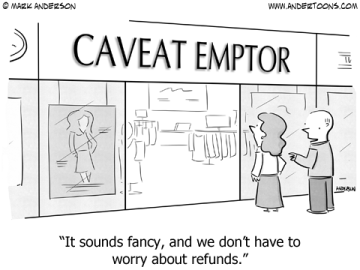
Buyer beware: various memes promoting a higher minimum wage, or a mandated “living wage” of $15, cite Costco as “proof” that a higher wage floor does not imply that product prices must rise. In fact, Costco pays relatively high wages to its hourly workers and it is a discount retailer, but it is highly misleading to treat these facts in isolation or to suggest that they imply anything about cost-price causality and the consequences of changes in costs. A higher wage floor would add cost pressure to any business employing low-skilled labor and even some employing more skilled workers like Costco. Many of these firms would have to raise prices to remain viable.

Costco says that it pays an average wage of $17 plus benefits. A quick glance at Glassdoor.com shows starting pay rates well below that average, which is no surprise. Costco recently increased its lowest pay rates for the first time in eight years, to $13 and $13.50 an hour from $11.50 and $12. However, there may be some slight-of-hand used to support other quotes of Costco’s average wage. It’s been claimed elsewhere that the company pays an average wage of $20, and President Obama asserted that Costco’s average wage is $21. Typically, quotes of hourly wages do not include the value of benefits. One blogger suggests that these higher figures may have been calculated by averaging across job classifications, rather than dividing the company’s total hourly wage bill by the number of worker-hours. One other qualification is that roughly 10% of the workers in a typical Costco warehouse store dispense free samples but are not employed by Costco. The average hourly wage of “workers at Costco” would likely be lower than $17 if they were included.

Nevertheless, it’s true that Costco pays a relatively high wage rate to its hourly workers. How can they afford to do so? As it happens, Costco has relatively few workers relative to other retail operations, and its average revenue per transaction is high. According to Megan McArdle at Bloomberg, in 2013, Costco’s average square-feet of floor space per employee was almost twice WalMart’s; according to MarketWatch, Costco’s average revenue per employee is now nearly three times the comparable figure for WalMart (enter COST and WMT). Obviously, Costco employees are highly productive in terms of revenue, and that is closely associated with higher wages.

The high productivity at Costco is not an accident. While a good wage is certainly a motivating factor, the productivity of Costco’s work force starts with screening during the hiring process, where the company is known to prefer significant retail experience. They also emphasize the demanding physical requirements of certain jobs, and given their thin staffing, a relatively high level of responsibility for a retail worker. Newcomers are said to be under a watchful eye, and effective performers are rewarded. It takes four to five years to reach the top of the wage scale in a job category. Many of those categories involve specialized skills, such as licensed opticians, butchers, cake decorators, forklift drivers, licensed hearing aid dispensers, and registered pharmacists (these categories drive up the average wage). The company provides training opportunities in various areas, and average employee turnover is low, which reduces costs. The Costco warehouse stores are without typical retail amenities; they are bare-bones with goods sitting on pallets rather than displayed on shelves. This also lowers costs, giving the company additional leeway in shaping its generous wage policy.

Returning to the question of pricing, Costco’s example cannot be generalized. First, it might not be such a good example of price restraint in the face of higher wages to begin with. To bolster earnings, Costco is expected to raise its membership fees by about 9% in 2017; undoubtedly there is also room for retail margins to increase. Time will tell. Second, again, Costco’s wage policy works fairly well because its business model rests largely on high labor productivity. Basic economics teaches us that higher productivity drives higher wages. Workers who earn less than Costco wages are, in general, less productive. This is a consequence of more limited skill sets, less experience, and sometimes weak desire. Those earning at the minimum wage are handicapped by an inability to contribute at high levels, or an inability to demonstrate that they can at their hiring date. Thus, they work in jobs that do not require developed skills. For their employers, higher wages are not a path to profitability.

Mandating an increase in the wage floor is not possible without other market adjustments. First, like anything else, the demand curve for low-skilled labor slopes downward, so a higher wage floor reduces the desired labor input. Job losses befall the least skilled in such a scenario. This consequence has greater breadth in a world in which opportunities for automation are plentiful. Another possible adjustment is an increase in the price charged to customers, which might be a reflexive response among business operators. However, they must compromise when confronted with the competitive effects of passing along an increase in costs. There could be other cost-reducing changes in job structure, benefits, break times, and any number of other conditions and circumstances of employment. Finally, some business owners might accept a lower level of profitability, depending on their disposition and the competitive tenor of the markets in which they operate. Some Costco shareholders believe that might be the case, as the company’s earnings have softened recently.

The final outcome is likely to be a combination of the adjustments described above. Unfortunately for proponents of a higher wage floor, the economy cannot and will not transform itself into a community of Costco clones. With limited skills, the motivational power of higher wages goes only so far. All price floors create excess supply, in this context unemployment. Excess supplies tend to consist of the most marginal units, in this case, the least productive workers. Perhaps sheer ignorance causes agitators for wage mandates to overlook this inevitable marginalization. The real minimum wage is zero.

A note on the cartoon above: It reminded me of an amusing passage in Margaret Mitchell’s “Gone With The Wind” when Rhett Butler, in a sardonic moment, suggests to Scarlett O’Hara that she change the name of Kennedy’s General Store in Atlanta to “Caveat Emptorium, assuring her that it would be a title most in keeping with the type of goods sold in the store. She thought it had an imposing sound and even went so far as to have the sign painted….” Later, Rhett learns that she actually had the sign made, but an embarrassed Ashley Wilkes clued her in to the meaning. She is furious, and Rhett laughs hysterically.

Obama’s On-The-Clock Undertime Rule

23 Monday May 2016

Posted by Nuetzel in Labor Markets, Regulation, Uncategorized

≈ Leave a comment

Tags

AEIdeas, American Enterprise Institute, Andy Puzder, Business Formation, Compliance Costs, DOL Overtime Exemption, Flexible Work Arrangements, Hourly workers vs. Management, James Pethokoukis, John Cochrane, Nick Gillespie, Obama administration, Overtime Costs, Overtime rules, Private Compensation, Reason, Salaried Status, Warren Meyer

obama-unemployment-2

Hurting the ones you love: one of the Obama Administration’s calling cards is a penchant for misguided economic policy; the change in an overtime rule announced Wednesday by the Department of Labor (DOL) is a classic example. The DOL has amended the rule, which requires payments of time-and-a-half to workers who exceed 40 hours per week, by doubling the threshold at which salaried employees are exempt from overtime to $47,500 annually. This affects almost 5 million workers earning between the old threshold of $23,660 and the new threshold. While the media heralds Obama for “lifting the wages of millions of workers”, those with a grasp of economic reality know that it is a destructive policy.

The rule change is unambiguously bad for employers, many of which are small businesses. That should not be too difficult to understand. Most private employers operate in competitive markets and do not earn lavish profits at the expense of their employees. They need good employees, especially those in positions of responsibility, and they must pay them competitively. By imposing higher costs on these businesses, the rule puts them in a position of greater vulnerability in the marketplace. The higher costs also include extra record keeping to stay in compliance with the rule. The impact on new business formation is likely to be particularly damaging:

“We might be told that the answer for a startup is simply to ‘go and raise more money.’ But — aside from diluting the founders who are paying for the company with their sweat in exchange for the hope of a payoff that comes in years, if ever — raising capital is the single most difficult thing I do as a startup entrepreneur. I would invite anyone not in our field to give it a shot before he endorses a regulation that will impose greater capital costs on us.

Regulators often act as though they cannot imagine a world where a few hundred or a few thousand dollars can make the difference between success and failure. If you raise our costs even modestly, you will put some of us out of business.“

Shutting down, or not starting up, is a bad outcome, but that will be a consequence in some cases. However, there are other margins along which employers might respond. First, a lucky few well-placed managers might be rewarded with a small salary bump to lift them above the new exemption threshold. More likely, employers will reduce the base salaries of employees to accommodate the added overtime costs, leaving total compensation roughly unchanged.

Many other salaried employees with pay falling between the old and new thresholds are likely to lose their salaried status. Their new hourly wage might be discounted to allow them to work the hours to which they’re accustomed, as demotivating as that sounds. If their employers limit their hours, it is possible that a few extra workers could be hired to fill the gap. Perhaps that is what the administration hopes when it claims that an objective of the new rule is to create jobs. Unfortunately, those few lucky hires will owe their jobs to the forced sacrifice of hours by existing employees.

A change from a salary to hourly pay will have other repercussions for employees. Their relationships to their employers will be fundamentally transformed. Ambitious “hourly” managers might not have the opportunity to work extra hours in order to demonstrate their commitment to the business and a job well done. When the rule change was first proposed last June, I paraphrased a businessman who is one of my favorite bloggers, Warren Meyer (also see Meyer’s follow-ups here and here):

“As [Meyer] tells it, the change will convert ambitious young managers into clock-punchers. In case that sounds too much like a negative personality change, a more sympathetic view is that many workers do not mind putting in extra hours, even as it reduces their effective wage. They have their reasons, ranging from the non-pecuniary, such as simple work ethic, enjoyment and pride in their contribution to reward-driven competitiveness and ambition.“

As hourly employees, these workers might have to kiss goodbye to bonus payments, certain benefits, and flexible work arrangements, not to mention prestige. The following quotes are from a gated Wall Street Journal article but are quoted by James Pethokoukis in his piece at the AEIdeas blog of the American Enterprise Institute:

“Jason Parker, co-founder of K-9 Resorts, a franchiser of luxury dog hotels based in Fanwood, N.J., said the chain will reduce starting pay for newly hired assistant managers to about $35,000 from the $40,000 it pays now. That will absorb the overtime pay he expects he would have to give them, he said. …

Terry Shea, co-owner of two Wrapsody gift shops in Alabama, would prefer to keep her store managers exempt from the overtime-pay requirement as they are now. But raising their salaries above the new threshold to ensure that would be too big of a jump for those jobs in her region, she said. Instead, she’ll convert the managers to hourly employees and try to limit their weekly hours to as close to 40 as possible. She’ll also have to stop giving them a comp day when their weekly hours exceed 46, a benefit she said they like as working moms.

‘I will be demoted,’ said one of her store managers Bridget Veazey, who views the hourly classification as a step backward. ‘Being salaried means I have the flexibility to work the way I want,’ including staying an extra 30 minutes to perfect a window display or taking work home, she said. She is particularly concerned Ms. Shea might stop taking the managers on out-of-town trips to buy goods from retail markets, an experience she said would help her résumé but includes long days.“

Here is some other reading on the rule change: Nick Gillespie in Reason  agrees that it’s a bad idea. Andy Puzder in Forbes weighs in on the negative consequences for workers.  John Cochrane explores the simple economic implications of mandated wage increases, of which the overtime rule is an example. As he shows, only when the demand for labor hours is perfectly insensitive to wages can a mandated wage avoid reducing labor input.

This is another classic example of progressive good intentions gone awry. Government is singularly incapable of managing the private economy to good effect via rules and regulations. Private businesses hire employees to meet their needs in serving customers. The private compensation arrangements they make are mutually beneficial to businesses and their employees and are able to accommodate a variety of unique employee life-circumstances. Good employees are rewarded with additional compensation and more responsibility. By and large, salaried workers like being salaried! Hard work pays off, but the Obama Administration seems to view that simple, market truism as a defect. Please, don’t try to help too much!

Authoritarian Designs

31 Sunday Jan 2016

Posted by Nuetzel in Progressivism, racism, Uncategorized

≈ Leave a comment

Tags

Bernie Sanders, Child Quotas, CRISPR, Davis Bacon Act, Eugenics, Friedrich Hayek, John Stewart Mill, Jonah Goldberg, Kevin Drum, Minimum Wage, Mother Jones, Obamacare Effectiveness Research, Progressivism, racism, Scientism, Sterilization, Tyler Cowen

eugenics certificate

Why condemn today’s progressives for their movement’s early endorsement of eugenics? Kevin Drum at Mother Jones thinks this old association is now irrelevant. He furthermore believes that eugenics is not an important issue in the modern world. Drum’s remarks were prompted by Jonah Goldberg’s review of Illiberal Reformers, a book by Thomas Leonard on racism and eugenicism in the American economics profession in the late 19th century. Tyler Cowen begs to differ with Drum on both counts, but for reasons that might not have been obvious to Drum. Eugenics is not a bygone, and its association with progressivism is a reflection of the movement’s broader philosophy of individual subservience to the state and, I might add, the scientism that continues to run rampant among progressives.

Cowen cites John Stewart Mill, one of the great social thinkers of the 19th century, who was an advocate for individual liberty and a harsh critic of eugenics. Here is a great paragraph from Cowen:

“The claim is not that current Progressives are evil or racist, but rather they still don’t have nearly enough Mill in their thought, and not nearly enough emphasis on individual liberty. Their continuing choice of label seems to indicate they are not much bothered by that, or maybe not even fully aware of that. They probably admire Mill’s more practical reform progressivism quite strongly, or would if they gave it more thought, but they don’t seem to relate to the broader philosophy of individual liberty as it surfaced in the philosophy of Mill and others. That’s a big, big drawback and the longer history of Progressivism and eugenics is perhaps the simplest and most vivid way to illuminate the point. This is one reason why the commitment of the current Left to free speech just isn’t very strong.“

Eugenics is not confined to the distant past, as Cowen notes, citing more recent “progressive” sterilization programs in Sweden and Canada, as well as the potential use of DNA technologies like CRISPR in “designing” offspring. That’s eugenics. So is the child quota system practiced in China, sex-selective abortion, and the easy acceptance of aborting fetuses with congenital disorders. Arguably, Obamacare “effectiveness research” guidelines cut close to eugenicism by proscribing certain treatments to individuals based upon insufficient “average benefit”, which depends upon age, disability, and stage of illness. Obamacare authorizes that the guidelines may ultimately depend on gender, race and ethnicity. All of these examples illustrate the potential for eugenics to be practiced on a broader scale and in ways that could trample individual rights.

Jonah Goldberg also responded to Drum in “On Eugenics and White Privilege“. (You have to scroll way down at the link to find the section with that title.) Goldberg’s most interesting points relate to the racism inherent in the minimum wage and the Davis-Bacon Act, two sacred cows of progressivism with the same original intent as eugenics: to weed out “undesirables”, either from the population or from competing in labor markets. It speaks volumes that today’s progressives deny the ugly economic effects of these policies on low-skilled workers, yet their forebears were counting on those effects.

Scientism is a term invoked by Friedrich Hayek to describe the progressive fallacy that science and planning can be used by the state to optimize the course of human affairs. However, the state can never command all the information necessary to do so, particularly in light of the dynamism of information relating to scarcity and preferences; government has trouble enough carrying out plans that merely match the static preferences of certain authorities. Historically, such attempts at planning have created multiple layers of tragedy, as individual freedoms and material well-being were eroded. Someone should tell Bernie Sanders!

Eugenics fit nicely into the early progressive view, flattering its theorists with the notion that the human race could be made… well, more like them! Fortunately, eugenics earned its deservedly bad name, but it continues to exist in somewhat more subtle forms today, and it could take more horrific forms in the future.

Two earlier posts on Sacred Cow Chips dealt at least in part with eugenics: “Child Quotas: Family as a Grant of Privilege“, and “Would Heterosexuals Select For Gay Genes?“.


.

Bernie, Donald and Ignatius?

29 Friday Jan 2016

Posted by Nuetzel in Immigration, Socialism, Uncategorized

≈ Leave a comment

Tags

Bernie Sanders, BK Marcus, Corporatism, Donald Trump, eminent domain, fascism, Godwin's Law, Immigration, Individual Liberty, Mark Forsyth, National Socialism, National Socialist German Workers’ Party, Nationalism, Nazi Etymology, Private Markets, Socialism, State's Rights, Steve Horwitz, The Freeman, Trade Policy

BernieTrump

We have candidates vying for the nominations of both major U.S. political parties with tendencies toward nationalism: Bernie Sanders and Donald Trump. They both oppose liberalized immigration and they are both anti-trade, playing on economic fears in articulating their views. Sanders has attempted to soften his rhetoric on immigration since last summer, when he alleged that it harms U.S. workers.

There are differences between Sanders and Trump on the treatment of existing illegal immigrants. Despite Trump’s protests to the contrary, his nationalism has had ethnic overtones.

Trump’s positions on immigration and trade protectionism are not necessarily at odds with Republican tradition, which is a mixed bag, but they are consistent with a faith in big government and central planning. An anti-immigration and anti-trade platform is certainly no contradiction for Sanders, because central planning is integral to his avowed socialism.

Sanders has been called a “socialist with nationalistic tendencies”. He favors government provision of free health care and higher education, heavy redistribution, and severe restrictions on property rights via high taxation. Trump, on the other hand, has been called a “nationalist with socialist tendencies.” He too has called for nationalized health care, increasing certain transfer payments, as well as compromises to state rights. It would probably be more accurate to describe Trump as a corporatist, a system under which large business entities both serve and control government for their own benefit. For example, Trump has used and favors eminent domain to secure land for private projects, generous bankruptcy laws to eliminate business risks, and “deal-making” between government and private enterprise in order to “get things done.” Corporatism is a flavor of fascism, and it is perfectly consistent with a statist agenda.

Thus, each party has candidates who are by degrees both nationalist and socialist. In using these labels, however, I plead innocent to a violation of Godwin’s Law. Of course they are not Nazis, but they are nationalistic socialists. The distinction is explained nicely by B.K Marcus in The Freeman. Both candidates take positions that are consistent with the platform of the National Socialist German Workers Party, circa 1920.

As an aside, Marcus provides some fascinating etymology of the word “Nazi”, quoting Steve Horwitz:

“The standard butt of German jokes at the beginning of the twentieth century were stupid Bavarian peasants. And just as Irish jokes always involve a man called Paddy, so Bavarian jokes always involved a peasant called Nazi. That’s because Nazi was a shortening of the very common Bavarian name Ignatius. This meant that Hitler’s opponents had an open goal. He had a party filled with Bavarian hicks and the name of that party could be shortened to the standard joke name for hicks.“

Marcus also quotes Mark Forsyth on this topic:

“To this day, most of us happily go about believing that the Nazis called themselves Nazis, when, in fact, they would probably have beaten you up for saying the word.“

Back on point, I’ve written about both of these candidates before: Trump here and here; Sanders here. To keep things even, here is one more interesting take on Bernie.

“His family managed to send him to the University of Chicago. Despite a prestigious degree, however, Sanders failed to earn a living, even as an adult. It took him 40 years to collect his first steady paycheck — and it was a government check.”

Read the whole thing!

It’s difficult for me to take these two candidates seriously because they do not take individual liberty seriously, nor do they understand the power of private markets to promote human welfare. I also have strong reservations about their understanding of constitutional principles, and I suspect that either would have few qualms about taking Mr. Obama’s cue in stretching executive authority.

Instead of the headline above, it would have been more accurate to say “Bernie, Donald and Ignoramus!” Unfortunately, one of these guys could be our next president. Well, it won’t be Sanders.

More Unpleasant Obamacare Arithmetic

15 Monday Jun 2015

Posted by Nuetzel in Obamacare, Uncategorized

≈ Leave a comment

Tags

adverse selection, Affordable Care Act, Death Spiral, Expanded Medicaid eligibility, Forbes, Obamacare, Political Calculations, Reinsurance program, Risk corridors, Robert Laszewski

How-the-ACA-Works

States with expanded Medicaid eligibility may be more vulnerable to adverse selection, hastening the death spiral of their Obamacare insurance exchanges relative to states without expanded Medicaid. This is because 1) the expanded, eligible Medicaid population is young, and 2) pricing (net of subsidies) and benefits on the exchanges encourage sicker individuals to purchase plans with richer benefits. The Political Calculations blog presents this case in “How Medicaid’s Expansion Tips the Scales Against Obamacare“:

“… we observe that the states that did not expand their Medicaid programs have a much larger share of their ACA-enrollment occurring in the lower-tier metal plans that would tend to be favored by healthier individuals. Meanwhile, in the states that expanded the enrollment of their Medicaid programs under the law, we find that a significantly larger portion of their ACA enrollments were in the plans that would be favored by less healthy individuals.

In fact, we see that in Medicaid expansion states, 13.2% of their ACA enrollment occurred in the highest-tier Gold and Platinum level plans, while non-Medicaid expansion states saw 7.7% of their enrollment for these highest tiers of health insurance coverage.

The seemingly small 5.5% difference between these two figures becomes exceptionally significant when you consider how extremely concentrated health care expenditures are in the United States, where just 5% of U.S. patients are responsible for generating 50% of all health care spending in the nation.“

It will be difficult to confirm this hypothesis using data on premium increases, or actual exchange failure, until the temporary risk corridors and transitional reinsurance program expire. However, this year, several of the states in which proposed premium increases are the largest have expanded Medicaid eligibility. Robert Laszewski has a good discussion about some the reasons for the large premium increases in Forbes. It’s early and there are signs that it will get worse.

As noted last week on this blog, Medicaid itself does not stack up well in terms of how highly it is valued by recipients and the moral hazard inherent in the program. Here we see an additional bug: expanded Medicaid appears to siphoning away younger potential enrollees from the exchanges in those states, worsening the problem of adverse selection, which will negatively affect their claims experience.

Code Word: Sustainability

16 Thursday Apr 2015

Posted by Nuetzel in Uncategorized

≈ Leave a comment

Tags

central planning, George Leef, Locavorism, Markets, National Association of Scholars, Progressive dialectic, Sustainability, Technocratic elite

Thinkers_cartoon

Sustainability is a meaningful concept that has been bastardized as a code word for virtually anything that suits the progressive narrative. It is used as a catch-all for presumed goodness, while “unsustainable” is a catch-all for anything deserving of condemnation. Strictly speaking, a sustainable activity, or level of activity, is one that can be maintained indefinitely. That does not mean that the activity itself or its level is optimal; as any economist or engineer can demonstrate, “sustainable” in that sense does not necessarily imply that something is “too fast” or “too much”. In fact, a thing or an activity can occur at a rate that is unsustainably slow, or too little.

Progressives seem to have stumbled into the use of “sustainable” in another sense: that a thing or idea can be defended in argument as part of their dialectic. The broad array of things deemed to be sustainable, and those deemed unsustainable, map nicely to the progressive policy agenda. This is brought forward in “Sustainability: A new college fad with fangs“, by Geaorge Leef, a review of a paper published by the National Association of Scholars. Some colleges have established “sustainability” programs offering such challenging courses as “Ethics of Eating”, “Trash Studies”, “Environmental Poetry,” and Small Spaces Studio”:

“Frequently, courses link some ‘identity’ belief with sustainability, such as that ‘patriarchy’ is the enemy of sustainable life and therefore must be ended. … Most often, however, courses involve the supposedly unquestionable science of global warming and impending catastrophe.“

And here is a critical assessment of “sustainability” as an academic discipline:

“It’s just a farrago of beliefs, attitudes, and grievances centering around the general notion that most humans aren’t living the right way and unless we make drastic changes, we’re doomed. … [The authors] argue that sustainability is not really an academic discipline; rather, it’s an ‘ideology that unites environmental activism, anti-capitalism, and a progressive vision of social justice.’ Like a religion (hence the reference to fundamentalism), sustainability never questions its tenets. It posits them and even has ‘pledges’ for students and school officials to adhere to.“

It’s fascinating for me to read hysterical claims that capitalism is “unsustainable”. I suppose that means that market prices are simply useless at conveying information about scarcity, and that elite technocrats from the progressive tribe can make better decisions about what the rest of us can do and have. All that in the absence of incentives and information needed to align benefits with costs. I suppose it also means that strong property rights are useless for encouraging individuals to husband resources, and that the tragedy of the commons is a wicked fiction. I suppose it also means that resources should not be directed to their most valued uses, but instead to those uses most valued by the subjective judgement of the technocratic elite.

There are many other logical contradictions in the progressive sustainability mantra. This Scared Cow Chips post from several months ago, “Locavoracious Rent Seeking“, covered the uncritical acceptance of locavorism as “sustainable”.

“The reactionary mindset of today’s locavores prevents them from understanding the true nature of “sustainability,” which is best promoted by markets and a willingness to engage in trades that are mutually beneficial.“

America’s academic institutions should keep progressive sustainability doctrine at arms length. It is fine as a campus movement, but it is not worthy or appropriate as a set of governing rules for a community of higher learning. Ultimately, it has nothing to do real learning and the process of inquiry.

Poverty Maintenance Is Not A Win

01 Wednesday Apr 2015

Posted by Nuetzel in Poverty, Uncategorized

≈ 2 Comments

Tags

AFDC, CATO Institute, Child Tax Credit, Christopher Jencks, Earned Income Tax Credit, Food Stamps, Lyndon Johnson, Malinvestment, Marginal tax rates, Martha Bailey, Poverty, Private charity, Sheldon Danziger, Supplemental Security Income, TANF, War on Poverty, Welfare reform, work incentives

obama-new-normal

Merely keeping a patient alive is inferior to curing the disease. Likewise, merely allowing the impoverished to live under tolerable conditions is inferior to eliminating the underlying causes of poverty. Evidence for the former is used by Harvard Professor Christopher Jencks to proclaim the war on poverty a success. That is the upshot of his recent article in The New York Review of Books. But does the maintenance of a permanent dependent class constitute success? I believe that our goals should be loftier, and President Johnson’s original goals for the War on Poverty went much farther than Jencks suggests.

Ostensibly a review of other work by Martha Bailey and Sheldon Danziger, Professor Jencks devotes most of his essay to arguing that the official poverty rate published by the Census Bureau is distorted, and that a “corrected” measure has declined since the “war” was initiated by Johnson in the 1960s. The official rate has fluctuated in a range of 11-15% since the mid-1960s. Jencks corrects the 2013 rate of 14.5% for 1) the value of non-cash benefits received by certain program recipients (-3%); 2) the omission of refundable tax credits from the official incomes of employed individuals below the poverty line (-3%); and 3) a change in the price index used to adjust the official poverty thresholds over time to one that does not overstate changes in the cost of living (-3.7%). These three adjustments would reduce the poverty rate in 2013 to just 4.8%.

Taken at face value, that reduction is impressive, but the third adjustment is not directly attributable to antipoverty programs. It could also be due to economic growth or other factors. Jencks notes the following:

“Both liberals and conservatives tend to resist the idea that poverty has fallen dramatically since 1964, although for different reasons. Conservatives’ resistance is easy to understand. They have argued since the 1960s that the federal government’s antipoverty programs were ineffective, counterproductive, or both. 

Liberals hear the claim that poverty has fallen quite differently, although they do not like it any better than conservatives do. Anyone, liberal or conservative, who wants the government to solve a problem soon discovers that it is easier to rally support for such an agenda by saying that the problem in question is getting worse than by saying that although the problem is diminishing, more still needs to be done.”

For my own part, I believe that many antipoverty programs succeed only as palliatives. They have not succeeded in breaking the cycle of poverty and dependence on the state. In other words, successful programs must foster self-sufficiency, which is a superior goal from a humanitarian and a Libertarian perspective. Jencks plans a follow-up on the “successes and failures specific anti-poverty programs”, but merely paying alms to the poor establishes a very low threshold for success.

In fairness to Jencks, anti-poverty programs serve a large number of individuals who are incapable of providing for themselves for a variety of reasons such as age, physical and mental disabilities. While it is beyond the scope of this post, some argue that private charities are more effective at providing for these individuals as well as the able poor. A greater role for charity could even be facilitated via public funding, but in any case, a larger role for private charity should always be on the menu of policy options.

A basic failing of many welfare programs is an incentive problem: able recipients perceive a penalty for work effort (additional hours or even kinds of employment) if rising earned income is associated with reduction or elimination of program benefits. This means that participants face a very high effective marginal tax rate on earned income.

This article from The CATO Institute contains a good overview of the federal welfare system, which consists of 126 separate programs. The article contains somewhat more detailed on the largest anti-poverty programs, such as Refundable Tax Credits (the Earned Income Tax Credit (EITC), and Child Tax Credit (CTC)), Supplemental Security Income (SSI – for aged, blind and disabled), SNAP (food stamps), housing subsidies, child nutrition (WIC), Temporary Assistance For Needy Families (TANF) and unemployment insurance. Social Security is also included since it pays benefits to many low income seniors.

The CATO analysis shows that by one measure, refundable tax credits are by far the most cost efficient at lifting people out of poverty at a point in time, at least among the large programs, followed by SSI and using subsidies. In-kind programs such as SNAP and WIC tend to be less targeted and less effective by this measure. There is fairly widespread agreement that the tax credits have better incentives for work effort, but there are still high marginal tax rates in the phase-out range, a marriage penalty, and the credits are paid only once a year as tax refunds. Some contend that the phase-out of the EITC discourages labor supply even more than the credit increases labor supply at lower incomes. Still others believe that adding certain work requirements would make the EITC a more effective measure:

“The [EITC] clearly does reduce poverty, but it raises work levels far less than some of the statistical studies of the past decade claim, and it appears to do so by encouraging working people to keep working, rather than driving the non-working poor toward jobs. If we wish the credit to promote work as well as raise incomes, we … must add other suasions to promote and enforce work, such as those found in the more successful work-incentive experiments…. These include mandating participation in work programs and setting some threshold of working hours that claimants have to achieve to get benefits.”

The incentive effects of other programs are more negative than the tax credits. This paper found that the food stamp program reduces employment and hours worked. The TANF program, which was the successor to Aid To Families With Dependent Children (AFDC), also exposes recipients to high marginal tax rates. While CATO has been criticized for analyzing the combined impact on marginal tax rates of up to eight different programs, there is little question that the incentive problem is compounded for participants in multiple programs.

There are many different approaches that can be explored for eliminating poverty, supporting those who can’t work and ending dependency for those who can. Certainly, the work incentives of existing anti-poverty programs can be improved in a number of ways. More inventive approaches can be tested at the state level. However, programs such as guaranteed incomes should be eschewed, as they tend to aggravate the incentive problem and encourage dependency.

There are many other approaches to attacking poverty and its causes that do not strictly qualify as “welfare reform.” These include measures that would improve education and employment prospects, including apprenticeship and other training programs. School choice is a fundamental reform with enormous potential to improve the quality of education among poor children. Transitioning to market-based health care reform, including competition among health insurers, would reduce medical costs across the board. Eliminating costly regulation of business can encourage economic growth, which is basic to lifting the incomes of the working poor. Minimum wage legislation should be avoided as it simply eliminates opportunities for the least productive members of society and it is not well-targeted at the poor. Tax reform that encourages saving and investment, including corporate tax reform, will increase the economy’s long-term growth potential, as would a general reduction in the size of the public sector. An end to wasteful subsidies to “privileged” industries can minimize malinvestment and release resources to uses that pass a true market test, leading to a more general prosperity.

One Year Of Sacred Cow Chipping

19 Thursday Mar 2015

Posted by Nuetzel in Uncategorized

≈ Leave a comment

harrycarreycowchips

Tomorrow, March 19 is the one-year anniversary of my first blog post on Sacred Cow Chips (SCC). This is my 242nd post and traffic is increasing. Please forgive this bit of self-congratulation, but I think 242 in a year is okay for a guy with a fairly busy professional and family life, plus a few other hobbies. My earliest posts tended to be brief. More recently, I’ve been unable to keep my posts down to a paragraph or two, but perhaps I’ll try to add some shorter posts to the mix in the future. I also had frequent formatting issues in my first month or two of blogging, some of which remain uncorrected. That’s my fault, but in my defense, the editing software on WordPress at the time was primitive compared to subsequent upgrades.

I confess to some self-inflicted pressure to “feed the monster”, to post something after any absence of a few days. Fortunately, finding inspiration for posts is simple. There is always a surfeit of tempting memes on social media, and traditional media provide a steady stream of questionable commentary. And then there are the politicians. Of course, I have some favorite blogs and sites from which I draw ideas on a regular basis.

I have been using the most basic WordPress account plan, which imposes some limits on features and formats. Among other shortcomings, the text on SCC always looks too large to me. I plan on upgrading to a premium plan in the next few days. That might interfere with regular posting activity as I arrange a new format, but we’ll see how it goes.

If you are following my blog, thank you, and I hope you’ll keep visiting. It’s a lot of fun for me! In the meantime, Happy Anniversary, SCC!

← Older posts
Newer posts →
Follow Sacred Cow Chips on WordPress.com

Recent Posts

  • A Warsh Policy Scenario At the Federal Reserve
  • The Coexistence of Labor and AI-Augmented Capital
  • The Case Against Interest On Reserves
  • Immigration and Merit As Fiscal Propositions
  • Tariff “Dividend” From An Indigent State

Archives

  • February 2026
  • January 2026
  • December 2025
  • November 2025
  • October 2025
  • September 2025
  • August 2025
  • July 2025
  • June 2025
  • May 2025
  • April 2025
  • March 2025
  • February 2025
  • January 2025
  • December 2024
  • November 2024
  • October 2024
  • September 2024
  • August 2024
  • July 2024
  • June 2024
  • May 2024
  • April 2024
  • March 2024
  • February 2024
  • January 2024
  • December 2023
  • November 2023
  • August 2023
  • July 2023
  • June 2023
  • May 2023
  • April 2023
  • March 2023
  • February 2023
  • January 2023
  • December 2022
  • November 2022
  • October 2022
  • September 2022
  • August 2022
  • July 2022
  • June 2022
  • May 2022
  • April 2022
  • March 2022
  • February 2022
  • January 2022
  • December 2021
  • November 2021
  • October 2021
  • September 2021
  • August 2021
  • July 2021
  • June 2021
  • May 2021
  • April 2021
  • March 2021
  • February 2021
  • January 2021
  • December 2020
  • November 2020
  • October 2020
  • September 2020
  • August 2020
  • July 2020
  • June 2020
  • May 2020
  • April 2020
  • March 2020
  • February 2020
  • January 2020
  • December 2019
  • November 2019
  • October 2019
  • September 2019
  • August 2019
  • July 2019
  • June 2019
  • May 2019
  • April 2019
  • March 2019
  • February 2019
  • January 2019
  • December 2018
  • November 2018
  • October 2018
  • September 2018
  • August 2018
  • July 2018
  • June 2018
  • May 2018
  • April 2018
  • March 2018
  • February 2018
  • January 2018
  • December 2017
  • November 2017
  • October 2017
  • September 2017
  • August 2017
  • July 2017
  • June 2017
  • May 2017
  • April 2017
  • March 2017
  • February 2017
  • January 2017
  • December 2016
  • November 2016
  • October 2016
  • September 2016
  • August 2016
  • July 2016
  • June 2016
  • May 2016
  • April 2016
  • March 2016
  • February 2016
  • January 2016
  • December 2015
  • November 2015
  • October 2015
  • September 2015
  • August 2015
  • July 2015
  • June 2015
  • May 2015
  • April 2015
  • March 2015
  • February 2015
  • January 2015
  • December 2014
  • November 2014
  • October 2014
  • September 2014
  • August 2014
  • July 2014
  • June 2014
  • May 2014
  • April 2014
  • March 2014

Blogs I Follow

  • Passive Income Kickstart
  • OnlyFinance.net
  • TLC Cholesterol
  • Nintil
  • kendunning.net
  • DCWhispers.com
  • Hoong-Wai in the UK
  • Marginal REVOLUTION
  • Stlouis
  • Watts Up With That?
  • American Elephants
  • The View from Alexandria
  • The Gymnasium
  • A Force for Good
  • Notes On Liberty
  • troymo
  • SUNDAY BLOG Stephanie Sievers
  • Miss Lou Acquiring Lore
  • Your Well Wisher Program
  • Objectivism In Depth
  • RobotEnomics
  • Orderstatistic
  • Paradigm Library
  • Scattered Showers and Quicksand
  • Jam Review

Blog at WordPress.com.

Passive Income Kickstart

OnlyFinance.net

TLC Cholesterol

Nintil

To estimate, compare, distinguish, discuss, and trace to its principal sources everything

kendunning.net

The Future is Ours to Create

DCWhispers.com

Hoong-Wai in the UK

A Commonwealth immigrant's perspective on the UK's public arena.

Marginal REVOLUTION

Small Steps Toward A Much Better World

Stlouis

Watts Up With That?

The world's most viewed site on global warming and climate change

American Elephants

Defending Life, Liberty and the Pursuit of Happiness

The View from Alexandria

In advanced civilizations the period loosely called Alexandrian is usually associated with flexible morals, perfunctory religion, populist standards and cosmopolitan tastes, feminism, exotic cults, and the rapid turnover of high and low fads---in short, a falling away (which is all that decadence means) from the strictness of traditional rules, embodied in character and inforced from within. -- Jacques Barzun

The Gymnasium

A place for reason, politics, economics, and faith steeped in the classical liberal tradition

A Force for Good

How economics, morality, and markets combine

Notes On Liberty

Spontaneous thoughts on a humble creed

troymo

SUNDAY BLOG Stephanie Sievers

Escaping the everyday life with photographs from my travels

Miss Lou Acquiring Lore

Gallery of Life...

Your Well Wisher Program

Attempt to solve commonly known problems…

Objectivism In Depth

Exploring Ayn Rand's revolutionary philosophy.

RobotEnomics

(A)n (I)ntelligent Future

Orderstatistic

Economics, chess and anything else on my mind.

Paradigm Library

OODA Looping

Scattered Showers and Quicksand

Musings on science, investing, finance, economics, politics, and probably fly fishing.

Jam Review

"If you get confused, listen to the music play."

  • Subscribe Subscribed
    • Sacred Cow Chips
    • Join 128 other subscribers
    • Already have a WordPress.com account? Log in now.
    • Sacred Cow Chips
    • Subscribe Subscribed
    • Sign up
    • Log in
    • Report this content
    • View site in Reader
    • Manage subscriptions
    • Collapse this bar
 

Loading Comments...