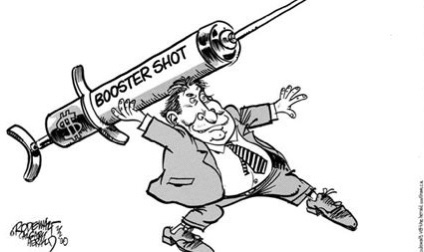
The barrage of precautionary COVID missives continues, and with a familiar “follow-the-money” twist. The CEOs of both Pfizer and Moderna say that booster shots are likely to be needed a year after initial administration of their COVID vaccines, and almost certainly every year thereafter. Of course, this message is for those who felt compelled to be vaccinated in the first place, whether out of concern for their own health, high-minded community spirit, fear of social ostracism, or fear of possible vaccine passport requirements. It’s probably also intended for those who acquired immunity through infection.
There are reasons to believe, however, that such a booster is unnecessary. This case was made a few days ago in a series of tweets by Dr. Monica Ghandi, an infectious disease expert and Professor of Medicine at UCSF. Ghandi says immunity from an infection or a vaccine can be expected to last much longer than a year, despite the diminished presence of antibodies. That’s because the immune system relies on other mechanisms to signal and produce new antibodies against specific pathogens when called upon.
So-called B cells actually produce antibodies. Another cell-type known as T cells act to signal or instruct B cells to do so, but so-called “killer” T cells destroy cells in the body that have already been infected. Dr. Ghandi’s point is that both B and T cells tend to have very long memories and are capable of conferring immunity for many years.
While our experience with COVID-19 is short, long-lasting immunity has been proven against measles for up to 34 years, and for other SARS-type viruses for at least 17 years. Dr. Ghandi links to research showing that survivors of the 1918 flu pandemic were found to have active B cells against the virus 90 years later! The COVID vaccines cause the body to produce both B and T cells, and the T cells are protective against COVID variants.
A last point made by Dr. Ghandi is intended to dispel doubts some might harbor due to the relatively ineffectual nature of annual flu vaccines. The flu mutates much more aggressively than COVID, so the design of each year’s flu vaccine involves a limited and uncertain choice among recent strains. COVID mutates, but in a more stable way, so that vaccines and adaptive immunity tend to retain their effectiveness.
While I’m sure the pharmaceutical companies believe in the benefits of their vaccines, there are undoubtedly other motives behind the push for boosters. There is money to be made, and much of that money will be paid by governments eager to jump on the precautionary bandwagon, and who are likely to be very insensitive to price. In fact, the vaccine producers might well have encouraged those pushing vaccine passports to include annual booster requirements. This would be another unwelcome imposition. The very discussion of boosters gives government officials more running room for other draconian but ultimately ineffective mandates on behavior. And the booster recommendation gives additional cover to public health “experts” who refuse to acknowledge real tradeoffs between the stringency of non-pharmaceutical interventions, economic well being, and other dimensions of public health.
The American administrative state (AS) was borne out of frustration by statist reformers with expanded voting rights. It continues to be an effective force of exclusion and discrimination today, according to Philip Hamburger of Columbia Law School. I’ve discussed Hamburger’s commentary in the past on the extra-legal power often wielded by administrative agencies, and I will quote him liberally in what follows. At the first link above, he provides some historical context on the origins of the AS and discusses the inherently discriminatory nature of administrative law and jurisprudence.
An Abrogation of Voting Rights
Hamburger quotes Woodrow Wilson from 1887 on the difficulty of appealing to a broad electorate, a view that was nothing short of elitist and bigoted:
“‘… the reformer is bewildered’ by the need to persuade ‘a voting majority of several million heads.’ He worried about the diversity of the nation, which meant that the reformer needed to influence ‘the mind, not of Americans of the older stocks only, but also of Irishmen, of Germans, of Negroes.’ Put another way, ‘the bulk of mankind is rigidly unphilosophical, and nowadays the bulk of mankind votes.’”
Wow! Far better, thought Wilson, to leave the administration of public policy to a class of educated technocrats and thinkers whose actions would be largely independent of the voting public. But Wilson spoke out of both sides of his mouth: On one hand, he said that administration “lies outside the proper sphere of politics“, but he also insisted in the same publication (“The Study of Administration“) that public administration “must be at all points sensitive to public opinion“! Unfortunately, the views of largely independent public administrators seldom align with the views of the broader public.
Administration and Prejudice
Wilson was elected President 25 years later, and his administration did much to expand the administrative powers of the federal executive. Over the years, the scope of these powers would expand to include far more than mere administrative duties. Administrative rule-making would come to form a deep body of administrative law. And while traditional legislation would nominally serve to “enable” this activity, it has expanded in ways that are not straightforwardly connected to statute, and its impact on the lives of ordinary Americans has been massive. Furthermore, a separate legal system exists for adjudicating disputes between the public and administrative agencies, with entirely separate rules and guarantees than our traditional legal system:
“It is bad enough that administrative proceedings deny defendants many of the Constitution’s guaranteed civil procedures. … In addition, all administrative proceedings that penalize or correct are criminal in nature, and they deny defendants their procedural rights, such as their right to a jury and their right to be presumed innocent until proven guilty beyond a reasonable doubt. Of course, these administrative proceedings deny procedural rights to all Americans, but they are especially burdensome on some, such as the poor.“
The AS has truly become a fourth, and in many ways dominant, branch of government. Checks and balances on its actions are woefully inadequate, and indeed, Wilson considered that a feature! It represents a usurpation of voting rights, but one that is routinely overlooked by defenders of universal suffrage. It is also highly prejudiced and discriminatory in its impact, which is routinely overlooked by those purporting to fight discrimination.
Bio-Medical Discrimination
Hamburger devotes some of his discussion to Institutional Review Boards (IRBs), which are mandated by federal law to conduct prior reviews of research in various disciplines. These boards are generally under the authority of the Department of Health and Human Services. One major objective of IRBs is to prevent research involving human subjects, but this prohibition can be very misguided, and the reviews impose costly burdens and delays of studies, often stopping them altogether on trivial grounds:
“This prior review inevitably delays and prevents a vast array of much entirely innocent bio-medical research. And because the review candidly focuses on speech in both the research and its publication, it also delays and prevents much bio-medical publication.
The consequences, particularly for minorities, are devastating. Although supposedly imposed by the federal government in response to scientific mistreatment of black individuals, such as at Tuskegee, the very solicitousness of IRBs for minorities stymies research on their distinctive medical problems. …
When government interferes with medical research and its publication—especially when it places administrative burdens on research and publication concerning minorities—the vast costs in human life are entirely predictable and, of course, discriminatory.”
Stifling Political Speach
Hamburger tells the story of Hiram Evans, a 1930s crusader against religious influence on voters and legislators. Evans also happened to be the Imperial Wizard of the Ku Klux Klan. Hamburger classifies Evans’ agitation as an important force behind nativist demands to outlaw religious speech in politics. Ultimately, Congress acquiesced, imposing limits on certain speech by non-profits. Individuals are effectively prohibited from fully participating in the political process through religious and other non-profit organizations by Section (501)(c)(3) of the Internal Revenue Code. Of course, tax-exempt status is critical to the survival and growth of many of these institutions. More traditionally religious individuals are often heavily reliant upon their faith-based organizations not just for practicing their faith, but as centers of intellectual and social life. Needless to say, politics intersects with these spheres, and to prohibit political speech by these organizations has an out-sized discriminatory impact on their members.
The insulation of the AS from the democratic process, and the effective limits on religious speech, often mean there is little leeway or tolerance within the AS for individuals whose religious beliefs run counter to policy:
“The difference between representative and administrative policymaking is painfully clear. When a legislature makes laws, the policies that bear down on religion are made by persons who feel responsive to religious constituents and who are therefore usually open to considering exemptions or generally less severe laws.”
But there are other fundamental biases against religious faith and practices within the AS:
“… when policies come from administrative agencies, they are made by persons who are chosen or fired by the executive, not the public, and so are less responsive than legislators to the distinctive needs of a diverse people. They are expected, moreover, to maintain an ethos of scientism and rationality, which—however valuable for some purposes—is indifferent and sometimes even antagonistic to relatively orthodox or traditional religion, let alone the particular needs of local religious communities.“
Sucking Life From the Republic
The administrative state imposes a variety of economic burdens on the private sector. This is not just costly to economic growth. It also creates innumerable opportunities for rent-seeking by interest groups of all kinds, including private corporations whose competitive interests often lead them to seek advantage outside of traditional participation in markets.
Hamburger’s arguments are even more fundamental to the proper functioning of a republic, but they are probably difficult for many journalists and politicians to fully grasp. He identifies some core structural defects of the administrative state, and he does so with great passion. He sums things up well in his closing:
“… was founded on racial and class prejudice, it is still supported by class prejudice. Moreover, by displacing laws made by elected lawmakers, it continues to discriminate against minorities of all sorts. Along the way, it stifles much scientific inquiry and publication with devastating costs, particularly for minorities. It is especially discriminatory against many religious Americans. And it eviscerates the Constitution’s procedural rights, not least in cases criminal in nature.
So, if you are inclined to defund oppression, defund the administrative state. If you want to tear down disgraceful monuments, demolish the prejudiced and discriminatory power that is Woodrow Wilson’s most abysmal legacy. If you are worried about stolen votes, do not merely protest retail impediments to voting, but broadly reject the wholesale removal of legislative power out of the hands of elected legislators. And if you are concerned about the injustice of the criminal justice system, speak up against the loss of juries, due process, and other rights when criminal proceedings get transmuted into administrative proceedings.
Little in America is as historically prejudiced or systematically discriminatory as administrative power. It is a disgrace, and it is time to take it down.“
Super-spreading events are gatherings at which one or more attendees are already harboring an infection and manage to transmit it to a number of others. These people, in turn, spread it to their close contacts, possibly at the same event. Super-spreading has dominated the transmission of COVID-19. These transmissions have almost always taken place indoors in spaces with limited ventilation, and they have usually involved close or prolonged contact. In addition, super-spreading originates with a small subset of infected individuals. That’s essentially what the chart above shows. It ranks individual subjects by their exhaled quantity of aerosolized particles per liter of air.
For more than a year, we’ve also known that obesity and age are associated with more severe COVID infections. Now, it’s startling to learn that obese and/or older, infected individuals are more prone to transmitting virus: this study found that a high body mass index (BMI) is associated with significantly greater quantities of exhaled aerosol, and that age has a similarly strong association. So called BMI-years, or age x BMI, has an extremely powerful association with the exhalation of aerosol-borne particles. The authors, David A. Edwards, et al, believe this is a consequence of the properties of mucus produced by different individuals in response to infections and how their lungs and airways handle it. The authors say:
“Our findings indicate that the capacity of airway lining mucus to resist breakup on breathing varies significantly between individuals, with a trend to increasing with the advance of COVID-19 infection and body mass index multiplied by age (i.e., BMI-years). Understanding the source and variance of respiratory droplet generation, and controlling it via the stabilization of airway lining mucus surfaces, may lead to effective approaches to reducing COVID-19 infection and transmission. … ”
“Surfactant and mucin compositional and structural changes, driven, in part, by physiological alterations of the human condition—including diet (10), aging (11), and COVID-19 infection itself (12)—may therefore be anticipated to alter droplet generation and droplet size (7) during acts of breathing.”
So there is substantial variation in the exhalation of aerosol-borne particles across individuals. In the study, less than 20% of healthy subjects produced more than 156 particles per liter of air, accounting for 80% of the exhaled particles. This defined their so-called “super-spreader” cohort. The association of BMI-years and exhaled particles was less pronounced but still positive within the “low-spreader” cohort.
Edwards, et al speculate that these fine droplets might help explain the greater severity of COVID infections among the elderly and obese. Not only does the breakup of mucus into tiny droplets cause these individuals to exhale aerosols more profusely, it probably also leads to deep penetration into their lung tissue.
This knowledge might be broadly applicable to infectious diseases, and SARS viruses in particular. The elderly know they are vulnerable. It’s not clear that the obese have viewed themselves as vulnerable, but they should, even in the age of “body positivity“. And not only are they vulnerable: they appear to pose an elevated hazard to others. I came across a couple of sardonic comments that got right to the apparent elephant in the room: “Instead of a mask mandate, how about a push-up mandate?”; and “Instead of a vaccine passport, how about a BMI passport?”
The debate about how to care for the most vulnerable is ongoing, but the mere mention of regularities like those identified by the study might lead to proposals for coercive policies. But first, a few practical points to bear in mind: 1) while the study identifies a major risk factor for transmission, it must be replicated by others, and there must be research into the underlying reasons for the phenomenon; 2) while the obese and seniors may be more likely to super-spread, not all of them are super-spreaders; and 3) as a matter of policy, how would “super-spreaders” be defined? What would be the cutoff BMIs at various ages? No matter what was decided, restrictive policies predicated on mere statistical associations would involve gross injustices to a large number of individuals.
With the degree of acquired immunity already in the population and fairly widespread voluntary vaccination (since alarmists have scared the bejeezus out of everyone), the whole issue might seem moot. It’s not, however, because COVID-19 is likely to become endemic, the immunities of some individuals might erode more quickly than expected, new and more dangerous variants might arise, and new SARS viruses are likely to emerge with time.
In a pandemic, however, and even without knowing who is infected, it is ethically barbaric to probabilistically isolate classes of individuals, whether based on age, BMI, or anything other than contagious status. The social cost is simply unacceptable. Instead, public health authorities should provide information to those at high risk, facilitate vaccination for those who desire it, and promote rapid, at-home tests. This is essentially a deregulatory agenda relative to the mindless lockdown approaches favored by so many public health experts.
Everyone must balance their own personal risks and rewards. Based on the study of exhaled particles discussed above, some might shun the obese and seniors until the threat has passed. Some of the obese and elderly might shun each other. That might be another regrettable dimension of the costs of a pandemic. On the other hand, perhaps more of us will respond to the unquestionably positive incentives for weight loss, of which we’re almost all aware.
I recently wrote on this blogabout the damaging impact of corporate taxes on workers, consumers, and U.S. competitiveness. Phil Kerpen tweeted the chart above showing the dramatic reduction in the distribution of corporate tax rates across the world from 1980 through 2020. Yes, yes, Joe Biden’s posture as a fair and sensible leader aside, most countries place great emphasis on their treatment of business income and their standing relative to trading partners.
Kerpen’s tweet was a response tothis tweet by economist Justin Wolfers:
Apparently, Wolfers wishes to emphasize that Biden’s plan, which raises the statutory corporate rate from 21% to 28%, does not take the rate up to the level of the pre-Trump era. Fair enough, but compare Wolfers’ chart with Kerpen’s (from the Tax Foundation) and note that it would still put the U.S. in the upper part of the international distribution without even considering the increment from state corporate tax rates. Also note that the U.S. was near the top of the distribution in 1980, 2000, and 2010. In fact, the U.S. had the fourth highest corporate tax rate in the world in 2017, before Trump’s tax package took effect. Perhaps Biden’s proposed rate won’t be the fourth highest in the world, but it will certainly worsen incentives for domestic U.S. investment, the outlook for wage growth, and consumer prices.
And in the same thread, Wolfers said this:
That’s certainly true, but let’s talk about those “loopholes”. First, much of U.S. corporate income is “passed though” to the returns of individual owners, so corporate taxes understate the true rate of tax paid on corporate income. Let’s also remember that the corporate tax represents a double taxation of income, and as a matter of tax efficiency it would be beneficial to consolidate these taxes on individual returns.
Beyond those consideration, the repeal of any corporate tax deduction or credit would have its own set of pros and cons. As long as there is a separate tax on corporate income, there is an economic rationale for most so-called “loopholes”. Does Wolfers refer to research and development tax credits? Maybe he means deductions on certain forms of compensation, though it’s hard to rationalize treating any form of employee compensation as income taxable to the business. Then there are the massive tax subsidies extended for investments in renewable energy. Well, good for Wolfers if that last one is his gripe! The CARES Act of 2020 allowed publicly-traded companies to use losses in 2020( presumably induced by the pandemic) to offset income in prior years, rather than carrying them forward. Did Wolfers believe that to be inappropriate? I might object to that too, to the extent that the measure allows declining firms to use COVID to cloak inefficiencies. Does he mean the offshoring of income to avoid U.S. corporate taxes? Might that be related to relative tax rates?
In any case, Wolfers can’t possibly imagine that the U.S. is the only country allowing a variety of expenses to be deducted against corporate income, or credits against tax bills for various activities. So, a comparison of statutory tax rates is probably a good place to start in assessing the competitive thrust of tax policy. But effective tax rates can reveal much more about the full impact of tax policy. In 2011, a study showed that the U.S. had the second highest effective corporate tax rate in the world. Today, among developed countries, the OECD puts the U.S. roughly in the middle of the pack, close to Germany but higher than Canada, Mexico and Japan, and lower than the UK. This article from 2019 reaches the same conclusion, though the rankings and rates differ from the OECD’s calculations. So it’s not as if the U.S. is the only country to offer tax incentives, or “loopholes” in Wolfers’ preferred terminology.
The corporate tax hikes proposed by the Biden Administration are intended to fund the massive outlays in the so-called infrastucture bill, which of course has very little to do with real infrastructure. Both the tax and spending proposals are bad policy. So far, however, passage of the bill is not a given. Let’s hope all of the Republicans and at least one Democrat senator have the sense to vote it down, but I’m not optimistic. The best hope for resistance among Democrats is Joe Manchin of West Virginia, but even he has signaled his support. Biden’s appointment of Gayle Manchin to a key administration post couldn’t have hurt.
The prestige of some elements of the science community has taken a beating during the pandemic due to hugely erroneous predictions, contradictory pronouncements, and misplaced confidence in interventions that have proven futile. We know that medical science has suffered from a replication crisis, and other areas of inquiry like climate science have been compromised by politicization. So it seemed timely when a friend sent methis brief exposition of how “scientific myths” are sometimes created, authored by Lee Jussim in Psychology Today. It’s a real indictment of the publication process in scientific journals, and one can well imagine the impact these biases have on journalists, who themselves are prone to exaggeration in their efforts to produce “hot” stories.
The graphic above appears in Jussim’s article, taken from a Cambridge study of reporting and citation biases in research on treatments for depression. But as Jussim asserts, the biases at play here are not “remotely restricted to antidepressant research”.
The first column of dots represent trial results submitted to journals for publication. A green dot signifies a positive result: that the treatment or intervention was associated with significantly improved patient outcomes. The red dots are trials in which the results were either inconclusive or the treatment was associated with detrimental outcomes. The trials were split about equally between positive and non-positive findings, but far fewer of the trials with non-positive findings were published. From the study:
“While all but one of the positive trials (98%) were published, only 25 (48%) of the negative trials were published. Hence, 77 trials were published, of which 25 (32%) were negative.“
The third column shows that even within the set of published trials, certain negative results were NOT reported or secondary outcomes were elevated to primary emphasis:
“Ten negative trials, however, became ‘positive’ in the published literature, by omitting unfavorable outcomes or switching the status of the primary and secondary outcomes.“
The authors went further by classifying whether the published narrative put a “positive spin” on inconclusive or negative results (yellow dots):
“… only four (5%) of 77 published trials unambiguously reported that the treatment was not more effective than placebo in that particular trial.“
Finally, the last column represents citations of the published trials in subsequent research, where the size of the dots corresponds to different levels of citation:
“Compounding the problem, positive trials were cited three times as frequently as negative trials (92 v. 32 citations. … Altogether, these results show that the effects of different biases accumulate to hide non- significant results from view.“
As Jussim concludes, it’s safe to say these biases are not confined to antidepressant research. He also writes of the “canonization effect”, which occurs when certain conclusions become widely accepted by scientists:
“It is not that [the] underlying research is ‘invalid.’ It is that [the] full scope of findings is mixed, but that the mixed nature of those findings does not make it into what gets canonized.“
I would say canonization applies more broadly across areas of research. For example, in climate research, empirics often take a back seat to theoretical models “calibrated” over short historical records. The theoretical models often incorporate “canonized” climate change doctrine which, on climatological timescales, can only be classified as speculative. Of course, the media and public has difficulty distinguishing this practice from real empirics.
All this is compounded by the institutional biases introduced by the grant-making process, the politicization of certain areas of science (another source of publication bias), and mission creep within government bureaucracies. In fact, some of these agencies control the very data upon which much research is based (the National Oceanic and Atmospheric Administration, for example), and there is credible evidence that this information has been systematically distorted over time.
The authors of the Cambridge study discuss efforts to mitigate the biases in published research. Unfortunately, reforms have met with mixed success at best. The anti-depressant research reflects tendencies that are all too human and perhaps financially motivated. Add to that the political motivation underlying the conduct of broad areas of research and the dimensions of the problem seem almost insurmountable without a fundamental revolution of ethics within the scientific community. For now, the biases have made “follow the science” into something of a joke.
In a way, these phenomena are often “squeaky-wheel-gets-oiled” situations, but there’s more to it. Much depends on the cost of allowing an uncompromising minority to have its way. So, for example, the food and beverages we consume are usually kosher, but not many people notice the circled “U” on the label, and they don’t know the difference. That’s relatively low cost. In other cases, people are cowed into believing they’ve been insufficiently sensitive to the grievances of small groups, but they do not fully appreciate the cost (and futility) of proving their compassion. From Taleb:
“How do books get banned? Certainly not because they offend the average person –mostpersons are passive and don’t really care, or don’t care enough to request the banning. It looks like, from past episodes, that all it takes is a few (motivated) activists for the banning of some books, or the black-listing of some people. The great philosopher and logician Bertrand Russell lost his job at the City University of New York owing to a letter by an angry –and stubborn –mother who did not wish to have her daughter in the same room as the fellow with dissolute lifestyle and unruly ideas.
The same seems to apply to prohibitions –at least the prohibition of alcohol in the United States which led to interesting Mafia stories.
Let us conjecture that the formation of moral values in society doesn’t come from the evolution of the consensus. No, it is the most intolerant person who imposes virtue on others precisely because of that intolerance. The same can apply to civil rights.”
Taleb’s point runs counter to the theory that most forms of governance, either legal or cultural, work best when they reflect broad, prior consensus. He insists, however, that people are often willing to placate the most uncompromising parties. In a tolerant, liberal society, there is a certain willingness to give ground when grievances have a whiff of legitimacy. That’s well and good, but a liberal society may be plagued by the existence of enough saps who just want to get along with more poisonous elements. And those poor saps will find a way to defend their position and become useful idiots.
The intolerant and intransigent minorities get the ball rolling with various grievances. Right or wrong, there are many disparate groups with perceived social or economic grievances. Their determination plays out in agitation of various kinds, sometimes rhetorical and sometimes violent. One way or another, and with the assistance of certain institutions, the grievances (and potential policies to deal with them) may be integrated into the political views of a larger set of sympathetic listeners. To the extent the aggrieved can find common ground with other aggrieved groups, the movement grows.
Some institutions are likely to be more naturally sympathetic to claims of victimhood, such as academia and the press. These institutions are, in a real sense, “grievance aggregators”, along with community organizers of various kinds, and they are capable of accelerating the fire. Then, grievances have a way of becoming enshrined as permanent talking points, all earnest efforts at mitigation aside. Appeasement seems only to invite more demands.
Today, there is a special intransigence on social media that is difficult for many if not most well-meaning individuals to stand up against. You must be “woke” or face social and economic repercussions. The intolerant minority can adopt a number of tactics to gain cooperation. These are often intimations of bad faith including racism, classism, xenophobia, homophobia, transphobia, misogyny, or “bad-think” and “denialism” of any sort. Apparently these are all ripe targets. This potential ostracization gives rise to fear on the part of those who might otherwise think and speak independently.
All this goes for businesses as well, which are only too eager to avoid litigation or offending any and all “stakeholders”, an ever-growing class increasingly unrelated to the firm’s trade. As institutions, many large corporations have fallen well into the fold of wokeness. They attempt to virtue signal to consumers, workers, government, and the “community” in a bid to stay out front. That sets the stage for repercussions in the lives and careers of workers who might fear doxing by an intransigent minority. Just go along with the demands and you’ll be fine. In a version of Stockholm Syndrome, some of the intimidated will convince themselves to adopt the cloak of woke righteousness and signal their virtue! Be a hero! More useful idiots.
And so the intolerant minority wins. Or, a coalition of intolerant minorities and their sympathizers win. Taleb again:
“Clearly can democracy –by definition the majority — tolerate enemies? The question is as follows: ‘Would you agree to deny the freedom of speech to every political party that has in its charter the banning the freedom of speech?’ Let’s go one step further, ‘Should a society that has elected to be tolerant be intolerant about intolerance?’
We can answer these points using the minority rule. Yes, an intolerant minority can control and destroy democracy. Actually, as we saw, it will eventually destroy our world.
So, we need to be more than intolerant with some intolerant minorities. It is not permissible to use ‘American values’ or ‘Western principles’ in treating intolerant Salafism (which denies other peoples’ right to have their own religion). The West is currently in the process of committing suicide.”
This article by Steve McCann struck a chord with me because it describes a culmination of the forces of intolerance: McCann draws a tight comparison between the tactics of the Left, who attempt to represent themselves as champions of the aggrieved, and German National Socialists in the 1920s and 30s. Here is the shared playbook:
Happy with the government’s management of the pandemic? Happy with how much government grew during the pandemic? How well do you think governments would manage our realization that we have nearby extraterrestrial observers? It’s hard to know what that would mean for our future, but such a presence could well pose a singular menace to humanity. It might ignite panic, to say nothing of the bedlam that would ensue with the actual ingress of extraterrestrials or their intelligent machinery.
How would governments handle it? If the pandemic is any guide, my guess is they would follow the authoritarian impulse. For our own safety, that is. Hoarding and shortages of key goods might ensue. Curfews and stay-at-home orders would be seen as a way to limit civil disorder. Depending on the perceived threat, draconian measures such as limiting the use of electronics and communication devices might be considered. No telling what might seem appropriate to political leaders, but a military component to the response is much more likely than under a pandemic, and not just because of the external threat.
Let’s assume we’re talking about observers, not battalions of landing parties. A lot would depend on what’s known about them, or more specifically what the government knows. Why are they probing our atmosphere? Why are they studying our planet and our civilization? Are they waiting for a larger force to arrive? Can their machines self-replicate using resources mined from elsewhere in the solar system? Of course, the reaction of the public depends on how the government characterizes the presence of our observers. That gap in knowledge is of great concern.
But let’s take a step back. Is it real? We know the pandemic was “real”, but many question its true severity and the appropriateness of stringent non-pharmaceutical interventions, including yours truly. Some would say the government’s response was opportunistic, calibrated to force a change in political leadership, and calibrated to transform the role of government in our lives as well as attitudes about that role. Now imagine the opportunity for even more drastic change in the role of government given the prospect of an intersection with a potentially grabby alien civilization!
Like many others, I am fascinated by the possibility of life beyond our planet. Discussions of the Drake equation and the Fermi paradox are like candy to me. UFO sightings are always a matter of curiosity, except now we’re learning to call them “unexplained aerial phenomena” (UAPs) under guidance from government and military authorities. Lately, we’re hearing a lot about UAPs observed and filmed by military aircraft and detected by other forms of telemetry. These admissions are considered a sea change in the government’s attitude toward sharing sensitive, and possibly socially disruptive, information with the public. By June 1, a large batch of information on additional UAP sightings is due to be released under the Intelligence Authorization Act of 2021, which was signed into law by President Trump in December.
I’m as curious as anyone, but there are many reasons to be skeptical about UAP sightings, at least insofar as entertaining the possibility that these are extraterrestrial beings or machines. For example, there are natural (and technical) explanations for the images seen in the Navy videos. But some have speculated that these are sightings of top-secret technologies developed by an agency of the federal government such as the Defense Advanced Research Project Agency (DARPA). A former Pentagon UFO Program Chief dismisses that as improbable. Well, if you say so. Another possibility is that a foreign government has leaped far ahead of the U.S. in the science of flight. That would be threatening to U.S. security, though perhaps not as threatening as the machinery of an interstellar expeditionary force.
Whether the potential threat is an intersection with extraterrestrials or simply advanced technology possessed by an earthbound adversary, might it be in the interests of certain factions to promote our vulnerability? Or to manufacture evidence of such a vulnerability? Forgive my tin-foil hat, but I think the answer is yes. For example, it would be an opportunity for the defense establishment to garner more funding. It’s also a potential opportunity for those who wish to impose a more authoritarian order. There is always something to be gained from potential threats, so much so that major segments of our society seem to thrive on them. But is that what’s happening?
Defense funding is one thing, but the kinds of threats in question might call for widespread actions on public safety at all levels of government. Federal funding will be required to meet these needs, after all, and only the federal government can print money to create the means of competing for resources with the private sector. This is consistent with other federal initiatives that, beyond their stated public purposes, seem almost designed to eviscerate the power of state and local governments:
“The plan to federalize government is already moving and has three parts:
Flood every unit of local government with federal cash, irrespective of need, while prohibiting tax cuts, thereby bailing out failing states and cities.
Make that flood of federal money made regular and permanent.
Annul or override state laws that make certain states competitive, thereby eliminating their competitive advantages, and federalize elections to make it all permanent.”
The third point has as much relevance in the context of any threat to our security as did the pandemic. Once lower levels of government are dependent on federal funds, there is little they can do to resist federal demands. The more credible the threat of an incursion by an extraterrestrial or foreign force with awesome technological power, the more likely are voters to accept expansive programs to enhance their safety, including assistance to lower levels of government for providing various forms of local protection … the federal way.
The pandemic did little to promote faith in the government’s ability to manage a crisis. Nevertheless, look no further than the federal budget explosion induced by the pandemic for evidence that advocates of expansive government did not let the crisis go to waste. Will they want new crises? I’m sure they will. There’s certainly a possibility that a drummed-up threat from UAP’s would be a candidate down the road. It might need a little more percolation, but make no mistake: it has potential value to statists.
I still prefer to call them UFOs, and it’s still fun to think about them, but if they’re “real”, or even if they belong to a foreign power, we might be in big trouble. If they’re not “real”, our own state actors might toy with us enough to make us wish we’d never heard of UFOs.
The Biden Administration is proposing a substantial increase in the corporate income tax rate from 21% to 28%. This is another case of a self-destructive policy that serves as a virtue signal to the progressive Left. See? We’re taxing the rich and their powerful corporations! What none of them realize is that the tax on corporate income is actually a regressive tax on consumers and workers; it is a disincentive to the formation of productive capital; and it is a highly wasteful tax due to compliance costs and the impact of avoidance. And the Biden proposal would make the U.S. less competitive internationally, as the chart above from Joseph Sullivan demonstrates. Maybe some of the proponents realize it, but they still like it because it sounds so good to their base!
It’s not as if all these unhealthy characteristics of the corporate tax are new findings. Milton Friedman explained some of the basics in 1971 when he said:
“The elementary fact is that ‘business’ does not and cannot pay taxes. Only people can pay taxes. Corporate officials may sign the check, but the money that they forward to Internal Revenue comes from the corporation’s employees, customers or stockholders. A corporation is a pure intermediary through which its employees, customers and stockholders cooperate for their mutual benefit.”
In 1984, two giants of public finance economics, Richard and Peggy Musgrave, investigated how the corporate tax was shifted to households. Here’s a description of their findings from a recent paper by Edward Lane and L. Randall Wray:
“… the bottom quintile pays 4.6–5.5 percent of its income toward the corporate profits tax, the top decile pays 2.5–3.7 percent of its income, and the ninth decile pays 2.4–2.9 percent of its income. They conclude that the corporate profits tax is largely regressive while the federal personal income tax is progressive.”
The incidence of the corporate tax rate falls primarily on workers in the form of lower wages and lost jobs, and on consumers in the form of higher prices. Lane and Wray cite several influential studies over the years showing a substantial negative association between corporate taxes and wages. As the authors note, major corporations often have pricing power in both product and labor markets, at least relative to their power in capital markets where they must raise capital. Capital markets are highly competitive, so they don’t provide much opportunity for shifting the burden of the tax to owners of equity and debt. There are limits on a firm’s ability to pass the tax along to customers and workers as well, of course, but shareholders are relatively well-insulated from the burden of the tax.
There are still other reasons to avoid increasing the corporate income tax rate. It currently raises about $200 billion annually for the U.S. Treasury, or about 7% of estimated federal tax revenue for the 2021 fiscal year. It also has extremely high compliance costs. Lane and Wray quote a 2016 Tax Foundation estimate that U.S. businesses face tax compliance costs on the order of $193 billion a year. Not all of that figure applies to corporations, and not all of it is for federal tax compliance, but a great deal of it is. There are also a number of ways the tax can be avoided, such as off-shoring operations and using overstated transfer prices of inputs obtained from units overseas. This is not an economically efficient way to generate tax revenue.
Moreover, the corporate income tax creates perverse incentives. When new investment in productive, physical capital is penalized at the margin, you can expect less capital investment, lower wages, and fewer jobs. Alan D. Viard explains that the dynamics of this mechanism take time to play out, but the longer-run decay in the capital stock is perhaps the most damaging aspect of a high corporate tax rate. And indeed, while there are probably short-run effects, the reduction in the incentive to invest is the real mechanism linking a higher corporate tax to reduced wages and higher prices, not to mention reduced economic growth.
Finally, there is a pernicious political-economic aspect of the corporate income tax owing to the difficulty for the general public in identifying its true incidence. This was also discussed by Milton Friedman:
“… Indirect effects make it difficult to know who ‘really’ pays any tax. But this difficulty is greatest for taxes levied on business. That fact is at one and the same time the chief political appeal of the corporation income tax, and its chief political defect. The politician can levy taxes, as it appears, on no one, yet obtain revenue. The result is political irresponsibility. Levying most taxes directly on individuals would make it far clearer who pays for government programs.
If the government intends to tax the owners of corporate wealth (a significant share of which is held in retirement savings accounts), it should be honest about doing so. That would mean taxing capital income in a more consolidated way, as Lane and Wray put it, at the individual level. That kind of transparency might be too much to hope for because the politics of doing so are much less favorable.
Meanwhile, the Biden Administration wants to have it all: higher corporate taxes and higher taxes on relatively high-earning individuals. But a significant burden of the corporate tax increase ultimately is shifted to individual workers and consumers. It is a regressive tax, and it is an inefficient tax with outrageously high compliance costs. It is a destructive tax because it undermines the economy’s growth in productive capacity. And it offers tax revenue to politicians who have little budgetary resolve, and with little political consequence.
The shooting of eight people at three massage parlors in the Atlanta area last week has become a lightning rod for those who bemoan racism against Asians. Except that the shooting had absolutely nothing to do with racism! The killer, Robert Aaron Long, describes himself as deeply religious but a sex addict. He said his actions were retaliation against establishments that had tempted him. The victims included six women of Korean extraction and two whites, one of the latter a male who was apparently a passer-by. A Latino woman was injured.
Andrew Sullivan describes the adoption of a pseudo-reality by the media based on critical race theory: Asians have struggled against prejudice in the West. The killer was white and most of the victims were Asians. Ergo, white supremacy must lie at the heart of this monstrosity:
“Accompanying one original piece on the known facts, the NYT rannine — nine! — separatestoriesabouttheincidentas part of the narrative that this was an anti-Asian hate crime, fueled by white supremacy and/or misogyny. Not to be outdone, the WaPo ran sixteen separate stories on theincident as an anti–Asianwhite supremacist hate crime. Sixteen! One story for the facts; sixteen stories on how critical race theory would interpret the event regardless of the facts. For good measure, one of their columnists denounced reporting of law enforcement’s version of events in the newspaper, because it distracted attention from the ‘ real’ motives. Today, the NYT ran yet another full-on critical theory piece disguised as news on how these murders are proof of structural racism and sexism — because some activists say they are.”
Make no mistake: there are racists against Asians in this country, as I discuss below, but this was the work of an individual unable to control his sex drive, deeply ashamed of it, and a psychopath to boot. Yet the urge to virtue signal is so strong that people who should know better immediately ascribed racist motives to the killer. Corporate America is only too eager to endorse the pseudo-reality: the CEO’s of Goldman Sachs, Blackrock, J.P. Morgan, Wells Fargo, and many other corporate leaders issued statements tying the Atlanta shootings to racism against Asians.
The Goldman CEO, David Solomon, posted a statement on LinkedIn (which I’m now unable to locate) that was interesting in several respects: it came shortly after the release of a damaging survey of junior bankers, not a few of whom are Asian, who complained of 100-hour work weeks and frequent verbal abuse by managers. Nevertheless, a number of Goldman employees, including a number of Asians, posted adoring responses to the post. One woman was indignant because she felt the shootings illustrated racism manifest in the stereotyping of Asian women as sex objects. Of course I know of men who seem particularly attracted to Asian women, but can that really be construed as racism? I’m not the least bit convinced.
Equally unconvincing are claims that obvious criticisms of the Chinese government are racist, or that they encourage violence against Chinese americans or people of Chinese extraction. That includes President Trump’s references to the “China virus”, as well as the ridiculous charges against Tom Smith, a law professor at the University of San Diego.
As I noted above, racism against Asians is real, but who harbors it? We know that a number of elite academic institutions are actively discriminating against Asians in their admissions practices, and critical race theorists are only too eager to ascribe the academic and economic success of Asians as “white adjacency”. In this context, they’ve also been willing to exploit Asians as a so-called “model minority” in something of a variation on “Uncle Tom” epithets. As for violent crimes against Asians, Andrew Sullivan provides some statistics at the link above. Asians are victimized by whites, blacks, Latinos, and other Asians, but blacks, who represent about 13% of the U.S. population, account for a disproportionately high 27.5% of violent crimes against Asians. Is that racism or mere criminal opportunism? Of course, the pattern is a legitimate area of inquiry.
I implore my Asian friends to reject the baited narrative that the Atlanta shootings were motivated by white racism. Let’s be honest about calling mental illness what it is, and naming things accurately when we see them. Here are some closing words from Wenyuan Wu, Executive Director of Californians for Equal Rights:
“Conflating an attack on Asian Americans with claims of ‘white supremacism’ and systemic racism is dangerous. It seeks to foster a victimhood mentality among all Americans of Asian descent, eroding social solidarity and trust. At a minimum, choking up all present and past injustices to racism, while proselytizing the model minority myth for Asians, is dishonest.”
People say the darnedest things about markets, even people who seem to think markets are good, as I do. For example, when is a market “too efficient”? In the real world we tend to see markets that lack perfect efficiency for a variety of reasons: natural frictions, imperfect information, taxes, subsidies, regulations, and too few sellers or buyers. In such cases, we know that market prices don’t properly reflect the true scarcity of a good, as they would under the competitive ideal. Nevertheless, we are usually best-off allowing market forces to approximate true conditions in guiding the allocation of resources. But what does it mean when someone asserts that a market is “too efficient”.
Not long ago I posted about the failure of Texas utility planners to maintain surge capacity. Instead, they plowed resources into renewable energy, which is intermittent and unable to provide for reliable baseline power loads. That spelled disaster when temperatures plunged in February. Wind and solar output plunged while demand spiked. Even gas- and coal-fired power generation hit a pause due to a lack of adequate winterization of generators. The result was blackouts and a huge jump in wholesale power prices, which are typically passed on to customers. The price to some consumers rose to the ceiling of $9/kwh for a time, compared to an average winter rate of 12c/kwh. A bill in the Texas Senate would reverse those charges retroactively.
I cross-linked my post on a few platforms, and a friendly commenter opined that the jump in prices occurred because “markets were too efficient”. For a moment I’ll set aside the fact that what we have here is a monopoly grid operator: “market efficiency” is not a real possibility, despite elements of competition at the retail level. There is, however, a price mechanism in play at the wholesale level and for retail customers on variable rate plans. Prices are supposed to respond to scarcity, and there is no question that power became scarce during the Texas cold snap. Higher prices are both an incentive to curtail consumption and to increase production or attract product from elsewhere. So, rather than saying the “market was too efficient”, the commenter should have said “power was too scarce”! Well duh…
If anything, the episode underscores how un-market-like were the conditions created by the Texas grid operator, the ironically-named Electric Reliability Council of Texas (ERCOT): it allowed massive resources to be diverted to unreliable power sources; it skimped on winterization; it failed to arrange interconnection agreements with power grids outside of Texas; and it charged customers on fixed-rate plans too little to provide for adequate surge capacity, while giving them no incentive to conserve under a stress scenario. ERCOT can be said to have created a situation in which power supply was highly inelastic, which means that a normal market force was short-circuited at a time when it was most needed.
ERCOT‘s mismanagement of power resources is partly a result of incentives created by the federal government. The installation of wind and solar power generation came with huge federal subsidies, which distort the cost of the energy they produce. Thus, not only were incentives in place to invest in unreliable power sources, but ERCOT forced electricity produced by fossil fuels to compete at unrealistically low prices. This predatory pricing forced several power producers into bankruptcy, compromising the state’s baseline and surge capacity.
There are plenty of distortions plaguing the “market” for electric power in Texas, all of which worsened the consequences of the cold snap. This was far from a case of “market efficiency”, as the comment on my original post asserted.
The very idea that markets and the price mechanism are “ruthlessly efficient” is a concession to those who say high prices are always “unfair” in times of crises and shortages. We hear about “price-gougers”, and the media and politicians are almost always willing to join in this narrative. Higher prices help to ease shortages, and they do so far more quickly and effectively than governments or charities can provide emergency supplies (unless, of course, a monopoly grid operator leaves the state more vulnerable to stress conditions than necessary). Conversely, price ceilings only serve to exacerbate shortages and the suffering they cause. So let’s not blame markets, which are never “too efficient”; sometimes the things we trade are just too scarce, and sometimes they are made more scarce by inept planners.
In advanced civilizations the period loosely called Alexandrian is usually associated with flexible morals, perfunctory religion, populist standards and cosmopolitan tastes, feminism, exotic cults, and the rapid turnover of high and low fads---in short, a falling away (which is all that decadence means) from the strictness of traditional rules, embodied in character and inforced from within. -- Jacques Barzun