• About

Sacred Cow Chips

Sacred Cow Chips

Category Archives: Health Care

Suspending Medical Care In the Name of Public Health

23 Saturday May 2020

Posted by Nuetzel in Health Care, Pandemic

≈ 3 Comments

Tags

Asian Flu, Comorbidities, Coronavirus, Covid-19, Get Outside, Hong Kong Flu, Imperial College Model, Italy, Lockdowns, Mortality by Age, Mortality Rates, Neil Ferguson, New York, Organ Failure, Pandemic, Public Health, Slow the Spread, South Korea, Spanish Flu, Suicide Hotlines, Vitamin D Deficiency
Step back in time six months and ask any health care professional about the consequences of suspending delivery of most medical care for a period of months. Forget about the coronavirus for a moment and just think about that “hypothetical”. These experts would have answered, uniformly, that it would be cataclysmic: months of undiagnosed cardiac and stroke symptoms; no cancer screenings, putting patients months behind on the survival curve; deferred procedures of all kinds; run-of-the-mill infections gone untreated; palsy and other neurological symptoms anxiously discounted by victims at home; a hold on treatments for all sorts of other progressive diseases; and patients ordinarily requiring hospitalization sent home. And to start back up, new health problems must compete with all that deferred care. Do you dare tally the death and other worsened outcomes? Both are no doubt significant.

What you just read has been a reality for more than two months due to federal and state orders to halt non-emergency medical procedures in the U.S. The intent was to conserve hospital capacity for a potential rush of coronavirus patients and to prevent others from exposure to the virus. That might have made sense in hot spots like New York, but even there the provision of temporary capacity went almost completely unused. Otherwise, clearing hospitals of non-Covid patients, who could have been segregated, was largely unnecessary. The fears prompted by these orders impacted delivery of care in emergency facilities: people have assiduously avoided emergency room visits. Even most regular office visits were placed on hold. And as for the reboot, there are health care facilities that will not survive the financial blow, leaving communities without local sources of care.

A lack of access to health care is one source of human misery, but let’s ask our health care professional about another “hypothetical”: the public health consequences of an economic depression. She would no doubt predict that the stresses of joblessness and business ruin would be acute. It’s reasonable to think of mental health issues first. Indeed, in the past two months, suicide hotlines have seen calls spike by multiples of normal levels (also see here and here). But the stresses of economic disaster often manifest in failing physical health as well. Common associations include hypertension, heart disease, migraines, inflammatory responses, immune deficiency, and other kinds of organ failure.

The loss of economic output during a shutdown can never be recovered. Goods don’t magically reappear on the shelves by government mandate. Running the printing press in order to make government benefit payments cannot make us whole. The output loss will permanently reduce the standard of living, and it will reduce our future ability to deal with pandemics and other crises by eroding the resources available to invest in public health, safety, and disaster relief.

What would our representative health care professional say about the health effects of a mass quarantine, stretching over months? What are the odds that it might compound the effects of the suspension in care? Confinement and isolation add to stress. In an idle state of boredom and dejection, many are unmotivated and have difficulty getting enough exercise. There may be a tendency to eat and drink excessively. And misguided exhortations to “stay inside” certainly would never help anyone with a Vitamin D deficiency, which bears a striking association with the severity of coronavirus infections.

But to be fair, was all this worthwhile in the presence of the coronavirus pandemic? What did health care professionals and public health officials know at the outset, in early to mid-March? There was lots of alarming talk of exponential growth and virus doubling times. There were anecdotal stories of younger people felled by the virus. Health care professionals were no doubt influenced by the dire conditions under which colleagues who cared for virus victims were working.

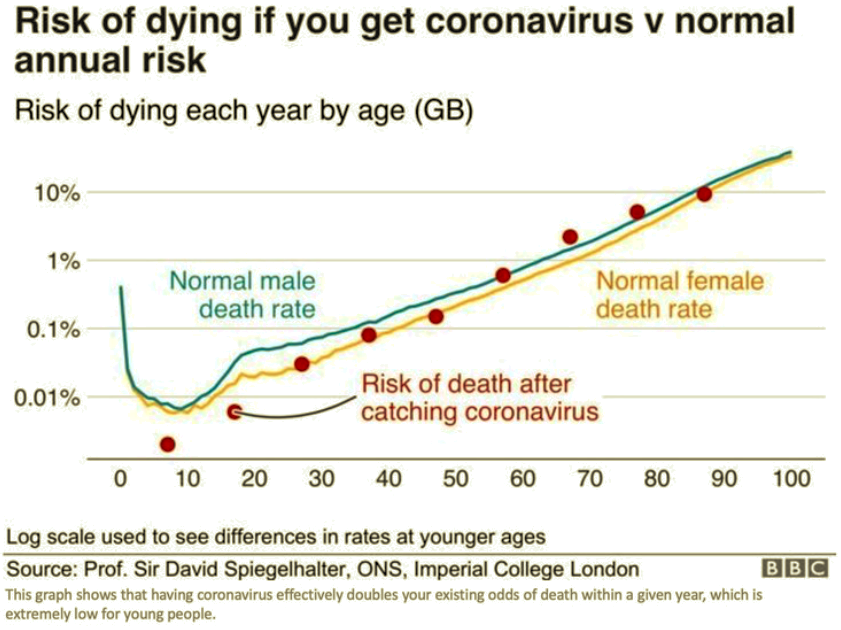
Nevertheless, a great deal was known in early March about the truly vulnerable segments of the population, even if you discount Chinese reporting. Mortality rates in South Korea and Italy were heavily skewed toward the aged and those with other risk factors. One can reasonably argue that health care professionals and policy experts should have known even then how best to mitigate the risks of the virus. That would have involved targeting high-risk segments of the population for quarantine, and treatment for the larger population in-line with the lower risks it actually faced. Vulnerable groups require protection, but death rates from coronavirus across the full age distribution closely mimic mortality from other causes, as the chart at the top of this chart shows.

The current global death toll is still quite small relative to major pandemics of the past (Spanish Flu, 1918-19: ~45 million; Asian Flu, 1957-58: 1.1 million; Hong Kong flu, 1969: 1 million; Covid-19 as of May 22: 333,000). But by mid-March, people were distressed by one particular epidemiological model (Neil Ferguson’s Imperial College Model, subsequently exposed as slipshod), predicting 2.2 million deaths in the U.S. (We are not yet at 100,000 deaths). Most people were willing to accept temporary non-prescription measures to “slow the spread“. But unreasonable fear and alarm, eagerly promoted by the media, drove the extension of lockdowns across the U.S. by up to two extra months in some states, and perhaps beyond.

The public health and policy establishment did not properly weigh the health care and economic costs of extended lockdowns against the real risks of the coronavirus. I believe many health care workers were goaded into supporting ongoing lockdowns in the same way as the public. They had to know that the suspension of medical care was a dire cost to pay, but they fell in line when the “experts” insisted that extensions of the lockdowns were worthwhile. Some knew better, and much of the public has learned better.

Coronavirus Controversies

11 Saturday Apr 2020

Posted by Nuetzel in Health Care, Leftism, Pandemic

≈ 1 Comment

Tags

American Society of  Thoracic Surgeons, Anecdotal Evidence, Co-Morbidities, Coronavirus, Covid-19, Donald Trump, Dr. Anthony Fauci, Dr. Jeffrey Singer, Excess Deaths, FDA, Hydroxychloraquin, Plasma Therapy, Randomized Control Trial, Reason Magazine, Remdeivir, Replication Problem, Right-To-Try Laws, Trump Derangement Syndrome, Victoria Taft, Z-Pac, Zinc

The coronavirus and the tragedy it has wrought has prompted so many provocative discussions that it’s hard to pick just one of those topics for scarce blogging time. So I’ll try to cover two here: first, the question of whether coronavirus deaths are being miscounted; second, the politically-motivated controversy over the use of hydroxychloraquin to treat severe cases of Covid-19.

Counting Deaths

I’ve been suspicious that Covid deaths are being over-counted, but I’m no longer as sure of that. Of course, there are reasons to doubt the accuracy of the death counts. For example, there is a strong possibility that some Covid deaths are simply not being counted due to lack of diagnoses. But there are widespread suspicions that too many deaths with positive diagnoses are being counted as Covid deaths when decedents have severe co-morbidities. Members of that cohort die on an ongoing basis, but now many or all of those deaths are being attributed to Covid-19. A more perverse counting problem might occur when public health authorities instruct physicians to attribute various respiratory deaths to Covid even without a positive diagnosis! That is happening in some parts of the country.

To avoid any bias in the count, I’ve advocated tracking mortality from all co-morbidities and comparing the total to historical or “normal” levels to calculate “excess deaths”. One could also look at all-cause mortality and do the same, though I don’t think that would be quite on point. For example, traffic deaths are certainly way down, which would distort the excess deaths calculation.

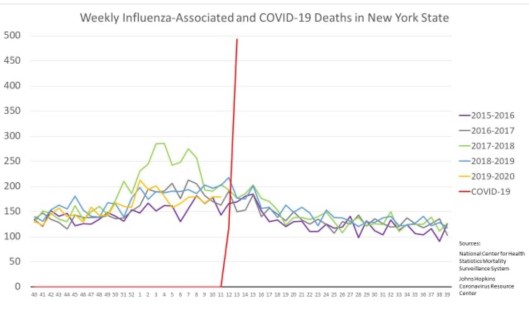
Despite the vagaries in counting, there is no question that the coronavirus has been especially deadly in its brief assault on humans. New York has experienced a sharp increase in deaths, as the chart below illustrates (the chart is a corrected version of what appeared in the Reason article at the prior link). The spike is way out of line with normal seasonal patterns, and it obviously corresponds closely with deaths attributable to Covid-19. It is expected to be short-lived, but it might taper over the course of several weeks or months, Once it does, I suspect that the cumulative deaths under all those other curves in the chart will exceed Covid deaths substantially. Also note that the yellow line for the flu just stops when Covid deaths begin, suggesting that the red line probably incorporates at least some “normal” flu deaths.

Once the virus abates, we’ll be able to tell with a bit more certainty just how deadly the pandemic has been. It will be revealed through analyses of excess deaths. For now, we have the statistics we have, and they should be interpreted cautiously.

Hydrochloraquin

A more boneheaded debate centers on the use of the anti-malarial drug hydroxychloraquin (HCQ) to treat coronavirus patients. There have been many successes, particularly in combination with a Z-Pak, or zinc. Guidelines issued by the American Society of  Thoracic Surgeons last week call for HCQ’s use in advanced cases of coronavirus infection. These and other therapies are being tested formally, but many are prescribed outside any formal testing framework. Remdesivir has been prominent among these. Plasma therapy has been as well, and several other possible treatments are under study.

With respect to HCQ, it’s almost as if the Left, much of the media, and a subset of overly “prescriptive” medical experts were goaded into an irrational position via pure Trump Derangement. Just Google or Bing “Hydroxychloraquine Coronavirus” for a bizarre list of alarmist articles about Trump’s mention of HCQ. To take just two of the claims, the idea that Trump stands to earn substantial personal profits from HCQ because he holds a few equity shares in a manufacturer of generic drugs is patently absurd. And claims that shortages for arthritis, lupus, and malaria patients are imminent are unconvincing, given the massive stockpiles now accumulated and the efforts to ramp-up production.

So much lefty hair is on fire over a potential therapy that is both promising and safe that the media message lacks credulity. But more ominously, the Democrat governors of Michigan and Nevada were so petulant that they banned HCQ’s use in their states, though at least Nevada’a governor rescinded his order. It’s almost as if they don’t want it to work, and don’t want to give it a chance to work. Or do I go too far? No, I don’t think so.

Victoria Taft has a good summary of the media backlash against President Trump’s hopeful statements about HCQ. Not only was the FDA’s authority over the use of HCQ misrepresented, there was also a good bit of smearing of various researchers who’d found preliminary evidence of HCQ’s effectiveness. Let’s be honest: the quality of medical research is often inflated by the research establishment. And the media eat up any study with findings that are noteworthy in any way. Over the years, a great deal of medical research has been based on small samples from which statistical hypothesis tests are shaky at best. That’s one reason for the legendary replication problem in medical research. In the case of HCQ, there has been widespread misuse of the term “anecdotal” in the media, prompted by experts like Dr. Anthony Fauci, who should know better. The term was used to describe clinical tests on moderately large groups of patients, at least one of which was a randomized control trial.

Every day we hear stories from individual patients that they were saved by HCQ. These are properly called anecdotal accounts. But we also hear from various physicians around the country and world who claim to be astonished at HCQ’s therapeutic efficacy on groups of patients. This link gives another strong indication of how physicians feel about HCQ at this point. These are not from RCTs, but they constitute clinical evidence, not mere “anecdotes”.

By virtue of state and federal right-to-try laws, terminally ill patients can choose to take medications that are unapproved by regulators. Beyond that, FDA approval of HCQ specifically for treating coronavirus was unnecessary because the drug was already legal to prescribe to cover patients as an “off-label” use. That’s true of all drugs approved by the FDA: they can be prescribed legally for off-label uses. When regulators like Dr. Fauci, and even practicing physicians like Dr. Jeffrey Singer (linked below) claim that the FDA hasn’t approved HCQ specifically for treating Covid, it is a technicality: the FDA can certainly “approve” it for that specific use, but it’s already legal to prescribe!

While it won’t end the silly argument, which is obviously grounded in other motives, Dr. Singer brings us to the only reasonable position: treatment of Covid with HCQ is between the patient and their doctor.


Left’s Pandemic Response: Politics As Usual

17 Tuesday Mar 2020

Posted by Nuetzel in Health Care, Pandemic, Regulation

≈ 2 Comments

Tags

Biodefense, Breitbart.com, CDC, Centers for Disease Control, Coronavirus, ebola, FDA, Glenn Reynolds, Infectious Diseases, John Bolton, Legal Insurrection, Leslie Eastman, Nancy Pelosi, National Biodefense Strategy, National Security Council, NSC, Pandemic Response Team, Richard Goldberg, Ronald Bailey, Ronna McDaniel, Tim Morrison

The Left asserts that President Trump dismissed and dismantled the nation’s Pandemic Response Team. That’s bullshit. So is the claim that the CDC was defunded. The news media and certain pundits have helped to feed this narrative. Or, as Glenn Reynolds calls those pundits, “Democrat operatives with bylines”.

First of all, the team in question was not at the CDC, a fact that hasn’t always been clear from the commentary on this issue. It was a team of White House overseers at the National Security Council’s “Directorate for Global Health Security and Biodefense”. What happened was this: the senior director of that team resigned after John Bolton was appointed to head the NSC. Bolton might have wanted him out, but what we know is the director resigned. Subsequently, that team was folded into another directorate as part of an long-overdue consolidation. Health experts from the team remain on the NSC staff today. Yet Sen. Sherrod Brown (D-OH)—and many others since—had the temerity to charge that Trump had fired “the entire Whilte House pandemic team”. Well, at least he didn’t imply that it was the CDC.

Tim Morrison wrote the following in the Washington Post yesterday:

“Because I led the very directorate assigned that mission, the counterproliferation and biodefense office, for a year and then handed it off to another official who still holds the post, I know the charge is specious. …

When I joined the National Security Council staff in 2018, I inherited a strong and skilled staff in the counterproliferation and biodefense directorate. This team of national experts together drafted the National Biodefense Strategy of 2018 and an accompanying national security presidential memorandum to implement it; an executive order to modernize influenza vaccines; and coordinated the United States’ response to the Ebola epidemic in Congo, which was ultimately defeated in 2020.”

This assessment at Brietbart.com quotes former senior NSC official Richard Goldberg:

“Weird. A year later I was inside the NSC working with talented global health/biodefense professionals who coordinated an incredibly effective response to Ebola. They’re still there. Working hard. On #Covid_19.”

It’s true that Bolton sought to eliminate red tape, duplication, and bureaucracy within the NSC, and that was wholly justified. According to Morrison, the NSC staff quadrupled from the 1990s through the second Obama term. Pandemics are supposed to be the CDC’s purview, but the proliferation of administrative layers is what happens as government grows uncontrollably. Leslie Eastman at Legal Insurrection questions whether the U.S. needs a permanent “Pandemic Response Team” in the White House. She quotes GOP Chairwoman Ronna McDaniel:

“JAN 7: CDC established a coronavirus incident management system, two days before China announced the outbreak. … Pelosi began Week 3 of withholding her sham impeachment articles. 

JAN 21: The CDC activated its emergency operations center to provide ongoing support to confront coronavirus. …What were Congressional Democrats focused on? Writing their opening arguments for their bogus impeachment trial.”

Well, bully for the CDC. As for “defunding the CDC”, the facts are this: the proposed budget submitted to Congress by the Trump Administration in February, but never passed, did indeed include cuts to the CDC’s budget, which has grown over the years as it expanded its mission from fighting infectious diseases to matters like obesity, racism, and questions of social justice. The cuts proposed by Trump, however, were primarily to state grants. Actually, the proposal called for increased CDC staffing, and it funded all programs related to infectious diseases. But no matter, because that proposal is unlikely to become part of any appropriations bill that would pass Congress.

True to form, the Left plays politics in the middle of a national crisis. When the Trump Administration told airlines that it was considering banning flights from China in late January, it was called racist. Now, of course, he hasn’t done enough. A huge irony, however, is that Trump’s biggest mistake was in trusting the FDA and the CDC’s authority to develop and regulate testing for the coronavirus. They botched it. In a classic case of over-regulation, they prohibited hospitals and labs from conducting tests developed privately or by academic researchers, insisting that everyone wait for the “approved” test to be distributed. Then, the test they released in early February was flawed, costing additional weeks before testing was available.


Covid-19: Killing It With Sunshine, Fresh Air

14 Saturday Mar 2020

Posted by Nuetzel in Health Care, Pandemic

≈ 2 Comments

Tags

1918-19 Pandemic, Coronavirus, Covid-19, Fresh Air, Influenza, Medium.com, Open Air Factor, Ozone, Richard Hobday, Spanish Flu, UV Light, Vitamin D

Update: also see “Don’t Be Cowed: Shelter, But Get Outside”

Patients with viral and bacterial infections seem to respond better if exposed to sunshine and fresh air. In fact, anyone hoping to keep infections at bay would do well to get outside in the sun for a while every day. A friend’s post alerted me to this fascinating article in Medium.com: “Coronavirus and the Sun: a Lesson from the 1918 Influenza Pandemic“, by Richard Hobday. It is well-sourced, though the references aren’t hyperlinked. Here’s the main point:

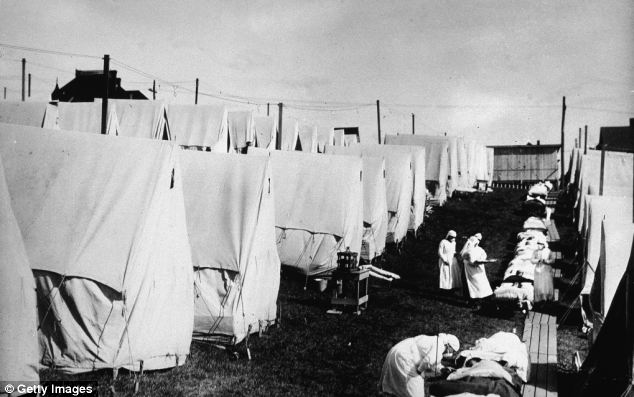
“... records from the 1918 pandemic suggest one technique for dealing with influenza — little-known today — was effective. … Put simply, medics found that severely ill flu patients nursed outdoors recovered better than those treated indoors. A combination of fresh air and sunlight seems to have prevented deaths among patients; and infections among medical staff. There is scientific support for this. Research shows that outdoor air is a natural disinfectant. Fresh air can kill the flu virus and other harmful germs. Equally, sunlight is germicidal and there is now evidence it can kill the flu virus.

On the last assertion, see here. Viruses always ebb as the weather warms in the spring. Light conditions improve, which might be more important than temperature: UV light is thought to kill germs of many kinds. Moreover, Vitamin D is generally protective against infections, and a deficiency is thought to increase Covid-19 risk.

Hobday goes on to describe the Open Air Factor, which probably is related to the presence of ozone, but maybe other curatives:

“Doctors who had first-hand experience of open-air therapy at the hospital in Boston were convinced the regimen was effective. It was adopted elsewhere. If one report is correct, it reduced deaths among hospital patients from 40 per cent to about 13 per cent. …

Patients treated outdoors were less likely to be exposed to the infectious germs that are often present in conventional hospital wards. They were breathing clean air in what must have been a largely sterile environment. We know this because, in the 1960s, Ministry of Defence scientists proved that fresh air is a natural disinfectant. Something in it, which they called the Open Air Factor, is far more harmful to airborne bacteria — and the influenza virus — than indoor air. They couldn’t identify exactly what the Open Air Factor is. But they found it was effective both at night and during the daytime. 

I’m not sure they were able to control for the relative absence of germs in fresh air, as opposed to the presence of something beneficial, but it’s certainly intriguing.

So whether you’re still on the “office team” or otherwise on the job, try to get outside! Whether you’re in a Covid-19 self-quarantine or worried about catching it, get outside if you can. Get some sun and fresh air, especially after a thunderstorm, when the air is rich with ozone. But drink plenty of fluids and don’t get burned! I’ll be hanging out in my back yard.

Single-Payer: Queue Up and Die Already

19 Sunday Jan 2020

Posted by Nuetzel in Health Care, Health Insurance

≈ 1 Comment

Tags

Australia, Bernie Sanders, Canada, Catastrophic Coverage, Chris Pope, Competitive Payer, Dual Payer, Employer-Paid Coverage, France, Germany, Individual Mandate, Manhattan Institute, Medicaid, Medicare, Netherlands, Out-of-Pocket Costs, Portability, Premium Deductibility, Segmented Payer, Single-Payer, Switzerland, third-party payments, Uncompensated care, United Kingdom, Universal Coverage

I constantly hear this sort of naive remark about health care in “other major countries”, and while Chris Pope’s rejoinder below should chasten the ignorant, they won’t listen (emphasis is mine):

“[Bernie] Sanders recently argued that ‘our idea is to do what every other major country on earth is doing,’ but this claim is … fictitious. In fact, there is not a single country in the world that offers comprehensive coverage with an unlimited choice of providers, fully paid for by taxpayers, without insurer gatekeeping, service rationing, or out-of-pocket payments. In reality, there is a direct trade-off between ease of access to providers and the cost borne by individuals in out-of-pocket expenses.”

Pope’s statement pretty much strips bare the fiction of “universal” coverage, a concept too loosely defined to be of any real use except as a rhetorical device. It also highlights the non-monetary costs inflicted on consumers by non-price rationing of care. The presumption that government must provide universal health care coverage and that all other developed countries actually have that arrangement is incorrect.

Pope has another article at the Manhattan Institute site, written late last year, on the lessons we can learn on health care from experience abroad under various payer systems. This offers a more detailed comparison of the structure of the U.S. payment system versus seven other countries, including Canada, the U.K., Australia, and Germany. Single-payer tends to be the “gold standard” for the Left, but the only systems that “approximate” single-payer are in Canada and the U.K. Here is one blurb about Canada:

“Canadians have easy access to general practitioners, but getting an appointment to see a specialist is more difficult than in all the other nations studied in this report. The Canadian medical system provides the least hospital care, delivers consistently fewer outpatient procedures, and provides much less access to modern diagnostic technology.

Canadians also have limited access to drugs, according to Pope. And out-of-pocket (OOP) spending is about the same as in the U.S. At the first link above, Pope says:

“Canadians spend less on health care than Americans mostly because they are not allowed to use as much — not because they are getting a better deal. … Waiting lists are generally seen as the single-payer budgeter’s friend, as some patients will return to health by themselves, others will be discouraged from seeking treatment, and a large proportion of the most expensive cases will die before any money is due to be spent on them.”

Pope says this about the U.K. at the second link:

“U.K. hospitals often lack cutting-edge technology, and mortality after major emergency hospitalizations compares poorly with that of other nations in this report. Access to specialists is very limited, and the system falls well short of most other nations in the delivery of outpatient surgery.” 

Waiting times in the U.K. tend to be long, but in exchange for all these shortcomings in care, at least OOP costs are low. Relative to other payment systems, single payer seems to be the worst in several respects.

The other systems described by Pope are:

  • “dual payer” in Australia and France, with public entitlements and the choice of some private or supplemental coverage;
  • “competing payer” in Switzerland, Germany, and the Netherlands, whereby subsidies can be used to purchase coverage from private plans (and in Germany some “quasi-public” plans; and
  • “segmented payer” in the U.S., with two public plans for different segments of the population (Medicare for the elderly and Medicaid for the non-elderly poor), employer-sponsored coverage primarily from larger employers, individually-purchased private coverage, and subsidies to providers for “uncompensated care” for the uninsured.

Here is what Pope says about the various “multi-payer” systems:

“Dual-payer and competitive-payer systems blend into each other, according to the extent of the public entitlement in dual-payer countries …

… limitations in access to care are closely tied to the share of the population enrolled in private insurance—with those in Britain and Canada greatly limited, Australians facing moderate restrictions, and those in the other countries studied being more able to get care when they need it. 

The competing-payer model ideally gives insurers the freedom and responsibility to procure health-care services in a way that attracts people to their plans by offering them the best benefits and the lowest medical costs. While all competing-payer systems fall short of this ideal, in practice they consistently offer good access to high-quality medical care with good insurance protection. The competing-payer model is, therefore, best understood as an objective that is sought rather than yet realized—and countries including Germany, the Netherlands, France, and the U.S., which have experienced the most significant health-care reform over recent years, are each moving toward it.”

The U.S. has very high health care costs as a percent of GDP, but OOP costs are roughly in line with the others (except the Swiss, who face very high OOP costs). The U.S. is wealthier than the other countries reviewed by Pope, so a large part of the cost gap can be attributed to demand for health care as a luxury good, especially late in life. Insured U.S. consumers certainly have access to unrivaled technology and high-quality care with minimal delays.

Several countries, including the U.S., are plagued by a lack of competition among hospitals and other providers. Government regulations, hospital subsidies, and pricing rules are at the root of this problem. Third-party payments separate consumers from the pricing consequences of their health-care decisions, which tends to drive up costs. If that weren’t enough, the tax deductibility of employer-paid insurance premiums in the U.S. is an subsidy ironically granted to those best-able to afford coverage, which ultimately heightens demand and inflates prices.

Notably, unlike other countries, there is no longer an individual mandate in the U.S. or any penalty for being uninsured, other than the potential difficulty in qualifying for coverage with pre-existing conditions. Consumers who lack employer-sponsored or individual coverage, but have incomes too high to qualify for Medicaid or premium subsidies, fall into a gap that has been the bane of would-be reformers. There are a few options for an immediate solution: 1) force them to get insured with another go at an individual mandate; 2) offer public subsidies to a broader class; 3) let them rely on emergency-room services (which cannot turn them away) or other forms of uncompensated care; 4) allow them to purchase cheap temporary and/or catastrophic coverage at their own expense; 5) allow portability of coverage for job losers. Recently, the path of least political resistance seems to have been a combination of 3, 4, and 5. But again, the deficient option preferred by many on the Left: single-payer. Again, from Pope:

“Single-payer systems share the common feature of limiting access to care according to what can be raised in taxes. Government revenues consistently lag the growth in demand for medical services resulting from increased affluence, longevity, and technological capacity. As a result, single-payer systems deliver consistently lower quality and access to high-cost specialty care or surgical procedures without reducing overall out-of-pocket costs. Across the countries in this paper, limitations in access to care are closely tied to the share of the population enrolled in private insurance—with those in Britain and Canada greatly limited…”

Hospital Price Insanity

15 Sunday Dec 2019

Posted by Nuetzel in Health Care, Health Insurance

≈ 2 Comments

Tags

Affordable Care Act, Allowable Amounts, Avik Roy, Certificate of Need, Chris Pope, Claims Repricing, Disproportionate Share Hospital Payments, Dr. Keith Smith, DSH Payments, EconTalk, First Amendment, John C. Goodman, John Cochrane, Mandated Price Transparency, Medicare, Robert Laszewski, Russ Roberts, Shoppable Sevices, Surgery Center of Oklahoma, Uncompensated care

Almost nothing is less transparent than hospital pricing. If you’re shopping for a procedure, you probably won’t hear about the negotiated prices worked out with large insurers…. you’re likely to be quoted something much higher. A high price is billed to an insurer, but the excess above their negotiated prices is “disallowed” via contractual adjustment. You and/or your small insurer might not get the same deal. As Robert Laszewski says:

“The chargemaster is complete nonsense that really doesn’t matter — unless you are an uninsured person and you’re getting these huge bills driving you toward bankruptcy. The biggest irony of the U.S. healthcare system is that only the uninsured — often people who don’t have a lot of money — are the only ones the hospital expects to pay these incredibly inflated prices!”

An uninsured patient might be billed at the higher rate, but of course few end up paying. But there is harm in this arrangement, and it extends well beyond the uninsured. You might not be surprised to learn that the government is right in the middle of it. Read on…

What a Racket!

There’s some slight of hand going on in hospital pricing that creates perverse incentives. Who has something to gain from a huge gap between the full price and the hospital’s allowable charge? The answer is both the hospital and insurers, and that’s true whether the hospital is for-profit or nonprofit. When the list price and the size of the discount increase, the insurer gets to brag to employer-plan sponsors about the great savings it negotiates. In an episode on EconTalk, Dr. Keith Smith, a partner in the ultra-competitive and cash-only Surgery Center of Oklahoma, says (only partly in jest) that the conversation between the insurer and hospital might go something like this:

“Now, what the insurers actually do is ask the hospital administrators, ‘Can you do a brother a favor and actually charge $200,000 for that, so that our percentage savings actually looks larger?‘”

This does two things for the insurer: it impresses employers as prospective plan sponsors, and it might also earn the insurer a bonus known as Claims Repricing, whereby the employer pays a commission on the discounts the insurer “negotiates”.

What about the hospitals? How do they benefit from this kind of arrangement? By inflating the “list price” of procedures, the hospital creates the appearance of a write-down or loss on a substantial share of the care it provides, despite the fact that its real costs are far below list prices and usually below the discounted “allowable amounts” negotiated with insurers as well. The appearance of loss serves to benefit the hospitals because they are compensated by the government on that basis through so-called Disproportionate Share Hospital (DSH) payments. These are, ostensibly, reimbursements for so-called uncompensated care.

This would not be such a travesty if the prices approximated real costs, but they don’t, and the arrangement creates incentives to inflate. The DSH payments to hospitals are used in a variety of ways, as Smith notes:

“Yeah; and before we get to feeling too sorry for the hospitals, all of the ones I know of claiming to go broke have a crane in front of them building onto their Emergency Room. …

So, I don’t know: again, the hospitals that are complaining about this, they are buying out physician practices, they’re buying out competitors. They seem to have a whole lot of money. They’re not suffering. Now, what they have done is used the situation you described–the legitimate non-payer–they’ve used that as a propaganda tool, I would argue, to develop a justification for cost shifting where they charge us all a whole lot more to make up for all the money that they’re losing. But they really need a lot of this red ink to maintain the fiction of their not-for-profit status.”

Non-profit hospitals are also entirely tax-exempt (income and property taxes), despite the fact that many use their “free cash flows” in ways similar to for-profit hospitals. The following describes a 2015 court ruling in New Jersey:

“The judge stated ‘If it is true that all non-profit hospitals operate like the hospital in this case… then for purposes of the property tax exemption, modern non-profit hospitals are essentially legal fictions.’ Judge Bianco found that the hospital ‘operated and used the property for a profit-making purpose’ by, in part, providing substantial loans, capital, and subsidies to for-profit entities, including physician groups.“

The bad incentives go beyond all this. Smith adds the following:

“Waste in a big hospital system is actually encouraged, many times because hospitals are paid based on what they use…. So, to the extent that the hospital uses a lot of supplies, that typically raises and increases the amount of revenue that they receive.”

Hospitals have been shielded from competition for years by the government. As Chris Pope explains, hospital pricing is designed “to accommodate rather than to constrain the growth of hospital costs“. This encourages hospitals that are inefficient in terms of costs, quality of care, and over-investment in equipment. Conversely, duplicated facilities and equipment simply add costs and don’t encourage competition given the cost-plus nature of hospital pricing and government efforts to prevent entry by more efficient operators. These restrictions include “Certificates of Need” for new entrants, and the ban on physician-owned hospitals in the Affordable Care Act (ACA). At the same time, the ACA encouraged hospital consolidation by rewarding the formation of so-called Accountable Care Organizations, which are basically exempt from anti-trust review. In the end, any reductions in administrative costs that consolidation might offer are swamped by the anti-consumer force of monopoly power.

Mandated Transparency?

The lack of price transparency really isn’t the root problem, in my view, but it is undesirable. Can government action to create transparency foster a more competitive market for the services hospitals offer? A recent Trump Administration Executive Order would require that hospitals publicly post prices for 300 “shoppable” services or procedures. The effective date of this order was recently delayed by a year, to January 2021. Hospital trade groups have challenged the order in court on the grounds that the First Amendment protects private businesses from being compelled to reveal details of privately-negotiated deals for complex services. While I try to be a faithful defender of constitutional rights, I find this defense rather cynicical. I’m not sure the First Amendment was intended to aid in concealing dishonest schemes for private benefit at the expense of taxpayers and consumers.

Avik Roy likes the price transparency rule. It would require the posting of gross charges for procedures as well as specific negotiated prices. The executive order would also require Medicare to pay no more to hospital-owned clinics than to independent clinics for the same procedure, which is laudable. Roy is sanguine about the ability of these rules to bring more competition to the market. He predicts a more level playing field for small insurers in negotiating discounts, and he thinks the order would spur development of on-line tools to assist consumers.

John C. Goodman is mildly skeptical of the benefits of a transparency mandate (also see here). Consumers with decent levels of coverage aren’t terribly motivated to make hospital price comparisons, especially if it means a delay in treatment. Also, Goodman points out a few ways in which hospitals try to “game” transparency requirements that already exist. John Cochrane worries about gaming of the rules as well. Competition and price discipline are better prescriptions for price transparency and might be better addressed by eliminating the incentives for third-party payment arrangements, like the unbalanced tax deductibility of health insurance premiums, but that kind of reform isn’t on the horizon. Goodman concedes that many procedures are “shoppable”, and he does not minimize the extent to which pricing varies within local hospital markets.

Conclusion

The most insane thing about hospital revenue generation is its reliance on fictitious losses. And hospitals, profit and non-profit, have a tendency to spend excess cash in ways that fuel additional growth in cost and prices. Sadly, beyond their opacity, hospital prices do not reflect the true value of the resources used by those institutions.

In my view, the value of price transparency does not hinge on whether the average health care consumer is sensitive to hospital prices, but on whether the marginal consumer is sensitive. That includes those willing to pay for services out-of-pocket, such as those who seek care at the Surgery Center of Oklahoma. Third-party payers lacking significant market power would undoubtedly prefer to have more information on pricing as well. Mandated price transparency won’t fix all of the dysfunctions in the delivery and payment for health care. That would require more substantial free-market reforms to the insurance and health care industries, which ideally would involve replacing price subsidies with direct payments to the uninsured. The transparency mandate itself might or might not intrude on domains over which privacy is protected by the Constitution, a question that has already been brought before the courts. Nonetheless, transparency would lead to better market information for all participants, which might help rationalize pricing and encourage competitive forces.


Rx Drug Prices Are Falling, But You’re Aging

08 Friday Nov 2019

Posted by Nuetzel in Health Care, Prescription Drugs, Price Controls

≈ Leave a comment

Tags

Alex Tabarrok, Drug Prices, Evergreen Patents, FDA, Food and Drug Administration, Generic Drug Prices, Import Quotas, Insulin Pricing, Michael Mandell, National Bureau of Economic Research, Out-of-Pocket Costs, Prescription Drug Escalator, Progressive Policy Institute, Utilization

Ask anyone on the street about prescription drug prices, or ask anyone in the press, and you’ll probably hear they are out of control. That contention is false. The conventional wisdom is typified by this exaggerated BS about insulin pricing … actually, you can find a vial of the kind I used for many years for about $25 without much difficulty.

Individual experience differs, of course. Yes, there are new drugs on the market that are exorbitant; there are older drugs still under patent that are pricey too. Those represent a fairly small part of the total market, however, and one on which policymakers should tread lightly if they hope to foster the development of new, life-saving drugs. Newer insulin varieties are not in that class, and those varieties don’t always incorporate meaningful improvements for patients.

Getting Old Is Hell

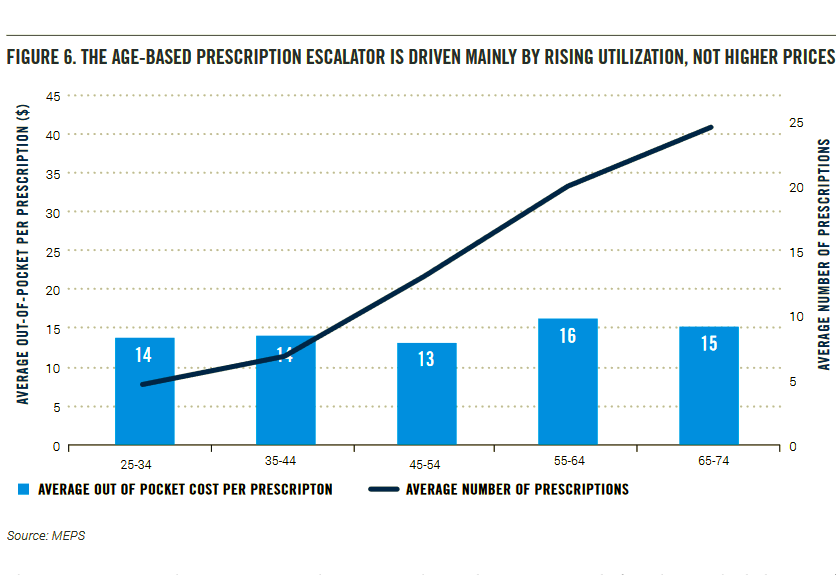
In fact, prescription drug prices have been declining for a number of years. The real problem is we’re always getting older! In a report from the Progressive Policy Institute, Michael Mandel describes what he calls the prescription drug escalator. Alex Tabarrok has a good summary of the article. The chart at the top of this post, from Mandel, shows that the number of drugs prescribed rises steadily with one’s age. The total bill rises along with age, which may create the perception that you’re paying higher prices. Unsurprisingly, more of each health-care dollar spent out-of-pocket  (OOP) goes to prescribed medications as you age, and more goes to prescription drugs as health declines. As Mandell says, the increases experienced by individuals are a matter of utilization as opposed to pricing..

Generic Dominance

Tabarrok notes that generic drugs account for somewhere between 80-90% of all prescriptions, and generic costs have been falling for some time. He links to one of his earlier posts on generics and to this study by the National Bureau of Economic Research, which states:

“… direct-out-of-pocket CPI for generic prescription drugs decline[d] by about 50% between 2007 and 2016 …”

Average OOP prescription costs peaked in 2006, according to Mandel’s data. Tabarrok quotes Mandell:

“May 2019 research report from the Agency for Healthcare Research and Quality reported that average out-of-pocket spending for prescribed medications, among persons who obtained at least one prescribed medication, declined from $327 in 2009 to $238 by 2016, a decrease of 27 percent. Data from the Bureau of Labor Statistics Consumer Expenditure Survey shows that average household spending on prescription drugs fell by 11% between 2013 and 2018.

Moreover, OECD data shows that average out-of-pocket spending on prescribed medicines in the United States ($143 per capita in 2017) is actually lower than countries such as Canada ($144), Korea ($156), Norway ($178), and Switzerland ($215).”

The declines in OOP drug costs came despite a shift in health-care payment responsibilities from insurers to consumers in recent years — OOP costs would have declined much more had the shift not occurred, according to Mandel. As he says, consumers now have more “skin in the game”, and apparently they act on it.

Another basis of the misperception about escalating drug prices has to do with the way they are reported. Mandel says:

“List prices are the published prices that manufacturers charge to wholesalers. Net prices reflect the revenues that drug manufacturers receive, net of rebates and discounts to prescription benefit managers, insurance companies, and hospitals.

Studies of list prices invariably show very strong growth. For example the IQVIA Institute for Human Data Science found that the list price of the average brand rose from $364.92 to $657.08 since 2014, an 80% increase. Similarly, a widely cited recent study based on list prices found that from 2008–16, the costs of oral and injectable brand-name drugs increased annually by 9.2 percent and 15.1 percent, respectively. … By contrast, net prices and net pharma revenue have been growing much more slowly, once rebates and discounts are accounted for.” 

The Pricey Segment

There are a variety of circumstances that bear on the pricing of individual drugs. Clearly, non-generic drugs are subject to more upward price pressure and give rise to anecdotes that feed misperceptions about the overall trajectory of drug prices. These are either new drugs or older ones sold under extended patents, which are sometimes granted for even minor changes in a drug’s chemical makeup.

Some new drugs are life-saving breakthroughs targeting rare diseases. The unfortunate truth is that drug development is a very costly enterprise, often stretching well over a decade in the U.S. under the FDA’s approval process. Moreover, U.S. consumers actually subsidize the cost of drugs for European consumers, where drugs are typically subject to price ceilings or are directly negotiated by government. By the time drugs go to market, development is treated as a fixed cost; even the low prices in Europe cover the marginal cost of production, so pharmaceutical manufacturers don’t mind selling there as long as their development overhead is paid by someone. That’s the rub.

Drug development costs are heavily influenced by public policy, often to the detriment of consumers. The FDA’s drug approval process is in dire need of reform, and patent extensions should be severely curtailed. As an advocate of free trade, I also favor a lifting of restrictions on imports of drugs to the U.S.

Conclusion

You’re likely to see more physicians as you age, they’re likely to prescribe more drugs, and you’re likely to pay more for prescriptions OOP. That’s the escalator in action. You can minimize the slope of your personal prescription escalator by taking good care of yourself and using generics when possible, but the slope is often beyond a person’s control. Nevertheless, over the past 13 years in the U.S.,  most of those experiencing higher OOP costs have this escalator, i.e., aging, to thank… it’s drug utilization, not pricing.

A relatively small but important share of the market has experienced price escalation. Newer, highly specialized drugs can carry high price tags. Patents give drug manufacturers considerably more pricing power, and drug companies have sought to maintain “evergreen” patents by manipulating their formulations. U.S. import quotas and restrictive pricing abroad have left consumers in the U.S. holding the bag for a large share of drug development costs. These shortcomings can be addressed via streamlined drug approval, patent reform, and lifting import restrictions.

A critical policy prescription is to liberate market forces and foster competition in the pharmaceuticals industry. Price controls in the U.S. would eliminate all incentives for new breakthroughs, leading progress in many areas of treatment to a stand-still. Price controls merely substitute the arbitrary decisions of politicians and bureaucrats for the market’s ability to balance dynamic consumer needs, medical expertise, and the costs faced by sellers.


A “Right to Health Care” Is Code for “Freebie“

07 Tuesday May 2019

Posted by Nuetzel in Health Care, Rights

≈ 1 Comment

Tags

Don Boudreaux, Free Health Care, Medicaid, Medicare, Negative Rights, Positive Rights, Right To Health Care, Subsidies, Trevor Burrus


The existence of a right to health care is often taken for granted without a moment’s reflection on its absurd implications. Does your right to health care exist regardless of how you comport yourself? Do you smoke or drink heavily? How much treatment for diseased lungs and livers will be owed to you? Do you take physical risks? By how much are the world’s ERs and orthopedists in thrall to you? There are always people who can benefit from additional care, so providers must then come face-to-face with truly daunting obligations. Are caregivers to be in bondage? Can they take vacations? After all, delivery of care is their duty to all health-care rights-holders. If you are entitled to health care as a basic right, does that relieve you of any responsibility to purchase insurance coverage? Or does that become everyone else’s responsibility? 

These are just a few of the decisions that have to made to determine the boundaries of a “right” to health care. The answers are dependent on politics and, surrounding many details, bureaucratic rule-making. It is an odd thing for a so-called “right” to be subject to the shifting vagaries of politics and the day-to-day decisions of bureaucrats.

There is an important distinction between two different kinds of rights, however. The least controversial rights place obligations on others only insofar as they must tolerate free exercise by the rights-holder. So it is with free speech, religion, and private property, which only compel others to inaction. For that reason, they are sometimes called “negative rights”, a rather unfortunate appellation. Trevor Burrus draws contrasts between negative rights and those which obligate others to take action. The latter are called “positive rights”, which is equally unfortunate and dubious.

The problem is that no one has an indisputable right obligating others to take action on their behalf. One may feel it is their moral imperative to aid others under some circumstances, as under a physician’s oath, but ultimately, in a free society, such acts are voluntary. Neither should these actions be matters of state compulsion. Instead, they are ordinarily self-imposed as professional duty or Samaritanship. The point is that a positive right to health care cannot exist without the consent of someone else: those second parties (providers) or third parties (payers) upon whom the exercise of the right depends.

Don Boudreaux states things simply: asserting a right to healthcare is really a demand that health care be “free” at the point of service, despite its resource costs. Inspired by this misguided notion, vote-seeking politicians have given us a history of efforts to subsidize health care via Medicaid, Medicare and tax deductibility. But as Boudreaux explains, this has driven up health care costs, often undermining the ability to access the very care meant to have been available in greater abundance. Boudreaux’s key insight is the application of real-world scarcity to the problem of inventing “rights” that require the positive action and resources of others.

A hot topic in the current health care debate involves coverage of individuals with pre-existing conditions and the subsidies necessary to ensure that they get care. Do they have a right to that care? Perhaps a “positive right”, but maybe not: as a society, we might choose to ensure their care, but if that is a political decision lacking the full consent of all potential payers, the delivery of care is really just an act of majoritarian compassion, not an absolute right.

The most fundamental of human rights, so-called negative rights, require only tolerance from others. In a free society, so-called positive rights do not exist without the voluntary consent of those who must shoulder the burdens necessary to allow the exercise of those rights. The burdens might involve tasks or payments on the rights-holders behalf. Human rights should never be conceived as creating enforceable, involuntary debts for second or third parties to be repaid with action. Without full consent, government creates such obligations only by force and the taking of resources. Health care should be viewed as a real right only to the extent that caregivers and payers agree to provide the needed resources voluntarily. That doesn’t mean we lack an ethical obligation to care for the sick, only that sick individuals may not demand free, unrestricted care.

Health Reform and Pre-Existing Confusion

24 Wednesday Apr 2019

Posted by Nuetzel in Health Care, Health Insurance

≈ Leave a comment

Tags

Capitation, Centers for Medicare and Medicaid Services, Concierge Medicine, Group Market, Individual Mandate, Individual Market, Insurance Subsidies, John C. Goodman, Medicaid, Medicare Advantage, Mediprex Advantage, Obamacare, Pre-Existing Conditions, Premium Tax, Public Option, Tax Deductibility, Wage controls

Several Democrats vying for the party’s presidential nomination are pushing Medicare For All (MFA) as a propitious avenue for health care reform. They make the dubious claim that universal government health insurance would broaden real access to health care. As we know from experience with Medicaid, Medicare, and Obamacare, broader coverage does not necessarily imply better access. Even more dubious is the claim that MFA would reduce the costs of insurance and health care.

Single-Payer Perils

MFA appeals to the Democrats’ extreme leftist flank, a segment likely to have an out-sized influence in the early stages of the nomination process. Their fixation on MFA is borne of leftist romanticism more than analytics. Democrats have long-championed less ambitious plans, such as a public option, but those are stalling in “blue” states precisely due to their costs.

MFA would demand a massive transfer of resources to the public sector and would completely decimate the private health insurance industry, upon which 90% of Americans rely. As John C. Goodman explains, MFA would lead to less choice, misallocated health resources, long waiting times to obtain care for serious illnesses, and even greater inequalities in access to care because those who can afford private alternatives will find them.

Goodman also discusses a new health plan proposed by House Democrats that is more of an effort to save Obamacare. It won’t, he says, because among other issues, it fails to address the narrowing in-network choices faced by people with chronic conditions, and it would aggravate cost pressures for those who do not qualify for subsidies.

Outlining A Plan

There are many obstacles to a health care deal. Democrats are bitter after the effective repeal of the individual mandate, but despite their assertions, subsidized coverage of pre-existing conditions is not a principle about which most Republicans disagree. Really, the question is how to get it done. MFA is pretty much dead-on-arrival, despite all the bluster. But those who wish to protect choice and the efficient allocation of risk prefer to leverage a combination private insurance and targeted subsidies to achieve broad coverage.

Capitation: Goodman suggests an approach to high-risk patients that has proven successful in private Medicare Advantage (MA) coverage. These plans are structured around “capitated” payments to the insurer from the Centers for Medicare and Medicaid Services (CMS): per patient fees that cover in-network costs above the patient’s out-of-pocket limit. The insurer bears the risk of a shortfall. Assuming that the capitated payment makes coverage of high-risk patients a fair risk, insurers will compete for those buyers. That competition is what makes MA so appealing. Patients with pre-existing conditions under an MA-like system, which I’ll call “Mediprex Advantage”, or just Mediprex for short, would be pooled in “special needs” plans with relatively large capitations.

Risk-Shifting: The other major issue addressed by Goodman is the need to eliminate incentives for risk-shifting from the employer-paid, group insurance market to the individual market. The population of employed individuals in the group market is less costly, on average, and the sickest individuals often have to stop working. Goodman recommends state-level premium taxes on group policies, dedicating the proceeds to subsidies for individuals who must migrate from the group to the individual market. Employers could avoid the tax by offering full portability.

Tax Treatment: The bifurcation of health insurance coverage between employer and individual markets might not have lasted were it not for the favorable tax treatment afforded to employer plans. Deductibility of premiums on employer plans has inflated both premiums and health care costs, much to the detriment of those in the individual market. I would be happy to see deductibility repealed. An obvious alternative to.repeal, extending deductibility to the individual market, would balance incentives, but it would also tend to inflate costs somewhat. Still, the status quo is probably inferior to either repeal or deductibility for all.

Future Insurability: The concept of insuring future insurability is highly attractive. That is precisely what employer guaranteed-portability does, and the actuarial cost could be funded at employer/employee initiative, by a premium tax, or simply mandated. Voluntary action is preferred, but there are reasons why it is not a natural progression in the group market. First, renewability is usually guaranteed for the duration of employment, though job tenures have declined substantially since the early years of employer-based coverage. Nevertheless, health coverage is a retention tool that full portability would nullify. Second, employer coverage is itself a creature of government intervention, a result of the wage controls put into place during World War II. Since then, the features of health coverage have partly been driven by the tax-deductibility of premiums, which makes the cost of coverage cheaper after-tax. That, in turn, has encouraged the extension of coverage into areas of health maintenance and preventative care, but that increases the burden of paying for portability.

Plan Migration: If you’re not already covered under a group plan, another mechanism is needed to insure your future insurability. For example, Obamacare requires guaranteed issue and renewability in the individual market with a few exceptions related to non-payment, fraud, and product availability. Lower-income premium payers are eligible for subsidies. The suggestion here is that a guaranteed issue, renewable contract must remain available in the individual market with subsidized premiums for some individuals. This might also apply when an individual’s employment terminates. An individual who has fallen ill might be placed into a different risk class via the sort of “Mediprex Advantage” program outlined above, perhaps with subsidies to fully cover the premium and capitation.

Catastrophic Plans: Affordable catastrophic policies with guaranteed renewability should be available in both the individual and group markets. But what becomes of an individual seeking a change to broader coverage? They’ll pay a higher premium to cover the actuarial cost as well as the greater level of future insurability they choose to insure. But if they are not eligible for broader coverage, then it’s on to Mediprex.

Belated Signups: Finally, under guaranteed-issue Mediprex, individuals who refuse coverage but then get sick might or might not be entitled to the same panoply of services available to other insureds. It is reasonable to expect that late-comers would pay a penalty premium and higher out-of-pocket costs, assuming they have the income or resources to do so, or they might face a curtailed set of benefits.

Conclusion

The ability to “insure future insurability” should be a key component of any health insurance reform plan. That means portability of group insurance, which requires funding. And it means premiums in the individual market reflecting the actuarial cost associated with future insurability. A healthy individual entering the individual market should have competitive insurance options from which to choose. A sick individual new to the individual market might have access to the portable coverage provided by their former employer, other risk-rated private plans, or they might need access to an individual plan that covers pre-existing conditions: what I have called Mediprex Advantage. A certain percentage of these individuals will have to be subsidized, but the cost will be supported, at least in part, by the premiums paid by healthy individuals to insure their future insurability. Finally, individuals should be free to opt-out of traditional insurance coverage, choosing concierge providers for various aspects of their health care.


Injecting Competition Into Health Care

12 Friday Oct 2018

Posted by Nuetzel in competition, Health Care, Uncategorized

≈ Leave a comment

Tags

Ameriflex, Anna Wilde Mathews, competition, Cross Subsidies, CVS, John C. Goodman, John Cochrane, MediBid, Medicaid, Medicare, MinuteClinic, Obamacare, Third-Party Payers, Transparent Pricing

Competitive pressures in U.S. health care delivery are weak to nonexistent, and their absence is among the most important drivers of our country’s high medical costs. Effective competition requires multiple providers and/or substitutes, transparent prices, and budget-conscious buyers, but all three are missing or badly compromised in most markets for health care services. This was exacerbated by Obamacare, but even now there are developments in “retail” health care that show promise for the future of competition in health care markets. The situation is not irreversible, but some basic policy issues must be addressed.

John Cochrane maintains that the question of “who will pay” for health care, while important, has distracted us from the matter of fostering more competition among providers:

“The discussion over health policy rages over who will pay — private insurance, companies, “single payer,” Obamacare, VA, Medicare, Medicaid, and so on — as if once that’s decided everything is all right — as if once we figure out who is paying the check, the provision of health care is as straightforward a service as the provision of restaurant food, tax advice, contracting services, airline travel, car repair, or any other reasonably functional market for complex services.”

We face a severe tradeoff in health care: how to provide for the needs of more patients (e.g., the uninsured, or a growing elderly population) without driving up the cost of care? As a policy matter, provider resources should not be viewed as fixed; their quantity and the efficiency with which those resources are utilized are responsive to forces that can be harnessed. Fixing the supply side of the health care market by improving the competitive environment is the one sure way to deliver more care at lower cost.

Fishy Hospital Contracts

Cochrane discusses some anti-competitive arrangements in health care delivery, quoting liberally from an article by Anna Wilde Mathews in The Wall Street Journal, “Behind Your Rising Health-Care Bills: Secret Hospital Deals That Squelch Competition“:

“Dominant hospital systems use an array of secret contract terms to protect their turf and block efforts to curb health-care costs. As part of these deals, hospitals can demand insurers include them in every plan and discourage use of less-expensive rivals. Other terms allow hospitals to mask prices from consumers, limit audits of claims, add extra fees and block efforts to exclude health-care providers based on quality or cost.”

Mathews’ article is gated, but Cochrane quotes enough of its content to convey the dysfunction described there. Also of interest is Cochrane’s speculation that the hospital contract arrangements are driven largely by cross subsidies mandated by government:

“The government mandates that hospitals cover indigent care, and medicare and medicaid below cost. The government doesn’t want to raise taxes to pay for it. So the government allows hospitals to overcharge insurance (i.e. you and me, eventually). But overcharges can’t withstand competition, so the government allows, encourages, and even requires strong limits on competition.”

The Role of Cross Subsidies

In this connection, Cochrane notes the perverse ways in which Medicare and Medicaid compensate providers, allowing large provider organizations to charge more than small  ones for the same services. Again, that helps the hospitals cover the costs of mandated care, regulatory costs, and the high administrative and physical costs of running large facilities. It also creates an obvious incentive to consolidate, reaping higher charges on an expanded flow of services and squelching potential competition. And of course the cross subsidies create incentives for large providers to lock-in business from insurers under restrictive contract agreements. Such acts restrain trade, pure and simple.

Cross subsidies, or building subsidies into the prices that buyers must pay, are thus an impediment to competition in health care, beyond the poor incentives they create for subsidized and non-subsidized buyers. So the “who pays” question rears it’s head after all. When subsidies are necessary to provide for those truly unable to pay for care, it is far better to compensate those individuals directly without distorting prices. That represents a huge policy change, but it would also help restore competition.

Competitive Sprouts

John C. Goodman provides a number of examples of how well competition in health care delivery can work. Most of them are about “retail medicine”, as it’s been called. This includes providers like MinuteClinic (CVS), LASIK and cosmetic surgery, concierge doctors, and “retail” surgical services. Goodman also mentions MediBid, a platform on which doctors bid to provide services for patients, and Ameriflex, which matches employers with concierge doctors. These services, which either bypass third-party payers or connect employer-payers with competitive providers, are having a real impact on the ability of patients to obtain care at a lower cost. Goodman says:

“I am often asked if the free market can work in health care. My quick reply is: That is the only thing that works. At least, it is the only thing that works well.”

Conclusion

Some of the most pernicious Obamacare cross subsidies have been dismantled via elimination of the individual mandate and allowing individuals to purchase short-term insurance. Nonetheless, U.S. health care delivery is still riddled with cross subsidies and excessive regulation of providers, including all the distortions caused by third-party payments and the tax code. Many buyers lack an incentive for price sensitivity. They face restrictions on their choice of providers, they don’t know the prices being charged, and they often don’t care because at the margin, someone else is paying. Fostering competition in health care delivery does not necessarily require an end to third-party payments, but the cross subsidies must go, employers should actively seek competitive solutions to controlling health care costs, price transparency must improve, and consumers must face incentives that encourage economies.

← Older posts
Newer posts →
Follow Sacred Cow Chips on WordPress.com

Recent Posts

  • The Case Against Interest On Reserves
  • Immigration and Merit As Fiscal Propositions
  • Tariff “Dividend” From An Indigent State
  • Almost Looks Like the Fed Has a 3% Inflation Target
  • Government Malpractice Breeds Health Care Havoc

Archives

  • January 2026
  • December 2025
  • November 2025
  • October 2025
  • September 2025
  • August 2025
  • July 2025
  • June 2025
  • May 2025
  • April 2025
  • March 2025
  • February 2025
  • January 2025
  • December 2024
  • November 2024
  • October 2024
  • September 2024
  • August 2024
  • July 2024
  • June 2024
  • May 2024
  • April 2024
  • March 2024
  • February 2024
  • January 2024
  • December 2023
  • November 2023
  • August 2023
  • July 2023
  • June 2023
  • May 2023
  • April 2023
  • March 2023
  • February 2023
  • January 2023
  • December 2022
  • November 2022
  • October 2022
  • September 2022
  • August 2022
  • July 2022
  • June 2022
  • May 2022
  • April 2022
  • March 2022
  • February 2022
  • January 2022
  • December 2021
  • November 2021
  • October 2021
  • September 2021
  • August 2021
  • July 2021
  • June 2021
  • May 2021
  • April 2021
  • March 2021
  • February 2021
  • January 2021
  • December 2020
  • November 2020
  • October 2020
  • September 2020
  • August 2020
  • July 2020
  • June 2020
  • May 2020
  • April 2020
  • March 2020
  • February 2020
  • January 2020
  • December 2019
  • November 2019
  • October 2019
  • September 2019
  • August 2019
  • July 2019
  • June 2019
  • May 2019
  • April 2019
  • March 2019
  • February 2019
  • January 2019
  • December 2018
  • November 2018
  • October 2018
  • September 2018
  • August 2018
  • July 2018
  • June 2018
  • May 2018
  • April 2018
  • March 2018
  • February 2018
  • January 2018
  • December 2017
  • November 2017
  • October 2017
  • September 2017
  • August 2017
  • July 2017
  • June 2017
  • May 2017
  • April 2017
  • March 2017
  • February 2017
  • January 2017
  • December 2016
  • November 2016
  • October 2016
  • September 2016
  • August 2016
  • July 2016
  • June 2016
  • May 2016
  • April 2016
  • March 2016
  • February 2016
  • January 2016
  • December 2015
  • November 2015
  • October 2015
  • September 2015
  • August 2015
  • July 2015
  • June 2015
  • May 2015
  • April 2015
  • March 2015
  • February 2015
  • January 2015
  • December 2014
  • November 2014
  • October 2014
  • September 2014
  • August 2014
  • July 2014
  • June 2014
  • May 2014
  • April 2014
  • March 2014

Blogs I Follow

  • Passive Income Kickstart
  • OnlyFinance.net
  • TLC Cholesterol
  • Nintil
  • kendunning.net
  • DCWhispers.com
  • Hoong-Wai in the UK
  • Marginal REVOLUTION
  • Stlouis
  • Watts Up With That?
  • Aussie Nationalist Blog
  • American Elephants
  • The View from Alexandria
  • The Gymnasium
  • A Force for Good
  • Notes On Liberty
  • troymo
  • SUNDAY BLOG Stephanie Sievers
  • Miss Lou Acquiring Lore
  • Your Well Wisher Program
  • Objectivism In Depth
  • RobotEnomics
  • Orderstatistic
  • Paradigm Library
  • Scattered Showers and Quicksand

Blog at WordPress.com.

Passive Income Kickstart

OnlyFinance.net

TLC Cholesterol

Nintil

To estimate, compare, distinguish, discuss, and trace to its principal sources everything

kendunning.net

The Future is Ours to Create

DCWhispers.com

Hoong-Wai in the UK

A Commonwealth immigrant's perspective on the UK's public arena.

Marginal REVOLUTION

Small Steps Toward A Much Better World

Stlouis

Watts Up With That?

The world's most viewed site on global warming and climate change

Aussie Nationalist Blog

Commentary from a Paleoconservative and Nationalist perspective

American Elephants

Defending Life, Liberty and the Pursuit of Happiness

The View from Alexandria

In advanced civilizations the period loosely called Alexandrian is usually associated with flexible morals, perfunctory religion, populist standards and cosmopolitan tastes, feminism, exotic cults, and the rapid turnover of high and low fads---in short, a falling away (which is all that decadence means) from the strictness of traditional rules, embodied in character and inforced from within. -- Jacques Barzun

The Gymnasium

A place for reason, politics, economics, and faith steeped in the classical liberal tradition

A Force for Good

How economics, morality, and markets combine

Notes On Liberty

Spontaneous thoughts on a humble creed

troymo

SUNDAY BLOG Stephanie Sievers

Escaping the everyday life with photographs from my travels

Miss Lou Acquiring Lore

Gallery of Life...

Your Well Wisher Program

Attempt to solve commonly known problems…

Objectivism In Depth

Exploring Ayn Rand's revolutionary philosophy.

RobotEnomics

(A)n (I)ntelligent Future

Orderstatistic

Economics, chess and anything else on my mind.

Paradigm Library

OODA Looping

Scattered Showers and Quicksand

Musings on science, investing, finance, economics, politics, and probably fly fishing.

  • Subscribe Subscribed
    • Sacred Cow Chips
    • Join 128 other subscribers
    • Already have a WordPress.com account? Log in now.
    • Sacred Cow Chips
    • Subscribe Subscribed
    • Sign up
    • Log in
    • Report this content
    • View site in Reader
    • Manage subscriptions
    • Collapse this bar
 

Loading Comments...