The Great Unmasking: Take Back Your Stolen Face!

Tags

, , , , , , , , , , , , , , , , , , , , , , , , ,

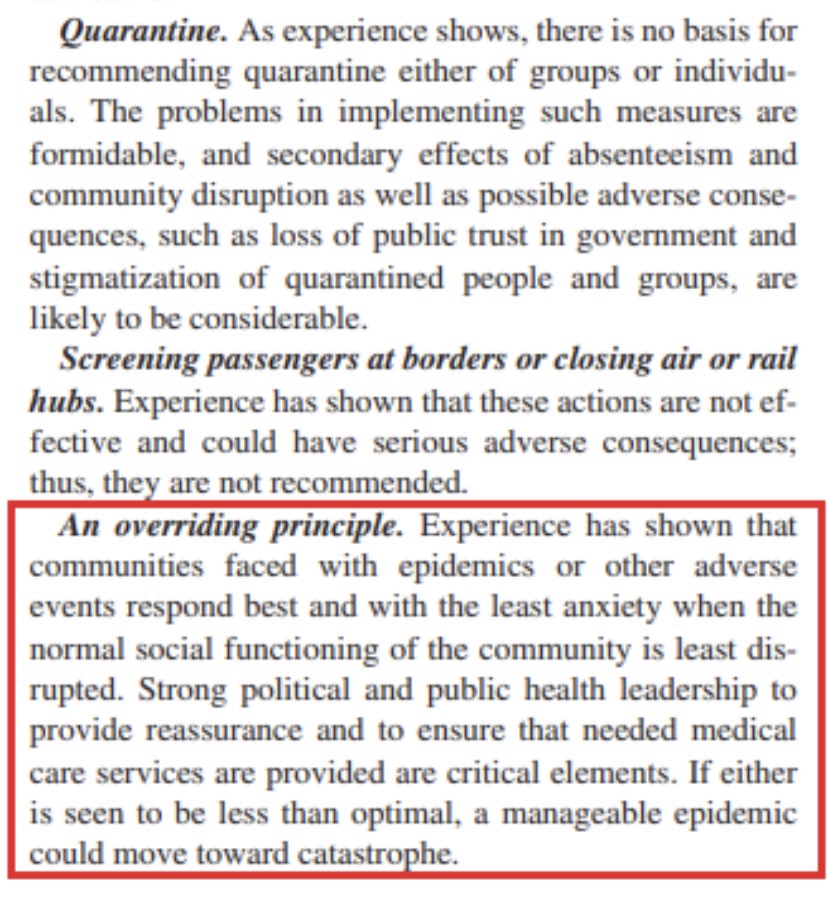
Right at the start of the pandemic, Dr. Anthony Fauci insisted that masks were unnecessary, which was in line with the preponderance of earlier evidence. Later, he sowed confusion — and distrust — by claiming he said that to discourage a run on masks, thus preserving supplies for the medical community. That mix-up put a stain on his credibility among those who were paying attention, and the reversal was simply bad policy given what is well established by the evidence on mask efficacy.

No Mas, No Mask!

Despite my own doubts about the efficacy of masks, I went along with masking for a while. It gave me a chuckle to see people wearing them outside, especially runners, or solo drivers. We knew by then that contracting Covid outside was highly unlikely. I was also amused by the idiotic protocols in place at many restaurants, where it was just fine to remove them once you walked a few feet to sit at your table, as if aerosols indoors were bound within narrow bands of altitude. Finally, I had reservations about the health consequences of frequent masking, which have certainly been borne out. Restricting air flow is generally not good for human health! Neither is trapping bits of sputum and hot, exhaled moisture rich in microbes right up against one’s muzzle. Still, I thought it polite to wear a mask in places of business, and I did so for a number of months.

In time it became apparent that the cloth and paper masks we were all wearing were a waste of effort. Covid is spread via fine aerosols and generally not droplets. That’s important because the masks in common use cannot block a sufficient level of Covid particles from escaping nor from penetrating through gaps and through the fiber itself. Neither can N95s if not fitted properly, as so many are not. And none of these masks can protect your eyeballs! When tens of thousands of tiny beads of aerosol are released with each cough or exhalation, a mask that stops 70% of them will not accomplish much.

The evidence began to accumulate that mask mandates were completely ineffective at “stopping the spread” of Covid. I then became an ardent anti-masker. I generally don’t wear them anywhere except medical buildings, and then only because I refuse to defer normal medical care, the consequences of which have been tragic during the pandemic. I have told clerks “I don’t need a mask”, which is true, and they have backed off. I have turned on my heal at stores that refuse to give on the issue, but like masks themselves, the signs on the doors are usually more for show than anything else. So I walk right past them.

Now, the Biden Administration has decided to provide to the public 400 million N95 masks — on the taxpayer! It’s a waste of time and money. But the timing is incredible, just as the Omicron wave crashes on it’s own. It will be one more worthless act of theatre. But don’t doubt for a moment that Joe Biden, when no one remembers the timing, will claim that this action helped defeat Omicron.

Mask Varieties

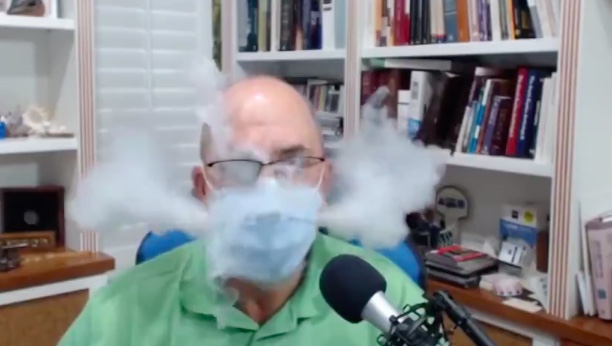
What is the real efficacy of masks in stopping the spread of Covid aerosol emissions? Cloth masks, including bandanas and scarves, are still the most popular masks. Based on casual observation, I suspect most of those masks aren’t washed as frequently as they should be. People hang them from their rear view mirrors for God knows how long. Beyond that, cloth masks tend to fit loosely and protect from aerosols about as well as the disposable medical or surgical masks that are now so common. Which is to say they don’t provide much protection at all.

But can that be? Don’t surgeons think they help? Well yes, because operating rooms can be very splattery places. Besides, it’s rude to sneeze into your patient’s chest cavity. Protection against fine aerosols? Not so much. “Oh, but should I double mask?”, you might ask? Gross! Just Shut*Up!

Face shields are “transparently” useless, offering no barrier against floating aerosols whatsoever except a fleeting moment’s protection against those blown directly into the wearer’s face. Then there are respirator masks: N95 and KN95, which are essentially the same thing. The difference is that KN95s must meet Chinese performance standards rather than U.S. standards. Both must filter and capture 95% of airborne particles as small as 0.3 microns. Covid particles are smaller than that, but the aerosol “beadlets” in which they are swathed may be larger, so the respirators would appear to be a big step up from cloth or surgical masks. R95 and P95 masks are made for protection against oil-based particles. They seem to be better overall due to thicker material and tighter fit with an overhead strap and extra padding.

Measuring Mask Efficacy

A thorough assessment of these mask types is documented in a 2021 paper published in The Physics of Fluids. Here are the baseline filtration efficiencies measured by the authors with an ideal mask fit relative to exhalation of 1 micron aerosols:

  • Cloth_______40%
  • Surgical____47%
  • KN95_______95%
  • R95_________96%

These are simply the filtration efficiencies of the respective barrier materials used in each type of mask, as measured by the researcher’s tests. Obviously, cloth and surgical masks don’t do too well. Unfortunately, even the N95 and KN95 masks never fit perfectly:

It is important to note that, while masks … decrease the forward momentum of the respiratory jet, a significant fraction of aerosol escapes the masks, particularly at the bridge of the nose.”

Next, the authors assess the “apparent” filtration efficiencies of masks measured by relative aerosol concentrations in an enclosed space, measured two meters away from the source, after an extended period. This is a tough test for a mask, but it amounts to what people hope masks can accomplish: trapping aerosols containing bits of crap on material surrounding the nose and mouth, and for many hours. Here are the results:

  • Cloth___________9.8%
  • Surgical_______12.4%
  • KN95__________46.3%
  • R95____________60.2%
  • KN95-Gap______3.4%
  • KN95-Valve____20.3%

Cloth and surgical masks don’t do much to reduce the aerosol concentrations. Both the KN95 and R95 masks capture a meaningful share of the aerosols, but the R95 is a bit more effective. Remember, however, that the uncaptured share is a stand-in for the many thousands of virus particles that would remain suspended within the indoor space, so the filtration efficiency of the R95, while far superior to cloth or surgical masks, would do little to mitigate the spread of the virus. The KN95-Gap case is a test of a more “loosely fitted” mask with 3 mm gaps, which the authors say is realistic. Under those circumstances, the KN95 is about as good as nothing. Finally, the authors tested a well-fitted KN95 equipped with a one-way discharge valve. While its efficiency was better than cloth or surgical masks, it still performed poorly. The authors also found that various degrees of air filtration were far more effective in reducing aerosol concentrations than masks.

On the subject of mask fit, I quote Dr. Robert Lending, who has regularly chronicled pandemic developments for patients in his practice since the start of the pandemic:

N95 type masks cannot be worn by men with beards. They must be so tightly fitted that they leave deep creases in your face. Prior to Covid-19, when hospital employees had to wear them for TB exposure prevention, they were told not to wear them for more than 3 hours at a time. They had to be fit-tested and gas leak-tested. … The N95 knockoffs such as the KN95s are not as good. N95 with valves do not protect others from you. There are now many counterfeit N95s for sale. … Obviously, N95s were never meant to be worn for 8-12 hours; and certainly not by youth and school children. If you are wearing an N95 and you can smell anything, such as aroma in a restaurant when you walk in, perfume, cologne, coffee, citrus, foul odors, etc.; then your fit is not correct and that N95 is worthless.

Other Evidence

Another kind of evidence on mask efficacy is offered by randomized control trials (RCTs) in mitigating transmission of the influenza virus across a variety of settings, including hospital wards, schools, and neighborhoods of varying characteristics. A meta-analysis of 44 such RCTs published in the Cochran Library in late 2020 found that surgical masks make little or no difference to the spread of the virus. In a small set of RCTs from health care settings, the authors found that N95 and P95 masks perform about as well as surgical masks in limiting transmission.

An excellent review of research on mask efficacy appeared in City Journal last August. The author, Jeffrey H. Anderson, was fairly awestruck at the uniformity of RCT evidence that masks are ineffective. One well-publicized RCT purporting to show the opposite relied on effects that were negligible. Meanwhile, other research has shown that state-level mask mandates are ineffective at reducing the spread of the virus. Finally, here is a nice “cheat sheet” containing links to a number of mask studies.

Children

Children in many parts of the country are forced to wear masks at school. It’s well-established, however, despite wailing from teachers’ unions, that Covid poses extremely low risks to children. And there is no shortage of evidence that constant masking has extremely negative effects on children. The stupidity has reached grotesque proportions. Now, some school districts are proposing that children wear N95 masks! This is unnecessary and cruel, and it is ineffective precisely because children will be even less likely to use them properly than adults, who are generally not very good at it. From the last link:

If N95s filter so well, why are respirators an ineffective intervention? Because masking is a behavioral intervention as much as a physical one. For respirators to work, they must be well fitting, must be tested by OSHA, and must be used for only short time windows as their effectiveness diminishes as they get wet from breathing.

“Fit requirements and comfort issues are untenable in children who have small faces and are required to wear masks for six or more hours each day. For these reasons, NIOSH specifically states that children should not use respirators, and there are no respirators that are approved for children. These views are shared by the California Department of public health. Concerns about impaired breathing and improper use outweigh potential benefits. There are no studies on the effectiveness of respirators on children because they are not approved for pediatric use.

Rip It Off

At this point in the Omicron wave, which appears to have crested, we’re basically dealing with a virus that is less lethal than the flu and, for most people, comparable to the common cold. It’s a good time for the timid to shed their masks, which don’t help contain the spread of the virus to begin with. And masks do more harm than has generally been acknowledged, especially to children. So stop the bullshit. Take off your mask, and leave it off!

Vagaries of Vaccine Efficacy

Tags

, , , , , , , , , , , , , , , , , , , , , ,

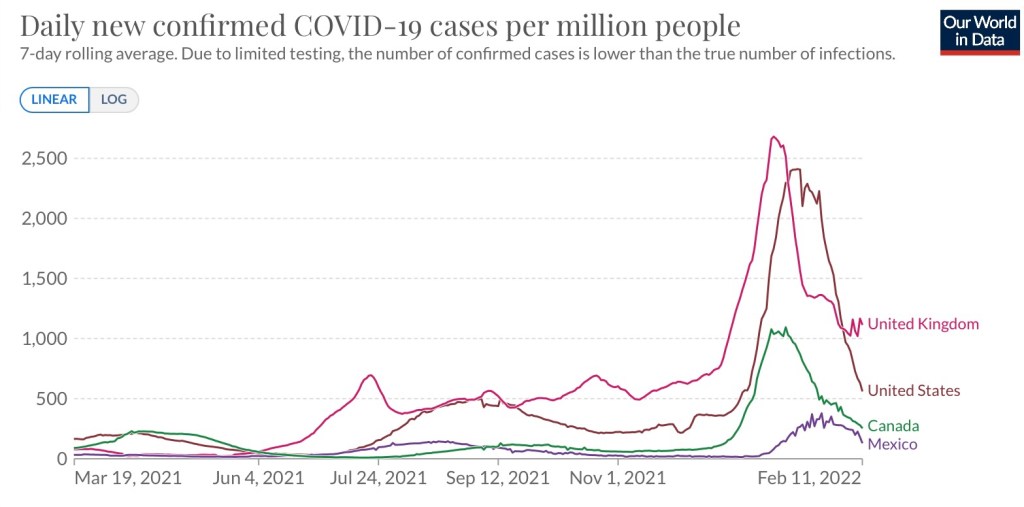
There should never have been any doubt that vaccines would not stop you from “catching” the coronavirus. Vaccines cannot stop virus particles from lodging in your nose or your eyeballs. The vaccines act to prime the immune system against the virus, but no immune response is instantaneous. In other words, if you aren’t first “infected”, antibodies don’t do anything! A virus may replicate for at least a brief time, and it is therefore possible for a vaccinated individual to carry the virus and even pass it along to others. The Omicron variant has proven that beyond a shadow of a doubt, though the wave appears to be peaking in most of the U.S. and has peaked already in a few states, mostly in the northeast.

I grant that the confusion over “catching” the virus stems from an imprecision in our way of speaking about contracting “bugs”. Usually we don’t say we “caught” one unless it actually makes us feel a bit off. We come into intimate contact with many more bugs than that. The effects are often so mild that we either don’t notice or brush it off without mention. But when it comes to pathogens like Covid and discussions of vaccine efficacy (VE), it’s obviously useful to remember the distinction between infections, on the one hand, and symptomatic infections on the other.

Cases Are the Wrong Focus

Unless calibrated by seroprevalence data, these studies are not based on proper estimates of infections in the population. Asymptomatic people are much less likely to get tested, and vaccinated individuals who are infected are either much more likely to be asymptomatic or the test might not detect the weak presence of a virus at all. VE based on detected infections is essentially meaningless unless testing is universal.

We are bombarded by studies (and analyses like the one here) alleging that VE should be judged on the reduction in infections among the vaccinated. The likelihood of a detected infection by vaccination status is simply the wrong way to measure of VE. It’s not so much the direction of bias in measured VE, however. The mere presence of cases among the vaccinated has been sufficient to inflame anti-vax sentiment, especially cases detected in mandatory tests at hospitals, where the infections are often incidental to the primary cause of admission.

The typical evolution of a novel virus is further reason to dismiss case numbers as a basis for measuring VE. Mutations create new variants in ways that usually promote the continuing survival of the lineage. Subsequent variants tend to be more transmissible and less deadly to their hosts. Thus, given a certain “true” degree of VE, so-called breakthrough infections among the vaccinated are even more likely to be asymptomatic and less likely to be tested and/or detected.

There is the matter of immune escape or evasion, however, which means that sometimes a virus mutates in ways that get around natural or vaccine-induced immune responses. While such a variant is likely to be less dangerous to unvaccinated hosts, more cases among the vaccinated will turn up. That should not be interpreted as a deterioration in VE, however, because detected infections are still the wrong measure. Instead, the fundamental meaning of VE is a lower virulence or severity of a variant in vaccinated individuals than in unvaccinated individuals.

Interestingly, to digress briefly, while immune escape has been discussed in connection with Omicron, that variant’s viral ancestors may have predated even the original Covid strain released from the Wuhan lab! It is a fascinating mystery.

Virulence

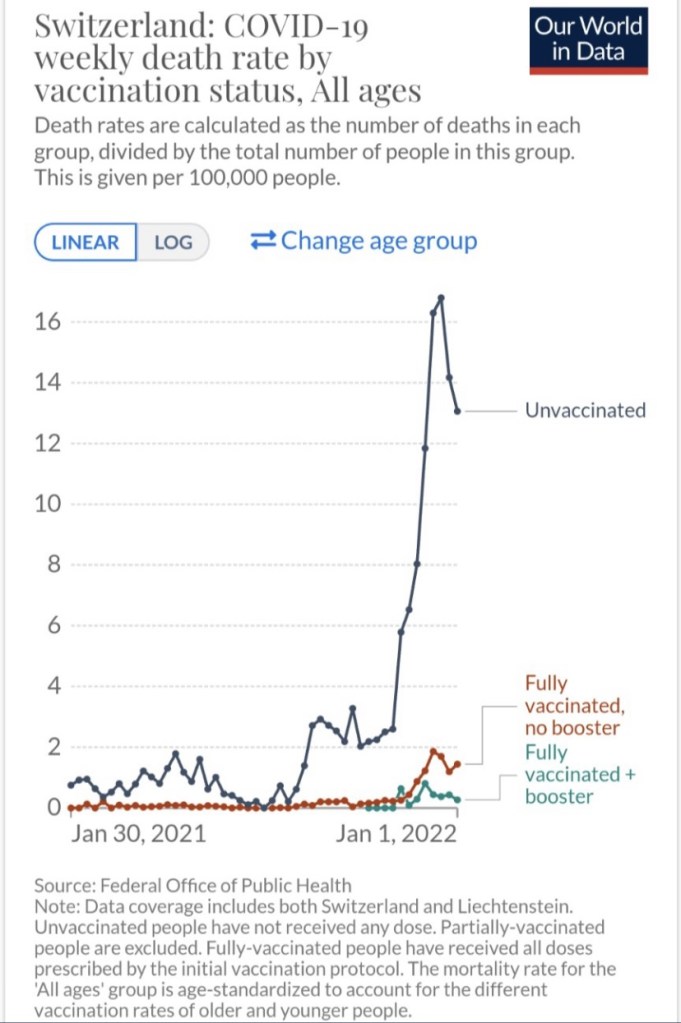
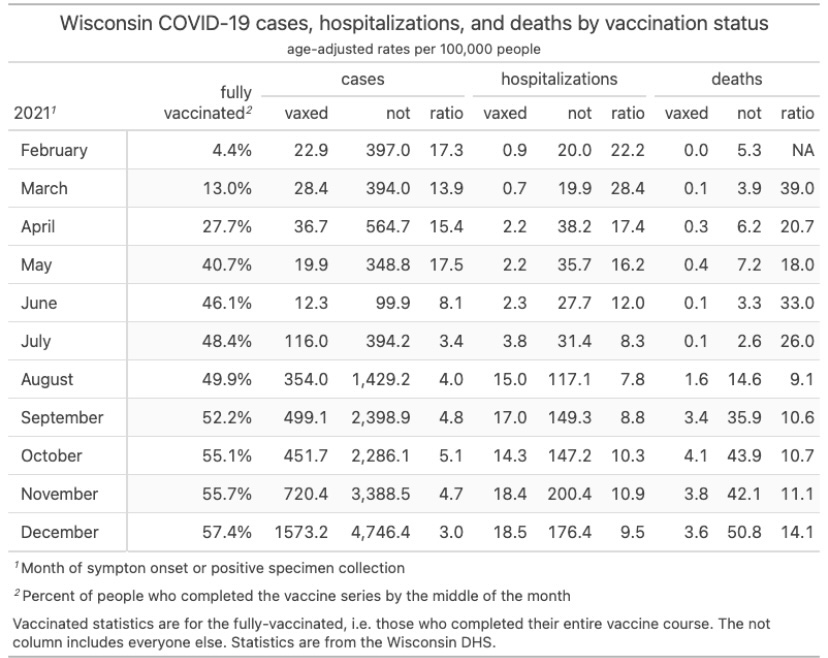
In fact, vaccines have reduced the virulence of Covid infections, and the evidence is overwhelming. See here for a CDC report. The chart below is Swiss data, followed by a “handy” report from Wisconsin:

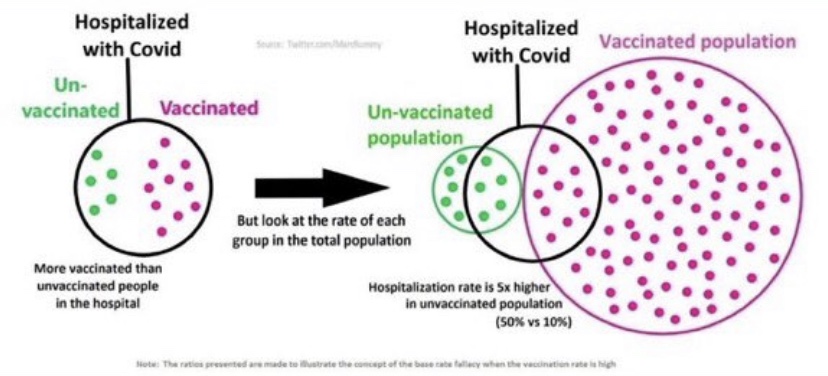
From the standpoint of virulence, there are other kinds of misguided comparisons to watch out for: these involve vaxed and unvaxed patients with specific outcomes, like the left side of the graphic at the top of this post (credit to Twitter poster aparachick). This thread has an excellent discussion of the misconception inherent in the claim that vaccines haven’t reduced severity: the focus is on the wrong conditional probability (again, like the left side of the graphic). Getting that wrong can lead to highly inaccurate conclusions when the sizes of the two key groups, hospitalizations and vaccinated individuals in this case, are greatly different.

Bumbled Messaging

The misunderstandings about VE are just one of many terrible failures of public health authorities over the course of the pandemic. There seems to have been fundamental miscommunication by the vaccine manufacturers and many others in the epidemiological community about what vaccines can and cannot do.

Another example is the apparent effort to downplay the importance of natural immunity, which is far more protective than vaccines. This looks suspiciously like a willful effort to push the narrative that universal vaccination as the only valid course for ending the pandemic. Even worse, the omission was helpful to those attempting to justify the tyranny of vaccine mandates.

Waning Efficacy

It should be noted that the efficacy of vaccines will wane over time. This phenomenon has been measured by the presence of antibodies, which is a valid measure of one aspect of VE over time. However, immune responses are more deeply embedded in the human body: so-called T-cells carry messages alerting so-called B-cells to the presence of viral “invaders”. The B-cells then produce new antibodies specific to characteristics of the interloping pathogen. Thus, these cells can function as a kind of “memory” allowing the immune system to mount a fresh antibody defense to a repeat or similar infection. The reports on waning antibodies primarily in vaccinated but uninfected individuals do not and cannot account for this deeper process.

Conclusion

Vaccines don’t necessarily reduce the likelihood of infection or even the spread of the virus, but they absolutely limit virulence. That’s why Jay Bhattacharya, one of the authors of The Great Barrington Declaration, says the vaccines provide a private benefit, but only a limited public benefit. Yet too often we see VE measured by the number of infections detected, and vaccine mandates are still motivated in part by the idea that vaccines offer protection to others. They might do that only to the extent that infections are less severe and clear-up more quickly.

Voting Rights Doublespeak

Tags

, , , , , , , , , , , , , , , , , , , , , , , , , , , , , , , , , ,

The so-called insurrection that took place on January 6, 2021 (J6) has obsessed Democrats seeking to ram through a “voting rights” bill that they hope will advantage them in future elections. Oh, and to legitimize proposed new powers for agencies in the fight against “domestic terror”, and to somehow disqualify Donald Trump from holding the presidency again. We can thank a couple of moderate Democrats for shutting down the election bill, at least for the time being, by refusing to eliminate the filibuster.

The Real Threat to Voting Rights

If your real aim is to undermine ballot security and make it easier to cheat, you’d have to work hard to beat the election bill pushed by the Biden Administration: the Freedom To Vote Act (FVA). In their fashion, however, the Left prefers to stake-out phony rhetorical high-ground, replete with spurious charges against the opposition alleging racism and subversive, anti-democratic intent. Joe Biden demonstrated this vividly during his ill-advised speech in Georgia last week.

Here is a fairly thorough summary of the FVA, including an earlier version passed by the House last March. The overarching thrust of the bill is to substitute federal for state authority over the election process. States would not be permitted to demand that voters produce photo IDs. The bill would also require automatic voter registration at the department of motor vehicles and other government agencies, on-line registration, same-day registration, more days of early voting, excuse-free, notary-free, and witness-free absentee ballots, and extended counting of late-arriving ballots.

Democrats in the House of Representatives have now used a NASA funding bill as a shell for all these federally-prescribed protocols. Reportedly, this bill would legalize ballot harvesting nationwide, but that does not appear to be the case. Nevertheless, it includes all of the other provisions cited above, and many others.

While Congress certainly has the power to regulate elections, states were given the primary authority for conducting elections under the Constitution:

The Times, Places and Manner of holding Elections for Senators and Representatives, shall be prescribed in each State by the Legislature thereof; but the Congress may at any time by Law make or alter such Regulations, except as to the Places of chusing Senators.

The Voting Rights Act of 1965 helped secure minority voting rights that plainly exist under the Constitution, and it prescribed federal review of certain changes in state voting procedures (some aspects of which were struck down by the Supreme Court). However, never before has such sweeping federal authority been proposed as to the range of mechanics involved in casting and counting ballots. Ballot security would be compromised by several provisions of the legislation.

While voter registration should be relatively painless, it should not be so painless that non-citizens find it easy to register. That is likely to be the case under automatic voter registration. Surely many non-citizens have much to recommend them, but they have not yet demonstrated their commitment to the nation through earned citizenship. The right to vote is a benefit of citizenship; it serves as an inducement to learn about our system of government through the naturalization process. These individuals might not be interested in going to the trouble, however, or they might be loyal to a foreign power. Do we really want such individuals to have a vote? And to the extent that their interest is focused on public benefits, they surely do not have an equal claim to natural-born but similarly-situated Americans.

Voter ID is a safeguard against voter fraud, and a huge majority of Americans support it, including majorities of minorities. The very idea that a photo ID requirement would “suppress” the legitimate votes of minorities is based on the presumption that those voters might have difficulty obtaining identification such as a drivers license or other government ID. Oh really? We can safely file that contention under “the bigotry of low expectations”.

Extensive use of absentee ballots was intended to facilitate voting during pandemic restrictions that were expected to reduce the safety and efficiency of polling places. However, most developed countries ban “mail-in voting”, regarding it as a prescription for voter fraud. That threat seems all too real given the lax standards proposed in the FVA.

The Threat to Political Opposition

The House investigative committee looking into the January 6th melee may recommend new intelligence powers for the federal government. Those powers aren’t needed to investigate the Capitol riot: the FBI has been in possession of teams of video evidence, and it has broad powers under the PATRIOT Act and other measures. Here’s Patrick Eddington from the link above:

“… the FBI already has unbelievably sweeping authority to surveil individual Americans or domestic groups without ever having to go before a judge to get a warrant.

Under an investigative category known as an assessment, FBI agents can search commercial and government databases (including databases containing classified information), run confidential informants, and conduct physical surveillance, all without a court order.

The simple truth is that certain congressional Democrats and the Biden Administration are attempting to use the Capitol riot as an excuse to turn federal law enforcement against their political enemies. The claim by Biden, the guy who bragged of being mentored by Klansman Robert Byrd, and the same man who praised George Wallace on several occasions, is that his opponents are “domestic terrorists” and/or “white supremacists”. We’ve seen quite enough of this chicanery already. Having suffered through a lengthy “Russian collision” charade, a willingness to completely ignore massive riots and property destruction by BLM and Antifa activists in 2020, and an orchestrated attempt to treat concerned parents of schoolchildren as “domestic terrorists”, we’re expected to believe that these stooges need more power?

The J6 Fiasco

And that brings us back to the Capitol riot. It was, as Glenn Reynolds has said, a clownshow and a mess. But speaking of insurrection, let’s hope the FBI is keeping its eye on violent leftists as well, who perpetrated some unquestionably treasonous escapades in the not very distant past. From Legal Insurrection:

“…leftist rioters … attempted to stop the peaceful transition of power during President Trump’s inauguration. … did anti-Trump leftists riot, attack and injure police, set cars and buildings on fire…

… the multi-day May, 2020 assault on the White House that left at least 60 Secret Service agents wounded and forced President Trump to be whisked away to a bunker for his personal safety.”

Even more dangerous leftist attacks on the Capitol building have been perpetrated, such as bombings by the Weather Underground in 1971 and the Armed Resistance in 1983.

Many people were hurt in the J6 riot through no real fault of their own, including Ashli Babbitt, who was shot and killed by a Capitol police officer shortly after she attempted to stop attackers from smashing windows. Nevertheless, those who breached the Capitol building were mostly a bunch of hapless goofballs encouraged to run amuck by certain instigators. Among those were the Oathkeepers, a gang who marched around in stack formation wearing gear that looked vaguely militaristic. They brought no weapons to the Capitol (though they had some stashed in the VA suburbs). Apparently, one of them did assist a crowd in barging through a door to the Capitol. Their activities on J6 have been described by one pundit as LARP — live action role playing. Nevertheless, there was much talk among them of interfering with the transfer of power to “the usurper”, as they called Joe Biden. And now, eleven of them have been charged with insurrection and sedition. Members of the Proud Boys were also at the Capitol, some of whom fought with police.

But what really happened to make things go off the rails on January 6th? This article by Joseph M. Hanneman offers an excellent discussion of the events of that afternoon, and the subsequent investigation. He notes the mysterious absence of a number of individuals involved in the breach of the Capitol and grounds from the FBI’s “Seeking Information” list of over 1,500 photos. That includes one Ray Epps, whose incitement was otherwise fairly well-documented. Some suspect certain parties with no interest in seeing Donald Trump remain in office actually encouraged the rioters, up to and including the FBI. Would that surprise anyone after the Whitmer kidnapping operation or the Russian collusion hoax?

The vast majority of the crowd on J6 came to the Capitol grounds to conduct a peaceful protest in the vain hope for congressional action to put a hold on the counting of electors pending state election audits, investigations, and court challenges. Many of those arrested were denied due process, and were held for months with no charges filed.

As for the “threat to the nation” posed by the crowd on J6, I found this Marco Rubio quote to be apropos:

I don’t care how many candlelight vigils and musical performances you have from the cast of Hamilton, you’re not going to convince most normal and sane people that our government last year was almost overthrown by a guy wearing a Viking hat and speedos.

Conclusion

Democrats still hope to vote to eliminate the Senate filibuster and then pass the FVA. That is a pipe dream at this point, but they would come to regret eliminating the filibuster in due course. They have used it themselves to defeat legislation hundreds of times in the recent past. The filibuster has its shortcomings, particularly its inability to restrain executive power. Nevertheless, it has never been more critical as protection against a tyrannical (and slim) majority in Congress.

The Freedom To Vote Act is doomed to failure. Still, no one should forget the mendacious rhetoric employed by Joe Biden and the leftist Democrat leadership in Congress on the issue of election integrity. Nor should anyone forget their dishonorable, anti-democratic intent to devalue legitimate voting rights.

Three Justices Reveal Astonishing Covid Ignorance

Tags

, , , , , , , , , , , , , , , , , ,

Good God! What a remarkable display of ignorance we witnessed on Friday from three different Supreme Court justices. This trio dumped buckets-full of erroneous information about the current state of the COVID pandemic, all points that are easily falsifiable. The three are Sonia Satamayor, Stephen Breyer, and Elena Kagan. The flub-fest occurred during a proceeding on challenges to OSHA’s attempt to impose a nationwide vaccine mandate on private employers having more than 100 employees. I’m sorely tempted to say these jurists must know better, but perhaps they were simply parroting what they’ve heard from “reliable” media sources.

Here’s a list of the false assertions made by the three justices at the hearing, as compiled by Michael P. Sanger, along with my own brief comments:

  • 100,000 children in critical care and on ventilators (Sotomayor) — Not even close!
  • Vaccine mandate would prevent 100% of US cases (Breyer) — Lol!
  • 750 million people tested positive last Thursday (Breyer) — That’s more than twice the U.S. population… in one day! Haha! See here.
  • COVID deaths are at an all-time high (Sotomayor) — No, they are well under half of the all-time high, and many of those “announced” deaths are Delta deaths and deaths that occurred weeks to months ago.
  • It’s “beyond settled” that vaccines and masks are the best way to stop the spread (Kagan) — Say what?
  • COVID vaccines stop transmission (Kagan) — Is that why two fully vaccinated attorneys arguing the government’s case just tested positive?
  • Federal agencies can mandate vaccines using the police powers of the federal government (Sotomayor) — Incorrect, not at their fancy. Police powers with respect to health, safety and morals are generally reserved to the states by the Tenth Amendment. The Commerce Clause allows Congress to regulate these powers through federal agencies on “major questions”. Congress, however, has never acted on the question of vaccine mandates.
  • Hospitals are nearing capacity (Sotomayor) — Again, no! And see here.
  • Omicron is deadlier than Delta (Sotomayor) — Omicron may be more severe than the common cold in some cases, but all indications are that it has much lower severity than the Delta variant.
  • Hospitals are full of unvaccinated people (Breyer) — No, on two counts: 1) hospitals are not full, and 2) there are COVID hospitalizations among the vaccinated as well. Also see here.

I’ve covered most of these points on this blog at various times in the past, a few links to which are provided in the bullets above. As one wag said, it’s almost as if these justices read nothing but the New York Times, the paper that once assured the world that Joseph Stalin was actually a pretty decent fellow. With tongue firmly in cheek, Ed Morrissey asked whether Twitter would suspend Justice Sotomayor for spreading COVID misinformation.

There also followed a desperate attempt by left-wing journalists to convince themselves and their followers that Justice Neil Gorsuch had incorrectly claimed hundreds of thousands of people die from the flu every year. The actual Gorsuch quote in the transcript reads:

“Flu kills—I believe—hundreds, thousands of people every year.”

And that indeed is what can be heard clearly on the audio (short clip here). But in the fertile imaginations of the lefty commentariat, Gorsuch uttered an extra “of”. Gorsuch was clearly correcting himself mid-sentence. As noted by Phil Kerpen, the line of questioning had to do with the establishment of a limiting principle under which OSHA could conceivably have authority to impose a vaccine mandate. Naturally, Gorsuch intended to quote a number smaller than the count of COVID deaths.

Most of the justices appeared to lean against the OSHA mandate. We’ll probably get a ruling this week. However, the episode vividly illustrates the power of the leftist mainstream media and social media to manipulate beliefs, even beliefs held by individuals of formidable intellect. It also shows how fiercely people cling to falsehoods supporting their ideological mood affiliations.

Price Controls: Political Gut Reaction, Gut Punch To Public

Tags

, , , , , , , , , , , , , , , ,

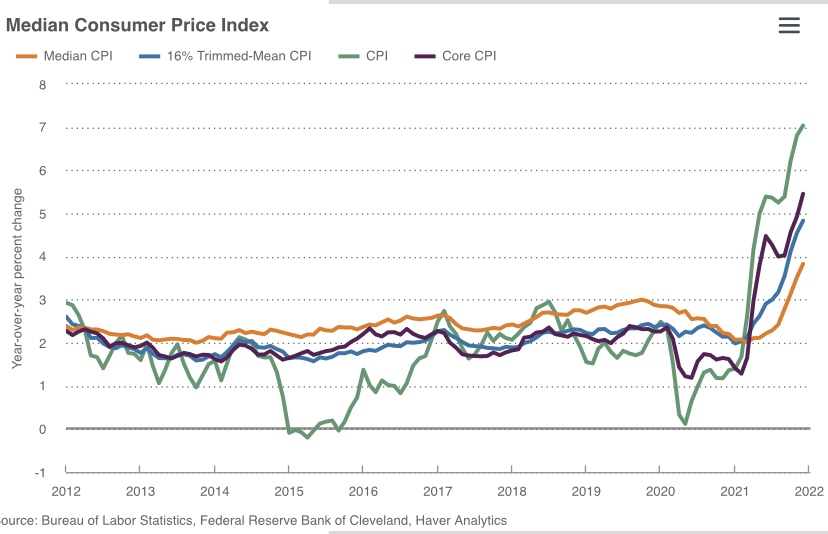
In a gross failure of education or perhaps memory, politicians, policymakers, and certain academics seem blithely ignorant of things we’ve learned repeatedly. And of all the dumb ideas floated regarding our current bout with inflation, the notion of invoking price controls is near the top. But watch out, because the Biden Administration has already shifted from “inflation is transitory” to “it only hurts the rich” to “it’s fine because people just want to buy things”, and now “greedy businessmen are the culprits”. The latter falsehood is indeed the rationale for price controls put forward by a very confused economist at the University of Massachusetts-Amherst named Isabella Weber. (See this for an excerpt and a few immediate reactions.) She makes me grieve for my profession… even the frequently ditzy Paul Krugman called her out, though he softened his words after realizing he might have offended some of his partisan allies. Of course, the idea of price controls is just bad enough to gain favor with the lefty goofballs pulling Biden’s strings.

To understand the inflation process, it’s helpful to distinguish between two different dynamics:

1. When prices change we usually look for explanations in supply and demand conditions. We have supply constraints across a range of markets at the moment. There’s also a great deal to say about the ways in which government policy is hampering supplies of labor and energy, which are key inputs for just about everything. It’s fair to note here that, rather than price controls, we just might do better to ask government to get out of the way! In addition, however, consumer demand rebounded as the pandemic waned and waxed, and the federal government has been spending hand over fist, with generous distributions of cash with no strings attached. Thus, supply shortfalls and strong demand have combined to create price pressures across many markets.

2. Economy-wide, all dollar prices cannot rise continuously without an excess supply of a monetary asset. The Federal Reserve has discussed tapering its bond purchases in 2022 and its intention to raise overnight interest rates starting in the spring. It’s about time! The U.S. money supply ballooned during 2020 and its growth remains at a gallop. This has enabled the inflation we are experiencing today, and only recently have the markets begun to react as if the Fed means business.

Weber, our would-be price controller, exhibits a marked ignorance with respect to both aspects of price pressure: how markets work in the first instance, and how monetary profligacy lies at the root of broader inflation. Instead, she insists that prices are rising today because industrialists have simply decided to extract more profit! Poof! It’s as simple as that! Well what was holding those greedy bastards back all this time?

Everyone competes for scarce resources, so prices are bid upward when supplies are short, inputs more costly, or demand is outpacing supply for other reasons. Sure, sellers may earn a greater margin on sales under these circumstances. But the higher price accomplishes two important social objectives: efficient rationing of available quantities, and greater incentives to bring additional supplies to market.

So consider the outcome when government takes the advice of a Weber: producers are prohibited from adjusting price in response to excess demand. Shortages develop. Consumers might want more, but that’s either impossible or it simply costs more. Yet producers are prohibited from pricing commensurate with that cost. Other adjustments soon follow, such as changes in discounts, seller credit arrangements, and product quality. Furthermore, absent price adjustment, transaction costs become much more significant. Other resources are consumed in the mere process of allocating available quantities: time spent in queues, administering quotas, lotteries or other schemes, costly barter, and ultimately unsatisfied needs and wants, not to mention lots of anger and frustration. Lest anyone think this process is “fair”, keep in mind that it’s natural for these allocations to take a character that is worse than arbitrary. “Important people” will always have an advantage under these circumstances.

Regulatory and financial burdens are imposed on those who play by the rules, but not everyone does. Black market mechanisms come into play, including opportunities for illegal side payments, rewards for underworld activity, along with a general degradation in the rule of law.

Price controls also impose rigidity in relative prices that can be very costly for society. “Freezing” the value of one good in terms of others distorts the signals upon which efficient resource allocation depends. Tastes, circumstances, and production technology change, and flexible relative prices enable a smoother transitions between these states. And even while demand and/or input scarcity might increase in all markets, these dynamics are never uniform. Over time, imbalances always become much larger in some markets than others. Frozen relative prices allow these imbalances to persist.

For example, the true value of good A at the imposition of price controls might be two units of good B. Over time, the true value of A might grow to four units of good B, but the government insists that A must be traded for no more than the original two units of B. Good B thus becomes overvalued on account of government intervention. The market for good A, which should attract disproportionate investment and jobs, will instead languish under a freeze of relative prices. Good B will continue to absorb resources under the artificial tradeoff imposed by price controls. Society must then sacrifice the gains otherwise afforded by market dynamism.

The history of price controls is dismal (also see here). They artificially suppress measured inflation and impose great efficiency costs on the public. Meanwhile, price controls fail to address the underlying monetary excess.

Price controls are destructive when applied economy-wide, but also when governments attempt to apply them to markets selectively. Posturing about “strategic” use of price controls reveals the naïveté of those who believe government planners can resolve market dislocations better than market participants themselves. Indeed, the planners would do better to discover, and undo, the damage caused by so many ongoing regulatory interventions.

So beware Joe Biden’s bluster about “greedy producers” in certain markets, whether they be in “Big Meat”, or “Big Oil”. Price interventions in these markets are sure to bring you less meat, less oil, and quite possibly less of everything else. The unintended consequences of such government interventions aren’t difficult to foresee unless one is blinded with the scientism of central planning.

Reformed Covid Reporting Might Quell the Omicron Panic

Tags

, , , , , , , , , , , , ,

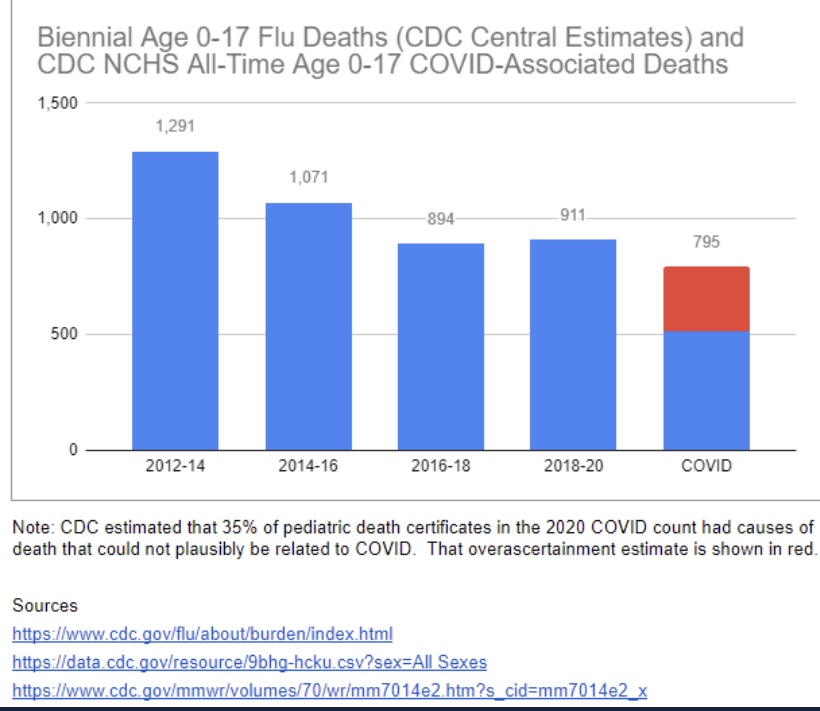
That’s our Commander and Chief this week, posing in a mask on the beach in what is a phenomenal display of stupidity. More importantly, that kind of messaging contributes to the wholly unwarranted panic surrounding the Omicron variant of Covid-19. Panic, you say? Take a look at this admission from a New York health official. She says a recent alert on pediatric hospitalizations was driven by a desire to “motivate” parents to vaccinate their children. Yet Covid has never posed a significant risk to children. And take a look at what this insane physician posted. It’s fair to say he’s “catastrophizing”, an all too common psychological coping mechanism for alarmists.

The Omicrommon Cold

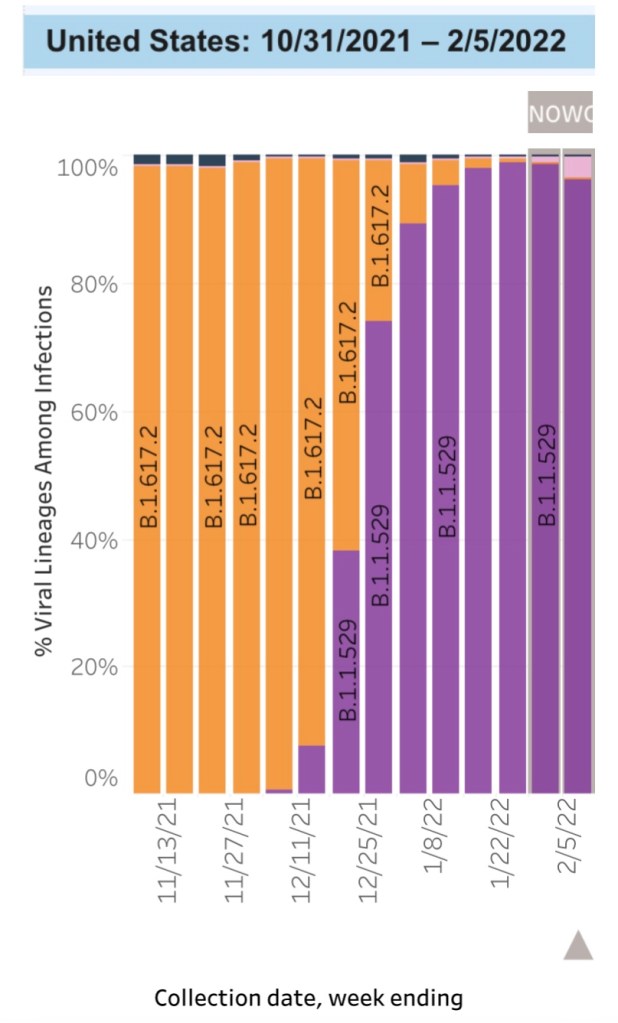
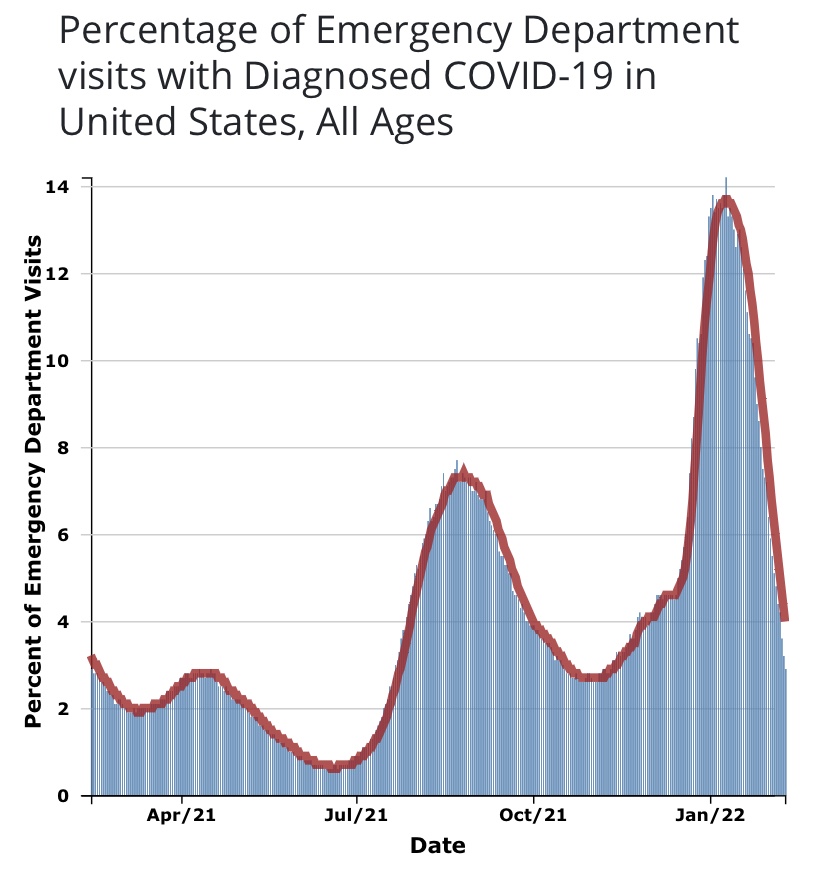
Given Omicron’s low apparent severity, it might be the variant that allows a return to normalcy. It’s perhaps the forefront of a more benign but endemic Covid, as it seems to be out-competing and displacing the far more dangerous Delta variant. In fact, Omicron infections are protective against Delta, probably for much longer than vaccines. The mild severity we’ve seen thus far is due in part to protection from vaccines and acquired immunity against breakthrough infections, but there’s more: there are plenty of non-breakthrough cases of Omicron, and most hospitalizations are among the unvaccinated. Yet we see this drastic decline in Florida’s ratio of ICU to hospital admissions (as well as a reduction in length of stay — not shown on chart). Similar patterns appear elsewhere. Omicron’s more rapid onset and course make it less likely that these patterns are caused by lags in the data.

Panic Begets Lockdowns

The frantic Omicron lunacy is driven partly by data on the number of new cases, which can be highly misleading as a guide to the real state of affairs. Testing is obviously necessary for diagnosis, but case totals as an emphasis of reporting have a way of feeding back to panic and destructive public policy: every wave brings surges in cases and the positivity rate prompting authoritarian measures with dubious benefits and significant harms (see here and here).

Flawed Case Data

In many respects, the data on Covid case totals have been flawed from the beginning, owing largely to regulators. At the outset in early 2020, there was a severe shortage in testing capacity due to the CDC’s delays in approving tests, as well as restrictions on testing by private labs. Many cases went undiagnosed, including a great many asymptomatic cases. The undercount of cases inflated the early case fatality rate (CFR). Subsequently, the FDA dithered in its reviews of low-cost, rapid, at-home tests. The latest revelation was the Administration’s decision in October to nix a large rollout of at-home tests. While the results of those tests are often unreported, they would have been helpful to individual decisions about seeking care and quarantining.

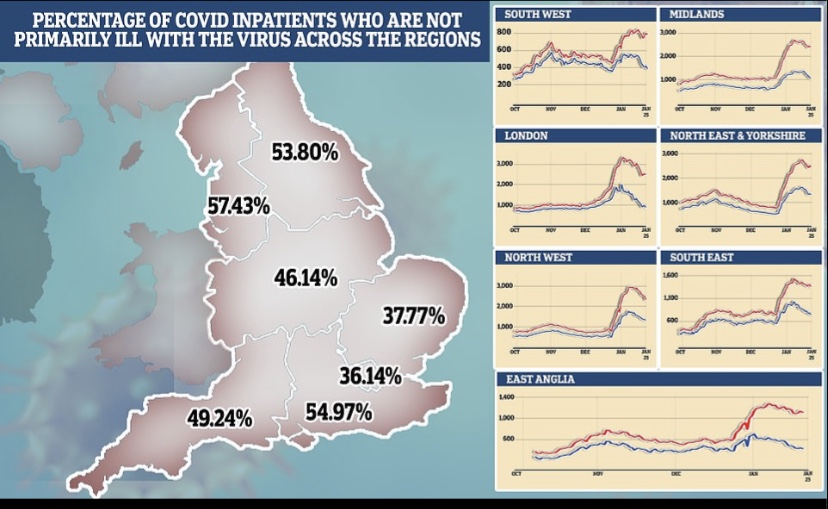
The PCR test finally distributed in March 2020 was often too sensitive, which the CDC has finally acknowledged, This is a flaw I’ve noted several times in the past. It led to false positives. Hospitals began testing all admitted patients, which was practical, and the hospitals were happy to do so given the financial rewards attendant to treating Covid patients under the CARES Act. However, it resulted in the counting of “incidental” Covid-positives: patients admitted with Covid, but not for Covid. That inflates apparent severity gleaned through measures like hospitalized cases, and it can distort counts of Covid fatalities and the CFR.

On balance, the bias caused by the test shortage at the start of the pandemic likely constrained total case counts, but the subsequent impact of testing practices is uncertain except for incidental hospitalized cases and the impact on counts of deaths.

Omicron Enlightenment

Omicron spreads rapidly, so the clamoring for tests by panicked consumers has resulted in another testing shortage, both for PCR tests and at-home tests at pharmacies. The shortage might not be relieved until the Omicron wave has crested, which could occur within a matter of a few weeks if the experience of South Africa and London are guides. In the meantime, another deleterious effect of the “case panic” is the crush of nervous individuals at emergency rooms presenting with relatively minor symptoms. Now more than ever, many of the cases identified at hospitals are incidental, particularly pediatric cases.

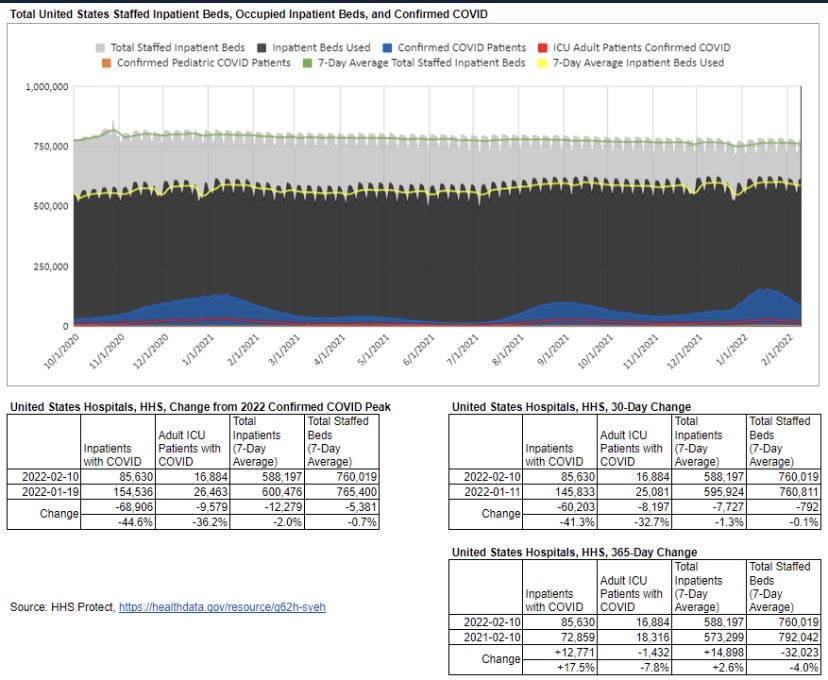
A thread by Monica Gandhi, and her recent article in the New York Times, makes the case that hospitalizations should be the primary focus of Covid reporting, rather than new cases. Quite apart from the inaccuracies of case counting and the mild symptoms experienced by most of those infected, Gandhi reasons that breakthrough infections so common with Omicron render case counts less relevant. That’s because high rates of vaccination (not to mention natural immunity from prior infections) reduce severity. Even Jennifer Rubin has taken this position, a complete reversal of her earlier case-count sanctimony.

Incidental Infections

Phil Kerpen’s reaction to Gandhi’s article was on point, however:

“Unless HHS Protect adds a primary [diagnosis] column, hospital census isn’t much more useful than cases.”

HHS Protect refers to the Health and Human Services public data hub. Without knowing whether Covid is the primary diagnosis at admission, we have no way of knowing whether the case is incidental. If Covid is the primary reason for admission, the infection is likely to be fairly severe. It is more useful to know both the number of patients hospitalized for Covid and tge number hospitalized for other conditions (incidentally with Covid). The distinction has been extremely important to those interpreting data from South Africa, where a high proportion of incidental admissions was a tip-off that Omicron is less severe than earlier variants.

The absence of such coding is similar to the confusion caused by the CDC’s decision early in pandemic to issue new guidance on the completion of death certificates when Covid is present or even suspected. A special exception was created at that time requiring all deaths involving primary or incidental Covid infections to be ruled as Covid deaths. This represented another terrible corruption of the data.

Summary

Earlier variants of Covid were extremely dangerous to the elderly, obese, and the immune-compromised. Yet public health authorities seemed to take every opportunity to mismanage the pandemic, including contradictory messaging and decisions that compromised the usefulness of data on the pandemic. But here we are with Omicron, which might well be the variant that spells the end of the deadly Covid waves, and the focus is still squarely on case counts, vaccine mandates, useless masking requirements, and President Brandon wearing a mask on the beach!

Case counts should certainly be available, as Gandhi goes to great lengths to emphasize. However, other metrics like hospitalizations are more reliable indicators of the current wave’s severity, especially if paired with information on primary diagnoses. Fortunately, there has been a very recent shift of interest to that kind of focus because the superior information content of reports from countries like South Africa and Denmark is too obvious. As Don Wolt marvels:

Behold the sudden interest by the public health establishment in the “With/From” COVID distinction. While long an important & troubling issue for many who sought to understand the true impact of the virus, it was, until very recently, actively ignored by Fauci & crew.

That change in emphasis would reduce the current sense of panic, partly by making it more difficult for the media to purvey scare stories and for authorities to justify draconian non-pharmaceutical interventions. It’s no exaggeration to say that anything that might keep the authoritarians at bay should be a public health priority.

May All Your Christmas Parleys Be Bright and Well-Officiated!

Tags

, , , , , , , ,

The Christmas holidays are upon us, with many joyful gatherings of family and friends, lots of tempting treats and libations, and of course, plenty of college football bowl games… all barring cancellation due to Covid psychosis. Just as discipline and good sportsmanship is maintained on the football field via sound officiating, it might be helpful to designate at least one friend or family member to serve as an impartial referee for the many political and philosophical discussions that are bound to crop up around the Yule log.

In the spirit of giving, I present you with an illustrated guide to officiating these deliberations. A complete set of hand signals for philosophy referees is shown below, with credit to the Leiter Reports blog. However, you better give your designated ref(s) a day or so to prepare. And remember to appoint a videographer for replay review!

The Curious Case of Unnecessary Pronoun Lists

Tags

, , , , , , , , , , , , , ,

A subset of my LinkedIn connections list “preferred pronouns” after their names, but I don’t think I’ve ever had any misapprehensions about their “gender identities”. Not one of them. Their “gendentities” are obvious based on the names and/or photos they’ve chosen to use on social media. In fact, the “default” pronoun designations in the English language work pretty well that way. So, apart from the fact that LinkedIn invites its users to list pronouns, why do these people bother? Would they introduce themselves that way in person? “Hi, nice to meet you, I’m Jane Smith, she / her.” Maybe on a name tag. Otherwise, unlikely.

Let’s face it: precious few of us have any doubt about our own biological sex. Do you have a penis and no vagina? Or vice versa? That settles it! But if you wish you didn’t have a penis, or wish you did, or you’re not sure… then you have a gender quandary and a pronoun problem. Still, those who decide to “take” one gender via transition will have chosen their pronouns. They typically make an effort to “present” that way as well.

There’s a tiny minority of individuals whose biological sex is ambiguous, and there are others who simply consider themselves “non-binary” or “genderqueer”. They represent three to four people out of every 1,000, if a recent survey can be believed (and surveys like this can be terribly flawed). These people are actually included in the broad definition of transgender. But again, for biological or other reasons, they identify as neither male nor female. It would be natural for these individuals to prefer gender-neutral pronouns (for example, possibilities are they / them and zi / hir, rather than he / him or she / her). That’s understandable, but: 1) using the plural “they” as a singular pronoun can lead to awkward grammar, inviting the use of the plural verb form as a fix*; and 2) remembering different pronouns for different people is a complexity to which most of us are quite unaccustomed. This is a practical issue, and social encounters with non-binaries are fairly unusual for most of us.

If tolerating the use of “he” or “she” just won’t do for this tiny minority, even as a courtesy to the “unschooled”, then it must be very important to make one’s non-binary status clear to everyone. That suggests a different problem, and one of a psychological nature. The insistence on strict adherence to alternative pronouns reflects a narcissism common to most manifestations of identity politics. And no, there is no reliable research showing that use of non-gendered pronouns reduces non-binary suicides, as one advocacy group has claimed.

I speak as one who has been called by the wrong gendered pronoun! I’m a male and I’m confident I present that way. However, I’ve worked with many Chinese over the course of my career, and gendered pronouns aren’t used in Chinese. The distinctions between “he” and “she”, or “his” and “hers”, can be as foreign to them as the pronouns “zi” and “hir” are to me. I’ve heard myself referenced by Chinese colleagues as “she”. Did it offend me? Not at all, because I knew the speaker was not fluent in the English language.

It should be easy to tolerate members of a minority who get it wrong because we empathize with their language challenge. We don’t demand their absolute conformity, but they understand their minority status and might prefer to avoid the potential embarrassment of getting it wrong. Contrary-wise, if I’m in the minority, say at a gathering of Chinese, shall I press the issue by demanding that every member of the majority distinguish between me and my wife using the correct English pronouns? I think not. But non-binary activists are so offended by gendered pronouns, which have been in common use among English speakers for centuries, that they demand the majority change the language to accommodate them. That is unreasonable. It’s okay to let others know what you prefer, but you shouldn’t feel slighted by every miscue or be a complete prig about it!

Now, if you happen to be a plain-old binary individual, what’s your excuse for listing preferred pronouns on social media? It seems completely unnecessary, so why bother? Here are a few possibilities:

  • You have transitioned to your gender and list pronouns as a courtesy to anyone who knew you before your transition.
  • You are an HR functionary having a career imperative to signal your evenhandedness.
  • You are a plaintiffs attorney chasing genderqueer discrimination business.
  • You simply like the Chinese practice and want to adopt gender-neutral pronouns. Good luck at your high school reunion!

My guess is that pecuniary and career motives are less important to most pronoun-listers than simple political correctness. Either way, it’s a virtue signal. Of course, you might have non-binary friends or relatives and wish to demonstrate to the world your unerring respect for their preferences. That’s admirable loyalty, but it’s an unnecessary compulsion.

Pronoun lists seem designed to announce support for all things LGBTQ+. I also suspect that some believe it more firmly establishes their socially progressive bona fides, that the pronoun-lister is beyond reproach no matter the nasty capitalists for whom they might toil. Therefore, announcing one’s preference for default pronouns seems both unnecessary and pretentious.

I am fairly tolerant of the notion that gender identity can transcend biology in some individuals. However, that is a controversial metaphysical assertion that many do not accept. Certainly, a decision to reject one’s biological sex should not be made hastily. In particular, these decisions should not be encouraged in children except for cases in which biological sex is ambiguous and where medical procedures might be appropriate. Yet LGBTQ+ doctrine teaches that questioning one’s gender identity should be normalized, even among impressionable children. That is highly objectionable and even abusive. Persuading straights to engage in pronoun pretensions of the kind described above is part of the LGBTQ+ crusade to normalize gender dysphoria.

Beyond all that, changing the structure of the English language to accommodate LGBTQ+ advocates requires a change in language curriculum for young children. One might object on purely grammatical grounds, but it would also raise questions as to why dual sets of pronouns are necessary. To whom do these pronouns apply? That broaches the sensitive topic of gender fluidity that many parents and taxpayers do not wish to be taught as standard curriculum in elementary or even secondary schools. I’m inclined to agree with them.

My general attitude is “whatever floats your boat, but leave me out of it”. I submit that the use of non-gendered pronouns is not “owed” to anyone. It would be easier for the rarefied non-binaries to accept the same fluidity with respect pronouns that they profess with respect to their own gender identities.

* I have occasionally used plural pronouns (they, them, and their) with plural verb forms in reference to “one”, “someone”, or “you”), who might be either male or female. In those cases, the sentence is meant to apply to both genders, but I admit it’s sloppy writing.

Homeownership, Pensions, and the Wealth Distribution

Tags

, , , , , , , , , , ,

My theme in “What’s To Like About Income Inequality?” was the existence of natural drivers of an unequal distribution of income, as where institutions reward merit and legal systems assign strong property rights. I also discussed trends in income and wealth inequality and how standard measures of inequality are distorted by income taxes and transfer payments, including differences in unrealized and realized capital gains. Furthermore, income mobility makes “snapshots” of inequality less compelling, as individuals are not “stuck” for all time at a point in the income distribution, but are typically moving across the distribution and usually upward as they age through their working years.

Wealth inequality is another matter, but a new paper by Daniel Waldenström entitled “Wealth and History: An Update” shows that wealth concentration, which he defines as the share of wealth held by the top 1%, declined markedly between 1920 and 1970 in Europe and the U.S. After 1970, however, the share remained flat in Europe and was flat in the U.S. as well if unfunded pensions and Social Security benefits are valued as wealth. However, the near-entirety of the earlier decline in U.S. wealth concentration occurred by about 1950.

So a great thinning in the fat right tail of the wealth distribution occurred during the middle years of the 20th century. Waldenström attributes this transition to growth of homeownership and pension assets. These are so-called “popular assets” because they are held more broadly than the legacy wealth of the 1800s and early twentieth century:

“… the structure of private wealth has changed over the twentieth century, from being dominated by elite fortunes in agriculture or businesses to consisting mainly of widely dispersed assets in housing and funded pensions.

Waldenström concludes that the facts run contrary to claims that wealth inequality has worsened in Western, capitalist economies over the years:

These new findings have implications for the historiography of Western wealth accumulation and wealth concentration. They cast doubt over the view that an unfettered capitalism, such as in pre-democratic and pre-taxation nineteenth-century Europe, generates extreme levels of capital accumulation. The new findings also question the pivotal role of wars, crises and progressive taxation as the sole important factors behind the wealth equalization of the twentieth century.

Waldenström considers the role of progressive taxation in equalizing wealth, but he acknowledges that taxes undermined wealth accumulation at all levels, so the effect was ambiguous. A point on which I’d take issue with Waldenström is the role of regulation, which he believes “curbed the growth of large fortunes”. That might be true in some cases, but this effect is also subject to ambiguity. Regulation is often welcomed by powerful market players as a way of consolidating market position and hindering new competition. The regulatory state has long been considered a primary channel for rent seeking, so the impact on the wealth distribution is likely to be mixed.

Market institutions, together with rising education levels, labor reforms, and gains in productivity enabled this broadening in the accumulation and distribution of wealth. Social Security certainly played a part as well, though we don’t know how private pensions might have evolved in its absence. Of course, Social Security has a terrible record as an “investment” of payroll taxes. Private control over the investment direction of those funds would have done far better, and still could, which would be a further boon to wealth for the lower 99%.

It is true that inequality in both income and wealth is to be expected under merit-based systems of rewards. However, Daniel Waldenström’s paper offers evidence that markets do not merely concentrate wealth at the expense of workers. Rather, they deliver gains to all participants, who are in turn free to accumulate wealth in the kinds of “popular assets” discussed by Waldenström.

Scary New Variant or Omicrommon Cold?

Tags

, , , , , , , , , , , , , ,

The political motives behind the naming of the Covid Omicron variant might prove to be a huge irony. The Greek letter Xi was skipped by the World Health Organization (WHO), undoubtedly to avoid any symbolic association between Covid and the Chinese dictator Xi Jinping. After all, he’s probably determined to bury discussion of the leak at the Wuhan lab that was the probable cause of this whole mess. The WHO was happy to provide cover. The irony is that the Omicron variant might well bring on a more gentle phase of the pandemic if early indications can be trusted. But in that case, my guess is Chairman Xi wouldn’t have appreciated the twist even if WHO had called it the Xi variant.

The Omicron variant was identified in the Gauteng Province of South Africa and announced by national health authorities on November 24th. The earliest known sample was taken on November 9th. The variant was subsequently diagnosed in a number of other countries, including the U.S. It has a large number of mutations, and initial reports indicated that the variant was spreading extremely fast, having suddenly outcompeted other variants to account for the majority of new cases in South Africa. It is apparently highly contagious. Moreover, Omicron has been diagnosed among the vaccinated as well as those having immunity from prior infections, which is usually more effective and durable than vaccination. Thus, it is said to have “immune escape” properties. Scary indeed!

However, Omicron seems to have been around much longer than suggested by its initial diagnosis in late November (and see this link for an extreme view). Cases in a number of countries show that it is already global; the lags involved in diagnosis as well as earlier contacts with spreaders suggest that Omicron’s origin could have been as early as late September. That means the spread has not been quite as fast as the first alarming reports suggested.

The reported symptoms of the Omicron variant have been quite mild, with fatigue being the most noteworthy. Omicron appears to have taken one mutation from the common cold, which, like Covid-19, is a type of coronavirus. And while there has been a surge in hospitalized cases in South Africa, most of these are said to be “incidental”. That is, these patients were admitted for other problems but happened to test positive for the Omicron variant. As we’ve seen throughout the pandemic, the data is not always reliable.

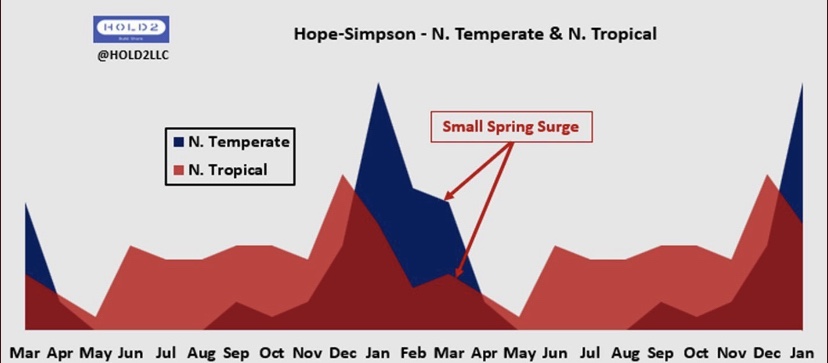
It’s too early to draw definite conclusions, and this variant might prove to be more dangerous with time. In fact, some say that South Africa’s experience might not be representative because of its young population and high natural immunity. It also happens to be early summer there, when higher vitamin D levels help to boost immunity. So, there is a great deal of uncertainty about Omicron (and see here). Nevertheless, I’ll risk a jinx by momentarily contemplating an outcome that’s not terribly far-fetched.

Viruses mutate in ways that help ensure their survival: they must not kill too many of their hosts, which means the usual progression is toward less lethal variants. They may become more contagious, and new variants must be contagious enough to outcompete their ancestors. Viral interference can sometimes prevent multiple viruses from having a broad coexistence. That’s the likely phenomenon we witnessed when the Covid pandemic coincided with the virtual disappearance of the flu and other respiratory viruses. More to the point, it’s the same phenomenon that occurred when the Spanish Flu was eventually outcompeted by less deadly variants.

So it’s possible that a mild Omicron will put the pandemic behind us. If it proves to be as contagious and as mild as it appears thus far, it would likely displace Delta and other variants as the first phase of a new, endemic malady. That might even cut into the severity of the current seasonal wave. The Ethical Skeptic tweets thusly:

So was Omicron an ultra fast-mutating magic terminator variant? A gift from God, or aliens…? … Or natural virility/genetic profile derived from a previous variant conferring immunity …”

That would be a wonderful outcome, but Omicron’s arrival in the northern hemisphere just as winter gets underway contributes to the uncertainty. It’s severity during the northern winter could be far worse than what we’ve seen in South Africa. We can hope this variant isn’t one truly deserving of Chairman Xi’s name.