• About

Sacred Cow Chips

Sacred Cow Chips

Author Archives: Nuetzel

CDC Makes a Bum Lead Steer: Alternate Reality vs. The Herd

16 Sunday May 2021

Posted by Nuetzel in Herd Immunity, Pandemic

≈ 2 Comments

Tags

Adam Kucharski, Andy Slovitt, Anthony Fauci, CDC, Degrees of Separation, Herd Immunity, Herd Immunity Threshold, Joe Biden, Jordan Schachtel, Nathan D. Grawe, Obesity, Phil Kerpen, Pre-existing Immunity, Precautionary Principle, Reproduction Rate, Seroprevalence, Sub-Herds, Super-Spreader Events, Vaccinations, Vitamin D, Zero COVID
Jordan Schachtel enjoyed some schadenfreude last week when he tweeted:

“I am thoroughly enjoying the White House declaring COVID over and seeing the confused cultists having a nervous breakdown and demanding the continuation of COVID Mania.”

It’s quite an exaggeration to say the Biden Administration is “declaring COVID over”, however. They’re backpedaling, and while last week’s CDC announcement on masking is somewhat welcome, it reveals more idiotic thinking about almost everything COVID: the grotesquely excessive application of the precautionary principle (typical of the regulatory mindset) and the mentality of “zero COVID”. And just listen to Joe Biden’s tyrannical bluster following the CDC announcement:

“The rule is now simple: get vaccinated or wear a mask until you do.

The choice is yours.”

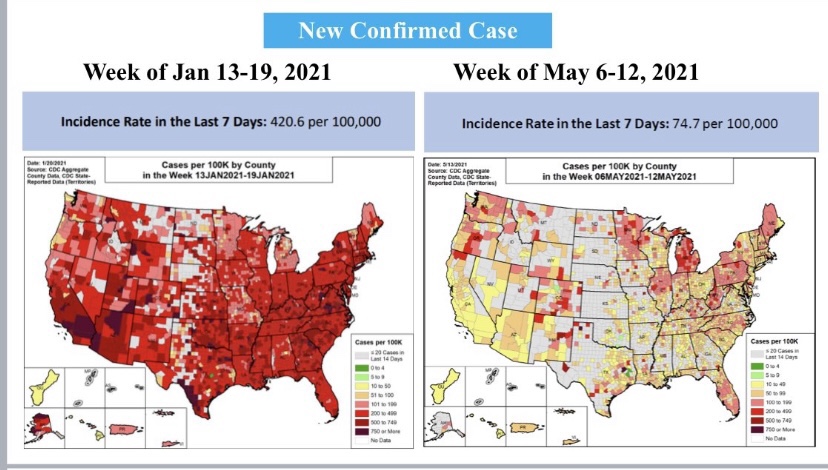
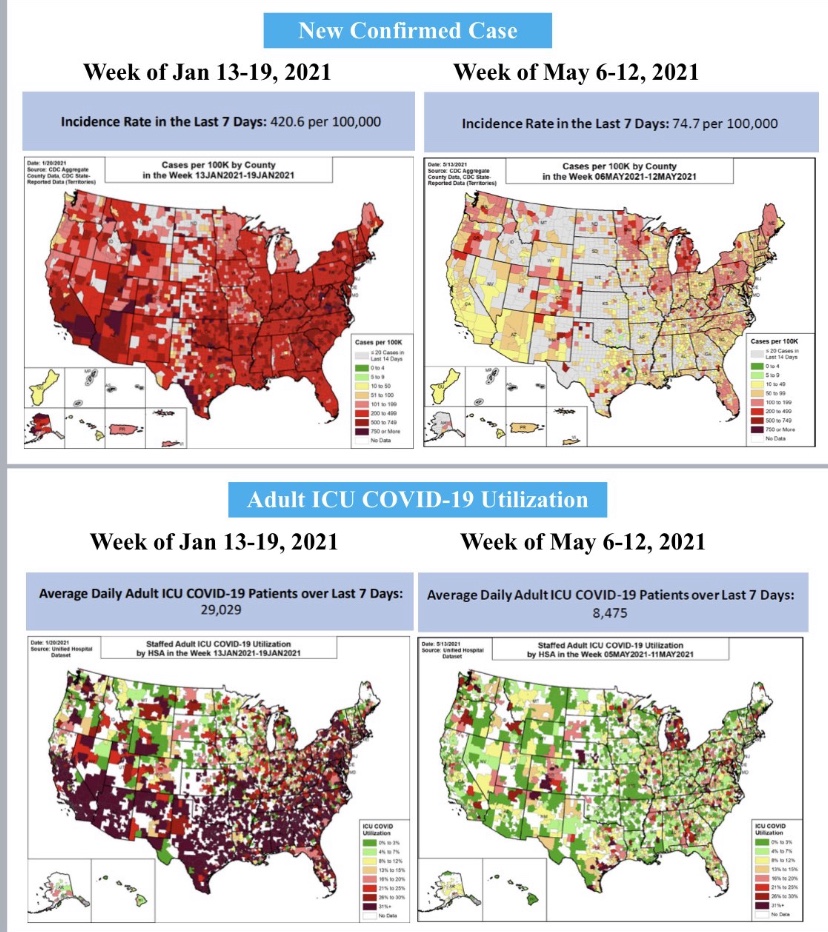
Is anyone really listening to this buffoon?Unfortunately, yes. But there’s no federal “rule”, unless your on federal property; it constitutes “guidance” everywhere else. I’m thankful our federalist system still receives a modicum of respect in the whole matter, and some states have chosen their own approaches (“Hooray for Florida”). Meanwhile, the state of the pandemic looks like this, courtesy of Andy Slavitt:
False Assertions

The CDC still operates under the misapprehension that kids need to wear masks, despite mountains of evidence showing children are at negligible risk and tend not to be spreaders. Here’s some evidence shared by Phil Kerpen on the risk to children:

The chart shows the fatality risk by age (deaths per 100,000), and then under the assumption of a 97% reduction in that risk due to vaccination, which is quite conservative. Given that kind of improvement, an unvaccinated 9 year-old child has about the same risk as a fully vaccinated 30 year-old!

The CDC still believes the unvaccinated must wear masks outdoors, but unless you’re packed in a tight crowd, catching the virus outdoors has about the same odds as a piano falling on your head. And the CDC insists that two shots of mRNA vaccine (Pfizer or Moderna) are necessary before going maskless, but only one shot of the Johnson and Johnson vaccine, even though J&J’s is less effective than a single mRNA jab!

Other details in the CDC announcement are worthy of ridicule, but for me the most aggravating are the agency’s implicit position that herd immunity can only be achieved through vaccination, and its “guidance” that the unvaccinated should be dealt with coercively, even if they have naturally-acquired immunity from an infection!

Tallying Immunity

Vaccination is only one of several routes to herd immunity, as I’ve noted in the past. For starters, consider that a significant share of the population has a degree of pre-existing immunity brought on by previous exposure to coronaviruses, including the common cold. That doesn’t mean they won’t catch the virus, but it does mean they’re unlikely to suffer severe symptoms or transmit a high viral load to anyone else. Others, while not strictly immune, are nevertheless unlikely to be sickened due to protections afforded by healthy vitamin D levels or because they are not obese. Children, of course, tend to be fairly impervious. Anyone who’s had a bout with the virus and survived is likely to have gained strong and long-lasting immunity, even if they were asymptomatic. And finally, there are those who’ve been vaccinated. All of these groups have little or no susceptibility to the virus for some time to come.

It’s not necessary to vaccinate everyone to achieve herd immunity, nor is it necessary to reach something like an 85% vax rate, as the fumbling Dr. Fauci has claimed. Today, almost 47% of the U.S. population has received at least one dose, or about 155 million adults. Here’s Kerpen’s vax update for May 14.
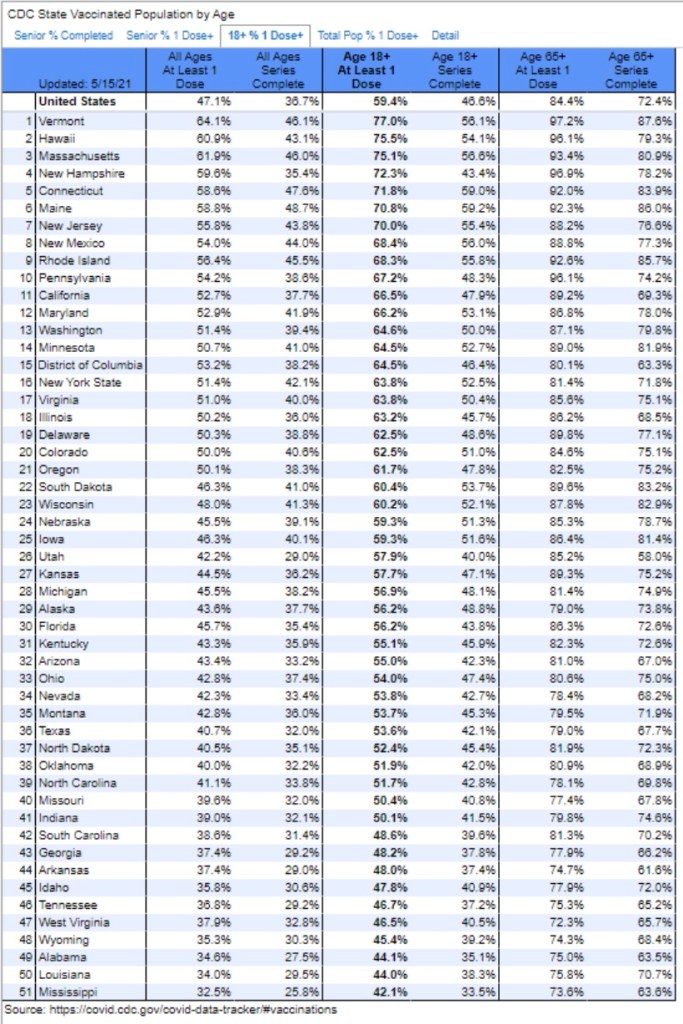
Another 33 million people have had positive diagnoses and survived, and estimates of seroprevalence would add perhaps another 30 million survivors. Some of those individuals have been vaccinated unnecessarily, however, and to avoid double counting, let’s say a total of 50 million people have survived the virus. Some 35 million children in the U.S. are under age 12. Therefore, even if we ignore pre-existing immunity, there are probably about 240 million effectively immune individuals without counting the remaining non-susceptibles. At the low end, based on a population of 330 million, U.S. immunity is now greater than 70%, and probably closer to 80%. That is more than sufficient for herd immunity, as traditionally understood.

The Herd Immunity Threshold

Here and in the following section I take a slightly deeper dive into herd immunity concepts.

Herd immunity was one of my favorite topics last year. I’m still drawn to it because it’s so misunderstood, even by public health officials with pretensions of expertise in the matter. My claim, about which I’m not alone, is that it’s unnecessary for a large majority of the population to be infected (or vaccinated) to limit the spread of a virus. That’s primarily because there is great variety in individuals’ degree of susceptibility, social connections, aerosol production, and viral load if exposed: call it heterogeneity or diversity if you like. Variation across individuals naturally limits a contagion relative to a homogeneous population.

Less than 1% of those who caught the virus died, while the others recovered and acquired immunity. The remaining subset of individuals most vulnerable to severe illness was thus reduced over time via acquired immunity or death. This is the natural dynamic that causes contagions to slow and ultimately peter out. In technical jargon, the virus reproduction rate “R” falls below a value of one. The point at which that happens is called the “herd immunity threshold” (HIT).

A population with lots of variation in susceptibility will have a lower HIT. Some have estimated a HIT in the U.S. as low as 15% -25%. Ultimately, total exposure will go much higher than the HIT, perhaps well more than doubling exposure, but the contagion recedes once the HIT is reached. So again, it’s unnecessary for anywhere near the full population to be immune to achieve herd immunity.

One wrinkle is that CIVID is now likely to have become endemic. Increased numbers of cases will re-emerge seasonally in still-susceptible individuals. That doesn’t contradict the discussion above regarding the HIT rate: subsequent waves will be quite mild by comparison with the past 14 months. But if the effectiveness of vaccines or acquired immunity wanes over time, or as healthy people age and become unhealthy, re-emergence becomes a greater risk.

Sub-Herd Immunity

A further qualification relates to so-called sub-herds. People are clustered by geographical, social, and cultural circles, so we should think of society not as a singular “herd”, but as a collection of sub-herds having limited cross-connectivity. The following charts are representations of different kinds of human networks, from Nathan D. Grawe’s review of “The Rules of Contagion, by Adam Kucharski:
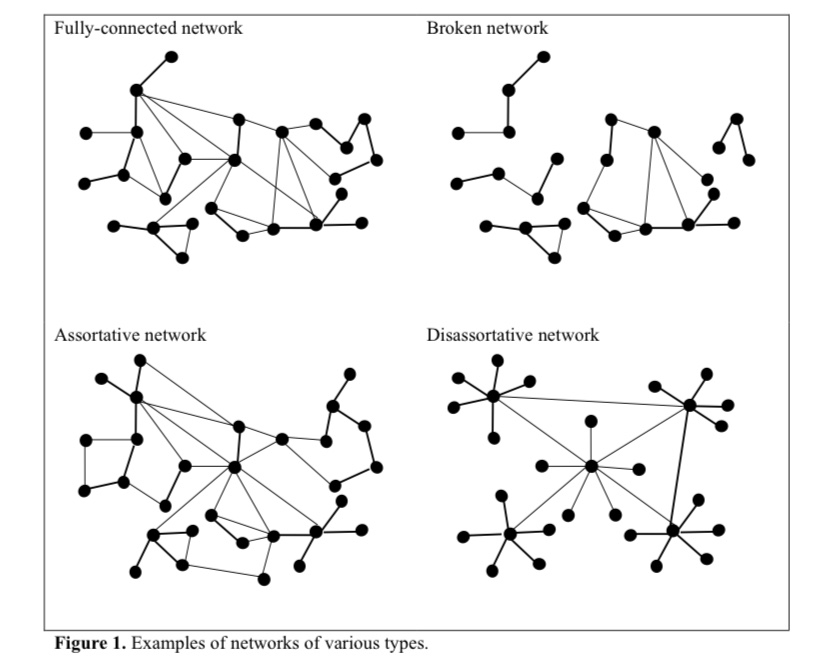
Sub-herd members tend to have more degrees of separation from individuals in other sub-herds than within their own sub-herd. The most extreme example is the “broken network” (where contagions could not spread across sub-herds), but there are identifiable sub-herds in all of the examples shown above. Less average connectedness across sub-herds implies barriers to transmission and more isolated sub-herd contagions.

We’ve seen isolated spikes in cases in different geographies, and there have been spikes within geographies among sub-herds of individuals sharing commonalities such as race, religious affiliation, industry affiliation, school, or other cultural affiliation. Furthermore, transmission of COVID has been dominated by “super-spreader” events, which tend to occur within sub-herds. In fact, sub-herds are likely to be more homogeneous than the whole of society, and that means their HIT will be higher than we might naively calculate based on higher levels of aggregation.

We have seen local, state, or regional contagions peak and turn down when estimates of total incidence of infections reach the range of 15 – 25%. That appears to have been enough to reach the HIT in those geographically isolated cases. However, if those geographical contagions were also concentrated within social sub-herds, those sub-herds might have experienced much higher than 25% incidence by the time new infections peaked. Again, the HIT for sub-herds is likely to be greater than the aggregate population estimates implied, The upshot is that some sub-herds might have achieved herd immunity last year but others did not, which explains the spikes in new geographic areas and even the recurrence of spikes within geographic areas.

Conclusion

It’s unnecessary for 100% of the population to be vaccinated or to have pre-existing immunity. Likewise, herd immunity does not imply that no one catches the virus or that no one dies from the virus. There will be seasonal waves, though muted by the large immune share of the population. This is not something that government should try to stanch, as that would require the kind of coercion and scare tactics we’ve already seen overplayed during the pandemic. People face risks in almost everything they do, and they usually feel competent to evaluate those risks themselves. That is, until a large segment of the population allows themselves to be infantalized by public health authorities.
It’s Time to Make Woke Corporations Hurt!

12 Wednesday May 2021

Posted by Nuetzel in Corporatism, Social Justice, Virtue Signaling

≈ Leave a comment

Tags

Amazon, Apple, Bank of America, Black Lives Matter, Coca Cola, Delta Airlines, Disney, Disney Plus, Disparate impact, Diversity, EEOC, ESG Scores, Fuzzy Logic Blog, Joe Biden, Price Discrimination, Race-Based Discounts, Stakeholder Capitalism, Whole Foods, Wokeness

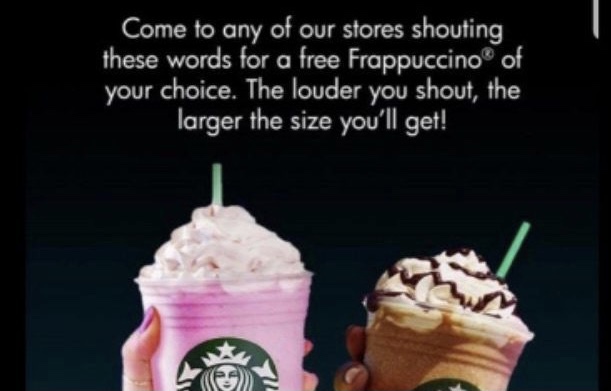
It’s a BLM discount! You need only shout the magic words! Ah, but if “woke” corporations are sincere in their avowals to help end racial injustice, there is so much more they can do! In fact, let me describe an idea so good and rich that we really must partner with Black Lives Matter and Antifa to bring it on!

Yes, we know how much the social justice warriors of corporate America care about diversity, inclusion, and eliminating unconscious bias. Also, in their business practices, they are eager to avoid “disparate impacts” on “protected classes” of individuals. However, if they want to get serious, they need to put real money where their mouths are. The Fuzzy Logic blog (FLB) suggests that we dare corporations celebrating “wokeness” to offer free products and services to people of color (POC)!

There is a strong rationale under current law for a slightly less drastic version of this proposal. For example, in 2019, the median household income of African Americans was about 60% that of whites, but Disney charges blacks and whites the same admission price to their theme parks. That means it costs a black family proportionately more of their income than a white family to spend a day at the park in Orlando. That, my friends, is a disparate impact!

I’m not aware of any legal challenges along these lines, but it’s not as if “one price” is a business necessity, which would otherwise offer Disney a defense against such a claim. Disney already offers discounts to seniors and other groups. But why wait for the EEOC to take action when Disney can demonstrate its high-mindedness and good faith by offering race-based discounts right now?

It would be fun to see how the company reacts to pressure for that kind of action. Based on income disparities, the company could discount tickets by 40% to African Americans and by about 26% for Hispanics. Discounting should be extended to Disney Plus subscriptions as well. Those discounts can be revisited each year with appropriate adjustments until such time as income parity is achieved.

In reality, differential pricing is practiced broadly by American businesses. It’s called price discrimination, and it is generally legal. Higher prices tend to be charged to market segments with less elastic (price-sensitive) demand, and lower prices are offered to segments with more elastic demand. It is a rational and often profit-maximizing approach to pricing, but its practice tends to be more subtle than discriminating on price with respect to race or ethnicity. It’s safe to say that pressure to do so would be disruptive and unwelcome to these firms. So I still like the idea!

But again, FLB’s post goes much farther: given past injustices, why limit the reparations to a correction for the disparate impact of pricing? Something more radical is needed as this is a matter of conscience, not merely a legal hurdle to neutralize income disparities:

“These companies (and the many thousands more engaged in this woke crap) must put their own profits where their big, fat lying mouths are. There will be no government bailouts for them; they must pay for their part in condoning and pushing white supremacy for the past bazillion years, and they must pay with their own wealth, wealth they say they accumulated on the backs of black and brown people.”

Therefore, FLB insists that Disney should offer free admission and streaming on Disney Plus to certain racial and ethnic minorities for a period of several years…and free accommodations at Disney Hotels! What a tremendous show of good faith in wokeness that would be!

We’re picking on Disney, and it’s not alone in its professed racial consciousness and pursuit of equal outcomes. There are so many others! Coca-Cola could issue coupons redeemable at full price through a program of outreach in minority communities. Delta Airlines could institute a program of “Black Life Passports” to bona fide African Americans (meaning one must identify as such!) for discounted or free fares. Bank of America will probably want to exceed the minimum requirements under community banking law by offering free banking services and heavily discounted account management fees to African Americans. Amazon will no doubt want to offer free Prime memberships to certain minorities and perhaps throw in some freebies at Whole Foods as well. And Apple has plenty of merchandise to give away. Why wait for Joe Biden to offer free phones in the run-up to the 2024 election like his old boss did?

You probably won’t be happy about this proposal if you’re a corporate shareholder, but then you should not be happy to have witnessed increasing management preoccupation with social justice, and you should not have been happy as your “agents” lost sight of their fundamental missions as business organizations: to produce something well and thereby do well for customers and shareholders. The sad consequence of “stakeholder capitalism” is that everything a business is supposed to do gets done worse.

I recently discussed the assignment of “scores” to public companies for their focus and performance on environmental, social, and governance (ESG) factors. These ESG scores are used by “woke” fund managers and advisors to select or rate stocks. I personally have no wish to invest in companies seeking to boost their ESGs, but you can read all about that at the link. For our purposes here, ESGs might serve well as a tool for identifying entities most in need of pressure to offer discounts and freebies to POC.

It would be great to see agitation against the woke-most corporations for race-based discounts and free products. Perhaps a broad discussion of the idea would prompt social justice warriors to get on board. It might provide some laughs, but the real hope is to shake the corporate wokesters from their virtue-signaling stupor. Most shareholders wouldn’t like race-based discounts, of course, and that’s part of the idea. A conceivable defensive maneuver for our “target” entities would be a lobbying effort for government action such as tax-financed reparations. That won’t necessarily be cheap for them or their shareholders, however. Get woke, go broke!

NFT Assets, Artists, and Con Games

08 Saturday May 2021

Posted by Nuetzel in Art, Corruption

≈ 2 Comments

Tags

000 Days, Aeriel, Asset Inflation, Beeple, Beeple Crap, Blockchain, Carbon Offsets, Christie’s, Copyright, Crypto-Currency, Digital Racehorses, Ergreifungen, Everdays: The First 5, Face, Federal Reserve, Jerry Garcia, Jerry Garcia Foundation, Katy Perry, Long Con, Metakoven, Metapurse, Mike Winkelmann, NFTs, Non-Fungible Tokens, Remodern Review, Richard Bledsoe, Roper, Royalties, Shill, The American Reveille, Tokenomics

The art world is buzzing about “non-fungible tokens” (NFTs), or digital files in which ownership is secured by blockchain technology. As the name suggests, such a crypto-asset can exist only as a whole piece. That’s unlike crypto currency, which is infinitely divisible and, well, fungible. NFTs are diverse in their features and functions, and various kinds of art are now being traded as NFTs: digital images, GIFs, and audio clips, for example.

Beeple Crap

A digital artist named Mike Winkelmann, otherwise known as Beeple, makes digital “Beeple-crap”, as he calls it, like the giant “Xi-bot” shown above. He has successfully monetized the digital images he’s posted on his web site over the last 13 years, and in a coup de grace, he recently aggregated all those images into a one-file mashup NFT for which a buyer paid $69.3 million in Ethereum (less a substantial fee to Christie’s auction house). And Beeple isn’t the only one making big bucks on NFTs!

Beeple’s “collage” is available for anyone to see or copy on the web. It’s called “Everdays: The First 5000 Days”. But precisely what are the rights now held by the buyer of “5000 Days”? Apparently, they are limited to the satisfaction of knowing digital proof of ownership is his, and whatever that smug feeling might be worth on potential resale! In fact, Beeple himself retains the copyright to 5000 Days, so it’s not as if the buyer is the only guy who can ever print a high-resolution copy. But here’s what Beeple says the buyer got:

“The biggest thing he actually bought is a relationship with me to promote his purchase. He and I are very aligned. I want to see this artwork go up in value. He wants to see the artwork go up in value, which benefits me. So the idea that he bought nothing is kind of misleading.”

The buyer, known as Metakovan, is the founder of Metapurse.fund, a highly influential player in crypto ventures and NFTs. But Metakovan’s purchase of 5000 Days is not his first collaboration with Beeple. They already had a significant “relationship”, and this transaction obviously won’t be their last.

If this smells a bit like a con game to you, you’re not alone. Don’t get me wrong: Beeple does produce art … very striking images, in fact. They might not be your cup of tea, and many are a bit cartoonish, but Beeple has computer skills and a real creative streak. He also has a knack for self-promotion unequalled, in relative terms, by perhaps any of the old masters or impressionists.

I’m perfectly happy to know there is a vibrant market in anything people call art. Whatever floats your boat, baby! However, I have trouble believing that long-term growth can occur on top of this kind of “valuation” without an escalating monetary inflation. Between the Federal Reserve’s open-spigot policy of near-zero interest rates and the advent of crypto-currencies with supply limits, dollars are getting cheap. Asset markets, still denominated in dollars, usually receive more than their fair share of bidding as excess dollars accumulate on balance sheets. So the outlook might be bright for NFTs as an asset class, such as it is.

Art In the Ersatz

The most regrettable thing about NFTs like 5000 Days might be what they reflect about the state of the art world itself. Richard Bledsoe of the Remodern Review has a lively take on 5000 Days and NFTs as a new stage in the long decline in the quality of what is called art. Bledsoe is no fan of contemporary art, which he argues has been enabled by elites who have successfully corrupted the art market.

I’m no expert, but I generally view contemporary art as less ambitious and requiring less skill than earlier forms. I think that’s easy to prove (see here and here), but it’s outside the scope of this post. I have wondered whether the emergence of contemporary art was impelled by the tremendous increase in prosperity during the late 19th and 20th centuries and the attendant expansion in the market for original art. Artists such as painters and sculptors, whose labor productivity did not greatly benefit from technology growth (we can argue about the last several decades), might have adjusted to this reality by focusing on simpler and more abstract forms. This is a digression, but it’s surely worthy of a much longer treatment. 

There’s no accounting for tastes, of course, and while I like some contemporary art, I’m definitely sympathetic to Bledsoe’s views. As for NFTs, he quotes from his book, “Remodern America: How the Renewal of Art Will Change the Course of Western Civilization”:

“Billions are being spent on unskilled and intangible contemporary art. Just like in the good old days, many of the suckers are the newly rich or globalists looking for social credibility and a fast buck. There’s a lot of money laundering and tax evasion in the equation as well.

How does the art world convince well-heeled fools to part with their money, when they are offering so little real value in return? Simple. The art market follows the tried and true methods honed by generations of confidence tricksters: the elaborate pantomime known as the long con…”

Don’t You Let That Deal Go Down

Bledsoe gives a brief sketch of the mechanics of the “long con” and how it’s practiced in the art market. He describes players such as the “Shill” (a promoter who avoids revealing a personal stake), the “Face” (a celebrity whose presence helps to “guarantee buzz will exceed rationality), and the lastly the “Roper”:

“… whose affluence leads to influence, a savvy and powerful individual whose participation gives credibility to the whole enterprise. What is ignored is how much moguls like this manipulate the market to serve personal interests, using insider trading, shady financing and backroom deals to inflate the value of their own collections.

In any other industry, common practices of the establishment art market could probably lead to criminal charges. But in the unregulated free-for-all of the art world, it’s very hard to bring these cases of potential white-collar crime to justice, and the victims here are less than sympathetic. After all, the buyers are people who have so much money it’s meaningless to them. Who cares if a bunch of billionaires are getting ripped off?”

All of these players seem well ensconced in the world of promoting NFT art: Beeple in particular, and the “art experts” at Christie’s, Beeple’s celebrity pals (OMG! Katy Perry!!), and finally Metakovan’s stature as an authority on NFTs and “tokenomics”. By the way, his considered opinion is that 5000 Days is “worth a billion dollars”. Well, okay then!

Carbon Indulgences

Another insane aspect of NFTs and the crypto-currencies used to buy them is the pushback over the carbon footprint of crypto-currency mining. This is discussed briefly by Bledsoe as well. While the electricity used in mining is significant, the amount attributable to any given transaction is minuscule. Yet now, sales of high-value NFTs are accompanied by the purchase of carbon credits. Read this description of an auction to be held for a piece of art created by Jerry Garcia on a Mac in 1990. It says “… carbon offsetting to be provided by a company called Aerial.” Now, Jerry Garcia was a talented visual artist on canvas and on his early Mac, not to mention his considerable magic as a guitarist and songwriter. God bless his family, and no offense to the Garcia Foundation, but they were perfect suckers for what has quickly become a standardized virtue signal or buy-off. The fact is that carbon offsets generally don’t have an impact for many years, and there are doubts as to their efficacy in permanently reducing carbon when the time comes.

Redeeming Potential

While the artistic value of NFTs like 5000 Days can be debated, my doubts about their value as assets center around the lack of real ownership rights conferred to buyers. Work is underway, however, on new NFT standards that would allow an NFT buyer to collect royalties, which would obviously carry real value. So, for example, a musician or band could immediately monetize a recording’s future royalties by selling it as an NFT. No one should have qualms about that, and good for the musicians.

I believe other kinds of NFTs have real value, in principle, such as the digital racehorses discussed in this article. Apparently, virtual horse races have already achieved a degree of popularity. These crypto-horses actually win prize money and collect stud fees, based on their digital bloodlines. Another example: NFTs can be concert tickets, electronic possession of which entitles the bearer to a particular seat at the venue; or, an NFT might remain in your “digital wallet” as a season ticket to sporting events. Among the claimed advantages over “normal” electronic ticketing is security, and NFT tickets live on as tradeable memorabilia as well.

Conclusion

It’s still early days for crypto-currencies and especially for NFTs. I can’t object to a free individual spending their hard-earned crypto-wealth on crypto-art like 5000 Days. Unfortunately, the market for NFT art does seem to embody aspects of a confidence game. And like Richard Bledsoe, I’m a skeptic when it comes to most contemporary art. However, there are circumstances under which the value of NFTs can be compelling, and the development of more “use-cases” will increase the value of digital currencies. New NFT standards and applications might well revolutionize certain industries. Continuing asset inflation instigated by central banks, and especially the Federal Reserve, will cause the dollar value of crypto-assets to rise. Big institutions like investment banks are starting to jump on the crypto bandwagon as well. So, while some NFTs might be short-term plays and might even be dangerous swindles, crypto and NFTs in general should not be dismissed as an asset class.

A Blogger’s Lament: It’s a Meme, Meme, Meme, Meme, Meme, Meme, Meme, Meme World

02 Sunday May 2021

Posted by Nuetzel in Blogging

≈ 3 Comments

Tags

Blogging, Covid-19, Critical Race Theory, Graphs, Meme Fatigue, Memes, Social Media, Wordpress

A few years ago a guy clicked through to this blog from a social media site. Apparently he made a quick retreat, and he left the following comment: “Ohh, too many words….” It’s not a revelation to me, but it’s amazing how few people are willing to READ!

My nephew, who is something of a political activist and has a news site of his own, put his finger on it last year. In a piece I’d written about pandemic issues, I used a cover photo of a graph illustrating one of my main points, as I do sometimes when empirics are involved. I’m paraphrasing, but he said I shouldn’t use graphs as covers because it scares off potential readers. It says, “if you click through you’ll have to think!” But I have no ambitions to be a mass sensation, and as a reader of blogs I tend to regard such devices positively. On the other hand, if a picture is worth a thousand words, there’s a chance that good thinkers gather in what they presume they need to know without clicking through. That’s almost as bad from my perspective, because I want to give them the thousand words anyway!

Here’s a similar phenomenon: occasionally I’ll use a meme as a cover photo for a blog post, but some people “like” the post solely because of the meme without bothering to click through! I’m glad we’re simpatico, but I’d prefer they read the post. I view that kind of reaction as lazy or the act of an easily distracted individual.

I have no interest in writing for people who don’t want to think, but the rub lies in finding those that do. I have a full time job, so producing more content is not an option. I’m not affiliated with a well-known publication or an institution with a significant presence on the web. My readers come from the WordPress community, search engines, and a few social media sites to which I cross-post. Occasionally, if the subject matter is pertinent, I post comments to articles on other blogs and link to one of my posts. That brings in a few views, and those visitors have a definite interest in the subject matter.

Social media sites would seem to be a natural channel for readers, but of course they are jam-packed with memes. Some of those are very good and some are very funny. Some are surely worth a thousand words, but I quickly develop “meme fatigue”. And both good memes and bad memes seem to be reposted ad infinitum.

Simplification and humor are major elements of “meme art”, and I would describe the best of it as such. The ability to simplify is likewise one of the greatest skills an economist can possess, so I respect it. In fact, I like to call economics formalized common sense, but that formalization must happen within an expository framework. Many of my posts are mere commentary, but I like a somewhat deeper dive than the meme form can accommodate. If I get excited about a topic and immerse myself, blogging gives me an opportunity to do some research and explain my point of view while doing my best to apply economic thinking. Moreover, I like to write. Unfortunately, I’m not all that funny, but sometimes I try.

I’m frequently disappointed to see memes I view as extremist, distorted, shallow or over-simplified. For example, I’m no fan of critical race theory, but it’s not fiction to say that racist memes sometimes appear on social media, which prompts me to block the poster immediately.

I scroll through a few memes each day, but I spend more time checking the other blogs I frequent, where I find gobs of interesting reading material. I join groups related to my musical interests, which offer great recordings. I occasionally watch video commentary, but prefer the written form. I have friends who send me lonnnng videos, but I wish they’d send transcripts instead. A two-hour video is not a commitment I’m usually willing to make!

There are many who say blogging is passé, and apparently many don’t have the patience to read lengthier treatments. It’s still the form I prefer, despite the difficulty of battling for eyeballs with memes. But that’s not quite right: there’s really no battle when it comes to those without interest in detailed treatments of issues. The real battles have to do with finding motivated and patient users with common interests and getting more favorable placement on biased search engines. Good content is also key, but that challenge is part of the joy of blogging.

Social Credit Scores, ESGs, and Portfolio Rot

29 Thursday Apr 2021

Posted by Nuetzel in Capital Markets, Corporatism, Environment, Social Justice

≈ 4 Comments

Tags

American Conservative Union, Asian Hate, Bank of America, Credit Bureaus, Credit Score, CSRHub, Diversity, Environmentalism, Equifax, ESG Scores, ESGs, FICO Score, Giorgio Election Law, Goldman Sachs, Green Energy, Major League Baseball, Merrill Lynch, public subsidies, Refinitiv, Selling Indulgences, Social Credit Score, Social Justice, Stakeholders vs. Shareholders, Stop Corporate Tyranny, Sustainability, Transunion, Unilever, Woke Capitalism.

As a small investor I resent very much the use of so-called “ESG scores” to guide investment decisions on my behalf. ESG stands for “Environmental, Social, and Governance” criteria for rating companies. These scores or grades are developed and assigned by various firms (Refinitiv, CSRHub, and many others) to public companies. The scores are then marketed to financial institutions. While ESGs from various sources are not yet standardized, a public company can attempt to improve its ESG scoring through adoption of environmental goals such as “zero” carbon, diversity and inclusion initiatives, and (less objectionably) by enhancing its systems and processes to ensure protection of shareholder and other interests.

Who Uses ESGs?

An investment fund, for example, might target firms with high ESG scores as a way of appealing to progressive investors. Or an institutional investor like a pension fund might wish to invest in high ESG stocks in order to avoid riling “woke” activist investors, thus keeping the hounds at bay. This is nothing new: many corporations engage in various kinds of defensive actions, which amount to modern day “selling of indulgences”.

An aggregate ESG score can be calculated for a fund or portfolio of stocks by weighting individual holdings by market value. And of course, an ESG score can be calculated for YOUR portfolio. As a “service” to clients, Merrill Lynch plans to do just that.

My first reaction was to give my ML financial advisor an earful. Of course, ML’s presumed objective is to guide you to make “better” investment decisions. However, I do not wish to reward firms with capital based on their “social” positioning, nor do I wish to encourage exercises in “wokeness”. I simply want to supply capital based on a firm’s business fundamentals.

My advisor was more than sympathetic, and I believe he’s sincere. The problem is that corporate wokeness is so ubiquitous that it becomes difficult to invest in equities at all without accepting some of it and just holding your nose. That goes for virtually all ETFs and index funds.

ESGs Are Not Consumer Scores

I’m obviously unhappy about this as a Merrill account holder, and also as a financial economist and a libertarian. But first, a few words about what is not happening, at least not yet. A number of conservative commentators (see here, and here) have described this as an assignment of “social credit scores” to consumers based on their individual or household behavior, much as the Chinese government now grades people on the quality of their citizenship. These conservative voices have reacted to ESG scores as if they incorporate information on your energy usage, for example, to grade you along the environmental dimension. That is not the case, though ESGs can be used to grade the stocks you own. And yes, that is rather Orwellian!

One day, if present trends continue, banks might have access to our energy usage through affiliations with utilities, smart car companies, and various data aggregators. And who knows? They might also use information on your political contributions and subscriptions to grade you on your social “wokeness”, but only if they have access to payment records. Traditional credit information will be used as it is now, to grade you on financial discipline, but your “consumer ESG” might be folded into credit approval decisions, for example, or any number of other decisions that affect your way of life. But except for credit scoring, none of this is happening today. All the consumer information outside of traditional credit scoring data is too scattered and incomplete. So far, ESGs are confined to evaluating companies, funds, and perhaps your portfolio.

ESGs and Returns

ESGs get plenty of favorable coverage from the financial press and even from academics. This post from The Motley Fool from 2019 demonstrates the kind of praise often heaped upon ESGs. Sure, firms who cater to various cultural trends will be rewarded if they convince interested buyers they do it well, whatever it is. That includes delivering goods and services that appeal in some way to environmental consciousness or social justice concerns. So I don’t doubt for a moment that money can be made in the effort. Still, there are several difficulties in quantitatively assessing the value of ESG scores for investment purposes.

First, ESG inputs, calculations, and weights are often proprietary, so you don’t get to see exactly how the sausage is stuffed. On that point, it’s worth noting that much of the information used for ESG’s is rather ad hoc, not universally disclosed, or qualitative. Thus, the applicability (and reliability) of these scores to the universe of stocks is questionable.

Second, inputs to ESGs represent a mix of elements with positive and negative firm-level effects. I already mentioned that ESGs reward good governance on behalf of shareholders. The environmental component is almost surely correlated with lines of business that qualify for government subsidies. More generally, it might reflect conservation of certain materials having a favorable impact on costs. And attempts to measure diversity might extract legitimately positive signals from the employment of highly productive individuals, many of whom have come from distant shores. So ESG scores almost certainly have a few solidly useful components for investors.

The proprietary nature of ESG calculations also raises the question of whether they can be engineered to produce a more positive association with returns. There’s no doubt that they can, but I’m not sure it can be confirmed one way or the other for a particular ESG variant.

Like cultural or consumer trends, investment trends can feed off themselves for a time. If there are enough “woke” investors, ESGs might well feed an unvirtuous cycle of stock purchases in which returns become positively correlated with wokeness. My thinking is that such a divorce from business fundamentals will eventually take its toll on returns, especially when economic or other conditions present challenges, but that’s not the answer you’ll get from many stock pickers and investment pundits.

Remember also that while a particular ESG might be positively correlated with returns, that does not make it the best or even a good tool for evaluating stocks. In fact, it might not even rank well relative to traditional metrics.

Finally, there is the question of causality. There are both innocent and pernicious reasons why certain profitable firms are able to spend exorbitantly on initiatives that coincidentally enhance their ESGs. More on that below.

Social and Economic Rot

Most of the “green” initiatives undertaken by large corporations are good mainly for virtue signaling or to collect public subsidies. They are often wasteful in a pure economic sense, meaning they create more waste and other costs than their environmental benefits. The same is true of social justice and diversity initiatives, which can be perversely racist in their effects and undermine the rule of law. And acts on behalf of “stakeholders” often sacrifice shareholders’ interests unnecessarily.

There are many ways in which firms engaging in wasteful activities can survive profitably, at least for a time. Monopoly power is one way, of course. Large companies often develop a symbiosis with regulators which hampers smaller competitors. This is traditional corporatism in action, along with the “too big to fail” regime. And again, sheer growth in demand for new technologies or networking potential can hide a lot of warts. Hot opportunities sometimes leave growing companies awash in cash, some of which will be burned in wasteful endeavors.

Ultimately, we must recognize that the best contribution any producer can make to society is to create value for shareholders and customers by doing what it does well. But to see how far the corporate world has gone in the other direction, keep this in mind: any company supporting a sprawling HR department, pervasive diversity efforts, “sustainability” initiatives, and preoccupations with “stakeholder” outreach is distracted from its raison d’etre, its purpose as a business enterprise to produce something of value. It is probably captive to certain outside interests who have essentially commandeered management’s attention and shareholders’ resources. And this is evidence of rot.

My reference to “portfolio rot” reflects my conviction is that it is a mistake to dilute investment objectives by rewarding virtue signals. They are usually economically wasteful, though sometimes they might be rewarded via government industrial policy, regulators, and the good graces of activists. But ultimately, this waste will degrade the economy, undermine social cohesion, and devalue assets generally.

What Can We Do?

Despite the grim implications of widespread ESG scoring, there are a few things you can do. First, simply avoid any funds that extol progressive activism, whether based on ESGs or along any dimension. If you invest in individual stocks, you can avoid the worst corporate offenders. Here is one guide that lists some of the “woke-most” companies by industry, and it provides links to more detailed reviews. I gave my advisor a list of firms from which I wanted to permanently divest, including Bank of America, which owns Merrill! I also listed various firms that are owned and operated by Chinese interests because I am repulsed by the Chinese regime’s human rights violations.

If you have the time, you can do a little more research before voting your proxies. That goes for shareholder, board, or management proposals as well as electing board members. You are very unlikely to swing the vote, but it might send a useful signal. I recently voted against a Unilever green initiative. I also researched each of the candidates for board seats, voting against a few based on their political, social and environmental positions and activities. Good information can be hard to get, however, so I abstained from a few others. This kind of thing is time consuming and I’m not sure I’m eager to do very much of it.

You can also support organizations like the American Conservative Union, which is “taking a stand against the increasingly divisive and partisan activism by public corporations and organizations that are caving to ‘woke’ pressure.” And there is Stop Corporate Tyranny, which is “a one-stop shop for educational resources exposing the Left’s nearly completed takeover of corporate America, along with resources and tools for everyday Americans to fight back against the Left’s woke and censoring mob in the corporate lane.”

People can make it harder for social credit scoring to enter the consumer realm by protecting their privacy. There will be obstacles, however, as sellers offer certain benefits and apply “nudges” to obtain their customers’ data, and it is often shared with other sellers. Sadly, one day those who guard their privacy most closely might find themselves punished in the normal course of trade due to their “thin” social credit files. There are many dark aspects to a world with social credit scoring!

Conservative Social Scoring?

There are at least two ETFs available that utilize conservative “social scoring systems” in picking stocks: EGIS and LYFE. Both are sponsored by 2ndVote Funds. EGIS has as its stated theme to invest in stocks which receive a favorable rating in support of the Second Amendment right to bear arms and/or in the interest of border security. LYFE seeks to meet its long-term return objectives in stocks with a favorable rating on the pro-life agenda. Both have reasonable expense ratios, as those things go. Unfortunately, my advisor says Merrill won’t allow those funds to be purchased until they have close to a full year of experience.

Are these two ETFs really so special? Are they really just marketing gimmicks? After all, I noticed that EGIS has Goldman Sachs in its top 10 holdings. While Goldman might not be the worst of its peers in terms of wokeness, it has stooped to some politically-motivated “cancel capers”. Moreover, do I really want to mix my investment objectives with my social preferences? Leftist investors are doing it, so countering might be well-advised if you can afford the risk of diluting your returns. My heart says yes, but my investor brain isn’t sure.

Closing

When it comes to investing, I’d prefer absolute neutrality with to respect social goals, other than the social goals inherent in the creation of value for customers and shareholders. Any emphasis on ESG scores is objectionable, but it’s a regrettable fact that we have to live with to some extent. If “social scoring” is unavoidable, then perhaps the themes adopted by 2ndVote Funds are worth trying as part of an investment approach. After all, given my personal blacklist of woke corporations, I’ve already succumbed to the temptation to invest based on social goals. And I feel pretty good about it. Unfortunately, it might mean I’ll sacrifice return and witness the continued descent of western society into a woke hellscape.

Give Back My Stolen Face

24 Saturday Apr 2021

Posted by Nuetzel in Coronavirus, Grateful Dead, Social Control

≈ Leave a comment

Tags

Anthony Fauci, Asymptomatic Spread, CIVID-19, Edibles, Grateful Dead, Hand Washing, Hookahs, Jake’s Leg, Masks, Social Distancing, Spinning, St. Louis, St. Louis County Department of Health, Vaccination, Vaccine Passports

She looks good in a mask, and I grant you: masquerades often convey exciting undertones of sexual adventurism. But masquerades and masks should be novelties, not a constant way of life dictated by over-precautious public health authorities.

That brings me to the subject of an outdoor concert I’m attending with some friends on May 8th. It’s to be held at a grassy amphitheater along the Mississippi River in south St. Louis County. Unfortunately, the county health department imposes idiotic rules at this and other outdoor facilities. In the document at the link, it’s clear the rules were given some spin by the band who will perform that night, Jake’s Leg, a very good Grateful Dead cover band. And I get it: these guys just want to play music and perform for their fans, who will be happy to soak in the sounds, party, and dance the night away. Still, some of the rules are absurd and fly in the face of “the science”.

There is a certain libertarian streak among Grateful Deadheads, though in terms of realpolitik, probably the majority is of a more collectivist persuasion (not me). Some in the crowd will welcome the rules and might even go so far as to rat-out anyone whose behavior they find “unsafe”. Others will just go along with the rules as they interpret them. Some like me might push the envelope. But as the evening wears on… what a nice expression, … “as the evening wore on…”, it will be interesting to see whether forces tear loose from the prescriptive axis.

I’ve excerpted some of the rules below and added brief commentary. They appear in the order listed in the document, though it might seem a bit jumbled. I’m sorry to have left out most of the friendly color added by the band:

“Bring a cloth or paper face covering. You will not be allowed entry if you do not have one. Gaiters, bandanas and full-face shields are not acceptable as primary or only face covering. Face coverings must completely cover the nose and mouth. Children under 2 years old are not required to wear a face covering.”

The chances of contracting COVID outdoors are virtually nil, and don’t tell me we’re just learning these details … we’ve known that since almost the beginning of the pandemic. Second, in any case, cloth and paper masks are ineffective at stopping the aerosols responsible for most viral transmission. That’s been known for many years. Our public health experts are only now starting to admit these facts. Allowing toddlers to go maskless is the only concession, and it’s true that transmission by children is unlikely and COVID severity in children is very low. But that goes for older children as well, not just toddlers. Asymptomatic spread is similarly rare, so if you feel good enough to go (and they’ll check your temperature at the gate), you are unlikely to present a risk to anyone.

“Please bring small personal coolers only (no coolers w/ wheels) for your favorite beverages (cans and non- breakables please), along with snacks and food, chairs, blankets and personal use items for you and your small group.”

So, maybe not so bad… it’s about like the usual charade at restaurants: we must enter wearing masks, but then we can rip them off as soon as we find a spot to enjoy the music, our snacks, beverages and those all-important personal use items. Hmm, I guess the unsanitary passing of spleefs ist verboten. A hookah with several hoses could accommodate a small group, but that never goes over with an event staff! Edibles are fine!

“Have your ticket ready to be scanned … and always maintain at least 6 feet social distancing while you’re in line. Markers will be placed as a reminder for you.”

Even indoors, three feet of distancing has been acknowledged as adequate by the undeservedly celebrated Dr. Anthony Fauci.

“Please spread out and maintain at least six feet social distancing from other attendees outside of your small group. There is plenty of room to move and dance.”

More of the same hogwash. Note that the requirements offer no definition of “small group”. To appreciate the absurdity and unnecessary ass-covering inherent in all this, let me point out that my “small group” will consist of six or seven friends who haven’t met as a group in more than a year, We are almost sure to mix with other friends whom we’ll see at the show. So group members will migrate between groups, or small groups might merge into somewhat larger “small groups”. This will be happening all over, and it’s a pretty sure bet there will be lapses in mask compliance. If you happen to be spinning or dancing, the last thing you should do is wear a mask. You need oxygen, and you should avoid trapping hot breath and spittle right up against your face (see the latter part of this article).

“Once you’ve found a place to watch the show, please stay with your group at your area. If you must leave your space, you must wear a face covering at all times whenever you are not able to maintain at least 6 foot social distancing.”

Uh-huh… “Distancing” is not always clear-cut behavior. You pass people coming and going and dancing around. Are you “distancing” on average? Will you be ejected if you briefly come within a few feet of another concert-goer, sans mask? These are matters of uncertain degree, and it’s generally why police don’t enforce mask mandates in pedestrian areas, aside from a few draconian “mask traps” outside stores. Outdoors, it’s absurd.

“Please wash/sanitize your hands before and after using all restroom facilities. Always be kind, think of others and practice social distancing when waiting.”

Post-toilet hand washing is always a good practice, of course, but these guys are nuts! When I arrive at the restroom, I’m generally not worried about the remote chance that my hands will pass the virus to my genitals or vice-versa, and we know that the virus isn’t transmitted from surfaces. It’s also regrettable that masks and distancing will limit those sometimes entertaining conversations in bathroom lines.

“All attendees must adhere to these guidelines regardless of vaccination status.”

This also is sheer stupidity, and I’m complaining only because it reflects the “Zero COVID” mentality of the public health authorities holding us hostage. I guess I’d rather not bring my vaccination card along in any case, and at least they aren’t requiring “vaccine passports” for entry to the venue. But just in case I’m misunderstood, the chance that a fully vaccinated individual will catch or transmit the virus is very low and not even worthy of concern in any rational balancing of risk and benefit.

“Disclaimer: All venue initiatives to prevent the spread of COVID-19 are strictly followed and enforced. Those on premises are subject to compliance with all venue safety procedures and protocols. Non-compliance will result in refused entry or ejection from venue without refund. Upon purchasing tickets for the event, you acknowledge and agree to adhere to all venue policies.”

Again, as a practical matter, some of the rules listed above are virtually unenforceable, but we’ll see how the evening unfolds with a crowd of free-wheeling Deadheads. It could be all strangers stopping strangers, just to bump their elbows. Either way, if past is prelude, the amphitheater will be something of a heart-of-gold land.

BLM’s Trail of Homicide

20 Tuesday Apr 2021

Posted by Nuetzel in law enforcement, Police Bias

≈ Leave a comment

Tags

Alex Tabarrok, Black Lives Matter, BLM, BLM Protests, Defund the Police, Freddie Gray, George Floyd, Lethal Force, Marxism, Police Homicides, Property Crime, Systemic Racism, Travis Campbell, Vox

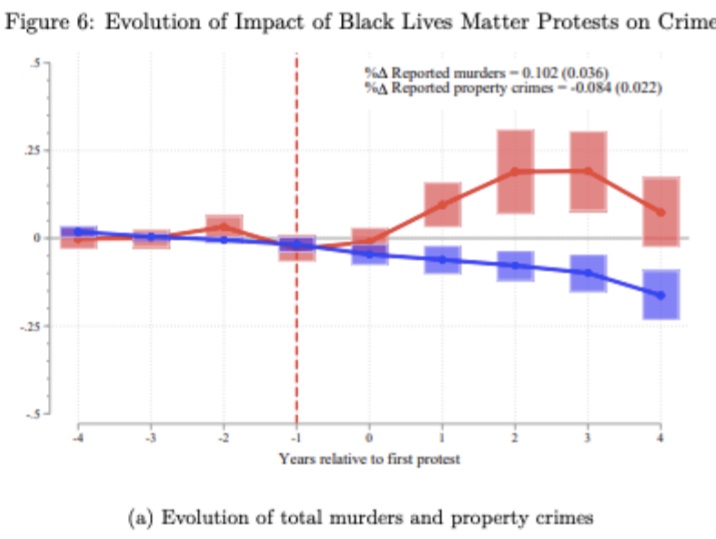
Check out this Vox article on the impact of Black Lives Matter (BLM) protests on police homicides, other homicides, and property crime within the communities where protests occurred. It cites a study by Travis Campbell, a Ph.D. candidate in economics at UMass-Amherst with the following major findings for the period 2014-2019:

1) Police homicides in census areas where BLM protests took place were 10% – 15% less than if those deaths had followed the trend where BLM protests did not take place, after controlling for confounding factors like the local unemployment rate. That’s about 300 fewer uses of lethal force by police, or one less for every 4,000 BLM protestors. So far, so good, one might guess.

2) Other homicides increased by roughly 10% using the same basis of comparison, or somewhere between 1,000 and 6,000. This estimate is less precise for a number of reasons, and it was not the main focus of Campbell’s research. Still, using a value near the mid-point, say 3,000, yields one extra murder for every 400 BLM protestors! The effect seems to taper off after about four years.

3) Reported property crimes decreased by 8.4% in areas that had BLM protests, but the share of those crimes solved declined by 5.5%. Campbell interprets the latter as an indication of reduced policing intensity. Reports of crime might decline if confidence in the police declines post protest, but reduced effort by the police is also consistent with less reported property crime, less police engagement, and more homicide.

As Alex Tabarrok says:

“The explanation is consistent with what happened in Baltimore after the Freddie Gray protests and riots, namely arrests went down and murders went up.”

The research did not include data on the 2020 protests and riots following the death of George Floyd due to lags in reporting homicides and crime.

One of BLM’s primary objectives is to end “systemic racism” in policing, a problem that has no real empirical basis. Nevertheless, a reduction in deadly confrontations between police and blacks would seem to be a win (though the study doesn’t address the racial makeup of police homicides). But if that means less police engagement and a substantial increase in homicides in the community, the cost is obviously too high. Areas suffering from high homicide rates need more policing, not less. But yes, it must be good policing in partnership with citizens, and there are real reforms that could help.

BLM’s continued calls to “defund the police” are more about signaling lofty intent than about solving real problems. After all, that’s the perverse charm of the Marxism espoused by BLM, Antifa, and gentry leftists having class immunity to unintended (but predictable) consequences. You don’t really have to solve problems. You can just make them for others and take credit for trying!

The Social Security Filing Dilemma

19 Monday Apr 2021

Posted by Nuetzel in Risk, Social Security

≈ Leave a comment

Tags

Deferred Benefits, Full Retirement Age, Life Expectancy, Opportunity cost, Retirement Savings, Risk Tolerance, Social Security, Time Preference

A 67-year-old friend told me he won’t file for Social Security (SS) benefits until he turns 70 because “it will pay off as long as I live to at least 81”. Okay, so benefit levels increase by about 8% for each year they’re deferred after your “full retirement age” (probably about 66 for him), and he has no doubt he’ll live more than the extra 11 years. Yes, his decision will “pay off” in a “break-even” sense if he lives that long: he’ll collect more incremental dollars of benefits beyond his 70th birthday than he’ll lose during the three-year deferral (but actually, he’d have to live till he’s 81.5 to break even). But that does not mean his decision is “optimal”.

Good things come to those who wait. I’ll simplify here just a bit, but let’s say an 8% increase in benefits is uniform for every year deferred beyond age 62. (It’s actually a bit more than that after full retirement age, but it’s less than 8% in some years prior to full retirement age.) 8% is a very good, “safe” return, assuming you don’t mind putting your faith in the government to make good.

The Reaper approaches: Unlike your personal savings, SS benefits end at death (a surviving spouse would continue to receive the higher of your respective benefit payments). That means the “safe” 8% return is eroded by diminishing life expectancy with each passing year. For example, average life expectancy at age 62 is 25.4 years, but it falls to 24.5 years at age 63. That’s a decline of 3.5% in the number of years one can expected to receive those higher, deferred benefits. At ages 69 and 70, remaining life expectancy is 19.6 and 18.8 years, respectively. Therefore, waiting the extra year to age 70 means a 4.1% decline in future years of benefits. So rather than a safe, 8% return, subtract about 4%. You’re looking at roughly a 4% uncertain return for deferral of benefits between age 62 and age 70. If you have health issues, it’s obviously worse.

Opportunity Cost: It would be fine to take an expected 4% annual return for deferring SS benefits if you had no immediate use for the extra funds. But you could take the early benefits and invest them! If you’re still working, you could possibly save a like amount of funds from your employment income tax-deferred. So taking the early benefits would be worthwhile if you can earn at least 4% on the funds. Sure, investment returns are uncertain, but over a few years, a 4% annualized return (which I’ll call the “hurdle” rate) should not be hard to beat.

The same logic applies to an already retired individual who would withdraw funds from savings to afford the deferral of SS benefits. Instead, if he or she takes the benefits immediately, leaving a like amount invested, any return in excess of about 4% will have made it worthwhile. But of course, all of this is beside the point if you really just want to retire and the early benefits allow you to do so. You value the benefits now!

But what about taxes? Investment income will generally be taxed, and it’s possible the incremental benefits from deferred SS benefits won’t be. That might swing the calculus in favor of waiting a few extra years to file. And taking benefits early, while still employed, might mean a larger share of the early benefits will be taxed. If 80% of your benefits are taxed at a marginal rate of 25%, state and federal, you’re out 20% of your early benefits. Also, if you expect to be in a lower tax bracket in the future (good luck!), or if you plan to move to a low-tax state at some point in the future, deferring benefits might be more advantageous.

On the other hand, if you’re subject to tax on a portion of your early benefits, you’re likely to be subject to tax on benefits you defer as well. If you’re SS benefits and investment income are both taxed, the issue might be close to a wash, but that hurdle return I mentioned above might have to be a bit higher than 4% to justify early benefits.

Optimal? So what is an “optimal” decision about when to file for SS benefits? For anyone in their 60s today who has not yet filed for SS benefits, it depends on your tolerance for market risk and your tax status.

—You can likely earn more than the rough 4% annual hurdle discussed over a few years in the market, so taking benefits as early as 62 might be a reasonable decision. That’s especially true if you already have some cash set aside to ride out market downturns.

—If you are an extremely conservative investor then you are unlikely to achieve a 4% return, so the “safe” return from deferring SS benefits is your best bet.

—If you believe your tax status will be more favorable later, that might swing the pendulum in favor of deferral, again depending on risk tolerance.

—If you are afraid that failing health and death might come prematurely, filing early is a reasonable decision.

—If you simply want to retire early and the benefits will enable you to do that, filing early is simply a matter of personal time preference.

So my friend who is deferring his SS benefits until age 70 might or might not be optimizing: 1) he is supremely confident in his long-term health, but that’s not something he should count on; 2) he might be an extremely cautious investor (okay…); and 3) he’s still working, and he might expect his tax status to improve by age 70 (I doubt it).

I plan to retire before I turn 65, and I think I’ll be happy to take the benefits and leave more of my money invested. As for Social Security generally, I’d be happy to take a steeply discounted lump sum immediately and invest it, rather than wait for retirement, but that ain’t gonna happen!

Bottom-Line Booster Shots

17 Saturday Apr 2021

Posted by Nuetzel in Coronavirus, Public Health, Vaccinations

≈ Leave a comment

Tags

1918 Influenza Pandemic, Antibodies, B-Cells, Booster Shots, Coronavirus, COVID Vaccines, Immunity, Killer T Cells, Moderna, Monica Ghandi M.D., Non-Pharmaceutical interventions, Pfizer, Precautionary Principle, SARS Virus, T-Cells, Vaccine Passports

The barrage of precautionary COVID missives continues, and with a familiar “follow-the-money” twist. The CEOs of both Pfizer and Moderna say that booster shots are likely to be needed a year after initial administration of their COVID vaccines, and almost certainly every year thereafter. Of course, this message is for those who felt compelled to be vaccinated in the first place, whether out of concern for their own health, high-minded community spirit, fear of social ostracism, or fear of possible vaccine passport requirements. It’s probably also intended for those who acquired immunity through infection.

There are reasons to believe, however, that such a booster is unnecessary. This case was made a few days ago in a series of tweets by Dr. Monica Ghandi, an infectious disease expert and Professor of Medicine at UCSF. Ghandi says immunity from an infection or a vaccine can be expected to last much longer than a year, despite the diminished presence of antibodies. That’s because the immune system relies on other mechanisms to signal and produce new antibodies against specific pathogens when called upon.

So-called B cells actually produce antibodies. Another cell-type known as T cells act to signal or instruct B cells to do so, but so-called “killer” T cells destroy cells in the body that have already been infected. Dr. Ghandi’s point is that both B and T cells tend to have very long memories and are capable of conferring immunity for many years.

While our experience with COVID-19 is short, long-lasting immunity has been proven against measles for up to 34 years, and for other SARS-type viruses for at least 17 years. Dr. Ghandi links to research showing that survivors of the 1918 flu pandemic were found to have active B cells against the virus 90 years later! The COVID vaccines cause the body to produce both B and T cells, and the T cells are protective against COVID variants.

A last point made by Dr. Ghandi is intended to dispel doubts some might harbor due to the relatively ineffectual nature of annual flu vaccines. The flu mutates much more aggressively than COVID, so the design of each year’s flu vaccine involves a limited and uncertain choice among recent strains. COVID mutates, but in a more stable way, so that vaccines and adaptive immunity tend to retain their effectiveness.

While I’m sure the pharmaceutical companies believe in the benefits of their vaccines, there are undoubtedly other motives behind the push for boosters. There is money to be made, and much of that money will be paid by governments eager to jump on the precautionary bandwagon, and who are likely to be very insensitive to price. In fact, the vaccine producers might well have encouraged those pushing vaccine passports to include annual booster requirements. This would be another unwelcome imposition. The very discussion of boosters gives government officials more running room for other draconian but ultimately ineffective mandates on behavior. And the booster recommendation gives additional cover to public health “experts” who refuse to acknowledge real tradeoffs between the stringency of non-pharmaceutical interventions, economic well being, and other dimensions of public health.

Defang the Administrative State

14 Wednesday Apr 2021

Posted by Nuetzel in Administrative State, Discrimination, Free Speech

≈ Leave a comment

Tags

Administrative Law, Administrative State, discrimination, Human Subjects, Institutional Review Boards, Internal Revenue Code, Ku Klux Klan, Philip Hamburger, Religious Speech, rent seeking, Section (501)(c)(3), Tuskegee, Woodrow Wilson

The American administrative state (AS) was borne out of frustration by statist reformers with expanded voting rights. It continues to be an effective force of exclusion and discrimination today, according to Philip Hamburger of Columbia Law School. I’ve discussed Hamburger’s commentary in the past on the extra-legal power often wielded by administrative agencies, and I will quote him liberally in what follows. At the first link above, he provides some historical context on the origins of the AS and discusses the inherently discriminatory nature of administrative law and jurisprudence.

An Abrogation of Voting Rights

Hamburger quotes Woodrow Wilson from 1887 on the difficulty of appealing to a broad electorate, a view that was nothing short of elitist and bigoted:

“‘… the reformer is bewildered’ by the need to persuade ‘a voting majority of several million heads.’ He worried about the diversity of the nation, which meant that the reformer needed to influence ‘the mind, not of Americans of the older stocks only, but also of Irishmen, of Germans, of Negroes.’ Put another way, ‘the bulk of mankind is rigidly unphilosophical, and nowadays the bulk of mankind votes.’”

Wow! Far better, thought Wilson, to leave the administration of public policy to a class of educated technocrats and thinkers whose actions would be largely independent of the voting public. But Wilson spoke out of both sides of his mouth: On one hand, he said that administration “lies outside the proper sphere of politics“, but he also insisted in the same publication (“The Study of Administration“) that public administration “must be at all points sensitive to public opinion“! Unfortunately, the views of largely independent public administrators seldom align with the views of the broader public.

Administration and Prejudice

Wilson was elected President 25 years later, and his administration did much to expand the administrative powers of the federal executive. Over the years, the scope of these powers would expand to include far more than mere administrative duties. Administrative rule-making would come to form a deep body of administrative law. And while traditional legislation would nominally serve to “enable” this activity, it has expanded in ways that are not straightforwardly connected to statute, and its impact on the lives of ordinary Americans has been massive. Furthermore, a separate legal system exists for adjudicating disputes between the public and administrative agencies, with entirely separate rules and guarantees than our traditional legal system:

“It is bad enough that administrative proceedings deny defendants many of the Constitution’s guaranteed civil procedures. … In addition, all administrative proceedings that penalize or correct are criminal in nature, and they deny defendants their procedural rights, such as their right to a jury and their right to be presumed innocent until proven guilty beyond a reasonable doubt. Of course, these administrative proceedings deny procedural rights to all Americans, but they are especially burdensome on some, such as the poor.“

The AS has truly become a fourth, and in many ways dominant, branch of government. Checks and balances on its actions are woefully inadequate, and indeed, Wilson considered that a feature! It represents a usurpation of voting rights, but one that is routinely overlooked by defenders of universal suffrage. It is also highly prejudiced and discriminatory in its impact, which is routinely overlooked by those purporting to fight discrimination.

Bio-Medical Discrimination

Hamburger devotes some of his discussion to Institutional Review Boards (IRBs), which are mandated by federal law to conduct prior reviews of research in various disciplines. These boards are generally under the authority of the Department of Health and Human Services. One major objective of IRBs is to prevent research involving human subjects, but this prohibition can be very misguided, and the reviews impose costly burdens and delays of studies, often stopping them altogether on trivial grounds:

“This prior review inevitably delays and prevents a vast array of much entirely innocent bio-medical research. And because the review candidly focuses on speech in both the research and its publication, it also delays and prevents much bio-medical publication.

The consequences, particularly for minorities, are devastating. Although supposedly imposed by the federal government in response to scientific mistreatment of black individuals, such as at Tuskegee, the very solicitousness of IRBs for minorities stymies research on their distinctive medical problems. …

When government interferes with medical research and its publication—especially when it places administrative burdens on research and publication concerning minorities—the vast costs in human life are entirely predictable and, of course, discriminatory.”

Stifling Political Speach

Hamburger tells the story of Hiram Evans, a 1930s crusader against religious influence on voters and legislators. Evans also happened to be the Imperial Wizard of the Ku Klux Klan. Hamburger classifies Evans’ agitation as an important force behind nativist demands to outlaw religious speech in politics. Ultimately, Congress acquiesced, imposing limits on certain speech by non-profits. Individuals are effectively prohibited from fully participating in the political process through religious and other non-profit organizations by Section (501)(c)(3) of the Internal Revenue Code. Of course, tax-exempt status is critical to the survival and growth of many of these institutions. More traditionally religious individuals are often heavily reliant upon their faith-based organizations not just for practicing their faith, but as centers of intellectual and social life. Needless to say, politics intersects with these spheres, and to prohibit political speech by these organizations has an out-sized discriminatory impact on their members.

The insulation of the AS from the democratic process, and the effective limits on religious speech, often mean there is little leeway or tolerance within the AS for individuals whose religious beliefs run counter to policy:

“The difference between representative and administrative policymaking is painfully clear. When a legislature makes laws, the policies that bear down on religion are made by persons who feel responsive to religious constituents and who are therefore usually open to considering exemptions or generally less severe laws.”

But there are other fundamental biases against religious faith and practices within the AS:

“… when policies come from administrative agencies, they are made by persons who are chosen or fired by the executive, not the public, and so are less responsive than legislators to the distinctive needs of a diverse people. They are expected, moreover, to maintain an ethos of scientism and rationality, which—however valuable for some purposes—is indifferent and sometimes even antagonistic to relatively orthodox or traditional religion, let alone the particular needs of local religious communities.“

Sucking Life From the Republic

The administrative state imposes a variety of economic burdens on the private sector. This is not just costly to economic growth. It also creates innumerable opportunities for rent-seeking by interest groups of all kinds, including private corporations whose competitive interests often lead them to seek advantage outside of traditional participation in markets.

Hamburger’s arguments are even more fundamental to the proper functioning of a republic, but they are probably difficult for many journalists and politicians to fully grasp. He identifies some core structural defects of the administrative state, and he does so with great passion. He sums things up well in his closing:

“… was founded on racial and class prejudice, it is still supported by class prejudice. Moreover, by displacing laws made by elected lawmakers, it continues to discriminate against minorities of all sorts. Along the way, it stifles much scientific inquiry and publication with devastating costs, particularly for minorities. It is especially discriminatory against many religious Americans. And it eviscerates the Constitution’s procedural rights, not least in cases criminal in nature.

So, if you are inclined to defund oppression, defund the administrative state. If you want to tear down disgraceful monuments, demolish the prejudiced and discriminatory power that is Woodrow Wilson’s most abysmal legacy. If you are worried about stolen votes, do not merely protest retail impediments to voting, but broadly reject the wholesale removal of legislative power out of the hands of elected legislators. And if you are concerned about the injustice of the criminal justice system, speak up against the loss of juries, due process, and other rights when criminal proceedings get transmuted into administrative proceedings.

Little in America is as historically prejudiced or systematically discriminatory as administrative power. It is a disgrace, and it is time to take it down.“

← Older posts
Newer posts →
Follow Sacred Cow Chips on WordPress.com

Recent Posts

  • Grading Trump II, So Far
  • A Warsh Policy Scenario At the Federal Reserve
  • The Coexistence of Labor and AI-Augmented Capital
  • The Case Against Interest On Reserves
  • Immigration and Merit As Fiscal Propositions

Archives

  • March 2026
  • February 2026
  • January 2026
  • December 2025
  • November 2025
  • October 2025
  • September 2025
  • August 2025
  • July 2025
  • June 2025
  • May 2025
  • April 2025
  • March 2025
  • February 2025
  • January 2025
  • December 2024
  • November 2024
  • October 2024
  • September 2024
  • August 2024
  • July 2024
  • June 2024
  • May 2024
  • April 2024
  • March 2024
  • February 2024
  • January 2024
  • December 2023
  • November 2023
  • August 2023
  • July 2023
  • June 2023
  • May 2023
  • April 2023
  • March 2023
  • February 2023
  • January 2023
  • December 2022
  • November 2022
  • October 2022
  • September 2022
  • August 2022
  • July 2022
  • June 2022
  • May 2022
  • April 2022
  • March 2022
  • February 2022
  • January 2022
  • December 2021
  • November 2021
  • October 2021
  • September 2021
  • August 2021
  • July 2021
  • June 2021
  • May 2021
  • April 2021
  • March 2021
  • February 2021
  • January 2021
  • December 2020
  • November 2020
  • October 2020
  • September 2020
  • August 2020
  • July 2020
  • June 2020
  • May 2020
  • April 2020
  • March 2020
  • February 2020
  • January 2020
  • December 2019
  • November 2019
  • October 2019
  • September 2019
  • August 2019
  • July 2019
  • June 2019
  • May 2019
  • April 2019
  • March 2019
  • February 2019
  • January 2019
  • December 2018
  • November 2018
  • October 2018
  • September 2018
  • August 2018
  • July 2018
  • June 2018
  • May 2018
  • April 2018
  • March 2018
  • February 2018
  • January 2018
  • December 2017
  • November 2017
  • October 2017
  • September 2017
  • August 2017
  • July 2017
  • June 2017
  • May 2017
  • April 2017
  • March 2017
  • February 2017
  • January 2017
  • December 2016
  • November 2016
  • October 2016
  • September 2016
  • August 2016
  • July 2016
  • June 2016
  • May 2016
  • April 2016
  • March 2016
  • February 2016
  • January 2016
  • December 2015
  • November 2015
  • October 2015
  • September 2015
  • August 2015
  • July 2015
  • June 2015
  • May 2015
  • April 2015
  • March 2015
  • February 2015
  • January 2015
  • December 2014
  • November 2014
  • October 2014
  • September 2014
  • August 2014
  • July 2014
  • June 2014
  • May 2014
  • April 2014
  • March 2014

Blogs I Follow

  • Passive Income Kickstart
  • OnlyFinance.net
  • TLC Cholesterol
  • Nintil
  • kendunning.net
  • DCWhispers.com
  • Hoong-Wai in the UK
  • Marginal REVOLUTION
  • Stlouis
  • Watts Up With That?
  • American Elephants
  • The View from Alexandria
  • The Gymnasium
  • A Force for Good
  • Notes On Liberty
  • troymo
  • SUNDAY BLOG Stephanie Sievers
  • Miss Lou Acquiring Lore
  • Your Well Wisher Program
  • Objectivism In Depth
  • RobotEnomics
  • Orderstatistic
  • Paradigm Library
  • Scattered Showers and Quicksand
  • Jam Review

Blog at WordPress.com.

Passive Income Kickstart

OnlyFinance.net

TLC Cholesterol

Nintil

To estimate, compare, distinguish, discuss, and trace to its principal sources everything

kendunning.net

The Future is Ours to Create

DCWhispers.com

Hoong-Wai in the UK

A Commonwealth immigrant's perspective on the UK's public arena.

Marginal REVOLUTION

Small Steps Toward A Much Better World

Stlouis

Watts Up With That?

The world's most viewed site on global warming and climate change

American Elephants

Defending Life, Liberty and the Pursuit of Happiness

The View from Alexandria

In advanced civilizations the period loosely called Alexandrian is usually associated with flexible morals, perfunctory religion, populist standards and cosmopolitan tastes, feminism, exotic cults, and the rapid turnover of high and low fads---in short, a falling away (which is all that decadence means) from the strictness of traditional rules, embodied in character and inforced from within. -- Jacques Barzun

The Gymnasium

A place for reason, politics, economics, and faith steeped in the classical liberal tradition

A Force for Good

How economics, morality, and markets combine

Notes On Liberty

Spontaneous thoughts on a humble creed

troymo

SUNDAY BLOG Stephanie Sievers

Escaping the everyday life with photographs from my travels

Miss Lou Acquiring Lore

Gallery of Life...

Your Well Wisher Program

Attempt to solve commonly known problems…

Objectivism In Depth

Exploring Ayn Rand's revolutionary philosophy.

RobotEnomics

(A)n (I)ntelligent Future

Orderstatistic

Economics, chess and anything else on my mind.

Paradigm Library

OODA Looping

Scattered Showers and Quicksand

Musings on science, investing, finance, economics, politics, and probably fly fishing.

Jam Review

"If you get confused, listen to the music play."

  • Subscribe Subscribed
    • Sacred Cow Chips
    • Join 128 other subscribers
    • Already have a WordPress.com account? Log in now.
    • Sacred Cow Chips
    • Subscribe Subscribed
    • Sign up
    • Log in
    • Report this content
    • View site in Reader
    • Manage subscriptions
    • Collapse this bar
 

Loading Comments...