• About

Sacred Cow Chips

Sacred Cow Chips

Category Archives: Health Care

Government Malpractice Breeds Health Care Havoc

02 Sunday Nov 2025

Posted by Nuetzel in Health Care, Subsidies

≈ Leave a comment

Tags

000 Mules, 340B Program, Affordable Care Act, Community Pricing, Continuing Resolution, Cross Subsidies, Federal Medical Assistance Percentages, Gender-Affirming Care, Government Shutdown, Guaranteed Renewability, Health Status Insurance, Jane Menton, John Cochrane, Medicaid, Medicare, Michael Cannon, Nationalized Health Care, Obamacare, Obamacare Expanded Subsidies, Obamacare Tax Credits, One Big Beautiful Bill Act, Peter G. Peterson Foundation, Portability, Pre-Existing Conditions, Right To Health Care, Tax Cuts and Jobs Act, Third-Party Payers
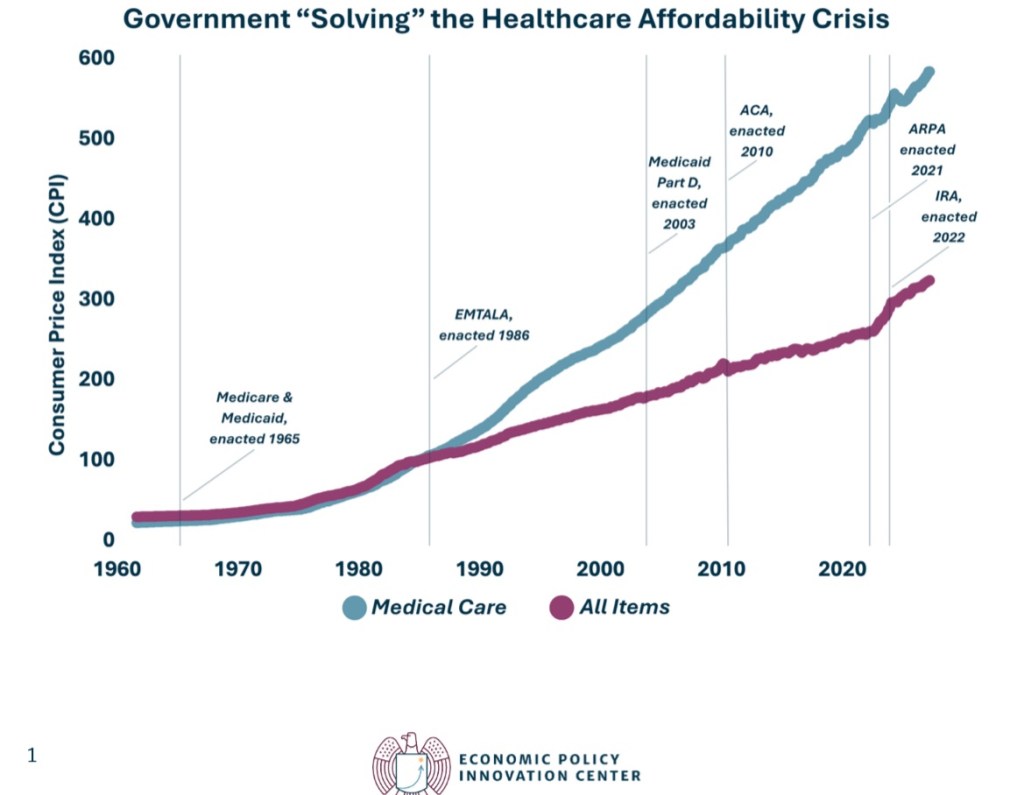
The impasse at the heart of the seemingly unending government shutdown revolves around health care subsidies.

First, there is disagreement about whether to extend the expanded Obamacare subsidies promulgated during the COVID pandemic. That expansion allowed individuals earning more than four times the federal poverty level (the original limit under the Affordable Care Act (ACA)) to receive tax credits for the purchase of health coverage on the exchange “marketplace”. Republicans find this highly objectionable. Many of them also object that the subsidies help pay for “essential health benefits” under the ACA that include so-called gender-affirming care.

Democrats and the insurance lobby would very much like to reinstate or retain the tax credits. The ten-year cost of extending them is more than $400 billion. Incredibly, it turns out that roughly 40% of individuals taking those tax credits did not file a medical claim in 2024. It was pure cash for insurers at the expense of taxpayers.

Second, the One Big Beautiful Bill Act (OBBB), among other things, restricts access to Medicaid by imposing work or job search requirements for overall eligibility. It also formally denies coverage to illegal aliens. This, of course, is opposed by Democrats, who insist that those requirements be rescinded.

Health Care Central Planning

These issues are part of a much larger debate over government dominance of the health care system. Almost every institutional arrangement in health care coverage and delivery is dictated by rules and practices imposed by government, and it would seem they are intentionally designed to escalate costs and compromise the delivery of care. The chart at the top of this post illustrates, in a high-level way, the futility of these efforts.

Medicare and Medicaid dominate government health care spending, as this report from the Peter G. Peterson Foundation shows. However, that strict budgetary view greatly understates the control government now exerts on the health care sector.

Medical Free Market Myth

Michael Cannon recently emphasized the irony of the persistent myth of a U.S. free market in health care:

“… government controls a larger share of health spending in the United States than in 27 out of 38 OECD-member nations, including the United Kingdom (83%) and Canada (73%), each of which has an explicitly socialized health-care system. When it comes to government control of health spending, the United States is closer to communist Cuba (89%) than the average OECD nation (75%).

“Nor does the United States have market prices for health care. Direct government price-setting, price floors, and price ceilings determine prices for more than half of U.S. health spending, including virtually all health-insurance premiums.“

ObamaSnare

Government “control” takes a variety of forms, including regulatory intrusions under the aegis of Obamacare. The Affordable Care Act (ACA), as its name implies, was sold as a way to keep health care and health insurance costs affordable. And it was billed as a way to extend individual health care coverage to the previously uninsured population. It failed badly on the first count and met with only limited success on the second.

One leg upon which the ACA stood was kicked away in 2017: the penalty for violating the Act’s individual mandate for health coverage was eliminated by the Tax Cuts and Jobs Act (TCJA). The penalty was arguably unconstitutional as a tax on non-commerce, or the non-purchase of insurance on the exchange. However, the Supreme Court had ruled narrowly in favor of the penalty in 2012, claiming that it was within the scope of Congress’ taxing power. Following passage of the TCJA, however, the toothlessness of the mandate caused the risk pool to deteriorate. This was aggravated by the ACA’s insistence on comprehensive coverage, which applies not just to policies sold on the Obamacare exchange, but to almost all private health insurance sold in the U.S.

A well-functioning marketplace would instead have promoted the availability of more moderately-priced coverage options. Ultimately, subsidies were all that prevented a broad exit from the marketplace. But they did nothing to slow the escalation in coverage costs and deteriorating quality of coverage and care:

“The result has been a race to the bottom in terms of the quality of insurance coverage for the sick. …individual-market provider networks [have] narrow[ed] significantly… They have eroded coverage through ‘poor coverage for the medications demanded by [the sick]’ … higher deductibles and copayments; mandatory drug substitutions and coverage exclusions for certain drugs; more frequent and tighter preauthorization requirements; highly variable coinsurance requirements; inaccurate provider directories; and exclusions of top specialists, high-quality hospitals, and leading cancer centers from their networks. ….

“The healthy suffer, too. … ‘currently healthy consumers cannot be adequately insured against the negative shock of transitioning to one of the poorly covered chronic disease states.’ A coalition of dozens of patient groups has complained that this dynamic ‘completely undermines the goal of the [Affordable Care Act].’”

Price Distortions

Cannon emphasizes another persistent myth: that government sets prices at levels that would prevail in a free market. Here is one baffling aspect of the many prices set by government for individual services under the Medicare and Medicaid programs.

“One of the more striking indications of widespread mispricing is that Medicare routinely sets different prices for identical items depending solely on who owns the facility.“

For example, ambulatory surgical centers are compensated much less for the same services as hospitals. The same is true of compensation for skilled nursing facilities vs. long-term care hospitals, and there appears to be no economic rationale for the differences. Furthermore, it’s an open secret that Medicare sets higher prices for lower-cost providers (and treatment of lower-cost patients). As Cannon notes, this explains the rapid growth of specialty hospitals owned by physicians.

Cannon provides much more detail on Medicare and Medicaid mis-pricing, including the blunting of patients’ price-sensitivity and the shifting of costs to private payers.

Divorcing Risk and Insurance

The price of insurance and insurer reimbursements are also prescribed by government. Cannon’s discussion includes the ACA’s abolition of risk-based insurance pricing, which is an astonishing case of economic malpractice. Depending on one’s health status, “community pricing” acts as either a price ceiling or a price floor. This creates perverse incentives for both the healthy and the unhealthy. Premiums fall short of the cost of caring for the sick.

The federal government attempts to compensate by subsidizing insurers based on the health status of individuals in their risk pool, but that falls short in terms of the quality of coverage for unhealthy individuals. Thus, both the healthy and taxpayers must shoulder an ever-increasing cost burden of insuring the unhealthy.

Circular Scam

As for Medicaid, certain arrangements drive up the cost of the program to taxpayers. For example, last March I wrote about this apparent scam allowing state governments to inflate their Medicaid costs, qualifying for hundreds of billions of federal matching funds:

“Here’s the gist of it: increases in state Medicaid reimbursements qualify for a federal match at a rate known as the Federal Medical Assistance Percentage (FMAPs). First, increases in Medicaid reimbursements must be funded at the state level. To do this, states tax Medicaid providers, but then the revenue is kicked back to providers in higher reimbursements. The deluge of matching federal dollars follows, and states are free to use those dollars in their general budgets.“

Unfortunately, FMAP reform is not directly addressed in the “clean” Continuing Resolution before Congress, though reduced funding levels might lead to reductions in FMAP percentages.

And Another Circular Scam

John Cochrane is largely in agreement with Cannon’s piece, but he focuses first on cross subsidies flowing to “eligible” hospitals dispensing prescription drugs to low-income patients. These hospitals get the drugs from pharmaceutical companies at a steep discount mandated by the so-called 340B program, but the hospitals then bill insurers (or Medicare and Medicaid), a significant markup over their acquisition cost. The Medicaid expansion under the ACA led to an increase in the number of hospitals eligible for the drug discounts.

But that’s not the end of the story. This arrangement creates an obvious incentive for the drug companies to raise their pre-discounted prices. Another unintended outcome cited by Cochrane is that eligible hospitals do not use the proceeds of their mark-ups to offer better care (or care at a lower cost) to low-income consumers. Instead, the funds tend to be directed to investment accounts. The program also creates another incentive for hospital consolidation.

Someone Else’s Money

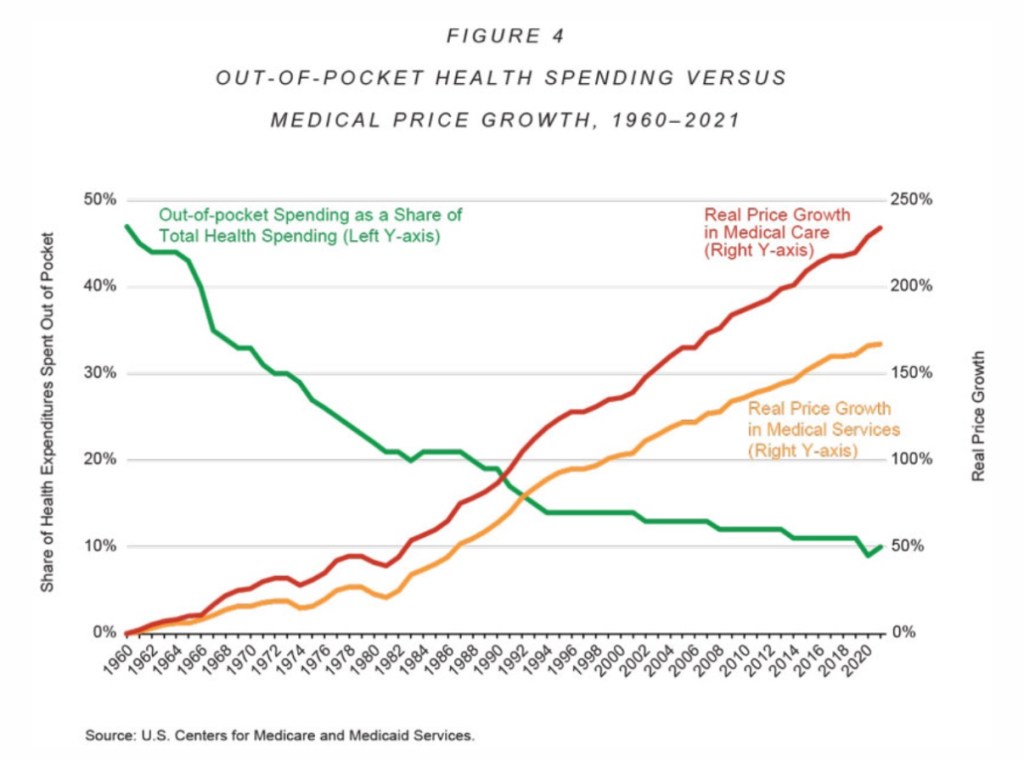
Unfortunately, the dysfunction in health care goes deeper than Obamacare, Medicare, and Medicaid. The third-party payment system itself has been at the root of cost escalation. It largely relieves consumers of their sovereignty over purchasing decisions, rendering them much less sensitive to variations in price. This can be seen clearly in one of Cannon’s charts, reproduced below:
In addition, the disparate income tax treatment of employer-provided health coverage exacerbates cost escalation. Obviously, employees receiving this deduction can afford higher-quality and more comprehensive coverage. This exemption has acted to drive up the cost of all health care and insurance coverage over the almost nine decades of its existence..

What To Do?

The claim that the U.S. health care system operates within a free market ecosystem is obviously absurd. Together, the Cochrane and Cannon pieces represent something of a gripe session, but it is well deserved. Both authors devote sections to reforms, however. They don’t break new ground in the debate, but the overarching theme of the suggested reforms is to give consumers authority over their health care spending. That means keeping government out of health care in all the myriad ways it now intrudes. It also means that insurers should not have authority to dictate how health care is priced. The key is to allow competition to flourish among health care providers and insurers.

Ending FMAPs and the tax exemption for employer-provided coverage is one thing, but it’s another to contemplate dismantling Medicare, Medicaid, and the many rules and pricing arrangements enforced under Obamacare.

Cochrane takes an accommodating approach to the health care needs of seniors and those in need of a safety net. He calls for Medicare and Medicaid to be replaced with the issuance of vouchers (rather than cash) toward the purchase of affordable private health care plans. Then, health coverage can be provided in a lightly regulated, competitive market without all the distortions and sneaky opportunities for graft embedded in our current entitlements.

Conflicting Rights and Reality

And what of the argument that health care is a human right? That notion is, of course, very popular on the left. The idea subtly shifts a meaningful portion of the responsibility for one’s health onto others, including providers and taxpayers. But smokers, heavy drinkers, reckless drivers, hard drug users, and the avoidably obese should not be led to expect a free ride for risky behaviors.

Of course, it’s not a basic human right to demand, by force of government, involuntary service of health care workers, or that taxpayers give alms, but Cochrane answers with this:

“Yes! It is a basic human right that I should be free to offer my money to a willing physician or hospital, in a brutally competitive and innovative market.”

“Willing” is a key word, and to that we should add “able”, but those are qualifying conditions that markets help facilitate.

Jane Menton has discussed the notion of a human right to health care, wisely explaining that conditions are not always compatible with fulfilling such a right. Her primary concern is the future supply of medical personnel, and an acute shortage of nurses.

“In our current political environment, young people seem to think that claiming something as an entitlement means someone will inevitably show up to do the work.“

To codify a right to health care would be an ill-fared call for a nationalized solution. It would be a prescription for still higher costs and lower quality care. As in any other sector, centralized decision-making leads to misallocated resources, higher costs, and inferior outcomes for patients. Our current mess gives a strong hint of the kind of over-regulated dysfunction that nationalization would bring.

Insurance On Insurability

Pre-existing conditions motivate much of the discussion surrounding a presumed right to health care. Individual portability of group health coverage goes partway in addressing coverage for pre-existing conditions. Portability is mandated by the Health Insurance Portability and Accountability Act of 1996, but like community rating, it shifts costs to others. That is, the cost of covering pre-existing conditions becomes the responsibility of employers in general, group insurers, and ultimately healthy (and younger) workers.

Given time, the debate over a right to health care can be rendered moot via market processes. Cochrane has long supported the concept of health status insurance. Such policies would allow healthy consumers to guarantee their insurability against the risk of future health contingencies. Guaranteed renewability is a limited form of this type of coverage. General availability of health status insurance contracts, offered regardless of current coverage, could allow for a range of future insurability options at affordable prices. Then, pre-existing conditions would cease to be such a huge driver of cross subsidies.

Beware of Government Health Care Yet To Come

02 Sunday Feb 2025

Posted by Nuetzel in Health Care

≈ Leave a comment

Tags

adverse selection, Affordable Care Act, Arnold Kling, Bryan Caplan, Claim Denials, David Chavous, Donald Trump, Employer-Provided Coverage, Essential Benefits, Hospital Readmissions, Joel Zinberg, Liam Sigaud, Make America Healthy Again, Matt Margolis, Michael F. Cannon, Moral Hazard, Noah Smith, Obamacare, Peter Earle, Pharmacy Benefit Managers, Portability, Pre-Authorization Rules, Pre-Existing Conditions, Premium Subsidies, Robert F. Kennedy Jr, Sebastian Caliri, Steven Hayward, Tax-Deductible Premiums, third-party payments, Universal Health Accounts

Ongoing increases in the resources dedicated to health care in the U.S., and their prices, are driven primarily by the abandonment of market forces. We have largely eliminated the incentives that markets create for all buyers and sellers of health care services as well as insurers. Consumers bear little responsibility for the cost of health care decisions when third parties like insurers and government are the payers. A range of government interventions have pushed health care spending upward, including regulation of insurers, consumer subsidies, perverse incentives for consolidation among health care providers, and a mechanism by which pharmaceutical companies negotiate side payments to insurers willing to cover their drugs.

It’s not yet clear whether the Trump Administration and its “Make America Healthy Again” agenda will serve to liberate market forces in any way. Skeptics can be forgiven for worrying that MAHA will be no more than a cover for even more centrally-planned health care, price controls, and regulation of the pharmaceutical and food industries, not to mention consumer choices. Robert F. Kennedy Jr., who is likely to be confirmed by the Senate as Donald Trump’s Secretary of Health and Human Services, has strong and sometimes defensible opinions about nutrition and public health policies. He is, however, an inveterate left-winger and is not an advocate for market solutions. Trump himself has offered only vague assurances on the order of “You won’t lose your coverage”.

Government Control

The updraft in health care inflation coincided with government dominance of the sector. Steven Hayward points out that the cost pressure began at about the same time as Medicare came into existence in 1965. This significantly pre-dates the trend toward aging of the population, which will surely exacerbate cost pressures as greater concentrations of baby boomers approach or exceed life expectancy over the next decade.

Government now controls or impinges on about 84% of health care spending in the U.S., as noted by Michael F. Cannon. The tax deductibility of employer-provided health insurance is a massive example of federal manipulation and one that is highly distortionary. It reinforces the prevalence of third-party payments, which takes decision-making out of consumers’ hands. Equalizing the tax treatment of employer-provided health coverage would obviously promote tax equity. Just as importantly, however, tax-subsidized premiums create demand for inflated coverage levels, which raise prices and quantities. And today, the federal government requires coverages for routine care, going beyond the basic function of insurance and driving the cost of care and insurance upward.

The traditional non-portability of employer-provided coverage causes workers with uninsurable pre-existing conditions to lose coverage when they leave a job. Thus, Cannon states that the tax exclusion for employer coverage penalizes workers who instead might have chosen portable individual coverage in a market setting without tax distortions. Cannon proposes a reform whereby employer coverage would be replaced with deposits into tax-free Universal Health Accounts owned by workers, who could then purchase their own insurance.

In 2024, federal subsidies for health insurance coverage were about $2 trillion, according to the Congressional Budget Office (CBO). Those subsidies are projected to grow to $3.5 trillion by 2034 (8.5% of GDP). Joel Zinberg and Liam Sigaud emphasize the wasteful nature of premium subsidies for exchange plans mandated by the Affordable Care Act (ACA), better known as Obamacare. Subsidies were temporarily expanded in 2021, but only until 2026. They should be allowed to expire. These subsidies increase the demand for health care, but they are costly to taxpayers and are offered to individuals far above the poverty line. Furthermore, as Zinberg and Sigaud discuss, subsidized coverage for the previously uninsured does very little to improve health outcomes. That’s because almost all of the health care needs of the formerly uninsured were met via uncompensated care at emergency rooms, clinics, medical schools, and physician offices.

Proportionate Consumption

Perhaps surprisingly, and contrary to popular narratives, health care spending in the U.S. is not really out-of-line with other developed countries relative to personal income and consumption expenditures (as opposed to GDP). We spend more on health care because we earn and consume more of everything. This shouldn’t allay concern over health care spending because our economic success has not been matched by health outcomes, which have lagged or deteriorated relative to peer nations. Better health might well have allowed us to spend proportionately less on health care, but this has not been the case. There are explanations based on obesity levels and diet, but important parts of the explanation can be found elsewhere.

It should also be noted that a significant share of our decades-long increases in health care spending can be attributed to quantities, not just prices, as explained at the last link above.

Health Consequences

The ACA did nothing to slow the rise in the cost of health care coverage. In fact, if anything, the ACA cemented government dominance in a variety of ways, reinforcing tendencies for cost escalation. Even worse, the ACA had negative consequences for patient care. David Chavous posted a good X thread in December on some of the health consequences of Obamacare:

1) The ACA imposed penalties on certain hospital readmissions, which literally abandoned people at death’s door.

2) It encouraged consolidation among providers in an attempt to streamline care and reduce prices. This reduced competitive pressures, however, which had the “unforeseen” consequence of raising prices and discouraging second opinions. The former goes against all economic logic while the latter goes against sound medical decision-making.

3) The ACA forced insurers to offer fewer options, increasing the cost of insurance by encouraging patients to wait until they had a pre-existing condition to buy coverage. Care was almost certainly deferred as well. Ultimately, that drove up premiums for healthy people and worsened outcomes for those falling ill.

4) It forced drug companies to negotiate with Pharmacy Benefit Managers (PBMs) to get their products into formularies. The PBMs have acted as classic middlemen, accomplishing little more than driving up drug prices and too often forcing patients to skimp on their prescribed dosage, or worse yet, increasing their vulnerability to lower-priced quackery.

The Insurers

So the ACA drastically increased the insured population (including the new burden of covering pre-existing conditions). It also forced insurers to meet draconian cost-control thresholds. Little wonder that claim rejection increased, a phenomenon often at the root of public animosity toward health insurers. Peter Earle cites several reasons for the increase in denial rates while noting that claim rejection has made little difference in insurer profit margins.

Matt Margolis points out that under the ACA, we’ve managed to worsen coverage in exchange for higher premiums and deductibles. All while profits have been capped. Claim denials or delays due to pre-authorization rules (which delay care) have become routine following the implementation of Obamacare.

Perhaps the biggest mistake was forcing insurers to cover pre-existing conditions without allowing them to price for risk. Rather than forcing healthy individuals to pay for risks they don’t face, it would be more economically sensible to directly subsidize coverage for those in high-risk pools.

Noah Smith also defends the health insurers. For example, while UnitedHealth Group has the largest market share in the industry, its net profit margin of 6.1% is only about half of the average for the S&P 500. Other major insurers earn even less by this metric. Profits just don’t explain why American health care spending is so high. Ultimately, the services delivered and charges assessed by providers explain high U.S. health care spending, not insurer profits or administrative costs.

Under the ACA, insurance premiums pay the bulk of the cost of health care delivery, including the cost of services more reasonably categorized as routine health maintenance. The latter is like buying insurance for oil changes. Furthermore, there are no options to decline any of the ten so-called “essential benefits” under the ACA, thus increasing the cost of coverage.

Medical Records

Arnold Kling argues that the ACA’s emphasis on uniform, digitized medical records is not a productive avenue for achieving efficiencies in health care delivery. Moreover, it’s been a key factor driving the increasing concentration in the health care industry. Here is Kling:

“My point is that you cannot do this until you tighten up the health care delivery process, making it more rigid and uniform. And I would not try to do that. Health care does not necessarily lend itself to being commoditized. You risk making health care in America less open to innovation and less responsive to the needs of people.

“So far, all that has been accomplished by the electronic medical records drive has been to put small physician practices out of business. They have not been able to absorb the overhead involved in implementing these systems, so that they have been forced to lose their independence, primarily to hospital-owned conglomerates.”

Separating Health and State

The problem of rising health care costs in the U.S. is capsulized by Bryan Caplan in his call for the separation of health and state. The many policy-driven failures discussed above offer more than adequate rationale for reform. The alternative suggested by Caplan is to “pull the plug” on government involvement in health care, relying instead on the free market.

Caplan debunks a few popular notions regarding the appropriate role for markets in health care and health insurance. In particular, it’s often alleged that moral hazard and adverse selection would encourage unhealthy behaviors and encourage the worst risks to over-insure, causing insurance markets to fail. But these problems arise only when risk is not priced efficiently, precisely what the government has accomplished by attempting to equalizing rates.

Pulling the plug on government interference in health care would also mean deregulating both insurance offerings and pricing, encouraging the adoption of portable coverage, expediting drug approvals based on peer-country approvals, reforming pharmacy benefit management, ending deadly Medicare drug price controls, and encouraging competition among health care providers.

Value Vs. Volume

There are a host of other reforms that could bring more sanity to our health care system. Many of these are covered here by Sebastian Caliri, with some emphasis on the potential role of AI in improving health care. Some of these are at odds with Kling’s skepticism regarding digitized health records.

Perhaps the most fundamental reforms entertained by Caliri have to do with health care payments. One is to make payments dependent on outcomes rather than diagnostic codes established and priced by the American Medical Association. To paraphrase Caliri, it would be far better for Americans to pay for value rather than volume.

Another payment reform discussed by Caliri is expanding direct payments to providers such as capitation fees, whereby patients pay to subscribe to a bundle of services for a fixed fee. Finally, Caliri discusses the importance of achieving “site-neutral payments”, eliminating rules that allow health systems to charge a higher premium relative to independent providers for identical services.

For what it’s worth, Arnold Kling disagrees that changing payment metrics would be of much help because participants will learn to game a new system. Instead, he emphasizes the importance of reducing consumer incentives for costly treatments having little benefit. No dispute there!

Avoid the Single-Payer Calamity

I’ll close this jeremiad with a quote from Caliri’s piece in which he contrasts the knee-jerk, leftist solution to our nation’s health care dilemma with a more rational, market-oriented approach:

“Single payer solutions and government control favored by the left are no solutions at all. Moving to a monopsonist system like Canada is a recipe for strangling innovation and rationing access. Just ask our neighbors to the north who have to wait a year for orthopedic surgery. The UK’s National Health Service (NHS) is teetering on the brink of collapse. We need to sort out some other way forward.

“Other parts of the economy provide inspiration for what may actually work. In the realm of information technology, for example, fifty years has taken us from expensive four operation calculators to ubiquitous, free, artificial intelligence capable of passing the Turing Test. We can argue about the precise details but most of this miracle came from profit-seeking enterprises competing in a free market to deliver the best value for the buyer’s dollar.“

Health Care & Education: Slow Productivity Growth + Subsidies = Jacked Prices

14 Sunday May 2023

Posted by Nuetzel in Education, Health Care, Priductivity

≈ Leave a comment

Tags

Abundance Agenda, Alex Tabarrok, Baumol's Disease, Beethoven’s String Quartet No. 14, CHIPS, competition, Consumer Sovereignty, Education Cost, Education Grants, Education Productivity, Employer-Paid Coversge, Eric Helland, Exchange subsidies, health care costs, Health Care Productivity, Industrial Concentration, Mark Perry, Medicaid, Medical Technology, Medicare, Obamacare, Peter Suderman, Relative Prices, Slow Productivity Growth, Student Loans, Subsidies, Tax Subsidies, third-party payments, Willian Baumol

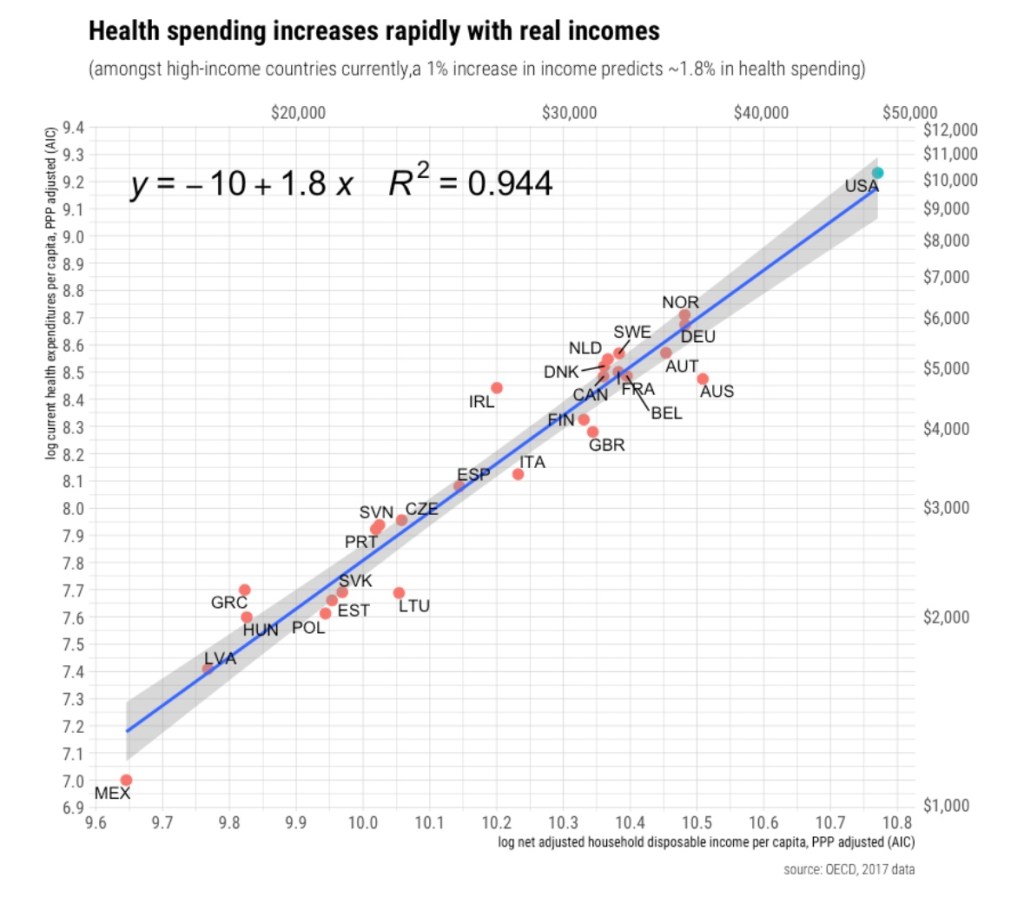
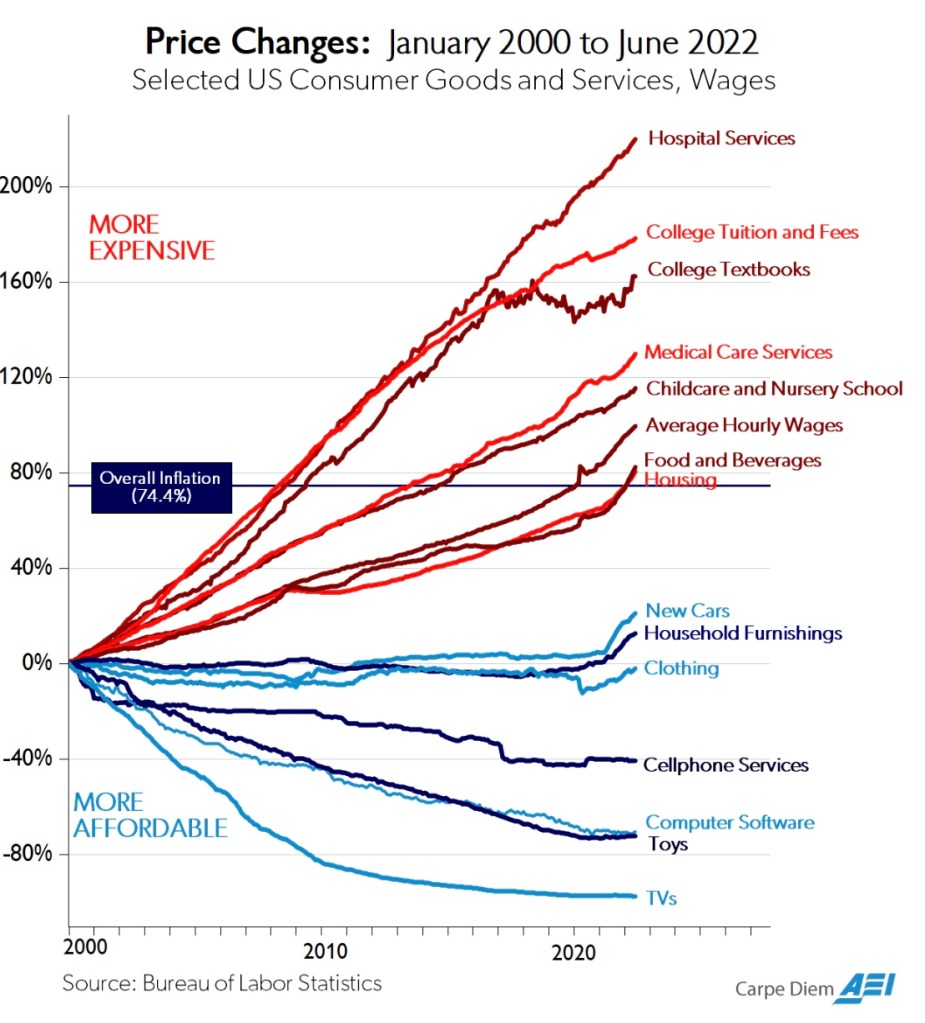
This post is about relative prices in two major sectors of the U.S. economy, both of which are hindered by slow productivity growth while being among the most heavily subsidized: education and health care. Historically, both sectors have experienced rather drastic relative price increases, as illustrated for the past 20 years in the chart from Mark Perry above.

Baumol’s Cost Disease

These facts are hardly coincidental, though it’s likely the relative costs education and health care would have risen even in the absence of subsidies. Over long periods of time, the forces primarily guiding relative price movements are differentials in productivity growth. The tendency of certain industries to suffer from slow growth in productivity is the key to something known among economists as Baumol’s Disease, after the late William Baumol, who first described the phenomenon’s impact on relative prices.

Standards of living improve when a sufficient number of industries enjoy productivity growth. That creates a broad diffusion of new demands across many industries, including those less amenable to productivity growth, such as health care and education. But slow productivity growth and rising demand in these industries are imbalances that push their relative prices upward.

Alex Tabarrok and Eric Helland noted a few years ago that it took four skilled musicians 44 minutes to play Beethoven’s String Quartet No. 14 in 1826 and also in 2010, but the inflation-adjusted cost was 23 times higher. Services involving a high intensity of skilled labor are more prone to Baumol’s Disease than manufactured goods. As well, services for which demand is highly responsive to income or sectors characterized by monopoly power may be more prone to Baumol’s disease.

Tabarrok wonders whether we should really consider manifestations of Baumol’s Disease a blessing, because they show the extent to which productivity and real incomes have grown across the broader economy. So, rather than blame low productivity growth in certain services for their increasing relative prices, we should really blame (or thank) the rapid productivity growth in other sectors.

The Productivity Slog

There are unavoidable limits to the productivity growth of skilled educators, physicians, and other skilled workers in health care. Again, in a growing economy, prices of things in relatively fixed supply or those registering slow productivity gains will tend to rise more rapidly.

Technology offers certain advantages in some fields of education, but it’s hard to find evidence of broad improvement in educational success in the U.S. at any level. In the health care sector, new drugs often improve outcomes, as do advances in technologies such as drug delivery systems, monitoring devices, imaging, and robotic surgery. However, these advances don’t necessarily translate into improved capacity of the health care system to handle patients except at higher costs.

There’s been some controversy over the proper measurement of productivity in the health care sector. Some suggest that traditional measures of health care productivity are so flawed in capturing quality improvements that the meaning of prices themselves is distorted. They conclude that adjusting for quality can actually yield declines in effective health care prices. I’d interject, however, that patients and payers might harbor doubts about that assertion.

Other investigators note that while real advances in health care productivity should reduce costs, the degree of success varies substantially across different types of innovations and care settings. In particular, innovations in process and protocols seem to be more effective in reducing health care expenditures than adding new technologies to existing protocols or business models. All too often, medical innovations are of the latter variety. Ultimately, innovations in health care haven’t allowed a broader population of patients to be treated at low cost.

Superior Goods

Therefore, it appears that increases in the relative prices of education and health care over time have arisen as a natural consequence of the interplay between disparities in productivity growth and rising demand. Indeed, this goes a long way toward explaining the high cost of health care in the U.S. compared to other developed nations, as standards of living in the U.S. are well above nearly all others. In that respect, the cost of health care in the U.S. is not necessarily alarming. People demand more health care and education as their incomes rise, but delivering more health care isn’t easy. To paraphrase Tabarrok, turning steelworkers into doctors, nurses and teachers is a costly proposition.

The Role of Subsidies

In the clamor for scarce educational and health care resources, natural tensions over access have spilled into the political sphere. In pursuit of distributing these resources more equitably, public policy has relied heavily on subsidies. It shouldn’t surprise anyone that subsiding a service resistant to productivity gains will magnify the Baumol effect on relative price. One point is beyond doubt: the amounts of these subsidies is breathtaking.

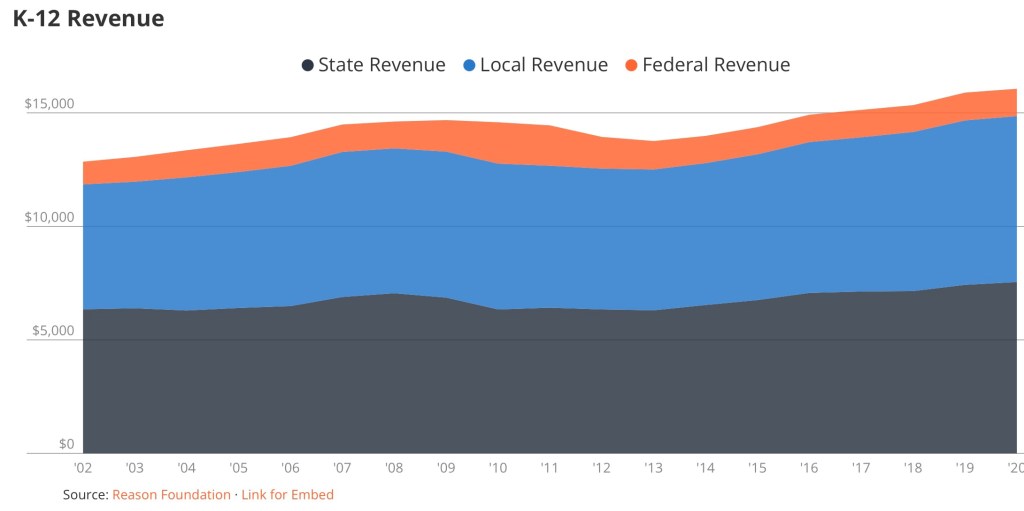
Education: Public K -12 schools are largely funded by local taxpayers. Taxpayer-parents of school-aged children pay part of this cost whether they send their children to public schools or not. If they don’t, they must pay the additional cost of private or home schooling. This severely distorts the link between payments and the value assigned by actual users of public schools. It also confers a huge degree of market power to public schools, thus insulating them economically from performance pressures.

Public K – 12 schools are also heavily subsidized by state governments and federal grants. The following chart shows the magnitude and growth of K – 12 revenue per student over the past couple of decades.

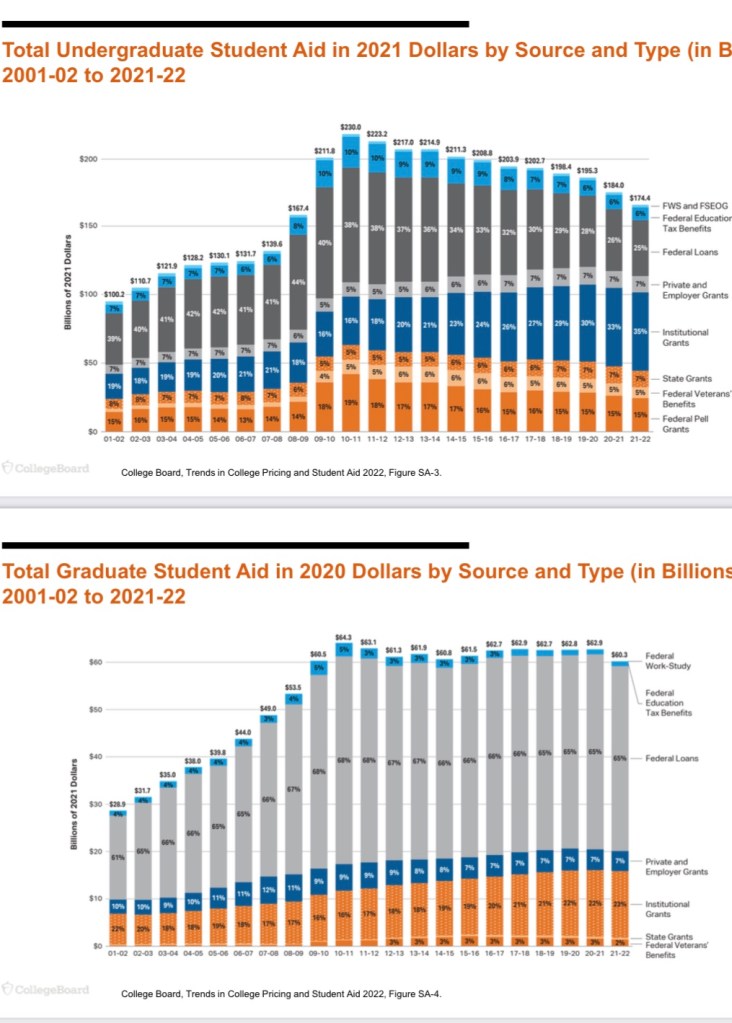
Subsidies for higher education take the form of student aid, including federal student loans, grants to institutions, as well as a variety of tax subsidies. Here’s a nice breakdown:

This represents a mix of buyer and seller subsidies. That suggests less upward pressure on price and more stimulus to output, but we still run up against the limits to productivity growth noted above. Moreover, other constraints limit the effectiveness of these subsidies, such as lower academic qualifications in a broader student population and the potential for rewards in the job market to diminish with a potential excess of graduates.

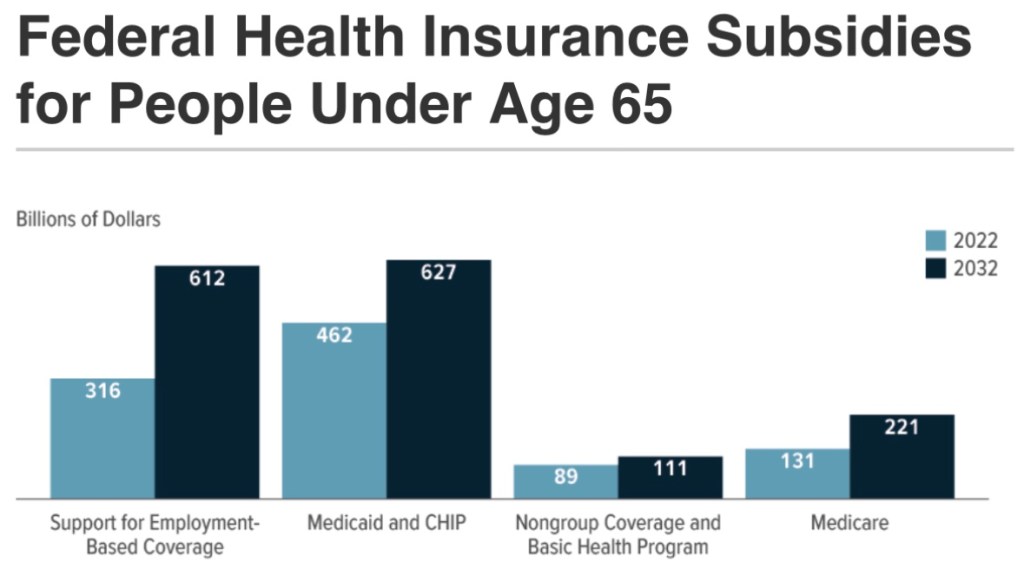
Health care: Subsidies here are massive and come in a variety of forms. They often directly provide or reduce the cost of health insurance coverage: Medicaid, the Children’s Health Insurance Program (CHIP), Obamacare exchange subsidies, Medicare savings programs, tax-subsidies on employer-paid health coverage, and medical expense tax deductions. Within limits, these subsidies reduce the marginal cost of care patients are asked to pay, thus contributing to over-utilization of various kinds of care.

The following are CBO projections from June 2022. They are intended here to give an idea of the magnitude of health care insurance subsidies:

Still Other Dysfunctions

There are certainly other drivers of high costs in the provision of health care and education beyond a Baumol effect magnified by subsidies. The third-party payment system has contributed to a loss of price discipline in health care. While consumers are often responsible for paying at least part of their health insurance premiums, the marginal cost of health care to consumers is often zero, so they have little incentive to manage their demands.
Another impediment to cost control is a regulatory environment in health care that has led to a sharply greater concentration of hospital services and the virtual disappearance of independent provider practices. Competition has been sorely lacking in education as well. Subsidies flowing to providers with market power tend to exacerbate behaviors that would be punished in competitive markets, and not just pricing.

Summary

Baumol’s Disease can explain a lot about the patterns of relative prices shown in the chart at the top of this post. That pattern is a negative side effect of general growth in productivity. Unfortunately, it also reflects a magnification engendered by the payment of subsidies to sectors with slow productivity growth. The intent of these subsidies is to distribute health care and education more equitably, but the impact on relative prices undermines these objectives. The approach forces society to exert wasted energy, like an idiotic dog chasing its tail.

Peter Suderman wrote an excellent piece in which he discussed health care and education subsidies in the context of the so-called “abundance agenda”. His emphasis is on the futility of this agenda for the middle class, for which quality education and affordable health care always seem just out of reach. The malign effects of “abundance” policies are reinforced by anti-competitive regulation and payment mechanisms, which subvert market price discipline and consumer sovereignty. We’d be far better served by policies that restore consumer responsibility, deregulate providers, and foster competition in the delivery of health care and education.

Sweden’s Pandemic Policy: Arguably Best Practice

14 Monday Nov 2022

Posted by Nuetzel in Health Care, Pandemic

≈ Leave a comment

Tags

Anders Tegnell, Closures, Coronavirus, Covid-19, Deaths of Despair, European Economic Area, Excess Deaths, Joakim Book, Johan Giesecke, Latitude, Lockdowns, Non-Pharmaceutical interventions, Nordic, NPIs, Our World In Data, Oxford Stringency Index, Pandemic, Quarantines, Sweden, Vitamin D

When Covid-19 began its awful worldwide spread in early 2020, the Swedes made an early decision that ultimately proved to be as protective of human life as anything chosen from the policy menu elsewhere. Sweden decided to focus on approaches for which there was evidence of efficacy in containing respiratory pandemics, not mere assertions by public health authorities (or anyone else) that stringent non-pharmaceutical interventions (NPIs) were necessary or superior.

The Swedish Rationale

The following appeared in an article in Stuff in late April, 2020,

“Professor Johan Giesecke, who first recruited [Sweden’s State epidemiologist Anders] Tegnell during his own time as state epidemiologist, used a rare interview last week to argue that the Swedish people would respond better to more sensible measures. He blasted the sort of lockdowns imposed in Britain and Australia and warned a second wave would be inevitable once the measures are eased. ‘… when you start looking around at the measures being taken by different countries, you find very few of them have a shred of evidence-base,’ he said.

Giesecke, who has served as the first Chief Scientist of the European Centre for Disease Control and has been advising the Swedish Government during the pandemic, told the UnHerd website there was “almost no science” behind border closures and school closures and social distancing and said he looked forward to reviewing the course of the disease in a year’s time.”

Giesecke was of the opinion that there would ultimately be little difference in Covid mortality across countries with different pandemic policies. Therefore, the least disruptive approach was to be preferred. That meant allowing people to go about their business, disseminating information to the public regarding symptoms and hygiene, and attempting to protect the most vulnerable segments of the population. Giesecke said:

“I don’t think you can stop it. It’s spreading. It will roll over Europe no matter what you do.”

He was right. Sweden had a large number of early Covid deaths primarily due to its large elderly population as well as its difficulty in crafting effective health messages for foreign-speaking immigrants residing in crowded enclaves. Nevertheless, two years later, Sweden has posted extremely good results in terms of excess deaths during the pandemic.

Excess Deaths

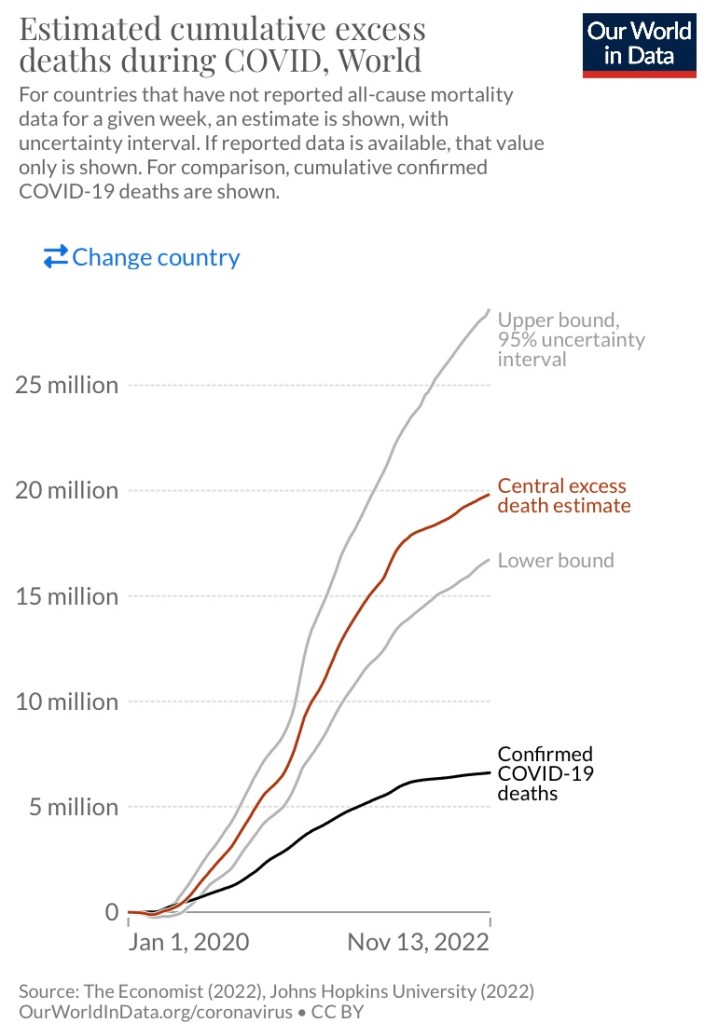
Excess deaths, or deaths relative to projections based on historical averages, are a better metric than Covid deaths (per million) for cross-country or jurisdictional comparisons. Among other reasons, the latter are subject to significant variations in methods of determining cause of death. Moreover, there was a huge disparity between excess deaths and Covid deaths during the pandemic, and the gap is still growing:

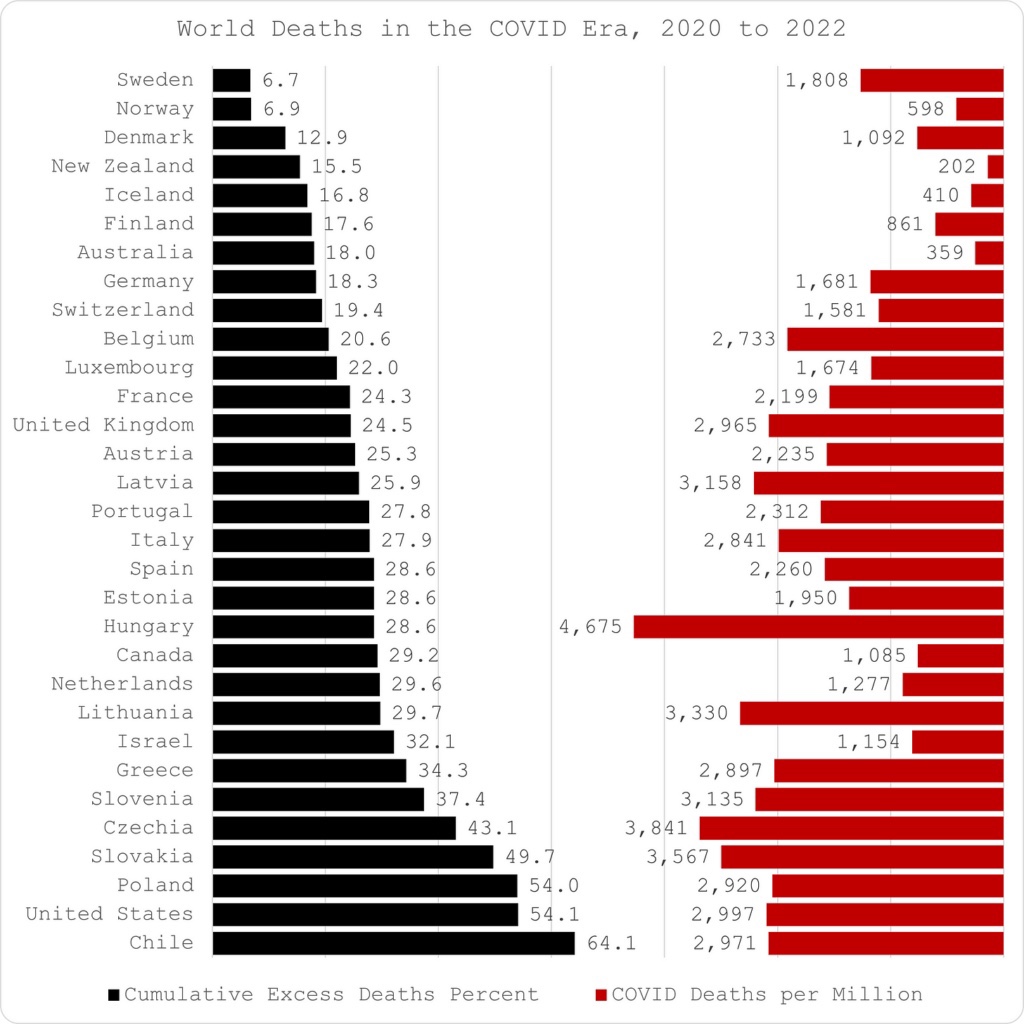
Excess deaths varied widely across countries, as illustrated by the left-hand side of the following chart:

Interestingly, most of the lowest excess death percentages were in Nordic countries, but especially Sweden and Norway. That might be surprising in terms of high Nordic latitudes, which may have created something of a disadvantage in terms of sun exposure and potentially low vitamin D levels. Norway enacted more stringent public policies during the pandemic than Sweden. Globally, however, lockdown measures showed no systematic advantage in terms of excess deaths. Notably, the U.S. did quite poorly in terms of excess deaths at 8X the Swedish rate,

Covid Deaths

The right-hand side of the chart above shows that Sweden experienced a significant number of Covid deaths per million residents. The figure still compares reasonably well internationally, despite the country’s fairly advanced age demographics. Most Covid deaths occurred in the elderly and especially in care settings. Like other places, that is where the bulk of Sweden’s Covid deaths occurred. Note that U.S. Covid deaths per million were more than 50% higher than in Sweden.

NPIs Are Often Deadly

Perhaps a more important reason to emphasize excess deaths over Covid deaths is that public policy itself had disastrous consequences in many countries. In particular, strict NPIs like lockdowns, including school and business closures, can undermine public health in significant ways. That includes the inevitably poor consequences of deferred health care, the more rapid spread of Covid within home environments, the physical and psychological stress from loss of livelihood, and the toll of isolation, including increased use of alcohol and drugs, less exercise, and binge eating. Isolation is particularly hard on the elderly and led to an increase in “deaths of despair” during the pandemic. These were the kinds of maladjustments caused by lockdowns that led to greater excess deaths. Sweden avoided much of that by eschewing stringent NPIs, and Iceland is sometimes cited as a similar case.

Oxford Stringency Index

I should note here, and this is a digression, that the most commonly used summary measure of policy “stringency” is not especially trustworthy. That measure is an index produced by Oxford University that is available on the Our World In Data web site. Joakim Book documented troubling issues with this index in late 2020, after changes in the index’s weightings dramatically altered its levels for Nordic countries. As Book said at that time:

“Until sometime recently, Sweden, which most media coverage couldn’t get enough of reporting, was the least stringent of all the Nordics. Life was freer, pandemic restrictions were less invasive, and policy responses less strong; this aligned with Nordic people’s experience on the ground.”

Again, Sweden relied on voluntary action to limit the spread of the virus, including encouragement of hygiene, social distancing, and avoiding public transportation when possible. Book was careful to note that “Sweden did not ‘do nothing’”, but it’s policies were less stringent than its Nordic neighbors in several ways. While Sweden had the same restrictions on arrivals from outside the European Economic Area as the rest of the EU, it did not impose quarantines, testing requirements, or other restrictions on travelers or on internal movements. Sweden’s school closures were short-lived, and its masking policies were liberal. The late-2020 changes in the Oxford Stringency Index, Book said, simply did not “pass the most rudimentary sniff test”.

Economic Stability

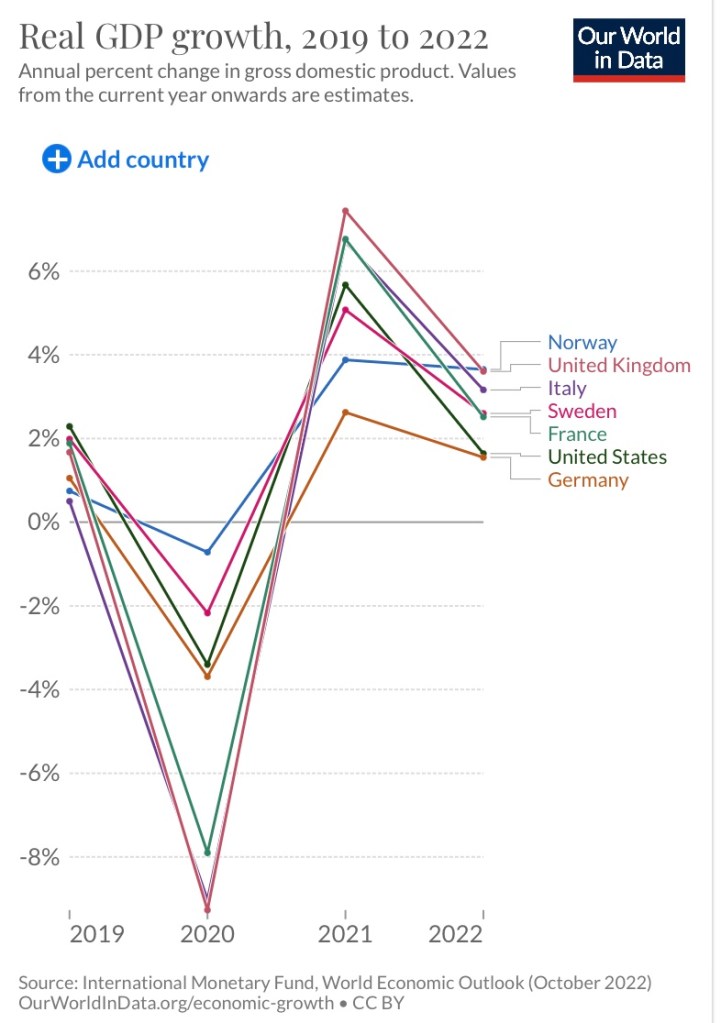
Sweden’s economy performed relatively well during the pandemic. The growth path of real GDP was smoother than most countries that succumbed to the excessive precautions of lockdowns. However, Norway’s economy appears to have been the most stable of those shown on the chart, at least in terms of real output, though it did suffer a spike in unemployment.

The Bottom Line

The big lesson is that Sweden’s “light touch” during the pandemic proved to be at least as effective, if not more so, than comparatively stringent policies imposed elsewhere. Covid deaths were sure to occur, but widespread non-Covid excess deaths were unanticipated by many countries practicing stringent intervention. That lack of foresight is best understood as a consequence of blind panic among public health “experts” and other policymakers, who too often are rewarded for misguided demonstrations that they have “done something”. Those actions failed to stop the spread in any systematic sense, but they managed to do great damage to other aspects of public health. Furthermore, they undermined economic well being and the cause of freedom. Johan Giesecke was right to be skeptical of those claiming they could contain the virus through NPIs, though he never anticipated the full extent to which aggressive interventions would prove deadly.

Medicare For All … and Tax Hikes, Long Waits, Inferior Care

23 Thursday Jun 2022

Posted by Nuetzel in Health Care, Health Insurance

≈ Leave a comment

Tags

Avik Roy, Bernie Sanders, Elizabeth Warren, Health Care Monopolies, Hospital Insurance Trust Fund, Insolvency, J.D. Tuccille, Jacqueline Pohida, John C. Goodman, Medicaid, Medicare Advantage, Medicare Buy-Ins, Medicare For All, Medicare Supplements, Michael F. Cannon, Obamacare, P.J. O'Rourke, Phillip L. Swagel, Public Option, Quality of Care, Reimbursement Rates, Spending Caps. Affordable Care Act, Stephen Green

Political humorist P.J. O’Rourke once quipped that if you think health care is expensive now, wait till it’s free! A Stephen Green post reminded me of the source of that wisdom. But there are many who say they don’t understand why we simply don’t offer the Medicare program to everyone … free! Well, the reasons are quite simple: we can’t afford it, and it would be bad policy. In fact, it’s too costly and bad policy even if it isn’t free! Medicare is technically insolvent as it is — broke, in plain language. According to the Medicare Trustees 2022 Report linked above, the Hospital Insurance Trust Fund will be depleted by 2028. That only means the Medicare system has authority to take funds the Treasury borrows to pay ongoing benefits through 2028, so the remaining trust fund balance is little consolation. The long-term actuarial deficit is $700 billion, but it’s possibly as high as $1.5 trillion under an alternative, high-cost scenario shown in the Trustee’s report.

Single Payer Medicare?

Extending free Medicare to the entire population would cost over $30 trillion in the first 10 years, and that’s a conservative estimate. And be forewarned: single-payer health care is government health care, which invariably leads to rationed access and protracted waiting times, poor quality, and escalating costs. For a detailed look at many of the quality problems suffered by Medicare patients, see this paper by Michael Cannon and Jacqueline Pohida. Don’t be deceived by claims that Medicare’s administrative costs are lower than private insurance: The real cost of Medicare is largely hidden through the imposition of low reimbursement rates to providers, while taxpayers get stuck with a significant bill.

Avik Roy has discussed variations on “Medicare For All” (M4A), most of which share very little with today’s Medicare. Not only would they fail to address its shortcomings; they would be much worse. Some do not include the range of private plans currently offered through Medicare Advantage. In fact, under the plans offered by Bernie Sanders and Elizabeth Warren, Medicare Advantage would be terminated, as would all other private insurance for the working-age population. Medicaid would also be eliminated. “Medicare”, in its surviving form, would be the single-payer system, “free” at the point of care and without premiums. Again, a free health care buffet would unleash gluttonous demand, so certain restrictions must be in place to limit pricing and access to care. Think rationing, which should sound ominous to those whose health is failing.

Physician reimbursement rates under traditional Medicare are now only about 60% of private reimbursements, and that filters down to the wages earned by other workers in the health care sector. Naturally, broadening Medicare’s reach will cause providers and their employees to drop-out or cut back. And again, services will be subject to various other forms of rationing. These are unavoidable failings of free or heavily-subsidized health care systems, not to mention the massive burden on taxpayers. And by the way, the “rich” are nowhere near rich enough to pay for all of it.

As to the overall effects, here’s what CBO Director Phillip L. Swagel told the Senate Budget Committee recently, as quoted in Reason by JD Tuccille:

“The increase in demand for personal health care would exceed the increase in supply, resulting in greater unmet demand than the amount under current law. The increase in unmet demand would correspond to increased congestion in the health care system, including delays and forgone care.”

The “increase in supply” mentioned by Swagel is something of a pipe dream.

Buy-Ins and Public Option

There are less drastic proposals than full-blown M4A, such as so-called Medicare buy-ins. For example, those age 50 – 64 might be given the option to “buy-in” to Medicare coverage. It’s not clear whether that would include a choice of Medicare Advantage plans. Many would find the coverage available through traditional Medicare and Medicare Advantage to be inadequate. It is often inferior to private plans, including the lack of dependent coverage and no out-of-pocket maximum for traditional Medicare. Supplemental coverage would be necessary for many individuals choosing the latter.

Another question is how employers would adjust to a segment of their work force in the 50-64 age group opting-out of sponsored coverage. Would the company be required to pick-up the Medicare tab? Would there be compensatory adjustments in wages? Fully compensatory changes are unlikely. Even with partial adjustments, how would an employer adjust company-wide wage scales for younger workers who perform the same or similar duties as those opting into Medicare. And what of the tax-free benefit for workers on employer-paid premiums? Medicare premiums are not tax deductible… at least not yet!

All of the other concerns about low provider reimbursement rates would apply to a Medicare buy-in. The supply of medical care, particularly to the segment buying in, might prove thin. The buy-in option would have very little impact on the number of uninsured individuals. However, several studies have found that the buy-in option would increase premiums for private plans on the individual market (see the last link). That’s largely because providers will try to stick private insurers and patients with the burden of cross-subsidizing Medicare buy-ins.

Another proposal is for a Medicare plan or similar public option to be made available to all in the exchange marketplace. This would take a more massive toll on taxpayers and health care access and quality than the buy-in approach. Moreover, because of pressure for cross-subsidies, private plans will struggle to stay in business. The destruction would be gradual, but the public option would slowly eliminate choice from the marketplace. Cannon and Pohida believe that offering a public option could lead to improvements if the private and public plans are allowed to compete on a level playing field, largely in terms of subsidies and regulatory hurdles, but that is highly unlikely.

Cuts Ahead?

A lesser known issue is the impact of spending caps put in place under the Affordable Care Act. These apply to Medicare and Medicaid as well as federal subsidies on policies purchased on the Obamacare exchanges. When those caps are exceeded, access becomes temporarily restricted, with some practices actually closing their doors for a period of days or weeks. Health economist John Goodman notes that seniors tend to eat into the allowable spending amounts much faster than younger cohorts. That means seniors might be denied costlier forms of care. To the extent that any variation on M4A covers a broader age range, there might be more pressure to curtail certain forms of care for seniors, which would be a most unfortunate case of policy-induced age discrimination.

As for Medicare as it stands now, Goodman describes the potential cuts that are coming. These include the possibility of reduced amenities (e.g., hospital wards with more patients per room and lower-cost meals), and as already mentioned, longer waits and restricted availability of costlier treatments. Goodman states that the necessary cuts to make Medicare whole would be equivalent to the loss of three years of coverage for a 65-year old, and the cuts will affect both traditional Medicare and privately-issued (but publicly subsidized) Advantage plans.

Conclusion

There’s no chance any form of M4A would reduce the cost of care or improve access to care. An expanded Medicare would bear the hallmarks of central planning that have accelerated the monopolization of health care under Obamacare. And like Obamacare, the final form of any M4A plan will be the product of negotiations between self-interested politicians, corporatists and regulators. Big pharmaceutical companies, insurers, large hospital systems, and other interest groups will wrangle for the rents that “reform” legislation might bring. Costs will rise and access to care will be restricted. Taxpayers will be saddled with a large chunk of the cost.

In the end it’s likely to be a mess. Far better to adopt reforms that would bring more innovation, choice, and competition to the markets for health insurance and health care. That includes expanding the range of options available under private Medicare (Advantage). At the same time, Obamacare should be scrapped in favor of a range of a greater range of private options with income-dependent subsidies, including catastrophic coverage only, as well as reduced regulation of insurers and providers.

Cash Flows and Hospital Woes

10 Sunday Jan 2021

Posted by Nuetzel in Coronavirus, Health Care

≈ Leave a comment

Tags

CARES Act, Covid-19, Don Wolt, Elective Procedures, HealthData.gov, HHS, Hospital Layoffs, Hospital Utilization, ICU Occupancy, Influenza Admissions, Inpatient Occupancy, KPI Institute, Observational Beds, Optimal Utilization, PPE Shortfalls, Seasonal Occupancy, Staffed Beds

Here’s one of the many entertaining videos made by people who want to convince you that hospitals are overrun with COVID patients (and here is another, and here, here, and here). That assertion has been made repeatedly since early in the pandemic, but as I’ve made clear on at least two occasions, the overall system has plenty of capacity. There are certainly a few hospitals at or very near capacity, but diverting patients is a long-standing practice, and other hospitals have spare capacity to handle those patients in every state. Those with short memories would do well to remember 2018 before claiming that this winter is unique in terms of available hospital beds.

An old friend with long experience as a hospital administrator claimed that I didn’t account for staffing shortfalls in my earlier posts on this topic, but in fact the statistics I presented were all based on staffed inpatient or ICU beds. Apparently, he didn’t read those posts too carefully. Moreover, it’s curious that a hospital administrator would complain so bitterly of staffing shortfalls in the wake of widespread hospital layoffs in the spring. And it’s curious that so many layoffs would accompany huge bailouts of hospital systems by the federal government, courtesy of the CARES Act.

In fairness, hospitals suffered huge declines in revenue in the spring of 2020 as elective procedures were cancelled and non-COVID patients stayed away in droves. Then hospitals faced the expense of covering their shortfalls in PPE. We know staffing was undercut when health care workers were diagnosed with COVID, but in an effort to stem the red ink, hospitals began laying-off staff anyway just as the the COVID crisis peaked in the spring. About 160,000 staffers were laid off in April and May, though more than half of those losses had been recovered as of December.

Did these layoffs lead to a noticeable shortfall in hospital capacity? It’s hard to say because bed capacity is a squishy metric. When patients are discharged, staffed beds can ratchet down because beds might be taken “off-line”. When patients are admitted, beds can be brought back on-line. ICU capacity is flexible as well, as parts of other units can be quickly modified for patients requiring intensive care. And patient ratios can be adjusted to accommodate layoffs or an influx of admissions. Since early in the fall, occupancy has been overstated for several reasons, including a new requirement that beds in use for observation of outpatients with COVID symptoms for 8 hours or more must be reported as beds occupied. However, there are hospitals claiming that COVID is stressing capacity limits, but nary a mention of the earlier layoffs.

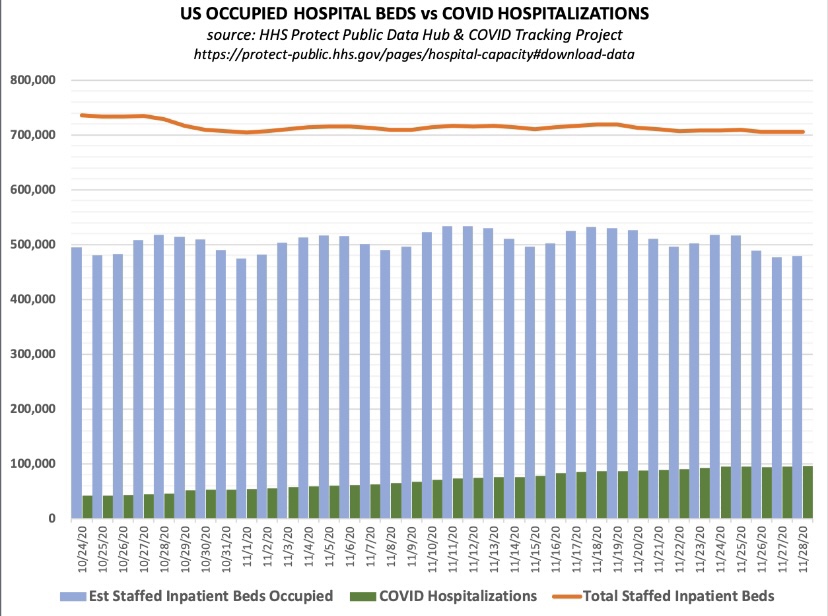
So where are we now in terms of staffed hospital occupancy. The screen shot below is from the HHS website and represents staffed bed utilization nationwide. 29% of capacity is open, hardly a seasonal anomaly, and there are very few influenza admissions thus far this winter, which is rather unique. 37% of ICU beds are available, and COVID patients, those admitted either “for” or “with” COVID, account for less than 18% of inpatients, though again, that includes observational beds.

Next are the 25 states with the highest inpatient bed utilization as of January 7th. Rhode Island tops the list at just over 90%, and eight other states are over 80%. In terms of ICU utilization, Georgia and Alabama are very tight. California and Arizona are outliers with respect to proportions of COVID inpatients, 41% and 38%, respectively. Finally, CA, GA, AL and AZ are all near or above 50% of ICU beds occupied by COVID patients.

So some of the states reaching the peak of their fall waves are pretty tight, and there are states with large numbers of very serious cases. Nevertheless, in all states there is variation across local hospitals to serve in relief, and it is not unusual for hospitals to suffer wintertime strains on capacity.

Los Angeles County is receiving much attention for recent COViD stress placed on hospital capacity. But it is hard to square that narrative with certain statistics. For example, Don Wolt notes that the state of California reports available ICU capacity in Southern CA of zero, but LA County has reported 10% ~ 11% for weeks. And the following chart shows that LA County occupancy remains well below it’s July peak, especially after a recent downward revision from the higher level shown by the blue dashed line.

Interestingly, the friend I mentioned said I should talk with some health system CEOs about recent occupancies. He overlooked the fact that I quoted or linked to comments from some system CEOs in my earlier posts (linked above). It’s noteworthy that one of those CEOs, and this report from the KPI Institute, propose that an occupancy rate of 85% is optimal. This medical director prefers a 75% – 85% rate, depending on day of week. These authors write that there is no one “optimal” occupancy rate, but they seem to lean toward rates below 85%. This paper reports a literature search indicating ICU occupancy of 70% -75% is optimal, while noting a variety of conditions may dictate otherwise. Seasonal effects on occupancy are of course very important. In general, we can conclude that hospital utilization in most states is well within acceptable if not “optimal” levels, especially in the context of normal seasonal conditions. However, there are a few states in which some hospitals are facing tight capacity, both in total staffed beds and in their ICUs.

None of this is to minimize the challenges faced by administrators in managing hospital resources. No real crisis in hospital capacity exists currently, though hospital finances are certainly under stress. Yes, hospitals collect greater reimbursements on COVID patients via the CARES Act, but COVID patients carry high costs of care. Also, hospitals have faced steep declines in revenue from the fall-off in other care, high costs in terms of PPE, specialized equipment and medications, and probably high temporary staffing costs in light of earlier layoffs and short-term losses of staff to COVID infections. The obvious salve for many of these difficulties is cash, and the most promising source is public funding. So it’s unsurprising that executives are inclined to cry wolf about a capacity crisis. It’s a simple story and more appealing than pleading for cash, and it’s a scare story that media are eager to push.

Most Hospitals Have Ample Capacity

05 Saturday Dec 2020

Posted by Nuetzel in Coronavirus, Health Care

≈ 1 Comment

Tags

AJ Kay, CARES Act, CDC, CLI, COVID, COVID-Like Illness, Don Wolt, Emergency Use Authorization, FAIR Health, False Positives, FDA, HealthData.gov, Hospital Utiluzation, Houston Methodist Hospital, ICU Utilization, ILI, Influenza-Like Illness, Intensive Care, Length of Stay, Marc Boom, Observation Beds, PCR Tests, Phil Kerpen, Remdesivir, Staffed Beds, Statista

Let’s get one thing straight: when you read that “hospitalizations have hit record highs”, as the Wall Street Journal headline blared Friday morning, they aren’t talking about total hospitalizations. They reference a far more limited set of patients: those admitted either “for” or “with” COVID. And yes, COVID admissions have increased this fall nationwide, and especially in certain hot spots (though some of those are now coming down). Admissions for respiratory illness tend to be highest in the winter months. However, overall hospital capacity utilization has been stable this fall. The same contrast holds for ICU utilization: more COVID patients, but overall occupancy rates have been fairly stable. Several factors account for these differing trends.

Admissions and Utilization

First, take a look at total staffed beds, beds occupied, and beds occupied by COVID patients (admitted “for” or “with” COVID), courtesy of Don Wolt. Notice that COVID patients occupied about 14% of all staffed beds over the past week or so, and total beds occupied are at about 70% of all staffed beds.

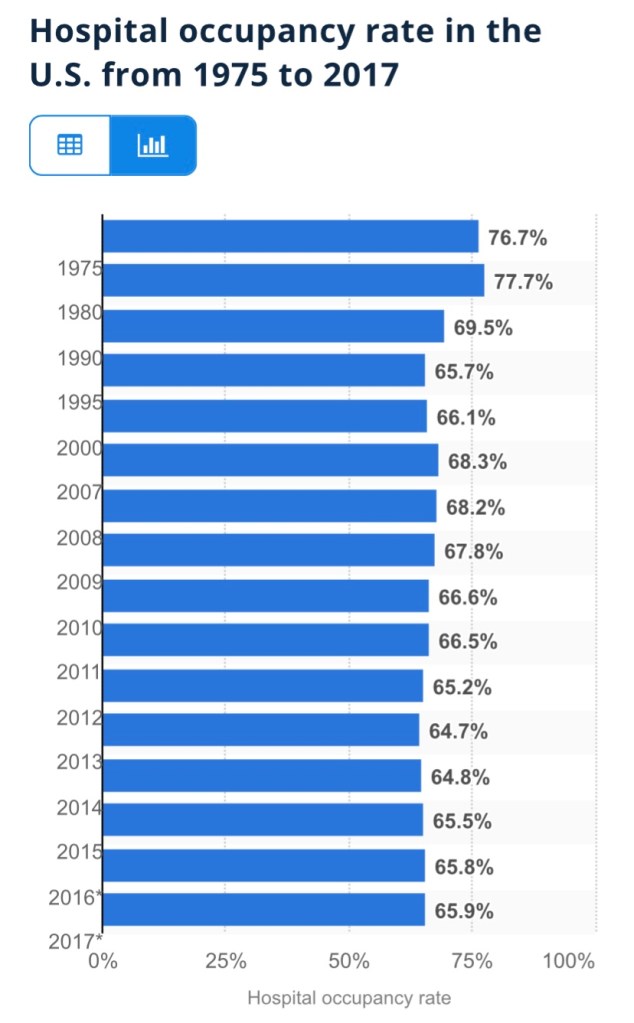
Is this unusual? Utilization is a little high based on the following annual averages of staffed-bed occupancy from Statista (which end in 2017, unfortunately). I don’t have a comparable utilization average for the November 30 date in recent years. However, the medical director interviewed at this link believes there is a consensus that the “optimal” capacity utilization rate for hospitals is as high as 85%! On that basis, we’re fine in the aggregate!

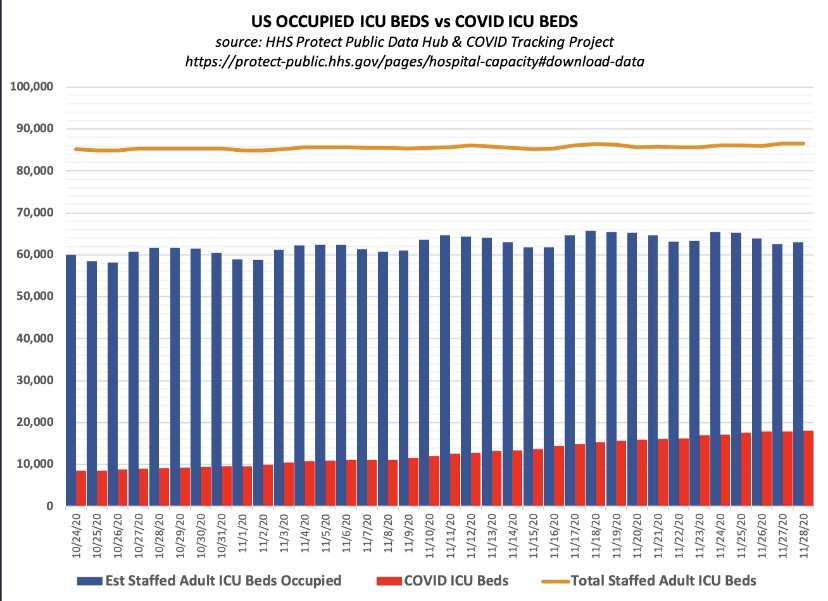
The chart below shows that about 21% of staffed Intensive Care Unit (ICU) beds are occupied by patients having COVID infections, and 74% of all ICU beds are occupied.

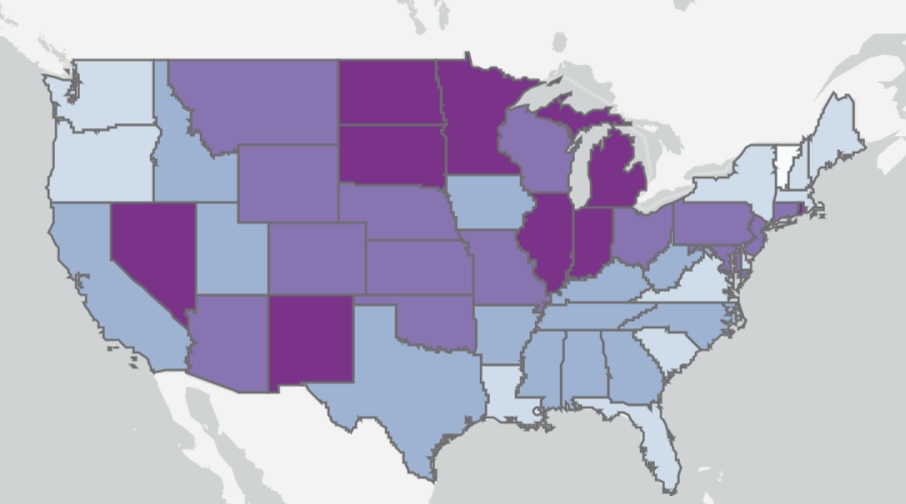
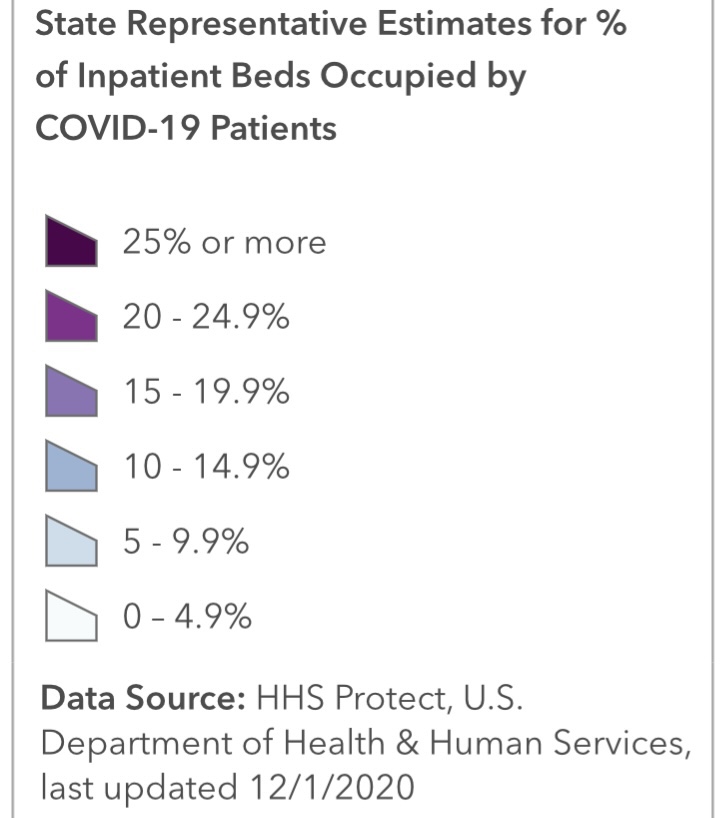
Here’s some information on the regional variation in ICU occupancy rates by COVID patients, which pretty much mirror the intensity of total beds occupied by COVID patients. Fortunately, new cases have declined recently in most of the states with high ICU occupancies.

Resolving an Apparent Contradiction

There are several factors that account for the upward trend in COVID admissions with stable total occupancy. Several links below are courtesy of AJ Kay:

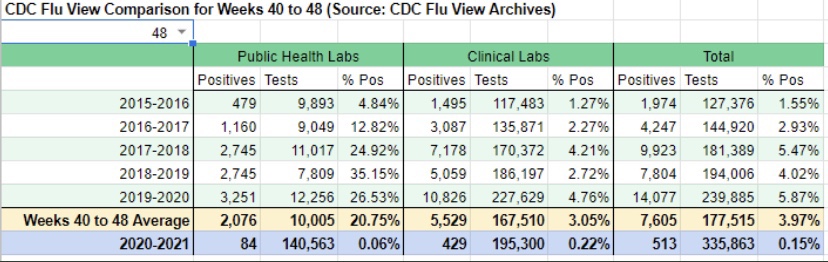
  • The flu season has been remarkably light, though outpatients with symptoms of influenza-like illness (ILI) have ticked-up a bit in the past couple of weeks. Still, thus far, the light flu season has freed up hospital resources for COVID patients. Take a look at the low CDC numbers through the first nine weeks of the current flu season (from Phil Kerpen):
  • There is always flexibility in the number of staffed beds both in ICUs and otherwise. Hospitals adjust staffing levels, and beds are sometimes reassigned to ICUs or from outpatient use to inpatient use. More extreme adjustments are possible as well, as when hallways or tents are deployed for temporary beds. This tends to stabilize total bed utilization.
  • The panic about the fall wave of the virus sowed by media and public officials has no doubt “spooked” individuals into deferring care and elective procedures that might require hospitalization. This has been an unfortunate hallmark of the pandemic with terrible medical implications, but it has almost surely freed-up capacity.
  • COVID beds occupied are inflated by a failure to distinguish between patients admitted “for” COVID-like illness (CLI) and patients admitted for other reasons but who happen to test positive for COVID — patients “with” COVID (and all admissions are tested).
  • Case inflation from other kinds of admissions is amplified by false positives, which are rife. This leads to a direct reallocation of patients from “beds occupied” to “COVID beds occupied”.
  • In early October, the CDC changed its guidelines for bed counts. Out-patients presenting CLI symptoms or a positive test, and who are assigned to a bed for observation for more than eight hours, were henceforth to be included in COVID-occupied beds.
  • Also in October, the FDA approve an Emergency Use Authorization for Remdesivir as a first line treatment for COVID. That requires hospitalization, so it probably inflated COVID admissions.
  • The CDC also announced severe penalties in October for facilities which fail to meet its rather inclusive COVID reporting requirements, creating another incentive to capture any suspected COVID case in its reports.

In addition to the above, let’s not forget: early on, hospitals were given an incentive to diagnose patients with COVID, whether tested or merely “suspected”. The CARES Act authorized $175 billion dollars for hospitals for the care of COVID patients. In the spring and even now, hospitals have lost revenue due to the cancellation of many elective procedures, so the law helped replace those losses (though the distribution was highly uneven). The point is that incentives were and still are in place to diagnose COVID to the extent possible under the law (with a major assist from false-positive PCR tests).

Improved Treatment and Treatment

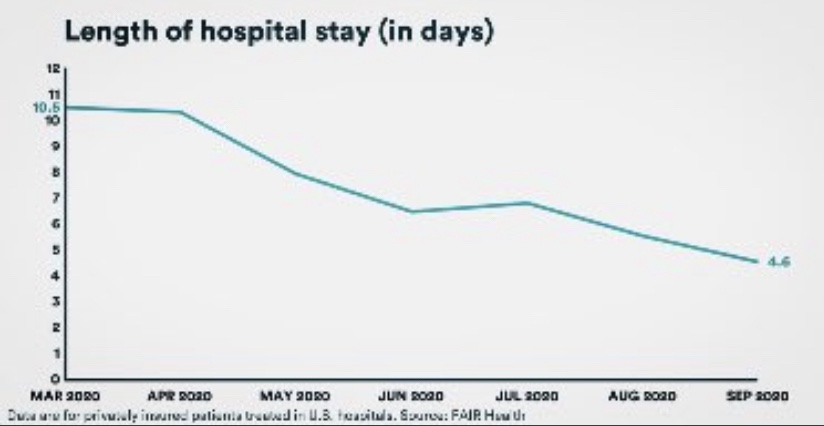
While more COVID patients are using beds, they are surviving their infections at a much higher rate than in the spring, according to data from FAIR Health. Moreover, the average length of their hospital stay has fallen by more than half, from 10.5 to 4.6 days. That means beds turn over more quickly, so more patients can be admitted over a week or month while maintaining a given level of hospital occupancy.

The CDC just published a report on “under-reported” hospitalization, but as AJ Kay notes, it can only be described as terrible research. Okay, propaganda is probably a better word! Biased research would be okay as well. The basic idea is to say that all non-hospitalized, symptomatic COVID patients should be counted as “under-counted” hospitalizations. We’ve entered the theater of the absurd! It’s certainly true that maxed-out hospitals must prioritize admissions based on the severity of cases. Some patients might be diverted to other facilities or sent home. Those decisions depend on professional judgement and sometimes on the basis of patient preference. But let’s not confuse beds that are unoccupied with beds that “should be occupied” if only every symptomatic COVID patient were admitted.

Regional Differences

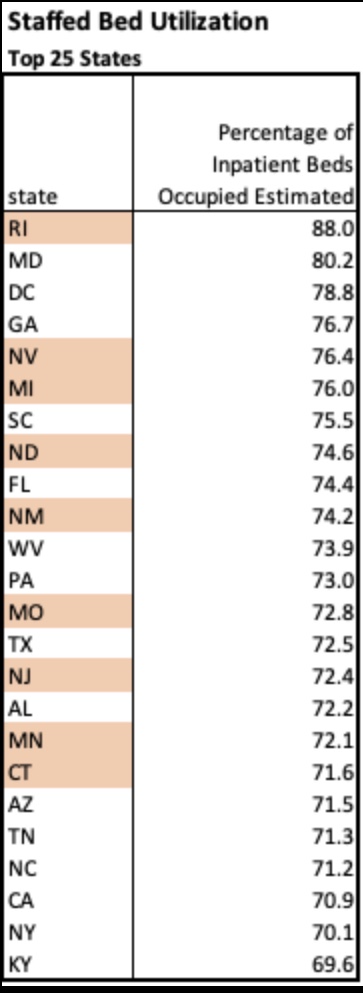
Finally, here’s a little more information on regional variation in bed utilization from the HealthData.gov web site. The table below lists the top 25 states by staffed bed utilization at the end of November. A few states are highlighted based on my loose awareness of their status as “COVID “hot spots” this fall (and I’m sure I have overlooked a couple. Only two states were above 80% occupancy, however.

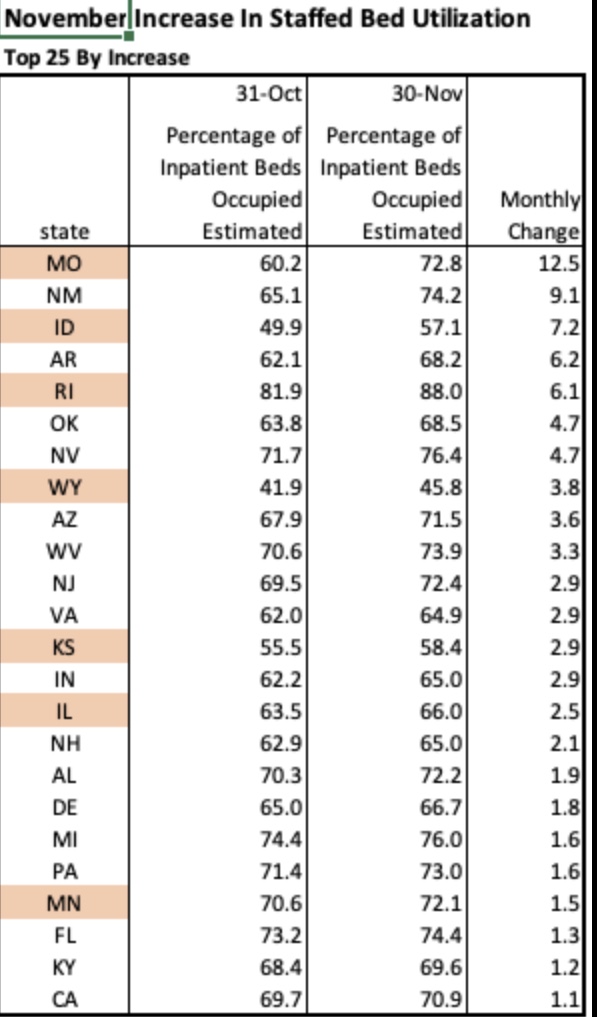
The next table shows the 25 states with the largest increase in staffed bed utilization during November. Only a handful would appear to be at all alarming based on these increases, but Missouri, for example, at the top of the list, still had 27% of beds unoccupied on November 30. Also, 21 states had decreases in bed utilization during November. Importantly, it is not unusual for hospitals to operate with this much headroom or less, which many administrators would actually prefer.

Of course, certain local markets and individual hospitals face greater capacity pressures at this point. Often, the most crimped situations are in small hospitals in underserved communities. This is exacerbated by more limited availability of staff members with school-age children at home due to school closures. Nevertheless, overall needs for beds look quite manageable, especially in view of some of the factors inflating COVID occupancy.

Conclusion

Marc Boom, President and CEO of Houston Methodist Hospital, had some enlightening comments in this article:

“Hospital capacity is incredibly fluid, as Boom explained on the call, with shifting beds and staffing adjustments an ongoing affair. He also noted that as a rule, hospitals actually try to operate as near to capacity as possible in order to maximize resources and minimize cost burdens. Boom said numbers from one year ago, June 25, 2019, show that capacity was at 95%.”

So there are ample beds available at most hospitals. A few are pinched, but resources can and should be devoted to diverting serious COVID cases to other facilities. But on the whole, the panic over hospital capacity for COVID patients is unwarranted.

COVID and Hospital Capacity

15 Sunday Nov 2020

Posted by Nuetzel in Health Care, Pandemic

≈ 1 Comment

Tags

Bed Capacity, Capacity Management, CDC, Covid-19, HealthData.gov, Herd Immunity, Hospital Utilization, ICU Capacity, ICU Utilization, Influenza, Justin Hart, Lockdown Illnesses, Missouri, PCR Tests, Prevalence, Seasonality, St. Louis MO, Staffed Beds, Staffed Utilization, Statista

The fall wave of the coronavirus has brought with it an increase in COVID hospitalizations. It’s a serious situation for the infected and for those who care for them. But while hospital utilization is rising and is reaching tight conditions in some areas, claims that it is already a widespread national problem are without merit.

National and State Hospital Utilization

The table below shows national and state statistics comparing beds used during November 1-9 to the three-year average from 2017 – 19, from Justin Hart. There are some real flaws in the comparison: one is that full-year averages are not readily comparable to particular times of the year, with or without COVID. Nevertheless, the comparison does serve to show that current overall bed usage is not “crazy high” in most states, as it were. The increase in utilization shown in the table is highest in IA, MT, NV, PA, VT, and WI, and there are a few other states with sizable increases.

Another limitation is that the utilization rates in the far right column do not appear to be calculated on the basis of “staffed” beds, but total beds. The U.S. bed utilization rate would be 74% in terms of staffed beds.

Average historical hospital occupancy rates from Statista look like this:

Again, these don’t seem to be calculated on the basis of staffed beds, but current occupancies are probably higher now based on either staffed beds or total beds.

As of November 11th, a table available at HealthData.gov indicates that staffed bed utilization in the U.S. is at nearly 74%, with ICU utilization also at 74%. As the table above shows, states vary tremendously in their hospital bed utilization, a point to which I’ll return below.

COVID patients were using just over 9% of of all staffed beds and just over 19% of ICU beds as of November 11th. One caveat on the reported COVID shares you’ll see for dates going forward: the CDC changed its guidelines on counting COVID hospitalizations as of November 12th. It is now a COVID patient’s entire hospital stay, rather than only when a patient is in isolation with COVID. That might be a better metric if we can trust the accuracy of COVID tests (and I don’t), but either way, the change will cause a jump in the COVID share of occupied beds.

Interpreting Hospital Utilization

Many issues impinge on the interpretation of hospital utilization rates:

First, cases and utilization rates are increasing, which is worrisome, but the question is whether they have already reached crisis levels or will very soon. The data doesn’t suggest that is the case in the aggregate, but there certainly there are hospitals bumping up against capacity constraints in some parts of the country.

Second, occupancies are increasing due to COVID patients as well as patients suffering from lockdown-related problems such as self-harm, psychiatric problems, drug abuse, and conditions worsened by earlier deferrals of care. We can expect more of that in coming weeks.

Third, lockdowns create other hospital capacity issues related to staffing. Health care workers with school-aged children face the daunting task of caring for their kids and maintaining hours on jobs for which they are critically needed.

Fourth, there are capacity issues related to PPE and medical equipment that are not addressed by the statistics above. Different uses must compete for these resources within any hospital, so the share of COVID admissions has a strong bearing on how the care of other kinds of patients must be managed.

Fifth, some of the alarm is purely case-driven: all admissions are tested for COVID, and non-COVID admissions often become COVID admissions after false-positive PCR tests, or simply due to the presence of mild COVID with a more serious condition or injury. However, severe COVID cases have an outsized impact on utilization of staff because their care is relatively labor-intensive.

Sixth, there are reports that the average length of COVID patient stays has decreased markedly since the spring (it is hard to find nationwide figures), but it is also increasingly difficult to find facilities for post-acute care required for some patients on discharge. Nevertheless, if improved treatment reduces average length of stay, it helps hospitals deal with the surge.

Finally, thus far, the influenza season has been remarkably light, as the following chart from the CDC shows. It is still early in the season, but the near-complete absence of flu patients is helping hospitals manage their resources.

St. Louis Hotspot

The St. Louis metro area has been proclaimed a COVID “hotspot” by the local media and government officials, which certainly doesn’t make St. Louis unique in terms of conditions or alarmism. I’m curious about the data there, however, since it’s my hometown. Here is hospital occupancy on the Missouri side of the St. Louis region:

It seems this chart is based on total beds, not staffed beds, However, one of the interesting aspects of this chart is the variation in capacity over time, with several significant jumps in the series. This has to do with data coverage and some variation in daily reporting. Almost all of these data dashboards are relatively new, so their coverage has been increasing, but generally in fits and starts. Reporting is spotty on a day-to-day basis, so there are jagged patterns. And of course, capacity can vary from day-to-day and week-to-week — there is some flexibility in the number of beds that can be made available.

The share of St. Louis area beds in use was 61% as of November 11th (preliminary). COVID patients accounted for 12% of hospital beds. ICU utilization in the St. Louis region was a preliminary 67% as of Nov. 11, with COVID patients using 29% of ICU capacity (which is quite high). Again, these figures probably aren’t calculated on the basis of “staffed” beds, so actual hospital-bed and ICU-bed utilization rates could be several percentage points higher. More importantly, it does not appear that utilization in the St. Louis area has trended up over the past month.

At the moment, the St. Louis region appears to have more spare hospital capacity than the nation, but COVID patients are using a larger share of all beds and ICU beds in St. Louis than nationwide. So this is a mixed bag. And again, capacity is not spread evenly across hospitals, and it’s clear that hospitals are under pressure to manage capacity more actively. In fact, hospitals only have so many options as the share of COVID admissions increases: divert or discharge COVID and non-COVID patients, defer elective procedures, discharge COVID and non-COVID patients earlier, allow beds to be more thinly staffed and/or add temporary beds wherever possible.

Closing Thoughts

Anyone with severe symptoms of COVID-19 probably should be hospitalized. The beds must be available, or else at-home care will become more commonplace, as it was for non-COVID maladies earlier in the pandemic. A continued escalation in severe COVID cases would require more drastic steps to make hospital resources available. That said, we do not yet have a widespread capacity crisis, although that’s small consolation to areas now under stress. And a few of the states with the highest utilization rates now have been rather stable in terms of hospitalizations — they already had high average utilization rates, which is potentially dangerous.

COVID is a seasonal disease, and it’s no surprise that it’s raging now in areas that did not experience large outbreaks in the spring and summer. And those areas that had earlier outbreaks have not had a serious surge this fall, at least not yet. My expectation and hope is that the midwestern and northern states now seeing high case counts will soon reach a level of prevalence at which new infections will begin to subside. And we’re likely to see a far lower infection fatality rate than experienced in the Northeast last spring.

Not News: Infections and Long-Term Complications

06 Sunday Sep 2020

Posted by Nuetzel in Coronavirus, Health Care

≈ Leave a comment

Tags

Antibodies, Autoimmune Disease, Bacterial Infection, Celiac Disease, Chronic Fatigue Syndrome, Endocrinology, Fibromyalgia, Graves', Graves’ Disease, Guillain-Barré Syndrome, Influenza, Islet Cells, Multiple Sclerosis, Myocarditis, Rheumatoid Conditions, Sjogren’s Syndrome, Type I Diabetis, Viral Unfection

At 15 years of age I was diagnosed as a Type I diabetic — 49 years ago. I had a genetic predisposition, but I’ve been told by several endocrinologists over the years that an “event” likely triggered the antibody response for which I was predisposed. The event was, in all probability, a viral or bacterial infection. The autoimmune response to that infection attacked the islet cells in my pancreas and destroyed my body’s ability to produce insulin. I’ve been dependent on external delivery of insulin ever since. Life goes on.

I relate this information to emphasize that it is not “novel” for a virus to trigger long-term “complications”. Recently, certain media factions have been shrieking about the long-term complications that might be triggered by the coronavirus (C19) even in those with otherwise light symptoms. Those are unfortunate, but again, this aspect of viral and bacterial infection is not uncommon.

We know, for example, that bacterial and viral infections often trigger autoimmune diseases like diabetes. Other examples are chronic fatigue syndrome, fibromyalgia, rheumatoid conditions, celiac disease, Graves’ disease, Guillain-Barré syndrome, Sjogren’s Syndrome, multiple sclerosis, and many others.

One condition that’s been cited as an especially dangerous complication of C19 is myocarditis, or inflammation of the heart muscle. This has been invoked as a reason to cancel sports competitions, for example. (See here for a denial of one rather hyperbolic claim regarding this condition.) Myocarditis has a long history as a side effect of influenza. Most people recover with no long-term complications, and others manage to live with it and remain productive. While C19 is “novel”, infection-induced myocarditis is not.

If you catch a virus or a bacterial infection, you might experience other complications with varying severity. Get used to the idea. It’s an unfortunate fact of life.

Trump Hates/Loves Lockdowns, Dumps on Swedes

07 Sunday Jun 2020

Posted by Nuetzel in Health Care, Pandemic

≈ Leave a comment

Tags

Cholesterol, Coronavirus, Donald Trump, Herd Immunity, Institute for Health Metrics and Evaluation, Lockdowns, Nordic, Rose Garden Briefing, Somali Immigration, Sweden, Vitamin D

President Trump was in a festive mood last Friday, pleased with the May employment report, as he should be. But in his Rose Garden word jam, he made some questionable and unnecessary claims about coronavirus policies in the U.S. and the Swedish experience. I credit Trump for pushing to end the lockdowns as it became clear that they were both unhealthy and unsustainable. However, he’s now way too eager to cover his earlier tracks. That is, he is now defensive about the precautions he advocated on the advice of his medical experts in March and early April.

In the Rose Garden, Trump said that lockdowns were necessary to stop the spread of the virus. But to assert that lockdowns “stopped” or even slowed the spread of the virus is speculation at best, and they had deadly effects of their own. Most of the social distancing was achieved through voluntary action, as I have argued previously. Lockdown advocacy lacked any semblance of geographic nuance, as if uniform application makes sense regardless of population density.

Trump went on to say that Sweden was in “bad shape” because it did not impose a lockdown during the pandemic. This is not a new position for the president, but the facts are anything but clear-cut. Again, there is mixed evidence on whether mandatory lockdowns have a real impact on the spread or mortality of the coronavirus (also see here). That’s not to say that social distancing doesn’t work, but much of the benefit comes from private decisions to mitigate risk via distancing. Of course, that also depends on whether people have good information to act on. And to be fair, Sweden did take certain measures such as banning gatherings of more than 50 people, closing schools, and limiting incoming travel.

While the full tale has not been told, and Sweden’s death rate is high on a per capita basis, several other Western European countries that imposed lockdowns have had even higher death rates. The following chart is from the Institute for Health Metrics and Evaluation (IMHE). It is expressed in terms of coronavirus deaths per 100,000 of population. The orange line is Sweden, the purple line is Belgium, and the light blue line is the UK. Actuals are reported through June 4th. While Sweden’s death toll has a somewhat steeper gradient, the level remains well below both Belgium and the UK. It is also lower than the death rates for Italy and Spain, and it is about the same as France’s death rate. Yes, a number of other countries have lower death rates, including the U.S., but the evidence is hardly consistent with Trump’s characterization.

Sweden’s big mistake was not it’s decision to rely on voluntary social distancing, but in failing to adequately protect highly vulnerable populations. The country’s elderly skew older than most countries by several years. Residents of nursing homes have accounted for about half of Sweden’s coronavirus deaths, an international outlier. Inadequate preparedness in elder care has been a particular problem, including a lack of personal protective equipment for workers. There was also a poorly implemented volunteer program, intended to fill-out staffing needs, that appears to have aggravated transmission of the virus.

Sweden has also experienced a concentration of cases and deaths among its large immigrant population. It has the largest immigrant population among the Nordic countries, with large numbers of low income migrants from Syria, Iraq, Iran, Somalia and parts of Eastern Europe. Earlier in the pandemic, according to one estimate, 40% of coronavirus fatalities in Stockholm were in the Somali population. These immigrants tend to live in dense conditions, often in multigenerational households. Many residents with health problems tend to go untreated. Conditions like Vitamin D deficiency and high cholesterol, apparent risk factors for coronavirus severity, likely go untreated in these communities. In addition, language barriers and traditional trust relationships may diminish the effectiveness of communications from public health authorities. In fact, some say the style of Swedish public health messaging was too culturally idiosyncratic to be of much use to immigrants. And one more thing: immigrants are a disproportionately high 28% of nursing home staff in Sweden, implying an intimacy between two vulnerable populations that almost surely acts as a risk multiplier in both.

It might be too harsh to suggest that that Sweden could have prevented the outsized impact of the virus on immigrants. However, Sweden’s coronavirus testing has not been as intensive as other Nordic countries. More testing might have helped alleviate the spread of the virus in nursing homes and in immigrant communities. But the vulnerabilities of the immigrant population might be more a matter of inadequate health care than anything else, both on the demand and supply sides.

Contrary to Trump’s characterization, Sweden’s herd immunity strategy is not the reason for it’s relatively high death rate from the virus. Several countries that imposed lockdowns have had higher death rates. And Sweden’s death rate has been heavily concentrated among the aged in nursing homes and its large immigrant population. It’s possible that Sweden’s approach led to a cavalier attitude with respect identifying vulnerable groups and taking measures that could have protected them, including more intensive testing. Nevertheless, it’s inaccurate and unfair to scapegoat Sweden for not imposing a mandatory lockdown. The choice is not merely whether to impose lockdowns, but how to protect vulnerable populations at least cost. In that sense, general lockdowns are a poor choice.


← Older posts
Follow Sacred Cow Chips on WordPress.com

Recent Posts

  • Immigration and Merit As Fiscal Propositions
  • Tariff “Dividend” From An Indigent State
  • Almost Looks Like the Fed Has a 3% Inflation Target
  • Government Malpractice Breeds Health Care Havoc
  • A Tax On Imports Takes a Toll on Exports

Archives

  • December 2025
  • November 2025
  • October 2025
  • September 2025
  • August 2025
  • July 2025
  • June 2025
  • May 2025
  • April 2025
  • March 2025
  • February 2025
  • January 2025
  • December 2024
  • November 2024
  • October 2024
  • September 2024
  • August 2024
  • July 2024
  • June 2024
  • May 2024
  • April 2024
  • March 2024
  • February 2024
  • January 2024
  • December 2023
  • November 2023
  • August 2023
  • July 2023
  • June 2023
  • May 2023
  • April 2023
  • March 2023
  • February 2023
  • January 2023
  • December 2022
  • November 2022
  • October 2022
  • September 2022
  • August 2022
  • July 2022
  • June 2022
  • May 2022
  • April 2022
  • March 2022
  • February 2022
  • January 2022
  • December 2021
  • November 2021
  • October 2021
  • September 2021
  • August 2021
  • July 2021
  • June 2021
  • May 2021
  • April 2021
  • March 2021
  • February 2021
  • January 2021
  • December 2020
  • November 2020
  • October 2020
  • September 2020
  • August 2020
  • July 2020
  • June 2020
  • May 2020
  • April 2020
  • March 2020
  • February 2020
  • January 2020
  • December 2019
  • November 2019
  • October 2019
  • September 2019
  • August 2019
  • July 2019
  • June 2019
  • May 2019
  • April 2019
  • March 2019
  • February 2019
  • January 2019
  • December 2018
  • November 2018
  • October 2018
  • September 2018
  • August 2018
  • July 2018
  • June 2018
  • May 2018
  • April 2018
  • March 2018
  • February 2018
  • January 2018
  • December 2017
  • November 2017
  • October 2017
  • September 2017
  • August 2017
  • July 2017
  • June 2017
  • May 2017
  • April 2017
  • March 2017
  • February 2017
  • January 2017
  • December 2016
  • November 2016
  • October 2016
  • September 2016
  • August 2016
  • July 2016
  • June 2016
  • May 2016
  • April 2016
  • March 2016
  • February 2016
  • January 2016
  • December 2015
  • November 2015
  • October 2015
  • September 2015
  • August 2015
  • July 2015
  • June 2015
  • May 2015
  • April 2015
  • March 2015
  • February 2015
  • January 2015
  • December 2014
  • November 2014
  • October 2014
  • September 2014
  • August 2014
  • July 2014
  • June 2014
  • May 2014
  • April 2014
  • March 2014

Blogs I Follow

  • Passive Income Kickstart
  • OnlyFinance.net
  • TLC Cholesterol
  • Nintil
  • kendunning.net
  • DCWhispers.com
  • Hoong-Wai in the UK
  • Marginal REVOLUTION
  • Stlouis
  • Watts Up With That?
  • Aussie Nationalist Blog
  • American Elephants
  • The View from Alexandria
  • The Gymnasium
  • A Force for Good
  • Notes On Liberty
  • troymo
  • SUNDAY BLOG Stephanie Sievers
  • Miss Lou Acquiring Lore
  • Your Well Wisher Program
  • Objectivism In Depth
  • RobotEnomics
  • Orderstatistic
  • Paradigm Library
  • Scattered Showers and Quicksand

Blog at WordPress.com.

Passive Income Kickstart

OnlyFinance.net

TLC Cholesterol

Nintil

To estimate, compare, distinguish, discuss, and trace to its principal sources everything

kendunning.net

The Future is Ours to Create

DCWhispers.com

Hoong-Wai in the UK

A Commonwealth immigrant's perspective on the UK's public arena.

Marginal REVOLUTION

Small Steps Toward A Much Better World

Stlouis

Watts Up With That?

The world's most viewed site on global warming and climate change

Aussie Nationalist Blog

Commentary from a Paleoconservative and Nationalist perspective

American Elephants

Defending Life, Liberty and the Pursuit of Happiness

The View from Alexandria

In advanced civilizations the period loosely called Alexandrian is usually associated with flexible morals, perfunctory religion, populist standards and cosmopolitan tastes, feminism, exotic cults, and the rapid turnover of high and low fads---in short, a falling away (which is all that decadence means) from the strictness of traditional rules, embodied in character and inforced from within. -- Jacques Barzun

The Gymnasium

A place for reason, politics, economics, and faith steeped in the classical liberal tradition

A Force for Good

How economics, morality, and markets combine

Notes On Liberty

Spontaneous thoughts on a humble creed

troymo

SUNDAY BLOG Stephanie Sievers

Escaping the everyday life with photographs from my travels

Miss Lou Acquiring Lore

Gallery of Life...

Your Well Wisher Program

Attempt to solve commonly known problems…

Objectivism In Depth

Exploring Ayn Rand's revolutionary philosophy.

RobotEnomics

(A)n (I)ntelligent Future

Orderstatistic

Economics, chess and anything else on my mind.

Paradigm Library

OODA Looping

Scattered Showers and Quicksand

Musings on science, investing, finance, economics, politics, and probably fly fishing.

  • Subscribe Subscribed
    • Sacred Cow Chips
    • Join 128 other subscribers
    • Already have a WordPress.com account? Log in now.
    • Sacred Cow Chips
    • Subscribe Subscribed
    • Sign up
    • Log in
    • Report this content
    • View site in Reader
    • Manage subscriptions
    • Collapse this bar
 

Loading Comments...