I’d just posted an article about the idiocy of masking outdoors, which included a call for an end to the confused public health messaging we’ve heard during the pandemic, when I witnessed something that made my eyes roll:
A fiftyish guy just ahead of me is wearing a mask, walking from the beach toward a public pavilion where there are restrooms. He is barefoot…. and he enters the men’s room and steps right up to the row of urinals. He leaves the restroom without washing his hands.
Perhaps he’s not quiteDarwin Award material, but I ask: do you think this guy’s precautions against potential pathogens and disease vectors were well balanced? It’s not terribly uncommon to see “moisture” or even shallow puddles around public urinals. Don’t go barefoot! Wear flip-flops to the john, at the very least. And wash your hands when you’re done!
Amazingly, the only message related to health and hygiene that our friend has absorbed is to wear a useless mask. And he wears it at the beach! I’m sure he got around to adjusting his mask with unwashed hands at some point. I’ll cut him some slack for wearing a mask inside the restroom, but as my last post noted, that precaution is almost surely wasted effort.
It’s been clear since the beginning of the pandemic that your chance of getting infected with COVID outside is close to zero. (Also see here). Yet I still see a few masked people on the beach, in the park, on balconies, and walking in the neighborhood. Given the negligible risk of contracting COVID outdoors, the marginal benefit of masking outdoors is infinitesimal. Likewise, the benefit of a mask to the sole occupant of a vehicle is about zilch. Okay, some individuals might forget to remove their masks after leaving a “high-risk” environment. Sure, maybe, but cloth masks really don’t stop the dispersion of fine aerosols anywhere, indoors or outdoors. Of course, the immune-compromised have a reasonable excuse to apply the precautionary principle, but generally not outside with good air quality.
The following link provides a list of mask studies, and meta-studies. Several describe randomized control trials (RCTs). They vary in context, but all of them reject the hypothesis that masks are protective. Positive evidence on mask efficacy is lacking in health care settings, in community settings, and in school settings, and the evidence shows that masks create “pronounced difficulties” for young children and “emotional interference” for school children of all ages. Here’s another article containing links to more studies demonstrating the inefficacy of masks. Also see here. And this article is not only an excellent summary of the research, but it also highlights the hypocrisy of the “follow the science” public health establishment with respect to RCTs. Compliance is not even at issue in many of these studies, though if you think masks matter, it is always an issue in practice. Even studies claiming that cloth masks of the type normally worn by the public are “effective” usually concede that a large percentage of fine aerosols get through the masks… containing millions of tiny particles. In indoor environments with poor ventilation, those aerosols remain suspended in the air for periods long enough to be inhaled by others. That, in fact, is why masks are ineffective at preventing transmission.
Another dubious claim is that masks are responsible for virtually eliminating cases of influenza in 2020 and 2021. Again, to be charitable, masks are of very limited effectiveness in stopping viral transmission. Moreover, compliance has been weak at best, and areas without mask mandates have experienced the same plunge in flu cases as areas with mandates. A far more compelling explanation is that viral interference caused the steep reduction in flu incidence. The chance of being infected with more than one virus at a time is almost nil. Simply put, COVID outcompeted the flu.
Again, I grant that there are studies (though only a single randomized control trial out of India of which I’m aware) that have demonstrated significant protective effects. Even then, however, the mixed nature of this body of research does not support intrusive masking requirements.
Nevertheless, masks are still mandated in some jurisdictions. Those mandates usually don’t apply outdoors, however, and not in your own damn car! Mask mandates contribute to the general climate of fear surrounding COVID, which is wholly unjustified for most children and healthy working-age people. Public health messaging should focus on high-risk individuals: the elderly, the obese, and those having so-called comorbidities and compromised immune systems. Those groups have obvious reasons to be concerned about the virus. They have excuses to be germaphobic! Still, they are at little risk outdoors, the value of masks is doubtful, and breathing deep of fresh air is good for you in any case!
The incidence of COVID has declined substantially in many areas since early September, but the virus is now almost certainly endemic and is likely to return in seasonal waves. However, the Delta wave was far less deadly than earlier variants, a favorable trend many believe will continue. These charts from the UKposted by Michael Levitt demonstrate the improvement vividly. Perhaps the mask craze will fade away as the evidence accumulates.
The pandemic has been a moment of redemption for germaphobes, but no reasonable assessment of risk mitigation relative to the cost, inconvenience, discomfort, and psychological debasement of face jackets can prove their worth outdoors. Their value indoors is nearly as questionable. Yet there remains a stubborn reluctance by public health authorities to lift mask mandates. There are far too many individuals masking outdoors, and to be nice, perhaps it’s mere ignorance. But there are still a few would-be tyrants on Twitter presuming to shame others into joining this pathetic bit of theatre. I believe Anne Wheeler nailed it with this recent tweet:
“This is one of the first things you learn in OCD therapy – you don’t get to make people participate in your compulsions in order to lesson your own anxiety. It’s bizarre that it’s been turned into a virtue.”
There’s also no question that masks are still in vogue as a virtue signal in some circles, but a mask outdoors, especially, is increasingly viewed as a stupid-signal, and for good reason. I’ll continue to marvel at the irrationality of these masked alarmists, who just don’t understand how foolish they look. Give yourself permission to get some fresh air!
Price inflation is getting more attention now than it has in many years, but not everyone is convinced it will persist, most conspicuously bond investors. The Biden Administration’s initial narrative was plausible even if there were seeds of doubt: a price spike was to be expected relative to the low-ebb of price changes during the pandemic. However, the inflation data has come in strong since the spring, and events point to continuing price pressures and the potential for expected inflation to drive escalations in contract pricing. Once embedded like that, the phenomenon broadens and gets harder to squeeze out.
Broadening Price Hikes
The evidence at hand is never enough to take much comfort in predictions, and the uncertainties now are similar tothose I discussed in June. At the time, the price moves had been pronounced only in the prior month or so, and there was no evidence of any breadth. Now, it’s at least clear that increases in the so-called “core” Consumer Price Index (CPI), which excludes food and energy prices, have escalated. In addition, the growth in the median component of the CPI basket reported by the Federal Reserve Bank of Cleveland has begun to jump. So has the “trimmed CPI”, which excludes the most extreme 8% of prices changes in both directions within the index. The chart below shows one-month changes in these gauges:
So the recent upward price trends have expanded in breadth, and their persistence is making it a little harder to argue that the changes are transitory rebounds from pandemic weakness.
Bond Investors Still Nonchalant
Investors are by no means convinced that the recent price pressures will persist. They have an incentive to bid-up bond yields to compensate for expected inflation, so these yields can be used to infer inflation expectations. The chart below from the Federal Reserve Bank of St. Louis shows the five-year “breakeven” inflation rate, which is derived from inflation-indexed versus unindexed Treasury securities.
The pattern does not suggest that a meaningful change in inflation expectations has taken place. In fact, the implied five-year inflation forecast has edged down a bit. Of course, we’re still worrying about a fairly short period of high month-to-month changes in prices, and five years is a long time in that context.
This “casual” reaction of interest rates to the inflation spike undoubtedly reflects investors’ belief that the Federal Reserve will tighten policy in an effort to contain inflation. Some of us have strong doubts about the Fed’s inflation-fighting resolve, however. There is little the Fed can do to relieve supply-side problems, and many would argue that the Fed should take an accommodative stance in an attempt to minimize output and job losses, but that would reinforce the inflationary effects. There is no easy way out. Risks loom in both directions, and though I might regret it, at recent yields, I’m not buying Treasury bonds.
Sources of Price Pressure
Economists have tended to divide price pressures into those driven by demand and those driven by supply. Sometimes the terms “demand-pull” and “cost-push” inflation are used for shorthand. The former is usually associated with economic growth, where rising prices indicate that demand is outpacing gains in capacity. With cost-push inflation, however, rising prices indicate that production snd supply is somehow impeded. You get higher prices and lower output. This is so-called “stagflation”. Today we seem to have a combination of those inflationary forces in play: demand has rebounded from the pandemic lows of 2020, while breakdowns in the supply chain have choked production, with a consequent need for more severe price rationing. If the latter forces win out, we will have entered a stagflationary episode.
Unfortunately, administration policies are exacerbating supply-side inflationary pressures. Officials first insisted that the jump in inflation measures would be transitory. More recently they’ve said that it really only hurts “the rich”, an assertion that is decidedly false. Biden flaks are doing their level best to put lipstick on a pig. “Peppermint” Psaki says it shows that people just want to buy things! On the other hand, the Washington Post encourages us to “lower our expectations”. Um, yeah… I think we’re there!
Burning Energy Producers and Consumers
Energy policy is an obvious case: while a hurricane moving through the Gulf of Mexico took a big bite out of domestic oil production, Biden took several steps to hamstring the domestic fossil fuel industry at a time when the economy was still recovering from the pandemic. This included revoking permits for the Keystone pipeline, a ban on drilling on federal lands and federally-controlled waters in the Gulf, shutting down production on some private lands on the pretext of enforcing the Endsngered Species Act, and capping methane emissions by oil and gas producers. And all that was apparently just a start.
As Mark Theisen notes, when you promise to destroy a particular industry, as Joe Biden has, by taxing and regulating it to death, who wants to invest in or even maintain production facilities? Some leftists with apparent influence on the administration are threatening penalties against the industry up to and including prosecution for “crimes against humanity”! This is moronic, of course, but perhaps these extremists are just trying to move the Overton Window. Fossil fuels have been and still are a miracle in terms of human well-being, and renewable (but intermittent) energy sources are simply not capable of replacing the lost power, as Germans, Californians, and Texans are learning. Furthermore, the effort to kill fossil fuels amounts to a war on the poor. Americans are facing steep increases in their utility bills and blackouts during the times when power is needed most. Now, Biden is actively trying to wheedle more oil production out of OPEC, as if it’s okay for those nations to extract it, but not for us to do so!
Labor Shortage
Have you heard it’s hard to get help these days? You’ll notice it pretty fast if you have regular occasion to deal with service establishments. Goods are getting scarce on the shelves as well. Food and paper goods are getting pricier. The semiconductor shortage has been prominent, impacting production and pricing of electronics, computers, and new cars, with a big cross-effect on the used car and rental car markets. Everywhere you look, sellers seem short of inventory. This year it might be tough to fill the space under the Christmas tree for lack of availability.
This isn’t just about cargo ships unable to unload at the ports, although that’s significant. Patrick Tyrell and Anthony B. Kim note the difficulty of overcoming the supply chain breakdowns even with 24/7 operations at the ports. Tyrell snd Kim offer this quite from the Financial Times:
“The US is facing a shortage of warehouse space and truck drivers, and shifting to 24/7 operation will require enormous co-ordination between the publicly operated ports and private sector groups, including large retailers and freight companies.”
There are several reasons for the labor shortage: a few workers and businesses might still be living in fear of COVID, especially in “blue” states and urban areas where the fear factor seems to have been more palpable. That’s where the high unemployment is. There has also been an apparent wave of retirements among late baby-boomers who were already on the cusp of hanging up their skates. However, the Biden Administration has instigated a set of ill-advised policies that blunt work incentives, leading to reduced labor force participation: the repeated extensions of pandemic-related unemployment benefits; increased child and dependent care tax benefits; the moratorium on evictions from rental property; the elimination of work requirements for expanded Medicaid coverage; and increased EBT and SNAP benefits. This is not hard to understand: if you pay people to stay home, they will stay home, even as you suffer through an interminable wait for your fast food. But there might not be a wait at Dunkin’ Donuts, because they’ve been running short on donuts due to “supply chain issues”!
Destructive Public Policy
COVID policy contributed to the early plunge in demand in 2020. Economic output declined, and ramping-up production is not always a simple thing. In this case, it was hindered by repeated non-pharmaceutical interventions and confused messaging from public health authorities. These are issues I’ve felt compelled to address too many times on my blog over the past 18 months. The negative economic effects of these policies continue to linger, and it should surprise no one.
The Democrats’ so-called “social infrastructure” bill, which looks mercifully unlikely to pass without major curtailments in scale and scope, would exacerbate many of the problems cited above. As I’ve noted recently, it’s more of an “infra-shackle” bill for the private economy than an infrastructure bill. For $3.5 trillion (an understatement based on budget gimmickry), we get heavy regulation and taxes, particularly on fossil fuels, subsidies for uneconomic technologies, assorted entitlements with no means testing, wage- and job-killing (and inflationary) hikes in corporate taxes, and other tax disincentives to private investment. The bill would represent a huge reallocation from the private to the public sector via coercion and public competition for scarce resources.
As if that wasn’t bad enough, now Biden has issued his legally dubious vaccine mandate, which has been met with outrage among many workers, from Chicago cops and other public servants, health care workers, truckers and workers at such corporate giants as Boeing, Southwest Airlines, and many others. Unions are furious. People are walking out. This represents a negative “supply shock”, an unexpected event that hinders production and boosts prices. Joe Biden looks to be well on his way to earning the title of “The Stagflation President”.
This Norman Rockwell painting is called “Freedom of Speech”. It depicts a Vermont dairy farmer speaking his mind at a school board meeting, and no, he is not a “domestic terrorist”! (A recent piece by Selina Zito reminded me of this painting.) Today, parents of schoolchildren have a very special reason to be upset: the teaching of critical race theory (CRT) as part of the regular curriculum. A better name for this vapid “theory” might be “critical race theology”, because it is no “theory” at all: it is a set of “woke” accusations leveled against “out groups” designated by leftists: whites, straights, men, and sometimes groups like Jews and Asians. Many people of color are just as dismayed as those among CRT’s targets because its wrongheaded and corrosive nature is so plain. CRT is itself straightforwardly racist.
Taxpayers have a place in this debate as well, at both the K-12 and public university levels. However, their role in funding the indoctrination taking place in public schools has been neglected in the story of the revolt against CRT.
The Parent Trap
Many parents have taken strong action in response to the CRT onslaught. Some have quietly removed their children from public schools, while others have chosen to register their objections with school officials, often at school board meetings. Also, there has been some success at the ballot box by dissident school board candidates. This is grass roots participatory democracy in action, local and vocal. Certainly parents have a greater stake in their childrens’ education than anyone (except the kids themselves). They have a right to know what’s being taught and to provide critical feedback to schools.
School officials, teachers unions, and CRT teacher-enthusiasts are not likely to be straightforward about whether CRT is actually taught, however. This link might help you see through the gaslighting to which we’ve all been subjected. This article discusses various political avenues for fighting CRT in the schools. And here’s a “tool kit” that might be helpful.
Garland’s Effrontery
To top it all off, recently we’ve witnessed an act of fascist authoritarianism by the U.S. Attorney General that, by all appearances, involves a conspiracy between the Biden Administration, top officials at the Department of Justice, and the National School Boards Association (NSBA). AG Merrick Garland’s memorandum of October 4 announced a “partnership among federal, state, local, tribal, and territorial law enforcement to address threats against school administrators, board members, teachers, and staff.“ He did not provide actual evidence of threats against school boards or personnel, however. Yet Garland is willing to treat interested parents as if they are domestic terrorists! His memorandum is a thinly veiled warning to anyone having the temerity to confront school authorities on issues like CRT, as well as school mask mandates (which are ineffective, unnecessary, and detrimental to learning, socialization, and the psychological well being of children). Furthermore, we now know of an obvious conflict of interest: Garland’s daughter is married to the cofounder of Panorama Education, which sells training materials for teachers of CRT.
While Garland’s attempt to undercut free speech might chill the willingness of some parents to speak out against CRT in the schools, many refuse to back down. The following is an excerpt from a letter to the NSBA written on behalf of 427,000 parent-members of 21 organizations:
“Our organizations unequivocally oppose violence and find it deeply troubling that you imply otherwise about concerned citizens who care deeply about their community’s children – and who are concerned by the direction that America’s schools have taken.
Citizens are angry that school boards and school officials around the country are restricting access to public meetings, limiting public comment, and in some cases conducting business via text messages in violation of state open meetings laws.
They are angry that schools are charging them thousands of dollars in public records requests to view curriculum and training materials that impact their children and that should be open to the public by default.
They are angry that pandemic-related learning losses have compounded the already-low reading, writing, and math proficiency rates in America’s schools.
They are angry that rather than focusing on declining student achievement, large numbers of districts have chosen to fund, often with hundreds of thousands of dollars in taxpayer money, “social justice” and “diversity, equity, and inclusion” programs with finite resources.”
Insularity At the Board
I’ll be surprised if Garland’s memorandum doesn’t inspire many parents to push harder against CRT in their local schools. However, getting in front of school boards is not always easy, thanks to restricted access for public comment. Here’s an example of the draconian reaction by school authorities in their effort to silence parents, from Orange County, CA. In my own local school district in Missouri, making a short comment at a board meeting first requires submission of a request detailing the subject or question you wish to address to the board. Not only can they simply ignore your request, but it also gives them an opportunity to “circle the wagons” in advance, as it were, even calling upon various “friends of the board” to attend en masse.
The leftists who support CRT fight dirty, as this article notes:
“Nicole Solas, a mother who has complained about her school board, has been harassed and even sued by the authorities. Go ahead, ‘arrest me,’ she said on Twitter. ‘They wanted to publicly humiliate me,’ she said. ‘They paid a PR firm to call me a racist in the national media. So they really wanted to ostracize me from my community.’”
The anger of parents toward this bankrupt philosophy in our schools, and its belligerent proponents, is well justified. Parents obviously have the biggest stake in this controversy. My kids are grown, but I’m angry too, in part because the once-fine education offered by our school district has digressed to brutish proselytization about victimhood, its supposed perpetrators, and the emphasis on the Left’s version of “social justice”. I’m also angry as a taxpayer. While the student population might shrink as decent families abandon the brainwashing camps in favor of private schools or home schooling, does anyone expect the tax bill to decline commensurately? At all? School taxes should be a ripe area for activism, because lots of people don’t want to pay for this shit!
Our Taxes, Our Schools?
Opponents of CRT won a victory of sorts this summer when the U.S. Department of Education amended a proposal that would have prioritized CRT initiatives in awarding grant money.
“The Department of Education withdrew ‘the requirement that grantees incorporate curriculum and instruction based on or similar to the 1619 Project or the works of Ibram X. Kendi.’”
Hooray for that. And in August, the U.S. Senate passed a “STOP CRT” amendment to the otherwise misbegotten $3.5 trillion “social infrastructure” bill. The amendment would ban the use of federal funds for teaching CRT in schools. Of course, that the federal government has any role in funding local schools, and in shaping their curricula, is itself regrettable.
At the state level, many Republican office-holders seem unaware of the use of state resources for CRT in schools, as this piece about Indiana demonstrates. Perhaps they’ve been cowed, and are reluctant to comment for fear of being called racists by CRT proponents. Registering strong displeasure with state legislators regarding the onslaught of CRT is something all within our opposition should be doing.
Local taxes still account for most school funding. There’s obviously no way to get around school district bond servicing. Most ballot initiatives on school taxes appear at the behest of the school districts themselves, and generally those go in only one direction: up! General funding may be subject to reduction via ballot initiative, but petitions are usually necessary, and apparently those have been few and far between. A more promising avenue for wresting control over school funding are school voucher programs, whereby school funds (either state or local dollars) follow the student rather than remaining under the control of monopoly school districts. School choice is expanding across a number of states, having been given a boost by the pandemic. CRT might prove to be an additional impetus in some states. But parents should be careful: some private schools are just as brazen as public schools when it comes to peddling CRT. And there is the danger that vouchers, one day, will bring unwelcome government curriculum mandates.
Joining Arms
The widespread adoption of critical theology in public schools (and universities) is not only a corruption of education: it is institutional roguery and a misappropriation of taxpayer funds for political indoctrination. This is aggravated by the unresponsiveness of many school boards, administrators, and teachers. Parents have good cause to be infuriated, and so do taxpayers. They are natural allies in this struggle to win back our educational institutions.
Our material possessions aren’t the most important things in the world, but they are often part of our identities as people. Almost anything qualifies, from the big, expensive stuff like a home or a car, to whatever we find worth keeping. Declutter if you must, but the things that remain have a lot to do with our well being, even if they exist simply as part of our surroundings. They reflect our past, present, and hopes for the future, and they embody important aspects of our interests and passions.
I don’t doubt that individuals of high spiritual or metaphysical consciousness are able to transcend the desire for material goods. Very well, though for most of us, certain physical possessions matter. People collect things like matchbook covers or fine art because they are important in one way or another. Great works and quirky novelties all have their place… with someone.
We’ve witnessed an accelerating erosion in the personal art of “collecting” certain kinds of things, however, and that is the main subject of this post. It draws heavily on Kyle Chayka’s excellent piece, “The Digital Death of Collecting”. There are at least two aspects of this decline. One has to do with digital storage, which eliminates physical media and presents a new set of administrative issues. The other strand has to do with a loss of ownership. That’s a distinct phenomenon, but it has probably been driven by digital technology, at least to this point.
Losing Physical Control
Much of the entertainment we experience today is delivered electronically. Historically, we used physical storage media of various kinds: books, vinyl records, CDs, DVDs, books on tape, etc… so it was (and still is) possible to accumulate and possess a physical collection of music, for example. It can be fun to document those collections, like my old bootleg Grateful Dead concert tapes. Now, actually owning a collection of physical music media is an anachronism to many (mostly younger) people. Instead, their favorite music is stored on a device, a server, or “in the Cloud”. Often, without a shred of awareness, this has led to a kind of interference with the individual’s ability to possess and control a whole class of property closely associated with the cultural and intellectual self.
For example, with respect to physical media and storage, we used to shoot photos and, once developed, we’d curate them and put our favorites into photo albums. However, for the better part of the past two decades, phones have allowed us to snap photos and take videos more or less indiscriminately. I periodically transfer my photos to an electronic hard drive, with minimal curation, where they are automatically assigned names with inscrutable combinations of letters and numbers. I’ve been doing it for years now, and it’s a mess. How long will it take me to find a particular photo? Even one photo from a particular event? What if the drive fails?
I need to back them up, of course, but that was the original purpose of the external hard drive! As I updated and transitioned to new computers over the years, I failed to maintain a complete set on the new laptop hard drives. Now, they reside only on the external hard drive. Sadly, in the end, many of us are simply unable or unwilling to implement better record management practices. My “collection” of photos has been neglected. I could try to rename these images descriptively and sort them into folders, but digging into it now seems almost an insurmountable task.
To some extent, the advent of digital players had the same impact on music collections. Some listeners never made the transition and consigned themselves to the use of older media and technologies, despite the increasing difficulty and expense of finding recordings. But they kept their physical collections active, which is a gratifying thing. Those who made the transition grappled with new issues in managing their “collections”, often without the satisfaction of arranging and beholding the physical media. Granted, this isn’t always an either/or proposition, but doing both requires extra effort.
Similar transitions took place with digitized movies and reading material. I have a small movie collection, mostly movie musicals, animated children’s films, and a few cult films and classics. Not all are on DVD, and I haven’t added anything to this little trove in years. I still rent discs from Netflix, but like most people, streaming accounts for a growing share of my viewing. As for books, it’s less common today to see handsome collections of books arranged on shelves, but some doggedly attempt to maintain personal libraries, even if they aren’t all bound hardcovers.
Loss of Ownership
The other strand of our evolving relationship with digitized entertainment has to do with ownership itself. Today, we often purchase what amount to listening, viewing, or other “use rights”. This has sealed Chayka’s “Digital Death of Collecting”. Here’s how he sums it up:
“My lostness comes from the sense that our cultural collections are not wholly our own anymore. In the era of algorithmic feeds, it’s as if the bookshelves have started changing shape on their own in real time, shuffling some material to the front and downplaying the rest like a sleight-of-hand magician trying to make you pick a specific card — even as they let you believe it’s your own choice. And this lack of agency is undermining our connections to the culture that we love.”
Again, books are a case in point. Chayka notes that building a personal library is an expression of one’s intellectual history and interests. Yet today, with electronically delivered reading material sans physical media, you don’t really “own” the books you purchase.This blogger states the case well:
“As I’ve tried to point out before, both publishers and distributors like Amazon have spent the past decade or so removing rights that we used to have when books were physical property, and were something that you actually bought — along with the right to resell and/or lend them to whomever you wished, whenever you wished. Those rights no longer exist, which is why it’s better to think of an ebook purchase as an agreement to rent access under specific terms rather than an actual acquisition of something tangible.”
Free To Rent … and Pay As You Go
Subscriptions are replacing ownership in all sorts of contexts, and the use rights they confer are obviously of limited duration. For example, I was surprised when I realized that I could no longer “purchase” Microsoft Office and then download and install it to my computer. Instead, I have to buy annual subscriptions to continue to use it. Now, I don’t really “collect” software, unless the plethora of apps I’ve downloaded to my phone qualifies. Also, I understand that software becomes obsolete, so my “ownership” of Office was really equivalent to an indefinite but limited rental period. Maybe one-year subscriptions will be a better deal, though I have my doubts.
Renting certainly isn’t new in the “film space”. Blockbuster was a huge success for a time. And again, I get two discs at a time from Netflix to this day. People can still “collect” videos, but I suspect it’s not quite as common today in terms of collecting physical media.
I’ll always argue that renting is an economically rational alternative to homeownership. Same with leasing vs. owning a car, or anything else. And people often take a measure of pride even in things they rent. These own vs. rent choices and their relative values depend on one’s circumstances in life as well as one’s preference for control over the items in question.
Our Carts Runneth Over
A huge upside of all these changes is that we’re enjoying an astonishing array of choices as well as unprecedented convenience. (We can argue about the quality of the art, but that’s for another day.) In fact, the scarcity of new “collectibles” in the categories I’ve mentioned here might not be such bad news to collectors who’ve been at it for a while. After all, their existing collections might gain value. However, some forms of storage media might require technical or mechanical skill on the part of the collector. That’s because they have rigid hardware requirements. Eight-track players? Cassette tapes? VCRs? Who supports them? Yes, you can still buy a phonograph, but finding compatible “content” can be challenging. For the rest of us, streaming digital content frees us from those requirements and their inevitable obsolescence.
Unfortunately, our relationship to so much of our personal entertainment bounty seems more ephemeral than in the past. Streaming music and films is fine, but I’m much less likely to “burn them”, and ownership is an all but forgotten possibility. Like Chayka, I find the loss of owned, physical collections that has accompanied the digital revolution lamentable, not to mention the loss of control. I truly believe that if publishers ever quit printing physical books we’ll be poorer for it. But I’m not a complete technophobe, and I think there’s promise in recent developments in blockchain technology that might restore our ability as consumers to own more encompassing rights to digital assets.
Non-fungible tokens (NFTs) are essentially digital assets of almost any kind, with ownership documented in the blockchain. Some of the most publicized NFTs we’ve seen thus far are notoriously lacking in the actual rights they confer to the buyer. However, advances in standards are enabling the creation of more robust NFTs. There is no reason, in principle, why a consumer could not possess an NFT documenting ownership for a digital copy of a particular film, piece of music, e-book, or any other form one might collect. That might solve the ownership issue if and when crypto assets gain more acceptance. Individuals who are especially proud of their collections of NFTs could produce physical tokens to represent each NFT for display, if only for themselves to gaze upon lovingly. These could be plaques, for example, or the physical tokens could look like DVDs or books! Granted, it’s not the same as a real collection of physical media, but it might serve an emotional purpose.
I’m probably as fed up with social media as anyone, given the major platforms’ penchant for censoring on the basis of politics, scientific debate, religion, and wokeism (or I should say a lack thereof). I quit Facebook back in January and haven’t regretted it. It’s frustratingly difficult to convince others to give it up, however, andI’ve tried. Ultimately, major user defections would provide the most effective means of restraining the company’s power.
Beyond my wild fantasies of a consumer revolt, I will confess to a visceral desire to see the dominant social media platforms emasculated: broken up, regulated, or even fined for proven complaints of censorial action. That feeling is reinforced by their anti-competitive behavior, which is difficult to curb.
Are There Better Ways?
While my gut says we need drastic action by government, my head tells me … not … so … fast! These are private companies, after all. I’m an adherent of free markets and private property, so I cannot abide government intrusions to force anyone to sponsor my speech using their private facilities. At the same time, however, our free speech rights must be protected in the “public square”, and the social media companies have long claimed that their platforms offer a modern form of the public square. If they can be taken at their word, should there be some remedy available to those denied a voice based upon their point-of-view by such a business? This seems especially pertinent when access to “public accommodations” is so critical to the meaning of non-discrimination under current law (not that I personally believe businesses should be forced to accommodate the specific demands of all comers).
“Under PruneYard and Rumsfeld, private property owners who open up their property to the public (or to some segment of the public, such as military recruiters) may be required by state or federal law to share their real estate with other speakers.”
The Common Carrier Solution
Volokh’s article is very detailed and informative. I highly recommend it to anyone hoping to gain an understanding of the complex legal issues associated with the rights of big tech firms, their users, and other interested parties. His article highlights the long-standing legal principle that so-called “common carriers” in telecommunications cannot discriminate on the basis of speech.
Volokh believes it would be reasonable and constitutional to treat the big social media platforms as common carriers. Then, the platforms would be prohibited from discriminating based on viewpoint, though free to recommend material to their users. He also puts forward a solution that would essentially permit social media firms to continue to receive protection from liability for user posts like that granted under Section 230 of the Communications Decency Act:
“… I think Congress could categorically treat platforms as common carriers, at least as to their hosting function. But Congress could also constitutionally give platforms two options as to any of their functions: (1) Claim common carrier status, which will let them be like phone companies, immune from liability but also required to host all viewpoints, or (2) be distributors like bookstores, free to pick and choose what to host but subject to liability (at least on a notice-and- takedown basis).”
Economist Luigi Zingales emphasizes the formidable network externalities that give the incumbent platforms like Facebook a dominance that is almost unshakable. Zingales essentially agrees with Volokh, but he refers to common carrier status for what he calls the “sharing function” with Section 230-like protections, while the so-called “editing function” can and should be competitive. Zingales calls recommendations of material by a platform part of the editing function which should not be granted protection from liability. In that last sense, his emphasis differs somewhat from Volokh’s. However, both seem to think an change in the law is necessary to allow protections only where they serve the “public interest”, as opposed to protecting the private interests of the platforms.
The most destructive aspect of Section 230 immunity is the so-called “Good Samaritan” clause aimed at various kinds of offensive material (“… obscene, lewd, lascivious, filthy, excessively violent, harassing, or otherwise objectionable, whether or not such material is constitutionally protected.”), which the social media platforms have used as “a license to censor”, as Philip Hamburger puts it. Here, Eugene Volokh and others, including Supreme Court Justice Clarence Thomas, assert that this provision should not receive a broad interpretation in determining immunity for content moderation decisions. In other words, the phrase “otherwise objectionable” in the provision must be interpreted within the context of the statute, which, after all, has to do with communications decency! (Here again, I question whether the government can legitimately authorize censorship in any form.)
Arm of Government?
Viewpoint discrimination and censorship by the platforms is bad enough, but in addition, by all appearances, there is a danger of allowing companies like Facebook to become unofficial speech control ministries in the service of various governments around the world, including the U.S. Here is Vivek Ramaswamy’s astute take on the matter:
“… Facebook likely serves increasingly as the censorship arm of the US government, just as it does for other governments around the world.
In countries like India, Israel, Thailand, and Vietnam, Facebook frequently removes posts at the behest of the government to deter regulatory reprisal. Here at home, we know that Mark Zuckerberg and Sheryl Sandberg regularly correspond with US officials, ranging from e-mail exchanges with Dr. Anthony Fauci on COVID-19 policy to discussing “problematic posts” that “spread disinformation” with the White House.
If Zuckerberg and Sandberg are also directly making decisions about which posts to censor versus permit, that makes it much more likely that they are responsive to the threats and inducements from government officials.”
Even LinkedIn has censored journalists in China who have produced stories the government finds unflattering. Money comes first, I guess! I’m all for the profit motive, but it should never take precedence over fundamental human rights like free speech.
There is no question of a First Amendment violation if Facebook or any other platform is censoring users on behalf of the U.S. government, and Section 230 immunity would be null and void under those circumstances.
Elections … Their Way
On the other hand, we also know that platforms repeatedly censored distribution of the Trump Administration’s viewpoints; like them or not, we’re talking about officials of the executive branch of the U.S. government! This raises the possibility that Section 230 immunity was (or should have been) vitiated by attempts to silence the government. And of course, there is no question that the social media platforms sought to influence the 2020 election via curation of posts, but it is not clear whether that is currently within their rights under Section 230’s Good Samaritan clause. Some would note the danger to fair elections inherent in any platform’s willingness to appease authoritarian governments around the world, or their willingness and ability to influence U.S. elections.
Pledge of Facebook Allegiance
Some of our domestic social media companies have become supra-national entities without a shred of loyalty to the U.S. This article in The Atlantic, of all places, is entitled “The Largest Autocracy on Earth“, and it has a sub-heading that says it all:
“Facebook is acting like a hostile foreign power; it’s time we treated it that way.”
The article reports that Facebook’s Mark Zuckerberg has promoted the mantra “company over country”. That should disabuse you of any notion that he cares one whit about the ideals embodied in the U.S. Constitution. He is a child consumed with dominance, control, and profit for his enterprise, and he might be a megalomaniac to boot. If he wants to host social media relationships in this country, let’s make Facebook a common carrier hosting platform.
Recent years have seen explosive growth in federal deficits along with growth rates in the money supply that would have made John Maynard Keynes blush. It’s no coincidence that a new school of thought has developed among certain “monetary economists”. But as someone trained in monetary economics, I wish I could make those quote marks larger. This new school of thought is known as Modern Monetary Theory (MMT), and it asserts that the money spigot is a perfectly legitimate means of financing government spending and, furthermore, that it is not necessarily inflationary. Here is how Scott Sumner and Patrick Horan describe MMT:
“A central idea of MMT is that a government that issues its own fiat currency can pay its bills in that same currency. These governments need not worry about budget deficits when contemplating additional spending. Thus because the US government has a monopoly on money creation, our federal government does not need to raise all its revenue through tax or bond finance. A government with its own currency cannot go bankrupt because it can always issue more currency to cover any budget deficit. … MMT advocates argue that this why the US government can afford expensive programs such as a jobs guarantee and universal healthcare.”
Spend and Print
Joe Biden’s $3.5 trillion “social infrastructure” package would be just a start, but that’s likely to be more like $5.5T once the budget gimmicks are stripped out. We can be somewhat hopeful, because that initiative looks increasingly likely to fail in Congress, at least this time around. But the tax side of that bill was already $2.6T short of the latter spending figure, and the tax provisions keep shrinking. Now, it’s looking more like a shortfall of $3.5T would require financing. Moderate Democrats may not support this crazy bill in the end, but Dems from deep blue states want to reinstate state and local tax deductibility, which would cut the tax component still more. Well who cares? Print the money, say the brave MMT advocates.
Sumner gets to the heart of the problem in this piece. Progressives, with false assurance from MMT, want loose monetary policy to make their expansive programs “affordable”. As he explains, if this happens while the economy is near its production potential, inflation is a sure thing. These lessons were learned long ago, but have been conveniently forgotten by the political class (or they simply prefer to ignore them), instead jumping onto the MMT bandwagon.
Inflation Is Taxation
No conscientious observer of government finance should ever forget that inflation is a form of taxation. Assets whose values are either fixed or subject to some inertia are devalued by inflation in terms of purchasing power, or in real terms, as economists put it. Strictly speaking, this is true when inflation is unexpected… if it is expected, then lenders and borrowers can negotiate terms that will compensate for these changes in real value. But when inflation is unexpected, the losses to lenders are offset by gains to borrowers. Of course the federal government is a gigantic borrower, so inflation can represent a confiscation of wealth from the public.
It’s not small potatoes. Currently, about $22T of U.S. Treasury debt is held by the public, and its average maturity is more than 5 years. If the Federal Reserve engineers an unexpected 1% jump in the rate of inflation, it shaves over $1T off the real value of that debt before it’s repaid, and it reduces the real interest cost of that debt as well. Of course, the holders of that debt will suffer an immediate loss if they are forced to sell prior to maturity for any reason, since new buyers will be demanding higher yields to compensate for higher inflation if it is expected to persist.
The Poor Losers
Inflation causes redistributions to take place, especially when it is unexpected inflation. We’ve already discussed lenders and borrowers, but similar considerations apply to anyone entering into fixed price contracts for goods or labor. Here’s what Claudio Bario of the Bank of International Settlements (BIS) has to say about these shifts:
“Inflation shifts income and wealth away from those who are least aware of it, or least able to protect against it. These segments of the population often coincide with lower-income groups, which explains why inflation has often been portrayed as a most regressive form of tax. The ‘inflation tax’ takes its toll through the erosion of the value of financial assets and contracts fixed in nominal terms.”
Inflation is a regressive tax! In this respect, economist Noah Smith echos Bario in a recent op-ed in which he discusses “money illusion”, or the confusion of real and nominal income:
“Workers … who are slow to perceive the rise in prices they pay for goods like cars and groceries, won’t realize this, and will be happy with their unusually large raises. But companies, whose accountants and managers certainly know the true inflation rate, will also be happy, because they know they’re not actually paying more for labor.
That information asymmetry between workers and employers may be exactly what keeps wages from rising faster than inflation. If workers take a year to realize how much prices have gone up, they may be satisfied with the raises they got during the time of high inflation — even if that inflation ultimately turns out to be transitory. By then, it might be too late to negotiate for a real, inflation-adjusted raise.”
Inflation taxes and redistributions become more acute at higher rates of inflation, but any unexpected escalation in the rate of inflation will take a toll on the poor. Bario elaborates on the mechanisms by which inflation inflicts budgetary pain on the those at the lower end of the socioeconomic spectrum.
“As regards wealth distribution, the financial assets that are most vulnerable to inflation are cash and bank accounts – the typical savings vehicles held by the poorest segments of the population. This is mostly because the poorest have access only to limited investment options to protect their savings. …
… wages and pensions – the main sources of income for a large majority of households and even more so for the poorest half of the population – are typically fixed in nominal terms and hence vulnerable to inflation. Indexation mechanisms, such as those adopted in many [advanced economies] in the 1970s, are no panacea: they may fail to keep pace as inflation accelerates; …”
In addition to the inflationary gains reaped by government, it’s clear that inflation gives rise to redistributions between private parties: generally from those with lower incomes and wealth to their employers, producers, financial institutions, and pension payers (businesses, state and local governments). An exception is some low income debtors might benefit if they owe long term obligations at fixed interest rates, but low income individuals are often constrained from obtaining this form of credit.
Causing, Then Exploiting, Inequality
Another especially galling aspect of the Left’s focus on money finance is how its consequences fly in the face of their concerns about income and wealth inequality. Inflation is typically manifested in rising equity prices: nominal stock values tend to escalate in an inflationary environment, protecting their owners from losses to the real value of their investments. Stocks are generally a good inflation hedge. Yet we know that stocks are disproportionately owned by those in the highest strata of the income and wealth distributions. Later, of course, the Left will seek to level the burgeoning inequality wrought by their own policies by “taxing the rich”! Apparently, for the Left, consistency is never considered a virtue. This is not unlike another trick, which is to blame “greedy corporations” for the inflation wrought by Leftist policies.
It’s a great irony that the Left, which purports to support the poor and working people, would propose a form of government finance that is so regressive in its effects. To be generous, perhaps it’s just another case of “progressives” unknowingly hurting the ones they love. The expansive programs they advocate will confer government benefits to many individuals in higher income brackets, not just the poor, but those government alms will help to compensate for higher inflation. But this too takes advantage of money illusion, because those benefits might well buy progressives the loyalty of beneficiaries unable to recognize the ongoing erosion in their standard of living, and who are unwilling to come to grips with their increasing dependency.
But Tut, Tut, They Say
Advocates of MMT, in combination with expansive government, also have a tendency to deny that inflation has ever been a consequence of such policies. As Sumner points out, they have forgotten historical episodes that run contrary to the theory, and most “popular” advocates of MMT fail to recognize the important role played by limits on the economy’s production potential. When money growth outruns the economy’s ability to produce real goods and services, the prices of goods will rise.
The Socialist Party faithful once known as Democrats are pushing a $3.5 trillion piece of legislation they call an “infrastructure” bill. They hope to pass it via budget reconciliation rules with a simple majority in the Senate. The Dems came around to admitting that the bill is not about infrastructure in the sense in which we usually understand the term: physical installations like roads, bridges, sewer systems, power lines, canals, port facilities, and the like. These kinds of investments generally have a salutary impact on the nation’s productivity. Some “traditional” infrastructure, albeit with another hefty wallop of green subsidies, is covered in the $1.2 trillion “other” infrastructure bill already passed by the Senate but not the House. The reconciliation bill, however, addresses “social infrastructure”, which is to say it would authorize a massive expansion in the welfare state.
What Is Infrastructure?
Traditionally, public and private infrastructure are underlying assets that facilitate production or consumption in one way or another, consistent with the prefix “infra”, meaning below or within. For example, a new factory requires physical access by roads and/or rail, as well as sewer service, water, gas and/or electric supply. All of the underlying physical components that enable that factory to operate may be thought of as private infrastructure, which has largely private benefits. Therefore, it is often privately funded, though certainly not always.
Projects having many beneficiaries, such as highways, municipal sewers, water, gas and electrical trunk lines, canals, and ports may be classified as public infrastructure, though they can be provided and funded privately. Pure public infrastructure provides services that are non-rivalrous and non-excludable, but examples are sparse. Nevertheless, the greater the public nature of benefits, the greater the rationale for government involvement in their provision. In practice, a great deal of “public” infrastructure is funded by user fees. In fact, a failure to charge user fees for private benefits often leads to a tragedy of the commons, such as the overuse of free roads, imposing a heavier burden on taxpayers.
The use of the term “infrastructure” to describe forms of public support is not new, but the scope of government interventions to which the term is applied has mushroomed during the Biden Administration. Just about any spending program you can think of is likely to be labeled “infrastructure” by so-called progressives. The locution is borrowed somewhat questionably, seemingly motivated by the underlying structure of political incentives. More bluntly, it sounds good as a sales tactic!
$3.5 Trillion and Chains
Among other questionable items, the so-called budget reconciliation “infrastructure” bill allocates funds toward meeting:
“… the President’s climate change goals of 80% clean electricity and 50% economy-wide carbon emissions by 2030, while advancing environmental justice and American manufacturing. The framework would fund: • Clean Energy Standard • Clean Energy and Vehicle Tax Incentives • Civilian Climate Corps • Climate Smart Agriculture, Wildfire Prevention and Forestry • Federal procurement of clean technologies • Weatherization and Electrification of Buildings • Clean Energy Accelerator”
The resolution would also institute “methane reduction and polluter import fees”. Thus, we must be prepared for a complete reconfiguration of our energy sector toward a portfolio of immature and uneconomic technologies. This amounts to an economic straightjacket.
Next we have a series of generous programs and expansions that would encourage dependence on government:
“• Universal Pre-K for 3 and 4-year old children • High quality and affordable Child Care • [free] Community College, HBCUs and MSIs, and Pell Grants • Paid Family and Medical Leave • Nutrition Assistance • Affordable Housing”
There are more generous provisions on the health care front, which are good for further increasing the federal government’s role in directing, regulating, and funding medical care:
“• new Dental, Vision, and Hearing benefit to Medicare • Home and Community-Based Services expansion • Extend the Affordable Care Act Expansion from the ARP • Close the Medicaid “Coverage Gap” in the States that refused to expand • Reduced patient spending on prescription drugs”
Finally, we have a series of categories intended to “help workers and communities across the country recover from the COVID-19 pandemic and reverse trends of economic inequality.”
“• Housing Investments • Innovation and R & D Upgrades • American Manufacturing and Supply Chains Funding • LPRs for Immigrants and Border Mangt. • Pro-Worker Incentives and Penalties • Investment in Workers and Communities • Small Business Support
I might suggest that a recovery from the pandemic would be better served by getting the federal government out of everyone’s business. The list includes greater largess and more intrusions by the federal government. The fourth item above, grants of legal permanent residency (LPR) or green cards, would legalize up to 8 million immigrants, allowing them to qualify for a range of federal benefits. It would obviously legitimize otherwise illegal border crossings and prevent any possibility of eventual deportation.
Screwing the Pooch
How many of those measures really sound like infrastructure? This bill goes on for more than 10,000 pages, so the chance that lawmakers will have an opportunity to rationally assess all of its provisions is about nil! And the reconciliation bill doesn’t stop at $3.5T. There are a few budget gimmicks being leveraged that could add as much as $2T of non-infrastructure spending to the package. One cute trick is to add certain provisions affecting revenue or spending years from now in order to cut the bill’s stated price tag.
A number of the bill’s generous giveaways will have negative effects on productive incentives. It’s also clear that some items in the bill will supplement the far Left’s educational agenda, which is seeped in critical theory. And the bill will increase the dominance of the federal government over not only the private sector, but state and local sovereignty as well. This is another stage in the metastasis of the federal bureaucracy and the dependency fostered by the welfare state.
Taxing the Golden Goose
But here’s the really big rub: the whole mess has to be paid for. The flip side of our growing dependency on government is the huge obligation to fund it. Check this out:
“American ‘consumer units,’ as BLS calls them, spent a net total of $17,211.12 on taxes last year while spending only $16,839.89 on food, clothing, healthcare and entertainment combined,”
Democrats continue to dicker over the tax provisions of the bill, but the most recent iteration of their plan is to cover about $2.9 trillion of the cost via tax hikes. Naturally, the major emphasis is on penalizing corporations and “the rich”. The latest plan includes:
increasing the corporate income tax from 21% to 26.8%;
increasing the top tax rate on capital gains from 20% to 25%;
an increase in the tax rate for incomes greater than $400,000 ($450,000 if married filing jointly)
adding a 3% tax surcharge for those with adjusted gross incomes in excess of $5 million;
Higher taxes on tobacco and nicotine products;
halving the estate and gift tax exemption;
limiting deductions for executive compensation;
changes in rules for carried interest and crypto assets.
There are a few offsets, including the promise of tax reductions for individuals earning less than $200,000 and businesses earning less than $400,000. We’ll see about that. Those cuts would expire by 2027, which reduces their “cost” to the government, but it will be controversial when the time comes.
The Dem sell job includes the notion that corporate income belongs to the “rich”, but as I’ve noted before, the burden of the corporate income tax falls largely on corporate workers and consumers. Lower wages and higher prices are almost sure to follow. This would deepen the blade of the Democrats’ political hari-kari, but they pin their hopes on the power of alms. Once bestowed, however, those will be difficult if not impossible to revoke, and the Dems know this all too well.
The assault on the “rich” in the reconciliation bill is both ill-advised and unlikely to yield the levels of revenue projected by Democrats. Like it or not, the wealthy provide the capital for most productive investment. Taxing their returns and their wealth more heavily can only reduce incentive to do so. Those investors will seek out more tax-advantaged uses for their funds. That includes investments in non-productive but federally-subsidized alternatives. Capital gains can often be deferred, of course. These penalties also ensure that more resources will be consumed in compliance and tax-avoidance efforts. The solutions offered by armies of accountants and tax attorneys will tend to direct funds to uses that are suboptimal in terms of growth in economic capacity.
What isn’t funded by new taxes will be borrowed by the federal government or simply printed by the Federal Reserve. Thus, the federal government will not only compete with the private sector for additional resources, but the monetary authority will provide fuel for more inflation.
Fracturing Support?
Fortunately, a few moderate Democrats in both the House and the Senate are balking at the exorbitance of the reconciliation bill. Senator Joe Manchin of West Virginia has said he would like to see a package of no more than $1.5 trillion. That still represents a huge expansion of government, but at least Manchin has offered a whiff of sanity. Equally welcome are threats from radical Democrats like Senator Bernie Sanders and Rep. Antonia Ocasio-Cortez that a failure to pass the full reconciliation package will mean a loss of their support for the original $1.2 trillion infrastructure bill, much of which is wasteful. We should be so lucky! But that’s a lot of pork for politicians to walk away from.
Infra-Shackles
The so-called infrastructure investments in the reconciliation bill represent a range of constraints on economic growth and consumer well being. Increasing the government’s dominance is never a good prescription for productivity, whether due to regulatory and compliance costs, bureaucratization of decision-making, minimizing the role of price signals, pure waste through bad incentives and graft, and public vs. private competition for resources. The destructive tax incentives for funding the bill are an additional layer of constraints on growth. Let’s hope the moderate Democrats hold firm, or even better, that the tantrum-prone radical Democrats are forced to make good on their threats.
Have no doubt: climate change warriors are at battle with humanity itself, ostensibly on behalf of the natural world. They would have us believe that their efforts to eliminate the use of fossil fuels are necessary to keep our planet from becoming a blazing hothouse. However, the global temperature changes we’ve witnessed over the past 150 years, based on the latest Assessment Report (AR6) from the Intergovernmental Panel on Climate Change (IPCC), are well within the range of historical variation.
“Remodeled” History
Jennifer Marohasy posted an informative discussion of the IPCC’s conclusions last month, putting them into a broader climatological context and focusing in particular on measurement issues. In short, discussing “global” temperatures with any exactitude is something of a sham. Moreover, the local temperature series upon which the global calculations are based have been “remodeled.” They are not direct observations. I don’t think it’s too crude to say they’ve been manipulated because the changed records are almost always in one direction: to “cool” the past.
Judith Curry is succinct in her criticism of the approach to climate change adopted by alarmist policymakers and many climate researchers:
“In a nutshell, we’ve vastly oversimplified both the problem and its solutions. The complexity, uncertainty, and ambiguity of the existing knowledge about climate change is being kept away from the policy and public debate. The solutions that have been proposed are technologically and politically infeasible on a global scale.”
We need a little more honesty!
The Real Victims
I want to focus here on some of the likely casualties of the war on fossil fuels. Those are, without a doubt, the world’s poor, who are being consigned by climate activists to a future of abject suffering. Joel Kotkin and Hügo Krüger are spot-on in their recent piece on the inhumane implications of anti-carbon ideology.
Energy-poor areas of the world are now denied avenues through which to enhance their peoples’ well being. Attempts to fund fossil-fuel power projects are regularly stymied by western governments and financial institutions in the interests of staving off political backlash from greens. Meanwhile, far more prosperous nations power their economies with traditional carbon-based energy sources. Most conspicuously, China continues to fuel its rapid growth with coal and other fossil fuels, getting little pushback from climate activists. If you’re wondering how the composition of energy output has evolved, this time-lapse chart is a pretty good guide.
One of the most incredible aspects of this situation is how nuclear energy has been spurned, despite its status as a proven and safe solution to carbon-free power. This excellent thread by Michael Schellenberger covers the object lesson in bad public policy offered by the proposed closing of the Diablo Canyon nuclear plant in California.
In both the U.S. and other parts of the world, as Kotkin and Krüger note, it is not just the high up-front costs that lead to the rejection of these nuclear projects. The green lobby and renewable energy interests are now so powerful that nuclear energy is hardly considered. Much the same is true of low-carbon natural gas:
“Sadly, the combination of virtue-signaling companies and directives shaped by green activists in rich countries – often based on wildly exaggerated projections, notes former Barack Obama advisor Steve Koonin – make such a gradual, technically feasible transition all but impossible. Instead, it is becoming increasingly unlikely that developing countries will be able to tap even their own gas.”
Energy is the lifeblood of every economy. Inadequate power creates obstacles to almost any form of production and renders some kinds of production impossible. And ironically, the environmental consequences of “energy poverty” are dire. Many under-developed economies are largely dependent on deforestation for energy. Without a reliable power grid and cheap energy, consumers must burn open fires in their homes for heat and cooking, a practice responsible for 50% of child pneumonia deaths worldwide, according to Kotkin and Krüger.
Green Environmental Degradation
Typically, under-developed countries are reliant on the extraction of natural resources demanded by the developed world:
“The shift to renewables in the West, for example, has increased focus on developing countries as prime sources for critical metals – copper, lithium, and rare-earth minerals, in particular – that could lead to the devastation of much of the remaining natural and agricultural landscape.… Lithium has led to the depletion of water resources in Latin America and the further entrenchment of child labor in the Democratic Republic of the Congoas the search for cobalt continues.”
Unfortunately, the damage is not solely due to dependence on resource extraction:
“The western greens, albeit unintentionally, are essentially turning the Third World into the place they send their dirty work. Already, notes environmental author Mike Shellenberger, Africans are stuck with loads of discarded, highly toxic solar panels that expose both the legions of rag-pickers and the land itself to environmental degradation – all in the name of environmentalism.”
Battering the Poor In the West
Again, wealthy countries are in far better shape to handle the sacrifices required by the climate calamitists, but it still won’t be easy. In fact, lower economic strata will suffer far more than technocrats, managers, and political elites. The environmental left leans on the insidious lever of energy costs in order to reduce demand, but making energy more costly takes a far larger bite out of the budgets of the poor. In another recent piece, “Jim Crow Returns to California,” Kotkin discusses the disparate impact these energy policies have on minorities.
“This surge in prices derives from the state’s obsession — shared by the ruling tech oligarchs — with renewable energy and the elimination of fossil fuels. Yet as a recent Massachusetts Institute of Technology (MIT) report has shown, over-reliance on renewables is costly, because it requires the production of massive (and environmentally unfriendly) battery-storage capacity — the price of which is invariably passed on to the taxpayer.
This is not bad news for the tech oligarchs, who have been prominent among those profiting from ‘clean energy’ investments. But many other Californians, primarily those in the less temperate interior, find themselves falling into energy poverty or are dependent on state subsidies that raise electricity prices for businesses and the middle class. Black and Latino households are already forced to pay from 20 to 43% more of their household incomes on energy than white households. Last year, more than 4 million households in California (30% of the total) experienced energy poverty.”
Kotkin touches on other consequences of these misguided policies to minority and non-minority working people. In addition to jobs lost in the energy sector, a wide variety of wage earners will suffer as their employers attempt to deal with escalating energy costs. The immediate effects are bad enough, but in the long-run the greens’ plans would scale back the economy’s productive machinery in order to eliminate carbon emissions — net zero means real incomes will decline!
Energy costs have a broad impact on consumer’s budgets. Almost every product imaginable is dependent on energy, and consumer prices will reflect the higher costs. In addition, the “green” effort to curtail development everywhere except in high-density transit corridors inflates the cost of housing, inflicting more damage on workers’ standards of living.
Tighten Your Belts
These problems won’t be confined to California if environmental leftists get their version of justice. Be prepared for economic stagnation for the world’s poor and a sharply reduced standard of living in the developed world, but quite unnecessarily. We’ll all pay in the long run, but the poor will pay much more in relative terms.
I was vaccinated in March and early April and I’m damn glad to have done it. I have certain co-morbidities, and I’m of an age at which contracting COVID seems like a very bad idea, I felt a little run-down on the day after my second jab, but that was my only side effect, notwithstanding the unending litany of antivax hysterics to which we’ve all been subjected (even on certain sites to which I contribute).
Freedom Without Misinformation
In the context of the pandemic, it’s important to take a stand for liberty. In that spirit, I oppose the imposition of mandates requiring face masks and vaccinations against COVID. Furthermore, vaccination is at best unnecessary for those having acquired immunity from infection and for those at low risk, especially children. In fact, the younger, healthier, and fitter you are, the less important it is to be vaccinated.
It’s disappointing, however, to see completely innumerate people cite statistics purporting to show that COVID-19 vaccines are deadly or even particularly dangerous to those lacking contra-indications. Far worse, and far more idiotic, is to suggest that a conspiracy is afoot to kill large numbers of people via vaccination! I’m truly embarrassed to hear individuals who otherwise share my libertarian ideals say such irresponsible bullshit.
While the COVID vaccines seem to have more frequent side effects than earlier vaccines, they are not particularly risky. I’ll discuss the safety of the COVID vaccines in what follows. Even minuscule risks are unacceptable to some individuals, which of course is their right. However, others find these risks acceptable considering the far greater dangers posed by the early strains of COVID and even the more recent but less deadly Delta variant.
Unverified Adverse Events
The vaccine scaremongers often quote statistics from the CDC’s Vaccine Adverse Reporting Events System (VAERS).Here’s a disclaimer about the system from the CDC’s web site:
“Healthcare providers, vaccine manufacturers, and the public can submit reports to VAERS. While very important in monitoring vaccine safety, VAERS reports alone cannot be used to determine if a vaccine caused or contributed to an adverse event or illness. The reports may contain information that is incomplete, inaccurate, coincidental, or unverifiable.”
All kinds of reports are submitted alleging adverse events. For example, one observer cites the following reports from the system:
The link above refers to the following report as “Hulk Syndrome”, which was alleged to have been a side effect of the MMR vaccine:
Finally, we have this report related to the Pfizer COVID vaccine:
In case that’s hard to read, it claims that a COVID vaccine caused a third arm to grow from the reporting individual’s forehead, which constantly slaps him or her while trying to sleep. This report is a case of wonderful sarcasm, but it was submitted to VAERS! The real lesson is that the VAERS system collects many unverified accounts of side effects, so the aggregate counts of adverse events are not reliable, even by the CDC’s admission.
A More Sober Risk Assessment
Therefore, the VAERS system has obvious limitations. But even stipulating the use of VAERS reports, the risks of the COVID vaccines are vanishingly low. For example, roughly 198 million people in the U.S. have received at least one dose of a vaccine. As of last week, there had been about 13,600 reports of post-vaccination death in VAERS. The raw number is very high, and I don’t wish to minimize the seriousness of those losses. Nevertheless, if those deaths were all attributable to vaccination, and that is a BIG “if”, the risk of death from vaccination to-date is just 0.007%. That is seven thousandth of 1%.
To put those VAERS deaths into perspective, I should first add the caveat that I am highly skeptical of the COVID case and death statistics. Nevertheless, let’s take the official U.S. COVID death toll of 646,000 at face value. I’m also treating reported vaccine deaths from VAERS at face value, which is a huge stretch. So, we have COVID mortality of 0.2% of the U.S. population, which is more than 28 times the risk of death from vaccination. I grant you the risk posed by COVID is lower going forward than in the past, which is due both to vaccinations and the declining virulence of the virus itself.
There are a range of vaccine side effects reported in VAERS, from pain near the injection site to such alarming conditions as anaphylaxis, Bell’s Palsy, and myocarditis/pericarditis. VAERS would attribute over 54,000 hospitalizations to the vaccines, a rate of 3 hundredths of one percent of those receiving at least one dose. Like COVID deaths, the number of COVID hospitalizations is likely inflated. Still, at 1.9% of the U.S. population, the risk of hospitalization from COVID is 68 times that of hospitalization from vaccine side effects reported in VAERS.
A large share of VAERS reports, covering all adverse events, are from middle aged individuals. It’s unclear how concentrated that reporting is among those with co-morbidities, including obesity, but I suspect they are heavily represented.
Coincidental Events
Perhaps less obvious is that many sincere reports to VAERS from both the public and health care providers represent coincidental events. A number of states have given heavy vaccine priority to the elderly and those with co-morbidities, and demand from those groups has been disproportionate in any case. Most of the VAERS-reported deaths also happen to be among the elderly and co-morbids.
For example, more than 38% of VAERS death reports come from the 80+ age cohort, accounting for roughly 5,200 deaths. That’s four hundredths of one percent of the 12.9 million people of ages 80+ in the U.S., most of whom have been vaccinated. Well over 1.2 million 80+ year-olds can be expected to die each year under normal circumstances. That a few would occur within days, weeks, or months of a vaccination should be expected. Furthermore, it would not be surprising, given the controversy surrounding vaccines and the suggestive power of antivax propaganda, for families or some caregivers to imagine a connection between vaccination and subsequent death. File a report! Who knows? Perhaps a class action award might be in it someday.
This is not to deny that a small number of individuals could be in such weakened states, or perhaps have unknown vulnerabilities, that the vaccines have catastrophic consequences. No doubt there are a few deaths precipitated by COVID vaccines in combination with other conditions. However, a large share of the deaths reported to VAERS are likely to have been coincidental. Likewise, people develop conditions all the time… sore joints, rashes, coughs, and headaches. It runs the gamut. Some of the VAERS reports of a less serious nature are undoubtedly coincidental, and perhaps some are due to the vivid imaginations of a subset of those having consented to the vaccine with great reluctance.
What Kills and What Doesn’t
Everything comes with a risk, and tradeoffs between risks must be balanced. The COVID pandemic was deadly, and I’ll be the first to admit that I underestimated its potential to kill. However, its deadliness was magnified by the non-pharmaceutical interventions imposed in many jurisdictions. Lockdowns and closures took a massive toll on the health of the population, cutting short many lives due to economic and personal despair as well as deferred and cancelled health care. While those interventions were deadly, I do not believe that kind of harm was intended. I do suspect the concomitant assault on liberty was welcomed in certain circles.
There are certainly downsides to the COVID vaccines. There have been more side effects and deaths than have ever been reported relative to earlier vaccines. It’s also a shame that public health authorities refuse to recognize the superior effects of natural immunity and the heightened risk of vaccinations to those with prior infections. And it’s a travesty that “vaccine passports” are now being demanded for various forms of travel, entertainment, and entry to some places of business. Despite these issues, it’s blatantly false to assert that the vaccines are generally harmful. Many more of the remaining vaccine-hesitant can benefit from vaccination. Let’s advocate for better assessments of risk by age and co-morbidity, and simply avoid the vaccines if that is your preference.
Addendum: I just came across this nice piece entitled “A Statistical Analysis of COVID-19 Breakthrough Infections and Deaths“. I thought I should share the link in case anyone supposes that so-called breakthrough infections somehow invalidate some of the comparisons I made above. This chart is particularly revealing:
In advanced civilizations the period loosely called Alexandrian is usually associated with flexible morals, perfunctory religion, populist standards and cosmopolitan tastes, feminism, exotic cults, and the rapid turnover of high and low fads---in short, a falling away (which is all that decadence means) from the strictness of traditional rules, embodied in character and inforced from within. -- Jacques Barzun





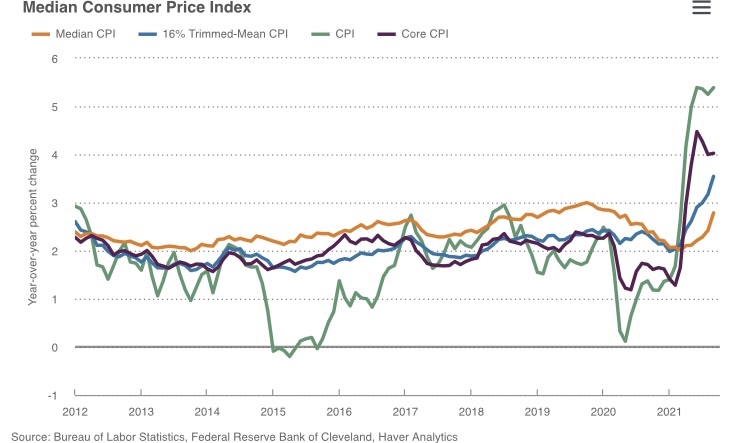
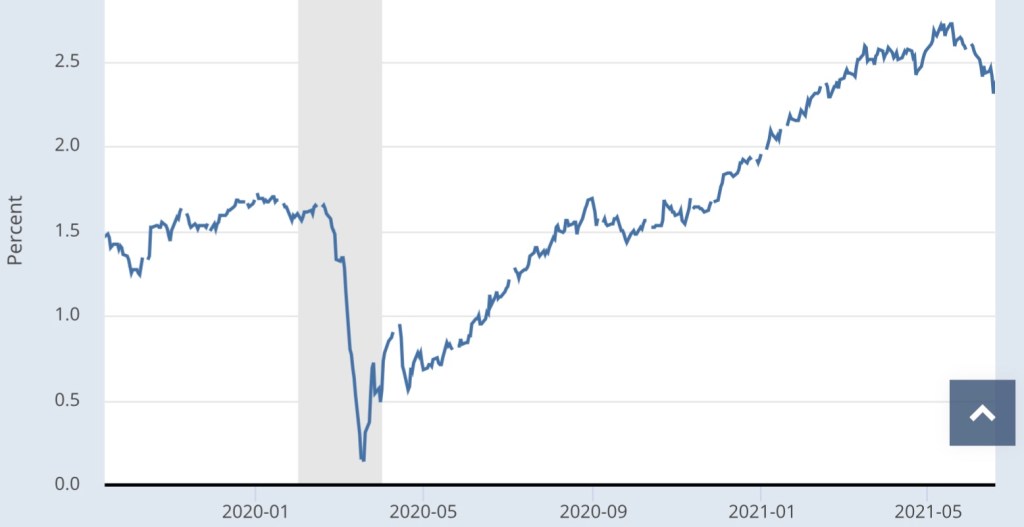
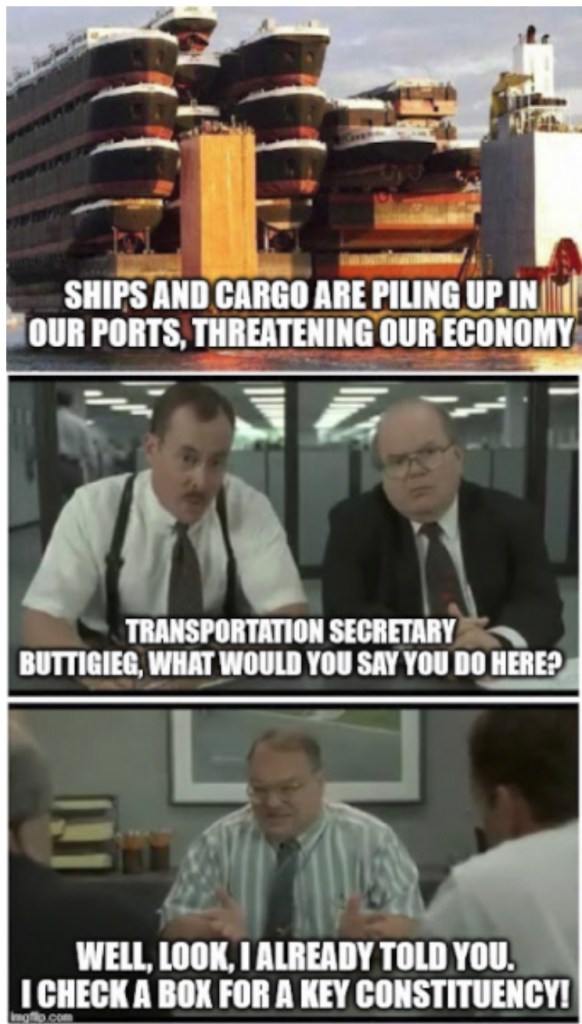
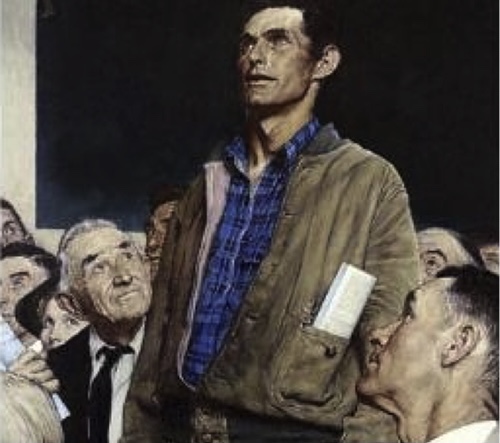








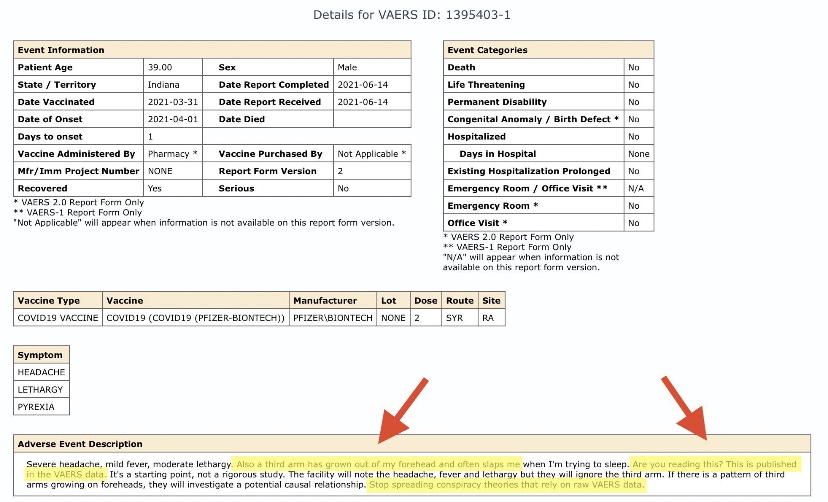
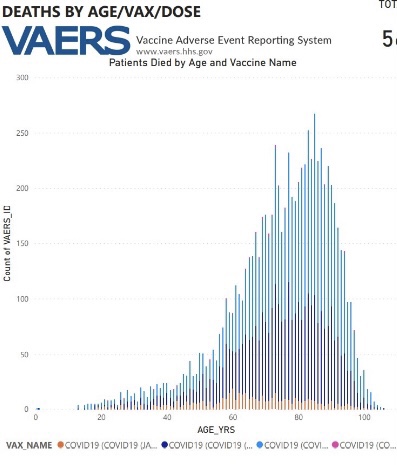

 Sacred Cow Chips