I’ll try to keep this one short. I was starting a post on another topic when Donald Trump distracted me… again. This time it was the $2,000 per person “tariff dividend” he’s proposed. This would be paid to all low- and middle-income Americans starting in mid-2026. As if the federal government was a profitable enterprise. Obviously that’s the wrong model! This is either sheer stupidity or willful government failure. Sure, the Fed can just print money, so why not? Who knew Trump was a closet modern monetary theorist?
It’s such a bad idea…. Tariffs themselves are bad enough. They are taxes, of course, a truth about which Trump and his central trade planners have denied since the beginning of the escapade. Tariffs hurt consumers and businesses who import inputs. Tariffs retard growth by increasing input costs, disrupting supply chains, and raising the prices of not only imports, but also domestically-produced goods that compete with imports. Surely Trump knows all this and the implications for his political capital: he’s already backtracking on tariffs for certain food items.
The tariff dividend is a transparent attempt to compensate consumers for the harms of taxation. It’s also a transparent attempt to buy or keep votes, much as he’s already sought to buy-off farmers harmed by tariffs. The income limit for the dividend hasn’t been announced, but make no mistake: this represents another form of redistribution.
It’s also striking that the tariffs won’t generate nearly as much revenue as will be required to begin paying the dividend by mid-2026. In fact, it could be short by as much as $300 million! Will the Treasury borrow the rest? More pressure on the bond market and interest rates.
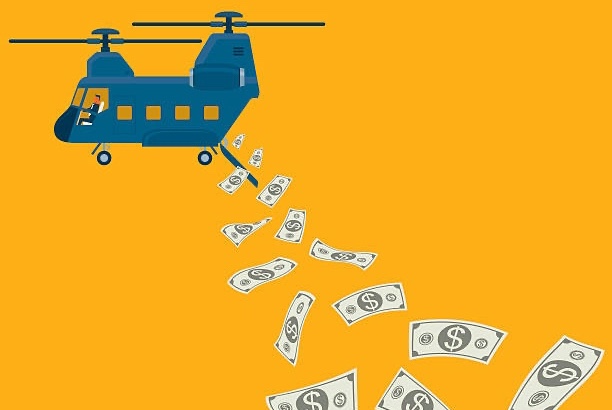
Furthermore, the so-called dividend would be inflationary if the Federal Reserve fails to neutralize it. It would amount to another “helicopter drop” of cash, similar to the cash dump from Covid relief payments: money printing under the guise of fiscal policy.
To the extent that tariff revenue flows, it should be used to reduce the federal deficit or to pay down the gigantic government debt already outstanding ($38 trillion today not including the impending cost of funding entitlement programs). Instead, Trump is proudly following in the footsteps of generations of spendthrift politicians.
Keep in mind that the dividend is a promise Trump might not be able to keep. The Supreme Court will soon announce its decision on presidential power to impose tariffs. This decision will bear on the president’s authority under the International Emergency Economic Powers Act (IEEPA) — if and when an actual emergency is at hand, which it clearly is not. More broadly, the decision hinges on whether a “foreign facing” tax falls within the president’s Article II powers under the Constitution.
The proposed tariff dividend undermines the Administration’s argument before the Court that tariffs are primarily regulatory tools, and that any revenue from tariffs is merely incidental. Thank God the dividend would have to be authorized by Congress! I truly hope there are enough sensible legislators on the Hill to beat back this idiocy.
Industrial policy allows government planners to select favored and disfavored industries or sectors. It thereby bypasses and distorts impersonal market signals that would otherwise direct scarce resources to the uses most valued by market participants. Instead, various forms of aid and penalties are imposed on different sectors in order to accomplish the planners’ objectives, This includes interventions in foreign trade and attempts to steer technological development. Industrial policy often comes under the guise of enhanced national security. Of course, it can also be used to reward cronies. And it has a poor record of accomplishing its objectives and avoiding unintended consequences.
The Sausage Factory
The executive and legislative branches of the U.S. government are loaded with economic interventionists, regardless of party affiliation. In an age of (Chevron) judicial deference to “experts” within the administrative state, it is not uncommon for legislative language to give abundant leeway to those who implement policy within the executive branch (though a couple of upcoming Supreme Court decisions might change that balance). Increasingly, bills are stuffed so full of provisions that lawmakers find it all but impossible to read them in full, let alone make an accurate assessment of their virtues, drawbacks, and internal contradictions.
Even worse is the fact that bills are, in great part, written by relatively youthful legislative staffers with little real world experience in industry, and who harbor the naive belief that whatever is wished, government can make it so. But their work also proceeds under guidance from lawmakers, administration officials, consultants, and lobbyists who have their own agendas and axes to grind. This is how industrial policy is promulgated in the U.S., and it is through this ugly prism that we must view environmental policy.
The Left dictates environmental and energy policy in several states, especially California, where energy costs have soared under renewable energy initiatives. California households now pay almost triple the rate per kilowatt-hour paid in Washington, and more than double what’s paid in Oregon. Something similar may happen in New York, which has highly ambitious goals for renewable energy even as the costs of the state’s offshore wind projects are out of control. These and other state-level “laboratories” are demonstrating that a renewable energy agenda can carry very high costs to the populace. The same is true of the painful experience in Germany with its much-heralded Energiewende.
Net Zero
The Left is also pulling the strings within the federal bureaucracy and the Biden Administration. The objective is an industrial policy to achieve “net zero” CO2 emissions, a practical impossibility for at least several decades (unless it’s faked, of course). Nevertheless, that policy calls for phasing out the use of fossil fuels. Under this agenda, mandates and subsidies are bestowed upon the use of renewable electric power sources, while restrictions and penalties are imposed on the production and use of fossil fuels. A subsequent post on the subject of power generation will address this prototypical failure of central planning.
Electrification
Here, I discuss another key objective of our industrial planners: electrify whatever is not electrified in order to advance the net zero agenda. Of course, for some time to come, more than half of electric power will be generated using fossil fuels (currently about 60%, with another 18% nuclear), so the policy is largely a sham on its face, but we’ll return to that point below. The EV tailpipe is very long, as they say.
Electrification means, among other things, the forced adoption of electronic vehicles (EVs). President Biden’s EPA has issued rules on auto emissions that are expected to require, by 2032, that 60% or more of cars and light trucks sold will be EVs. The USA Today article at the link offers this rich aside:
“…the original proposal — which was always technology-neutral in theory, meaning automakers could sell any cars and light-duty trucks they wanted as long as they hit the fleetwide reductions….”
Technology neutral? Hahaha! We aren’t forcing you to choose technologies as long as you meet our technological requirements!
EV Doldrums
Anyway, the EPA’s targets are completely impractical, partly because the value for drivers is lacking. Not coincidentally, the market for EVs seems to have chilled of late. Hertz has soured on heavy use of EVs in its fleet, and Ford has announced reductions in EV production. The new UAW agreements will make it difficult for some domestic producers to turn a profit on EVs. Fisker is just about broke. Apple has cancelled development of its EV, and several other automakers have reduced their production plans. Toyota was the first producer to raise the red flag on the breakneck transition to EVs in favor of a measured reliance on hybrids. Of course, there are other prominent voices cautioning against rapid attempts at electrification in general.
To be fair, some EVs are marvelous machines, but they and their supporting infrastructure are not yet well-suited to the mass market.
A Tangled Web
Here are some drawbacks of EVs that have yet to be adequately addressed:
They are expensive, even with the rich-man’s subsidy to buyers paid by the government and carbon credit subsidies granted to producers.
Costly battery replacement is an eventuality that looms over the wallets of EV owners.
EVs have limited range given the state of battery technology, especially when the weather is cold.
There presently exist far too few charging stations to make EVs workable for many people. In any case, charging away from home can be extremely time consuming and the charges vary widely.
The purchase and installation of EV chargers at home is a separate matter, and can cost $4,000 or more if an upgrade to the service panel is necessary. Installed costs commonly range from $1,175 to $3,300, depending on the type of charger and the region.
EVs are much heavier than vehicles powered by internal combustion engines. As a result, EV tire wear can be a surprising cost causer and pollutant.
Battery fires in EVs are extremely difficult to extinguish, creating a new challenge for emergency responders.
Reliance on EVs for local emergency services would be dangerous without duplicative investment by local jurisdictions to offset the down-time required for charging.
For decades to come, the power grid will be unable to handle the load required for widespread adoption of EVs. A rapid conversion would be impossible without a great expansion in generating and transmission capacity, including transformer availability.
Domestically we lack the natural resources to produce the batteries required by EVs in a quantity that would satisfy the Administration’s goals. This forces dependence on China, our chief foreign adversary.
The mining of those resources is destructive to the environment. Much of it is done in China due to the country’s abundance of rare earth minerals, but wherever the mining occurs, it relies heavily on diesel power.
Joel Kotkin points out that China now hosts the world’s largest EV producer, BYD. Biden’s mandates might very well allow China to dominate the U.S. auto market, even as its own CO2 emissions are soaring,,
Producers of EVs earn carbon credits for each vehicle sold, which they can sell to other auto producers who fall short of their required mix of EVs in total production. Tesla, for example, earned revenue of $1.8 billion from carbon credit sales in 2022. But note again that these so-called zero-emission vehicles use electricity generated with an average of 60% fossil fuels. Thus, the scheme is largely a sham.
The push for EVs has been hampered by the botched rollout of (non-Tesla) charging stations under a huge Biden initiative in the Infrastructure Investment and Jobs Act. Progress has been bogged down by sheer complexity and expense, including the cost of bringing adequate power supplies to the chargers as well as the difficulty of meeting contracting requirements and operating standards. This is exemplary of the failures that usually await government efforts to engineer outcomes contrary to market forces.
Electric Everything?
Like EVs, electric stoves have drawbacks that limit their popularity, including price and the nature of the heat needed for quality food preparation. In addition to autos and stoves, wholesale electrification would require the replacement or costly reconfiguration of a huge stock of business and household capital that is now powered by fossil fuels, like gas furnaces, tractors, chain saws, and many other tools and appliances. This set of legacy investment choices was guided by market prices that reflect the scarcity and efficiency of the resources, yet government industrial planners propose to lay much of it to waste.
Central Planning: a False Conceit
John Mozena quotes Adam Smith on the social and economic hazards of rejecting the market mechanism and instead accepting governmental authority over the allocation of resources:
“All governments which thwart this natural course, which force things into another channel, or which endeavour to arrest the progress of society at a particular point, are unnatural, and to support themselves are obliged to be oppressive and tyrannical.”
“As Ludwig von Mises and Friedrich Hayek pointed out during the socialist calculation debate, central planners lack the information that is produced by markets. By over-riding market prices and substituting their own judgment, regulators incur the same loss of information.”
Advocates of EV industrial policy have failed to appreciate the large gaps between the technology they are determined to dictate and basic consumer requirements. These gaps are along such margins as range, charging time, tire and battery wear, and perhaps most importantly, affordability. The planners have failed to foresee the massive demands on the power grid of a forced replacement of the internal combustion auto stock with EVs. The planners elide the true nature of EV-driven emissions, which are never zero carbon but instead depend on the mix of power sources used to charge EV batteries. Finally, EV mandates show that the industrial planners are oblivious to other environmental burdens inherent in EVs, whatever their true carbon footprint might be.
We’re told again and again that government must take action to correct “market failures”. Economists are largely responsible for this widespread view. Our standard textbook treatments of external costs and benefits are constructed to demonstrate departures from the ideal of perfectly competitive market equilibria. This posits an absurdly unrealistic standard and diminishes the power and dramatic success of real-world markets in processing highly dispersed information, allocating resources based on voluntary behavior, and raising human living standards. It also takes for granted the underlying institutional foundations that lead to well-functioning markets and presumes that government possesses the knowledge and ability to rectify various departures from an ideal. Finally, “corrective” interventions are usually exposited in economics classes as if they are costless!
Failed Disgnoses
This brings into focus the worst presumption of all: that government solutions to social and economic problems never fail to achieve their intended aims. Of course that’s nonsense. If defined on an equivalent basis, government failure is vastly more endemic and destructive than market failure.
“According to ancient legend, a Roman emperor was asked to judge a singing contest between two participants. After hearing the first contestant, the emperor gave the prize to the second on the assumption that the second could be no worse than the first. Of course, this assumption could have been wrong; the second singer might have been worse. The theory of market failure committed the same mistake as the emperor. Demonstrating that the market economy failed to live up to the ideals of general competitive equilibrium was one thing, but to gleefully assert that public action could costlessly correct the failure was quite another matter. Unfortunately, much analytical work proceeded in such a manner. Many scholars burst the bubble of this romantic vision of the political sector during the 1960s. But it was [James] Buchanan and Gordon Tullock who deserve the credit for shifting scholarly focus.”
John Cochrane sums up the whole case succinctly in the “punchline” of a recent post:
“The case for free markets never was their perfection. The case for free markets always was centuries of experience with the failures of the only alternative, state control. Free markets are, as the saying goes, the worst system; except for all the others.”
Tracing Failures
We can view the relation between market failure and government failure in two ways. First, we can try to identify market failures and root causes. For example, external costs like pollution cause harm to innocent third parties. This failure might be solely attributable to transactions between private parties, but there are cases in which government engages as one of those parties, such as defense contracting. In other cases government effectively subsidizes toxic waste, like the eventual disposal of solar panels. Another kind of market failure occurs when firms wield monopoly power, but that is often abetted by costly regulations that deliver fatal blows to small competitors.
The second way to analyze the nexus between government and market failures is to first examine the taxonomy of government failure and identify the various damages inflicted upon the operation of private markets. That’s the course I’ll follow below, though by no means is the discussion here exhaustive.
Failures In and Out of Scope
An extensive treatment of government failure was offered eight years ago by William R. Keech and Michael Munger. To start, they point out what everyone knows: governments occasionally perpetrate monstrous acts like genocide and the instigation of war. That helps illustrate a basic dichotomy in government failures:
“… government may fail to do things it should do, or government may do things it should not do.’
Both parts of that statement have numerous dimensions. Failures at what government should do run the gamut from poor service at the DMV, to failure to enforce rights, to corrupt bureaucrats and politicians skimming off the public purse in the execution of their duties. These failures of government are all too common.
What government should and should not do, however, is usually a matter of political opinion. Thomas Jefferson’s axioms appear in a single sentence at the beginning of the Declaration of Independence; they are a tremendous guide to the first principles of a benevolent state. However, those axioms don’t go far in determining the range of specific legal protections and services that should and shouldn’t be provided by government.
Pareto Superiority
Keech and Munger engage in an analytical exercise in which the “should and shouldn’t” question is determined under the standard of Pareto superiority. A state of the world is Pareto superior if at least one person prefers it to the current state (and no one else is averse to it). Coincidentally, voluntary trades in private markets always exploit Pareto superior opportunities, absent legitimate external costs and benefits.
The set of Pareto superior states available to government can be expanded by allowing for side payments or compensation to those who would have preferred the current state. Still, those side payments are limited by the magnitude of the gains flowing to those who prefer the alternative (and if those gains can be redistributed monetarily).
Keech and Munger define government failure as the unexploited existence of Pareto superior states. Of course, by this definition, only a benevolent, omniscient, and omnipotent dictator could hope to avoid government failure. But this is no more unrealistic than the assumptions underlying perfectly competitive market equilibrium from which departure are deemed “market failures” that government should correct. Thus, Keech and Munger say:
“The concept of government failure has been trapped in the cocoon of the theory of perfect markets. … Government failure in the contemporary context means failing to resolve a classic market failure.”
But markets must operate within a setting defined by culture and institutions. The establishment of a social order under which individuals have enforceable rights must come prior to well-functioning markets, and that requires a certain level of state capacity. Keech and Munger are correct that market failure is often a manifestation of government failure in setting and/or enforcing these “rules of the game”.
“The real question is … how the rules of the game should be structured in terms of incentives, property rights, and constraints.”
The Regulatory State and Market Failures
Government can do too little in defining and enforcing rights, and that’s undoubtedly a cause of failure in markets in even the most advanced economies. At the same time there is an undeniable tendency for mission creep: governments often try to do too much. Overregulation in the U.S. and other developed nations creates a variety of market failures. This includes the waste inherent in compliance costs that far exceed benefits; welfare losses from price controls, licensing, and quotas; diversion of otherwise productive resources into rent seeking activity, anti-competitive effects from “regulatory capture”; Chevron-like distortions endemic to the administrative judicial process; unnecessary interference in almost any aspect of private business; and outright corruption and bribe-taking.
Central Planning and Market Failures
Another category of government attempting to “do too much” is the misallocation of resources that inevitably accompanies efforts to pick “winners and losers”. The massive subsidies flowing to investors in various technologies are often misdirected. Many of these expenditures end up as losses for taxpayers, and this is not the only form in which failed industrial planning takes place. A related evil occurs when steps are taken to penalize and destroy industries in political disfavor with thin economic justification.
Other clear examples of government “planning” failure are protectionist laws. These are a net drain on our wealth as a society, denying consumers of free choice and saddling the country with the necessity to produce restricted products at high cost relative to erstwhile trading partners.
There are, of course, failures lurking within many other large government spending programs in areas such as national defense, transportation, education, and agriculture. Many of these programs can be characterized as centrally planning. Not only are some of these expenditures ineffectual, but massive procurement spending seems to invite waste and graft. After all, it’s somebody else’s money.
Redistribution and Market Failures
One might regard redistribution programs as vehicles for the kinds of side payments described by Keech and Munger. Some might even say these are the side payments necessary to overcome resistance from those unable to thrive in a market economy. That reverses the historical sequence of events, however, since the dominant economic role of markets preceded the advent of massive redistribution schemes. Unfortunately, redistribution programs have been plagued by poor design, such as the actuarial nightmare inherent in Social Security and the destructive work incentives embedded in other parts of the social safety net. These are rightly viewed as government failures, and their distortionary effects spill variously into capital markets, labor markets and ultimately product markets.
Taxation and Market Failures
All these public initiatives under which government failures precipitate assorted market failures must be paid for by taxpayers. Therefore, we must also consider the additional effects of taxation on markets and market failures. The income tax system is rife with economic distortions. Not only does it inflict huge compliance costs, but it alters incentives in ways that inhibit capital formation and labor supply. That hampers the ability of input markets to efficiently meet the needs of producers, inhibiting the economy’s productive capacity. In turn, these effects spill into output market failures, with consequent losses in .social welfare. Distortionary taxes are a form of government failure that leads to broad market failures.
Deficits and Market Failure
More often than not, of course, tax revenue is inadequate to fund the entire government budget. Deficit spending and borrowing can make sense when public outlays truly produce long-term benefits. In fact, the mere existence of “risk-free” assets (Treasury debt) across the maturity spectrum might enhance social welfare if it enables improvements in portfolio diversification that outweigh the cost of the government’s interest obligations. (Treasury securities do bear interest-rate risk and, if unindexed, they bear inflation risk.)
Nevertheless, borrowing can reflect and magnify deleterious government efforts to “do too much”, ultimately leading to market failures. Government borrowing may “crowd out” private capital formation, harming economy-wide productivity. It might also inhibit the ability of households to borrow at affordable rates. Interest costs of the public debt may become explosive as they rise relative to GDP, limiting the ability of the public sector to perform tasks that it should *actually* do, with negative implications for market performance.
Inflation and Market Failure
Deficit spending promotes inflation as well. This is more readily enabled when government debt is monetized, but absent fiscal discipline, the escalation of goods prices is the only remaining force capable of controlling the real value of the debt. This is essentially the inflation tax.
Inflation is a destructive force. It distorts the meaning of prices, causes the market to misallocate resources due to uncertainty, and inflicts costs on those with fixed incomes or whose incomes cannot keep up with inflation. Sadly, the latter are usually in lower socioeconomic strata. These are symptoms of market failure prompted by government failure to control spending and maintain a stable medium of exchange.
Conclusion
Markets may fail, but when they do it’s very often rooted in one form of government failure or another. Sometimes it’s an inadequacy in the establishment or enforcement of property rights. It could be a case of overzealous regulation. Or government may encroach on, impede, or distort decisions regarding the provision of goods or services best left to the market. More broadly, redistribution and taxation, including the inflation tax, distort labor and capital markets. The variety of distortions created when government fails at what it should do, or does what it shouldn’t do, is truly daunting. Yet it’s difficult to find leaders willing to face up to all this. Statism has a powerful allure, and too many elites are in thrall to the technocratic scientism of government solutions to social problems and central planning in the allocation of resources.
The Federal Reserve just announced tighter monetary policy in an attempt to reduce inflationary pressures. First, it raised its target range for the federal funds rate (on overnight loans between banks) by 0.5%. The new range is 0.75% – 1%. Second, on June 1, the Fed will begin taking steps to reduce the size of its $9 trillion portfolio of securities. These holdings were acquired during periods of so-called quantitative easing (QE) beginning in 2008, including dramatic expansions in 2020-21. A shorthand reference for this portfolio is simply the Fed’s “balance sheet”. It includes government debt the Fed has purchased as well as privately-issued mortgage-backed securities (MBS).
What Is This Balance Sheet You Speak Of?
Talk of the Fed’s balance sheet seems to mystify lots of people. During the 2008 financial crisis, the Fed began to inject liquidity into the economy by purchasing large amounts of assets to be held on its balance sheet. This was QE. It’s scope was unprecedented and a departure from the Fed’s pre-crisis reliance on interest rate targeting. QE had the effect of increasing bank reserves, which raised the possibility of excessive money supply growth. That’s when the Fed began to pay interest to banks on reserves, so they might be content to simply hold some of the reserves over and above what they are required to hold, rather than using all of that excess to support new loans and deposits (and thus money growth). However, that interest won’t stop banks from lending excess reserves if better opportunities present themselves.
The Fed has talked about reducing, “normalizing”, or “tapering” its balance sheet for some time, but it only recently stopped adding to it. With inflation raging and monetary policy widely viewed as too “dovish”, analysts expected the Fed to stop reinvesting proceeds from maturing securities, which amounts to about $95 billion per month. That would shrink or “taper” the balance sheet at a rate of about $1.1 trillion per year. Last week the Fed decided to cap the “runoff” at $47.5 billion per month for the first three months, deferring the $95 billion pace until September. Monetary policy “hawks” were disappointed by this announcement.
Monetizing Government
So, one might ask, what’s the big deal? Why must the Fed taper its securities holdings? Well, first, the rate of inflation is far above the Fed’s target range, and it’s far above the “average Joe’s” comfort range. Inflation imposes significant costs on the economy and acts as a regressive form of taxation, harming the poor disproportionately. To the extent that the Fed’s huge balance sheet (and the corresponding bank reserves) are supporting incremental money growth and fueling inflation, the balance sheet must be reduced.
In that connection, the Fed’s investment in government debt represents monetized federal debt. That means the Fed is essentially printing money to meet the Treasury’s financing needs. Together with profligate spending by the federal government, nothing could do more to convince investors that government debt will never be repaid via future budget surpluses. This dereliction of the government’s “full faith and credit”, and the open-armed acceptance of the inflation tax as a financing mechanism (à la Modern Monetary Theory), is the key driver of fiscal inflation. Reducing the balance sheet would represent de-monetization, which might help to restore faith in the Fed’s ability to push back against fiscal recklessness.
Buyer of First Resort
Perhaps just as critically, the Fed’s heavy investment in government debt and MBS represents an ongoing distortion to the pricing of financial assets and the allocation of capital. Some call this interference in the “price discovery process”. That’s because the Fed has represented a market-altering presence, a willing and inelastic buyer of government debt and MBS. Given that presence, it’s difficult for buyers and sellers to discern the true values of alternative uses of capital, or to care.
QE was, among other things, a welcome institutional development for the U.S. Treasury and for those who fancy that fresh money printing is an ever-valid form of government payment for scarce resources. The Fed’s involvement also means that other potential buyers of Treasury debt need not worry about interest rate risk, making public debt relatively more attractive than private debt. This is a dimension of the “crowding out” phenomenon, whereby the allocation of capital and flows of real resources between public and private uses are distorted.
The Fed’s presence as a buyer of MBS depresses mortgage rates and makes mortgage lending less risky for lenders and investors. As a result, it encourages an over-investment in housing and escalating home prices. This too distorts the allocation of capital and real resources, at the margin, toward housing and away from uses with greater underlying value.
Conclusion
The magnitude of the Fed’s balance sheet is an ongoing testament to an increasingly dominant role of central authorities in the economy. In this case, the Fed has served as a conduit for the inflation tax. In addition, it has unwittingly facilitated crowding out of private capital investment. The Fed’s purchases of MBS have distorted the incentives (and demand) for residential investment. These are subtle effects that the average citizen might not notice, just as one might not notice the early symptoms of a debilitating disease. The long-term consequences of the Fed’s QE activities, including the inflation tax and distorted allocations of capital, are all too typical of failures of government intervention and attempts at central planning. But don’t expect anyone at the Fed to admit it.
There are a bunch of nice graphs below summarizing the course of the coronavirus (C19) pandemic in different countries, as well as their policy responses. The charts are courtesy of Kyle Lamb, who has been an unlikely (in my mind…) but forceful voice regarding the pandemic over the past few months. I’m sorry if the resolution in some of the charts is poor, but I hope you can click on them for a better view.
The data reported in the charts goes through September 12. The first few charts below are “mirror charts”: they show newly diagnosed C19 cases by day on top, right-side up; on the bottom of each chart are C19-attributed deaths, but the vertical axis is inverted to create the “mirror effect”. The scales on the bottom are heavily stretched compared to the top (deaths are much smaller than cases), and the scales for different countries aren’t comparable. The patterns are informative nevertheless, and I’ll provide per capita deaths separately.
Let’s start with the U.S., where the early part of the pandemic in the spring was quite deadly, while the second, geographically distinct “wave” of the pandemic was less deadly. It looks bad, but the high number of deaths in the spring was partly a consequence of mismanagement by a few prominent government officials in the Northeast, most glaringly Governor Andrew Cuomo of New York. The full pattern for the U.S. combines different waves in different regions. The overall outcome to-date is 622 deaths per million of population.
Then we have charts for (deaths/mil in parens): the UK (628), Italy (591), Spain (653), France (467), Germany (114), the Netherlands (364), and Switzerland (240), which all have had second waves in cases, of but hardly any noticeable second wave in deaths, at least not yet:
And finally, we have Sweden (576), which had many deaths during the first wave, but very few now. Overall, to-date, Sweden has faired better than the U.S., Spain, the UK, and Italy — not to mention Belgium (870), for which I don’t have mirror charts.
There are several points to make about the charts:
First, the so-called second wave this summer has not been as deadly as the virus was in the spring. The U.S. is not an exception in that regard, though it did have more C19 deaths than the other countries. The count of U.S. deaths in the summer was partly due to C19 false positives under a much heavier testing regime, as well as “death laundering” by public health authorities that looks suspiciously like a politicization of the attribution process: C19 deaths over the summer have been well in excess of what would be expected from C19 hospitalizations and ICU admissions. It’s also evident that deaths are being reallocated to C19 from other natural causes, as this chart from The Ethical Skeptic shows (compare the bright line for 2020 to the (very) dim but tightly clustered baselines from prior years):
Second, most of the charts for Europe (not Sweden) show a late summer escalation in cases, though cases in Spain and Germany appear to have crested already. If an uptrend in deaths is to follow, it should become noticeable soon. Thus far, the wave certainly looks less threatening.
Finally, it’s noteworthy that Sweden’s early experience, which was plagued by mismanagement of the virus’ threat to the nursing home population, later transitioned to a dramatic fading of cases and deaths. There has been no late summer wave in Sweden as we’ve seen elsewhere. This despite Sweden’s far less stringent non-pharmaceutical interventions (NPIs). Sweden’s deaths per million of population are now less than in the US, the UK, Italy, Spain, and Belgium, and most of those differences are growing.
All of the other countries discussed above have had far more stringent lockdown policies than Sweden, and at far greater economic cost. The following charts show some cross-country comparisons of an Oxford University index of NPI stringency over time. It combines a number of different dimensions of NPIs, such as mask mandates, restrictions on public gatherings, and school closures. The first chart below shows the U.S. and the UK contrasted with Sweden. The other countries discussed above are shown in separate charts that follow.
In the U.S., there has been tremendous variation across states in terms of stringency due to the federalist approach required by the U.S. Constitution, but overall, the Oxford measure for the U.S. has been broadly similar to the UK over time, with the largest departures from one another at the start of the pandemic.
The stringency of NPIs over the full pandemic depends on their day-by-day strength as well as their duration at various levels. One could measure stringency indices and deaths at various points in time and produce all kinds of conflicting results as to the efficacy of NPIs. On the whole, however, these charts suggest that stringent NPIs hold no particular advantage except perhaps as a way to temporarily avoid overwhelming the health care system. Even the original “flatten the curve” argument acknowledged that the virus could not be avoided indefinitely at a reasonable cost via NPIs, especially in an otherwise free society.
Note that most of these countries eased their NPIs after the initial wave in the spring, but several remained far more stringent than Sweden’s policies. That did not prevent the second wave of cases, though again, those were far less deadly.
As Jacob Sullum writes, and what is increasingly clear to honest observers: lockdowns tend to be ineffective and even destructive over lengthy periods.
A working paper from the National Bureau of Economic Research finds that four different “stylized facts” about the growth in C19 deaths are consistent across countries and states having different policy responses to the virus. The authors say:
“… failing to account for these four stylized facts may result in overstating the importance of policy mandated [non-pharmaceutical interventions] for shaping the progression of this deadly pandemic.“
Here’s Bill Blain’s discussion of the inefficacy of lockdowns. And here is Donald Luskin’s summary of his firm’s research that appeared in the WSJ, which likewise casts extreme doubt on the wisdom of stringent NPIs.
The virus is far from gone, but this summer’s wave has been much more docile in both Europe and the U.S. There are reasons to think that subsequent waves will be dampened in many areas via the cumulative immunity gained from exposure thus far, not to mention improvements in treatment and knowledge regarding prophylaxis such as Vitamin D supplements. Government authorities and their public health advisors should dispense with the pretense that stringent NPIs can mitigate the impact of the virus at a reasonable cost. These measures are constitutionally flawed, impinge on basic freedoms, and look increasingly like government failure. Risk mitigation should be practiced by those who are either vulnerable or fearful, but for most people, particularly children and people of working age, those risks no longer appear to be much worse than a bad year for influenza.
This post is devoted to a few coronavirus policies and positions that trouble me.
Counting Deaths: People have the general impression that counting COVID-19 cases and deaths is straightforward. The facts are more reminiscent of the following exchange in the film Arsenic and Old Lace, when Jonathan Brewster angrily insists he has offed more souls than his sweet little aunties have poisoned with elderberry wine:
Dr. Einstein: You cannot count the one in South Bend. He died of pneumonia! Jonathan Brewster: He wouldn’t have died of pneumonia if I hadn’t shot him!
Here, Dr. Einstein wears the shoes of public health authorities who claim that C19 deaths are undercounted. But lives counted as lost from C19, in many cases, are individuals who also had the flu, pneumonia, stroke, kidney failure, and a variety of other co-morbidities. Yes, other causes of death might be induced by the coronavirus, but like Johnny’s victim in South Bend, many would not have died from C19 if they hadn’t had a prior health event. In addition, otherwise unexplained deaths are often attributed to C19 with little justification.
In fact, the C19 death toll has been distorted by a perverse federal hospital reimbursement policy that rewards hospitals for COVID patients. Death certificates seem to list C19 as the cause for almost anyone who dies in or out of a hospital during the pandemic, whether they’ve been tested or not. In fact, deaths have been attributed to C19 despite negative test results when officials decided, for one reason or another, that the test must have been unreliable!
Lockdowns: almost all of the “curve flattening” in late March and April was accomplished by voluntary action, which I’ve covered beforehere. The lockdowns imposed by state and local governments were highly arbitrary and tragic for many workers and business owners who could have continued to operate as safely as many so-called “essential” businesses. Lockdowns in certain areas were also blatant violations of religious rights. There is little to no evidence that lockdowns themselves led to any actual abatement of the virus. And of course, people are fed up!
The Beach: Right now I’m at a wonderful beach condo in Florida for a week. There are other people on the beach, mostly families and a few groups of friends, but there is plenty of open space. You will not catch the coronavirus on a beach like this. And there is almost zero chance you’ll catch it on any beach. In fact, the chance you’ll catch it anywhere outside is minuscule unless you’re jammed so tightly among hundreds of protesters that you can’t even turn around. Yet government officials have closed beaches in many parts of the country while allowing the protests to go on. Oh sure, they think people will CROWD onto beaches as if they’re at a BLM protest… except they’re not. Ah, then it must be banned! That takes a special kind of dumbass.
Waiting for Results: How could we have spent trillions of dollars as a nation on economic stimulus, much of it skimmed off by grifters, but we can’t seem to get sufficient resources to make calls to those awaiting test results? This is a case of misplaced priorities. Even now, people are waiting more than a week for their results, and many are wandering around in the community without knowing their status. Wouldn’t you think we’d get that done? We can conduct well over a half million tests a day, but can’t we find a few bucks to deliver results via phone, email, or text within 24 hours of processing results. This is truly absurd.
Vaccine Candidates: A similar point can be made about vaccine development: We are spending $5 billion on Operation Warp Speed to build capacity in advance for five promising vaccine candidates. These will be identified over the next few months, and it looks as if all five will come from established pharmaceutical majors. There are many more vaccine candidates, however, some being developed by smaller players using inventive new techniques. The OWS expenditure looks pretty meager when you compare it to the trillions in funds the federal government is spending on economic stimulus, especially when finding an effective vaccine would obviate much of the stimulus.
Treatment: Hydroxycloroquine has been found to lower the death rate from COVID-19 in a large controlled trial. Congratulations, morons, for trashing HCQ as a potential treatment, solely because Trump mentioned it. Way to go, dumbasses, for banning the use of a potential treatment that could have saved many thousands of lives.
Air Conditioning: I’m shocked that public health experts haven’t been more vocal about the potentially dangerous effects of running air conditioners at high levels in public buildings. The virus is known to thrive in cool, dry environments, which is exactly what AC creates, yet this seems to have been almost completely ignored.
Vitamin D: Likewise, I think public health experts have been far too reticent about the connection between Vitamin D deficiencies and the severity of C19 (also see here and here). The accumulating evidence about this association offers an explanation for the disturbingly high severity of cases among Black, Asian and Minority Ethnics (BAME), not to mention a possible role in C19 deaths among the generally D-deficient nursing home population. For the love of God, get the word out to the community that Vitamin D supplements might help, and they won’t hurt, and otherwise, tell people to get some sun!
Masks: I’m not in favor of strict mask mandates, but I have trouble understanding the aversion to masks among certain friends. Of course, there’s been way too much mixed messaging on the benefits of masks, and it didn’t all come from politicians! Scientists, the CDC, and the World Health Organization seemingly did everything possible to squander their credibility on this and other issues. However, a consensus now seems to have developed that masks protect others from the wearer and seem to protect the wearer from others as well. It should be obvious that masks offer a middle ground on which the economy can be restarted while mitigating the risks of further contagion. But even if you don’t believe masks protect the wearer, but only protect others from an infected wearer, donning a mask inside buildings, and when social distancing is impossible, still qualifies as a mannerly thing to do.
Some have a tendency to think their problems can be solved only through the intervention of some powerful, external force. That higher power might be God, but at a more temporal level, government is often presumed to be a force to fix all things that need fixing. “There oughta be a law” is a gut reaction to things we find injurious or that offend; government has the resources, or the coercive power to get the resources, to undertake big, appealing projects; and of course government has the coercive power to “rearrange the deck chairs” in ways that might satisfy anyone’s sense of justice and fairness, so long as they get their way. Whenever people perceive some need they believe to be beyond their private capacity, or mere convenience, government action is the default option, and that’s partly because many think it’s the only option.
That’s the appeal of “democratic socialism”, to use a name that unintentionally emphasizes a very real danger of democracy: the tyranny of the majority. It’s a dismal way station along the road to serfdom, to borrow a phrase from Hayek.
Government, however, repeatedly demonstrates it’s sheer incompetence and its expedience as a vehicle for graft. And it’s not as if these failures go unrecognized. Everyone knows it! This is nowhere more true than when the state interferes with private markets or attempts to steer the economy’s direction at either an aggregate or industry level. But here we have a dark irony, as told by Nick Gillespie at Reason:
“Again and again—and in countries all over the world—declines in trust of government correlate strongly with calls for more government regulation in more parts of our lives. ‘Individuals in low-trust countries want more government intervention even though they know the government is corrupt,’ explain the authors of a 2010 Quarterly Journal of Economics paper. That’s certainly the case in the United States, where the size, scope, and spending of government has vastly increased over exactly the same period in which trust and confidence in the government has cratered. In 2018, I talked with one of the paper’s authors, Andrei Shleifer, a Harvard economist who grew up in the Soviet Union before coming to America. Why do citizens ask a government they don’t believe in to bring order? ‘They want regulation,’ he said. ‘They want a dictator who will bring back order.'”
Against all historical evidence and forebodings, the wish for a benevolent dictator! As if it’ll be different this time! Are we all statists? Certainly not me, but the Left is full of them. One prominent example is columnist Tom Friedman of the New York Times, who has expressed the sometimes fashionable view that “things get done” under dictatorships:
“One-party autocracy certainly has its drawbacks. But when it is led by a reasonably enlightened group of people, as China is today, it can also have great advantages. … That one party can just impose the politically difficult but critically important policies needed to move a society forward in the 21st century.”
Tell it to the interred Kazakh and Uighur Muslims undergoing “reeducation” in China. The Right has its share of statists as well, and it is typically expressed in desires for enforced social conservatism.
People seem to have a vague idea that everyone else must either be misbehaving or in misery. And despite the well-tested fallibility and lack of trust in government, people persist in believing that the public sector can conjure magic to solve their problems. But the state gets bigger and bigger while solving few problems and exacerbating others. In fact, as government grows, it makes rent seeking a more viable alternative to productive effort. Like the giant zero-sum game that it is, the expansion of government provides the very means to pick away at the wealth of others. When faced with these incentives, people most certainly will misbehave on small and large scales!
The truth is that individuals hold the most potent regulatory force in their own hands: the voluntary nature of trade. It protects against over-pricing, under-pricing, and inferior quality along many dimensions, but it demands discipline and a willingness to walk away. It also demands a willingness to put forth productive effort, rather than coveting the property of others, and taking from others via political action. To paraphrase P.J. O’Rourke, if you think things are expensive now, wait till they’re free!
The headline describes a kind of government failure. In an ideal private transaction, costs and benefits are fully internalized by the buyer and seller. Both reap private gains, or surplus, from mutually beneficial transactions. On the other hand, there are cases in which external costs are inflicted on otherwise unrelated third parties, as when production emits pollutants. Or, there might be external benefits that inure to third parties, as when a homeowner pays to beautify their property and the whole neighborhood gains. These “externalities” are commonly citied as rationale for government interference in private markets. A good government, it is said, would seek to “internalize the externalities”, in one way or another, to prevent too much trade in a good imposing external costs, or too little trade where there are external benefits. Imposing taxes, granting subsidies, intervening with price controls, quotas, or various regulations are all ways in which corrective action might be attempted by public authorities.
The problem is that government often chooses badly, both misidentifying externalities, poorly estimating their magnitude, or in choosing how best to address them. When mistakes of this nature occur, the internal gains from trade are not just compromised or even destroyed. They are often externalized — revoked and redistributed to non-participants. The formerly private and internal gains may be extracted in the form of taxes, ultimately flowing to unconnected third parties. They are externalized internalizes, if I may coin a phrase. In other cases, in order to subsidize favored industries, individuals might be taxed on their income. Yet the favored industry is likely unconnected or external to the taxed individual’s source of income. While the gains that might accrue in the favored industry are internalized there, their source is an externalized internality.
Putting the troubling issue of takings or confiscation aside, these mistaken interventions distort relative prices and production decisions, with false signals propagating into other markets — which again are external effects. This, in turn, distorts the allocation of resources across various uses. These cases are clear-cut examples of externalized internalities.
I will confine this discussion to economic matters. By “internalities“, I mean all things within the economic realm that are private and/or reserved to the individual by natural rights. That includes private property and the individual’s freedom to trade and contract with others.
Wrongly taxing presumed “bads” or wrongly subsidizing presumed “goods” are absolute cases of externalizing internalities. And taxing a “bad” excessively (at more than its true social cost) or subsidizing a “good” excessively (at more than its true social benefit) are cases of externalizing internalities. The political temptation to subsidize might be the greater danger, as it is all too easy for public officials and politicians to identify and sell “deserving” causes, especially if they intimate that others will pay.
For example, subsidized education, which primarily benefits private individuals, is billed to the taxpaying public. It over-allocates resources to education, including students with greater value as human resources in other pursuits. Subsidized energy pays the seller of a power source more than its value to buyers, courtesy of taxpayers, and over allocates resources to those energy sources relative to non-subsidized energy and other goods.
Even if an industry is taxed in exact accordance with its true social cost, there is still the question of how the proceeds of the tax are to be distributed. Ideally, unless the social costs are borne equally by all, the distribution should bear some proportionality to the damages borne by individuals, yet that is seldom considered outside of certain kinds of litigation. The true victims will almost certainly be shorted. Benefits will accrue to many who are free of any burden inflicted by the undesired activity. The corrective action thus fails to properly address the externality, and it bestows an incidental external benefit on wholly unconnected parties.
Likewise, subsidies paid to an industry in exact accordance with its true social benefits require taxes that may burden individuals who do not stand to benefit from the subsidized activity in any way. That is true unless the industry in question produces a pure public good. Indeed, if the taxed individuals had a choice in the matter, they would often use the funds for something they value more highly. Thus, suboptimal distribution of the tax proceeds for funding a less-than-pure “social good” involves the extraction of an internality.
Other forms of government action have similar externalization of internal costs or benefits. With the imposition of a wage floor, or minimum wage, the least-skilled workers are likely to lose their jobs. Consumers are likely to pay higher prices as well. The job losers become more dependent on public aid, which must be funded via taxes on others. The wage floor will also degrade working conditions for those lucky enough to keep their jobs. All of these effects of market intervention demonstrate the public piercing of internal gains from private, voluntary trade. Some of what is excised gets spilt, and some gets siphoned off to external parties. Thus internalities are externalized.
Regulation of private industry often results in regulatory capture, whereby regulators impose rules with compliance costs too high for small competitors and potential entrants to afford. This obviously strengthens the market power of larger incumbents, who may in turn increase prices or skimp on quality. Taxpayers pay the regulators, consumers pay the inflated prices, smaller firms shut down, and resources are under-allocated to the product or service in question. These distortions spill into other markets as well. All these effects are part of the despoilment of internal gains from trade. To the extent that trades are prevented at competitive prices, the external winners are those who capture trades at higher prices, along with the regulators themselves and anyone else standing to benefit from graft as part of the arrangement. And again, the wrongful gains to the winners can be described as externalized internalities.
There are many other examples of government failure that fit the description of externalized internalities. In fact, extracting internalities is the very essence of taxation, though we readily accept its use for expenditures on goods that are of a truly public nature, which by definition confer benefits that are non-exclusive. The classic case, of course, is national defense. The differences in the cases of government failure cited above, however, are that the internalities extracted via taxation or other forms of intervention are externalized for private gain by other parties, no matter how widely distributed and diffuse. This is an extremely pernicious kind of government failure, as it ultimately leads to a cannibalization of private activity via our role as public actors. Beware politicians bearing gifts, and beware them just as much when they demonize private trade.
In advanced civilizations the period loosely called Alexandrian is usually associated with flexible morals, perfunctory religion, populist standards and cosmopolitan tastes, feminism, exotic cults, and the rapid turnover of high and low fads---in short, a falling away (which is all that decadence means) from the strictness of traditional rules, embodied in character and inforced from within. -- Jacques Barzun









 Sacred Cow Chips
