• About

Sacred Cow Chips

Sacred Cow Chips

Tag Archives: Covid-19

Fall Coronavirus Season

16 Friday Oct 2020

Posted by Nuetzel in Coronavirus, Pandemic, Uncategorized

≈ Leave a comment

Tags

Antigenic Drift, CARES Act, Coronavirus, Covid-19, Death Laundering, Europe, False Positives, Hospital Reimbursement, IFR, Immunity, Infection Fatality Rate, Kyle Lamb, Medicare, Seasonality, Second Wave, Twitter, Vitamin D, WHO

We’ve known for some times that COVID-19 (C19) follows seasonal patterns typical of the flu, though without the flu’s frequent antigenic drift. Now that we’re moving well into autumn, we’ve seen a surge in new C19 case counts in Europe and in a number of U.S. states, especially along the northern tier of the country.

The new case surge began in early to mid-September, depending on the state, and it’s been coincident with another surge in tests. From late July through early October, we had a near doubling in the number of tests per positive in the U.S. An increase in tests also accompanied the previous surge during the summer, which claimed far fewer lives than the initial wave in the early spring. In the summer, infections were much more prevalent among younger people than in the spring. Vitamin D levels were almost certainly higher during the summer months, our ability to treat the virus had also improved, and immunities imparted by prior infections left fewer susceptible individuals in the population. We have many of those advantages now, but D levels will fade as the fall progresses.

As for the new surge in cases, another qualification is that false positives are still a major testing problem; they inflate both case counts and C19-attributed deaths. In the absence of any improvement in test specificity, of which there is no evidence, the exaggeration caused by false positives grows larger as testing increases and positivity rates fall. So take all the numbers with that as a caveat.

How deadly will the virus be this fall? So far in Europe, the trends look very promising. Kyle Lamb provided the following charts from WHO on Twitter yesterday. (We should all be grateful that Twitter hasn’t censored Kyle yet, because he’s been a force in exposing alarmism in the mainstream media and among the public health establishment.) Take a look at these charts, and note particularly the lag between the first wave of infections and deaths, as well as the low counts of deaths now:

If the lag between diagnosis and death is similar now to the spring, Europe should have seen a strong upward trend in deaths by now, yet it’s hardly discernible in most of those countries. The fatality rates are low as well:

As Lamb notes, the IFRs in the last column look about like the flu, though again, the reporting of deaths and their causes are often subject to lags.

What about the U.S.? Nationwide, C19 cases and attributed death reports declined after July. See the chart below. More recently, reported deaths have stabilized at under 700 per day. Note again the relatively short lags between turns in cases and deaths in both the spring and summer waves.

Clearly, there has been no acceleration in C19 deaths corresponding to the recent trend in new cases. Northeastern states that had elevated death rates in the spring saw no resurgence in the summer; southern states that experienced a surge in the summer have now enjoyed taperings of both cases and deaths. But with each season, the virus seems to roll to regions that have been relatively unscathed to that point. Now, cases are surging in the upper Midwest and upper mountain states, though some of these states are lightly populated and their data are thin.

A few state charts are shown below, but trends in deaths are very difficult to tease out in some cases. First, here are new cases and reported deaths in Michigan, Wisconsin, and Minnesota. There is a clear uptrend in cases in these states along with a very slight rise in deaths, but reported deaths are very low.

Next are Idaho, Montana, North Dakota, and South Dakota. A slight uptrend in cases began as early as August. Idaho and Montana have had few deaths, so they are not plotted in the second chart. The Dakotas have had days with higher reported deaths, and while the data are thin and volatile, the visual impression is definitely of an uptrend in deaths.

The following states are somewhat more central in latitude: Colorado, Illinois, and Ohio. There is a slight upward trend in new cases, but not deaths. Illinois is experiencing its own second wave in cases.

Out of curiosity, I also plotted Massachusetts, Pennsylvania, and New Jersey, all of which suffered in the first wave during the spring. They are now experiencing uptrends in cases, especially Massachusetts, but deaths have been restrained thus far.

The upshot is that states having little previous exposure to the virus are seeing an uptrend in deaths this fall. The same does not seem to be happening in states with significant prior exposure, at least not yet.

There are major questions about the reasons for the lingering death counts in the U.S.. But consider the following: first, the infection fatality rate (IFR) keeps falling, despite the stubborn level of daily reported deaths. Second, deaths reported have increasingly been pulled forward from deaths that actually occurred in the more distant past. This sort of “laundering” lends the appearance of greater persistence in deaths than is real. Third, again, false positives exaggerate not just cases, but also C19 deaths. Hospitals test everyone admitted, and patients who test positive for C19 are reimbursed at higher rates under the CARES Act; Medicare reimburses at a higher rates for C19 patients as well.

We’re definitely seeing a seasonal upswing in C19 infections in the US., now going on five weeks. In Europe, the surge in cases began slightly earlier. However, in both Europe and the U.S., these new cases have not yet been associated with a meaningful surge in deaths. The exceptions in the U.S. are the low-density upper mountain states, which have had little prior exposure to the virus. The lag between cases and deaths in the spring and summer was just two to three weeks, and while it’s too early to draw conclusions, the absence of a surge in deaths thus far bodes well for the IFR going forward. If we’re so fortunate, we can thank a combination of factors: a younger set of infecteds, earlier detection, better treatment and therapeutics, lower viral loads, and a subset of individuals who have already gained immunity.

Lockdowns Subvert Public Health and Life Itself

15 Thursday Oct 2020

Posted by Nuetzel in Coronavirus, Lockdowns, Public Health, Uncategorized

≈ 1 Comment

Tags

Bill of Rights, CDC, City Journal, Coronavirus, Covid-19, David Miles, Deaths of Despair, dependency, Dr. David Nabarro, Excess Deaths, Flatten the Curve, Great Barrington Declaration, John Tierney, Lockdown Deaths, Lockdowns, Ninth Amendment, Oxfam International, Pandemic, Quality Adjusted Life Years, School Closures, Suicide, The Ethical Skeptic, The Lancet, WHO, World Health Organization

Acceptance of risk is a necessary part of a good life, and extreme efforts to avoid it are your own business. Government has no power to guarantee absolute safety, nor should we presume to have such a right. Ongoing COVID lockdowns are an implicit assertion of exactly that kind of government power, despite the impotence of those efforts, and they constitute a rejection of more fundamental rights.

Lockdowns have had destructive effects on health and economic well being while conferring little if any benefit in mitigating harm from the virus. The lockdowns were originally sold as a way to “flatten the curve”, that is, to avoid a spike in cases and an overburdened health care system. However, this arguably well-qualified rationale later expanded in scope to encompass the mitigation of smaller and much less deadly outbreaks among younger cohorts, and then to the very idea of extinguishing the virus altogether. It’s become painfully obvious that such measures are not capable of achieving those goals.

In the U.S., the ongoing lockdowns have been a cause célèbre largely on the interventionist Left, and they have been prolonged mainly by Democrats at various levels of government. In a way, this is not unlike many other policies championed by the Left, often ostensibly designed to help members of the underclasses: instead, those policies often destroy or wrongly obviate incentives and promote dependency on the state. In this case, the plunge into dependency is a reality the Left would very much like to ignore, or to blame on someone else. You know who.

The lockdowns have been largely unsuccessful in mitigating the spread of the virus. At the same time, they have been used as a pretext to deny constitutional rights such as the free practice of religion, assembly, and a broad range of unenumerated rights under the “penumbra” of the Bill of Rights and the Ninth Amendment. What’s more, the severity of the economic blow caused by lockdowns has been borne disproportionately by the working poor and the small businesses who employ so many of them.

Lockdowns are deadly. It’s not clear that they’ve saved any lives, but they have massively disrupted the operation of the health care system with major consequences for those with chronic and undiagnosed conditions. The lockdowns have also led to spikes in mental health issues, alcoholism, drug abuse, and deaths of despair. A recent study found that over 26% of the excess deaths during the pandemic were non-COVID deaths. Those deaths were avoidable or accelerated, whereas the lockdowns have failed to meaningfully curtail COVID deaths. Don’t tell me about reduced traffic fatalities: that reduction is relatively small relative to the increase in non-COVID excess deaths (see below).

What proof do we have that lockdowns cause excess deaths? See this study in The Lancet on cancer deaths due to lockdown-induced delays in diagnoses. See this study on UK school closures. See this Oxfam International report on lockdown-induced starvation. Other reports from the UK suggests that lockdown deaths are widespread, having taken nearly 2,800 per week early in the pandemic, and many other deaths yet to occur have been made inevitable by lockdowns. Doctors in the U.S. have warned that lockdowns are a “mass casualty incident”, and a German government study warned of the same.

The Ethical Skeptic (TES) on Twitter has been tracking a measure of lockdown deaths for some time now. The following graphic provides a breakdown of excess non-COVID deaths since the start of the pandemic. The total “pie” shows almost 320,000 excess deaths through September 26th (avoiding less complete counts in recent weeks), as reported by the CDC. COVID accounted for 202,000 of those deaths, based on state-level reporting. Of the remaining 117,000 excess deaths, TES uses CDC data to allocate roughly 85,000 to various causes, the largest (more than half) being “Suicide, Addiction, Abandonment, and Abuse”. Other large categories include Cardio/Diabetes, Stroke, premature Alzheimers/Dementia death, and Cancer Access. Nearly 32,000 excess deaths remain as a “backlog”, not yet reported with a cause by states.

Also of interest in the graphic are estimates of life-years lost. The vast bulk of COVID victims are elderly, of course, which means that any estimate of lost years per victim must be relatively low. On the other hand, most non-COVID, lockdown-related deaths are among younger victims, with correspondingly greater life-years lost. TES’s aggregate estimate is that lockdown-related excess deaths involve double the life-years lost of COVID deaths. Of course, that is an estimate, but even granting some latitude for error, the reality is horrifying!

John Tierney in City Journal cites several recent studies concluding that lockdowns have been largely ineffective in Europe and in the U.S. While Tierney doesn’t rule out the possibility that lockdowns have produced some benefits, they have carried excessive costs and risks to public health going forward, such as lingering issues for those having deferred important health care decisions as well as disruption in future economic prospects. Ultimately, lockdowns don’t accomplish anything:

“While the economic and social costs have been enormous, it’s not clear that the lockdowns have brought significant health benefits beyond what was achieved by people’s voluntary social distancing and other actions.”

Tierney also discusses the costs and benefits of lockdowns in terms of life years: quality-adjusted life-years (QALY), which is a widely-used measure for evaluating of the use of health care resources:

“By the QALY measure, the lockdowns must be the most costly—and cost-ineffective—medical intervention in history because most of the beneficiaries are so near the end of life. Covid-19 disproportionately affects people over 65, who have accounted for nearly 80 percent of the deaths in the United States. The vast majority suffered from other ailments, and more than 40 percent of the victims were living in nursing homes, where the median life expectancy after admission is just five months. In Britain, a study led by the Imperial College economist David Miles concluded that even if you gave the lockdown full credit for averting the most unrealistic worst-case scenario (the projection of 500,000 British deaths, more than ten times the current toll), it would still flunk even the most lenient QALY cost-benefit test.”

We can now count the World Health Organization among the detractors of lockdowns. According to WHO’s Dr. David Nabarro:

“Lockdowns just have one consequence that you must never ever belittle, and that is making poor people an awful lot poorer…. Look what’s happened to smallholder farmers all over the world. … Look what’s happening to poverty levels. It seems that we may well have a doubling of world poverty by next year. We may well have at least a doubling of child malnutrition.”

In another condemnation of the public health consequences of lockdowns, number of distinguished epidemiologists have signed off on a statement known as The Great Barrington Declaration. The declaration advocates a focused approach of protecting the most vulnerable from the virus, while allowing those at low risk to proceed with their lives in whatever way they deem acceptable. Those at low risk of severe disease can acquire immunity, which ultimately inures to the benefit of the most vulnerable. With few, brief, and local exceptions, this is how we have always dealt with pandemics in the past. That’s real life!

COVID, Trump, and Tyrants

11 Sunday Oct 2020

Posted by Nuetzel in Pandemic, Public Health, Trump Administration

≈ Leave a comment

Tags

15 Days to Slow the Spread, Andrew Cuomo, Asian Flu 1557-58, CCP, Centers for Disease Controls, Covid-19, Donald Trump, Dr. Anthony Fauci, Dr. Deborah Birx, Dr. Robert Redfield, Federalism, Mike Pence, Opening Up America Again, Pandemic, SARS Virus, Seasonality, World Health Organization

I’ve said this before, but it bears repeating: allegations of the White House’s “poor leadership” and preparedness for COVID-19 (C19) are a matter of selective memory. At the link above, I “graded” Trump’s pandemic job performance through May. Among other things, I said:

“Many have criticized the Trump Administration for not being ‘ready’ for a pandemic. I assign no grade on that basis because absolutely no one was ready, at least not in the West, so there is no sound premise for judgement. I also view the very general charge that Trump did not provide “leadership” as code for either ‘I don’t like him’, or ‘he refused to impose more authoritarian measures’, like a full-scale nationwide lockdown. Such is the over-prescriptive instinct of the Left.”

The President of the United States does not have the constitutional authority to impose a national lockdown, though Trump himself seemed confused at times as to whether he had that power. However, on this basis at least, the ad nauseam denigration of his “leadership” is vapid. At this point, the course of the pandemic in the U.S. is less severe than in several other industrialized countries who didn’t even have Andrew Cuomo around to exacerbate the toll, and it’s still not as deadly in per capita terms as the Asian Flu of 1957-58.

Who exactly was “ready” for C19? Perhaps critics are thinking of South Korea, or parts of South Asia. Those countries might have been “ready” to the extent that they had significant prior exposure to SARS viruses. There was already some degree of immunological protection. Those countries also were exposed to an earlier genetic variant of C19 that was much less severe than the strain that hit most of the western world. These are hardly reasons to blame Trump for a lack of “readiness”.

A related charge I hear all the time is that Trump “ignored the advice of medical experts“, or that he “ignored the science“. Presumably, those “experts” include the darling of the Prescriptive Class, Dr. Anthony Fauci. On February 28, Dr Fauci said:

“Right now, at this moment, there’s no need to change anything you’re doing on a day by day basis.“

All-righty then! So this was the advice Trump “should” have followed. Oh, wait… he did! And Fauci, on March 9, said there was no reason for young, healthy people to avoid cruise ships.

Likewise, Dr. Robert Redfield, Director of the Centers for Disease Control, said the following on February 27:

“The risk to the American public is low. We have an aggressive containment strategy that really has worked up to this time, 15 cases in the United States. Until the last case that we just had in Sacramento we hadn’t had a new case in two weeks.”

Then there is the World Health Organization, which downplayed the virus in January and February, and giving a convincing impression that it servied as a mouthpiece for the CCP.

In fact, the American people were badly harmed by wrongheaded decisions made by the “experts” at the CDC in January and February, when the agency insisted that testing could not proceed until a test of their own design was ready. Then, the first version it approved was discovered to be flawed! This set the testing effort back by well over a month, a delay that proved critical. It’s no exaggeration to say this bureaucratic overreach denied the whole country, and Trump, the information needed to properly assess the spread of the virus.

But let’s think about actual policy once it became clear that the virus was getting to be a serious matter in parts of the U.S. Here’s another excerpt from my post in May:

“Trump cannot be accused of ignoring expert advice through the episode. He was obviously on-board with Fauci, Dr. Deborah Birx, Dr. Robert Redfield, and other health care advisors on the ‘15 Days to Slow the Spread‘ guidelines issued on March 16. His messaging wavered during those 15 days, expressing a desire to fully reopen the nation by Easter, which Vice President Michael Pence later described as “aspirational”. Before the end of March, however, Trump went along with a 30-day extension of the guidelines. Finally, by mid-April, the White House released guidelines for ‘Opening Up America Again‘, which was a collaboration between Trump’s health care experts and the economic team. Trump agreed that the timeline for reopening should be governed by ‘the data’.” 

We should give Trump credit for shutting down flights into the U.S. from China, where the virus originated, late in January. That was an undeniably prescient move. Let’s also not forget that the original intent of the “15 Days” was to prevent hospitals and other medical resources from being overwhelmed. Today, the data show a strong seasonal tendency to the spread of the virus, but medical resources are not close to being overwhelmed, our ability to treat the virus has vastly improved, and its consequences are much less deadly than in the spring. That’s good progress, whatever the President’s detractors may say.

More than anything else, what Trump’s COVID critics fail to understand is that the executive leader of a republic is not possessed of monarchical powers. And in the U.S., the Constitution provides an additional layer of sovereignty for member states of the Union, a manifestation of the federalist principals without which the Union would not have been possible. The 15-day guidelines produced by the White House, and the guidelines for reopening, were consistent with this framework. The states have adapted their own policies to actual conditions and, if their leaders haven’t worn out their goodwill among voters, internal political realities. Those adaptations were often bad from my perspective, or even tyrannical, but sometimes good. That is exactly how our federalist system was designed to work.

Virus Visuals and Non-Pharmaceutical Interventions

19 Saturday Sep 2020

Posted by Nuetzel in Government Failure, Pandemic

≈ Leave a comment

Tags

Bill Blain. Donald Luskin, Coronavirus, Covid-19, Death Laundering, False Positives, Federalism, Flatten the Curve, Jacob Sullum, Kyle Lamb, National Bureau of Economic Research, Non-Pharmaceutical interventions, NPIs, Oxford Stringency Index, The Ethical Skeptic

There are a bunch of nice graphs below summarizing the course of the coronavirus (C19) pandemic in different countries, as well as their policy responses. The charts are courtesy of Kyle Lamb, who has been an unlikely (in my mind…) but forceful voice regarding the pandemic over the past few months. I’m sorry if the resolution in some of the charts is poor, but I hope you can click on them for a better view.

The data reported in the charts goes through September 12. The first few charts below are “mirror charts”: they show newly diagnosed C19 cases by day on top, right-side up; on the bottom of each chart are C19-attributed deaths, but the vertical axis is inverted to create the “mirror effect”. The scales on the bottom are heavily stretched compared to the top (deaths are much smaller than cases), and the scales for different countries aren’t comparable. The patterns are informative nevertheless, and I’ll provide per capita deaths separately.

Let’s start with the U.S., where the early part of the pandemic in the spring was quite deadly, while the second, geographically distinct “wave” of the pandemic was less deadly. It looks bad, but the high number of deaths in the spring was partly a consequence of mismanagement by a few prominent government officials in the Northeast, most glaringly Governor Andrew Cuomo of New York. The full pattern for the U.S. combines different waves in different regions. The overall outcome to-date is 622 deaths per million of population.

Then we have charts for (deaths/mil in parens): the UK (628), Italy (591), Spain (653), France (467), Germany (114), the Netherlands (364), and Switzerland (240), which all have had second waves in cases, of but hardly any noticeable second wave in deaths, at least not yet:

And finally, we have Sweden (576), which had many deaths during the first wave, but very few now. Overall, to-date, Sweden has faired better than the U.S., Spain, the UK, and Italy — not to mention Belgium (870), for which I don’t have mirror charts.

There are several points to make about the charts:

First, the so-called second wave this summer has not been as deadly as the virus was in the spring. The U.S. is not an exception in that regard, though it did have more C19 deaths than the other countries. The count of U.S. deaths in the summer was partly due to C19 false positives under a much heavier testing regime, as well as “death laundering” by public health authorities that looks suspiciously like a politicization of the attribution process: C19 deaths over the summer have been well in excess of what would be expected from C19 hospitalizations and ICU admissions. It’s also evident that deaths are being reallocated to C19 from other natural causes, as this chart from The Ethical Skeptic shows (compare the bright line for 2020 to the (very) dim but tightly clustered baselines from prior years):

Second, most of the charts for Europe (not Sweden) show a late summer escalation in cases, though cases in Spain and Germany appear to have crested already. If an uptrend in deaths is to follow, it should become noticeable soon. Thus far, the wave certainly looks less threatening. 

Finally, it’s noteworthy that Sweden’s early experience, which was plagued by mismanagement of the virus’ threat to the nursing home population, later transitioned to a dramatic fading of cases and deaths. There has been no late summer wave in Sweden as we’ve seen elsewhere. This despite Sweden’s far less stringent non-pharmaceutical interventions (NPIs). Sweden’s deaths per million of population are now less than in the US, the UK, Italy, Spain, and Belgium, and most of those differences are growing.

All of the other countries discussed above have had far more stringent lockdown policies than Sweden, and at far greater economic cost. The following charts show some cross-country comparisons of an Oxford University index of NPI stringency over time. It combines a number of different dimensions of NPIs, such as mask mandates, restrictions on public gatherings, and school closures. The first chart below shows the U.S. and the UK contrasted with Sweden. The other countries discussed above are shown in separate charts that follow. 

In the U.S., there has been tremendous variation across states in terms of stringency due to the federalist approach required by the U.S. Constitution, but overall, the Oxford measure for the U.S. has been broadly similar to the UK over time, with the largest departures from one another at the start of the pandemic.   


The stringency of NPIs over the full pandemic depends on their day-by-day strength as well as their duration at various levels. One could measure stringency indices and deaths at various points in time and produce all kinds of conflicting results as to the efficacy of NPIs. On the whole, however, these charts suggest that stringent NPIs hold no particular advantage except perhaps as a way to temporarily avoid overwhelming the health care system. Even the original “flatten the curve” argument acknowledged that the virus could not be avoided indefinitely at a reasonable cost via NPIs, especially in an otherwise free society.

Note that most of these countries eased their NPIs after the initial wave in the spring, but several remained far more stringent than Sweden’s policies. That did not prevent the second wave of cases, though again, those were far less deadly.

As Jacob Sullum writes, and what is increasingly clear to honest observers: lockdowns tend to be ineffective and even destructive over lengthy periods.

A working paper from the National Bureau of Economic Research finds that four different “stylized facts” about the growth in C19 deaths are consistent across countries and states having different policy responses to the virus. The authors say:

“… failing to account for these four stylized facts may result in overstating the importance of policy mandated [non-pharmaceutical interventions] for shaping the progression of this deadly pandemic.“

Here’s Bill Blain’s discussion of the inefficacy of lockdowns. And here is Donald Luskin’s summary of his firm’s research that appeared in the WSJ, which likewise casts extreme doubt on the wisdom of stringent NPIs.

The virus is far from gone, but this summer’s wave has been much more docile in both Europe and the U.S. There are reasons to think that subsequent waves will be dampened in many areas via the cumulative immunity gained from exposure thus far, not to mention improvements in treatment and knowledge regarding prophylaxis such as Vitamin D supplements. Government authorities and their public health advisors should dispense with the pretense that stringent NPIs can mitigate the impact of the virus at a reasonable cost. These measures are constitutionally flawed, impinge on basic freedoms, and look increasingly like government failure. Risk mitigation should be practiced by those who are either vulnerable or fearful, but for most people, particularly children and people of working age, those risks no longer appear to be much worse than a bad year for influenza.  

False Positives, False Cases, False Deaths

14 Monday Sep 2020

Posted by Nuetzel in Coronavirus, Pandemic

≈ Leave a comment

Tags

Andrew N. Cohen, Antibodies, Bruce Kessel, Coronavirus, COVID Deaths, Covid-19, False Negatives, False Positives, Infectious vs Infected, Michael G. Milgroom, NFL, PCR Tests, Positivity Rate, Rapid Tests, Seroprevalence, T-Cells, University of Arizona

The tremendous increase in testing for COVID-19 (C19) this summer was associated with an increase in cases. Most of these tests were so-called PCR tests with samples collected via deep nasal swabs. More testing did not fully explain the increased case load, but false positives (FPs) still accounted for a substantial share. That’s especially true in light of the decline in positivity rates, which reflected a decline in the actual prevalence of active infections. FPs also account for a substantial share of the deaths attributed to COVID, which are obviously cases of false attribution. If a test for C19 is positive, it will be listed on the death certificate.  

COVID Case Inflation

The exaggeration of confirmed cases due to FPs is more substantial as the prevalence of active infection declines. That’s because the share of true positives in the tested population declines, while the share of false positives must rise due to the greater share of uninfected individuals in the population.

Now, as the contagion is waning in former hot spots, there is a danger that FPs create the impression of persistence in the case counts. That’s costly not just for those incorrectly diagnosed, but also in terms of medical resources, for communities subject to excessive public intervention, such as inappropriate lockdowns, and in terms of the fear promoted by these inaccuracies.

FPs are extremely disruptive when testing is relied upon in critical situations such as health care staffing, or even among sports teams. For example, at the University of Arizona, out of 25 positive tests on September 3, only 10 were confirmed as positives in later tests. The NFL has also had its share of false positives. 

Lax Testing Standards

There is evidence that testing standards under CDC guidance are so broad that a large number of inactive, non-infectious cases are being flagged as positives (see the chart above for the intuition, as well as the graphic at the bottom of this post). The tests sometimes amount to a coin flip when it comes to evaluating positives; some of the positives might even come from non-novel coronaviruses such as the common cold! This paper by Andrew N. Cohen, Bruce Kessel, & Michael G. Milgroom – CKM) questions the guidance of public health authorities on testing more generally. From the abstract (my emphasis):

“Unlike previous epidemics, in addressing COVID-19 nearly all international health organizations and national health ministries have treated a single positive result from a PCR-based test as confirmation of infection, even in asymptomatic persons without any history of exposure. …  positive results in asymptomatic individuals that haven’t been confirmed by a second test should be considered suspect.”

False Positive Math

When I wrote about “The Scourge of False Positives” in July. I noted that a test specificity of 95% implies that 5% of uninfected individuals will falsely test positive. Unfortunately, that still produces a huge number of FPs when testing is broad. That’s NOT a good reason to avoid broad testing; it just means that positive tests should be confirmed by another test. (In this case, two tests with the same specificity reduce a 5% false positive rate to 0.25%. That’s why fast, cheap tests are necessary for confirmation.

Again, exaggerated case counts due to FP’s become more severe as a contagion wanes. That’s because FPs become an increasingly large share of positive test results and overstate the persistence of the virus. If active infections fall to 1% of 750,000 daily tests, or 7,500 true cases, the 5% specificity implies 37,125 FPs: true positives would be only 17% of positive cases. Much worse than a coin flip! And again, which cases are infectious?

How Bad Are FPs, Really?

This recent research, also authored by CKM, explains the reasons why FPs are usually an issue in the real world, despite the tests’ reportedly perfect reactivity to anything other than the virus’ genetic fragments. CKM find that the median FP rate in their sample of “tests of tests” was 2.3%. That means 23 out of every 1,000 uninfected people tested will test positive.

If that seems small to you, suppose the true prevalence of active infection in a population is 4%. If 1,000,000 people are tested and there are no false negatives (unlikely), then 40,000 infected people will be identified by the test. However, another 22,000 uninfected people will also test positive ((1,000,000 – 40,000 infected) x 0.023). That means the number of positive tests will be inflated by 55%. They’ll all receive some form of treatment or ordered into quarantine. Expanded Testing and FPs This summer, the volume of daily tests increased from about 150,000 a day in early April to more than 750,000 a day in July. That’s a 400% increase, but the true prevalence of active infection in the expanded test population during the summer was almost certainly lower than in the spring. Suppose active infections fell from 10% of the test population in the spring to 5% in the summer. That means the daily number of “true positives” would have risen from 15,000 to 35,000 in the expanded test population (and again I assume no false negatives for simplicity). The number of FPs, however, would have risen from 3,105 to 16,445. Therefore, FPs would have accounted for 40% of the increase in “confirmed” cases between spring and summer.

False COVID Deaths

FPs are also inflating COVID death counts. PCR tests are routinely given at hospital admission for any cause, and even after sudden death, especially as the availability of tests increased late in the spring. This subset of the tested population will certainly have its share of FPs. If such a patient dies, regardless of underlying cause, it might well be attributed to COVID-19 as it will still appear on the death certificate. The same has occurred in the case of traffic fatalities, suicides, and other sudden deaths.

Antibody Tests

The FP problem also plagues tests of seroprevalence, which determine whether an individual has had the virus or is cross-protected against the virus by antibodies acquired via non-novel coronavirus infections. The consequences of these antibody FPs can be serious as well, because it means a positive test might not ensure immunity. As the exposed share of the population increases, however, the FP share of antibody tests is diminished.
Conclusion

As long as testing is required, dealing with FPs (and false negatives, of course) requires repeated testing, as CKM state unequivocally. And the tests must be fast to be of any use. The current testing regime must be overhauled to prevent false positives from costly impositions on the lives of uninfected patients, consuming unnecessary medical resources, making unrealistic assessments of cases and deaths, and unnecessary suspensions of normal human social activity and liberty.

Union Control, Shuttered Schools, COVID Risk

07 Monday Sep 2020

Posted by Nuetzel in Coronavirus, Education, Unions

≈ Leave a comment

Tags

Christos Makridis, Corey DeAngelis, Covid-19, K-12 education, Public Employee Unions, Public Schools, Right to Work, School Closures, Teachers Unions, Tyler Cowen, Virtual Classrooms

Public schools are closed in favor of virtual classrooms in some areas. Elsewhere, however, schools have physically reopened to the children of willing parents. It should be no surprise that the varying strength of teachers’ unions has a lot to do with these decisions. One cannot claim that the pattern of closures is a response to varying levels of COVID risk, as there is no geographic association between the closures and COVID cases or deaths. The shame of it is that closures compromise learning and also have destructive effects on local labor markets and the ability of parents to earn incomes.

That unions play this role, often decisively, is shown in a new paper entitled “Are School Reopening Decisions Related to Union Influence?“, by Corey DeAngelis and Christos Makridis (HT: Tyler Cowen). The authors examine the fall reopening decisions of 835 school districts and find that “… districts in locations with stronger teachers’ unions are less likely to reopen in person…“. The authors test four different measures of union strength with similar findings. They also rule out potential confounding influences like voting patterns.

Shall we defend the unions for protecting their members from excessive risk? Well, another important finding reported by the authors won’t surprise anyone having the least familiarity with data on C19 risks:

“We also do not find evidence to suggest that measures of COVID-19 risk are correlated with school reopening decisions.”

Few children catch the virus and children are not effective at transmitting C19 to their peers, teachers, and parents. Furthermore, schools closed to in-person learning are not located in areas at elevated risk relative to those remaining open.

The role of teachers’ unions in school reopening decisions is a textbook case of the inadvisability of unionized public employees. Most obviously, it is in their interests to encourage greater funding and taxes. This is but one of many dimensions of the political agendas that teachers’ unions may advance, and to which member dues are put. These are not always representative of members’ views, which is especially problematic in states without right-to-work laws.

The very nature of public service means that the work of public employees (or its absence) has profound external influences on the community at large. The unions are not shy about using this power as leverage in negotiations. Thus, teachers’ unions often act as adversaries not only to taxpayers, but to parents, children, and the business community.

Do public school administrators and elected school board members belong on the list of union adversaries as well? Perhaps: the unions have bullied school districts and have made them less attractive as educational institutions in a cost-benefit sense. In the present case, the unions have successfully lobbied for ongoing payments of income and benefits to their members despite the degraded effectiveness of on-line instruction for many K-12 students. Meanwhile, many parents are learning to exercise choice in the matter by abandoning public schools in favor of private alternatives.

Teachers Face Low-to-Moderate COVID Risk

29 Saturday Aug 2020

Posted by Nuetzel in Education, Pandemic, School Choice, Uncategorized

≈ Leave a comment

Tags

Coronavirus, Covid-19, Digital Divide, Gymnasium Teachers, Occupational Risk, Online Learning, School Choice, School Closures, School Reform, Sweden, Teachers Unions

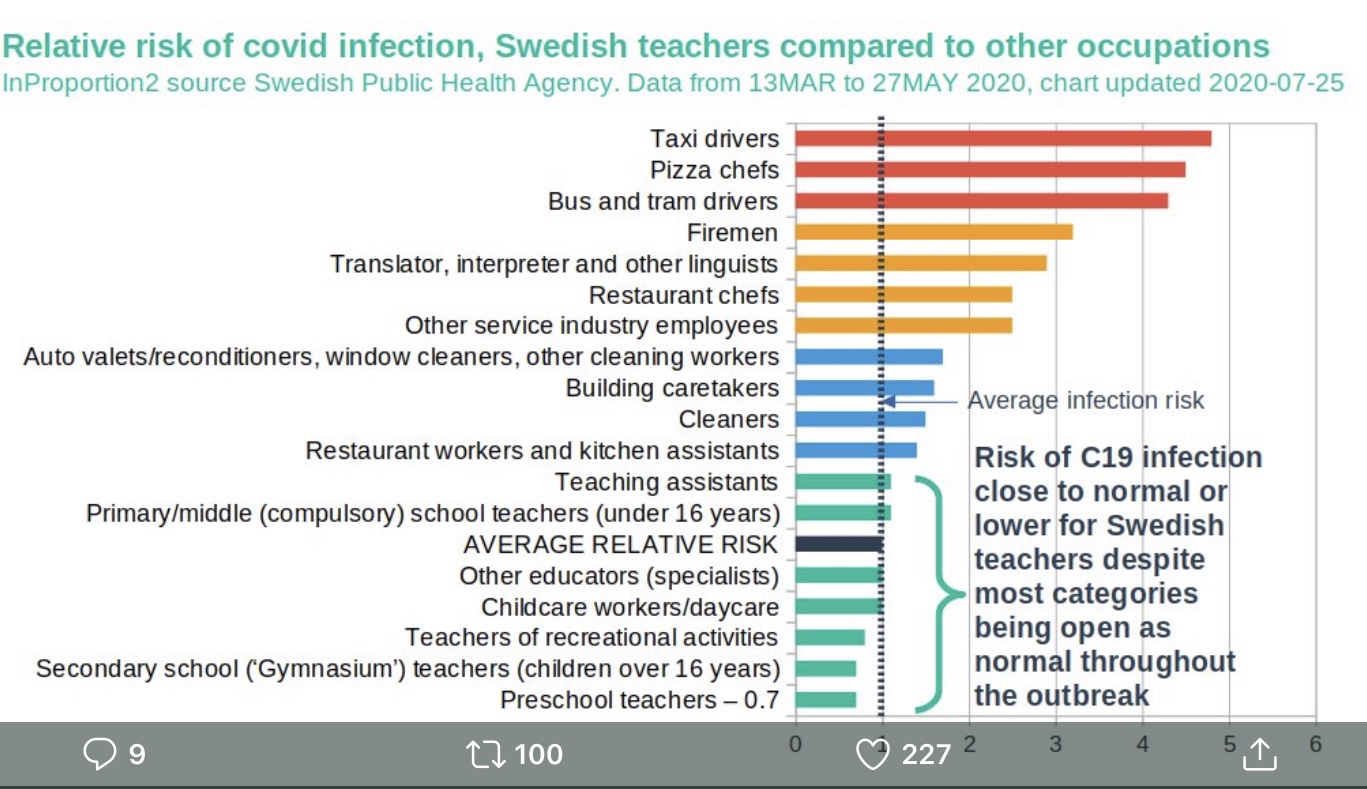
A quick follow-up to my recent post “COVID Hysteria and School Reform“: the graphic above is from an occupational risk study recently conducted by Swedish health authorities. The horizontal axis is obscured by the lower banner from Twitter (my fault), but the average risk of infection across all occupations was slightly less than 1%, and the highest-risk occupations were in the 4 – 5% range. Keep in mind, the data was collected while the virus was still raging in Sweden, while schools remained open. The virus hasn’t completely vanished in Sweden since then, but it has largely abated.

The study found that teachers had roughly average or below average risk, especially for pre-school and upper secondary (so-called “gymnasium”) teachers. The results demonstrate the lack of merit to claims by teachers unions that their members are somehow at greater risk of contracting coronavirus than other “essential” workers. We already know that children have extremely low susceptibility to COVID-19 and that they do not readily transmit the virus.

The health benefits of closing schools or taking them on-line do not compensate for the loss of educational effectiveness and detrimental health effects of preventing children from attending schools. The digital divide between children from disadvantaged households and their peers is likely to grow more severe if online learning is their only option. They should have choices, including functioning public schools.

To the last point, however, read this link for the sort of thing one teachers union supports. If the members are okay with that insanity then they shouldn’t be teaching your kids.

COVID Seasonality and Latitudes

23 Sunday Aug 2020

Posted by Nuetzel in Pandemic

≈ 2 Comments

Tags

Air Conditioning, Antibodies, Antigenic Drift, Bimodal, Coronavirus, Covid-19, Ethical Skeptic, Heidi J Zapata, Herd Immunity, Herd Immunity Threshold, Humidity, Immune Response, Justin Hart, Latitude and Seasonality, Proofreading enzymes, Robert Edgar Hope-Simpson, SARS, SARS-CoV-2, Seasonality, Sunlight, T-Cell Immunity, Temperature, Tropical Latitudes, Viral Load, Viral Mutation, Vitamin D Deficiency

The coronavirus (C19), or SARS-CoV-2, has a strong seasonal component that appears to closely match that of earlier SARS viruses as well as seasonal influenza. This includes the two distinct caseloads we’ve experienced in the U.S. 1) in the late winter/early spring; and 2) the smaller bump we witnessed this summer in some southern states and tropics. 

COVID Seasonal Patterns and Latitude

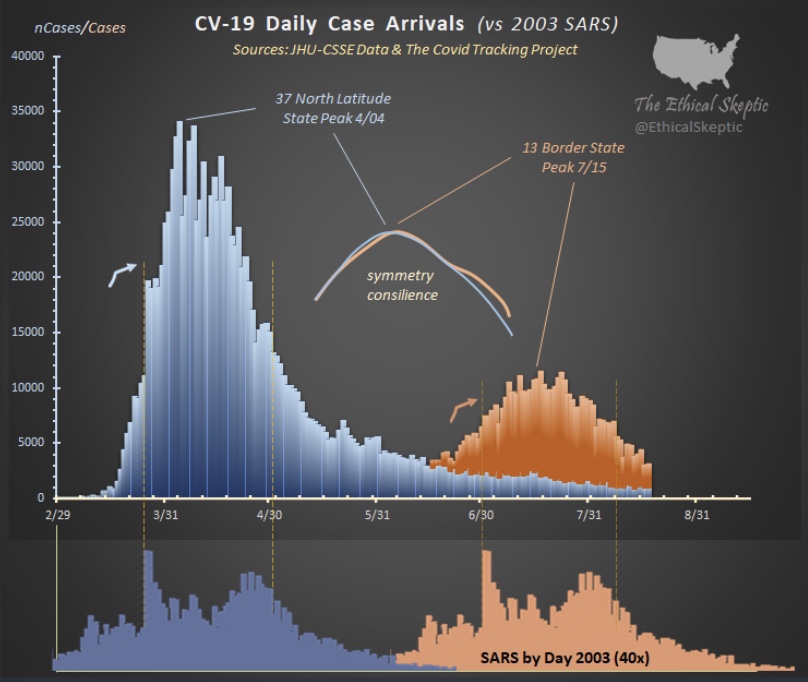
The Ethical Skeptic on Twitter recently featured the chart below. It shows the new case count of C19 in the U.S. in the upper panel, and the 2003 SARS virus in the lower panel. Both viruses had an initial phase at higher latitudes and a summer rebound at lower latitudes.


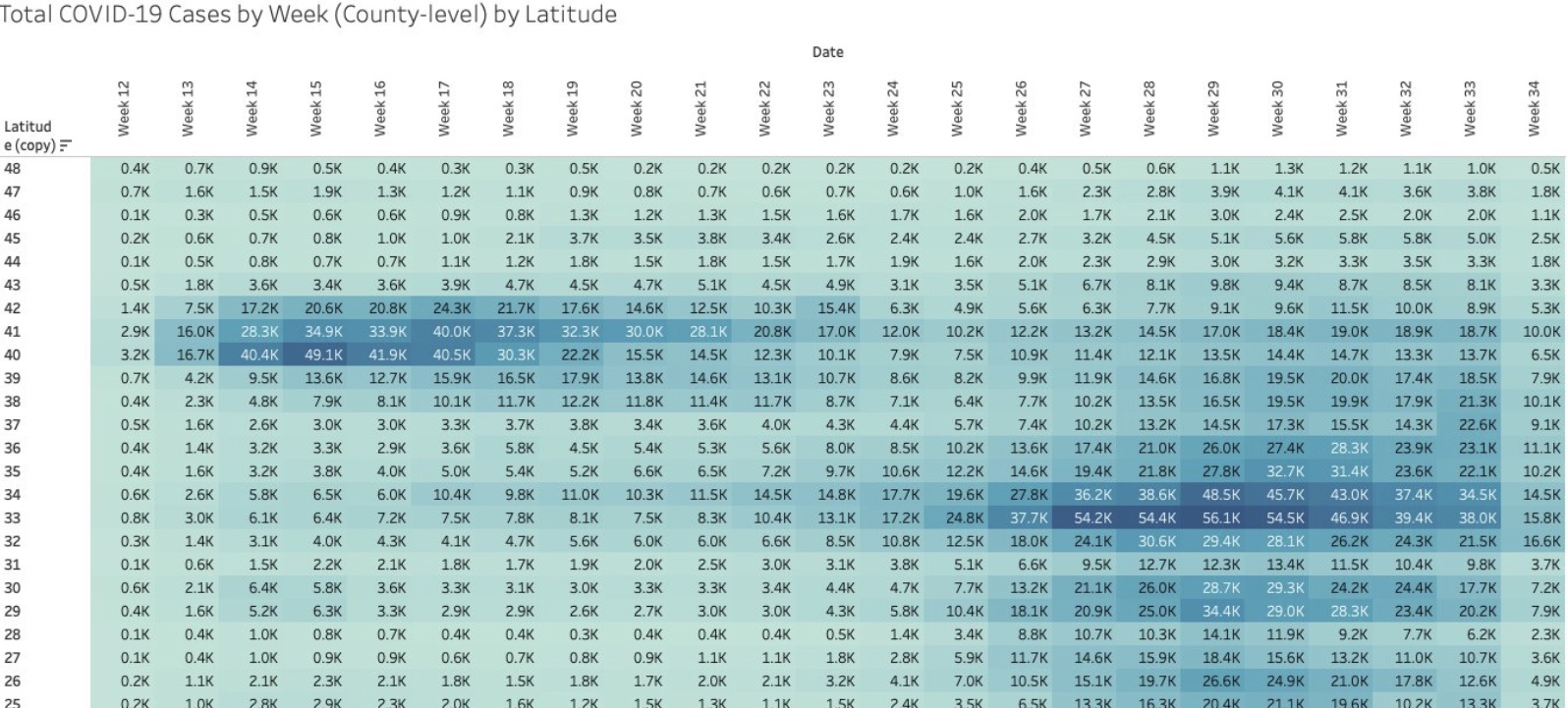
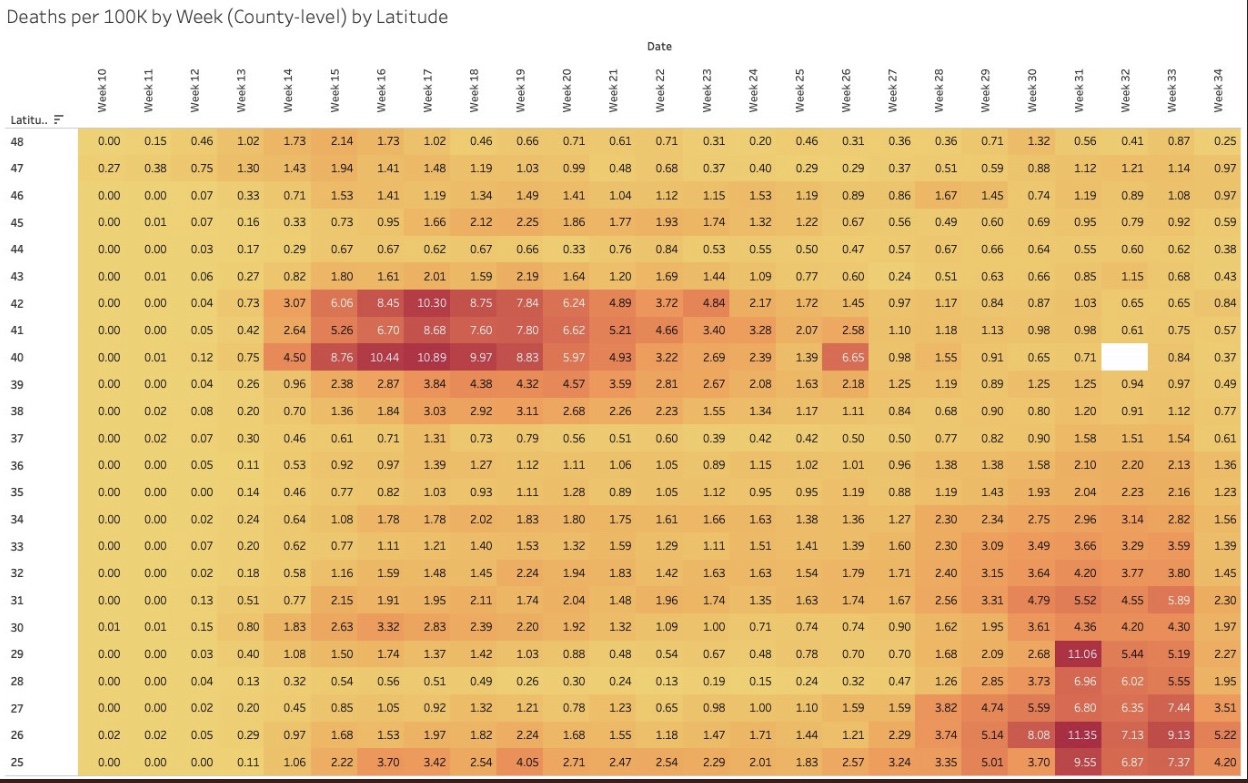
I particularly like the following visualizations from Justin Hart demonstrating the pandemic’s pattern at different latitudes (shown in the leftmost column). The first table shows total cases by week of 2020. The second shows deaths per 100,000 of population by week. Again, notice that lower latitudes have had a crest in the contagion this summer, while higher latitudes suffered the worst of their contagion in the spring. Based on deaths in the second table, the infections at lower latitudes have been less severe.

Viral Patterns in the South

Many expected the pandemic to abate this summer, including me, as it is well known that viruses don’t thrive in higher temperatures and humidity levels, and in more direct sunlight. So it is a puzzle that southern latitudes experienced a surge in the virus during the warmest months of the year. True, the cases were less severe on average, and sunlight and humidity likely played a role in that, along with the marked reduction in the age distribution of cases. However, the SARS pandemic of 2003 followed the same pattern, and the summer surge of C19 at southern latitudes was quite typical of viruses historically.

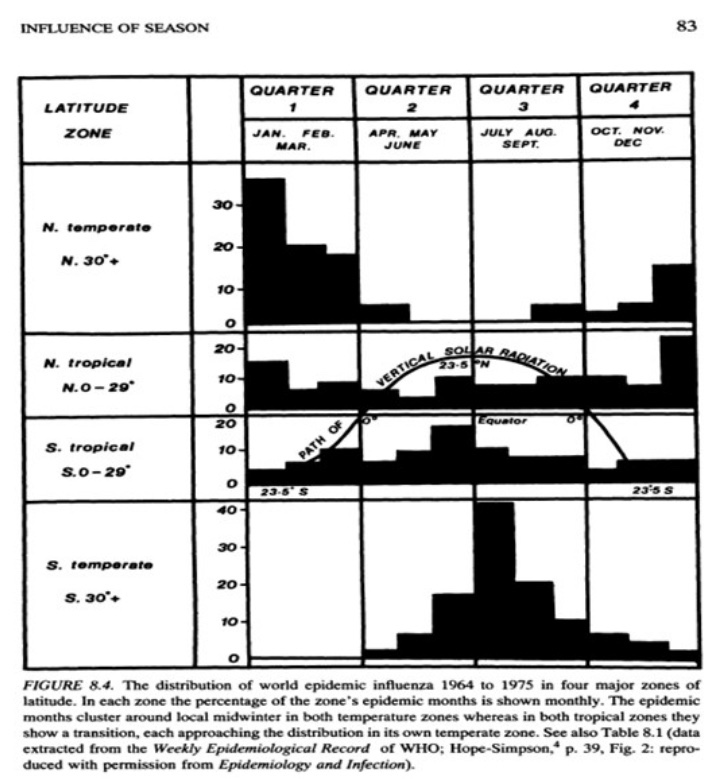
A classic study of the seasonality of viruses was published in 1981 by Robert Edgar Hope-Simpson. The next chart summarized his findings on influenza, seasonality, and latitude based on four groups of latitudes. Northern and southern latitudes above 30° are shown in the top and bottom panels, respectively. Both show wintertime contagions with few infections during the summer months. Tropical regions are different, however. The second and third panels of the chart show flu infections at latitudes less than 30°. Influenza seems to lurk at relatively low levels through most of the year in the tropics, but the respective patterns above and below the equator look almost like very muted versions of activity further to the north and south. However, some researchers describe the tropical pattern as bimodal, meaning that there are two peaks over the course of a year.   

So the “puzzle” of the summer surge at low latitudes appears to be more of an empirical regularity. But what gives rise to this pattern in the tropics, given that direct sunlight, temperature, and humidity subdue viral activity?

There are several possible explanations. One is that the summer rainy season in the tropics leads to less sunlight as well as changes in behavior: more time spent indoors and even less exposure to sunlight. In fact, today, in tropical areas where air conditioning is more widespread, it doesn’t have to be rainy to bring people indoors, just hot. Unfortunately, air conditioning dries the air and creates a more hospitable environment for viruses. Moreover, low latitudes are populated by a larger share of dark-skinned peoples, who generally are more deficient in vitamin D. That might magnify the virulence associated with the flight indoors brought on by hot and or rainy weather.   

Mutations and Seasonal Patterns

What makes the seasonal patterns noted above so reliable in the face of successful immune responses by recovered individuals? And shouldn’t herd immunity end these seasonal repetitions? The problem is the flu is highly prone to viral mutation, having segments of genes that are highly interchangeable (prompting so-called “antigenic drift“). That’s why flu vaccines are usually different each year: they are customized to prompt an immune response to the latest strains of the virus. Still, the power of these new viral strains are sufficient to propagate the kinds of annual flu cycles documented by Hope-Simpson.

With C19, we know there have been up to 100 mutations, mostly quite minor. Two major strains have been dominant. The first was more common in Southeast Asia near the beginning of the pandemic. It was less virulent and deadly than the strain that hit much of Europe and the U.S. Of course, in July the media misrepresented this strain as “new”, when in fact it had become the most dominant strain back in March and April.

What Lies Ahead

By now, it’s possible that the herd immunity threshold has been surpassed in many areas, which means that a surge this coming fall or winter would be limited to a smaller subset of still-susceptible individuals. The key question is whether C19 will be prone to mutations that pose new danger. If so, it’s possible that the fall and winter will bring an upsurge in cases in northern latitudes both among those still susceptible to existing strains, and to the larger population without immune defenses against new strains.

Fortunately, less dangerous variants are more more likely to be in the interest of the virus’ survival. And thus far, despite the number of minor mutations, it appears that C19 is relatively stable as viruses go. This article quotes Dr. Heidi J. Zapata, an infectious disease specialist and immunologist at Yale, who says that C19:

“… has shown to be a bit slow when it comes to accumulating mutations … Coronaviruses are interesting in that they carry a protein that ‘proofreads’ [their] genetic code, thus making mutations less likely compared to viruses that do not carry these proofreading proteins.”

The flu, however, does not have such a proofreading enzyme, so there is little to check its prodigious tendency to mutate. Ironically, C19’s greater reliability in producing faithful copies of itself should help ensure more durable immunity among those already having acquired defenses against C19.

This means that C19 might not have a strong seasonal resurgence in the fall and winter. Exceptions could include: 1) the remaining susceptible population, should they be exposed to a sufficient viral load; 2) regions that have not yet reached the herd immunity threshold; and 3) the advent of a dangerous new mutation, though existing T-cell immunity may effectively cross-react to defend against such a mutation in many individuals.


The FDA Can Put Virus Behind Us, Sans Vaccine

19 Wednesday Aug 2020

Posted by Nuetzel in Liberty, Pandemic, Vaccinations

≈ 1 Comment

Tags

Alex Tabarrok, Anti-Vaxers, Coronavirus, COVID Screening, Covid-19, E25Bio, Emergency Use Authorization, False Positive, Falze Negative, FDA, Harvard, Infectious vs Infected, John Cochrane, National Basketball Players Association, NBA, Paper Tests, Rapid Tests, Regulatory Failure, SalivaDirect, Self-Quarantine, Test Accuracy, Tracing, Transmission Chain, Vaccine Development, Vaccine Supply Chain, Wyss Institute for Biologically Inspired Engineering, Yale, Zach Lowe

Most of the news about COVID vaccine development is positive, but there are still huge doubts about 1) whether an effective vaccine(s) will ever be available; 2) when it will be available; 3) in what quantities (supply chains for vaccines present issues that most lay persons would never imagine) ; 4) the best approaches to allocation across young/healthy vs. old/vulnerable; 5) how long it will provide protection (the news is good on lasting immunity as well); and 6) whether people will actually take it. Given all these uncertainties, it’s worth considering an approach to stanching the coronavirus that won’t require a vaccine while still allowing a return to normalcy: cheap, rapid tests available to consumers on a daily basis in their homes or in businesses.

The full benefits of cheap, rapid tests can take people a while to wrap their heads around. In fact, there are skeptics who’s views on any and all testing are colored by suspicions that increased testing is some sort of conspiracy to spread fear and keep the economy hobbled. It’s true that increased testing drove much of the increase in COVID cases this summer, which caused the mainstream media to delight in spinning alarmist narratives. Fair enough, but that misses the point, which I’ll try to elucidate below. I credit a John Cochrane post for bringing this to my attention.

A successful vaccine breaks the so-called “transmission chain”, but so does frequent testing to identify infectious individuals on an ongoing basis so they can self-quarantine. As Alex Tabarrok has emphasized, we should worry about identifying infectious individuals, as opposed to infected individuals. They are not the same. Cheap, rapid, and easy-to-administer tests have already proven to be fairly accurate during the infectious stage. The idea is for individuals to self-test every day and stay home if they are positive. Or, employers can test workers every day and send them home if they are positive. Frequent testing also makes it simpler to trace the source of an infection and may reduce the importance of tracing.

To those who say this represents an affront to personal liberty, and I’m very touchy on that subject myself, recall that even now people are being screened in their workplaces using thermometers, questionnaires, or on the basis of any frogginess perceived by supervisors and co-workers. Those “tests” are far less accurate in identifying COVID-19 contagiousness than the kinds of cheap tests at issue here, and they are certainly no less intrusive. Then there are the many businesses facing restrictions on their operations: how “accurate” is it to keep everyone at home by locking down places of business? How intrusive is that? Those restrictions are indefensible, and especially with the advent and diffusion of cheap, rapid tests.

Of course, people might cheat and not report positives. Tests could be administered at workplaces to avoid that possibility, or at points of admission to businesses and facilities, but a few minutes of delay would be necessary. I would not support a centralized database of daily test results. If nothing else, relying on the good faith of individuals in reporting their results would be a giant leap forward in breaking the transmission chain now, rather than counting on the possibility of a successful virus in the indefinite future. And we might then avoid the whole pro-vax/anti-vax imbroglio that already foments, which raises major questions bearing on individual liberty.

Then there is the question of positive tests within multi-person households. Should the entire family or household self-quarantine? I say no, not if the others are negative, but then the others should test twice before going out, which dramatically reduces the probability of a false negative, and they should probably test more frequently, perhaps several times a day.

There are other important details to address: Who will pay for the tests? Will workers be paid to stay home if they test positive? How long will they be required to stay home? How will repeated tests be treated? I don’t want to get into detail on all of these points, but cheap, fast tests can help overcome many of these difficulties, and I believe many of the details can and should be worked out privately.

Unfortunately, the FDA has approved only two rapid tests, and they are not very rapid and not cheap enough. Only one had been approved up until last weekend because the FDA found the accuracy to be lacking … compared to PCR tests! But the FDA finally issued an Emergency Use Authorization for a saliva-based test (SalivaDirect) developed at Yale, partly funded by the NBA and the Players Association. The test still requires processing at a lab, so it’s really not convenient enough and not fast enough. Here is Zach Lowe on the cost:

“The cost per sample could be as low as about $4, though the cost to consumers will likely be higher than that — perhaps around $15 or $20 in some cases, according to expert sources.”

Not bad, but it’s much higher than more rapid, paper tests developed by Harvard’s Wyss Institute for Biologically Inspired Engineering and a company called E25Bio. Both of those are expected to cost about $1 per sample and can be completed anywhere. That’s a price that can work. And there are other promising candidates.

The benefits of tests that are rough, ready, and cheap will be huge. Such tests will also enable retesting, which helps to overcome the dilemmas of false positives and negatives. False negatives might be of greater concern to the FDA, but again, false negatives are less likely during the contagious stage of an infection, and the tests will be accurate enough that transmission risk will be drastically reduced.

The FDA needs to move beyond its stodgy insistence on achieving laboratory levels of accuracy. It’s unlikely that a single test source will be adequate to stanch the transmission chain, so the agency should rush to approve as many cheap, rapid tests as possible, with as many advisories and patient warnings regarding test results and follow-up instructions as it deems necessary. Remember, these tests are much better than thermometers!

Evidence of Fading COVID Summer Surge

16 Sunday Aug 2020

Posted by Nuetzel in Pandemic

≈ Leave a comment

Tags

CDC, CLI, Covid Tracking Project, Covid-19, COVID-Like Illness, Date of Death, FEMA, FEMA Regions, Herd Immunity Threshold, Hospitalizations, Kyle Lamb, PCR Test, Percent Positive, Provisional Deaths

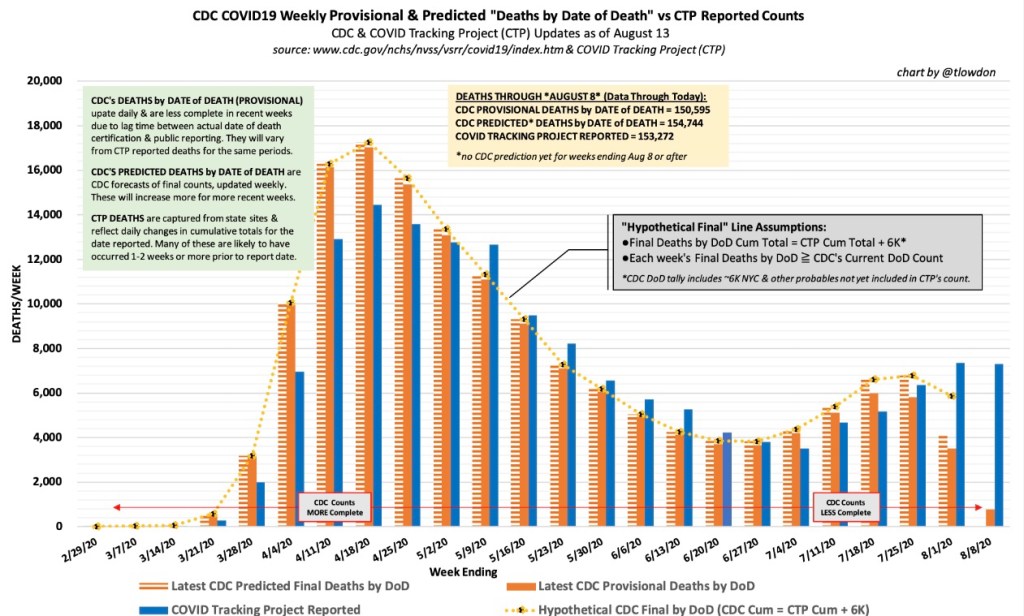
Lately I’ve talked a lot about reported deaths each week versus deaths by actual date of death (DOD). Much of that information came from Kyle Lamb’s Twitter account, and he’s the source of the charts below as well. The first one provides a convenient summary of the data reported through last week. The blue bars are reported deaths each week from the COVID Tracking Project (CTP), which are an aggregation of deaths that actually occurred over previous weeks. Again, the blue bars do NOT represent deaths that occurred in the reporting week. The solid orange bars are “provisional” actual deaths by DOD. “Provisional” means that recent weeks are not complete, though most deaths by DOD are captured within three to four weeks. The CDC also produces a “forecast” of final death counts by DOD, shown by the hatched orange bars.   

Note that the recent surge in deaths has been much smaller than the one in the spring, which was driven by deaths in the northeast. The CDC “expects” actual deaths by DOD to have declined starting after the week of July 23rd. However, CTP was still reporting deaths of over 1,000 per day last week. The actual timing of those deaths in prior weeks, and the ultimate extent of the summer surge in COVID deaths, remains to be seen.

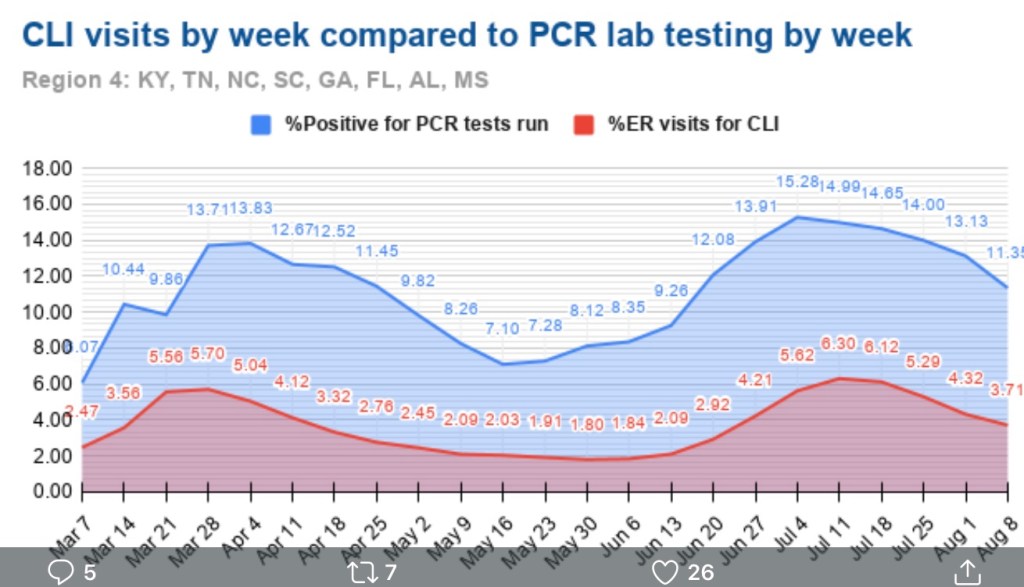
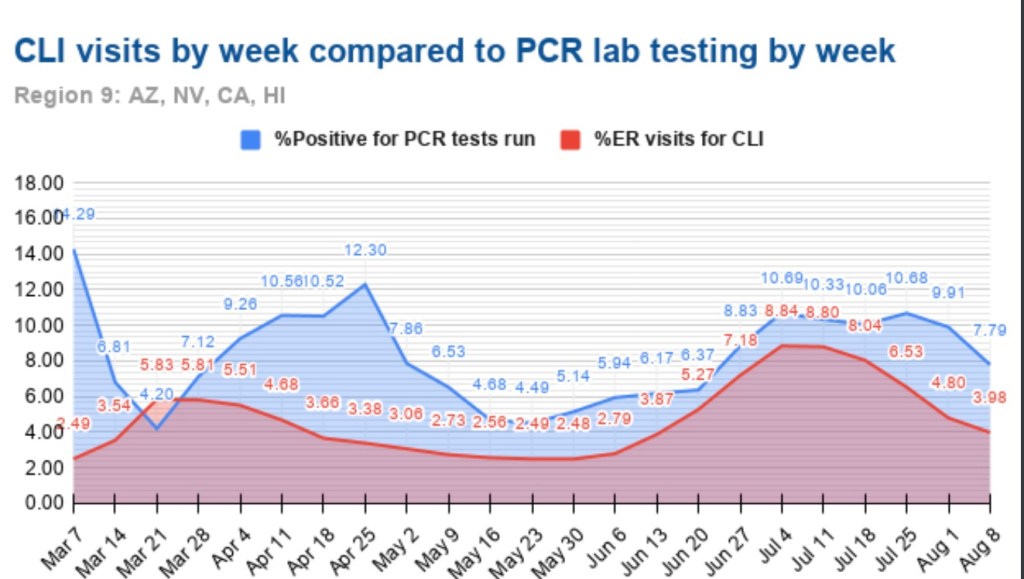
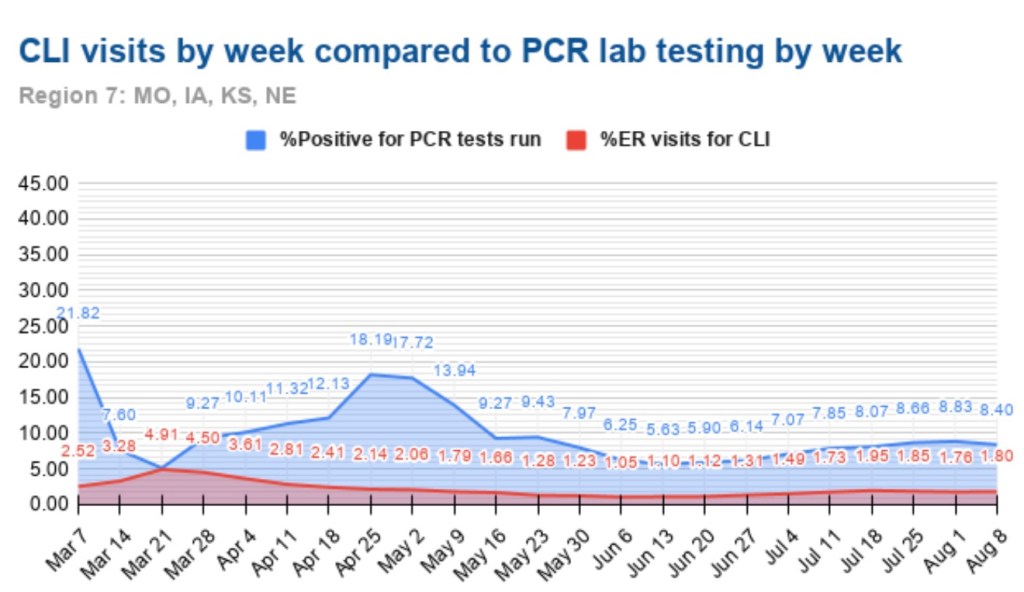
Certain leading indicators of deaths are signaling declines in actual deaths in August. Two of those indicators are 1) the positivity rate on standard PCR tests for infections; and 2) the share of emergency room visits made for symptoms of “COVID Like Illness” (CLI). The charts below show those indicators for FEMA regions that had the largest uptrends in cases in June and July. Florida is part of Region 4, shown in the next chart:

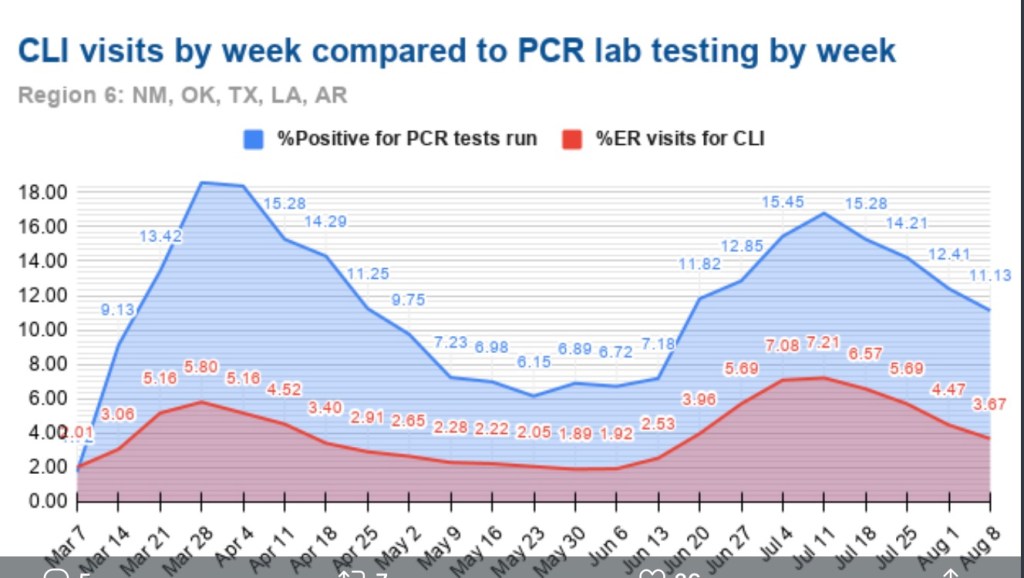
Here is the Region 6, which includes Texas:

Finally, Region 8 includes Arizona and California:

Out of personal interest, I’m also throwing in Region 7 with a few midwestern states, where cases have risen but not to the levels reached in Regions 4, 6, and 8:

With the exception of the last chart, the clear pattern is a peak or plateau in the positivity rate in late June through late July, followed by declines in subsequent weeks. The share or ER visits for CLI was not quite coincident with the positivity rate, but close. The decline in the CLI share is evident in Regions 4, 6 and 8. Again, these three regions include states that drove the nationwide increase in cases this summer (AZ, CA, FL, and TX), and the surge appears to have maxed out.     

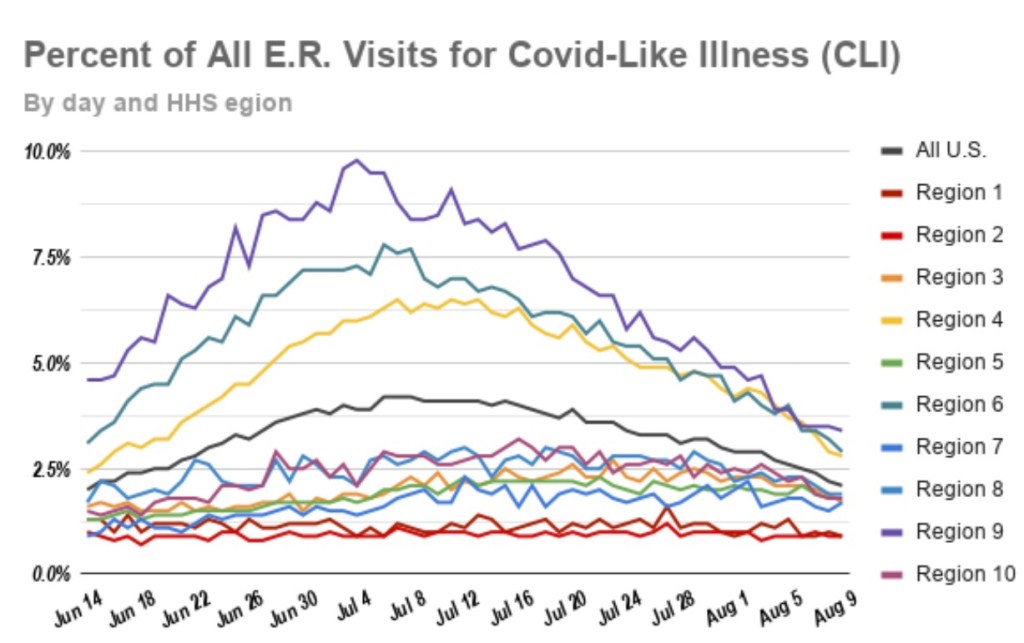
Here is a chart showing the share of CLI visits to ERs for all ten FEMA region from mid-June through last week. Clearly, this measure is improving across the U.S.

Nationwide, the CLI percentage at ERs has decreased by about 47% over the past four weeks, and the positivity rate has decreased by about 28% in that time. In addition to these favorable trends, COVID hospitalizations have decreased by about 40% over the past three weeks. All of these trends bode well for a downturn in COVID-attributed deaths.

The summertime surge in the virus was not nearly as ravaging as in the spring, and it appears to be fading. We’ll await developments in the fall, but we’ve come a long way in terms of protecting the vulnerable, treating the infected, approaching herd immunity thresholds (which means reduced rates of transmission to susceptible individuals), and the real possibility that we can put the pandemic behind us. 

← Older posts
Newer posts →
Follow Sacred Cow Chips on WordPress.com

Recent Posts

  • Grading Trump II, So Far
  • A Warsh Policy Scenario At the Federal Reserve
  • The Coexistence of Labor and AI-Augmented Capital
  • The Case Against Interest On Reserves
  • Immigration and Merit As Fiscal Propositions

Archives

  • March 2026
  • February 2026
  • January 2026
  • December 2025
  • November 2025
  • October 2025
  • September 2025
  • August 2025
  • July 2025
  • June 2025
  • May 2025
  • April 2025
  • March 2025
  • February 2025
  • January 2025
  • December 2024
  • November 2024
  • October 2024
  • September 2024
  • August 2024
  • July 2024
  • June 2024
  • May 2024
  • April 2024
  • March 2024
  • February 2024
  • January 2024
  • December 2023
  • November 2023
  • August 2023
  • July 2023
  • June 2023
  • May 2023
  • April 2023
  • March 2023
  • February 2023
  • January 2023
  • December 2022
  • November 2022
  • October 2022
  • September 2022
  • August 2022
  • July 2022
  • June 2022
  • May 2022
  • April 2022
  • March 2022
  • February 2022
  • January 2022
  • December 2021
  • November 2021
  • October 2021
  • September 2021
  • August 2021
  • July 2021
  • June 2021
  • May 2021
  • April 2021
  • March 2021
  • February 2021
  • January 2021
  • December 2020
  • November 2020
  • October 2020
  • September 2020
  • August 2020
  • July 2020
  • June 2020
  • May 2020
  • April 2020
  • March 2020
  • February 2020
  • January 2020
  • December 2019
  • November 2019
  • October 2019
  • September 2019
  • August 2019
  • July 2019
  • June 2019
  • May 2019
  • April 2019
  • March 2019
  • February 2019
  • January 2019
  • December 2018
  • November 2018
  • October 2018
  • September 2018
  • August 2018
  • July 2018
  • June 2018
  • May 2018
  • April 2018
  • March 2018
  • February 2018
  • January 2018
  • December 2017
  • November 2017
  • October 2017
  • September 2017
  • August 2017
  • July 2017
  • June 2017
  • May 2017
  • April 2017
  • March 2017
  • February 2017
  • January 2017
  • December 2016
  • November 2016
  • October 2016
  • September 2016
  • August 2016
  • July 2016
  • June 2016
  • May 2016
  • April 2016
  • March 2016
  • February 2016
  • January 2016
  • December 2015
  • November 2015
  • October 2015
  • September 2015
  • August 2015
  • July 2015
  • June 2015
  • May 2015
  • April 2015
  • March 2015
  • February 2015
  • January 2015
  • December 2014
  • November 2014
  • October 2014
  • September 2014
  • August 2014
  • July 2014
  • June 2014
  • May 2014
  • April 2014
  • March 2014

Blogs I Follow

  • Passive Income Kickstart
  • OnlyFinance.net
  • TLC Cholesterol
  • Nintil
  • kendunning.net
  • DCWhispers.com
  • Hoong-Wai in the UK
  • Marginal REVOLUTION
  • Stlouis
  • Watts Up With That?
  • American Elephants
  • The View from Alexandria
  • The Gymnasium
  • A Force for Good
  • Notes On Liberty
  • troymo
  • SUNDAY BLOG Stephanie Sievers
  • Miss Lou Acquiring Lore
  • Your Well Wisher Program
  • Objectivism In Depth
  • RobotEnomics
  • Orderstatistic
  • Paradigm Library
  • Scattered Showers and Quicksand
  • Jam Review

Blog at WordPress.com.

Passive Income Kickstart

OnlyFinance.net

TLC Cholesterol

Nintil

To estimate, compare, distinguish, discuss, and trace to its principal sources everything

kendunning.net

The Future is Ours to Create

DCWhispers.com

Hoong-Wai in the UK

A Commonwealth immigrant's perspective on the UK's public arena.

Marginal REVOLUTION

Small Steps Toward A Much Better World

Stlouis

Watts Up With That?

The world's most viewed site on global warming and climate change

American Elephants

Defending Life, Liberty and the Pursuit of Happiness

The View from Alexandria

In advanced civilizations the period loosely called Alexandrian is usually associated with flexible morals, perfunctory religion, populist standards and cosmopolitan tastes, feminism, exotic cults, and the rapid turnover of high and low fads---in short, a falling away (which is all that decadence means) from the strictness of traditional rules, embodied in character and inforced from within. -- Jacques Barzun

The Gymnasium

A place for reason, politics, economics, and faith steeped in the classical liberal tradition

A Force for Good

How economics, morality, and markets combine

Notes On Liberty

Spontaneous thoughts on a humble creed

troymo

SUNDAY BLOG Stephanie Sievers

Escaping the everyday life with photographs from my travels

Miss Lou Acquiring Lore

Gallery of Life...

Your Well Wisher Program

Attempt to solve commonly known problems…

Objectivism In Depth

Exploring Ayn Rand's revolutionary philosophy.

RobotEnomics

(A)n (I)ntelligent Future

Orderstatistic

Economics, chess and anything else on my mind.

Paradigm Library

OODA Looping

Scattered Showers and Quicksand

Musings on science, investing, finance, economics, politics, and probably fly fishing.

Jam Review

"If you get confused, listen to the music play."

  • Subscribe Subscribed
    • Sacred Cow Chips
    • Join 128 other subscribers
    • Already have a WordPress.com account? Log in now.
    • Sacred Cow Chips
    • Subscribe Subscribed
    • Sign up
    • Log in
    • Report this content
    • View site in Reader
    • Manage subscriptions
    • Collapse this bar
 

Loading Comments...